Goethe’s poetry – some new translations by John Greening

In this blog post, I am discussing John Greening’s new translations of a small selection (9 poems in all) from the works of Johann Wolfgang von Goethe. With the original German texts provided on facing pages, these translations are published as Nightwalker’s Song, by Arc Publications (2022). This review was originally commisioned and published by Acumen poetry magazine early in 2023. By the way, Acumen will be presenting a free to attend on-line celebration of its latest issue on Friday September 1st at 18.30 BST. It will include a brief reading of new work by yours truly, Gill McEvoy, Anthony Lawrence , Sarah Wimbush, Simon Richey, Dinah Livingstone, Michael Wilkinson, Jill Boucher, Jeremy Page, and others.
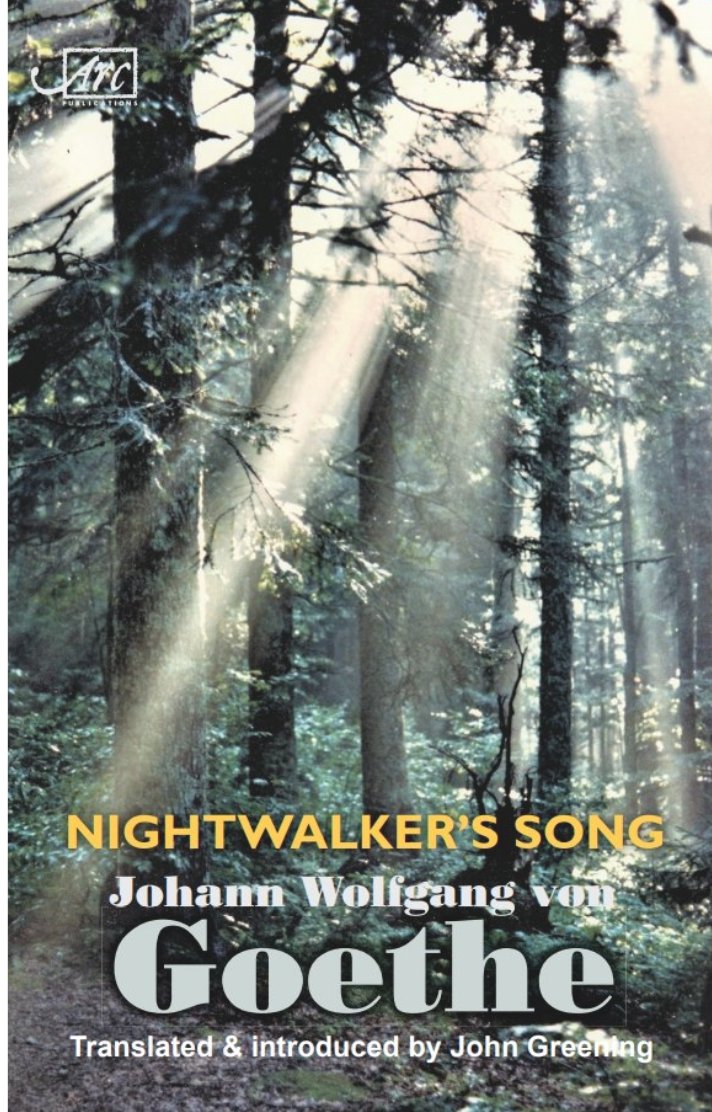
John Greening’s recent, self-confessedly ‘tightly-focused’ little selection from Goethe’s vast output is, in part, a campaigning publication. In his Introduction, Greening notes the difficulties surrounding the great German poet’s presence in English: the sheer volume of work, the range of that work, the man’s polymathic achievements (as poet, playwright, novelist, scientist, statesman, theatre director, critic), the long life untidily straddling all neat, period pigeon-holing. Christopher Reid has called him ‘the most forbidding of the great European poets’, but perhaps the English have come to see him as a mere jack-of-all-trades? And where do we turn to read and enjoy the poetry? Michael Hamburger’s and Christopher Middleton’s translations look more and more dated. David Luke’s Penguin Selected (1964; versified in 2005)is the most reliable source. But tellingly, as Greening says, one does not find young, contemporary poets offering individual translations of Goethe in their latest slim volume in the way we do with poems by Rilke or Hölderlin.
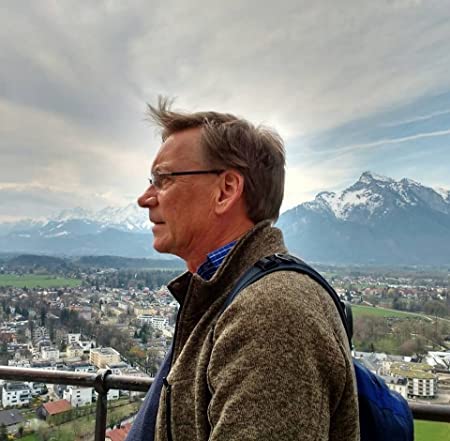
John Greening

So here Greening sets out a selection box of various Goethes to encourage other translators: we find nature poetry, romance, the artist as rebel, meditations on fate, erotic love poems, a rollicking ballad, dramatic monologue and a very fine sonnet. I like Greening’s determination not to lose the singing. Here, he has ‘shadowed’ the original metres and retained rhyme schemes, though he sensibly makes more use of pararhyme than Goethe’s full rhyming. While not approaching Lowellesque ‘imitations’, Greening has also sought a ‘contemporary texture’ by venturing to ‘modernise an image or an idea if it helped the poem adapt to a different age’. For example, in ‘Harz Mountains, Winter Journey’ (‘Harzreise im Winter’) Goethe’s buzzard has become the more familiar image, in southern England at least, of a red kite. The carriage or wagon (‘Wagen’) driven by Fortune becomes a car in a ‘motorcade’ and another vehicle is imagined ‘winking on to / the slip-road’. There’s also an enjoyable touch of Auden in Greening’s updating of ‘crumbling cliffs / and disused airfields’ (Middleton has ‘On impassable tracks / Through the void countryside’).
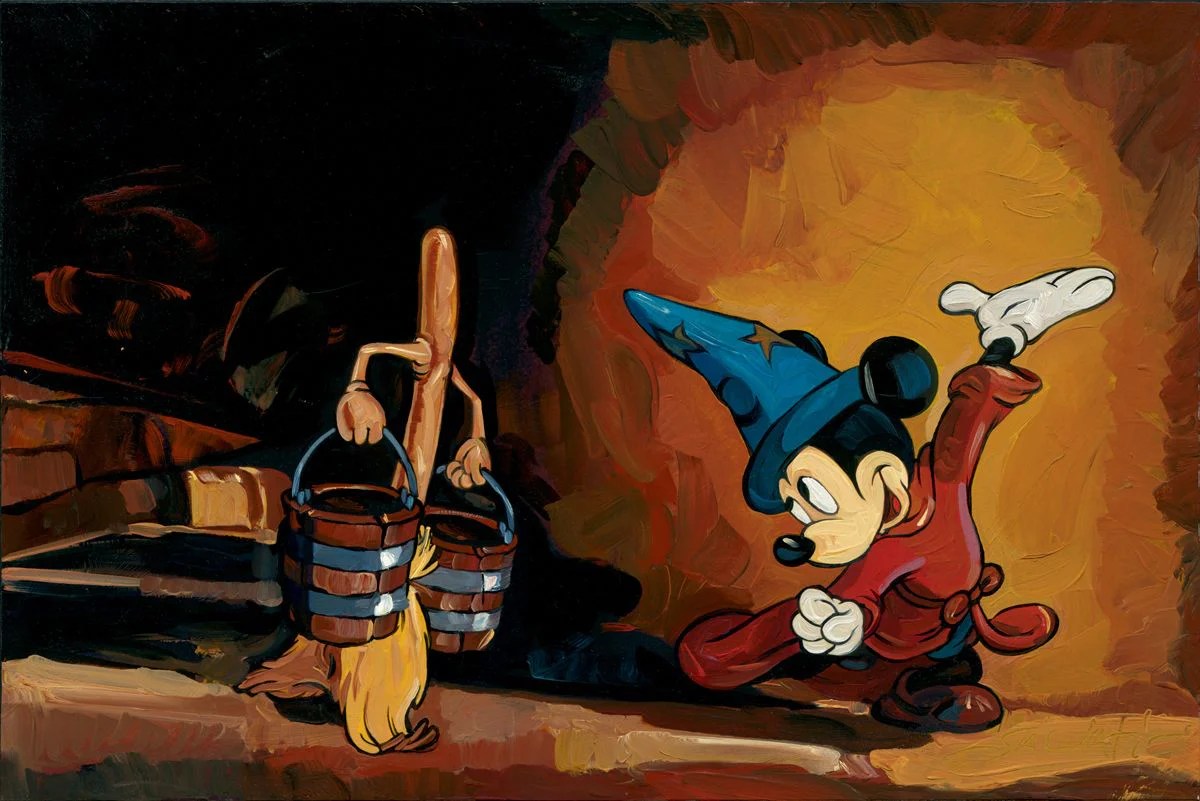
Walt Disney’s Sorcerer’s Apprentice

Greening’s skills in versification are well known and he deploys them all – and you can hear him enjoying himself – in ‘The Sorcerer’s Apprentice’: ‘Broomstick – up, it’s show time, haul your / glad rags on, so grey and grimy. / Seems you’ve seen long service, all you’re / fit for now is to obey me’. Though grace notes and fillers slow Goethe’s headlong verse (the opening line in German is simply ‘Und nun komm, du alter Besen!’ – ‘And now come on, you old broom!’), Greening’s rhyming is delightful and the modernising phrases (show time, glad rags) drive the poem along with a colloquial energy which is absolutely right.

Goethe’s ‘Prometheus’ – published in 1789, the year of revolution in France – is a growling dramatic monologue in which the rebel Titan (who stole fire from the gods to give to humankind) sneers and mocks the authority figure, Zeus. He belittles the top god in the opening lines by comparing him to a boy, thoughtlessly knocking the heads off thistles. Greening catches the mocking tone in the series of rhetorical questions later in the poem: ‘Honour you? For what? / Have you ever offered to lift / this agony?’ Prometheus ends – following one version of his story – by explaining he is creating the human race in his own image, ‘a new range’ translates Greening, neatly updating once more, ‘programmed / to suffer and to weep, or whoop and punch the air – / but who, like me, won’t care / about you’. In comparison, Luke’s version sounds rather fusty and less bolshie: ‘A race that shall suffer and weep / And know joy and delight too, / And heed you no more / Than I do!’
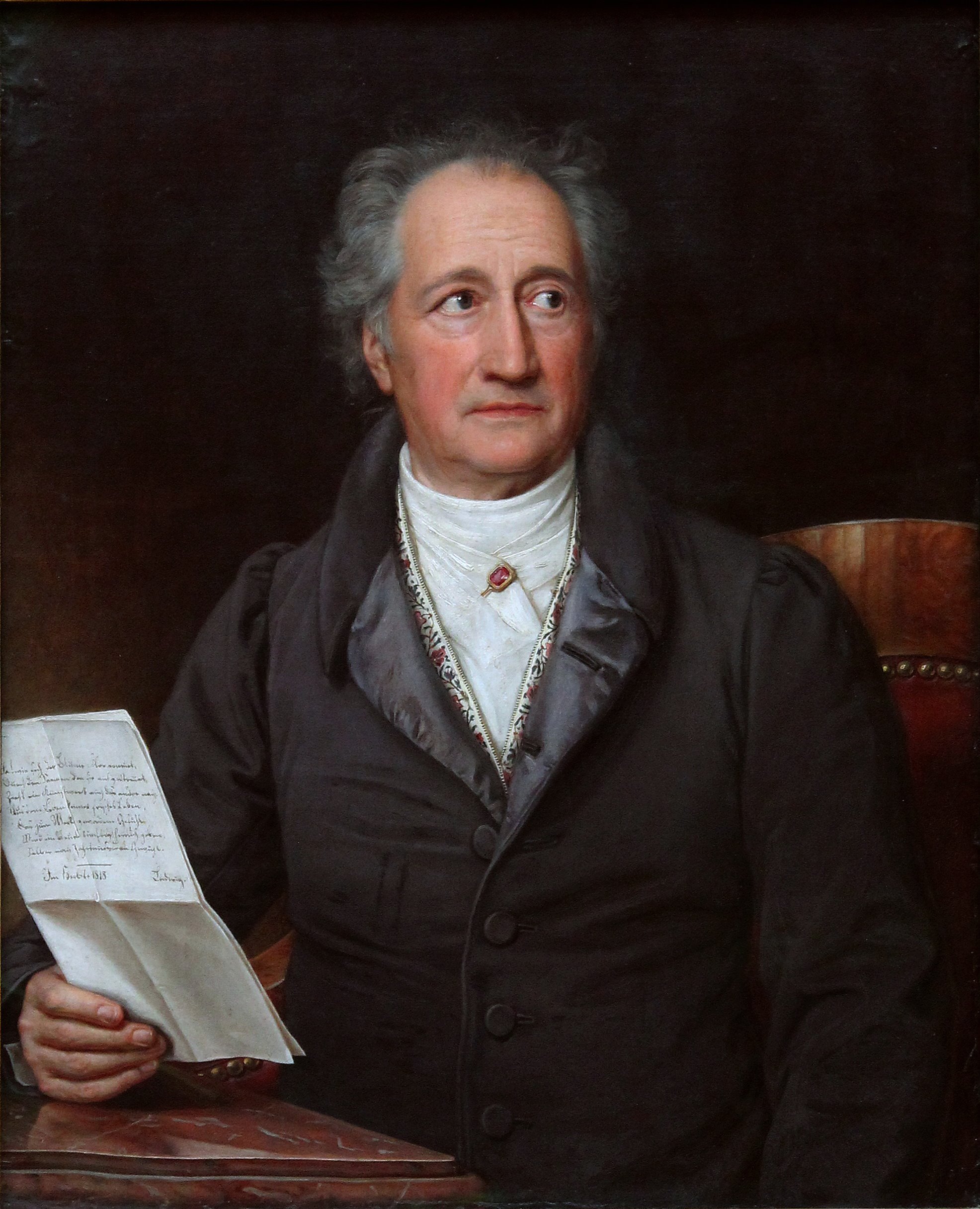
Johann Wolfgang von Goethe

Goethe is a great love poet. ‘Welcome and Farewell’ (‘Willkommen und Abschied‘) has a man approaching on horseback (Greening does not motorise on this occasion) through a moonlit landscape and the lover is spied at last: ‘how / I’d dreamt of (not deserved) all this’. The moment of union passes unspoken between stanzas three and four. As if instantaneously, now ‘the sun had risen’ and the parting must take place: ‘And yet, to have been loved – to love, / ye gods, such utter happiness’. It’s curious that Greening retains the rather archaic ‘ye gods’. One still hears the phrase, of course, but with more irony than I would have imagined here. The fifth of Goethe’s ‘Roman Elegies’ is a fabulous erotic piece. Written during the poet’s travels to Italy in the late 1780s, the narrator is studying classical culture by day and his female lover’s body by night. The latter nourishes the former: ‘I find I appreciate marble all the better for it, / and see with a feeling eye, feel with a seeing hand’. As he goes on, ‘compare and contrast’, I find Greening a little cool here. There is a selection of translations by D M Black (Love as Landscape Painter, from FRAS Publications in 2006) which generates more heat:

Yet how is it not learning, to scan that delectable bosom,

  Or when I slither my hands pleasantly over her hips?

Then I understand marble; then I discover connections,

  See with a feeling eye, feel with a seeing hand.
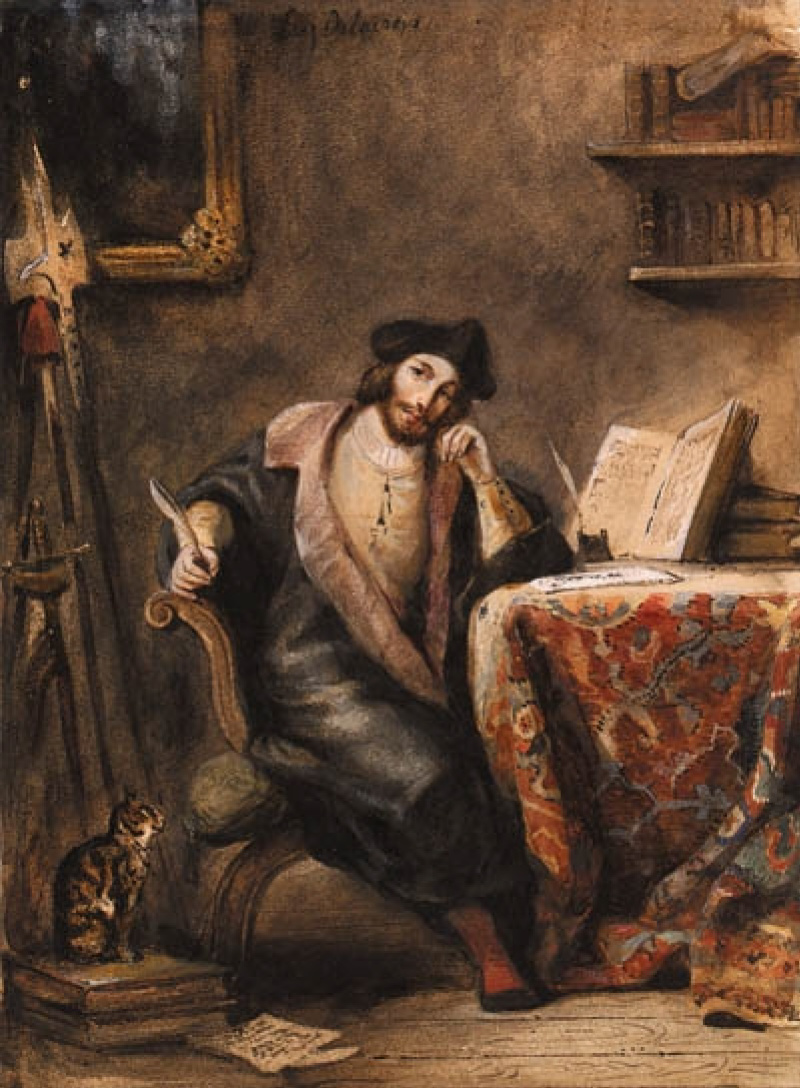
Faustus (by Eugene Delacroix)

Goethe’s Faust is represented here by the scholar’s opening speech to Part One (versioned, as it were, by Christopher Marlowe in the opening soliloquy of his Doctor Faustus). Greening excels in the handling of rhyme and line length, even compared to David Constantine’s 2005 Penguin translation. Perhaps most impressive of all is the sonnet ‘Nature and Art’ (‘Natur und Kunst’). Greening has the motor car in mind again in his updating of Goethe’s exploration of how the artist must labour incessantly to achieve the preparedness, the readiness to respond to Nature, to what is natural. Reading these lines, you feel Greening is translating as a skilled and experienced artist himself, triumphantly bringing a poem written in 1800 bang up to date:

It’s just a case of working long and late.

So once we’ve spent, let’s say, ten thousand hours

on steering, footwork, shifting through the gears,

it may be then some natural move feels right.

x

Creative though you be, you’ll strive in vain

to reach perfection if you’ve no technique,

however wired and woke your gifts may be.

x

You want a masterpiece? You’ll need to strain

those sinews, set your limits, drill and hack.

The rules are all we have to set us free.

For anyone yet to make the leap into Goethe-world, this little book is a terrific way into the great German writer’s work and such a reader will find Greening’s Introduction and his prefatory remarks to each of the chosen poems very helpful indeed. I recommend this collection.
‘My mother’s care home room as Cleopatra’s monument’ – an unpublished poem @ The Poetry Archive

The Poetry Archive has recently been calling for submissions for what they are calling Poetry Archive Now. They are searching for poems written during 2023 as follows:

We want you to have the opportunity to join the Poetry Archive collections by recording yourself reciting or reading your poem out loud and sending it to us to care for and share worldwide. 20 poets will be chosen to join the Poetry Archive Now! WordView 2023 Collection and hundreds more will be curated, archived and shared in our YouTube collections with the millions of people who visit and love the Archive. Poetry offers a vital reflection of the age we live in. We would love you to join our collections to offer inspiration, comfort and the sheer lift-of-spirits which listening to fantastic poetry being read out loud can bring.

One of the few benefits of scrolling through social media – all too conscious of the gloom that can set in when confronted with (what appears to be) every other person/poet in the world having such marvellous successes – is that one comes across these calls for submission. Happily, the poem I videoed and sent in has become one of the ‘hundreds more’ and recently been posted on YouTube. I thought I’d share it here.

Hard to say where the juxtaposition of the last days of my mother’s life and Cleopatra’s final moments (as presented in Shakepeare’s Antony and Cleopatra) came from. But the scene is one I have often taught and found immensely moving. Charmian is one of the Egyptian queen’s handmaidens (friends more like). Cleopatra applies the asp (poisonous snake) to her breast and within a few minutes Charmian does the same:

  • CharmianO eastern star!
  • CleopatraPeace, peace!
    Dost thou not see my baby at my breast,
    That sucks the nurse asleep?
  • CharmianO, break! O, break!
  • CleopatraAs sweet as balm, as soft as air, as gentle,—
    O Antony!—Nay, I will take thee too.
    [Applying another asp to her arm]
    What should I stay—

[Dies]

  • CharmianIn this vile world? So, fare thee well.
    Now boast thee, death, in thy possession lies
    A lass unparallel’d. Downy windows, close;
    And golden Phoebus never be beheld
    Of eyes again so royal! Your crown’s awry;
    I’ll mend it, and then play.

The text of my poem appears below the video recording.

My mother’s care home room as Cleopatra’s monument

I sit behind door 16

in a room the size

of my son’s student room

though it is the old

who are sheltered here

and from the only chair

I watch the sun’s rays

through the only window

pierce the canopy

of the tall beech trees

that line the park

alongside this building

sunshine through glass

and over the sill

onto a blue plastic jug

its blue plastic cup

of barely touched water

a single birthday card

from her grandchildren

a Christmas cactus

and her bracelet watch

catches a glint

and a glint on the foil

of today’s medication

these few objects

are telling the time

as the sunlight rakes

beyond the trees

an Easter Island profile

gaunt and beaked

propped up in bed

on the plastic-wrapped

single mattress

the rucked-up sheet

of scroll and shadow

as the sun travels

falling into the west

I keep my vigil

with all the helpless-

ness of Charmian

at the cooling feet

of her Queen

the asp flung down

beneath the only chair

there has ever been

New review of my translation of Peter Huchel’s ‘These Numbered Days’

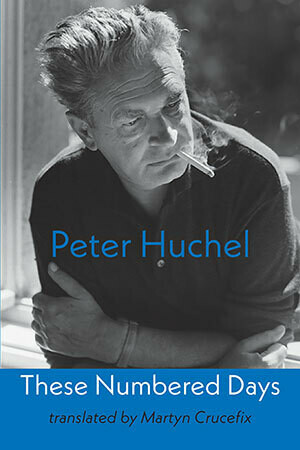
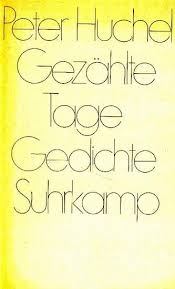
When Shearsman Books published my translations from the German of Peter Huchel’s 1972 collection These Numbered Days (Gezählte Tage), we were still in the early days of Covid restrictions and so launch events and so on were very difficult. I was pleased when the book was recognised in 2020 by winning the Schlegel-Tieck Prize for translation from German awarded by the Society of Authors. The judges were Steffan Davies and Dora Osbourne. Yet the wheels of reviewing such books turn very slowly. And I am pleased once more with the appearance of a lengthy review of the book by Frank Beck which has recently appeared in the excellent journal, The Manhattan Review, edited by Philip Fried. So, with due acknowledgements, I am reproducing Frank’s review here. Do check out his work and visit The Manhattan Review, an excellent US journal with a liking for pubishing reviews and work from the UK.

These Numbered Days (Gezählte Tage) by Peter Huchel, translated from the German by Martyn Crucefix and introduced by Karen Leeder. Emersons Green, Bristol, UK: Shearsman Books, 2019. 129 pp. $18.00 (paperback).

When poets look to the stars, often they are hoping to place their human worries in a wider context, in search of consolation. But what if they find, instead, that their concerns are reflected somehow in the sky overhead? Think of the famous fragment from Sappho: alone and unhappy, she watches the moon and the Pleiades descend together, like lovers lying down in bed. Readers may feel that something similar is happening in these lines from German poet Peter Huchel, as translated by British poet Martyn Crucefix:

                        Bent already by the night
                        into his icy harness,
                        Hercules drags
                        the star’s chain-harrow
                        up the northern sky. (p. 23)

            When have we felt so much heft in the distant stars? We might well wonder what weight Huchel himself was bearing when he wrote this last stanza of his poem, “Under the Constellation of Hercules” (Unterm Sternbild des Hercules).

            But first, let’s see how closely the English translation corresponds to the German stanza. Crucefix replicates Huchel’s pattern of three-beat lines, varied in line 3 with a two-beat phrase. He also makes use of the ready echoes some of Huchel’s words have in English: bent for gebeugt and icy for eisige. He creates a harsh music with chain-harrow, as does the clutter of consonants in Huchel’s Kettenegge. And Crucefix ties the stanza together with the r-sounds running through each of his five lines.

            Of course, acoustics aren’t everything: this closing stanza owes much of its power to the two, less portentous preceding stanzas, in which the speaker describes a small, rural settlement, “no larger/than the circle/a buzzard traces/in the evening sky.” All we are shown of the place is a rough stone wall, “glittering water,” and the smoke from a fire, “cut through with voices,/none of which you know.” This sense of elemental conflict prepares us for the star-hauling of the final lines: even in the heavens, it seems, the grinding struggles of the universe go on.

            In the German-speaking world, Peter Huchel is widely considered one of the finest 20th-century poets. He composed many of his poems out loud, rather than on paper, so their resonant language often seems, in the words of one critic, “as natural as air or breath.” Huchel is also admired for the way he endured years of harassment and confinement at the hands of the East German government. His reputation was consolidated in 1984, when Huchel’s poetry and prose were collected in two volumes, meticulously annotated by Axel Vieregg, a German scholar in New Zealand who had spent decades studying the poet’s work.

            English translations of Huchel’s poems have been difficult to find, although selections of them were compiled and translated by Michael Hamburger and Canadian poet Henry Beissel. (This despite Joseph Brodsky’s enthusiastic endorsement of Huchel’s poetry in The Wilson Quarterly in 1994, accompanied by translations by Joel Spector and a full-scale biography by British scholar Stephen Parker, in 1998.)

            These Numbered Days brings us graceful English versions of all 63 poems in Huchel’s 1972 collection, Gezählte Tage, the fourth of his five verse collections, published between 1948 and 1979. The translated poems appear side-by-side with the German originals. An introduction by Karen Leeder helps orient the English-speaking reader in Huchel’s world, while connecting his work with the most urgent issues of today. Crucefix’s fidelity to both the meaning and the manner of Huchel’s poems won his book the prestigious Schlegel-Tieck Prize for German Translation in 2020. 

            Huchel was born Hellmut Huchel in 1903 (the “u” is pronounced like the double vowel in moon), the son of a civil servant and his wife, from Lichterfelde, a Berlin suburb. Hellmut spent much of his youth on his grandfather’s farm in the nearby Brandenburg countryside, where he developed a feeling of deep kinship with the natural world. After studying literature and philosophy briefly, he lived in Paris for two years, then traveled extensively in Hungary, Romania, and Turkey.

            In 1931, at the age of 28, Huchel returned to Berlin, first earning his living as an editor and then by writing plays for radio. He changed his first name to Peter and began to publish his poems in Die literarische Welt and other leading German journals. Those early lyrics often draw on his memories of country life, as in “Havelnacht,” which describes a night on the Havel River in Brandenburg. Here are the poem’s last two stanzas (my translation):

                        Scents of so many past years
                        lean gently here, into the water.
                        As we go quietly along,
                        the night’s brew blows through us.

                        The greened stars are floating
                        as they drip from the oars.
                        And the wind cradles our lives,
                        as it cradles willow and crane.

            As beguiling as these images are, the poem’s effectiveness depends largely on its delicately deployed A/B/A/B rhyme scheme, which I have not tried to replicate. (The German poem might remind an English-speaker of Yeats.) Already, Huchel had acquired the technical mastery that the Swiss critic Paul Schorno would later describe as “certainty of what is being said through certainty of form.”

            In 1941 Huchel was drafted into the Luftwaffe, where he served until being taken prisoner by the Russians. This led to his working for Radio Berlin in the Russian-occupied sector after the war; eventually he became its cultural director. In 1949, when the Federal Republic of Germany was established in western Germany and the German Democratic Republic in the east, Huchel was named editor-in-chief of the GDR’s new literary magazine, Sinn und Form (Sense and Form). Under his direction, it came to play an important role in East German culture and even earned an international reputation.

Peter Huchel

            However, Huchel’s interest in the diverse contemporary poetry flourishing abroad in those years was fundamentally at odds with Communist Party ideology, and he repeatedly came into conflict with party officials. In 1962, as East Berlin was sealed off from the West by a wall, Huchel was dismissed as editor of Sinn und Form. He was forbidden to publish in East Germany or to travel, and, along with his wife, Monica, a translator of Russian, and their son Stefan, was placed under round-the-clock surveillance at their home in Wilhelmshorst, near Potsdam.

            The poems in These Numbered Days were written during the subsequent nine years, as Huchel remained under virtual house arrest. (Several of them were published in West Germany during the poet’s confinement; others appeared in English-language journals in Henry Beissel’s translations.)

            In these poems, the rich, rhyming music of Huchel’s early poems is replaced by a spare but flexible flow of language that can contract to a beat or two or relax into longer lines. One of the book’s finest poems considers how the work of “The Dipper” (Die Wasseramsel), a small bird that feeds along the banks of rushing streams, resembles the poetry Huchel now wants to create:

                       If I could plunge
                        brighter downwards
                        into the flowing darkness

                        about me to fish out a word

                        like this dipper
                        beside the alder boughs
                        picks its food

                        from the stony river bed.

                        Gold-panner, fisherman,
                        relinquish all your gear.
                        The shy bird

                        looks to work without a sound. (p. 45)

            Few poems in the collection deal with the Huchels’ troubles overtly. When they do, the tone is wry, refusing to reward oppression with anger. Even as the house around him deteriorates, presumably because repairs are not permitted, the poet declares, “I will not write/the names of my enemies/on the spongy wall” (“Weeds”). One has the sense of a man and his poetry being tested and determined not to fail. That includes trying to heed the advice offered to Huchel in a song by his friend, Wolf Biermann: “Do not become embittered/in this embittered time.”

            Huchel’s few visitors in Wilhelmshorst had to subject themselves to police surveillance, with all the attendant risk in such a police state, or to approach in secret, under cover of darkness, as Huchel describes in “Weeds”:

                        Guests are always welcome,
                        those who love weeds,
                        those who do not shy away from stony paths
                        over-grown with grass.
                        No one comes.

                        The coalmen come —
                        from their filthy baskets they pour
                        the lumpen black grief
                        of earth into my cellar. (p. 123)

            Huchel is still the keen observer of nature he was in his earlier books, but the natural world that once buoyed and nourished him now often mirrors his constricted situation, as in “Exile”:

                        Come evening, friends close in,
                        the shadows of hills.
                        Slowly they press across the threshold,
                        darkening the salt,
                        darkening the bread
                        and with my silence they strike up a conversation.

                        Outside in the maple
                        the wind stirs:
                        my sister, the rainwater
                        in the chalky trough,
                        imprisoned,
                        gazes up at the clouds. (p. 27)

            Yet such confessions —  even any use of personal pronouns — are scarce in these poems. Sometimes main verbs disappear, and the lines rely on gerunds and participles to move them forward. What is always present is Huchel’s patient watchfulness, often refracted through history and myth, as in his image of Hercules climbing the winter sky. With all roads around one blocked, the mind’s pathways become more important than ever, and allusions abound here. These poems reach out to the poet Alcaeus (a contemporary of Sappho), Tang dynasty writer Pe-Lo-Thien, Shakespeare, Kierkegaard, Virginia Woolf and other writers past and present.

             Another connection that sustains Huchel, though more fleetingly, is his memory of happier times, especially his travels in the Mediterranean, as in “Dolphins”:

                        Gazing out across the sea
                        in white sunlight
                        I saw them leap
                        above the salty
                        weight of the water —
                        dolphins,

                        my secret brothers,
                        carrying my messages to Byzantium. (p. 91)

            Such flashes of joy are tempered by the narrow confines of the Huchels’ lives. In “Hubertusweg” (the name of their street), the poet wonders about the policeman standing guard outside his house in the rain (“What’s in it for him . . .  ?”) and then considers the vulnerability of each person before a totalitarian state (“The state’s a blade;/the people thistles.”) Yet even totalitarian states have a life-span. Huchel sees his son reading a cuneiform text about “the peaceful campaign” of the Bronze Age ruler, King Keret, and his poem concludes:

                        On the seventh day,
                        as the God IL proclaimed,
                        a hot wind blew and drank the wells dry,
                        the dogs howled,
                        the donkeys cried out with thirst.
                        And without the use of a battering ram the city surrendered.                                              (p. 121)

            In 1971, in response to efforts by Heinrich Böll, Arthur Miller, Henry Beissel and others, the GDR allowed Peter Huchel and his family to emigrate to West Germany. He continued to write there until his death, in 1981. Eight years later, the Berlin Wall fell without a shot’s being fired, and Germany was soon reunited. The Huchels’ house in Wilhemshorst, where these poems were written, is now a writer’s center, sponsored by the state and local governments.

            Today the once-divided city of Berlin is one of the most vibrant places in the world. Huchel’s poetry is still in print and still read, and, at number 10, Hanseatenweg, near the Tiergarten, Sinn and Form keeps producing new bimonthly issues, very much along the editorial lines Huchel had in mind. Thus far this year, alongside work by and about German-language writers, the journal offered its readers articles about Jorge Luis Borges, Clarice Lispector, Marcel Proust, Marina Tsvetaeva, and Adam Zagajewski.

—Reviewer Frank Beck is a writer and translator and serves as a trustee for Elgar Works, which publishes the scores of Edward Elgar. His recent thoughts on poetry and music can be found at WWW.DIEHOREN.COM.

My Three Desert Island Poems

As mentioned in a post earlier in June, I spent a few days around that time trying to choose just 3 poems that I might take with me to a speculative desert island. I was asked to do this by The Friday Poem website and they have now posted the results of my labours.

In the end I chose work by Coleridge, Edward Thomas and Rainer Maria Rilke. Of course, the latter has been on my mind a great deal in the last 12 months or so, as I have been working on a new selection and translation of his work (spanning his career from 1899 to his death in 1926). It so happens that I have just signed off the final draft of this book – all 200 pages of it – and it is scheduled for publication by Pushkin Press in the Spring of 2024.

As for that desert island, do follow the link below to read the full text of my ruminations which also includes links to my own readings of the Thomas and Rilke poems. Do explore the rest of the FRIP website – it’s full of great poems and reviews:

We are always saying goodbye – The Friday Poem

Pushkin Press Rilke book cover ready for Spring 2024

Edward Thomas, Tellisford, and a poem of my own

I have recently been writing a piece for the excellent site, The Friday Poem, or the FRIP as it styles itself, edited by Hilary Menos. I’d had a poem accepted by the FRIP earlier this year and Hilary had asked if I’d like to contribute something in prose, perhaps choosing 3 ‘desert island’ poems. An impossible challenge, of course – only three!!?? – but an interesting exercise to be sure. I’ll say no more about what I submitted to the FRIP before it appears there in the near future, only to say that one of the poems I chose was by Edward Thomas.

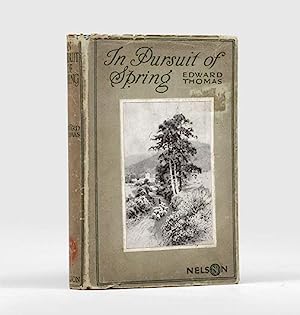
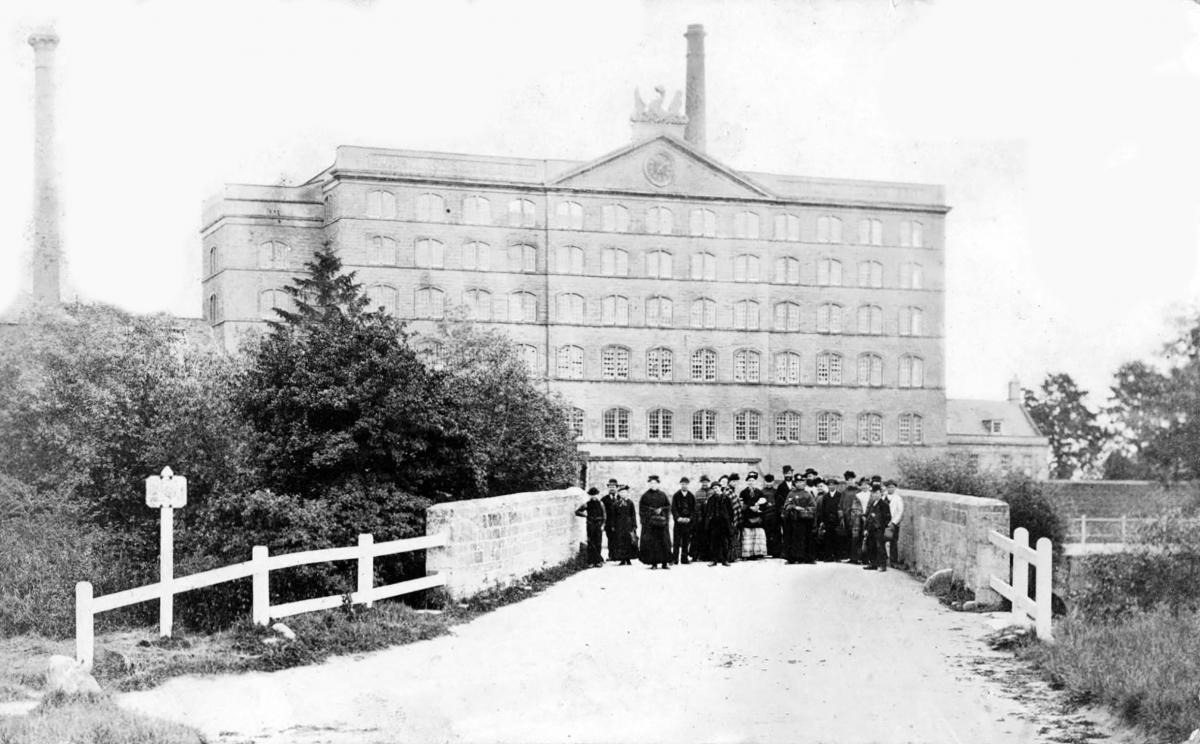
In introducing ET’s poem, I found myself talking about his prose travelogue, In Pursuit of Spring (1914). This book – apart from being wonderfully evocative of a lost, pre-WWI England, as he cycles from London, through the South Country, to end up in the Quantock Hills – has always been special for me because he makes a stopover just outside my hometown of Trowbridge, in Wiltshire. The following day he cycles out of Trowbridge, through Hilperton (the village where I grew up), out to Semington, towards Melksham, then along the meadows at Challimead, to Holt, before passing the Nestle factory at Staverton. The latter, with its River Avon (the Bristol Avon) flowing nearby, was where I used to go fishing with our next-door neighbours. The factory is also where several generations of my own family worked, including my maternal grandparents and my mother. Thomas’s descriptions of the roads and countryside are vivid:

. . . the Phoenix ‘Swiss’ Milk Factory where I crossed the Avon at Staverton . . . is an enormous stone cube, with multitudinous windows all alike, and at the back of it two tall chimneys. The Avon winding at its foot is a beautiful, willowy river. On the opposite side of the road and bridge the river bank rises up steeply, clothed evenly in elms, and crowned by Staverton’s little church which the trees half conceal.

The ‘Milk Factory’ at Staverton and the bridge over the Avon

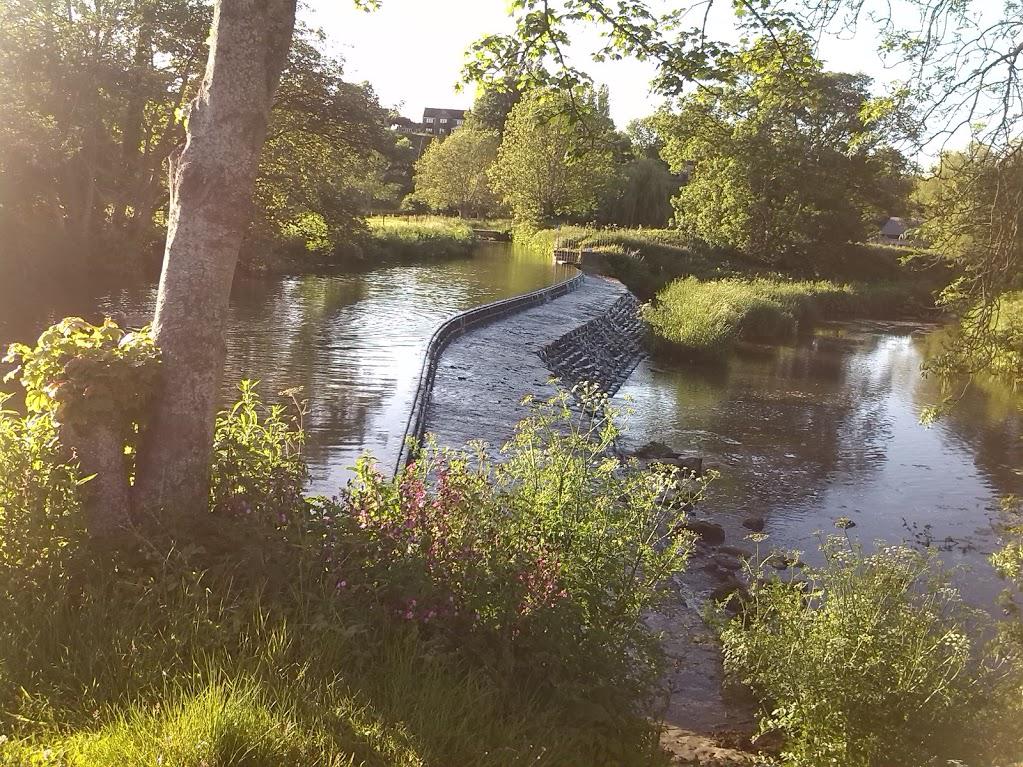
That church is where my grandparents were married. The following day, Thomas sets off again but stops this time at Tellisford. This is a small village to the west of Trowbridge, where a bridge crosses the River Frome. I’d occasionally come fishing here too, and later for the occasional romantic tryst, though more often the trip was for a picnic on the idyllic riverside meadows, listening to the water flowing over the ancient weir. Thomas’s mysterious companion, simply called the ‘Other Man’, describes the scene in 1914:

. . .  a beautiful meadow slopes between the river and the woods above. This grass, which becomes level for a few yards nearest the bank, was the best possible place, said the Other Man, for running in the sun after bathing at the weir – we could see its white wall of foam half a mile higher up the river, which was concealed by alders beyond.

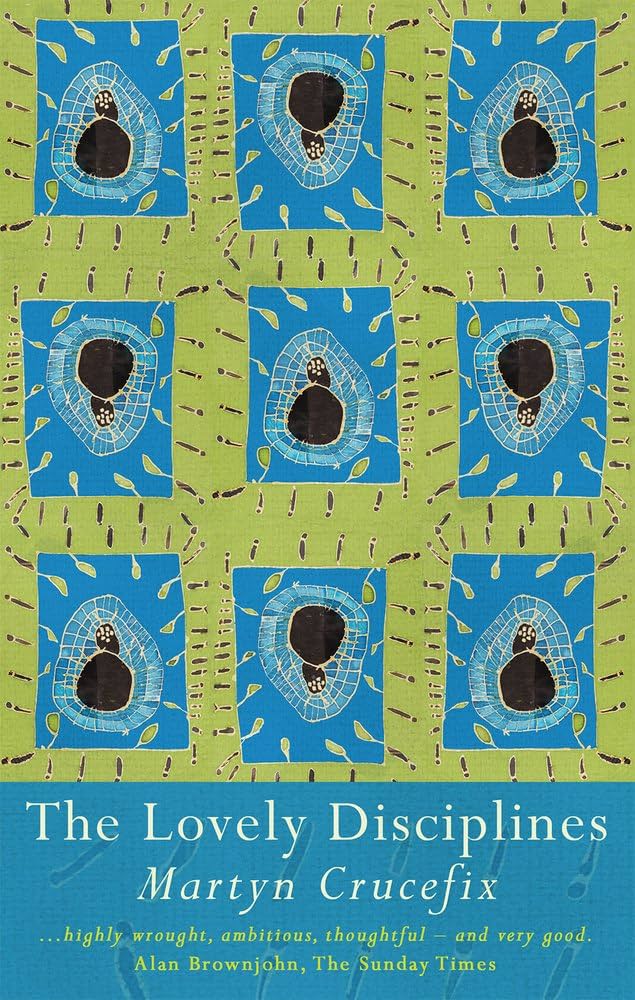
Almost nothing had changed when, years later, my whole family came here for a picnic, perhaps to celebrate my parents wedding anniversary . . .  I remember speaking to a man who lived nearby. He was rebuilding the weir which had fallen into disrepair. Years later again, I wrote a poem about the occasion (later published in my book The Lovely Disciplines (Seren Books, 2017). Called ‘Rebuilding Tellisford weir’, I gave the poem an epigraph from In Pursuit of Spring: ‘turn aside to see Tellisford’. The poem’s opening lines focus on the man’s self-given task, one of both conservation and innovation:

He refuses shade in midday heat

the old man walking

in his honey-brimmed hat

along the drained weir-shelf

x

that looks today like stacked loaves

its pallid smooth ranks

of Victorian stones

mapping precisely the Domesday line

x

where he patrols to and fro

proudly surveying the place he owns

this stretch of England

his plan to restore the workings

x

of the old watermill

to feed the Grid—and it is for this

he has ordered tons of sludge

to be dredged above the drop

x

and dozens of loosened stones

to be replaced to give

the mill-race its full head

and today he walks the slippery length

x

of the dammed weir-shelf

View of Tellisford Weir

For some reason, in my writing of the poem, I wanted to distance my own family’s part in the scene, perhaps because the incident I was recalling was a long while ago. The man hails the picnickers (rather than the other way round, which is I think what happened):

he cries what marvellous weather

x

then falls to conversation with a couple

who are celebrating sixty years

in their self-built house

with their three good boys

x

raised and schooled to distant homes

though today they recline

on trashy garden chairs

on this riverbank as if to watch

x

the old man in an antique yellow hat

who walks noting progress

on the weir

Riverside littering

My own family appear more as careless tourists than anything else. It is the man’s project which gets more attention. And – as the thought develops – it is his own state of mind that seems to interest the poem.

and how could they know

he’s something on his mind

x

for the next hundred years

how could they know more and more

these days he struggles to endure

the roaring of the fish-shoot

x

with its silted water

and these stilted conversations

with such ordinary people

their Diet Coke and egg mayonnaise

x

their crisps for the grandchildren

their Sunday newspapers

let blow and tumble across the meadow

reminding him of himself

x

how his mind often strays

up the ditch-line to the old drovers’ road

where for fifty years

their cars have pinked and purred

x

especially at night as they mount

slowly the gravel verge—

O so many love-cars for so many years

drawn to his father’s land

x

each in pursuit of what the river gives

of moonlight and chance

of the ticking of an engine

as it cools of blonde hair spilling

x

across dark seats in disarray

he knows the windows rolled to the dusk

the sickly smell of water

the murmur within

I rather like the way the poem, by this stage, seems to be moving in and out of various consciousnesses; here the narrative seems to be visiting the minds of the lovers who come to this quiet place for privacy, though the man’s noting of the fact has something of the voyeur about it too. He goes on to imagine – or perhaps he is remembering his own romantic experiences – the ‘talk / when it’s over’:

though he knows well

it is never really over—

and it’s because of this

he will not turn them away

x

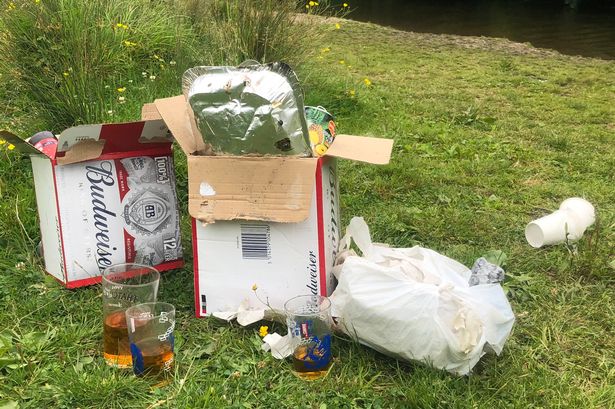
although they holler and soil and litter

still he’d grant them every wish

for this his feet edge now across

the weir-shelf this afternoon

x

for this he takes his uneasy stand

hands thrust in his pockets

their cars pulling in to the dark hiss

of white gravel everywhere loosening

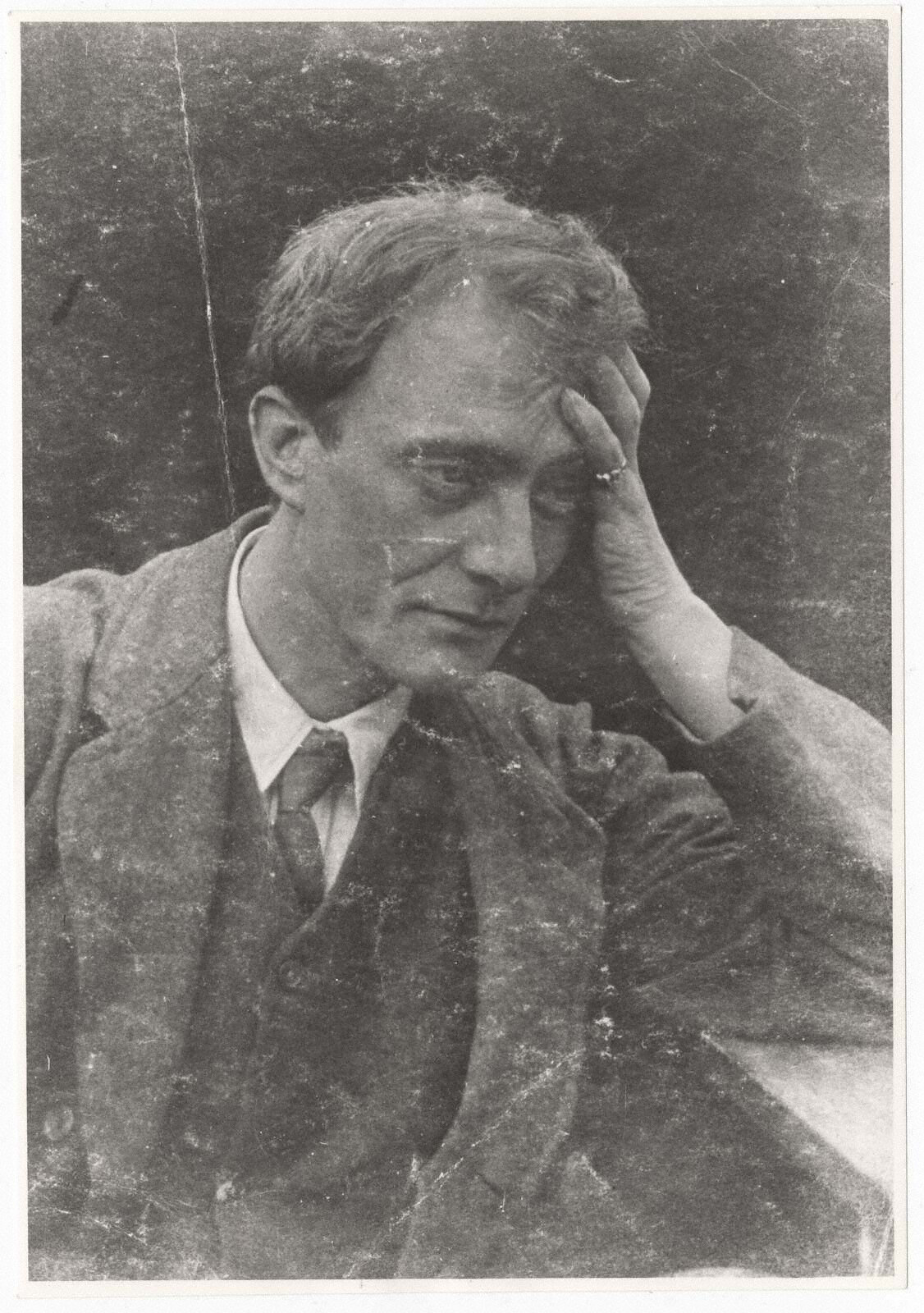
ET looking particularly dejected . . .

The final image – syntactically, the last given reason as to why he allows the lovers, as well as the ill-behaved picnickers, to use the riverside that (in the poem at least) he owns – is intended as an image of transience, of impermanence. It’s this knowledge that really drives him in his conservation project, the rebuilding of the weir, the installation of generators to connect to the Grid. His obsession (which is of course really the author’s, my own) is with the passage of time which brings in change and destruction and against which he builds (as the author builds the poem) something to stand against it, a kind of memorialisation which is also an innovation: ‘the talk / when it’s over though he knows well / it is never really over’. Throughout, I wanted to evoke something of Edward Thomas’s own work, partly through my formal choices. In ‘Gone, gone again’, for example, he views an old house:

Outmoded, dignified,

Dark and untenanted,

With grass growing instead

X

Of the footsteps of life,

The friendliness, the strife;

In its beds have lain

Youth, love, age and pain:

X

I am something like that;

Only I am not dead,

Still breathing and interested’

‘Letter to my Younger Self’ – a third brief Royal Literary Fund talk

As a Royal Literary Fund Fellow based at The British Library in London (though working on-line for the most part), I was asked way back in May 2020 (feels like a different world) to write and record three brief talks. One of these was on ‘Writing and Technology’ which I posted (as text and audio file) on this blog a few months ago. Another commision was to be titled ‘How I Write’ – not an easy subject on which to be clear and succinct but with a little help from WH Auden and Louise Gluck I hope I managed to say something that might be of help to all kinds of writers – poets, novelists and (the target audience of the RLF project) those writing at the varied levels of academe.You can read my blog (and hear me read the essay) here. The third and final essay was an intriguing invitation to write a ‘Letter to My Younger Self’. The recording of that piece has now been released and is available as an audio file on the RLF’s VOX site. You can read the Letter below – or listen to me read it by clicking here – or both at the same time if you’d like. Afterwards I have also posted a poem relevant to that particular biographical moment. An earlier version of this poem first appeared, a long while back, in The London Magazine.

Letter to my Younger Self

Dear Martyn,

You will have just got off the train from London Bridge. It’s 1976. The end of a day studying Medicine which you begin to hate. And now back to Eltham Park, to digs you’ve loathed since you arrived (the well-meaning landlady is no substitute for your mother). Probably you walked past that little music shop somewhere near the station, spending minutes gazing at the red sunburst acoustic guitar in the window. If it doesn’t sound too weird, I can tell you – you’ll buy it and strum on it for 10 years or more. I can also confirm your fear: you fail your first-year exams. The Medical School allows you to leave . . . But listen, that sense of failure and lostness, it will pass.

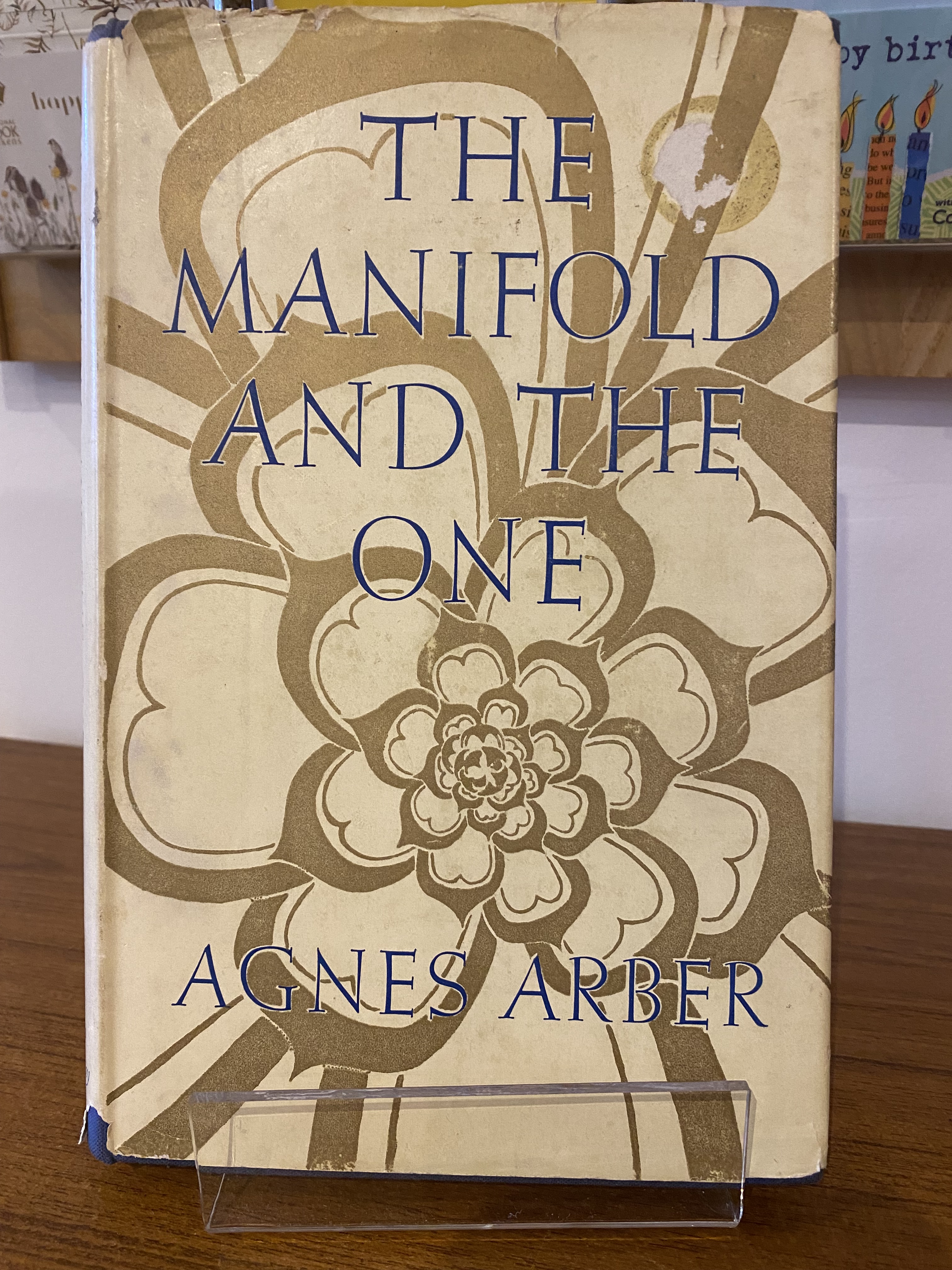
Keep on with the music, though your playing is not up to much and your singing . . . well, the less said. But writing songs will eventually lead somewhere. And the illicit books! You are supposed to be reading the monumental Gray’s Anatomy, textbooks on Pharmacology, Biochemistry, all emptying like sand out of your head. You’ve yet to go into that charity shop and pick up a book called The Manifold and the One by Agnes Arber. You’ll be attracted by the philosophical-sounding title; in your growing unhappiness at Medical School you have a sense of becoming deep. The questions you ask don’t have easy answers. You have a notion this is called philosophy. Amidst the dissections, test tubes and bunsens, you’ll find consolation in Arber’s idea that life is an imperfect struggle of “the awry and the fragmentary”.

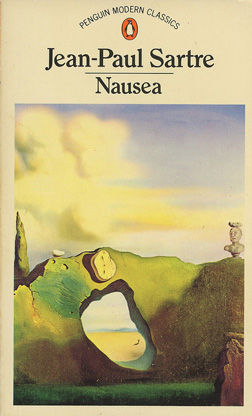
And those mawkish song lyrics you are writing? They will become more dense, exchanging singer-songwriting clichés for clichés you clumsily pick up from reading Wordsworth (you love the countryside), Sartre’s Nausea (you know you’re depressed) and Allan Watts’ The Wisdom of Insecurity (you are unsure of who you are). Up ahead, you take a year out to study English A level at an FE College. Your newly chosen philosophy degree gradually morphs into a literature one and with a good dose of Sartrean self-creativity (life being malleable, existence rather than essence) you edit the university’s poetry magazine, write stories, write plays, even act a little (fallen amongst theatricals!).

At some point, the English Romantic writers get a grip on you, taking you to Oxford where you really do conceive of yourself as a poet, get something published, hang out with others who want the same. Then guess what – for a teenager who’d so little to say for himself in class – teaching becomes a way of continuing to study and write while making a living. It suits. It takes us out of ourselves.

Along the way, you write some poems you are proud of. You will suffer the writer’s curse, of course: the recurrent fear of not being able to turn the trick again. But I’m sending you this to say, through all the years ahead, it is words that will infinitely enrich your life. So pick up the pad you doodle on in lectures. Write a line. Write another line. I see you hunched over a dim-lit desk, but no question – yes – you are heading in my direction.

With best wishes,

Martyn

x

How to fail at anatomy

x

This one believed

he maybe had the brains

another that he had

the right demeanour

x

but the Schools denied him

till it was too late

then reprieved him

with the offer of a place

x

that by then he knew

could not be refused

(such anticipation

had struck such roots)

x

so he has no recall

of the moment of choice

before those appalling

digs in Eltham

x

where he had to stow

his dislocated skeleton

under the bed—crammed

one side of his head

x

with tendons muscles

and pharmacol

with biochem and

bright sets of nerves

x

everything spilling out

the other side

into failure—fallen

to wandering streets

x

to stealing Everyman’s

Selected Wordsworth

he was John Stuart Mill

wishing his soul

x

saved though he felt

love etiolating

the girl from home

now a girl from home

x

her kisses like shrugs

at London Bridge

saying go your own way

at least not imposed

x

not merely allowed

and if you want to live

deliberately first

you slit the shroud

Interviewed on ‘Poetry Worth Hearing’

Just before the Christmas break, I was pleased to be asked by Kathleen McPhilemy to contribute to the January 2023 edition of her on-going series of podcasts, Poetry Worth Hearing.

Kathleen’s own introductory remarks about what the podcast includes are as follows:

Jessica Mookherjee reading from two recent collections, Tigress and Notes from a Shipwreck (both published by Nine Arches Press), and Martyn Crucefix talking about the poetry he thinks worth reading. We also have new poems from Beth Davyson, Stephen Paul Wren, Pat Winslow, Suzannah Houston and Chris Beckett. To learn more about the poets and the publications mentioned as well as to see the texts of new poems, go to https://www.poetryworthhearing.biz.

You can find the podcast here. Scroll down a little to Episode 11. My discussion starts at around 28 mins in – but do listen to all the contributors.

Helen Kidd

I was especially pleased to hear Pat Winslow’s poem ‘As for the owl’ which carries a dedication to the late, much-missed Helen Kidd. By a strange coincidence, Helen was one of the members of the Old Fire Station Poetry Workshop (led by Tom Rawling by in the 1980s) ) about which I talk in my piece.

I also talk about growing up in rural Wiltshire in a house with few books. My years spent pursuing science – beginning to study medicine at Guys Hospital in London – then my drastic shift to studying Philosophy and English at Lancaster University, where I worked with the Scottish poet, David Craig, on one of the first Creative Writing courses in the UK. At Worcester College, Oxford, in the 1980s I was writing a DPhil thesis on the poet Shelley while also attending poetry workshops with WN Herbert, Peter Forbes, Pauline Stainer, Keith Jebb, Anne Born (and Tom and Helen).

Kathleen also asked me to say something about the poets I go back to and I talk a little (and read from) Walt Whitman, Robert Frost and WS Merwin. Trying to pick contemporary poets to highlight is an impossible task but, on this occasion at least, I speak about Marvin Thompson, Nancy Campbell and John McCullough.

Tom Rawling

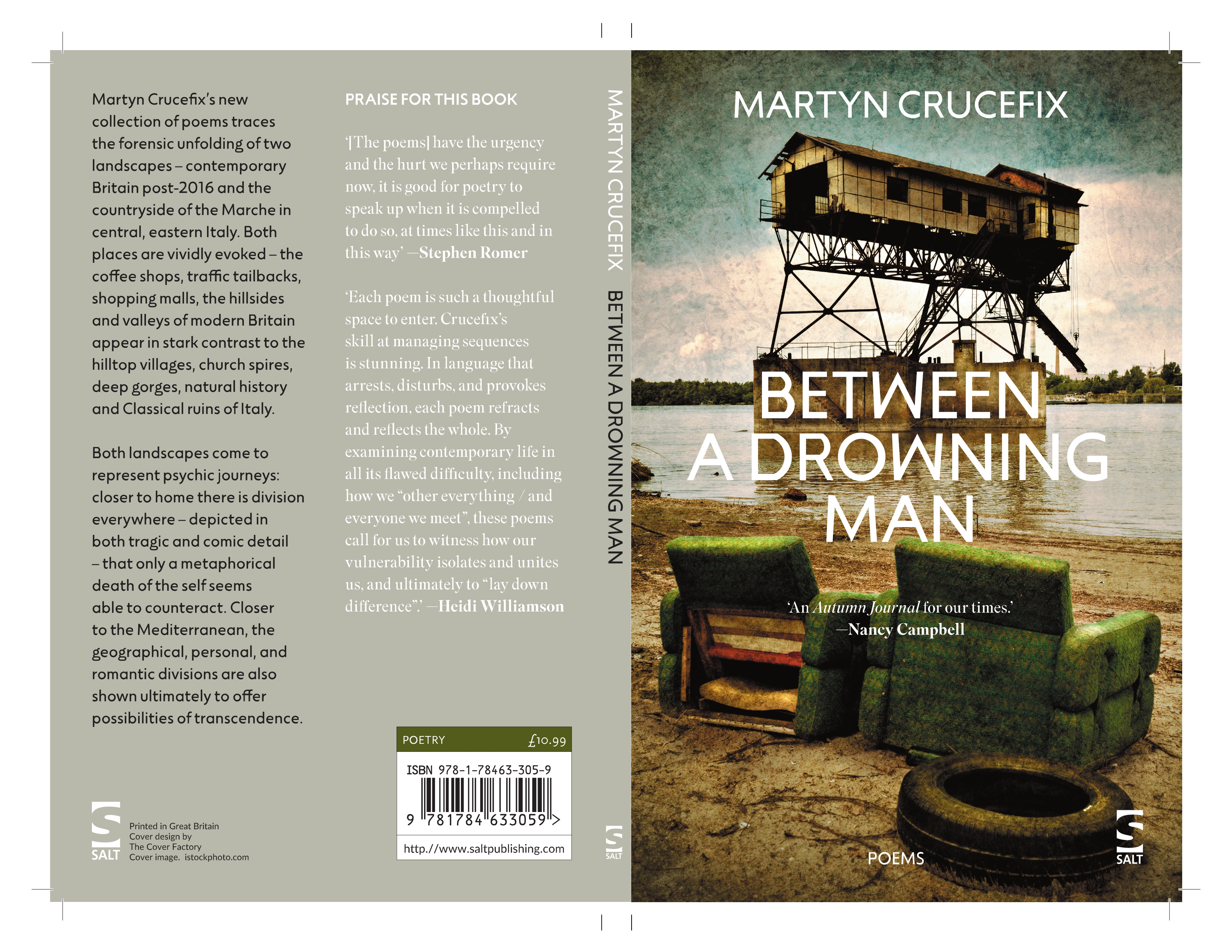
Between a Drowning Man (Salt, 2023)

Available from Salt Publishing (Autumn 2023).

‘An ‘Autumn Journal’ for our times.’ —Nancy Campbell

‘Each poem is such a thoughtful space to enter. Crucefix’s skill at managing sequences is stunning. In language that arrests, disturbs, and provokes reflection, each poem refracts and reflects the whole. By examining contemporary life in all its flawed difficulty, including ‘how we other everything/ and everyone we meet’, these poems call for us to witness how our vulnerability isolates and unites us, and ultimately to ‘lay down difference’. —Heidi Williamson

‘[The poems] have the urgency and the hurt we perhaps require now, it is good for poetry to speak up when it is compelled to do so, at times like this and in this way’ —Stephen Romer

Listen to Martyn discussing the background and the writing of the poems in this new collection in these two podcasts:

Planet Poetry – about the whole collection

A Mouthful of Air – focusing on the single poem, ‘you are not in search of’ (page 57)

SOME REVIEWS OF THIS BOOK

By Mat Riches – on The High Window

By Stuart Henson – on London Grip

By Shanta Acharya – on Everybody’s Reviewing

BLURB OF THIS BOOK: Martyn Crucefix’s new collection of poems traces the forensic unfolding of two landscapes – contemporary Britain post-2016 and the countryside of the Marche in central, eastern Italy. Both places are vividly evoked – the coffee shops, traffic tailbacks, shopping malls, tourist-dotted hillsides and valleys of modern Britain appear in stark contrast to the hilltop villages, church spires, deep gorges, natural history and Classical ruins of Italy. Both landscapes come to represent psychic journeys: closer to home there is division everywhere – depicted in both tragic and comic detail – that only a metaphorical death of the self seems likely to counteract. Closer to the Mediterranean, the geographical and personal, or romantic, divisions are also shown ultimately to offer possibilities of transcendence.

The poems of the longer sequence, ‘Works and Days’, are startlingly free-wheeling, allusive – brilliantly deploying source materials and inspiration from Hesiod’s original and the 10/12th century Indian vacana poems – all bound together by the repeated refrain of bridges breaking down. The Italian poems, as a crown of sonnets, are more formally controlled, but the repeating of first and last lines of the individual poems likewise serves to suggest the presence of an overarching unity.

In the end, both sequences travel towards death which – while not denying the reality of human mortality, the passage of time – is intended to represent a challenge to the powerful dividing walls between Thee and Me, the liberation of empathetic feeling, even the Daoist erasure of the assumed gulf between self and not-self: ‘these millions of us aspiring to the condition / of ubiquitous dust on the fiery water’.

‘Air-Waves’: poem as audio soundscape

One of the joys of social media (and there are plenty of aspects of them that are less than joyful) is that occasionally a notification pops up from an unexpected source and when you check it out there is something really worthwhile to be found. This happened the other day – via Instagram. Someone called Matt McGettrick had tagged me. I don’t know Matt, but he is a student on the BA course in TV and Radio Production at the University of Salford.

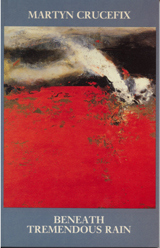
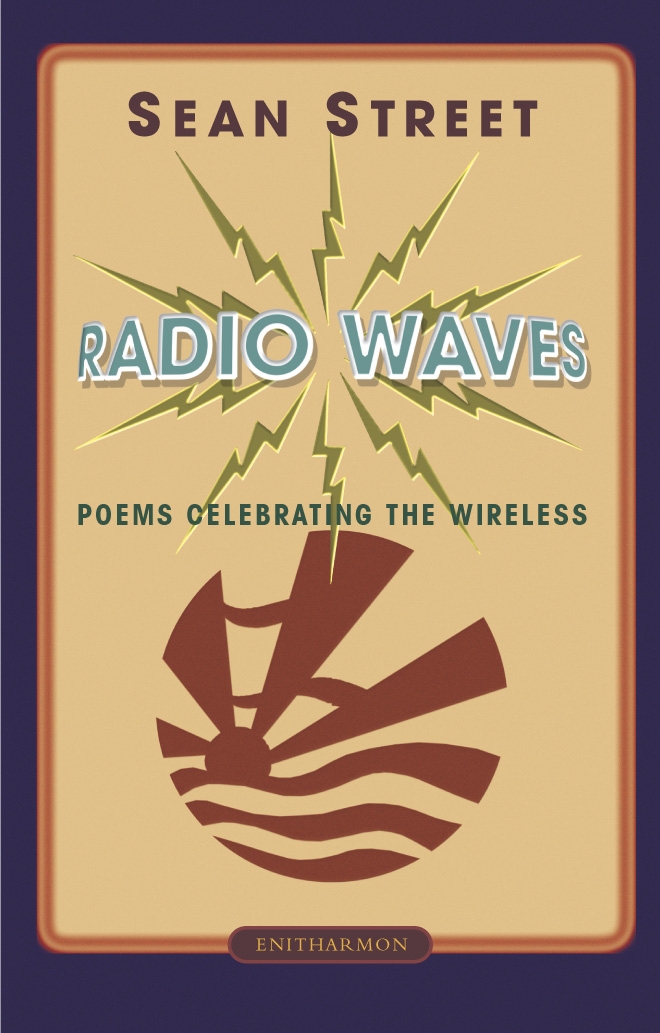
Matt’s instapost said he had recently created a soundscape based on a poem I published in 1990, in my first book from Enitharmon Press, called Beneath Tremendous Rain. It’s unlikely that the poem was found in that book itself, but I remember it was selected more than 10 years later by Sean Street to appear in an anthology called Radio Waves: poems celebrating the wireless (Entharmon, 2004). There, I was happily rubbing shoulders with the likes of Auden, Brecht, MacNeice, Heaney and Carol Ann Duffy. Sean – whose is a poet, broadcaster and recently retired Professor of Radio at Bournemouth University – had divided the anthology up into sections variously titled, Music Radio, Talk Radio, Weather, Listeners and Signals. My piece was in the section called ‘In the Car’.

Here’s that original poem. It’s voiced by a persona – I had no children at this point and had not moved out of the ‘dark’ streets of Manchester to the countryside.

Air-Waves

As I slowed up and shifted downgear,

a dance song thumping from the car radio

was stretched out and smashed to pieces.

x

But we barely noticed that first time –

all eager to see the house, where it stood

beneath the surfing crackle of the pylons.

x

The girls loved the sight of so much sky.

They slipped into new schools with ease

though Sue and I made it home more slowly.

x

And by then, there was Stephen, almost four,

suddenly ill, his rush of growing gone awry,

and the doctor’s face, closed up and dark

x

as the Manchester streets we had left behind.

He could tell me nothing. Inexplicable,

the pattern of disease. A year – maybe two.

x

Driving back across the hills, roadside wires

loop down, are yanked back to the blunted head

of each telegraph pole – and further off,

x

the pylons, hitching up skeins of darkness,

striding up country to a house where this car

and their sheaf of hot wires will converge,

x

where a young man’s voice on the radio

will melt down in a surge of boiling static

as I slow up, shift gear, and stop.

I remember a great deal of concern – this will have been in the late 1980s – about the possible harmful effects of living too close to the electrical fields generated by pylons. There was a particular study in 1979 that did conclude there might be a link between electromagnetic fields and childhood cancer (and this is the kind of scenario I am thinking of in the poem). However, other studies in the 2000s did not find an association or found an association only in homes with very high levels of magnetic forces, which is rare, according to the National Cancer Institute.

There was a personal connection, I remember, as my in-laws lived in a house which nestled in beneath a line of high voltage cables and pylons. But perhaps concerns about cancer-inducing lines of pylons have now gone the way of those early concerns about the dangers of mobile phones. Or has it even been consigned to the slightly cranky end of health concerns along with those people who sabotage 5G masts in the name of suspected links to the on-going pandemic? Even so, though it has dated a little, I’d like to think of the poem as one of my earliest expressions of environmental concern: if the electromagnetic fields do turn out to be perfectly safe, they are here acting as a metaphor for the kind of degradation of the lived-in environment caused by human action for which there is an indisputable and growing body of evidence.

Anyway – all this is simply by way of introducing Matt McGettrick’s excellent piece of work. The reader is Matthew Green. As the author of the original piece, it seems to me that both reading and soundscape engineering do a really fine job of responding sensitively to the text’s meaning, its structure and its rhythms. Have a listen – Matt suggests headphones are a good way to hear his work. It’s just over 5 minutes long.

Five New Rilke Translations in ‘The Fortnightly Review’

Wishing all my blog readers this season’s greetings.

Quite unseasonally perhaps, here is an image of a gazelle – gazella dorcas – the kind of one Rilke is writing about in my translation below, with that ‘listening, alert’ look. The other extraordinary image that Rilke imcludes here is of the hind legs: ‘as if each shapely leg / were a shotgun, loaded with leap after leap’. This is one of the New Poems, written by Rilke under the influence of the sculptor, Auguste Rodin. Rilke learned from Rodin’s insistence on ‘looking’ closely at a subject, as well as his impressive work ethic!

Enchanted one: how could the harmony
of two chosen words ever match the rhyme
that comes and goes within you? The way
branch and lyre start from your brow like a sign

and every part of you is like a lover’s song,
the words falling tenderly as the rose
lets drop petals on one who does not read on,
but, shutting his eyes, lets the book close

to gaze at you: as if each shapely leg
were a shotgun, loaded with leap after leap,
undischarged, while your head tilts on your neck,

listening, alert: a girl who has ventured deep
into a wood, startled by sounds as she bathes,
the glint of forest pool on her upturned face.

This is one of five new translations which have just been posted at The Fortnightly Review. Click the link below to see the others – ‘Departure of the Prodigal Son’, ‘Pieta’, ‘God in the Middle Ages’ and ‘Saint Sebastian’.