This is the fifth (and last) in the series of reviews I have been posting over the summer of books chosen for the 2018 Forward Prize Felix Dennis award for best First Collection. The £5000 prize will be decided on 18th September 2018. Click on this link to access all 5 of my reviews of the 2017 shortlisted books (eventual winner Ocean Vuong), here for my reviews of the 2016 shortlisted books (eventual winner Tiphanie Yanique), here for my reviews of the 2015 shortlisted books (eventual winner Mona Arshi).
The full 2018 shortlist is:
Kaveh Akbar – Calling a Wolf a Wolf (Penguin UK)
Abigail Parry – Jinx (Bloodaxe Books) – click here for my review of this book.
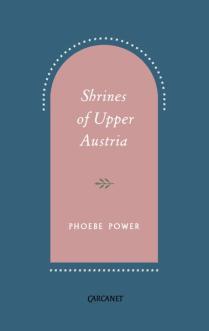
Phoebe Power – Shrines of Upper Austria (Carcanet) – click here for my review of this book.
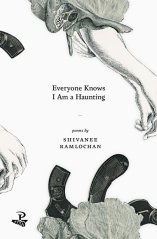
Shivanee Ramlochan – Everyone Knows I Am a Haunting (Peepal Tree Press) – click here for my review of this book.
Richard Scott – Soho (Faber & Faber) – click here for my review of this book.
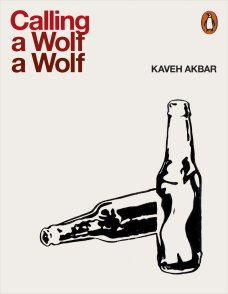
More than most, Kaveh Akbar’s poems read like jointed assemblages of seemingly disparate materials – accumulations, aggregations, medleys, jumbles. Over 91 pages, some work better than others, but on first reading there is such energy, honesty and commitment on show that it’s easy to be swept away. After a while, you begin to think that most of the poems seem cut from a very similar cloth. Amazingly, despite the inventiveness in imagery, the experimentation in form, the mix of cultures (Akbar is Iranian born, now living in the US), a paradoxical same-iness begins to set in and each time I read the book I find myself flagging about half way through.
 Akbar doesn’t generally do the more familiar, simply focused poem. There are a few in the book like ‘Learning to Pray’, in scattered unrhymed triplets, in which a young boy (Akbar allows a straight autobiographical reading usually) watches his father pray, “kneeling on a janamaz” or prayer mat. The wish to emulate the admired father is conveyed pin-sharp. A later poem also starts from childhood and (mostly in loose unrhymed couplets) traces the boy’s later maturing in an America “filled with wooden churches / in which I have never been baptized” (‘Personal Inventory: Fearless (Temporis Fila)’). This poem also attracts threads of two of Akbar’s other main themes: his personal addictions and the ubiquitous sense of living in a fallen world.
The sense of a fall is very powerful and Akbar is often to be found addressing, berating or pleading with a God figure. To this extent there is a religious element to many of Akbar’s poems, but it feels more like Rilke’s address and concern for the angels in the Duino Elegies, for example, where their actual existence is to be doubted though their impact on the way we regard and live out our own lives is profound. Akbar’s opening poem declares God sometimes visits us, “disguised as rust” (‘Soot’). God’s imagined proximity then breeds new perspectives on our own existence, including images of the Heaven from which we must have fallen: “Upon landing, the ground / embraced me sadly, with the gentleness / of someone delivering tragic news to a child”. ‘Recovery’ is also resigned to seeing life as it is really lived as “graceless” and the poem ‘God’ – before it really gets motoring with its examples of economic decline, personal illness, futile work and sense of fear – cries out: “I am ready for you to come back [. . .] / you are needed again”. Once more the mythic paradise is alluded to towards the end of the poem – simply as something that seemed promised yet is signally lacking in this world, so that “I will settle for anything that brings you now”.
 One of the main elements of this fallen state (again Akbar allows a simple autobiographical interpretation) is the damage caused by his past addictions, especially to alcohol. This is the main hook Penguin hang the book on (a cover of empty beer bottles, for example). Poems styled ‘Portrait of the Alcoholic …’ recur throughout the book, but the first section is most focused on this. A familiar comment from W.H. Auden is used to firmly yoke spirit to bottle: “All sins tend to be addictive, and the terminal point of addiction is damnation”. Many of the poems then have this sense of inebriation, muddling, confusion which Akbar’s style of writing is very at home with. ‘Portrait of the Alcoholic with Home Invader and Housefly’ presents the drinker waking up, seemingly attacked by a home invader with a knife. Memories of keeping a housefly on a string intervene, perhaps because in the fly’s death the young boy confronted the idea of death: “I opened myself to death, the way a fallen tree // opens itself to the wild”. The poem returns to the threatening situation, then to more abstract thoughts of scale, a TV programme and the speaker passively returns to sleep. This is a great poem of the self as both endangered and paranoid, distanced from danger, the blurring of perception, thought and memory.
The title poem of the book seems to follow the alcoholic as an in-patient, this time in broken up prose. Thoughts meander again till they find a foothold in the self-recognition that “I answered every cry for help with a pour”. He sees this as a coldness, a turning away and tries to name it and therefore control it better: “if I called a wolf a wolf I might dull its fangs”. But rather than effective combat the wolf has become evermore part of the alcoholic, like two coins on a train track crushed together. ‘Stop Me if You’ve Heard This One Before’ likewise takes the reader into the addict’s mind, the thrill-searching (“I don’t / have drunks, sirs, I have adventures”), the sense of life as boredom without the booze (“we live / on an enormous flatness”). These poems are certainly – as a blurb quote suggests – additions to the “canon of addiction literature”.
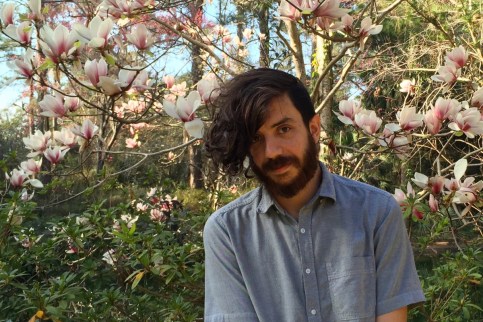
Though Akbar’s choices of form in the book are legion and each one works well enough (which is impressive in itself), form and content don’t always seem inevitably linked. What so many of the poems do have is a forward propulsion which is quite breath-taking, assisted by the frequent absence of punctuation. There is a frenetic restlessness, often matched by leaps of imagery close to the surreal (interestingly one of the poets acknowledged by Akbar is Tomaz Salamun). But I worry there is something close to programmatic about all this. Poems often draw together threads of philosophical musing (several from Rumi), then mix in (tangential) aphoristic-sounding or plain informational statements, then throw in what will be read as direct autobiographical elements. These various constituents are sequenced alongside each other and Akbar’s formal and linguistic energy (like the “old battery” delivering jolts in ‘An Apology’) whirls them round before the reader. In the best poems, there is a strong centrifugal force holding the parts together; in others they are simply spun apart and the reader ends wondering about coherence and consequence.
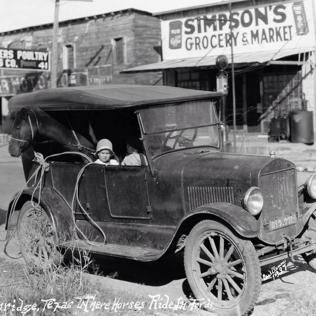 But when it works, these are marvellous poems – and, for my money, this book would make a worthy winner of the 2018 Felix Dennis Prize. ‘Wild Pear Tree’ – as if in one breath – conveys a wintry scene/mental state, recalls halcyon days (of spring) and ends lamenting the forgetting of an “easy prayer” intended for emergencies: “something something I was not / born here I was not born here I was not”. ‘Exciting the Canvas’ is much more risky in its jig-sawing together of disparate elements – a bit of Rumi, the sea, a child’s drawing, a drunken accident, the Model T Ford, crickets, snakes – but somehow manages to hold it all together to make a snap-shot of a troubled, curious, still-open consciousness. And finally, ‘So Often the Body Becomes a Distraction’, dallies with the Rilkean idea of dying young, alludes to recovery from addiction, then grasshoppers, ice-cubes, personal ambitions and the self-image of “rosejuice and wonderdrunk” (which is merely one side of Akbar’s work). This one ends with the not-infrequent trope of a re-birth from burial in the earth. I like these images, suggesting that, for all the fretting about lost paradise, the absence of God, the self-destructiveness of the individual, whatever redemptive re-birth may be possible is only likely to come from our closeness and attentiveness to things about us, an eschewing of the “self-love” Akbar struggles to free himself from in ‘Prayer’: in a lovely phrase –though I’m still figuring it – he concludes, “it is not God but the flower behind God I treasure”.
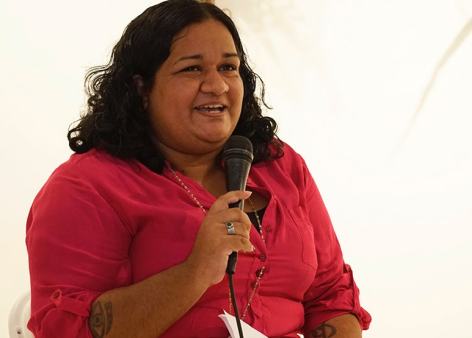
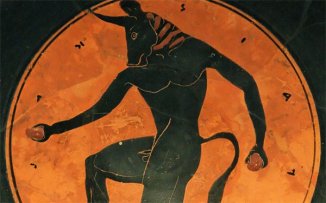 There is a sequence in the middle of the book which offers a clearer view of Ramlochan’s approach. ‘The Red Thread Cycle’, on the face of it, explores the traumatic consequences of rape. How to articulate the event is one theme and there is a magic-real quality which initially seems to add to the horror: “Don’t say Tunapuna Police Station. / Say you found yourself in the cave of the minotaur”. But this shifts quickly instead to reflect how police and authorities fail to take such a literal description seriously, even blaming the woman herself: “Say / he took something he’ll be punished for taking, not something you’re punished for holding / like a red thread between your thighs”. Other poems trace improvised rituals (real and semi-real) to expiate the crime and trace the passage of years. Some moments suggest the lure of suicide with allusions to Virginia Woolf’s death by water, carrying “pockets of white stones”. Seeing the unpunished rapist at large eventually becomes possible: “Nothing drowns you, when you see him again”. The sequence is a lot less chronological than I am making it sound, but what the woman has been doing over the years is, in a striking phrase, “working to train the flinch out of myself”. This has been achieved partly through art. Ramlochan certainly sees such pain as an essential part of the artist’s apprenticeship, that it will “feed your best verse”, and the sequence ends with her reading poems in public as an act of strength and self-affirmation, marking the psychic death of the aggressor: “applause, hands slapping like something hard and holy / is grating out gold halleluiahs / beneath the proscenium of his grave”.
 The gateway to Richard Scott’s carefully structured first book is one of the most conventional poems in it. It’s a carefully punctuated, unrhymed sonnet. It is carefully placed (Public Library) and dated (1998). It’s the kind of poem and confinement Scott has fought to escape from and perhaps records the moment when that escape began: “In the library [. . .] there is not one gay poem, / not even Cavafy eyeing his grappa-sozzled lads”. The young Scott (I’ll come back to the biographical/authenticity question in a moment) takes an old copy of the Golden Treasury of Verse and writes COCK in the margin, then further obscene scrawls and doodles including, ironically a “biro-boy [who] rubs his hard-on against the body of a // sonnet”. Yet his literary vandalism leads to a new way of reading as – echoing the ideas of Eve Kosofsky Sedgwick – the narrator suddenly sees the “queer subtext” beneath many of the ‘straight’ poems till he is picking up a highlighter pen and “rimming each delicate / stanza in cerulean, illuminating the readers-to-come . . .”


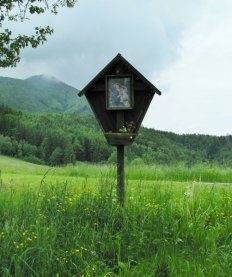
 You will have gathered that one of Power’s things is to mix English and Austrian German. This happens several times in ‘A Tour of Shrines of Upper Austria’ (though in this book we only get 7 parts of the full sequence). An observer stops at various shrine sites, jotting down some thoughts and taking a picture or two. Nothing is developed though Power’s poems do show an interest in religion on several other occasions. ‘The Moving Swan’ opens with a centre-justified prose description of candles flickering in a cathedral and another poem is drawn to the grave of two goats, observing: “two heaps of ivy/straw / one unlit red tealight”. And ‘Epiphany Night’ is a more extended series of notes recording a local celebration with bells, dressing-up, boats, lanterns. This is all observed in loosely irregular lines by the narrator from her “wohnung” (apartment). To wring all engagement or emotional or imaginative response from such a text is, I suppose, quite an achievement but to spend 70-odd pages in such company really is wearisome.


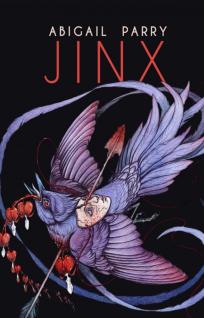
 Mr Knightley is an absent figure in that poem, but Jinx is repeatedly visited by powerful, seductive, dangerous males who – in ways now very familiar since Angela Carter started the ball rolling – are morphed into animal figures. ‘Hare’ is an early example, leaning invasively over the female narrator at a wedding party, “those fine ears folded smooth down his back, / complacent. Smug. Buck-sure”. As in ‘Daddy’, the woman is drawn to the man despite (or because of) his obvious threat but unlike Plath’s powerful final repulse (“Daddy, daddy, you bastard, I’m through”), Parry’s narrator is fatalistic: “Your part is fixed: // a virgin going down, / a widow coming back”. Elsewhere, ‘Goat’ and ‘Magpie as gambler’ work similarly and ‘Ravens’ is a particularly Plathian version: “In fact, every man I thought was you / had a bird at his back / and a black one too”.
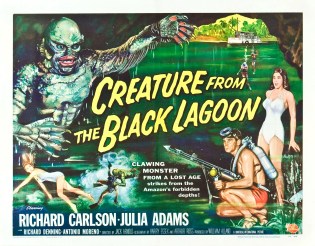 For all the frenetic playfulness of the book, Parry’s mostly female narrators and subjects are beset by threats. ‘The Lemures’ re-Romanises the creatures into psychological pests, aspects of self-doubt perhaps, appearing on the furniture, at the roadside, in a reflection in a lift door: “They will steal from you. Pickpockets, / rifling the snug pouches at the back of your mind”. Parry is evidently a fan of mid-twentieth century film and she explores Creature from the Black Lagoon and The Wolf Man from the perspective of dark powers surfacing. The question being asked is whether such forces represent the overturning of the real self or the manifestation of it in contrast to what a later poem calls “the dreary boxstep of propriety”. Locks and keys recur in the poems – are we confined, or about to set something loose, or to leap to real freedom?
 Martyn Crucefix