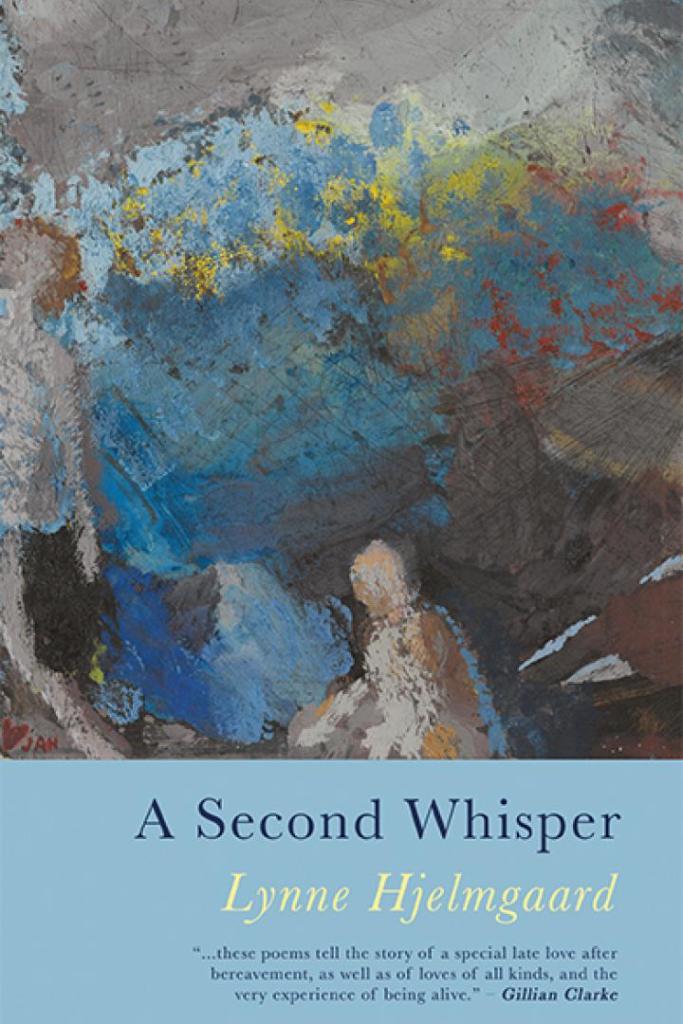
Last night I was at the Poetry Café in Covent Garden for the launch of two new collections from Seren Books. Lynne Hjelmgaard was reading from A Second Whisper and Mary J. Oliver was launching her debut collection, Jim Neat: the Case of a Young Man Down on His Luck. Oliver’s book is a curious, thought-provoking mix of family research and prose/poetic fictions. But I’ve known Hjelmgaard for a few years now as a workshop colleague and as a friend of Dannie Abse and I wanted to gather some thoughts here on her new poems.
In her playfully titled poem, ‘Ode to a Danish Lamp’, Lynne Hjelmgaard constructs a paean to a piece of electrical equipment which ends rhetorically, “Why do you move me so?” Some clues to the answer are scattered through the poem; they lie in comparisons. The lamp is an example of “Nordic metallic cool”, beside which the speaker – “a mere human” – feels humbled. She and the rest of the room, we are told, arrange themselves about the lamp which hence serves as a focal point and even a source of “answers”. It’s as if the lamp is wired up to a clearer, less divided, perhaps purer world:
[. . . ] the charged interior, a territory,
where no country nationality race
or religion has any significance.
In contrast, the human figure is more embedded in a world of time, place and quotidian specificity while the lamp emerges with its “fine, oh so thin aluminium rim” as a denizen of a less troubled realm. The speaker is moved because excluded from such a realm and the majority of the poems in A Second Whisper focus precisely on our more compromised, familiar world, particularly the ‘merely human’ experiences of time, memory and loss.

Without being a particularly philosophical poet, Hjelmgaard writes as someone who is an “expert at loss”. Another less typical poem describes – in great detail – Brooklyn Bridge and the area around it (the poet was born in New York City). She remembers sailing out under the bridge:
Manhattan is a chain with many links,
some are broken, lost and never repair,
but others can be retrieved even at a distance.
For what can shine so brightly at sea
but a city, once loved, left behind?
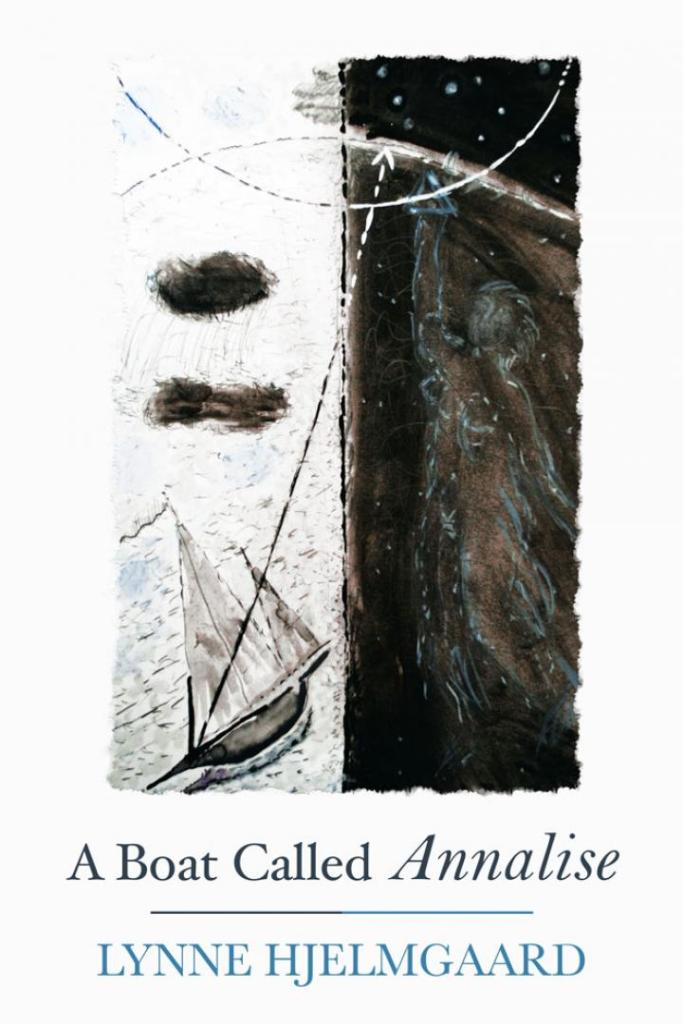
Hjelmgaard’s focus on links lost or remembered is probably hard-wired into her constitution (these thematic roots usually are) but it has also been provoked by biographical influences. Her 2011 book, The Ring (Shearsman Books) was dedicated to the memory of her Danish husband, Stig – who died in 2006 – and followed an American woman’s travels around Europe, mourning and negotiating that loss. Dannie Abse, among others, praised those poems: “Widowhood allows them to acquire a poignant universality”. Five years later, A Boat Called ‘Annalise’ (Seren Books), was full of more poems of remembrance, evoking the sea journey the newly married couple made out of New York to Europe, via the Caribbean.
There are further poems written to and about her husband in this new book. In ‘As We Silently Agree’, the husband appears to the widow, “in some kind of afterlife”, and is seen busying with a boat’s anchor chain, searching the ship’s log and weather charts. This is perhaps a dream poem:
Our fingers clasp in recognition
as we silently agree:
what does it matter now
if you don’t keep the course?
And ‘Scorpion Hill’ may be another example of dreamwork, the wife this time revisiting a once-shared house in the Caribbean. Its final image is of many moths clustering round “a single light bulb / left on during the night”. These are fine poems of time and sustaining memory – that bulb still burning – in which the past and those lost within it are shown to revisit the survivor.

Hjelmgaard’s treatment of this traditional theme is neither religious nor consolatory in any facile way. The pain of great loss is heartfelt and yet she manages to persuade the reader – it’s less intellectual than that, maybe she draws her readers in to the actual experience – that what lies in the past still retains is power to evoke pleasure and even that the future’s gifts are to be welcomed, even anticipated. In ‘To a Chestnut Tree’, addressing the tree in its autumnal state, the narrator is sure, “There will always be another one. / And another. // Loss can be moved through like a room”. What a magnificent line that last one is. There is a wisdom in it, however modestly it may be presented.

Time takes – but time also provides. Another poem of trees has a fir leaning eventually into a “beloved palm” – though it may take a century or two of slow growth. A lonely tamarisk on a cliff top also has the capacity to “wait until it can drink / from the bay eighty feet below”. Hjelmgaard finds her themes in the smallest incidents. Unpacking a suitcase after a journey, she finds she has brought two extra items home with her. One is a fossil of a snail which seems to represent a determined persistence through time (60 million years perhaps, in this case). The other – a flighty stowaway – is a spider which she finds “already busy / making yourself at home”. The spider evokes an improvisatory optimism, an adaptability, even an adventurousness, which I see as some of the most distinctive elements in the themes of Hjelmgaard’s work.
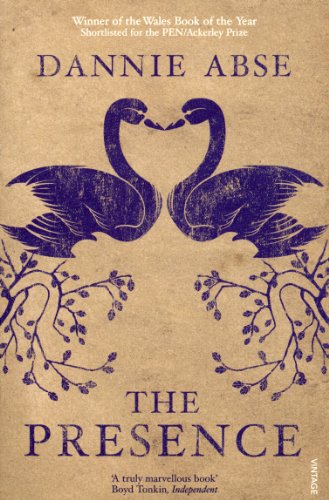
It’s these qualities to which Gillian Clarke is responding in her comment on A Second Whisper, where she finds in the book “the story of a special late love after bereavement”. In recent years, the British poet who has written most powerfully and movingly about bereavement and the encroachment of the past into the present is Dannie Abse. This is from his poem ‘The Presence’ about the loss of his wife, Joan:
It’s when I’m most myself, most alone
with all the clamour of my senses dumb,
then, in the confusion of Time’s deletion
by Eternity, I welcome you and you return
improbably close, though of course you cannot come.
The opening 14 poems of A Second Whisper explore the loving relationship that sprung up between Hjelmgaard and Dannie Abse after the deaths of Stig and Joan. Her opening prose piece takes us directly into everyday details. The two bereaved poets meet: “And for a time it was the four of us. Though one day, without ceremony, we noted their absence”. Thus set free, the ones still living proceed, though along no clear path, “wherever poetry and Eros chose to take [them]”
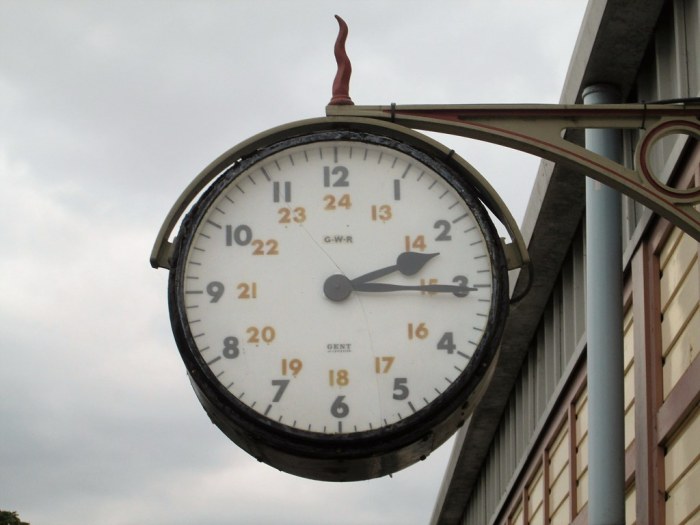
Even at their first meeting – on a train journey back from the Torbay Poetry Festival – the presence and absence of time was notable. Minutes were not to be wasted in the presence of the older poet, says the younger narrator. But mysteriously – this is in late October – the waitress at the station café is seen taking away the clock to change the hour. A photograph of the two poets at a reading shows the younger woman “less sure of herself”, while Abse is more comfortable with the attention. But at 85 years old, Abse begins appearing in these poems as more and more in decline. “Aged and dying you grew more tender”, as ‘A Second Whisper’ puts it. In this poem – as in several others – Hjelmgaard is visiting Abse at home.
I knew just how to open your front door quietly.
Its lock a whisper, a second whisper to shut.
This image – absolutely precise in its remembrance, yet also powerfully suggestive – is like the earlier line about walking through loss as through a room. The first whisper has a respectfulness, concerned with quietude, with the sensitivity of the artist, the closeness of death. The second whisper is full of ambivalence: protective perhaps from the noisy, nosey world, wanting to secure the intimacy, wanting to defend the loved one from the inevitable, yet a foreshadowing of that very inevitability.
‘A Thief Is in the House’ has death portrayed as an invader, breathing heavily, thumping up the stairs to the dying figure whose “eyes [are] prepared // for nothingness”. But these poems are not overwhelmed by grief. As if taking a leaf out of Abse’s own poems of mourning and remembrance, Hjelmgaard’s predominant tone is one of recall and revisiting – even of re-visitation. Walking alone on Hampstead Heath, she hears the lost lover chanting a Lorca poem; because one day they sheltered under an awning on Golders Green Road, every time it rains now, “the rain /stops everything / to think of you”. And in an exquisite lyric, ‘Speak to me Again at Dusk’, Hjelmgaard yearns to resume her conversations with the dead poet, yet her tone – which might have been one of pleading and despair – in fact retains a clear appreciation of the lasting value of what has been and a pleasured openness to the present (hear those noisy roosters in a moment!). Such deep-grained attitudes seem to have been a mutual common ground between these two writers and perhaps was one of the constitutive elements in their late-flowering love:
These lines among many lines
are words just for you
and the roosters that speak them
just before dawn.
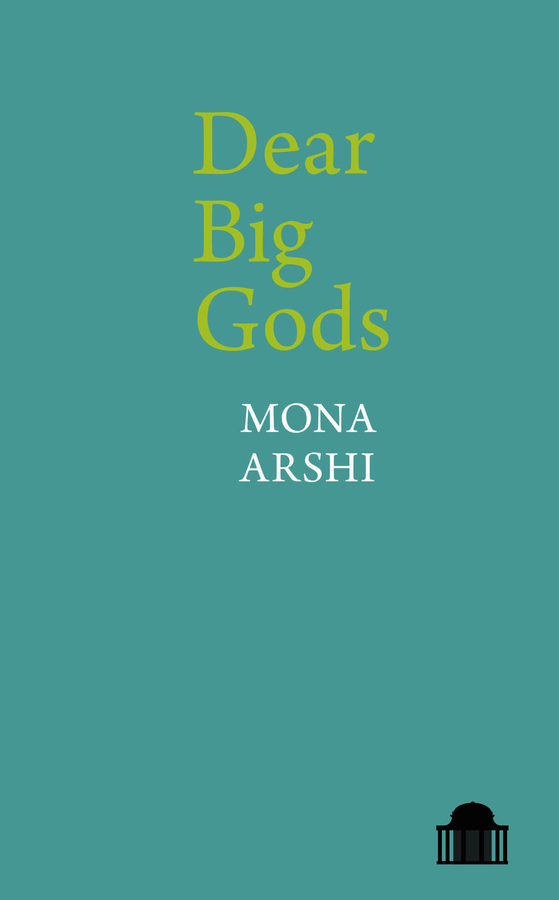 In a recent launch reading for her second collection, Dear Big Gods (Pavilion Poetry/Liverpool University Press, 2019), Mona Arshi suggested
 As the blurb suggests, these poems are indeed “lyrical and exact exploration[s] of the aftershocks of grief”. But ‘Everywhere’ adopts a little more distance and develops the kind of floating and delicate lyricism that Arshi does so well. The absent brother/uncle is still alluded to: “We tell the children, we should not / look for him. He is everywhere”. As that final phrase suggests, the rawness of the grief is being transmuted into a sense of otherness, beyond the quotidian and material. It’s when Arshi takes her brother’s advice and lets go of “definitive knowledge” that her poems promise so much. ‘Little Prayer’ might be spoken by the dead or the living, left abandoned, but either way it argues a stoical resistance: “I am still here // hunkered down”. In a more conventional mode, ‘The Lilies’ develops the objective correlative of the flowers suffering from blight as an image of a spoliation that hurts and reminds, yet is allowed to persist: “I let them live on / beauty-drained / in their altar beds”.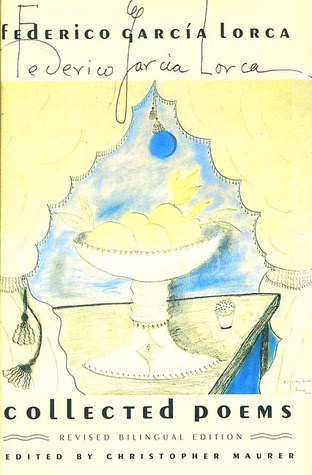
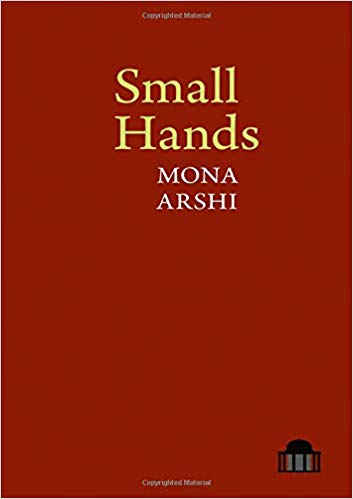 Arshi’s continuing love affair with ghazals also seems to me to be an aspect of this same search for a form that holds both the connected and the stand-alone in a creative tension. ‘Ghazal: Darkness’ is very successful with the second line of each couplet returning to the refrain word, “darkness”, while the connective tissue of the poem allows a roaming through woods, soil, mushrooms and a mother’s praise of her daughters. Poems based on – or at least with the qualities of – dreams also stand out. The doctor in ‘Delivery Room’ asks the mother in the midst of her contractions, “Do you prefer the geometric or lyrical approach?” In ‘The Sisters’ the narrator dreams of “all the sisters I never had” and within 10 lines Arshi has expressed complex yearnings about loneliness and protectiveness in relation to siblings and self.
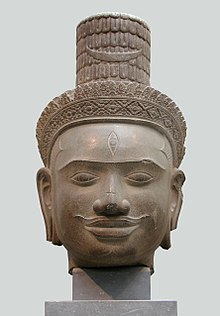 So, in ‘My Third Eye’, the narrator is “more perplexed than annoyed” that her own third eye – the mystical and esoteric belief in a speculative, spiritual perception – has not yet “opened”. The poem’s mode and tone is comic for the most part; there is a childish impatience in the voice, asking “Am I not as worthy as the buffalo, the ferryman, / the cook and the Dalit?”. But in the final lines, the holy man she visits is given more gravitas. He touches the narrator’s head “and with that my eyes suddenly watered, widened and / he sent me on my way as I was forever open open open”. The book also closes with the title poem, ‘Dear Big Gods’, which takes the form of a prayer: “all you have to do / is show yourself”, it pleads. The delicate probing of Arshi’s best poems, their stretching of perception and openness to unusual states of emotion are driven by this sort of spiritual quest. Personal tragedy has no doubt fed this creative drive but – as the poet seems to be aware – such grief is only an aspect of her vision and not the whole of it.
 The next section of the poem displays some of Lorca’s startling, surprising images: the “stars of frost”, the “fish of shadows”, the fig-tree’s “sandpaper branches”, the mountain is a “a thieving cat” that “bristles its sour agaves”. These are good examples of Lorca’s technique with metaphor: to place together two things which had always been considered as belonging to two different worlds, and in that fusion and shock to give them both a new reality. But these lines are perhaps really more about raising the narrative tensions in the poem through rhetorical questions such as, “But who will come? And where from?”
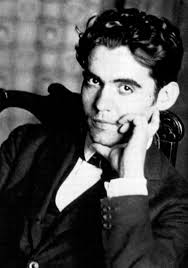 So up they climb. We don’t know why, but the atmosphere here is dripping with ill omen: they are “leaving a trail of blood, / leaving a trail of tears”. Then there is another of Lorca’s images yoking together unlikely items. As they climb to the roof-tiles, there is a trembling or quivering of “tiny tin-plate lanterns” and perhaps it’s this that becomes the sound of a “thousand crystal tambourines / [that] wound the break of day”. Lorca himself chose this image to comment on in his talk. He says if you ask why he wrote it he would tell you: “I saw them, in the hands of angels and trees, but I will not be able to say more; certainly I cannot explain their meaning”. I hear Andre Breton there, or Dali refusing to ‘explain’ the images of the truly surreal work. In each case the interpretative labour is handed over to us.
 Did they know this? It appears not. But who is she? Daughter? Lover? Both? Is this really what the two men find there? For sure, there is some mystery about the chronology because the seeming explanation of the killing is couched as a flashback: “The dark night grew intimate / as a cramped little square. / Drunken Civil Guards / were hammering at the door”. But Lorca often plays fast and loose with verb tenses. Was this earlier? Were they in search of the rebellious youth? But they found his girl-friend? Hanging her on the rooftop? Is the house owner her father? Does he know what has happened? Is this why his house is not his own anymore? Is this why he is no more what he was?
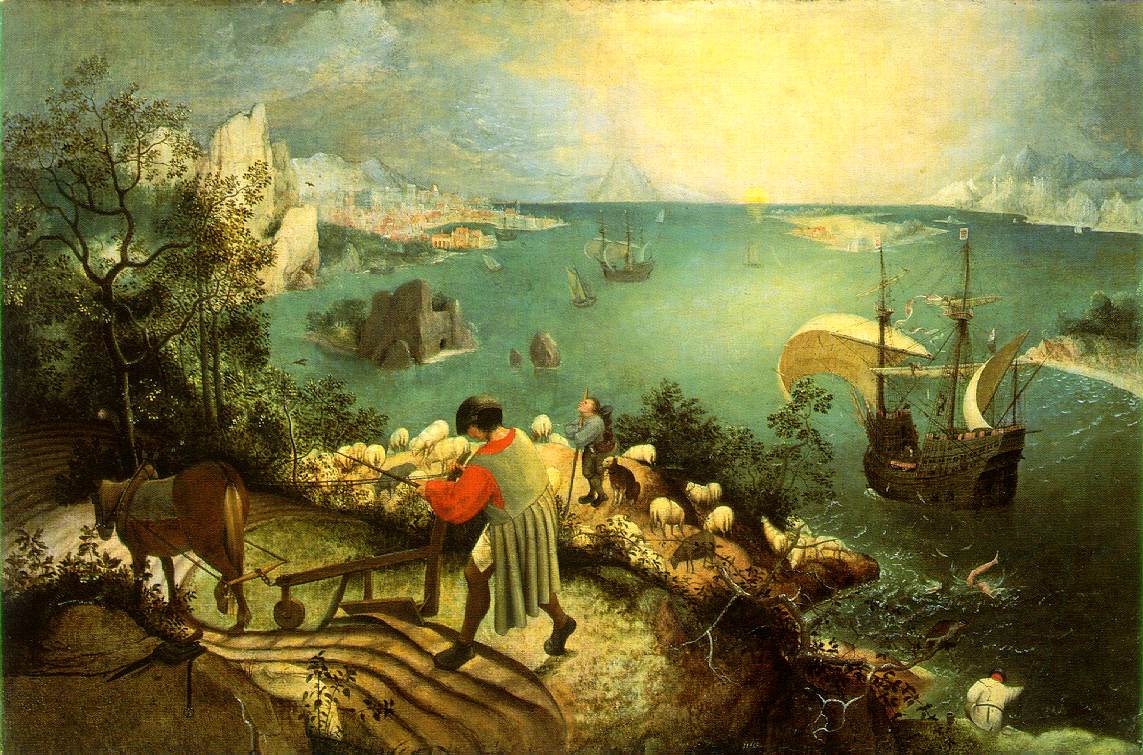 The only certain thing is that the poem does not reply. It ends with a recurrence of that opening yearning – now it’s read as a more obviously grieving voice – though it’s not necessarily to be read as the young man’s voice. It’s the ballad voice, the one I took so long to really grasp in Lorca’s work. It is a voice involved and passionate but with wider geographical, political and historical horizons beyond the individual incident. Like Auden’s ploughman in ‘Musee des Beaux Arts’, glimpsing Icarus’ fall from the sky, yet he must get on with his work, ‘Sleepingwalking Ballad’ returns us in its final lines to the wider world:
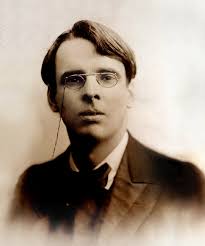 I really didn’t know it at the time, but the song’s words are, of course, by W.B. Yeats. It is his poem ‘The Song of Wandering Aengus’, from The Wind Among the Reeds (1899).
 Just one last detail from this great poem. Juan Antonio de Montilla is killed in the fight and – in one of Lorca’s characteristic jump cut edits (more of that in a minute) suddenly (it seems) the “judge and Civil Guard / come through the olive groves”. Somebody – a participant, one of the old women? – gives them an account of events in the form of exactly one of Lorca’s startling metaphors. This may have been a quarrel over a card game, or a girl, like so many others, but Lorca dizzyingly elevates it into an historical, even epic context:
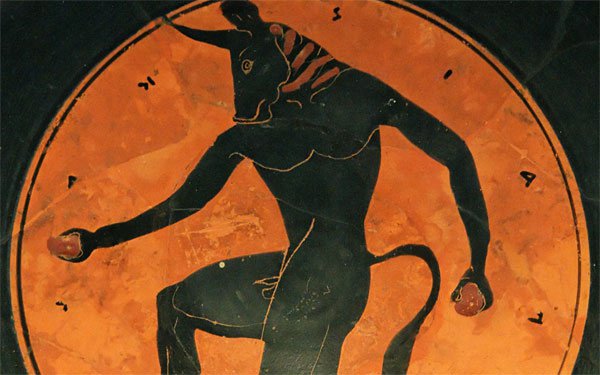 There is a sequence in the middle of the book which offers a clearer view of Ramlochan’s approach. ‘The Red Thread Cycle’, on the face of it, explores the traumatic consequences of rape. How to articulate the event is one theme and there is a magic-real quality which initially seems to add to the horror: “Don’t say Tunapuna Police Station. / Say you found yourself in the cave of the minotaur”. But this shifts quickly instead to reflect how police and authorities fail to take such a literal description seriously, even blaming the woman herself: “Say / he took something he’ll be punished for taking, not something you’re punished for holding / like a red thread between your thighs”. Other poems trace improvised rituals (real and semi-real) to expiate the crime and trace the passage of years. Some moments suggest the lure of suicide with allusions to Virginia Woolf’s death by water, carrying “pockets of white stones”. Seeing the unpunished rapist at large eventually becomes possible: “Nothing drowns you, when you see him again”. The sequence is a lot less chronological than I am making it sound, but what the woman has been doing over the years is, in a striking phrase, “working to train the flinch out of myself”. This has been achieved partly through art. Ramlochan certainly sees such pain as an essential part of the artist’s apprenticeship, that it will “feed your best verse”, and the sequence ends with her reading poems in public as an act of strength and self-affirmation, marking the psychic death of the aggressor: “applause, hands slapping like something hard and holy / is grating out gold halleluiahs / beneath the proscenium of his grave”.


 Martyn Crucefix