Bertolt Brecht’s ‘Of Poor B.B.’

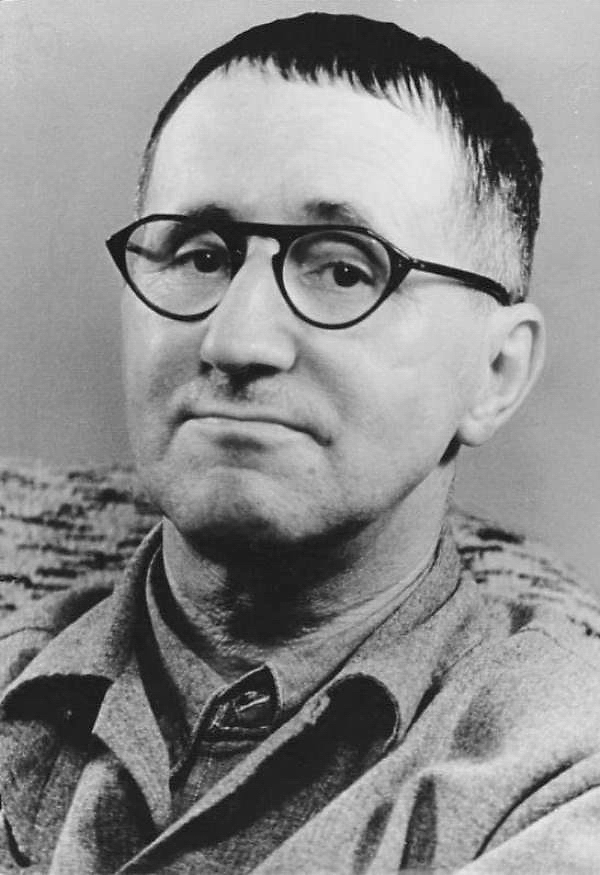
I have taken too little heed of BB, the poet. The chances are that you have too. This would certainly have been the case in 1976 when John Willett and Ralph Mannheim published Brecht’s Poems 1913-1956 (Eyre Methuen) with its stellar cast of translators. The Introduction to that selection pointed out that, until well after his death in 1956, “Brecht the poet remained like an unsuspected time-bomb ticking” under world literature. It’s our desperate bad luck that most of us have only ever been encouraged to approach Brecht through his dramatic theories, then his plays, “only coming to the poems as a by-product of his theatre work”.

94584

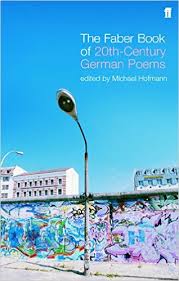
Things may have changed more quickly on mainland Europe, but only 10 years ago Michael Hofmann could still argue that the “prevailing British view of [Brecht was] as an arid theorist of drama [. . .] and  the author of a few baffling but conniving plays” (Introduction to The Faber Book of 20th Century German Poems). In fact, Hofmann thinks of Brecht as the writer who took “poetry into the twentieth century”, its single most crucial figure. Against the claims of Eliot, Valery or Lorca this may seem a bold statement but Hofmann is thinking of poetry as “a living counter-force in socio-political reality [. . .] poetry of dissent and fear and protest and rebuke and pleasure”, an art that is “heartening and inspiring”. There is some risk of this drifting back towards BB the purveyor of proletarian political messages, but Hofmann’s contrast of Brecht with “his great counter-pole” in German poetry, Gottfried Benn, a poet of more familiar “private griefs and musics, of monologue, of fascination”, makes Brecht’s distinctive contribution clearer.

imgres

In beginning to explore Brecht’s poetry I’ve been looking at poems from 1925-1928 and, like plenty before me, I’ve become intrigued by ‘Of Poor B.B.’ (German original and Michael Hamburger’s translation here; Hofman’s translation read here). Apparently the poem derives from lines jotted down on a speeding express train at 9.30pm in April 1922, when Brecht was travelling home to Augsburg after spending a difficult first winter in Berlin. The impact of the Great War is still visible here but Brecht is also very interested in exploring the impact of big city life. ‘A Reader for Those who Live in Cities’ was the title of a projected group of poems from around 1926.

Bertolt-Brecht

From the notes in Poems 1913-1956 it’s possible to reconstruct Brecht’s early draft which, compared to the final published version, demarcates town and countryside more simplictically: “I, Bertolt Brecht, came out of the black forests.” Paradoxically, the use of his own initials in the title and the bold use of his full name in the opening line, actually distances the poem from the straightforwardly autobiographical. BB is a representative figure and his move from countryside to town (is this the Industrial Revolution?) was wholly passive, beyond his control, as he moved while still in his pregnant mother’s body. In fact Brecht’s mother had died before he began visiting Munich and Berlin and the poem claims that the “coldness” of the forests remains inside BB and will do so till his “dying day”. Quatrains 3, 4 and half of 5 of this ballad-like ABCB poem-draft also characterize the cold, unrestful, uncomfortable woods, even to the extent that the pine trees “piss” with rain and the birds are “vermin”.

The early draft’s modernist anti-pastoral seems to be confirmed by the opening of the second quatrain: “In the asphalt city I’m at home” and quatrain 5 follows the noise of the bird-vermin in the trees with the seemingly-content city-dwelling BB: “At that hour in the city I drain my glass”. But there is clearly trouble in the urban paradise. Quatrain 2 portrays BB at ease (with a dig at religion in describing newspapers, tobacco and brandy as ‘sacraments’) yet there is something unsettling in the three adjectives that follow: BB is mistrustful, lazy content. Having drained his glass and stubbed his cigar he “worriedly” goes to sleep. In quatrain 6 of the draft the reasons for this worry are clarified (one of the changes in the final version is to remove some of these more logical connections) as BB plays a guitar to an uncomprehending audience and has “difficulty understanding” himself as the city dwellers seem “different animals”. Quatrain 7 wonders whether this is because he has been “carried off to paper and women” (which I take to mean the ‘pleasures’ of the city) from the black forests which still thrive “in me” along with the “roar of pines”. So the early draft suggests BB’s displacement to the city has not achieved an escape from the darkness and coldness of the black forests of his birth and he seems therefore ill-equipped to live truly contentedly in the modern city.

hofmann2
Michael Hofmann

Brecht’s revisions of the poem between 1924 and 1925 make it both more modern and more mysterious. Hofmann has described the result as “strange and pitiless”. The most clear change is in the final version’s quatrain 3 where BB makes efforts to fit into city life (being friendly, polite, wearing a hat), finding other inhabitants “animals with a quite peculiar smell” (I’m now quoting Michael Hamburger’s rhymed translation). But then BB admits “does it matter? I am too”. The draft’s more ‘easy’ theme of the outsider is being dismissed. Two new stanzas follow in which BB seems ever-more at home in the city, with both its women and men. With the former he is “untroubled”, boastfully suggesting he is “someone on whom you can’t rely”. With the men he heartily hails them, feet up on a table as they say “things will get better for us” but he knows not to “ask when”. BB is now wholly complicit in the urban insincerities, the lies and pretence that make life bearable.

MichaelHamburger
Michael Hamburger

So the changes show neither city nor the black forest offers any real contentment or fulfillment and it’s this profound sense of alienation that Hofmann links to the Modernist pessimism of an Eliot: “nature and culture, friendship and love, are all travestied and diminished”. This is why BB still falls asleep “worriedly”. In the new stanzas (7, 8 and 9) this pessimism becomes positively apocalyptic as the poem becomes about a cultural moment, a whole culture. Quatrain 7 uses the first person plural significantly; we are “an easy generation” (Hamburger) or “a whimsical tribe” (Hofmann) living in great cities that we hubristically believe are “indestructible” (Brecht refers to Manhattan here, a place he had yet to visit in 1924). In reality, of our cities only the “wind” will survive and we are (in our hearts and as we fall asleep perhaps) dimly aware that “we’re only tenants, provisional ones / And after us there will come: nothing worth talking about”.

21_bb-yeni

Had the poem ended here the comparison with Eliot’s 1922 wasteland pessimism would be more apt but, in the apocalyptic “earthquakes to come”, BB hopes to keep his Virginia cigar alight and whether we read this as a perky priapic image, a gesture of New World hope, or insouciant resilience to prevailing socio-political conditions, it’s here that we find something heartening and inspiring, even if the tone is mostly pyrrhic. The concluding balladic repetition (“I, Bertolt Brecht, carried off to the asphalt cities”) now reads like a more determined declaration of identity, a will to life, to a better world. This is despite the whole poem’s extraordinarily thoroughgoing portrait of alienation and cultural decadence. There’s life in poor BB yet.

181-NKSwingle_Pucho-Cigars1-726x484

One of the Best Poets of the Present Moment in France

So here’s a poet well worth getting to know (if you don’t already). The new issue of Modern Poetry in Translation contains a new translation by Marilyn Hacker of the great contemporary French poet, Guy Goffette. Hacker has referred to Goffette as “one of the most unabashedly lyrical contemporary French poets, who claims Verlaine . . . as one of his literary godfathers”. He’s an admirer of Auden and his own work is not oppressively ‘literary’, not referential, not obscurely self-referential. He’s a poet somewhat to the ‘English’ taste (OK – you got me – to my taste), using quotidian words, everyday expressions, making them new, re-investing them with humour, connotation and emotion. Hacker has argued that “after a period in which much of French poetry eschewed the concrete, the narrative and the quotidian”, Goffette’s poems have recently found an enthusiastic readership. Yves Bonnefoy admires him as a writer who “has decided to remain faithful to his own personal life, in its humblest moments. He keeps things simple, he is marvellously able to capture the emotions and desires common to us all . . . without question one of the best poets of the present moment in France”.

images

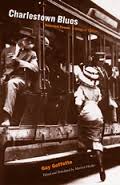
The new poems in MPT – a sequence of 6 sonnet-like pieces published in 2009 – make up an ‘Elegy for a Friend’, the poet Paul de Roux. The form used is a thirteen-liner, made up of three usually unrhymed quatrains and a last line which sometimes, though not always, reaches the classic 12 syllables. Since the early 1990s, this has become “Goffette’s ‘signature’ strophe” (Hacker again), whether used as part of a sequence or standing on its own. I reviewed Goffette’s last recent major appearance in English, Charlestown Blues, for Poetry London in 2007. I reproduce the review here and add comments on the new poems at the end.

The longer term coherence and success of a poet’s work is not – ought not – to be something willed. Like the oyster with its grain of sand, there is surely always something fortuitous about it. Marilyn Hacker’s fine translations from the French of Guy Goffette’s work suggest that, in this instance, Rimbaud’s declaration that “You never leave (“On ne part pas”) has proved a spectacularly productive starting point.  Rimbaud’s comment suggests restlessness and desire for the other, yet also the tragic recognition of human limits as well as the idea that imaginative travel is more real than any form of mere physical tourism. These are indeed the topics and tensions that weave through Charlestown Blues.

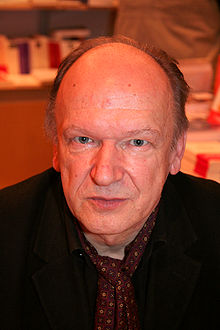
220px-Guy_Goffette_20080316_Salon_du_livre_1

Hacker’s introduction characterises Goffette in contrast to the Anglo-American preconception of contemporary French poets and not only due to his interest in form. She suggests we see modern French poetry as “abstract, more concerned with concepts than with human experience  . . . resolutely “difficult””. Goffette’s work, in contrast, is diffused with “humour, longing, tenderness, nostalgia and occasional cruelty” and, though Hacker over-states his likeness to James Wright and Seamus Heaney, the general thrust of her argument is right. Born in 1947, of the same generation as our Motion and Raine, Goffette grew up on the shifting French/Belgian border (travelling without moving?). He now lives in Paris but still tends to look to the provinces while the metropolis is more often “a place from which his speaker is perpetually ready to depart” (Hacker’s introduction).

The title sequence, using a decasyllabic dixain and written during a residence in Rimbaud’s Charleville, seems scatter-shot and observational but with a strong thread of erotic longing: “your drying / stockings and scanties of a nun at bay – / poisonous flowers for a lonely man” (‘Letter to the Unknown Woman across the Street, 1’). Sex is one form of ‘leaving’ and Goffette catches such longing vividly: “oh beautiful stranger, / that creature who’s so often on the move” ((‘Letter to the Unknown Woman across the Street, 2’). Goffette’s work certainly revels in such demotic pleasures and Rimbaud himself puts in an appearance shouting “Fuck off! to puttering poetry” (‘February ‘98’). Earlier he wrings “the neck of the azure, which always puts / too much honey on the tails of verse-worms” (‘Farewell, Chateaux’). In the context of French poetry, it is this combative stance that leads Goffette towards the more grounded – even sordid – presentations of life that Hacker argues make him attractive to readers of English and American poetry.

imgres

Goffette’s natural reach approximates to the sonnet and these are frequently arranged in sequences, such as in ‘Waiting’. Largely from the point of view of a woman addressing her lover, these pieces suggest that it is the ultimate ‘leaving’ of death as well as desire that fuels his poetry. Here, eroticism is more explicitly a stay against death and time – “the judgment of this absence crushing me // like an insect on the pane” – though the final poem ventures a kind of romantic nostalgia, suggesting that even sex must fall short of human longing. The woman is made to envisage an island “where the surprise / of being lasts . . . the heart is still / in place, captain of the old ship”. This paradisal view is left to stand in stark contrast to the lovers’ reality, as they undress each other “amidst time’s peelings”.

So Goffette’s themes are the classical ones of love, time and death and though his diction is familiar enough with the contemporary, much of his imagery has a timelessness in its reference to journeys, rivers, trees, rooms, seashore, roads, stars. ‘Boarding the Streetcar: Variations’ responds to a photograph of New York in 1900 in which a woman climbs onto a streetcar watched intently by a male passenger and a (male) conductor. In a miracle of economy, the passenger’s viewpoint is sketched in and within six lines the moment of voyeuristic pleasure has come to represent “everything”:

the swift brightness of minnows

in a current, the taste of the first

fruit swiped from a market-stall, and how

the hazel switch whistled in the air

when it was about to strike a child’s

back

Yet when the passenger tries to articulate this moment he can manage “nothing” or the best he achieves are “words // like paper littering the grass after a fair / when shadows as they lengthen chill our hearts”. In contrast, the conductor’s view of the incident suggests its mix of beauty and danger, its very ordinariness, provides him with some memory which makes “the blood of things beat lengthily like a heart / in the shadow of dead rooms”.

imgres

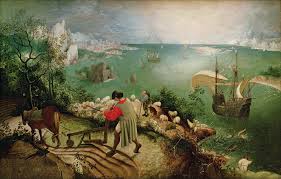
Hacker’s selection covers ten years from 1991 and concludes with a longer sequence published in 2001. ‘The Raising of Icarus’ is based on the same Breughel painting that inspired Auden’s ‘Musee des Beaux Arts’. Constructed from sonnet-like pieces once more, Goffette does not dwell long on the painting itself and instead seems to be observing people in the Paris metro, “running // against each other, same face same / night, and each one was night for every other” (‘In the Depths of the Labyrinth’). Rimbaud’s phrase is again apposite; these commuters travel without arriving anywhere and yet “To embark and not return is what they wanted” (‘In the Depths of the Labyrinth’). Later, they turn on the Shepherd in the painting who – they enviously feel – leads an idyllic pastoral life, while they must be “winning gold . . . cheers . . . bread” (‘The Shepherd Reproached’). It may be that the Shepherd is an artist figure but his response is that his life is no different to the crowd, though the one thing he does know is that death and the final dissolution of things is what serves to “raise every object up from darkness” (‘The Shepherd Answers’).

Goffette2
Guy Goffette

Death is, of course, the subject of the more recent sequence, ‘Elegy for a Friend’. It opens with memories of two friends in their youth, “When life was strong”, once again drawing on Rimbaud’s sense of restlessness, the youthful ease of travel, transformation, the passage of time unnoticed, yet (ominously) “it was already dancing there”, the shadow that “burns all shadows”. In the second section, temporal words become sand grains, become silence that eventually “takes up all the space and screams”. Yet, as the Shepherd figure in ‘The Raising of Icarus’ suggested, it is the presence of death that leads the poet to his creative “double question” about identity and time. If there is any regret, it is that this wisdom was not learned soon enough and, like stricken teenagers, the youthful poets sat too long in their “afflicted bedrooms”, or bickered unsympathetically, ignorant for too long of the real “desert of life”. Goffette’s elegy maintains a classical distance and relative impersonality with the sixth section using the first personal plural pronoun to sound more universal than intimate: “One day we must depart”. It’s a bleak ending full of thorns, scorched earth, what remains is “paltry”. There do remain the words on paper, “read and reread”, but their author is ambiguously described as a “blind man dancing in the fire”. Do we stress the blindness, our ultimate ignorance? Or the all-consuming fire? Or should it be the struggle to make art, the act of dancing?

This is challenging and wonderful contemporary poetry and – though the parallel text faces each page in Charlestown Blues – I seldom found myself checking the original which suggests that Hacker is doing a magnificent and valuable job of bringing Goffette’s work into English.

goffette3

Results Are In: How Do You Judge a Poem? (2)

One of my most visited blogs in recent months was the provocatively titled How Do You Judge a Poem?, sparked by my judging the Torriano Poetry Competition 2015. The results are now in the public sphere and on the evening of Sunday 12th April, at the Torriano Meeting House in Camden, north London, many of the winners in the Competition gathered to share their poems.

All proceeds go towards funding the future work of the Torriano Meeting House and this year as there were no plans for winning and highly placed poems to appear in print, I thought I might grace this blog with them. The authors whose poems are included below have kindly given permission for them to appear and I have also included my own brief comments – all this in continuing pursuit of the vexed question of what it is that makes a good poem.

At the beginning of the awards evening I alluded to the sad news of the recent death of Swedish poet and Nobel prize-winner, Tomas Transtromer. In reading his work again in the last week or so, I was struck by this passage from his 1970 poem ‘The Open Window’ (in Robin Fulton’s translation). I thought it relevant to the evening as it starts in a familiar world, undergoes a mysterious transformation, all the while never losing sight of the need to keep our eyes open, our senses open. This for me is what poetry can do, must do perhaps, if we insist on setting poems into a competitive environment.

I stood shaving one morning

before the open window

one storey up.

I switched the shaver on.

It began to purr.

It buzzed louder and louder.

It grew to an uproar.

It grew to a helicopter

and a voice – the pilot’s – penetrated

through the din, shrieked:

‘Keep your eyes open!

You’re seeing all this for the last time.’

We rose.

Flew over the summer.

So many things [. . . ]

OH38RjAAnwyRKrrdd5REvW4WJ_yZpR0lWRKtSzYQ1zw

The urgency of (as if) seeing things for the last time is something we want from poems, the need to be spoken. We want the ability of a poem to open itself to the world around it, not to shutter it out with preconceptions, indeed with language itself. We want poems to contain ‘so many things’. Scanning the top 25 poems in this competition, their topics are love, relationships, war, the self, the body, ageing, politics (broadly defined), nature, language itself. So many things . . .

With apologies to the poets for some loss of some stanza break formatting (I still can’t make WordPress obey me on that), here are the texts of those poems for which I have permission, followed by my comments:

Winning Poem:

One Small Act of Survival – Claire Dyer (NB. this poem should appear in couplets)

In my hand a shiny new hammer

bought to forge a carapace from commonplace things:

door handles, empty soup cans, the almost-over

hyacinth blooms in my mother’s blue vase.

The shape I’ll fashion will not be symmetrical

but I’ll spend a while writing charms on its underside

then flip it, polish its surface until I can see my face in it.

It’ll be shallow and, roughly the size of silence.

Next up, a Stanley knife to incise my chest, peel back the skin.

My blood will blossom like chrysanthemums as I slide my creation in.

So much done in 10 lines! The poet as maker, as technician, rather than inspired Romantic genius – I have always loved poems that deal with the processes of things; how to, rather than look at me doing it. I like the modesty of the title, though that is promptly undermined by the importance of the word ‘survival’. The poem starts so well with its hammer and precise verb ‘forge’, though this is also immediately, clearly metaphorical, a gathering of raw materials, adding a little magic, till the object (as in all poems) is also a reflection of the self that made it. The brutality of the final lines has – by what has preceded them – come to be balanced between self-harm and self-repair. Blood as flowers is Sylvia Plath to some degree but this re-birth has more, is more, and is more convincingly, of the future tense than Plath’s ‘difficult borning[s]’ ever were.


*

Second Place Poem:

The Ghost Orchid* – Dilys Wood 

I hear him claim, “A flower for all seasons –

only she needs no sun, no seasons . . . “, as if

this grey-haired plant hunter is thrusting

into the woven thickness of the forest

like a man into a woman. I ask

how rare this orchid is, has he seen it,

what kind of plant is it? “A plant

for the heart”, he says, “Of old woodland like this.

She’s very rare, in fact – has no green parts,

doesn’t photosynthesise, doesn’t exist

but the hundredth time you look in the same place

she’s there”. He’s fixated but quite normal,

stopping for a break in my patch of shade.

Common plants are there, low-growing Wood Sorrel,

Wind Flowers he calls ‘Wood Anemone’

with petals that blush like adolescence.

Her ashes (that’s my thin girl’s ashes)

are indistinct among small white flowers,

ferns, wood-ash from log-burnings on this spot;

but he sees how, with the box still in my hand,

I stare into the thicker trees for glimpses

of my strange one and how I’ve not spread out

but spilled her heap of absence on the ground.

We exchange photos for a minute. “It’s weird

enough?”, giving me his colour snap

of the ‘Ghost’ lit by a camera-flash,

and so albino, transparent, spectral,

I catch my breath. It’s so like my daughter,

or what we saw inside, her ‘lit-up’ self.

Running his fingers under Wood Sorrel leaves

to show delicate, bent flowers, he says,

“Life-cycles are so utterly diverse –

see a miracle in all lives, if you like”.

*The Ghost Orchid, Epipogium Aphyllum, is Britain’s rarest flower with findings reported in 1986 and 2010. It has been described, ‘In a torch beam . . . they appear translucent white . . . almost like a photographic negative’.

Dialogue is difficult to use convincingly in a poem but this poet dives straight in without context or scene setting, though as we are baffled we are also intrigued. The “grey-haired plant hunter” is a near relation of Coleridge’s Ancient Mariner initially, though on this occasion he seems to need a little prompt or two to get going. Instead of a victim of experience though, he turns out to be a seeker – for the rare, the beautiful, the elusive, valuable precisely because so seldom of this world. The compassionate heart of the poem is only introduced (bravely) half way through with the more than strange coincidence of what the narrator is up to. The exchange they pursue is very moving, a quiet (can I say) English version of those often more hysterical scenes of mothers holding out photographs of the disappeared. The throw away ending is a stroke of genius, throwing this extraordinarily intimate moment back to the reader.

pzFA62XC3Ne6kPqJvOmD-0NjmAx4zx5Myw3CqgZYukY


*

Third Place Poem:

The Haircut – Catherine Edmunds 

She stands in front of the bathroom mirror, ties her hair back, presses

the fringe down flat on her forehead. It reaches over her eyes. She

picks up the scissors for the last time. First she thins the fringe, just a little.

There’s not much hair. Alopecia – stress related.

That’s what the nurse said. Here, have some pills.

Next she cuts along in a gentle curve, level

with the underside of her eyebrows.

He’s never known the colour of her eyes. They’d played that game once:

what would you sooner lose, a leg or an arm? Your hearing or your sight?

Okay, she’d said, go on – tell me the colour of my eyes. She’d shut them

tight, laughing, expecting the right answer, expecting a kiss.

The hairs drop into the sink. It will be blocked

by the time she’s finished.

She looks at her face in the mirror. There they are; her eyes,

her beautiful hazel eyes.

The fringe isn’t straight. She levels it, brushes it out.

Still isn’t straight. Snip-snip-snip.

Still. Not. Straight. snip-snip-snip-snip-snip-snip-snip-snip-snip

He’s suggested she dye it. Cover up the grey. Maybe bleach it,

go blonde, but get it done properly, he’ll pay. She’d sooner be a redhead.

She sticks the point of the scissors into her scalp, watches the blob of blood.

Stands and watches. Watches. The red blob settles, works its way

along a few hairs, glues them together. Darkens. She preferred the brighter red.

She slips the scissors under the skin. Snip. Snip-snip.

Raw and pink underneath.  Snip. Snip.

And then she slashes at the hair, all the hair, and cuts and cuts until

it’s reduced to tufts across her head, and then she hacks at her scalp

to get rid of the tufts, hacks and hacks.

Pink. Oozy.

Her eyes are crying. She doesn’t want to see

her eyes crying. She holds the scissors firmly with both hands.


I agonised over this one because I doubted, at times, the intentionality of the effects. Yet even if the monstrously powerful impact was fortuitous – does that matter? The words do their work. I was agnostic because of the looseness, the long lines, the repetitions, the plainness, the directness. But aren’t these elements precisely what makes the poem so gut-wrenchingly unforgettable? Well – I stopped agonising and I went with the opening – so familiar as a moment of self-reflection, though not the condition briefly, dismissively alluded to. The relationship information is quick, convincing, just a facet of this person, not the whole story. How brave to be so repetitively onomatopoeic in the middle of the poem. Then it turns – sickeningly – on the word “redhead”, making it ambiguous, and so begins its horrible descent into drama. Perhaps into melodrama – but I teach teenagers and melodrama is a currency they trade in, knowing that it’s real.


*

5 Highly Commended Poems: Highly Commended of course means, that on another day, certainly perhaps with another judge, these poems might have been in the top three.

The Disappeared – Norbert Hirschhorn 

What makes us human is soil.

Landfill of bones, shredded tees, jeans;

mass graves paved over for parking.

What makes us human are portraits

– graduation, weddings –

mounted in house shrines and on fliers, Have You Seen?


Names inscribed around memorial pools

or incised on granite. Names waiting,

waiting for that slide of DNA, any piece of flesh –

for the haunted to be put to rest.

What makes us human is soil.

To stare into a hole in the ground,

fill with the deceased, throw earth down,

place a stone. Bread. Salt.

For Fouad Mohammed Fouad


A triumph of tone this one – from the intriguing, imperturbable, magisterial judgement of the opening, end-stopped line through to the stalling, breathlessly punctuated, fragmenting, grief-stricken ending. Between those lines the poem plays with the tension between its hard, objective tone, concerned with evidence, details, the empirical gathering of science and its efforts to articulate what it is that makes us what we are.


*

When I Heard Your Chemo Hadn’t Worked – Carole Bromley 

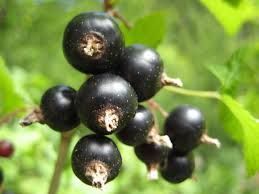
I had the urge to pick blackcurrants,

why it had to be blackcurrants and not blueberries,

raspberries or strawberries I don’t know. We never eat

blackcurrants, I guess because they must be cooked

with added sugar and if you boil the pan dry they stick

like crazy and even if the compote works it stains

and the stains never come out however many times

you put the clothes through the hot wash.

It rained on me so hard I had to park my bike

under a tree and try to shelter though the rain

meant business and hit my back over and over

like my mother that time I flicked water

down the stairs at my brother and didn’t know

she’d spent all day painting the landing and hall.

When I got there the notice said Far Field

and I walked miles and there were only blackberries

and I’d set my heart on blackcurrants.

Then I spotted the bushes and there was no-one

else and even though it started to rain again and my shoes

were getting stained purple, I didn’t care, just crouched

down and milked the fat black drops into the bowl.

A poem that triumphantly recovers from its own title – because the poem itself avoids any reference to the situation about which the title has to inform the reader. What we are left with is a direct, if self-mystifying, narrative. This is a search, a little quest, haunted by the indelible, the irrevocable, by stains. It’s a trial narrative, a coming through, a survival, but the grail here is extraordinarily equivocal; listen to the verb applied in the final line to the gathering of this ominous crop.
ZzrkO_fXONFIvJUF3EtgSeStCDYccEEdnPdvKn29mtg


*

My Humble Body – Kate Foley 

Just as a cloud becomes more

or less as it frays,

my humble body

is slowly learning to speak.

Not hint, not whinge

but say direct to my face

‘I am your face.’

‘Oh?’ I answer from somewhere

up here.

Yes! Not the memory

of your face, its trace

in old mirrors

but the now of it.’

And my body, no longer so humble,

like an old donkey with a spring

in its heels says ‘Listen!

Rough bits, wrinkles, furrows

where half-buried truths lie,

twinges, and you up there, we

can’t wait forever. It’s

now or never

to get together!’

‘Cliche!’ I smile,

scoring a point

but my body raises

its suddenly wise

hand and places

a gentle finger on my lips.


I’ve always disliked those poems which record a dialogue between the soul and the body, but this one convinced me (though I don’t know if ‘soul’ is the right word). The directness with which the humble body begins to speak is reflected throughout the poem in its clean, economical, lean lines. The progressive ironising – indeed, mickey-taking – of the soul/self’s arrogance is an object lesson in gradualist narrative development


*

At the War Museum – Tony Lucas 

Here is the shadow that was always at

our backs, though we were shielded. We knew

the stories – or the ones they chose to tell

to us, to tell themselves. Also the silences,

events that no one dared to mention.

These faces look familiar – recall the ones

who brought us up, who filled our world, but here

in uniform, removed to strange locations,

and performing tasks we never saw

them do. This is the world made strange, furnished

with obsolete contraptions that delivered

death, the well-known places mostly wrecked –

a quiet church you visited last year,

calm as Wren left it, is shown broken, open

to the sky, with shattered monuments;

a library’s hush, all raucous debris, plaster dust –

and if that happened to the books, what of

the people shelved in tidy residential

streets, gap-toothed with rubble, bathrooms

bared, paper hung ripped from private walls?

They had their modes of coping with it all –

swagger and slang, ‘business as usual’, wink

of an eye – that got them through. Styles

at first quaint to us, and now a foreign language.

Pictures, writings that seemed so peripheral

at the embattled time, now offer

our most intimate approach to this

alternate world. While, always, looming

back behind, what they themselves half knew,

an elder dark – of shells and mud, of gas

and blasted stumps, torn flesh and broken minds,

that forged, and warped, the world in which we grew.


This struck me as the most ‘well made’ poem in the top rankings. Though not using end rhyme, the quatrains are carefully controlled, making good use of the de-stabilising of enjambement. There is a formality in tone too, from the title onwards. A distance perhaps but that enables the narrative voice to reflect, to judge and in the end to compassionate with the elder generation who suffered the horrors of war.


*

Theft – Josh Ekroy 

Awaiting permission for this text


The opening lines of this poem have an epigrammatic quality to them which the subsequent lines proceed to follow to their logical conclusion (though perhaps with a bit of black magic thrown in). This is like Blake in the mood of ‘The Marriage of Heaven and Hell’ and this poem gives us more modern Proverbs of Hell, reversing our preconceptions to both comic and politically serious effects.


*

10 Commended Poems:

Body Evidence – Alexandra Davis

Kentucky Fried Chicken in Georgia – Valerie Darville

The Man Whose Car was Stolen… – Christopher North

Ordinary Love – Noel Williams

Vulcano – Julie Mellor

Dear Revisionist – Martin Malone

A Sedge of Herons – Noel Williams

Teign – Roland Malony

As the days play on – Maria Stasiak

Quickly – Sue MacIntyre
What Shape is your Poetry Workshop?

With its proximity to some of the processes of politics, what has come to be the traditional form of the poetry workshop is perhaps easily derided. Billy Collins does this  (in his book, The Art of Drowning, 1995) and we all recognise both the speaker and the likely recipient of the speech:

I might as well begin by saying how much I like the title.   

It gets me right away because I’m in a workshop now   

so immediately the poem has my attention,

like the Ancient Mariner grabbing me by the sleeve.


And I like the first couple of stanzas,

the way they establish this mode of self-pointing

that runs through the whole poem

As both leader and participant, I’ve suffered and witnessed suffering at the hands of egomaniacs, bullies and tyrants – those who come to workshops with no intention of listening to the proffered advice. What they are after is some exertion of personal power over a captive audience and, up to a point, workshop members are exactly that since the basic democratic premise is that we sit and listen with an open mind – a very open mind.
But what I’m not sure about is the voice,

which sounds in places very casual, very blue jeans,   

but other times seems standoffish,

professorial in the worst sense of the word

like the poem is blowing pipe smoke in my face.   

But maybe that’s just what it wants to do.

imgres

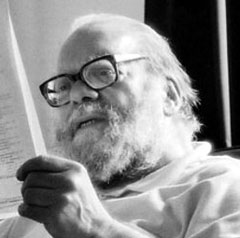
Others will know the history better than I do but the poetry workshop seems to have been organised first by Philip Hobsbaum in the 1950s. Hobsbaum was born in London to orthodox Jewish parents who moved north in 1937, sensing the threat of war and fearing the anti-semitic currents of the time. In Bradford, Hobsbaum attended Belle Vue grammar school, then Cambridge, where he studied under F R Leavis at Downing College (“the greatest man I ever met – an amazing teacher”).

F R Leavis

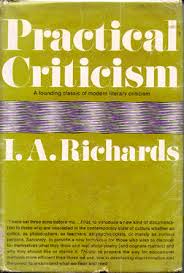
He also encountered Thom Gunn, just graduated, who introduced him to the early work of Larkin, and, as editor of the student literary magazine Delta, he printed work by Ted Hughes and Peter Redgrove. Most significantly, with these budding poets, he organised regular meetings. Hobsbaum possessed some training as an actor and the original idea (of what was to become ‘The Group’) was to encourage verse-speaking. But these meetings soon turned into exercises of Leavisite close analysis, or Practical Criticism in the style of I A Richards, plus a good deal of mutual support for the growing network of poets.

Maybe it’s just me,

but the next stanza is where I start to have a problem.   

I mean how can the evening bump into the stars?   

And what’s an obbligato of snow?

Also, I roam the decaffeinated streets.

At that point I’m lost. I need help.

The Group style of workshop spread as Hobsbaum himself moved to a variety of jobs from Cambridge, to London, Belfast and Glasgow in turn. Although there was some overlap in personnel with The Movement, the various incarnations of the Group had a more practical focus as there was no imposed programme or style. In Belfast (1962–1966), Hobsbaum organised what became known as The Belfast Group, including emerging authors Seamus Heaney, Edna and Michael Longley, Derek Mahon, Stewart Parker and Bernard MacLaverty. Heaney described the process in 1963: “members of the Group listen to a fellow member read a number of his poems which have been previously circulated on cyclostyled sheets. They then discuss the verse very thoroughly, frankly, informally – and the poet is there to counteract, resent, and/or benefit from the criticism”.

theme-arts-08
Philip Hobsbaum in later years (photo: Gerry Cambridge)

Personally, I first experienced the process at Lancaster University in the late 1970s, taking a ‘free ninth’ optional course in Creative Writing as part of a more traditional English degree. The meetings were led in Lonsdale College by David Craig and Heaney’s “previously circulated . . . cyclostyled sheets” have a very familiar ring to them. The format was somewhat different in the 4 years or so I spent attending two workshops in Oxford – copies of individual poems were handed round only on the day and discussion was spontaneous indeed (see my earlier blog ).

The other thing that throws me off,

and maybe this is just me,

is the way the scene keeps shifting around.   

First, we’re in this big aerodrome

and the speaker is inspecting a row of dirigibles,   

which makes me think this could be a dream.   

Then he takes us into his garden,

the part with the dahlias and the coiling hose,   

though that’s nice, the coiling hose,

but then I’m not sure where we’re supposed to be.   

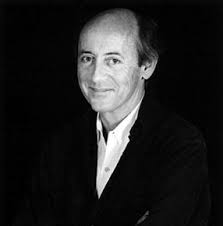
imgres
Billy Collins

I currently attend 3 workshop groups. In none of these is work circulated beforehand. In one, the poet reads once only, the other members have photocopies and discussion ensues with the writer sworn to silence (this prevents self-defensive manoeuvres and conflict). In the second group, the same process is followed except that after the reading of the poem aloud by the poet, the members have about 10 minutes to WRITE their thoughts on the poem itself. Discussion then follows (the up-side of this is that all poets go home with annotated copies of their own work; the down side is it’s very hard work and discussion often follows the annotations, a little less fluidly).

There’s something about death going on here.

In fact, I start to wonder if what we have here   

is really two poems, or three, or four,   

or possibly none.


But then there’s that last stanza, my favourite.

The third group plays the game of anonymity. Sufficient copies are put into an envelope, no identifying marks. Each member then picks out a poem (not their own) to read aloud. On first reading the members cannot see the text. Only on second reading can they follow the text on the page. There then follows the discussion. This produces the fascinating experience for the poet of hearing another person read the poem – and the reader’s later comments about how easy or otherwise the poem was to read are always interesting to those of us who think poetry is primarily an oral art.

This is where the poem wins me back,

especially the lines spoken in the voice of the mouse [. . . ]

I start thinking about how hard the mouse had to work   

night after night collecting all these things

while the people in the house were fast asleep,   

and that gives me a very strong feeling,

a very powerful sense of something.

But I don’t know if anyone else was feeling that.   

Maybe that was just me.

Maybe that’s just the way I read it.

imgres

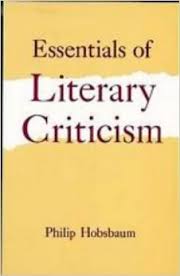
Easy to mock; easy to de-rail from their true purpose, but in creating his workshops (once more following Leavis) Hobsbaum believed a vital part of a student’s course was the rigorous discussion of text. To him, criticism was a fiercely rational, evaluative process, and any other use of language – “political propaganda, newspapers, advertisements, film, conceptual prose of all kinds” – had to be liable to the same level of scrutiny. In Essentials of Literary Criticism (1983), he maintained that “the training of a critic is also the training of a citizen”. This is surely right as the skills and sensitivities of the workshop, the class, the informal discussion of poetry anywhere, anytime, are exercises, in part, to develop the insight, the healthy scepticism, the ability to read and interpret whatever those vying for power, those possessed of power, want to say to us. Alan Brownjohn wrote in Hobsbaum’s obituary: “In a postmodernist, relativist age of education for entrepreneurship, Hobsbaum’s analytical and discriminatory approach might appear to be losing out, though reports of its death are an exaggeration.”

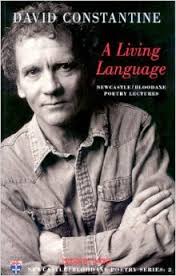
I’m sure Brownjohn is right and – as the UK General Election machine winds itself up ever higher – I’ll quote David Constantine’s important conclusion to his third Newcastle / Bloodaxe lecture in 2003: “We are, when we read poetry, during the reading of the poem and lingeringly for some while after, more wakeful, alert and various in our humanity than in our practical lives we are mostly allowed to be. Achieving that, in vital cooperation with the reader, a poet has done the most he or she is qualified to do. Any further stage, any conversion of this alerted present state into action, into behaviour, is the responsibility of the citizen. And the poet, like the reader, is always a citizen”.

imgres

How Do You Judge a Poem?

I am half way through the process of judging this year’s Torriano Poetry Competition (https://torrianomeetinghouse.wordpress.com/2014/10/27/torriano-poetry-competition-2015/). I’ve been lucky enough to judge a few such competitions in the last few years and what follows is a compilation of thoughts on the judging process. Though the initial sifting can be a slog, the latter stages are fascinating as poems that set little hooks in you at first reading, gradually become more clear, their internal coherence emerging alongside their skills with language and form. What follows is inevitably a personal take on the business – more so as the process unfolds – but I hope it may cast some light on it for those (of us) tempted to spend hard-earned cash on entering the numerous competitions now running (here are a few . . . http://www.poetrylibrary.org.uk/competitions/).

In the 2003 comedy film Bruce Almighty, Jim Carey plays God and, alongside with more obviously useful powers, he has to respond to the prayers of the world. But people are always praying; he rapidly approaches a kind of madness as voices swim around him, clamouring for attention.  He takes to reading the prayers in the form of e-mails. He tries to answer them individually but is receiving them faster than he can respond. He sets his e-mail account to automatically answer “yes” to all, assuming this will make everybody happy. Of course, it does not.

imgres

A poetry competition judge comparing himself to a character playing God lays himself open to criticism – but I have indeed found the initial phases of judging rather like Jim Carey’s experience. There are so many and such a variety of voices clamouring to be heard and every one of them is heart-felt, recording significant moments in people’s lives. There is a similar sense of responsibility too – the raw nature of much of the writing is impossible to deny. I’d like to set my response mechanism to say yes to everybody, but the judge’s task has to be how to distinguish submissions as poetry.

**

The numbers are always frightening. Many hundreds of poems will be submitted. Perhaps only 10% of these will demand a further reading after the brutal first sifting. Poems face an early red light from most judges because basic elements are not competently done:

  • Competitions are full of pieces where a particular verse form or rhyme pattern tyrannises the sentiment. The writer’s submission to this tyranny becomes clear quickly through the contortions imposed on the language to achieve a rhyme.
  • The writer’s choice of language can be devastating to the life of the poem. It just isn’t right to opt for forms of language or abbreviations that died out early in the nineteenth century.
  • Choice of diction also derails an entry if it is doggedly abstract. Sure, there remains much debate about whether it is the narrow English tradition that insists on things rather than ideas – but poems about Fear, Ignorance, Poverty, Eternity and Love which refuse to dip a toe into anything resembling a real life situation are going to find progress hard.

leaning-stack-of-papers-and-files

  • A fourth error is using language without being fully aware of its likely resonance with a possible reader. A poem called ‘Mother’s Pride’ which turns out not to be aware of the loaf of bread is going to have unanticipated clutter to climb over in the reader’s mind. Louis MacNeice wanted the poet not to be an ivory tower type, but rather “able-bodied, fond of talking, a reader of the newspapers, capable of pity and laughter, informed in economics . . . actively interested in politics”. All a bit Boys Own perhaps, but if this means the poet stays up to date with the way words live then he’s right.

 **

If you are thinking of submitting to a competition, it’s worth recalling Wordsworth’s formulation – familiar though it will feel – that poetry is built from “emotion recollected in tranquillity”. Poems made in the heat of the moment (and not revised and reviewed in the name of not tainting spontaneity) are seldom without their flaws. This is the kind of distinction Rilke also makes when he denies poetry is composed of feelings. Its constituents are rather “experiences” which he clarifies as “memories” though even with these, we “must be able to forget them when they are many and one must have the immense patience to wait until they come again . . . Only when they have turned to blood within us, to glance and gesture, nameless and no longer distinguished from ourselves – only then can it happen that in a most rare hour the first word of a poem arises in their midst and goes forth from them”. On the other hand, such recollection can sometimes create an intellectualised distance that may do harm to a good poem. Who said writing a poem was easy?

louis-macneice

Stephen Spender argues that a poet should try to acquire skill and virtuosity through the study and interpretation of other poetic works in the way Mozart and Beethoven did in playing the music of their predecessors.  Spender suggests translating poetry is the best possible exercise in interpretation. But the really important lessons (Spender says) are those of the eye, the ear, the athletic/poetic muscles. A poet can go a long way without a developed heart, but, he says, can get nowhere at all without these skills. The poet must ask continually of his lines: ‘Do they make the reader see, or hear, or feel, this experience which I am trying to re-create?’

 **

Reaching the final stages, the judge will be focusing more positively and more clearly on the sense, the story, the thought of a poem. Personally, I like poems that focus on small things and, in effect, make arguments for the ways in which they communicate the bigger issues that concern us all. I’m with Thomas Hardy in believing that “he used to notice such things” is one of the greatest of compliments. Edward Thomas’ poem about Spring, ‘But these things also’, likewise echoes this focus on what most people tend to overlook:

The shell of a little snail bleached

In the grass; chip of flint, and mite

Of chalk; and the small birds’ dung

In splashes of purest white . . .

Perhaps one explanation of why the question ‘what is poetry?’ is difficult to answer is because it is an art of the negative, of avoidance. The Daodejing says what is rigid and inflexible is a companion of death; what is flexible is a companion of life. I’d guess there would be general agreement that poetry is an art on the side of life. So poetry must eschew the inflexible; we must avoid the posture. And that’s very hard. In judging a competition one comes across the Wordsworth-posture, the Ginsberg-posture, alongside those of Betjeman, Hughes, Plath, Duffy . . . But we also posture like mad in ‘real life’. We may take up the pose of grief, melancholy, love, liberalism, environmentalism . . . The mark of the absence of posturing is an instability, an openness, an awareness of time (which posture tries to deny) and this is something I look for in a good poem. If a poem strikes an attitude my attention diminishes (even the attitude that wants to show a rejection of attitudinising through the hall of mirrors of ironic distancing). When the poem unearths a pulsing, shifting, live relationship between the self and the other, then I am captivated, recognising something that is both commonly human and uniquely personal.

But having said all this, I’d assure potential competition entrants that anything resembling a rule is there to be broken. Philip Pullman has said, “We don’t need a list of rights and wrongs, tables of dos and don’ts: we need books, time, and silence. Thou shalt not is soon forgotten, but Once upon a time lasts forever.”

114650911_345473c

So any poem in any form can work its magic. It will haunt its reader for days; it will make me change the way I think and feel; make me see the world differently. Ultimately, a poem contributes to who the reader is becoming. That is an exciting prospect for the writer. It is an even more exciting one for the judge who settles down to read.

A Holocaust poem – my Dad’s desert war and one of the Magi

Last week, the 27 January 2015 marked the seventieth anniversary of the liberation of the Auschwitz concentration camp. I have only once tried to address the subject – in a poem dedicated to my father who served in WW2 in the RAF, mostly in the deserts of Egypt (he was with 80 Squadron: http://en.wikipedia.org/wiki/No._80_Squadron_RAF).

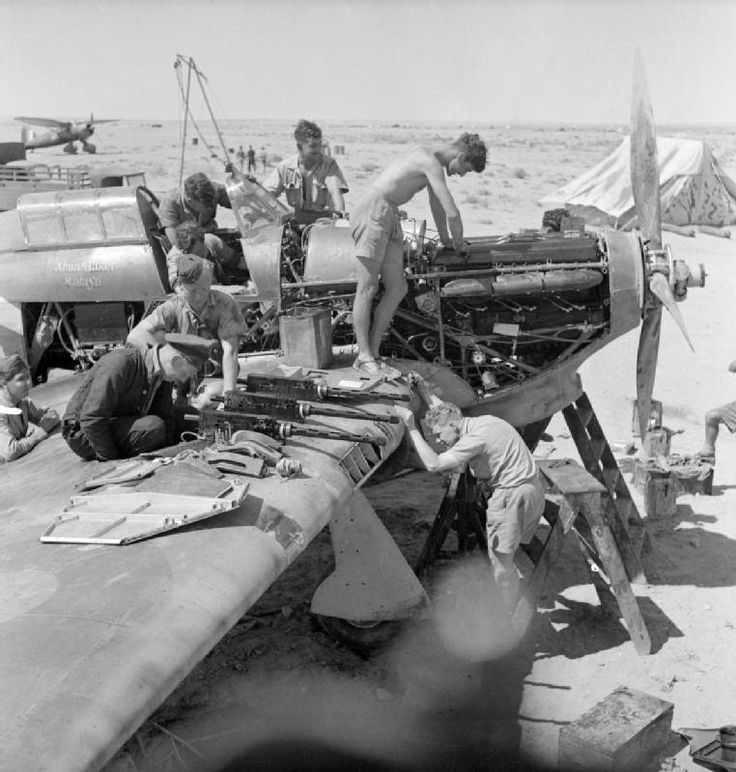
He was an engineer by trade and – as far as I know – saw no hand to hand combat. His brief was to maintain the Hawker Hurricanes that were a major component of Allied air power in North Africa. The poem records his only war injury: badly burned legs from jumping too quickly onto the nose of an aircraft after it had landed, straddling its still blisteringly hot twin exhausts. In the 1960s, he’d tell us about this while we sat at the dining table gluing together Airfix models of Hurries (as he calls them), Spits and Lancs.

77feb45061370833dbb98ad79d7f5150

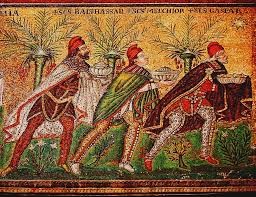
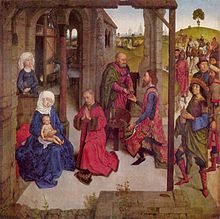
The poem was finally published in 1994 in On Whistler Mountain (see https://martyncrucefix.com/publications/on-whistler-mountain/) It opens with a less than complimentary picture of my father’s unreconstructed political and racial views which I wanted to link to the birth of Christ and the Holocaust. Ironically, given his attitude to people of colour, my father dreams in the poem that he is one of the Magi, Caspar, often depicted as a King from the Indian sub-continent. The poem’s narrative folds over to encompass both the first stirrings of Caspar’s dream about the birth of Christ as well as his last days which I imagine him spending in northern Europe.

Being a King of sorts, my-father-as-Caspar imagines the birth of a conventional king, one of conventional powers, but the child’s family turns out to be of no “consequence”. The child he finds in Bethlehem (I was thinking of course of T S Eliot’s ‘Journey of the Magi’) seems little more than a “futile gesture”. More dreams – which the poem takes as shorthand/short-cuts to the life of the imagination – then drive Caspar north to settle in northern Europe, himself facing racist attitudes among the native peoples there.

 200px-Hurricanes_80_Squadron_RAF_128173

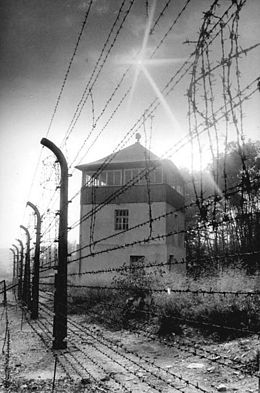
My father’s imagined bafflement before this strange dream in which he plays the role of a non-white king is – I’m sure now – partly his son’s liberal conscience obliquely criticizing his politics. My poem leaves Caspar to die in the northern forests, himself bewildered by what his own dreams have driven him to. The Christ child he dismissed years earlier, continues to visit him in dreams where he goes weeping over that “precise, god-forsaken ground”. The visionary child sees into the future, is a prescient witness to his own Jewish people rounded up by the Nazis’ similarly repellent attitudes to power and racial difference, finally entering “incinerators smoking in the German forest”. Of course, Auschwitz itself and many other camps were not built on German soil, but it was important to use the ‘G’ word at the end of the poem. In the strict pursuit of truth, I was imagining Caspar’s long-house on German soil in the locality of Dachau or Buchenwald, the name of the latter translating as ‘beech forest’.

A Long-House in the Forest

for my father

1.

His war happened in the blazing Middle East.

When he was young, far from the mud of Europe

and the wired camps, his thighs were burned

by too much bravado, sitting astride

the exhausts of a Hurricane that hadn’t cooled.

He picked up the language. Never liked Arabs.

Any dark skin’s still a nigger to this day.

So he votes for the Right, though he’s careless

of politics and takes it as read: we all

long for power and we all need to be led.

imgres

2.

In his dream, he is Caspar. He has chosen

to wait in the draughty long-house, watching

the yard collect its ragged slush of leaves.

He knows the corn-bins are flooded and rotten.

He knows this month is the anniversary

of nights when Caspar rolled in distress, youth,

dream illumination – an excited showing

of power’s open hearth, its air-gulping fire –

his sleep filled with the birth of a king

whose strong arm would invigorate the world.

At once, Caspar instructed a journey. His gift

for this new king, of course, was gold.

220px-Dieric_Bouts_004

3.

A wretched child asleep on that year’s straw.

Neither mother nor father people of consequence,

but simple Jews – trouble-making, deluded.

This was nothing worth his understanding.

(He knows Caspar is a man of wisdom and books).

What could be the need for this powerless figure?

Why this pot-bellied brat? This futile gesture?

Shepherds stood with doting faces for the boy.

He turned his back, dropped the derisory gift.

4.

Without wishing, Caspar gleaned what became

of the lad from travellers’ unlikely tales.

How he saw no reason to cloak humility.

Nor saw the need to make a show of strength.

No surprise the authorities destroyed him.

And on that day, Caspar, his dream-self,

was driven by dreams again, north this time,

to the Black Sea, fighting the Danube inland,

to this blond-haired, beer-drunk, long-limbed place,

whose people mistake him for a piece of Hell

with his blackened face and barbarian tongue.

5.

Sitting by the squadron’s crest, a photograph

of the kids, he sees no reason to dream himself

black and ignorant, plagued by dreams. But he is

Caspar, has chosen the long-house and struggles

at night – not with dreams of the hot south,

of home, courtyards, frescoes and fountains-

but with a dream that has no place yet, though

he searches for it, now that same, futile boy

in the straw has grown his only dream-guide

and weeps over this precise, god-forsaken ground.

He finds it ruled by those whose failure is to see

no need for an icon of the weak, the needful.

Here, the boy’s deluded people prove no trouble at all,

filing from wooden huts ranged like inland galleys,

to incinerators smoking in the German forest.

260px-Bundesarchiv_Bild_183-1983-0825-303,_Gedenkstätte_Buchenwald,_Wachturm,_Stacheldrahtzaun

Review of ‘The Pity’: new war poems commissioned by the Poetry Society

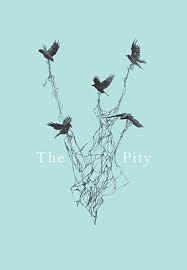
On National Poetry Day (October 2014) four contemporary poets performed new work about the legacy of the First World War. Two months later the Poetry Society published The Pity as a limited edition anthology. Given free to Society members (it has just now come through my letterbox with the new issue of Poetry Review) it is also available to purchase online.

 imgres

So The Pity contains substantial poems commissioned by the Poetry Society, in which Steve Ely, Zaffar Kunial, Denise Riley and Warsan Shire (chosen to represent “different poetics and perspectives”) respond to the centenary and legacy of the First World War. The Pity was published in collaboration with Cockayne – Grants for the Arts and The London Community Foundation to mark the centenary of the First World War. John Glenday’s poem, ‘The Big Push’ is also included, providing a short coda to the volume. His poem takes inspiration from Sir Herbert James Gunn’s 1916 painting, ‘The Eve of the Battle of the Somme’, held in The Fleming Collection of Scottish Art.

In this blog, I will discuss only the contributions of Ely and Glenday; on another occasion, those of Kunial, Riley and Shire.

Steve Ely’s ‘How dear is life’ is a sequence in 7 parts mixing literary, historical and personal materials to very powerful effect. He presents nothing less than a vision of war and its causes, the careful placing of the comma in the title of the first section – ‘Business, as usual’ – indicating where he wants to lay the blame:

This time it’s oil, not markets.

This time it’s oil, not borders.

This time it’s oil, not ideas.

This time it’s money and power –

like last time and every time before.

Ely has said the whole sequence is much influenced by Henry Williamson’s fictionalized autobiography, A Chronicle of Ancient Sunlight, which presents the First World War as a sacrifice of the innocents on the altar of capital. The sequence is intended to portray a liberation from a “world-destroying growth-and-profit system”, not merely a release from the horrors of war. Though writing with commitment (see Morning Star: http://www.morningstaronline.co.uk/a-1063-Steve-Ely-commissioned-by-the-Poetry-Society-for-centenary-of-World-War-I#.VL0uW0esWss) there are two aspects of the sequence that prevent it ossifying into predictable attitudes: one a matter of materials, the other of technique.

SteveEly-SquareWeb

Ely draws on material linked with his maternal great-grand-father, Thomas Sellars, killed on the Somme in February 1917, contrasting the glorious send-off by friends and family with his eventual fate (and the shifting attitudes of those left at home):

They stuffed his lungs with poppies and crushed him

under a cenotaph. Where they weep.

Likewise, he uses material from a more extensive time period, linked with his own background in the mining communities of Yorkshire. The pressures of economic activity which determine that (on one occasion) it will take too long to recover the body of a killed miner mean that the bereaved family is fobbed off with a “screwed down coffin            packed with the stone that / killed him” (one of 262 deaths in the pits in the twentieth century). Ely deploys this alongside the 216 deaths of Frickley and Kirkby, “ragged up through two world wars”. There are moments reminiscent of Wilfred Owen’s poems here. Owen’s ‘Disabled’ is inevitably evoked when Ely treats the plight of individuals injured in wars, sickeningly evoked in ‘The Story of my Heart’:

on spoon-fed rusk-mush

matted in my beard                 pus from a crusted wound

[. . . ]

I was more than a mouth        more than shit

once                 I was

whole

But it is the first, fifth and seventh parts of the sequence where Ely’s technical choices are fully displayed. Under the creative pressure of his unifying political vision, he draws together fragments (often separated by blank spaces on the same line) into new relations with each other, melding biblical, historical, mythical and more contemporary elements together to make his point:

and what did they see

river running red         with Empire

river running green      with Deutschmarks

sterling                        Frenchfrancs        roubles        dollars

the promissory land                 of bilk and money

Using the same techniques, ‘The Vision of the White Crow’ springs from information that Hitler (while recovering from a gas attack at Pasewalk Military Hospital in 1918) experienced episodes of ‘hysterical blindness’ in which he claimed to have seen his eventual rise to power. Ely voices Hitler’s convictions that the “Reichsblood” was being drained by “socialists democrats profiteers bankers” but then propels his vision forward into the later twentieth century, “unwritten pages of world book turning”. We are whirled through Washington, Moscow, Sarajavo, Maastricht, past John Lennon, and (maybe?) Andy Warhol, towards the X-Factor and twerking with Angela Merkel. This is heady poetry of conviction and the persuasiveness of phrase-making (phrase-making that leaves syntax and causality behind) is intoxicating but perhaps is the intoxication that Auden warned himself against in the late 1930s. But Ely is clearly on the side of Shelley, echoing ‘The Masque of Anarchy’ in the final section, urging the disenfranchised – who, the poem has made it clear are always the victims of the powerful and wealthy in both war and peace – urging them to “Rise . . .Rise  . .  Rise”.

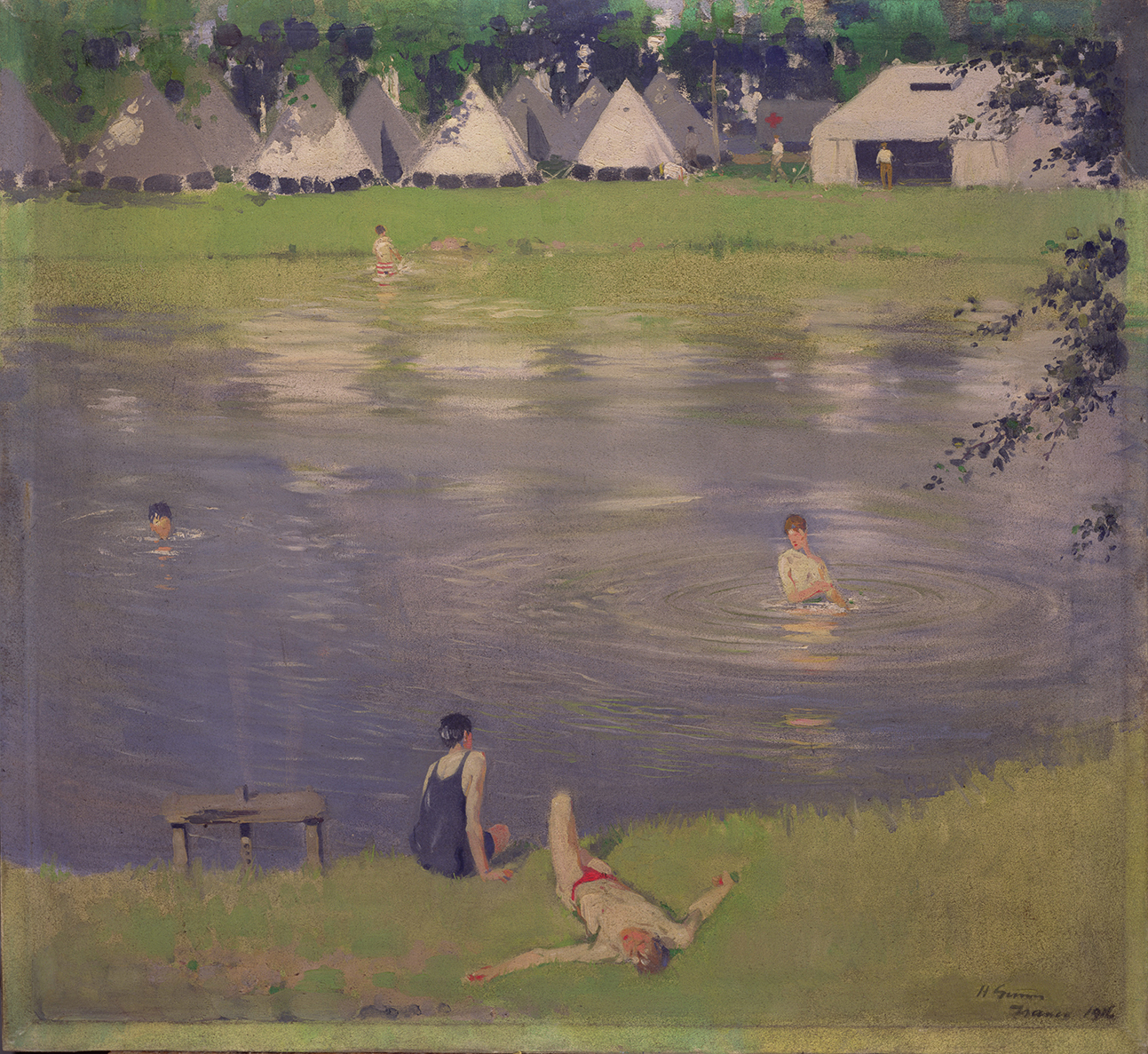
John Glenday’s single poem is as different as could be. It is an ekphrastic piece, the pictorial inspiration being Herbert James Gunn’s 1916 painting, ‘The Eve of the Battle of the Somme’.

GUNN-Sir-James-The-Eve-of-the-Battle-of-the-Somme

Much of the poem’s impact is already evident in the image: the naked, vulnerable, beautiful figures of pale youth, relaxed, hedonistic, while across the swirl of the River Somme itself, the ominous daubs and pointed shapes of the army camp are almost – but not quite – out of sight. ‘The Big Push’, in its 7 regularly lined quatrains, rhyming ABAB, is calculated to be a more conventional poem than any part of Ely’s. It’s a dramatic monologue, perhaps spoken by one of Gunn’s swimmers and it tries on many familiar tropes we might now associate with WWI and its poetry: the singing in the face of imminent extinction, the waggish black humour of the Tommies, the football playing, the stoical resilience of the trench soldier. We even have a reference to Shelley’s ‘To a Skylark’, “like an unbodied joy”.

imgres

It’s this image, drawn from the narrator’s past, that opens the way to the final two stanzas which are a sequence of associations after taking over German-dug trenches from occupying French troops, the “tiny, brilliant flowers” blooming in that place, the speculation that, if the dead might someday return, “they’ll come back green”. The poignancy of these images returns us to the Gunn painting. The young men are at one with Nature, having passed through the horrors of the Somme are gifted a return to that pastoral scene where:

. . . all the things they suffered will mean no more to them

than the setting in of the ordinary dark, or a change of weather.

I take the irony here to be at the expense of the narrative voice, whose steady, rather plangent tone and period-shaped imagination is not yet able to encompass the horrors that a modern reader all too readily associates with the battle to commence the very next day. I’m reminded of Owen again. In ‘A Terre’ (completed July 1918), his wounded officer blackly recalls Shelley (again!): “I shall be one with nature, herb, and stone”. But Owen’s narrator re-shapes the Romantic idea of the one life by envying the lives of rats, cheese mites and microbes: he already understands the horrors that Glenday’s naïve narrator has yet to learn.

Teaching Dannie Abse’s ‘Two For Joy’ (2010)

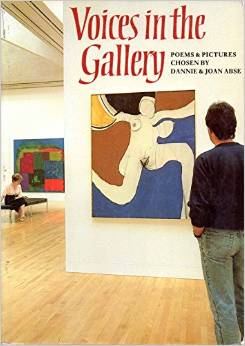
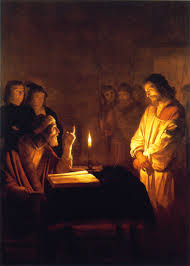
I first became aware of Dannie Abse’s work in 1986 when he and his wife, Joan, were editing Voices in the Gallery,  a sumptuous anthology of poems about paintings for the Tate Gallery. To my astonished delight, they accepted ‘At The National Gallery’, an early poem of mine about Gerrit van Honthorst’s ‘Christ Before the High Priest’ which later appeared in Beneath Tremendous Rain (1990). Our paths continued to cross around the London poetry scene, especially at (usually fraught) Poetry Society Council meetings in the 1990s. A couple of years ago he visited the College where I work and happily discussed his poems with students. His death in September 2014 was such a sad loss.

With the New Year we are again teaching Dannie Abse’s collection Two for Joy (http://www.amazon.co.uk/exec/obidos/ASIN/0091931177/karelsoftw-21). But with the changes to A Levels being hurried in from September 2015, this will be the last time we work on this book (for AS Level Coursework) though it has proved a joy to teach. This is perhaps a surprise given its subject matter.

The book is a compilation of work from several years focused on Abse’s relationship with Joan, his wife (herself a writer, editor and acclaimed art historian). It was published a couple of years after The Presence (http://www.amazon.co.uk/exec/obidos/ASIN/0099531860/karelsoftw-21), a memoir completed in response to Joan’s tragic death in a car accident in 2005. ‘Two for Joy’, of course, alludes to the old country saying, cited on seeing magpies: one for sorrow, two for joy. The poems in the collection evoke both sides of this cryptic saw, from the early joys of young love to the sorrowing widower more than 50 years later.

imgres

In terms of teaching and coursework the book’s focus is so intense, powerful and yet varied that the material always goes down very well with students and enables them to write confidently about ‘the collection’ (one of the Assessment Objectives). We might start with the simplicity of ‘Condensation on a Windowpane’ where the aging narrator inscribes his and his lover’s names on the wet windowpane because he wants to write “something simple as pure water”. Yet even water, further considered, is complicated, “like steam, like ice, like clouds”. This plainness of address and nakedness of emotion is immediately engaging but Abse is really flagging up the collection’s main themes of love and time as, eventually, the words fade, dribbling down the glass: “They weep as they vanish”.

Or what better way (I mean appalling way) to gain students’ attention than this opening quatrain of ‘Lachrymae’:

I crawled from the noise of the upturned car

And the silence in the dark began to grow.

I called out her name again and again

To where neither words nor love could go.

This little sequence of poems like tear drops is set after Joan’s death and delicately re-visits a few scenes from married life, only to end with the narrator walking in solitude beside the Hampstead ponds, “where a lone swan sings / without a sound”.

An earlier poem ‘A Night Out’ records a visit the couple made to the Academy cinema in Oxford Street in the 1950s. As a Welsh Jew in London, courting and marrying a gentile, there are plenty of moments in these poems where the unconventional couple have to confront the narrow-mindedness and bigotry of the 1950s and early 1960s: anti-Semitism in ‘A Marriage’; general moral strictures in ‘Two for Joy’. On the occasion of the cinema visit, Abse’s cultural background is significant as they watch a fictionalised account of the Holocaust: “images of Auschwitz, almost authentic, the human obscenity in close-up” so much that “we forgot the barbed wire / was but a prop [. . . ] those striped victims merely actors”. Afterwards, the couple are stunned by what they have seen, sitting in a “bored espresso bar”. Gathering themselves at last, they return home to a German au pair girl, their own children safely asleep upstairs:

Reassured, together we climbed the stairs,

undressed together, and naked together,

in the dark, in the marital bed, made love.

images

Abse’s technical skill with plain language is on full show in such lines and the class might have debates about how far individual love is shown to counter, compensate, or merely distract from world horrors. In a 1980 essay called ‘Rhyme’ (collected in Dannie Abse: a Sourcebook, ed. Cary Archard: http://www.amazon.co.uk/exec/obidos/ASIN/1854115073/karelsoftw-21) Abse has commented on this poem and presenting students with his observations has often proved to be a moment when sceptics about the deliberateness of a writer’s choices can be converted. He compares ‘A Night Out’ with ‘In Llandough Hospital’ arguing that the charge of emotion from the film was so powerful that he “did not want to make any pretty artifice out of it. I did not want to be lyrical about such a theme. I wanted to be as truthful as possible, to avoid all kinds of artificiality, to say what I felt and to say it plainly. I wanted the verisimilitude of prose”.

The period of the Cold War is briefly evoked at the end of ‘A Scene from Married Life’ in contrast to the “few and brief” cold wars of the couple’s marital rows. Set in Abse’s beloved Ogmore-by-the-Sea in South Glamorgan, after a petty squabble, the narrator metamorphoses into a monster of self-pity and suicidal thoughts. The poem cleverly balances the two perspectives of the over-dramatising, younger self with a more ironic, mature judgment. It’s only at the end with the appearance of Joan on the cliff top (surely an echo Thomas Hardy’s ‘The Voice, with Emma in her ‘sky blue gown’) that the faux-suicide relents:

On the high cliff my wife dressed in blue and all

The best of the world true and desirable.

With surrendering waves I crawled back to the shore.

6110017_ee8699d49a_m

Such humour, often in self-mockery is never far from Abse’s work. The darker side of grief is evoked in the image of blood-stained petals falling in ‘Magnolia’ (“bridal branches slowly violated”) but most powerfully in ‘The Revisit’ which again works the rich seam of two periods of life knotted together. A beautiful lake scene enjoyed together is re-vised by the lonely widower into an apocalyptic vision, with the sun-set now evocative of “Angel wars. Such April bloodshed!” Though there are more consolatory poems in the book, where time the healer is seen to begin its work, ‘The Revisit’ shocks in its blunt confrontation with grief and on this occasion Abse’s use of poetical devices, the abundant skill of the artist, only serves to emphasise the helplessness of the man:

The gradual distance between two stars is night.

Ago, love, we made love till dark was bright.

Now without you dark is darker still and infinite

It would be a shame indeed if, in the mean-spirited, ever-narrowing criteria of the new A Level specifications, a collection such as this one could not continue to find a place. Dannie Abse’s website is at: http://www.dannieabse.com/.

imgresjpeg

Ecology and Poetry: Review of Michael McKimm’s ‘Fossil Sunshine’

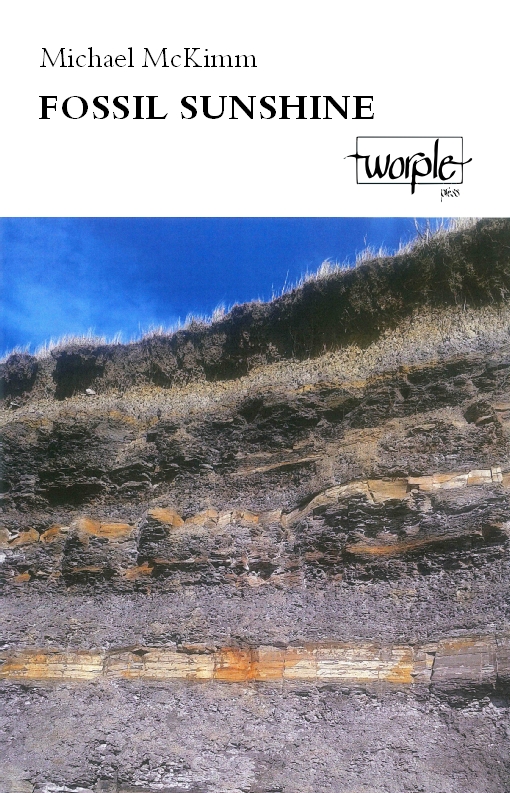
I met Michael McKimm earlier this year – at the Free Verse Poetry Book Fair in September 2014. His chapbook, Fossil Sunshine (Worple Press, 2013) interested me because much has been said in the last few years about how poetry has embraced science. This is one plank of the argument that also declares poetry has embraced popular culture, or the world and language of IT, the law, or maybe banking. Yes, poetry is keen to annex what it can. And I would happily sign up to the general principle that poetry’s health can feasibly be measured by the range of experience it can encompass. In times of feebleness poems are stuntedly concerned with poetic subjects, poetic diction; in periods of strength, there is a great sense of traction and encompassment, that anything will give itself to the poet.

Perhaps we are on the cusp of one of these latter moments; reading Nathan Hamilton’s 2013 Bloodaxe anthology (note the wide embrace of the title) Dear World & Everyone In It you might get that feeling. And guess what: Michael McKimm appears on page 90 and Fossil Sunshine really is differently-angled to most of the collections you’ll have read recently. These poems are the result of a year-long collaboration with earth scientists, in a project funded by Arts Council England. Drawing on fieldwork with geologists, the poems explore the relationships between geology, the oil industry and climate change, and (Worple’s blurb says) they ask what the evidence held in the geological record can teach us. The blurb goes on: “From ice ages to landslides, oil spills to geo-engineering, Fossil Sunshine captures the language of geology, as well as the energy and drive of exploration and discovery”.

Fossil_Sunshine96

Given its subject, the book inevitably has an admonitory tone. But one of the problems with poetry’s annexing more and still more was noted by Keats and his response was to loathe anything poetic that has a palpable, didactic design upon us. Indeed, the poetic and didactic are mutually exclusive for him. Poetry is a realm (perhaps unique) where life’s genuine truth and beauty (simply that it is full of shades and ambiguity) can be expressed and relished without any irritable reaching after clarity and fact. What I like so much about McKimm’s poems is that they would also have pleased Keats on this count. They are vigorous, ambiguous and even visionary. In them we see mankind’s power as much as our malign influence, the frailty of nature as much as its resilience. They want us to think about these issues, but will not do the thinking for us.

‘Tertiary Basalts’ describes its igneous subject as “Crow black, slick as onions, or walk-on-nails / tough”. It’s in part a child’s eye view (“A thick burnt red / running through like a layer of jam”) and the narrator admits that rock like this would give his earlier self “more pictures than the clouds”. But McKimm does not ironise the child’s vision but combines it with an adult understanding of the rock’s creation to make a more rounded celebration of the natural world. ‘Holderness Boulder Clay’ does something similar as it vigorously describes the sea’s biting away at the friable coastal reaches till “a fencepost hang[s] from a whip / of wire, and plastic drainage pipes / [are] like pillarbox guns”. Whatever warnings are here they are buried in the figurative language – the whip, the gun. The poem is a tour de force of minute particulars; I’ve never felt so close to the ebb and flow, the nibbling of erosion, the swirl of “gobstoppers of granite, sandstone, / Norwegian porphyry, carnelian”. Elsewhere (in prose this time), someone called Stuart takes a little hammer to a chunk of Yorkshire chalk and skilfully unearths a fossil sea sponge: “Laosciadia Planus. I weighed it in my hand.” And like a time machine, suddenly Bridlington with its Pitch and Putt course vanishes to be replaced by a vision of the past: “Sea conifers, angiosperms. The whole place electric with reptiles”.

media

Only someone much concerned with the environment could bring the natural world – both present and past – so vividly into poetry. Someone like that could not fail to express concern at our interventions in the world. A scattered sequence of poems, each called ‘Abstract from a Conference’, expresses this concern. The first explains that coal, oil, gas are anciently stored sunshine that we have since “sought with our intelligence / and drive”. Our brilliance has long been to our benefit but . . . “Is it possible, a soft // landing for civilisation? We were smart. / How smart do we now want to be?” The ‘Abstract’ in the title to these poems perhaps permits more didacticism than elsewhere: abstract as summary, abstract as form of language. Yet even here there is an awed sense of ourselves: “Survivalists, stewards of the biosphere, / from nothing we grew”. Where did we go wrong? We “thought of ourselves”. Perhaps little else. And for a while, “where was the harm in that? – / as the mighty river’s arteries flowed past.” ‘Pipeline’ is another sustained performance, a description of the route of a North American oil pipeline. Detail is put to use to suggest both the varieties of landscape it passes through as well as the ingenuity of its builders: “without even a pit stop it’s pierced Manitoba, / steady trajectory, knows where it’s going”.

So McKimm’s images are often carefully laid down, alive, at the borders of ambiguity. Yet the descriptive drive of the book pulls no punches when it comes to the mess we have made of things. Here are “the basics: deforestation, fallow lands, / tilling, terracing, irrigation systems, subsurface // water extraction, mining, transportation systems, / waterway re-plumbing, reservoir interception, // groynes, jetties, seawalls, breakwaters, harbours, / warfare”. Even a small scale ‘Oil Field’, apparently landscaped into a natural environment, is regarded, or rather listened to, with suspicion: “the beam pump’s / gentle purr, like an antique Singer threaded / through with jet, working with a rhythm / you would never think so peaceful or so clean”. At the living room table, my mother would propel an old Singer like this, an image perhaps of technology taken so far, only to be wrenched further still (the thread through this machine not homely cotton, but the more sinister thread of an oil jet).

imgres

Andrew McCulloch’s review in the TLS concluded: “Read these poems!” Penelope Shuttle has written: “The language employed by this poet is powerfully tactile.  These are strong and in every sense grounded poems”. ‘Grounded’ is a worthy pun, of course, as much about McKimm’s language and tone as about his rocky, muddy, sandy subject matter. I’d recommend these poems, for their grit and grain as much as their environmental concerns, for their humble belief in human ingenuity as much as their clear-eyed warning about where it seems to be taking us.

Helen Mort’s ‘Division Street’ wins Aldeburgh First Collection Prize

The winner of the Fenton Aldeburgh First Collection Prize 2014 – one of the most long-established poetry awards in the UK – was announced at the opening of the 26th Aldeburgh Poetry Festival on Friday 7th November. The judges were Imtiaz Dharker, Robert Seatter (Chair) and Anthony Wilson. Here, Anthony Wilson assembles the competitors on his own blog: http://anthonywilsonpoetry.com/2014/11/08/the-fenton-aldeburgh-first-collection-prize-2014/

The prize went to Helen Mort, Division Street (Chatto, 2013): http://www.thepoetrytrust.org/news/fenton-aldeburgh-first-collection-prize-2014-ndash-winner-announced/

And here’s the review I did of the book a few months back for Poetry London:

Mort’s first collection has been much anticipated (no-one else has been five-times winner of the Foyle Young Poets Award!) and Chatto have snapped her up but given her a rather ugly cover with its chalk-board script and rotated image of police confronting striking miners in 1984. Michael Symmons Roberts identifies the bedrock of the book as “the north of England” and the semiology of Division Street means the reader anticipates something more politically engaged than the poems deliver: this is not Heaney’s North, a bit more North of Boston. The north is often setting if not subject, but it is a place almost too recognisable where a girl learns “the name / for artificial hills, the bridge / where a man was felled by bricks / in the strike” (‘Twenty-Two Words for Snow’). She might learn to dance, but sniggers at the teacher’s pretentious “parr-durr-shat” (‘Miss Heath’). A man grows old “in the same bungalow for thirty years / and dreams of digging his way out” (‘Fur’). A stage comedian gets a more lively balladic treatment which suggests a more resilient culture amongst the “empty works” and “braziers / that vanished thirty years ago” but the juke box still dates from 1971(‘Stainless Steven’).

division_street_cover

The risk is regional cliché here and I’m not sure this is really Mort’s true subject. The miners’ strike is dealt with via a re-enactment of the battle of Orgreave by conceptual artist, Jeremy Deller, in 2001. Mort’s desire to write about it is important but the sequence of poems is more an exploration of good old class guilt as the narrator leaves the “Calow WMC” to study in Cambridge, a place where she “cannot learn the tune”. The resonating image is of a different “picket line/ . . . crossed” into a “gilded College gate, / a better supermarket” (‘Scab’). This is why Mort’s epigraph is from Stevenson’s doppelganger novel about the “profound duplicity” of life, but both writers are less concerned with political divisions than personal. Much of Division Street is given over to explorations of the self’s development. The finely-tuned sequence, ‘North of Everywhere’, treats location as psychological landscape where the heart can be let “go on ahead of me”, where “silences become the better part of us”. Such questing is transmuted to a mother gazing at a group of deer, “on pound-coin-coloured hooves”. They are something she denies seeing, though the daughter also finds them, “closer / than before [. . .] their eyes, like hers” (‘Deer’). There is a recurring sense that “doors to other worlds exist” (‘Lowedges’). However much a narrator likens herself to her dogs, she is different:

one night I’ll set off past the meadow, down

behind the beck, beyond the blunt profile of Silver Howe

and nobody will call me back.

‘The Dogs’

Mort’s love of landscape is profound and, like Wordsworth, her hills and skies remain a locus, as well as image of, the process of self-exploration. She boldly plays on her own name in ‘The French for Death’, fantasising of a “girl / who takes the worst route home, pauses // at the mouths of alleyways, or kisses / strangers”. But this transgressive trouble-maker is not so prominent elsewhere where a more compromised, tentative identity emerges. ‘The Girl Next Door’ becomes a haunting double who seems to co-opt the narrator’s weakening identity. ‘The Year of the Ostrich’ wittily suggests a new astrological sign for those of us with “unlikely grace, / who hide our heads, or bear the weight / of wings that will not lift us”. Mort is always good at animals and while jogging she sees a fox, supple, slinking, sly, always about to vanish: “And what she sees she cannot tell, / but what she knows of distances, / and doesn’t say, I know as well” (‘Fox Miles’).

We find and define ourselves against others and Mort does this through romantic love, mostly its loss. “I turned to ask you something and you’d gone” (‘Fagan’s’) is a recurring sentiment. The title poem itself refers to the place where “You brought me [. . .] to break it off”, though in this case it is the other whose “head-down walk” we see, passing pubs in whose windows can be seen “nothing but your own reflection”. Pessimistically, ‘End’ suggests that “Death is // the shape / beneath romance” but the hauntings a writer sustains through such poems as these, though they do not revive the love, at least reinvigorate the lover and persuade that such deaths may only be “le petit mort”.

mort_helen