What Shape is your Poetry Workshop?

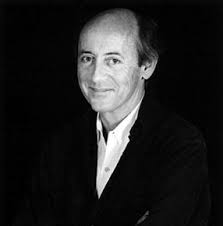
With its proximity to some of the processes of politics, what has come to be the traditional form of the poetry workshop is perhaps easily derided. Billy Collins does this  (in his book, The Art of Drowning, 1995) and we all recognise both the speaker and the likely recipient of the speech:

I might as well begin by saying how much I like the title.   

It gets me right away because I’m in a workshop now   

so immediately the poem has my attention,

like the Ancient Mariner grabbing me by the sleeve.


And I like the first couple of stanzas,

the way they establish this mode of self-pointing

that runs through the whole poem

As both leader and participant, I’ve suffered and witnessed suffering at the hands of egomaniacs, bullies and tyrants – those who come to workshops with no intention of listening to the proffered advice. What they are after is some exertion of personal power over a captive audience and, up to a point, workshop members are exactly that since the basic democratic premise is that we sit and listen with an open mind – a very open mind.

But what I’m not sure about is the voice,

which sounds in places very casual, very blue jeans,   

but other times seems standoffish,

professorial in the worst sense of the word

like the poem is blowing pipe smoke in my face.   

But maybe that’s just what it wants to do.
imgres

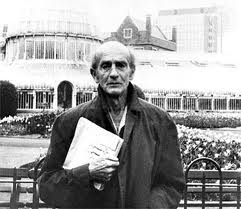
Others will know the history better than I do but the poetry workshop seems to have been organised first by Philip Hobsbaum in the 1950s. Hobsbaum was born in London to orthodox Jewish parents who moved north in 1937, sensing the threat of war and fearing the anti-semitic currents of the time. In Bradford, Hobsbaum attended Belle Vue grammar school, then Cambridge, where he studied under F R Leavis at Downing College (“the greatest man I ever met – an amazing teacher”).
F R Leavis

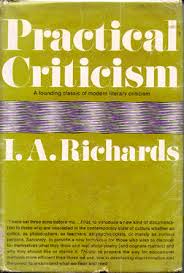
He also encountered Thom Gunn, just graduated, who introduced him to the early work of Larkin, and, as editor of the student literary magazine Delta, he printed work by Ted Hughes and Peter Redgrove. Most significantly, with these budding poets, he organised regular meetings. Hobsbaum possessed some training as an actor and the original idea (of what was to become ‘The Group’) was to encourage verse-speaking. But these meetings soon turned into exercises of Leavisite close analysis, or Practical Criticism in the style of I A Richards, plus a good deal of mutual support for the growing network of poets.

Maybe it’s just me,

but the next stanza is where I start to have a problem.   

I mean how can the evening bump into the stars?   

And what’s an obbligato of snow?

Also, I roam the decaffeinated streets.

At that point I’m lost. I need help.

The Group style of workshop spread as Hobsbaum himself moved to a variety of jobs from Cambridge, to London, Belfast and Glasgow in turn. Although there was some overlap in personnel with The Movement, the various incarnations of the Group had a more practical focus as there was no imposed programme or style. In Belfast (1962–1966), Hobsbaum organised what became known as The Belfast Group, including emerging authors Seamus Heaney, Edna and Michael Longley, Derek Mahon, Stewart Parker and Bernard MacLaverty. Heaney described the process in 1963: “members of the Group listen to a fellow member read a number of his poems which have been previously circulated on cyclostyled sheets. They then discuss the verse very thoroughly, frankly, informally – and the poet is there to counteract, resent, and/or benefit from the criticism”.
theme-arts-08
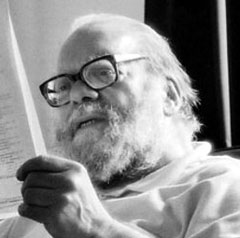
Philip Hobsbaum in later years (photo: Gerry Cambridge)

Personally, I first experienced the process at Lancaster University in the late 1970s, taking a ‘free ninth’ optional course in Creative Writing as part of a more traditional English degree. The meetings were led in Lonsdale College by David Craig and Heaney’s “previously circulated . . . cyclostyled sheets” have a very familiar ring to them. The format was somewhat different in the 4 years or so I spent attending two workshops in Oxford – copies of individual poems were handed round only on the day and discussion was spontaneous indeed (see my earlier blog ).

The other thing that throws me off,

and maybe this is just me,

is the way the scene keeps shifting around.   

First, we’re in this big aerodrome

and the speaker is inspecting a row of dirigibles,   

which makes me think this could be a dream.   

Then he takes us into his garden,

the part with the dahlias and the coiling hose,   

though that’s nice, the coiling hose,

but then I’m not sure where we’re supposed to be.   
imgres
Billy Collins

I currently attend 3 workshop groups. In none of these is work circulated beforehand. In one, the poet reads once only, the other members have photocopies and discussion ensues with the writer sworn to silence (this prevents self-defensive manoeuvres and conflict). In the second group, the same process is followed except that after the reading of the poem aloud by the poet, the members have about 10 minutes to WRITE their thoughts on the poem itself. Discussion then follows (the up-side of this is that all poets go home with annotated copies of their own work; the down side is it’s very hard work and discussion often follows the annotations, a little less fluidly).

There’s something about death going on here.

In fact, I start to wonder if what we have here   

is really two poems, or three, or four,   

or possibly none.


But then there’s that last stanza, my favourite.

The third group plays the game of anonymity. Sufficient copies are put into an envelope, no identifying marks. Each member then picks out a poem (not their own) to read aloud. On first reading the members cannot see the text. Only on second reading can they follow the text on the page. There then follows the discussion. This produces the fascinating experience for the poet of hearing another person read the poem – and the reader’s later comments about how easy or otherwise the poem was to read are always interesting to those of us who think poetry is primarily an oral art.

This is where the poem wins me back,

especially the lines spoken in the voice of the mouse [. . . ]

I start thinking about how hard the mouse had to work   

night after night collecting all these things

while the people in the house were fast asleep,   

and that gives me a very strong feeling,

a very powerful sense of something.

But I don’t know if anyone else was feeling that.   

Maybe that was just me.

Maybe that’s just the way I read it.
imgres

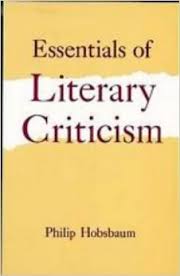
Easy to mock; easy to de-rail from their true purpose, but in creating his workshops (once more following Leavis) Hobsbaum believed a vital part of a student’s course was the rigorous discussion of text. To him, criticism was a fiercely rational, evaluative process, and any other use of language – “political propaganda, newspapers, advertisements, film, conceptual prose of all kinds” – had to be liable to the same level of scrutiny. In Essentials of Literary Criticism (1983), he maintained that “the training of a critic is also the training of a citizen”. This is surely right as the skills and sensitivities of the workshop, the class, the informal discussion of poetry anywhere, anytime, are exercises, in part, to develop the insight, the healthy scepticism, the ability to read and interpret whatever those vying for power, those possessed of power, want to say to us. Alan Brownjohn wrote in Hobsbaum’s obituary: “In a postmodernist, relativist age of education for entrepreneurship, Hobsbaum’s analytical and discriminatory approach might appear to be losing out, though reports of its death are an exaggeration.”

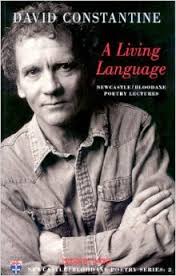
I’m sure Brownjohn is right and – as the UK General Election machine winds itself up ever higher – I’ll quote David Constantine’s important conclusion to his third Newcastle / Bloodaxe lecture in 2003: “We are, when we read poetry, during the reading of the poem and lingeringly for some while after, more wakeful, alert and various in our humanity than in our practical lives we are mostly allowed to be. Achieving that, in vital cooperation with the reader, a poet has done the most he or she is qualified to do. Any further stage, any conversion of this alerted present state into action, into behaviour, is the responsibility of the citizen. And the poet, like the reader, is always a citizen”.
imgres

Nostalgia, Spots of Time and Ourselves

My Dad is getting more forgetful. True, he has just made his 95th birthday but like that stain that slowly spreads into “a gigantic ace of hearts” at the murderous climax of Hardy’s Tess of the D’Urbervilles, there is a growing realisation among family members that this is a bit more than a run-of-the-mill absentmindedness.

lgekkc3tperdvzis70v3

Do we vanish with our memories? I’ve been repeatedly reminded, in judging a poetry competition recently, how much poetry depends on remembering, how much any of us depend on memory for a sense of who we are. So perhaps memory is a candidate for what makes us distinctly human – better even than language, the uniqueness of which has been challenged the more we understand of the animal kingdom (See Christine Kenneally’s book, The First Word)? Recalling moments from our own lives – Wordsworth’s “spots of time” that retain, he believes,  a “renovating virtue“ – seems to have something to do with identity, mental health, even our own ethical behaviour: they shall not be forgotten, we have been saying a lot recently.

A few months ago, I read a Guardian piece about nostalgia and have kept a copy of it with me since. Nostalgia as a term was coined by a 17th-century Swiss army physician who traced the fragile mental and physical health of his troops to their longing for home – nostos in Greek means home and algos is the pain they found in such thoughts. So its roots are in mental disorder or depressive illness and for centuries it has been considered unhealthy to dwell in this way on the past, a yearning for something lost, a debilitating rosy-tinted malady.

nostaliga-defention

But psychologists have started to think of nostalgia as a more profoundly rooting experience, even a stimulant to optimism, to psychic health. At Southampton University, Constantine Sedikides and Tim Wildschut have shown the universality of nostalgia and, among its measurable effects, it is now seen as a driver of empathy and social connectedness, an antidote to loneliness and alienation. Nostalgia, by connecting our past and present, by proving the temporal oneness of being, points optimistically to the future, acts to protect against negative thoughts and situations.

The article quotes Wildschut: “Nostalgia compensates for . . . feelings of meaninglessness or discontinuity between past and present . . . it elevates meaningfulness, connectedness and continuity.” Anecdotal evidence comes from women in concentration camps who “responded to starvation by waxing nostalgic about shared meals with their families and arguing about recipes”. This is a sort of imaginative “as if” loop that writers will readily recognise and evidence suggests it can temporarily affect our body states.  Concentration camp survivors recount: “We used our memories to temporarily alter our perception of the state we were in. It was not a solution, but the temporary change in perception allowed you to persevere.”

!BYlPmUQBWk~$(KGrHgoOKj!EjlLmZDmvBKiW2UyIkw~~_35

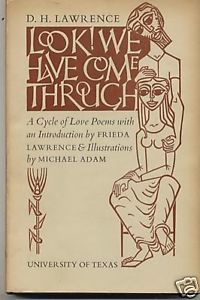
Remembering our past serves to remind us of who we are, what we have been, what intimacy we have achieved, what we are capable of, then and now, in the future. It builds resilience because, though often concerned with trauma and sadness, it is posed in a redemptive sequence: ‘look we have come through’ cries D H Lawrence and even Larkin’s depressed-sounding “first boredom then fear” might be read in this light. As to ethical consequences, apparently, in strongly nostalgic states individuals are more liable to act altruistically; the value of money is weakened; couples and families bond more closely; gratitude and connectedness increase; children grow less selfish.

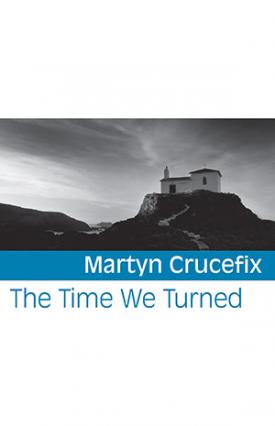
Meagre comfort when it’s you, or your father, losing the ability to recall; really this makes the loss of memory associated with old age that much more devastating. But at Southampton they are investigating nostalgia-based therapies for illnesses, including clinical depression and perhaps Alzheimer’s. Robert Lowell somewhere talks of the Christian trinity of God, Son and Holy Ghost, being replaced in the 20th century by Dad, Mum and memories of my family. Perhaps now we are gathering scientific evidence (if it was ever needed) that such a shift in focus was as much gain as loss. My poem ‘Four trees fallen’ (from The Time We Turned (Shearsman, 2014)) recollects the observation of trees fallen, the roots up-turned an image intended to evoke the unearthing of past experience:

this tree up-turned

with its metres-wide plate

of spreading roots tipped fully

ninety degrees from the horizontal

so what lay underground

is now exposed to the air [. . .]

I imagine it must have been

this same wind though perhaps

in the tempestuous pitch

of night that blew with such power

to topple a tree like this

to lever its roots up-turned

from almost immemorial dark

into the temporary dark

of one night’s storm—if it was

at night—left exposed at dawn

to new sunlight to noon and sunset

The final section remembers a pair of those fallen trees you sometimes come across where people have hammered coins into the rotting bark – a form of payment perhaps, but what for? A journey we hope always to be able to make.

images

Walking on—and with each step

I remember a third fallen tree

this morning this one skirted

some miles back beside a stream

yet this other trunk bristled

weirdly with half-moons of coins

in its papery folds each hammered

by walkers till the coins were bent

and stressed from blows

of rocks needed to sink them deep

and this tree I also remember

was not the first of its kind—what

year was it what walk beside

what stream of whisky-brown waters

did I stand by a fourth fallen trunk

in that same way gleamingly

scaled with hundreds of coins—

some had planted light-hearted

coppers while others had

invested more heavily with silver

or the thick edges of pounds

and even two-pound coins—

I suppose just taking a breather

or something to amuse the kids

while others thought playfully

to placate the spirits of the place

with its damps and shades

and slippery rocks—perhaps to give

a gift that could never be spent

digging deep in their pockets

as I too hammered and thought

I might pay the fare for a journey

yet to be made to find my way

back to dispense with the need

for daylight tempests or storms

in the pitch of night to retrace

my steps to the original place

whether it might be noon or dusk

or rain or shine a decisive taking

back a preternatural reprise

TTWT Cover image

Dannie Abse’s Memorial Celebration – 25.03.15

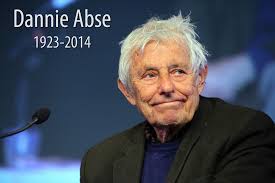
He remains a man who it feels impossible to confine to the past tense. So said Jeremy Robson, one of the speakers at Dannie Abse’s celebratory memorial event held in Kings College Great Hall on Wednesday evening this week. Indeed more than a few of those who had come to remember him, confessed they half expected Abse to be there himself, still large as life. Carol Ann Duffy imagined he’d want to “get outta here” – too much poker-faced reverence – and, yes, it was easy to imagine him somewhere still working away at his set goals – 5 or 6 publishable poems a year and every 5 years a collection of his marvellously accessible, witty and moving poems. How often did he achieve his own expectations of a good poem: that the reader should enter it sober, but leave it drunk.

imgres

Beneath a projection of this marvellous photo of Abse, Paul Gogarty oversaw the readings and recollections, immediately plotting the four compass points of the poet’s life: poetry, family, chess and Cardiff City FC. Lynne Hjelmgaard (Abse’s partner for the last 6 years) read the mysterious, life-changing visitation recorded in ‘The Uninvited’ (the only poem he would re-publish from his first book, After Every Green Thing) as well as her own moving poem in tribute to him. Alan Brownjohn, recalled his friendship with Abse and his direct acquaintance with the source materials of the two powerfully dark poems he chose to read: ‘Three Street Musicians’ and ‘A Night Out’ (the latter discussed in my earlier blog).

Tony Curtis alluded to another of Abse’s much quoted poetic observations: “I start with the visible and am startled by the visible”. He argued that, though not conventionally religious, the poet was a deeply spiritual man who could perceive the invisible through the visible. This was demonstrated in Owen Sheers’ reading of the extraordinary ‘In the Theatre’ in which a surgeon incompetently meddles with a patient’s brain (this was around 1938, only a local anaesthetic) only for the dying man to cry out hauntingly, ‘Leave my soul alone’. Sheers said this was the first Abse poem he ever heard – on a tape playing in his parents’ car apparently. Imagine the quiet drone of the engine after lines like these: “that voice so arctic and that cry so odd . . . to cease at last when something other died./ And silence matched the silence under snow”. A memorable moment, leading Sheers to dispute the reading of this particular poem with Andrew Motion, who gracefully withdrew (the English rightly ceding to the Welsh on this occasion, Motion observed) and chose instead to read ‘Apology’. Motion also recalled meeting Abse at an early Eric Gregory do and asking him (as a judge of competitions) how he approached the task of whittling down the thousands of entries. Easy, Abse apparently replied, throw out every poem containing the word ‘myriad’.

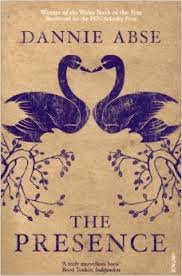
Abse’s daughter Susanna painted a more domestic picture of husband and father, a lover of all sorts of games including quizzes, board games, sing-songs on long car journeys, casting spells on recalcitrant traffic lights and pretending to talk to John Lennon on the family phone. She also recalled his “visceral” sense of loss when Joan was killed in the car accident in 2005. Only through the act of writing his memoir, The Presence (2008), and the poems later published in Two For Joy (2010) did he slowly return to something like a normal life. Elaine Feinstein read ‘White Balloon’ (“Auschwitz made me / more of a Jew than ever Moses did”) and ‘St Valentine’s Night’, the latter reminding us of Abse’s achievement as a poet of both erotic and uxorious love. Carol Ann Duffy had earlier read ‘A New Diary’ and Gillian Clarke chose the much-anthologised, neo-Romantic ‘Epithalamium’ (“Singing, today I married my white girl / beautiful in a barley field”) which she followed with her own response to it, ‘Barley’.

imgres

Perhaps most movingly there were several clips of Abse reading his own work (mostly from Ian Michael Jones BBC film series Great Welsh Writers). So the poet himself completed the evening with his reading of ‘The Presence’, the heart-rending lament for his wife, Joan, which surely everybody assembled in Kings Great Hall, beneath its classical white pillars trimmed with gold leaf, felt should now be addressed to the author himself:

It’s when I’m most myself, most alone

with all the clamour of my senses dumb,

then, in the confusion of Time’s deletion

by Eternity, I welcome you and you return

improbably close, though of course you cannot come.

images

Found Poems from Whitman’s Civil War Prose

I’m still pursuing some of the thoughts from my last blog about the difficulties of writing about current events (https://martyncrucefix.com/2015/03/13/how-do-i-write-poems-about-current-events/). I am reminded that we are closing in on the twelfth anniversary of the first so-called ‘shock and awe’ strikes by coalition forces on Saddam Hussein’s Bagdad in 2003: 

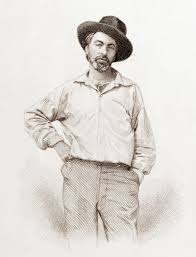
I did manage to write about the subsequent war in Iraq but on this occasion I approached it very tangentially, through the Civil War writings of Walt Whitman. The resulting poems were first published in The Long Poem Magazine (Issue 3, Winter 2009/10; sections also appeared in Acumen) with the Introduction I have posted below. There, I discuss several sections of the completed sequence though I will post up only two parts of it. For the sake of those who might be interested in how raw materials get transmuted in such a process, I have added links to the original passages from which #2 ‘The White House’ and #4 ‘I staid a long time to-night’ were derived. The full sequence was eventually published in Hurt (2010: https://martyncrucefix.com/publications/hurt/). Dan O’Brien has more recently used a not dissimilar ventriloquism in his poems about the experiences of war photographer Paul Watson. For a much more direct poetic approach to modern war (born out of direct experience as a soldier in Iraq) see the poetry of Brian Turner.

On 21st March 2003 the “big and little thunderers in chorus began to roar” over Baghdad. During Easter of that year I visited the American Museum, just outside Bath, and while my children scoured the grounds in an Easter egg hunt and my aging parents wandered around an exhibition of American rag rugs, I drifted into the bookshop and picked up a collection of Walt Whitman’s Civil War poetry and prose.

It was childhood innocence and the rag rugs’ recycling of material that were in my mind as I read the words Whitman had written in 1862 in Falmouth, Virginia: “Began my visits among the Camp Hospitals in the Army of the Potomac. Spent a good part of the day in a large brick mansion, on the banks of the Rappahannock.”

With the force of one of those visions that artists are thought to be prone to, it struck me that such a wide-eyed witnessing from an earlier conflict might be a way to write successfully about the then current conflict. Or to be more precise – since what I have just written fails to convey the powerful emotional impact of what I read – I was myself moved by reading Whitman’s observations but my emotion was not retrospective at all but immediate, topical, all about Iraq.

url

The more I read of Whitman’s prose the more genuine ties with the contemporary war I sensed. Whitman writes in his letters and journals almost as a by-stander, visiting the wounded and dying in hospitals, only occasionally being drawn to wider political observations and his focus on the individual cost of warfare exactly matched my own feelings. I began to imagine a sequence of poems framed by letters to a mother, containing the search for a brother and other references to close family members: “Han’s and George’s and Andrew’s. . . Jeff’s and his little Manahatta’s too”. The sequence came together only very slowly, partly because of my own uncertainties about its status as a partially ‘found’ poem but it eventually separated itself from its original sources and it was only later that I saw what was mine, what Whitman’s.

So the second piece, describing the White House, relies heavily on notes Whitman made in February 1862, but in the light of the deceit and war mongering of the early 21st century such descriptions are redolent with a bitter irony.

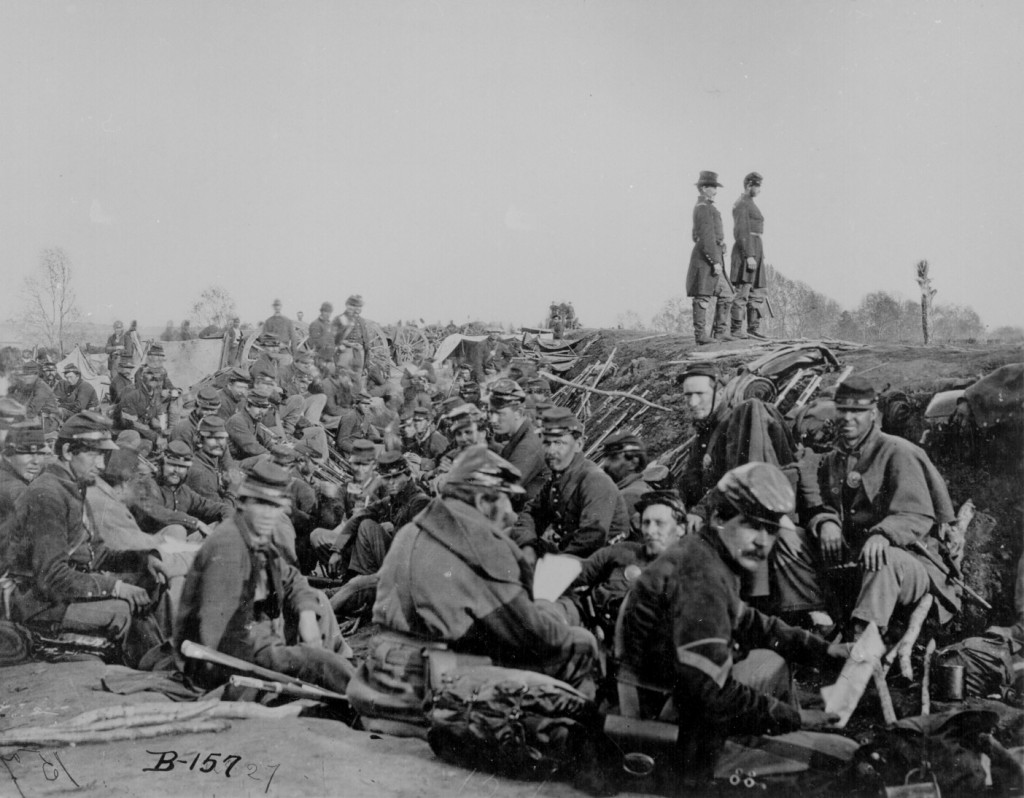
‘I dream’d a stockade’ is a more ‘composed’ poem, using Whitman’s familiar listing techniques, which intends to turn the suffering of the Civil War at an angle to reflect the inner conflicts that the Iraq mission quickly created in US society itself. With the inevitable reports of civilian casualties, I had little to add to Whitman’s accounts of comforting the wounded from the opposing sides of the Civil conflict to ensure a powerful contemporary resonance.

CIVIL115-1024x798
Soldiers in the trenches before battle, Petersburg, Va., 1865.

‘The President’ is drawn from Whitman’s many observations of Lincoln. He first set eyes on him in 1861 and, as with the White House material, while I was putting the sequence together, the passage of time had already imbued his original admiration with the bitterest of ironies. Of course, after the poems were completed, by January 2009 and the inauguration of Obama, time had ironically turned once more and some have since read this part of the sequence as ‘about’ the new US President.

With ‘To the Mother of one fallen’, the narrator is back at the bedside of an individual dying man whose ravings and sense of undeserved blame, of a corruption in the/his “system”, is intended to reflect warfare’s inevitable brutalisation of even the best of individuals, the results of which even now continue to be uncovered years after the world conjured its first surprised shock at events in Abu Ghraib. (click to see Whitman’s original letter of May 1865: Here )


More than it comes to

seven poems from the American War

ii. The White House

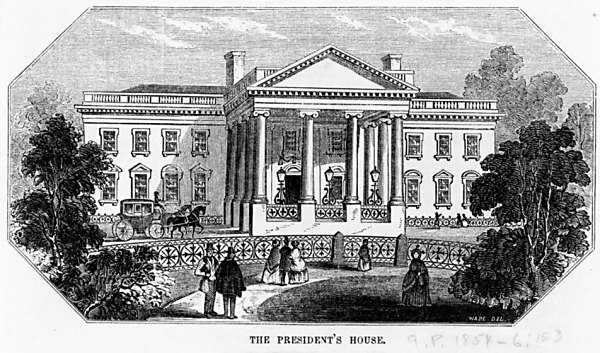
Tonight, I walk out to take a look at the President’s House.

Tonight, the white portico, the brilliant gas-light shining,

The palace-like pediment, the tall round columns, spotless as snow.

Tonight, a tender and soft moonlight flooding the pale marble,

A light that gives rise to peculiar & faint & languishing shades,

That are not shadows, for no such thing as shadow resides at this address.

On this night, a soft transparent haze under the thin moon-lace,

Where it falls amongst the bright and plentiful clusters of gas-lights,

That have been set at intervals around the façade & the columns.

Tonight, I see everything white, a marbly pure white and dazzling,

And even more so, the softest white of the White House of future poems,

And of dramas and dreams here, under the high, the copious moon.

Tonight, the pure and gorgeous front in trees under the night-lights,

The leafless silence and the trunks and myriad angles of branches.

Tonight, I see a White House of the land, a White House of the night,

And of beauty and of silence and sentries at the tall gate,

Sentries pacing in their blue overcoats, stopping me not at all,

But eyeing with their sharp sentries’ eyes whichever way I go.

For Whitman on The White House: Click Here

white-house-north-face-c1853

iv.  I staid a long time to-night

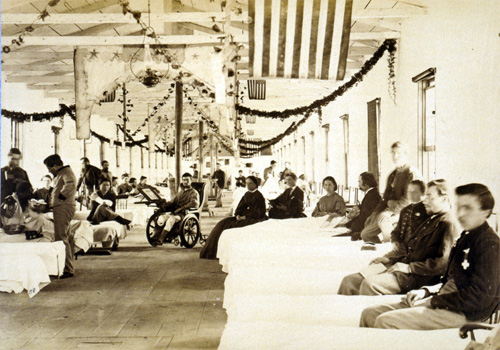
I staid a long time to-night at his difficult bed-side.

It was a young Baltimorean, grown to the age of nineteen.

He had seen so much and yet had slept such a very little,

His right leg amputated an hour since, he was feeble,

So he slept hardly at all, the morphine costing more than it comes to.

And this is what I must do, I sit still while he holds my hand,

And he puts it to his face most affectionately.

And this young, handsome, tanned Baltimorean spoke to me:

“My dear friend, I am certain you do not know who I am,

Although your sitting here so quietly and so patiently,

It means much, yet you must understand who it is you help,

Since what I stand for & fight for I know you believe to be wrong”.

I staid a long time at the bed-side of the young Baltimorean.

I staid certainly because death had mark’d him and he was quite alone.

I might say I loved him, sometimes kiss’d him and he did me.

And of his age was his brother, a brave and religious man,

His brother and officer of rank, a man I sat beside in a close, adjoining ward.

And I staid because in the same battle they were wounded alike,

The one strong Unionist, the other Secesh, and each fought well,

Each for their respective sides, brave & obedient & mark’d for the end.

Now they lay close, following the separation of many years,

Of their strongly held beliefs, the separations these had imposed on them,

And both fought well and each died in his particular cause.

whitman_05_lg
Ward in Armory Square Hospital, during Civil War, Washington, D.C.

For Whitman on the two brothers: Click Here

How Can I Write Poems About Current Events?

Recent reports coming out of Iraq suggest that Islamic State are destroying ancient artefacts, buildings, bulldozing cities like Nimrud. (see – http://www.theguardian.com/world/2015/mar/12/isis-ransack-ancient-assyrian-city-confirmed-iraq-head-of-antiquities-dur-sharrukin and http://www.theguardian.com/world/2015/mar/06/isis-destroys-ancient-assyrian-site-of-nimrud). Reading these reports has taken me straight back to the Taliban’s destruction of the two immense images of Buddha in the Bamiyan valley in 2001.

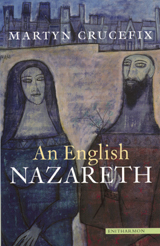
Whether it is possible to write poetry about such events is a question continually haunting me. It’s not a question I answer well or often I’m afraid – I’ve written precious few ‘political’ poems (four short pieces have recently been published here: http://themissingslate.com/2015/03/10/four-songs/). But I did manage to write about the Bamiyan valley (eventually published in 2004, in An English Nazarethhttps://martyncrucefix.com/publications/an-english-nazareth/ ). As I struggled with the poem I felt something interesting happening and I kept a drafting diary, some extracts of which I am posting below after the finished poem. I hope they provide some insight into the (often chaotic, chancy) thought processes of a writer, though they are necessarily fragmentary and I haven’t felt able to include copies of the drafts referred to (most of which I kept). I remember discussing the process of writing this particular poem with a workshop group in Bath a few years back and they responded well to the material though I’ve never organized it into a full account.

bamiyan_buddha_bg


The valley history

Over wind-eroded, bleached badlands,

creaking packs come past buttress and crevasse

through which scrolls of Chinese silk unfold,

beside green glassware from Alexandria,

poised bronze wrought in the dust of Rome

and Indian lattice-work, ivory figurines.

With an almost audible sigh of the road,

merchants and drovers lower themselves

to the lush place, benignant Bamiyan’s

sweet water, bird-song, best of all its shade.

Their hearts livened by its fine excess.

The valley gives rest beside standing pools.

There is time and reason enough to praise.

A million hammer blows hollow a place

for rough giants daubed with mud and straw,

for feet and face and Buddhas’ folded robes

in plaster-work, paint – one red, one blue –

their moonlike features, loose, gilded hands.

Yellow-robed priests are like tiny flowers

that spring beneath each benevolent gaze

by day and night, a new thousand years.

In brief intervals between battles that ebb

and flow indifferently now,

Kalashnikovs stashed between the toes

of the red figure – dry there, defendable.

Smooth head and sloping shoulder of the blue

irrupt orange as an order of dust rolls down

and the cry is All we are breaking is stone.

images

 Extracts from a diary about drafting this poem:

An article in the Saturday newspaper in the spring of 2001, recorded the apparent betrayal of his word by the Taliban leader, Mullah Mohammed Omar. In meetings with the Society for the Preservation of Afghanistan’s Cultural Heritage (SPACH), promises had been made to preserve two magnificent colossi, statues of Buddha, in the remote valley of Bamiyan. Within days of agreement being reached, rather than safeguarding the statues, the Taliban were shelling them. I sit and read this, as is usual, half-minded on other things, as I have been reading several articles the same morning, but I decide to tear this one out because I have had that inner stirring which I recognise as the voice of a poem to be. Writing the poem is finding a context – language, form, tone, narrative structure etc – what Auden calls the ‘verbal contraption’ – which will allow something of the reaction I experienced on reading the piece to re-create itself in my reader. It is that communication with which I am concerned. This is the truth I intend to communicate – not the literal honest truth.

*

I don’t progress far with a draft; I suspect because I have not yet found the distance from the informational aspects of the incident. This may or may not have been aggravated by my searching out information about the Buddhas of Bamiyan on the Internet – photos and earlier reports of concerns about the Taliban intentions and some historical details too.

Reading the first draft, it struck me that what I felt I was responding to was less a religious concern – this confirmed my uneasiness about writing about such geographically and culturally remote subjects – more an artistic one – about which I felt I might have something to say. The desecration and denial of the powers of art. This matched itself up in my mind with my sense that art arises out of an excess – economically and temporally – a luxury of a sort and the Bamiyan valley (in contrast to the surrounding rugged and desolate landscapes) seemed to suggest this contrast of the frugal and the rich. I mean the richness enough to devote survival time to the creation of art. I was therefore interested, in a second draft, in this contrast and the relation between trade – the Silk Road I began with – and the skill and beauty of the statues, the way in which they celebrate the excess and wealthiness and goodness of life – are separate from it, but at the same time arise out of it.

*

images

Then it was on Radio Four – possibly on Thought for the Day – half heard between the toast and marmalade and children’s cereals bowls. Between periods of blank inattention, I think I heard the speaker musing that she felt an irony in the situation – that it is the iconoclast who appears to attribute great power to the icon – often more so than the creators of the icon (this especially so in Buddhism where icons are certainly not created to be worshipped). The iconoclast fears the statues’ powers and this is why he feels they must be destroyed. This idea struck me as an interesting light on the situation and the tension between this idea and the declaration of Mullah Omar that these icons were just ‘rocks’ immediately presented itself as a likely ending to the poem – resonant, surprising, gesturing away from the topical towards something more universal.

*

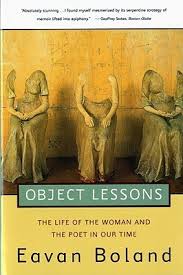
One comment from a reader of a later draft stuck in my mind and grew into something that began to feel problematic. The comment was to the effect that the poem as it now stood had rather grand, magisterial tone, a kind of confident utterance, that swept the reader along. This had seemed fine originally, something related to the historical process and sweep I had hoped to capture and imitate in the poem as a whole. But it now hooked up with a remote dissatisfaction I had begun to feel that the poem had a remoteness that could be construed – I’m being coy here, I mean, I did construe it – as a lack of engagement with the material, in the sense that the statements the poem was making were too monolithic, confident, not as poetry, but as political/cultural comment. This took several weeks of re-reading the poem to come to the fore in my response to it and it wasn’t until – by chance – I had been reading Eavan Boland’s book, Object Lessons, that I could articulate what my objection to the poem had become.

url

In her book, Boland traces her own development as a poet, particularly as a woman poet in Ireland where she felt the tradition of Irish poetry, though vibrant and respected in ways which we, on the other side of the North Sea, often envy, did not readily allow the writer of poems to be female. One effect of this was for Boland, as an aspiring woman poet, to adopt the modes and language of the dominant male tradition. She argues that she recognised this effect in the poem ‘The War Horse’.  The poem, she felt after completing it, suffered from a confusion between “the political poem and the public poem”. She felt that she had allowed the subject of her poem “to be a representative and the object to be ornamental. In such a relation, the dangerous and private registers of feeling of the true political poem [are] truly lost. At the very moment when they [are] most needed”. I began to feel the same thing had occurred in my poem. It was a public poem (something I’d worried about from early on) and in being so, it had not encompassed, or involved, anything more personal or private of my own self, that might serve to give perspective, even to undermine the position so evidently held by the poem. This is where the confidence of the poem’s voice derives from, but also its, arguably, simplistic nature.

*

At this stage, I couldn’t see how I was going to be able to re-shape the whole piece in answer to a fundamental criticism like this. In all sorts of other ways I was pleased with the poem as it stood. Others liked it too. It might be argued that there ought to be room for a simplistic poem on a subject that seemed to provoke such outrage. Was my desire for a more destabilising ‘personal’ voice, the weakness of the liberal who tries to see all sides of a question? Perhaps. I felt uneasy aligning myself with journalists (even quality ones!) and I felt my gradually formulated criticism of the poem was a valid one. One thing I felt I could do was to remove the final two lines of the poem. These ringingly ironic lines were hard to cut, but they did end the poem on the moral high ground, as it were, assertive and confident, inviting the reader to dismiss the Mullah’s words as patently and unmistakably weasel words. The removal of this – leaving the poem to end on the rather more interesting irony of ‘Only children dare not deface a Buddha’s foot’ – went a little way to destabilising the, almost arrogance in the poem’s tone. Perhaps the Mullah’s phrase – which has been a crucial part of my poem from the very start – could be a title?

The title it became and there followed a number of drafts in which I seemed to be wrestling with the failures of the fourth stanza. There I was attempting to record in too documentary a style what the Taliban actually did with the statues. I was becoming over-involved in the image of their trepanning of the Buddhas and then placing explosives in the heads, as well as the burning tyres. In both these cases, part of the problem was that the poet in me had fallen in love with striking images which I found satisfying but which – on further reflection – probably had no real place in the poem. They were too much powered by my love of language – too little linked to the purpose they might serve at that specific point in a specific poem.

*

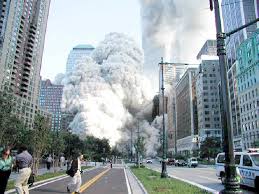
The poem was begun in March of 2001. And I was still working on it in September of that year – when the World Trade Centre was attacked. Al Qaeda’s links with Afghanistan are well known and the image of the monuments of East and West both being destroyed were impossible to keep apart in my mind now. I had a sense – again reflected in newspapers of the time that what had happened in Afghanistan had tortuously precipitated the Twin Towers attack. But too explicit a link would never serve so, at this stage, I tried to work in references to “stone dreams” falling not only in Bamiyan but elsewhere in the world. There were all kinds of ironies in linking these religious icons with the West’s most iconic images of capitalism and, though I don’t think I thought these through too rationally, they appealed to me and seemed to be apt in the context as Mullah Omar’s original statement caught my ear in large part because of its brutal materialism.

url

Around this stage, the form of the poem changed from the irregular stanzas it had been in since the start to unrhymed couplets. This, I hoped, would assist the lightening – the easing? – of the tone of the poem, as I’d begun to feel the clumped stanzas gave it a rather oratorical, speechifying feel, whereas the couplets would give a more unstable, edgy impression. Now called ‘The valley history’, it was still the final few lines, which seemed problematic. But with the eventual loss of the personification of ”fright”, the final choice of the phrase “irrupt orange” to suggest the splitting open of the Buddhas by the Taliban shells, and the removal of the rather too obviously paradoxical and (again) grandiose falling “stone dreams”, I felt the poem was finished enough. What eventually replaced the image of the falling towers was a phrase I was pleased to find. The “order of dust rolls down” alliterated well in the context, suggested the literal plumes of smoke and dust which accompanied the statues’ demise and, of course, also suggested the rolling dust clouds which followed 9/11. As well as literal truth, the “order” is intended to suggest a rule of government, or at least the decree of leaders, which tends towards destruction rather than construction and this was one of the originating impulses of my beginning the poem many months earlier.

crucefix_nazareth

On Translating Rilke’s ‘Duino Elegies’

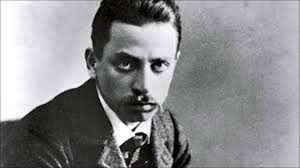
Idris Parry writes in the current PN Review (March/April 2015) comparing Rilke’s Duino Elegies with the Sonnets to Orpheus. The poet always spoke of the sonnets as subsidiary to the elegies, but Parry argues that while the elegies “talk about” the poet’s task, the sonnets perform it. I’d agree and, in translating both in the last 20 years or so, I have come to prefer the vivid enactments of the sonnets. Parry explores Rilke’s response to Rodin in Paris in 1902. What struck Rilke was Rodin’s “dark patience which makes him [as creative artist] almost anonymous”. What the young poet learned was to pursue an “unhurried and uncommitted exposure to experience” (Parry’s words). This is opposed to impatience which is (contra-Keats) an irritable reaching after clarity: “making up your mind before the event instead of letting the event shape your mind” (Parry again).

Rilke’s “praise” is just this acceptance and faithful utterance and is predicated on the truth of an underlying unity of existence. The poet is obliged to speak of this unity but can only use the language of division, a language deluded by the conviction of finality. Parry epigrammatically concludes: “We punctuate to retain our sanity, but we should not come to believe the punctuation”. The PN Review piece ends by looking at sonnet II, 18 and asks, if Rilke’s own German is a poor translation (using shabby tools) of an ultimate reality, how can translators hope to do it justice in bringing it over into English?

Reading Parry this week, reminded me of my own thoughts, not long after having translated Duino Elegies (https://martyncrucefix.com/publications/translations/duino-elegies/). They were originally published in Magma Magazine; I hope they are worth making public again:

My own grappling with the issue of what can be lost and gained in translation began over 10 years ago when London’s Blue Nose Poetry group staged an evening to celebrate Rilke’s work. This was partly in response to a Poetry Review survey of the original 1994 New Generation Poets, several of whom declared his work to have been influential. Though a name I was familiar with, I have to confess I hadn’t gotten far through my Penguin Selected. Perhaps on account of my ignorance, I was to contribute only by reading aloud from the Elegies. The Ninth was chosen but as I practised, I found myself stumbling, losing the thread and, frankly, I hardly knew what it was I was reading:

Here is the time for the Tellable, here is its home.

Speak and proclaim. More than ever

Things we can live with are falling away, for that

Which is oustingly taking their place is an imageless act.

Act under crusts, that will readily split as soon

As the doing within outgrows them and takes a new outline.

This is Leishman’s translation of the Ninth Elegy and I supposed the obscurity was part of the point – that it must signal hitherto unplumbed depths of profundity. My view on this remains equivocal, but I believe a proportion of the difficulty is obfuscation and the impression of slippery ‘mysticism’ it generates has misleadingly become part of Rilke’s appeal for many readers. For me, the bottom line was I could not read this aloud with the kind of conviction that I demanded. I tried a couple of other easily available translations – Stephen Cohn’s and David Young’s – but still was not happy with the sound these poems made in my mouth.

images
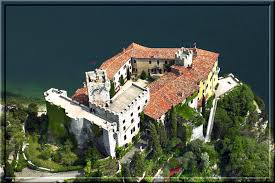
Castle Duino

Within a month I had produced a ‘version’ of my own. By version, I meant a close-ish translation, but I had taken considerable liberties with the more difficult passages and inserted what I thought Rilke might have meant or what I wanted him to mean. At the time this seemed to me a risky strategy compelled by necessity, though there is nowadays a good deal more debate about the role and value of versioning. My own position is that I prefer a genuine attempt to translate the original into a contemporary target language. I see the point of versions – but it is hardly ever what I am seeking as a reader. Nobody imagines translation is easy; but only a fool anticipates a perfect rendering. We expect translators to work in good faith and that their work will read sufficiently well in the target language not to distract us with the stale sweat of their strenuous wrestling with the original. Nor should they cover the difficulties of translation by delivering obscurities that defensively resist comprehension.

It was coming across my first attempt a couple of years later that set me systematically picking my way through the million pitfalls of the Elegies. Take for instance Rilke’s opening lines, the great cry at the start of the sequence. Rilke writes “Wer, wenn ich schriee, hörte mich denn aus der Engel / Ordnungen?” Not too much of a problem you might think, but William Gass, in his book, Reading Rilke: Reflections on the Problems of Translation (Basic Books, 1999), considers no fewer than 15 versions of these 11 words. Most – though by no means all – accept Rilke’s opening word – “Who” – and most, though not all, take over Rilke’s relative clause “if I cried”. But is he merely crying or crying out? And beyond this point of relative agreement lie terrible dragons of disagreement, especially over the word “Ordnungen”. How are the angels deployed? Are they in “angelic orders”, “amid the host of the angels”, “among the hierarchy of angels”, “the order of the angels”, “among the angels’ hierarchies”, “among the ranked Angels”, “through the Angel Orders” or even (Gass gives his own version) “among the Dominions of Angels”? In such company, my own version, “Who, if I cried out, would hear me among the ranks / of the angels?” runs the risk of a watery plainness but it has the advantages of clarity, echoes the rhythm, syntax and line break of the original closely, and (remembering my first concern was for oral performance) the line has a satisfying aural quality. I hear in the first phrases high, thin vowels that contrast the second half’s weightier, assonantal ‘a’ sounds: the cry of alienated humanity contrasts the solid, seemingly impregnable powers that lie beyond our reach.
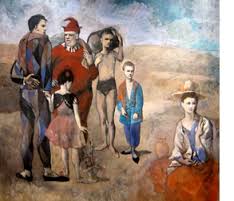
But the best-equipped translator faces especially difficult problems in Rilke. In the Fifth Elegy, for example, the poem describes some acrobats. This is a combined portrait of a troupe Rilke knew while living in Paris and a painting by Picasso (La Famille des Saltimbanques, 1905) with which Rilke lived in the summer of 1915 in the house of the dedicatee of this Elegy, Frau Hertha Koenig. This is, formally, one of the freer of the Elegies, its lines extending and contracting to reflect the energy of the tumblers.

imgres
Picasso’s ‘La Famille des Saltimbanques’ (1905)

But in the Picasso painting the figures are arranged in an almost imperceptible D-shape and Rilke writes:  “Und kaum dort, / aufrecht, da und gezeigt: des Dastehns / großer Anfangsbuchstab . . .” In my version: “And barely discernible, / yet up-standing and unmistakeably on display, / the capital D of Destiny . . .” The original word “Dastehns” (something like “standing there”) reflects the visual pun and it would be a great loss not to bring this into the English. Stephen Mitchell uses the word “Duration”; Young’s looser version loses the pun with “existence . . . presence”. On this occasion, I found myself following Stephen Cohn and opting for “Destiny” (more usually the translation of “Schicksal”) which I felt conveyed Rilke’s sense of how these individuals are driven to perform by forces external to them, rather than by a more truthful inner compulsion.
imgres

Another critical decision arises in the Tenth Elegy with its tribe of people who enjoy a closer, more authentic relationship with death and grief than Rilke perceived in contemporary Western culture. He uses the word “Klage” and an English equivalent has to be found that works as the name of a young woman, her tribe, her ancestors and her country. Like the sound of the original, the word also has to reflect the harshness of the grief felt, while at the same time suggesting a dignity in such powerful emotions. For Rilke, the role of this personification and her whole tribe is certainly heroic. Most previous translators have opted for the word “Lament” but I felt this suggested a rather affected, almost poetic attitude – precisely the kind of posturing that Rilke asks us to avoid in our confrontation with these difficult aspects of life. I chose the word “Keening” to convey the genuine edginess of feeling (aurally again I liked the harsh initial K and the word’s trailing, wailing fall). This word seemed to me to work perfectly as personal and tribal name and geographical location: “gently she guides him through the vast / Keening landscape, shows him temple columns, / ruins of castles from which the Keening princes / once wisely governed”.

One thing I have learned is that translators take sustenance from their chosen originals. This is not just in the obvious way of extending their range, but also that they feed on a familiar. They find in their subject an answering voice, a confirmation of something already present within themselves. I experienced this in a surprising way. Rilke’s influence on Auden was particularly evident in the late 1930s. The sonnet sequence In Time of War refers directly to him and Mendelson’s Later Auden (Farrar, Straus and Giroux, 1999) argues that ‘In Memory of W. B. Yeats’ concludes with “an explicit echo” of Rilke’s Ninth Elegy and its famous injunction to “praise this world to the angel”.

imgres

Auden asks Yeats’ spirit to “Teach the free man how to praise”. Interestingly, Auden has never been a strong influence for me, yet the elegy to Yeats is a poem I have always loved. In fact, five or six years before I got to know Rilke, I remember modelling an elegy of my own on Auden’s – from the choice of title, the formal variety of its sections, to a finale in which I too celebrated one who “loved the world, craved its taste”, elevating him to a teacher of praise: “Listen, let me make this master speak: / Laughter, love, the senses are profound. / Drink deep, remember, Jeremy Round” (‘In Memory of Jeremy Round’). Reading Mendelson’s book has convinced me that I had been responding not merely to Auden but also – unknowingly – to Rilke. It turns out I have been finding a sympathetic familiar in him for longer than I had imagined.

Rita Dove / Local Library Love

Here’s a shaggy dog story.

J—–, my 17 year old daughter was travelling on the London Tube between social engagements a week or so ago. She and her friends were all a bit girly giggly – by her own admission after pre-drinking at somebody’s house – and her mobile phone got left on the train. Her unsuspecting parents – probably on the sofa that Saturday night, catching up on Wolf Hall or something similar via the i-Player – get a phone call (from a friend’s mobile) with the bad news. Oh bloody hell, full-on disapproval voice, we’ll have to cancel the contract before calls are made to Mars or Outer Mongolia, but let’s just try ringing J—-‘s number on the off chance it’s been picked up by an angel.

21084751

After a few hopeless attempts, someone answers sounding less angelic, more Eastern European. And yes, the phone is in their hands, and yes we are welcome to come and pick it up, maybe tomorrow, in some side street near Balham Tube, way across London of course. By dint of masculinity and eminence of age, it’s me who sets off next day for south London. The phone bit of the story goes rather cold here I’m afraid (uneventful, after wandering a few streets, knocking on a door, a young couple, full of the smiles of the unthinkingly virtuous, hand over the phone and I press a box of grateful chocolates into their reluctant grasp).

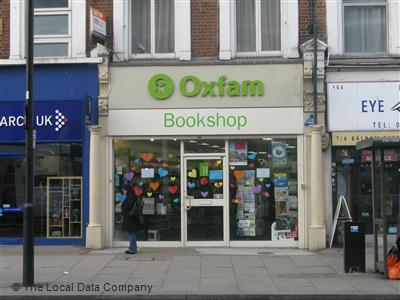
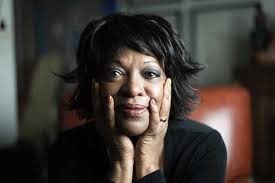
But Balham High Street has an Oxfam Bookshop – the kind I can never resist – and hidden away on the poetry shelves (between Everyman’s Robert Herrick, old copies of Poetry Review and a suspiciously large selection of First World War poetry) I pick out a hardback, signed first edition of Rita Dove’s 1999 collection, On the Bus With Rosa Parks, published in the US by Norton. Just reward for the unnecessarily put-upon, I think to myself.

images

‘Maple Valley Branch Library, 1967’ is one of the best poems in Dove’s book and as I rocked northwards on the Victoria line I drifted back to late 1960s, early 1970s, to my own beloved local library in Trowbridge, Wiltshire. In those days it was in a grand building not far from the central bus station (though opposite Jimmy Ladd’s hardware store) and we paid weekly visits there. My tastes were un-literary, nothing out of the ordinary, books on fishing and rugby, Tolkein, John Wyndham. I remember one occasion I went there searching for addresses of poetry magazines but this must have been a few years later when I’d begun to scribble verse. I probably sent some ill-tutored nonsense to The Times Literary Supplement and of course heard nothing back.

Later still, a TV programme on Vincent Van Gogh sent me off to borrow a book on the artist who I felt sure I resembled, my certainty expressed through vigorous claims to admire him as a painter, poet, thinker and man. Looking back, it was a rather escapist Van Gogh whose observations I copied into a diary: “We are entitled to entertain a certain hope that there may be other and better conditions for painting than here on earth – conditions that can be attained through a change that need not be more surprising than the metamorphosis of a chrysalis into a butterfly. [This] sphere of activity . . . might conceivably be one of the many stars which after death are probably no more difficult to reach than the small black dots on a map which in our earthly existence mark towns and villages. . .  It seems to me that it is far from impossible that diseases . . . are in fact heavenly means of transport . . . In that case, to die quietly of old age is to go on foot”. What I loved about this was the other-worldliness, the sense of the creative artist, the presence of death not as the end of things but as a transition to a better place. Misunderstood or not, my mind was moving beyond the limits of my home town, its confining little black dot, the piddling River Biss, Bowyers pork sausages and bloody Watneys Red Barrel. Love your local library! Click here for information about the local libraries campaign: http://www.librarycampaign.com/

And here is Rita Dove reading ‘Maple Valley Branch Library, 1967’: 

Maple Valley Branch Library, 1967

For a fifteen-year-old there was plenty

to do: Browse the magazines,

slip into the Adult Section to see

what vast tristesse was born of rush-hour traffic,

décolletés, and the plague of too much money.

There was so much to discover—how to

lay out a road, the language of flowers,

and the place of women in the tribe of Moost.

There were equations elegant as a French twist,

fractal geometry’s unwinding maple leaf;

I could follow, step-by-step, the slow disclosure

of a pineapple Jell-O mould—or take

the path of Harold’s purple crayon through

the bedroom window and onto a lavender

spill of stars. Oh, I could walk any aisle

and smell wisdom, put a hand out to touch

the rough curve of bound leather,

the harsh parchment of dreams.

As for the improbable librarian

with her salt and paprika upsweep,

her British accent and sweater clip

(mom of a kid I knew from school) —

I’d go up to her desk and ask for help

on bareback rodeo or binary codes,

phonics, Gestalt theory,

lead poisoning in the Late Roman Empire,

the play of light in Dutch Renaissance painting;

I would claim to be researching

pre-Columbian pottery or Chinese foot-binding,

but all I wanted to know was:

Tell me what you’ve read that keeps

that half smile afloat

above the collar of your impeccable blouse .

So I read Gone with the Wind because

it was big, and haiku because they were small.

I studied history for its rhapsody of dates,

lingered over Cubist art for the way

it showed all sides of a guitar at once.

All the time in the world was there, and sometimes

all the world on a single page.

As much as I could hold

on my plastic card’s imprint I took,

greedily: six books, six volumes of bliss,

the stuff we humans are made of:

words and sighs and silence,

ink and whips, Brahma and cosine,

corsets and poetry and blood sugar levels—

I carried it home, past five blocks of aluminium siding

and the old garage where, on its boarded-up doors,

someone had scrawled:

I CAN EAT AN ELEPHANT

IF I TAKE SMALL BITES.

Yes, I said, to no one in particular: That’s

what I’m gonna do!

LHB0027A
Maple Valley Branch Library

To give some impression of concluding my original narrative: as you can imagine, J—– was suitably grateful at getting her mobile back, dashing off to text friends that she was back on line and thankfully in touch with the world again. I remember we always tried hard while she and her brother were younger, taking them to Hornsey library most weeks and happily (with or without our help) they both acquired habits of reading. Even so, the local library is not really on their radar any more. It’s obvious why.

A little experiment to conclude:

bareback rodeo – about 57,800,000 results  in 0.44 seconds.

lead poisoning in the Late Roman Empire – about 479,000 results in 0.51 seconds.

pre-Columbian pottery – about 403,000 results in 0.46 seconds.

blood sugar levels – about 29,600,000 results in 0.32 seconds.

Why would you trek to the library, however close by, when you can worship at the God Google’s shrine? Yes – I use Google every day and bless it (it tells me an unsigned copy of Dove’s book might be worth 30 US dollars!). But at the same time we are well aware that such a sublime volume of information, arranged in ways not within our own control and perhaps not even within our understanding, has its drawbacks. Here’s Eddie Izzard on google, wikipedia, i-Tunes, up-dates, terms and conditions and how we blindly play along: 

How Do You Judge a Poem?

I am half way through the process of judging this year’s Torriano Poetry Competition (https://torrianomeetinghouse.wordpress.com/2014/10/27/torriano-poetry-competition-2015/). I’ve been lucky enough to judge a few such competitions in the last few years and what follows is a compilation of thoughts on the judging process. Though the initial sifting can be a slog, the latter stages are fascinating as poems that set little hooks in you at first reading, gradually become more clear, their internal coherence emerging alongside their skills with language and form. What follows is inevitably a personal take on the business – more so as the process unfolds – but I hope it may cast some light on it for those (of us) tempted to spend hard-earned cash on entering the numerous competitions now running (here are a few . . . http://www.poetrylibrary.org.uk/competitions/).

In the 2003 comedy film Bruce Almighty, Jim Carey plays God and, alongside with more obviously useful powers, he has to respond to the prayers of the world. But people are always praying; he rapidly approaches a kind of madness as voices swim around him, clamouring for attention.  He takes to reading the prayers in the form of e-mails. He tries to answer them individually but is receiving them faster than he can respond. He sets his e-mail account to automatically answer “yes” to all, assuming this will make everybody happy. Of course, it does not.

imgres

A poetry competition judge comparing himself to a character playing God lays himself open to criticism – but I have indeed found the initial phases of judging rather like Jim Carey’s experience. There are so many and such a variety of voices clamouring to be heard and every one of them is heart-felt, recording significant moments in people’s lives. There is a similar sense of responsibility too – the raw nature of much of the writing is impossible to deny. I’d like to set my response mechanism to say yes to everybody, but the judge’s task has to be how to distinguish submissions as poetry.

**

The numbers are always frightening. Many hundreds of poems will be submitted. Perhaps only 10% of these will demand a further reading after the brutal first sifting. Poems face an early red light from most judges because basic elements are not competently done:

  • Competitions are full of pieces where a particular verse form or rhyme pattern tyrannises the sentiment. The writer’s submission to this tyranny becomes clear quickly through the contortions imposed on the language to achieve a rhyme.
  • The writer’s choice of language can be devastating to the life of the poem. It just isn’t right to opt for forms of language or abbreviations that died out early in the nineteenth century.
  • Choice of diction also derails an entry if it is doggedly abstract. Sure, there remains much debate about whether it is the narrow English tradition that insists on things rather than ideas – but poems about Fear, Ignorance, Poverty, Eternity and Love which refuse to dip a toe into anything resembling a real life situation are going to find progress hard.

leaning-stack-of-papers-and-files

  • A fourth error is using language without being fully aware of its likely resonance with a possible reader. A poem called ‘Mother’s Pride’ which turns out not to be aware of the loaf of bread is going to have unanticipated clutter to climb over in the reader’s mind. Louis MacNeice wanted the poet not to be an ivory tower type, but rather “able-bodied, fond of talking, a reader of the newspapers, capable of pity and laughter, informed in economics . . . actively interested in politics”. All a bit Boys Own perhaps, but if this means the poet stays up to date with the way words live then he’s right.

 **

If you are thinking of submitting to a competition, it’s worth recalling Wordsworth’s formulation – familiar though it will feel – that poetry is built from “emotion recollected in tranquillity”. Poems made in the heat of the moment (and not revised and reviewed in the name of not tainting spontaneity) are seldom without their flaws. This is the kind of distinction Rilke also makes when he denies poetry is composed of feelings. Its constituents are rather “experiences” which he clarifies as “memories” though even with these, we “must be able to forget them when they are many and one must have the immense patience to wait until they come again . . . Only when they have turned to blood within us, to glance and gesture, nameless and no longer distinguished from ourselves – only then can it happen that in a most rare hour the first word of a poem arises in their midst and goes forth from them”. On the other hand, such recollection can sometimes create an intellectualised distance that may do harm to a good poem. Who said writing a poem was easy?

louis-macneice

Stephen Spender argues that a poet should try to acquire skill and virtuosity through the study and interpretation of other poetic works in the way Mozart and Beethoven did in playing the music of their predecessors.  Spender suggests translating poetry is the best possible exercise in interpretation. But the really important lessons (Spender says) are those of the eye, the ear, the athletic/poetic muscles. A poet can go a long way without a developed heart, but, he says, can get nowhere at all without these skills. The poet must ask continually of his lines: ‘Do they make the reader see, or hear, or feel, this experience which I am trying to re-create?’

 **

Reaching the final stages, the judge will be focusing more positively and more clearly on the sense, the story, the thought of a poem. Personally, I like poems that focus on small things and, in effect, make arguments for the ways in which they communicate the bigger issues that concern us all. I’m with Thomas Hardy in believing that “he used to notice such things” is one of the greatest of compliments. Edward Thomas’ poem about Spring, ‘But these things also’, likewise echoes this focus on what most people tend to overlook:

The shell of a little snail bleached

In the grass; chip of flint, and mite

Of chalk; and the small birds’ dung

In splashes of purest white . . .

Perhaps one explanation of why the question ‘what is poetry?’ is difficult to answer is because it is an art of the negative, of avoidance. The Daodejing says what is rigid and inflexible is a companion of death; what is flexible is a companion of life. I’d guess there would be general agreement that poetry is an art on the side of life. So poetry must eschew the inflexible; we must avoid the posture. And that’s very hard. In judging a competition one comes across the Wordsworth-posture, the Ginsberg-posture, alongside those of Betjeman, Hughes, Plath, Duffy . . . But we also posture like mad in ‘real life’. We may take up the pose of grief, melancholy, love, liberalism, environmentalism . . . The mark of the absence of posturing is an instability, an openness, an awareness of time (which posture tries to deny) and this is something I look for in a good poem. If a poem strikes an attitude my attention diminishes (even the attitude that wants to show a rejection of attitudinising through the hall of mirrors of ironic distancing). When the poem unearths a pulsing, shifting, live relationship between the self and the other, then I am captivated, recognising something that is both commonly human and uniquely personal.

But having said all this, I’d assure potential competition entrants that anything resembling a rule is there to be broken. Philip Pullman has said, “We don’t need a list of rights and wrongs, tables of dos and don’ts: we need books, time, and silence. Thou shalt not is soon forgotten, but Once upon a time lasts forever.”

114650911_345473c

So any poem in any form can work its magic. It will haunt its reader for days; it will make me change the way I think and feel; make me see the world differently. Ultimately, a poem contributes to who the reader is becoming. That is an exciting prospect for the writer. It is an even more exciting one for the judge who settles down to read.

The Death of Philip Levine

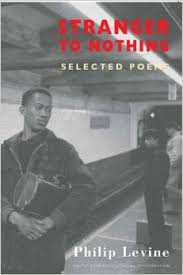
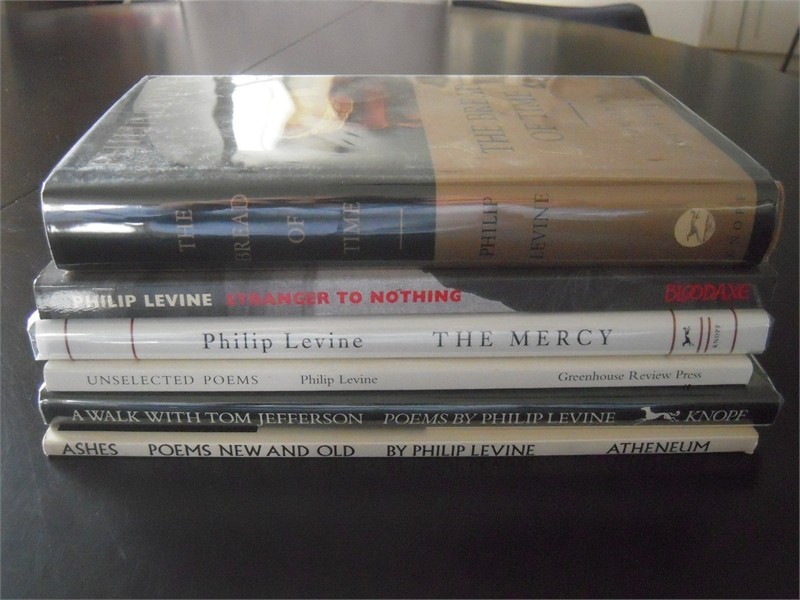
The death of Philip Levine, one of the greats of modern American poetry, was announced yesterday. Bloodaxe published his selected poems, Stranger to Nothing, in 2006: http://www.bloodaxebooks.com/titlepage.asp?isbn=1852247371. Astonishingly, this was his first UK publication since Secker produced an earlier Selected Poems in 1984. Not as well known as he should have been in this country, there has been a good deal more attention given to him in very recent years.

imgres

I’m ashamed to say I only came across him when Poetry London asked me to review Stranger to Nothing alongside Dan Chiasson’s Natural History and Other Poems (Bloodaxe, 2006). It was on the strength of the review that Anne-Marie Fyfe asked me to contribute to a Troubadour Poetry event in London celebrating Levine’s work. Sadly Levine was unable to attend on the evening due to illness and I had the honour of reading some of his work in his stead. For what they are worth, I’ll append the notes I made to myself on the poems I selected to read that evening at the end of this blog. Happily, I think I remember Anne-Marie later reporting back that Levine approved of my brief selection.

Some time later, Naomi Jaffa discussed his life and work with him at Aldeburgh in 2009. The Poetry Channel’s blurb for the recording of that conversation gives a flavour of Levine as follows: A giant of American poetry and now the newly appointed US Poet Laureate, Philip Levine memorably appeared at Aldeburgh in 2009 where he enjoyed a 45-minute conversation with Naomi Jaffa, The Poetry Trust director. In this absorbing, funny and wide-ranging interview, Levine covers growing up as a Jew in anti-semitic Detroit, working for General Motors, finding his voice as a poet, life at college with teachers Lowell and Berryman, his fascination with Lorca and Spain, his love of jazz (and loathing of Wagner), and which four writers he could bear to be stuck in a lift with: listen to that here: http://thepoetrytrust.libsyn.com/philip-levine-s-journeys

And as tribute to a truly great poet here is my September 2006 review of Stranger to Nothing:

On the face of it, the contrast between Dan Chiasson and Philip Levine could hardly be more striking. Bloodaxe have produced a fascinating selection from a poet whose relative absence from discussions of US poetry on this side of the Atlantic is a huge loss. Born in 1928 in Detroit, the son of Russian-Jewish immigrants, the first poems included here were not published until 1963. Like Raymond Carver, to whom he bears some resemblance, Levine spent many years labouring in industry  and much of his later poetry recalls these experiences and the people with whom he worked. Whereas Chiasson is urbane and metropolitan, Levine is urban and industrial. Though encompassing a long writing career, this is not a selection that reveals very much in the way of artistic development; Levine’s characteristic style and tone seems to have come to him fully formed and he has seen little need to alter it. One reason must be the premium he clearly places upon being true to his materials – and in particular the experience of the American working people he portrays.

imgres

Accordingly, there are poems in which Levine doubts the value of the imagination in its tendency to romanticise real experience. ‘Salt and Oils’ from the mid-eighties moves rapidly through moments in a life, but then concludes:

“These were not

the labours of Hercules, these were not

of meat or moment to anyone but me

or destined for story or to learn from

or to make me fit to take the hand

of a toad or a toad princess”

With very different results this might be seen as another attempt to achieve the “transparent eyeball” that Chiasson refers to. Things are what they are and it is in this sense that the collection title works. The phrase comes from an early poem in which a visit to a graveyard leads the narrator to contemplate the realities of life so that “in time one comes / to be a stranger to nothing”. This is also typical of Levine’s style – a loosely constructed, colloquial blank verse, driven along powerfully by the syntax across lengthy sentences that work by slow accumulation rather than the local explosions of linguistic surprises.

But if the fantasies of imagination are dismissed, Levine holds firmly to its role in the re-creation of the past. Often precisely dated, he vividly and lovingly portrays scenes and people from his past. A truck-driving uncle from “black Detroit” is sketched through telling detail – his “two hands kneading / each other at the sink” – and this summoning up into a type of art remote from the original life is, Levine seems to suggest, a kind of redemption or dignifying, so that the Uncle can at last “rise / above Belle Isle and the Straits, / your clear eye / rid of our rooms forever”. Throughout this book, lives are invoked in this fashion in finely-judged poems that neither underplay the poverty and misery within them, nor uncomfortably rose-tint the strength and humour such individuals need to survive.

dscn2747

Perhaps for some, there will be something too fatalistic in these portraits of working-class America. Ought there not to have been more overt political agitation? But Levine works the vein of the individual, the idiosyncratically human and, I’m sure, for him that represents political position enough. In the very recent poem ‘Our Reds’, he again memorialises three characters from school days (1930s/40s?) and their promotion of Communist doctrine. Though the poem indeed acknowledges that what the future brought was “an America no one wanted” it is to “bless” the three that the poem intends: “bless / their certainties, their fiery voices / we so easily resisted . . . their faith in us, especially / that faith, that hideous innocence”. It is perhaps only in moments that working lives are felt redeemed as in the stunning ‘An Ordinary Morning’ with its plain recounting of workers arriving in the city on a bus. The driver and a passenger strike up a song – “O heavy hangs the head” – and as dawn breaks the other passengers wake, momentarily allowed the nobility that their exterior lives seem to deny:

“the brakes

gasp and take hold, and we are

the living, newly arrived

in Detroit, city of dreams,

each on his black throne”

Levine has said that the tradition of poetry he inherited in the 1940s was “utterly lacking” in the kind of people and experiences he had grown up with. His intention was to add to US poetry “what wasn’t there” before. To have done this so consistently – to record the plight and resilience of the poor and inarticulate in America without breaking into the angry simplicities of blame or party politics or caricature is a monumental achievement. This is a collection that deserves to become a significant feature in the twenty-first century landscape of UK poetry.

And here are my notes from the Troubadour event (page numbers here refer to the Bloodaxe edition of Stranger to Nothing):

Reading Philip Levine’s poetry I was immediately put in mind of Carver’s admiration for Chekhov – he quotes Chekhov’s letter again and again in which he says “you don’t have to write about extraordinary people who accomplish extraordinary and memorable deeds”. Also like Carver, Levine worked in industry for many years – born in 1928, his first book didn’t appear till 1963. Both seem fully paid up members of the working classes – Carver said he could never write down to his own people. ‘Saturday Sweeping’ – p 26

I like the way Levine’s poems seem to meander organically from one thing to another – without a hint of irrelevance. He also plays great tricks with chronology – memory of his working years often playing such a large part in his current thinking and writing. ‘Sweet Will’ – p 84

images

Levine – like Carver – would sign up to Pound’s dictum that the only worthwhile morality in writing is “fundamental accuracy of statement”. But there is another current in Levine which can take him towards the surreal. This poem reminds me of Ken Smith’s ‘Fox Running’ (both 1981). ‘The Fox’ – p 68

In later Levine, the political anger is often transmuted into a kind of less deceived tenderness – an amazed sense of good fortune. ‘Philosophy Lesson’ – p 150

Levine often writes of visits to Europe – particularly Spain – and the Civil War clearly stimulated his imagination. Here though – I take it – he is also commenting on one of the great American poets who came to Europe – one I guess temperamentally very contrasting to Levine and I think this has to be intended partly as literary critical comment. ‘The Trade’ – p 127

Levine is also unfashionably willing to walk naked – emotionally. Some will think he sails the wrong side of sentimentality but I’d disagree.’Starlight’ – p 55

Working on Rilke for so long in recent years – I see him everywhere. In the Elegies he claims that even the street girls – prostitutes – are momentarily aware of the visionary possibilities his poems are concerned with. But here – lastly – is Levine working from a position of a good deal of factual knowledge and communicating the same thing – moments of vision without the religious baggage. ‘An Ordinary Morning’ – p 86

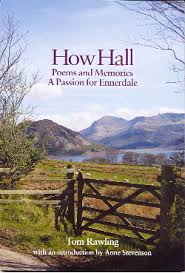
The Poetry of Tom Rawling

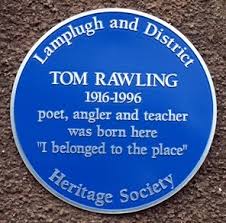
In the early 1980s I arrived in Oxford as a self-absorbed post-graduate and promptly sought out student poets wherever I could find them. The group I joined was then (I think) meeting in rooms in Hertford College, opposite the Bodleian Library (and happily very close to the Kings Arms). Bill (W N) Herbert was there, as was Keith Jebb and Paul Mountain. The group, with changing personnel – I remember Elise Paschen was a member for a while – continued to meet throughout my 4 year stint among the dribbling spires, but we would supplement it by decamping to the Old Fire Station on George Street where Tom Rawling was running a public workshop. Tom had taken over when Anne Stevenson moved north. As a retired headmaster, Tom ran us all as a well organised and disciplined class. Elizabeth Garret joined later and I think Peter Forbes was already a member, as was Helen Kidd. Jeremy Round, who was soon to achieve short-lived fame for his cookery writing, was also a regular. My poem ‘In Memory of Jeremy Round’ (eventually published in Beneath Tremendous Rain (Enitharmon, 1990) https://martyncrucefix.com/publications/beneath-tremendous-rain-1990/) is a lament for his tragic early death, but also tries to paint a vivid picture of the workshop and its members:

We’d wrangle inconclusively

between the beers and crossfire from Tom,

elder statesman who’d slip quietly glittering

poems from his tackle bag like fish; from Helen,

whose pages always seemed typed under earthquake

conditions, whose baggy poems had more passion

than most of us could muster; from Peter’s

exactitude, schooled on a diet of science, he held

each piece like a prism till it shed eloquent

rainbows; from Bill and Keith, the ferocious

tyros, the university wits, who minced nothing

but their language into strange sweet things;

from Paul whose poems were amazed not to find

themselves loosed into a more graceful age

than the one we live in.

There were others writers, of course, to whom I apologise for not recalling them clearly. Bill has also written about these few years with great eloquence and insight: http://tracearchive.ntu.ac.uk/poets/herbert/dec_2.htm.

imgres

But rather than his aspiring students, it’s Tom Rawling’s own poetry that I want to highlight. A pamphlet called A Sort of Killing appeared in 1978 (an historical event now as this was one of the first publications by a young Neil Astley). OUP published Ghosts at My Back (1982). Two other books followed: The Old Showfield (Taxus, 1984) and The Names of the Sea-Trout (Littlewood Arc, 1993).

Grevel Lindop has long been a fan of Tom’s work (http://grevel.co.uk/poetry/tom-rawling-rediscovering-ennerdales-poet/). There is an audio recording of Tom reading many of his best poems (you can listen to one of them here: http://listenupnorth.typepad.com/listenupnorth/tom-rawling-poet.html). Listening to him again, what what comes over is his modesty, his sharp intelligence, his confidence in his own work and the vivid recall he had of his formative years, growing up in Ennerdale, Cumbria. Tom’s poems, in their accessibility, boldness with language, natural and ecological themes are (as my review concludes) ideal for the classroom and it is still a cherished hope of mine that they might be taken up by a mainstream publisher and presented to a new generation (a Rosemary Tonks of the western valleys of Cumbria, wielding his fly-fishing rod). Perhaps the best way to sing my praise of Tom’s work is to post up a review I wrote of his posthumous collection How Hall (2009).

imgres

I recommend you search out more of his work (http://en.wikipedia.org/wiki/Tom_Rawling). Here is my review:

Tom Rawling, How Hall: Poems and Memories, a passion for Ennerdale (Lamplugh and District Heritage Society, 2009), £7.50, ISBN 978-0-9547482-1-0

Tom Rawling, How Hall: selected poems of Ennerdale poet Tom Rawling, read by the author (Lamplugh and District Heritage Society, 2009), £5, CD audio recording

As a child in the 1920s, Tom Rawling grew up in the Ennerdale valley in what was then called Cumberland. It was not until his retirement in the shallow decades of the 1970s and ‘80s that he began to write poetry as a man “haunted . . . even bullied by his memories” as Anne Stevenson’s insightful introduction to this new selection explains. A marvellous collection was published by OUP in 1982 and two further publications from smaller presses resulted, but at his death in 1996 Rawling had not attracted the kind of attention he had hoped for and certainly deserved.

How Hall is a new edition of more than 70 poems, three pieces of autobiographical prose and some wonderfully evocative photographs. The accompanying CD is an audio recording of an extended reading given in 1983 and the passion and precision of his voice and his humble and insightful comments add further invaluable dimensions to any appreciation of his work. Rawling shares with Heaney the kind of vivid recall of childhood that yielded the title of his first book, Ghosts at My Back. An early poem has the young Rawling playing “squire” to the village blacksmith who also introduced him to his life-long passion, fishing – both are described as “tying knots / That didn’t slip” (‘Johnny’). Yet home life was not always so easy and there are poems that bitterly lament the repressed and repressive life of his mother (‘Hands’), his father’s drinking (‘Honour thy Father and thy Mother’) and the son’s rebellious, divisive “radical words” (‘Clipping Day’).

His rebellion took him away from home, but ironically it is for the authenticity of Rawling’s responses to the farm life and countryside of the Ennerdale of his youth that we should continue to read him. Perhaps it has taken us 25 years to understand what he felt intuitively, the importance of our relationships with the natural world and the kind of folklore that once bound man and nature together. Even in the 1920s, it was only Rawling’s grandmother who “glimpsed beyond the byre” to the atavistic fertility beliefs that lay behind “ritual no longer understood” (‘Grandmother’); it was she who knew the spell to complete a whistle carved from hedgerow sycamore (‘Sap-Whistle’). ‘The Barn’ vividly evokes the thrill of the hay harvest: “Bright prongs pierced and unpicked, ash handles / bent, they launched the bundles we embraced” and as the barn filled it was only when “heads bumped the slates / we came down the ladder in triumph”.

images

Anne Stevenson – who met Rawling in Oxford in the late 1970s – rightly directs us not to dismiss his work as “romantic retrospection” because he really “wrote poems to tell the truth and in them rehearsed the daily rituals of life and death”. ‘Rumbutter’ characteristically revels in that recipe’s “sweet beginning” as well as, “not quite hidden, the cinnamon / of the coming funeral feast”.  There is certainly no room for sentimentality in Rawling’s view of nature: a pig is to be cared for only till the “pole-axe fell” (‘Hooks in the Ceiling’) and chickens are nurtured carefully, but in their “due season, each neck pulled / . . . the admired knack of killing” (‘Feathers’). Rawling also shares with Heaney a fascination with the insights embedded in idiom and dialect. ‘Hearthwords’ addresses the younger Irish poet with their shared belief that “the naming spell / gives the thing itself / into our hands” And then, as his own poetry began to flow, he swiftly developed a precise, lean, direct form of free verse, capable of moving from the joyous observations of “cloud and sun pursu[ing] / Their steeplechase across the land (‘I Am What I Was’) to the shockingly frank recording of the realities of the cow shed: “ a column of piss / cascades to the cobbles . . . a face gurning, whistling and whispering soft farts” (‘Privy’).

But Rawling’s reach is not confined to the material. Perhaps his most distinctive poems are those that deal with angling, especially fly-fishing for salmon and sea-trout which his poems transform into an almost religious questing and testing of the individual’s devotion, skill and subterfuge. His own first encounter with the power of the sea-trout he recalled as a moment when he had “waded / into mystery, tampered with Leviathan” (‘Leviathan’). One function of any poem is to offer us profound if vicarious experiences and these poems succeed so well in this evocation, taking us to the riverside at night, “to the dub / where sea-trout rest” where we might “hear an old ewe’s husky cough, / the water slopping, slapping” (‘Night Fisherman’).

imgres

Poem after poem makes it clear that to fish in this way is to engage differently, intimately with the world and to embark on the difficult process of laying aside our humanity’s hobbling self-consciousness, to cast off the accretions of civilisation until we allow “the body [to] flow into the rod” (‘Torridge Salmon’), achieving a different form of consciousness as we “wade in deeper, / Share with the fish / Its lateral line / The current’s push” (‘Only the Body’). It’s easy to understand why Ted Hughes came to admire these poems as Rawling triumphantly celebrates the efforts and occasions when we encounter the Other in what becomes a frankly spiritual communion. So in ‘A Shared Rod’, a kingfisher perches on the “bamboo rod-tip” as the angler waits in the reed bed:

His great eye turns, a moment’s stare,

then, blue-green whirr,

the arrow skims downstream,

leaving an emptied space,

a shared rod quivering.

It is really this kind of encounter – with all that is not bounded by ourselves – that Rawling is conjuring in ‘The Names of the Sea-Trout’, a spell for fishermen that revises and revivifies his grandmother’s superstitious connections with the natural world:

Bender of steel, the breaker, the smasher,

The strong wench, the cartwheeler,

The curve of the world,

She who doesn’t want to surrender,

The desired, the sweet one.

Profound, vivid, honest, accessible – these are poems that at once connect us to a lost past and prepare us for a world in which the environment must again become our close companion. Rawling’s work would be wonderful to teach in schools if it were more easily available and a mainstream publisher would do well to bring him nearer centre stage. For the time being we must thank Michael Baron, Stan Buck and the Lamplugh and District Heritage Society for the very many pleasures of this marvellous book.

imgres