How to Grow your Own Iambics Part 1

I have been teaching 3 sessions for the Poetry School in the last few weeks. I have been contributing to the ongoing course called The Construction of the Poem which takes students through the various constituent elements that go to make up a poem. It is advertised as on ‘the history and application of formal techniques’ and my brief is to cover metrical issues. Though the course is directed more at learning about such techniques than the application of them (this is partly just a matter of time restrictions), one exercise we have played around with is growing our own iambics – from little monometers great fourteeners may grow!

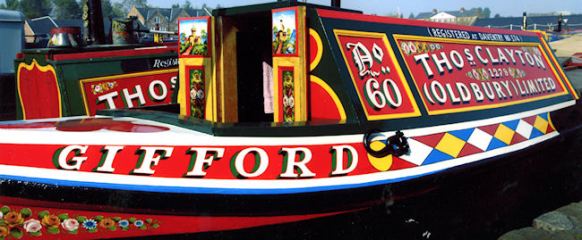
gifford1

The first dab of culture in the experimental petri dish is the simplest of forms, the iambic monometer. If you want to join in with this, it hardly matters what you come up with (and I certainly make no claims for what follows) partly because the exercise is also exploring Glyn Maxwell’s claim that using form will propel the poet towards “words you didn’t expect, matter you never chose, resonances that crept up around you” (from On Poetry (Oberon Books, 2012)). Michael Donaghy often suggested something similar: “Like good poets whom the tyranny of rhyme forces into the discovery of their finest lines, I’m in it for the discovery. If writing poems were merely a matter of bulldozing ahead with what you’d already made up in your mind to say I’d have long ago given it up for something more dignified” (from ‘My Report Card’ – 2000).


Because

I hope

To speak

To her

I walk

Again

Along

The way

The path

Beside

The old

Canal


Here I’m more concerned with choosing regular iambs than making much sense. The hesitating movement of the short lines works quite well.  In the Poetry School sessions we looked at Robert Herrick’s famous poem in this metre, ‘Upon His Departure Hence’, as well as one by Karen McCarthy Woolf (‘Mort-Dieu’). Both poems use the curbed tentativeness of the metre to reflect on mortality – almost as if the form offered a safe form, a containment of (too) powerful emotion.

Now re-organise the same material as a dimeter. This will involve the composition (if that’s quite the word) of further lines simply to complete the form and this will take you into unexpected territory perhaps . . .


Because I hope

To speak to her

I walk again

Along the way


The path beside

the old canal

where children play

and mothers come


The dimeter remains a very brief line (I don’t feel much need for punctuation yet) but here the short reach of each line gives some urgency to the narrator’s hoping to speak to “her”. The reader (as much as the writer at this stage) is wondering who both narrator and hoped-for interlocutor is. The extra material begins to suggest maternal possibilities, partners, other children . . . The “again” of line 3 is also interesting – a recurrent search. Why can’t she be found. What is this need to speak to her? Why come to this location?

Now re-organise further to make a trimeter:


Because I hope to speak

to her I walk again

along the way, the path

beside the old canal,


where children play and mothers

come, where thistles bloom

in purple knots that grey

and drift across the path.


It feels natural to want to punctuate these lines now with their greater complexity and greater risk of ambiguity. The three beat lines perhaps begin to evoke the pacing of the walker? There is an issue with the 5th line in which (keeping to a strict iambic metre) the word “mothers” ought to be broken across the line break. I’ve decided to allow an extra syllable into line 5, so ending it with a feminine, weak, seventh syllable. Line 6 I’ve therefore left with one syllable short. It’s happenstance but I like the extra dwelling of a reader’s attention on “mothers” (I begin to think the “she’ is a mother, or the narrator may be a mother searching for a female child). The shortening of line 6 which refers to “thistles” also feels right; it introduces a spiky, perhaps threatening image and the shortened line creates an uneasy feel. These undoubtedly ‘fortuitous’ developments are just the sort of thing the poet has a veto over – we decide whether they stand or need to be revised further. Here, I let them stand.

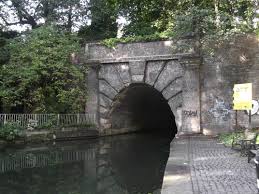
imgres

Next stage is an iambic tetrameter – four iambs per line:


Because I hope to speak to her

I walk again along the way,

the path beside the old canal,

where children play and mothers come,

where thistles bloom in purple knots

that grey and drift across the path,

here strewn with wrappers torn from sweets,

with needles dropped another day,

where users lean and drift, ascend

above the clouds and steeple cock.


Woah! No – I don’t know where this is heading . . . The longer length of line now begins to give a more conversational feel. This four beat line (either with accentual-syllabic or plain stress metre) is probably the most common in English verse. I think of it (and the good old iambic pentameter) as sort of neutral spots on the metrical continuum – neither too tightly bound nor loosely adrift). The greying of the thistles now seems to allude to aging (of the narrator?), certainly to time passing, time on her mind. The sweet wrappers make a clear gesture towards childhood; the discarded needles strike a far more ominous note (if a bit clichéd). Is the narrator seeking a child, no longer a child, has she become involved with drug abuse?


If you want to see this poem developing into an iambic pentameter – and find out (with me) what the poem is really about – I’ll post the remainder of this blog on Monday.

Lots of Poetry, Too Little Cake

breakingsmall

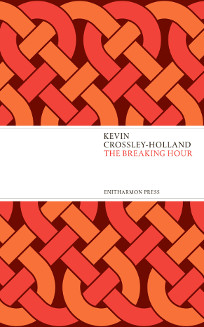
Last Saturday I attended one of the half-yearly poetry events in Palmers Green, north London. These are always very good evenings, these days full of music as well as poetry as the Helios Consort of recorders play before and after the interval. Kevin Crossley-Holland was reading (a superb poet, as well as all his other literary achievements) as was Sarah Westcott (recently published by Pavilion – having just won the Manchester Cathedral Poetry Competition) and Katherine Gallagher, launching her new Arc collection – about which someone called Crucefix has blurbed:

This new collection is bejewelled throughout with haiku-like moments of vivid observation. Her delighted responses – in particular to the natural world – serve to peel away the film of familiarity through which we usually gaze. Yet Gallagher combines such excited observation with a quality of restraint, a respect for what she encounters in a process of self-creation – “from myself into myself” as her epigraph from Rose Auslander puts it. Sequences about her Australian mother and the loss of her brother are imbued with this same gift: life is celebrated in poems that never forget our mortality: “This is time we have underlined, / remembering what we’ve done, where we’re going” (‘Quotidian’).

On the following morning I was taking part in the Bloomsbury Festival, talking about the art of translation with Chris Campbell, Literary Manager, Royal Court Theatre and Gregory Thompson, Creative Entrepreneur in Residence at UCL. Chaired by Geraldine Brodie, Lecturer in Translation Theory and Theatre Translation at UCL, the talk – in the very comfortable, wood-panelled surroundings of the Churchill Room, Goodenough College, London House, Mecklenburgh Square, London – was really wide-ranging from Gregory’s experiences of directing Shakespeare in the Indian sub-continent and the kind of cultural translation that takes place on such occasions to Chris’s translations of drama texts to and from the French and French-Canadian. One issue there is the translation of comic references such as cricket allusions or types of motor cars (I think he suggested a Vauxhall Cavalier equivalent in a French cultural context would be a Renault 21). I thought there was quite a bit of common ground when I was explaining how I fell into translation through the need to stand up and declaim/read/perform translations which I felt did not really convince in English. This is how I began the idea that I might try to translate Rilke’s 9th Duino Elegy many, many years ago – I could not find a version that read well aloud. I still regard that as a key test.

c45407b1ab4103bca137a0808bc8c042

This idea that poetry ought to be read aloud is common enough in most writing workshops but I do wonder how many people really adhere to it. This came up again with my third engagement of the busy weekend – teaching my first session for the Poetry School on ‘music and metre’ on Monday evening. As I explained to the class, formal verse is not especially my thing but it is also an area I have had to teach on various occasions. I kicked off by reading James Fenton’s powerful poem ‘Tiananmen’ – see below – and Auden’s observations about the benefits of form:

images

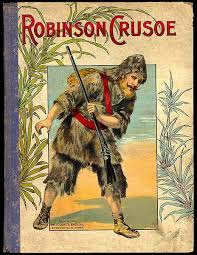
The poet who writes ‘free’ verse is like Robinson Crusoe on his desert island: he must do all his cooking, laundry and darning for himself. In a few exceptional cases, this manly independence produces something original and impressive, but more often the result is squalor – dirty sheets on the unmade bed and empty bottles on the unswept floor.

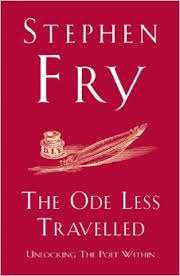
I love the swipe at “manly independence” there. Not very surprisingly, this observation is quoted by Stephen Fry in his The Ode Less Travelled (Hutchinson, 2005) which also suggests modern poetry, because of its abandonment of formal constraints is now “laughably easy” to write. Elsewhere Fry describes most contemporary poetry as suffering from anaemia; it’s a lifeless trickle, rhetorically listless . . . Fry doesn’t mind setting himself up like this – and tucked away in the book you’ll also find his appreciation of Whitman, Anne Carson, Denise Riley and many others.

imgres

I told the class, having spoken to a fair number of poets recently about form, that they’d be surprised (or maybe not) how few published poets would confidently declare their own grasp of metrical matters. On the night, we didn’t get along as fast as I’d anticipated – there was good discussion, especially of the areas of inevitably uncertainty in scanning a poem etc – it’s like jazz?? – so I’m looking forward to picking up the themes again next Monday evening with Tony Harrison, Wordsworth, Stevens, Elizabeth Jennings . . .

Now I’m feeling a bit poetry-ed out. Coffee and cake are required . . . after this:


Tiananmen – James Fenton

Tianamen
Is broad and clean
And you can’t tell
Where the dead have been
And you can’t tell
What happened then
And you can’t speak
Of Tianamen.

You must not speak.
You must not think.
You must not dip
Your brush in ink.
You must not say
What happened then,
What happened there
In Tiananmen.

The cruel men
Are old and deaf
Ready to kill
But short of breath
And they will die
Like other men
And they’ll lie in state
In Tianamen.

They lie in state.
They lie in style.
Another lie’s
Thrown on the pile,
Thrown on the pile
By the cruel men
To cleanse the blood
From Tianamen.

Truth is a secret.
Keep it dark.
Keep it dark.
In our heart of hearts.
Keep it dark
Till you know when
Truth may return
To Tiananmen.

Tiananmen
Is broad and clean
And you can’t tell
Where the dead have been
And you can’t tell
When they’ll come again.
They’ll come again
To Tiananmen.

imgres
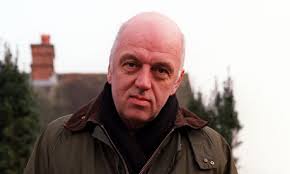
James Fenton


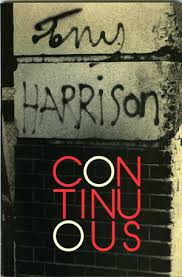
Tony Harrison’s ‘Them and [uz]’

Last week I posted on Tony Harrison’s ‘A Cold Coming’. The following discussion of another extraordinary Tony Harrison poem originally appeared in book form in Tony Harrison: Loiner (Clarendon Press, 1997), edited by Sandie Byrne.

imgres

‘Them and [uz]’ – listen to Harrison read this poem here.

for Professors Richard Hoggart & Leon Cortez

I

αίαι, ay, ay! … stutterer Demosthenes

gob full of pebbles outshouting seas –


4 words only of mi ‘art aches and … ‘Mine’s broken,

you barbarian, T.W.!’ He was nicely spoken.

‘Can’t have our glorious heritage done to death!’


I played the Drunken Porter in Macbeth.


‘Poetry’s the speech of kings. You’re one of those

Shakespeare gives the comic bits to: prose!

All poetry (even Cockney Keats?) you see

‘s been dubbed by [Λs] into RP,

Received Pronunciation, please believe [Λs]

your speech is in the hands of the Receivers.’


‘We say [Λs] not [uz], T.W.!’ That shut my trap.

I doffed my flat a’s (as in ‘flat cap’)

my mouth all stuffed with glottals, great

lumps to hawk up and spit out… E-nun-ci-ate!


II

So right, ye buggers, then! We’ll occupy

your lousy leasehold Poetry.


I chewed up Littererchewer and spat the bones

into the lap of dozing Daniel Jones,

dropped the initials I’d been harried as

and used my name and own voice: [uz] [uz] [uz],

ended sentences with by, with, from,

and spoke the language that I spoke at home.

RIP, RP, RIP T.W.

I’m Tony Harrison no longer you!


You can tell the Receivers where to go

(and not aspirate it) once you know

Wordsworth’s matter/water are full rhymes,

[uz] can be loving as well as funny.


My first mention in the Times

automatically made Tony Anthony!

Read about the drafting of this poem – in the Tony Harrison Archive at Leeds University.

url

Though it was Keats’ ‘Ode to a Nightingale’ Harrison ‘mispronounced’ at school, it is actually Wordsworth who is more important to him because both share a belief in poetry as the voice of a man speaking to men. This conception of poetry as speech is a powerful constituent in Harrison’s work and perhaps one not clearly understood. John Lucas, for example, has attacked what he sees as loose metrics in the poem ‘V’ but, to reverse Harrison’s comment that all his writing (theatrical or otherwise) is poetry, all his poetry needs to be read as essentially dramatic and deserves to be tested in the spoken voice as much as in the study. Harrison’s interest in the curious idea that the true poet is born without a mouth implies the difficult battling for a voice or voices which can be found everywhere in his work and it is in this clamour that I find its dramatic quality. In a public poem like ‘A Cold Coming’, Harrison makes use of the contrasting and conflicting voices by playing them off against a regular form. This is almost always the case, but in what follows I prefer to concentrate less on metrical effects than on the way voices interweave.

The very title of the pair of sonnets, ‘Them & [uz]’, seems to promise conflict, at best dialogue, and it opens with what could be taken as the howl of inarticulacy. In fact each pair of these opening syllables gestures towards crucial worlds in Harrison’s universe. The ‘αίαιof classical dramatic lament is echoed by the “ay, ay!” of the musical hall comedian cheekily working up an audience. Immediately, the reader is plunged into the unresolved drama of two differing voices, instantly implying the two cultures of the sonnets’ title. The line and a half which follows, sketching Demosthenes practicing eloquence on the beach, is intriguing in that its locus as speech is hard to pin down. It is perhaps intended at this stage (apart from introducing the poems’ central issue) to hover in an Olympian fashion above the ruck of dialogue that follows, implying the heroic stance which will be taken up in the second sonnet.

poster-demostheness-spricht-meeresfluten-310780

Line 3 opens again into a dramatic situation with the voice of the narrator (the adult Harrison), repeating his own interrupted recital of Keats in the classroom, while the master’s scornful comments appear fresh, unreported, as if still raw and present, in speech marks. The narratorial comment on this – “He was nicely spoken” – confirms this poem’s tendency to switch voices for its effects, this time its brief sarcasm barely obscuring the unironic comment likely to be made by an aspiring Loiner, or by an ambitious parent. The example of nice speaking given (again in direct quotes in the following line) is the master’s claim to possession, to authority in matters of language and culture and the separated-off reply of the narrator – “I played the Drunken Porter in Macbeth – with its full rhyme and sudden regular iambic pentameter, implies both a causal link between the two lines, painting Harrison as dispossessed specifically by the master’s attitudes, as well as conveying the tone of resignation in the young schoolboy.

images

Much of the tension and success of the poem has already arisen from the dramatic interchange of voices and the master’s voice asserts itself again in line 7 ironically claiming a kind of monolithic, aristocratic purity to poetry which this poem has already attempted to subvert:


Poetry’s the speech of kings. You’re one of those

Shakespeare gives the comic bits to: prose!”


The following lines contain a curious wavering in the clear interplay of dramatic voices, only part of which is resolved as the poem proceeds. Evidently, the intrusive, even hectoring, parenthesis (at line 9) is the narrator’s questioning of what appears to be the master’s voice’s continuing argument that “All poetry” belongs to Received Pronunciation. Yet the aggression of this attack, with its harsh alliteration and sarcastic question mark, is out of key with the other narratorial comments in part I, though the tone is re-established in part II. In addition, I have some difficulty in accepting the master’s words as appropriate to the situation which – with no break – continues the speech made to the young Harrison. For example, the word “dubbed”, with its implication of the deliberate laying of a second voice over an ‘original’, already hands victory in the argument to Harrison’s claim for the authenticity of ‘dialect’ and, as such, would not be used by the believer in “the speech of kings”. Equally, the apparent plea, “please believe [ s] / your speech is in the hands of the Receivers”, does not accord with the voice that summarily dismissed the pupil as a “barbarian” 7 lines earlier. In this case, Harrison’s desire for the dramatic has foundered momentarily on that old dramatist’s rock, the necessity for exposition which compromises the integrity of the speaking voice.

imgres

The true note of the master returns – interestingly, following one of Harrison’s movable stanza breaks, as if confirming a shift in voice though the speech actually continues across the break – with “We say [Λs] not [uz], T.W.!” The tone of the responding voice, after the suggestion of a more spirited response in the Keats comment, has returned to the resignation of the brow-beaten pupil. This is reinforced by the more distant comparison of the boy to the ancient Greek of the opening lines, heroically “outshouting seas”, while the young Harrison’s mouth is “all stuffed with glottals, great / lumps to hawk up and spit out”. This first sonnet draws to a close with this tone of frustrated defeat for the boy, yet the drama has one final twist, as the voice of the master, sneering, precise and italicised, has the last word – “E-nun-ci-ate!“. There can be little doubt that the boy must have felt as his father is reported to have done in another sonnet from The School of Eloquence, “like some dull oaf”.

The second part of ‘Them & [uz]’ contrasts dramatically with the first, though the seeds of it lie in the image of heroic Demosthenes and the accusatory tone of the reference to Keats which seemed a little out of place in part I. This second sonnet’s opening expletive aggression strikes a new tone of voice altogether. “So right, yer buggers, then! We’ll occupy / your lousy leasehold Poetry”. The poem’s premise is that it will redress the defeat suffered in part I in an assertive, unopposed manner. Not the master, nor any spokesman for RP is allowed a direct voice, yet the interchange of speech and implied situation can still be found to ensure a dramatic quality to the verse.

The passionate and confrontational situation of the opening challenge is clear enough, yet it’s striking how it has taken the autobiographical incident in part I and multiplied it (“yer buggers . . . We’ll occupy”) to present the wider political and cultural context as a future battlefield. Even so, there is no let up in the clamour of voices raised in the poem. Immediately, the narratorial voice shifts to a more reflective, past tense (at line 3) as the rebel reports actions already taken – and with some success, judging from the tone of pride and defiance: “[I] used my name and own voice: [uz] [uz] [uz]”. Even within this one line, the final three stressed syllables are spat out in a vivid reenactment of Harrison’s defiant spoken self-assertion. It is this slippery elision of voice and situation which creates the undoubted excitement of these and many of Harrison’s poems as they try to draw the rapidity and short-hand nature of real speech, its miniature dramas and dramatisations into lyric poetry. A further shift can be found in lines 9 and 10, in that the voice now turns to address a different subject. The addressee is not immediately obvious as the staccato initials in the line are blurted out in what looks like a return to the situation and voice with which this sonnet opened. Only at the end of line 10 does it become clear that the addressee is the poet’s younger self, or the self created as the “dull oaf” by the kind of cultural repression practised by the schoolmaster. The reader is further drawn into the drama of the situation by this momentary uncertainty: RIP RP, RIP T.W. / “I’m Tony Harrison no longer you!”.

images

The remaining 6 lines are, as a speech act, more difficult to locate. There is an initial ambiguity in that they may continue to address “T.W.”, though the stanza break suggests a change and, anyway, this makes little sense as T.W. is now dead (“RIP T.W.”). In fact, these lines use the second person pronoun in the impersonal sense of ‘one’, addressing non-RP speakers in general, and it is the generalised nature of these lines which disarms the effectiveness of the passage. This is particularly important in line 14, “[uz] can be loving as well as funny”, the tone of which, commentators like John Haffenden have questioned. The difficulty here is that if Harrison is addressing those who might use [uz] anyway, though there may well be many amongst them for whom the fact that “Wordsworth’s matter / water are full rhymes” is useful ammunition and reassurance, the same cannot be said of the “loving as well as funny” line which might variously be construed as patronising, sentimental or just plain unnecessary. Nevertheless, the poem regains a more sure touch in the final lines in its use of the reported ‘voice’ of The Times in renaming the poet “Anthony“. The effect here is both humorous (this, after all the poet’s passionate efforts!) and yet ominous in that the bastions of cultural and linguistic power are recognised as stubborn, conservative forces, still intent on re-defining the poet according to their own agenda, imposing their own hegemonic voice where there might be many.

Tony Harrison’s ‘A Cold Coming’

I have been thinking about the role of metre in poetry in preparation for 3 evening sessions I have been asked to teach for the Poetry School in London. The sessions are part of a wide-ranging course on some of the basics of poetry (other parts of it will be taught by Tim Dooley, Judy Brown, Claire Crowther and Matthew Caley). Also, last Saturday I attended the Free Verse Poetry Book Fair in Red Lion Square, London. There – apart from spending too much money on poetry books and chatting with people who had come from all over the country – I listened to a discussion about the role of poetry in relation to politics. Fiona Moore chaired a discussion involving Choman Hardi, Bill Herbert, Sophie Mayer and R A Villanueva. Ideas put forward included the delicate issue of ‘using’ the experience of others in political poetry as well as the need to work polyvalently or collaboratively to combat the influence of unquestioned language and form. Herbert quoted W S Graham’s line: “What is the language using us for?” At the confluence of these two biographical moments I found myself thinking of Tony Harrison’s solutions to the poetry/politics issue – in part through his use of formal metre. The following discussion of Harrison’s Iraq War poem, ‘A Cold Coming’, originally appeared in book form in Tony Harrison: Loiner (Clarendon Press, 1997), edited by Sandie Byrne.

imgres

Harrison has declared his commitment to metrical verse because “it’s associated with the heart beat, with the sexual instinct, with all those physical rhythms which go on despite the moments when you feel suicidal”. In conversation with Richard Hoggart, he explains that without the rhythmical formality of poetry he would be less able to confront, without losing hope, his favoured themes of death, time and social injustice. “That rhythmical thing is like a life-support system. It means I feel I can go closer to the fire, deeper into the darkness . . . I know I have this rhythm to carry me to the other side”.

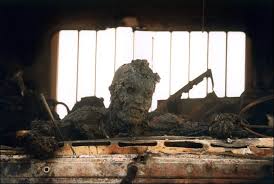
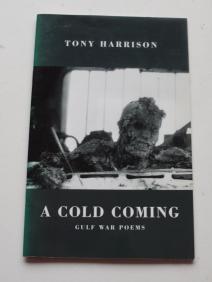
There are few of Harrison’s poems that go closer to the fire than the second of his Gulf War poems, ‘A Cold Coming’. Its initial stimulus, reproduced on the cover of the original Bloodaxe pamphlet, was a photograph by Kenneth Jarecke in The Observer. The picture graphically showed the charred head of an Iraqi soldier leaning through the windscreen of his burned-out truck which had been hit by Allied Forces in the infamous ‘turkey-shoot’ as Saddam’s forces retreated from Kuwait City. In the poem, Harrison makes the Iraqi himself speak both with a brutal self-recognition (“a skull half roast, half bone”) as well as a scornful envy of three American soldiers who were reported to have banked their sperm for posterity before the war began (hence, with a scatological nod to Eliot, the title of the poem). There are undoubtedly echoes in the Iraqi’s speech of the hooligan alter ego in the poemV’, yet Harrison worries little over any narrow authenticity of voice in this case, and he does triumphantly pull off the balancing act between the reader’s emotional engagement with this fierce personal voice and a more universalising portrayal of  a victim of modern warfare. Furthermore, it is Harrison’s establishment and then variation of the poem’s metrical “life-support system” that enables him to achieve this balance, to complete a poem which weighs in against Adorno’s view that lyric poetry has become an impossibility in the shadow of this century’s brutality.

imgres

The poem’s form – rhymed iambic tetrameter couplets – seems in itself chosen with restraint in mind, as if the photographic evidence of the horror lying in front of him led Harrison to opt for a particularly firm rhythmical base “to carry [him] to the other side”. Indeed, the opening five stanzas are remarkable in their regularity with only a brief reversed foot in the fourth line foreshadowing the more erratic energies soon to be released by the Iraqi soldier’s speech:


I saw the charred Iraqi lean

towards me from bomb-blasted screen,


his windscreen wiper like a pen

ready to write down thoughts for men.


The instant the Iraqi’s voice breaks in, the metre is under threat. Each of his first four stanzas opens with trochaic imperatives or questions and at one point he asks if the “gadget” Harrison has (apparently a tape-recorder but a transparent image of poetry itself) has the power to record “words from such scorched vocal chords”. Apart from the drumming of stresses in lines such as this, Harrison deploys sibilance, the alliteration of g’s and d’s, followed by an horrific mumbling of m’s to suggest the charred figure’s effortful speech in the first moments of the encounter. Regularity is re-established the moment the tape-recorder’s mike is held “closer to the crumbling bone” and there is a strong sense of release from the dead man’s initial aggressive button-holing as his voice (and the verse) now speeds away:


I read the news of three wise men

who left their sperm in nitrogen,


three foes of ours, three wise Marines,

with sample flasks and magazines . . .

10051408090


In the stanzas that follow the dead man’s angry, envious sarcasm is controlled within the bounds of the form and it is rather Harrison’s rhymes which provide much of the kick: God/wad, Kuwait/procreate, fate/ejaculate, high tech’s/sex. It is only when the man demands that Harrison/the reader imagines him in a sexual embrace with his wife back home in Baghdad that the metrical propulsion again begins to fail. It is in moments such as this that the difficult emotional work in the poem is to be done. This is our identification with these ghastly remains, with the enemy, and it is as if the difficulty of it brings the verse juddering and gasping to an incomplete line with “the image of me beside my wife / closely clasped creating life . . .”

The difficulty of this moment is further attested to by the way the whole poem turns its back upon it. Harrison inserts a parenthetical section, preoccupied not with the empathic effort the dead Iraqi has asked for but with chilly, ironic deliberations on “the sperm in one ejaculation”. Yet all is not well, since this section stumbles and hesitates metrically as if Harrison himself (or rather the persona he has adopted in the poem) is half-conscious of retreating into safe, calculative and ratiocinative processes. Eventually, a conclusion yields itself up, but it is once again the metrical change of gear into smooth regularity (my italics below) that suggests this is a false, defensive even cynical avoidance of the difficult issues raised by the charred body in the photograph:


Whichever way Death seems outflanked

by one tube of cold bloblings banked.


Poor bloblings, maybe you’ve been blessed

with, of all fates possible, the best


according to Sophocles i.e.

‘the best of fates is not to be’


a philosophy that’s maybe bleak

for any but an ancient Greek . . .

imgres

That this is the way to read this passage is confirmed by the renewed aggression of the Iraqi soldier who hears these thoughts and stops the recorder with a thundering of alliterative stresses: “I never thought life futile, fool! // Though all Hell began to drop / I never wanted life to stop”. What follows is the Iraqi soldier’s longest and most impassioned speech, by turns a plea for attention and a sarcastic commentary on the collusion of the media whose behaviour will not “help peace in future ages”. Particular mention is given to the “true to bold-type-setting Sun” and, as can be seen from such a phrase, Harrison once more allows particular moments of anger and high emotion to burst through the fluid metrical surface like jagged rocks. There is also a sudden increase in feminine rhyme endings in this section which serves to give a barely-caged impression, as if the voice is trembling on the verge of bursting its metrical limits and racing across the page. This impression is further reinforced in the series of imperatives – again in the form of snapping trochees at the opening of several stanzas – that form the climax to this section of the poem:


Lie that you saw me and I smiled

to see the soldier hug his child.


Lie and pretend that I excuse

my bombing by B52s.


The final ten stanzas culminate in a fine example of the way in which Harrison manipulates metrical form to good effect. In a kind of atheistic religious insight, the “cold spunk” so carefully preserved becomes a promise, or perhaps an eternal teasing reminder, of the moment when “the World renounces War”. However, emphasis falls far more heavily on the seemingly insatiable hunger of the present for destruction because of the way Harrison rhythmically clogs the penultimate stanza, bringing it almost to a complete halt. The frozen semen is “a bottled Bethlehem of this come- /curdling Cruise/Scud-cursed millennium”. Yet, as we have seen, Harrison understands the need to come through “to the other side” of such horrors and the final stanza does shakily re-establish the form (though the final line opens with two weak stresses and does not close). However, any naive understanding of the poet’s comments about coming through the fire can be firmly dismissed. This is not the place for any sentimental or rational synthetic solution. Simply, we are returned to the charred face whose painful, personal testament this poem has managed to encompass and movingly dramatise but without losing its form, thus ensuring a simultaneous sense of the universality of its art and message:


I went. I pressed REWIND and PLAY

and I heard the charred man say:


What Have I Been Reading: December 2014 – March 2015

Up-dated March 2015

Too little poetry-reading time recently has meant I’ve been thinking a lot about two texts we are using for A level coursework at the moment:

Tennessee Williams’ first great success, the autobiographical The Glass Menagerie, seems to strike chords in most modern teenagers and contains one of my favourite quotes: “I know I seem dreamy”, Tom says to Jim the Gentleman Caller, “but inside – well, I’m boiling!”

images

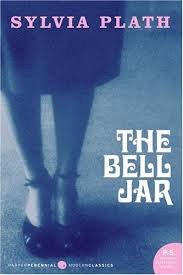
This is being read alongside Sylvia Plath’s only completed novel, The Bell Jar. Plath divides students every time – poetry or prose – my one observation is that with repeated teaching the book thins rather than deepens.

images

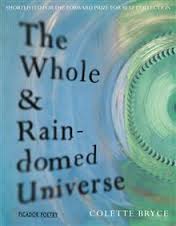
I’ve eventually got to read Colette Bryce’s recent new book, many of the poems about her childhood in Derry: short, focused, honest and managing memorable things within a very narrow linguistic palette.

imgres

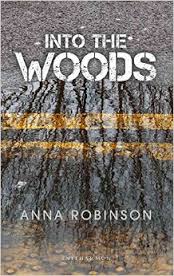
Anna Robinson’s new collection also works within a narrowed range of language choices. She produces strange folk-tale-like poems, which keep rubbing their eyes, not sure whether what they are seeing is contemporary London or some mythic rural past. Mysterious poetry.

imgres

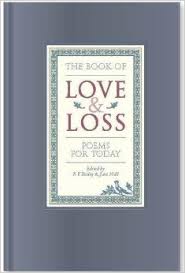
I’ve been dipping again into The Book of Love and Loss, eds., Rosie Bailey and June Hall (Belgrave Press, Bath, 2014), in part because I am reading from it at the end of next month at Heffers Bookshop, Cambridge.

imgres

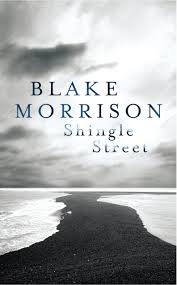
Blake Morrsion’s Shingle Street is his first full collection since 1987 and while there are flashes of the poet I once admired (I thought Dark Glasseswas very good) the book is full of rather dull thoughts – nature, ageing – and language that fails to lift off the page.

imgres

Up-dated February 2015

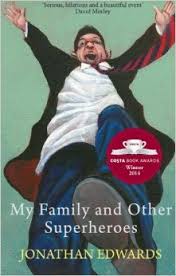
Jonathan Edwards’ Costa Poetry prize-winning first collection from Seren is as accessible and diverting as the front cover would suggest and any poet inspired to write by the Simpsons is OK with me. Whether the jokes, caricaturing, a rather sit-comy stories survive repeated reading is something I’m still debating.

imgres

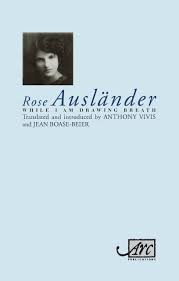
Rose Auslander’s minimalist gems are hewn out of the silences associated with her suffering in the ghetto in Czernowitz (and influenced by her friendship with Paul Celan). I am pleased to be reviewing this refreshed collection from Arc for a future Poetry London alongside Volker Braun’sRubble Flora – see below .

imgres

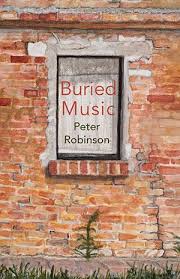
Peter Robinson’s most recent Shearsman collection continues his lyric exploration of the profundities to be found just beneath the surface of the everyday.

imgres

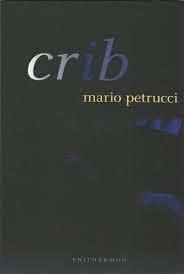
Mario Petrucci’s Crib from Enitharmon extends his experiments under the influence of Black Mountain. Poems sometimes stunning and economical, at others too self-consciously aware of language as an object (blocking the reader’s view). There’s certainly not much else like this around British poetry at the moment.

imgres

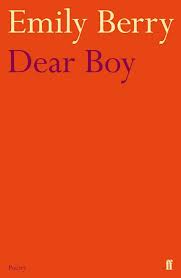
Emily Berry’s poems don’t attend much to Glyn Maxwell’s concerns with the tension between black ink and white space (see:https://martyncrucefix.com/2014/08/13/the-art-of-the-line-break/). The poetry is in the connections or lack of them and therefore leans to the surreal, with some palpable hits and other dead passages.

imgres

Up-dated January 2015

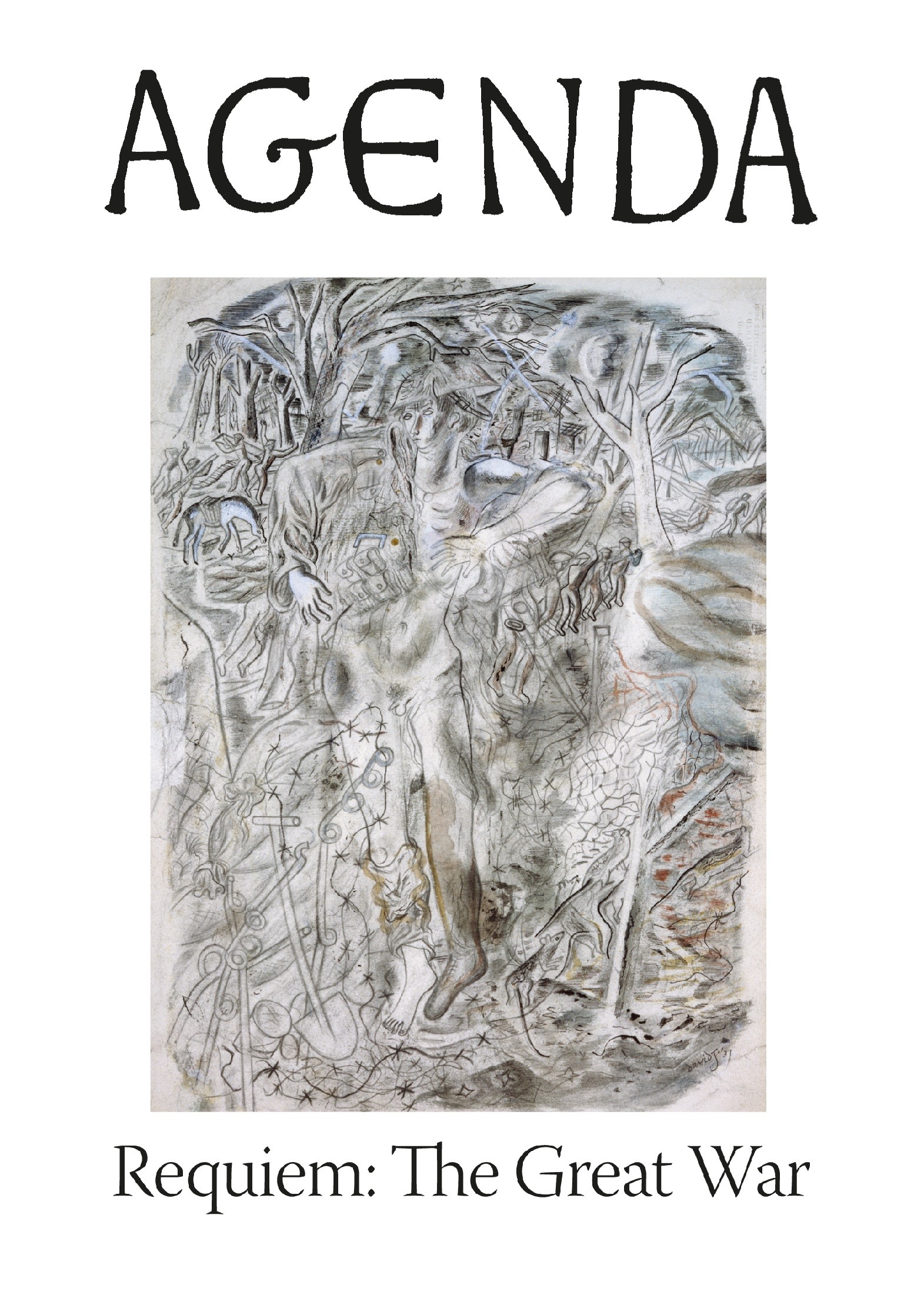
Patricia McCarthy’s chunky Agenda issue on The Great War is full of fascinating original poetry, translations and essays on French, German and Italian war poetry and reconsiderations of Edward Thomas, David Jones and Ivor Gurney among others.

agenda_-_requiem_the_great_war

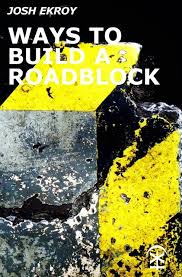
Josh Ekroy has been appearing on prize lists all over the place recently and his debut collection from Nine Arches Press is full of engaged, disturbing poems, capable of dealing with militarism and warfare:

imgres

I’ve been reading George Oppen’s work via Louise Gluck’s admiration for him; I’m still working on it . . . .

41vxLKUGC3L._UY250_

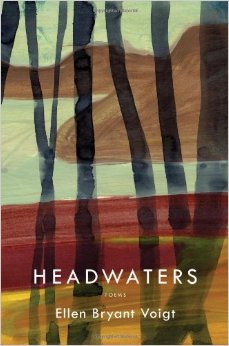
Debra Albery, an American friend who works at Warren Wilson, recommended this book of new poems by Ellen Bryant Voigt, full of the natural scenery of Vermont and fascinatingly eschewing all punctuation (like WS Merwin) to track the little manoeuvring negotiations of mind with world:

51z+jK085gL._SY344_BO1,204,203,200_

Wislawa Szymborska’s chatty, deceptively easy-listening poems in this 2010 translation make poetry writing look easy and able to encompass almost any topic:

71ceuvjjSJL

Up-dated December 2014

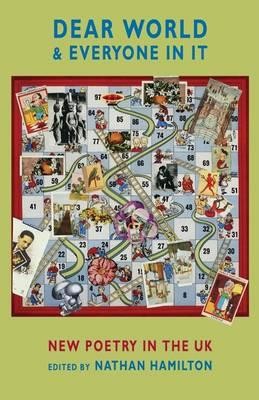
Nathan Hamilton’s big baggy collection of new poetry from Bloodaxe:672e5f96e2707467131a6f685241870c

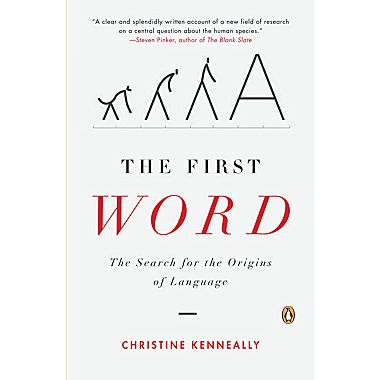
Christine Keneally’s comprehensive review of contemporary ideas on the evolution of language:m000463281_sc7

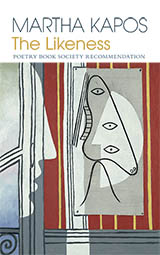
Martha Kapos’ powerful new collection from Enitharmon:Kapos_Likeness_cover_final.indd

Brilliant selected poems from German poet Volker Braun, translated by Karen Leeder and David Constantine (Seagull Books):Layout 1

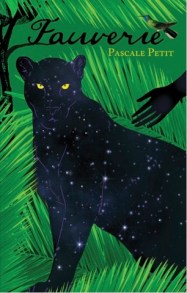
Pascale Petit’s powerful and strangely lit memorial to her father (Seren):

Where’s My Master Gone – Don Paterson v Li Po

Don Paterson’s 1997 book, God’s Gift to Women (Faber) includes a poem sporting the title ‘On Going to Meet a Zen Master in the Kyushu Mountains and Not Finding Him’. The reader’s eye hops off the perch of this lengthy title only to flutter down, looking in vain for a foothold, for a line, even a word – it’s a completely blank page. In a collection that includes a poem called ‘Postmodern’ and another on ‘The Alexandrian Library’, the joke is obvious enough. Any search for ‘masterly’ advice in the Kyushu Mountains or closer to home in a post-modern, relativist world in which language hides as much as it might reveal, must draw a blank. I remember seeing the poem – probably heard Paterson ‘read’ it too – the long title building expectation, a too-long pause, the announcement of the next poem (cue laughter) – and something bothered me. I think now I know what it was.

imgres

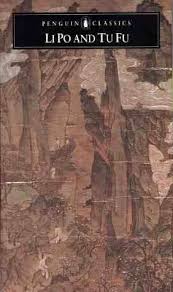
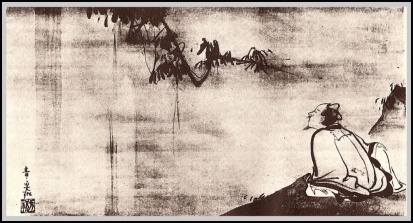
I wondered if Paterson had been reading the Penguin Classics selection of Li Po and Tu Fu (tr. Arthur Cooper, 1973). The Li Po selection opens with the poem ‘On Visiting a Taoist Master in the Tai-T’ien Mountains and Not Finding Him’. Cooper’s note tells us that ‘Visiting a Hermit and Not Finding Him’ is actually a very common theme in Chinese poetry. Such a poem (we are told) is not just an excuse for a “nature poem” but relates to the frequent “spirit-journeys” that Li Po was fond of writing. Here is Cooper’s translation:


Where the dogs bark

by roaring waters,

whose spray darkens

the petals’ colours,

deep in the woods

deer at times are seen;


the valley noon:

one can hear no bell,

but wild bamboos

cut across bright clouds,

flying cascades

hang from jasper peaks;


no one here knows

which way you have gone:

two, now three pines

I have leant against!

3-li-po

I had come across this poem while compiling my first book, Beneath Tremendous Rain (Enitharmon, 1990). I liked it for reasons I didn’t then understand and, in a very simple form of translation, I wrote an up-dated version:


Looking for an Old Man


Where red dogs bark

on the sodium ring-road

and traffic noise

blackens adjacent houses,

I’ve come to seek you.


In each garden I pass,

pale heads of bindweed.

The night is undistinguished.

The savour of coalsmoke

flattens across the kerb.


No-one here knows

which way you have gone:

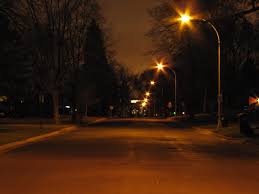
two, now three lampposts

I’ve leant against.

images

Li Po is the more Daoist of the two poets presented as a complementary pair in this Penguin book. Now, with a bit more understanding of this tradition, I’m sure that 26 years ago I was responding to something at the heart of the poem. The fact that the Daoist master cannot be found by the searching student is precisely the point since the Daoist teacher teaches “in the absence of words” (Chapter 43, ‘Best Teaching’) as I translated it in my version of the Daodejing (Enitharmon, 2016).

Interestingly, Li Po’s poem expresses this not with a blank page but (as Cooper says) through further encounters with “nature” (petals, woods, deer, valley, bamboo, clouds) or, in my version, the natural and urban world (ring-road, traffic, houses, garden, bindweed, coalsmoke, kerb). Whether we designate this a ‘spiritual’ journey or not, the point remains that the student’s search for knowledge in the form of a direct download from some master must be denied. The student’s anxious search for guidance is reflected in the number of pines/lampposts he leans against as well as the geographical over-specificity of the titles of such poems. The student’s dependency and naïve optimism is the satirical butt of the poem as he is directed back to the source of all knowledge (the world surrounding him) even as he wanders in search of his master. So Paterson’s 1997 version achieves three things: it misrepresents the spirit of the original, it’s more dramatic (comic), it’s more superficial.

imgres

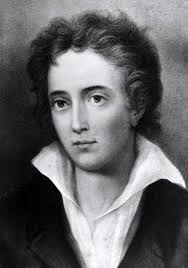
When I first read Li Po’s poem I was coming off the back of doctoral work on the Romantics, especially Shelley whose ‘A Defence of Poetry’ (1821) argues that the “poetry in [our] systems of thought is concealed by the accumulation of facts and calculating processes [. . .] we want the creative faculty to imagine that which we know”. This is succinctly put in Keats’ idea of Negative Capability, defined as a passive openness to the fullest range of human experience (“uncertainties, Mysteries, doubts”) without any imposition of preconceived notions, ideas or language: “without any irritable reaching after fact & reason”. The student in Li Po’s poem seeks just such certainties and facts and is gently deflected back into the world of observation where (I take it) he is encouraged to pursue a more full-blooded, full-bodied, open-minded encounter with the 10,000 things which (in Daoism) constitute the One, ‘what is’.

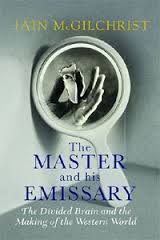
The two attitudes to knowledge here are really two ‘ways of being’ as Iain McGilchrist’s fascinating book, The Master and his Emissary (Yale, 2009) phrases it. McGilchrist argues that right and left human brain hemispheres deliver quite different kinds of attention to the world. The left perceives the world as “static, separable, bounded, but essentially fragmented [. . .] grouped into classes”. Shelley described this in 1821 and linked it to the processes of Reason and this is the attitude to knowledge and education that the anxious student of Li Po’s poem possesses. In contrast, what Shelley calls Poetry or the Imagination is what McGilchrist associates with the right brain. It tends to perceive “the live, complex, embodied, world of individual, always unique beings, forever in flux, a net of interdependencies, forming and reforming wholes, a world with which we are deeply connected”.

imgres

Without doubt, this is also the viewpoint of the Daoist master whose teaching evokes the uncarved block, the One, and who teaches best without words. Ordinary language usage is dependent on conceptual thought which is left-brain work – ordering, categorising, re-presenting the minute particulars of the world as they are perceived by the right brain. I imagine that Li Po’s master-teacher and sage is deliberately hiding somewhere beyond the bamboo canes – and this is part of the student’s lesson.

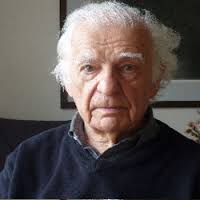
So Don Paterson’s blank page bothers me because – as McGilchrist expresses it – it represents a rather glib, post-modern position, a scepticism about language which is in danger of throwing out the interconnected real world along with the suspect tokens and counters of left-brain language: “To say that language holds truth concealed is not to say that language simply serves to conceal truth [. . .] or much worse, that there is no such thing as truth” (McGilchrist, p. 6). I’m also reminded of Yves Bonnefoy, engaging in his own battle with the early stirrings of French post-modernism. He writes: “This world here exists, of that I am certain [. . .] It is simply with us. In what can be felt and sensed”. In The Tombs of Ravenna (1953), he names this underlying truth, not as existence, but as “presence”. The right brain knows this; the left brain sets about fragmenting it, making use of it, disappearing it.

images
Yves Bonnefoy

Explaining Water Images in the ‘Daodejing’

Daoism has been referred to as the Watercourse Way because of the importance of water images in its key source, the Daodejing. I thought much about these images in translating/versioning these ancient Chinese texts and I want to record a few thoughts systematically here. However, as you’ll see, trying to ‘fix’ something runs counter to the Way – yet even if what we seek runs through our hands, the effort to consider the role of such images is worthwhile. (I have blogged about other images in the Daodejing here).

images

The Daodejing uses water images in two ways. Firstly as an image of the ineffable One, the plenitude that lies at the heart of all its thinking – imagine the vastness of the ocean, the unfixable flux of flowing water, never the same river twice. The texts also use water images to suggest aspects of our behaviour (personal and political) if we are acting in accordance with the Dao or Way. Many use metaphors of water in such a way that the vehicles are clear and recurrent (ocean, pool, river, stream) but the tenor remains an empty set, never defined because in its nature indefinable in language or figures.

So Chapter 1, ‘Nursery’ (I’ll give my titles as well as traditional Chapter numbers), introduces water images while giving a clear indication of the short-comings of all language. It deploys a metaphor that immediately undermines the efficacy of its own figurative language: “the path I can put a name to / cannot take me the whole way”. Even what can be named can only be grasped through a further metaphor: the “nursery where ten thousand things / are raised each in their own way”. What lies behind the phenomena of our world can only be suggested through additional metaphors such as a “mould”, a “source”, a “mystery”. Even this is not enough; more than a mystery it is “a riddle set adrift on a mystery”. In my version I introduced a watery context for the source itself (indefinably, untrackably “adrift”). I then developed this to image it as a body of water held behind a “flood-gate” which only in release and inundation delivers “greater truth”. The original Chinese text shifts its metaphors rapidly in just this way and this is what gives this opening Chapter the peculiar sensation of telling a clear truth that remains just beyond our grasp.

images

A similar image of a body of water occurs in Chapter 4, ‘Something greater’. The tenor of the metaphor is again reduced to “it” in the opening line.  The context indicates that “it” is the Dao itself, the One that precedes and contains all things, that state of wholeness and plentitude towards which the path of the Dao leads. Here the tentative nature of the metaphor is indicated firstly through the opening imperative – “imagine” – and then because the text itself consists of proposed alternatives to this very image. The opening formulation emphasises the Dao’s infinite nature, its resource: “a vessel to be drawn from / one that never needs to be re-filled // the bottomless source of all things”. This image of a bottomless water source is revised a few lines later in the form of a question: “is it rather a pool that never runs dry” yet this follows 4 other metaphorical formulations of the Dao’s beneficial effects:


fretted edges are smoothed within it


knots untangled all dazzle eased

all blinding clouds of dust slowly cleared

images

And the poem calmly goes on to declare its own ineffectiveness: “we cannot know it as a bodiless image / it must pre-date every beginning”. Even the concept of origin, or beginnings, is not adequate to convey the full force of the Dao but the fluidity of water – impossible to grasp, capable of taking any shape, a life-giving source – seems to come close.

The second way in which water images are used in the Daodejing is as a gesture towards actual human behaviours which occur when we are influenced by the Dao: in knowing that the truth of the Dao is like a watery flood, we behave in a water-ish fashion. So ‘The great rivers’ (Chapter 32) reminds that the Dao “has no name” and uses one of the other recurring images of it (the uncarved block of wood). If “the powerful” would attend to the nature of the Dao they would be successful “without recourse / to compulsion or law”. One of the recurring political beliefs of these texts is that if society is organised and governed in accordance with the Dao then people will live in “harmony” without even trying (indeed it is the trying that causes the harm – see wu wei below). Metaphorically, this translates as a society knowing “when to call a halt” to our distancing from truth (the hacking of the block, the reliance on naming/language, our remoteness from the ‘water’ source that is the Dao). The poem ringingly concludes with the image of right human behaviours being likened to the natural flow of water:


all things come to those

who follow the way

as all wild streams

and all unruly torrents

drive eventually

to great rivers the sea

images

Water is also the image used to consider more individual behaviour. ‘Best teaching’ (Chapter 43) opens rhetorically, alluding again to water:


—what of all things is most yielding

tell me what overwhelms the hardest


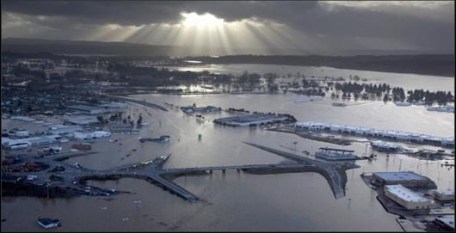
without solid form itself what flows

penetrates even the smallest gap


This understanding of the action of water in its pliability and fluidity, its erosion effects and its penetrability, reminds the poet of the concept of wu wei, or non-action, another untranslatable but key idea in the whole sequence. This is the wise person’s ability to achieve actions or goals without determined or intended pursuit of them. I have translated this as “unacted deed” and this poem immediately links this to the art of teaching, the best of which “occurs in the absence of words” (show not tell?). Water is an appropriate image for this in its passivity yet power, its pliability yet ineluctable nature. The poem ends almost with a shrug at the difficulty of grasping such concepts or behaviours:


the unacted deed the indirect

direction—it’s hard to comprehend

chehalis_flood_sunshine

The text of ‘Clearest words’ (Chapter 78) reinforces the image of water as a key aid to understanding Daoist thought:


—there is nothing in the world more soft

more yielding than water

yet in conflict with hard resistant things

there’s nothing better

and there is no way to alter this

what is yielding will defeat what resists

these are facts clearly known to all

why don’t we make better use of them


In these final lines we can perhaps hear Laozi’s legendary disgruntlement with the parlous state of the real world – why don’t we put known truths into action? Yet here again, the poem concludes by recognising how difficult such simple principles can be to grasp: “even clearest words are contradictory”.

Chapter 61, ‘Tributaries’, returns to a more political perspective with its comments on how “strong nations” ought to behave. The action of water in relation to both geography and gravity is the figure used on this occasion:


—strong nations must play the low ground

to which all contributing waters flow

the point to which all things converge


This ensures that any exercise of power by such nations will “issue from stillness” and “quiescence” (according to the principle of wu wei) rather than self-assertion, anxious, fearful imposition, bullying. It’s this (former) sort of behaviour that the Daodejing repeatedly returns to and characterises as “female” and what follows is one of the most beautiful passages where water images are integral to the meaning:


[ . . . ] and the male cannot

resist he brings his watery tributes

and she gains adherents he procures favour

as she looks to embrace and empower

he finds himself part of a greater thing

in this way becomes part of creation

so both thrive both discovering bliss—

real power is female it rises from beneath

url

This coincidence of water images and female images and the description of the passive exertion of power, nourishment, subtlety, irresistibility, is wholly characteristic of these poems. The image of water collecting at its lowest point – power exerted by doing nothing – is likewise the focus of ‘Influence’ (Chapter 66) which explicitly links such calculated passivity with virtuous potency:


—how do rivers and seas secure mastery

over the hundreds of lesser streams

through lying lower than they do


so to govern or teach you must stand

and acknowledge you are beneath the people

to guide them put yourself at the rear


only in this way can true leaders rise

not stifling people with their being on top

not bullying them into harm’s way


only this way all things under heaven

are content to range under your influence

not find instruction provocative—


a teacher achieves not by trying to achieve

and because she does not strain to succeed

there’s no-one comes forward to compete

File 03-03-2016, 09 02 50


Workshopping With Will Shakespeare

Last weekend – what with the 400th anniversary of Shakespeare’s death just gone by and seeing an advertisement on Facebook I think it was – I signed up to be a participant in a Shakespeare and writing poetry workshop. Being an English teacher, love of Shakespeare rather comes with the territory but I’m sure I’m not the only teacher who enjoys being a participant in classes. So much of my time is spent initiating, organising, timing carefully and concluding that it’s a wonderful holiday-feeling to be initiated, organised, timed carefully and concluded by somebody else. (In what follows I am able to quote the work of nobody else but myself – for which apologies).

shakespeare-first-folio-title-page-introduction

The workshop was part of a series organised through the South Bank Poetry magazine, co-edited by Peter Ebsworth (its founder) and Katherine Lockton. They were both present for the workshop – upstairs, above the Poetry Society’s Cafe in Betterton Street, Covent Garden – but it was Katherine who ran the session. We gathered about 10.45 for 11am, most of us arriving clutching the mandatory take-out coffee from the cafe or elsewhere on our walks from the Tube. A big table, a plate of biscuits, greetings, sign in (whose name do I know here?). Upstairs at the PS is a strange mix of store room, kitchen, second hand bookshop, classroom. I thought it could do with a tidy-up myself – then tried to curb my flicker of nerves, that need for control. Actually, I’ve not taken part in a public workshop like this for ages. We were probably all feeling the same: what if I write total crap and Katherine asks me to read it out. Maybe a biscuit . . .

images

We started with free writing for 5 minutes or so – “to loosen up”. Katherine wanted us to set off from “My Shakespeare is . . .” What sprang vividly to mind was an occasion teaching not Shakespeare, in fact, but Marlowe’s Doctor Faustus. A student read the “face that launched a thousand ships” speech so very badly that it achieved a weird sort of beauty in her inarticulacy. A bit like those ruins of classical statues (not far from where we were, in the British Museum) that seem to have acquired an added poignancy in not remaining whole. I rather like free writing (it’s how most of my own poems begin, a sudden splurge of material that then gets worked on) and as I wrote I ended up (from that halting reading of Marlowe) to love in a life or its opportunity missed:


Those encounters where you don’t have the words

Just stops pauses some musical sense

Of the word order but no –not the words themselves

And she turns away dips her head

Laughs at something somebody across the room has just said

eb296389fb62a4e2e059249bf0021f0e

Katherine then dished out the text of Sonnet 18: “Shall I compare thee to a summer’s day?” On the Tube in I had been wondering how I’d tackle Shakespeare in such a setting and I thought I’d not go for the more familiar moments. Katherine did and I have to say she was probably right. I’d have ended up explaining too much perhaps (too teacherly) when the point was to respond creatively to the poems. So most of us were familiar enough with this poem in which the narrator does compare his love to a summer’s day and the summer’s day turns out to be liable to be windy, over too soon, too hot, over too soon . . . The lover apparently suffers from none of these things not even death itself – because the poet has preserved her in “this” poem: “So long lives this, and this gives life to thee”. We wondered, among others things, at the manly arrogance of this.

We picked a phrase or even just a word to respond to from the poem and set off for 30 minutes or so. On this first occasion, many of us seemed to get sucked into the vortex of the sonnet form and rhyme especially. But the quality of the group that day was extraordinary. Several produced sonnets which worked well (in 30 minutes!) and all the pieces eventually read out were interesting responses. I chose the phrase “By chance, or nature” and was exploring (again) the chance or fate of meetings with the one’s you love. I was imagining the alternative worlds we jettison or turn our back on with every choice we make:


So that in one of those plural worlds

We might have met before, or later, even not

At all – through pram and playground, into school

To college, old flames, chance turn, random plot.


You can see what I mean about getting locked into a formal mode. It may be that most of us realised this as when Katherine then tried us with Sonnet 130, more of the group struck out – away from formality, probably into something more like our natural mode. This was also probably encouraged by the fact that Katherine was showing us contemporary responses to these poems as we went. Several of these were quite encouraging in that they were pretty poor as poems – there are a number of anthologies where contemporary poets respond to Shakespeare (especially this year) but so many of the poets try too hard to up-date originals into some hip idiom; embarrassing like Dad-dancing). I guess that at least gave us permission to try something more adventurous of our own.

daodejing

I found myself interested in the way the Sonnet 130 tries to define the lover through a kind of via negativa, what she is not. It’s a kind of anti-poetic in that the poet dismisses the ability of comparison (one of the poet’s main tools) to capture her in truth. This was reminding me of repeated occasions in the Daodejing poems I have been working on for 3/4 years (just published now – so fully on my mind last weekend) in which the text also argues the elusiveness of the One. The latter is often given female characteristics so it was an easy step to my scribble:


She lives in the live darkness between

The opening and shutting of my eye-lids


Between ascender and descender

Of this pen this white expanse


This Microsoft space not knowing what to do

With itself not being busy


In the moment when instructions cease

And what opens is that snow-field


Beneath the first or second chair-lift not yet

Inscribed [. . . ]

tumblr_m4v3ij8TgU1r2tbuso1_500

The third piece Katherine gave us were extracts from Romeo and Juliet (the balcony scene, the “what’s in a name” speech” and Juliet’s “O serpent heart”). We discussed these and annotated them to pick out certain patterns and concerns. We then compiled a small list of words of our own and set off with the aim of writing in the voice of a character from Shakespeare. I’ve always had a soft spot for Horatio and especially Hamlet’s gentle, though firm, put-down: “There are more things in heaven and earth, Horatio, / Than are dreamt of in your philosophy”. I had Horatio realising the truth of this, a bit Prufrock-like realising that he was not meant to play the Prince, but be an observer, something of a by-stander at the big events:


O but it’s enviousness I breed

Here listening to you roar

And glitter you go on to the very point

Or way off kilter

And patronise me yet even this you do

With such grace with warmth making me love you.

images

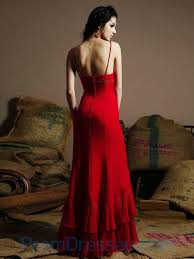
The rhythm of this particular workshop was a lot of time for individual writing. We shared all we wrote (no one objected – and absolutely none of it was “crap”), and Katherine introduced the extracts quite briskly while still allowing plenty of time for people’s reactions to them. The time was now about 4pm. The final piece was stimulated with small bits of cloth from Katherine’s Mum’s sewing box but also with a story she told (no details – it’s her story) which we could incorporate if we wanted to.  My final piece was the strangest I’d produced so far. My cloth was a rich red – a bit sexy – and the encounter was on a staircase, I was coming down to meet someone. Perhaps by this time I was more Juliet than myself, or I’d carved myself into two:


Everything possessed

Of that clarity

And the weight

Of heraldry—


So the long dress

I wear is gules

Its blood-red

Slit to the thigh


Its plunging neck

A sunlight wedge

At the foot

Of the shallow stair


I lift my chin

As if called for [. . . ]


I don’t know if the 4 pieces I produced will come to anything further but I can honestly say they would not have been written otherwise. In running my own workshops, I always say the simple thing they achieve is to take your writing to places you’d not have got to alone. That certainly happened the other day and I’m grateful to South Bank Poetry for the chance to participate: now back to the front of the class.

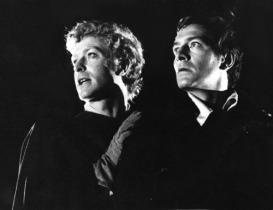
DR FAUSTUS
DR FAUSTUS  – Elizabeth Taylor Richard Burton

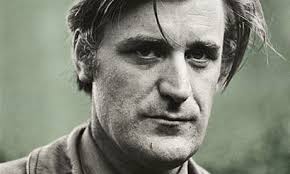
They Will Have Their Rights: Ted Hughes’ ‘Her Husband’

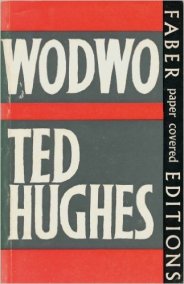
My AS level students are in the last throes of revising for exams coming in May. One question will be on a selection of Ted Hughes poems and what follows is an essay in the style required of them by the exam board (a single poem analysis of the Practical Criticism kind). ‘Her Husband’ first appeared in 1961 and then in Hughes’ 1967 collection Wodwo which mostly contained poems written before Sylvia’s Plath’s suicide in 1963 but also a few others (such as ‘The Howling of Wolves’) written after it. Hughes’ next major publication was Crow in 1970. Leonard Scigaj has noted how many of the Wodwo poems contain “recurring feuds and destructiveness” and ‘Her Husband’ is a domesticated, Lawrentian version of this.

images

Her Husband

Comes home dull with coal-dust deliberately
To grime the sink and foul towels and let her
Learn with scrubbing brush and scrubbing board
The stubborn character of money.

And let her learn through what kind of dust
He has earned his thirst and the right to quench it
And what sweat he has exchanged for his money
And the blood-weight of money. He’ll humble her

With new light on her obligations.
The fried, woody, chips, kept warm two hours in the oven,
Are only part of her answer.
Hearing the rest, he slams them to the fire back

And is away round the house-end singing
‘Come back to Sorrento’ in a voice
Of resounding corrugated iron.
Her back has bunched into a hump as an insult.

For they will have their rights.
Their jurors are to be assembled
From the little crumbs of soot. Their brief
Goes straight up to heaven and nothing more is heard of it.


Introduction

Ted Hughes is more renowned for his portraits of animals and natural landscape than people. Especially early on, he is more interested in, as he expressed it, capturing animal and natural life in language as he does so brilliantly in poems like ‘The Jaguar’, ‘Wind’ and ‘Thrushes’. However, it’s not true to say Hughes does not write about human life and some would argue that a poem like ‘Hawk Roosting’ though on the face of it about a creature is really about human behaviour. In ‘Her Husband’ Hughes is clearly focussed on the human in a marriage which is full of bitterness and resentment.

images

‘Her Husband’ is written in the third person, giving a distanced but vivid portrait of a marriage through the events of one evening. The title of the poem forms part of the opening sentence so the poem’s opening line, starting with “Comes home”, already gives the impression of the husband as an almost impersonal force, unnamed perhaps because already all too familiar to his wife. The thumping alliteration of the opening line (dull – dust – deliberately), reinforces the man’s brute entry into the house. As a working miner he spreads “coal-dust” about the house but Hughes emphasises his inconsiderate nature with the adverb “deliberately” and the forceful, unpleasant verbs associated with his arrival: “grime” and “foul”. This opening quatrain flows quickly, being unpunctuated from start to finish, evoking an arrival which is sudden, sweeping, unstoppable. The ugly internal rhyme of “foul towels” also contributes to the impression of his disruptive arrival and Hughes conveys the husband’s resentful attitude with the idea that he intends to teach his wife about the “stubborn character of money”. This personification of money as a person difficult to deal with, to persuade, cleverly conveys the husband’s own difficulties with the exhausting character of his day’s work. But he intends to impress this resentment on his wife who he wants to work (repetitively) with “scrubbing brush and scrubbing board”. This is not a relationship in which we see any love, compromise or mutual respect, though we have yet to be shown much of the wife’s perspective.

coal

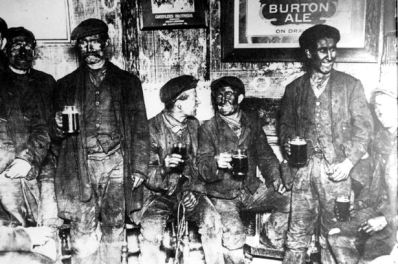
In fact the second quatrain continues in much the same vein with a repetition of the phrase “let her learn”. All this repetition conveys the husband’s determined intentions. Lines 4-8 also introduce a vocabulary of a more moralistic kind. The narrative voice echoes what must be the husband’s thoughts about the way he has “earned” the “right” to go drinking in the pub before he returns home. He regards the earning of his wage as a physical and personal “exchange” of his physical “sweat” for cash and the hyphenated phrase describing money as possessing “blood-weight” particularly conveys the sense of his personal sacrifice as a working man, how he feels the day’s work metaphorically costs him “blood” (as a miner this might be sometimes literal too). I think Hughes goes some way here to encouraging sympathy from the reader for the husband’s situation but the quick return to his aggressive, even vicious, attitude to his wife in the heavily alliterated and emphatic phrase “He’ll humble her” (line 8) definitely lessens any sympathy I may be feeling.

474360547

The simple metaphor of casting “new light” on his wife’s role is used in line 9. There is a sort of tired familiarity throughout this poem (on both husband and wife’s sides) and I suspect this sort of encounter is not the first of its kind so the idea of him casting/teaching “new” light probably really reflects his sense that however much he tries to do this she does not “learn” to behave as he expects by more obediently taking note of what he sees as her “obligations”. I doubt whether he himself would have used many of the moral terms that the third person narrative voice employs in these lines, so the distancing voice Hughes has chosen to use enables these more abstract points to be made. It’s only at line 10 that we get a sense of the wife’s “answer” to her husband’s demands. As has been implied already, her reply to his demands is not at all submissive. We are told “part of her answer” is the disgusting-sounding meal with its “fried, woody chips” though it’s partly unpleasant because it has had to be kept warm in the oven “for two hours” (the fact that he’s so late home increases our sympathy for his wife). But her fight back is sustained it seems; the other “part” of her answer to his demanding and bullying attitudes must be spoken to him or probably shouted. Interestingly, Hughes gives us none of this directly as it is only implied in the brief phrase “Hearing the rest” in line 12.

The husband’s corresponding response to his wife’s uncooperative (surely complaining) reply is immediate and violent. The husband’s vigorous determination causes Hughes to run-on sentences at the end of both stanza 2 and 3. Here, the violent verb “slams” shows how he disposes of her cooked meal in the fire and sweeps out of the house and “away round the house-end” all in one flowing, swift, uninterrupted sentence. The husband’s singing voice is described as “resounding corrugated iron” in a typical Hughesian metaphor (linking the organic with the metallic or industrial). Also the song he chooses to sing is full of irony and deliberately insulting as it is a romantic song of lost love. Line 16 gives us a brief last glimpse of the wife’s response, her body language suggesting her own stubborn resentment, “bunched into a hump”. Hughes adds a simile to make her antagonism even more clear: “as an insult”.

1890_A_miners_dream_of_home

The final quatrain now departs from the specific actions of the married couple and returns to the more moralistic and even legalistic language that I noted earlier in the poem. Here the narrator’s distance from the domestic argument is clear again. This poem was first published in Wodwo (Faber, 1967) and, as a relatively early Hughes poem, it is unusual in its focus on individual people though this distancing effect suggests he may be observing their behaviour in the same way as he does a jaguar in a cage or the power of the wind. Line 17 is the shortest sentence in the whole poem and declares, in firm monosyllables, that both sides in this conflict “will have their rights”. This makes it clear there is no room or desire for compromise. The final three lines introduce the language of the law court (a divorce court perhaps?) though the jury are “to be assembled / From the little crumbs of soot”. This soot reminds us of the coal-dust he brings into the house in line 1, but also of the burnt dinner thrown into the fire-back in line 12. These tiny black specks suggest to me that such a jury will never come to any clear conclusion in this dispute. They suggest the hopelessness of the couple’s situation. This rather depressing ending to the portrait of a marriage is confirmed in the final line and a half as we are told that the legal “brief” (a technical term for one side’s case in a law court) follows the smoke and soot up the chimney. This suggests that the arguments on both sides metaphorically go up in smoke. Hughes concludes in the plainest language: “nothing more is heard of it”. The way in which the events of the dismal evening vanish up the chimney suggest the likelihood that something similar may happen again tomorrow and the day after.

Conclusion

So Hughes’ portrait of a marriage is very bleak indeed. The narrative voice describes events at a distance and though there are occasions when the reader does feel sympathy for the people involved, the language of the poem itself is not at all emotional. The poem’s voice sees events from both husband and wife’s perspectives though it’s interesting that we are never given any actual dialogue in this domestic row. Hughes’ irregularly-lined and unrhymed quatrains suit the poem’s plain description in a mostly colloquial tone: this is not a poem or situation where any lyricism or poetically-charged language would really be appropriate.

5113sBWRWFL._SX321_BO1,204,203,200_


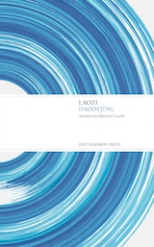
Introduction to Laozi’s ‘Daodejing’ – Part 2

What follows is the second installment taken from the Introduction to my new versions of Laozi’s Daodejing, published by Enitharmon Press. More information and comments on the book can be found here. References to the traditional 81 chapters of this ancient text are accompanied here by the titles I have given them in my versions. The first section (to read it click here) concluded by indicating how the Dao becomes manifest in the individual objects, the actions and creatures of the world we are familiar with.

wings-snakes-satan-artwork-gustave-dore-paradise-lost-john-milton-1030x1280-wallpaper_www-paperhi-com_21

Proceeding to consider how such awareness (more commonly the absence of it) impacts on our personal (and hence political) lives is also a primary concern of the Daodejing. It comes as no surprise that our battle against the tyranny of the self, that intense, intoxicating selfishness that Coleridge calls “the alcohol of egotism” is the key (the phrase is from an unassigned lecture note, date unknown, on Milton’s Satan, specifically concerning his preference to reign in hell rather than serve in heaven. See S. T. Coleridge, Collected Works, ed. Foakes (Princeton UP, 1987), Volume 5, Part 1, p. 427). This is where the untranslatable idea of wu-wei arises. The phrase is intended to characterise actions performed in accordance with, in harmony with the Dao; hence they are driven not by the blinkered and shuttered individual self, but by a more open awareness of the expansive, interconnected reality of the Dao. This is the significance of the recurring idea that the follower of the way should attend not to ‘that’ but to ‘this’. The former implies a divided world (self and other – ‘that’ out there) whereas the latter is a gesture of encompassment of both self and other, the whole, the one. Hence, the narrow intentionality, the forcefulness of the self is withdrawn from actions performed in accordance with wu-wei.

IMG_0125

In translating these ideas, I have used the phrase ‘indirect direction’ to suggest the methods of our dealings with others and the ‘unacted deed’ in an attempt to characterise the pursuit of our own intentions. Both phrases are woefully inadequate, but I hope to convey as plainly as possible the paradoxical nature of these ideas. How they are played out in real human behaviours can be glimpsed through the ‘Three treasures’ (Chapter 67). These treasures are: to be compassionate, to be frugal, to lack personal ambition. In each behaviour, egocentricity is diminished through empathy and there is an inclination towards wise passivity. There is a corresponding reduction in the individual’s personally directed desires (‘Wishes’ (Chapter 3)); we are to act ‘Like water’ (Chapter 8), flowing passively, dispassionately towards lower ground in both personal and political spheres (‘Influence’ (Chapter 66)). We are being urged (to switch the metaphor as the Daodejing deliberately does) to work with the grain of the Dao.

This is what the sage pre-eminently promulgates and performs. I have consistently translated this figure as ‘teacher’, often ‘my teacher’ and (though literary Chinese does not mark gender) there is something unmistakably feminine about her behaviours. This is a point the poems declare insistently. The Dao itself has female qualities (‘Valley’ Chapter 6)) and the teacher also reflects this in her quietness, passivity, sensitivity, lack of overt force (‘Raw material’ (Chapter 27)). Stephen Mitchell’s much praised and popular version of the poems carefully uses ‘she’ at least as often as ‘he’ to refer to the teacher figure. (See Stephen Mitchell, Tao Te Ching: a New English Version (Harper and Row, 1988), p. xi). But I wanted to go further and have consistently feminised, even personalised this figure. Early on in the translation process, I felt a need to make this shadowy figure more manifest, to ground her pedagogic statements for our more liberal, democratic age with its absence of deference. As I set about this, it was clear she had to be female and she soon took on a dual role, both as representative or personification of the Dao itself and as its incarnation in actual human form, a mother figure, a female teacher, a friend.

images

The ways in which these teachings translate into the world of politics are summed up in the terse, witty, metaphor of ‘Recipe’ (Chapter 60). The art of good governance is like the art of cooking a delicate fish: don’t interfere, don’t force it, be watchful, assist, adapt, proceed only with the lightest of touches. Laozi’s politics are impossible to translate to our modern age but given the proviso that he is determined to preserve the simplicity and frugality of people’s lives, many of his sentiments read as politically anarchic, primitivist, conservative, environmentalist. For those of us from a Western tradition, there is a Rousseauistic quality to his thinking, a belief in the goodness of mankind as noble savage who has for too long been corrupted by interference, too many codes of behaviour imposed from above. This is where the poems’ anti-Confucian elements are most obvious (‘Codes of kindness’ (Chapter 18)). Laozi is certainly vigorously anti-war, the pursuit of which he regards as the quintessence of the over-determined masculine self in action in utter disregard of the Dao.

imgres

Historically, translators have approached these poems in many ways. Benjamin Penny’s recent review of the field shows how many early versions were motivated by a Western cultural imperialism, searching out affirmations of its own monotheistic tradition (See Benjamin Penny, Introduction to Laozi: Daodejing, tr. Edmund Ryden (OUP, 2008)). Later attempts were spurred by a contrasting desire to find something different, to revitalise moribund Western values in search of exoticism, anti-rationalism, the non-Christian. Still others, keeping a firm hold on a wide variety of already settled spiritual/religious beliefs, plumbed the frequent ambiguities and lacunae of the Daodejing to re-affirm those beliefs. More recently, scholars and academics have brought an ever-growing understanding of Chinese history and culture to bear on these delicate texts and it is surely impossible to avoid accusations of Westernisation in any English version of the Daodejing. Even Stephen Mitchell – who had “a fourteen-years-long course of Zen training” to draw on – has since been accused of colonial mis-appropriation (See Mitchell, ibid., translator’s Forward. For the vigorous accusation, see Russell Kirkland and his book Taoism: The Enduring Tradition (Routledge, 2004)).

sonnets_to_orpheus

In my case, it was as a long-standing teacher, poet and recent translator of Rainer Maria Rilke that I first came to the text. I found myself in astonishing sympathy with many of the things it has to say about language and poetry and especially about the pedagogic process, both formally and in our everyday interactions. Laozi suggests the teacher’s role is to show, facilitate, enthuse, give space, watch and approve. We must be honest, be ourselves, give the tools, give opportunities, do our job well, but then let go, don’t dwell. We need to be someone to emulate, be quiet, still, attentive, be present, not absent, be mindful, be welcoming. Our role is to synthesise and connect (not disconnect or sever), shed light (but without dazzling, even inadvertently), use a delicate touch, be tangential. Laozi knows that our teacherly interventions – whether physical or verbal – must inevitably alter the material we hope to engage with; we set in motion a swinging pendulum. Our actions call forth responses to the fact we act, plan, demand. Students may re-act to this (against this) simply because we are seen to act. Better back off, do not intervene, don’t use imperatives, perhaps use no words at all. It is better to play the female part, be passive, give space, encourage desired behaviours, neglect all else. Laozi believes students come upon discoveries by themselves. So we must work via indirect direction and the unacted deed. Progress will be seen to happen of its own accord. The deed we desire will remain undone; this is the best way of getting it done.

imgres

Idealistic? Of course, as can be seen most vividly in ‘The commonwealth’ (Chapter 80) which is Laozi’s evocation of the contented society adhering to the ways of the Dao. For Western readers, this poem echoes Gonzalo’s speech in Shakespeare’s The Tempest, in its turn lifted from Montaigne’s essay ‘On Cannibals’ (Montaigne, Essays (1580). Shakespeare read and paraphrased John Florio’s 1603 translation into English). Laozi’s original gift to the gatekeeper is not to be read as a handbook, not an instructional scripture, but as inspiration. Bearing that in mind, we ought correspondingly to resist the temptation to approach it with the dismissive cynicism of an Antonio or Sebastian, Shakespeare’s all-too-modern sounding cynical ‘evil men’. I think we ought to listen to these poems open-mindedly, mindfully. We ought to resist following the crowd so vividly portrayed in ‘Adrift’ (Chapter 20) who always say, “Prithee, no more; thou dost talk nothing to me” (The Tempest, Act 2, scene 1, l.169). When the true teacher stands in our house, no matter how detached, untidy, unimpressive, even muddled she may superficially appear, Laozi is reminding us “there are treasures beneath” (‘In your house’ (Chapter 70)).

daodejing