As in the previous five years, I am posting – over the summer – my reviews of the 5 collections chosen for the Forward Prizes Felix Dennis award for best First Collection. This year’s £5000 prize will be decided on Sunday 25th October 2020. Click here to see my reviews of all the 2019 shortlisted books (eventual winner Stephen Sexton); here for my reviews of the 2018 shortlisted books (eventual winner Phoebe Power), here for my reviews of the 2017 shortlisted books (eventual winner Ocean Vuong), here for my reviews of the 2016 shortlisted books (eventual winner Tiphanie Yanique), here for my reviews of the 2015 shortlisted books (eventual winner Mona Arshi).
The full 2020 shortlist is:
Ella Frears – Shine, Darling (Offord Road Books)
Will Harris – RENDANG (Granta Books)
Rachel Long – My Darling from the Lions (Picador)
Nina Mingya Powles – Magnolia 木蘭 (Nine Arches Press)
Martha Sprackland – Citadel (Pavilion Poetry)
 Ella Frears’ Shine, Darling is brimming with youthful exuberance and despair, yet not a jot lacking in thoughtful sophistication. Her subjects are boredom, sex, a woman’s body and the harassment that rushes to fill the void left by uncertain selfhood. A key poem is ‘The (Little) Death of the Author’, about a 13-year-old girl texting/sexting boys in her class, though the title is, of course, one Roland Barthes would have enjoyed. The narrator – looking back to her teen self – remembers pretending to be texting in the bath. The “triumph” is to make the boys think of herself naked (when she’s really eating dinner or doing homework). Hence “Text / and context are different things”. Her texts are careful constructions, evocative, alluring, full of tempting ellipses. On both sides, there is a filmic fictionalising going on (in the absence of any real sexual experience). The poem (which is a cleverly achieved irregularly lined sestina) ends with the authorial voice breaking cover: the poem itself is “a text I continue to send: Reader, I’m in the bath . . . / Nothing more to say than that. And if you like / you can join me”. The flirtation is a bit overdone (but other poems show Frears is wholly conscious of that) and the poem indicates one of this book’s chief concerns is with the difference between the truth of what happens and the truth of a poem.
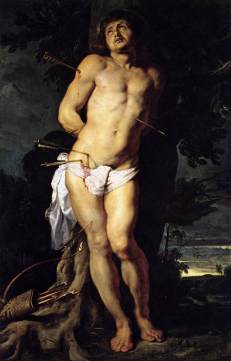
But Frears’ balance between biographical revelation and fiction-making artistry is a subtle one. The book’s frankness is to be praised. Apart from on-line flirtation, poems allude to masturbation, oral sex, teen sex/petting, periods, prostitution, a pregnancy scare, urination (thank you Andrew McMillan!), a couple of disembodied penises, but also domestic violence and suicide. Many of the poems seem to reflect Frears’ own upbringing in Cornwall. ‘The Overwhelming Urge’ evokes a restless teenage boredom suffered in St Ives. The lines jitter across the page, starting and restarting little narrative moments, opening with images of (either) bullying or self-harm. The narrative voice mocks herself as “Saint Sebastian” as well as her attempts at the role of seductress, of a Marilyn Monroe. The reality is more sordid: a man exposing himself. Her remoteness from the moment is neatly caught in the choice of language, the mocking art-speak: “She [. . . ] files it under: / penis, moonlit”. But erotic experimentation remains an available distraction as ‘Fucking in Cornwall’ makes knowingly, hilariously clear: “The rain is thick and there’s half a rainbow / over the damp beach; just put your hand up my top”. There’s an uncharacteristic confidence to this narrator who knows what she wants, but there are many more female narrators in this collection who are troubled and confused about what they want, indeed who they are.
 The obvious risk of such sexual adventuring is the subject of ‘Hayle Services (grease impregnated)’. The parenthetical allusion here is to Elizabeth Bishop’s ‘Filling Station’ where everything is “oil-soaked, oil-permeated [. . .] grease / impregnated”, a poem which concludes, against the odds of its grimy context, that “Somebody loves us all”. In contrast, Frears’ crappy, retail-dominated English motorway service station is (ironically) the stage for a pregnancy scare, a desperate search for a test kit in Boots and an anxious, “[p]issy” fumbling in the M&S toilet cubicle, then waiting for the “pink voila”. The headlong, impossible-to-focus, sordid anxiety here is brilliantly captured in the short, run-on lines. Frears also catches the young woman’s multiplicity of streams of consciousness, the scattershot: the potential father is present but soon forgotten, his reassurances dismissed, the pushy sales staff avoided in anger and embarrassment, the difficulty of urinating, the cringingly inappropriate joke-against-self in “et tu uterus”, the conventional moral judgement (“soiled / ruined spoiled”) and the final phone call to “Mamma, can you come pick me up?”

Frears shows her female narrators bringing about many of their own difficulties, but the pressures of their social, sexual, cultural contexts are sketched in too. This is especially so in the 16-page long poem, ‘Passivity, Electricity, Acclivity’, in which Frears represents, diagnoses, resents and warns in equal measure. The material here might have made a novel, but it is assembled from fragmentary texts (verse and prose), not particularly chronologically arranged, the latter decision bringing out more clearly the recurrent traits – both the weaknesses and the harassment – of the central female figure. At the age of 10, she experienced a near-abduction by a predatory man in a hotel. She seems to have run off just in time but then failed to identify the man later (this isn’t wholly clear) and the man went on to abduct another girl (again not wholly clear). So the near-abduction of the girl is a moment of danger (heavily gendered), of guilt at her passivity and fear, but also a moment when she sensed “something new in me”, an adult self, perhaps as a sexual being.

The concern for male aggression also surfaces in later relationships with two pushy boys and (later still) with a manipulative man she meets in a pub. All three male figures impose on her (on her uncertainty and lack of confidence) their own interpretative narratives. They persuade her to believe things she suspects are not true and thence they also impose on her sexually. The man in the pub is especially, pathetically dangerous: “He apologises, tells me he has just separated / from his wife. She moved out today”. Frears also adds into the mix two relationships with young women. Lucy is one of six in a shared house with the narrator. But Lucy makes up stories about a gay relationship between them and later attempts suicide. Even so, the narrator finds it hard to hold on to the truth: “When I think back on Lucy, / I see myself doing the things she said I did”. A similar pattern emerges in her (not much developed) relationship with Millie who does suddenly kill herself. The narrator is then cast, almost cajoled, into the role of best friend by Millie’s father and twin sister and, again, she seems to shrug and accept another person’s truth: “Who am I to say no to this?”. This uncertainty about herself (“Who am I”) is once more compounded with a guilty passivity (she does not defend Millie against their driving instructor’s criticisms).
The poem ends with the narrator adopting the role given her by Millie’s sister – it’s shocking but Frears would surely argue not so uncommon and more so for women in our society. This overriding and underlying mystery about “[w]ho am I” perhaps accounts for the book’s frequent engagement with the image of the moon. Juliet warns Romeo, “O, swear not by the moon, the inconstant moon, / That monthly changes in her circled orb”. ‘Moon Myth’ seems to want to reject the sun = male (strong, constant) and moon = female (changeable, uncertain) tropes. “[W]e have been assigned the moon” it complains and we know the patriarchy has done the assigning. Yet – in a good example of another Frears’ trait, switching the language register – we hear “58% of women say ‘take what you’re given, lest they assign us an even smaller celestial body”.
 And yet, poems in Shine, Darling do regularly turn to the moon for possible explanations of actions (‘Phases of the Moon / Things I Have Done’), for a witness if not for protection (‘Walking Home One Night’) and for directions (‘I Knew Which Direction’). The latter poem is a beautiful lyric opener to the book but is rather misleading. The repetition of the word “moonlight” seems to give an almost visionary access: “no longer a word but a colour and then a feeling / and then the thing itself”. It is curious that a poet asserts the transparency of language in this way (Frears is not much concerned with the nature, limits and impositions of language, unlike Nina Mingya Powles’ shortlisted Magnolia 木蘭), but also the idea of such an untrammelled access to “the thing itself” is countered by every poem that follows. Frears’ world view may not be too much troubled by words but the very idea of a unitary truth to be beheld with clarity is profoundly doubted.
The moon’s final appearance and the collection’s title appears in the concluding poem. Men have been feared, ignored, desired, condemned and occasionally manipulated in some of these poems. Here a mischievous female narrator decides to maroon her boyfriend on the roof of their house while a dinner party goes on below. It’s at once a funny, tender, awkward image of emasculation and this ambiguity of tone is captured in the book title’s appearance – a little sarcastic, a little affectionate, rather camp and performative:
As the guests left I looked up and realised that there
was no moon. Shine, darling. I whispered.
And from behind the chimney rose his little head.
Such a finely judged ambiguity of impact is all of a part with this intriguing, shape-shifting, uneasy and often very funny first collection.
 Some films stick in the mind for reasons beyond the cinematic, don’t they? In the 2003 comedy Bruce Almighty, Jim Carey plays the character of God and, along with more obviously useful powers, he has to respond to the prayers of the world. But people are always praying! He rapidly approaches a kind of madness as voices swim around him, clamouring for attention. He takes to reading the prayers in the form of e-mails. He tries to answer them individually but is receiving them faster than he can possibly respond. He decides to set his e-mail account to automatically answer “yes” to all, assuming that this will make everybody happy. Of course, it does not.

 Perhaps one explanation of why the question ‘what is poetry?’ is so difficult to answer is because it is, to a large extent, an art of the negative, of avoidance.
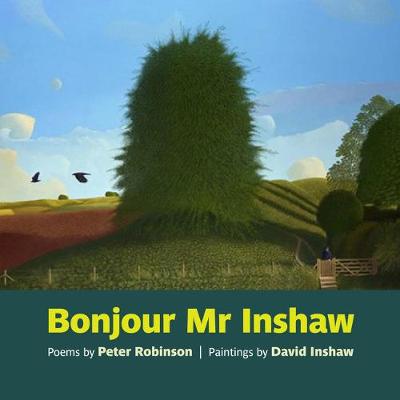






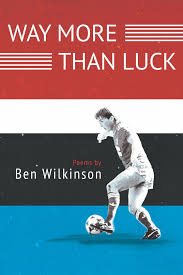 I’m not proud to admit that Way More Than Luck passed me by when it was first published. As you are probably aware, Wilkinson reviews poetry regularly for The Guardian, and he’s very familiar on social media as a poet and critic, a distance runner and a passionate Liverpool football fan. But the book’s cover (Dalglish, I think), its title and some of the publicity persuaded me that the football bit was going to be predominant. It’s certainly an almost unique aspect of the collection, but it turns out the debilitating darkness of psychological depression is an even more significant one. Wilkinson signals this concern via the book’s two epigraphs. One is about the nature of depression
 For me, it’s these psychological truths that Wilkinson is so good at conveying. There are other poems later in the book (and perhaps ‘Stag’ is an elusive example) which begin to sketch episodes of a foundering romantic relationship and ‘Building a Brighter, More Secure Future’ is a very effective excursion into witty political satire (a skilfully handled sestina based on the Conservative Party election manifesto, 2015). And there are the football poems. They comprise the central sequence of 14 poems, introduced with a heart-felt Prologue that says what follows is for the ordinary football fans, written out of “a love beyond the smear campaigns, / the media’s hooligans”. A large part of what Wilkinson has in mind here is the shocking response in parts of the media to the Hillsborough tragedy in 1989, when 96 men, women and children died (David Cain’s Forward prize shortlisted book, Truth Street, from Smokestack Books, movingly dealt with this event and the media and policing responses and
  But the poems also show how difficult it is to escape the miasma of cliché that seems to engulf football itself. Anfield is filled with a “fabled buzz”, then “the place erupt[s]”. Barnes unleashes a “a sweeping, goal-bound ball”, and a particular game offers one “last-ditch twist”. I’m reminded of Louis MacNeice’s observation (now sadly compromised in various ways, but the spirit of it remains valid, I think) that he wanted a poet not to be “too esoteric. I would have a poet able-bodied [sic], fond of talking, a reader of the newspapers, capable of pity and laughter, informed in economics, appreciative of women [sic], involved in personal relationships, actively interested in politics, susceptible to physical impressions’. There are many more of these poets around these days and to bring (even) football into the purview of poetry can hardly be a bad thing. Yet it is not an easy one and there may be some risks in deciding to headline the attempt. Ian Duhig’s blurb note to Way More Than Luck has gingerly to negotiate this issue: “The beautiful game inspires some beautiful poems in Ben Wilkinson’s terrific debut collection … but there’s far more than football to focus on here”. Yes, indeed.
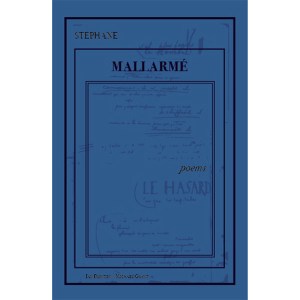 I am very grateful to Ian Brinton’s and Michael Grant’s recent translation of a selected Mallarmé (Muscaliet, 2019) for sending me back to a poet who has always proved problematic for me. My natural inclination draws me more to Louis MacNeice’s sense of the “drunkenness of things being various” (‘Snow’) – his emphasis on poetry’s engagement with “things” – and his desire to communicate pretty directly with his fellow wo/man, than with what Elizabeth McCombie bluntly calls “the exceptional difficulty” of Mallarmé’s work. I appreciate that such a dichotomy seems to shove the French poet into an ivory tower (albeit of glittering and sensuous language) while casting the Irish one as too narrowly engagé, but I’m also aware that Sartre praised Mallarmé as a “committed” writer and that, despite some evident remoteness from the ‘tribe’, the French poet’s political views were both radical and democratic.
 So, if we must give up on such ‘understanding’, what was Mallarmé – writing in the 1880-90s – doing? Something recognisably very modern, it turns out. Contra Wordsworth (and MacNeice, I guess), Mallarmé and his Symbolist peers, held ordinary language in suspicious contempt as too ‘journalistic’, too wedded to a world of facts. Poetry was to be more a communication, or evocation, of emotion, of a detachment from the (merely) everyday and a recovery of the mystery of existence which rote and routine has served to bury. Such a role demanded linguistic innovation as suggested in ‘The Tomb of Edgar Poe’ in which the American writer is praised for giving “purer meaning to the words of the tribe” (tr. Brinton/Grant). Writing about Edouard Manet’s work, Mallarmé saw the need to “loose the restraint of education” which – in linguistic terms – would mean freeing language from its contingent relations to the facticity of things (and the tedium and ennui that results from our long confinement to them) and hence moving language nearer to what he called the “Idea” and the paradoxical term Nothingness (as Brinton/Grant translate “le Neant”).
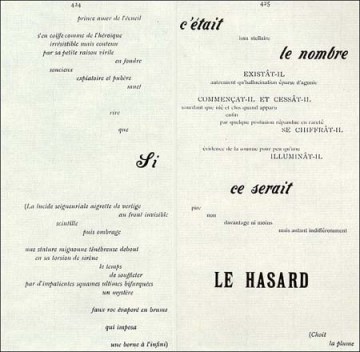
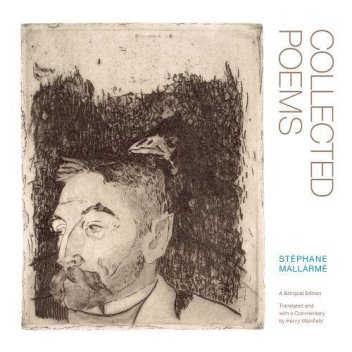 For these reasons, Mallarmé “cede[s] the initiative to words” (‘Crise de Vers’), to language’s material aspects as much as to its referential functions. Carrying over the material aspects of his French verse into English is then, to say the least, difficult. I’m inclined to agree with Weinfield (Introduction to Stephane Mallarmé Collected Poems (Uni. Of California Press, 1994) that it is “essential to work in rhyme and metre, regardless of the semantic accommodations and technical problems this entail[s]. If we take rhyme from Mallarmé, we take away the poetry”. But is that even possible? The accommodations and problems that arise are huge! Mallarmé placed the sonnet, ‘Salut’, at the start of his Poésies as a toast, salutation and mission statement. Weinfield gives the sestet as follows:




 I
I In lieu of a new blog post, here is a link to the Hercules Editions webpage on which I have formulated a few thoughts about the current lockdown, photography and the (forgotten?) refugee crisis in the Mediterranean. It is a piece in part related to the Hercules publication of my longer poem,

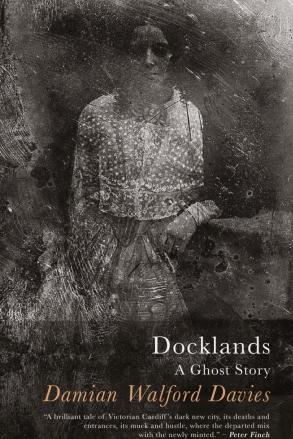 This is Walford Davies’ fourth book from Seren and it is an ambitious project, combining narrative and lyric form (every poem is 16 lines long, in unrhymed couplets, most in four beat lines). It’s also a dramatic monologue, in effect, as the speaker is a thoroughly unpleasant, arrogant, but haunted architect engaged in several large urban projects in Cardiff between the years 1890 and 1982. Talk about the male gaze, this man epitomizes it. He and his wife have recently buried a child lost in stillbirth (“they wrapped it in a pall // not bigger than my handkerchief”) and while she mourns the loss, he gets on with his work and frequents bars and prostitutes in Cardiff’s docklands. The sympathetic reader is probably going to try to read this man’s cruel and dismissive treatment of his wife (and his exploitative relationships with other women) as his own rather twisted way of dealing with grief. But it’s hard to maintain that view, as Walford Davies is often shockingly good at catching his loathsome attitudes, especially towards women: “This quarter grows on me. / In shabby rooms in Stuart Street // my new friend swears // she’ll tackle anything for oranges”.
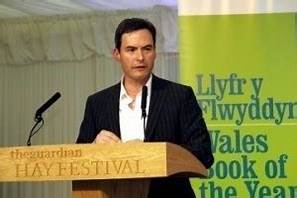 Walford Davies, in an end note, talks of the ambiguity of the female figures – wife, prostitutes, dead girl – who do tend to float without clear identity, disembodied, through the text. It adds something to the ghost-like quality of the book, but the loss is any more powerful evocation of them. Also, the choice of brief lyrics to develop what could well have been a novel, gives the reader some powerful moments but few prolonged engagements with any of the characters. And the nature of the central male figure is problematic because of his downright unpleasantness (though, I suppose, Browning managed it in ‘My Last Duchess’) and in 2020 there will be plenty of readers who find such a portrayal an absolute bar to reading. I don’t think Walford Davies ironises and critiques his male figure enough, or clearly enough.
 Martyn Crucefix