2020 Forward First Collections reviewed: #2 Will Harris’ ‘Rendang’

As in the previous five years, I am posting – over the summer – my reviews of the 5 collections chosen for the Forward Prizes Felix Dennis award for best First Collection. This year’s £5000 prize will be decided on Sunday 25th October 2020. Click here to see my reviews of all the 2019 shortlisted books (eventual winner Stephen Sexton); here for my reviews of the 2018 shortlisted books (eventual winner Phoebe Power), here for my reviews of the 2017 shortlisted books (eventual winner Ocean Vuong), here for my reviews of the 2016 shortlisted books (eventual winner Tiphanie Yanique), here for my reviews of the 2015 shortlisted books (eventual winner Mona Arshi).

 The full 2020 shortlist is:

Ella Frears – Shine, Darling (Offord Road Books) – reviewed here.

Will Harris – RENDANG (Granta Books)

Rachel Long – My Darling from the Lions (Picador)

Nina Mingya Powles – Magnolia 木蘭 (Nine Arches Press)

Martha Sprackland – Citadel (Pavilion Poetry)
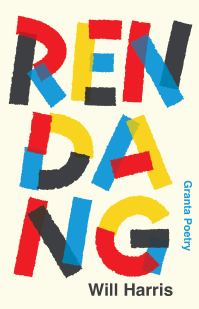
71wVp1P2JlLAt the heart of Will Harris’ first collection is the near pun between ‘rendang’ and ‘rending’. The first term is a spicy meat dish, originating from West Sumatra, the country of Harris’ paternal grandmother, a dish traditionally served at ceremonial occasions to honour guests. In one of many self-reflexive moments, Harris imagines talking to the pages of his own book, saying “RENDANG”, but their response is, “No, no”. The dish perhaps represents a cultural and familial connectiveness that has long since been severed, subject to a process of rending, and the best poems here take this deracinated state as a given. They are voiced by a young, Anglo-Indonesian man, living in London and though there is a strong undertow of loss and distance, through techniques such as counterpoint, cataloguing and compilation, the impact of the book, if not exactly of sweetness, is of human contact and discourse, of warmth, of “something new” being made.
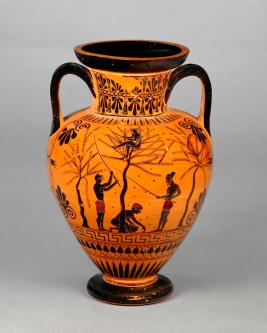
mid_01028234_001This last phrase comes from ‘State-Building’, one of the more interesting, earlier poems in Rendang (a book which feels curiously hesitant and experimental in its first 42 pages, then bursts into full voice from its third section onwards). This poem characteristically draws very diverse topics together, starting from Derek Walcott’s observations on love (his image is of a broken vase which is all the stronger for having been reassembled). This thought leads to seeing a black figure vase in the British Museum which takes the poem (in a Keatsian moment, imagining what’s not represented there) to thoughts of “freeborn” men debating philosophy and propolis, or bee glue, metaphorically something that has to come “before – is crucial for – the building of a state”. The bees lead the narrator’s fluent thoughts to a humming bin bag, then a passing stranger who reminds the narrator of his grandmother and the familial connection takes him to his own father, at work repairing a vase, a process (like the poem we have just read) of assemblage using literal and metaphorical “putty, spit, glue” to bring forth, not sweetness, but in a slightly cloying rhyme, that “something new”.
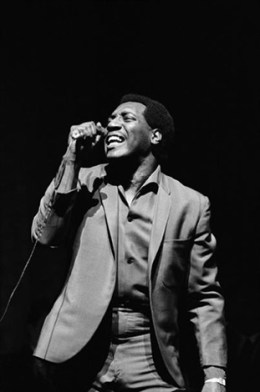
tony-frank-otis-redding,-paris,-1966.
Otis Reading

This is how the best of Harris’ poems are put together. If up-rootedness is the state from which they struggle into existence, the wish to ‘only connect’ is only to be expected and these poems pleasure the reader with their galloping range of reference. Harris is perfectly at ease with the scholarly, with allusions or direct quotes from Coleridge, T.S. Eliot, Hart Crane, Theophile Gautier, Heaney and Sharon Olds. But these are easily matched by unselfconscious nods to Otis Redding, Morrissey, Dr Dre, John Coltrane, Gandalf, The One Show, Sonic the Hedgehog and Wars, both Robot and Star. Such items simply come into the consciousness of the narrative voice as he goes about his daily business and they are assembled by its centripetal force to yield the sense of an individual both open to influences and striving to make sense of them. In ‘From the other side of Shooter’s Hill’, Harris declares his artistic position: “I reject the possibility of narrating any life other than my own / and need a voice capacious enough to be both me and not-me, / while always clearly being me”.

His readers don’t have to accept such limitations of the imagination to appreciate that Harris’s best poems really do possess an enviable “capaciousness” and the skill to piece disparate parts together to evoke the flow of a modern consciousness. ‘Another Life’ makes disparaging remarks about a “short white man” reciting poems which yearn for “a vision of Old England / untouched by foreign hands” and Harris ends with allusions to Isaiah: “Enlarge the place of thy tent”. With a lightness of touch, such points are made about history, culture and ethnicity, but Harris’ voice is less often embattled and bristling, more often open to a variety of individual encounters. Interestingly, in ‘Half Got Out’, Harris seems to be sharing an enthusiasm for W.S. Merwin’s work (via a friend, Leo, who enthuses about it). In one of the many urban meetings in Rendang (“near Leicester Square”), Leo is excited about reading Merwin’s 1983 poem, ‘Yesterday’, in which a narrator is only half listening to a friend talking of his deliberate distancing from his father, the narrator meanwhile recalling his own distance from his father, and thereby creating a distance in the relationship between the two friends (“I look out the window”). This is a very good example of interpersonal ‘rending’, but also (if you look up Merwin’s poem) the fluently unpunctuated lines, the blurring of individuals’ thoughts and speech (but perhaps not the overall tragic note of the poem) can be traced forwards into Harris’ own work.
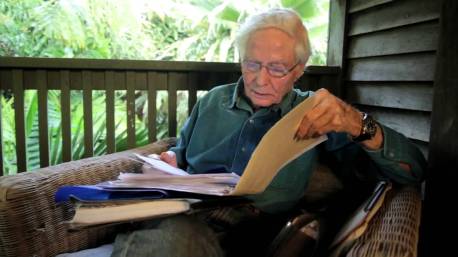
maxresdefault
W.S. Merwin

Formally, Harris likes very long lines of 15 syllables or more, arranged in what are paragraphs more than stanzas. This facilitates the capaciousness of the voice and, in a fine poem like ‘Break’, Harris seems to be effortlessly improvising on the title word (another version of fragmentation and rending). The narrator is emptying coffee grounds (“runny / as the stool of a sick dog” – there is a baggy, chatty quality to Harris’ writing mostly which doesn’t lend itself to the epigrammatic or the vivid apercu, but that’s a good one) just outside the backdoor. The voice is operating on this occasion as if in conversation with a “you” who might object to him dumping the grounds outside but who is currently absent because the pair of them are “on a break”. The nature of the ‘rent’ in the relationship is unclear – brief absence or trial separation? – but the thought of the “break” suggests it as a topic for the narrator poetry writing class. He looks up ‘break’ in the Bible and finds plenty of allusions to it in The Book of Job. From the God of the Bible, the poem, slides to a Sharon Olds poem about God and sex, and perhaps from the latter, we loop back to the broken relationship: “still I frame / my thoughts as if they were to you”. He listens to music in which he hears various types of ‘breaks’ including an improvised one by Coltrane, the band’s resumption after which takes the poem to thoughts on time and change, after the pause or disjuncture, “Everything and nothing is / the same”. The poem ends with imagining a dying dog (the same one who shat earlier in the poem?) and concludes equivocally on death itself (the ultimate of breaks), asking whether it is a withering away or like “daylight breaking through an open door”.
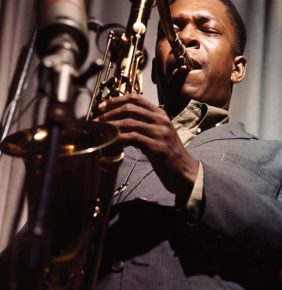
JohnColtrane-592x610
John Coltrane

Such a poem is; it does not say. It is not driven by, or filled with, self-regard. Though there is a self about whom a reader may feel concern and sympathy, the portrait of the self remains porous, so radically open, that readers can easily enter into it, Harris thereby creates the magical impression that these might well be our own thoughts. Before this book’s publication Harris was best known for the poem ‘SAY’, shortlisted for the Forward Prize for Best Single Poem in 2018 (listen to Harris reading the poem here). Here too, fragmentation – brokenness – is the initial starting point in block of stone found by the Thames at low tide. On it, the word ‘SAY’. Another is found. On this one the word ‘LES’ (less?). It turns out the two are actually halves of a whole, spelling ‘SAYLES, the name of a now defunct London-based company that once refined sugar from the Caribbean. The sequence of counterpoints and compilations in this case takes the poem from these (light touch) allusions to the slave trade, to an acid attack on Muslims, Rilke’s imperative to “flow” , the narrator’s hospitalised father, Seamus Heaney’s North, the narrator’s mother’s pronunciation of English words, back to the father trying to send a text. As a reviewer, one falls into such ‘accounts’ of these poems because to venture further towards interpretation means to engage in a kind of imposition on the material that Harris himself seems carefully to avoid. Perhaps they demand a new way of talking about poems.

download
Will Harris

The collection concludes with ‘Rendang’ itself, a longer sequence of poems which is assembled in just the same way, primarily from conversations with a friend called Yathu and the recall of a visit to Chicago. Perhaps it is because of the different choices made about form here (Harris includes a few passages as play script – and you wonder if that is one of the ways this writer will go), but the materials seem to meld less well with each other. Raymond Antrobus’ blurb comment on this book, the first for the new poetry publisher, Granta, praises Harris’ approach to his materials as working “without reduction or sensationalism”. It’s true, there is an accuracy to Harris’ rendering of the self and the ways in which we encounter the other and what is especially enjoyable about these poems is the way in which such concerns are not hot-housed or cordoned off but take place in the complex blaze and banality of our contemporary cultures.

2020 Forward First Collections reviewed: #1 Ella Frears’ ‘Shine, Darling’

As in the previous five years, I am posting – over the summer – my reviews of the 5 collections chosen for the Forward Prizes Felix Dennis award for best First Collection. This year’s £5000 prize will be decided on Sunday 25th October 2020. Click here to see my reviews of all the 2019 shortlisted books (eventual winner Stephen Sexton); here for my reviews of the 2018 shortlisted books (eventual winner Phoebe Power), here for my reviews of the 2017 shortlisted books (eventual winner Ocean Vuong), here for my reviews of the 2016 shortlisted books (eventual winner Tiphanie Yanique), here for my reviews of the 2015 shortlisted books (eventual winner Mona Arshi).

 The full 2020 shortlist is:

Ella Frears – Shine, Darling (Offord Road Books)

Will Harris – RENDANG (Granta Books)

Rachel Long – My Darling from the Lions (Picador)

Nina Mingya Powles – Magnolia 木蘭 (Nine Arches Press)

Martha Sprackland – Citadel (Pavilion Poetry)


41QV8J+9foLElla Frears’ Shine, Darling is brimming with youthful exuberance and despair, yet not a jot lacking in thoughtful sophistication. Her subjects are boredom, sex, a woman’s body and the harassment that rushes to fill the void left by uncertain selfhood. A key poem is ‘The (Little) Death of the Author’, about a 13-year-old girl texting/sexting boys in her class, though the title is, of course, one Roland Barthes would have enjoyed. The narrator – looking back to her teen self – remembers pretending to be texting in the bath. The “triumph” is to make the boys think of herself naked (when she’s really eating dinner or doing homework). Hence “Text / and context are different things”. Her texts are careful constructions, evocative, alluring, full of tempting ellipses. On both sides, there is a filmic fictionalising going on (in the absence of any real sexual experience). The poem (which is a cleverly achieved irregularly lined sestina) ends with the authorial voice breaking cover: the poem itself is “a text I continue to send: Reader, I’m in the bath . . . / Nothing more to say than that. And if you like / you can join me”. The flirtation is a bit overdone (but other poems show Frears is wholly conscious of that) and the poem indicates one of this book’s chief concerns is with the difference between the truth of what happens and the truth of a poem.
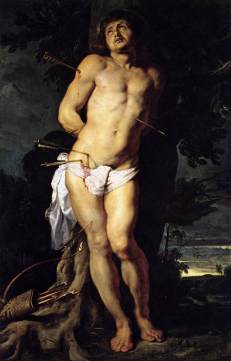

Sebastian-rubens
Rubens’ St Sebastian

But Frears’ balance between biographical revelation and fiction-making artistry is a subtle one. The book’s frankness is to be praised. Apart from on-line flirtation, poems allude to masturbation, oral sex, teen sex/petting, periods, prostitution, a pregnancy scare, urination (thank you Andrew McMillan!), a couple of disembodied penises, but also domestic violence and suicide. Many of the poems seem to reflect Frears’ own upbringing in Cornwall. ‘The Overwhelming Urge’ evokes a restless teenage boredom suffered in St Ives. The lines jitter across the page, starting and restarting little narrative moments, opening with images of (either) bullying or self-harm. The narrative voice mocks herself as “Saint Sebastian” as well as her attempts at the role of seductress, of a Marilyn Monroe. The reality is more sordid: a man exposing himself. Her remoteness from the moment is neatly caught in the choice of language, the mocking art-speak: “She [. . . ] files it under: / penis, moonlit”. But erotic experimentation remains an available distraction as ‘Fucking in Cornwall’ makes knowingly, hilariously clear: “The rain is thick and there’s half a rainbow / over the damp beach; just put your hand up my top”. There’s an uncharacteristic confidence to this narrator who knows what she wants, but there are many more female narrators in this collection who are troubled and confused about what they want, indeed who they are.

300px-Shell_Hayle_2020The obvious risk of such sexual adventuring is the subject of ‘Hayle Services (grease impregnated)’. The parenthetical allusion here is to Elizabeth Bishop’s ‘Filling Station’ where everything is “oil-soaked, oil-permeated [. . .] grease / impregnated”, a poem which concludes, against the odds of its grimy context, that “Somebody loves us all”. In contrast, Frears’ crappy, retail-dominated English motorway service station is (ironically) the stage for a pregnancy scare, a desperate search for a test kit in Boots and an anxious, “[p]issy” fumbling in the M&S toilet cubicle, then waiting for the “pink voila”. The headlong, impossible-to-focus, sordid anxiety here is brilliantly captured in the short, run-on lines. Frears also catches the young woman’s multiplicity of streams of consciousness, the scattershot: the potential father is present but soon forgotten, his reassurances dismissed, the pushy sales staff avoided in anger and embarrassment, the difficulty of urinating, the cringingly inappropriate joke-against-self in “et tu uterus”, the conventional moral judgement (“soiled / ruined spoiled”) and the final phone call to “Mamma, can you come pick me up?”

Elizabeth-Bishop
Elizabeth Bishop

Frears shows her female narrators bringing about many of their own difficulties, but the pressures of their social, sexual, cultural contexts are sketched in too. This is especially so in the 16-page long poem, ‘Passivity, Electricity, Acclivity’, in which Frears represents, diagnoses, resents and warns in equal measure. The material here might have made a novel, but it is assembled from fragmentary texts (verse and prose), not particularly chronologically arranged, the latter decision bringing out more clearly the recurrent traits – both the weaknesses and the harassment – of the central female figure. At the age of 10, she experienced a near-abduction by a predatory man in a hotel. She seems to have run off just in time but then failed to identify the man later (this isn’t wholly clear) and the man went on to abduct another girl (again not wholly clear). So the near-abduction of the girl is a moment of danger (heavily gendered), of guilt at her passivity and fear, but also a moment when she sensed “something new in me”, an adult self, perhaps as a sexual being.

ELLA-Frears-photo-credit_-Etienne-Gilfillan-scaled-e1591281680124
Ella Frears

The concern for male aggression also surfaces in later relationships with two pushy boys and (later still) with a manipulative man she meets in a pub. All three male figures impose on her (on her uncertainty and lack of confidence) their own interpretative narratives. They persuade her to believe things she suspects are not true and thence they also impose on her sexually. The man in the pub is especially, pathetically dangerous: “He apologises, tells me he has just separated / from his wife. She moved out today”. Frears also adds into the mix two relationships with young women. Lucy is one of six in a shared house with the narrator. But Lucy makes up stories about a gay relationship between them and later attempts suicide. Even so, the narrator finds it hard to hold on to the truth: “When I think back on Lucy, / I see myself doing the things she said I did”. A similar pattern emerges in her (not much developed) relationship with Millie who does suddenly kill herself. The narrator is then cast, almost cajoled, into the role of best friend by Millie’s father and twin sister and, again, she seems to shrug and accept another person’s truth: “Who am I to say no to this?”. This uncertainty about herself (“Who am I”) is once more compounded with a guilty passivity (she does not defend Millie against their driving instructor’s criticisms).

The poem ends with the narrator adopting the role given her by Millie’s sister – it’s shocking but Frears would surely argue not so uncommon and more so for women in our society. This overriding and underlying mystery about “[w]ho am I” perhaps accounts for the book’s frequent engagement with the image of the moon. Juliet warns Romeo, “O, swear not by the moon, the inconstant moon, / That monthly changes in her circled orb”. ‘Moon Myth’ seems to want to reject the sun = male (strong, constant) and moon = female (changeable, uncertain) tropes. “[W]e have been assigned the moon” it complains and we know the patriarchy has done the assigning. Yet – in a good example of another Frears’ trait, switching the language register – we hear “58% of women say ‘take what you’re given, lest they assign us an even smaller celestial body”.

imagesAnd yet, poems in Shine, Darling do regularly turn to the moon for possible explanations of actions (‘Phases of the Moon / Things I Have Done’), for a witness if not for protection (‘Walking Home One Night’) and for directions (‘I Knew Which Direction’). The latter poem is a beautiful lyric opener to the book but is rather misleading. The repetition of the word “moonlight” seems to give an almost visionary access: “no longer a word but a colour and then a feeling / and then the thing itself”. It is curious that a poet asserts the transparency of language in this way (Frears is not much concerned with the nature, limits and impositions of language, unlike Nina Mingya Powles’ shortlisted Magnolia 木蘭), but also the idea of such an untrammelled access to “the thing itself” is countered by every poem that follows. Frears’ world view may not be too much troubled by words but the very idea of a unitary truth to be beheld with clarity is profoundly doubted.
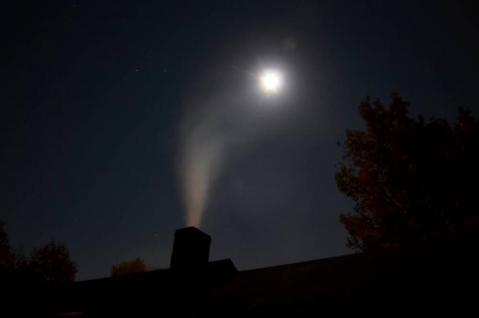

The moon’s final appearance and the collection’s title appears in the concluding poem. Men have been feared, ignored, desired, condemned and occasionally manipulated in some of these poems. Here a mischievous female narrator decides to maroon her boyfriend on the roof of their house while a dinner party goes on below. It’s at once a funny, tender, awkward image of emasculation and this ambiguity of tone is captured in the book title’s appearance – a little sarcastic, a little affectionate, rather camp and performative:


As the guests left I looked up and realised that there

was no moon. Shine, darling. I whispered.


And from behind the chimney rose his little head.


Such a finely judged ambiguity of impact is all of a part with this intriguing, shape-shifting, uneasy and often very funny first collection.

7051082
Shine, Darling

Judging Poetry Competitions: some notes on the process

I am half way through the process of judging this year’s Segora Poetry Competition. I’ve been lucky enough to judge several such competitions in recent years and in 2015 I published a version of what follows on my blog as a compilation of my thoughts on the judging process. I’m tweaking and re-blogging it here in response to my experience of judging this new competition in 2020. As I have always found, the initial sifting of so many poems can be a slog, but the latter stages are unfailingly fascinating as the best poems – those that set little hooks in you from first reading – gradually rise to the top, their internal coherence emerging, alongside their skills with language, tone and form. So what follows is inevitably a personal take on the business – becoming more so, perhaps, as the process unfolds – but I hope it may cast some light on it for those (of us) tempted to spend hard-earned cash on entering the numerous competitions now running. Follow this link to see more upcoming competitions.

MV5BNzMyZDhiZDUtYWUyMi00ZDQxLWE4NDQtMWFlMjI1YjVjMjZiXkEyXkFqcGdeQXVyNjU0OTQ0OTY@._V1_UX182_CR0,0,182,268_AL_Some films stick in the mind for reasons beyond the cinematic, don’t they? In the 2003 comedy Bruce Almighty, Jim Carey plays the character of God and, along with more obviously useful powers, he has to respond to the prayers of the world. But people are always praying! He rapidly approaches a kind of madness as voices swim around him, clamouring for attention. He takes to reading the prayers in the form of e-mails. He tries to answer them individually but is receiving them faster than he can possibly respond. He decides to set his e-mail account to automatically answer “yes” to all, assuming that this will make everybody happy. Of course, it does not.

Now – a poetry competition judge comparing himself to a character playing God lays him/herself open to some obvious criticism – but I have indeed found the initial phases of judging poetry competitions rather like Jim Carey’s experience. There are so many and such a variety of voices clamouring to be heard and every one of them is heart-felt, recording significant moments in people’s lives. There is a similar sense of responsibility too – the raw nature of much of the writing submitted is impossible to deny. There are moments when I’d like to set my response mechanism to say ‘yes’ to everybody, but the judge’s task has to be how to distinguish submissions as poetry.

What does that mean? The numbers involved are always a bit daunting. Many hundreds of poems have been submitted. Perhaps only 10% of these will demand a further reading after the brutal first sifting. Poems face an early, red stoplight from most judges because the basic poetic elements are not competently done. Here are some of the obvious failings:

  • Competitions are full of pieces where a particular verse form or rhyme pattern tyrannises the sentiment and/or sense. The writer’s submission to this tyranny becomes clear quickly through the contortions imposed on the language to achieve a rhyme.
  • The writer’s choice of language can be devastating to the life of the poem. It just isn’t right to opt for forms of language or abbreviations that died out early in the nineteenth century. Thankfully, this problem seems to be fading as more and more people actually read contemporary poetry books.
  • Choice of diction can also derail an entry if it is doggedly abstract. Sure, there remains much debate about whether it is the narrow English tradition that insists on things rather than ideas – but poems about Fear, Ignorance, Poverty, Eternity and Love which refuse to dip a toe into anything resembling a real life situation are going to find progress hard.
  • A fourth error is using language without being fully conscious of its likely resonance with a reader. A poem using the verb ‘gaslight’ without knowing its current slang meaning or another called ‘Mother’s Pride’ which seems unaware of the loaf of bread, well, they are going to have unanticipated clutter to climb over in any reader’s mind. Louis MacNeice wanted the poet not to be an ivory tower type, but rather “able-bodied, fond of talking, a reader of the newspapers, capable of pity and laughter, informed in economics . . . actively interested in politics”. All a bit Boys Own perhaps, but if this means the poet stays bang up to date with the way words live then he’s right.
download
Rainer Maria Rilke

If you are still thinking of submitting to a competition, it’s worth recalling Wordsworth’s formulation – familiar though it will feel to most – that poetry is built from “emotion recollected in tranquillity”. Poems forged in the heat of the moment (and not revised or reviewed) are seldom without their flaws. And this is the kind of distinction Rainer Maria Rilke makes when he denies poetry is composed of feelings. Its constituents (he says) are rather “experiences” which he clarifies as “memories” though even with these, we “must be able to forget them when they are many and one must have the immense patience to wait until they come again . . . Only when they have turned to blood within us, to glance and gesture, nameless and no longer distinguished from ourselves – only then can it happen that in a most rare hour the first word of a poem arises in their midst and goes forth from them”. On the other hand, such recollection can sometimes create an intellectualised distance that may do harm to a good poem. Who said writing a poem was easy?

41Stephen1books
Stephen Spender

Stephen Spender argued that a poet should try to acquire skill and virtuosity through the study and interpretation of other poetic works in the way Mozart and Beethoven did in playing the music of their predecessors. Spender suggests translating poetry is the best possible exercise in interpretation. But the really important lessons (Spender says) are those of the eye, the ear, the athletic/poetic muscles. A poet can go a long way without a developed heart, but, he says, can get nowhere at all without these skills. The poet must ask continually of his lines: ‘Do they make the reader see, or hear, or feel, this experience which I am trying to re-create?’

Reaching the final stages, the judge will be focusing more on positives and hence more precisely on the sense, the story, the thought and feeling of a poem. Personally, I like poems that focus on small things and, in effect, make arguments for the ways in which they communicate the bigger issues that concern us all. I’m with Thomas Hardy in believing that “he used to notice such things” is one of the greatest of compliments. Edward Thomas’ poem about Spring, ‘But these things also’, likewise echoes this focus on what most people tend to overlook:

The shell of a little snail bleached
In the grass; chip of flint, and mite
Of chalk; and the small birds’ dung
In splashes of purest white . . .

download (1)Perhaps one explanation of why the question ‘what is poetry?’ is so difficult to answer is because it is, to a large extent, an art of the negative, of avoidance. The Daodejing says what is rigid and inflexible is a companion of death; what is flexible is a companion of life. I’d guess there would be general agreement that poetry is an art on the side of life. So poetry must eschew the inflexible; we must avoid the posture. And that’s very hard. In judging a competition, one comes across the Wordsworth-posture, the Ginsberg-posture, alongside those of Hughes, Plath, Duffy, Oswald . . . But we also posture like mad in ‘real life’. We may take up the pose of grief, melancholy, love, liberalism, environmentalism . . . For me, the mark of the absence of posturing is an instability, an openness, an awareness of time (which posture tries to deny) and this is something I look for in a good poem. If a poem strikes an attitude my attention diminishes (even if the attitude is one that wants to show a rejection of attitudinising through the hall of mirrors of ironic distancing). When the poem unearths a pulsing, shifting, live relationship between the self and the other, then I am captivated, recognising something that is both commonly human and uniquely personal.

4756
Philip Pullman

But having said all this, I’d assure potential competition entrants that anything resembling a rule is there to be broken. Philip Pullman has said, “We don’t need a list of rights and wrongs, tables of dos and don’ts: we need books, time, and silence. Thou shalt not is soon forgotten, but Once upon a time lasts forever.” So any poem in any form can work its magic. It will haunt its reader for days; it will make me change the way I think and feel; make me see the world differently. Ultimately, a poem contributes to who the reader is becoming. That is an exciting prospect for the writer. It is an even more exciting one for the judge who settles down to read.

Quickdraw Review: ‘Counting Clouds’ – poems by Peter Robinson, paintings by David Inshaw

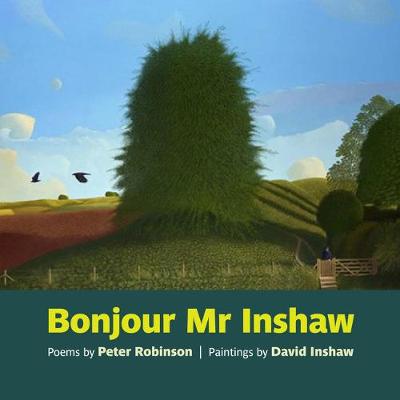
This is how reviews are supposed to work. I recently read James Harpur’s comments on Bonjour Mr Inshaw, published by Two Rivers Press (poems by Peter Robinson, paintings by David Inshaw) in the Spring 2020 issue of Agenda, ‘Pound Reconsidered’. I went out and bought the book.

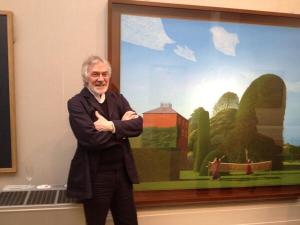
I’ve long thought of writing poems about David Inshaw’s paintings, drawn to what Harpur calls his ability to “invest landscapes with spiritual light and energy, balancing realism with a sense of the mythic, of penetrating a noumenal sphere”. The other personal draw to his work has been that Inshaw’s home (and home ground as an artist) is that part of Wiltshire to the west of where I grew up. Inshaw’s home is in Devizes and many of his paintings are of the landscape just a bit further west, of Silbury Hill, Avebury, the barrows and downs of that area. The drive from the M4 turn-off at Hungerford, on the Bath Road, through Marlborough and the A361 to Devizes has long figured in my personal list of favourite drives (not wholly because it was for years the route to my childhood home in Hilperton, Wiltshire). And now Peter Robinson has beaten me to it with this beautiful book of full colour images and 19 poems, though his approach is not simply ekphrastic (merely descriptive of the images) but often launches out from the pictures into concerns shared by the two artists.

download (1)
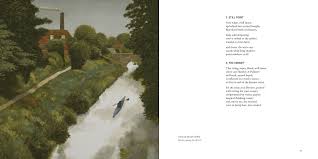
Image and Text from ‘Bonjour Mr Inshaw’

Robinson and Inshaw in fact met at Cambridge in the 1970s. That moment is uncertainly recalled in the poem ‘In the Seventies’ (a title borrowed from Thomas Hardy’s poem in Moments of Vision – a sub-theme of this whole book is how both poet and artist respond to Hardy’s work). Various chance meetings over 50 years then occurred including a visit to Devizes in January 2019 during which the project of this book was agreed upon.

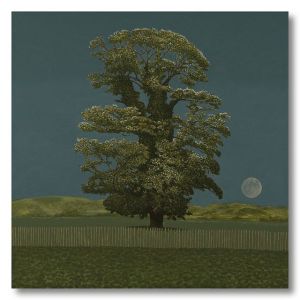
Inshaw’s ‘Tree and Moon’

The word ‘haunted’ seems to have been designed to be applied to Inshaw’s landscapes. There is a hyper-real quality to the painting which makes the viewer re-see our own surroundings but also takes us through the surface. Harpur’s Agenda review suggested a “Platonic vision” but I’d object to losing the surface of the real so readily. Inshaw was a member of the Brotherhood of Ruralists (here is an old BBC documentary on them – a brilliant example of ‘slow’ TV before it had been thought of) and his landscapes are usually peopled and the trees and downs and ancient memorials are therefore always ‘seen’. Inshaw’s work is about time and memory (Hardy again) and the way moments of vision or perception can feel heightened. The poem ‘Haunting Landscapes’ alludes to Inshaw’s ‘Our days were a joy and our paths through flowers’ (another quote from Hardy, his poem ‘After a Journey’). A woman in black stands in a graveyard but has turned as if being called to from beyond the frame (by a memory, a ghost).

Inshaw in front of ‘The Badminton Game’

As in so many memories, there is a heightened particularity to Inshaw’s paintings. There is a Rilkean focus on what ‘The Kennet’ calls “being here”. Look at Inshaw’s ‘Tree and Moon’, for example, and Robinson’s accompanying poem, ‘At Slader’s Yard’, associates the two artists (and their art forms) in the quality of their ‘noticing’: “I’m a counter of clouds / come over the hills like this one / ‘salmoning’ in a ‘deepening blue’”. Hardy’s poem ‘Afterwards’ describes himself as a “man who . . . noticed things”. Robinson’s concluding poem, ‘After a Visit’, suggests how Inshaw’s precision of observation (“the starkness of those winter branches’ / black against a glowing skyline”) manages to inculcate a sense of something other than mere perception of colour and shape: “it brings back the sense of some design, / and a meaning to this scene”. The root and pattern of design is unclear. The value of such a comprehending vision is heightened by the precise historical context in which many of these poems were written. The divisions and confusions of Brexit and the world of Covid infection and lockdowns keeps breaking through the surface of this book. The parliamentary “palaver”, hypocritically urging us to “come together as a nation” and a certain politician, “pre-disgraced”, indicate that neither poet nor painter look upon the landscape of southern England with their heads in the clouds, nor with any narrowly nostalgic gaze.

Peter Robinson


The Coherence of Rilke’s ‘Letters to a Young Poet’

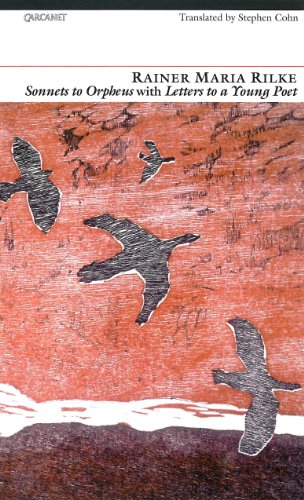
Last week I was invited to take part in an on-line discussion about Rilke’s Letters to a Young Poet, written to a young would-be poet in the early 1900s. This event was organised by the Kings Place group, Chamberstudio, and the panel included two other poets, Martha Kapos and Denise Riley, musicians Mark Padmore, Amarins Weirdsma and Sini Simonen and composer Sally Beamish. We had such a fascinating discussion on Rilke’s advice to young artists (though perhaps we hardly scratched the surface) that I wanted to re-visit it and re-organise my own thoughts about the letters; hence this blog post. Though warm in tone and supportive, the letters are a way of Rilke talking to himself, developing coherent ideas that can be traced through the New Poems (1907/8), Requiem to a Friend (1909), even to the Duino Elegies and Sonnets to Orpheus of 1922. I am quoting throughout from Stephen Cohn’s translation of the letters, included in his translation of Sonnets to Orpheus (Carcanet, 2000).

Rilke’s advice to Franz Kappus was evidently received with gratitude as the correspondence between them continued (if sporadically) from early 1903 to December 1908. We don’t have Kappus’ side of things, but from Rilke’s comments it’s clear the younger, aspiring poet’s letters were remarkably open, even confessional in substance, as suggested by the published letters’ recurring observations about sexual relations. But as for practical advice to a young poet, Rilke offers little, opening with, “I am really not able to discuss the nature of your poems” to “You ask if your poems are good poems . . . You doubtless send your poems out to magazines and you are distressed each time the editors reject your efforts . . . my advice is that you should give all that up”. Probably not what Kappus hoped to hear, though he will have quickly understood that Rilke has more profound points to make. But it means these letters ought to be read less as advice to aspiring writers and more as advice on the best ways to ripen (Rilke’s metaphor) the inner self, a consequence of which might be the conviction that creative work was a necessity for the individual. Peter Porter once suggested a better title for the sequence would have been, ‘Letters to a Young Idealist’ (Introduction to Cohn’s Carcanet translation).

download
Peter Porter

The advice given is carefully positive – what to seek – and fulsomely negative – what ought to be avoided. Friendly and remarkably sympathetic as his tone is through the series of letters, what Rilke asks, in truth, is extraordinarily demanding for mere ordinary mortals. Rilke urges a priest-like devotion to his High Romantic, Godless programme. In brief, what is to be sought is a clear, honest and open relationship with one’s own inner life and that demands a corresponding avoidance of everything that might distance us from it, especially the pernicious influence of social and cultural conventions, what has been thought, said, written or done before. Rilke makes no bones about how difficult the former is and how frightening the latter is going to feel.

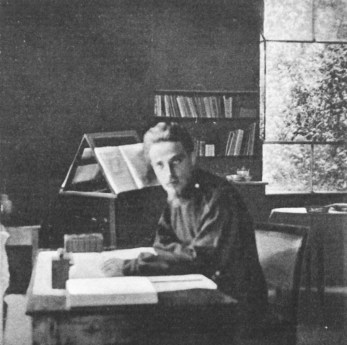
Rilke at his writing desk

The only way, Letter 1 insists, is to “go inside yourself”. And in Letter 3, we need to “allow each thing its own evolution, each impression and each grain of feeling buried in the self, in the darkness, unsayable, unknowable, and with infinite humility and patience to await the birth of a new illumination”. For reasons discussed later, there has to be a degree of passivity about this process: we must “await with deep humility and patience the moment of birth”. In his reply, Kappus must have enumerated the pain and suffering he was experiencing as a young man because Letter 8 spins this positively: “did not these sorrows go right through you – and not merely past you? Has there not been a great deal in you that has changed? Were you not somewhere . . . transformed while you were so sorrowful?” These often rough inner weathers of our emotional lives are precisely what is required. Only then, “something unfamiliar enters into us, something unknown; our senses, inhibited, and shy, fall silent; everything within us shrinks back, there is silence, and at its centre this new thing, strange to us all, stands mutely there”. In one of several memorable images, Rilke explains, through such emotional experience (the pains as much as, or even more than, the pleasures) “we have been changed as a house changes when a guest enters it”.

Those familiar with Keats’ ideas (expressed in his 1819 Letters) about the world as a ‘vale of soul-making’ will find something very familiar here. But Rilke’s take on the process of ‘spirit creation’ lays far heavier emphasis on the need for solitude to achieve it. Letter 5 tells Kappus, “win yourself back from the insistence of the talk and the chatter of the multitude (and how it chatters!)”. The chattering world is a distraction from what ought to be the subject of our study (our inner selves): “What is required is this: solitariness, great inner solitariness. The going-into oneself and the hours on end spent without encountering anyone else: it is this we must be able to achieve” (Letter 6). Such solitude enables greater concentration but also more true (uninfluenced) perception of our inner life. Yet to turn away from so much that is familiar will be frightening. In Letter 8, Rilke compares this to someone “plucked from the safety of his own small room and, unprepared and almost instantaneously, set down upon the heights of some great mountain-range”. What must then be experienced is “a never-to-be-equalled sense of insecurity, of having fallen into the power of something nameless [and this] would virtually destroy him”.

The negative influences of those (us, the timid majority) who have pulled back from such a state of perception is explained. Rilke’s basic tenet is that we are all “solitary”. But the uncertainty of a ‘true’ perception of this is too much for most people: “mankind has been pusillanimous in this respect [and] has done endless harm to life itself: all phenomena we call ‘apparitions’, all the so-called ‘spirit-world’, death, all these things so closely akin to us have been fended off . . . and so thoroughly purged from our lives that the senses by which we might have grasped them have atrophied. To say nothing at all of God”. What Rilke describes here are a number of the conventional ideas – pure figments about the truth of spirituality, death and a deity – that people have populated their world with in seeking greater security. Kappus is told, “a perilous uncertainty is so very much more human” and the truly human, let alone the ambitious poet, must accept the principle that “we arrange our lives in accordance with the precept that teaches us always to hold to what is difficult – then everything that still appears most alien will become all that is best-trusted, most dependable”. Rilke’s chosen metaphor here is the folkloric/mythic image of the terrifying dragon that turns into a rewarding princess at the last moment.

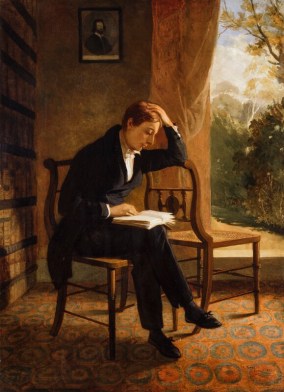
John Keats in Hampstead

Herein lies also the wisdom of passivity. As Keats argued in parallel, with his idea of negative capability (the knack of remaining “in uncertainties, mysteries, doubts, without any irritable reaching after fact and reason”), so Rilke’s fourth Letter advises Kappus not to seek out answers now but to “love the very questions, just as if they were locked-up rooms or books in an utterly unknown language”. The key is to “live them” by which Rilke (like Keats) means to examine and attend to them as fully as possible. He goes so far as to advise a child-like incomprehension (which is at least based on an openness to the questions asked) over a cowardly defensiveness or contempt (which falls back on a distancing from those questions). This is why, in Letter 2, he sharply advises Kappus to avoid irony. There are, says Rilke, “great and serious subjects before which irony stands helpless and diminished” because irony is, by definition, a standing outside of a question or topic. For the same reason, Rilke distrusts engagement with literary or aesthetic criticism (precisely what Kappus has asked of him in relation to his own poems). Letter 3 argues such critical discussions are “received opinions, opinions grown petrified and meaningless, insensitive . . . clever word games”, hence far distant from life itself. The same Letter suggests the artist needs to retain an innocence, even a lack of awareness of his/her creative powers, lest self-consciousness diminish freedom and “purity”. Indeed language itself – the common method of exchange between people – is suspect in representing, in its unexamined use, conventional thought and feeling: “it is so often on the name of a transgression that a life is shipwrecked, and not on the individual, nameless act-in-itself”.

Even these letters, Rilke says in Letter 9, need to be treated with caution and patience: “receive them quietly and with not too many thanks, and let us, please, wait and see what may come of them”. This is a warning not enough heeded by subsequent generations of readers, but Rilke’s real humility is re-emphasised at the end of the preceding Letter. Perhaps feeling he has been delivering advice from ‘on high’, Rilke warns Kappus, “do not believe that he who seeks to console you dwells effortlessly among the quiet and simple words which sometimes content you. His own life holds much trouble and sorrow, and it falls far short of them”. Surely Rilke is not merely alluding here to the life of the creative artist. Prompted, as I have said, by Kappus’ own openness about what we might call ‘romantic’ aspects of his own life, Rilke devotes a lot of space to interpersonal relationships in these letters. His point in Letter 7 is that this area of human life too is poisoned (“well-furnished” – this topic brings out Rilke’s satirical side) with conventional thinking and language: “here are life belts of the most varied invention, boats and buoyancy packs . . . safety aids of all conceivable kinds”. Such ‘safety’ features are more fictions designed to forestall a true encounter with the kinds of questions that human relationships inevitably throw up. Letter 3 particularly criticises male sexual attitudes (lustful, drunken, restless, arrogant, prejudiced) and Letter 7 anticipates a “new and individual flowering” of female sexuality which will lead to relationships not defined as male/female but as “one person and another person”.

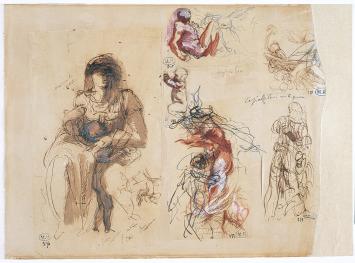
Some of Rodin’s sketches

Such a renovation of individuals, from the inside out, is the urgent call of this series of letters. As to advice to Kappus the wannabe writer, Rilke offers very little, but what he does suggest is wholly in keeping with his other ideas. Letter 1 urges close observation as the only viable method. As I have made clear, this is especially close observation of our inner lives. But one’s whole life needs to be built around this principle, so “you must approach the world of Nature… try to tell of what you see and experience”. Rilke says don’t try to write love poems or on other common subjects of poetry. This is because they will be infected with those conventions of thought and expression I have discussed above. Rather, “favour the subjects which your own day-to-day experience can offer you”. The poet’s approach to such everyday subjects needs to be “quiet, humble, [with] passionate sincerity” to avoid clichés of thought and feeling, hand-me-down solutions or worn out, petrified language. These are the methods Rilke learned from watching Rodin sketching in Paris. Pre-empting likely objections that such an approach would produce work of little importance, Rilke goes on: “If your daily life seems mean to you – do not find fault with it; rather chide yourself that you are not poet enough to evoke its riches” (Letter 1).

The everyday is rich and complex enough for Rilke without any irritable searching after more conventionally dramatic, sensational, controversial subjects to address. The images that Letter 3 associates with this humble creative process is of gestation (“to carry, come to term, give birth”) and the slow growth of trees (“letting the sap flow at its own pace”). In Letter 6 he compares it to bees gathering honey (“drawing what is sweetest from all that there is”). Whether focusing within or without, the artist must begin from what is “unremarkable” and we become better acquainted “with things” and if this is too frightening a prospect – with no off-the-shelf solutions to human fears and insecurities, no God above all – Rilke has few comforts to offer the young poet. As regards God (or, as letter 6 refers to him, the “one who never was”), Rilke allows the idea of God only as the ideal or terminus towards which we travel, a state of full comprehension – through knowing humble things: “Does he not have to be the last, if everything is to be comprehended in him? And what meaning would there be in us, if the one we crave had already been there?”. God, for Rilke, does not pre-date us as an origin. He is the goal towards which we travel, aspire, build, create – ‘he’ is no more nor less than our fullest comprehension of life and death, hence our fullest sense of being in the world.

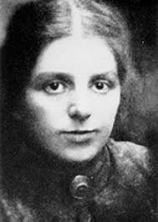
Paula Modersohn-Becker

That the young Franz Kappus, after all this, decided to pursue a military career rather than a creative one is perhaps hardly surprising. It may be that the former presented the least frightening option! Rilke asks such a lot. His poem Requiem to a Friend of 1909 (the year after his correspondence with Kappus came to an end), dwells on the “old enmity / between life lived and great work to be done” (tr. Crucefix). The tragic lament of that particular poem arises from his conviction that the subject of its in memoriam, the painter Paula Modersohn-Becker, had proved herself strong enough to carry forward the huge burden of being an artist and that, therefore, her untimely death (just after the birth of her first child) was an irreparable loss to a world that needs all the true artists it can nurture.

Ben Wilkinson on Poetry, Sport and Men’s Mental Health

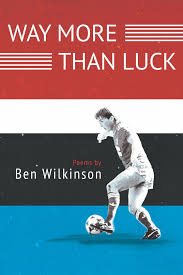
During lockdown there has been a proliferation of on-line poetry readings and launches and most of those I have attended have been very successful. I had to teach my (well educated) daughter the meaning of ‘necessity being the mother of invention’ the other day and the poetry world is not the only one learning new ways to do old things. My publisher, Seren Books, has been particularly active in this area, recently staging the launch of Katrina Naomi’s new collection, Wild Persistence and running a mini festival, their Stay-At -Home series. It was during this series of events that I heard Ben Wilkinson read from his 2018 collection, Way More Than Luck. As part of his own reading, Wilkinson also read Louise MacNeice’s ‘Wolves’: “Come then all of you, come closer, form a circle, /Join hands…”

download (1)I’m not proud to admit that Way More Than Luck passed me by when it was first published. As you are probably aware, Wilkinson reviews poetry regularly for The Guardian, and he’s very familiar on social media as a poet and critic, a distance runner and a passionate Liverpool football fan. But the book’s cover (Dalglish, I think), its title and some of the publicity persuaded me that the football bit was going to be predominant. It’s certainly an almost unique aspect of the collection, but it turns out the debilitating darkness of psychological depression is an even more significant one. Wilkinson signals this concern via the book’s two epigraphs. One is about the nature of depression by Matt Haig and a second by John Hanc links challenging physical activities with mental strength, with “state of mind”. And the opening poem immediately suggests the un-put-downable burden of depression for those who struggle with it, while ‘Days’ obsessively lists multiple occasions blighted by it. Both poems use repetition as a device to evoke the persistent nature of depressive episodes, while ‘Pal’ uses that plus personification to convey its haunting, abusive nature:
 

Next time you’re trying to stand your ground –

argue your case, sprint the home straight,

stare yourself down in the mirror at eight –

he’ll be there alright. His smile is a frown.

His frown is a scowl. His scowl is the fear

you hoped was long gone. Still here. Still here.


Macniece-lecture
Louis MacNeice

Wilkinson’s admiration for MacNeice can be heard in the vigorous syntax here, the use of form and rhyme and his liking for repetition perhaps reflects something of the 1930s poet’s “controlled flamboyance of diction”. Even more successfully, ‘Hound’ treats depression as a beast (an idea famously and perhaps erroneously linked with Winston Churchill):


Know it’s no dog but a phantom,

fur so dark it gives back nothing,

see your hand pass through


its come-and-go presence,

air of self-satisfied deception,

just as the future bursts in on

the present, its big I am, and that

sulking hound goes to ground again.


Troubling dreams feature in two powerful poems. ‘The Nightmare’ is all the more frightening in remaining aware of the real-life episode the dream is based on. A long drive, “to Newby, Lawkland, Cleatop”, is transmuted as the car shudders, the windscreen warps, roadside trees shrivel and the narrator’s companion is suddenly “nowhere to be found”. ‘Stag’ rehearses something similar – the real animal, “on the bypass that night – / antlers like a winter oak”, is, in the dreamed version, pursued vainly across a landscape, seemingly in hope that some secret communication might be recovered from “those cavernous eyes”.

download (3)
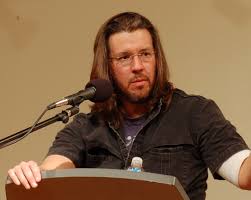
David Foster Wallace

Perhaps the best poem in the book, ‘To David Foster Wallace’, is addressed to the American writer who himself struggled with depression and alcoholism. Wilkinson’s poem takes up a wholly convincing, chatty, MacNeicean tone to discuss – frankly – the experience of despair, “the unpindownable feeling / of hopelessness, hard frustration”. The poem itself declares it takes “courage” to appear weak and it certainly takes courage to write as nakedly as this. Of course, all lyric poetry is to some degree “dramatic”, but there seems a strong autobiographical element to this poem (and others). The poem ends with the narrator explaining that there are occasions, while out running (“my breath dogged on the fellside”), when he experiences something of “peace”, something of psychological relief. Wilkinson’s book title turns out to be not an allusion to a Fernando Torres wonder goal, but what the struggling narrator is left hoping for from David Foster Wallace, even from beyond the grave: “Wish me way more than luck”.

download (4)For me, it’s these psychological truths that Wilkinson is so good at conveying. There are other poems later in the book (and perhaps ‘Stag’ is an elusive example) which begin to sketch episodes of a foundering romantic relationship and ‘Building a Brighter, More Secure Future’ is a very effective excursion into witty political satire (a skilfully handled sestina based on the Conservative Party election manifesto, 2015). And there are the football poems. They comprise the central sequence of 14 poems, introduced with a heart-felt Prologue that says what follows is for the ordinary football fans, written out of “a love beyond the smear campaigns, / the media’s hooligans”. A large part of what Wilkinson has in mind here is the shocking response in parts of the media to the Hillsborough tragedy in 1989, when 96 men, women and children died (David Cain’s Forward prize shortlisted book, Truth Street, from Smokestack Books, movingly dealt with this event and the media and policing responses and I reviewed it last summer). Wilkinson obliquely refers to the occasion in ‘Kenny Dalglish’ and several poems have worthwhile things to say about racism in the game (‘John Barnes’) and how the game can offer an escape route for working class boys (‘Billy Liddell’ and ‘Steven Gerrard’).
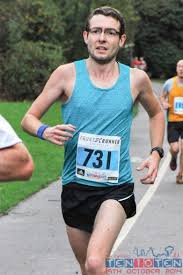
download (2)But the poems also show how difficult it is to escape the miasma of cliché that seems to engulf football itself. Anfield is filled with a “fabled buzz”, then “the place erupt[s]”. Barnes unleashes a “a sweeping, goal-bound ball”, and a particular game offers one “last-ditch twist”. I’m reminded of Louis MacNeice’s observation (now sadly compromised in various ways, but the spirit of it remains valid, I think) that he wanted a poet not to be “too esoteric. I would have a poet able-bodied [sic], fond of talking, a reader of the newspapers, capable of pity and laughter, informed in economics, appreciative of women [sic], involved in personal relationships, actively interested in politics, susceptible to physical impressions’. There are many more of these poets around these days and to bring (even) football into the purview of poetry can hardly be a bad thing. Yet it is not an easy one and there may be some risks in deciding to headline the attempt. Ian Duhig’s blurb note to Way More Than Luck has gingerly to negotiate this issue: “The beautiful game inspires some beautiful poems in Ben Wilkinson’s terrific debut collection … but there’s far more than football to focus on here”. Yes, indeed.
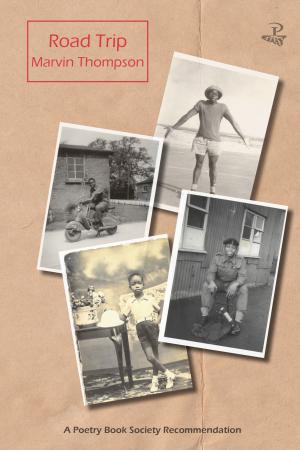
Jazz and Upbringing: Marvin Thompson’s ‘Road Trip’ reviewed

Marvin Thompson’s debut collection from Peepal Tree Press is a PBS Recommendation and deservedly so. All too often we are informed of the arrival of a startling voice, usually a vital one, striking a new note in English poetry. Well, this is the real deal: a superbly skilled practitioner of the art whose work is driven by two seemingly opposing forces. Thompson writes with a disarming sense of autobiographical honesty, often about domestic life, as a father and a son. Yet he can also create fictional characters with detailed and convincing voices and backgrounds. What holds these divergent styles together is his demonstrated conviction that the past (as an individual or as a member of an ethnic or cultural group) interpenetrates the present.

‘Cwmcarn’ is a poem in an apparently simple autobiographical mode, the narrator out camping in Wales with his two children. He has been reading them to sleep with pages from Maggie Aderin-Pocock’s  biography but feeling a bit guilty about not finding a book about “a Mixed Race // scientist / for my // Mixed Race / children”. The thought leads him to reflect on his own childhood’s confusions about racial identity, being born in north London to Jamaican parents, but knowing he was ultimately “by ancestry, / African”. He recalls the hurt of being “branded” English, not Jamaican, and then worries about the consequences of his children identifying “as White / in a Britain // that will call them / Black”. As you can see, Thompson’s chosen form is reminiscent of what Heaney (around the time of North) called his ‘artesian’ form of skinny-thin poems and the same effect of drilling down into the past is achieved here.

joe-harriott-movementSeveral of the same components are redeployed in the sequence ‘The One in Which…’ (with a nod to Friends). The narrator is driving his kids to the cinema, playing “Joe Harriott’s abstract jazzin the car. The children not surprisingly consider the music angry, sad and crazy. The father is not unhappy with this: “my Mixed Race children are listening / to something I want them to love”. He himself wonders if it’s “upbringing // or brainwashing” but the music “sings // Africa’s diaspora and raises skin to radiance”. (Listen to Thompson read this poem here) This last phrase is a wonderful play on aspects of light and darkness and the consciousness of the power of the past is extended with the father’s memories of the 1985 disturbances on Broadwater Farm in Tottenham. What Thompson does so convincingly and without strain is to present the individual’s stream of consciousness as it streaks in and out of the past and present. The third section of this sequence opens with a simile that should come to be seen to rival the ground-breaking significance of Eliot’s Prufrockian evening spread out against the sky “Like a patient etherised upon a table”. Welsh storm clouds are the subject here and the comparisons that flood the poem are drawn from the past of Jamaican, American, Haitian and African roots:


Mountain clouds clench like a Maroon’s fists 

as she sleeps beyond the sugarcane and soldier’s guns with her sons

and daughters in Jamaica’s hills – fists like Jack Johnson’s,


an 18th Century Haitian’s or an ANC activist’s.


It will be objected that there are one (or two) too many similitudes here but surely that is the point: the vividness, dynamism and vitality of these images drawn from the past make up an irresistible force to the father in the poem.

DlMMZnUW0AATHKk
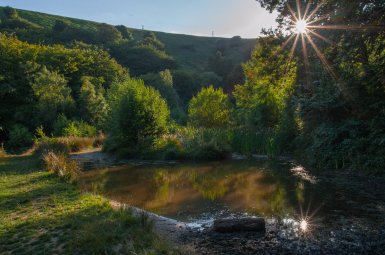
Blaen Bran Community Woodland

The astonishingly titled ‘Whilst Searching for Anansi with my Mixed Race Children in the Blaen Bran Community Woodland’ makes Thompson’s point over again: the (playful) search for an African folkloric trickster figure (in the shape of a spider) in the Welsh woodlands is not being flaunted here, it is taken to be perfectly normal. In fact, the family don’t discover Anansi at all but an apparently dead fox. But the father’s head is full of his previous night’s dream of Mark Duggan’s shooting by police in 2011 which is also mixed with memories of 1985 again, when “rage had spread / like an Arab Spring”. The delicacy of the descriptions of the fox, combined with the children’s concern for it (it is still alive), become correlatives for the father’s preoccupations with the past. These latter thoughts again streak backwards – in appropriately dream-like fashion – to finding Duggan lying now in the Gold Coast, in ancestral times, “chains ready on docked ships from London”. There is no wrench when the father suddenly resurfaces in the present, worrying, “Will Britain / learn to love my children’s melanin?” The compassion shown towards the injured fox by the family, taking it to a vet, reflects some hopefulness perhaps.

Road Trip does indeed indicate the possibilities of compassionate responses to racial and social divides, the importance of an empathetic imagination which yet does not iron out the kinds of historical differences that Thompson is clearly exploring. ‘Rochelle’ is a 6-poem sequence demonstrating this point as well as showcasing the more fiction-making aspects of Thompson’s talent. The narrative is from Rochelle’s point of view, a young black girl driving to London from Wales to support her sister who has had a miscarriage. On the way, she picks up a young black hitchhiker, Kite, and his back story is also developed in the poems. The form here – and used elsewhere in the book – is a form of loose terza rima, half rhymed mostly, with not much variation in the rhyme sounds. The effect is a kind of circling, interweaving with some sense of a slow progression – which is marvellously apt for the exploration of the past’s breaking into the present and this sequence’s sense of a tentative break-out of the established cycle. Rochelle’s mercy dash is actually undertaken pretty equivocally because she and her sister have much rivalry and bad blood from the past. This sense of distance and alienation is also reflected in the hiker who seems a silent, morose figure. But somewhere near the Hangar Lane gyratory, Rochelle pulls over because there is a horse in the road. The animal – like the fox earlier – provokes a tender response from Kite which opens up the relationship between the two people. Kite’s background has been as difficult as Rochelle’s and now he is returning home to care for his mother who has dementia. A friendship is struck up and the conversation with Kite’s mother persuades Rochelle to phone her sister with a good deal more sisterly compassion in her heart.

20787287429_590af6cee0_b
Broadwater Farm, north London

Thompson is good at sketching in such characters and developing relationships, investing moments and scenes with a mysterious intensity, but the tone is not usually so optimistic. ‘The Weight of the Night’ is a pair of prose pieces in which the past – of sexual guilt, male presumption and final reckoning – proves to be an immoveable obstacle to a marriage. And though there is something comic in the germ of the idea in ‘The Many Reincarnations of Gerald Oswald Archibald Thompson’ (a father’s ghost returns to his son, telling of his many previous lives), the reincarnations are all in the form of British military figures from Peterloo, the Boer War, Aden, the Bengal Famine of 1943 and the Falklands campaign. The theme is imperialism and social injustice and the father’s chuckling about his actions creates an uncrossable divide between him and his son. I don’t know that I fully understand Thompson’s intentions in this sequence which again uses the ‘artesian’ form, and the surreal quality of some of the fictionalising here makes things harder to interpret. But the past – and perhaps the older generations’ complicity in the many injustices adumbrated – falls as a dead weight onto the present, even in the son’s recalling his father’s recent death from cancer.

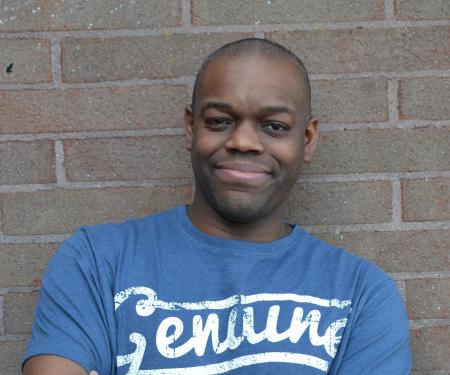
Marvin Thompson High resolutionI’m impressed at the editorial control shown in this collection. I suspect there are many false starts or even other successes lying in Thompson’s files. There is a generosity of creative energy here which one suspects could display itself at much greater length (a novel perhaps?). The concluding sequence of 3 monologues, ‘The Baboon Chronicles’, is a case in point. Thompson creates a dystopian world (not far from our own – or at least Pontnewynydd) in which Black and White live uneasily beside each other but the streets are also occupied by baboons. These creatures are treated with disgust and abuse by the humans. The White characters also seem to abuse the Black people on a reflex with insults like “’boon”. In monologues by Stephen, Sally and Suzi, Thompson does make points about racism, the othering of those perceived as different, injustice and (latterly) police violence but what is more impressive is the empathetic imagination on show in the creation of these characters’ voices. Thompson possesses in abundance Keats’ negative capability and, as much as he shows how the past, racial and cultural upbringing and memories of injustice lays so heavily on individual identity, Road Trip also shows the possibility of imagining into the Other (of listening as all the great jazzers do) which, rather than a retreat behind the Pale, must be the way towards a more just and equitable world.

Looking Beyond Paralysis

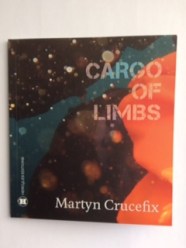
Featured Image -- 14962In lieu of a new blog post, here is a link to the Hercules Editions webpage on which I have formulated a few thoughts about the current lockdown, photography and the (forgotten?) refugee crisis in the Mediterranean. It is a piece in part related to the Hercules publication of my longer poem, Cargo of Limbs.
To read ‘Looking Beyond Paralysis’ go to : https://www.herculeseditions.com/post/looking-beyond-paralysis-by-martyn-crucefix


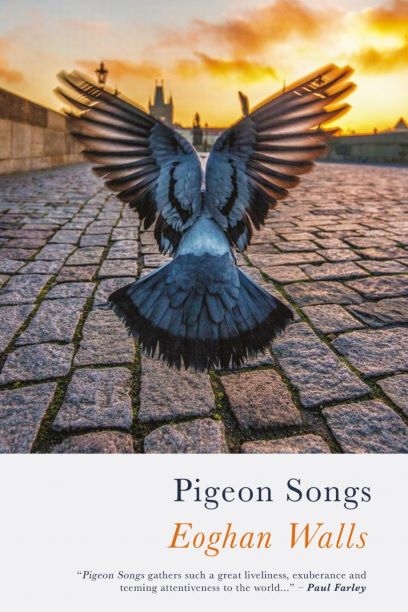
Quickdraw Review – Eoghan Walls’ ‘Pigeon Songs’

Dear Readers,

As I said in my last blog – before we were all locked down – I’ve always enjoyed using this space as an experimental play area, a sand pit in which I can think through ideas about poetry, teaching and translation. In the last couple of years, a lot of this thinking aloud has been done through reviews of new poetry collections. And I have always wanted to give myself (and the book) enough space (usually over 1000 words). But several recent conversations with other writers about how very few poetry books get critical notice these days has persuaded me there is also a place here for shorter reviews – quick drawing in the sense of a rapid sketch of a book, a shooting from the hip. Here’s my second go at this sort of thing.

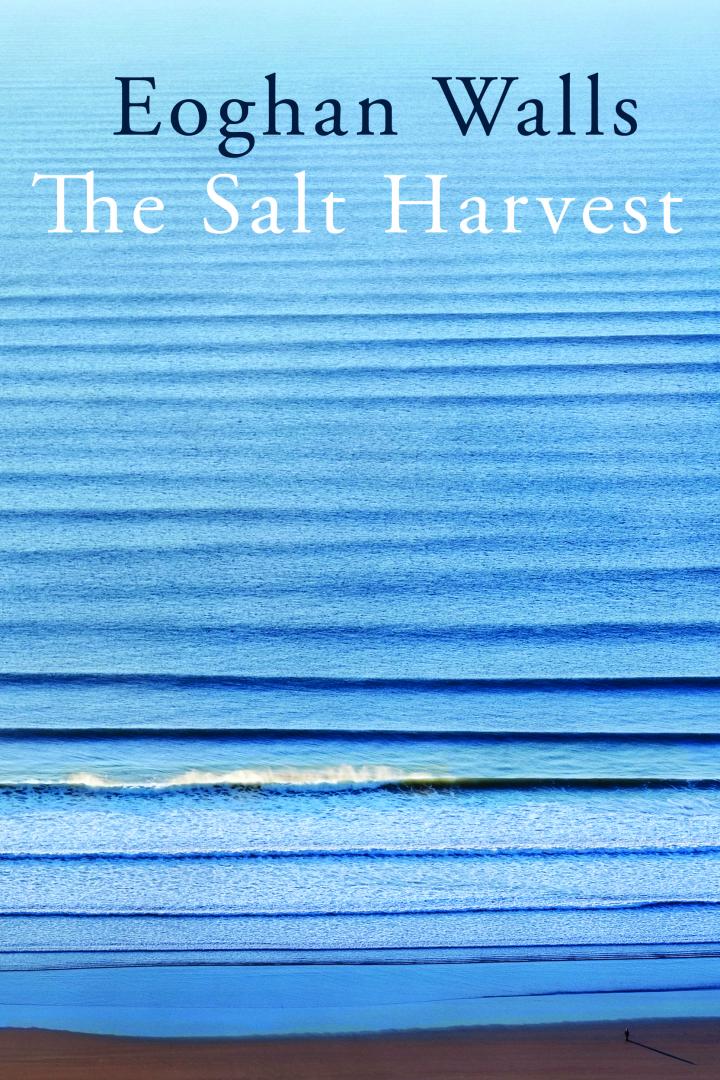
Eoghan Walls, Pigeon Songs (Seren Books, 2019).

Eoghan Walls’ second collection from Seren Books will make you think hard about how poets use rhyme. As in his earlier The Salt Harvest (2011), Walls reaches as it were by default-setting for rhymes, full, half and oblique, in pretty much every poem. Though the overt forms vary – couplets, triplets, quatrains – he favours longish, driven, consonant-heavy lines and the rhythms of the poems are more about the arrival of the rhyme words than anything else. The overall effect for me is rather double-edged. The achieved musicality is more about a sustained ground bass, a pedal note, or drone (I think sometimes of MacNeice’s 1937 poem ‘Bagpipe Music’) than subtle variations in the reader’s anticipation of harmony, counterpoint or disharmony, of the kind of dynamism and flight that rhyme can evoke.

There is instead a sort of digging-in, a very deliberate gaining of traction which is also reflected in a lot of the subject matters. This may be also reflected in Walls’ bird of choice: the humble pigeon, at once capable of flight (and often rapid flight too) but also the ‘rat of the air’, the urban dweller and scavenger. In a parody of Christopher Smart’s eighteenth-century paean to his cat Jeoffrey, Walls’ ‘Jubilate Columbidae’ praises the pigeon’s flight, shit, panic and feeding habits. The subject matter of Pigeon Songs likewise ranges from touching and gentle poems about the poet’s children to far more brutalist pieces on sex and death, a range matched by a characteristic shifting of perspectives from up-close details to observations on a more cosmic scale. ‘The Principles of Collision’ probably suggests what lies behind these techniques in Walls’ mind: “Once there is a collision you can have an event. / Two things bumping is the way change happens”.

Many of the child-focused poems are excellent: father and daughter fascinated and appalled at the relics in a church; the trials (for both parents and child – I remember it well) of swimming lessons in the local pool; the father carrying the child on his shoulders. ‘To Half-Inchling’ is startling in addressing a miscarried child, imagining a world where she might have grown to “[her] full potential”, a world in which it would have been more “legitimate to mourn”. The use of the rhymed sonnet form here feels very apt, the whole carrying a powerful emotional thrust that is often absent elsewhere. And such dark emotions are never far distant. On holiday in Sardinia, father and daughter cook calamari but later the child wakes “screaming about the dead squid, / whether it hurts to be dead, and if she really has to die”. Part of the father’s response is to point to the stars: “I tell her life is massive”. I don’t know how effective a parenting manoeuvre this proved to be, but it reflects a great deal about this collection: the massive scope and range of life is always present and the shifting of perspectives is an instrument used to try to make sense of what happens.

Which also means that thoughts of death are seldom far away. In ‘De Pneuma’, routine jogging leads to thoughts of car accidents or heart failure, the body, damaged irrevocably is brutally evoked: “the whole meat could be cast like a coat in the ditch”. Walls is drawn to such high dramatic stakes. ‘The Law of the Galapagos’ sees the culling of goats on the island from the poor goat’s perspective, bullets whizzing and splintering until the creature’s “jelled electrics go clinically dead”.

There are strong poems about the poet’s mother and father too. The book is interspersed with right-justified ‘pigeon’ poems and other birds and creatures make regular appearances. But – a bit like Wall’s insistence on rhyme which can dull the ear through a collection of over 60 pages – there is something rather willed about the connections this creates as in ‘The Early Days’ which records a relationship’s beginnings in half-rhyming couplets, each of which includes some allusion to bees. So raindrops falling on a shirt are shoe-horned in by being described as “bee-large”. Despite the blunt factuality of a lot of Wall’s lines, there is often also a poetical effortfulness which I do find distracting.

Quickdraw Review – Damian Walford Davies, ‘Docklands’ (Seren)

Dears Readers,

I’ve always enjoyed using this blog as my own experimental play area, a sand pit in which I can think through ideas about poetry, teaching and translation. In the last couple of years, a lot of this thinking aloud has been done through reviews of new poetry collections. And I have always wanted to give myself (and the book) enough space (usually over 1000 words). But several recent conversations with other writers about the very few poetry books that get critical notice these days has persuaded me there is also a place here for shorter reviews – quick drawing in the sense of a rapid sketch of a book, a shooting from the hip. Here’s my first try at this sort of thing.

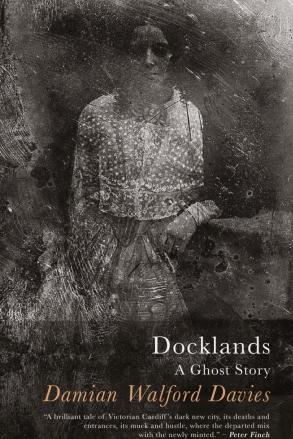
Damian Walford Davies, Docklands: A Ghost Story (Seren Books, 2019).

Docklands-–-Damian-Walford-Davies-1This is Walford Davies’ fourth book from Seren and it is an ambitious project, combining narrative and lyric form (every poem is 16 lines long, in unrhymed couplets, most in four beat lines). It’s also a dramatic monologue, in effect, as the speaker is a thoroughly unpleasant, arrogant, but haunted architect engaged in several large urban projects in Cardiff between the years 1890 and 1982. Talk about the male gaze, this man epitomizes it. He and his wife have recently buried a child lost in stillbirth (“they wrapped it in a pall // not bigger than my handkerchief”) and while she mourns the loss, he gets on with his work and frequents bars and prostitutes in Cardiff’s docklands. The sympathetic reader is probably going to try to read this man’s cruel and dismissive treatment of his wife (and his exploitative relationships with other women) as his own rather twisted way of dealing with grief. But it’s hard to maintain that view, as Walford Davies is often shockingly good at catching his loathsome attitudes, especially towards women: “This quarter grows on me. / In shabby rooms in Stuart Street // my new friend swears // she’ll tackle anything for oranges”.
 The ghost story element arises when the architect starts to see a young girl on the streets of Cardiff. She is initially a haunting – but probably real – presence (perhaps somehow also related to the lost child?) but it eventually emerges that she is “Dead Em Foley”, an abused girl, murdered by her father a few years before. This narrative device yields up brief thrills for the reader, inexplicable sightings, eventually moments of dialogue between the two (it’s not clear if he tries to take the relationship any further). But through the five sections of the book, the architect’s wife seems to surface from her grief, returning to polite society (“Ah, Eleanor! So good to see you // out”) and there are signs of a warming of the marital relationship too. These indications seem to parallel the disappearance of Em Foley’s ghost too, though the architect memorialises her in a statue for a municipal fountain. The man sounds pleased that the local people “came out / to recognise a dead girl risen” when the statue is unveiled though it’s not clear if Walford Davies intends this as a more profound recognition of those marginalised by bourgeois Cardiff or whether it is a more personal and erotic tribute to the girl by the architect.

thWalford Davies, in an end note, talks of the ambiguity of the female figures – wife, prostitutes, dead girl – who do tend to float without clear identity, disembodied, through the text. It adds something to the ghost-like quality of the book, but the loss is any more powerful evocation of them. Also, the choice of brief lyrics to develop what could well have been a novel, gives the reader some powerful moments but few prolonged engagements with any of the characters. And the nature of the central male figure is problematic because of his downright unpleasantness (though, I suppose, Browning managed it in ‘My Last Duchess’) and in 2020 there will be plenty of readers who find such a portrayal an absolute bar to reading. I don’t think Walford Davies ironises and critiques his male figure enough, or clearly enough.