Old Stokes’ Garden Nursery 1970 – 2014

An interruption to blog-casting over the last couple of weeks as I’ve been away from the desk, here and there, partly in Wiltshire visiting my 90-year old parents.

I’ve long understood that one of my triggers as a writer is the simple disparity between ‘then’ and ‘now’. I have grown convinced that an individual’s mental health is partly dependent on the free flow of thoughts and feelings between personal present and past, the integration of personality, a sense of coherence, or organic change, over time. There has been a good deal of research recently on the idea of nostalgia as a healing force (hence some of these dips into autobiographical mode) and I’d like to talk more about that sometime. But for today, while staying in Wiltshire, I came face to face with a pretty powerful example of this disparity between past and present. Here it is:

20150102_125938

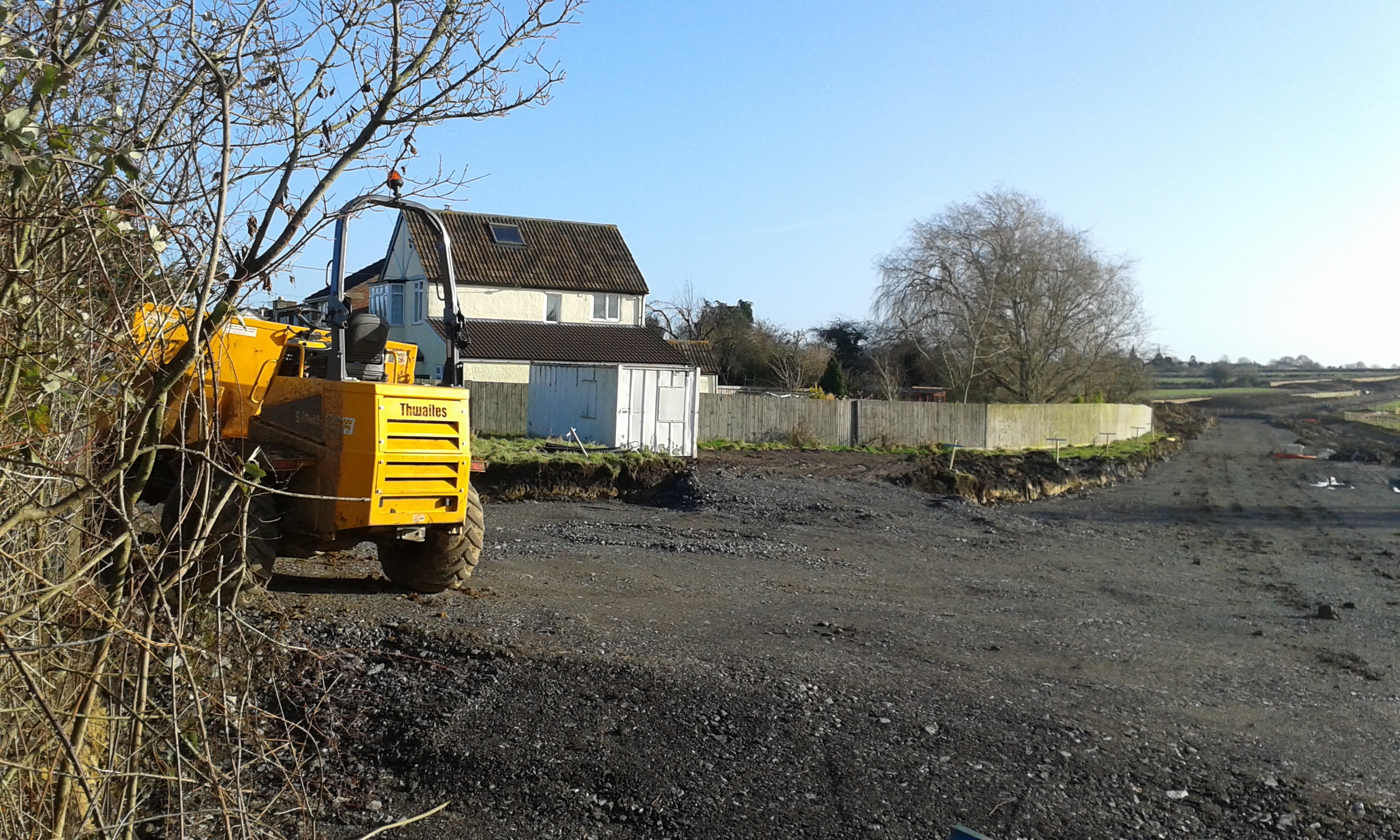
OK – it’s not much to look at, but this is the final route of the Hilperton Relief Road, designed to take traffic away from the village where I grew up in Wiltshire. My father has been praying for this to happen for years, convinced the thundering, articulated transports that pass the house originate solely from ‘the Continent’. It’s true they do have to manoeuvre through the village itself, but the route cuts across green fields just a stone’s throw from the little village church of St Michael and All Angels, fields where I’d mooch about as a kid with friends from the self-build estate of Marshmead.

images

So a personal wound to my memory – but also an ecological blow to the rural area. Within a few years – though the local authority currently denies this – the meadows surrounding this new road will be filled in with houses and the ghastly sprawl of Trowbridge town will engulf another village. More lucrative land for developers is the prime motivation for building the road after all these years. More personally, on the bulldozed soil in the first photograph once stood a few ramshackle buildings, little more than large garden sheds and fogged, filthy-windowed greenhouses. This was the site of Stokes’ Garden Nursery where I worked a few hours a week at the start of the 1970s.

Stokes’ Nursery is on the left at the far end of Horse Road as you head into town. I cycle along there one Sunday and find Old Stokes out in the open, moving up and down the sunlit rows of chrysanthemums, lifting the still-tight flower heads to examine them, pinching off a browned leaf here and there. It appeals to me – the money and the work.

The following Sunday, on my first morning, he musters a smile of sorts in greeting. He is bent with age, rather hump-backed and moves with a limp. His head is small and round, a few wisps of grey hair, and he purses his lips so that in speaking there is a faint lisp. But he doesn’t often speak and I like that.

I begin reliably turning up and taking his cash, at first just Sundays then Saturday mornings as well. I find myself beginning to identify with him in little ways. His wife is invisible. Their detached house is set off to one side of the grounds where he has several glass houses and outdoor growing areas. The house always appears deserted, with the curtains closed for the most part. Nothing moves or changes. No-one sees her. Old Stokes never talks about her. I never ask. She suffers from agoraphobia, or so my Mum tells me.
20150102_125952

One morning, he leads me through the rickety door of the main glasshouse into its humid, stuffy other world, reeking of compost, plant rot, fertilizer, cell division. “Pricking out”, he murmurs and I wonder if I have heard him right. At an earthy metal bench, backed with a window so filthy nothing can be seen but a fuzz of sunlight, we stand side by side and he shows me what to do. The seedlings are new-grown in their first trays and each has to be gently teased out of the loose soil and away from its clinging companions. Then each spindly seedling, green leafed, pale-stemmed, white-rooted, is tucked into a new hole (drilled by the ‘dibber’) in a newly prepared tray. Pricking out is boring and brainless. It’s not something I am unhappy doing, bearing in mind I am getting paid a few shillings – after February 1971, thirty or forty pence – to do so.

But I prefer watering; lugging the python-like, yellow hoses up and down the glass house aisles, pulling the trigger on the hose attachment and spraying water everywhere, dampening the already humid atmosphere. Soon I am promoted to patrolling the rows of vigorous chrysanthemums, lifting the heavy weights of the flower heads, picking out ear-wigs where I find them, dispatching them with a curt rolling of my thumb and finger. Crouching down between the rows, I disappear completely from the view of anybody passing along Horse Road. Crouched there, I am in a manageable jungle, happy to be alone, often bringing my family’s old blue transistor radio with me, listening to Noel Edmonds (from October 1971), his Sunday morning slot from 10-12. His kind of drippy folk-rock is (I’m afraid) what I like to listen to and David Gate’s songs like ‘Diary’ and ‘Baby I’m-a want you’. McCartney’s first solo album is being played. Cat Stevens has released ‘Tea for the Tillerman’ the year before and ‘Teazer and the Firecat’ in the autumn.

imgres

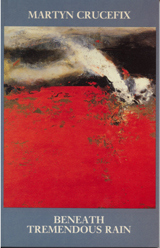
Twenty years later, in my first book from Enitharmon Press, Beneath Tremendous Rain, I published a triptych of poems about Old Stokes, his wife and the boy working for them. Here are the two best ones:

The Nurseryman

See how my wife hasn’t bothered to open

the curtains. It’s three o’clock. She must be bad.

She thinks I don’t know what it costs her

to steal a glance at me outside, to brave

these fifty feet of open space, her weak legs

trembling with terror, sick in her belly,

knotting ever closer round her poor heart . . .

I’ll cut some chrysanthemums to please her.

My flowers always please her.

Years ago she’d tell me how it felt.

She’d say a bulb will sometimes come up blind

no matter how carefully you’ve set it down.

It’s the way of plants. There’s no cure at all.

But it’s not only her. Still poor as Adam,

there’s just one thing I have that’s in demand

and it’s not right that a man who’s spent life

tending soil into flower should gain nothing

but a touch for dressing death in glad rags

with some careful blooms on a wire frame . . .

I’ve found a natural talent for wreathes.

My one extravagance:  that I can charge

higher prices than most and though Christmas

is a boon (when my great medals hang on

many bolted doors), yet it’s the year-round trade

in bereavement that keeps this place afloat.

I’d plans once. A shop, new green-houses, a son.

Now I’m forced to take on a series of young lads

who help me out. They’re all more or less sullen.

This one’s so quiet, although he chats to girls

across the hedge, as they all have done –

all playing the working-man, hands dirtied,

with the jangle of my money in their pockets.

This one trails his radio around all day long

as if he can’t stand the sound of himself.

Doesn’t work hard. See where he goes now,

slipping down beside the sheds. No radio today.

Well, he’s happy enough on one-fifty an hour . . .

I must cut some chrysanthemums to please her.

The Wife

I sit beside my beautiful maidenhair fern.

It likes my darkness, is dank, spreads slowly.

I count my books, silent on their long shelves.

I’m dying of pure old age, not experience.

I was not always so understanding – accusations

and resentment shouted him into the garden.

We have not given each other all we’d hoped.

I name children, true pleasure, company . . .

I’ve felt such horror at what lies beyond

the window, where even clothes on the line,

blown by an uncontrollable wind, cardigans

undone and swept open, slacks kicked wide

are too much to bear. He has devoted himself

too much to the fertility of row upon row

of plants and had less and less for me.

But we’re past the allotment of blame.

For years, he’d bring chrysanthemums

to me and watch like a child while I shook

earwigs in the sink, flushed them out of sight.

An absurd ritual I long for, absurdly,

since it ended these past four or five years

before the hedge was removed to make beds

of carnation. And we’ve no boys now –

as if a supply-line had suddenly gone dry.

Don’t parents have children nowadays?

They all blur into one – that particular one

who left quickly. Why do I think of him?

He’s forgotten me. Does he have a wife?

And a child? I remember descending the stairs,

past the grave-quiet telephone, with a jug

of water in my hand. I thought I heard

one of the cats, opened a sliver of curtain.

I would do this all over again . . .

See the boy slumped against the shed

legs crooked and splayed, one hand flickering

on his belly as if dealing a deck of cards –

but with such unrestrained violence.

He saw me. Gave the look of one who has been

interrupted – annoyance, much more than

the guilt I’d expect. I dropped the curtain,

then wanted to open it again – and it’s that

which fills me now when I think of ‘life’

and then I see myself – the dry, pressed flower

I found once in a borrowed library book,

squeezed out now, frightened of the light.
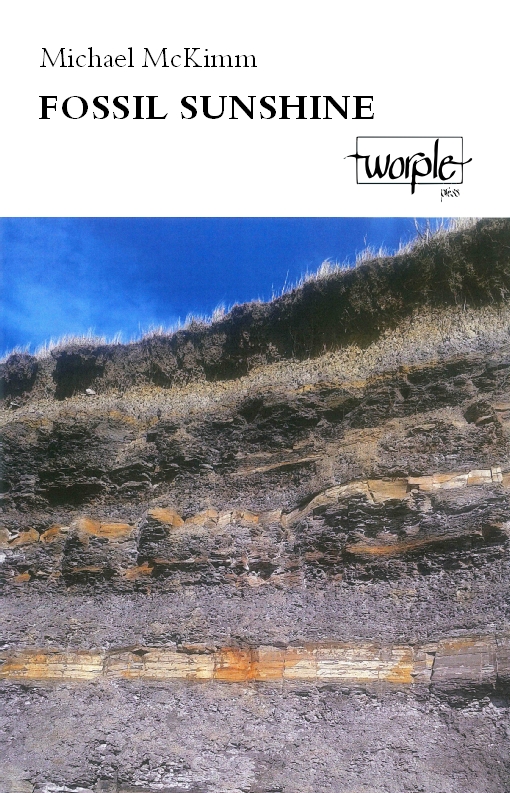
Ecology and Poetry: Review of Michael McKimm’s ‘Fossil Sunshine’

I met Michael McKimm earlier this year – at the Free Verse Poetry Book Fair in September 2014. His chapbook, Fossil Sunshine (Worple Press, 2013) interested me because much has been said in the last few years about how poetry has embraced science. This is one plank of the argument that also declares poetry has embraced popular culture, or the world and language of IT, the law, or maybe banking. Yes, poetry is keen to annex what it can. And I would happily sign up to the general principle that poetry’s health can feasibly be measured by the range of experience it can encompass. In times of feebleness poems are stuntedly concerned with poetic subjects, poetic diction; in periods of strength, there is a great sense of traction and encompassment, that anything will give itself to the poet.

Perhaps we are on the cusp of one of these latter moments; reading Nathan Hamilton’s 2013 Bloodaxe anthology (note the wide embrace of the title) Dear World & Everyone In It you might get that feeling. And guess what: Michael McKimm appears on page 90 and Fossil Sunshine really is differently-angled to most of the collections you’ll have read recently. These poems are the result of a year-long collaboration with earth scientists, in a project funded by Arts Council England. Drawing on fieldwork with geologists, the poems explore the relationships between geology, the oil industry and climate change, and (Worple’s blurb says) they ask what the evidence held in the geological record can teach us. The blurb goes on: “From ice ages to landslides, oil spills to geo-engineering, Fossil Sunshine captures the language of geology, as well as the energy and drive of exploration and discovery”.

Fossil_Sunshine96

Given its subject, the book inevitably has an admonitory tone. But one of the problems with poetry’s annexing more and still more was noted by Keats and his response was to loathe anything poetic that has a palpable, didactic design upon us. Indeed, the poetic and didactic are mutually exclusive for him. Poetry is a realm (perhaps unique) where life’s genuine truth and beauty (simply that it is full of shades and ambiguity) can be expressed and relished without any irritable reaching after clarity and fact. What I like so much about McKimm’s poems is that they would also have pleased Keats on this count. They are vigorous, ambiguous and even visionary. In them we see mankind’s power as much as our malign influence, the frailty of nature as much as its resilience. They want us to think about these issues, but will not do the thinking for us.

‘Tertiary Basalts’ describes its igneous subject as “Crow black, slick as onions, or walk-on-nails / tough”. It’s in part a child’s eye view (“A thick burnt red / running through like a layer of jam”) and the narrator admits that rock like this would give his earlier self “more pictures than the clouds”. But McKimm does not ironise the child’s vision but combines it with an adult understanding of the rock’s creation to make a more rounded celebration of the natural world. ‘Holderness Boulder Clay’ does something similar as it vigorously describes the sea’s biting away at the friable coastal reaches till “a fencepost hang[s] from a whip / of wire, and plastic drainage pipes / [are] like pillarbox guns”. Whatever warnings are here they are buried in the figurative language – the whip, the gun. The poem is a tour de force of minute particulars; I’ve never felt so close to the ebb and flow, the nibbling of erosion, the swirl of “gobstoppers of granite, sandstone, / Norwegian porphyry, carnelian”. Elsewhere (in prose this time), someone called Stuart takes a little hammer to a chunk of Yorkshire chalk and skilfully unearths a fossil sea sponge: “Laosciadia Planus. I weighed it in my hand.” And like a time machine, suddenly Bridlington with its Pitch and Putt course vanishes to be replaced by a vision of the past: “Sea conifers, angiosperms. The whole place electric with reptiles”.

media

Only someone much concerned with the environment could bring the natural world – both present and past – so vividly into poetry. Someone like that could not fail to express concern at our interventions in the world. A scattered sequence of poems, each called ‘Abstract from a Conference’, expresses this concern. The first explains that coal, oil, gas are anciently stored sunshine that we have since “sought with our intelligence / and drive”. Our brilliance has long been to our benefit but . . . “Is it possible, a soft // landing for civilisation? We were smart. / How smart do we now want to be?” The ‘Abstract’ in the title to these poems perhaps permits more didacticism than elsewhere: abstract as summary, abstract as form of language. Yet even here there is an awed sense of ourselves: “Survivalists, stewards of the biosphere, / from nothing we grew”. Where did we go wrong? We “thought of ourselves”. Perhaps little else. And for a while, “where was the harm in that? – / as the mighty river’s arteries flowed past.” ‘Pipeline’ is another sustained performance, a description of the route of a North American oil pipeline. Detail is put to use to suggest both the varieties of landscape it passes through as well as the ingenuity of its builders: “without even a pit stop it’s pierced Manitoba, / steady trajectory, knows where it’s going”.

So McKimm’s images are often carefully laid down, alive, at the borders of ambiguity. Yet the descriptive drive of the book pulls no punches when it comes to the mess we have made of things. Here are “the basics: deforestation, fallow lands, / tilling, terracing, irrigation systems, subsurface // water extraction, mining, transportation systems, / waterway re-plumbing, reservoir interception, // groynes, jetties, seawalls, breakwaters, harbours, / warfare”. Even a small scale ‘Oil Field’, apparently landscaped into a natural environment, is regarded, or rather listened to, with suspicion: “the beam pump’s / gentle purr, like an antique Singer threaded / through with jet, working with a rhythm / you would never think so peaceful or so clean”. At the living room table, my mother would propel an old Singer like this, an image perhaps of technology taken so far, only to be wrenched further still (the thread through this machine not homely cotton, but the more sinister thread of an oil jet).

imgres

Andrew McCulloch’s review in the TLS concluded: “Read these poems!” Penelope Shuttle has written: “The language employed by this poet is powerfully tactile.  These are strong and in every sense grounded poems”. ‘Grounded’ is a worthy pun, of course, as much about McKimm’s language and tone as about his rocky, muddy, sandy subject matter. I’d recommend these poems, for their grit and grain as much as their environmental concerns, for their humble belief in human ingenuity as much as their clear-eyed warning about where it seems to be taking us.

Autonomous Sensory Meridian Response – and Poetry

Something on early morning Radio Four this week sent me hurrying to the files of autobiographical notes I’ve been writing sporadically over the last few years. It was a discussion of an experience I have never heard spoken of, but felt often enough. It has a name these days: Autonomous Sensory Meridian Response: http://www.bbc.co.uk/news/magazine-30412358. I’ll put down my memories as I recall them but also with some of the surrounding context too as that may be relevant to the phenomenon itself:

trowbridge_picF0010

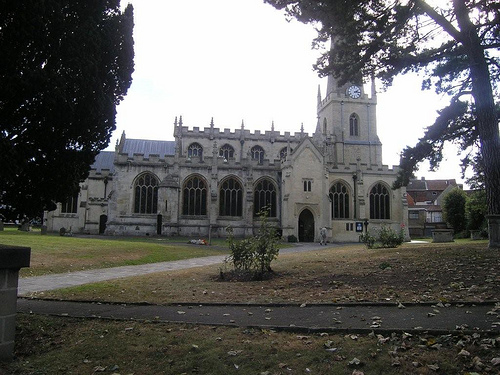
In the 1960s, in my second year at Parochial Junior School (I’m about 9 years old), we crocodile out the front door and occasionally turn right along Church Street towards St James’ Parish Church, Trowbridge (George Crabbe’s last posting). We cross the road for religious services like Easter, Harvest Festival and Christmas. We wheel and snake into the churchyard and follow the tilting, worn flagstone path, passing Thomas Helliker’s casket tomb to the church porch.

3975485172_bc361c22dc

But more usually we turn left along Church Street, passing Shanley’s the barbers and a low butcher’s window where our regimented pairings are disturbed by squeals and extraneous movement, by our fascination with red and pink slabs and cuts of meat, with creamy fat like curds laid out on plastic white trays. Most fascinating and least attractive are the lolling ox tongues, cut at the root, purple, stilled, obscene.

Then we turn left into Duke Street and left again through an almost hidden door that, even then, I would associate with those obscured entrances and exits in children’s stories. Through this door, we traipse down a passage into what we call Emmanuel, a kind of annex with a couple of extra classrooms. I don’t remember any separate play area. It’s in these classrooms that I remember adjusting to new spectacles from Carter and Harding after I had been diagnosed with short sight. I was straining to read the teacher’s scrawl on the blackboard.

Here too I remember the first incidents (though surely these could not have been the first) of a very peculiar sensation. It’s a prickling that runs up my back and shoulders, a sort of shiver moving upwards across my neck into my scalp when a teacher (not my usual one) writes on the blackboard. It’s a ripple of pleasure out of unfamiliarity (or the familiar defamiliarised), a kind of low level erotic shiver I still occasionally feel now when the college cleaner comes into my room – moving books, touching the table and chairs, my familiar items touched by another’s hand. I’ve never heard this described before . . .

Later, back in the main school building, moving to other rooms downstairs aware of girls talking, manoeuvring to walk alongside me, giggles, but I have no recognition of what this means, certainly no idea that it might be exploited. In fact, I don’t recall much sense of my own position in this little closed society at all. It is as if I moved through a mist of my own creating, barely self-aware. But I imagine myself proceeding quietly, studiously mostly, probably a pleasure to teach, though reports are already lamenting how deeply I live in myself. Already teachers are reaching for the old metaphor of the shell, the frustrating creature living within.

Wikipedia describes ASMR as a neologism for a perceptual phenomenon characterized as a distinct, pleasurable tingling sensation in the head, scalp, back, or peripheral regions of the body in response to visual, auditory, tactile, olfactory, or cognitive stimuli. The nature and classification of the ASMR phenomenon is controversial, with strong anecdotal evidence to support the phenomenon but little or no scientific explanation or verified data. http://en.wikipedia.org/wiki/Autonomous_sensory_meridian_response

It has become a recent internet phenomenon. Online discussion groups such as the Society of Sensationalists formed in 2008 on Yahoo! and The Unnamed Feeling blog created in 2010 by Andrew MacMuiris aim to provide a community for learning more about the sensation by sharing ideas and personal experiences. Some earlier names for ASMR in these discussion groups included attention induced head orgasmattention induced euphoria, and attention induced observant euphoria.

Quotation-Emily-Dickinson-poetry-Meetville-Quotes-87875

Inevitably my own thoughts about it revolve around poetry and its effects: the familiar defamiliarised, the frisson of the uncanny, Emily Dickinson talking about poems taking the top of your head off. ASMR seems linked to a particular quality of attention-giving which yields a rippling of pleasure, close to the erotic, but not the same as that. It is powerful yet undramatic; it is most common in quiet moments of observation. It is also in a neutral sense ‘bestial’, an animal shiver, like hackles rising, but not out of anger. It’s surely something reaching far back into our ancient past, linking body and mind, yielding pleasure, rooted in a mode of being predating language and conceptualisation. That interests me. Poetry is language deployed to circumvent the limits of language; these days I take that as a given. Yves Bonnefoy says: “poetry was not made to mean but to restore words to their full intensity, their integral capacity to designate fundamental things in our relationships with ourselves and others, here and now, amid those chances that one should never, as Mallarmé did, dream of abolishing” (2012 PN Review interview with Chris Miller: http://www.pnreview.co.uk/cgi-bin/scribe?item_id=8484). Even if just considered as metaphor, perhaps ASMR is what poetry taps into, invokes, rehearses, re-discovers.

The Launch of ‘Magma’ 60 at LRB bookshop

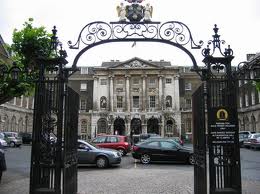
Last Friday night I read briefly (partly from my Worple Press book: https://martyncrucefix.com/publications/a-hatfield-mass/) at the LRB bookshop, 14 Bury Place, London WC1A 2JL (in fact just doors along from Enitharmon Press’ new offices). It was the launch of Magma magazine’s new issue (http://magmapoetry.com/). Magma really has become one of the must-read magazines in UK poetry and the event was one of two national launches (the other is on Thursday 11 December at 7pm at the Lit & Phil, 23 Westgate Rd, Newcastle upon Tyne, NE1 1SE, with guest reader Sean O’Brien). The LRB is a spectacularly good bookshop but you feel acutely the vanishing of bookshops elsewhere – to be surrounded by shelves of ‘proper’ books is a real pleasure, distressingly beginning to take on the quality of a sepia-tinted memory. Yet, as one of the readers commented, this is a dangerous place to visit if you’re not prepared to part with hard cash: so many temptations. It’s also a good place for a reading: chairs from front to back on the ground floor, seating well over 50, and on Friday it was packed.

images

Magma 60 is edited by Rob A. Mackenzie and Tony Williams (one of the good and distinctive things about the magazine is its rolling editorship) and 19 poets were asked to read a couple of poems each, with Kei Miller putting in a longer shift at the end as guest poet. Among others, Peter Daniels’ poems evoked a quiet, desperate sense of things not holding, of wider societal failing (‘you might discover you’re painting the house / while the other side’s on fire’). Jacqueline Saphra remembered being seventeen and then dealing with her own seventeen-year olds, boys and girls, the latter crying from their rooms, ‘Come in, I won’t let you in, Come in’. Michael Henry recalled Finals exams and wanting to write about Brecht, which he does in his poem ‘Agent provocateur’: ‘The Brechtian grape is a dry white grape / and it tastes like the white corpuscles in blood’. Martha Sprackland and Jasmine Simms found common ground and a source of poetry in drifting off in science classes at school (I remember it well).

imgres

John Greening read about visiting the archaeological dig at Sutton Hoo and an intriguing poem about ‘The Battle of Maldon’ which knowingly fails to offer ‘an explanation // of what happens in the end [. . .] about how     whatever it is     was broken’. DA Prince also evoked an earlier age with ‘The bell-makers’ reminding me of sequences from Tarkovsky’s film Andrei Rublev (1966): ‘the brilliant blistering light, / that cataract of blazing air, the stream / of liquid pain’. Karen Leeder presented new translations of German poet, Volker Braun. Braun was writing in part through the upheavals of 1989, exploring the triumph of capitalism: ‘EVERYTHING AND NOTHING / Was it ever really yours? Fuck you, fantasist. / The encore: all that you could never need!’ (http://www.amazon.co.uk/Rubble-Flora-Selected-Seagull-German/dp/0857422189/ref=sr_1_1?s=books&ie=UTF8&qid=1417365225&sr=1-1&keywords=volker+braun).

At the end of the first half, Gwen Adshead, a forensic psychiatrist and psychotherapist who works in secure hospitals, talked about her work and love of Philip Larkin’s poetry and read ‘Talking in Bed’ (one of my own Larkin favourites; see below). Kei Miller’s live delivery illuminates and energises his own words on the page. I’ve written more about his prize-winning The Cartographer Tries to Map a Way to Zion (Carcanet) on this blog (https://martyncrucefix.com/2014/10/22/kei-millers-cartographer-and-friels-translations/). He read several of the Place Name pieces, the poem where the Cartographer asks for directions and gets indirections instead (‘all true’ Kei said), the ‘Hymn to the Birds’ and the 28,000 rubber ducks poem which moves (almost imperceptibly) from children’s bath toys to captives lost overboard on trans-Atlantic passages years ago. Miller finished with his short poem ‘Distance’ which seemed to be something of an answer to Larkin’s poem chosen by Gwen Adshead; here are the two of them. . .

Talking in bed

Talking in bed ought to be easiest,

Lying together there goes back so far,

An emblem of two people being honest.

Yet more and more time passes silently.

Outside, the wind’s incomplete unrest

Builds and disperses clouds in the sky,

And dark towns heap up on the horizon.

None of this cares for us. Nothing shows why

At this unique distance from isolation

It becomes still more difficult to find

Words at once true and kind,

Or not untrue and not unkind.

Distance

Distance is always reduced at night

The drive from Kingston to Montego Bay is not so far

Nor the distance between ourselves and the stars

And at night there is almost nothing between

The things we say, and the things we mean.

Writing poems to the tune of Sibelius (circa 1990)

This has been a very busy week and blogging time has been hard to find. At work we are gathering and discussing plans for the 3000-word A2 essays on T S Eliot, West and Fitzgerald – don’t let anyone give you any nonsense about how easy A levels are! But the other evening was spent at Holy Trinity in Sloane Square (not a usual haunt of mine) at my daughter’s school concert. The final piece they played was Sibelius’ Karelia Suite and it set me thinking about a poetic project I embarked on in the 1980s.

It’s with awed admiration as well as a good deal hilarity that I remember setting out to write a sequence of poems – one each month – based on the 7 symphonies of Sibelius. In my wholly untutored way, what I found in the music was a fluidity of movement – one section seamlessly linked to the next – that I wanted to echo in verse. I failed badly, I think, and perhaps only more recently have I found ways to achieve something like it. I also wanted a diaristic quality to the poems, recording and responding to events as they occurred in my own life through the period set. Perhaps not so sadly, I’m not sure I could now lay my hands on the full typescript. Only one of the ‘symphonies’ survived to be published in my first collection Beneath Tremendous Rain (1990): see https://martyncrucefix.wordpress.com/wp-admin/post.php?post=68&action=edit

btr-cover

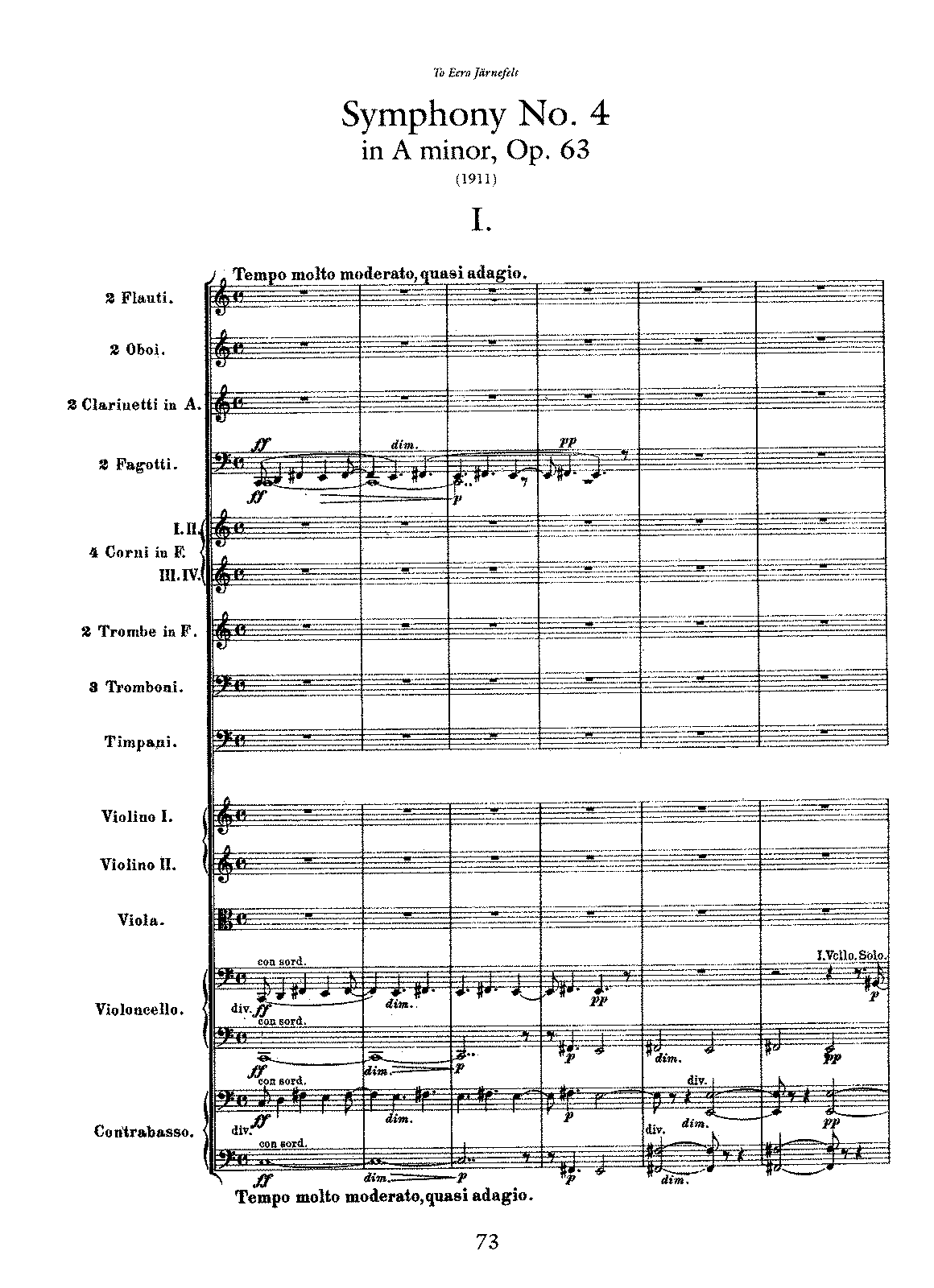
It was the extraordinary Fourth Symphony (1911):  http://en.wikipedia.org/wiki/Symphony_No._4_(Sibelius)

Listen to it here: 

And here’s Wikipedia on it: Many commentators have heard in the symphony evidence of struggle or despair. Harold Truscott writes, “This work … is full of a foreboding which is probably the unconscious result of … the sensing of an atmosphere which was to explode in 1914 into a world war.” Sibelius also had recently endured terrors in his personal life: in 1908, in Berlin, he had a cancerous tumour removed from his throat. Timothy Day writes that “the operation was successful, but he lived for many years in constant fear of the tumour recurring, and from 1908 to 1913 the shadow of death lay over his life.” Other critics have heard bleakness in the work: one early Finnish critic, Elmer Diktonius, dubbed the work the Barkbröd symphony, referring to the famine in the previous century during which starving Scandinavians had had to eat bark bread to survive.

2b400e06440de71fa24ce91517d87a561ffb25a6

The seven months were (I think) through the winter; so the fourth was probably linked with December and my partner had had a scare with a breast lump. The music’s dark, stark, exploratory qualities all found correlatives in what was going on around me. References to Betjeman and Larkin in section 1, allude to that BBC Monitor programme (https://www.youtube.com/watch?v=BTdDS05x6d0) which I had been using to teach Larkin’s The Whitsun Weddings around the same time. My partner’s grandparents had also recently died. In section 3, the reference to Ainola is to Sibelius’s beloved retreat beside Lake Tuusula in Finland, named after his wife: http://en.wikipedia.org/wiki/Ainola

So – in lieu of anything more fresh, here’s the 4 part poem – with all its faults – long, thin and astringent . . .

Barkbrod

1.

It is the rawness

of my own throat

that forebodes.

So little else has

been altered, yet

everything’s realigned

as if from without.

My peasant-thoughts

mix bitter bark

with dull flour

to eke life out.

They recognise

the violent-sudden

clarification

of their strength,

its cropped boundary.

Breath shortens.

Sweet Betjeman,

black-eyed Larkin:

these two dead men

alive on a screen

to discuss poetry,

the intimacies

of panic and pain.

And a malignancy

in the songbird’s

weak throat severs

the transference

from hand to hand.

The grandparents

of my young bride

pass along these

pallid, frost-blue

roses on bone-china.

Whether shelved or

to hand, they chill me:

their stark reaction

to our modish

wisdom, our shallow

unquestionable

optimism . . .

Take up the bitterness

of this bread,

brush every crumb

towards the sink

and douse your plate.

Baptise and scour

each blue-ice rose.

2.

The first peculiarities of this year’s

snowlight break up the bedroom glass.

There’s a crackle of news in the kitchen.

All is well. Yet the difficulty is this:

to convey information which is true,

while avoiding fear which is unnecessary,

yet maintain hope which is essential.

In a mess of sensual pleasure and death

it rose obediently to hand as I soaped

my breasts, in my left, quite low down.

Unmistakable. How long have I nursed

this featureless clod over my heart?

Water gems and drains from my feet.

The radio chuckles at my trembling.

3.

What remains to be done

but retire into some

Ainola of the mind,

glimpsed down a track

of snow, pine, a refuge

still as a blown flute.

I wake at night thirsty

and from the window,

across tangled gardens,

a yellow light burns,

sketching the grid

of dull-bricked walls.

But I sink to sleep

still unresolved

whether this midnight’s

oil is some illness,

vocation, compassion,

or the absentmindedness

we fearfully deny.

Your thinned hair now

combed neatly back

behind fleshy ears.

And how is the throat?

Nervy artist’s hands

flutter about the chin.

Those pale eyes of yours

gaze hard at my room,

at this ceiling’s rose

across my shoulders.

I guess you’re slow to be

moved, yet once begun

a relentless nature

like time or weather.

It’s a gaze to outlast

any physique: this slip

of a thing, your strength.

4.

This clod in my breast

wears a tight

black neckerchief.


It must be evil

that I think of it

as a child . . .


Dark nights running

I dream of him

rapping gently


against the door

 – our bedroom door –

till I answer.

So she speaks

as we journey south

out of London,

through the suburbs’

assembled brambled

tussocky plots,

bright washing

collecting the sun

as it drops

long shadows

to meet us both

on the allotments.

Vitality sickens me

with fierce envy

and the why? why?

Across the carriage

a brash student

absently rearranges

his big thighs.

Two powerful hands

murder the fruit

he cleanly eats.

I let him in

over the threshold.

These backs of houses

so ordinary

that reassurance

ought to flow

from them. Yet

we both move here

as an illustration,

a shadow,

quite regardless:

of how a charming boy

will come to the door

from without,

how you bend to him

just as he’s hulking

through transformation

into a killer

in our bedroom

who bolts you upright,

over and over,

screaming unrestrained

beside me.

Acker Bilk’s ‘Stranger on the Shore’ (October 1961)

With the death of Acker Bilk yesterday, the following post suggested itself. A West Country boy like myself (‘Acker’ is Somerset slang for mate) he died in Bath Royal United Hospital, these days an unfortunate, frequent haunt of my parents. Bernard Stanley Bilk was born in Pensford, Somerset, in January, 1929, the son of a Methodist lay preacher. His mother played the organ in the local chapel. After a spell working at the Wills tobacco factory in Bristol, he went off to do his National Service in Egypt where he learned to play the clarinet and formed a band known as the Original Egyptian Stompers.

imgres

He always retained his affection for Pensford and never lost his Somerset accent. At one time he employed a road manager, Alan Cutler, known as Adge, who would go on to find success with scrumpy and western outfit, The Wurzels. 

The brief passage that follows is another section from sketchy autobiographical writings hidden away in my files. My earlier post (https://martyncrucefix.com/2014/10/14/telstar-august-1962/)

came from the same source. Perhaps there will be more . . .

Play this as you read:

https://www.youtube.com/watch?v=VsKTG30g3mw

On the radio a breathy clarinet with a lilting gentle melody climbing up and then immediately returning to a low sustained note like a human voice, deep, quivering, the melody so pure and simple there should be words. I try to put words to it.

That reedy, woody voice backed by a simple marking of time on string bass. As it rises a second time, thin violins accompany it as the notes leap up an octave to something like a cry set loose in a vast open space and the whole is bathed in the solitary, brooding mood that the title of the record hits with precision.

An unknown figure exactly as we all are unknown figures, this time walking beside the ocean, the flat, undramatic waters rolling in, chilled and colourless but for the warm tones of the artist himself, humble and quiet, even at the last hesitating before a defiant little spirited flurry and only then sidling away, the music diminishing into a flat horizon, no big finish.

It is nothing like you might have expected when you see the player on the grey television screen, the gimmicky bowler hat, silk waistcoat and jazzer’s goatie beard.

Dad explains the idea of a ‘gimmick’ to me: something you might adopt – an object, a voice, a look – in order to draw attention to yourself. Why would you do that?

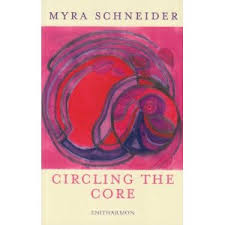
Myra Schneider’s ‘Circling the Core’ (2008)

Myra Schneider is an old friend from the North London circuit, a tireless worker for poetry and a poet of significance who has also proselytised for the therapeutic impact of creativity in relation to both physical and mental illness. She has a new book out and I saw her read from it recently. I have yet to commit my thoughts on her new work to the keyboard and screen but I thought – by way of an appetiser – this might be an opportune moment to post the review I wrote of her previous collection Circling the Core (Enitharmon Press, 2008)

Also, here is a recent interview with Myra conducted by Maitreyabandhu at Poetry East:

https://www.youtube.com/watch?v=5WfI7Bx_7Uo

The interview begins with Maitreyabandhu asking why she selected ‘The Windhover’ by Gerard Manley Hopkins and ‘Morning Song’ by Sylvia Plath, as two poems which had influenced her. He then asks about her life and the different areas of her poetry and writing.

Reading Myra Schneider’s Circling the Core, there are many things that remind me of Edward Thomas’ review of Frost’s North of Boston (1914). Thomas praises his American friend’s poems because they lack “the exaggeration of rhetoric”. He applauds his language as “free from the poetical words and forms” that harmed so much poetry in the early twentieth century. Frost avoids both “old fashioned pomp and sweetness” as well as its opposite – “discord and fuss”. The revolution that Thomas and Frost were pursuing is the recurring one of poetry’s return to common speech and this has long been one of the chief pleasures of Schneider’s work too. Since the mid-1980s, she also has pursued a voice that refuses to flaunt gratuitous formal innovation, nor does she play fast and loose with syntax, lexicon or typography. It might appear that Schneider prioritises a truth to things more than words and her conclusion is an admirable and observant humility before the world, its creatures, domestic objects, weather and places – though her attentiveness to detail is not the whole story.

images

Schneider herself also refers directly to Thomas’ example in taking the epigraph to this collection from his poem ‘The Glory’. Thomas hopes to find this glory in the “beauty of the morning”, the natural world, the acutely observed details of the “pale dust pitted with small dark drops”. Yet what draws him remains elusive and he concludes that he may have to remain “content with discontent” since he “cannot bite the day to the core”. Schneider’s poems echo many of these concerns but – despite the tentativeness of this collection’s title – she tends to be more optimistic about the search for the “core”. The book opens with a marvellous response to a Barbara Hepworth sculpture which, after tracing the curves and lines of the material reality, worms its way to a centre, a still point, “jewel, kernel, womb, unshielded self, / a promise of continuance. / We lay hands on profound silence.”

In Schneider’s work the kernel usually is that “unshielded self”, the authenticity of lived experience rather than the accumulations that can obscure and denature it. In ‘The Mnajdra Temples’, the narrator is interested in and even impressed by information associated with these Maltese Neolithic ruins, but it is “what the humans who worshipped here thought” that is the real goal: “how the human brain began making / complex plans, conceiving deities, temples”. Elsewhere, a viaduct cannot be encompassed by its dictionary definitions; it is always more than its “bare facts” (‘Images’). Similarly, personal identity is more than the sum of its material parts: a bowl created by the poet’s mother-in-law “goes deep but not deep enough to hold everything / she lost” (‘Larder’) and on a return visit to childhood landscapes in search of self, it is ironically “when I leave / the present peels away” (‘Going Back’). A poem like ‘Goulash’ is so good just because it manages to capture this core of subjectivity, the thinking mind in process as it moves from the details of cookery, to love, to landscape, to a contemplation of “darkness” which lies ambivalently at the heart of things, triumphantly ending with a celebration of friendship which is not overwhelmed by placing it beside the longer historical perspectives of the jewellery of the Sutton Hoo burial ship.

Schneider’s interest in psychological truth leads inevitably to the use of dream materials as the starting point for a number of these poems. ‘Naming It’ opens dramatically with collapsing buildings but, even after the dust settles, the “panic is all in the rubble”. The possibility of escape from such chaos is intuited when the narrator discovers a blue pool and realises it is “crucial to capture the exact word for its colour”. As well as suggesting the essential nature of her work as a whole, this also confirms that Schneider’s vision encompasses a good deal of darkness. Though there are occasions when grief, pain, injustice are countered by little more than wishful thinking, as in ‘Journey’ with its repeated “What I want . . .”, a poem like ‘Nothing’ confronts it head on in the “vacant cradle /  of delicate bones that was once a bird’s head”, an object that seems to be demanding to know how to “face nothing”. Something of a reply to this is given at the end of the sequence ‘Larder’, with its finely judged observation, defining life itself as “a series of small makings / to stack up in larders against death”.

It is less of a leap than one might imagine from this to Schneider’s re-working of the myth of Orpheus, an ambitious poem that stands up impressively alongside Carol Ann Duffy’s ‘Eurydice’. In ‘Eurydice’s Version’, Orpheus is a stunningly beautiful but selfish, spoilt man-child, beside whom his wife is initially no more than an “adjunct”. His music is presented as a compulsion she would like to resist. Her association with the shepherd, Aristaeus, is reinterpreted as a relationship in which her “actual” self is recognised in contrast to Orpheus’ chauvinistic, insistent projection of “bedmaker, breadmaker, whore / babymaker, milk-breast, childminder, nurse, / comforter, slave, mystic maiden, high goddess, // muse”. But Aristaeus’ interest in her true “core” frightens Eurydice away, allowing the snake bite that kills her to be regarded as “punishment” for turning her back on such a moment of possible honesty. Orpheus’s turning is likewise re-interpreted as a relief for Eurydice, who prefers the darkness of the underworld where, she says, “I’ve learnt to listen, to think, / for myself and when I speak I am heard” – in other words, where she lives with the virtue of truth to her inner self which this collection explores.

At one point, Eurydice wishes Nature might resist Orpheus’ melodic pushiness too and Schneider is admirably unapologetic about the importance of the natural world in the process of salving some of the harm she encounters. Those who have read her poetry in the past will recognise features of locality such as Pymmes Brook, the Piccadilly line viaduct to Arnos Grove, Arnos Park itself in north London and Schneider’s south-facing garden overlooking it. She has worked this landscape into almost mythic significance, its details able to reflect and evoke the inner experiences with which she is really concerned as in ‘Seeing the Kingfisher’, the ‘Drought’ sequence and ‘Skywards’. A little more exotically, ‘The Oyster Shell’ explores again this poet’s characteristic movement inward, a movement for which “prayer” offers no help but which, pursued with the kind of vigorous honesty that fills this book, can reach an almost Blakean intensity:

I retreat to the cradle of this shell,

creep in, unclothe my self, tread

on milkwhite and mother-of-pearl,

follow faint pools of sandgold

to the sullen indigo sea lying below

the hinge as its core. Here, I let go.

Myra’s new collection is called The Door to Colour:

http://www.enitharmon.co.uk/pages/store/products/ec_view.asp?PID=645

Schneider_Colour_PRF1 (2)

Telstar (August 1962)

Play this while you read ….

Listening to the radio on an August Sunday evening, while Mum irons in the sitting room. She is waiting for Sing Something Simple, its opening verse in sickly sweet harmony: ‘Sing something simple/ As cares go by / Sing something simple / Just you and I’.

We seem to be grouped round, very close, all five of us. I am sitting high up to the wooden bureau which then stood on the back wall. Perhaps I am drawing or writing and the blue and white radio with its plastic round dial and padded plastic blue back is standing on top. Before Mum’s programme comes on, we catch the end of another, hear a record being played. This music begins like some mistake, crackling and buzzing as if the clumsy tuning dial on the radio has been nudged but eventually and incongruously a tambourine or hi-hat is tapping somewhere, electric guitars are labouring up a scale to a climax and the main tune begins to a galloping drum beat, instantly hummable on guitar and electric organ: da-da dah, da-di-da-di-da-dah.

Dad is trying to explain that the opening buzzing and hissing really is a satellite relay tuning in and I believe it – maybe he does too – and my thoughts are off into the air as the melody repeats itself, urging upwards in later sections which twangle in a more unearthly fashion and – despite a horrible earthen, earth-bound lurch to a higher key later – the climactic growling male voice – ah-ah-ahh, ah-ah-ah-ah-ah-ahh – sends me away into a faux modern state of mind.

I’m not sure I am envisaging anything you’d call space – its blackness, cold and starry – but something far looser, more ill-defined, one place sending messages across distance to another; long empty spaces, but spaces more my familiars.

The clouds moving in a procession across the big sky to the northwest of our red-roofed house. The width of the darkened fields opposite the house. The canal’s black water. In places, the ripple of stars.

Marxian glory days

The number of Marxian ideas and expressions I have forgotten since reading him at university is perhaps something not decently, publicly admissible. But one idea has stayed with me, become something of a talisman of a personal rather than political kind. In The German Ideology (1845) he declares that in the well-governed society, in a communist society, where nobody has one exclusive sphere of activity but each can become accomplished in any branch he wishes, society regulates the general production and thus makes it possible for me to do one thing today and another tomorrow, to hunt in the morning, fish in the afternoon, rear cattle in the evening, criticise after dinner, just as I have a mind, without ever becoming hunter, fisherman, herdsman or critic. 

Karl Marx - portrait

The well-governed life continues to prove as elusive as the well-governed society, of course, but a day of real/metaphorical hunting, fishing, rearing and criticising has remained an ideal of contentment. It was Henry de Montherlant (http://en.wikipedia.org/wiki/Henry_de_Montherlant) whose aphorism suggested that ‘happiness writes white (“Le bonheur écrit à l’encre blanche sur des pages blanches.” (Don Juan II, IV, 1048)) but in recording something like the perfect day I am running the greater risk of the plush, crushed raspberry colourings of complacency and self-satisfaction. But perhaps describing one’s own pleasure can be a political act.

My daughter has to be dropped off at 7am at school. Elevated to the dizzying heights of Year 7 prefect she is off to Wiltshire to accompany the ‘new kids’ on some bonding, outward-bound sessions. This leaves me near Hampstead Heath and time to jog/walk my way round it in the early morning with just dog-walkers and others getting the sluggish blood moving. Back at home with that serotonin high, paradoxically both both pumped-up and emptied-ready-to-be-filled, I work through some drafts of my current project, a version of  Daodejing. As a writer, I came to the Daodejing after translating the German poetry of Rainer Maria Rilke. Perhaps more importantly, it was as a long-standing teacher that I read Laozi’s 81 ‘chapters’. There are colourful myths about their origins, but they were probably a series of orally transmitted seed verses compiled as far back as the 7th century BCE by many Chinese hands, an aide memoire, certainly an aid to teaching.

imgres

The Dao or Way is not an individual entity, still less anything divine. It is a mode of being, all encompassing, a phenomenal, existential primacy, perhaps akin to the Western idea of original chaos. The text emphasises its feminine characteristics. It can be viewed from spiritual, epistemological, educational, political or environmental perspectives, though none of these exhausts its true nature. The poems enthusiastically accept that their profound and urgent messages are inevitably compromised by the need to express them in language, hence demanding a variety of technical manoeuvres – they stay light on their feet.

Into college for the afternoon, interviewing students, mostly about mistakes, choices, salvage operations possible for them after GCSE, AS or A2 exams. But also some preparation for the new course we have devised for A2 Coursework combining Fitzgerald’s The Great Gatsby, T S Eliot’s Prufrock and Other Observations, and Nathanael West’s The Day of the Locust. W H Auden’s brief discussion of West in The Dyer’s Hand is interesting, suggesting he portrays a Kingdom of Hell, ruled by the Father of Wishes. I read it, knowing I’m having a good day, some wishes coming true in contrast to West’s visions of West Coast apocalypse. Right here, right now, a brief, various-faceted jewel in the setting of others of more usual monotony. (More of West in another blog perhaps).

Driving home – the rolling dice of Henley’s Corner – I listen to the opening bars of tonight’s Prom: Brahm’s Third Symphony. By 9.30pm I’m walking into the Albert Hall myself for the late-night show: Beethoven’s Missa Solemnis. Didn’t I promise a good day? It’s John Eliot Gardiner and the Monteverdi Choir and Orchestre Révolutionnaire et Romantique  (http://www.bbc.co.uk/programmes/b04f8vlq). Gardiner says in a brief introductory interview that Beethoven’s unconventional Mass often skims more traditional moments of the text but is ‘marvellous’ on the ineffability of the Godhead, the humbleness of mankind and I’m in the mood to hear it…

Driving back up the Edgware Road, the sky is big as it seldom seems in London. The lights are bright in the Lebanese restaurants, my eyesight – usually close to blurry – seeming sharp tonight, hyperreal, resonant, woven still with the threads of earlier hours. Tomorrow, will be a thinner diet, more monotone, less good.

My brief career in medicine

At this time of year, students are leaping into the air with their exam results. Forty years ago to the day, a spotty, be-feathered upper sixth form student in Wiltshire was about to embark on a life-changing 9 months. The following account appeared in the magazine Agenda recently – here it’s dedicated to all those students making wrong decisions, wishing them the possibility of recovering from them.

August and as I walked from the red-roofed, Wiltshire house where I’d lived most of my 18 years, I had a vision of a child, a baby staring up at me, waiting to be lifted. It lasted only a few seconds but I returned to the house happier and resolved that I could not turn my back on such an opportunity.

I’d applied to study Medicine for reasons I cannot now recover and may not have been clear at the time. I’d had a series of interviews during the Upper Sixth year but only rejections had come back though I was held on a short list at Guys in London. But I’d already been struggling to focus on Biology, Chemistry and Physics, preferring to pick up the blonde, resonant body of my guitar and play Neil Young, Bowie, Lindisfarne, Don Maclean’s American Pie. I had written a few poems but from an almost complete ignorance of poetry. Shakespeare and Chaucer at O-level really was about it. My models were exclusively song lyrics which I listened to intensely, following them on the lyric sheets inside the unfolding gates of album covers. My head was unhelpfully full of phrases from Van der Graaf Generator’s Peter Hammill and Jon Anderson of Yes – one a merchant of genuine, existential, gothic angst, the other a lyrical fantasist. Then Guys rang to offer me a reserve place to start in ten days time. Then came the vision of the child.

imgres*
Because of the lateness of the arrangements in getting to London, I lodged in a room in Eltham Park and commuted into London Bridge. The city I’d been parachuted into was in the midst of the Provisional IRA bombing campaign. The medical school worked us hard though I never found it easy, or easy to devote myself to it. Within a week or so, we filed into the long upper room overlooking the inner quad. The windows down one side were filled with pallid light, a cloud-light flooding in from the London morning. We had watched a film which included queasy moments of blades easing through human skin though even as I watched, it struck me as less informative, more likely to be readying us for the shock of encountering our first lifeless body.

His head was to the pale light of the morning. His feet were dry and yellowy and up-turned from the horizontal table where he lay. Though he’d once been human, he hardly seemed to be any longer. His skin was tough and thick-seeming, exactly like leather. The mound of a belly rose and fell to his groin dusted with greying pubic hair, a shrivelled prick and half-hidden balls. His legs ran on, thin and bony at the knee down to the up-turned toes. We all avoided looking at his face.

I wish I could remember who made the first cut. One of us must have done: into the leathery skin above the sternum. The blade needed pressing firmly and the upper layers peeled open a bit like a zip fastener, down towards the abdomen. We did not give him a name though we turned up to visit him every week for the rest of term. But then, he wasn’t ours alone. As we gradually opened up thorax and abdomen, arms and legs, students in the year above us were coming at other times and we’d arrive to find his skull opened, his cheeks slipping down his face, his eyes suddenly gaping and exposed to the light that greyed and wizened as the winter term progressed.
*
By November, I’d already bolted back to Wiltshire a couple of times and instead of medical text books, I’d started reading Hardy, Lawrence and H.E. Bates. In a poignant reminder of happier times, the school asked me to choose my books for a prize-giving at Christmas. On a trip to Bath, I bought Graham Greene’s The End of the Affair, Leonard Cohen’s Beautiful Losers and Lawrence’s England, My England. In Trowbridge, I scoured the second-hand bookshelves of Newbury’s, a bric-a-brac shop long since demolished and one morning I found a copy of George Eliot’s Silas Marner and a book called The Manifold and the One by Agnes Arber. I knew nothing of the latter but must have been attracted to the philosophical sounding title. In my growing tribulations at Guys, I was becoming deep. The questions I seemed to ask myself more and more had no easy answers and I had a notion this was called philosophy.

.imgres

The Arber book was a wide-ranging and syncretic survey, drawing on literary, scientific, religious, mystical and philosophical traditions, in pursuit of the experience which Arber defines as “that direct and unmediated contemplation which is characterised by a peculiarly intense awareness of a Whole as the Unity of all things”. Amidst the dissections, test tubes, bunsens, the red- and blue-dyed lung trees and chemical equations with which I uneasily engaged back in Southwark, I found consolation in Arber’s idea that life is an imperfect struggle. In those winter months, failing to work hard enough or get a firm footing in the bewildering city, I did not read passages about the “inevitable appearance of the awry and the fragmentary which we isolate in our minds” in a very philosophical fashion. Rather this was my daily diet, strap-hanging on a delayed train into London Bridge, sneaking into emergency exits to catch the second half of Diana Rigg in Pygmalion on St Martin’s Lane, trudging up a drizzly Charing Cross Road to buy sheet music I could not afford, drinking with others in The Bunch of Grapes on St Thomas Street, complaining how much work I had yet to do.

Already letters to old school friends were raising the prospect of leaving medical school. When Arber wrote of the limited and artificial confinement of conventional thought (“a hard and fast orthodox system of logical regulations – many of which resemble the rules of a complicated game and have little concern with the attainment of truth”) I felt she was talking of my current studies. I had developed an attraction to the esoteric – it made me feel more justifiably the outsider that I felt myself to be – and I got untold pleasure from hearing that masters of Zen Buddhism might declare to my lecturers, “Supreme Enlightenment goes beyond the narrow range of intellection – Cease from measuring heaven with a tiny piece of reed”.
*
But work piled up rapidly in the new term and after renewed attempts to devote myself to it, still the old patterns of neglect and procrastination returned. Even though there were months left before I managed to act on my desire to leave Guys, to beat a retreat from the big city, to set a new and more deliberate course, still the length of remembered time now seems short. After Lawrence’s Apocalypse and Sartre’s The Age of Reason, I raced through Cohen’s Beautiful Losers, bewildered by its episodic narrative, its explicit sexuality. It was Arber’s utterly different book that haunted me. One evening, staring out at Eltham, I wrote: “Down in the street / the puddles turn to raging light / night-time folds away the day / packing up the sun. Turning / through the broken stars, over, under / the chosen Far, making for homeward”. I listened to Radio Caroline in the evenings when I’d managed – not always and increasingly less often – a couple of hours of legitimate work.

Then travelling blearily east from London Bridge, I forgot to grab my briefcase before stepping down onto the platform. It was a self-inflicted injury but had little real influence on the string of failures I achieved in the final exams. On another day – this was my nineteenth birthday – Margaret Thatcher defeated Ted Heath for the Conservative leadership. One day – it was a Friday – a train from Drayton Park failed to stop at Moorgate, overshooting the platform into a dead-end tunnel at 8.46 in the morning. As I walked gloomily from London Bridge through the black, wrought-iron gates of Guys, forty-three people were killed.

imgres

One morning three months later, I found myself sitting in the room in Crookston Road, the noise of the busy A2 a distant growling. I stared at my packed bags and felt calm if utterly becalmed. One day, months later again – this was now the end of a second strangely untethered summer – the thought had begun to form that I might see myself as a student of philosophy, maybe work harder at the writing.