Poetry at Palmers Green: live review (April 2016)

When reviewing my first year of blogging on poetry and related matters (see blogI said I wanted to review more live events. That has not happened really but this week I wanted to rectify that to some degree.

Last Saturday I drove a few miles north to Palmers Green, best known to the poetry world of course, as the home ground of Stevie Smith who moved there when she was three years old. She was educated at Palmers Green High School and North London Collegiate School for Girls and lived in the area until her death in 1971. I first became aware of the current poetry activity in the area a few years ago when I went to readings at the bookshop in the High Street run by Joanna Cameron.
images
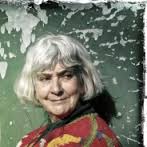
Stevie Smith in the park in Palmers Green

But in 2006 the Palmers Green Bookshop was forced to close, the lease was sold on and I think it was an opticians that opened in its place. Since then a number of local poets and enthusiasts have been keeping poetry alive with 6 monthly poetry readings at Stevie’s church, St John’s, N13 4AL. The readings take place in the Parish Centre adjoining the church and are always friendly and well-programmed evenings. I’d recommend them if you’re in the area (Contacts: Katherine Gallagher  or Myra Schneider and on Facebook).
images

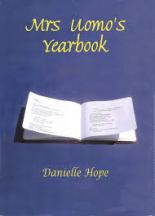
The evening was introduced with clarity and authority by Lynda How and readings took place as the April evening sun set outside. The Parish Centre looks at first a little soulless but with its shades-of-yellow decor, surprisingly tasteful lighting and pitched wedding-cake-white roof it is actually a venue which has a good acoustic and a disarming and warm atmosphere. The first reader was Danielle Hope, whose new book is Mrs Uomo’s Yearbook (Rockingham Press, 2015) from which she read the entertaining and instantly recognisable out-of-season seaside resort description  ’Llandudno Winter’. Recognisable to most of the audience it seemed and as I spent a couple of years in digs in Morecambe I knew the “please-remove-wet-shoes-at-door / heating-on-from-seven-to-eight / no-radiator-in-bar / low-watt-lamps” guesthouse. Her translations from the Italian are also impressive (Montale’s ‘Eastbourne’) and the Mrs Uomo poems manage to combine humour and acute observation with a more serious satirical edge. Mrs Uomo teaches her cat economics at one point but more poignantly is left awaiting an operation having “improved against [the NHS] recently refreshed thresholds”. Hope works as a doctor in London and knows what she is talking about here and her poems are always a pleasure to listen to delivered in a colloquial, un-stylised fashion.

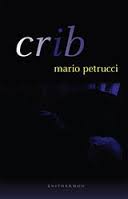
In contrast, Mario Petrucci read slowly and deliberately from crib (Enitharmon Press, 2014) which is a selection from the 111 poems he wrote during the first year of his son’s life (Mario was kind enough to allude to my own efforts in this topic area (see A Madder Ghost)). Petrucci’s work (especially in recent years) is much concerned with language as an object/medium in itself (hence his delivery). He spoke about his interest in the “deckle edge” of language where it begins to fade and dissolve and on the page he accentuates the thingi-ness of words with mostly very short lines, unpredictable line breaks, sometimes dividing words across line breaks.
imgres

The cover image of crib is of a child sleeping in almost pitch darkness – a metaphor Petrucci suggested for the way language itself struggles to communicate, picking from the mass of experience a highlight here or there. This from ‘i fish’:


in dark

with dark

as spool &


mark him

sparely

move


as if

i sought

magnified


on glass slide

that form
 

imgres

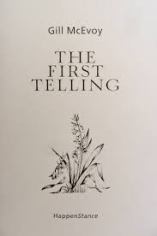
Gill McEvoy’s most recent pamphlet The First Telling (HappenStance, 2014) won the Michael Marks award in 2014. McEvoy’s delivery is rather more actor-ish, her voice taking on the inflections and tones of the character felt to be speaking the poems themselves. I’m never wholly convinced this is the way I (personally) want to hear poems read (I’m even more uneasy about poets who have learned texts in order to ‘act them out’). But McEvoy’s work – especially in The First Telling, which deals with rape and its aftermath – is easily powerful enough to overcome any misgivings I might have had. Her poems are often brief and delicate and disturbing:


I touch the cigarette


to my arm.

Here.

And here.


I can’t talk about it.


I could touch this fuse

to my chair.

I could watch it catch.

I could watch it flame

to roaring fury.


Counterpointing such troubling pieces, McEvoy scatters even briefer poems on birds which comment obliquely on the human narrative. Petrucci had earlier commented on the importance of the silence after a poem has been read aloud and in the intervals between many of these poems – at least while the evening light held out beyond the windows – I could hear the occasional twitter and cheep of birds in the churchyard grounds. A rather lovely accompaniment.

After the interval there were 8 floor readers. The quality of the work was high (not always the case where venues welcome floor readers) but I was struck by the number of people reading from electronic devices – phones and iPads. Of the main readers several read from their books (traditional) others from folders where the poems seemed to be printed and ordered for the occasion (the well-prepared; the short sighted). I can see the latter becoming more likely in relation to my own eye-sight but I have to say I prefer to see poets read from their books (assuming the work is published) and I can’t help think that the sight of the book cover waving around up there does something for after-reading sales too.
imgres

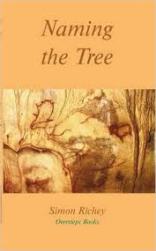
Simon Richey read from his first book, Naming the Tree from Oversteps Books. I’m ashamed to say I know little of his work (though he later confessed to me that he has hardly ever attended a poetry workshop, so perhaps he has just not been very visible on the ‘circuit’). I thought his work was very interesting indeed, sharing something of Petrucci’s concerns with language but also developing threads of thought and emotional responses alongside.


Somewhere
the meaning of a word,


before it becomes a word,
waits in the silence. It is as if


it has come as far as it can go
without being uttered. In a moment


it will change from one thing
into another, or its meaning


will tremble into a word,
into something barely familiar,


finding itself spoken,
finding itself understood.


Several of the pieces were prose poems – one a series of sections, called ‘The Darkness’, about the night-wanderings of cats as well as about the night-wanderings of their owner’s mind.
imgres

The final reader was Mo Gallacio whose marvellously rich reading voice (she is a trained actress) leant itself to both Scots and English verse, triumphantly avoiding that actor-voice that seems either to value the rotund vowels and the crisply planted consonants over and above the emotional tides of a piece of writing, or to emote all over the poetic text so heavily that the language and form of the poem is swamped and made unhearable. ‘Purple Iris’ is an especially moving poem about the incurable illness of a neighbour. Gallacio’s own struggles with cancer form the basis for a number of poems; in one she asks the nurse how she will feel after surgery – the nurse’s reply: like you’ve been stabbed! Gallacio’s evident love of and attentiveness to flowers and plants echoed McEvoy’s acutely observed birds and the evening ended with a celebratory bunch of brightly trumpeting daffodils (no more than £1 from Tescos) suggesting – with a nod to the Edward Thomas of ‘March’ perhaps – that Spring is most definitely HERE.

imgres

Two Great Days at StAnza Poetry

Writing is always a rough translation from wordlessness into words – Charles Simic

I arrived at about 8pm on the Friday evening. Leuchars station is not close to St Andrews itself and (it made me feel at home) there were roadworks disrupting the usual route so instead of 5 miles it was a 10 mile trip. Actually, it was dark and I had no idea where I was so I’m just quoting the chatty taxi driver here – who also lamented the decline in business in recent years. Lack of local money generally he said and the changing habits of students who go out less, pre-drink more and choose to stumble home rather than call his cab. We waited a few minutes for Pascale Petit’s train to arrive. She’d been travelling for 12 hours (from Cornwall) which made my 5 hour train ride feel like nothing much. Unpacking, I reflected north is a very long way north.

imgres

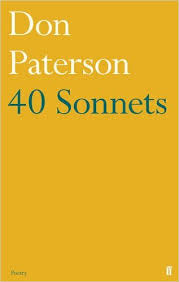
I was staying at the Greyfriars Hotel but walked up to the Byre Theatre on Abbey Street, the main Festival venue. The headline reading for the evening was Lemn Sissay (who I’d just missed) followed by Don Paterson. I arrived at the interval and the talk at the bar was of a local heckler interrupting Sissay. I never got to hear how he dealt with it but it seemed to say something about the tone of this festival that there was as much talk about inclusion as there was annoyance at the interruption. The auditorium was sold out (typical of this StAnza while I was there – you needed to book your event fast). I had no ticket but Jim Carruth took me to the studio theatre to a live relay of what remained of the event. Paterson read mostly from 40 Sonnets including ‘Here’, ‘Wave’, ‘A Powercut’, ‘Little Aster’ and the curiously moving death-of-a-dog poem ‘Mercies’. He also read aphorisms from an iPad and I remember ‘Poetry is not a vocation but a diagnosis’. And (one for his students, he said) ‘If a poem is read slowly enough we begin to hear things – which – are – not – there’.

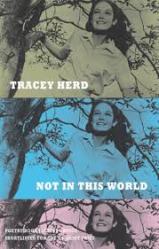
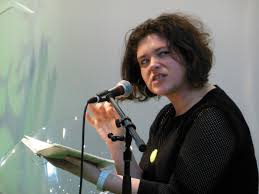
I was woken by seagulls in the grey dawn and through a gap in the Greyfriars curtains I could make out a CCTV camera on its right-angled gantry across the road, white and intent and about the size of a large gull. Perhaps I was dreaming. I was reading next morning with Tracey Herd in St John’s Undercroft, a long brick-arched room, with a great acoustic and atmospherically lit. Andrew Jackson generously introduced us and I read most of my A Hatfield Mass sequence which I think of as celebratory poetry about nature, perception, growing up/older, the body. Tracey’s book Not In This World was a PBS Choice and shortlisted for the TS Eliot Prize this year and is her first collection for 14 years. She did not read those poems about film stars or racehorses for which she’s justly renowned but powerful, recent poems of loss: “Somewhere, someone much loved is leaving”.

images

I was also reading in the afternoon at a ‘Past and Present’ event – where poets talk on writers from the past. This was the first occasion (in the Council Chamber of St Andrews’ Town Hall – where marriages are performed we were told) at which I could read some of my new, just-off-the-press versions of the Daodejing. Pascale Petit was also appearing and she talked about her enthusiasm for Tomas Transtromer, in particular the way in which his poems often use an aerial perspective; from his first published poem: “Waking up is a parachute jump from dreams”. I’m sure she said she’d consulted a Swedish friend who said his surname meant something like crane-over-water – ornithological crane obviously.

imgres

Later in the afternoon, at the Parliament Hall, Fiona Benson and Andrew McMillan read. Benson was nervous in front of the large crowd (and who can blame her) but she was soon absorbed in the poetry itself and her demeanour was not at odds with the work. Sections of ‘Love-Letter to Vincent’ (Van Gogh) were read with great intensity. Other poems of pregnancy, miscarriage, birth and motherhood were more moving and (as Dave Coates has suggested) her book’s up-beat title, Bright Travellers, misleads. The contrast with McMillan was not to either poet’s detriment. I reviewed physical on this blog back in July 2015 and his (in various senses) naked poems, even when sad, manage to stir great pleasure in the audience. In person, he adds to this a wise-cracking, witty style of introduction and between-poem chat. Given his marvellous success this year I wasn’t sure why he wanted to discuss some of the negative criticisms he’s had but even that does not prevent me wanting to use that old Hollywood term ‘star’ in listening to McMillan perform.

images
Nora Gomringer

It was another sell-out in the Byre Theatre on Saturday evening with an event indicative of the Director, Eleanor Livingstone’s innovative approach to programming (and part of the German poetry emphasis to this year). Nora Gomringer performed work (with percussionist Philipp Scholz) which reminded me at moments of Laurie Anderson, at others of the much-missed Bob Cobbing (who I saw read/sing in London in the 1980s), at all times evoking a jazz-like improvised feel. Quite brilliant. Jo Shapcott had the tricky job of following this and chose to read a number of ‘The Roses’ poems from Tender Taxes, her responses to Rilke’s poems in French. These are a bit delicate and brief to come over very strongly in a live reading and other new poems on pain (but without mentioning the word) I found not easy to appreciate. But the brilliant prose poem ‘Scorpion’, the touching ‘Somewhat Unravelled’ and the finisher, ‘Piss Flower’ ended the evening in style.

imgres

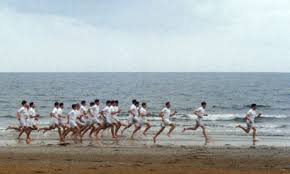
I had a train to catch next day but managed to get to stride along the Chariots of Fire beach early in the morning plus take a peek at St Andrews Old Course before the Poetry Breakfast discussion on translation. Diplomatically and informally chaired by Annie Rutherford, the theme emerged that we ought to think more loosely, more liberally about the idea of translation.  Aurelia Maurin suggested we should think of it more  as we do cover versions of songs. Claudia Daventry opened the field up by quoting Charles Simic’s idea that all poems are translations from silence. Nora Gomringer remembered a professor urging her to find ‘the game’ of any poem she intended to translate not merely to work line by line. She’d been asked to translate Yoko Ono’s poems into German but felt unable to and the importance of the rightness of a translator to a source text was demonstrated when, on another occasion, she’d translated from Russian (I think) and had actually been spat at by a disapproving reader. I was struck – as before – by what powerful emotions the idea of translation stirs up, involved as it is with ideas of truth, honesty and fidelity. I especially liked Daniela Seel’s take on the process, stressing the almost chance meeting of suitable translator with appropriate source text and the way in which the linguistic and emotional ‘body’ of the translator (his/her resources) need to be matched to the varied demands of the source text.

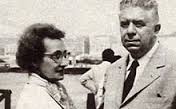
But I had to catch my train and, though exhausted, I spent some of the six hours back re-reading Montale’s loving lament and memorial to his wife, Drusilla Tanzi, here translated by G. Singh:

With my arm in yours I have descended at least a million stairs,

And now that you aren’t here, a void opens at each step.

Even so our long journey has been brief.

Mine continues still [. . . ]

url
Montale and Drusilla

‘The Bell Jar’, Lakes, Doors and Identity

I’ve had a major dose of the flu recently and have been too busy catching up with teaching and marking missed to devote much thought to blogging. So please forgive this brief and slightly self-absorbed effort. Talking about my own poetry is not really what I want to do too much of here. Nevertheless . . .

I gave a reading a couple of weeks ago in which the main focus was the idea of identity. It has been on my mind since and this week we have been looking at Sylvia Plath’s fictional self, Esther Greenwood. She is seen struggling in 1953 to appreciate she ought to be “the envy of thousands of other college girls . . . all over America”. She has won the opportunity of working for the summer as what we might now call an intern at a leading New York women’s magazine. In one of those flashes of figurative language that marks Plath the poet-novelist, Esther confesses she ought be “steering New York like her own private car”. Instead: “I wasn’t steering anything, not even myself”.

images

Esther’s ensuing breakdown – closely following Plath’s own –  can be interpreted as her searching for a clearer sense of her own identity as she ponders and then rejects role models offered by Doreen (the wild girl), Betsy (the traditional), Joan (the lesbian), Cee Jay (the older career woman) and her own mother (hard-working single parent with no prospects). If we can manage to ignore the subsequently brilliant then tragic ten years of Plath’s own life after 1953, The Bell Jar, her only-completed novel, ends on an upward trajectory. Esther is re-born in the end: “patched, retreaded and approved for the road”. She finds a more sure sense of herself. As she waits for her release from the psychiatric ward she listens to her own heart beating: “I am, I am, I am”.

To borrow from Wikipedia, identity is defined as the distinctive characteristic belonging to any given individual or shared by all members of a particular social category or group. Identity, then, is a label. However, the formation of one’s identity occurs through one’s identifications with significant others (primarily with parents and other individuals during one’s life and also with identifiable groups). These others may be benign – such that one aspires to their characteristics, values and beliefs (a process of idealistic-identification), or malign – when one wishes to dissociate from their characteristics (a defensive contra-identification).

url

Plath’s Esther Greenwood seems initially to have lost or never really determined or had no faith in her identity though I suspect this is a common enough feeling among adolescents. In retrospect this seems to be the point of one of the poems I read (first published in Hurt (2010)). It features a bunch of adolescents walking in Cumbria, one of their number too pre-occupied with fretting about a fading relationship. ‘Riders on the Storm’, the song by The Doors which they choose to put on the pub juke box, operates as a sort of mock-heroic image which the main character signally fails to live up to. Heroes know who they are; he does not. The point seems to be that the pain caused by the dissolving of the fledgling relationship is an early opportunity, perhaps, to define himself a little more clearly.


Riders on the storm


With no schedule to drive us,

we wait for rain to stop beside Ullswater’s


southern lip, for the landlord of The White Lion

to determine when it’s time to open.


Ducking through the door, Helen, Clive, Steve,

each a few weeks shy of university,


and I’m there too, heart awash

with absence, her love letters at looked-for drops,


the girl I feel leaving gradually

as the tedious route past Thirlmere to Catstye.


But it’s OK for a while – passing midday snug

in a deserted pub


while outside the downpour gurgles, begins to blur

and double with the torrential roar


of the juke-box: The Doors the only thing

we key in, its electric piano’s limpid fingering


like the give and tender recoil of water,

the lugubrious voice . . . Fifteen years later,


at his paint-spattered Pere-Lachaise stone,

I remember that wretched lunchtime


under the wettest rain in England,

when I was too ill-formed to understand.


I barely displaced a drop of local weather,

could only conceive of myself as either


a body slumped beside a dry stone wall

or drenched and raging on the dramatic fell


on the path to Ambleside bus station,

its oily tarmac smoking under black rain,


her blonde voice fluent on the phone:

‘You hear me?’ I could not even hear my own.

images

A Great Alteration in My Sensations

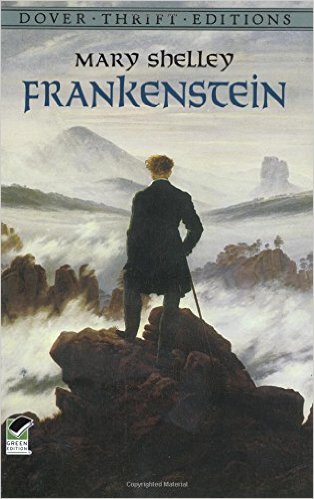
I was again visiting my mother in Bath Royal United Hospital at the weekend. She has fallen and broken her right hip at home but is making a good recovery so far (see earlier blog). The hip operation has caused thankfully few problems or pains. She was showing off the scar which looks like something Victor Frankenstein might have managed – a raw purple wound from waist to half way down her thigh it seemed. A closed up gash, sewn together at intervals like the mouthful of grinning teeth in a Halloween pumpkin.

frankenstein

It really did make me think of Mary Shelley’s novel but in particular of one of my favourite passages in which the newly created Creature stumbles into the world, his senses ill-tuned, untuned, his mind void of language or any categorising facility. He sees a blur which only slowly becomes a recognizable world. And to be brutally honest, it was also in thinking of my father that this passage came to mind. I have written a little about his growing forgetfulness in this blog (see earlier blog). With his wife’s absence for almost 3 weeks now, his confusion becomes ever more obvious.

How strange that two related phenomena have such opposite effects. I love Shelley’s version of the first few years of a child’s perception because of its freshness and original immediacy of observation, to a great extent freed from the categories of language and preconception. But once we have grown used to such enabling props and supporting structures, the loss of them yields not freshness at all but absolute panic, fear, anger and bewilderment. I wondered whether playing over Shelley’s words (in edited form) and then systematically reversing them would evoke something of both states at either end of a life. The result, in the form of a specular poem, is given below, and I hope is an equivocal sort of success perhaps  . . .


A Great Alteration in My Sensations

after Mary Shelley’s Frankenstein


It is with considerable difficulty that I remember the original era of my being

all the events of that period appear confused and indistinct

I saw, felt, heard, and smelt at the same time

and it was, indeed, a long time

between the operations of my various senses

light pressed upon my nerves so that I was obliged to shut my eyes

darkness then came over me and troubled me, but hardly had I felt this when

light poured in upon me

a great alteration in my sensations

dark and opaque bodies surrounded me

the light became more and more oppressive

I sought a place

I felt cold also and half frightened

I knew and could distinguish nothing

I gazed with a kind of wonder

innumerable sounds

on all sides various scents

a pleasant sound, which often saluted my ears, proceeded from the throats of little winged animals

the boundaries of the radiant roof of light which canopied me

the uncouth and inarticulate sounds which broke from me frightened me

when I was oppressed by cold I found a fire

I thrust my hand into the live embers, but quickly drew it out again

how strange, I thought, that the same cause should produce such opposite effects


how strange, I thought, that the same cause should produce such opposite effects

I thrust my hand into the live embers, but quickly drew it out again

when I was oppressed by cold I found a fire

the uncouth and inarticulate sounds which broke from me frightened me

the boundaries of the radiant roof of light which canopied me

a pleasant sound, which often saluted my ears, proceeded from the throats of little winged animals

on all sides various scents

innumerable sounds

I gazed with a kind of wonder

I knew and could distinguish nothing

I felt cold also and half frightened

I sought a place

the light became more and more oppressive

dark and opaque bodies surrounded me

a great alteration in my sensations

light poured in upon me

darkness then came over me and troubled me but hardly had I felt this when

light pressed upon my nerves so that I was obliged to shut my eyes

between the operations of my various senses

and it was, indeed, a long time

I saw, felt, heard, and smelt at the same time

all the events of that period appear confused and indistinct

it is with considerable difficulty that I remember the original era of my being

51Ww0FqYJDL._SX312_BO1,204,203,200_


Let Me Murmur a Few Spells for My Mother

I have spent these last several days in Wiltshire as my mother has had a fall and broken her hip. Dad is not able to look after himself around the house so we are trying to patch things as best we can for a couple of weeks. She says her feet got muddled as she turned from the microwave and went down hard on one side. The ambulance (from Bath, in these days of centralised medical care) took an appalling 2 hours to reach her. She seems pretty well considering she’s in her 90s but now the ward has been closed to all visitors due to an outbreak of Novovirus in the hospital. I have an atavistic sense that muttering a few spells about her, in trying to describe her in younger more vigorous days might help her recovery (and it sort of helps me too).

*

I am lifted then strapped into the child’s seat on the rear carrier of Mum’s bike. I remember the simple folding mechanism: the two sides inwards, then the back-rest folding forwards on top. She opens it and settles me in while the bike leans in the Passage (the covered pathway along one side of the house, outside the back door). Then I am wheeled out, up the front garden path, a little bump up the step onto the public path, now right and out to the main road. My limbs vividly remember the sense of her scooting for a few feet, gathering speed, then a more violent wobble to either side as she kicks off, begins to balance, threading her right leg through the bike frame onto the peddle. Steadying now, speeding up, the sense of her wide hips beginning to roll there before my face as we start to bowl along, lean into the left hand corner into Horse Road, heading for Trowbridge.

deaf32a26d5d3e990b449191ed45572e

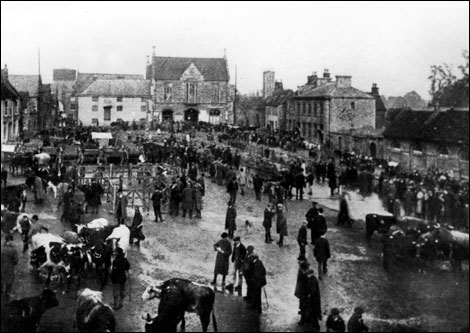
Perhaps we go to the old market hall. I have the sensation of progressing through it, through the high wrought-iron ribbed roof of the echoing hall with stalls of all kinds around. Then Mum and I emerge into sunlight out of the rear door which overlooks the old cattle market which is suddenly right there, spread out beneath us. There are steps down to the lower level; all the sounds of animals and people welling up from below. It seems a huge and dizzying prospect, an image of a far wider and utterly unmanageable society to a child unused to such things.

2880e0c5de74d08e6997f318b59d48eae3a495cf

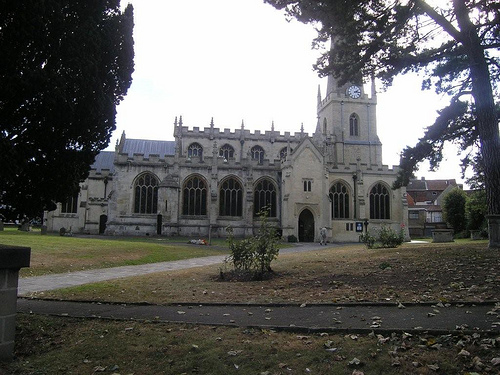
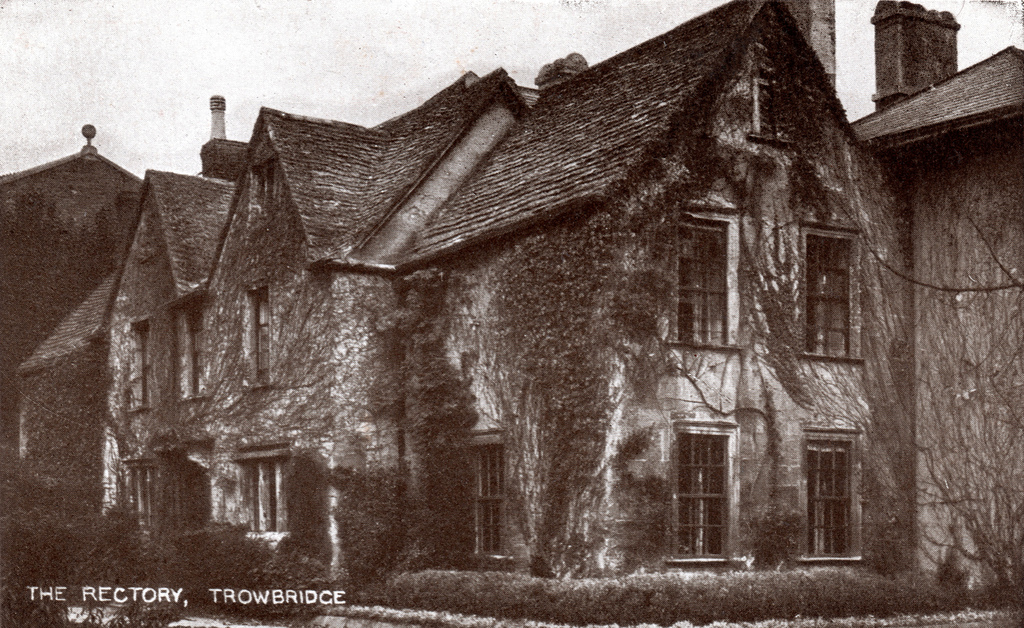
I am moving or more likely being moved in a push chair or (again) on the back seat of Mum’s bike, in through the rectory gate that stands at the corner of Church Street, across from the main gate of St James’ Parish Church. Little more than a sensation of broad lawns with a grand old house beyond them and in the foreground a gathering of people – women mostly, with their high voices – around trestle tables at some sort of sale, perhaps cakes. Perhaps it has been organised by the Young Wives group that meets in the strange narrow gothic building – accessed by a worn flight of steps – across the road.

3975485172_bc361c22dc

The Young Wives is more of a play group really. We go there each week and probably I have been there today but now I am being taken to the rectory, though whether we are going to buy or to help behind the stalls I don’t know. This is where the poet George Crabbe lived the last 18 years of his life as parish vicar, inspired to write whilst sitting under the mulberry tree in these rectory grounds. In one of the town’s earlier, spasmodic efforts at self-harm, the building was summarily demolished in 1964, only a year or two after this memory of the broad lawns of Crabbe’s old house.

8741286739_7da097588a_b

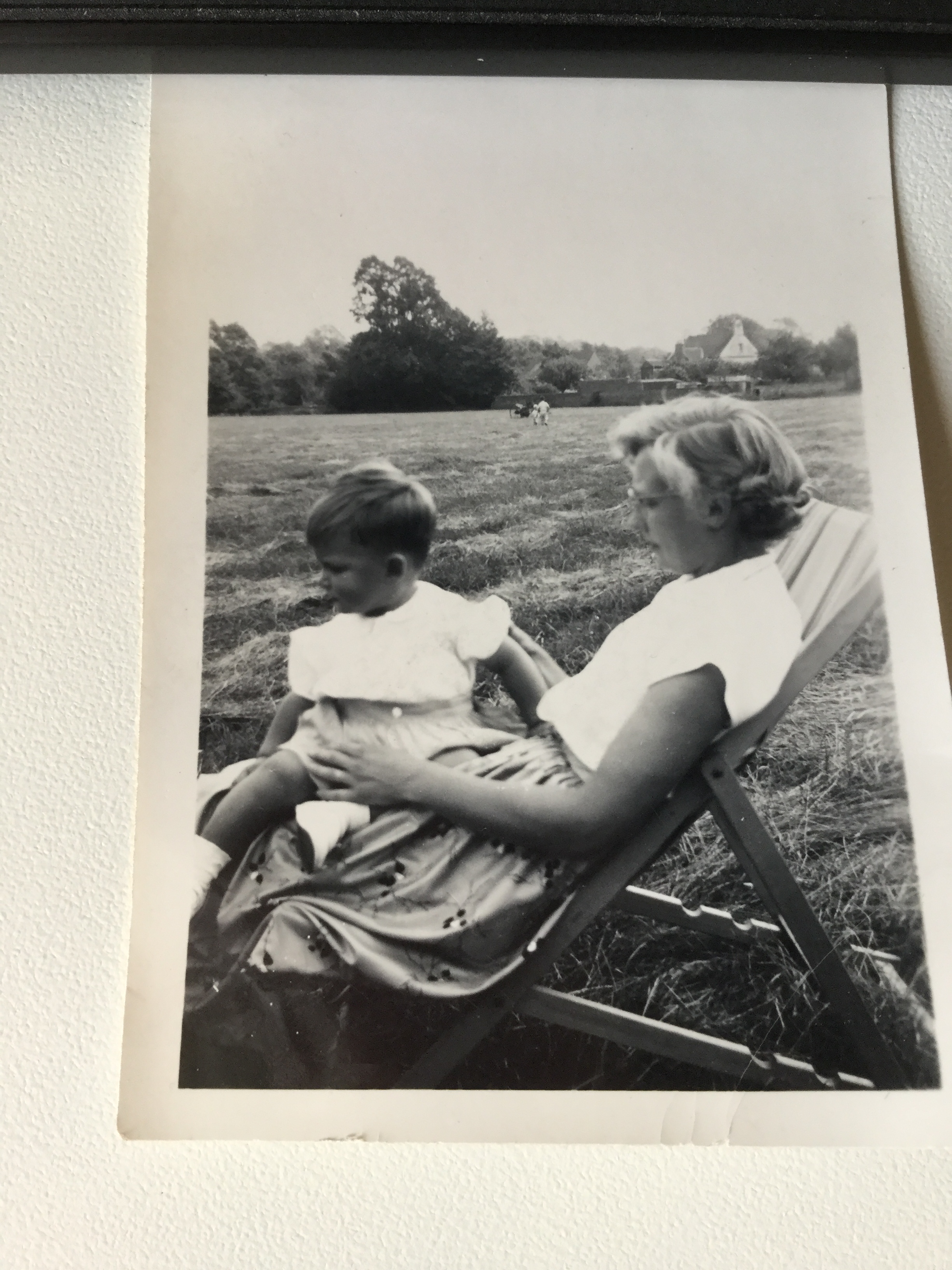
There is a photograph of her around the same time. We must have walked across the main road, down the lane to Oatley’s farm and then on to where the Kennet and Avon canal crosses the flat landscape. Dad has carried a deck chair or perhaps two and set it down, rakishly on the lowest rung for his wife who reclines in her white blouse and flowered skirt. A grassy field stretches into the distance – the shape of a cow, the field edged by darker trees, a brick wall and the whitewashed gable end of a house.

*

The sky is white so there is really no distinction between the upper part of the picture and the thick white border of the print. I am on her lap. Her right hand is at my back, her left reaching towards me as I seem to be twisting away to look at something out of view. Her gaze is fixed on me, mine is fixed elsewhere. Perhaps Andrew is running too far off. Or a bee is buzzing too close in what must be the summer heat. My 1960s children’s top seems the same pure white as hers but in the instant of the shutter falling all my energies are directed beyond the invisible white frame.

Me and Mum

There is knocking at the back door and Mum moves hurriedly, perhaps glancing a moment into the mirror on her way to open it. A figure blocks the light, wearing a brown overall or a working coat of some kind, over his right arm a huge wicker basket. Over his other shoulder, a worn leather money bag is slung. In the basket are loaves and rolls of all sorts. On a different day, a small grocer’s van is pulling up, its rear doors open and the smell of earthy potatoes spills out to where I stand, knuckles pressed to Mum’s skirt. Onions are like dusky suns, cabbages dripping with moisture and in the winter there are brussel sprouts, mushrooms still wrapped in the cold dark in which they grew. Other afternoons, a honking from the main road and the same flurry from Mum which – in hindsight – has something of a woman preparing to meet a lover about it. The callers are always men, punctuating her long days at home with the children, bringing gossip, simple treats, decisions to be made and a little flirting, merely oiling the wheels of commerce.

Grocery_van_in_Windmill_Road_1952.CNTHH.S371

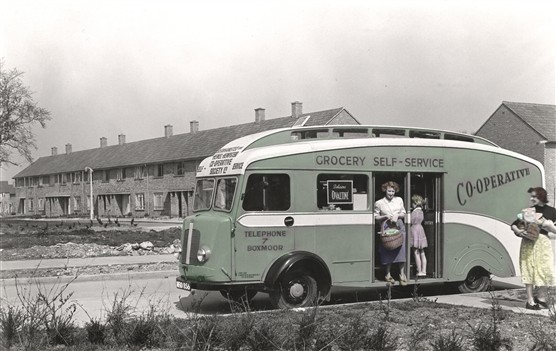
Tuesday it’s the Co-op van stopping right outside our house. A folding step or two up into the back of the van, a high counter flap, an array of colours I can barely see. This must also have been the van that brought the pink paraffin for the living-room heater that clanked resonantly when moved and emitted a harsh warmth and oily fumes when lit. More on my diminutive level, the paraffin for sale flowed from a large container into a can Mum brought with her from the outhouse – a pink ribbon twisting and glinting like pop, its acrid smell the only sign of its poisonous combustibility.

*

Her calm rooted in humility – despite her evident brains and the few brief opportunities to exercise them. Her fear of upsetting the balance of a greater world. Her reluctance, as she will often express it while we are children, of ‘saying boo to a goose’. Shy certainly – but her social background was always part of that baggage. Extraordinary that this worked in partnership with his restive nature. That in part due to the pressures of disappointed expectations. Yet also driven by his reluctance to remain too long in one place, to forestall unwelcome thoughts, questions that might slow the skittering across the surface of himself from one completed DIY job to the next.

*

And now without her presence and without the holdfast of his own memory he skitters more and more out of control. All families nurture and elaborate their own particular myths for the hard times ahead.

Douglas Dunn’s ‘Terry Street’ and Thoughts of 1969

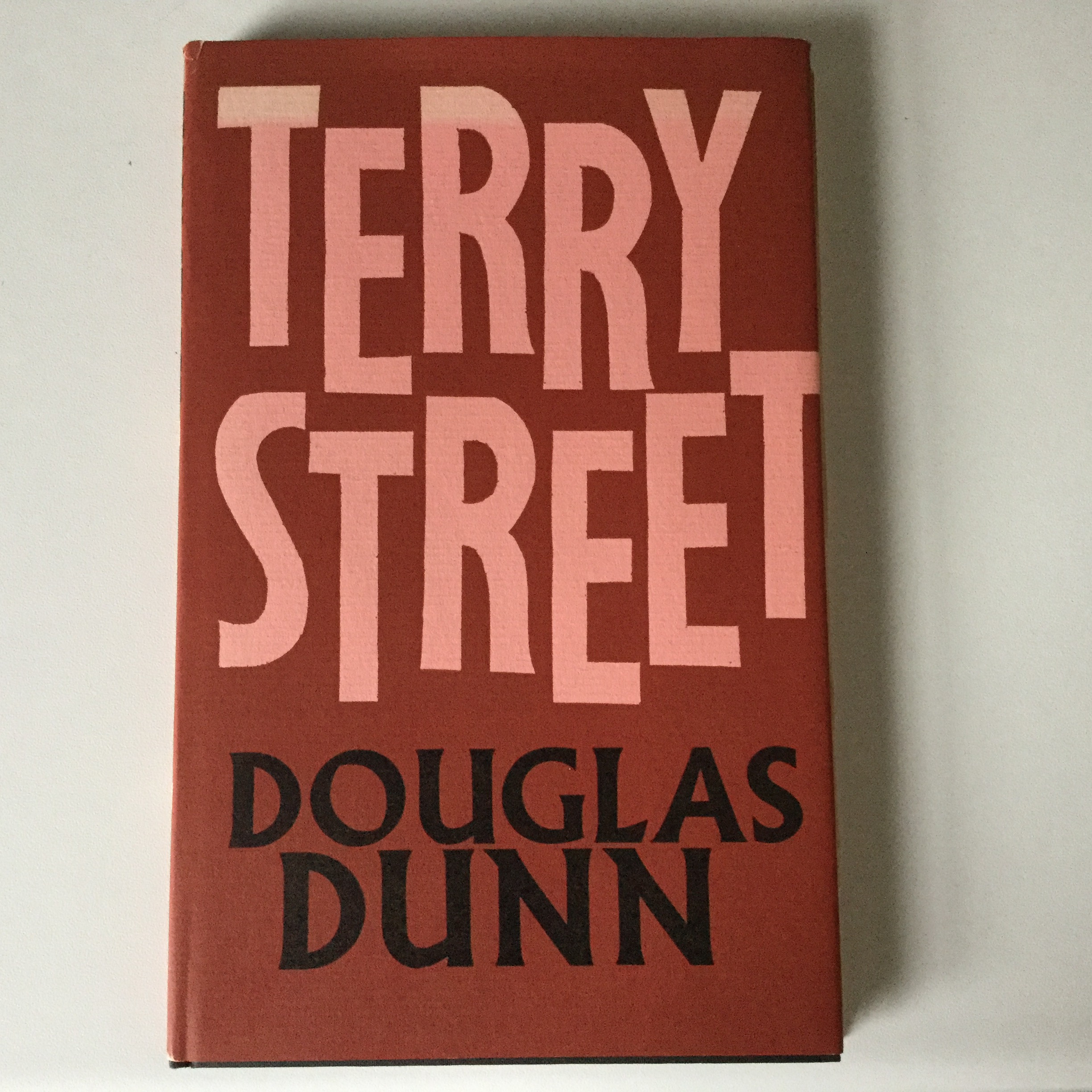
Recently, in my local Oxfam shop, I found a remarkably well-preserved hardback first edition of Douglas Dunn’s debut collection, Terry Street (Faber, 1969). Since living in a very similar street in Lancaster exactly 10 years after Dunn’s book was published (Aberdeen Road, up on the northwest-facing terraced streets above the town, looking out across Morecambe Bay to the – occasionally snow-capped – peaks of Cumbria), I’ve always had a soft spot for the book. But I hadn’t read it in years, I now realise.

images
Aberdeen Road, Lancaster, in a recent photo

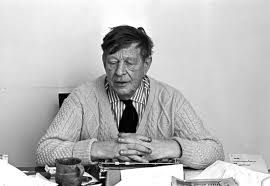
The particular copy I bought (for £2.50) still had the Poetry Book Society’s Bulletin in it as Terry Street was the PBS Choice for Autumn 1969. It printed a review by Julian Jebb of the PBS’s second Poetry International staged at the QEH, South Bank, in July 1969. Jebb praises the organisers for attending to the faults of the first such event (noted as an over-crowded audience and over-running readings by poets). WH Auden is there in the “blackest of spectacles”, reciting recent work from memory including ‘On the Circuit’ (1963) in which he satirises the lecture/reading round he has been treading in the USA: “so large / So friendly, and so rich”. He read precisely: “15 minutes and hardly a fluff”, reports Jebb.

images

He was followed by “a ponchoed American poet, Robert Bly”. Jebb’s tone here will have been addressed to the original readership of his review (it appeared in The Financial Times) but it’s still an interesting period piece. Bly seems to have flailed his arms while reading “in tragic-comic, uncoordinated circles, strongly reminiscent of Peter Cook’s imitation of Macmillan in Beyond the Fringe”. Later he over-ran shockingly with 20 minutes of his “sloppy, deranged images about Vietnam”. This was delivered, Jebb tells us, to a growing slow hand-clap.

bly
A young-ish Robert Bly

Later in the evening, Edward Brathwaite, Derek Walcott, Ogden Nash, Miroslav Holub, Vasko Popa and Janos Pilinszky also read. Few details are given on these contributions unfortunately, but the experience of the latter three poets of the Second World War and Eastern Europe in the first half of the 20th century prompts Jebb to observe: “We have felt safer than these three men and we are grateful to them for their eloquence in telling us so”. Here is evidence that poetry was making very little happen when it came to the heavy lifting required to shift the entrenched sense of superiority and national egocentricity of the period.

So the review both evokes an earlier age of extraordinary poetry and also shows how far we have come. With Ted Hughes’ and Daniel Wiessbort’s founding of Modern Poetry in Translation in 1965. British poetry was just at this moment becoming exposed to worldwide influences (even if some were hardly listening). In this light, Douglas Dunn’s PBS Choice reads like the dying edge of the 1950s, of The Movement. The Terry Street poems themselves may be memorable evocations of working class life in Hull but what I notice now more than anything is Dunn’s obsessive use of the plural subject: young women, girls, the children, mothers, old men, the chatty women, men of Terry Street, old women, revellers, neighbours, street tarts, trawlermen, young women, the people who live here, men on bikes. These are versions of Larkin’s typological  “cut-price crowd” (‘Here’), the women in ‘Faith Healing’ and the fathers and mothers and newly married couples of ‘The Whitsun Weddings’. The difference is that Larkin would as often turn his acerbic gaze on himself. In Terry Street, Dunn makes the choice to keep himself out of the picture (behind glass) and there are hardly any delineated individuals in the book (though we all remember the man who wheels an optimistic lawnmower down Terry Street).

File 22-10-2015, 15 18 59

Dunn viewed ‘these people’ through a window – “our window” says a self-lacerating, retrospective poem of mourning addressed to his late wife, Lesley (‘Envoi’ in 1981). While the belief that these people were a fit subject for poetry is admirable, many of the poems now read as patronising, still mired in the English class system (despite Dunn’s Scottishness). To that extent I disagree with Terry Eagleton who, in 1970, praised Dunn for being able to “transcend the two major pitfalls of poetry concerned with working people – bourgeois voyeurism or sympathetic mythification”. Dunn seems to me to fall foul of both of these.

imgres

In the 1969 PBS Bulletin, the young Dunn himself wrote “Terry Street became for me a place of sad sanity . . . an alternative to the gaudy shams everywhere”. It was this sense of the real that Dunn needed (for himself) as a mature student in Hull, pursuing an English degree, and perhaps was a substitute for what he was already declaring: “Scotland is what I most want to write about and what I am least able to”. Later, Morrison and Motion’s 1982 Penguin anthology of contemporary British poets, pigeon-holed Dunn with Tony Harrison in being “sharply conscious of background and upbringing, which sets them at an angle to the cultural establishment”. But Dunn’s chosen strategy in the longer run was to acquire the ‘language’ of the poetic establishment in formal terms and try to speak up for those men and women of Terry Street (or their Scottish equivalent) rather than merely observe them from afar. ‘The Come-On’ appeared in Barbarians (1979):

Our level is the popular, the media,

  The sensational columns,

Unless we enter through a narrow gate

  In a wall they have built

To join them in the ‘disinterested tradition’

  Of tea, of couplets dipped

In sherry, and the decanted, portentous remark.

  Therefore, we will deafen them

With the dull staccato of our typewriters.

  But do not misbehave –

Threats and thrashings won’t work: we’re outnumbered.

Whatever piece it was Bly read that night in July 1969, the voice of the establishment regarded it as threats and thrashings and was too easily able to dismiss it.

How far have we come? Is it still the case that alternative poetic voices look to disguise themselves – whether with formal display like Dunn’s or with an obscuring erudition – to pass through the narrow gate into poetic acceptability? Or is it now that we anxiously seek out and fetishise what is different so poets and their publishers feel the need to define and confine work with USPs like race, gender, sexual orientation, locality, even disease – whole books focused on life events that begin to sound like the prose genre known as ‘misery memoirs’? Do poets actually articulate this to themselves: in my Creative Writing graduation ceremony, how do I ensure I stand out?

My Brief Career in Medicine

Last week I posted about my daughter’s absence, away now studying Medicine. As some of you will know, this is where I once began too, many years ago. Without any shred of exaggeration, it was a formative time and the following account of it (which first appeared in an earlier version in Agenda) tries to make some sense of it. 

1.

It was a hot August and I had a vision of a child, a baby staring at me, wanting to be lifted up. It lasted only a few seconds but I returned to the red-roofed Wiltshire house where I’d spent most of my 18 years, happier and now resolved. I could not turn my back on such an opportunity.

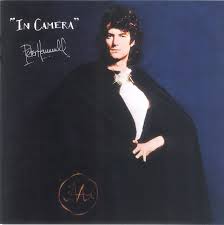
I’d applied to study Medicine for reasons I cannot now recover and may not have been clear even at the time. I’d had a series of interviews during the Upper Sixth year but only rejections had come back though I was held on a short list at Guys in London. Yet I’d already been struggling to focus on Biology, Chemistry and Physics, preferring to pick up the blonde, resonant body of a guitar and play Neil Young, David Bowie, Lindisfarne, you know the sort of thing. I had written songs but very few poems and those few from an almost complete ignorance of poetry. Shakespeare and Chaucer at O-level really was about it. My models were exclusively song lyrics which I listened to intently, following them on the lyric sheets inside the unfolding gates of album covers. My head was unhelpfully full of phrases from Van der Graaf Generator’s Peter Hammill and Jon Anderson of Yes – one a merchant of genuine, existential, gothic angst, the other a lyrical fantasist. Then Guys rang to offer me a reserve place to start in ten days time. Then came the vision of the child.

images

2.

Because of the lateness of the arrangements in getting to London, I lodged in a room in Crookston Road, Eltham Park and commuted into London Bridge. The city I’d been parachuted into was in the midst of the Provisional IRA bombing campaign. The Medical School worked us hard though I never found it easy, or easy to devote myself to it. Within a week or so, we filed into the long upper room overlooking the inner quad. The windows down one side were filled with pallid light, a cloud-light flooding in from the London morning. We had watched a film which included queasy moments of blades easing through human skin though, even as I watched, it struck me as less informative, more likely to be readying us for the shock of encountering our first lifeless body.

His head was to the pale light of the morning. His feet were dry and yellowy and up-turned from the horizontal table where he lay. Though he’d once been human, he hardly seemed to be any longer. His skin was tough and thick-seeming, exactly like leather. The mound of a belly rose and fell to his groin dusted with greying pubic hair, a shrivelled prick and half-hidden balls. His legs ran on, thin and bony at the knee down to the up-turned toes. We all avoided looking at his face.

I wish I could remember who made the first cut. One of us must have done: into the leathery skin above the sternum. The blade needed pressing firmly and the upper layers peeled open a bit like a zip fastener, down towards the abdomen. We did not give him a name though we turned up to visit him every week for the rest of term. But then, he wasn’t ours alone. As we gradually opened up thorax and abdomen, arms and legs, students in the year above us were coming at other times and we’d arrive to find his skull opened, his cheeks slipping down his face, his eyes suddenly gaping and exposed to the light that greyed and wizened as the winter term progressed.

imgres

3.

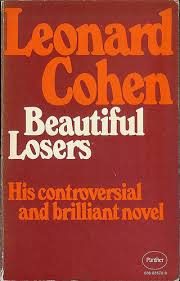
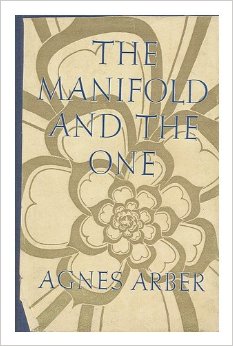
By November, I’d already bolted back to Wiltshire a couple of times and instead of medical text books, I’d started reading Hardy, Lawrence and H.E. Bates. In a poignant reminder of happier times, the school asked me to choose books for a prize-giving at Christmas. On a trip to Bath, I bought Graham Greene’s The End of the Affair, Leonard Cohen’s Beautiful Losers and Lawrence’s England, My England. In Trowbridge, I scoured the second-hand bookshelves of Newbury’s, a bric-a-brac shop long since demolished and one morning I found a copy of George Eliot’s Silas Marner and a book called The Manifold and the One by Agnes Arber. I knew nothing of the latter but must have been attracted to the philosophical sounding title. In my growing tribulations at Guys, I was becoming deep. The questions I seemed to ask myself more and more yielded no easy answers and I had a notion this was called philosophy.

51SBKs67qkL._SY344_BO1,204,203,200_

The Arber book is a wide-ranging and syncretic survey, drawing on literary, scientific, religious, mystical and philosophical traditions, in pursuit of the experience which Arber defines as “that direct and unmediated contemplation which is characterised by a peculiarly intense awareness of a Whole as the Unity of all things”. Amidst the dissections, test tubes, bunsens, the red- and blue-dyed lung trees and chemical equations with which I uneasily engaged back in Southwark, I found consolation in Arber’s idea that life is an imperfect struggle. In those winter months, failing to work hard enough or get a firm footing in a bewildering city, I did not read passages about the “inevitable appearance of the awry and the fragmentary which we isolate in our minds” in a philosophical fashion. Rather this was my daily diet, strap-hanging on a delayed train into London Bridge, sneaking into emergency exits to catch the second half of Diana Rigg in Pygmalion on St Martin’s Lane, trudging up a drizzly Charing Cross Road to buy sheet music I could ill afford, drinking with others in The Bunch of Grapes on St Thomas Street, complaining how much work I had yet to do. Not doing it.

Already letters to old school friends were raising the prospect of leaving Medical School. When Arber wrote of the limited and artificial confinement of conventional thought (“a hard and fast orthodox system of logical regulations – many of which resemble the rules of a complicated game and have little concern with the attainment of truth”) I felt she was talking of my current studies. I had developed an attraction to the esoteric – it made me feel more justifiably the outsider I felt myself to be – and I got untold pleasure from hearing that masters of Zen Buddhism might declare to my lecturers, “Supreme Enlightenment goes beyond the narrow range of intellection – Cease from measuring heaven with a tiny piece of reed”.

19c5f9549acf91e938a127defa9d0739

4.

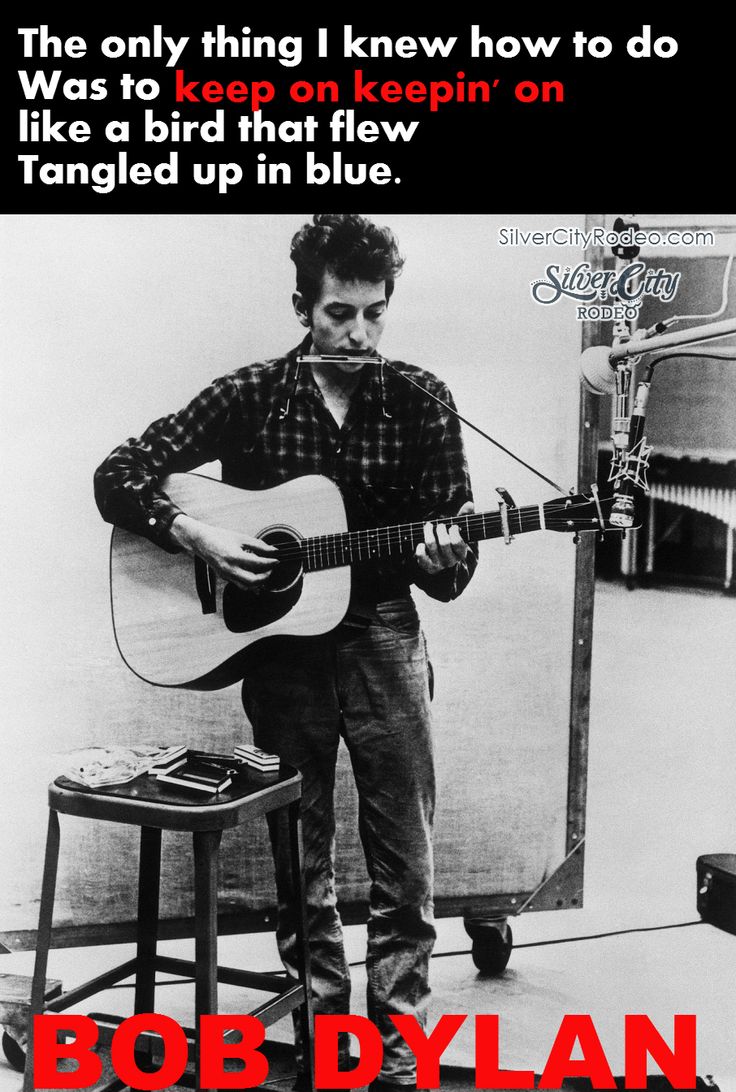
But work piled up rapidly in the new term and after renewed attempts to devote myself to it, the old patterns of neglect and procrastination returned. Even though there were months left before I managed to act on my desire to leave, to beat a retreat from the big city, to set a new and more deliberate course, still the length of remembered time seems short. After Lawrence’s Apocalypse and Sartre’s The Age of Reason, I raced through Cohen’s Beautiful Losers, bewildered by its episodic narrative, its explicit sexuality. But it was Arber’s utterly different book that haunted me. One evening, staring out at Eltham, I wrote: “Down in the street / the puddles turn to raging light / night-time folds away the day / packing up the sun. Turning / through the broken stars, over, under / the chosen Far, making for homeward”. I listened to Radio Caroline in the evenings when I’d managed – not always and increasingly less often – a couple of hours of legitimate work. Dylan’s “keep on keeping on” fell on reluctant ears.

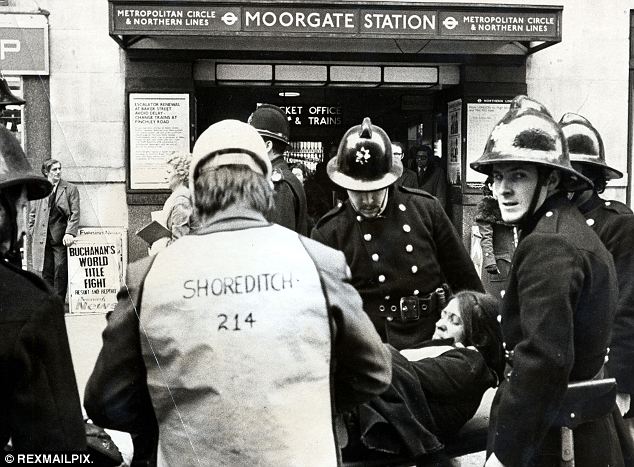
Then travelling blearily east from London Bridge, I forgot to grab my briefcase before stepping down onto the platform. It was a self-inflicted injury but had little real influence on the string of failures I achieved in the final exams. On another day – it was my nineteenth birthday – Margaret Thatcher defeated Ted Heath for the Conservative leadership. One day – it was a Friday – a train from Drayton Park failed to stop at Moorgate, overshooting the platform into a dead-end tunnel at 8.46 in the morning. As I walked gloomily from London Bridge through the black, wrought-iron gates of Guys, forty-three people had died.

Three months later I found myself sitting in my bedroom in Crookston Road, the growl of the busy A2 in the distance. I stared at packed bags and felt calm if utterly becalmed. One day, months later again – this was now the end of a second strangely untethered summer – the thought had begun to form that I might see myself as a student of philosophy, maybe work harder at the writing.

article-1240625-02D9D46B0000044D-949_634x467

Into the Swims – or She’s Leaving Home

A remarkable thing has happened in our house this week. My daughter’s room has been tidied – and it has remained that way.

The duvet is unrumpled on the bed. A phone charger remains thoughtfully unplugged on the floor beside the bed. The pages of Donna Tartt’s The Little Friend have not been turned any further. The few coins on the desk wait to be spent. No rubbish is accumulating in the plastic bin beside the desk. A laundry basket has been emptied and seems not to be refilling as it usually does. There are few clothes hanging in the wardrobe. The door stands open onto the landing for days on end. There is hardly a movement in the wave-shaped mirror beside which, vertically, a friend wrote in pencil  ‘Don’t crack the mirror’. Actually, to be truthful, there is the slightest of motions to be seen there – it’s me standing in the centre of the room, staring around.

We took her to university last weekend. We miss her. And in the absence of more detailed news we’re pretty sure she’s having a good time. She’s never friended us on Facebook but she somehow did so ages ago with my parents. So we hear remotely about smiling pictures, roseate cheeks in flashlight, black backdrops. I think yesterday she was supposed to be attending her first dissection (I remember that vividly – more of that in a later post perhaps).

In the mean time, to wish her well and permit myself some lovely sentimental thoughts of her in younger days, I thought I’d post a couple of older pieces I wrote which feature her.

2007_0413Northumberland0139

Both these poems originally appeared in Hurt (Enitharmon, 2010). The first derives from a walk we pursued when she was about 5, I think. By walk I mean, she walked a bit and I carried her on my shoulders the rest of the way. This was probably in the hills near Sedburgh – sheep country, close-cropped grass, heather, little stony paths. I suspect we plotted a waterfall or two into the route for a few squares of chocolate (temptation) for her and her older brother.

One thing after another

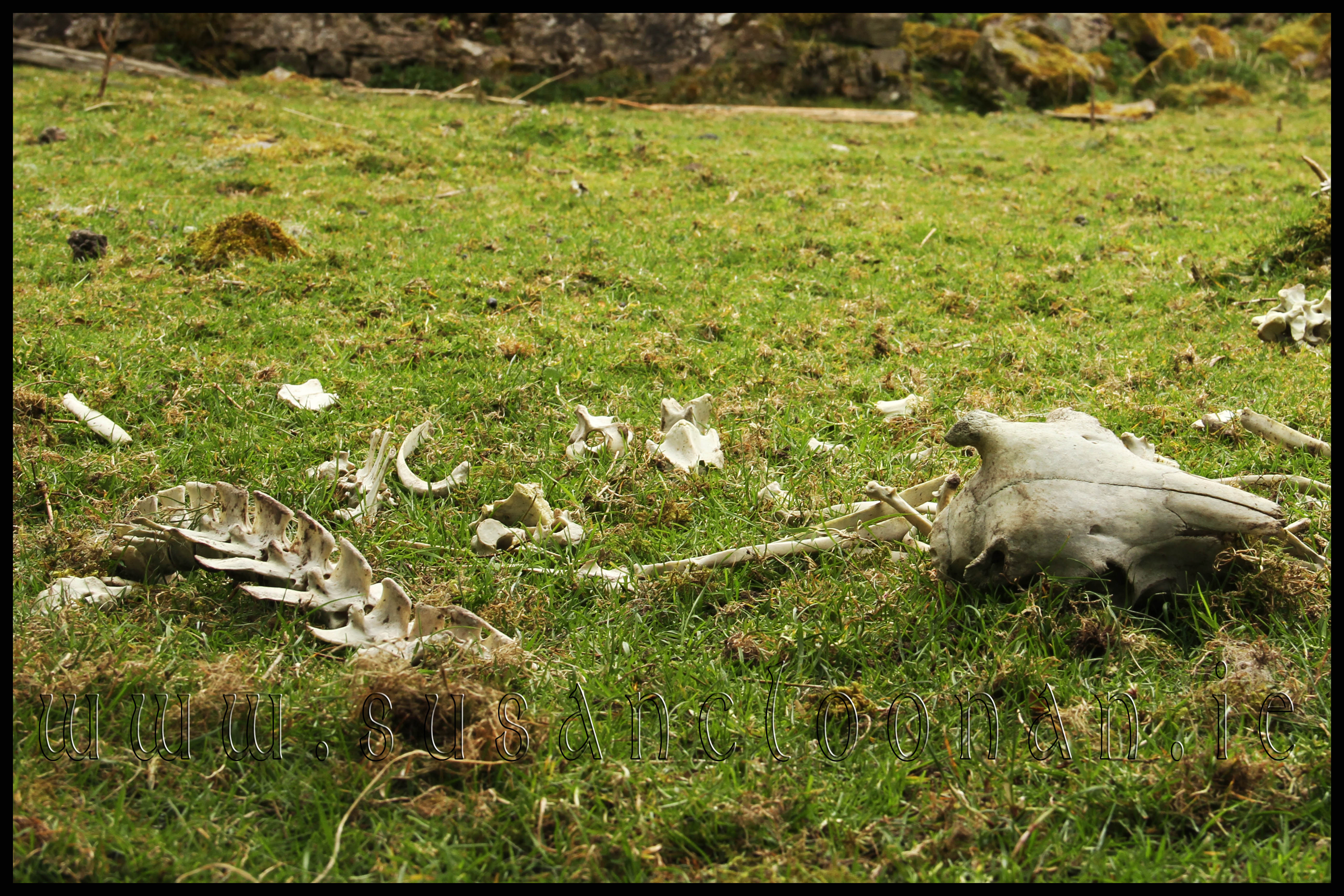
The ivory, angular vertebra I found
the day after the day my daughter found

and tried out her new word – fuck –
was bony, spiky to touch, rough as fuck.

I thought: Depths! Essence! Bone!
She bent to it, touched it, turning bone.

Leave it, I called. She said, Is it real?
White in the grass the contrast was real.

skull4

The second poem is later, from an occasion when we were visiting Canadian cousins, staying in a house in the Lake Country north of Toronto. To me it felt like something out of early Margaret Atwood and we spent ages fishing from the rickety wooden dock, paddling in a rowing boat and (as here) swimming out to a tethered raft (she has always been a good swimmer).

2008_0809Canada20080117

There is a well-buried allusion to Milton’s Paradise Lost in the middle of this poem – from the description in Book 1 of the fallen angels or devils closing in around Satan (“their doubl’d ranks they bend / From wing to wing, and half enclose him round / With all his peers” ll. 616-8). This is the second part of a sequence called Wilderness:

See my flesh and blood

here, bright and true

as a sun on the rise,

she launches herself

from the anchored platform,

flies into the air

over the blue-lit water,

unaware of tethers

beneath the surface,

of ropes, trailing weed,

slime, mud and scales

stiffening in reaction

to her vigorous action.

Here she is, hanging,

all parts my daughter,

curling like a ball,

the sudden black water,

while the white trunks

of ten thousand trees

cram the lake shore

and enclose her round.

All sounds hang back

as she arcs and peaks,

begins her slow bow

to the pull of gravity,

the smash of water,

the great churning

of foam and white limbs

yellowing as they spread

to carve out stroke

after buoyant stroke

into the swims of joy

and grief she’ll tread.

2007_0413Northumberland0079

A bundle of 50 sticks to start a fire

I have used this form – derived from Lee Harwood – for a blog-poem before. I rather like its loose encompassment and also as a welcome change to the often ‘lit crit’ nature of my usual blogs. Just roll with it . . . it’s what I say to myself. This one is dedicated to Stephen Stuart-Smith and all at Enitharmon Press.

images


A bundle of 50 sticks to start a fire

(for Stephen)

I did not break my fast Thursday last

Rose and showered at 7am before realizing and getting back under the covers for another 20 minutes

The street strangely lit there seemed to be so much more sky

The council have cut down flowering cherries claiming they are diseased but the word is it is to prevent – in both senses – claims against them for subsidence

At the surgery I was sixth in line

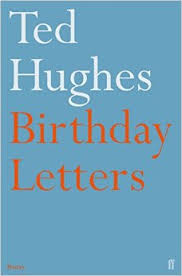
reading Blake Morrison on Ted Hughes published 5 September 1993 on yellowing newspaper pages that had tumbled out of a book I was re-shelving

As for his marriage to Plath, one day he may choose to speak about it, but for now –

I glimpse an old neighbor now divorced his wife and children have moved out we nod but very remotely

never watch when the blood is taken

images

Starbucks trade in the medical centre I watched being built years ago when I’d swim more often even then imagining myself at one of the windows waiting for news of some test or other

T. has woken by the time I return to eat but it’s me who puts away the groceries that have been delivered

handed me the bottle of wine laughing you don’t want to lose that he said my hesitation as I re-envisaged him as a romantic gift-bringer left an awkward pause I couldn’t cover

How does I have plenty of time transform itself swiftly into running late

hardly anywhere to park

Queens Wood stretches up behind these houses then bridges a road then sinks following its contours to the pond then rises again climbing to Muswell Hill and this is to be boxed into the word ‘topography’

A half empty carriage

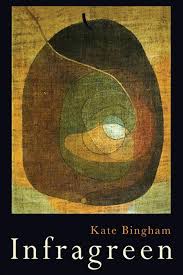
‘Ultragreen’ in which what is out there seems to come inside in a process Kate cleverly likens to photosynthesis and cleverly this gets away from me

imgres

The Whitehill Food Market I have passed that place

Walking up from the Emirates when I can’t get my mind off the strange limps and weaves of the way other people walk they are not hell but merely unfamiliar ways of moving

the fountains flow in the centre of the square

A dog wets its feet and drops a red ball into the pool and I guess its owner will be irritated by that

Brecht refused to award the prize to any of the five hundred entries. In none, he said, was there any successful attempt to communicate anything of any value

‘Nothing makes me feel more like a poet than being unable to talk’

Pub date Isobel calls it pub date

The absence of punctuation is in the spirit of the Daodejing it is the water course way one drop of water in the ocean no trace of it but don’t tell me it’s not there

A house in Selbourne

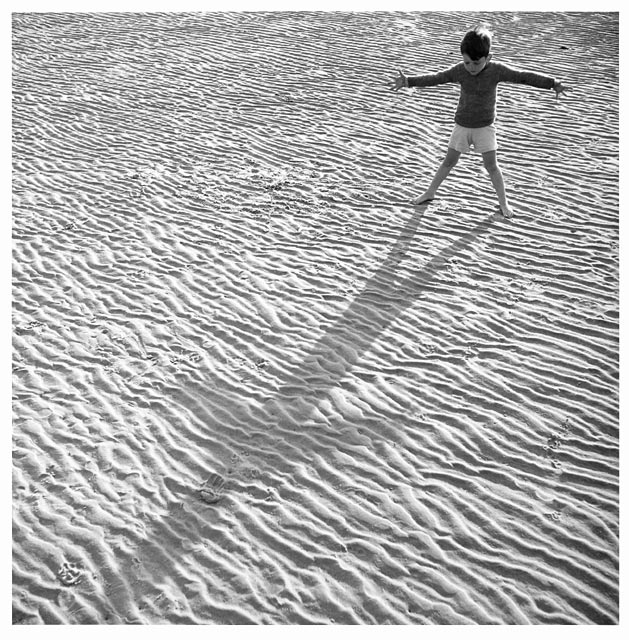
An image of a child with arms outstretched fingers widespread so much he might be a tree

Ripples of damp sand are the footprints of the shaggy oceanic beast

‘To embrace’

y30

A plain cheese and tomato brown bread roll and I am back madeleine-like to dinner-time sandwiches at Junior School during which we’d meet Mum from work and sit in Trowbridge Park why did we do that

It must have saved money

A timetable is the opposite of the way water flows and this grid dominates my life

Poems not even by rote but by the hour of the day

‘Pike’ so we watched YouTube clips of fish ducklings kittens being devoured it gets them started

Town kids city dwellers

as out of place as John Wyndham’s alien creatures like little pink M&Ms on four legs two of which are really arms they carry fire sticks

‘A sort of genocide’

The original Homer Simpson whose hands are uncontrollable

‘his thumb received a nasty cut. Although the wound must have hurt, the calm, slightly querulous expression he usually wore did not change’

images

Explore how far West’s presentation of Homer suggests he is a trapped man

The spider plant on the windowsill looks anaemic in its white pot against white painted window frames against thunderheads miles off

I am free at 17.10

I don’t need most of this

Occasionally there are evenings I can’t remember where I parked the car once I thought I’d left it on the garage forecourt after filling it up and I went in and got them to review the CCTV footage which told me that I had driven it away earlier that day and like some log-jam shifting slightly I had a vision of parking it on First Avenue and there it was all along

I need a framework perhaps

‘Echo Beach far away in time Echo Beach far away in time’

I like to change my clothes after a day’s work

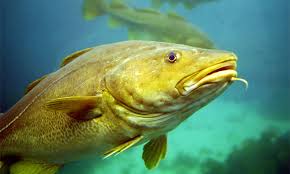
So I asked them to bring in pictures of pike and this one brought in a picture of a cod

A Delia recipe

The evening is filled with cakes of varying heights

42

How to write about ‘sacred objects’

Recently, I spent a weekend at the house I now know as ‘Wiltshire’. It’s where I grew up through the late 1950s, 1960s and early 1970s. I’ve been living elsewhere for so many years now and ‘home’ is in north London so the old county name suffices in most conversations to communicate what I mean: ‘I’m going back to stay in the house of my childhood’.

File 01-09-2015 09 18 16
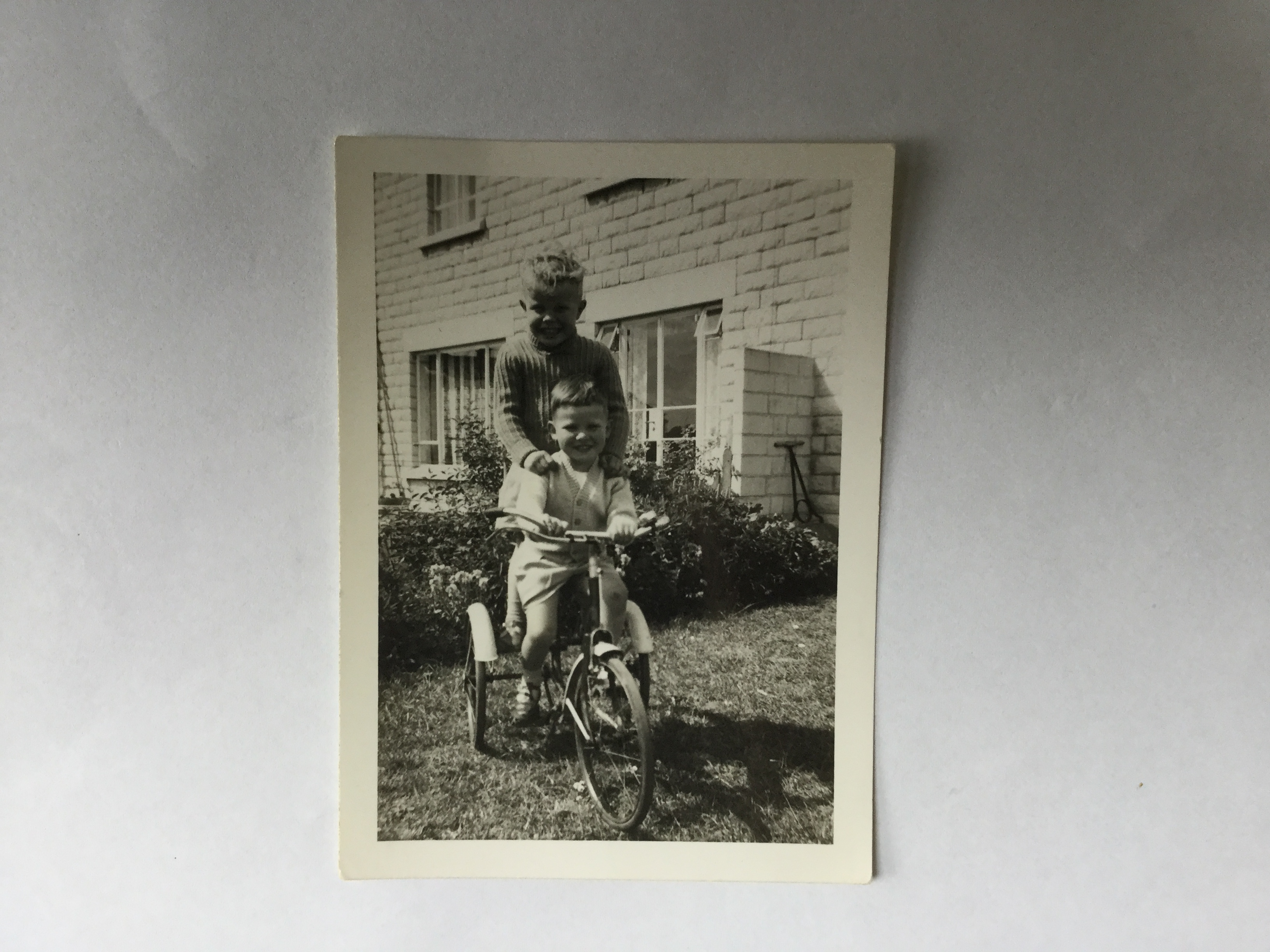
I’m doing the pedaling here – circa 1960

My parents still live there, both into their 90s, but managing with a little help to live independently. (See my earlier blog on memory and nostalgia here) It’s what has happened there over the years that makes me want to label it ‘sacred’ ground. From the Latin ‘sacer’ meaning holy, the word originally meant connected with God, sanctioned by religion, a valorisation that was religious rather than secular, a value determined from outside the sphere of the self and in the Latin words ‘sacerdos’ and ‘sanctum’ implying something cut off from the mundane, something distant.

But even in the continuing absence of any religious sense in my life, certainly any external religious authority that might determine this or that object or action as ‘sacred’ I still want to use the word – even as I confess this is a value determined solely by my own view of the world. But I do think that my sense of the ‘sacred’ is coupled with the passage of time. I don’t think anything can be instantly ‘sacred’. It has to be re-examined, worn, re-visited.

File 14-09-2015 08 33 42

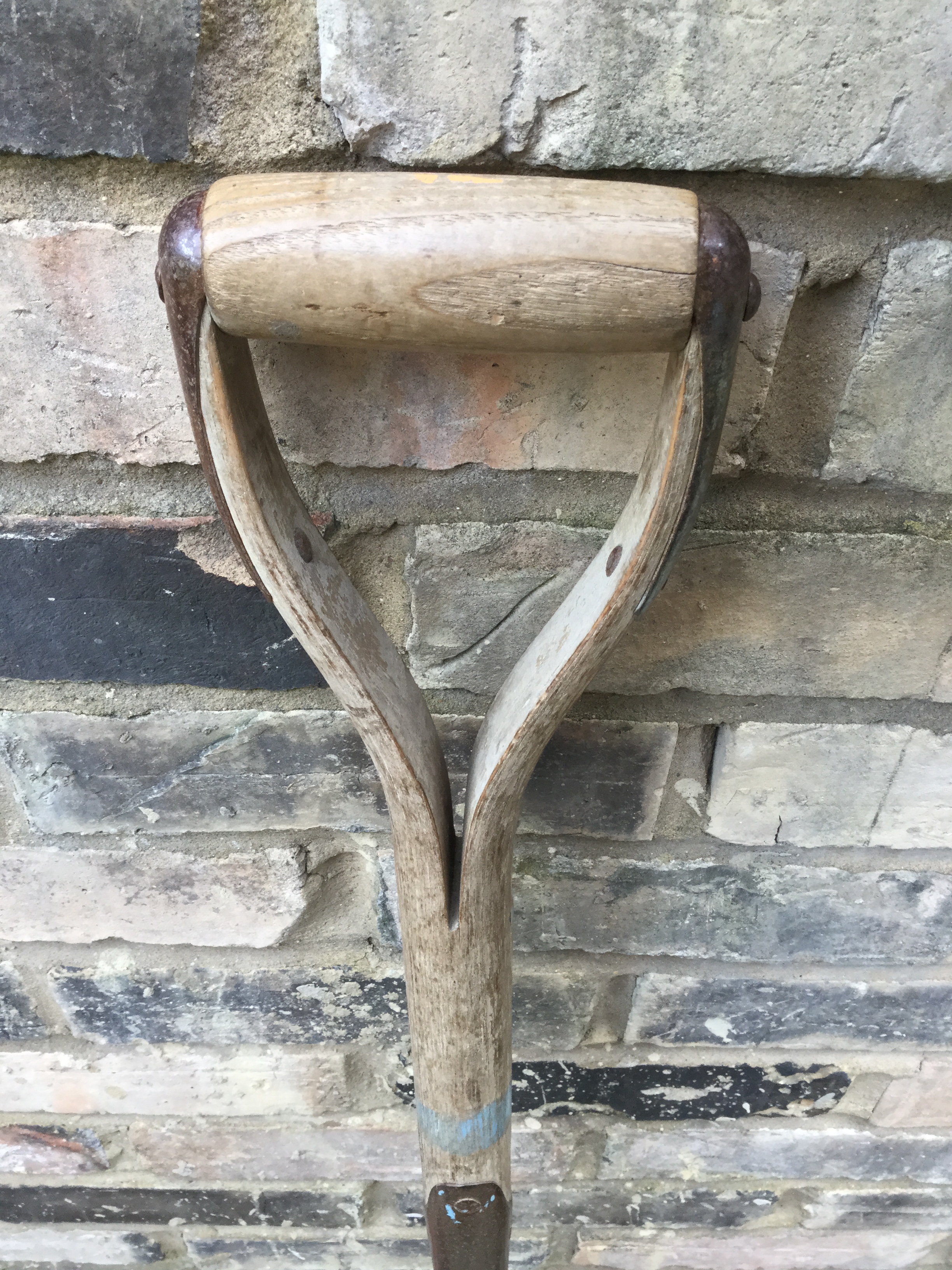
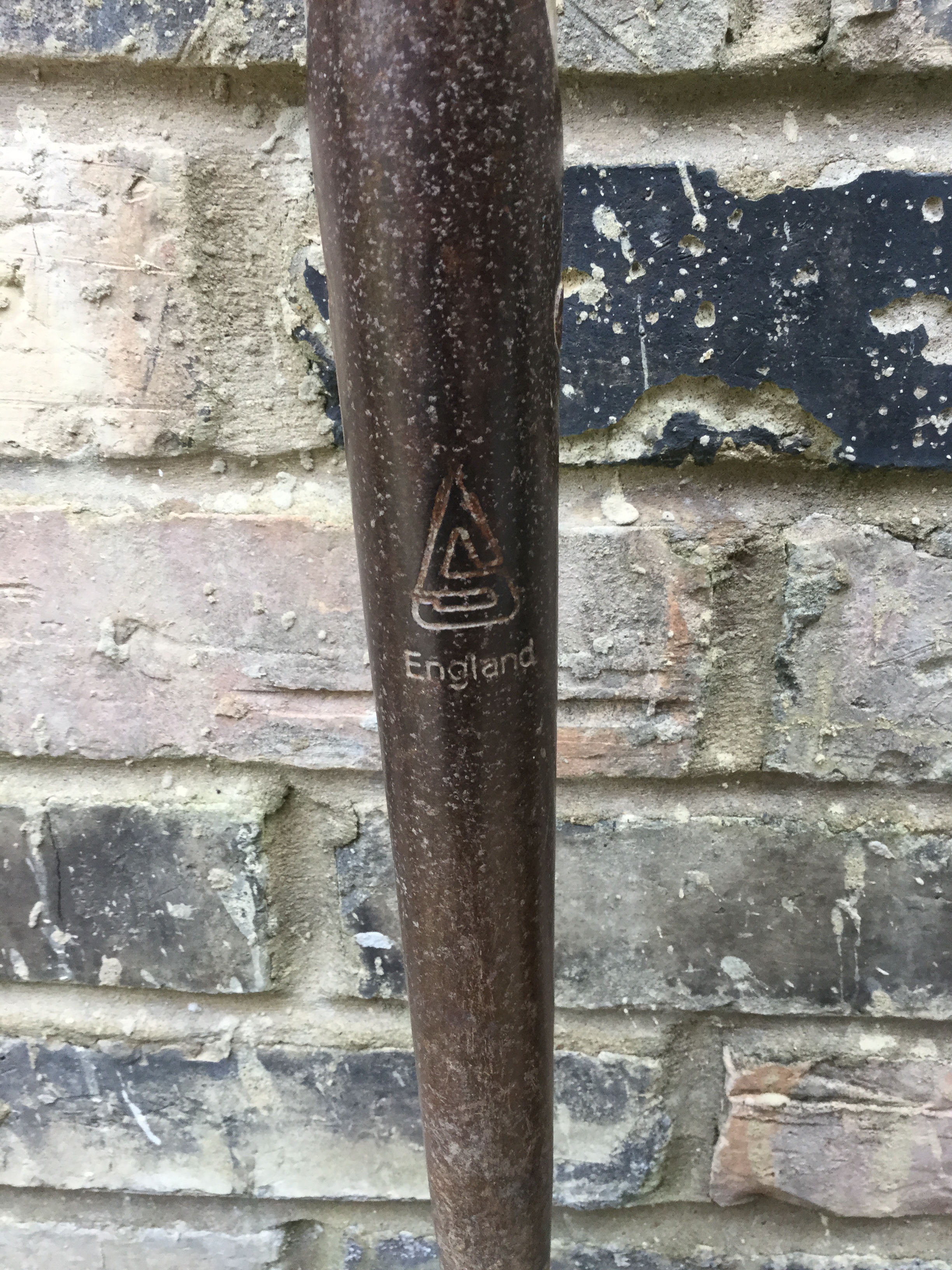
My Dad is well into that phase of old age when he wants to give everything away. There has never been very much to give, of course, and recently he has taken to wandering round the car-empty garage, picking out old tools and rather hopelessly asking myself and my two brothers whether we have any need of them, because he doesn’t any longer. The answer is really ‘no’ but occasionally I relent not to appear too ungrateful. However, on my last visit, I’d broken my flimsy Homebase-bought garden fork a couple of weeks earlier, trying to lever out a slab of paving. So when Dad offered me his old fork I took it.

File 14-09-2015 08 33 25

It’s unpromising material for sacred eminence but because his hands have held it for over 60 years, wearing the shaft smooth, because his muscles and the instep of his right foot have pressed and shoved and pulled at it over that length of time it makes the grade. Sacredness is sort of metonymic here then. It stands for him. This is something I respond to in Seamus Heaney’s poems, in particular the first part of ‘Mossbawn’, dedicated to his aunt, Mary Heaney. (Read the full poem here)

Reading it over again I’m struck by its focus on particular ‘sacred’ objects – the “helmeted pump”, the “slung bucket”, the warm wall, the bakeboard, the stove projecting its “plaque” of heat (that perfect choice of word suggestive of decorative and commemorative without becoming over-blown or monumental). His aunt’s actions and her domestic implements are likewise noted and linguistically nailed (the poet’s precision echoes his aunt’s):

Now she dusts the board
with a goose’s wing,
now sits, broad-lapped,
with whitened nails

and measling shins:
here is a space
again, the scone rising
to the tick of two clocks.

The final quatrain reverses the more usual order of figurative language to begin with the abstraction which is said to be “like” the actual object, love embedded in its everyday setting as much as the meal scoop is submerged, absorbed, integral to the meal bin, sustaining domestic life:

And here is love
like a tinsmith’s scoop
sunk past its gleam
in the meal-bin.

Heaney performs this magic in the present tense (a fact he rather flaunts with that “Now [. . .] now”) despite it being evidently a long-harboured, cherished memory. What might have been lost to the ravages of time is brought back into the present. I like to note that the word ‘holy’ dates back to the 11th century and the Old English word ‘hālig’, an adjective derived from hāl meaning “whole”, used to mean “uninjured, sound, healthy, entire, complete”. Lacking the authority of an external God, what is sunk deep into our past lives can be simultaneously brought back into the present, whole and holy, and this is what we might designate as ‘sacred’.

File 01-09-2015 09 17 39

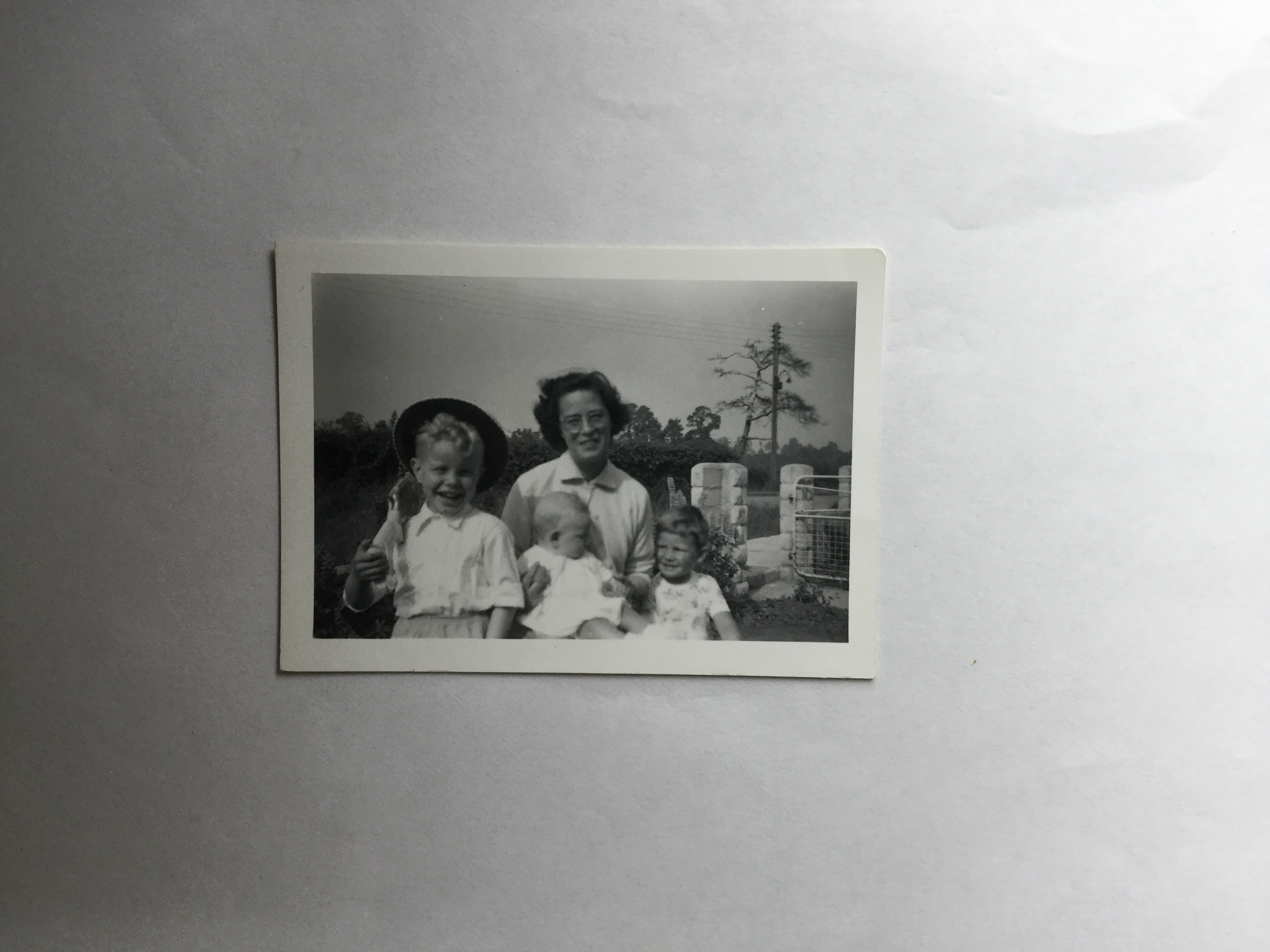
One object from ‘Wiltshire’ I once managed to write about is the garden gate. You can just glimpse it in the background of the picture above. The adult is my own aunt (not really an aunt but my mother’s best friend). I’m on the left of her here. The poem originated in workshop exercises directed by Myra Schneider (her website is here) a few years ago now. With thanks to her, what follows is my own formulation of her process.

  1. This is an exercise in memory and tapping into feelings surrounding specific objects. It seems to work for most people and I have tried it among school children as well as with experienced writers.
  2. List a few – 2 or 3 – objects which have significance to you. They may be possessions, objects once possessed now lost, toys, gifts, even houses or rooms, but try to think of specific objects – your sense of it needs to be precise rather than diffuse.
  3. From your list select one you feel now particularly drawn to
  4. Now write a description of it. Try to avoid infusing it with any particular feeling – the more objective the better to begin with.
  5. Now underline a few phrases in what you have written which you find interesting.
  6. Now write more freely around your object, allowing in specific memories and feelings which perhaps cluster around this object, people associated with it.
  7. Again underline particular phrases and passages you like.
  8. From all this material, especially what you have underlined, try to assemble a more finished piece.

And here’s my poem – originally published in ‘An English Nazareth’ (2004)

The gate

was inch-tubular for economy’s sake,

a post-war issue for a self-built house –

Hammerite black now, but once white,


earlier cream, its soft curves and corners

a rough square between cement gate-posts.

A big-thumbed latch on the left,


beside it, a schematic sun-rise of tubing,

beneath, the squared-off wire grid

I’d work my toes into, find the springy dip


of my weight on the straining hinges,

hook in elbows and I’d swing, I’d swing.

Then a jarring crash and decrescendo:


the muddy-booted, casual back-heel

of my brother after football on the grass.

Gentle click-clank of the sneck as Mum


bent to secure it with as much care as

she shook slippy fried eggs onto my plate.

The half-way firm, suddenly stunned


impact as Dad’s hand swiped, held shut –

his sluggish pirouette and up the path,

coming home with an empty Thermos.


And then me, arms shaking at the ridges

of concrete under my trike, Dad stooping

to frame the cream gate, the hedge beyond,


the telegraph wires converging on clouds,

wires dividing the bright air at my every

effort to remember until it appears


all that muddle of love has so long gone

unremarked between us, there is no need

to hearken to it, though a bad day shows


every possible latch broken while another

is effortless, finds the point of purchase

into the give and spring and swerve and space.