‘From Palette to Pen’ – a bit more ekphrasis

My blog post a couple of weeks ago on ekphrastic poems (ie. poems stimulated by visual art) proved to be one of the most popular I’ve ever written. This was in part the ‘how to’ aspect of the blog. In preparing to run a workshop at the Holburne Museum in Bath in February, 2017, I’d been reading a wide variety of poems derived in some fashion from the poet’s encounter with visual art and I tried to categorise the various approaches. I came up with 14: 

  1. Describe – and do no more.
  2. Describe but imagine beyond the frame
  3. Describe but incorporate researched materials
  4. Make Main Figure Speak – the most common approach
  5. Make Minor Figure/s Speak
  6. Make Objects Speak
  7. Make the Artist Speak
  8. Interrogation of the Artist
  9. Interrogation of illustrated Figure/s
  10. Interrogation of Yourself
  11. An Account of Your Encounter with the Art
  12. An Account of Gallery Visitors’ Experience
  13. An Account of Others’ Experience
  14. Come at a Tangent – the ekphrastic experience as after-thought or illustration
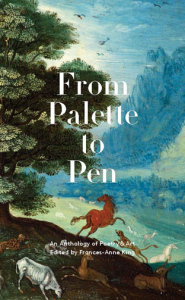
From-Palette-to-Pen-185x300

While at the Holburne Museum I was given their recent anthology of ekphrastic poems, From Palette to Pen, edited by Frances-Anne King in 2016. It contains 20 poems stimulated by art objects in the Holburne and as well as recommending it as a great resource for ekphrastic writing, I thought I’d use it to test my earlier analysis of the form to see if it held water.

It did pretty well. It goes without saying that all the poems engaged to some degree in method 1 – description of the art object itself. But beyond that, by far the commonest approach was method 4 – making the main figure speak. This was adopted by Anna-May Laugher, Claire Dyer, Carrie Etter, Frances-Anne King, Pascale Petit, Linda Saunders and Lesley Saunders. Petit manages to make Adam speak, remembering his naming of the animals; Claire Dyer makes Rosamund Sargent speak from her own portrait by Allan Ramsay; Lesley Saunders makes one of the sisters, Alicia and Jane Clarke, speak and so betray their “little sisterly difficulties”.
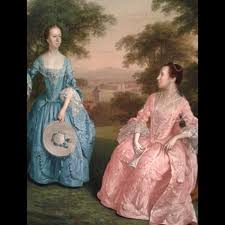
imgres

Another common approach was my method 8, an interrogation of the artist (without getting the artist to actually speak for themselves (method 7)). Jenny Lewis’ poem on a 17th century Rosewater basin began in this way, inquiring “What’s on his mind as he hammers / the silver, makes light flower”. Her poem goes on to incorporate some obvious research into the object too (my method 3) which takes her poem away from a narrow view into the colonial world of “London, the world, New England” in which it was made. David Hale, writing about Jan Asselyn’s ‘Landscape with Drover’ also imagines and interogates the artist’s approach, gazing at his own picture in process:

Ah, the south. He feels the heat of it

on his face and hands, smells dust, dung

and crushed thyme as he sips his coffee,

wonders again what the bull is looking at –

where time and life have gone.
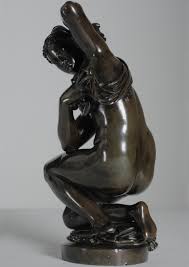
imgres

I’d be tempted to widen this category of approach – or even introduce a new one – because several poems in the anthology interrogate the artist specifically about the artistic methods used to create the art object. Sue Boyle does this in detail about the making of Antonio Susini’s bronze figure, ‘Crouching Venus’: “Coated in plaster, lowered into fire, / she must be negated, melted from her mould”. There are also elements of this approach in the poems by Dawn Gorman and Phillip Gross, the latter dwelling as much on the making of a Beadwork Basket as on its illustrations of Charles II and Catherine of Braganza. Gill Learner’s poem also looks over the artist’s shoulder as he glazes a 15th century earthenware dish.

My method 9 – interrogating or engaging with one of the figures in the art work – was used by Caroline Heaton, Wendy Klein and Tim Liardet. Klein and Liardet both directly address figures in the image (for example, “Someone chose the best for you, Mary Bourchier” and “You let the baby grip his fingers”). Heaton’s engagement with Plura’s marble statue of ‘Diana and Endymion’ is a bit less direct, using the third person (rather than a second person address) to think herself into Diana’s state of mind:

Confined to the island

of the self, she laments

the chill of her lunar circuit,

its lonely eminence.
imgres

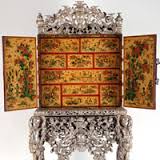
Rosie Jackson approached a piece of furniture, ‘The Witcombe Cabinet’, via a brief description of it but quickly developed thoughts about her own mother and indeed herself which I’d take to be my method 10 – using the art object to interrogate or enquire into one’s own life: “”My mother would have loved it here, / the roped off beauty […] But I ask questions of locked drawers”.
imgres

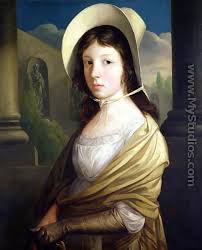
I think Claire Williamson mostly used method 3 – describe and make use of researched materials – in her poem on Thomas Barker’s painting of ‘Priscilla Jones’. The relationship between the sitter and the artist is the focus here, their romantic engagement and subsequent “passionless” marriage. In fact, I’ve not checked details of the painting/poem and I suppose it maybe that Williamson is making all this up – in which case she’s adopting method 2 – describe and imagine beyond the frame as George Szirtes does in anticipating the adult life of the boy in ‘Garton Orme at the Spinet’.

So the methods used in this anthology are fairly limited – seven of the fourteen I proposed. Those not adopted here are several varieties of ventriloquism (getting minor figures or objects to speak up; getting the artists to speak directly), the kinds of poem that more narratively describe encounters with art objects in a gallery or other location and a more tangential approach.
imgres

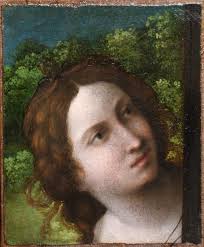
Finally, Lawrence Sail’s poem describes a Mantuan School ‘Female Head’ and is probably the ‘purest’ ekphrastic poem in the anthology in that it does little more than describe the image – method 1. However, Sail addresses the woman imaged as “Our lady of the liminal” and as such he breaches the borders (“offstage”) a fair bit, beginning to imagine beyond the frame to some degree (method 2). It’s a lovely poem and deserves quoting in full:

Female Head, about 1525

Our lady of the liminal –

witness at her back the margins of

the unruly forest,

and the focus of all her attention

being offstage.


But the heart of the story is locked

in the ghost of her gaze – its candour,

the early signs

of grief, a drift to the verge

where hope wavers.


And everywhere, time on the make –

in the darkening turquoise of the sky,

the slow swell

of the trees, the craquelure moving up

to infect her soft features.
Unquiet to Unbusy – Coleridge, Hartley Coleridge and ‘Frost at Midnight’

This week I was invited to another of Michael Glover’s wonderful Bowwowshop soirees at the Omnibus Arts Centre in Clapham. The focus was on the work of Coleridge. Tom Lowenstein read from From Culbone Wood – in Xanadu (Shearsman Books). There was also fiddle music and an aria from Mozart and parts of ‘The Ancient Mariner’ performed as a sea shanty (it really worked!). What follows is the text of my contribution (at some length, I’m afraid). By the way, Hartley Coleridge must be in the air at the moment as this blog post has just been put up by Alan Price.

I have been asked to read ‘Frost at Midnight’ – the 1798 poem in which the young father watches his sleeping child, thinks of his own past and foresees for the boy a bright future. The suggestion was also to focus on the more human side of Coleridge, less on the unique genius, the flood of ideas and knowledge, more on what we must all share with him: quiet moments of reflection, how we are made by our past, our hopes for the future, how blood is thicker than water.

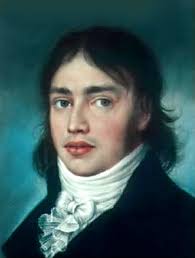
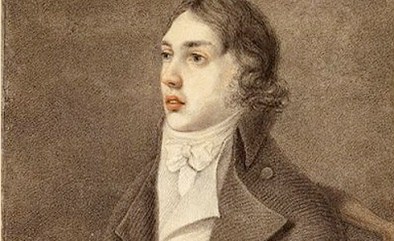
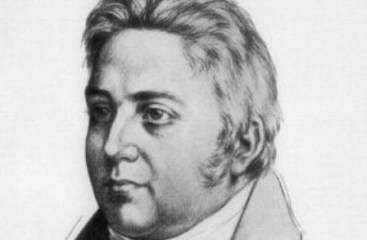
So – in 1824, the young Thomas Carlyle visited Coleridge in Highgate, where he was now staying with Dr Gillman. The poet was 52 years old. Carlyle describes  – “ a fat, flabby, incurvated personage, at once short, rotund, and relaxed, with a watery mouth, a snuffy nose, a pair of strange, brown, timid, yet earnest looking eyes, a high tapering brow, and a great bush of grey hair” He seemed a good soul (thought Carlyle), “full of religion, and affection and poetry and animal magnetism”.  Perhaps his observations had already been influenced by William Hazlitt’s earlier description, noting the poet’s nose, “the rudder of his face, the index of his will, [how it] was small, feeble, nothing – like what he had done”. Carlyle also concluded with that thought, “he wants will. He has no resolution”.

samuel-taylor-coleridge-448

Given what Coleridge had been through in his life, Carlyle’s portrait is really one of a survivor against the odds. A couple of years earlier, Coleridge was contemplating the four greatest sorrows of his life. He noted: his failed marriage with Sara Fricker, his wife of almost 30 years, the mother of his 3 children; the bitter quarrel with Wordsworth; the relationship, that perhaps never even got going, with Sara Hutchinson – Asra. Coleridge’s fourth sorrow was a much more recent wound, still raw, on-going when Carlyle met him in 1824. It bears on my main subject, Coleridge’s poem about his first born son, Hartley.

To explain, I’ll go back a few years  . . . In a life that Richard Holmes in his wonderful biography has described as full of “black storms and glittering sunlit spells”, the year 1819 was a great, sunlit moment. The 23 year old Hartley had just secured a Probationary Fellowship at Oriel College, Oxford. His father and mother were overjoyed, a feeling they shared – so an unusual moment. Coleridge could reasonably conclude that the boy he had always loved best had perhaps not been harmed or disabled by his peculiar brand of absentee fathering, the difficult marriage of his parents, his father’s often public financial, literary and opium-related humiliations.

But storm always follows sunlight for Coleridge. In June 1820, Hartley – the little child who, 22 years earlier, had slept so peacefully on a frosty night in Stowey in Somerset – Hartley was accused of drunkenness, of “sottishness, a love of low company, and general inattention to the College rules”. In a moment of ghastly, public humiliation, his Fellowship was not to be renewed. Hartley himself seems not to have dared to inform either parent; he vanished for days on end and try as Coleridge might the College would not relent.

Flock-of-Starlings

It was a disaster. Ann Gillman remembers Coleridge being “convulsed with agony” over it – surely in part because the accusation of intemperance and drunkenness reflected his own long-established, unshakeable addictive behaviours. The sins of the fathers, is what Coleridge must have been thinking.

And really, if we look back at Hartley’s life the disaster was not so unexpected. With the benefit of hindsight, we can trace events, poignantly, in reverse. During his third year at Oxford, in 1817, Hartley had come to visit Highgate and among the promising signs Coleridge fretted about his son’s unsystematic approach to life, there was some drunkenness, an evident loneliness.  On a return visit to Stowey, the clever college boy had tried to enamour himself with the local girls but they recoiled from his strangeness, melancholy, his dark shaggy beard. They called him the Black Dwarf.

At the age of 18, in 1815, he’d visited his father in Calne, Wiltshire, first ever summer vacation with his father. They celebrated the victory at Waterloo but Hartley was fascinated by the travelling players, by itinerants. He seemed solitary, a bit restless. People again remarked on his odd manners, his scrawny black beard. At 15, Hartley’s mother was optimistically thinking he might make a lawyer, with his “Gift of the Gab”. They were living in the Lake District and Hartley was a great local favourite, though Sara thought “a little spoilt” – in adult company he was not only permitted to speak, he was expected to speak.

At 13 he was brilliant – but quarrelsome. At the age of 10, planning a visit to his West Country relations, Coleridge wrote him a letter – a Polonius sort of letter – on how to behave. His son, he pointed out possessed a “self-gratifying fancy”, his spirits always at “high tide and flood”. The father recognised a tendency that swept away all “unpleasant and painful thoughts”. There were refusals to accept discipline; there was stealing food, snatching at things, standing in half-open doorways. Too often, the boy used his cleverness for lies, fantasies, false excuses. Coleridge urged on his son no procrastination, no self-delusion.
Even as a young child, Hartley had once asked his father what it would be like if there were Nothing! – just darkness and coldness. Apparently, he’d be thinking of it all day. The boy was 5. He often found playmates more a burden than a delight. A year earlier, celebrating moving from baby clothes into trousers, Coleridge already mourned the child’s old, joyous ways of playing. His activity now seemed governed by a more self-conscious “eager & solemn gladness”.
imgres

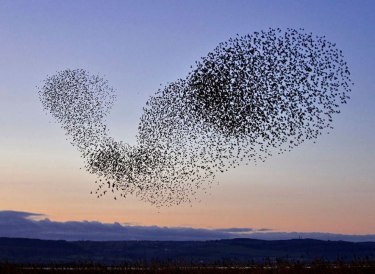
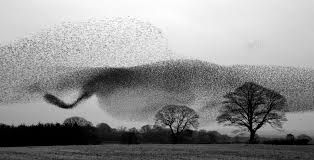
I imagine him watching the boy – the young father as he was described by Dorothy Wordsworth in 1797. She thought Coleridge then plain looking, pale and thin, a wide mouth, thick lips, not very good teeth. He had longish, loose-growing, half-curling rough black hair, his eyes large and full, not dark but grey, fine dark eyebrows, an overhanging forehead. And this is the man who, around this time, watched a massive starling flock in flight. He described it “like smoke, mist, or any thing misty without volition – now a circular area inclined in an Arc – now a Globe – now from complete Orb into an Ellipse and Oblong [. . . ] & still it expands & condenses, some moments glimmering & shivering, dim and shadowy, now thickening, deepening, blackening”.

imgres

This image haunted him for the rest of his life. It became more and more clear he had been fascinated by a self-image, a counter image of uncertainty, a lack of volition and determination, a swirling, aimless life quite unlike the one he had imagined for himself and his first born son in ‘Frost at Midnight’. In the poem Coleridge finds another self-image – the thin carbon film accumulated on a fire grate. Superstition told that this ‘stranger’ as it was called, foretold some new arrival. Coleridge remembers thinking of it as a sign of good things to come in his own unhappy school days at Christ’s Hospital in London.

In lieu of my reading of ‘Frost at Midnight’, here it is read by Richard Burton with accompanying text.

images

Such hopes were not to be. After the Oriel College disaster, Hartley was urged into school-mastering but he was never very good at classroom control. The boys must have found him odd, melancholy, solitary – apparently suicidal at times.

By 1829 – now fully 5 years after Carlyle had visited Coleridge in Highgate that time – Hartley had drifted out of teaching, was just wandering aimlessly through the Lake District, living with farmers, writing a few sonnets while the aging father fretted vainly in Gillman’s Highgate garden. In 1825, Coleridge made a self-portrait in sonnet form. In the poem ‘Work Without Hope’ he is the “sole unbusy thing”, uncreative, not having built anything to last, nor preparing to build. In the octave, amaranth is the mythical flower awarded to successful poets.

Work without Hope

All Nature seems at work. Slugs leave their lair—

The bees are stirring—birds are on the wing—

And Winter slumbering in the open air,

Wears on his smiling face a dream of Spring!

And I the while, the sole unbusy thing,

Nor honey make, nor pair, nor build, nor sing.

Yet well I ken the banks where amaranths blow,

Have traced the fount whence streams of nectar flow.

Bloom, O ye amaranths! bloom for whom ye may,

For me ye bloom not! Glide, rich streams, away!

With lips unbrightened, wreathless brow, I stroll:

And would you learn the spells that drowse my soul?

Work without Hope draws nectar in a sieve,

And Hope without an object cannot live.

If we humanise Coleridge – if we turn aside from the work achieved, half-achieved, the fragments and Notebooks – perhaps we see too much of tragedy: the great potential, a life unfulfilled. After all this is the man who watched Hartley play and understood that for children the means is the end; he knew beauty is the intuition of the one in the many and therefore the first-born of beauty is the geometrical shape, the triangle; he thought of the sonnet as a sigh, something we let escape us, a single thought; he understood the poet must possess the ear of a wild Arab listening in the silent desert, the eye of a North American Indian tracker, the touch of a blind man feeling the face of a darling child; he thought poets were those who knew where the riddle of the universe remained unsolved; he thought a punchy, crisp style of writing lacked the cement of thought, the hooks and eyes of memory; he thought altruism required a generosity to oneself, without which we live in a despotism of the present moment.

tumblr_lw9ofoo8l21qf4hl5o1_500
Hartley Coleridge

And perhaps there was a little honey at the last. In 1833, Hartley published the poems he had been working on and dedicated them to his father. He offered them in thanks for what Coleridge, for all his flaws and personal failings – had given him. It’s the note for us, who love English literature, to strike too: gratitude. Hartley’s sonnet, like a sigh, poignantly alludes to and quotes ‘Frost at Midnight’ on his father’s early hopes for the boy whose own life went awry.

Father, and Bard revered! to whom I owe,

Whate’er it be, my little art of numbers,

Thou, in thy night-watch o’er my cradled slumbers,

Didst meditate the verse that lives to show,

(And long shall live, when all alike are low)

Thy prayer how ardent, and thy hope so strong,

That I should learn of Nature’s self the song,

The lore which none but Nature’s pupils know.

The prayer was heard: I ‘wander’d like a breeze’,

By mountain brooks and solitary meres,

And gather’d there the shapes and phantasies

Which, mixt with passions of my sadder years,

Compose this book. If good therein there be,

That good, my sire, I dedicate to thee.

William Carlos Williams’ Brueghel Poems

Last week I travelled down to the Holburne Museum in Bath to take a look at their Brueghel dynasty exhibition – this is where I am running a poetry workshop this coming weekend (25th Feb – it’s waiting list only now I believe). So after last week’s blog post about the varieties of ekphrastic poetry, my mind is still on the same topic. Unsurprisingly I have been looking at William Carlos Williams’ late ekphrastic poems in Pictures from Brueghel (1962). I think the reasons why Williams was so drawn to these images 50 years ago remain the reasons why Brueghel’s star continues to rise in popularity (not just among ekphrastically-inclined writers) in our century.

pieter_bruegel_the_elder_-_wedding_dance_in_the_open_air_-_wga03505

We like Pieter Brueghel the Elder’s work because it gives an impression of conveying a plain, unvarnished truth and this was done by self-consciously reacting against Romanist and more conventional, stylised Renaissance models. This gives many of the images a democratic or at least a demotic feel (something Melvyn Bragg and his guests pursued in the In Our Time edition on Brueghel’s painting ‘The Fight Between Carnival and Lent’). We also respond to Brueghel’s gentle caricaturing of human figures which seems to be done at least as much out of amused sympathy as satire. We are intrigued as well by Brueghel’s tendency to literal eccentricity, to displace the expected centre of his canvas, most notably in Biblical subjects where the Nativity or the journey to the Cross is subsumed – hard to spot – in a larger, village scene. In other images, there seems almost to be no clear centre of focus (in pictures on children’s games or Netherlandish proverbs, for example). For Williams, a 20th century poet interested in breaking with tradition (linguistically and formally), on fully recording the modern world as it is, and with a clear democratic (American) focus, Brueghel’s work makes an obvious rhyme.

Most of Williams’ poems about Brueghel’s pictures simply describe what is to be seen. There is a fidelity to the fidelity of what Brueghel does. The closing lines of ‘Children’s Games’ praises the way “Brueghel saw it all / and with his grim // humor faithfully / recorded / it”. ‘The Wedding Dance in the Open Air’ describes plainly the “riotously gay rabble of / peasants”, the poem intent mostly on conveying the sheer energy and vitality of the scene, climaxing in the “Oya!” cry which comes as much from the mouths of the peasants as from the admiring poet. What adds interest to this poem is the opening statement that such a fizzing and spilling of energy is “Disciplined by the artist / to go round / & round”.

512px-pieter_bruegel_the_elder-_the_corn_harvest_august

‘The Corn Harvest’ is likewise largely descriptive of the particular canvas though the role of the artist as ‘organiser’ is noted at the outset. The poem ‘Peasant Wedding’ repeats this descriptive method, varied only by the poet’s opening imperative address to one of the figures: “Pour the wine bridegroom”. The tension in this poem is less between artist and his boisterous subjects but between the boisterous wedding guests and the bride who sits “awkwardly silent”. Williams’ frequent thoughts about the nature of the artist surface most clearly in ‘Self-Portrait’ (a Williams’ mistake – in fact a painting not by or of Brueghel at all).  Starting again from plain description, the poem comes to focus on the artist’s eyes (“he must have / driven them hard”) and the poem deduces/speculates on the artistic commitment this implies: “no time for any- / thing but his painting”.

icarus

In ‘Landscape with the Fall of Icarus’, Williams looks at the same painting that Auden did some 20 years earlier. Williams’ take is very much like Auden’s and both are finely attuned to Brueghel’s image which characteristically displaces the centre of interest (the falling boy’s body). For Williams, the event occurs “unsignificantly” and the splash goes “quite unnoticed” or as W H Auden put it more memorably as the Second World War got under way: “everything turns away / Quite leisurely from the disaster”.

anbetung_der_konige_bruegel_1564_-_cropped

‘The Hunters in the Snow’ mixes plain description with an interrogation of the artist’s choices as “organiser” of the image, his placing of objects to left or right, background or foreground. Williams again expresses his admiration for Brueghel’s concern “with it all”, for the older artist’s inclusive, comprehensive engagement with the world; this from the poet who wrote of wheelbarrows and cold plums. This insistence on art’s encompassing what is there (more than what we’d like to be there) emerges again in ‘The Adoration of the Kings’ (Williams also wrote about this image in Paterson (1958)). Here. Williams uses a bit of art history to point out Brueghel’s divergence from “the Italian masters”. Brueghel’s mind is said to be “alert” and “dissatisfied with / what it is asked to”. Rather than a slavish adherence to tradition, Brueghel is a “chronicler”, in particular in the eccentric portrayal of Joseph, chatting distractedly in the background, and Mary, eyes downcast, self-deprecating, almost hidden from view.

1024px-pieter_bruegel_the_elder_-_the_parable_of_the_blind_leading_the_blind_-_wga3511

The best of these poems is ‘The Parable of the Blind’. Using his usual devices of description of the image and comments on the artist’s judgment (its colours and diagonal arrangement of figures), the punch of the poem arises from an imaginative reading into the image. Some of the blind men’s faces are raised skywards, Williams says ironically, “as towards the light”, yet in reality they follow one another “stick in / hand triumphant to disaster”. It’s a “horrible but superb” picture” says the poem and perhaps Williams’ sense of the horror lies in the fact Brueghel has portrayed this moment (one of many that seem to have proverbial roots) with a fidelity that, on this occasion, accentuates the grimness far more than any possible humour: it’s an unusually cruel image.

14 Ways to Write an Ekphrastic Poem

Update (June 2019): I have written more on ekphrastic choices in a recent review published in Agenda Poetry.

Ekphrastic poems (ie. poems stimulated by visual art) are on my mind a great deal as I have been planning the all-day workshop I have been asked to run at the Holburne Museum in Bath on the 25th February, 2017. This particular exhibition, ‘Breughel: Defining a Dynasty’, opens on the 11th February and was in the news recently as it will include, among many others, a newly-rediscovered painting by Peter Breughel. I’ve been reading a variety of poems derived in some fashion from the poet’s encounter with visual art and I wondered if there was a way of categorising the various approaches. There are probably many – but these 14 ways (in 5 subgroups) are what I have come up with and they might usefully serve as a way to kick-start ekphrastic poems of your own. Try one a day for the next fortnight!

Through Description

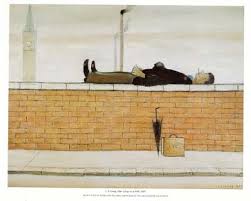
  1. Describe – and do no more. This is always the poet’s initial desire, to put into words what has caught our attention visually (and because attention has been visually caught there is something about this image or object that chimes with the writer’s subconscious). In terms of the poet’s intention, the wish to describe may be sufficient (the subconscious may do the rest). Examples might be Michael Longley’s ‘Man Lying on a Wall’ (from Lowry’s paiting of the same name) or William Carlos William’s ‘The Dance’ (from Breughel the Elder’s ‘Peasant Dance’).

imgres

  1. Describe but imagine beyond the frame – Derek Mahon’s ‘Girls on the Bridge’ (after Munch’s painting of the same name) does this, beginning with description of the scene but then wonders where the road leads away to in space, asks what the next day will bring (in time) and concludes with allusions to Munch’s more famous image ‘The Scream’: “bad dreams / You hardly know will scatter / The punctual increment of your lives”.

imgres

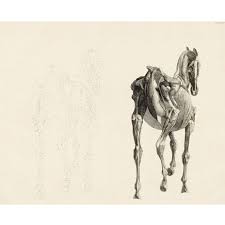
  1. Describe but incorporate researched materials – an easy option in the world of Google where the artist’s life or love life, the political context etc are easily accessed. Edward Lucie-Smith does this in ‘On Looking at Stubbs’ ‘Anatomy of the Horse’’, working with the gossip of local people in the Lincolnshire village where Stubbs worked at preparing the horse’s carcass: ‘His calm knife peeling putrid flesh from bone”.

imgres

Through Ventriloquism

  1. Make Main Figure Speak – the most common approach as famously done in Carol Ann Duffy’s ‘Standing Female Nude’ (from Georges Braque’s ‘Bather’). Thomas Hardy makes the Elgin Marbles speak in ‘Christmas in the Elgin Room’.


  1. Make Minor Figure/s Speak – UA Fanthorpe’s ‘Not my Best Side (Uccello’s ‘St George and the Dragon’) might be considered a hat-trick of the category above but her decision to make all 3 characters in the painting speak, casting side-lights to and fro, means I put it here. Delmore Schwartz’s ‘Seurat’s Sunday Afternoon along the Seine’ – while more free indirect speech than ventriloquism – has a similar effect, visiting each of the characters in Seurat’s picture and allowing their perspective to be aired.

imgres

  1. Make Objects Speak – this is an obvious category though I’m a bit short on illustrations of it. BC Leale’s ‘Sketch by Constable’ almost does it by concentrating attention on a tiny dog sketched in the corner of an image of Flatford Mill. Ann Ridler also comes close by largely ignoring the foreground figures and focusing on the landscape only in ‘Backgrounds to Italian Paintings’.


  1. Make the Artist Speak – writing about Van Gogh’s ‘Portrait of the Artist’s Mother’, Robert Fagles makes the artist speak, denouncing photography and preferring the expressive qualities of paint: “Of the life hereafter I know nothing, mother, / but when I paint you what I feel is yellow, / lemon yellow, the halo of rose”.


Through Interrogation

  1. Of the Artist – Vicki Feaver’s ‘Oi yoi yoi’ (on Roger Hilton’s image of the same name) starts with description but quickly begins talking directly to Hilton (“You were more interested / in her swinging baroque tits”). Interestingly, ekphrastic poems need not always stand in awe of the work; looking at Francis Bacon’s ‘Study for Portrait on Folding Bed’, Thomas Blackburn has a long one-sided conversation with the artist, charting a growing disenchantment with Bacon’s work, accusing him of “uttering, with superb, pretentious / Platitudes of rut, that you have said and said”.

 imgres

  1. Of the Figure/s – I have always admired Gerda Mayer’s poem, ‘Sir Brooke Boothby’ (after Joseph Wright’s image), in which she addresses with Sir Brooke about his languid pose, his copy of Rousseau, his intense scrutiny of the observer. Peter Porter’s many poems about art objects are hard to categorise but ‘Looking at a Melozzo da Forli’ (an image of the Annunciation) interrogates both image and the figure of Mary herself.

imgres

  1. Of Yourself – probably all ekphrasis is a sort of self-interrogation but some poems make this more clear. The address often takes the form of admissions of ignorance or obtuseness in the face of the image or the asking of rhetorical questions. Robert Wallace on ‘Giacometti’s Dog’ once again begins in description but asks questions about the fascination of the image, eventually concluding “We’ll stand in line all day / to see one man / love anything enough”.


Through Giving an Account

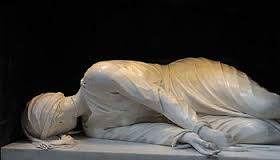
  1. Of Your Encounter – Wallace’s poem spills across these artificial categories and might be placed here, among poems where the poet explicitly records details of his/her encounter with the work of art. Yeats famously does this in ‘The Municipal Gallery Revisited’, looking at images of Augusta Gregory and John Synge. David Wright (who lost his hearing at the age of seven) movingly describes his visit to Rome to see Maderno’s sculpture of St Cecilia (patron saint of music) in his poem ‘By the Effigy of St Cecilia’.

imgres

  1. Of Gallery Visitors – poets often comment on the behaviour or experiences (imagined) of gallery visitors (and even the gallery attendants!). Gillian Clarke does this in ‘The Rothko Room’: “In this, / the last room after hours in the gallery, / a mesh diffuses London’s light and sound. / The Indian keeper nods to sleep, marooned / in a trapezium of black on red”.


  1. Of Others – admittedly a catch-all category this one, but sometimes (especially when the works of art appear in churches) the poet can be interested in speculating about the responses of more ‘ordinary’ people. Thom Gunn does this toward the end of ‘In Santa Maria del Popolo’ where Caravaggio’s ‘Conversion of St Paul’ is displayed. Having recorded his own response to the image he ends by staring at the old Roman women who come to kneel before it: “each head closeted // In tiny fists holds comfort as it can. / Their poor arms are too tired for more than this / – For the large gesture of solitary man, / Resisting, by embracing, nothingness”.

 imgres

Come At a Tangent

  1. Finally, the ekphrastic moment can be presented as if an after-thought, or illustration of a poem already half composed. There are famous examples of this, especially Auden’s ‘ Musee des Beaux Arts’ which spends most of its length contemplating in very general terms the way old paintings present suffering. Only towards the end does Auden refer to Breughel’s ‘Fall of Icarus’ which he describes in some detail to suggest how “everything turns away / Quite leisurely from the disaster”. RS Thomas’ ‘Threshold’ does something similar, only concluding with allusions to Michaelangelo’s painting of Adam in the Sistine Chapel. And Seamus Heaney’s ‘Summer 1969’ records a visit to Madrid as the Troubles boiled in Northern Ireland, and only latterly does the poem focus on Goya’s ‘Panic’: “Saturn / Jewelled in the blood of his own children, / Gigantic Chaos turning his brute hips / Over the world.imgres

What Love Is: Hilary Davies’ ‘Exile and the Kingdom’

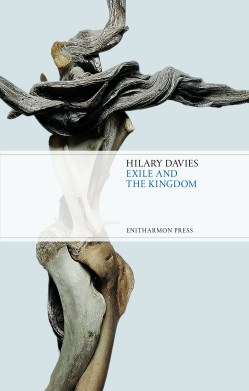
9781910392171

I met poet, translator and critic, Hilary Davies, back in the early 1980s and our paths have kept crossing since. She was one of the first intake of women undergraduates at Wadham College, Oxford, where she read French and German. She won an Eric Gregory award in 1983, has been a Hawthornden Fellow and chair of the Poetry Society (1992–3). With David Constantine, she co-founded and edited the poetry magazine Argo and has three previous collections of poetry (published by Enitharmon): The Shanghai Owner of the Bonsai Shop (1991); In a Valley of This Restless Mind (1997); Imperium (2005). She was head of languages at St Paul’s Girls’ School, London, for 19 years and was married to the poet, Sebastian Barker, who died in 2014.

hilarydavies-180x235

Davies’ new collection, Exile and the Kingdom (Enitharmon, 2016), is framed by two very powerful sequences. It opens with ‘Across Country’, a series of seven poems which add up to an autobiographical ‘growth of the poet’s mind’. The book concludes with ‘Exile and the Kingdom’ itself, a further eight poems which are nothing less than a meditation on the poet’s raw grief and re-discovery, or reassertion, of her religious faith. Both sequences contain weddings.

‘Across Country’ opens with an evocation of a child’s first moments, “what gets forgotten”, in a state of inarticulacy, no ability to exert our own will, with no will even, language-less and effectively silent, being “carried by gods”.  Passive in the hands of mother and father, the journey variously begins in “The reindeer saddle and the motor car, / the sighing desert and the plateau wind”. Davies seems to suggest these first human experiences fall onto a tabula rasa as they “Etch the first surfaces of particularity / And settle in our souls”. The particular development traced here is Davies’ own, of course, and crucially this involves a later period of travel in France. Happily alluding to Wordsworth’s own tracing of his youthful days and Revolutionary enthusiasm in France (“Bliss it was in that dawn to be alive /But to be young was very heaven” – The Prelude, Book 11), Davies praises “the glory of the cornfield and belltower, / Granite, limestone, vineyard and cloister”. As with Wordsworth, France offers an experience of human love, but Davies is also drawn to intellectual pursuits, the thrilling confusion of “many minds passing”, arguments of “polity and governance” and to the “meretricious fruit / Of the ideology tree”. We are being told this in order for such concerns to be ultimately dismissed:


The lords of existence

Are neither economist nor philosopher

The Lord of existence

Shows himself not in systems


The fourth poem in ‘Across Country’ seems to record the young woman’s first realisation that religion was to be the answer to many of the questions she was asking: “I crossed into church after church that summer, / Thinking of erudition, but beside me trod Love”. The capitalisation and conventional personification makes it clear that Davies is deliberate and happy to place herself in a long tradition of poetry dealing with religious experience; there is no radical re-making of poetic form or language. Davies does not use masks. Discursive passages are in unrhymed, fairly irregular paragraphs which are punctuated every so often with more lyrical rhyming passages, song-like.

Poem five of ‘Across Country’ is just such a lyrical piece, portraying a wedding, but not one that lasts:


Hate has eaten my bridegroom’s heart

And remorse is become my fury

Now I must go the road of affliction

Searching for mercy.


That search, Davies argues, is more a matter of “Waiting, not willing”. It is the traditional negative road in the sense of the centrality of “self-surrender”, imaged in the seventh poem as the sensation of being on a boat on a threatening ocean: “No measure but the dark blue breathing of the opening deep, / Where personhood dissolves beyond mere terror”. I don’t share Davies’ faith but I share her belief that, in terms of our daily acts and choices, we are to be judged in the long run: “Only perdurance delivers”. And in terms of the nature of those acts and choices, whatever set-backs are faced, we need to be accompanied by that same figure who walked beside her into the churches in France: “what love is, and does”. Read as the record of the poet’s experiences, it’s likely that this opening sequence concludes with Davies meeting with Sebastian Barker, the beginning of new happiness (“I knew instantly I had to go the hard way with you / To learn how to love better”).

.

p46-sebastian-barker
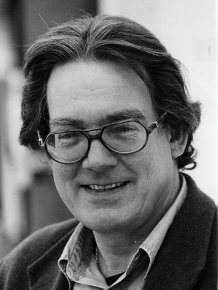
Sebastian Barker


The central sections of this collection are made up of poems more directly engaged with the contemporary world of north London, Stamford Hill, Walthamstow, the valley of the River Lee, Abney Park in Stoke Newington (I blogged one of these poem’s a few weeks ago). There are also poems more explicitly concerned with the relationship with Barker with titles like ‘Night’s Cloak’, ‘Aubade’, ‘Love Song’. I’ve always thought it a premature admission of defeat to declare ‘happiness writes white’ but some of these poems slip too easily into a mode in which this reader feels more like eavesdropping than sharing the experience of years of happy marriage; technically there is a flowering of lyricism and some softening of the vocabulary. On the other hand nobody is going to read these poems and not be thinking of Hardy’s tributes to Emma Gifford – it seems whether the marriage was mutually loving or not, the sense of loss remains overwhelming.

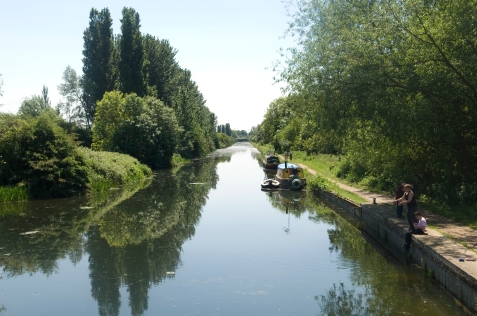
Lee Valley Park.  Photo: Eleanor Bentall 2nd June 2007 Tel: 07768 377413
River Lee and Valley Park

This is where the concluding sequence picks up though there is no need to narrow Davies’ focus wholly to the autobiographical. As I’ve said, these poems are in the tradition of religious verse and there are passages here that stand comparison with the Eliot of the Four Quartets. The opening poem – a little sequence in itself – paints a state of despair, initially social and political, latterly more personal:


Then there’s the heartache

At the core of things: attachment, the blank certainty

Of letting go, the arbitrary wing of accident,

Wrong gene or partner, a lifetime bled into the dusty ground

Of non-fulfilment, the waste [. . . ]”


The temptation is to try to counter this by accepting “ourselves as measure”, to focus simply on career, material gain, simply being busy, keeping warm. That this is never enough in itself is suggested when Davies recalls a favourite uncle who, having apparently a comfortable and successful life kills himself. For the young Davies what this taught was clear: “the impossibility of loving begets despair, / And despair kills”. The third poem of ‘Exile and the Kingdom’ seems to mark the beginning of the end of exile and returns to one of the many French churches mentioned in the earlier sequence.


300px-facade_st-gervais_st-protais
Church of St-Gervais-et-St-Protais, Paris


Out of the bustling Parisian streets, the narrator turns aside and understands, “Even if I have all gifts without love I am nothing”. As in Four Quartets, Davies mixes philosophical discursiveness with personal reminiscence and poem four recalls a Christmas morning in a country church. The priest, apparently ill, still takes the service, his gasping for breath making his faith even more memorable, a Wordsworthian spot of time worthy of recall in darker moments in the struggle to “retain that sudden downrush / Of the numinous that was supposed to change us”.  Poem seven expresses the sense of hard-won joy through another lyrical presentation of a second wedding. On this occasion, no clouds foreshadow failure but as the bride stands at the door, a wind blows her veil up like a candle flame or flower:


The guests are gathered in the church at Salle

The light falls on the floor;

For all eternity the rose

Stands at heaven’s door.


But the sequence and whole book ends in the altogether wilder landscape of St David’s, Wales. The final poem suggests such rose and flame moments are but parts of the coherence of a life where experience must inevitably consist of “Innocence and loss, hope, wisdom, regret and thanksgiving”. Exile and the Kingdom intends to convey this in full. Although propelled most often by loss of a loved one, the burden of the book remains love not grief. It matters little whether we share Davies’ particular form of faith, since what comes strongly from these pages is her concern for the way we treat each other, our overloaded preoccupation with ourselves, how our acts and choices are affected. Poems like these themselves form spots of time for the reader and I’m not going to forget their human concern for what love is and does.

In the Fire-Frost Morning

To wish everybody a peaceful Christmas and to apologise for my absence from blogging in recent weeks, I hope you will enjoy this poem from Hilary Davies’ new collection Exile and Kingdom (Enitharmon Press, 2016). Though I don’t share her faith, I do share her hope, though too often the world seems determined to test both faith and hope.

pfg-crop

In the Fire-Frost Morning

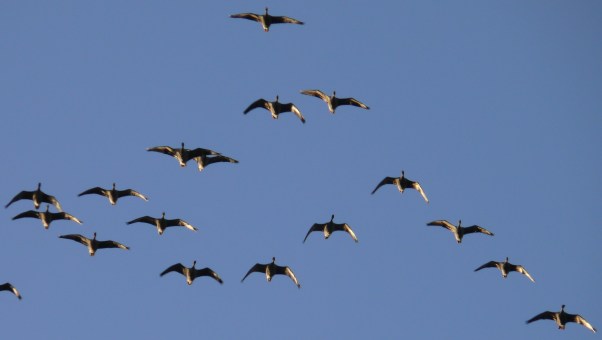
In the fire-frost morning the geese drive south

Trailing hosannas over the estuaries

And the beasts on the clockhouse stir.

From Tottenham Hale to Hackney Downs

The trumpets of day sound

And the gulls swarm up like heralds

Over the sleepers. ‘Awake! Awake!’

Throw open your skylights, thrust your heads to see:

Horseshoe thicket is afire with dawn

And the waters of Spring Hill teem.

Doors, dance. Fill the houses with praises.

God’s promise blazes in the reedbeds,

Bursting over the winter willows and sallows

All the way down to waiting Walthamstow.


9781910392171

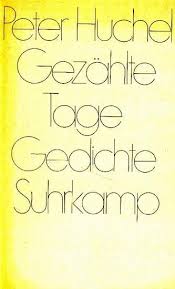
The Poetry of Peter Huchel #2

This is the second blog posting arising from my work over the last year or so on translating the third collection by the German poet, Peter Huchel. I hope to complete this for publication in the next few months and here (and in my previous blog) I have been gathering information about his life and times. In a working life that saw him through some of the most traumatic events of European history, Huchel published only 4 collections of poetry in 1948, 1963, 1972 and 1979. Throughout his career the substance of much of his work is his vivid observation of the natural world, moving gradually towards a usually brief, free verse form, a withdrawal from the personal and a steadily darkening vision which comes to be dominated by elegy and lament. Quotations from the poems in this blog are from my own translations.

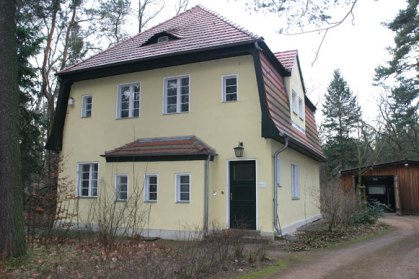
Huchel divorced in 1946 and married Monica Rosental in 1953. In his work at the journal Sind und Form he was always determined to maintain editorial freedom and the publication had an international outlook with contributions from Aragon, Bloch, Brecht (two special issues), Camus, Eluard, Langston Hughes, Thomas Mann, Marcuse, Neruda, Russell, Sartre, Yevtuchenko and Zweig. Inevitably he came into conflict with the authorities and came under immense pressure to conform. He resisted them for 13 years – in part because of the determined support of Brecht. Brecht’s death in 1956 left Huchel more exposed. He was asked to resign his editorship, refused and so compelled the East German government publicly to force his resignation. A year after the building of the Berlin Wall in 1961, Huchel was banished at the age of 59 to effective house arrest in Wilhelmshorst. The poem ‘Hubertsweg’ vividly portrays this period of his life, from 1962 to 1971, living in isolation and under Stasi surveillance:

huchel3

And at night

the roaring at the keyholes.

The fury of stems

splitting the earth.

And come morning

light roots out the dark.

Pine trees rake the mist from windowpanes.


He stands down there,

wretched as stale tobacco smoke,

my neighbour, my shadow

right on my heels as I leave the house.

Yawning sullenly

in flurries of rain from the bare trees,

he tinkers today with the rusty chicken wire.

What’s in it for him, scribing investigations

in his blue octavo book, my friends’ car numbers,

keeping watch on this hardly vulnerable street

for contraband,

forbidden books,

scraps for the belly,

stached in a coat lining.

A single twig to stoke the feeble fire.


Only his second collection of poems, Chausseen, Chausseen (‘Roads, Roads’) appeared in 1962. In defiance of the GDR authorities, he published it in the West. It was much praised – in the author’s absence. Henry Beissel has described the leanness and density of these new free verse poems: “images are more insistent on turning concreteness into code; sadness emanates from a sense of the inevitability of loss and from a world bent on self-destruction”.

48935464-red-brick-wall-background-with-dry-withered-ivy-leaves-plants

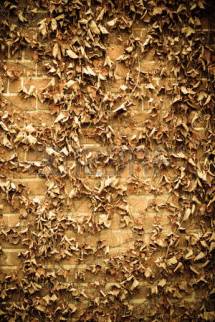
Fuse-wires

of withered leaves

glint on the wall.

Salt-white air.

The flight of cranes,

arrowheads of autumn,


In bright boughs

the hour’s pulse subsides.

Spiders deploy

their rims and spokes,

veils of dead brides.


Huchel’s images from nature are left to speak for themselves; his is often an impersonal, Symbolist poetry of a haunted and pessimistic kind. There is stoic survival and brutishness reflected in the curbed, elliptical, briefly allusive verse. Yet the poems remain marvellous acts of observation; the weather seems forever cold, wintry, foggy:


Estates,

disordered,

dust across the ground,

the heirs dead.

And grim skies,

grey cellars

of fogbanks.

The cold breathes

in echoing colonnades.


Huchel applied for an exit visa for himself, his wife and son on numerous occasions. He was supported by an internationally orchestrated campaign and eventually in 1971 the Ulbricht government granted his release. He lived first in Rome, then in a borrowed house near Freiburg in West Germany. Gezählte Tage (‘Numbered Days’)  appeared in 1972, the title suggesting the counted days of Huchel’s years under house arrest, his poems recording them, marking them, but also a residual sense of them actually counting towards something, his legacy as a poet, his final release. But like many GDR artists who moved to the West, Huchel was equivocal about what he found there. Because the GDR had failed to bring about a truly democratic and socialist society did not mean that Huchel had given up his ideals and the West’s materialism, egotism and faithless profiteering were repellent to him.


Beside the whitewashed wall

a monk clambers up steps,

sweat trickling from his brows.


Everything fades in light and heat,

the rough ochre of walls,

the fragile, scant moss on stones,

the spare green by the river.

The bellringer walks in ripped canvas shoes,

soon midday will sound.

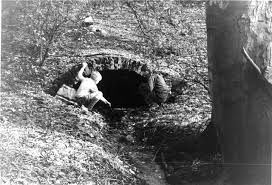
269285_4f92e840dfee5ec5e313ce224dfb8064_large
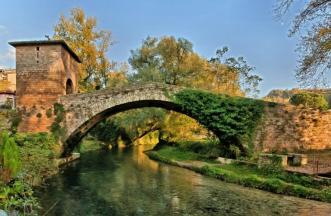
The medieval bridge at Subiaco, Italy

Huchel’s religious beliefs are difficult to pin down but certainly the poems of Gezählte Tage show a modern wasteland not confined to the East, a spiritual emptiness where, as in ‘Subiaco’, set in Italy, Pilate’s bowl stands emptied of water so the accumulation of guilt cannot be washed away. Nature still provides some recourse but not much of one. Huchel’s gloom is partly determined by his own nature, partly his background, political persecution, his divorce from his Brandenburg homeland. He often uses deliberate anachronism to make a point as well as Shakespearean and fairy tale motifs to evoke a lost time, a lost race, a golden age gone – with which he bears witness to his time. ‘Middleham Castle’ – where Richard III spent some of his youth – is a major poem in which Shakspeare’s tyrant lives on through the centuries as an image of oppressive power:


His foot is worm-eaten.

Gloucester walks to the stables,

the flagstones groaning.

The mastiffs lower their heads

anticipating the whip.


We are his servants,

we go in fear of his blade,

though his skull,

picked clean by so many winters,

lies deep in the ground.


richard-iii-5-940x460
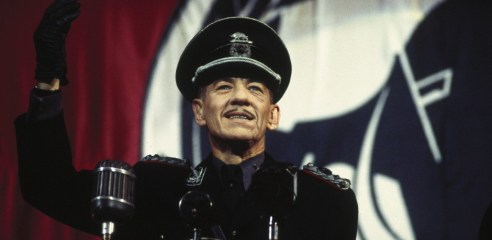
Ian McKellen as Richard III

In Huchel’s brief years in the West he was lauded and awarded literary prizes but this was just another form of exile. His final book Die Neunte Stunde (‘The Ninth Hour’) appeared in 1979. It is a book almost exclusively of elegy and lament; the ninth hour is the hour of despair, the hour in which Christ is said to have died on the Cross, crying out, “My God, my God, why have you forsaken me?” Huchel himself died in 1981, aged 78. I think I hear something of his more personal voice, attuned to the natural world but gifted only a tragic place in history, compelled to labour against the odds, in the unnamed peasant who Huchel has narrate ‘Middleham Castle’:


Familiar with the ways of great forests –

the year streaked with the jays’ colours,

painful brightness of frosted boughs,

the winter hair of deer stuck to bark,

fawns huddled together at evening,

warming themselves in the cloud of their breathing –

up the gorse-clad hill with rope and horses

I haul tree trunks to Middleham Castle.

76799569

The Poetry of Peter Huchel #1

I have been working off and on over the last year on translating the third collection by the German poet, Peter Huchel. I hope to complete this for publication in the next few months and here (over this and my next blog post) I have been gathering information about his life and times. I’ve found people know of his work but not in much detail. In a working life that saw him through some of the most traumatic events of European history, Huchel published only 4 collections of poetry in 1948, 1963, 1972 and 1979. Throughout his career the substance of much of his work is his vivid observation of the natural world, moving gradually towards a usually brief, free verse form, a withdrawal from the personal and a steadily darkening vision which comes to be dominated by elegy and lament.

huchel

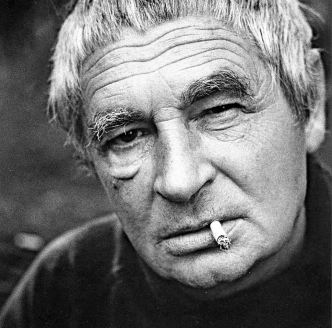
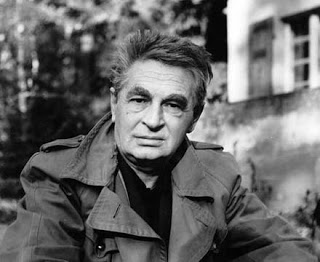
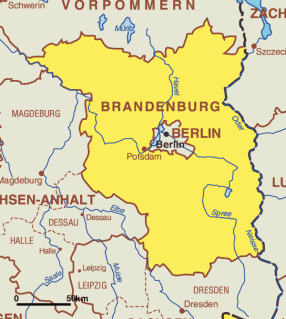
Peter Huchel was born Hellmut Huchel in 1903 in Lichterfelde (now part of Berlin). As a result of his mother’s ill health he was taken from the city to grow up on his grandfather’s farm at Alt-Langewisch, in the Brandenburg countryside near Potsdam. Huchel himself later argued “it is precisely the experiences of childhood, roughly between the ages of five and ten, that exercise a decisive influence in later years” (acceptance speech for the 1974 Literature Prize of the Free Masons). If this period was something of an idyll then it was shattered dramatically and forever by the death of the eleven year old boy’s grandfather and the outbreak of war in Europe.

brand-c-eu-komm

After defeat and his country’s humiliation at Versailles, Huchel, now 17 years old, took part in the conservative Kapp-Putsch against the Weimar Republic in 1920 which was fuelled by a resentment against the German government for signing up to the punishing conditions of the Treaty of Versailles. In the fighting associated with the failed coup, Huchel was wounded and it was during his recovery in hospital that his sympathies for socialism and Marxism fully developed.

From 1923 to 1926, Huchel studied literature and philosophy at the universities of Berlin, Freiberg and Vienna. Though always temperamentally an outsider, these were years of political, economic and artistic ferment (though ultimately something Huchel would react against) and in the final years of the 1920s he travelled to France, Italy, Greece, Hungary, Romania, Turkey. In 1930, he changed his first name to Peter. His early poems were being written and published from 1924 onwards and were already strongly marked by the atmosphere and landscape of Brandenburg. He appeared out of step with the times, writing nature lyrics, using conventional metre and rhyme, though the natural landscapes he portrayed were far from pastoral. The rural world he grew up in was providing ways of articulating concerns about the shortcomings of the world about him: his close observations of Nature showed her as a harsh mistress and the poverty and suffering of Huchel’s Brandenburg peasants were both very real and politically charged.

12106280_641080319366623_520747277_n

Working as an editorial assistant for Die Literarische Welt by 1932, Huchel’s poems won a prize and his first manuscript was accepted for publication under the title Der Knabenteich (‘The Boy’s Pond’). In 1934, Huchel married Dora Lassel but with the rise of Hitler in 1933, Die Literarische Welt ceased publication and Huchel withdrew his book partly for political reasons. He fled to Romania for a while and was deeply troubled that the Nazi’s liked his work, reading into it as they did a version of the blood and soil nationalism they hoped to foster. A few of his poems were published but by 1936 he was refusing permission and he did not publish a new poem during the rest of Hitler’s rule. Instead, he withdrew to the Brandenburg countryside but was eventually drafted in 1941, ending the war in a Russian prisoner of war camp.

With the fall of the Third Reich, Huchel enthusiastically shared the democratic and socialist optimism of many of his compatriots about the reconstruction of Eastern Germany offering a vision of freedom and equality to all. He began working for East German radio, published his first collection, Gedichte (‘Poems’), in 1948 and in 1949 became editor of the influential poetry magazine Sind und Form (Sense and Form’). Huchel’s poems were applauded both for their craft and evident socialist undercurrents though he did not satisfy some who demanded much more explicit support for the German Democratic experiment. Huchel’s dark rural landscapes offered at best equivocal support for the socialist regime and his instinctively conservative harking back to childhood and the natural world (rather than the modern revolutionary transformations of human society) were rightly seen by many as falling far short of the expected unquestioning celebration of the GDR’s project.

imgres

Here’s Huchel’s ‘The Polish Reaper’ – from this period – as translated by Michael Hamburger. Compared to Huchel’s later work, there is an exclamatory and ‘poetic’ quality to many of these lines (despite being nominally spoken by a migrant worker in Germany). Also the political content is more explicit in the fields mowed but not owned, the poor conditions of the workers and the rather hefty symbolism of the returning eastwards to a red dawn!


Do not cry, golden-eyed frog,

in the pond’s weedy water.

Like a great conch

the night sky roars.

Its roaring calls me home.


My scythe shouldered

I walk down the bright main road,

Dogs howling round me,

past the smithy’s grime

where darkly the anvil sleeps.


Down by the outwork

poplars are drifting

in the moon’s milky light.

Still the meadows exhale heat

in the crickets’ screeching.


O fire of the earth,

my heart holds a different glow.

Field after field I mowed,

not one blade was my own.


Blow, autumn gales!

On the bare boards of lofts

hungry sleepers awaken.

Not alone I walk

down the bright main road.


At the rim of night

the stars glitter

like grain on the threshing-floor,

where I go home to the eastern country,

into morning’s red light.


I’ll continue Peter Huchel’s life story in my next post.

Beyond Caravaggio and an old ekphrastic poem

51mrxjcbqcl-_sx351_bo1204203200_

Two things dove-tailing this week . . . My thoughts way ahead of time about ekphrastic poems (poems stimulated by visual art) in relation to the workshop I am scheduled to run at the Holburne Museum in Bath in February 2017. The particular exhibition was in the news this last week as they will be showing, amongst many others, a newly-rediscovered painting by Peter Breughel. Also I went to the Beyond Caravaggio exhibition at The National Gallery a couple of days ago. There, though the numbers of Carravaggios per square metre of wall space is relatively low, much of what’s on display by those who came under his influence is well worth seeing.

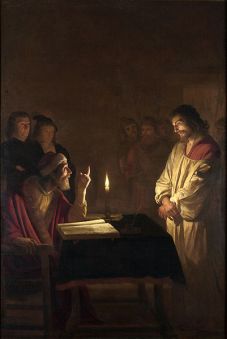
At the end of the 16th century Caravaggio brought an almost photographic precision to painting, mixing elements of still life with portraits and religious subjects. His people are caught (again almost photographically) in realistic seeming mid-gesture, twisting, stooping, hands wide or aloft. Then there’s the light: powerful light sources cast illumination and correspondingly deep shadows across the figures, darkening the brows of a face, across a hand at a card game, on exposed flesh. One of the ‘followers’ turns out to be Gerrit van Honthorst whose towering ‘Christ before the High Priest’ is displayed in the final room. As I came across it I had one of those moments of recognition. The picture has been in the National Gallery collection for many years and it provided the (ekphrastic) stimulation for one of my earliest poems.

401px-gerard_van_honthorst_-_christ_before_the_high_priest_-_wga11650

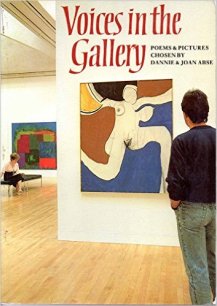
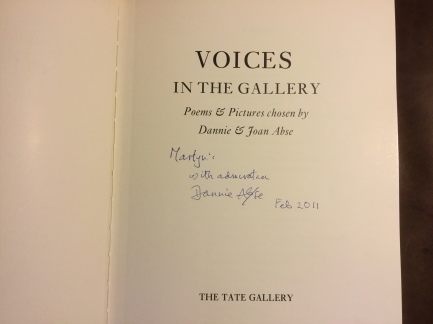
The poem eventually appeared in my first book, Beneath Tremendous Rain (Enitharmon, 1990) and I’ve always had a soft spot for it as Dannie Abse chose to include it in the plush, coffee-table anthology called Voices in the Gallery (Tate Gallery Publications) he edited 1986 with Joan, his wife and art historian. For a wannabe poet with no book yet it was a dizzying moment – a not-to-be repeated moment – being sandwiched between Zbigniew Herbert, W. H. Auden and Thomas Hardy! Year later I got Dannie to sign my original copy of it.

img_0229

The voice in my poem is naïve and unknowing, an art historian ignoramus (close to the autobiographical truth). But he looks hard, starting with a bewildered rationalism as he tries to get to grips with the stylised, stiff religious images of the “early galleries”. He understands he’s nothing more than one of the “casual visitors” who prefer to gaze at something familiar, the “recognisable gesture”, the more simply realistic and identifiable images contained in later works. But gradually he recognises the thorough-going empiricism of “dimension, distance and the need for accuracy” has its own limits (I still like the dig against my own gender’s devotion of facts, though the portrayal of the too submissive female partner I’d not let through these days).

The Expressionistic distortions of Van Gogh (“inconsistent with the camera”) begin to appeal to him as he understands the impossibility of a truly objective view (“eyes jaundiced / only with being human and limited”) which – he seems to be on a circular walk round the National Gallery – then allows him to re-assess the earlier images. With the passage of time and the loss of religious faith (I was sure of it then, back in the 1980s), these pictures also openly admit their distortions. Their “dogma is laughable now, or / almost so”. They obviously possess no camera-like claim to objectivity or all-inclusiveness. Rather they now seem to him to admit “in all self-consciousness, / other possibilities multiplying beyond the frame”. It’s at that point the image of Honthorst’s ‘Christ before the High Priest’ comes to mind. It seemed to me then an image that was interesting and powerful at least as much for what lies just out of sight as for what the casual visitor can see plainly.

Years later, in different poetic modes, I’m still intrigued by what lies just beyond our reach – the Daoist’s uncarved block of wood – still think it has as much power as what we plainly see. Here’s the old poem in full:


At The National Gallery


What am I to do with these angels’ wings,

with the literalness of these gaping heavens

and haloes in the early galleries?

No-one believes them. Beyond meaning,

they are absurd – mannered and posed figures

as unlikely as the nude’s fig-leaf, the wooden

gestures of saints staring straight through you:

uncomfortable attitudes, seeming content

with their fantasies of transfiguration and myth.


Yet casual visitors walk right past. They’re drawn

to quotidian scenes, the scruffy breeches, old hats

in later pictures where they scribble notes,

trying to capture the vanishing feelings

of viewing these captured moments

of vanishing things – the recognisable gesture

at an execution, on the river, in the boudoir.

And I with them, yet always end uncomfortably

tracing holiday strolls through Canaletto’s

Venice or impatient somehow with men

who explain to their quiet partners about

dimension, distance and the need for accuracy.


But Van Gogh’s crippled chair confounds them,

restores a sense of things perceived in ways

inconsistent with the camera, eyes jaundiced

only with being human and limited which is

other than the capture of fleeting things,

the stunned insect, and like verse that must

struggle to avoid its final stop: another fairy-tale

though there are no haloes, no heaven here.

And I go back to those old pictures to find

their appeal, uncovered, is the honesty, almost

innocence, time has forced upon them,

for what was then dogma is laughable now, or

almost so. Uncameralike, their contentment admits,

rather asserts in all self-consciousness,

other possibilities multiplying beyond the frame:


like the one candle, illuminating a room,

the gleaming tabletop, across which one detailed,

serious face confronts another, unnaturally

bound in by a darkness in which we make out

nothing, yet know someone moves inches beyond

vision, rising, strained forward and demanding:

Give me some light, I say, lights! Now! A taper!

img_0231

How to Grow your Own Iambics Part 2

This is the second posting on a metrical exercise on iambics. I have been teaching 3 sessions for the Poetry School in the last few weeks, contributing to the ongoing course called The Construction of the Poem which takes students through the various constituent elements that go to make up a poem. It is advertised as on ‘the history and application of formal techniques’ and my brief is to cover metrical issues. Though the course is directed more at learning about such techniques than the application of them (this is partly just a matter of time restrictions), one exercise we have played around with is growing our own iambics – this began with an iambic monometer and grew into an iambic tetrameter as detailed in my previous posting.

images

Starting from the tetrameter again, the poem will now grow some more . . . This is where I got to last time:


Because I hope to speak to her

I walk again along the way,

the path beside the old canal,

where children play and mothers come,

where thistles bloom in purple knots

that grey and drift across the path,

here strewn with wrappers torn from sweets,

with needles dropped another day,

where users lean and drift, ascend

above the clouds and steeple cock.


From this pretty regular iambic tetrameter, grow on further lines while at the same time lengthened these lines to iambic pentameter (5 iambic feet per line). New material indicated in italics:


Because I hope to speak to her, I walk

again along this way, the path beside

the old canal where children play and mothers

come, where thistles bloom in purple knots

that grey and drift across the path. It’s strewn

with wrappers torn from sweets, with needles dropped

another day, where users lean and drift,

ascend above the clouds and steeple cock.

Its glint I glimpse where water stands, its gold

a coin, a drowned, two-headed coin she tossed.

A bird is panicked from the reeds, its wings

slapping the surface like a window smashed.


I’ve slightly re-jigged line 2 here and feel the need to punctuate more heavily with the lengthening lines. The di-syllabic “mothers” again presents an issue at line 3 – I’ve made the same choice here as before, not breaking the word, allowing 11 syllables in line 3, shortening line 4 to 9 syllables. “Slapping” – given the sudden violence of the bird’s flight – I have allowed to stand as a reversed, trochaic foot opening line 12. I’m now thinking of the narrator as a mother (though as easily a father) who has come to a place remembered as visited with a daughter, now more grown up. The coin toss image seems to allude to some life-chance or choice and the inclusion in the poem – in the narrator’s observations – of the discarded needles probably tells its own story.


Beyond the pentameter lies the less common reaches of the hexameter or alexandrine – six iambic feet per line:


Because I hope to speak to her, I walk again

along the path, this way beside the old canal

where children play and mothers come, thistles

bloom into purple knots that grey and drift across

the path strewn here with wrappers torn from sweets, needles

dropped on another day, where users lean and drift,

ascend above the clouds and steeple cock. Its glint

I glimpse where water stands, its gold a coin, a drowned

two-headed coin she tossed. A bird is panicked from

the reeds, its wings beat the water like a window

smashed. If I stand inside the door and gaze across

the pews towards the brightly coloured glass of saints

and martyrs, mother, child in arms, its chubby limbs

each filled with sun, her robe is blue, her arms are full.


The lengthened line now begins to drag a little and is feeling rather clumsy here (it would need more work if I wanted to go with this) but as a reader I think of the slow, rather mournful walk of what now seems to be the possibly bereaved narrator. In line 3 the two syllables of “thistles” again ought to be broken across the line break – this time I cut the preceding word (“where”) to give more of a jolt to this threatening word so line 3 ends with a trochaic foot – “come” and “thist-” forming a spondee. Line 4 opens with a trochee too. The word “needles” presents the same problem at the end of line 5 – this I’ve re-jigged as above (though it does not read well to my ear at the moment). But I guess I’m happier to disrupt the predominant iambic by this stage – partly because it’s clearer to me now that this poem has a dark edge to it – but also because the longer lines give (maybe they need?) the chance of more variation. Line 10 has also been altered a little, “slapping” is replaced by the stronger monosyllable “beat”. The unexpected leap into the church interior seemed a good idea – a change of scene – and an intuitive link to the smashed rippling of the canal water, reminding the narrator of stained-glass. The image of Madonna and child is maybe too obvious but actually feels right for both writer (me) and the narrator (definitely now a mother of a child lost somehow). It’s also more acceptable as the church steeple had already been alluded to in the poem.


I’m now going to take this as far as the iambic heptameter line or fourteener:


Because I hope to speak to her, I walk again along

the way, this path beside the old canal, where children play

and mothers come and thistles bloom in purple knots that grey

and drift across the path. It’s strewn with wrappers torn from sweets,

with needles dropped another day, where users lean and drift,

ascend above the clouds and steeple cock. I glimpse its glint

where water stands, its gold a coin, a drowned two-headed coin

she tossed. A bird is panicked from the reeds, its wing-beats break

the water like a window smashed. I stand inside the door

and gaze across the pews towards the brightly coloured glass

of saints and martyrs, mother, child in arms, its chubby limbs

each filled with sun. Her robe is blue, her arms are full of blood,

the red of ribbons, red of nails, the red of every month.

It’s her I think I need to find. Beyond the traffic noise,

I cross the bridge. A narrow boat is gliding down below,

its brightly painted tubs, its name a girl’s, I watch it pass

into the dark, a stink of smoke, a swirl, a wink of light.

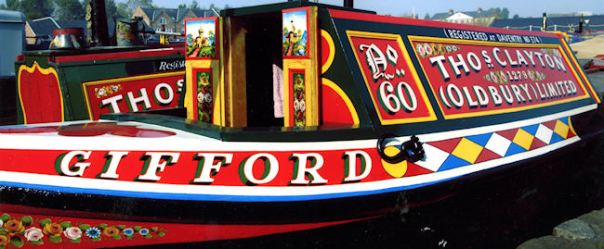
 gifford1

That the Madonna’s arms are full of blood surprised me but probably I am echoing those earlier thoughts of veins and needles. The repetitions of “red” felt quite bold, I think following the maturing of the narrator’s daughter. I grew up near the Kennet and Avon canal and still walk there often watching the narrow boats pass. Many of them are carefully decorated by their owners and this was coming to mind at the end though I still think this is a very urban part of the canal network. Obviously the passing boat, with its girl’s name, reminds the mother of her daughter (I guess we still don’t know exactly what happened to her) and though there is something positive in the painted colours of the boat (echoing the coloured windows in church I now realize), its passing into the tunnel is ominous and the fragmenting of the lines (these long lines are good for this) suggest a dissolving or passing away.

I don’t know how this reads yet as a poem and it’s certainly to raw and new to think which of these forms suit it best (if any). But it’s not a poem or a place I might have entered into without the use of this very methodical exercise. It’s worth a try, I think, and whatever the results, it’ll set you thinking about line lengths generally and patterned rhythm or metre more specifically – essential tools of the poet at any stage.