Edward Thomas and Two of His Friends

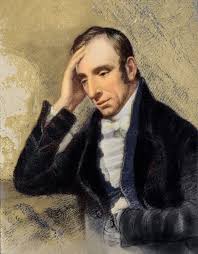
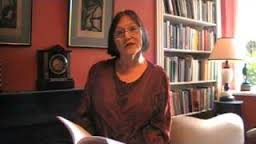
Last weekend I was asked to talk briefly about Edward Thomas at an event at the Palmers Green Library in north London. This year is the centenary of his death and I looked at one of my favourite poems, ‘The Sun Used to Shine’. I have written in close detail about it in an earlier blog so I have excised most of my comments about the poem itself from this current post. I hoped to take the audience’s attention to the poem, to Thomas’ life in 1914/17 and then bring them to more contemporary poetry with a couple of my own poems which are thoroughly imbued with Thomas tropes – inspired by his work and life. 


p0222klt[1]
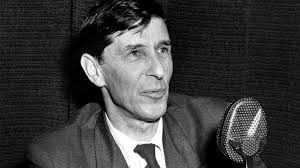
Edward Thomas and Helen Thomas

Edward Thomas died at the Battle of Arras on the 9th April 1917. One hundred years and 5 months ago. It has long been thought that he died from a nearby shell blast stopping his heart and his watch, on that Easter Monday. But a couple of years ago, the discovery of a letter from his commanding officer suggested he had been actually ‘shot clean through the chest’. It was perhaps a sanitised version of his death delivered to his wife, Helen, that gave rise to the attractively poetic myth of his ‘clean’ death.

But so much about Thomas has a similar mist of uncertainty about it. He shares with his great friend and poet, Robert Frost, a liking for the word ‘something’ – a thing that is unspecified or unknown, a description or amount being stated but not exactly. This is partly what makes him a modern writer (though his main subject material – the natural world – might make him seem otherwise).

flowermoonPNG[1]

But he’s also modernist in that he can be emotionally reticent, guarded, suspicious. In a letter to his wife a few days before he was killed he wrote: “I know that you must say much because you feel much. But I, you see, must not feel anything. I am just, as it were, tunnelling underground and something (that word again!) sensible in my subconsciousness directs me not to think of the sun [. . .] If I could respond to you as you would like me to [. . . ] I should be unable to go on with this job”. You might think such guardedness was just a war-time effect. But a poem like ‘No one so much as you’ – written in 1916, surely to his wife – says: “My eyes scarce dare meet you”.

His difficulties with loving were certainly related to his bouts of depression. He suffered dark, suicidal periods, infamously taking a revolver with him into the woods intending not to reappear. In the poem ‘Beauty’ he writes:


What does it mean? Tired, angry, and ill at ease,

No man, woman, or child alive could please

Me now. And yet I almost dare to laugh

Because I sit and frame an epitaph –

‘Here lies all that no one loved of him

And that loved no one.’


The poem eventually finds some sense of relief in the natural world. Note here the uncertainty in both what it is in him that seeks happiness and what it is that seems lost to him:


This heart, some fraction of me, happily

Floats through the window even now to a tree

Down in the misting, dim-lit, quiet vale,

Not like a pewit that returns to wail

For something it has lost, but like a dove

That slants unswerving to its home and love.
 

imagesGNDXGJZ4
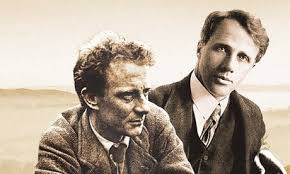
Thomas and Frost


Because it’s one of his best, I’m going to look at Thomas’ poem ‘The Sun Used to Shine’ written in May 1916. There is no straining between subject and technique. Its moods shift continually from companionship, to thoughts of war, to an historical sense, to an almost cosmic sense of time. So it travels great distances without departing far from the English countryside that provided Thomas with its beginnings. Nor does it depart far from ordinary language – it has a surface accessibility. It’s held together by a human voice – quiet, questing, informed about nature as well as history, one willing to contemplate existential questions.

[. . .]

alfred-tennyson[1]

By the time the poem was being written, it was more than a year after the Frosts had sailed for New York. Thomas is mourning a lost era as much as a lost friend. Perhaps no surprise that he had Tennyson in mind as he wrote. In Memoriam is Tennyson’s tribute to his lost friend, Arthur Hugh Hallam. In section 89, Thomas found a model and images of friendship, the English landscape, ripe fruit, running water, long walks, long talks – a kind of lost Paradise:


The landscape winking thro’ the heat:


O sound to rout the brood of cares,

The sweep of scythe in morning dew,

The gust that round the garden flew,

And tumbled half the mellowing pears!

[. . .]

Nor less it pleased in livelier moods,

Beyond the bounding hill to stray,

And break the livelong summer day

With banquet in the distant woods;


Whereat we glanced from theme to theme,

Discuss’d the books to love or hate,

Or touch’d the changes of the state,

Or threaded some Socratic dream;

[. . .]

We talk’d: the stream beneath us ran,

The wine-flask lying couch’d in moss,

[. . .]

And brushing ankle-deep in flowers,

We heard behind the woodbine veil

The milk that bubbled in the pail,

And buzzings of the honied hours.

9780905289380[1]

Such similar quiet acknowledgements of landscape, of time present and past, of friendship are some of the themes which draw me to Thomas’ work. Another of his friends was Jesse Berridge. The depth of this friendship is revealed when Berridge writes – this in the Spring of 1947 (fully 30 years after Thomas’ death at Arras) – of dreaming of the poet:

In my dream he was coming down a road, in loose dark clothes, to meet me, with his long purposeful stride and his face alight with pleasure and gaiety. Well I knew that look on his face, and here and now I would give testimony that I did know very many hours in his company, and in by far the greater part of them he was happy, sometimes with an almost bewildering intensity.

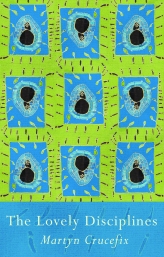
Here (if I may) is a poem of my own, drawing on material from Berridge’s memoir of Thomas which I hope captures some of the pleasures the poet shared with Berridge and before that with Frost. The opening detail about the church at Kilve in Somerset, is referred to in Wordsworth’s poem ‘Anecdote for Fathers’ (1798) included in Lyrical Ballads, obviously a favourite with Thomas and Berridge:


These things I remember                               

after Jesse Berridge


That afternoon on the beach at Kilve

we had ascertained

there was no weather-cock on the church

and we were resting in peace

almost in silence when he turned

and told me to listen

to the little melodious twittering

of a tiny bird that swooped and dipped

between where we sat and the roiling ocean—

a meadow pipit he said

the moment was unforgettable then

as he so often made such things

calling attention to this or that aspect

of what I call his vision

as one morning he cut a walking-stick

from the woods then carved

until it had a character of its own

or the knife I’ve owned almost sixty years

its bone handle chafed

and worn by my touch

until the white has begun to show through

for him held a peculiar fascination

till obscurely I began to feel

it possessed of a soul

that nothing but his observation of it

had created and I remember my children

always delighted in his occasional visit

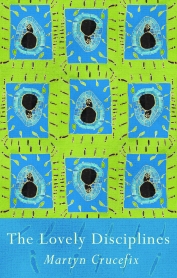
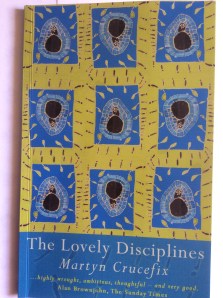
(from The Lovely Disciplines, Seren 2017)

images7ZFS3C20

Thomas and Berridge would often cycle the English countryside together and if you are interested in his extraordinary responses to the landscape I’d recommend In Pursuit of Spring, published in 1914. It was this book that Frost seized on in the summer of 1914 as evidence that Thomas ought to start writing poetry.

There are also personal reasons why I like this book so much – Thomas cycles from the outskirts of London, heading westwards, to the Quantocks. On his way he descends from Salisbury Plain into the Wiltshire where I grew up. Indeed he traces a particular ride along roads I know well. Here he is describing the almost visionary impact of the English countryside:

Motion was extraordinarily easy that afternoon, and I had no doubts that I did well to bicycle instead of walking. [. . .] At the same time I was a great deal nearer to being a disembodied spirit than I can often be. I was not at all tired, so far as I knew. No people or thoughts embarrassed me. I fed through the senses directly, but very temperately, through the eyes chiefly, and was happier than is explicable or seems reasonable. This pleasure of my disembodied spirit (so to call it) was an inhuman and diffused one, such as may be attained by whatever dregs of this our life survive after death. In fact, had I to describe the adventure of this remnant of a man, I should express it [. . .] with no need of help from Dante [. . .] Supposing I were persuaded to provide the afterworld with some of the usual furniture, I could borrow several visible things from that ride through Semington, Melksham, and Staverton.

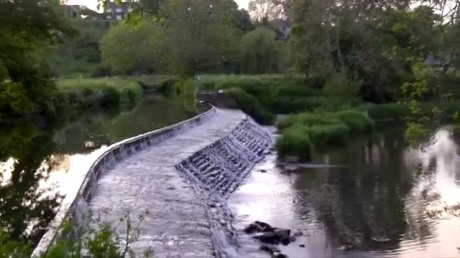
Later, Thomas takes a detour to another place I know well, the village of Tellisford, its ruined water-mill and bridge by the River Frome. There he meets the Other Man, a figure who pops up in the book and who represents Thomas’ alter ego. I’d like to finish with another of my poems which I hope captures a good deal of the spirit of Edward Thomas in its love of English landscape, its sense of history, its longing for companionship, its loneliness and, in its conclusion, its sense, as ‘The Sun Used to Shine’ says, that “Everything / To faintness like those rumours fades”. The old man is a version of Thomas perhaps, or a version of the Other Man, or a version of myself – or all three at once. You might say one of my projects is to convince you that clarity is a chimera.


Rebuilding Tellisford weir

turn aside to see Tellisford  – Edward Thomas


He refuses shade in midday heat

the old man walking

in his honey-brimmed hat

along the drained weir-shelf


that looks today like stacked loaves

its pallid smooth ranks

of Victorian stones

mapping precisely the Domesday line


where he patrols to and fro

proudly surveying the place he owns

this stretch of England

his plan to restore the workings


of the old watermill

to feed the Grid—and it is for this

he has ordered tons of sludge

to be dredged above the drop


and dozens of loosened stones

to be replaced to give

the mill-race its full head

and today he walks the slippery length


of the dammed weir-shelf

hallooing picnickers

who pull corks from fizzy wines

he cries what marvellous weather


then falls to conversation with a couple

who are celebrating sixty years

in their self-built house

with their three good boys


raised and schooled to distant homes

though today they recline

on trashy garden chairs

on this riverbank as if to watch


the old man in an antique yellow hat

who walks noting progress

on the weir and how could they know

he’s something on his mind


for the next hundred years

how could they know more and more

these days he struggles to endure

the roaring of the fish-shoot


with its silted water

and these stilted conversations

with such ordinary people

their Diet Coke and egg mayonnaise


their crisps for the grandchildren

their Sunday newspapers

let blow and tumble across the meadow

reminding him of himself


how his mind often strays

up the ditch-line to the old drovers’ road

where for fifty years

their cars have pinked and purred


especially at night as they mount

slowly the gravel verge—

O so many love-cars for so many years

drawn to his father’s land


each in pursuit of what the river gives

of moonlight and chance

of the ticking of an engine

as it cools of blonde hair spilling


across dark seats in disarray

he knows the windows rolled to the dusk

the sickly smell of water

the murmur within and talk


when it’s over though he knows well

it is never really over—

and it’s because of this

he will not turn them away


although they holler and soil and litter

still he’d grant them every wish

it’s for this his feet edge now across

the weir-shelf this afternoon


for this he takes his uneasy stand

hands thrust in his pockets

their cars pulling in to the dark hiss

of white gravel everywhere loosening

(from The Lovely Disciplines, Seren 2017)
Featured Image -- 13434

How to Answer the Poetic Influence Question #2

With my new collection just out from Seren Books, I’m happy to have a number of promotional events and readings coming up over the next couple of months. As I discussed in an earlier blog, though I love the business of giving a reading, there’s often a moment that arises that I’m always uneasy about. It’s the question of influence. In that previous blog I followed through, chronologically, those poets who have had a powerful influence over the style and direction of my work. That provides one possible answer to the question ‘what other poets do you consider to have been an influence on your poems?’ Another reply might be to look closely at very recent work to see which poets are present in it as ghosts. This is what I’m doing here.

A Boat..._quicksand cover

In preparing a new book for public reading, I tend to work through every poem making notes on the kind of thing an audience might need/like to know before hearing it (once and once only, in performance). I will often draw attention to the presence of a powerful poet figure that I’m aware of in the vicinity of the poem. So in The Lovely Disciplines, I can see influential roles of substance for Robert Hass (with Czeslaw Milosz), Ivan Lalic, Mary Oliver (with Emerson), Whitman and Edward Thomas.

Before looking at those in a little more detail, there are also two translations/versions from other poets in the collection. One is a version of Boris Pasternak’s poem from the 1950s called ‘In Hospital’. In the process of my versioning, the gender of the main protagonist was switched to female, more in line with most of the poems from the middle section of my book which forms a composite portrait of the passing of my parents’ generation.

Abbaye_de_Valsainte_2
Abbaye de Valsainte

I also include a loose translation of (plus a poem alluding to) the work of the French poet, Yves Bonnefoy, who I referred to in my earlier post on Poetic Influence. My poem ‘Valsaintes’ is named after the rural retreat in Haute-Provence where Bonnefoy lived in the 1960s. In many ways an idyllic place, in the end the renovation and up-keep of what was little more than an ancient ruin proved too much for him and the property was sold. For years afterwards, he harked back to it as a favoured, lost place. Bonnefoy’s ideas about what he calls ‘presence’ continue to fascinate me. My version, called ‘After Bonnefoy’, ends:


let’s bring ourselves one to another


as if each was at last all creatures

and all things all empty ways

all stones all metals and all streams

download
Sir Michael Tippett

Sir Michael Tippett’s 1944 secular oratorio, A Child of Our Time, is explicitly relevant to my poem ‘Listening to Tippett twice’. Tippett also wrote the libretto, inspired by the assassination in 1938 of a German diplomat by a young Jewish refugee and the Nazi government’s reaction to it. This took the form of a violent pogrom against its Jewish population – the infamous Kristallnacht, so called because of the broken glass which littered the streets the following morning. Tippett’s text and music deals with these incidents in the context of the experience of oppressed people more generally and the whole work carries a strongly pacifist message of understanding and the need for reconciliation.

I’m certainly aware of echoes of Wordsworth on a couple of occasions. In ‘The Toll Cottage’ – a dream-poem in which I am being driven by my father – there’s a mangled remembrance of a phrase Wordsworth uses in ‘Tintern Abbey’ – “Once again I see / These hedgerows, hardly hedgerows, little lines / Of sportive wood run wild”. Also ‘The girl who returned to Aix’, a sequence of three sonnets, includes the awkward fact that I cried on first seeing Steven Spielberg’s Close Encounters of the Third Kind. It was that moment when the huge alien spaceship finally appears, rising up from behind a mountain – just as Wordsworth’s mountain, Black Crag, rises up in the boat-stealing episode of The Prelude Book 1.

download
Enough to make a grown man weep

In my poem ‘Nocturne’, I was partly thinking of Whistler’s painting, ‘Nocturne in Black and Gold’ (c. 1875) but I like to think my (love) poem has more light in it than that, set as it is in the same Tuscan landscape as another poem called ‘The renovation near Sansepolcro’. ‘Nocturne’ also makes reference to ‘the poet’s kelson’ and this is Walt Whitman who, in the fifth part of ‘Song of Myself’, refers to love as a kelson of creation. A kelson (or keelson) is the structure running the length of a ship and fastening the timbers or plates of the floor to its keel giving stability and strength.

download

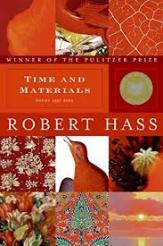
In his book, Time and Materials (2007), introducing the sequence ‘Czeslaw Milosz: In Memoriam’, Robert Hass recounts a discussion he had with Milosz (as his translator) about the different connotations in English of Oh! and O! As it turned out, the one Milosz intended in his poems was the second and this is the one that most interests me too. My poem opens:


Oh! is longer drawn already

beginning the button-down

of understanding

that well-I-never

with its freighting

of verb tense and identity

whereas O! is more sudden

more urgent surely

of the moment rapt

when we are prised open

by desire [. . .]


I wanted the title of my poem, ‘The lovely disciplines’, to feel paradoxical and in my mind it was related to the Serbo-Croat poet, Ivan Lalic. I remember reading his 1981 collection, translated by Francis R. Jones as The Passionate Measure. I remember Lalic explaining he hoped to suggest the fluidity or fluency of emotion as well as the orderliness or measured nature of a dance or verse. I hoped my title would suggest something of the same – a balanced response to experience, both our taking pleasure in it and searching it for order. My poem takes place on a women’s hospital ward.

download

Mary Oliver’s book, Swan, is not her best but I bought it in a secondhand bookshop once and inside discovered an ATM receipt with some cryptic notes on it. This provided the start of ‘As we live’, a poem which takes up Oliver’s sensitivity to nature (which she often gazes at with such precision of feeling as to achieve a visionary intensity) as well as her epigraphs from Rilke’s Duino Elegies and Ralph Waldo Emerson’s essay ‘Beauty’ in The Conduct of Life: “’Tis curious that we only believe as deep as we live”.

Finally, Edward Thomas (Ted Hughes’ “father of us all”) appears explicitly in relation to two poems in my book. Not a million miles from Oliver’s example, it’s his directness and love of what lies before him that I like. I like his sense that, in Robert Frost’s words, this world is the right place for love, combined with his intuitions about the human need to look beyond, perhaps into an inexpressible obscurity. ‘These things I remember’ is almost a found poem on these issues – taking phrases from a memoir written by Thomas’ friend Jesse Berridge (published with letters by Enitharmon Press).

And ‘Rebuilding Tellisford weir’ has an epigraph from Thomas’ 1914 prose book, In Pursuit of Spring. His book recounts his 1913 journey – by bicycle – across southern England from London to the Quantock Hills. I was delighted to discover him passing through the landscape of my childhood: cycling down off Salisbury Plain, through Erlestoke and Edington, Steeple Ashton, North Bradley to stay with friends at Dillybrook Farm just outside Trowbridge, where I lived for 18 years. He writes about waking at night to the sound of falling water. The next day he is persuaded to visit Tellisford and its weir by the mysterious Other Man (a kind of alter ego for Thomas). My poem mixes some of these details with my own memories of visits to Tellisford. I like to think the poem has a lot of Thomas in it: a sense of history, the beauty of nature, strange encounters with others, a sad loneliness, the transience of all things.

maxresdefault
The weir at Tellisford, Wiltshire

How to Answer the Poetic Influence Question #1

A Boat..._quicksand cover

With my new collection just out from Seren Books, I’m happy to have a number of promotional events and readings coming up over the next couple of months. I love the business of giving a reading, but there’s often a moment that arises that makes me uneasy as to how to how to respond. It’s the question of influence; the hand going up to ask: what other poets do you consider to have been an influence on your own poems?

It’s my problem I’m sure, but I’ve always had two ludicrously extreme responses spring to mind on hearing the question. Firstly, to list pretty much every single poet I’ve read in the last 40 years because the truth is every single one has added a grain, a pebble (for better or worse) to the path I walk to write a poem. Alternatively, since I can’t think of one, or even two, clear contenders for powerful influence when I sit down at a blank page or screen, it must be that I have emerged ex nihilo, a peculiar original. The first would be a lengthy reply of little use or interest; the second would seem positively dripping with arrogance (and equally of little use or interest).

Actually, I can think of a third answer: it’s not for the poet to identify influences; it’s a job for a reader. But I wanted to use the next two posts to kick the idea of influence around, to sort out my own ideas and to answer it in two ways. Early in a writing career, the revelation of, or encounter with, a new voice, style, or even subject area can lead to great lurching changes of direction in a poet’s own work. The lurch or swerve becomes progressively less marked the older a poet gets. Put that down to a more confident self belief perhaps, or to a growing inertia, or a more sophisticated process of absorption of such novelty, or sheer bloody mindedness . . .

images

For me, I started in the business convinced that I was composing song lyrics because poetry as such was not a familiar thing – except in occasional English classes at school and I dropped that subject at the age of 16. As I’ve said elsewhere, science was what I did through most of my teens. With too much time on my hands and too little joy to be found elsewhere, in the mid 1970s I began to turn to other sorts of books. From Foyle’s in London, I stole a copy of Everyman’s Selected Poems of Wordsworth. They seemed a bit dull and plodding but reminded me of rural Wiltshire where I grew up. For a few months I copied Wordsworth. Perhaps a year later, after a good dose of Sartre, I was finding my way back to the academic study of literature. It was the poetry (and drama) of T S Eliot that I fell in love with (not Dylan Thomas – the other poet on the curriculum). I still have those early Eliotesque poems somewhere, mostly Prufrock period style, though also a horrifyingly pretentious sequence of poems like a clumsy, anaphora-laden Waste Land.

00014096-390x540

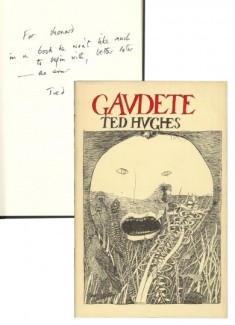
Re-starting my Higher Education took me to Lancaster University, studying Literature and Philosophy (and a few sessions of Creative Writing with poet, David Craig) and Hughes and Larkin were served up and readily ingested. At first, I swerved to the latter’s urban details and personal gloom; later it was the Hughes of Gaudete (recently published, 1977) that I copied, writing a long, quasi-mythic, magic-real, psychodrama about sex and power that I eventually self-published in Oxford. As a post-graduate among the dreaming spires, it was Percy Byshe Shelley who I was working on for several years and, though not a model for poems as such, his ideas about the role of the Imagination and poetry as an “Orphic language” have been important to me ever since.

md7773056273

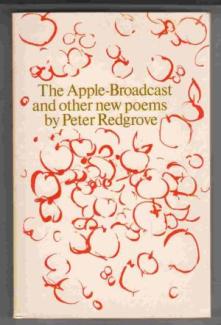
Among contemporary poets, I’d discovered Heaney (not the rural Ireland stuff so much as his wrestling with private and public responsibilities – Station Island, for example), Peter Redgrove’s fluid take on mind’s encounter with the natural world (The Apple Broadcast) and Ken Smith’s urban-political Americana (oh how I wanted to have written Fox Running). I wrote individual poems modelled on all these writers while absorbing much more deeply the work of the Romantic period – only now did I really find Keats, his poems and letters, Wordsworth still, Coleridge’s Conversation poems especially. What might have been expected – Hardy, Auden, Yeats, Frost, Stevens, Lowell, Bishop, Plath, Dickinson – were all missing or they missed me.


download
Ken Smith


A decade of writing, reading, plus some reviewing too. A couple of my own books published and I’d stumbled my way to Rilke’s New Poems, Elegies and Sonnets, the second and third of which I began to translate and (whether visible on the surface or not) were a great influence on me – the Duino Elegies  for their thoughtful drive from existential mourning to praise, the Sonnets to Orpheus for that same thought (more of the praise) and their use of form. From Whitman I found my way to W S Merwin’s marvellous fluidity (something I was comparing to Paul Eluard’s work too) and from Rilke it seemed a logical (not the right word at all) step towards the 81 texts of the Daodejing which again I felt I had to try to English because it both rhymed with what I already knew and I knew it would develop further what I needed to know.

daodejing

A few years back, an article in PN Review sent me to the work of Yves Bonnefoy. A heart-rate raising sense of another writer who had fought the two-faced dragon of language and seen enough to conclude that at the bottom of its filthy lair gleamed the concept and the concept promises a “strange immortality” but only if we can “forget brutal reality”. One reason (I’m now quoting an earlier blog post on a 1953 essay by Bonnefoy) we do this is that there are “general truths in conceptual thinking and a particular kind of power derived from it. It ‘allows thinking’ of a certain kind; it is linked with ‘the vast power of words’. But any gain is predicated on a significant loss, the abandonment of the actually existing ‘world of things’. Conceptual thinking is ‘systematized’, generalizing, categorizing; it’s in this that its ‘flight’ from the real is found. The only sort of thing that can be held up to counter the concept are specific particularities of human experience: Bonnefoy asks ‘Is there a concept for footsteps in the night, for a cry, for a stone rolling in the brushwood? For the feeling evoked by an empty house? No [. . . ]’”


images
Yves Bonnefoy


Reading Bonnefoy did not send me lurching to right or left but rather nudged, re-calibrated, re-assured me that my own direction of travel was not a wholly isolated one. I don’t write like Bonnefoy – there can be a dull abstraction to his poems which seems to me to contradict his ideas about real presence expressed as specific particularities – but I know what thought underlies my own work has close parallels to his (as far as I understand him). That’s influence, I’d say.

In my next blog, I’ll look at the question of influence from a different angle – what ghosts of other writers can be seen in more recent work?

My Grief Observed – May 2017

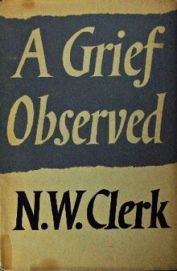
This week, I sat down to write a thinking piece about C S Lewis’ brief memoir about his wife’s death, A Grief Observed (published under the pseudonym N W Clerk by Faber in 1961), when this happened instead.

Agriefobservedcover

My father died – I’m shocked at the passage of time – just over 8 weeks ago. At the age of 97, it was hardly unexpected though to be honest I had anticipated my mother (age 95 this month and seemingly physically far more frail) to be the first to leave the world. Though hardly unexpected it was still a surprise. It happened late at night – I’d travelled back to London thinking he was stable enough. By the time I’d returned the next day to the Care Home in Wiltshire, the undertaker had already taken him away. There were so many distractions, things to sort out, though we’d already sold the family home and his affairs were as simple as can be for a man with two savings accounts, a couple of State benefits and an utterly derisory works pension.

I did decide to visit him in the undertakers’ so-called chapel of rest. I’m not sure this was about saying goodbye – though circumstances had meant I hadn’t done this in any conscious way. The assistant took me into a little hallway where a door stood open, some classical music playing. A wooden chair and a table with a vase of flowers were all to be seen in the hallway. I have no recall of the music or the type of flowers. I was taken aback when she explained that some people prefer simply to sit outside the ‘chapel’ rather than go in to view the body. I felt reassured somehow that such a reluctance was not something I was feeling and it would be a sort of cowardice if I did. I felt brave, or just a bit braver. I was doing this for Dad. Though her observation then made me re-consider. Maybe I was really anxious, even fearful, about seeing him. I sat in the chair outside for a few minutes to see how it felt.

img054
Hilperton, 1954

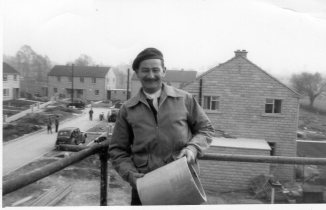
It felt pointless. I was here to see him and to have done with it. I edged round the open door. The coffin was deliberately around the corner, out of sight until you got well into the room. It filled an alcove, supported at waist height, I supposed, on some sort of trestle. I’m enough my Dad’s son to think of such things. Later on, after I’d sat a while in the chapel I started looking – as he would have done – at the structure of it. It was just a plain room, almost certainly separated off from an original larger room. There was an RSJ across the width of it. Perhaps there was another such ‘chapel’ next door. Semi-detached. Like the house Dad had lived in. In fact, the one he’d help build in the mid-1950s. I was taken there at the age of one. I left there to go to university at the age of 18. We’d sold it for more than we’d expected about a month earlier. Semi-detached.

img069
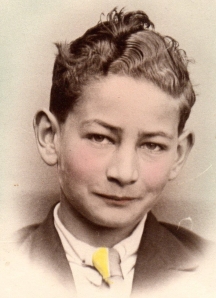
? 1929

They’d put a crucifix on the wall above the coffin. Or rather, the cross was a fixture on the wall. Other coffins in series had lain beneath it. Dad always had a dislike of religion. I never could get to the bottom of why. Born in 1920 you’d have thought it would have been just part of the landscape he grew up in. Was it rammed down his throat to the point of the need to vomit it back up again? Was there something in his war years that made him see through it so vigorously that – even into his 90s – he never found a way back? His wife was quietly non-conformist, mostly Methodist. I’m sure she would have attended church in these more recent years (her younger sister regularly did). I’m sure she stayed away because of his hatred of it. Now here he lay under a crucifix in an inappropriately ‘holy’ setting with such tasteful lighting. Hurrumph, he might have said. Words were not his thing. I never showed him this little poem:


Words and things


Past ninety and still no books to read

your knuckles rap the laid table


gestures beside a stumble of words

so much aware of their inadequacy


it hurts us both in different ways

since a man without language is no man


finding too late this absence of words

builds a prison you’re no longer able


to dominate objects as once you did

the world turns in your loosening grip


I still feel a bit guilty about having written it. Agenda published it originally. It’s just appeared in my new book. But no – he never saw it. I made sure of that.

img073
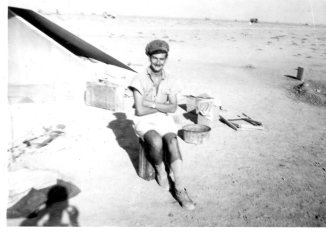
North Africa

I looked at him in his box. My brother and I had decided not to dress him in his own clothes. His only suit was so old and shabby and he had little else that we thought was suitable (why did we agonise over it – I was the only person who knew him to see him in this state anyway). Oh for his old suit! He was dressed in a sky blue silk number, a ludicrous ruff about the neck: a sort of choir boy outfit. My main impression was of the newness of the cloth of the robe, its strong vibrant colour against the chilly greyness of what must lie underneath if his hands were anything to go by.

Then at last, I looked directly into his face. I’d been reading Lampedusa’s The Leopard and at the end of the novel, the dying Prince, Don Fabrizio, looks at himself in the mirror and wonders why “God did not want anyone to die with their own face on?” The last time I’d seen Dad was after he’d been brought out of hospital, back to the Care Home where he lay sleeping for hours on a mattress on the floor (to stop him rolling off and injuring himself). He puffed and blew a good deal, eyes shut. He rummaged his legs to and fro, tying the bed sheet in knots. But he never woke. In those hours, it seemed to be him. I sat beside him with my mother. I held his cold hand and repeatedly told him we were there, we were there for him, he was OK, he was not in hospital (god how he hated hospitals!).

But the face looking up out of the coffin seemed to be somebody else. Hard to tell what was plain natural death, what was the undertaker’s art, what the lighting, what my weird state of mind. All the clichés about the waxy, smooth look of the dead are true. His Crucefix nose – always fairly prominent – launched from his sunken cheeks and bony brow skywards. His chin – which in life was always weak and receding – also thrust forward and up in the most unnatural way. What had they done? What had they packed his jaw with to achieve this cartoon effect? His mouth with its pencil thin lips (plenty of times I thought them mean lips) was shut very tightly. I wondered if it was sewn shut? I wondered if they had left his dentures in? His eyelids – which in those last few hours of puffing and blowing, had often been leaking open, a segment of watery eye visible though no inner sight seemed ever to have registered – his eyelids now were also tightly bound. Closed down. Closed down long before the undertaker’s craft took hold. Now physically closed down to reflect the inner closing down that had taken place in my absence.

img049
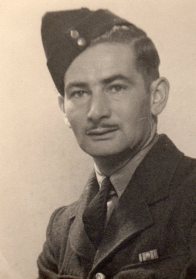
?1939

As I stood beside the coffin and looked down, I had the powerful sense that he was not there. Not merely that this did not resemble the man I knew but more than that – he, in himself, was not there. He had departed the physical form that lay there more or less recognisable. I don’t think he was elsewhere. I’ve been with him on that bit of religion for decades now. But I still felt some relief. On his behalf perhaps. Recently he had been more muddled and fearful, obsessive about some things, angry about others. Life seemed to have very few pleasures left; lots of panicky moments, angry self-hatred, suspicions of people, distrust, downright fright. He was no longer living in that horrid morass. That must be some relief.

He was not there. But the hands, propped also choir boy style on his chest, clutching incongruously a white rose, were definitely still his. Emerging out of the stupid silky blue sleeves, the long bony hands were still familiar. How they used to float vaguely, not elegantly, but sometimes delicately, trying to add whatever was always lacking from his words, wafting to and fro following the right and left turns to the municipal dump, to the only local shop not closed down, to the bus stop (their life-line into town).

I never once touched him. I thought of the coldness. The lack of give, of elasticity. I didn’t think he’d mind. We seldom touched in life. But I did talk to him. I said I was there. I said goodbye. Those two things over and over again. My eyes and throat filled as I tried to say them aloud.

In the end there was no more to do. He was not there. I was in a room with a box and some kitschy lighting. I sidled back out round the door. I looked back in, feeling, of all things coquettish, as if I might surprise him about to move, to sit up and grin, it was all a joke. No. He was not there. He was not coming back. Not this way.

I went out through the hallway, past the flowers again, the music receding, out into the front room of the undertaker’s shop. The assistant was not around. I gathered my bags and left. The daylight was white. Two men were slumped nearby drinking from tin cans. They looked up at me. I suppose they had seen the door I’d come out of. Perhaps I had death all over me. The High Street seemed tissue-thin, like a poor stage-set. Everybody else actors. I walked down it, then back up, unsure where to go. In the end, I sat in a pub for an hour over two pints of bitter. My train was not till around 6pm. I passed the time googling an old girl-friend’s name.

IMG_0972 (2)
April 2017


On the Importance of Considering Nothing #2

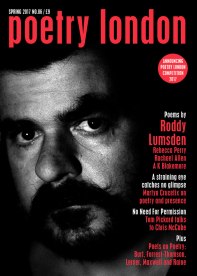
Last week I blogged the first part of a longer essay first published in the Spring 2017 issue of Poetry London. What follows is the second half of it. The whole piece starts and ends with thoughts prompted by my experiences with my father and his growing dementia. Dad has since suffered a series of heart attacks and died on May 24th. I am re-producing the essay unchanged in the hope that it still says something of value about types of ‘confusion’ and in memory of a man who would have had little time for such morbid reflections. Thanks to Tim Dooley who commissioned the essay for Poetry London and published it under the original title: A Straining Eye Catches no Glimpse.

PL-COVER-Spr17-web

In Part 1, I linked my father’s forgetfulness and confusion with recurrent references to “nothing” in King Lear and to Anne Carson’s concept of “the dementia of the real”. I suggested this was also a correlative of Yves Bonnefoy’s interest in the “state of indifferentiation” he often refers to as “Presence”. For Bonnefoy, Presence contrasts the conceptual/linguistic world through which we most often move and we take to be real.

Part 2

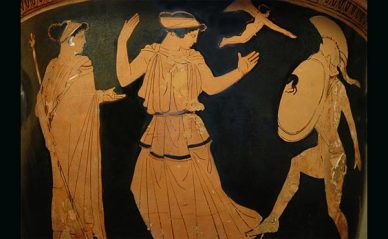
Yves Bonnefoy’s poem ‘Wind and Smoke’ (from The Wandering Life (1993)) has the abduction of Helen as its nominal subject. But he allows the poem to be taken over by dissenting voices, irritably seeking to “explain, to justify, ten years of war”. Such an expense of men, ships and spirit (argues one such “commentator”) must have been for the sake of something more permanent than the merely human figure of Helen. The poem entertains the suggestion that she herself was never abducted, “only an image: a statue”, something of great beauty to be displayed on the terraces of Troy, a fixed image of Helen, blessed with permanence, “always [. . .] this smile”. The poem is concerned then with the limitedness of the conceptual view which finds worth only in things of assured, definable permanence. In contrast, Part One of the poem ends with a proliferation of images of “spilling”, lovers as “clouds” or “lightning” on an “earthly bed”, so fully involved with time that their pleasures in the moment are “already empty, still full”. [i]


search-helen-troy
Helen of Troy (Red Figure Vase)


There’s that paradox again and Bonnefoy’s versions of it articulate the impossibility of capturing Presence because it encompasses and exists in time (and language wishes to stop time):


Every time that a poem,

A statue, even a painted image,

Prefers itself as form, breaks away

From the cloud’s sudden jolts of sparkling light,

Helen vanishes [. . . ][ii]


The “jolts” here are akin to Lily Briscoe’s “jar on the nerves” as our paradigms and preconceptions are challenged. The figure of Helen has become that visionary experience – for Bonnefoy usually of beauty, for Carson more often a violent disturbance – that we intuit exists just beyond the range of our usual instruments. Helen, the poem argues, “was only / That intuition which led Homer to bend / Over sounds that come from lower than his strings / In the clumsy lyre of earthly words”.

Part Two of ‘Wind and Smoke’ concludes with a child, an image of the poet, the last person to see the figure of Helen as Troy burns:


singing,

He had taken in his hands a little water,

The fire came to drink there, but the water

Leaked out from the imperfect cup, just as time

Ruins dreams and yet redeems them.[iii]


download
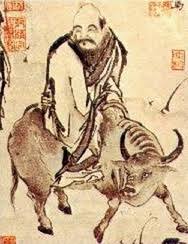
Traditional image of Laozi


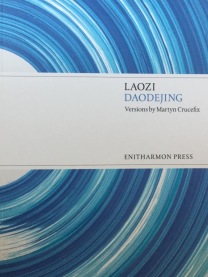
This same image of water slipping from our human grasp is recurrent in the Ancient Chinese writings that make up Laozi’s 4th/5th century BCE text, the Daodejing. Since they were published earlier this year, I have been reading my versions of these texts up and down the country and the one thing audiences want to say about them is they contain “wisdom”.[iv] It’s an old-fashioned word but it’s also bound up with the nothing that is really a fuller something we seldom manage to grasp. The Daodejing texts use water as an image of the ineffable One, the plenitude that lies behind all things. They employ water metaphors in such a way that the vehicles are clear and recurrent (ocean, pool, river, stream) but the tenor remains an empty set, never defined. So Chapter 1 deploys water imagery but is clear about the short-comings of all language: “the path I can put a name to / cannot take me the whole way”. Even what can be named can only be grasped through further metaphors: the “nursery where ten thousand things / are raised each in their own way”. What lies behind the phenomenal world can only be gestured towards through figures such as “mould”, “source”, “mystery”. Even then it’s “a riddle set adrift on a mystery”. The original Chinese text shifts its metaphors rapidly in just this way and this is what gives this opening Chapter the peculiar sensation of telling a clear truth that remains beyond our grasp. Chapter 14 puts it this way:


because a straining eye catches no glimpse

it is called elusive


as the ear attends but latches onto nothing

it is called rarefied


since a hand reaches but clasps only thin air

it is called infinitesimal


and these are resistant to further analysis

File 03-03-2016, 09 03 15

The difficulty of grasping this something that seems nothing is revisited in Chapter 4. There, the tenor of the metaphor is reduced to “it”, the context indicating this refers to the Dao itself, the One, that state of wholeness and plenitude towards which the path of the Dao leads. The opening formulation emphasises the Dao’s infinite nature, its resource as “a vessel to be drawn from / one that never needs to be re-filled // the bottomless source of all things”. But the image is revised a few lines later in the form of a question: “is it rather a pool that never runs dry”, yet this follows four other metaphorical formulations of the Dao’s beneficial effects: “fretted edges are smoothed within it / knots untangled all dazzle eased / all blinding clouds of dust slowly cleared”. The poem calmly declares its own ineffectiveness: “we cannot know it as a bodiless image / it must pre-date every beginning”. Even the concept of origin or beginning is not adequate to convey the nature of the Dao. But the fluidity of water – impossible to grasp, capable of taking any shape, a life-giving source – comes close.

That there is wisdom to be gained from such visionary encounters with the mystery of nothing is clear in Chapter 66. It’s no coincidence that these lines can serve as a commentary on Lear, his suffering bringing him low till he realises he has paid too little attention to the “looped and ragged” nature of his own nation:


—how do rivers and seas secure mastery

over the hundreds of lesser streams

through lying lower than they do


so to govern or teach you must stand

and acknowledge you are beneath the people

to guide them put yourself at the rear


md1187823288

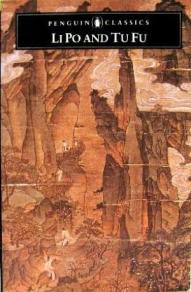
But as Auden suggested and Chinese tradition affirms, such visionary insight cannot be actively sought or taught. This is one of the points of the traditional narrative trope in Chinese poetry of ‘Visiting a Hermit and Not Finding Him’. Don Paterson turned this into a good joke in a poem called ‘On Going to Meet a Zen Master in the Kyushu Mountains and Not Finding Him’.[v] The reader’s eye descends from this lengthy title only to look in vain – it’s a blank page. Perhaps Paterson had been reading the Penguin Classics selection of Li Po and Tu Fu.[vi]  The Li Po selection opens with the poem ‘On Visiting a Taoist Master in the Tai-T’ien Mountains and Not Finding Him’. But such poems were never just an excuse for descriptive nature poetry but related to the frequent ‘spirit-journeys’ that Li Po was fond of writing. We are all like that student in Li Po’s poem, seeking out certainties and facts, a something to depend on when true wisdom gently (or violently) deflects us away from shelter towards a world where we glimpse a more full-blooded, full-bodied, open-minded encounter with what really is.


download
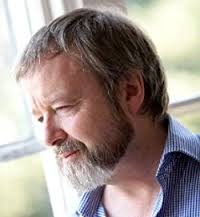
Iain McGilchrist


I have really been talking about two attitudes to knowledge or to put it more carefully, two contrasting “ways of being”.  This is how Iain McGilchrist’s book, The Master and his Emissary (Yale, 2009) expresses it.[vii] McGilchrist argues parts of the human brain deliver quite different kinds of attention to the world. The left brain perceives the world as “static, separable, bounded, but essentially fragmented [. . .] grouped into classes”.[viii] This is the attitude to knowledge and education the anxious student of Li Po’s poem possesses as well as the place where most of us live amongst Carson’s clichés and Bonnefoy’s conceptual language. In contrast, McGilchrist associates the right brain with the perception of “the live, complex, embodied, world of individual, always unique beings, forever in flux, a net of interdependencies, forming and reforming wholes, a world with which we are deeply connected”[ix] yet one at risk of being perceived or judged as a mere confusion, a seeming nothing.

This is the view of the Daoist master whose teaching evokes the as-yet-uncarved block of wood, who teaches best without words. Ordinary language usage, dependent as it is on conceptual thought, is left-brain work – ordering, categorising, re-presenting the minute particulars of the world as they are perceived by the right brain. Li Po’s teacher is surely hiding somewhere beyond the cherry blossom – and this is part of the student’s lesson. Don Paterson’s blank page represents a rather glib, post-modern joke, a scepticism about language in danger of throwing out the interconnected but bewildering “dementia” of the real world along with the suspect tokens and counters of left-brain language: “To say that language holds truth concealed is not to say that language simply serves to conceal truth [. . .] or much worse, that there is no such thing as truth”[x]. Bonnefoy, engaging in his own battles with the early stirrings of French post-modernism, declared: “This world here exists, of that I am certain [. . .] It is simply with us.”[xi] The right brain knows this and it’s from there we want to write poems; the left brain serves to fragment it, utilise it, get it under control, disappear it. And yet . . . there’s no much here suitable for a chat with a forgetful father. His visions are more frightening and may get worse; here, for a while, his son has been imagining ways of seeing that need not be so.

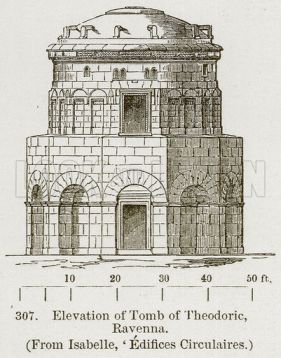
Elevation of Tomb of Theodoric, Ravenna

Notes

[i] tr. Naughton, Naughton and Rudolf, pp. 197-203.

[ii] tr. Naughton, Naughton and Rudolf, p. 201.

[iii] tr. Naughton, Naughton and Rudolf, p. 203.

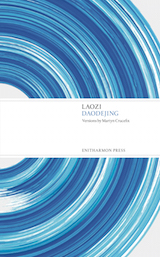
[iv] Laozi, Daodejing, versions by Martyn Crucefix (Enitharmon, 2016). All quotations are from this version.

[v] Don Paterson, God’s Gift to Women (Faber, 1997).

[vi] Li Po and Tu Fu, selected and translated by Arthur Cooper (Penguin Classics, 1973).

[vii] Iain McGilchrist, The Master and His Emissary (Yale UP, 2009), p. 25.

[viii] McGilchrist, p. 31.

[ix] McGilchrist, p. 31.

[x] McGilchrist, p. 6.

[xi] Yves Bonnefoy, The Tombs of Ravenna, tr. John Naughton (1953; PN Review (No. 226, Nov-Dec 2015), p. 62).

Two poems by Martyn Crucefix

I’m afraid I have been unusually silent on the blog for the last few weeks. My last posting was in early April, a review of Jacob Polley’s book, Jackself. Life has been getting in the way of blogging and though I appreciate a lot of people like to read a lot of personal stuff on blogs that’s not really why I write. Suffice to say that I have been preoccupied with organising my parents move into a Care Home and the selling of their house, my house I should say; we moved into it when I was a year old and I left to go to university at 18. I imagine there will be poems emerging from the experience – but they tend to take a long time.

Added to this I was called up to do jury service at the Old Bailey during the last 3 weeks and this proved both fascinating and dull at the same time. The case was strange and disturbing (the defence consisting of the claim that what was done was done as research for a novel, so throwing up questions about the boundaries between fact and fiction). The dullness was, of course, the slowness with which the wheels of the law roll round (in the name of clarity, precision and fairness). The events and characters of the people involved were wholly consuming for the period we were sitting as a jury.

Emerging from that in the last couple of days, the news came that my father has gone back into hospital after a heart attack.

So – with no headspace for poetry really, I’m resorting to re-blogging a couple of poems which very recently appeared on Jo Corcoran’s great website And Other Poems. Both poems will also appear in my new book, The Lovely Disciplines, to be published by Seren Books this summer.

images

Both these poems have had a long gestation. ‘East-running road’ originated with observations about the angles of sunlight on sunflower fields in the north-west of France, slowly becoming concerned with the idea of writing and seeing, which then became associated in my mind with the dedicatee of the poem, the poet Katherine Gallagher. ‘Boy-racer’ is even older in origins. But I do still recall the central image as a real event: on some dusty European road down to a beach, a kid on a motorbike skidding out from a side track, wobbling to regain balance and powering off ahead. The wind ruffling his carefully un-helmeted head . . .

Read the two poems here: Two poems by Martyn Crucefix

7926ca533543e64e15591592aae83fd8

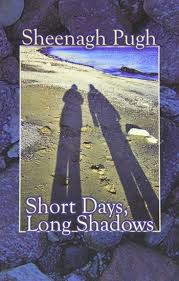
Review of Sheenagh Pugh’s ‘Short Days, Long Shadows’

Sheenagh Pugh’s Short Days, Long Shadows strongly bears the mark of her re-location in recent years from Cardiff to the Shetland Islands. There are a couple of leaving-taking pieces here with ‘How to Leave’ re-enacting the slow, even painful, notation of local details and the levels of self-deception often accompanying what looks like a partly reluctant move. ‘Ghosts of Cardiff’ more reflectively argues that it is less the “now” that proves so hard to turn away from, it is “all the thens” which, even walking down St Mary Street or through Victoria Park, remain at least as vivid as any present moment. These hauntings form just one of the many sub-sets of ‘Long Shadows’ in this collection and Pugh’s much-remarked sense of history is a further important manifestation of this too.

imgres
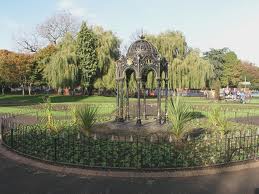
Victoria Park, Cardiff

But it is the northern landscapes that dominate the book, the Shetlands and Scandinavia. ‘Big Sky’ makes the scenic novelty clear when the gaze from a window meets “no branch, no office block”, but “overflows with sky”. The breadth and variety of cloudscape and the bright night’s “cluster and prickle” of stars are vividly evoked yet the individual’s humility before such a natural scene is undermined by a final line suggesting a yearning for “the way out”. There is something of this reflected in the book’s structuring where, instead of blockish sequences of related poems, individual pieces tend to bounce and ricochet off each other. Pugh’s language risks becoming a little dull but I find this quality of restlessness in her work very engaging. It is a determination not to accept limits as in ‘Living in a Snow Globe’ where a northern blizzard again concludes with a small figure “fixed in a shaking flux and unsure / where here is, or how to get out”.

imgres
View of the Shetlands

It must be just such an isolated figure who, in one of the best poems here, talks to the ocean and asks why our figures and metaphors for it – though accurate in some ways – are always inadequate: “you / swallow each likeness, each true word / and spit it out, rejected” (‘Sea’s Answer’). I’m not sure I quite follow the sea’s reply, but it seems to imply that our endless figuring is really driven by our own desire “to be like” the sea, implying perhaps our existential uncertainties, at least when confronted with the sea’s Olympian-seeming, seeming unconditional, independent life, reminding me of Whitman’s 1871 ‘Song of the Exposition’ (as used by Vaughan Williams in ‘A Sea Symphony’) where he declares the sea remains always and only “the sea itself”.

images

But such metaphysical themes are infrequent in Pugh’s work (or at least they remain well-buried) and she focuses usually on the more common personal experience. She often approaches this through historical time in, for example, a sequence on sixteenth century spies in ‘Walsingham’s Men’ and several later pieces clearly based on encounters with museum exhibits. There are also poems here about the approach (for a father?) of cancer and death, reminisces about wartime experiences and several touching poems about the author’s mother: “I shall look back at her from my seventies // before long, saying this is how it is, / the age you never reached” (‘Catching Up’). As this suggests, Pugh’s over-riding obsession is the passage of time, both in the shadows it casts back and forth and in the sense of transience implied in the phrase ‘Short Days’. ‘Wasting Time’ is a fine poem opening with the narrator watching the sea’s actions of building and destroying along the coastline. Quoting “I wasted time, and now doth time waste me” from Shakespeare’s Richard II, the poem goes beyond this, acknowledging “the one thing / you cannot do is keep it”. Here also, Pugh resists the lure of a neatly tied up conclusion, merely suggesting that the sequential linearity of time must mean that in focusing on – or even in loving and appreciating – one thing, we must be missing out on another or absently on the look-out for something better. That restlessness again.

Since she gave out the hostage to fortune that being judged “too accessible” as a poet was the best sort of compliment, there has been much discussion of Pugh’s plainness, simplicity, even her unchallenging art. It’s true there are poems here that do little more than make a few well-turned observations in plain language in skilfully handled, mostly free verse. But I think – in the face of a pretty bleak view of temporal change – the stoicism which underlies much of her thought manifests itself in lexical and formal choices as the desire to communicate truth as plainly as possible. There is surely something of this in the astutely placed opening poem, ‘Extremophile’. The title refers to those life forms which, against all the odds, manage to carve out a life in extreme conditions around hydrothermal vents, in permanently darkened caves, in Antarctic valleys. It is this determination that Pugh finds inspiring: “There is nowhere / life cannot take hold, nowhere so salt, / so cold, so acid, but some chancer / will be there”. Look at that brilliantly chosen colloquialism “chancer” to suggest the risk-taking, against-the-odds, stubborn resilience of life itself that Pugh’s human subjects more often than not also share.

images

Even so, it’s a very long way from this Hughesian Crow-like affirmation of life against the odds to another poem later in the collection which confirms that, whatever the questions over accessibility, Pugh remains a poet capable of facing up to the terrifying brevity of life. ‘The Vanishing Bishop’ is one of the museum-inspired pieces, I think, but we are taken to the moment when a coffin is unearthed and opened and news is sent to the archaeologists while the digger/narrator remains waiting, observing the corpse: “face, full lips, firm lines, / furrowed brow”. But suddenly, as the narrator sits in imagined silent dialogue with the dead bishop’s body, the air attacks the long-preserved face:

[as] when a big log

has burned so long, it’s ash

in the shape of wood, nothing

holding it together

but habit. His whole face

suddenly settled, fell in on itself,

letting go its last memory

of who he’d been.

Though uneven, Short Days, Long Shadows is a highly readable collection with perhaps half a dozen of the best poems Pugh has written and these wear their profundity so lightly that you will want to go back and re-read them to find out with what cunning, near-invisible skill they have been composed.

imgres