George Szirtes’ King’s Gold Medal for Poetry

This week’s announcement of the award of the King’s Gold Medal for Poetry to George Szirtes gives me the opportunity to re-post a long and detailed review I wrote (for Poetry London) of the two books that Bloodaxe Books published to celebrate Szirtes’ 60th birthday. These were the New and Collected Poems and a critical book about his work, Reading George Szirtes, written by John Sears. Though Szirtes has continued to publish a good deal since the late 2000s, this review still seems to me to have something useful to say about the development and poetical achievement of this outstanding writer and might be of interest to those not yet familiar with his work. (For WordPress readers, I am experimenting with posting also on Substack. Do subscribe here if you’d like to read in that format: https://open.substack.com/pub/mcrucefix/)
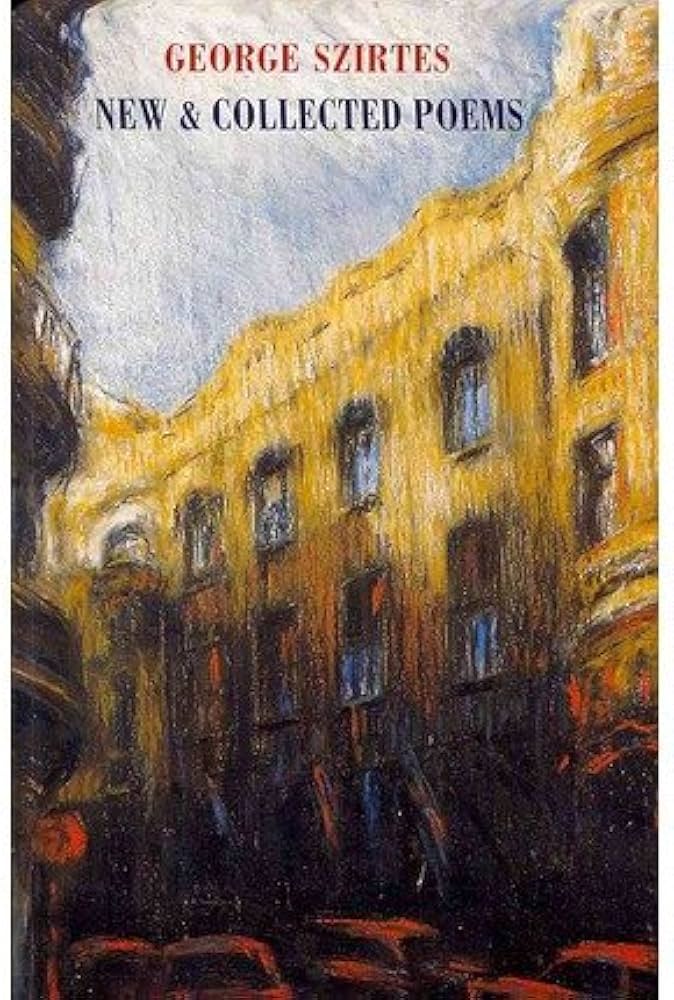
This 500-page New and Collected Poems demonstrates the breadth and depth of George Szirtes’ achievements and will bring his work to even wider notice, casting the poet as a recording angel. His lines of literary influence run from Eliot’s phrase-making and metaphysics, through Auden’s formalism and politics, to earlier contemporaries like Peter Porter and Martin Bell (at the Leeds College of Art and Design). There are distinct phases to Szirtes’ oeuvre, but his work tends to a density of fragmented detail, bound by a allegiance to visible form, shot through with explicit theorising about perception, language, time, memory, self, the art itself. This is a heady and immensely ambitious mix – not one likely to appeal to popular tastes, but there is no-one more dedicated to poetry, to playing the long game, to bringing a uniquely European perspective to the theme of our age, the search for personal identity.

Szirtes’ career illustrates what Pasternak discusses in An Essay in Autobiography (Harvill, 1990). Though our experience of the world is necessarily subjective, there is a sufficient underlying matrix that remains “the common property of man” – the hard-wiring implicit in being human. Superimposed on this is the softer wiring derived from upbringing, environment and education, and the self is ultimately a function of these base matrices in progressive interaction with individual decision-making in the flow of experience. So the objective world is processed through the individual’s particular matrices – his/her sets of harmonies and disharmonies – and must emerge coloured, spun, texturised as it were, accordingly. From this, Pasternak argues that when an individual dies he leaves behind his own unique “share of this . . . the share contained in him in his lifetime . . . in this ultimate, subjective and yet universal area of the soul”. This, of course, is where “art finds its . . . field of action and its main content . . . the joy of living experienced by [the artist] is immortal and can be felt by others through his work . . . in a form approximating to that of his original, intimately personal experience”. Art can be defined as the expression of experience playing across the matrices of the self, saying not this is me, but this is, this was, mine.

It is the raw imagery of stasis and movement that emerges in Szirtes’ early work as being truly his and it blooms into the maturity of the late 1980s. In short lyrical pieces the point of stasis is associated with the preservative of art in the spit ball gobbed by a foreign worker in ‘Anthropomorphosis’ which is caught and “suspended” by the poem. The afternoon rearranges itself around it and even the narrator “hung there / Encapsulated in that quick pearled light”. Versions of this encapsulation abound: girls creating a silver foil tree find themselves absorbed into a Keatsian “cold pastoral”. Such freeze-frame moments anticipate Szirtes’ sustained meditations on photography but early on, images of snow and frost suggest the ambivalent status of such suspension. In ‘The Car’ a snowfall is both beautiful and sepulchral: “Fantastic Gaudi-like structures hung / Under the mudguard . . . . / Wonderful, cried the girls under the snow”. A girl who is observed sewing causes consternation (“I do not like you to be quite so still”) caught in a stasis that can “eat away a life” that can “freeze the creases of a finished garment” (‘A Girl Sewing‘).

In contrast, it is movement in the shape of the passage of time that spurs many other early poems and the artist’s power is limited to “measure breath in a small space” (‘Group Portrait with Pets’). The enigmatic title poem of the first collection seems to teeter elegantly along the knife-edge of the sense of threat to domesticity and the desire to secure in a “cage” and convert to “metaphors” (‘The Slant Door’). It seems for time there is “no use, no cure” (‘Silver Age’) and Szirtes senses this especially in the domestic sphere. ‘House in Sunlight’ casts the busy sun as the agent of transience threatening the house itself and the life within it:

Whoever lives here knows what they are about –

Forms appear suddenly in mirrors and photographs,

We do not think however that they are entirely at home.

At night the doors are locked. We lock them now.
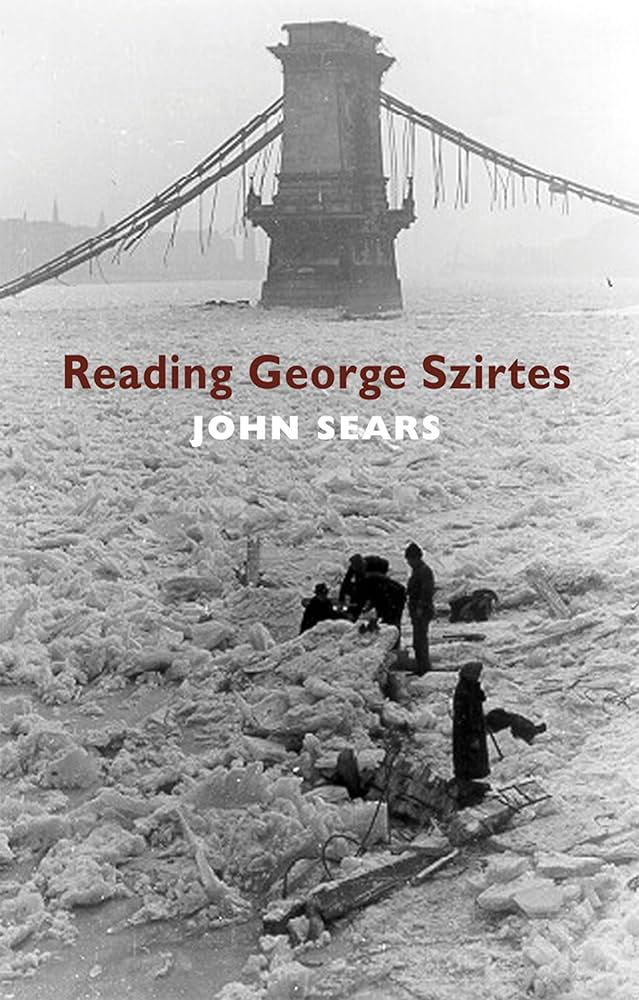
John Sears’ book is a comprehensive academic review of Szirtes’ career, tracing the development of both key themes and formal experimentation. He suggests Martin Booth’s 1985 critique of Szirtes’ early work as “withdrawn and laidback” was influential on the poet. Booth suggested that Szirtes might try writing about “his childhood” (Sears, p. 61). If true, we have reason to be thankful to Booth, but there are signs that Szirtes was moving in this direction already. He travelled to Hungary in 1984 and was casting his gaze beyond these shores towards people who “lie in complete unity / In graves as large as Europe and as lonely” (‘Assassins’). The title poem of Short Wave (1984) deploys its central image to suggest the deciphering of voices that are obscure yet seem suggestive of “all Europe in her song”. The self-deprecating picture of Szirtes “listening / and turning dials, eavesdropping” is something to be treasured given the explosive impact these deciphered voices will eventually have on his work.

Several members of Szirtes’ family were caught up in the Holocaust and later in the Soviet invasion of Hungary in 1956, escaping to the UK. Much of this was known to Szirtes only sketchily and he set himself the task of recovering what seemed lost. It is because Szirtes’ underlying matrices as an individual – stasis and movement, preservation and loss – mapped so powerfully onto his family’s own history and this history encompassed important European historical events that his work becomes in the late Eighties so much more complex, ambitious and important. History had determined his nature as a poet; his nature as a poet primed him to be able to encompass the burden of his own history.

So the title poem of The Photographer in Winter (1986) attempts the imaginative recovery of Szirtes’ mother from the Budapest of the 1940s and 50s. She was herself a photographer and her son traces her movements with “thoroughness and objectivity” as far as he can. Both as an artist and poet, Szirtes declares he has been “trained / To notice things” (the deliberate echo of Hardy’s ‘Afterwards’ is but one example of Szirtes’ very frequent intertextual allusions). But the recovery process seems often subject to disintegration, “trying to focus through this swirl / And cascade of snow”. At times the tone is more optimistic, like the final section of ‘The Swimmers’ in which a drowning girl survives the “icy Danube”. Elsewhere, intervening time destroys so much, and the later sequence ‘Metro’ (1988) uses the image of the Budapest underground system for “everything that is past, the hidden half”. His choice here of the deliberately curtailed thirteen-line sonnet is a characteristic recognition in formal terms that the search must remain incomplete.
The balance between one man’s search for his background and the conversion of this to poetry is a difficult one and if the marvelous sequence ‘The Courtyards’ is counted as one of the great successes, for me ‘Metro’ itself tips too far away from the memorial towards the monumental. There are occasions when Szirtes’ desire to recover and pay respects to his own history impels him to erect such elaborately formal accumulations of images that the reader may feel excluded, even if always impressed. The later ‘Transylvana’ is another occasion when the act of imaginative recovery can seem propelled for its own sake and despite the glittering formal achievement – terza rima in this case – the piling of detail on detail can become wearisome.

But Szirtes’ openness to theoretical thinking has always propelled his work forward and often derives more from his training in the visual rather than the literary arts. Blind Field (1994) draws on Barthes’ idea that in photography all that is not portrayed in an image may be implied by the presence of a “punctum” or detail within it. As Sears suggests (this is the sort of idea he is very good at elucidating) this bears some relation to Eliot’s objective correlative but is seen by Szirtes as a solution to the paradox that art stills the life it presents: “Out of this single moment a window opens” (‘Window’). This sense of the ballooning fluidity of experience, past and present, is one thing that marks his work as Modern and Post-Modern and it’s no surprise to see Szirtes countering Larkin’s belief that the passage of years makes us “smaller and clearer” arguing we grow “blurrier, vaster, ever more unfocused” (‘On a Young Lady’s Photograph Album’). It’s this slipperiness of personal identity that is Szirtes’ true theme and the one that elevates his work above the merely personal into a body of work addressing urgent contemporary concerns. As the poem ‘Soil’ puts it “there is nowhere to go / but home, which is nowhere to be found . . . / the very ground / on which you stand but cannot visit / or know”.

Everywhere these days, the recovery/re-construction of our own identities seems to be a pressing issue and the three sonnet sequences in Portrait of My Father in an English Landscape (1998) triumphantly present and simultaneously enact this process. Sears describes Szirtes’ form here as a “deliberately baroque form of the Hungarian sonnet sequence” or sonnets redouble (Sears, p. 145) in which the final line of each sonnet is repeated (approximately) as the opening line of the next and the final (fifteenth) sonnet is composed of approximations of each preceding sonnet’s closing line. Yet this is not an arid exercise in form as the recurrences and accumulations enact precisely what Szirtes believes is the process of the construction of the self – largely via language into a “lexical demesne” – in this case said to be “part Hungary, part England” (‘The Looking-Glass Dictionary’).
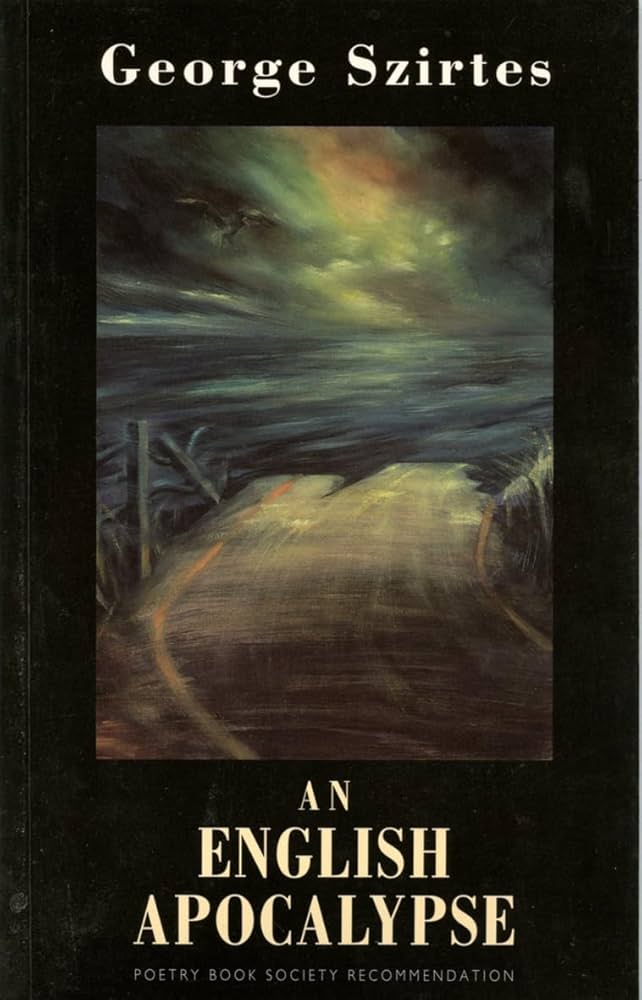
Retaining his love of the titled sequences, sections and subsections which had helped him draw a bead on his family’s obscured past – a tendency which produces the most typographically diverse and complex contents pages I’ve ever seen – from the late 1990s Szirtes’ work turns a firmly European gaze on the UK. An English Apocalypse ranges through Great Yarmouth, Keighley, Orgreave, Preston North End. all-in-wrestling and antisemitic violence towards images of “a tense / empire that could fall” (‘All In’), towards something “crumbling – a people possibly” (‘Dog-Latin’) and specific individuals “speaking the innate vernacular // of the trapped. He’s shit. Scum” (‘Offence’). Despite the success of Reel (2004), the new poems in this 2001 compilation, portraying an outmoded and disconnected England, are one of the high points of Szirtes’ career so far and they culminate in the extraordinary sequence of imagined apocalypses by meteor, power cut, deluge and suicide that caught the flip side of millennial euphoria and seem now years ahead of their time.

Apart from the sceptical cinematic pun Reel/real, the title of Szirtes’ 2004 T.S. Eliot prize-winning collection is an allusion to the predominance of the rolling, unravelling impact of his majestic terza rima. By this stage, there is a greater ease to the looping to and fro, the past and present, which Szirtes encompasses in this form.

Here I find bits of my heart. In these

Dark corridors and courtyards something true

Survives in such obsessive images

As understand the curtains of the soul

Drawing together in the frozen breeze.

(‘Reel’)

‘Sheringham’ also reinforces Szirtes’ familiar cumulative techniques remarking on the “boiled down particulars that regularly come / knocking at the skull”. Sonnets too continue to be a favoured form, though in the beautiful meditation on the aging processes, ‘Turquoise’, the neatly closing couplet of the “Shakespearian ending” is both employed and simultaneously questioned.

Indeed, echoes of the Bard’s obsessive negotiations with “swift-footed Time” (XIX) re-emerge as one of the most striking features of Szirtes’ more recent poems. A pizza can be enjoyed – but not to the exclusion of the river nearby, an unavoidable “emblem of time” (‘In the Pizza Parlour’). Szirtes is re-visiting the concerns of younger days from more slant-lit uplands. Now images of dust recur, here in the woman’s “dust-laden hair” while elsewhere birds are “swimming through dust” (‘Winter Wings’) and – in one of Szirtes’ most beautiful sonnets – a woman regards herself in the mirror, contemplating the impact of the passing years and gazing at her face “drowned in a cloud of dust: / How beautiful, she thought, and how unjust” (‘The Breasts’).
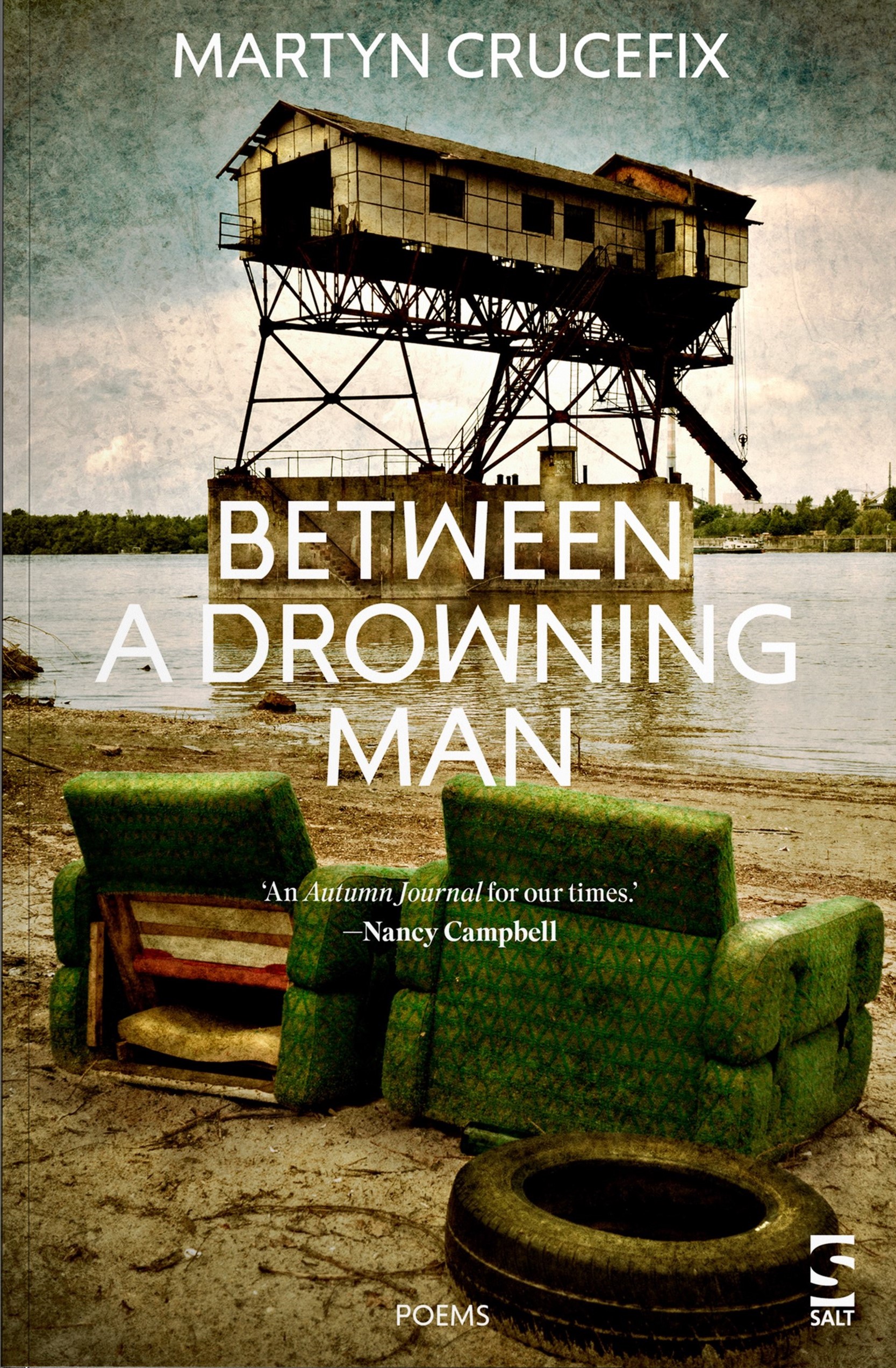
Ian Brinton reviews ‘Between a Drowning Man’

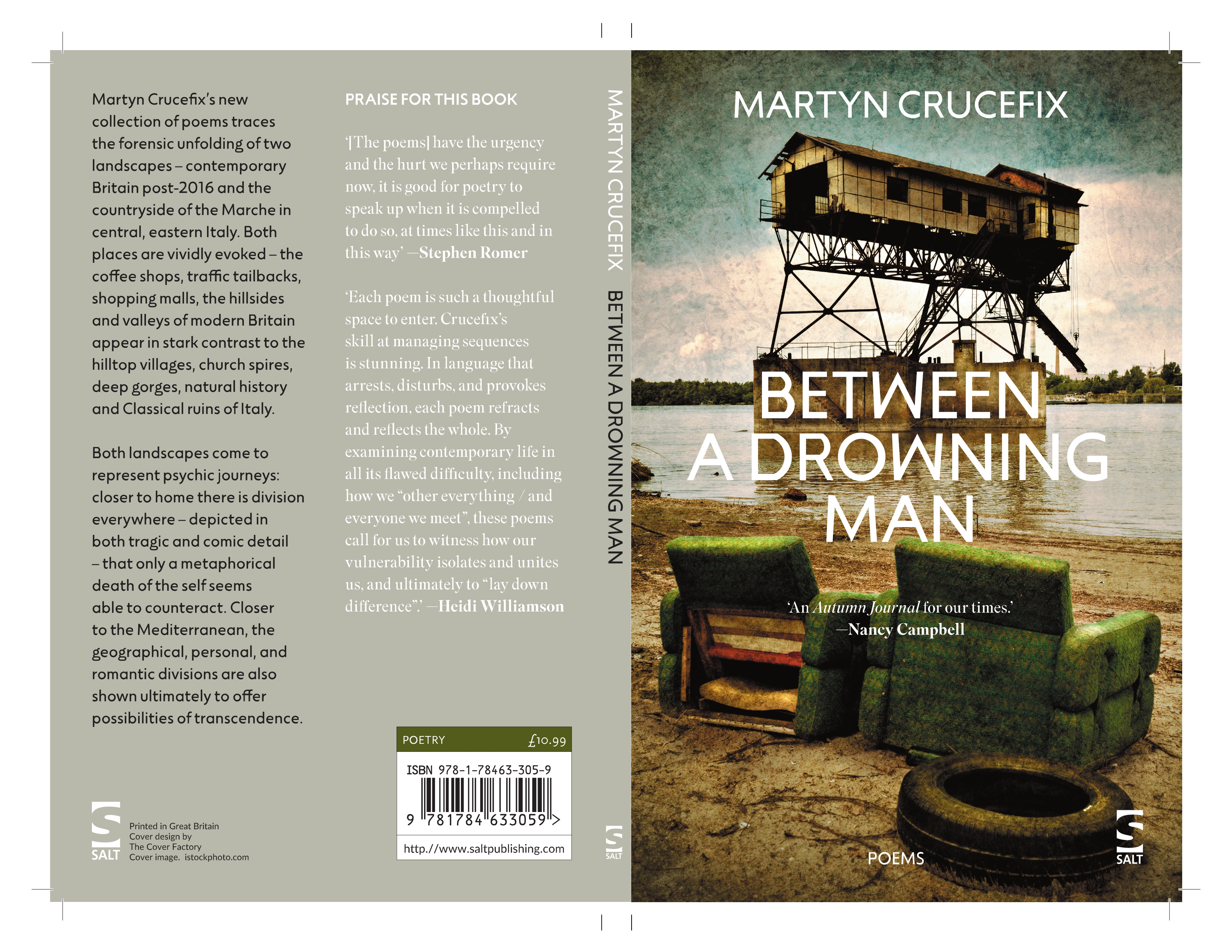
Here is Ian Brinton‘s recent review of my new Salt collection, Between a Drowning Man. It was first published by Litter Magazine in January 2024.

The invitation at the opening of these two remarkable sequences of poems by Martyn Crucefix emphasises both ‘difference’ and ‘ambiguity’, an ‘othering’ which hones attention rather than dulling it.

Divided into two sections, Works and Days (forty-nine poems) and O, at the Edge of the Gorge (fourteen poems) the two landscapes bring into focus a post-2016 Britain and the countryside of the Marche in central, eastern Italy. The leitmotif which threads its pathway, its recurring echo, through the first section is of ‘all the bridges’ being ‘down’ and the epigraph to section two is a quotation from Canto 16 of Dante’s Paradiso in which cities pass out of existence through warfare or disease and that which may have seemed permanent is continuously in movement. That second section of poems is a sequence of sonnets and in the final one the hawk’s resting place in the ‘shivering of poplars’ sways so that he is neither falling nor at ease

with these thinnest of airs beneath him

these shapes of loose knotted mesh

these whisperings that cradle him on a whim

That ‘othering’ prompts the poet to see the differences that are ‘like crimes woven into the weft’ and, in a way that William Blake would have recognised in his ‘A Poison Tree’, envy can be ‘buried long years in the black heart / of expressed admiration’ and ‘sunshine’ can be ‘really the withering of night’ which is ‘poured into soil where wheat grows’. And so it is—‘in and around and over and above’ because ‘all the bridges are down’. 

In April 2007 Jeremy Prynne wrote some notes for students about poems and translation:

Translation is for sure a noble art, making bridges for readers who want to cross the divide between their own culture and those cultures which are situated in other parts of the world; and yet a material bridge is passive and inert, without any life of its own, whereas a poetic translator must try to make a living construction with its own energy and powers of expression, to convey the active experience of a foreign original text.

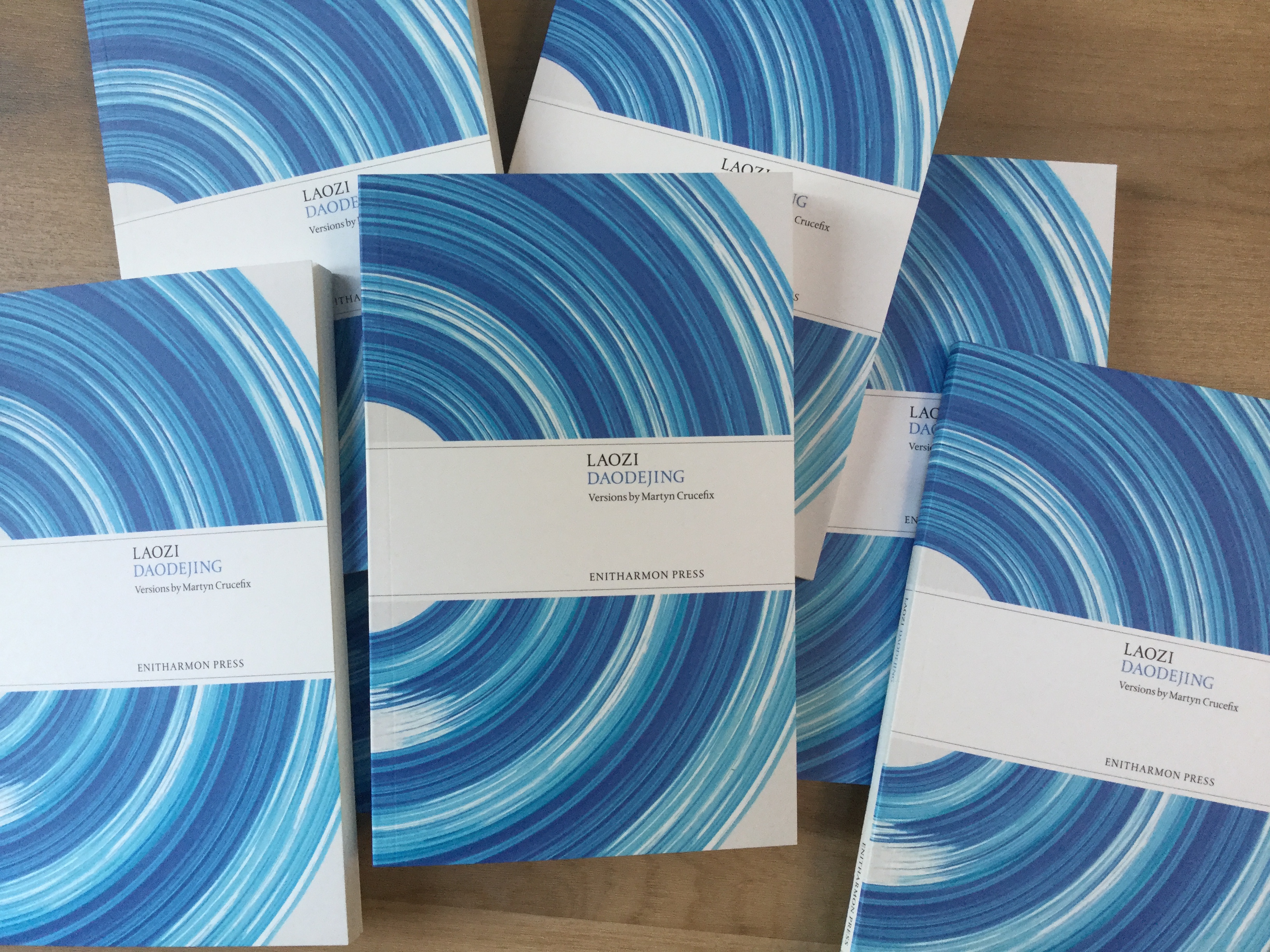
As a translator of real distinction (Rilke’s Duino Elegies and The Sonnets to Orpheus) Crucefix has for many years made these living constructions offering readers a gateway into new experiences whether it be through the world of Laozi’s Daodejing (Enitharmon Press, 2016) or through these new poems which offer echoes both of Hesiod’s Work and Days and the poems known as a vacanna which originated in the bhakti religious protest movements in 10-12th century India. His understanding of the central role language plays in our lives, that creation of bridges between humans, was one of the deeply moving and memorable moments in his collection from Seren in 2017, The Lovely Disciplines. There the poem ‘Words and things’ presented an elderly individual who discovered ‘too late this absence of words’ which now ‘builds a prison’ and Crucefix recognised that ‘a man without language is no man’: as the world of objects becomes too difficult to dominate he can only have knowledge of a world which ‘turns in your loosening grip’. The echo of Yeats’s ‘The Second Coming’ is surely no accidental one!

Translations are bridges, language is a bridge, and the distressing recognition of isolation within numbers is the dominant image in ‘fifteen kilometres of traffic’ from the first section of this new book:

fifteen kilometres of traffic wait before us

behind us the infinite tail

we are offered Google Map options

yet those trumpeted ten minute economies

are nothing till they can be proved

you make a choice you go your own way –

this has been better said before of course –

you cannot take the other way

and remain a unitary being on two paths

or perhaps sane – all roads crawl north

because multiple millions of cars crawl north

because all the bridges are down

Those ten minute trumpetings bring the world of Orwell’s 1984 to my mind as loud announcements of positive news seem to possess a tinny emptiness to the understanding of the isolated human who exists in a world of no bridges.

However, in contrast to this wave of uniformity one reads moments of ‘othering’ in the second section of this book as in ‘sharpening gusts along the valley floor’ a scrap of air was birthed

whirling inches above a littered drain

in a back street of some hilltop town

like Urbisaglia or some place that has seen

and has survived change of use

from sacred temple to church to slaughterhouse

and no gully nor hill can stop it

In this moving world ‘great swathes of air’ gather strength to flex ‘all things to a scurrying to keep up / and the truth is some will and some will fail’.

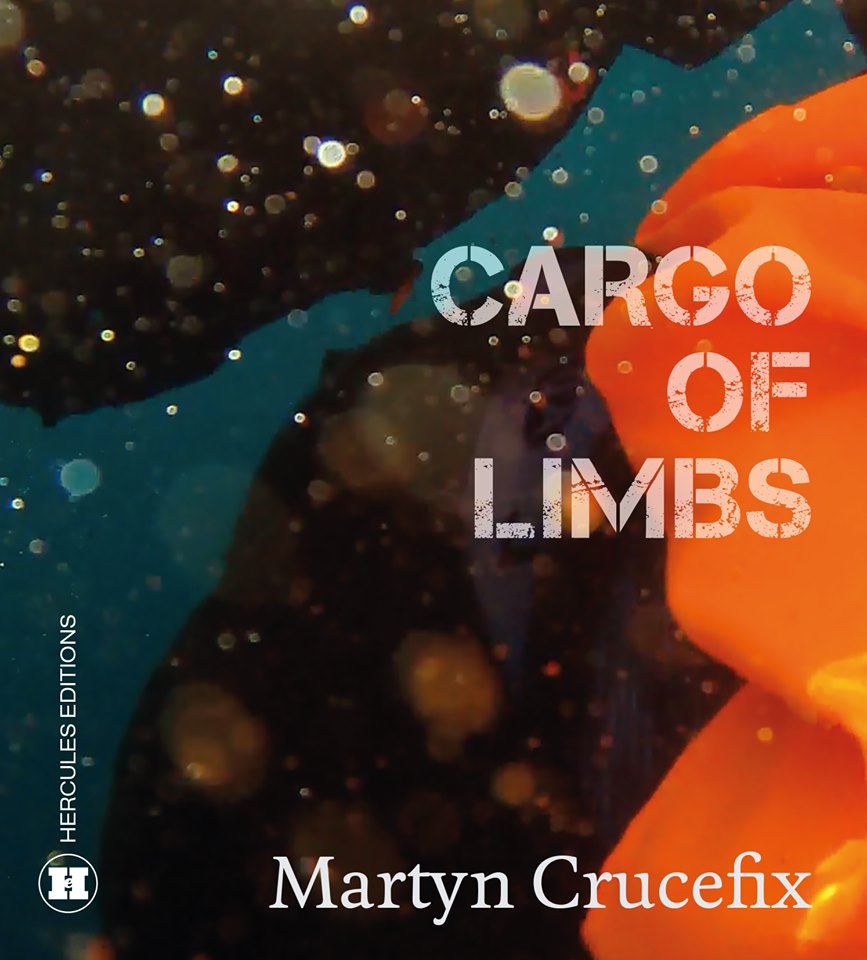
In a poem titled ‘can you imagine’ (for my children) from the first section of Between a Drowning Man the power of language to translate the invisible onto the page is presented with an unerring eye focussed upon reality. In a world in which he no longer shares the companionship of others the poet is carried safely because although ‘you find the bridges between us fallen down’ and although ‘you mourn’ you can still ‘imagine’. That sense of continuity held in the imagination is far from the image of Alan Kurdi, the three-year-old Syrian boy drowned on the beach near Bodrum, Turkey, in 2015 whose death was recorded by Crucefix’s earlier book, Cargo of Limbs, from Hercules Editions in 2019. The boy’s family had fled from the war engulfing Syria in the hope of joining relatives in the safety of Canada and became ‘part of the historic movement of refugees from the Middle East to Europe at that time’:

In the early hours of September 2nd, the family crowded onto a small inflatable boat on a Turkish beach. After only a few minutes, the dinghy capsized. Alan, his older brother, Ghalib, and his mother, Rihanna, were all drowned. They joined more than 3,600 other refugees who died in the eastern Mediterranean that year.

In this new book that ‘whim’ of a resting place for the hawk, those ‘whisperings’ prompt the bird, the poet, ‘to call it yet more steady perhaps’:

this whim—this wish—this risky flight

in the fleeting black wake of the carpenter bees

Mat Riches reviews ‘Between a Drowning Man’

Many thanks to Mat Riches for this fulsome and acute reading of my recent collection from Salt Publishing. The review first appeared on The High Window – Jan 2024

The introduction to the first section of Between a Drowning Man states that it draws on two texts. The first is Hesiod’s Works and Days, and the second of which is described as

the type of poem known as a vacanna originated in the bhakti religious protest movements in 10-12th century India. using plain language, repetition and refrain they were written to praise the god, Siva, though also expressed a great deal of personal anger, puzzlement, even despair about the human condition […]

This helped put everything into context for what followed. One third of the way in I started to think of it as a man shouting at clouds in book form, of someone railing at things in the world that are beyond our control. And maybe it is all of this, but it also much more than this. I think it becomes a lesson in acceptance.

In a post on his own Blog, Crucefix describes these poems as starting to arrive after reading the vacanna poems in 2016, and how the poems began to accumulate after that while ‘staying in Keswick at the time and I vividly remember scribbling down brief pieces at all times of the day and night’ and of having been influenced by Brexit (the bridges are down indeed). However, he also describes in a follow up post that:

I thought of the poetry I was writing as a quite narrowly focused topical intervention, but in the last 4 or 5 years …the poems have come to seem less dependent on their times and more capable of being read as a series of observations – and passionate pleas – for a more generous, open-minded, less extremist, less egotistical UK culture.

And while the Brexit reading is there, these poems speak more to grounding a modern and disconnected world (despite plenty of references to devices for and modes of communication—we’ll come back to that shortly) in timeless themes like love and desire, parenting, ageing, joy in nature, false idols, and much more, and this is just in the first twenty or so pages.

Picking one of those themes at random, we can see how false idols are covered, but also how deftly he weaves in modern references to something that is both timeless, and of its time, and with that very human. In ‘the six pack on the side’ we are told:

the clock is a sinister and impassive god
for the ancients rumour was a kind of god

the god of WiFi when we curse its absence
and when did difference become a god

We have always been a narcissistic species that pays attention to gossip (‘rumour was a kind of god’), but while our gods have changed as the centuries have passed, we still curse our gods when they forsake us. Not a bad return for a 19-line poem in my opinion.

In order to achieve the ‘more generous, open-minded, less extremist, less egotistical UK culture’ we can see several pleas for more open lines of communication throughout the poems. Some are located in the specific and familial, as in ‘watch the child’ and its discussion of a child chattering away to herself in a coffee shop with her ‘bright picture book’ juxtaposed with ‘her mother at her cooling latte / at her macchiato / at her cooling skinny medium cappuccino // […] her mother’s ears wired casually // with two scarlet buds.

The child is broadcasting and communicating in a carefree way vs the mother’s more deliberate inward-looking approach, a shutting the world out for some respite. And while this could be a judgmental poem; it’s not. It feels like an invitation to consider both sides, both needs here. The refrain of ‘all the bridges are down’ lands particularly well here, both for the protagonists of the poem, but also for the reader.

However, while some pleas are located in the specific there are some more general ones to be found. In ‘he thought of this time’ one man recounts a litany of disappointments and emotions from his father. The poem draws from Hesiod and his idea of the fifth age where modern man was created by Zeus to be evil, selfish, weary, and burdened with sorrow. It’s a two-footed tackle on humanity from the whistle:

he thought of this time as a fifth age
that he’d be better off dead or not yet born
working all day he would fear the night
had heard of children born prematurely grey
and the fraying bond between fathers
and sons between mothers and daughters
between host and guest between different races

It continues without reprieve about a world where:

[…]the hopeless
are advanced and further advancement
lavished for no more than just chancing it
respect a word more spoken than heard
the educated full of corrosive cleverness
and compassion the greatest of virtues
an ebbing tide you see where it glints
on the horizon

At the time of writing, it’s easy to feel like these lines are as contemporary as it’s possible to be, and yet it’s arguable they are evergreen observations about humanity. However, I suspect that’s the point.

We’ve touched upon references to modern-day totems like WiFi, coffee types and headphones already, but this section is filled with them. Further examples include references to Google Maps and ‘five-star online reviews’ in ‘fifteen kilometres of traffic’ and ‘stoke a fire under your silk blouse’ respectively.

This all reaches its zenith in the final poem of the section, ‘this morning round noon’. The poem moves from personal notes about scattering ashes, a son’s birthday (and him being in huge debt at 21, one presumes from being at university) through to:

an American punk band form Nashville
posting abuse about a young Buddhist woman
refusing anaesthetic

The lines are punctuated by phrases like ‘likesharelike’ or ‘likeclicklike’ or ‘smileyfaceicon’. It’s the diaristic nature of the whole section writ large and transmitting thoughts to the page (albeit the printed page, not the Facebook page) as they occur. As an aside, this running together of words, coupled with the entire book’s distinct and clearly deliberate lack of punctuation (save a few dashes here and there) add to the observational nature of the poems, of thoughts being pulled from the ether. However, this is very much not to say that these poems aren’t considered and crafted—they very much are.

The final line of the poem and section is ‘I say the Pantone chart is one of my favourite things’, and while the poem that proceeds this line could be read as a darker version of the Sound of Music classic, less Raindrops on roses and more ‘I was hit by a car likeshare’, but I prefer to take it as a sign that the poem end on acceptance of nuance, variation and being able to communicate the same needs.

As the first section comes to an end there are two poems where the last line of one resurfaces as the start of the next, and it feels like a teaser for what follows in the second section, O. at the Edge of the Gorge.

This was previously published as a pamphlet by Guillemot Press in 2017 and is a crown of sonnets. After the hectic modernity of the first section, there is much to be said for the relative calm of following a traveller, Orpheus, on a journey through Italian countryside observing ‘Glossy fleet black clods of carpenter bees / swirl at the corner of the house / then sink onto spindly lavender stems / alight on blooms stooped // with the weight of insect lives’.

It’s a beautiful opening and a beautiful image that should perhaps be filmed and used as a fine example of what was briefly known as slow TV and shown on BBC4, but in the second poem he describes ‘astronomical time marked by light’ as the sun descends the gorge and church bells tolling, but:

yet come nightfall a different sense
these same sounds sound notes more chilling…

A very real sense of for whom the bell tolls, indeed. As the traveller wends their way round the area, taking notes and sketches of birds, a ‘flock of white doves’, that darkness returns in the form of a buzzard in the eighth sonnet, and gets deeper still in the ninth where he mentions:

like Urbisaglia or some place has seen
and survived change of use
from sacred temple to church to slaughterhouse
and no gully nor hill can stop it

Urbisaglia is an ancient town in Mid-East Italy that became the site of an internment camp during the second world war, and that knowledge adds further weight to the stanza that begins sonnet ten:

The truth is some survive a while most fail
to conceive the scale of paperwork
to follow change of use from church to temple
next to slaughterhouse.

The cruelty of humanity to itself is mirrored in the “bloody festival / of the bird” in sonnet thirteen as it discusses a raptor above the gorge, and the final sonnet off this crown muses on the fragility of life:

All creatures die sooner blind to the hawk—
left clutching no more than this
as if the hammock he occupies each
and all night too as if strung out

[…]
not falling yet not ever at ease

‘not ever at ease’ could so easily be a final motif for the whole collection. There is a sense that the learnings of this collection are hard won, but there is a connection to the wider world to be had, and that we can find comfort in travelling through it. The final lines of ‘you are not in search of’ in the first section seem apt as a place to leave it:

you might say this aloud—by way of ritual—
there goes one who thought much of life

who found joy in return for a little gratitude.

Mat Riches is ITV’s unofficial poet-in-residence. Recent work has been in Wild Court, The New Statesman, The Friday Poem, Bad Lilies, Frogmore Papers and Finished Creatures. He co-runs Rogue Strands poetry evenings. A pamphlet called Collecting the Data is out via Red Squirrel Press. Twitter @matriches Blog: Wear The Fox Hat

Strike a Pose: Jacqueline Saphra’s ‘A Bargain with the Light’

They come from conversations overheard or taken part in, sights, sounds and the other senses, recall, reading, when alone or in company. Poems drop into the growing matrix of all we’ve felt and known. For those who write, it goes on all day long. But only a few land propitiously and work their way into what lies beneath to root and grow. The best of them find earth particularly suited to the nature of the seed and Jacqueline Saphra’s introduction to the highly ekphrastic A Bargain with the Light (Hercules Press, 2017) records just such a moment.

DKKnm3zX0AAbJg_[1]

This exquisitely produced little book also contains a discussion of the model and photographer, Lee Miller, by the academic, Patricia Allmer. Miller emerges from this as a multitude; as object, agent, speaker, spoken of, product and producer – in Allmer’s words a “key female icon of the twentieth century”. And so, in 2016, visiting the Imperial War Museum’s exhibition, ‘Lee Miller: A Woman’s War’, Saphra was stopped “in her tracks” by a nude photograph of Miller, taken by her father. Saphra explains: “How could I not be drawn to this extraordinary, wounded woman [. . .] with her huge capacity for creativity, her beauty, her restlessness?” It can take only a moment for both the drawer and the drawn to discover in each other a mutual compatibility.

The poems that arose from Saphra’s fascination with Lee Miller take the form of an heroic crown of sonnets. The form incorporates repeats and revisitings as well as replicating, in its constituent short forms, the brief instantaneous moment of the taken photograph. By coincidence, I’ve used a less strict form of the crown of sonnets recently and, in search of a propulsive, forward movement within the sequence opted not to repeat lines verbatim and also to cut the fifteenth sonnet which repeats many lines once more. But Saphra adheres to the form pretty tightly and in doing so reflects the remarkable recurrences in Miller’s life. Though she finds some evidence of maturation and progress, her chosen form argues against this. The penultimate sonnet declares: “you’re still the same girl who trembled / in the snow wearing only silence”.

This reference is to one of the earliest images of Miller, taken by her father – as a stark naked 7 year old, standing in 2 feet of snow in her home town, Poughkeepsie. It’s an appalling image, but Saphra’s verse derives from it two elements that will recur: the (definitely creepy) power of the father and the fact that Miller is hiding in full (full frontal) sight. ‘Darkroom Lessons’ addresses another naked image of Miller, again taken by her father. But now she is a 20 year old woman. She turns her head aside as if she’s just been struck. For Saphra:


You turn and strike a pose.

Once more, you look beyond. This time your face

in profile signals absence. Your skin glows [. . .]


Miller’s nakedness demands she hide herself and the gaze from which she hides . . .


It’s him

again: the father, tucked behind the lens

sharing his expertise. This is how it starts:

with naked lines and curves; it ends

with lessons in the darkroom. This is art.


The euphemistic “lessons in the darkroom” allude to the fact that Miller was sexually abused in childhood – though by a neighbour, rather than her father.


Lee-Miller[1]
Lee Miller – Self Portrait
 

By the 1930s Miller had reached Paris, her naked body now proving an inspiration to artists like Man Ray. But Saphra’s poems indicate that while still an object, Miller is becoming more of an agent too: “This is your chance / to know his secrets, so you play his game”. In her compliance, Miller learned much from Man Ray. ‘The Art of Control’ responds to a watershed moment, a self-portrait image from around 1930: “You steal his eye and take both sides: / In front, behind: the seer and the seen”. The poem concludes (quietly, plainly as ever) marking Miller’s bid for an independence and freedom (as woman and artist) that perhaps seemed unlikely:


No deal to cut, no tacit threat, no flesh:

Sweetly, you make your bargain with the light,

The only safe transaction. You took this.

Here is your face. Simple. Nothing amiss.

Collaborators[1]


The sonnet crown demands that this concluding line is repeated as the first line of the subsequent poem. The risk that we might read the line too simplistically and optimistically is reduced when we hear much the same words re-applied to Miller’s 1944 photograph of a French woman accused of collaboration with the Nazis – her head shaved: “Here is your face, simple, nothing amiss”. As in this instance, as the sequence unfolds, more of the sonnets are in the voice of Miller herself. This technical shift marks the artist’s growing self confidence and one of Saphra’s suggestions is evidently that, having suffered much in her youth, she is able to confront head-on the suffering of others. And hence take a great photograph.

486434472_f02117992d_o[1]

So Miller’s image, ‘The Burgermeister’s daughter’ is of a Nazi woman who has poisoned herself. To take the image, Miller must have got very close. So too with the frightening ‘Beaten SS prison guard’, his goggling eyes and smashed, bloodstained face filling the frame. Miller took it on a visit to the Buchenwald Camp. Saphra makes Miller speak of it:


I learned how to escape. How well I hid,

how close I dared to stand. I fix my focus

inches from his face, his eyes clear, the blood

congealing on his skin. If there’s disgust,

I channel it, and if there’s fear, I know

how to burn it, use it for fuel.


The sonnet sequence does not unfold strictly chronologically. In the midst of Miller’s war years, there’s a poem in response to an image of a 6 year old Miller with her mother; then there’s another of the whole Miller family in 1911. The strategy here maybe be (reflecting the repetition of the crown form) to suggest how much of the little (abused) girl remained within the confident, female war photographer. But it does give rise to some arid repetition. In one poem Miller tells us “I’ll learn to play both naked and concealed” and in the other we are again reminded, “You learned how to escape. How well you hid”.


Saphra-interview[1]
Jacqueline Saphra
 

But how far Miller must have come is suggested by one of the strangest of the images here, the 1943 ‘US Army nurse drying sterilised rubber gloves’. The white uniformed, virginal nurse stands comically surrounded by grasping rubber gloves arrayed on sort of hat-stands to dry. Her figure is grotesquely dwarfed by the grasping and groping that goes on around her. Miller speaks in Saphra’s poem, reflecting on her own inner turmoil:


Where are the doctors? When will they begin

to make it better? I watch and wait

as if they’ll find a cure for this malaise,

as if the storm inside can be erased.


Though elsewhere, Miller’s voice rings out much more defiantly (“I’ll crash in, braced / to win, dig for mercy, shoot for grace”) it’s the still-troubled “girl who trembled / in the snow” we are left with in sonnet 14. If Miller truly is Allmer’s “female icon” then she is – in Saphra’s treatment of her – one achieving only a pyrrhic victory in the twentieth century gender battles: “You square your shoulders, soldier on”. Yet the poems are all the more moving because of this. The poet’s profound identification with Miller, her deployment of ekphrastic techniques and her clever use of the crown form make for a very satisfying read. It goes without saying that Hercules Press’ production and design is stunning. This is a little book to treasure or – as it’s getting close to Christmas – to give.

lee_miller_biography_beautiful_young_thing_audacious_muse_photographer_3l[1]


How We Created ‘O. at the Edge of the Gorge’ (Guillemot Press)

These two pieces on the writing and illustrating of my new chapbook, O. at the Edge of the Gorge, first appeared on the Guillemot Press website. Thanks to the Press and Phyllida Bluemel for permission to re-post them here.

The making of O. at the Edge of the Gorge
PART ONE by Martyn Crucefix

IMG_0281

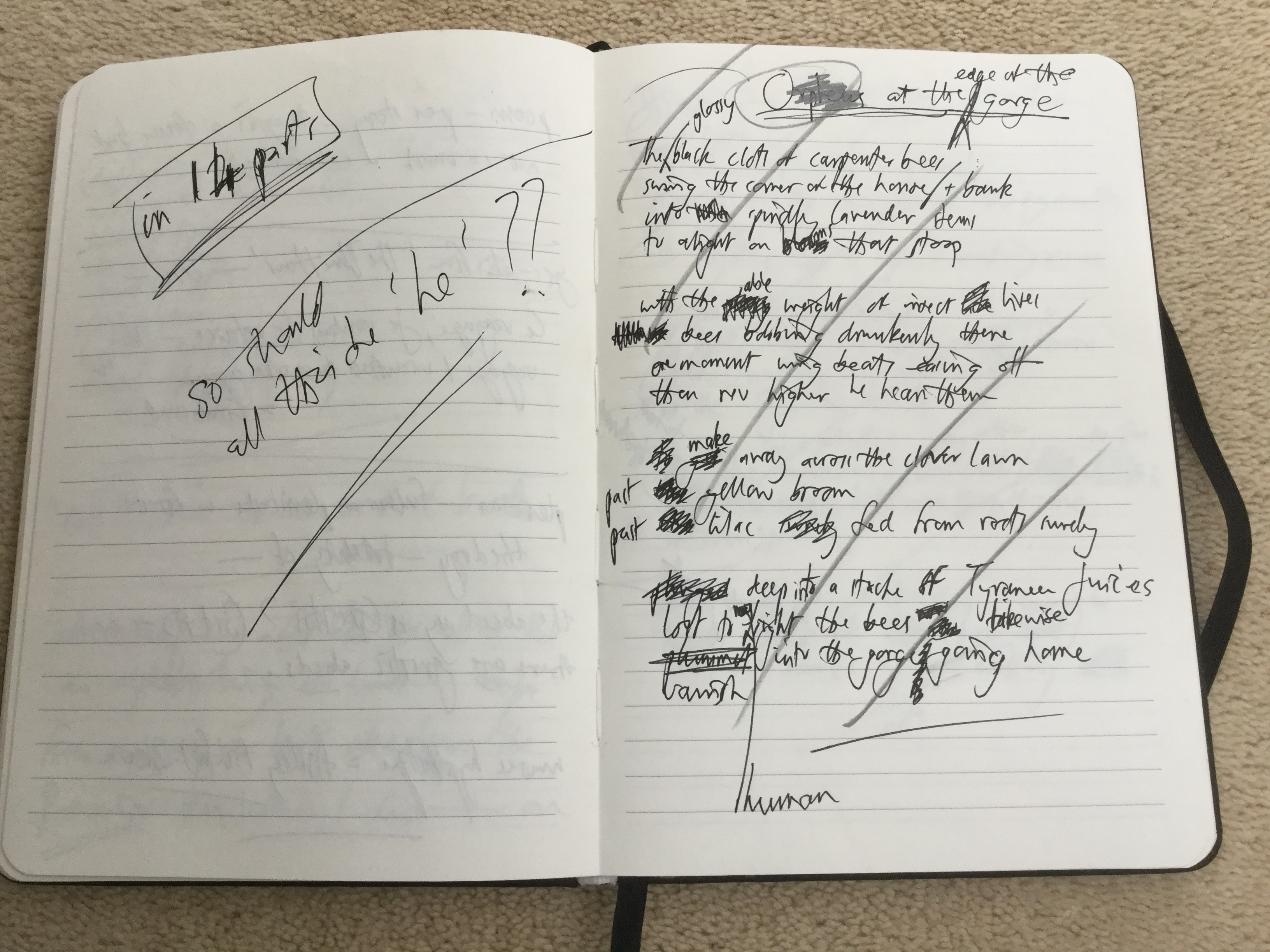
The scraps and scribbles that eventually became O. at the Edge of the Gorge are contained in a notebook dating from March 2014. The first words that made it into the finished sequence record my sighting of “6 white doves / on the boundary wall / looking away”. I’m pretty sure I spotted the birds on the drive to one of the airports north of London as, on the same page, sits a note recording a tannoy announcement calling a customer back to one of the shops in the Duty Free zone: “please return /  to Glorious Britain / for a forgotten item”. These are the sorts of strange happenstances that get thrown down in a writer’s notebook; happily, it was the dove image that stayed with me.

The landscape of the poem is the destination of my flight that day, the Marche in central, eastern Italy. I was staying in a house close to the edge of a deep gorge, looking out to distant hillsides, several hilltop villages, their church spires, clumps of dark trees. The roots of the poems – any poem, of course – spread much deeper than is immediately visible. So earlier in the same notebook, I find I had noted a quotation from Schopenhauer (itself quoted by Dannie Abse in the May 2014 issue of the magazine Acumen): “Envy builds the wall between Thee and Me thicker and stronger; sympathy makes it slight and transparent – nay, sometimes it pulls down the wall altogether and then the distinction between self and not-self vanishes”.

A little earlier, there was another note. This was from a piece by Ed Hirsch in the magazine The Dark Horse. Hirsch quoted Simone Weil’s observation that “absolutely unmixed attention is prayer”. He went on to urge our attention ought be paid to the earth, not looking for something atemporal and divine. We need to cherish the fleeting and the transient, even in its disappearance. This is the particular project of poetry, he argued, and these are recognisably Rilkean ideas that were always likely to attract my interest. I have spent many years translating Rilke’s Duino Elegies and Sonnets to Orpheus. The Orpheus link took a while to re-surface in my mind in relation to the new poems.

One other notebook entry stands out. I seem to have been reading Bruce Bawer’s book, Prophets and Professors (Storyline Press, 1995), and in a chapter on Wallace Stevens he quotes Mallarme: “To name an object is largely to destroy poetic enjoyment, which comes from gradual divination. The ideal is to suggest the object”. It’s not necessary for a writer to fully grasp such scattered sources; they tend to be ripped out of context and appropriated for use. In retrospect, I seemed to be thinking, over a period of weeks, about the relation between self and other, the paying of attention to the transient world and the difficulty of maintaining such attention through the medium of language. All of this re-appears in the poems that make up O. at the Edge of the Gorge.

Also by this time – probably July 2014 – there were two strong poetic voices chanting in my head. One was from poems I was trying to translate by Peter Huchel, poems written in the highly censored context of the GDR in the mid 20th century. I find I’d scribbled down “his vision is up-rooted, deracinated in the extreme – a world where meaning has withdrawn (the jugglers have long gone) what’s left is iron, winter, suspicion – spies, the Stasi, meaninglessness – but the natural world persists”. The other voice was from the Ancient Chinese texts of the Daodejing which I had also been versioning for quite a few months previously and were eventually to be published in 2016 by Enitharmon Press.

In complete contrast to Huchel, the Daodejing’s vision is one of ultimate unity and wholeness achieved through such an intense attentiveness as to extinguish the self and all barriers. These two extremes seem to form a key part of the sequence of poems that emerged in the next few weeks, my narrative voice moving from a Huchel-like sense of division and isolation to a more Dao-like sense of potential oneness.

Besides all this, I was playing in the notebook with the idea of ‘off’’. The point was, rather than focusing where the ‘frame’ directs us, we gain more from attending to what lies beyond it; the peripheral, I suppose, in a kind of revolt. I was muttering to myself “locus not focus”. I was thinking of the lovely word ‘pleroma’, a word associated with the Gnostics and referring to the aggregation of all Divine powers – though, as with Ed Hirsch, I was not so much interested in the Divine. Pleroma is the totality of all things; something like the Daoist’s intuition of the One. I think such ideas gave rise – quite unconsciously – to the several swarms, and flocks, the “snufflings the squeals and scratchings” that recur in the poems. These represent the fecund variousness of the (natural) world to which we might be paying more attention.

The hilly landscape and the plunging gorge itself also seem to suggest (at first) a divided vision. The carpenter bees act as intermediaries – at first alien, later to be emulated. As the first rapid drafts of individual poems came, there was a plain lyric voice – an ‘I’ – in a sort of reportage, revelling in the landscape, its creatures, colours and sounds till eventually I had 12 sonnet-like pieces. One of the poems seemed already to allude to the Orpheus myth, the moment when he looks back to Eurydice and she is returned forever to the underworld. His mistake, in this version, was that he was seeking an over-determined, “comprehending grip on earth” as opposed to a more passive openness to the phenomena of the world (which Eurydice seemed now to represent).

At some stage, the narrating ‘I’ was switched to a ‘he’ and the ‘he’ began to feel more and more like a version of Orpheus himself (hence O. at the Edge of the Gorge). The change from first to third person also gave me more distance from the materials. It was on a later visit to read my own work at the Cheltenham Poetry Festival in the Spring of the following year that I heard Angela France reading a crown of sonnets. I blogged about it at the time and coming home it struck me that my sequence ought to take the same highly interconnected form. The 10th of my sonnets – precisely that moment where the Orpheus/Eurydice separation occurred – was expanded into two poems, absorbing some details about a parked car on a hill and others, also focused on transience, from Dante’s Paradiso Book 16. The final sonnet to appear picked up on some notes I’d made long before about seeing a hunting hawk rise up from the roadside clutching a mouse or rat in its talons. By this stage, the gorge, in its representation of the Other, had also come to be associated with life’s most apparent Other, death. The whim, or wish, or risky flight of my narrator to include or encompass the gorge itself became the poems’ hoped for goal.

The making of O. at the Edge of the Gorge
PART TWO by designer and illustrator Phyllida Bluemel

I have a print-out of O at the Edge of the Gorge covered in pencil scribbles and tiny indecipherable thumbnails of visual ideas. Putting images to poetry can be daunting. I find that, armed with a pencil, a close reading of the text and lots of doodling is a good place to start. I thought a lot about the point of illustrating poetry – what the images can bring. I want the illustrations to be in conversation with the poem, rather than just replicating images already present in the words. Starting with an intuitive visual response is a nice way to get the conversation started.image1

For me the poems read like an unforced train of thought – a notebook in the pocket of a traveller, a sun-drenched jotting of linked observations and associations and memories – the kind of meandering thoughts that are particular to a slow and hot afternoon. They are very evocative of place.

I was taken with the formal playfulness of the poems – the crown of sonnets – where emphasis repeats and changes and each poem flows effortlessly into the next. An enacting of Martyn Crucefix’s line “he snaps them sketches then revises again”. It seemed appropriate to echo that in the imagery. The folded and interrupted illustrations bind each poem to the next. I wanted to give myself some of the constraints that the poet had set himself – and nearly every image contains an element of the one before, re-appropriated and carried forward – a visual game of Chinese whispers.

22071074_225079284691665_7698907406985592832_nThe poems move from one image to the next but there are the same preoccupations – the specks and the flocks and movements alongside monuments and geology – contrasting contexts of time, and the sense (especially given the form) of something trying to be ordered or sorted out, but not quite complying – “dicing segments of counted time…” The diagrammatic, map-like – but not-quite scrutable imagery is a response to this – an attempt to make sense of forms and information, or grasp a particular memory and note it down. Not quite successfully. We are left with a string of related thoughts and a measuring or structuring impulse.

The imagery itself takes its leave from the words – an outlined lavender stem becomes a cross-section, a contoured landscape, which in turn ends up as the outline of a branch, twisting into the form of the river at the bottom of the gorge. I had a lot of fun playing with scale and the way in which lines taken from nature mimic each other. This felt right because of the shifts in perspective in the poetry – from the raptor’s eye view, to the ‘snufflings’ and ‘scratchings’ of detail. The buzzard’s diving and ‘zooming-in’ of the landscape. 22158675_355445834881295_4436376972506955776_n(1)

The use of newsprint for the folded pages is as much an act of ‘illustration’ for me as the lines. Maps and diagrams and lines interrupted by folds and the edge of the pages make it feel as if they are part of something else – ephemera or a dog-eared map folded, or a napkin sketch ­ – tucked between the pages of a notebook. I also think it’s OK to want to make a beautiful object for the sake of a beautiful object – the tactility of different paper stocks, the small and pocketable size of the book – all I hope lend themselves to a thoughtful reading of the poem.