More than 10 years of blogging on poetry and translation – over 39,000 views in 2024 – now captured and preserved at the UK Web Archive: 'one of the top 10 poetry blogs' (Rogue Strands)
This review first appeared in Acumen Poetry Magazine in the autumn of 2025. Many thanks to the reviews editor, Andrew Geary, for commissioning it.
As a female writer, talented in a variety of genres, living in a difficult political climate, Hungarian born Krisztina Tóth shares a good deal with Huch (my review of Tim Adès translation of Huch’s final book was posted here). Coming to the fore around the revolutionary year, 1989, Tóth has written poetry, children’s books, fiction, drama and musicals. My Secret Life (Bloodaxe Books, 2025) is her first sole author publication in English, ably translated and introduced by George Szirtes, presenting an overview of her poetry from 2001 to the present. Szirtes tells us that Tóth is no longer living in Hungary because of unbearable frictions with the Orbán regime. Like Huch she is drawn to poetry as personal expression, often to the formal elements of the art, both perhaps offering a redoubt against values she finds unacceptable. If there is little redemption to be found in her poems, there is some consolation to be had through the twin imperatives she expresses, to remain compassionate and to persist in trying to articulate human experience. Neither goal is easy.
Szirtes argues Tóth’s style is conversational, plain, precise, offering ‘a kind of kitchen-sink realism’. The personal also features and in these self-selected poems we get glimpses of a barely affectionate mother, a father who dies young, children, lovers, and a difficult grandmother. It’s not clear if these are genuinely autobiographical portraits and, anyway, they are most often absorbed into Tóth’s emblematic writing. An example would be ‘Barrier’ in which a couple are crossing a bridge, seemingly discussing ending their relationship. With the river below and trams thundering past, ‘the pavement was juddering’ and the poem is really about this instability in relationships as much as the (social/political) world, concluding there were ‘certain matters that couldn’t be finalised’. Such uncertainty drives roots even into the self: ‘I’m somebody else today or simply elsewhere’ (‘Send me a Smile’). Tóth uses the image of the ‘professional tourist’ in one of the major poems included here. With little background given, the narrator visits town after town, apparently hoping to be joined by a ‘you’ who never appears. Obviously a ‘stranger’, she wanders aimlessly, haplessly, buys a few things, the poem inconclusively ending with an image of a used toothbrush, ‘like an angry old punk, / its face turned to the tiles, / its white bristles stiff with paste’ (‘Tourist’).
Alienation, expressed through a profound sense of homelessness, is Tóth’s real subject. With the irony turned up to 11, the poem ‘Homeward’ ends quizzically, ‘But where’s home?’ In such a world view, the ability to remain compassionate is important to the poet, however hard it may be. The painfully brilliant ‘Dog’ presents a couple driving at night, seeing a badly injured dog at the roadside, and the woman wants the man to stop. I think they do, but the poem’s focus is on the powerful impetus to help versus the powerful sense that whatever can be done will prove futile. More weirdly, in ‘Duration’, the narrator finds a Mermaid Barbie doll stuck in the ground outside her flat. The childhood associations, the vulnerability of the frail figure, seem to compel action, but ‘what’?
Should I pull the thing out of the ground so it
sheds earth every night, because however often
we wash it, or wrap it in a tissue or leave it
on the radiator we’ll only have to bin it in the end?
Tóth’s wry, highly original lament, on deciding not to buy a universal plug adaptor, perhaps suggests what is being wished for in many of these poems. It is a way for a feeling human being to feel more at home in a world of suffering: ‘how to adapt the world / and its gizmos to the pounding of so many hearts’.
‘Song of the Secret Life’ pulls together many of these strands with the life as much the inner life of the self (the heart) as the life kept hidden in an unsympathetic personal or political environment. In the case of an artist, it is also the creative life, and as much ‘an utter mystery, a puzzle undone’, to the writer herself. But in order ‘to survive it needs telling’ and – like Huch’s creative figure in ‘The Poet’ – even if current conditions do not welcome such efforts, the individual must continue to write, to use language, to affirm the validity of the individual viewpoint. This is the burden of the magnificently hypnotic long concluding poem, ‘Rainy Summer’, in which the long-lined, rhymed couplets, express an unrelenting haunting of the speaker by ‘a sentence’. The latter phrase opens many of the lines, and it goes talking, throbbing, pulsing, dancing and rushing through the poem itself, though as much as the sentence might prove to be some sort of ‘home’ we are never told what it expresses. This is largely because it is a ‘rhythmic unit without words’, it is ‘the bodiless body of language’, it is the ‘speech that knows no speech’, it is ‘a sentence that contained you, gone yet here, some of each’.
Szirtes’ emphasis on the political backdrop to Tóth’s poems might lead us to expect more obvious political engagement and subject matter. That’s not what we get here, though no doubt her surroundings have determined many aspects of the work. Hers is a profound voice, finding in the menace, alienation, and instability around her emblems of more universally shared experiences of rootlessness, troubled self-questioning, of sensibilities that find the world as it is a painful and difficult place to navigate, of the pull of pity and compassion versus an overwhelming sense of the futility of individual action. ‘Sleeper’ addresses what might be a transmigrating soul or spirit, a ‘little pulse box’, asking question after question about where it has been, what it has seen, the mysterious passage from life to death, or vice versa: ‘what’s it like to step into such cold, unlit fiefdoms, / does anything remain’? Tóth’s poems ask such questions and like the best modern poems offer us equivocal answers only, consolatory but not redemptive.
Here is the whole of one poem included here:
Where – Kristina Toth, tr. George Szirtes
Not there, on the tight bend of the paved highway,
where cars are occasionally prone to skidding,
chiefly in winter, though no one dies there,
x
not there where streets are greener and leafier
where lawns are mowed and there’s a dog in the garden
and the head of the family gets home late at night,
x
nor there in front of the school where every morning
a man is waiting regular as clockwork,
nor inside the gates on the concrete playground,
x
nor in the neglected, dehydrated meadow
where a discarded dog-end hits the ground and glows
This review is an extended version of the one which first appeared in Acumen Poetry Magazine in the autumn of 2025. Many thanks to the reviews editor, Andrew Geary, for commissioning it.
Considered by Thomas Mann as ‘the first lady of German letters’ and as the first woman to receive the prestigious Goethe Award (1931), Ricarda Huch (1864-1947) was a literary superstar of her time, yet remains little known in English. She was an historian who published novels, philosophy, drama and poetry. With the rise of Hitler, she made her rejection of Nazi doctrine clear, remaining in Germany as an ‘inner émigré’, but surviving the war years. Autumn Fire (Poetry Salzberg, 2024) is her last collection, published in 1944, and powerfully reflects her lifelong fascination with the Romantic movement. As Karen Leeder’s scene-setting Introduction explains, this is evidenced in the poems’ formal choices as well as imagery, ‘a repertoire of sprites, flowers, scents, birdsong, gardens, moons, fairy tales, and love’. An English poetry reader would initially place this work in parallel to the least challenging of the Georgian poets of 1914.
There is frequently a faux medievalism at work, as in ‘The trees of autumn murmur’ which tells the story of a Prince who wanders into the woods and is bewitched by ‘fairies wild’ to live a sad, unloving, unhappy life. Other poems remind us of Hardy’s folkloric, time-obsessed lyrics in similarly challenging stanza forms:
On far-off floors the dancers face the middle,
The hems swing stiffly to the threshers’ drum.
Accordion and bass and fiddle
Ethereal hum.
(‘Autumn’)
Also from the stock Romantic image bank comes the isolated, tortured figure of the poet who, as spring days arrive, remains unmoved by them because mysteriously ‘troubled’ and when called upon to sing his songs (this is Huch’s own masculine gendering), finds that his creative efforts are ‘unwelcome’ to society at large (‘Morning of twittering birds’).
However, a closer reading of Huch’s poems clarifies their curiously hybrid effects, as in ‘The Old Minstrel’ in which the violent early years of the twentieth century come forward dressed in medieval garb. The narrative voice encourages the minstrel to sing and play his harp: ‘songs of golden treasure, / Times of playfulness and pleasure’. But the final lines of the poem are spoken (we must assume) by the minstrel who warns that what may come from him demands powerful trigger warnings:
Woe betide ye when I call
Forth my lions, every string,
Dumb in dusty ambuscade,
Torpid now, glistening
Thick with matted blood!
Huch boldly leaves the poem there, without any return to a possibly moderating, narrative voice. ‘The Heroes’ Tomb’ also makes use of familiar images (a tomb, a blustery November day, an old man, a passing shepherd, a youngster asking questions) to address a distanced ‘wicked war’. This poem similarly ends bloodily (though note, we are still in the era of swords rather than machine guns), as those who are inclined to stoop and listen at the tomb, can ‘make out far below the clash of swords, / And tell the drip, drip, drip, and hear the sound. / Can it be blood?’
Such lines contrast the lark’s song, the perfumed jasmine, the poplars and lime trees inhabiting so many of these pages and Huch herself seems to shuttle between a religious-based optimism and a much more modern sounding despair. In ‘Moonlit Night’, an owl flies through a wood and takes a mouse as prey. The moon seems to be portrayed as looking on, wholly indifferent, as it picks its way through the branches, ‘twinkle-toed and light’. Only the form and language here makes the poem feel less than genuinely Modern. As for the owl, it becomes proleptic of technological advances in air warfare as she sweeps off through the wood, ‘the murderess, / whose claws the victim hold, / airborne above black treetops’ emptiness’. Another predator image later provides the reader with a further shock. In ‘My heart, my lion, grasps its prey’, the latter is identified as ‘the hated’. And the passionate nature of Huch’s antagonism – though the object of her hate is never named – is startling, and she uses repetition, shortened lines and rhyme to make her point:
My heart hates yet the hated,
My heart holds fast its prey,
That none may palter or gainsay,
No liar gild the worst,
Nor lift the curse from the accursed.
Almost inevitably you feel, the elements of modern warfare seep into Huch’s poems. In the midst of another Hardyesque stanzaic poem, between the ‘honey-brown’ buds on the trees and the lark’s ‘music-making’, more familiar ‘war poem’ sounds provide the base notes: ‘The earth shakes with battle, the air with shellfire heaves’ (‘War Winter’). The ABAB quatrains of ‘The Young Fallen’ mourn those taken by war by first evoking the innocence of their childhoods, schooldays, their unfulfilled worldly ambitions. Then ‘War came’. And though much of the detail and imagery could be applied to wars fought anytime in the last few centuries, there are moments when the realities of the mid-twentieth century cannot be denied. The young men’s hands are a focus, as they ‘Not long ago reached out for toys and fun. / Those hands, conversant with the tools of murder, / Control the howitzer and grip the gun’.
In fact, Huch was living in Jena when the city was bombed by the Allies and ‘The Flying Death’ comes closer than any other poem in conveying her experiences of modern warfare. Though the Flying Death is an old-fashioned personification, its modus operandi is up to date: ‘The chimney reels, the roof-beams groan, / By distant thunder he is known’. Even as the air bombardment is imaged as approaching on ‘iron steeds’, its impact is plainly conveyed as ‘A whistling, hissing din, and more, / A jarring shriek is heard, a roar, / As if the earth would burst.’ This Poetry Salzberg publication unfortunately does not give the reader the original German, but Timothy Adès’ translations are quite brilliant in their preservation of form and rhyme, while at the same time conveying both the sweetness and the violence in Huch’s curious, powerful, under-appreciated poetry.
Excerpts from Autumn Fire, tr. Timothy Adès
Stralsund
The old grey town that blue sea girds: The swell of rust-red sails, The squawking, tumbling salt-sea birds, The flash of clean fish-scales.
On this church wall the pounding wave And tempest waste their fire: Though organ-thunder shakes the nave, No foe hurls down the spire.
The clouds with tender beating wing Caress its head, that dreams Of fierce-fought battles reddening Its foot with gory streams.
The dead are sleeping, stone by stone, The sounding bells request: Eternal memory, my son, Be thine, eternal rest!
Music
Melodies heal up our every smart; Happiness, Lost to us, they redress; They are balsam to our ailing heart.
From the earth where we without respite Toil enslaved, As on wings of blessed angels saved They transport us to a land of light.
Sound, sound forth, ye songs of mystery! Worlds fly far; Earth sinks down, our red and bloodstained star; Love distils its essence from on high.
With the sad news of the passing of Tony Harrison, who as a working class poet had a great impact on me during my formative years of writing in the 1980s, I went back to a piece I was commissioned to write for an OUP collection of essays on his writing – both poetic and dramatic – in 1997. The book, Tony Harrison: Loiner, was edited by Sandie Byrne and included articles from Richard Eyre, Melvyn Bragg, Alan Rusbridger, Rick Rylance, and Bernard O’Donoghue. This is the full text of what I contributed: an intense focus on and close analysis of two of Harrison’s key poems, ‘A Cold Coming’ (for Harrison reading this poem click here) and ‘Them & [uz]’ (for the text of this poem click here).
The Drunken Porter Does Poetry:Metre and Voice in the Poems of Tony Harrison
Part I
Harrison’s first full collection, entitled The Loiners after the inhabitants of his native Leeds, was published in 1970 and contained this limerick:
There was a young man from Leeds
Who swallowed a packet of seeds.
A pure white rose grew out of his nose
And his arse was covered in weeds.
Without losing sight of the essential comedy of this snatch, it can be seen as suggestive of aspects of Harrison’s career. For example, the comic inappropriateness of the Leeds boy swallowing seeds becomes the poet’s own ironic image of his classical grammar school education. As a result of this, in a deliberately grotesque image, arises the growth of the white rose of poetry – from the boy’s nose, of course, since Harrison in the same volume gave credence to the idea that the true poet is born without a mouth (1). The bizarrely contrasting weed-covered arse owes less to the intake of seeds (rose seeds wherever transplanted will never yield weeds) than to the harsh conditions Harrison premises in the Loiner’s life, as indicated in an early introduction to his work, where he defines the term as referring to “citizens of Leeds, citizens who bear their loins through the terrors of life, ‘loners'”(2).
Harrison’s now-legendary seed-master on the staff of Leeds Grammar School was the one who humiliated him for reciting Keats in a Yorkshire accent, who felt it more appropriate if the boy played the garrulous, drunken Porter in Macbeth.(3) The truth is that the master’s attitudes determined the kind of poetic rose that grew, in particular its technical facility which Harrison worked at to show his ‘betters’ that Loiners could do it as well as (better than?) they could. Yet this was no sterile technical exercise and Harrison’s success lies in the integrity with which he has remained true to those regions “covered with weeds” and in the fact that his work has always struggled to find ways to unite the weed and the rose. Perhaps the most important of these, as the limerick’s anatomical geography already predicted in 1970, is via the rhythms of his own body.
Harrison has declared his commitment to metrical verse because “it’s associated with the heartbeat, with the sexual instinct, with all those physical rhythms which go on despite the moments when you feel suicidal” (4). In conversation with Richard Hoggart, he explains that without the rhythmical formality of poetry he would be less able to confront, without losing hope, the unweeded gardens of death, time and social injustice which form his main concerns. “That rhythmical thing is like a life-support system. It means I feel I can go closer to the fire, deeper into the darkness . . . I know I have this rhythm to carry me to the other side” (5). There are few of Harrison’s poems that go closer to the fire than the second of his Gulf War poems, ‘A Cold Coming’ (6). Its initial stimulus, reproduced on the cover of the original Bloodaxe pamphlet, was a photograph by Kenneth Jarecke in The Observer. The picture graphically showed the charred head of an Iraqi soldier leaning through the windscreen of his burned-out truck which had been hit by Allied Forces in the infamous ‘turkey-shoot’ as Saddam’s forces retreated from Kuwait City. In the poem, Harrison makes the Iraqi himself speak both with a brutal self-recognition (“a skull half roast, half bone”) as well as a scornful envy of three American soldiers who were reported to have banked their sperm for posterity before the war began (hence, with a scatological nod to Eliot, the title of the poem). There are undoubtedly echoes in the Iraqi’s speech of the hooligan alter ego in the poem ‘V’, yet Harrison worries little over any narrow authenticity of voice in this case, and he does triumphantly pull off the balancing act between the reader’s emotional engagement with this fierce personal voice and a more universalising portrayal of a victim of modern warfare. Furthermore, it is Harrison’s establishment and then variation of the poem’s metrical “life-support system” that enables him to achieve this balance, to complete a poem which weighs in against Adorno’s view that lyric poetry has become an impossibility in the shadow of this century’s brutality.
The poem’s form – rhymed iambic tetrameter couplets – seems in itself chosen with restraint in mind, as if the photographic evidence of the horror lying in front of him led Harrison to opt for a particularly firm rhythmical base “to carry [him] to the other side”. Indeed, the opening five stanzas are remarkable in their regularity with only a brief reversed foot in the fourth line foreshadowing the more erratic energies soon to be released by the Iraqi soldier’s speech:
I saw the charred Iraqi lean
towards me from bomb-blasted screen,
his windscreen wiper like a pen
ready to write down thoughts for men.
The instant the Iraqi’s voice breaks in, the metre is under threat. Each of his first four stanzas opens with trochaic imperatives or questions and at one point he asks if the “gadget” Harrison has (apparently a tape-recorder but a transparent image of poetry itself) has the power to record “words from such scorched vocal chords”. Apart from the drumming of stresses in lines such as this, Harrison deploys sibilance, the alliteration of g’s and d’s, followed by an horrific mumbling of m’s to suggest the charred figure’s effortful speech in the first moments of the encounter. Regularity is re-established the moment the tape-recorder’s mike is held “closer to the crumbling bone” and there is a strong sense of release from the dead man’s initial aggressive buttonholing as his voice (and the verse) now speeds away:
I read the news of three wise men
who left their sperm in nitrogen,
three foes of ours, three wise Marines,
with sample flasks and magazines . . .
In the stanzas that follow, the dead man’s angry, envious sarcasm is controlled within the bounds of the form and it is rather Harrison’s rhymes which provide much of the kick: God/wad, Kuwait/procreate, fate/ejaculate, high tech’s/sex. It is only when the man demands that Harrison/the reader imagines him in a sexual embrace with his wife back home in Baghdad that the metrical propulsion again begins to fail. It is in moments such as this that the difficult emotional work in the poem is to be done. This is our identification with these ghastly remains, with the enemy, and it is as if the difficulty of it brings the verse juddering and gasping to an incomplete line with “the image of me beside my wife / closely clasped creating life . . .”
The difficulty of this moment is further attested to by the way the whole poem turns its back upon it. Harrison inserts a parenthetical section, preoccupied not with the empathic effort the dead Iraqi has asked for but with chilly, ironic deliberations on “the sperm in one ejaculation”. Yet all is not well, since this section stumbles and hesitates metrically as if Harrison himself (or rather the persona he has adopted in the poem) is half-conscious of retreating into safe, calculative and ratiocinative processes. Eventually, a conclusion yields itself up, but it is once again the metrical change of gear into smooth regularity (my italics below) that suggests this is a false, defensive even cynical avoidance of the difficult issues raised by the charred body in the photograph:
Whichever way Death seems outflanked
by one tube of cold bloblings banked.
Poor bloblings, maybe you’ve been blessed
with, of all fates possible, the best
according to Sophocles i.e.
‘the best of fates is not to be’
a philosophy that’s maybe bleak
for any but an ancient Greek . . .
That this is the way to read this passage is confirmed by the renewed aggression of the Iraqi soldier who hears these thoughts and stops the recorder with a thundering of alliterative stresses: “I never thought life futile, fool! // Though all Hell began to drop / I never wanted life to stop”. What follows is the Iraqi soldier’s longest and most impassioned speech, by turns a plea for attention and a sarcastic commentary on the collusion of the media whose behaviour will not “help peace in future ages”. Particular mention is given to the “true to bold-type-setting Sun” and, as can be seen from such a phrase, Harrison once more allows particular moments of anger and high emotion to burst through the fluid metrical surface like jagged rocks. There is also a sudden increase in feminine rhyme endings in this section which serves to give a barely-caged impression, as if the voice is trembling on the verge of bursting its metrical limits and racing across the page. This impression is further reinforced in the series of imperatives – again in the form of snapping trochees at the opening of several stanzas – that form the climax to this section of the poem:
Lie that you saw me and I smiled
to see the soldier hug his child.
Lie and pretend that I excuse
my bombing by B52s.
The final ten stanzas culminate in a fine example of the way in which Harrison manipulates metrical form to good effect. In a kind of atheistic religious insight, the “cold spunk” so carefully preserved becomes a promise, or perhaps an eternal teasing reminder, of the moment when “the World renounces War”. However, emphasis falls far more heavily on the seemingly insatiable hunger of the present for destruction because of the way Harrison rhythmically clogs the penultimate stanza, bringing it almost to a complete halt. The frozen semen is “a bottled Bethlehem of this come- /curdling Cruise/Scud-cursed millennium”. Yet, as we have seen, Harrison understands the need to come through “to the other side” of such horrors and the final stanza does shakily re-establish the form (though the final line opens with two weak stresses and does not close). However, any naive understanding of the poet’s comments about coming through the fire can be firmly dismissed. This is not the place for any sentimental or rational synthetic solution. Simply, we are returned to the charred face whose painful, personal testament this poem has managed to encompass and movingly dramatise but without losing its form, thus ensuring a simultaneous sense of the universality of its art and message:
I went. I pressed REWIND and PLAY
and I heard the charred man say:
Part II
It was Wordsworth whose sense of physical rhythm in his verse was so powerful that he is reported to have often composed at a walk. It should come as no surprise that Harrison has been known to do the same. Though it was Keats’ ‘Ode to a Nightingale’ Harrison ‘mispronounced’ at school, it is actually Wordsworth who is more important to him because both share a belief in poetry as the voice of a man speaking to men. This conception of poetry as speech is a powerful constituent in Harrison’s work and perhaps one not clearly understood. John Lucas, for example, has attacked what he sees as loose metrics in the poem ‘V’ (7) but, to reverse Harrison’s comment that all his writing (theatrical or otherwise) is poetry, all his poetry needs to be read as essentially dramatic and deserves to be tested in the spoken voice as much as in the study. On occasions, Harrison, only half-humourously, draws attention to the fact that two uncles – one a stammerer, the other dumb – had considerable influence on his becoming a poet and it is the struggling into and with voice that such a claim highlights.(8) I have already mentioned Harrison’s interest in the curious idea that the true poet is born without a mouth. This too, implies the difficult battling for a voice or voices which can be found everywhere in his work and it is in this clamour that I find its dramatic quality. In a public poem like ‘A Cold Coming’, Harrison makes use of the contrasting and conflicting voices by playing them off against a regular form. This is almost always the case, but in what follows I prefer to concentrate less on metrical effects than on the way voices interweave, in this case, in more personal work from The School of Eloquence sequence.
The very title of the pair of sonnets, ‘Them & [uz]’, seems to promise conflict, at best dialogue, and it opens with what could be taken as the howl of inarticulacy. In fact each pair of these opening syllables gestures towards crucial worlds in Harrison’s universe. The αίαι of classical dramatic lament is echoed by the “ay, ay!” of the musical hall comedian cheekily working up an audience. Immediately, the reader is plunged into the unresolved drama of two differing voices, instantly implying the two cultures of the sonnets’ title. The line and a half which follows, sketching Demosthenes practicing eloquence on the beach, is intriguing in that its locus as speech is hard to pin down. It is perhaps intended at this stage (apart from introducing the poems’ central issue) to hover in an Olympian fashion above the ruck of dialogue that follows, implying the heroic stance which will be taken up in the second sonnet.
Line 3 opens again into a dramatic situation with the voice of the narrator (the adult Harrison), repeating his own interrupted recital of Keats in the classroom, while the master’s scornful comments appear fresh, unreported, as if still raw and present, in speech marks. The narratorial comment on this – “He was nicely spoken” – confirms this poem’s tendency to switch voices for its effects, this time its brief sarcasm barely obscuring the unironic comment likely to be made by an aspiring Loiner, or by an ambitious parent. The example of nice speaking given (again in direct quotes in the following line) is the master’s claim to possession, to authority in matters of language and culture and the separated-off reply of the narrator – “I played the Drunken Porter in Macbeth – with its full rhyme and sudden regular iambic pentameter, implies both a causal link between the two lines, painting Harrison as dispossessed specifically by the master’s attitudes, as well as conveying the tone of resignation in the young schoolboy.
It will be clear that much of the tension and success of the poem has already arisen from the dramatic interchange of voices and the master’s voice asserts itself again in line 7, ironically claiming a kind of monolithic, aristocratic purity to poetry which this poem has already attempted to subvert:
Poetry’s the speech of kings. You’re one of those
Shakespeare gives the comic bits to: prose!”
The following lines contain a curious wavering in the clear interplay of dramatic voices, only part of which is resolved as the poem proceeds. Evidently, the intrusive, even hectoring, parenthesis (at line 9) is the narrator’s questioning of what appears to be the master’s voice’s continuing argument that “All poetry” belongs to Received Pronunciation. Yet the aggression of this attack, with its harsh alliteration and sarcastic question mark, is out of key with the other narratorial comments in part I, though the tone is re-established in part II. In addition, I have some difficulty in accepting the master’s words as appropriate to the situation which – with no break – continues the speech made to the young Harrison. For example, the word “dubbed”, with its implication of the deliberate laying of a second voice over an ‘original’, already hands victory in the argument to Harrison’s claim for the authenticity of ‘dialect’ and, as such, would not be used by the believer in “the speech of kings”. Equally, the apparent plea, “please believe [Λs] / your speech is in the hands of the Receivers”, does not accord with the voice that summarily dismissed the pupil as a “barbarian” 7 lines earlier. In this case, Harrison’s desire for the dramatic has foundered momentarily on that old dramatist’s rock, the necessity for exposition which compromises the integrity of the speaking voice.
The true note of the master returns – interestingly, following one of Harrison’s moveable stanza breaks, as if confirming a shift in voice though the speech actually continues across the break – with “We say [Λs] not [uz], T.W.!” The tone of the responding voice, after the suggestion of a more spirited response in the Keats comment, has returned to the resignation of the brow-beaten pupil. This is reinforced by the more distant comparison of the boy to the ancient Greek of the opening lines, heroically “outshouting seas”, while the young Harrison’s mouth is “all stuffed with glottals, great / lumps to hawk up and spit out”. This first sonnet draws to a close with this tone of frustrated defeat for the boy, yet the drama has one final twist, as the voice of the master, sneering, precise and italicised, has the last word – “E-nun-ci-ate!“. There can be little doubt that the boy must have felt as his father is reported to have done in another sonnet from The School of Eloquence, “like some dull oaf”. (9)
The second part of ‘Them & [uz]’ contrasts dramatically with the first, though the seeds of it lie in the image of heroic Demosthenes and the accusatory tone of the reference to Keats which seemed a little out of place in part I. This second sonnet’s opening expletive aggression strikes a new tone of voice altogether. “So right, yer buggers, then! We’ll occupy / your lousy leasehold Poetry”. The poem’s premise is that it will redress the defeat suffered in part I in an assertive, unopposed manner. Not the master, nor any spokesman for RP is allowed a direct voice, yet the interchange of speech and implied situation can still be found to ensure a dramatic quality to the verse.
Demosthenes
The passionate and confrontational situation of the opening challenge is clear enough, yet it’s striking how it has taken the autobiographical incident in part I and multiplied it (“yer buggers . . . We’ll occupy”) to present the wider political and cultural context as a future battlefield. Even so, there is no let up in the clamour of voices raised in the poem. Immediately, the narratorial voice shifts to a more reflective, past tense (at line 3) as the rebel reports actions already taken – and with some success, judging from the tone of pride and defiance: “[I] used my name and own voice: [uz] [uz] [uz]”. Even within this one line, the final three syllables are spat out in a vivid reenactment of Harrison’s defiant spoken self-assertion. It is this slippery elision of voice and situation which creates the undoubted excitement of these and many of Harrison’s poems as they try to draw the rapidity and short-hand nature of real speech, its miniature dramas and dramatisations into lyric poetry. A further shift can be found in lines 9 and 10, in that the voice now turns to address a different subject. The addressee is not immediately obvious as the staccato initials in the line are blurted out in what looks like a return to the situation and voice with which this sonnet opened. Only at the end of line 10 does it become clear that the addressee is the poet’s younger self, or the self created as the “dull oaf” by the kind of cultural repression practised by the schoolmaster. The reader is further drawn into the drama of the situation by this momentary uncertainty: RIP RP, RIP T.W. / “I’m Tony Harrison no longer you!”.
The remaining 6 lines are, as a speech act, more difficult to locate. There is an initial ambiguity in that they may continue to address “T.W.”, though the stanza break suggests a change and, anyway, this makes little sense as T.W. is now dead (“RIP T.W.”). In fact, these lines use the second person pronoun in the impersonal sense of ‘one’, addressing non-RP speakers in general, and it is the generalised nature of these lines which disarms the effectiveness of the passage. This is particularly important in line 14, “[uz] can be loving as well as funny”, the tone of which, commentators like John Haffenden have questioned. (10) The difficulty here is that if Harrison is addressing those who might use [uz] anyway, though there may well be many amongst them for whom the fact that “Wordsworth’s matter / water are full rhymes” is useful ammunition and reassurance, the same cannot be said of the “loving as well as funny” line which might be variously construed as patronising, sentimental or just plain unnecessary. Nevertheless, the poem regains a surer touch in the final lines in its use of the reported ‘voice’ of The Times in renaming the poet “Anthony“. The effect here is both humorous (this, after all the poet’s passionate efforts!) and yet ominous in that the bastions of cultural and linguistic power are recognised as stubborn, conservative forces, still intent on re-defining the poet according to their own agenda, imposing their own voice where there are many.
Harrison’s use of both metre and voice reflect the struggle in much of his work between the passion for articulation, especially of experiences capable of overwhelming verse of less conviction, and the demands of control which preserve the poet’s utterance as art. Harrison’s more recent work – especially that written in America – is more relaxed, meditative, less inhabited by differing and different voices, more easily contained in its forms. There are undoubtedly great successes amongst these (‘A Kumquat for John Keats’, ‘The Mother of the Muses’, part III of ‘Following Pine’) but there are moments when Harrison seems to idle within his technique, perhaps too able to ruminate aloud without the clamour of voices rising around him. It is likely that Harrison’s legacy will eventually be seen as a reassessment of the uses of formal verse and an exploration of the dramatic potential of lyric verse. These elements are rooted ultimately in his attempts to unite the rose of poetry with the weeds of truth and (often painful) experience, by trusting to the measures of his own body and to a language he returns to the mouth.
Footnotes
1. In a note to section III of ‘The White Queen’, Harrison records that “Hieronymus Fracastorius (1483-1553), the author of Syphilis, was born, as perhaps befits a true poet, without a mouth”. Selected Poems, p.30.
2. ‘The Inkwell of Dr. Agrippa’, reproduced in Tony Harrison: Critical Anthology, p.34.
3. See Richard Hoggart, ‘In Conversation with Tony Harrison’, Critical Anthology, p.40.
4. John Haffenden, ‘Interview with Tony Harrison’, Critical Anthology, p.236.
5. Hoggart, Critical Anthology, p.43.
6. The Gaze of the Gorgon, pp.48-54.
7. John Lucas, ‘Speaking for England?’, Critical Anthology, pp.359/60.
An edited (shorter) version of this review first appeared in Poetry Salzberg Review in June 2025. Many thanks to the editor, Wolfgang Görtschacher, for commissioning the writing of it.
It is as a poet writing in Gaelic that MacNeacail – who died in 2022 – is most well-known, though he would himself provide translations of his work into English, what, in the poem ‘last night’, he refers to as Gaelic’s ‘sister tongue’. There were also poems written in Scots and these variants give an insight into what Colin Bramwell here calls ‘the language situation in Scotland’ within which MacNeacail worked all his life. For a number of years, MacNeacail lived and wrote under the anglicised name Angus Nicolson, but always considered himself a tri-lingualist and antagonistic to the kind of divisiveness such a ‘situation’ might give rise to. His natural inclination was democratic, pacifist, anti-authoritarian, and modernist. Now, the collection, beyond (eds. Colin Bramwell with Gerda Stevenson (Shearsman Books, 2024)) gives readers a selection of poems written in English by Aonghas MacNeacail over the past 30 years. One of the implications of the book’s title is his deeply held wish to look ‘beyond’ division, not to anything transcendental (MacNeacail’s focus was always this world, not some other), but to the next term in an on-going dialectical process. One of the little gems from ‘the notebook’, included here, imagines a cup of knowledge, the liquor within, also knowledge, a grain is added and stirred, and the grain then consumes the liquor and continues to ‘grow, root, sprout / find elbows, crack the cup // find clay’.
MacNeacail’s modernism took its key lessons from the likes of William Carlos Williams, Olson, and Creeley and most of the poems here have that fluid, unpunctuated (hence pointed by the breath), often short lined, often indented formal shape we associate with the Black Mountain. He was a member of one of Phillip Hobsbaum’s fertile ‘groups’ (along with Liz Lochhead, Alasdair Gray and Tom Leonard) and the advice given was to go back to his roots, to ‘write about what you know’. In part, this took MacNeacail back to his childhood, growing up in Uig, on the Isle of Skye, speaking only Gaelic. It also made it clear what he wanted to escape from: Gerda Stevenson describes this as ‘the confines of the proscriptive Free Church of Scotland’. Several childhood poems, illustrate the stifling force of religion, on his mother, for example, ‘strapped down tightly / by a darkly warding book thick with orders that drove / and hedged her way’ (‘missing’). The church governed education too, the teacher little more than a ‘stern presence’, who demanded ‘psalms / from memory’ (‘crofter, not’).
The teacher’s ‘granite eye’ also features in ‘forbidden fruit’ where the contrast is between education’s confining ‘barbed-wire’ and the invitations of the natural world (of Skye), specifically the allure of ‘the biggest [. . .] sweetest’ nut hanging on a branch over a waterfall. The poem ‘had adam not eaten the apple’ feels like a later piece, with a more self-confident, liberated MacNeacail declaring ‘the thing is / not to always / spell the word correctly’ and imagining god’s demands for eternal perfection leading him to waken every morning, complaining ‘another fucking immaculate day’. A longer poem like ‘gaudy jane’ gives a sense of MacNeacail’s unshackling from restrictions. The figure addressed is part woman, part a realm of liberation, a window onto ‘wild excursions’, towards ‘dancing voices, laughing feet’, she is a glass of whisky, a doorway into nature, to sensuality, and a way to access the ‘little gods of mischief and delight’. Celebrations of the natural landscapes of Skye (and elsewhere) in fact become one of the characteristics of MacNeacail’s writing. Snowfall over hills is as if ‘god’s apron / settles on our field and makes / a tranquil bowl’ (‘snowhere’). In ‘a rainbow’, the natural phenomenon is enjoyed and admired, ‘so real // high up on that pentland slope’, its natural beauty preferred to any fanciful talk of pots of gold, its fleetingness an image of imagination and memory. MacNeacail’s ‘primula scottica at yesnaby’ celebrates the rare wildflower’s fragile beauty, its hardy nature, till it also becomes an image of Scotland itself: ‘the air it breathes is stiff with brine / this whit of life still flowers / every tiny purple radiance is lambent / in the blood of time’.
MacNeacail’s love of Nature is matched only by his writing on the varieties of human love, erotic, romantic, filial, parental, between friends. I can’t think of any other poet who’d compose 80 lines (both touching and hilarious) in praise of ‘some of my best friends’. A poem like ‘love in the moonlight’ is unashamedly romantic in its contrasting of the moon’s ‘pallor’ with the loved one’s ‘sun- / wrapped noons, bright mornings / and the way your evenings / dance into a fiery dusk’. There are several delicate poems featuring MacNeacail’s daughter, Galina, and – reminiscent of Courbet’s ‘The Origin of the World’ painting – ‘the curious eternal’ is a marvellous erotically-charged paean to a loved one, ‘after all those years / the mystery / of flesh, secretions, pulse and breathing patterns’. MacNeacail’s English poems exude a human warmth that, to judge from comments from friends and colleagues, was true to the man himself. They are driven by his wish to communicate – in whatever language, in truth – and his slipping free from Christianity’s ‘one book’, that would ‘consign all art and ingenuity / to black irrelevance’ (‘this land is your land’), allowed him to celebrate the flawed, the not perfectly straight, the interrupted conversations, that constitute being human with a passion and modesty. These lines from ‘the notebook’, are a characteristic, and invaluable, vade mecum: ‘no matter / how little / you say / it may / be worth / the saying, if it / touches the edge / of a shadow / that can / (possibly) / be thinned / by the breath / of words’.
The Atlantic recently posted a link to a site which can be used by authors of any stripe to check to see what, if any, of their works have (already) been used by Meta to train AI. For the last few weeks, social media have been full of understandably irate authors who discover this is exactly what has (already) happened. It looks to me as if prose works (fiction and non-fiction) as well as critical writing of all kinds – perhaps more than that ‘difficult’ genre poetry – have particularly fallen victim to the process. Indeed, Meta does seem to have taken some of my own writing – more critical than poetic – for its dubious purposes and it has done so without any kind of indication that this was happening, nor any request for permissions after the event, and – the harvesting of material being so vast – it’s hard to anticipate any after-the-event compensation or successful legal action. Even though, as The Atlantic‘s link has shown us, there ARE records of what has been done, a footprint, a guilty fingerprint, an undeniably smoking gun.
It’s hard not to feel that the horse has bolted on this one and – with the peevish idea of being able to mock at the anticipated results – since some of my own creativity has been stolen, I thought I’d ask ChatGPT to write a poem in the style of me. It was horribly polite in response and within a few seconds had produced a piece of writing it said was in the style of my own work and which it briskly summed up as ‘contemplative and precise [in] style, often rooted in quiet observations of the everyday, nature, and memory’. I posted this on Facebook – indicating the way this had come about – and wondering what people thought. The results surprised me as there was a mild round of applause for ChatGPT: it’s true, it did sound like a poem, it wasn’t utter nonsense (as I think I’d hoped). I don’t think anyone felt it sounded like me, but observations were made along the lines that ‘plenty of worse pieces of writing are submitted to magazines on a daily basis’.
But there was also a strong kick back against the whole process (even at my engaging with AI at all – though I really do think that horse and rider has bolted, in talking to friends (by no means all writers) and my own kids, AI has already made its way into the mainstream of work and study). There was also a strong reaction insisting that AI cannot write creatively because it does not have the human qualities out of which true (true?) creative writing emerges: the flaws, the emotions, the relationships, the memory, the history. I’m inclined to this side of the argument – though I’d also suggest it’s a kind of Doctor Who argument.
I thought it’d be worth spending a few moments looking at what ChatGPT actually produced for me. The title it chose, ‘The Last Light’, is inoffensive enough, if more Edward Thomas than Martyn Crucefix (in my view) and the form of the poem – free verse – is rather well done, though the line lengths are shorter than I think I’d have used myself. The opening stanza runs:
The hill is a shoulder—
pressed up against the sky’s slow retreat.
Beyond it, something waits:
not death,
but the unspoken
name of a tree I once knew
before its bark peeled
like old paper
from the spine of a life
I’ve half-forgotten.
That opening image is quite intriguing with its personification of both the ‘hill’ and the ‘evening’. The use of the long em dash after line 1 is something I think of as one of my techniques (though I’d not have used it there). In context of the ‘last light’ the ‘sky’s slow retreat’ is an effective phrase I’d be happy to own. I’m less happy with the next few lines, with the rather grandiose (overdramatic) ‘something waits’ (though I again hear some Ed Thomas in there) and ‘not death’. Is the latter a response to the possible (though here denied) metaphorical reading of ‘last light’? I think to suggest ‘the unspoken / name of a tree’ is what waits there is silly because it wouldn’t matter if it was spoken or not, because the ‘name’ is a thing known (it seems) and the tree bark peeling like ‘old paper’ is a poor image (what do you see there visually? compare bark to old paper?). This is compounded by suggesting the bark/paper is being peeled from ‘the spine of a life’. For a moment I see (distractingly) a human spine, then it’s replaced by the spine of a book (surely what is intended?) but this book spine seems to be from a book of ‘a life’ – or the life. Ugh no no no – the imagery there is all of a muddle which is not countered by the slightly emotive indications of ageing, loss, the past etc. To then say – as the poem does – that whatever has been said in the preceding few lines is actually ‘half-forgotten’ makes a mockery of the whole thing so far – this is like a bad poet attempting some elusive suggestiveness without really understanding (or being clear – poetry has to be clear in itself) what is being said. There is – AI critics would surely say, and I’d agree – an inhuman muddle going on in the opening 10 lines. But that is not to say that a not-very-talented human poet might have done something similar.
The poem proceeds…
A bird—
small enough to miss in motion—
cuts across the field.
x
Not for me, not even for itself,
but for the thread
it must continue.
The parenthetical ‘small enough to miss in motion’ doesn’t work for me. Again it seems to be yearning as it were for a sort of liminal effect – just on the edge of sense – but either it has been missed in which case it’s not been seen at all or it has been caught sight of in which case it has not been missed. The latter sentence is what I’d be arguing with myself were this actually my poem. I’d cross it out or re-write. The negatives of line 13 (‘Not for me, not even…’) again seem to be reaching for an edge of perception sort of impression, something is not known. I’d accept this as one of Crucefix’s recurrent ideas but (I hope) I don’t do it like this which is not so much a struggle to perceive, more a double blocking negative: if it’s not this and not that… then what is it? To go on to suggest there is a ‘thread’ being followed (by the seen/unseen bird? really?) And that the continuation of this ‘thread’ is something the bird is compelled to do (‘must’) is verging on the ridiculous. There are suggestions of motives, compulsions, but looked at more closely they make no sense whatsoever.
The poem’s final two stanzas are as follows:
I place my hands in the grass.
It is cold with what the earth
has kept secret all day.
x
I wonder
if this is what love is:
a silence left
after something essential
has flown.
The placing of hands ‘in the grass’ is rather good and the finding of ‘cold’ there is ominous (again ‘last light’?) and indicative of a death of sorts and to suggest the earth has kept this ‘secret all day’ is also a phrase – even an idea – I’d be happy to acknowledge my own (it’s not). But I can’t recall ever using the phrase ‘I wonder’ in a poem (no doubt I have) and I don’t like it. It seems to be AI’s attempt at a sort of ‘poetical’ tone and mood. In this context it feels rather cheap. And that is cheapened even further by what is wondered: ‘if this is what love is’. Where the hell did that come from? AI is using tropes which it thinks evoke the poetique…. love is a surefire winner of course…. But I can’t see how it forms any kind of ‘whole’ with what has come before. I find myself insisting this is what AI cannot really do – which a live human can potentially – create language in forms which achieve some sort of integrity, a wholeness, even out of contradictory materials, and the glue that binds them together has to be feeling, an emotional experience which lies at the root, powerful but usually not articulated in any other form than in the form of the poem itself.
The AI poem’s last fling is the colon which may or may not suggest that what follows is ‘what love is’. I think the AI mind will mean this. Once again I hear Edward Thomas more than me in this conclusion (see what ET remembers at the end of ‘Old Man’: ‘Only an avenue, dark, nameless, without end’) but the muddling of metaphors occurs again. There is a ‘silence’ left after something ‘essential’ has flown away but my reader response is straining here at the flighted thing (a motion) which is somehow abandoning an aural experience (the silence) and in leaving it something ‘essential’ has been lost (with wings?). Again AI is picking up the way poetry wants to get to the ‘essence’ of things but the words written here are merely an indication of that wish, not at all a real live accessing of it, or even a genuine gesturing towards it.
Having written this I have convinced myself – even more than I had been before – that what AI has written is a ‘hide’, a cover for a poem, making use of words and ideas that it has found associated with poems (perhaps even my own poems) but which it doesn’t itself ‘get’ (how could it?). On the other side of the desk sits the reader. The question for the reader is: how well do we read any poem that comes before us? Do we accept its (often) feeble gestures towards significance as the real thing? Out of a hundred poems we read in magazines and on-line, how many of them ARE the real thing? I’d bet my AI generated poem would find its way into a UK magazine (eventually). It has the aura of a poem, it has many of the familiar gestures of a poem, it doesn’t really make proper sense (which some think is the mark of a real poem), it doesn’t have the heart of a true poem (but lots of poems I read don’t either because they too are copying, mimicking tropes and phrases from other poems).
Martyn…. your own poetry is born of time, experience, tragedy and celebration, as well as from the inner harvest of your accomplished literary translations. This collection of admittedly impressive sounding images has been reaped from a database in nano seconds and cobbled together in some deceiving facsimilewhich claims to be your style. And like the macabre chitty bang bang child catcher with his tempting lollipops, it’s ‘all free today’. Like a painting let us say by Edvard Munch reconstituted by a skilful fraudster based in High Wycombe, it may appear in every way to be Munch, but it isn’t Munch. For it was the process of creation (which is unique to every individual and cannot be rationalised by densities of data capture or meticulous replication) that was invested in the original painting and by implication your poem, which counts. AI is not a creator out of inwardness, it is a skilful and persuasive designer, an artisan. It only wants to succeed and aims almost grotesquely at perfection. Genuine poets aim at expressing authentically from a deep point, and are explorers who cling to the cliff face of their poem’s construction… failure is quite possible which is why only a human can be an artist because humans alone with their insufficient organs (see Maupassant le Horla) are shaped by fear, doubt, failure, wild joy and excess. What I am trying to say is that it is as much about what we miss in a work of art to make it complete or perfect that makes it unique with its beautiful imperfection!
Following on from the publication in January 2025 of my translation of ‘Dressel’s Garden’, one of Jürgen Becker’s longer poems (which recently appeared on the USA site Asymptote Journal), three more poems by this fascinating German poet have just appeared in Shearsman magazine and our hope is (permissions permitting etc) that Shearsman Books will be publishing a full collection of his work in the near future. All these poems are taken from Becker’s crucial 1993 collection, Foxtrot in the Erfurt Stadium. The newly published poems are relatively brief so I thought I’d post two them here with a little bit of literary and historical context. (I’ll comment in a later post on the longest of the three poems now published by Shearsman).
In her Afterword to Jürgen Becker’s monumental 1000-page Collected Poems (2022), Marion Poschmann praises the poet as being ‘the writer of his generation who has most consistently exposed himself to the work of remembrance, who approaches the repressed with admirable subtlety and is able to reconcile his personal biography with the great upheavals of history.’ Likewise, in their adjudication, the 2014 Büchner Prize jury highlighted the way ‘Becker’s writing is interwoven with the times, with what is observed and what is remembered, what is personal and what is historical.’ Jürgen Becker’s own personal journey began on July 10, 1932, on Strundener Strasse, in Cologne. In August 1939, shortly before the outbreak of the war, his father was transferred from his place of work in Cologne to Erfurt in Central Germany. This was the beginning of the seven-year-old Becker’s experience of war and a post-war childhood in Thuringia. In 1947, the family left Erfurt and returned to West Germany. Becker has said about this period that there was never any thought of wanting to travel to the Eastern zone, let alone to the GDR, to see the places and landscapes where he’d spent his childhood years: ‘For a long time, I oriented myself solely towards western horizons; I lived, so to speak, with my back to the GDR; my childhood was separated by a border, seemingly closed’. (More of borders in a moment).
Becker’s interest in ‘events’ – political and historical – can clearly be seen in the short poem ‘Reporter’. Its subject never seems to become outdated (as I write this, Turkey is enforcing a crackdown on reporting – see the arrest and deportation of BBC reporter, Mark Lowen, very recently). Becker’s poem is not set in any particular time period, though the allusion to a ‘vast thing, fading away’ suggests an epoch of great change, one political system fading, another on the rise. I love the journalist’s reported observation that he ‘can only leave / when nothing else happens’. In Becker’s writing, there is always something else arising (history does not stop happening – as we see in this particularly fast-moving historical moment). I take the implication of the final 4 words to suggest that the reporter may well be ‘removed’ by the authorities from whatever the situation currently is (against his wishes by the sound of it) and that we will all become the poorer for that, more poorly informed, less capable of distinguishing the truth of things: ‘He will be missed’.
The second poem, ‘Meanwhile in the Ore Mountains’, bears strong similarities in that the specific time period (though not the setting) is left deliberately vague, though so many of the details in the poem possess a terrific (terrifying?) resonance for our own times. As to place, the Ore Mountains lie along the Czech-German border and borders are important in this poem. As I mentioned above, Becker was born in the eastern region of Germany, but from age 7, he was brought up in West Germany, and after the fall of the Wall in 1990, he’d often return to his (eastern) childhood landscape. The resulting blending of a child’s and adult’s vision is what gives rise to Becker’s characteristic poetic mode: a flickering between past and present, often without clear signalling, the past frequently haunted by the disturbing changes that happened in Germany in the 1930s. I’ll post the original German of this poem as well, as in what follows I’ll make a few observations about translation.
Though relatively brief, this poem is just one sentence, woven together with the conjunction ‘wie’ (translated here both as ‘how’ and ‘the way’). The weave is dense and as I’ve suggested it’s not really possible to tell whether what is observed – the children, the oil spill, the tree stump (resembling a body) – are contemporaneous or from different eras. My translation keeps these possibilities open: borders here are felt to be temporal, as well as geographical. The German word ‘Avantgarde’ has artistic as well as political implications, but my choice of ‘vanguard’ also brings out the militaristic connotations which are reinforced by the ‘spitzen, grünen Lanzen’ (‘sharp, green spears’) which are then swiftly transformed into a bunch of sprouting snowdrops. These flowers of Spring are interestingly referred to as a ‘Konvention’ and I retained the English equivalent, intending to suggest both a performance (something conventional, perhaps not genuine), as well as a political gathering or agreement (like the Convention on Human Rights). The ambiguity felt very relevant (and once again topical).
The final vivid, visual images – a TV screen observed through a window, a script on the screen, a woman talking, but she is inaudible to the observer – sum up Becker’s concerns about the media, political and historical change, borders real and imagined, exclusion, and the need to ask questions of those in power. Issues as real today as when the poem was written in the early 1990s.
Michael Hofmann’s Faber Book of Twentieth Century German Poems includes four pieces by Georg Heym – not bad for someone who died at the age of 24 (in 1912 – an accidental drowning in the frozen Havel River, probably while trying to save a friend). Heym is generally regarded as an early Expressionist writer (of poems and short prose/novellas), though his early poems are very much under the influence of Hölderlin, then much of the surviving work suggests the powerful influence of Baudelaire (in both form and content), though in his final months there seems to have been a return to the looser forms of Hölderlin. His best-known poems combine a gothic, morbid imagination, often with extremes of Expressionistic distortion, with a counterbalancing devotion to regular forms. The sonnet ‘Berlin II’, when it appeared in Der Demokrat, in November 1910, led to the publication of Heym’s only collection published during his lifetime: Der ewig Tag (The Eternal Day).
Antony Hasler’s translations, published by Libris in 2004 (Hofmann also includes translations by Babette Deutsch and Avrahm Yarmolinsky, and Christopher Middleton), are the best to be had at the moment and I’d definitely recommend searching them out (Libris has since folded). I’ve been in a bit of a translation lull for a few months so thought I’d try a few of Heym’s poems myself. The challenge is to make something readable in English, while not toning down the dark brutality, yet also staying close to his classical chosen forms.
In ‘Berlin II’, Heym’s Petrarchan rhyme scheme is ABBA CDDC EFE GHG. The opening quatrain is fairly straightforward. A literal transcription might be: ‘Betarred barrels rolled from the thresholds / of dark warehouses onto the high barges/boats). / The tugboats moved in. The smoke’s mane / hung sooty above the oily waters’.
Hasler has:
From the dim warehouse thresholds barrels caulked
with tar went rolling down to the tall lighters.
The tugboats started. On the oily waters
a mane of soot was trailing from the smoke.
The ‘lighters’ / ‘waters’ rhyme is a stroke of genius (a lighter is a river boat) but the opening line and the fourth seemed to me less successful. I kept the opening line simple and turned ‘waters’ into a possessive and I rather saw the (lion’s) mane more visually linked to the billowing of the smoke which is ‘soot-filled’ (I also tried ‘sooty’, even ‘smutty’). This is what I ended up with:
The tarred barrels rolled from open doorways
of dark warehouses onto the tall lighters.
The tugboats closed in. Across the waters’
oily surface hung the smoke’s soot-filled mane.
I went for the tugboats ‘closing in’ – not merely approaching, but something more threatening – as it seemed in keeping with the ominous atmosphere which develops as the poem goes on (the drumming in line 11).
The second quatrain might be given as: ‘Two steamers came with musical bands. / Their funnels cut/clipped the arch of the bridge. / Smoke, soot, stink lay on the dirty waves / of the tanneries with their brown skins’.
Hasler has:
Two pleasure-steamers came with music playing.
They dipped their funnels at the bridge’s curve.
Smoke, soot, stench lay on the dirty waves
by tanneries where the brown hides were drying.
I couldn’t quite see the funnels being dipped under the bridges (though I believe some boats do this) and I feel the bridge’s ‘curve’ (for roof or arch?) not quite right. So I went with the sense of the funnels actually scraping the roof of the bridges (as if these pleasure steamers did not really fit the generally grim, sordid scene). I was very happy to arrive at the bridge/stench half-rhyme for the middle couplet because the sounds there conveyed more of the Heymian ugliness of the scene. Like Hasler, I felt the need to explain a little what the pelts/skins/hides were doing hanging up at the tanneries. Here’s my second quatrain:
With music playing, two steamers passed by:
their funnels clipped the roof of the bridge.
On the filthy waves, smoke, smut, and stench
at the tanneries, where brown pelts hung to dry.
Lines 9-11 probably caused me the greatest difficulty, not so much in getting the word order and form right, but in simply grasping what was being said in relation to the bridges, the barge, and the narrator’s position. Literally they might read: ‘In/at/all the bridges, beneath us the barge / Carried through, the signals sounded / As if in drums, growing in the silence’.
As I see it, the speaker is being carried on a barge, through and under bridges, and there are signals/sirens sounding that bring to his mind an ominous drumming. So Hasler has:
Every time the barge that bore us travelled
beneath a bridge, the signal’s sudden parley
swelled out of stillness like a deep drum’s rattle.
The ‘barge that bore us’ has echoes of TS Eliot (perhaps not irrelevant in context, and I felt I couldn’t better it in the end) but I’m not sure Hasler makes sense (to me) of the signals and the ‘parley’ metaphor he introduces here is not there in the original. The ‘deep drum’ also seems to be picking up on the ‘ominousness’ of the scene but (for me) a bit heavy-handedly. In the end, I went for:
Through all the bridges, the barge that bore us
made its way, signals resounding as if
a drum’s beat grew louder in the stillness.
In the final 3 lines I made the biggest alteration, the biggest interference with the original poem. Literally, the lines might read: ‘We let go and drifted in the canal / Alongside the gardens slowly. In the idyll / We saw the giant chimneys’ night beacons’. Hasler loses the ‘letting go’ idea, but otherwise keeps the order of these lines well:
We entered the canal, and drifting journeyed
slowly alongside gardens. In the idyll
we saw the night-flares of the giant chimneys.
‘In the idyll’ is perhaps puzzling, though it’s pretty clear there is a bitter irony at work – this is no idyllic scene, and Heym’s other Berlin poems confirm this, the city is a monstrous megalopolis. But there has been a slight shift of scene with the boat moving along a canal now, between gardens. Perhaps this (more bourgeois?) setting might be thought of as more idyllic? But even so, the massive smoking and flaring chimneys of industrial Berlin can still be seen. I confess that I shifted the ‘idyll’ to the final lines to get the final rhyme with ‘canal’. But I have left it – translators, like poets, have the power of veto, whether we exercise it or not. And I have persuaded myself that the savagery of the irony comes out better if the final phrase of the poem contains it. So I went with:
We cut loose, went drifting along the canal,
gradually, between gardens, glimpses of
the vast chimneys’ night-flares in the idyll.
x
So – to sum up (though translations are always really a work in progress) – here is Heym’s original German followed by my own version of the poem:
We all know that reviews of poetry books can take a long time to filter through whatever system they do come through. But then they always come as a pleasant surprise (if that’s not making too many assumptions about their likely contents). Any way – almost 12 months after the appearance of my most recent full collection, Between a Drowning Man (Salt, 2023), the ever-lively site, Everybody’s Reviewing, has just posted a detailed and insightful commentary on the book by poet and novelist, Shanta Acharya.
Amongst other things, the review comments: ‘A poet, translator, reviewer and poetry blogger, Martyn Crucefix has won prizes for his poetry and translation. As a translator of Rilke’s Duino Elegies, The Sonnets to Orpheus, Laozi’s Daodejing, Huchel’s These Numbered Days, among others, Crucefix has been building bridges for those who want to cross the divide between cultures, countries, ways of seeing the world and each other. Words are bridges, language itself a bridge – yet we inhabit an increasingly complex world where loneliness and isolation are on the rise. In ‘fifteen kilometres of traffic’ an acceptance of this isolation is disconcerting: ‘you make a choice you go your own way … / because all the bridges are down.’ His understanding of the central role language plays in our lives, that creation of bridges between humans, is a fundamental aspect of his work’.
And coincidentally, Seren Books have also just recently posted a rather older poem of mine in their Poem of the Week slot. This is from my 2017 collection with Seren,The Lovely Disciplines. It’s about visiting the opticians for a check-up – though also about the desire (my desire) for clarity and absoluteness (if there is such a word), a desire, of course, never to be fulfilled. Read the full poem here.
Chris Emery’s most recent collection both presents, and intends to see beyond, the Modern Fog of its title. The poems revel in describing aspects of this world and – in keeping with the images on the book’s cover – the occasions for such descriptions arise from journeys (often walking – the cover shows a hand-holding rambling couple) and the highlights of such journeys are frequently encounters with creatures (the cover has a deer and a fox). So ‘The Path’ leads us past ‘chalk beds’ and ‘clay beds’ and ‘dirt paths’ to excited sightings of a jay and a buzzard. Presenting more of a pause in such a walk, ‘The Day Storm’ is composed largely of the poet’s characteristic ‘noticing’ of blackthorn, blackberry and nettle. But once the eponymous storm has passed, the trees are now found to be ‘gashed . . . / splintered’ and this gives rise to one of Emery’s most interesting observations that, in their damaged state, the trees are in some mysterious way ‘clarified’. More of this later.
There is more than a little of Philip Larkin in Emery’s work – particularly the detail-listing-Larkin of ‘Here’ and ‘To the Sea’. Emery’s ‘All the Routes Home’ offers us an inclusive list of a Roman road, a Viking lane, an unclear path, a Puritan track. The poem ‘The Bay’ might be read as a more condensed version of Larkin’s ‘Here’ as, ‘after hours of hill torture’, the trail walker arrives at a bay, dotted with ruined buildings: ‘the afterthought of winter crofting’. This image of transience, of ultimate human failure, in effect a memento mori, is softened a little with Emery’s insistence that the homesteads ‘still hold their ounce of love’. In contrast to Larkin, and reminiscent of those earlier ‘gashed’ trees (somehow being advantaged by their damage), Emery is reluctant to accept death as an absolute ending and it is in this that the reader will find indications of his religious belief.
Similar spiritual themes emerge in the many encounters these poems have with creatures. ‘The Buzzard’ is another hill walk on a ‘churchless’ afternoon, but the flight of the bird on its thermal suggests an upward aspiration, a craving that the human observers also ‘hope to crave’. There is a beautiful little poem ostensibly about a dove returning to its dovecot:
Small snatch of air, sole white arc,
crisp handclap, then ritual landing.
All followed by cossetting and fuss
at the stoop. The laughable dance
with lots of nodding and wittering
before the tricky hop up
to the dovecote . . .
The poem is transformed to something unconventionally angelic by being given the title ‘Pentecost’. The more lengthy ‘Day Fox’ vividly captures the ‘living amber’ of the creature against the green of grass, but its death at the roadside is equally clear: ‘his pelt was tar black and slicked back / on the tiny lump of him’. Here again, Emery goes a step or two beyond the plain facts of death as, in the corpse’s decomposition, ‘the world / relaxed into him with all its fiery prayers’. To suggest this is an image of an afterlife is to lack the poem’s own subtlety, but Emery is surely probing Eliot’s idea (not original to TSE) that ‘In order to arrive at what you are not / You must go through the way in which you are not’ (‘East Coker’). The remarkable poem ‘Stags’ does this more explicitly in that the momentary sighting of the creatures is (in the poem itself) now no more than a shaky memory, an ‘absence’ that stands ‘at the edge of what’s never / fully grasped’. But the recall of their passing still has a potency as a ‘store of grace and loss’ and is here declared ‘the last religion of these woods’.
St. Andrew’s, Wickhampton in Norfolk
But Emery is equally at home describing the ‘dreck’ of our modern world. It’s surely more this sort of thing that constitutes the ‘modern fog’ of the book’s title. There is an NCP car park, the final destination perhaps of the couple in ‘Newbies’ who are driving along ‘old roads, lobbed estates seeping / by the rim of each roundabout’. The tacky nature of modern life is also found in ‘Edgeworlds’ which encompasses 4x4s parked up beside a ‘ratty beach’ and coach tours, detergent-smelling corridors and TV reruns. But such scenes function in this book partly as a foil to the (again) Larkinesque ‘churchgoing’ side of Emery’s character. ‘The Wall Paintings’ – a visit to St. Andrew’s, Wickhampton in Norfolk – opens, not with cycle clips, but with the equally evocative ‘thunk of a latch and then your eyes adjust’. And far more monumentally, ‘At St Helen’s, Ranworth’ is a 12-part sequence (each shaped like the church’s tower) more explicitly contemplating the building’s impact on the poet’s religious experience.
I guess I’m more attuned to Emery’s art when he is working up from the roots of the secular and material world, as in ‘One Drive in Winter’, in which the travelling couple go beyond satnav reach, the petrol tank close to empty, beyond any very obviously attractive destination, yet they still discover something worthy of a return, something about themselves, an opportunity to ‘solemnise the marginal and lost’. It may be that the great churches of the Norfolk Broads are themselves part of the category of the ‘marginal and lost’ these days and I do admire Emery’s attempts to bring them back into contemporary poetry, but I find his more slantwise and paradoxically inclined images (evocative of ‘East Coker’s ‘In my end is my beginning’) more accessible emotionally. To give one more example, in ‘The Elders’ – a poem written in memory of Adam Zagajewski – Emery again deploys an image of trees damaged after a storm (this time perhaps more metaphorically damaged by ‘revolution’) and these oak limbs also ‘lie / broken with new life’.
This intriguing collection’s two concluding poems are perhaps variations on this same theme. ‘The Start of It’ is – here’s the paradox again – the beginning of the end prior to the beginning: in this poem we read of frank intimations of mortality, of moments when ‘something abstract stiffens in the grace’ of a life, when we may come to glimpse ‘the formal shape [we] make in time’. In a completely different mode, ‘The Legacy’ eventually reveals itself to be a poem about the gentle removal of an empty wasps’ nest, its ‘featherweight’ and ‘strange paper weather’. In the transformative effect of real poetry, the nest comes to be seen as a human life lived, ‘sad and gorgeously dented’, but from which the creatures that made it have departed to another place: ‘to drone in apple acres / elsewhere darkening / with sweet ruin now.’ Whether we believe in such a place – and the oxymoronic ‘sweet ruin’ casts a shadowy doubt – is, with writing as good as this, hardly the point, appealing as it does, through vivid imagery, confidently written, to a fundamental human longing for continuation in the face of what we think we know of the end of life.
With yesterday’s announcement of John Burnside’s death, I thought of this review that I wrote in 2006 of his Selected Poems, published by Cape Poetry. His work meant a lot to me around that time and I enjoyed the chance to try to articulate what I found fascinating in it.
John Burnside’s poetry has, for some years now, been offering us a modern egotistical sublime. With Wordsworth, he shares a responsive delight in nature and daunting powers of self-analysis; also similarly, he can slip towards the prolix and portentous and there is something of the same difficulty with projection into another’s experience. But Burnside’s work frequently achieves a moving sublimity without loosening its grip on reality. He is the only contemporary poet who consistently demonstrates the power of a poetic form that is something other than mini fictional narrative, raw confessional, or condensed dramatic monologue. That he is also successful in writing prose makes his achievement all the more impressive.
His work was recognised in the early 1990s despite bucking the trends of secularism, formalism, and plain/street language. His poetry’s brooding intensity lacked laddish brouhaha. The palette was never broad – rural twilights, leaf litter, owls hunting, tracks across snow – but his eye was always on the margins of such things, where the human and the natural met and negotiated. It felt like something spiritual was about to be said or had been articulated and just missed. This was twinned with the powerfully felt absence of fixed personal identity that has remained so deeply engrained in his work. In poems that in many ways were hardly radical, it was this element that made Burnside feel modern. In a self-regarding culture ever more attached to the teats of mobility, individuality, celebrity and fashion, his relentless worrying away at the obscurity of the self, his flirting with its non-existence, struck dissonant but resonating chords.
Burnside’s themes are frequently disturbing. But in a poem like ‘Halloween’ (from The Myth of the Twin, published in 1994) his exquisite ability to conjure up the British countryside proves to be an essential part of the pleasure of reading him. As often, the season is autumn – cold, mostly deserted, snow, rain, “the fernwork of ice and water”. The narrator peels bark from a tree to smell “its ghost” in a characteristic movement from the precisely evoked physical to the almost casually implied spiritual. What the figure in the landscape is trying to do is to “define my place”. Even scraping down in the leaf mould, he finds fungal traces that look “like the first elusive threads / of unmade souls”. Nearby village bells provide “nothing” and the poem typically ends with the figure’s sense of “other versions of myself” on the periphery of vision and these can be taken to imply other futures, untaken pasts, other roles familiarly adopted, even selves beyond the physical – the inconclusiveness is the point.
Burnside has pursued experiments with differing perspectives that were first signalled by the opening and closing poems of The Myth of the Twin. For example, though in the end less successful than its predecessor, Swimming in the Flood (1995)dramatically broadened his poetry’s reach to include the experience of others, often in more extended form and in dramatic monologues. Persecutors and victims inhabit these poems and speak disturbingly of abuse and “the inexplicable / malice of being” (‘Schadenfreude’). This was a turning point in Burnside’s development as what now flooded into the poetry was what had lain buried in the delicacy and tentativeness of the earlier work. In the ‘The Old Gods’ he declares their power is strongest “when anger or fear / is fuzzing the surface, / making us dizzy and whole”. The process of uncovering is shown to be one of healing and this selection includes the sequence called ‘Burning a Woman’ which seems nakedly to speak of the poet’s mother and father. Equally, the ‘Parousia’ sequence (not included in this Selected) ends with what appear to be sceptical reflections on his earlier inquisition beyond the merely physical: “All resurrections are local . . ./ the sign I have waited to see / is happening now / and always”. Here Burnside seems to arrive at a sense of secular miracle (a version of Rilke’s “Hiersein ist herrlich”) less concerned with the reality of religious presence than with the individual’s response to its possibility.
And yet, the dramatic monologues proved something of a cul de sac. With his subsequent work, Burnside has returned to his best subject: himself. Partly what makes the award-winning The Asylum Dance such a magnificent achievement is the development of the fluid poetic form he combines with a second person plural address that achieves the universal without being either hectoring or twee. The influence of William Carlos Williams is obvious, but Burnside extends this beyond a fluent impressionism concerned with the truth of things to encompass a philosophical musing, the lines flickering across the page as if viewed through water. This new selection is too brief to achieve the full sense of his development, but one of the marvels of Burnside’s work is its continuing delivery of extraordinary evocations of the natural world that have become gradually melded with an introspective depth that does not merely offer insight, but sustained meditation. The four long sequences from The Asylum Dance are rightly given space here and constitute a masterpiece in which the poems offer up rich, disturbing, beautiful, precise, profound, and sustained experiences undergone in the act of reading, rather than a lesser poetry’s marshalling of moments of insight and feeling. Burnside’s career already provides ample proof of a fascinating and significant artistic development, and this selection will prove a good starting point for anyone not yet following it.


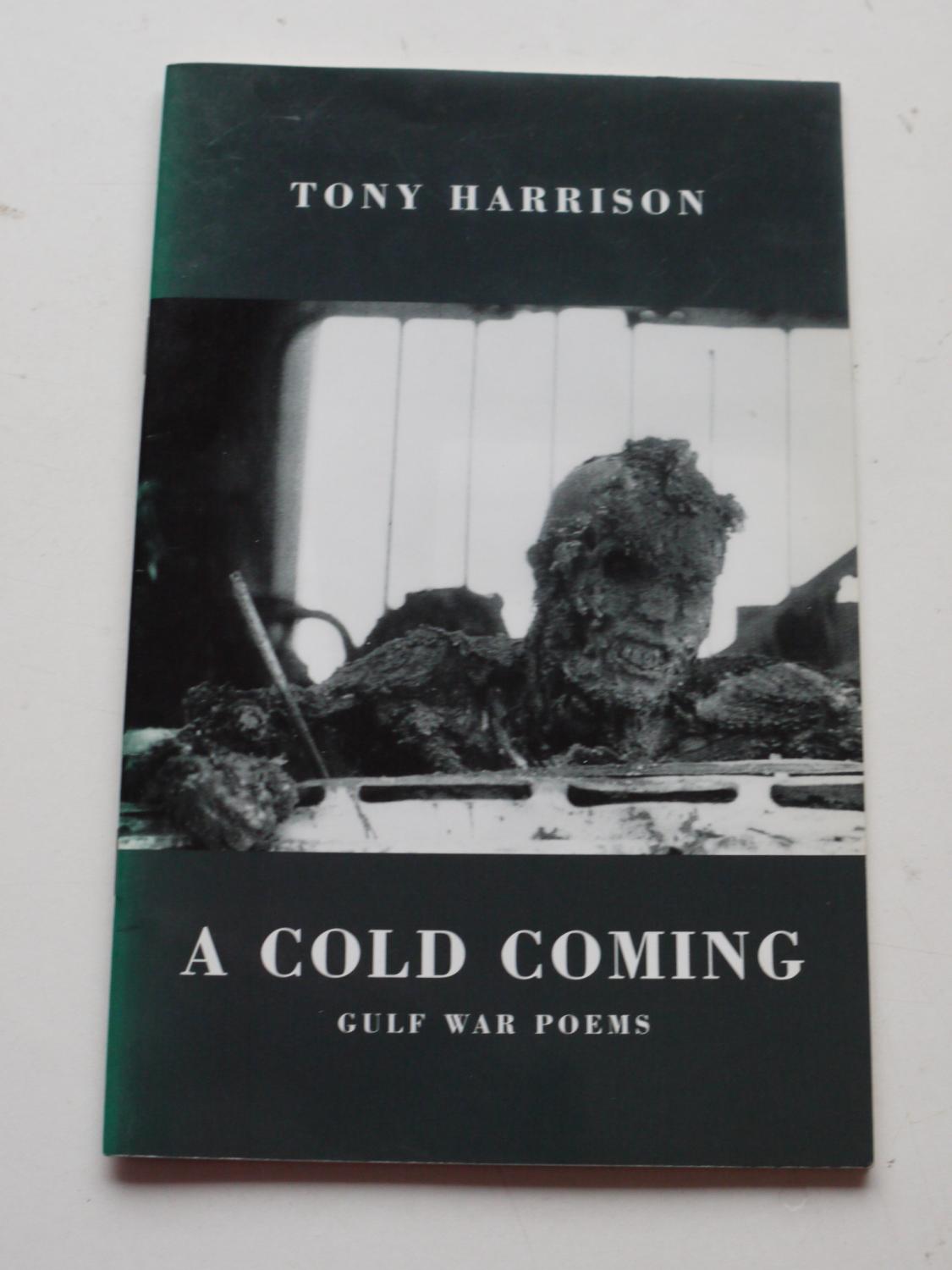
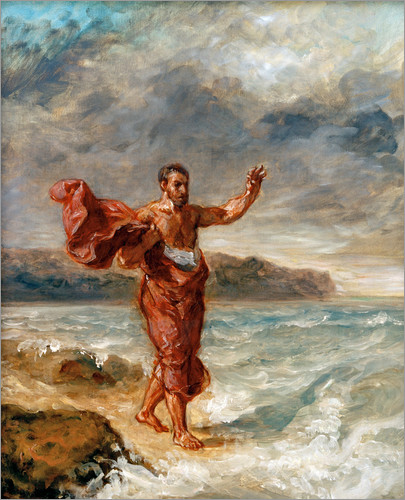
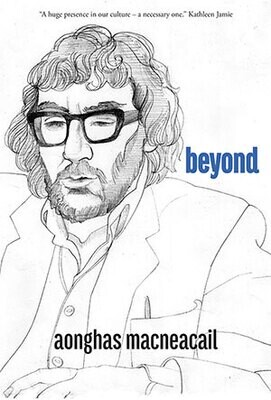
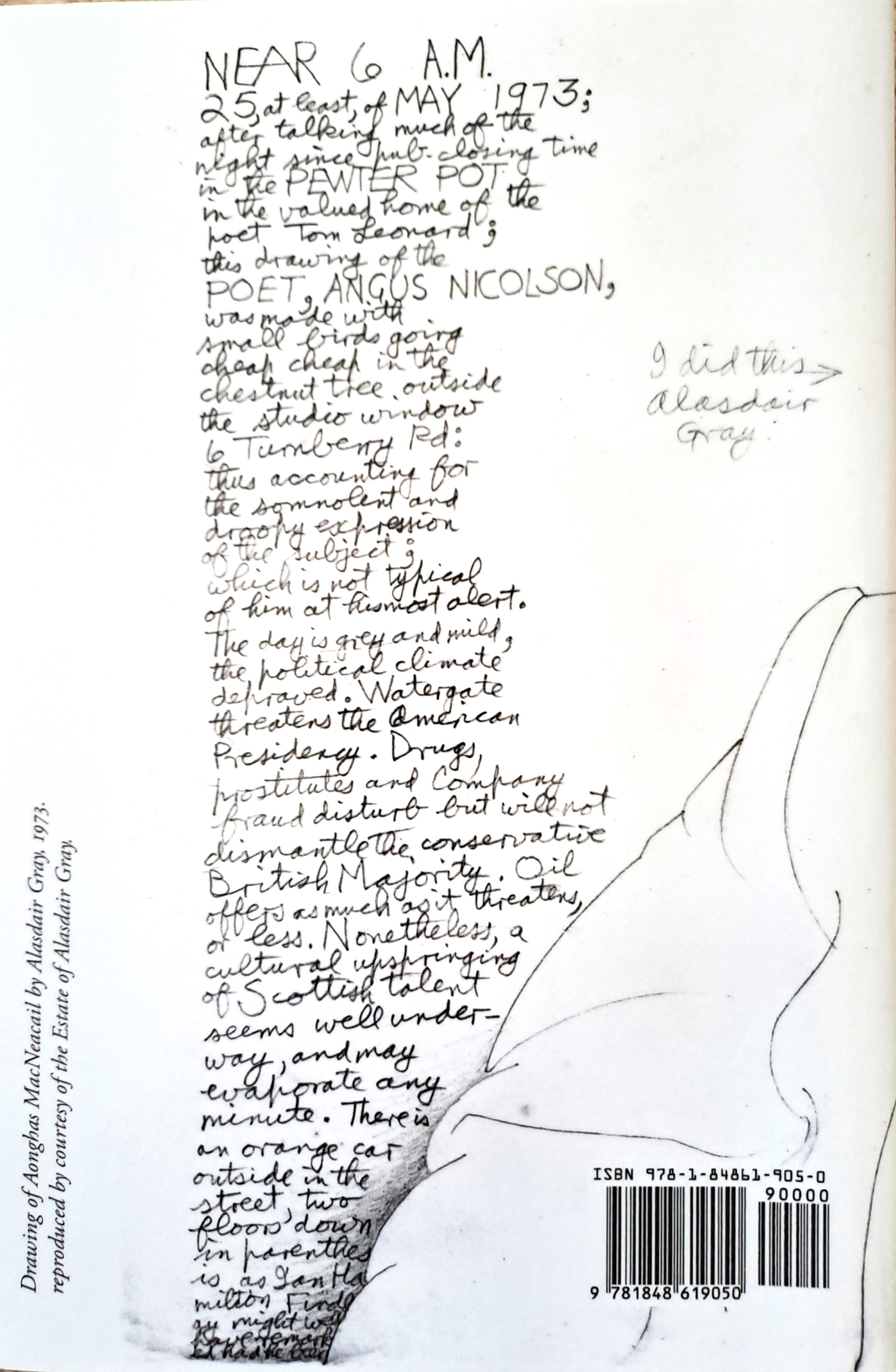
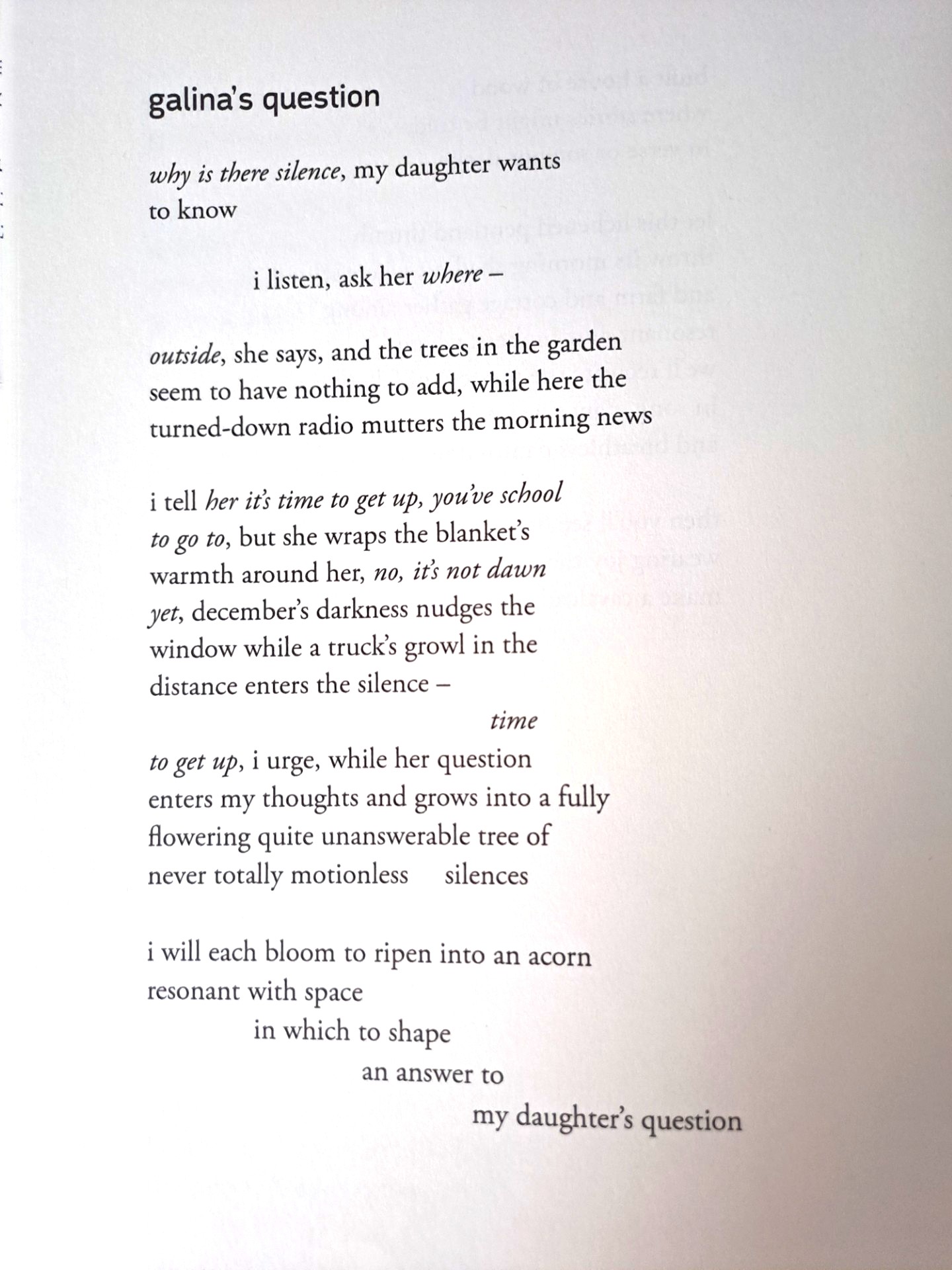



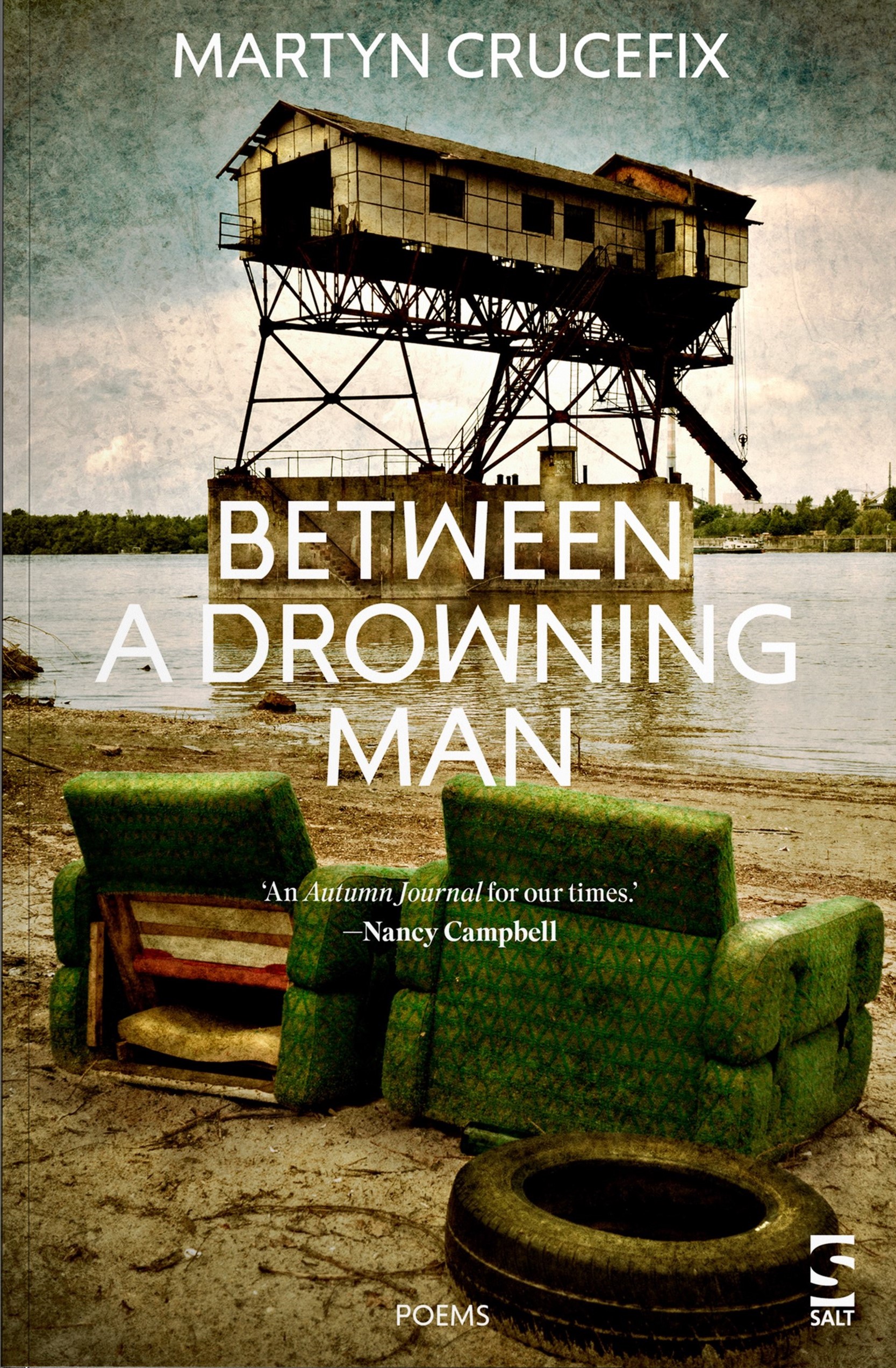
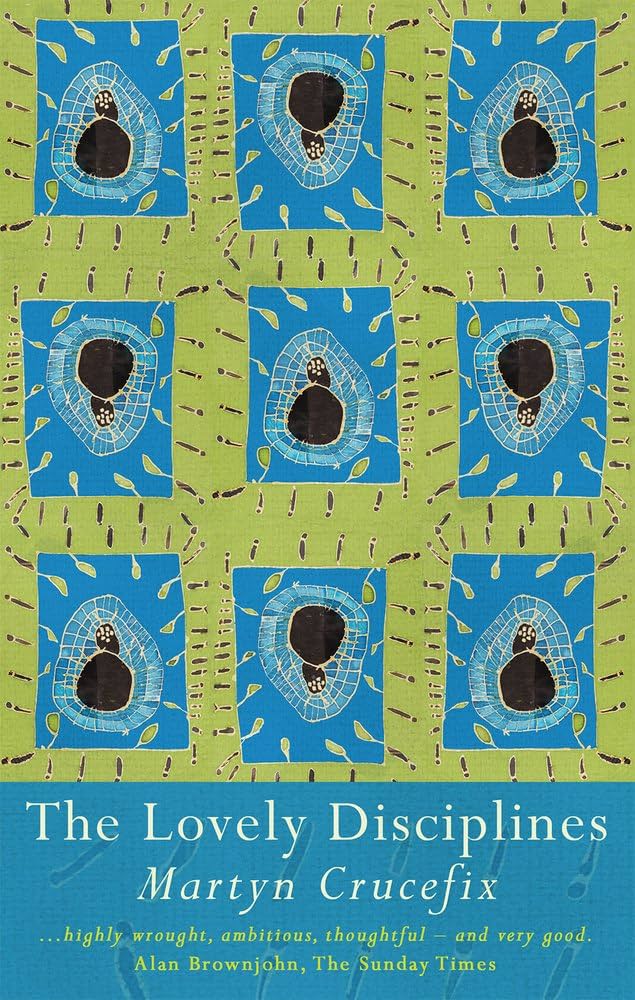
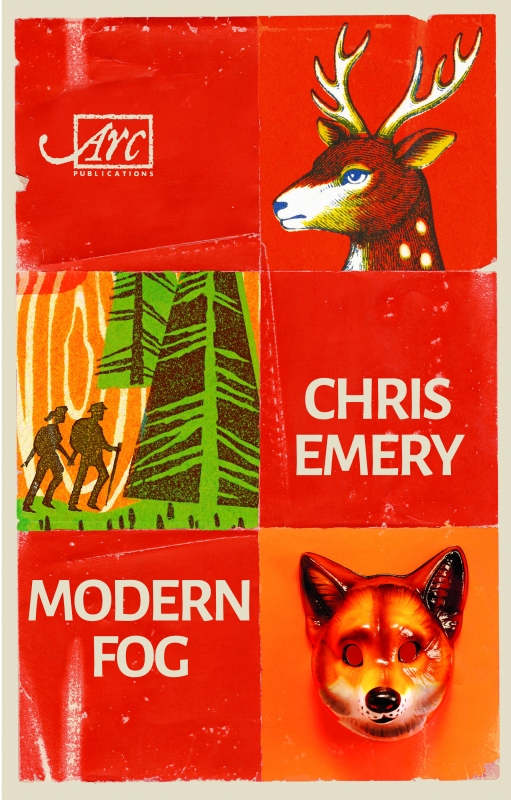


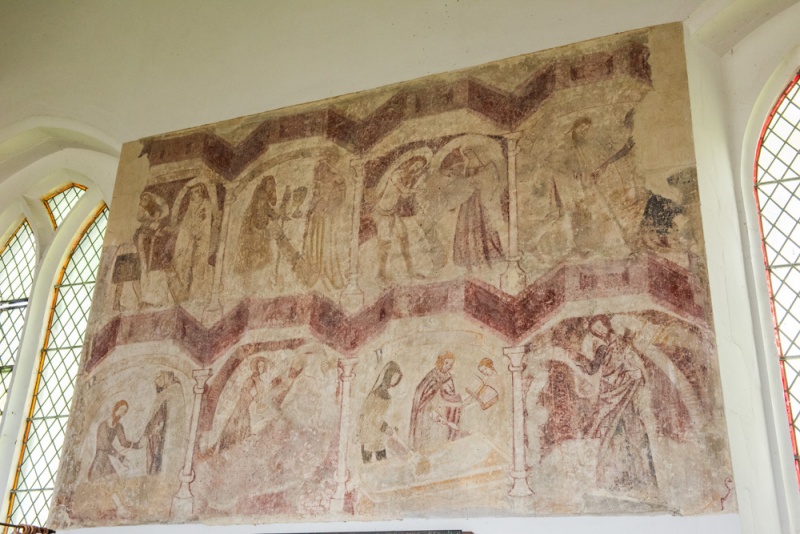

 Martyn Crucefix