
Now published, my translation of the great German poet Jürgen Becker’s 1993 collection, Foxtrot in the Erfurt Stadium. Shearsman Books have done a marvellous job with this book. The poems are introduced by a brilliant essay by Lutz Seiler (also in my translation) and an extract from Becker’s early statement of literary intent, ‘Against the Conservation of the Literary Status Quo’ (1964). I love the choice of cover image: the receding blue remembered hills evoking the way Becker’s poems layer, and intermingle, the past and present of his life and his country’s history so seamlessly. Becker’s work is hugely admired in Europe but almost unknown over here (and in the USA). To celebrate the appearance of the book – and do please go to the Shearsman website and buy one (or a signed copy directly from me) – I’m reproducing below the Preface I wrote for the collection. And below that, one of the poem’s from the book, which happily appeared recently in Poetry Review.
In her Afterword to Jürgen Becker’s monumental 1000-page Gesammelte Gedichte (2022), Marion Poschmann praises the poet as being ‘the writer of his generation who has most consistently exposed himself to the work of remembrance, who approaches the repressed with admirable subtlety and is able to reconcile his personal biography with the great upheavals of history.’ Becker grew up in the German region of Thuringia which, after World War II, was in the Soviet occupation zone, later the GDR. By then, his family had moved to West Germany and, after the fall of the Berlin Wall in 1989, Becker often returned to his childhood landscape.
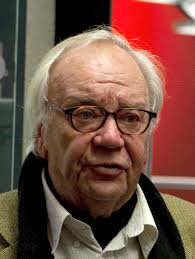
It is, in part, such biographical happenstance that has made Becker a poet of historical change which, as he says in the poem ‘Dressel’s Garden’, is ‘not yet / a completed process’. The poems achieve their ambitious goals through a layering of time periods, a multiplicity of voices, strands of association and networks of memory. He collages fragments and juxtaposes elements of everyday speech, popular music, neutral description, higher tones, and historical quotation. What holds the poems together are recurring leitmotifs, focal points of personal and historical memory, familiar places, to such a degree that it is ‘possible to read 17 volumes totalling 1000 pages as a single, enormous poem’ (Poschmann).
I first encountered Becker’s work while translating an essay on the poet by Lutz Seiler (published in In Case of Loss (And Other Stories, 2024)). Seiler reads Becker’s work as ‘a process that integrate[s] both immediate and more distant modalities of language, his own voice as well as materials drawn from other sources such as events, photos, maps, as well as interjections from neighbouring rooms, from the mail, the news, weather conditions and whatever else stray[s] within range.’ I am very happy that permissions have been granted to enable Seiler’s brilliant essay to stand as an Introduction to this volume.
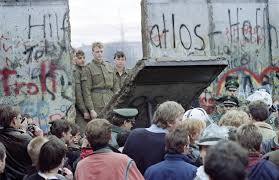
Selecting from the 1000-page poem that Poschmann envisages would be difficult indeed, so I have chosen to present the whole of Becker’s crucial 1993 collection, Foxtrot in the Erfurt Stadium. Following the fall of the Berlin Wall in 1989 and reunification the following year, this is the collection in which Becker explores his relationship with his own childhood in Thuringia and the continuing impact of the Second World War and the division of Germany. I have also included a substantial extract from Becker’s important 1963 lecture, ‘Against the Conservation of the Literary Status Quo’, because it suggests clearly the poet’s dissatisfaction with the literary forms of that time and his belief that a form of ‘journalling’ was to be his own way forward. Becker’s baggy, comprehensive, allusive, meditative, brilliantly detailed poems (surely at their best at length) can also be viewed as a response to Czeslaw Milosz’s lines in the 1968 poem ‘Ars Poetica?’: ‘I have always aspired to a more spacious form / that would be free from the claims of poetry or prose’ (tr. Milosz and Lillian Vallee). These then are poems of great historical importance, but my interest in them has also been sustained by the belief that they are extraordinary technical achievements and present an extension of the concept of what makes a poem, an extension too long absent from the English language poetry world.
My heartfelt thanks to Tony Frazer at Shearsman Books for his enthusiasm for Becker’s work and ensuring this book came to be.
Blackbirds, then other voices. It doesn’t stop
in the snow, when along with the snow
comes a piece of news that, this morning,
is absolutely essential. Or how
do you see it? I see the pear tree and how it
(the pear tree) responds to the wind (to the
wind). This morning, once again, the
decision has been taken. War
between magpies and crows, simply this war,
no fuss, just this clear understanding.
Another voice, the next remark; it’s all (again)
a matter of the whole. Are you standing
in the garden? Then you know, tuck tuck, the blackbird
warned at first, you know it, I’ll say it
again, in the war, in the fresh snow, in the wind.