George Szirtes’ King’s Gold Medal for Poetry

This week’s announcement of the award of the King’s Gold Medal for Poetry to George Szirtes gives me the opportunity to re-post a long and detailed review I wrote (for Poetry London) of the two books that Bloodaxe Books published to celebrate Szirtes’ 60th birthday. These were the New and Collected Poems and a critical book about his work, Reading George Szirtes, written by John Sears. Though Szirtes has continued to publish a good deal since the late 2000s, this review still seems to me to have something useful to say about the development and poetical achievement of this outstanding writer and might be of interest to those not yet familiar with his work. (For WordPress readers, I am experimenting with posting also on Substack. Do subscribe here if you’d like to read in that format: https://open.substack.com/pub/mcrucefix/)
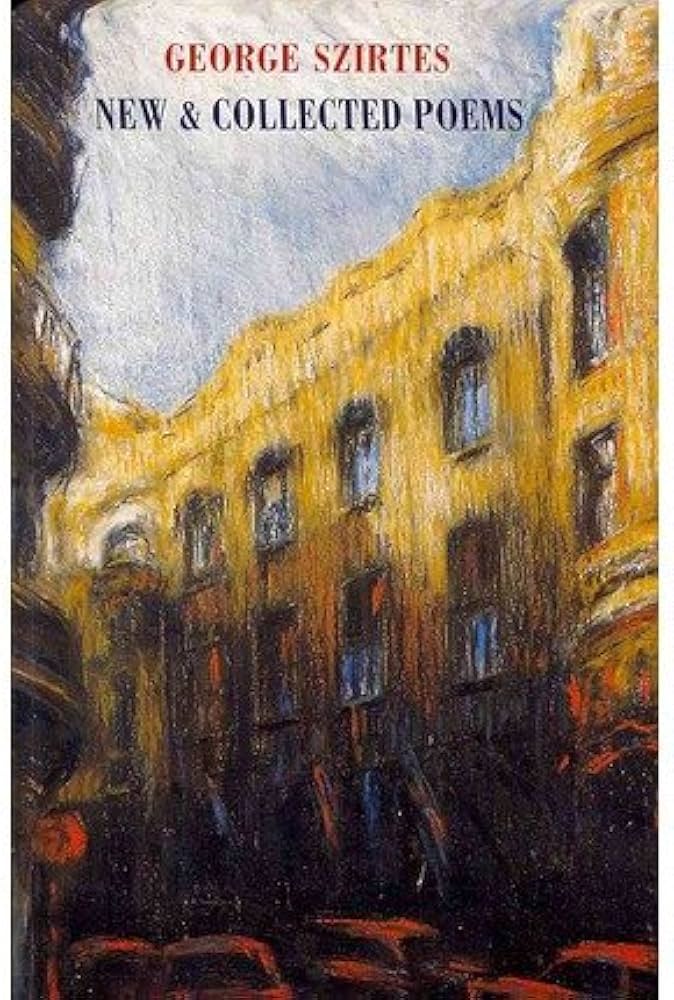
This 500-page New and Collected Poems demonstrates the breadth and depth of George Szirtes’ achievements and will bring his work to even wider notice, casting the poet as a recording angel. His lines of literary influence run from Eliot’s phrase-making and metaphysics, through Auden’s formalism and politics, to earlier contemporaries like Peter Porter and Martin Bell (at the Leeds College of Art and Design). There are distinct phases to Szirtes’ oeuvre, but his work tends to a density of fragmented detail, bound by a allegiance to visible form, shot through with explicit theorising about perception, language, time, memory, self, the art itself. This is a heady and immensely ambitious mix – not one likely to appeal to popular tastes, but there is no-one more dedicated to poetry, to playing the long game, to bringing a uniquely European perspective to the theme of our age, the search for personal identity.

Szirtes’ career illustrates what Pasternak discusses in An Essay in Autobiography (Harvill, 1990). Though our experience of the world is necessarily subjective, there is a sufficient underlying matrix that remains “the common property of man” – the hard-wiring implicit in being human. Superimposed on this is the softer wiring derived from upbringing, environment and education, and the self is ultimately a function of these base matrices in progressive interaction with individual decision-making in the flow of experience. So the objective world is processed through the individual’s particular matrices – his/her sets of harmonies and disharmonies – and must emerge coloured, spun, texturised as it were, accordingly. From this, Pasternak argues that when an individual dies he leaves behind his own unique “share of this . . . the share contained in him in his lifetime . . . in this ultimate, subjective and yet universal area of the soul”. This, of course, is where “art finds its . . . field of action and its main content . . . the joy of living experienced by [the artist] is immortal and can be felt by others through his work . . . in a form approximating to that of his original, intimately personal experience”. Art can be defined as the expression of experience playing across the matrices of the self, saying not this is me, but this is, this was, mine.

It is the raw imagery of stasis and movement that emerges in Szirtes’ early work as being truly his and it blooms into the maturity of the late 1980s. In short lyrical pieces the point of stasis is associated with the preservative of art in the spit ball gobbed by a foreign worker in ‘Anthropomorphosis’ which is caught and “suspended” by the poem. The afternoon rearranges itself around it and even the narrator “hung there / Encapsulated in that quick pearled light”. Versions of this encapsulation abound: girls creating a silver foil tree find themselves absorbed into a Keatsian “cold pastoral”. Such freeze-frame moments anticipate Szirtes’ sustained meditations on photography but early on, images of snow and frost suggest the ambivalent status of such suspension. In ‘The Car’ a snowfall is both beautiful and sepulchral: “Fantastic Gaudi-like structures hung / Under the mudguard . . . . / Wonderful, cried the girls under the snow”. A girl who is observed sewing causes consternation (“I do not like you to be quite so still”) caught in a stasis that can “eat away a life” that can “freeze the creases of a finished garment” (‘A Girl Sewing‘).

In contrast, it is movement in the shape of the passage of time that spurs many other early poems and the artist’s power is limited to “measure breath in a small space” (‘Group Portrait with Pets’). The enigmatic title poem of the first collection seems to teeter elegantly along the knife-edge of the sense of threat to domesticity and the desire to secure in a “cage” and convert to “metaphors” (‘The Slant Door’). It seems for time there is “no use, no cure” (‘Silver Age’) and Szirtes senses this especially in the domestic sphere. ‘House in Sunlight’ casts the busy sun as the agent of transience threatening the house itself and the life within it:

Whoever lives here knows what they are about –

Forms appear suddenly in mirrors and photographs,

We do not think however that they are entirely at home.

At night the doors are locked. We lock them now.
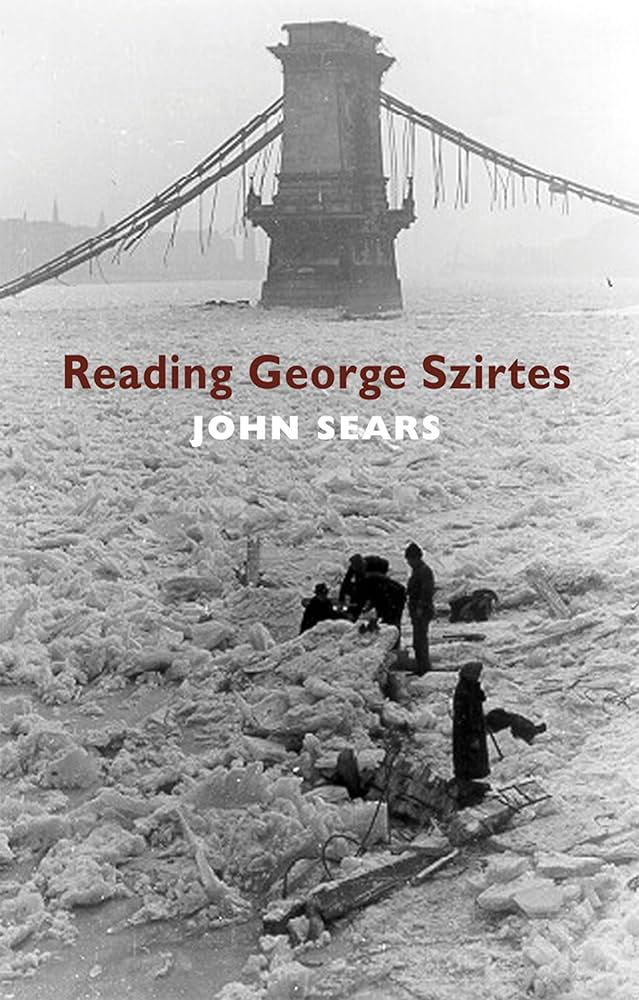
John Sears’ book is a comprehensive academic review of Szirtes’ career, tracing the development of both key themes and formal experimentation. He suggests Martin Booth’s 1985 critique of Szirtes’ early work as “withdrawn and laidback” was influential on the poet. Booth suggested that Szirtes might try writing about “his childhood” (Sears, p. 61). If true, we have reason to be thankful to Booth, but there are signs that Szirtes was moving in this direction already. He travelled to Hungary in 1984 and was casting his gaze beyond these shores towards people who “lie in complete unity / In graves as large as Europe and as lonely” (‘Assassins’). The title poem of Short Wave (1984) deploys its central image to suggest the deciphering of voices that are obscure yet seem suggestive of “all Europe in her song”. The self-deprecating picture of Szirtes “listening / and turning dials, eavesdropping” is something to be treasured given the explosive impact these deciphered voices will eventually have on his work.

Several members of Szirtes’ family were caught up in the Holocaust and later in the Soviet invasion of Hungary in 1956, escaping to the UK. Much of this was known to Szirtes only sketchily and he set himself the task of recovering what seemed lost. It is because Szirtes’ underlying matrices as an individual – stasis and movement, preservation and loss – mapped so powerfully onto his family’s own history and this history encompassed important European historical events that his work becomes in the late Eighties so much more complex, ambitious and important. History had determined his nature as a poet; his nature as a poet primed him to be able to encompass the burden of his own history.

So the title poem of The Photographer in Winter (1986) attempts the imaginative recovery of Szirtes’ mother from the Budapest of the 1940s and 50s. She was herself a photographer and her son traces her movements with “thoroughness and objectivity” as far as he can. Both as an artist and poet, Szirtes declares he has been “trained / To notice things” (the deliberate echo of Hardy’s ‘Afterwards’ is but one example of Szirtes’ very frequent intertextual allusions). But the recovery process seems often subject to disintegration, “trying to focus through this swirl / And cascade of snow”. At times the tone is more optimistic, like the final section of ‘The Swimmers’ in which a drowning girl survives the “icy Danube”. Elsewhere, intervening time destroys so much, and the later sequence ‘Metro’ (1988) uses the image of the Budapest underground system for “everything that is past, the hidden half”. His choice here of the deliberately curtailed thirteen-line sonnet is a characteristic recognition in formal terms that the search must remain incomplete.

The balance between one man’s search for his background and the conversion of this to poetry is a difficult one and if the marvelous sequence ‘The Courtyards’ is counted as one of the great successes, for me ‘Metro’ itself tips too far away from the memorial towards the monumental. There are occasions when Szirtes’ desire to recover and pay respects to his own history impels him to erect such elaborately formal accumulations of images that the reader may feel excluded, even if always impressed. The later ‘Transylvana’ is another occasion when the act of imaginative recovery can seem propelled for its own sake and despite the glittering formal achievement – terza rima in this case – the piling of detail on detail can become wearisome.

But Szirtes’ openness to theoretical thinking has always propelled his work forward and often derives more from his training in the visual rather than the literary arts. Blind Field (1994) draws on Barthes’ idea that in photography all that is not portrayed in an image may be implied by the presence of a “punctum” or detail within it. As Sears suggests (this is the sort of idea he is very good at elucidating) this bears some relation to Eliot’s objective correlative but is seen by Szirtes as a solution to the paradox that art stills the life it presents: “Out of this single moment a window opens” (‘Window’). This sense of the ballooning fluidity of experience, past and present, is one thing that marks his work as Modern and Post-Modern and it’s no surprise to see Szirtes countering Larkin’s belief that the passage of years makes us “smaller and clearer” arguing we grow “blurrier, vaster, ever more unfocused” (‘On a Young Lady’s Photograph Album’). It’s this slipperiness of personal identity that is Szirtes’ true theme and the one that elevates his work above the merely personal into a body of work addressing urgent contemporary concerns. As the poem ‘Soil’ puts it “there is nowhere to go / but home, which is nowhere to be found . . . / the very ground / on which you stand but cannot visit / or know”.

Everywhere these days, the recovery/re-construction of our own identities seems to be a pressing issue and the three sonnet sequences in Portrait of My Father in an English Landscape (1998) triumphantly present and simultaneously enact this process. Sears describes Szirtes’ form here as a “deliberately baroque form of the Hungarian sonnet sequence” or sonnets redouble (Sears, p. 145) in which the final line of each sonnet is repeated (approximately) as the opening line of the next and the final (fifteenth) sonnet is composed of approximations of each preceding sonnet’s closing line. Yet this is not an arid exercise in form as the recurrences and accumulations enact precisely what Szirtes believes is the process of the construction of the self – largely via language into a “lexical demesne” – in this case said to be “part Hungary, part England” (‘The Looking-Glass Dictionary’).
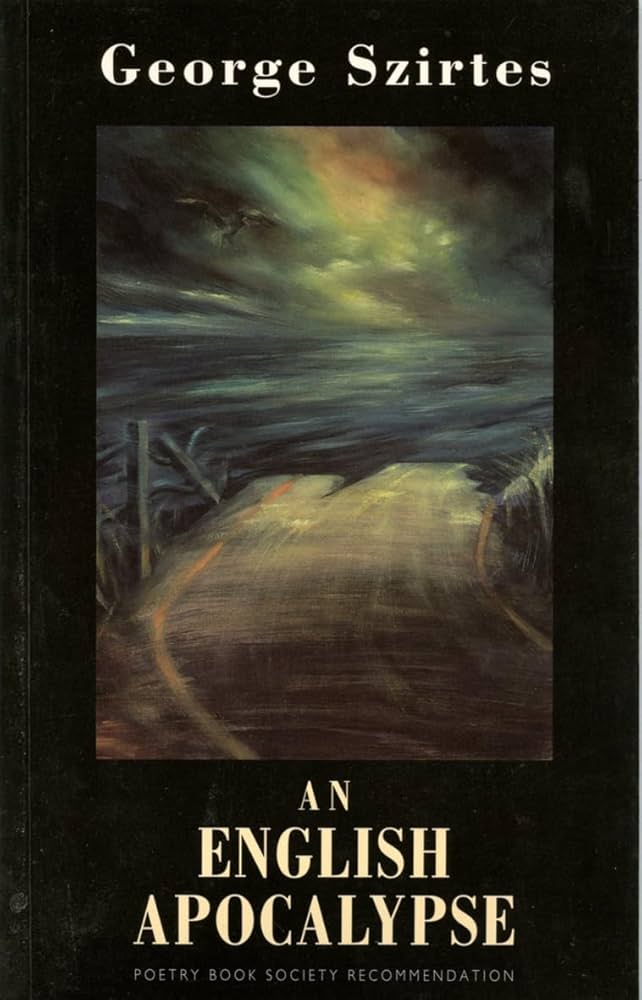
Retaining his love of the titled sequences, sections and subsections which had helped him draw a bead on his family’s obscured past – a tendency which produces the most typographically diverse and complex contents pages I’ve ever seen – from the late 1990s Szirtes’ work turns a firmly European gaze on the UK. An English Apocalypse ranges through Great Yarmouth, Keighley, Orgreave, Preston North End. all-in-wrestling and antisemitic violence towards images of “a tense / empire that could fall” (‘All In’), towards something “crumbling – a people possibly” (‘Dog-Latin’) and specific individuals “speaking the innate vernacular // of the trapped. He’s shit. Scum” (‘Offence’). Despite the success of Reel (2004), the new poems in this 2001 compilation, portraying an outmoded and disconnected England, are one of the high points of Szirtes’ career so far and they culminate in the extraordinary sequence of imagined apocalypses by meteor, power cut, deluge and suicide that caught the flip side of millennial euphoria and seem now years ahead of their time.

Apart from the sceptical cinematic pun Reel/real, the title of Szirtes’ 2004 T.S. Eliot prize-winning collection is an allusion to the predominance of the rolling, unravelling impact of his majestic terza rima. By this stage, there is a greater ease to the looping to and fro, the past and present, which Szirtes encompasses in this form.

Here I find bits of my heart. In these

Dark corridors and courtyards something true

Survives in such obsessive images

As understand the curtains of the soul

Drawing together in the frozen breeze.

(‘Reel’)

‘Sheringham’ also reinforces Szirtes’ familiar cumulative techniques remarking on the “boiled down particulars that regularly come / knocking at the skull”. Sonnets too continue to be a favoured form, though in the beautiful meditation on the aging processes, ‘Turquoise’, the neatly closing couplet of the “Shakespearian ending” is both employed and simultaneously questioned.

Indeed, echoes of the Bard’s obsessive negotiations with “swift-footed Time” (XIX) re-emerge as one of the most striking features of Szirtes’ more recent poems. A pizza can be enjoyed – but not to the exclusion of the river nearby, an unavoidable “emblem of time” (‘In the Pizza Parlour’). Szirtes is re-visiting the concerns of younger days from more slant-lit uplands. Now images of dust recur, here in the woman’s “dust-laden hair” while elsewhere birds are “swimming through dust” (‘Winter Wings’) and – in one of Szirtes’ most beautiful sonnets – a woman regards herself in the mirror, contemplating the impact of the passing years and gazing at her face “drowned in a cloud of dust: / How beautiful, she thought, and how unjust” (‘The Breasts’).
How to Answer the Poetic Influence Question #2

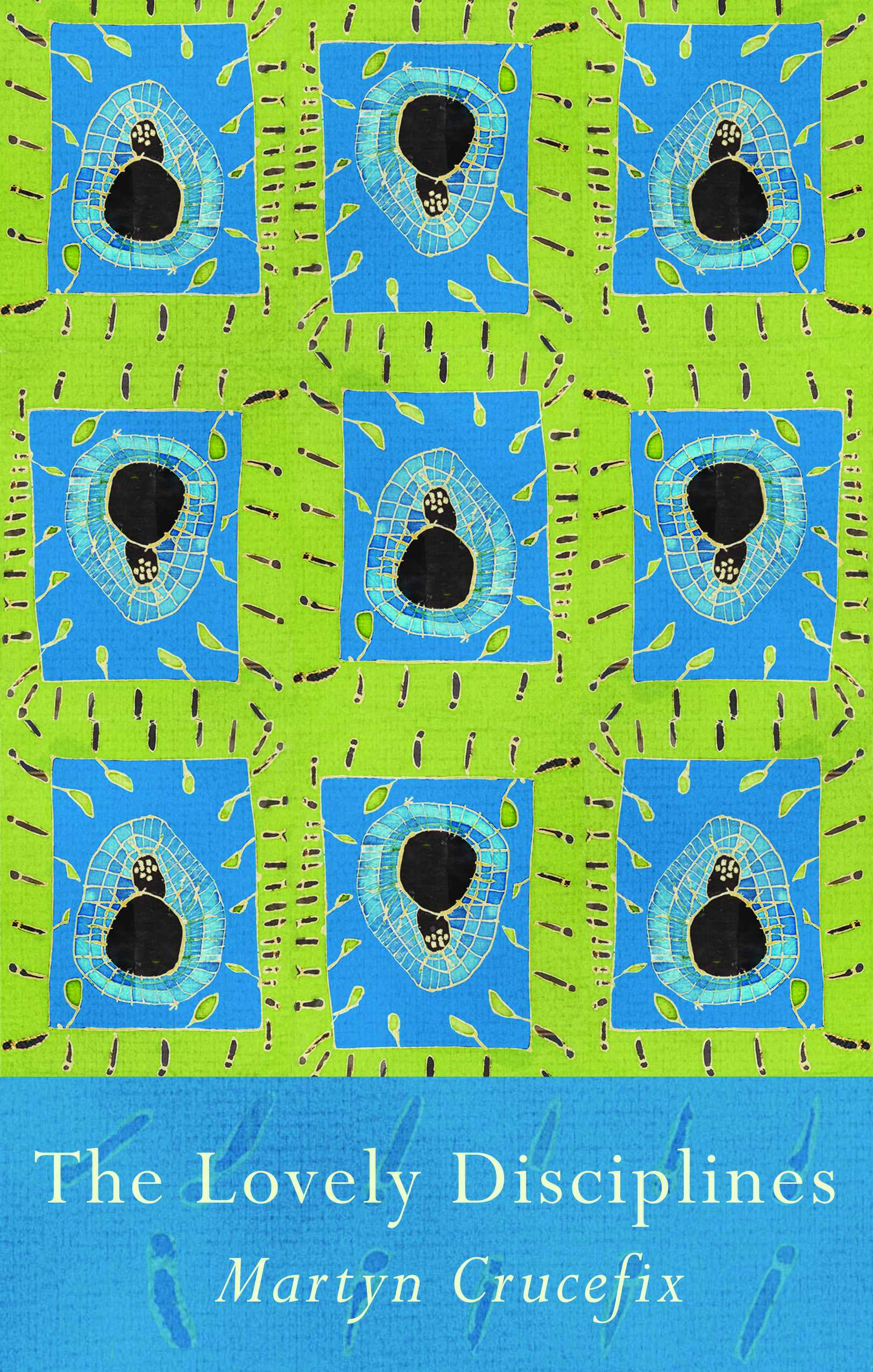
With my new collection just out from Seren Books, I’m happy to have a number of promotional events and readings coming up over the next couple of months. As I discussed in an earlier blog, though I love the business of giving a reading, there’s often a moment that arises that I’m always uneasy about. It’s the question of influence. In that previous blog I followed through, chronologically, those poets who have had a powerful influence over the style and direction of my work. That provides one possible answer to the question ‘what other poets do you consider to have been an influence on your poems?’ Another reply might be to look closely at very recent work to see which poets are present in it as ghosts. This is what I’m doing here.

A Boat..._quicksand cover

In preparing a new book for public reading, I tend to work through every poem making notes on the kind of thing an audience might need/like to know before hearing it (once and once only, in performance). I will often draw attention to the presence of a powerful poet figure that I’m aware of in the vicinity of the poem. So in The Lovely Disciplines, I can see influential roles of substance for Robert Hass (with Czeslaw Milosz), Ivan Lalic, Mary Oliver (with Emerson), Whitman and Edward Thomas.

Before looking at those in a little more detail, there are also two translations/versions from other poets in the collection. One is a version of Boris Pasternak’s poem from the 1950s called ‘In Hospital’. In the process of my versioning, the gender of the main protagonist was switched to female, more in line with most of the poems from the middle section of my book which forms a composite portrait of the passing of my parents’ generation.

Abbaye_de_Valsainte_2
Abbaye de Valsainte

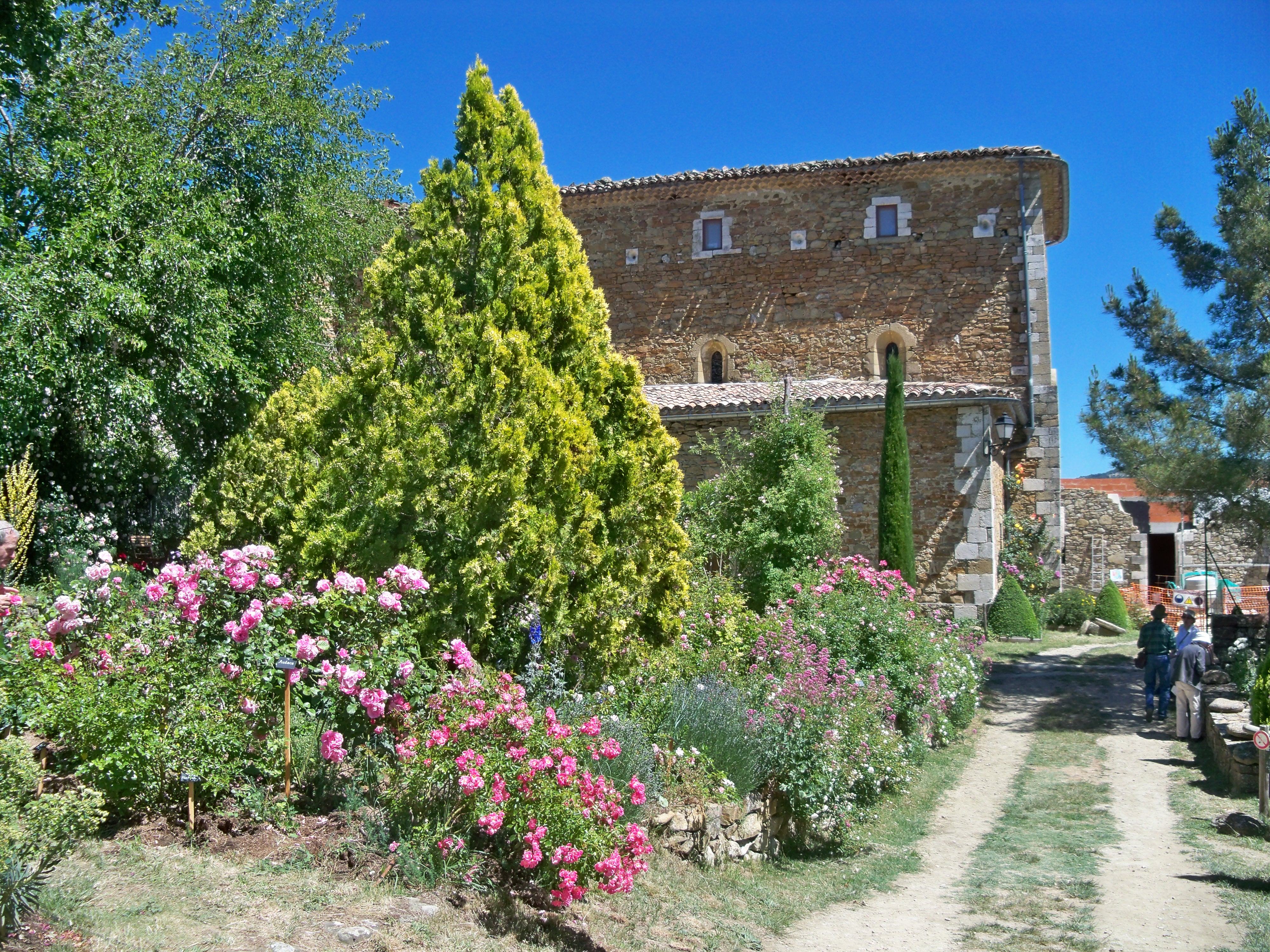
I also include a loose translation of (plus a poem alluding to) the work of the French poet, Yves Bonnefoy, who I referred to in my earlier post on Poetic Influence. My poem ‘Valsaintes’ is named after the rural retreat in Haute-Provence where Bonnefoy lived in the 1960s. In many ways an idyllic place, in the end the renovation and up-keep of what was little more than an ancient ruin proved too much for him and the property was sold. For years afterwards, he harked back to it as a favoured, lost place. Bonnefoy’s ideas about what he calls ‘presence’ continue to fascinate me. My version, called ‘After Bonnefoy’, ends:


let’s bring ourselves one to another


as if each was at last all creatures

and all things all empty ways

all stones all metals and all streams

download
Sir Michael Tippett

Sir Michael Tippett’s 1944 secular oratorio, A Child of Our Time, is explicitly relevant to my poem ‘Listening to Tippett twice’. Tippett also wrote the libretto, inspired by the assassination in 1938 of a German diplomat by a young Jewish refugee and the Nazi government’s reaction to it. This took the form of a violent pogrom against its Jewish population – the infamous Kristallnacht, so called because of the broken glass which littered the streets the following morning. Tippett’s text and music deals with these incidents in the context of the experience of oppressed people more generally and the whole work carries a strongly pacifist message of understanding and the need for reconciliation.

I’m certainly aware of echoes of Wordsworth on a couple of occasions. In ‘The Toll Cottage’ – a dream-poem in which I am being driven by my father – there’s a mangled remembrance of a phrase Wordsworth uses in ‘Tintern Abbey’ – “Once again I see / These hedgerows, hardly hedgerows, little lines / Of sportive wood run wild”. Also ‘The girl who returned to Aix’, a sequence of three sonnets, includes the awkward fact that I cried on first seeing Steven Spielberg’s Close Encounters of the Third Kind. It was that moment when the huge alien spaceship finally appears, rising up from behind a mountain – just as Wordsworth’s mountain, Black Crag, rises up in the boat-stealing episode of The Prelude Book 1.

download
Enough to make a grown man weep

In my poem ‘Nocturne’, I was partly thinking of Whistler’s painting, ‘Nocturne in Black and Gold’ (c. 1875) but I like to think my (love) poem has more light in it than that, set as it is in the same Tuscan landscape as another poem called ‘The renovation near Sansepolcro’. ‘Nocturne’ also makes reference to ‘the poet’s kelson’ and this is Walt Whitman who, in the fifth part of ‘Song of Myself’, refers to love as a kelson of creation. A kelson (or keelson) is the structure running the length of a ship and fastening the timbers or plates of the floor to its keel giving stability and strength.

download

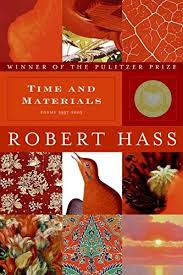
In his book, Time and Materials (2007), introducing the sequence ‘Czeslaw Milosz: In Memoriam’, Robert Hass recounts a discussion he had with Milosz (as his translator) about the different connotations in English of Oh! and O! As it turned out, the one Milosz intended in his poems was the second and this is the one that most interests me too. My poem opens:


Oh! is longer drawn already

beginning the button-down

of understanding

that well-I-never

with its freighting

of verb tense and identity

whereas O! is more sudden

more urgent surely

of the moment rapt

when we are prised open

by desire [. . .]


I wanted the title of my poem, ‘The lovely disciplines’, to feel paradoxical and in my mind it was related to the Serbo-Croat poet, Ivan Lalic. I remember reading his 1981 collection, translated by Francis R. Jones as The Passionate Measure. I remember Lalic explaining he hoped to suggest the fluidity or fluency of emotion as well as the orderliness or measured nature of a dance or verse. I hoped my title would suggest something of the same – a balanced response to experience, both our taking pleasure in it and searching it for order. My poem takes place on a women’s hospital ward.

download

Mary Oliver’s book, Swan, is not her best but I bought it in a secondhand bookshop once and inside discovered an ATM receipt with some cryptic notes on it. This provided the start of ‘As we live’, a poem which takes up Oliver’s sensitivity to nature (which she often gazes at with such precision of feeling as to achieve a visionary intensity) as well as her epigraphs from Rilke’s Duino Elegies and Ralph Waldo Emerson’s essay ‘Beauty’ in The Conduct of Life: “’Tis curious that we only believe as deep as we live”.

Finally, Edward Thomas (Ted Hughes’ “father of us all”) appears explicitly in relation to two poems in my book. Not a million miles from Oliver’s example, it’s his directness and love of what lies before him that I like. I like his sense that, in Robert Frost’s words, this world is the right place for love, combined with his intuitions about the human need to look beyond, perhaps into an inexpressible obscurity. ‘These things I remember’ is almost a found poem on these issues – taking phrases from a memoir written by Thomas’ friend Jesse Berridge (published with letters by Enitharmon Press).

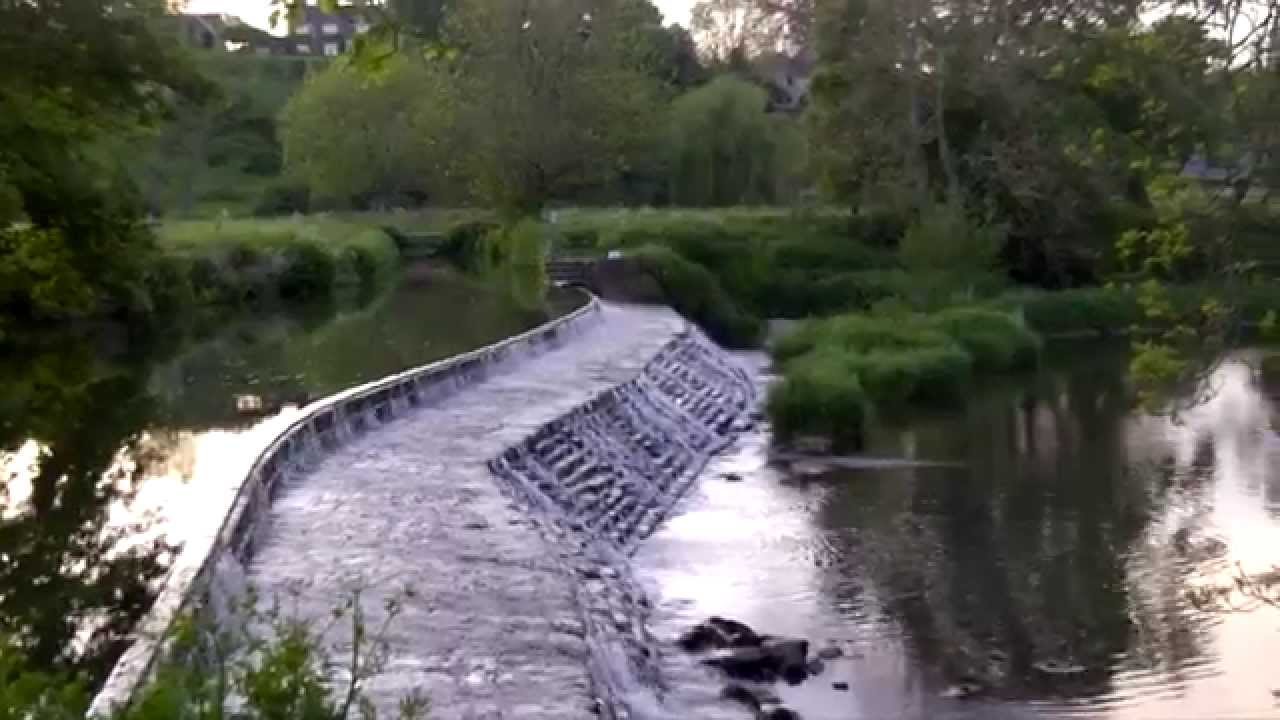
And ‘Rebuilding Tellisford weir’ has an epigraph from Thomas’ 1914 prose book, In Pursuit of Spring. His book recounts his 1913 journey – by bicycle – across southern England from London to the Quantock Hills. I was delighted to discover him passing through the landscape of my childhood: cycling down off Salisbury Plain, through Erlestoke and Edington, Steeple Ashton, North Bradley to stay with friends at Dillybrook Farm just outside Trowbridge, where I lived for 18 years. He writes about waking at night to the sound of falling water. The next day he is persuaded to visit Tellisford and its weir by the mysterious Other Man (a kind of alter ego for Thomas). My poem mixes some of these details with my own memories of visits to Tellisford. I like to think the poem has a lot of Thomas in it: a sense of history, the beauty of nature, strange encounters with others, a sad loneliness, the transience of all things.

maxresdefault
The weir at Tellisford, Wiltshire

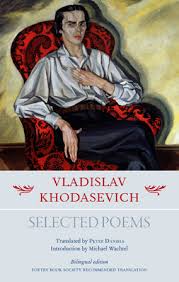
The Soviet Briar: poems of Vladislav Khodasevich

In the light of recent political events in the UK, it seemed important to be thinking about wider perspectives this week – Europe, Revolutions, the role of poetry. The poems of Vladislav Kodasevich came easily to mind and I have wanted to praise Peter Daniels’ translations of them for a while now.

What emerges from Peter Daniels’ Vladislav Khodasevich: Selected Poems (Angel Classics, 2013) is a vivid picture of a poet who was, both by temperament and historical circumstance, very much an individual. From a Lithuanian Polish background, coming to creativity at the fag end of Symbolism, witnessing Russia’s revolutionary year of 1917, going into permanent exile in 1922, Khodasevich (1886-1939) was perhaps inevitably a writer with little sense of belonging, of sure identity. It’s no surprise that he plays with images of doubles, often standing outside himself, then counters such doubts with rather grandiose claims to his poetic vocation.

imgres

The consequent difficulty of pigeon-holing him as a poet is one of the reasons why he is less well-known than his more familiar contemporaries – Mandelshtam, Akhmatova, Tsvetayeva and Pasternak. He is also difficult to pin down because he is “a modernist, but with a classical temperament” (Daniels’ Preface). In a period when others were tearing up rule books (poetical and political) Khodasevich harks back to the “eight little volumes” of Pushkin’s works. Amongst the ruck of Symbolists, Acmeists, Futurists and Cubo-Futurists, Khodasevich’s poems mostly retain traditional forms and he proudly declares: “I grafted the classic rose / to the Soviet briar bush” (‘Petersburg’). Such formalism presents great challenges for the translator, of course, with Khodasevich flaunting his conservative and poetic concerns – “O may my last expiring groan / be wrapped inside an articulate ode!” – and, like many before and since, he argues such formal frameworks are paradoxically the way to find release. (Carol Rumens has discussed some formal aspects of a Daniels/Khodasevich poem for The Guardian). Curiously, his last ever poem was in praise of the iambic tetrameter, the classic metre of the Russian tradition:


Its nature is mysterious,

where spondee sleeps and paeon sings,

one law is held within it – freedom.

Freedom is the law it brings . . .

imgres
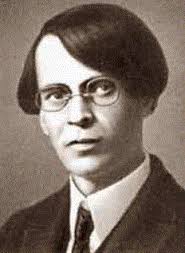
Vladislav Khodasevich

If Khodasevich uneasily straddles a variety of poetic strategies, there is a fascinating parallel to this in his views on self and society. The self is at one moment urged to “be a star that breaks away from the night” but in the next is “grunt[ing] to yourself, / looking for spectacles or keys”. This “usual self” is preoccupied with tarnished spires, the tops of cars, old iron eaves, and in ‘Berlin View’ sits shivering and sneezing in a café, surrounded by “plate-glass” reflections of itself. A couple of years later, at what seems a Dantesque ‘mid-point’ in his life, Khodasevich stares hopelessly into a mirror: “Me, me, me. What a preposterous word! / Can that man there really be me?” This is the Modernist side of the poet, observing from “the gutter”, watching a sordid Parisian cabaret, a dismal demi-monde of “tinselled chaos”. Yet the poem quoted here – ‘The Stars’ – goes on to suggest our gaze may sometimes incline upwards, “from the horizon to the stars” and – at least on occasions – we are aware of a “starry universe in glory / and the primordial loveliness”.

180px-Hodasevich_Berberova
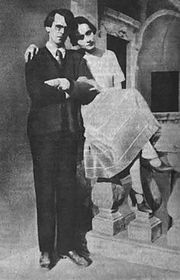
Khodasevich and Nina Berberova, Sorrento, 1926

This suggests Khodasevich was still enough of a Symbolist to see the poet’s role as seeking out such “loveliness”, the transcendent within the quotidian (as Michael Wachtel’s Introduction defines this key Symbolist intent). This accounts for Khodasevich’s repeated images of stars often unseen above us (but still there) and also of the flourishing of seeds in the earth as an image of personal and social growth. The title poem of The Way of the Seed (1920), in rhymed couplets, describes the traditional sower, with seed gleaming golden in his hand, but scattered into “the blackness of the land”. There it finds “its moment for dying, and for growth”. Latterly, the poem suggests this is also the path of the “soul” as well as “my native country, and her people”. This nicely sums up Khodasevich – the progressive conservative, these organic and traditional images of the farmer absorbed into bold ideas of growth and change incorporating both a dying back and re-birth. A similar pattern is reflected in ‘Gold’ – a coin is placed into the mouth of a corpse, buried, and after many years, in the unearthed skull, the coin is found again, rattling: “the gold will flash in the midst of bones, / a tiny sun, the imprint of my soul”.

img_0011a
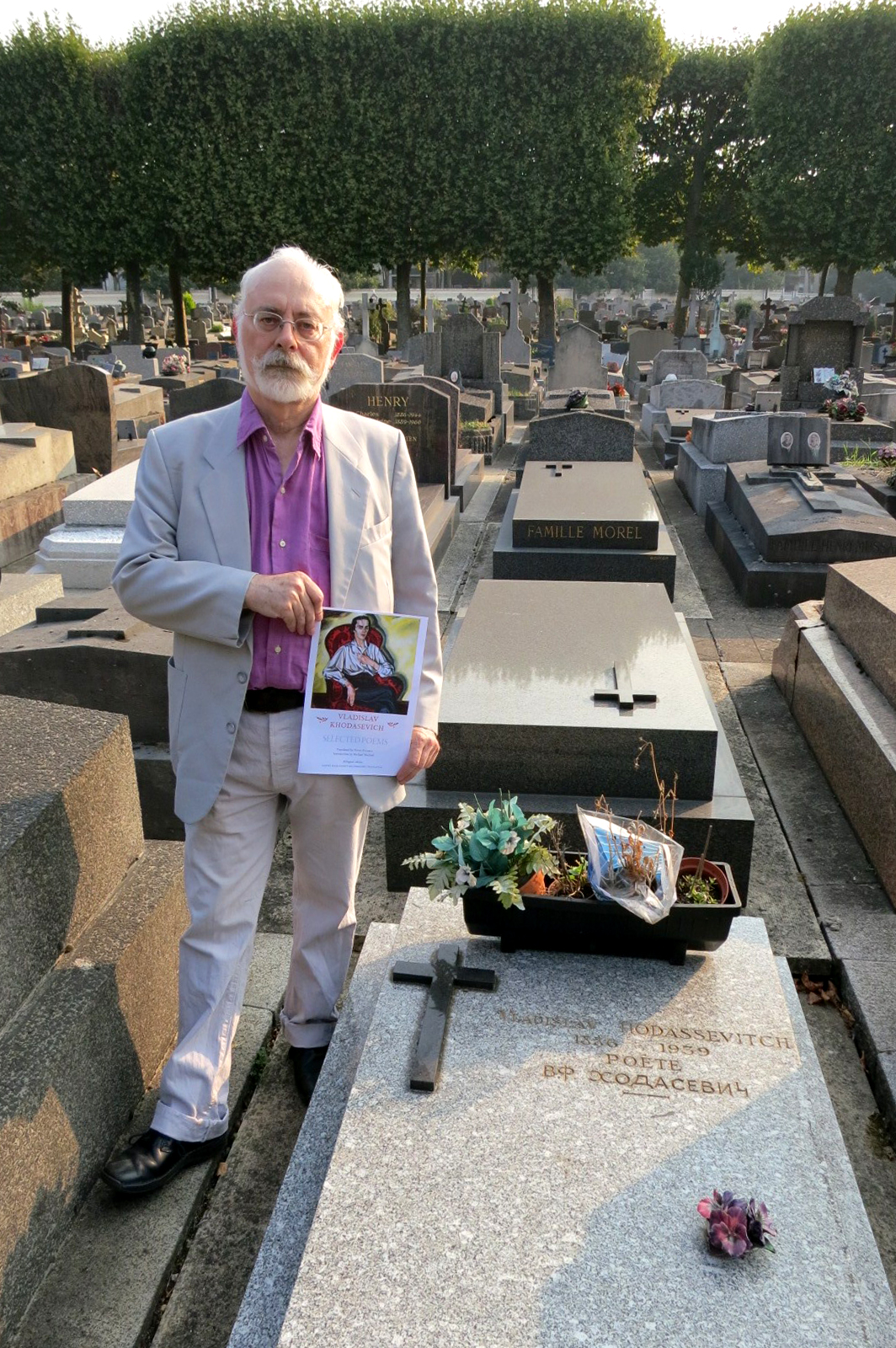
Peter Daniels at Khodasevich’s grave

It is in such longevity, such insightfulness that continues to be true, that Khodasevich finds reasons to celebrate the poetic vocation. Though the names of the dead who fell at the Battle of Khotin (1739) are forgotten, “the Ode upon Khotin” by Lomonosov is still recited. ‘Ballad of the Heavy Lyre’ opens with Khodasevich in the Soviet-run House of the Arts, surveying his life and finding it “worthless, a quagmire”. But eventually verses burst from him till “a galaxy streams at my head” (those stars again) and a heavy lyre is mysteriously thrust into his hands and, in the final line, he understands this is the lyre of Orpheus. Written in 1921, this poem foreshadows Khodasevich’s departure from the Soviet restrictions in the following year with hopes (one imagines) of further freedoms to be enjoyed.

I was especially interested in the seven substantial blank verse poems Khodasevich wrote in a brief period between 1918-20 (David Cooke’s review of the book for London Grip makes the same observation). These in particular bring to mind the modernist-conservatism of Robert Frost (whose two first books were published in 1913 and 1914) and it’s astonishing that Khodasevich did not pursue these successful experiments with a less formal verse that seems an ideal vehicle for his quiet observational voice, his sense of the mystery or beauty that lies beneath the ordinary, his observations of a provisional self often encountering an unstable, uncertain world.

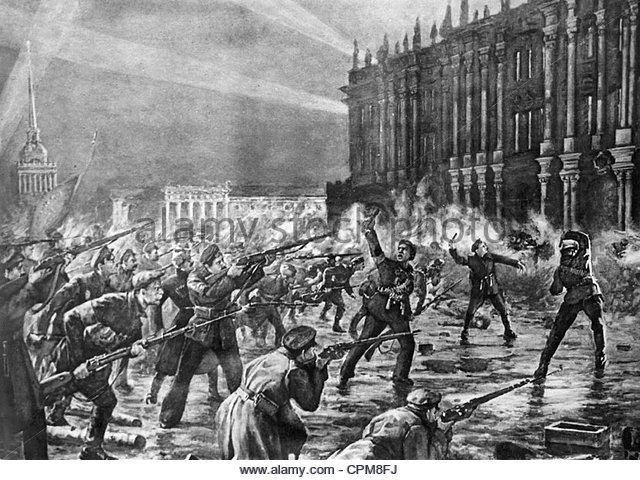
‘An Episode’ appears to record, moment by moment, an out-of-body experience Khodasevich had in 1915 (these blank verse poems are always keen to name times, places, people). At one moment, he sits before a shelf of books, at the next he is gazing at himself as if looking at “a simple, old, old friend”. The transitional moments are evoked through the marvellous image of feeling like a “diver, plunging to the deep, [hearing] / the running about on deck and the shouts / of the sailors”. ‘2nd November’ describes the aftermath of revolution – again the precision of street names, people’s responses as they emerge into the smashed and bullet-scarred streets makes this read as a very contemporary poem indeed. The narrator watches a neighbour, a joiner, building a coffin and painting it: “under the brush / the boards were turning crimson”. But the golden seed in black earth comes to mind again as a child is observed – a “four-year-old, chubby, in a flap-eared hat” – who manages a smile as if listening to Moscow’s “beating heart, / the moving fluids, growth” though for the narrator even Pushkin’s beloved works, on this occasion, fail to alleviate the shock of political change.

october-revolution-1917-cpm8fj

The unresolved tensions Khodasevich manages to hold together in these blank verse poems create a very modern impression. Another child appears in ‘Midday’, the narrator sitting in the most ordinary street scene, recalling a visit to Venice, fleeting glimpses of those “incandescent stars” once more. ‘An Encounter’ drops the star images for a more conventional image of beauty or inspiration, a “lovely English girl” glimpsed in Venice with its “black gondolas, / the fleeting shadows of pigeons, and the red / flow of the wine”. The extraordinary poem ‘The Monkey’ replaces the stars and the girl with the bizarre image of a tame monkey in a “red skirt”, led on a chain by an itinerant Serbian man (a much inferior translation of this poem by Alex Cigale can by read in The Kenyon Review). After a drink of water from a bowl, the monkey offers “her black and calloused hand” with such “nobility”. It’s the realism of the setting – the heat, the cock crow, the dusty lilacs – that enables Khodasevich to anthropomorphise the animal to such an extent and get away with it. It becomes another epiphanic moment in which the transcendent emerges from the quotidian. Here, a great chain of brotherhood seems implied and this makes the final line all the more devastating: “That was the day of the declaration of war”.

images

The two most Frost-like of these blank verse poems describe respectively a derelict house and a couple of neighbours chopping wood. ‘The House’ leads to reflections on transience, whether for a “palace” or a “shack”, the sudden advent of “war, plague, famine, or civil turmoil”. Such contrasts are again viewed from an Olympian height, an aloofness which has more negative capability about it than unfeeling Modernist cynicism. An old woman appears, scraping a living, and rather than pass judgement on her or her fate, the narrator joins her in stripping useful materials from the ruined house: “in pleasant harmony / we do some of the work of time”. A green moon rises ambiguously over the scene, casting light over a “tumbled” stove.  Khodasevich’s rich embrace and acceptance are also evident in ‘The Music’ as two neighbours chop wood. One suddenly claims to hear music but try as he might the other cannot hear it. In ‘Mending Wall’, Frost’s narrator likewise teased his farmer/neighbour and drew from him an old saying: “Good fences make good neighbours”. Khodasevich’s poem yields only a sense of earthly work well done together, the remoteness of the sky (from which perhaps that music fell), the clouds passing onward as “feathery angels”, or perhaps they are really no more than clouds.

imgres