Twenty Pointers to Translating Poetry

Writing_Real-

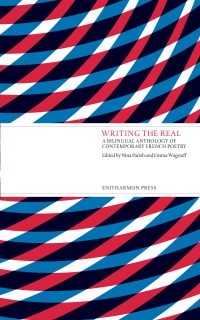
Recently I took part in a panel discussion about the art of translating poetry. It was chaired by Connie Bloomfield from UCL and held at the Enitharmon Gallery in Bloomsbury. I was joined by David Harsent (translating Yannis Ritsos), Emma Wagstaff and Nina Parish (co-editors of Writing the Real: A Bilingual Anthology of Contemporary French Poetry) and Jane Duran (translating Lorca). Part of the evening was spent comparing our differing approaches to translating a poem in Catalan by Josep Lluis Aguilo. Inevitably, we differed on our approaches both to the specific and general issues raised by poetry translation. But it has prompted me to gather up these 20 thoughts on the issues in this blog post.

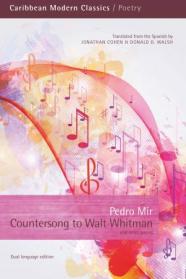
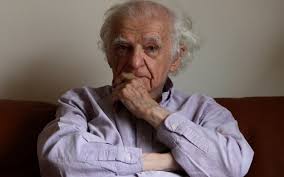
While preparing it, I also happened across further observations on the issue as quoted in the recently published Peepal Tree Press translation of Pedro Mir’s Countersong to Walt Whitman. The late Donald Walsh is quoted as saying “The translator’s first task is to discover exactly what the author has said . . . He must try to re-create in his language the miraculous fusion of thought and expression that produced the original work . . . the translator’s role is humble and secondary . . . he must do his best to circumvent obstacles . . . his duty is to express not himself but his author”.

As what follows will suggest, I find myself largely in agreement with such views – though the compromising, tentative, humble processes that Walsh describes here and the inevitably pyrrhic kind of victories one can expect from them are unlikely to make for dramatic headlines in literary journals or publishers’ blurbs – but I believe this is what the best translators do.

9781845233563_0

Twenty Pointers to Translating Poetry

  1. Ask the big question: can we translate a poem? Because there are so many uncertainties, so many sacrifices, the absolute and perhaps only truly safe reply is to say: ‘No – too much will be lost’. But see #13 below – and now go to #2 (who wants to be safe anyway?)


  1. Ignore such crushing absolutism as expressed in #1. Roll up your sleeves and, like Shakespeare’s Ferdinand believe “some sports are painful, and their labour / Delight in them sets off”. Whatever the apparent obstacles, just do it: start shifting those logs of poetry translation if only because you want the challenge, if only because it’s a fascinating process – but mainly because it’s important (see #20)


  1. Know that to translate is to incur guilt. The moralistic tone in discussions of translation proves the importance of the task and suggests the passionate intimacies involved in this weird relationship between source author, translator and reader

images91M7X9MY

  1. Define translation broadly (1): responding to the emoji on my phone is an act of translation. Plus, it is not merely to transpose to another language, but from one language period to another, one language level to another (formal to vernacular), to paraphrase with clarity, to lay out logical and grammatical links more clearly, to interpret signs, symbols, gestures, facial expressions


  1. Define translation broadly (2): any good poem is a form of translation. Transtromer saw poems as manifestations of invisible poems written beyond languages themselves. Rita Dove says translators often understand best that any poem is merely a silhouette of our attempt to capture elusive original communications – like stepping stones across a river, the better to hear the silence

floral_silhouette_vector_pack_572116

  1. Think of turning the original source into something in the target language with the same information and with the same force as the original


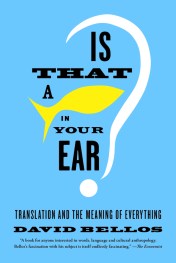
  1. Use these simple methods (naturally used by native speakers to achieve greater clarity in communication – thanks, David Bellos) to begin to convey information and force:
    1. Synonymy – word for word replacement (literal translation)
    2. Expansion – replacement of problematic words with longer versions in the target
    3. Contraction – replacement with nothing, elision, skipping, abbreviations – turning a blind eye
    4. Topic Shifting – rearranging the sequence of the expressions for more clarity
    5. Change of Emphasis – other methods of making parts of the original expression stand out from the rest, in order to assist communication
    6. Clarification – adding expressions (not in the original) – making what was implicit in the original more explicit

 9780865478763

  1. Accept it – poetry is poetry so its translation is mostly a question of force – the shades and emotional colours, the rhetorical temperature, the ramifications of meaning of a word/phrase/form


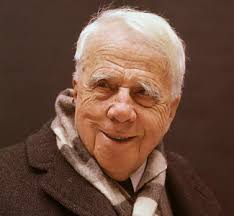
  1. Discuss this: force is what Robert Frost called the sound of sense – poetry’s confessedly ineffable tones, gestures, interrelations, patterns – and to convey it we need to match such constituents (though not necessarily preserve them like lifeless bones)

download

  1. Measure the force in a source poem via a process of triangulation – determine your direction of travel via multiple reference points connected to the source text – not only the text but also good old-fashioned literary interpretation, wider cultural perspectives, the source author’s wider oeuvre, anything you can lay your hands on


  1. Empathise and keep ego quiet – imagination is the major part of this triangulation process: so work hard to imagine what motivated the poem, re-live the act which gave rise to it and is enmeshed in it (thanks, Yves Bonnefoy). In translation we hope to release it from its source form into a new form that resembles/matches its original intention, intuition, yearning


  1. Measure the success of your empathetic act not by a term-for-term resemblance to the original poem (thanks again, Yves) but by the ontological necessity of your new words/forms/images


  1. Contradict my #1 – so it turns out, translation is possible if, with Bonnefoy, we regard the process of translation as poetry re-begun                                                                       . .
    images.
  2. Be inspired by Charles Tomlinson’s formulation of the task: we look to preserve not the metre, but the movement of each poem – its flight, or track through the mind


  1. Close the source text, says Michael Hofmann, rightly, once your translation is beginning to gain some height in its flight. Close it!

InternationalFlight_B2C_22-min

  1. Don’t confuse translation with versioning – the permission we give ourselves is different. To translate puts us in a position of responsibility to both the source text and a working English poem, equally. Versioning puts us in a position of responsibility only to a final working English poem


  1. Ask yourself how might I like my own poems to be treated – translation or version? Will you feel well served or misrepresented? Pleased or aggrieved? I’m not pre-judging your choices, but they will affect your view of your own translating processes


  1. Discuss this: Peter Robinson argues versions result in failures of tone or meaning, that they impoverish and almost invariably lower the tone, reducing the complexity of the original. But surely, such radical revisions might equally result in a better poem than the original? Still – neither will be a translation

 images0VYVDXZC

  1. Label versions and translations appropriately – we have a responsibility to the paying public who, in my experience, are always very clear about what they want to read


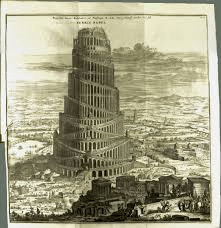
  1. Keep translating – because the desire to translate and read in translation is optimistic, humanistic and hopeful. Contra Babel, it provides evidence of a powerful urge towards community and communication. It shows there is more that unites us than divides us

untitled

2017 Forward First Collections Reviewed #4 – Ocean Vuong

This is the fourth in the series of reviews I have been posting over the summer months of the 5 collections chosen for the 2017 Forward Prizes Felix Dennis award for best First Collection. The £5000 prize will be decided on 21st September 2017. Click on these links to access all 5 of my reviews of the 2016 shortlisted books (eventual winner Tiphanie Yanique)  and all 5 of my reviews of the 2015 shortlisted books (eventual winner Mona Arshi).

The 2017 shortlist is:

Maria Apichella – Psalmody (Eyewear Publishing) – reviewed here

Richard Georges – Make Us All Islands (Shearsman Books) – reviewed here

Eric Langley – Raking Light (Carcanet) – reviewed here

Nick Makoha – Kingdom of Gravity (Peepal Tree Press) – reviewed here

Ocean Vuong – Night Sky with Exit Wounds (Cape Poetry)

download

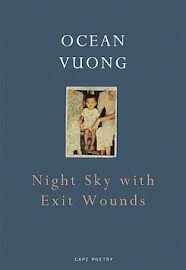
In living with Ocean Vuong’s book over the last week or two I have on occasions mistaken its title for Night Sky with Exile Wounds. It will become obvious why. But it has also been hard to ‘see’ this collection because of the accumulated material – interviews, awards, perhaps hype – that already surrounds it in a way that affects none of the other Forward First Collections this year. Vuong has already appeared on the cover of Poetry London and been interviewed by The New Yorker. He has been nominated as one of Foreign Policy magazine’s 100 Leading Global Thinkers. Such recognition is even more extraordinary given that Vinh Quoc Vuong was born in 1988 on a rice farm outside Saigon and, at the age of two, he and six relatives emigrated to Hartford, Connecticut, where they lived together in a one-bedroom apartment. On learning that ‘ocean’ (in American English) is a body of water that touches many countries – including Vietnam and the United States – his mother renamed her son.

Ocean Vuong is also gay. Hence his exile – the word that kept coming into my mind – is one not only from his birth country and culture but also from the mainstreams of his adopted country. It’s no surprise there are several Ocean Vuongs in this book in terms of subject matter as well as in its use of a variety of poetic forms. This might – reflecting his given name – be an essential, protean, shape-shifting style or it might reveal the kind of casting around in the sea of form and content one might expect from a first collection. I think it is more the latter than the former, though the thrashing and contortion involved in such self creation (we used to refer to ‘self discovery’ – the book title has ‘self portrait’) is now a topic of such ubiquity in Western culture that Vuong’s personal struggles may come to be considered as representative in themselves.

-
Saigon 1975

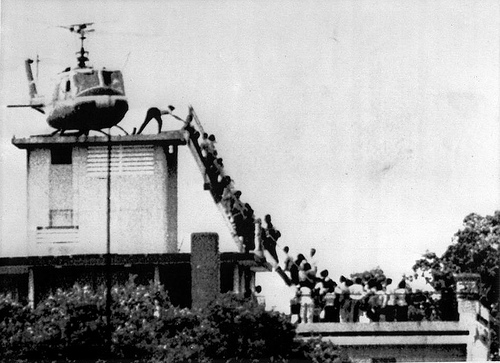
Though 13 years before his birth, ‘Aubade with Burning City’ portrays the American withdrawal from Saigon in 1975. Apparently, Armed Forces Radio played ‘White Christmas’ as a sign to commence the withdrawal and the poem assembles a montage of the song lyric, events on the streets of Saigon and a sinister, coercive-sounding male/female dialogue. The result reflects the chaos of such a moment of violent transition (though the ironies of the sentimental song are a bit obvious) and introduces a recurrent thread in Vuong’s work, the uneasy alliance between power and sex. ‘A Little Closer to the Edge’ seems a reminiscence, perhaps of his own conception (Cape’s cover image of the young poet encourages this biographical approach). Among bomb craters and anticipated domestic violence, a young Vietnamese couple are at first “hand in hand”. Then:


He lifts her white cotton skirt, revealing

another hour. His hand. His hands. The syllables


inside them. O father, O foreshadow, press

into her –


For his mother’s part, the narrative voice asks her to show “how ruin makes a home / out of hip bones” and also to “teach me / how to hold a man”.

Vuong-cover-020116-1-1
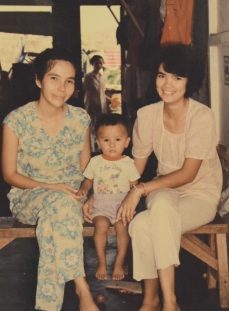
Vuong with his mother and aunt -refugee camp Philippines, c.1989.

Once in the USA, there are poems that treat both parents with some tenderness. In ‘The Gift’, the son teaches his mother the alphabet. She can hardly get beyond the third letter, the fourth, gone astray, appearing only as


a strand of black hair – unravelled

from the alphabet

& written

on her cheek


Several portrayals of Vuong’s father suggest violence and drinking but in ‘In Newport I Watch my Father Lay his Cheek to a Beached Dolphin’s Wet Back’ he is seen to express concern for the creature, “the wet refugee”, though the poem is fractured by bullets, Huey helicopters, shrapnel and snipers as if to suggest the root of the father’s violence and his inability to express affection for his own family.

91c43df9d7c2bf90139dc2df89bfa134
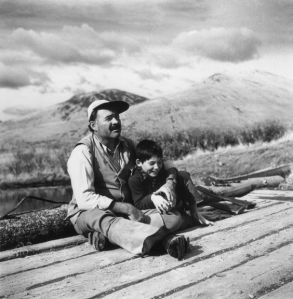
Ernest Hemingway and his son (plus guns)

Or perhaps such things innate to a man? Another major theme in the book is masculinity itself as expressed through father figures and a young gay man growing up. The former is seen in two poems involving guns. ‘The Smallest Measure’ has the father instructing the boy on how to handle a Winchester rifle (it reminds me of a photograph of Hemingway and his son). ‘Always and Forever’ (Vuong’s note tells us this is his father’s favourite Luther Vandross song) has the father substituting himself with a Colt.45 in a shoe box: “Open this when you need me most”, he says. The boy seems to wonder if the gun might deliver a liberation of sorts: “[I] wonder if an entry wound in the night // would make a hole wide as morning”. This image of an aperture being made in darkness – most often through an act of violence – to let in light recurs in these poems. I can’t quite see what is intended here but there are again links to the erotic/violence motif. Later, the gun barrel must “tighten” around the bullet “to make it speak”, making further obscure, but interesting, links to violence and the ability to speak (or write).

aseq

What it is to be a (young, gay) man is explored in the second part of the collection. Andrew McMillan’s physical comes to mind in reading these poems (McMillan interviewed Vuong for Poetry London recently). ‘Because It’s Summer’ is a more conventionally lineated poem in the second person singular (some distancing there) of slipping away from a mother’s control (and expectations) to meet a boy “waiting / in the baseball field behind the dugout”. It’s particularly good at conveying the exciement (on both sides) of a desire, previously played out alone, being mutually gratified: “the boy [. . .] finds you / beautiful because you’re not / a mirror”. ‘Homewrecker’ evokes the energy of erotic discovery as well as the ‘wreckage’ it threatens (to some) in the “father’s tantrum” as much as the “mothers’ / white dresses spilling from our feet”. ‘Seventh Circle of Earth’ is particularly inventive in its form. The poem – set as prose, but with line break slashes included (a baggy, hybrid form Vuong uses elsewhere) – appears as a series of footnotes. The footnote numbers appear scattered across a blank page. The poem deals with the murder, by immolation, of two gay men in Dallas in 2011. The mainstream silence is cleverly played against the passionate love poem only recorded as footnotes.

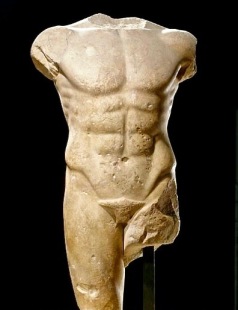
Elsewhere, Vuong hits less successful notes and styles. There are some dream poems – like ‘Queen under the Hill’ – which don’t always escape the hermetic seal around an individual’s dream world. On other occasions, he wants to use mythic stories to scaffold his own. ‘Telemachus’ is probably the most successful of these (the materials again feeling dream-like to me) as the son pulls his dead (shot dead) father from the ocean. Elsewhere we find allusions to Orpheus and Eurydice (and to Lorca’s ‘Sleepwalking Ballad’ and Rilke’s ‘Archaic Torso of Apollo’). Certainly, Vuong is not fearful of taking on big subjects such as JFK’s assassination (‘Of Thee I Sing’), the murders of Jeffrey Dahmer (‘Into the Breach’) and 9/11 (‘Untitled’).


miletus torso_cropped - 1
Archaic Torso of Apollo


But actually I think ‘ordinariness’ and those poems which show the influence of O’Hara and the New York School prove a more fertile direction. In an interview, Vuong has discussed the Rilkean imperative to look, what the young poet calls the “inexhaustibility in gazing”, something with which we might “resist the capitalist mythos of an expendable gaze”. So ‘On Earth We Are Briefly Gorgeous’ (I do hope Vuong thinks, as I do, of Jay Gatsby whenever he uses that last word) the fragments of vivid perception amount to more than the sum of its parts. ‘Notebook Fragments’ – which appears to be precisely what the title says – works better than some more crafted poems in the collection. And ‘Devotion’ – with its concluding placement suggesting Vuong knows how good it is – rises out of the sometimes conflicting biographical currents that by his own admission have buffeted him. It’s a beautiful lyric (the form, tripping, delicate, this time not drawing attention to itself) about oral sex; its debatable claims made with utter conviction:


there’s nothing

more holy than holding

a man’s heartbeat between

your teeth, sharpened

with too much

air


The lilting lineation, the brush-strokes of punctuation, work better here than in some of Vuong’s more Whitman-esque streamings of consciousness. The enviable, insouciance of youth – “& so what” – is thrillingly conveyed. Yet, it turns out,  this is not really about the provocative challenges of a variety of states of exile and  ‘otherness’, but about the need to feel anything “fully”, however transient it may prove to be:


Only to feel

this fully, this

entire, the way snow

touches bare skin – & is,

suddenly, snow

no longer.


2017 Forward First Collections Reviewed #3 – Nick Makoha

This is the third in the series of reviews I will post over the next two months of the 5 collections chosen for the 2017 Forward Prizes Felix Dennis award for best First Collection. The £5000 prize will be decided on 21st September 2017. Click on these links to access all 5 of my reviews of the 2016 shortlisted books (eventual winner Tiphanie Yanique)  and all 5 of my reviews of the 2015 shortlisted books (eventual winner Mona Arshi).

The 2017 shortlist is:

Maria Apichella – Psalmody (Eyewear Publishing) – reviewed here

Richard Georges – Make Us All Islands (Shearsman Books) – reviewed here

Eric Langley – Raking Light (Carcanet)

Nick Makoha – Kingdom of Gravity (Peepal Tree Press)

Ocean Vuong – Night Sky with Exit Wounds (Cape Poetry)

download

Many thanks to Peepal Tree Press for providing a copy of Nick Makoha’s book for review purposes.

Poetry is an art of the relative, but the ability to write about contemporary events beyond one’s personal sphere always strikes me as an absolute and rare talent. Yet it always turns out the poet’s individual circumstances contribute to such escapes from the personal and this is so with Nick Makoha who has talked of writing in exile from Uganda. He fled civil war and the rule of Idi Amin as a five-year old boy in 1979. Many of the poems in Kingdom of Gravity are shocking (and so powerful in particular ways as art) and their obsessive subject is power without justice in post-colonial Africa.

There are moments when early Auden seems a useful comparison. Each poem creates its own world of suspicion and unease, often of violence. Each poem is spoken by a human subject – I thought of Glyn Maxwell’s phrase “the presence of a human creature” (On Poetry, Oberon Books, 2012). This is maintained even though the materials of the poems are journalistic, clogged with stuff, hawked up, hacked off incidents that most of us are only familiar with from news, TV and film. The forms are often shaped but roughly so; Makoha’s voices often make use of anaphora/repetition and tend to the epigrammatic. Such patterning is mostly ironic because if there is one thing this collection expresses it is a sense of exile and disconnect, a loss of all moral compass. The construction of the book seems to encourage this sense of disconnect. Three poems evoking Uganda’s 1979 turning point (after Amin’s 8 year rule) are scattered across 2 of the 5 sections of the book. Each of the 5 sections are introduced by poems linked with airports and travel, distance, arrivals, departures – exile again – and these set the tone.

idiamin

The figure of Amin – and those in the ensuing years who have resembled him – recurs. The book is full of father figures, often distorted, corrupt, vicious, God-like, their hands covered in blood. A crocodile is considered in one poem, the creature imagined as Idi Amin’s teacher:


Wrath the only nature of God you taught him.

What of mercy, peace and Uganda?


Our bodies still rest in your jaws.


The book’s opening lyric, ‘Highlife’, praises the power that comes with “Presidency” and these include the power to throttle another man, to spare a life, to change perception by force, to be acknowledged as “God”. Such big men always promise much to gain adherents but in promoting themselves they soon threaten far more than they deliver:


This man is a firm knot in our chest. A landlord draped

in Savile Row suits, who uses our towns as a race track.


Mark the length of his shadow; where it reaches,

men fall.

(‘Big Nation’)

2016_01_22_75683

The book’s title poem is like this. Re-writing Shelley’s ‘Ozymandias’ and Auden’s 1939 ‘Epitaph on a Tyrant’ from the inside, Makoha speaks as a man wanting to create a world wholly in his own image: “What makes a man name a city after himself, / asking bricks to be bones”. His conviction is that he has been spoken to by “an oracle”; he claims to be searching for “a place to call home” but ominously is equally “in search of fire”. The kingdom of gravity is the condition of “having the world at your feet” and Makoha’s analysis of tyranny looks deceptively open-ended, asking if once the world is believed to be fully known, a reflection of the power-hungry self, then “how will you be sure that nothing is lost?” Such absolute control is an impossibility, of course, and for the tyrant the only solution is a call to arms: “Smear your bodies in red oil. Tonight we split the darkness. / We will be remembered as the wild cats // who smeared their bodies in blood” (‘From the King’).

As this makes clear, tyrants need followers. They are well represented in the book – both as victims and as the breeding ground for the next wave of tyranny. ‘Watchmen’ seems voiced by a man in whose calculations his wife, children, contraband, money, beer and a prostitute all seem interchangeable counters in his mind’s equations. Hard to follow what happens next – the border between fact and fantasy is uncertain – but a powerful male figure rips a sheep to pieces, offers it to other men if they become his “true bloods”. There are plenty of takers:


Some say he had promised land, others positions,

and yet others gold. The truth is we all wanted

to be kings with wives and cars.

There is a drone in our voices.


The night’s coolness has not yet gone.

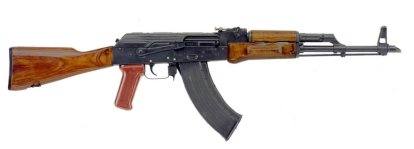
The apparition snatches a Kalashnikov from a shepherd’s fist

and slips into the river. What’s weird is we all break rank

and like a swarm follow singing his incantations

and like a swarm follow singing his incantations.

AKM

The willing yielding up of individuality implied in the choice of the word “drone” is driven home in the final lines which repeat Frost’s repeating trick in ‘Stopping by Woods on a Snowy Evening’ but turn his swooning/determined ambiguity into an unambiguous, threatening, weaponised, overwhelming “swarm” of humanity.

The speaker’s sense that something “weird” is happening, the potentially redemptive sense of the growth of evil is reflected in a few other poems such as ‘The Liberation’ where someone who “used to be a boy” now moves “like smoke across the red dirt towards the second terminal”. In this case, such drastic shifts in human behaviour are considered “a costume” to be worn when the earth “erupts” but the potential reversal of the process implied by this metaphor elsewhere looks like liberal wishful thinking. ‘Candidate A’ seems voiced by a tyrant selection committee, enumerating an individual’s qualities, making him suitable for elevation to “His Excellency, Field Marshall, / Effendi etcetera”. Love of his own reflection, unprovoked violence, rejection of the rules, an appetite for acclaim and acquisitiveness replaced by “immediate gratification” mark out this fanatic among the ranks for a bright future though ultimately he’s to be used by whomever is speaking: “in his effort to be remembered, we will make our mark”.

download

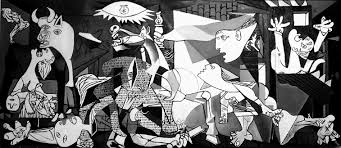
I was reading this book partly while visiting Guernica in the Basque region of Spain. In the commemorative museum, I was struck by a quotation from Gandhi: there is no way to peace; peace is the way. As in Picasso’s painting of the bombing of the town in 1937, Makoha’s poems give us more of the horror of when things break down, but also remind us that peace is more than just the absence of war. Poems like ‘Resurrection Man’, ‘The Dark’ and ‘How to Make Blood’ ask great determination of the reader and also ask us where we stand as we read them. The poet’s stance is driven by a form of survivor guilt. His escape to the UK meant an equivocal freedom:


My own country rebukes me. I hold the world on my back.


Look for me in translation. In my own language you will go unanswered.

My Ugandan passports are a quiet place of ruin.


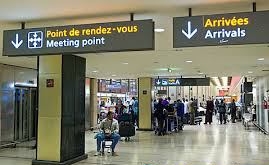
One of the airport poems, set at Charles De Gaulle, Paris, perhaps speaks in something like Makoha’s own voice. It is about the impossibility of telling a story fully. He has no problems with endings – the difficulty is that “I have lost where I began”. The condition of the exile is always liminal, not living fully in either of two places. In Makoha’s case this gives him the space to contribute to English poetry a dark, knotty, often difficult kind of music, plainly relevant in its response to some of the horrors of the contemporary world. The book’s cover has been well-chosen by Peepal Tree Press: a grey scale image of a child standing beside an utterly devastated tree trunk. Hands by her side, she seems to be waiting for something to happen. Something else to happen.

download
Charles De Gaulle, Paris

2017 Forward First Collections Reviewed #1: Richard Georges

This is the first in the series of reviews I will post over the next two months of the 5 collections chosen for the 2017 Forward Prizes Felix Dennis award for best First Collection. The £5000 prize will be decided on 21st September 2017. Click on these links to access all 5 of my reviews of the 2016 shortlisted books (eventual winner Tiphanie Yanique) and all 5 of my reviews of the 2015 shortlisted books (eventual winner Mona Arshi).

The 2017 shortlist is:

Maria Apichella – Psalmody (Eyewear Publishing)

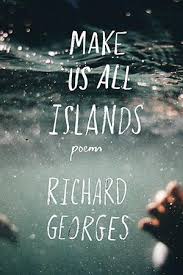
Richard Georges – Make Us All Islands (Shearsman Books)

Eric Langley – Raking Light (Carcanet)

Nick Makoha – Kingdom of Gravity (Peepal Tree Press)

Ocean Vuong – Night Sky with Exit Wounds (Cape Poetry)

images

Many thanks to Shearsman Books for providing a copy of Richard Georges’ book for review purposes.

The seed if not the full, rich fruit of Richard Georges’ Make Us All Islands can be found in Derek Walcott’s 1979 poem ‘The Sea is History’. The mostly unwritten narrative of the Caribbean slave trade, the colonial and post-colonial experience of the transported peoples is the subject of Walcott’s poem: “Where are your monuments, your battles, martyrs? / [. . .] Sirs, / in that grey vault. The sea. The sea / has locked them up. The sea is history”. Born in Trinidad and raised in the British Virgin Islands where he still lives, the sea is also the depository of the brutal struggles and stories of the Caribbean past for Richard Georges, though the ubiquity of the sea in these often painful, often very beautiful poems, means its symbolic burden deepens and broadens to something nigh-existential without losing any of its historical or political power.

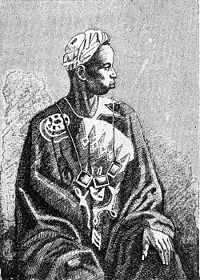
To begin with, Georges makes poetry from some of the very few records that have survived. The words of one transported African – known by the name Abednego – lie at the heart of ‘Griot’. The poem title (pronounced gree-oh) is a West African word for a historian, storyteller, praise singer or poet and, placed at the opening of this book, is both a confident declaration of intent by the poet and an erasure of the Western tradition’s Homeric image of the bard. Rather than heroic military exploits or mythical wanderings, the “cross of the griot” is to “speak for the speechless, / to grip the stem of the bone and coral sceptre, / to be mounted, to sing light into the bleakness”. And the words of Abednego that come down to us turn out to be a dismally familiar, devastating precursor of the 2013 Black Lives Matter movement: “Abednego the griot, the spectre / speaks: In slav’ry days, the black man’s life count for nothing”.


200px-GriotFête
A griot


Poems like ‘Offering’, ‘Birth’ and ‘In the Moment Freedom Comes’ make some of those black lives count through re-deploying details of Spanish or Portuguese slave-ships wrecked or captured in Virgin Island waters. In the latter poem, the woman Ungobo languishes in the hold of the Atrevido until it is attacked by an English ship. But her sense of a liberation into sunlight and salt air seems brief if we give due weight to the concluding image in which the English sailors pluck the slave-ship’s cargo “from the hold like fishermen / clearing their traps”. Many of the figures focused on by Georges are survivors, the kind of “folk” who built the church for the community of liberated Africans in Tortola, Kingstown. Their dramatic survival from the wrecking of the slave-ships is vividly imagined:


Dream them gripping

snarling rocks as black sea claimed the broken hulk

of their prison. Amidst angry sea-spray coral

heads rise in watery light, their minds routeless,

home as far as Babylon


download
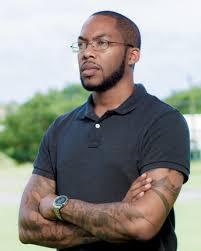
Richard Georges


Likewise, George’s post-colonial figures are survivors too, of injustice and straitened economic circumstances. In ‘The Fisherman Measures Life’, the man’s labour and his rickety boat are un-romanticised in the steady-paced, long-lined tercets. This man carries with him a sense of the island’s history, recalling the “griefs” of the slave-ship Donna Paula, but his observations of nature prove no more consoling. Recalling the hunter/hunted imagery of the mid-twentieth century German poet Peter Huchel, the Fisherman watches seabirds chasing fish:


“It is much the same on land,” the fisherman thought.

Shark suited men sweat and chase American cash

like fishhooks, mouths transpierced with incandescent lures.


And in the end, he is as much a part of this brutal economy of hunter and hunted; as he pulls up his fishing pot, “its wooden frame comes to view / the cloudy depths dissolv[ing] in slippery shadows”.

Interestingly, in his recall of the wreck of the Donna Paula, the fisherman sees both “black and white hands” trying to survive. This is more than just a fleeting image in this book. Elsewhere, George carefully considers both “mariner and cargo”(‘The Heavy Anchor’) and this, alongside his concerns for survivors as much as fatalities, begins to transmute the rolling, destructive, slavering image of the sea in poem after poem into an elemental force (while still representative of historical/political forces), becoming one of the conditions of human life more generally. The opening section from ‘Proverb’ puts this succinctly: “God / fashion man / from mud / and put him / right back / when he / done.” This is a sentiment to make even Beckett’s pessimistic view – that we are born astride a grave, the light gleams an instant, then it’s night once more – look sanguine. So the body of rooster lies rotting on a river bank; a stone lies in the water.


The stone smoothed by flood or famine if asked

could tell of slave and tsunami, or of when it was

a rough rock perched on the hillside


and a radiant rooster crowed


In the vivid and fertile Caribbean landscape, time passes and erodes; death dominates. Here are the key words from the tiny lyric ‘Light Sound Land’: deafening, spat, lose, scatter, bending, splinter, lose, bowing, shrinking, din. The sea is usually the agent of these grim conditions and the book’s title – make us all islands – emerges not as a plea, imperative or warning but as a resigned statement of fact, the consequence of the conditions in which we live.

a96fe65fe5dcccda9a7c917fd3a41337--saint-john-virgin-islands

The title phrase appears in ‘At the Waterside’, a brilliant, sustained, survivor’s meditation in 5 parts, drawing together many of the themes in the collection. The sequence has an unusually clear and stable lyric ‘I’, a man who sits watching ferries arrive on the Virgin Islands. Unlike the “white-capped tourists” (but like the Fisherman), the narrator sees the present day through the lens of history or, to be more precise, the general neglect of the island’s history. The authorities prefer to construct “concrete totems where [the island’s] cedars groan”. But for the narrator:


It is here where the Empire unravels, crumbling

in Ozymandian ruin – preserving only

an ancient anger held by hands burnt black in sun.


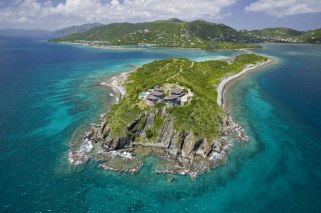
Perhaps it’s the same fisherman here who sails perilously out to Buck Island, to where “sparkling blues betray the reef’s lying rocks”. The narrator twice cryptically insists that “something greater” covers the fisherman. It is partly history (the clouds hang like “ghosts of slaves”) but also (and in a poetic defiance of gravitational logic) it is the ocean itself, the “whipping waters”, an omnipresence in these poems, suggesting that, whether mariner or cargo, all individuals are both authored and erased by the sea.


image_5827ce8864
Buck Island


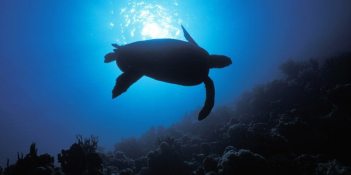
When you buy this book, I suggest you begin by reading the final poem, ‘Oceans’. Here too the sea is “effervescent” with history – “the bones // of slaves, of sailors” – but it also represents a more existential “abyss consuming even light in its depth”. Here is Richard Georges reading from this poem. The narrator demands to know what language might express it, how it may be securely held. The ocean also lies in the lover’s body: “And so we all remain. Divided. / Like the shores of islands”. To counter-balance such division and alienation, the little poem ‘Draining’ suggests one of humanity’s constituent drives is “a life / desperate to drink / the air outside of / us”. The metaphor is quickly switched; what runs through us is a river intent on returning to the sea. In ‘Mural’, a second ‘griot’ figure in a bar directs the poet to watch a turtle rolling and turning in the ocean. The man in the bar is a seer. Like the Fisherman and like the narrator of ‘At the Waterside’ too, what he sees is the “writhing mural / of hope and history / always carrying on”.

4200i1A7CA06263E1DE88

The stoic instinct to hope emerges in these poems as powerfully as the poet’s instinct to speak. Perhaps surprisingly, what remains with me after reading Make Us All Islands is the great beauty of Richard Georges’ language and verse. Battered by the power of his literal and symbolic ocean he humbly suggests the difficulties of articulation, imagining only a “broken book of poems”. But time and time again, he successfully evokes the light and dark of past and present and he takes on the “cross of the griot”. The rightness of each word and line-break in the poem ‘A Place in the Earth’ is a case in point:


The dumb bodies

lie like leaves

in the dirt.


Death drags

the drying lips back

drawing mouths

into snarls


bracing the teeth

against the whistling

flute of the throat.


The living

philosophise

over the bones


while the yellow love

laughs from the trees

above.