Tearing Up Grass: on Holderlin’s Life and Madness

Hesperus Press are just about to publish Will Stone’s eminently readable and wonderfully grounded translation of a contemporary account of Friedrich Holderlin’s madness. This is a long essay by Wilhelm Waiblinger, written in Rome during the winter of 1827/8. It’s an astonishing and very moving document for those interested in German Romantic and Modern poetry or in early accounts of mental illness or – as I am aware is my own case – for those who will instantly recognise, in these brilliant and detailed observations, some of the behavioural elements of what we now loosely refer to as dementia.
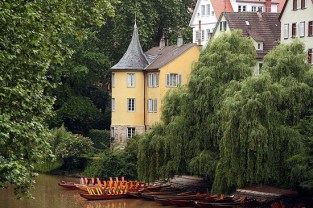
Holderlinturm
Holderlinturm

The essay first appeared in 1831, ironically only a year after its author’s death, though still a dozen years before its subject’s demise. Stone’s excellent introduction tells us that Waiblinger was an up-and-coming poet of the 1820s, “a rebel, a wayward fellow and a liberal maverick”. He studied at the same Protestant seminary (the ‘Tubinger Stift’) where Holderlin had studied from 1788 with Schelling and Hegel (imagine that team on University Challenge). But by 1806, the older poet had been confined to his tower in Tubingen (the ‘Holderlinturm’) because considered incurably mad. Waiblinger began visiting him in the summer of 1822. For four years, he saw Holderlin close-up, walking with him, trying to talk with him and enduring some pretty wild-sounding piano playing too.
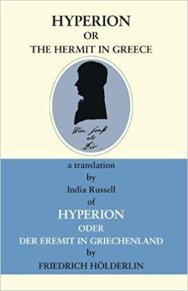
41+WrUaV5pL._SX320_BO1,204,203,200_Waiblinger was a real Holderlin fan. The older poet’s novel, Hyperion, had appeared in 1822 (I review a recent translation of it here) and the younger man found it “saturated with spirit: a fervent fully glowing soul swells there” He was swept away: “Holderlin shakes me to the core. I find in him an eternally rich form of sustenance”. The mad poet in his tower was not often amenable to being visited, but Waiblinger, for some reason, proved an exception: “This lunatic, sitting at the window [. . .] is far closer to me”, the young man wrote, “than the thousands out there who are said to be sane”. Stone makes it clear that Waiblinger not only admired Hyperion but voiced the need for Holderlin’s other poetry to be re-published. Gradually, having fallen into obscurity, “his special hymnic style, fusing Greek myth and Romantic mysticism” eventually started to attract new admirers including Nietzsche, Schumann, Brahms, Rilke, Hesse, Trakl, Benjamin and Celan.

Initially, Waiblinger seems to have intended to document: “It is not my place to offer some profound psychological insight, but rather to limit the quest to simple observation, a modest character sketch”. Filling in Holderlin’s earlier years he notes the uniqueness of his work in his “enthusiasm for Greek antiquity” which “left [its] mark on the tonality of his own creations” and led to a sense “of discontentment with the land of his birth”. This kind of sentiment dominates Hyperion and Waiblinger (sounding a bit prissily patriotic here) finds it elicits in him “a certain repugnance”. Waiblinger also reminds us of Holderlin’s doomed affair with the already-married Susette Gontard (the model for the Diotima figure in the poems and Hyperion). He sees the termination of the affair as the main contributory factor in Holderlin’s decline: “The coddled youth, lulled by the sweet intoxication of this love entanglement, was suddenly pitched back into bitter reality”. From here on, Holderlin was to carry “a fracture in his heart”, a wound barely transformed in Hyperion which Waiblinger reads as documenting “an unnatural struggle against destiny, a wounded mawkishness, a black melancholy and an ill-fated perverseness [that] cleaves a path into madness”.
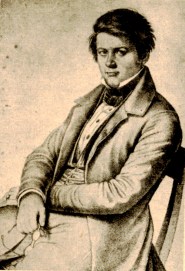
Wilhelm_Waiblinger
Wilhelm Waiblinger

No doubt the end of the affair did deeply affect Holderlin, but Waiblinger’s drawing a direct line from it to the ‘Holderlinturm’ is probably a bit simplistic. Sheltered from the “bitter reality” outside the tower, Holderlin continued to write letters in prose and verse. Given the period, it’s not surprising to hear Waiblinger describe the mockery of locals who caught Holderlin out walking – and good to hear that the old poet responded with mud and stones thrown at his attackers. Yet his behaviour was often like that of a small child: “When he leaves the house, they have to remind him in advance to wash and groom himself, for his hands are habitually soiled from spending half the day tearing up grass”. This tearing up grass seems to have been a common occupation as does, while out walking, flapping his handkerchief against fence posts. All the while, “he talks incessantly to himself, questioning and responding, sometimes yes sometimes no, and often both at the same time”.

One of Holderlin’s other occupations in his madness was re-reading his own Hyperion. He would read aloud, exclaiming “Wonderful, wonderful!” then go on, pausing only to remark, “You see gracious sir, a comma!” In true Romantic style, Waiblinger notices that the mad poet is more calm and more lucid in the open air: “he spoke to himself less [. . .] I was convinced this unceasing monologue with himself was nothing more than the disequilibrium of thought and his inability to gain significant purchase on any object”. For those who have witnessed a relative or friend suffering from dementia, this is a familiar thought and familiar also, perhaps, is the recourse to the phrase “It’s of no consequence to me” which Waiblinger heard repeatedly from the chattering Holderlin.

Playing a piano still gave him some pleasure it seems, beginning in childish simplicity, playing the same theme over and over hundreds of times. On other occasions, almost in spasmodic fits, he’d race across the keyboard, his long, uncut fingernails making an “unpleasant clattering sound”! He would also sing with great pathos – though not in any identifiable language. Holderlin’s family had completely abandoned him in his madness, but Waiblinger records him writing to his mother in the style of a child, “who cannot write in a fully developed way or sustain a thought”.
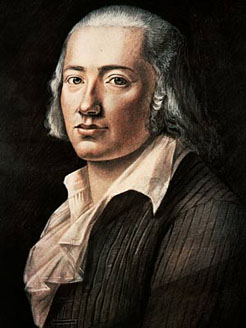
friedrich-hoelderlin-1-sized
Friedrich Holderlin

In fact, Waiblinger suggests that Holderlin’s difficulties lay in mental weakness rather than full-blown insanity. He is “incapable of holding a thought, of giving it clarity, of following it and linking it to another by way of analogy and thus to articulate a distant idea in a regular consistent sequence”. He has another go at describing what he imagines must be going on: “He wishes to affirm something, but since reality [. . .] does not concern him, he refuses it at the same moment, for his spirit is a realm which sustains only fog and what is feigned”. This is partly evident because of Holderlin’s habit (in his madness) of thinking out loud, so Waiblinger believes he can hear a thought being consumed even in the moment of its conception. In the grip of such fluidity and terrifying fog, Holderlin then would shake his head and cry out ‘No, no!’ and begin “firing out words without meaning or any signification, as if his spirit, in a sense overstretched by such a drawn-out thought, could restore itself only by having his mouth issue words which bore no relation to any of it”. Holderlin retreats from his own incoherence into the comfort of sheer random association.

untitled
Will Stone

The results are inevitable for the patient and (again recognisably) yield up a fierce, walled-in, self-involvement. Waiblinger describes a “complete lack of participation in and interest for any events outside himself”, and this, alongside an “incapacity to wish to grasp, recognise, understand, to allow in another individuality other than his own”, means there is no possibility of rational communication with the patient. And such solitude – experienced from the inside – results in such boredom that “he needs to speak to himself”, though lacking the ability to follow one thing with anything coherent, the result is “diabolical confusion” and mere “gibberish”. So it’s with some surprise that we find Waiblinger ending his essay with any thought at all of Holderlin’s recovery. He admits it’s unlikely – but does allow himself (surely consoling himself) with imagining an occasional “momentary restoration”, though even this might only be brief, perhaps no more than a fleeting prelude to the moment of death.

But perhaps such imagined lucid moments are less than consoling to those who spend time observing such distress. Leafing through his papers, Waiblinger says he discovered a quite terrifying phrase. Holderlin at one moment had scrawled down, “Now for the first time I understand humankind, because I dwell far from it and in solitude”. It is almost unbearably moving to imagine such flashes of conscious insight coming to the old poet in the midst of so much mental confusion and perceptual fragmentation. What Waiblinger here describes feels bang up to date and yet must be as old as the hills. Will Stone has done an important job in bringing this essay into English.
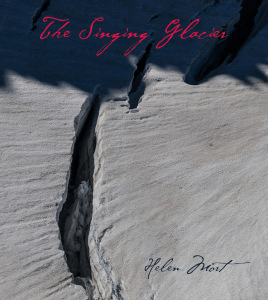
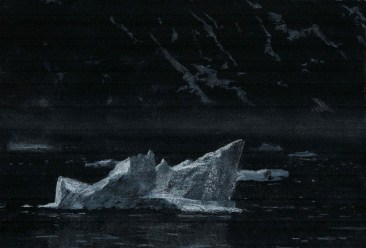
Sounds Like What?: a Review of Helen Mort’s ‘The Singing Glacier’

The new book from the innovative and enterprising Hercules Editions – launched at the LRB Bookshop in London’s Bloomsbury last week – contains poetry by Helen Mort, images by Emma Stibbon, a conversation with composer William Carslake and an essay from Manchester Met academic David Cooper. What holds these diverse components together (within 40 pages) is a trip Mort, Carslake and film-maker Richard Jones made to south-eastern Greenland in 2016. You can see the original Kickstarter post here.

1

So The Singing Glacier project is truly inter-disciplinary and the Hercules book is making available Mort’s poetic contributions to it. Mort’s conversation with Carslake serves to introduce the origins of the project in 2012 when the composer looked down from a plane to see Greenland’s regressing glaciers “like a hand with fingers”. More evocatively, and much closer, he talks of standing beside crevasses and moulins and listening to the sounds emanating from them, “like hearing a Welsh male voice choir singing from this great big hole in the ice!” The Hercules book has photos of Carslake’s notebook, clusters of notes and a few words jotted on the spot. Mort disarmingly says how she envied this seeming directness of acoustic transcription as her role was to come up with words and inevitably much of what she initially wrote down “was just cliché”. She wonders whether cliché is a reasonable response to the vast and alien landscapes they were moving through, sights before which “linguistic originality can almost seem a little arbitrary”. This is not her final conclusion, but her comment does raise one of the fascinating issues in this beautiful little book – what a poet does with the tensions between speech and silence, more abstractly between sound and its absence.

Stibbon_Emma-lr-DRB2015

In a review of Mort’s first book, Division Street, I thought her “love of landscape [was] profound and, like Wordsworth, her hills and skies remain a locus for, as well as an image of, the process of self-exploration”. On that basis she would be a good poet to send to Greenland but – she confesses – she was sometimes reduced to wanting simply to cry and – this hesitantly expressed – it felt “like being in the presence of a god”. These are unmistakable encounters with the sublime and the urge to anthropomorphise such a vast alien landscape is quick to arise, so any efforts at self-exploration might seem worse than arbitrary, positively disrespectful. But how then to engage? ‘In Defence of Cliché’ takes off from Mort’s honestly expressed concerns about inadequate linguistic responses to this landscape:


I write: ice in the fjord as pale as thought

then hear the calving face crash through my language

with a sound (like what?) like cannon fire


moulin-glacier-11[2]

Similarly, the moon fails to be adequately captured by images of “petal, snowball, sleeping moth”. She quotes Hopkins on the way observations of nature can correct our “preoccupation” with the world – again walking the fringes of the divine here – becoming a way in which we learn humility. Mort ends the poem cleverly. Our best word for this sort of experience is “awe” but the word baldly used would not possess enough freshness or fire (thank you Gerard Manley) to carry the weight of feeling. So Mort goes for a down-to-earth metaphor followed by a phrase that manages both to say and not-say it simultaneously:


… we stand like nothing, shaken

from the pockets of our lives, our mouths

stuck on the silent word for awe.
178223-004-FB8F1B4F

The poem, ‘Arctic Fox, August’, is more reminiscent of Mort’s favourite poet, Norman MacCaig. The creature is acutely observed in its colours and hesitant movements around the campsite but the poem ends with a series of rather coercive, descriptive metaphors: “a hunger-striker . . . a gathering memory . . . the habit you thought / you’d kicked”. For me these images circle and knot ever more tightly onto the observing human consciousness, almost doing violence to the creature so well observed at the start. The poem ‘Polynya’ – the word signifies an area of open water surrounded by sea ice – reverses this tendency to humanise the natural by naturalising the human:


Surely the heart

must have polynya

places where it’s never

hardened into ice.


The image of the partially melted heart turns easily into a love poem. Another method Mort adopts to try to respond to the Greenland landscape is through found language. So ‘And Noah’ arose from a conversation with an inhabitant of Kulusuk (though I think Mort said at the LRB launch that much of the detail came from the little museum in that town). The result manages to suggest something of the way of life in this landscape, a work place – the found nature of the phrases enabling the poet to avoid too strong a sense that neither she nor her work are an “imposition”.

2026338

David Cooper’s essay on acoustic geographies and poetry of place takes a more academic look at the multi-media project, suggesting that it –  like a lot of recent geographical creative writing – sets out to challenge the easy domination of the visual sense by accentuating the acoustic or aural. This is partly because sound “reminds us of our own embodied situatedness and inextricable embeddedness within the world”. The eye puts us at the controlling centre; the ear is more often passively assailed from all sides. The eye easily steps back and away; the ear is within the sensed world (I’ve discussed similar ideas of within/without or within/above in relation to Holderlin’s novel Hyperion in another blog post). Mort’s best work in this little book is done when she listens in to these sounds and silences. ‘The Glacier Speaks’ does succumb to the kind of anthropomorphism Mort says she was wary of. But it works well since the voice of the glacier is such a challenging, even taunting, one: “Go on then / says the glacier – / how are you going to score my silences?” The glacier reminds the poet of its silence through noting the kind of sounds which book-end it or by comparing its absence of sound with more familiar moments of silence such as that between lovers, between a mother and a daughter. Here the comparisons work not through similitude but dissimilitude – my silence, the glacier says, is nothing like these. I thought an odd note was struck at the end of this poem when the humans are described as impressed by such silence (“more like a vigil”) yet the glacier suggests they are each “trying / to get back to me”. This is intended, I presume, to evoke human puniness, a Lawrentian “pettiness”, but it also smacks a little of the glacier’s over-anthropomorphised self-regard.

helenmort_2787463k

But the poem ‘Glacier Song’ is magnificent. Not the right word I’m sure, but it approaches the Greenland landscape – the Knud Rasmussen glacier in particular – with a right sense of decorum. Silent is what the glacier is again – a “library of absences” – and this is conveyed partly by suggesting that the nearby fjord is more talkative, more full of songs. But Mort then cunningly withdraws this idea: even the chatty fjord is really silent – how much more silent then is the glacier! Later, the Arctic light – remember Cooper’s discussion of the predominance of sight – interrogates the glacier like an airport security check, quizzing and questioning because light always knows better, light always wants the last word. But “The glacier carries on / rehearsing privately”. The final section of this longer poem alights on the distant figure of a woman (the poet?) who, herself, wants to be singing. Here, we feature as the little, forked animal, stuffed full of language bursting to get out, trying to communicate something about glacier climbing, about ptarmigans, the Northern Lights, even about the glacier itself. But the ice remains mum to the last:


The glacier has not slept

for centuries.


The glacier is restless, lithe,

insomniac


articulate


and doesn’t need

a word for itself.


Knud Rasmussen Glacier Greenland


The Cool Clean Shirt of Herself – review of Bryony Littlefair’s ‘Giraffe’ (Seren Books, 2017)

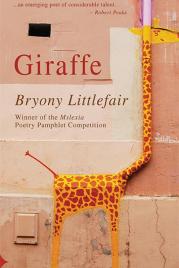
It was a great pleasure recently to read for Poetry in Palmer’s Green with several other poets who have various sorts of north London connections: Kaye Lee, Briony Littlefair, Jeremy Page and Marvin Thompson. Kaye is planning her much-anticipated first collection; Jeremy edits The Frogmore Papers and his most recent book is Closing Time from Pindrop Press; Marvin has recently appeared to great acclaim in the Poetry School/Nine Arches book Primers II. Bryony’s first book publication is the 25 page chapbook, Giraffe, recently published by Seren Books, the contents of which formed the winning submission to the Mslexia Poetry Pamphlet Competition 2017. I’ve not seen it noticed enough in the reviews, so I thought I might try to say something about its considerable strengths. Littlefair also blogs here.

Giraffergbforweb

Giraffe, despite its weird title – which becomes clear only at the end of the collection – opens in familiar territory with a speedy, no-nonsense contemporary feel, using the title as part of the opening line: “‘Tara Miller’ // doesn’t have Facebook”. Her neglect of social media is one of Tara’s admired, unconventional aspects as the narrator recounts her (not so long past) school-days encounters with this girl. The narrator’s mother clearly feels Tara is not quite ‘our sort’ and in free verse lines of short, breathless colloquial phrases, the narrator paints a picture of the girl as a bit of a bully, as well as a little bit Byronic, being unpredictable and darkly “interesting”. Without really being aware of what her feelings are, the narrator is drawn to Tara, her “wavy, almost black” hair, her defiance in the face of boys, “her warm, / Wrigley’s Juicy Fruit breath on my neck”. This is a great double-portrait poem and sets up one of Littlefair’s recurrent themes, the tension between venture and routine.

wrigley-s-juicy-fruit-chewing-gumAnother young female narrator deliberately stays at home while her parents (conventionally) go to church on Sundays. She’s a teenage rebel without a cause as “The truth is I’m not sure what I did / those mornings”. The poem is built from a list (one of Littlefair’s favourite forms) of what she did and did not do. Littlefair is almost always good with her figurative language and here the girl is variously an undone shoelace, an open rucksack, a blunt knife. The urge to non-conformity outruns her imagination as to how she might spend her growing independence and there is an interesting tension at the last as her parents return, “whole” having “sung their hallelujahs” while the young girl is till restlessly revising her choice of nail polish, as yet unable to find what she’s after.
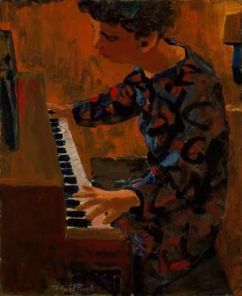

The third poem in this very impressive opening to Giraffe is ‘Hallway’. Despite declaring at the outset “I can’t imagine how it must have been”, the young female narrator on this occasion does manage to achieve an insight into something ‘other’ than herself. What she can’t imagine at first is the impact of herself as a new-born on her young mother: “The constant interruptions, / the mess, the uncontrollable outpour of love / like a reflex, a weeping wound”. There follows a curious moment and a great simile. Imagining the years fast-forwarding, the world is compared to “scenery in a video game, pulling itself together / in front of me as I moved through it”. There’s an odd shift here, like a crashed synchromesh, in the switch from the mother’s point of view to the daughter’s but it does prepare for the second half of the poem which indeed is from the daughter’s perspective. The centrifugal, self-absorption of the child is broken at last on returning home from school early and finding her mother at the piano, “small / in her cardigan, eyes closed, somewhere else”. I’m not sure Littlefair’s image – comparing the child at this moment to a “just-plucked violin string” –is original enough for the circumstance, but the poem survives and the child’s expanded imaginative life is signalled as she stands “washed up in the hallway, wondering at her [mother’s] life”.

e9d122f838f5dc245d546ecf355750f0

Another poem similarly explores a girl’s view of her Grandmother, wondering, in yet another list form, whether the older woman has had any sort of a life beyond the routines of socks and carrots and not gazing into mirrors. The solipsism of the young is a good subject and one Littlefair does well, but she’s as much interested in the other side of the coin: trying to imagine the lives of others. ‘Dear Anne Monroe, Healthcare Assistant’ does this, though the imaginative grain is a bit coarse perhaps. The Assistant’s life – beyond the present moment – is imagined as a mix of poor pay, weary commuting, casual racism and cheese and lettuce sandwiches. This is contrasted to her attention to her patients where she is steady, fierce, calls people sweetheart and is “magnificent”. The sentiment or feeling is right (not something anyone might disagree with) but the poem is sailing very close to caricature.

ClutteredDesk_OfficeI think I find this with some other poems too, though it’s partly because Littlefair is admirably intent on presenting the working world, the world of labour, as routine in contrast to the allure of a more adventurous life. ‘Assignment brief’ presents itself as an old familiar’s introduction to a new girl’s routine office job; the lists and proffered options are funny but they slowly run out of steam. Likewise, the promisingly titled ‘Usually, I’m a different person at this party’ flags latterly. I’m imagining this as narrated by an older version of the girl who half fell in love with Tara Miller. Here, she shadow-boxes the risks  of conventionality by over-insisting on her own sweeping and glamorous life, in the process claiming all sorts of ‘interesting’ aspects of herself: “I only ever have large and sweeping illnesses. / My lymph nodes swell glamorously. I never snuffle”. But the contrasts here are again rather roughly hewn and, in the end, close to cartoonish.

A far more original poem is ‘Maybe this is why women get to live longer’ in which a man-splaining man dominates a watched conversation, the woman “holding her face in different positions / to signify reaction: empathy, humour, gentle and agreeable surprise”. This is acutely observed and the point is well made in the serious-surreal twist of the rhetorical question, “Is there a place / the time goes that women have been / listening to men?” Even better is the imaginative act of the details of the woman now left alone, returned to the “cool clean shirt / of herself”. A really effective line break there, followed by the naturalistic details of her leaving the bathroom door open “as she wees”, then the more disturbing one of her pinching “the skin on her forearm – lightly, / and then harder”. I guess she’s pinching herself awake after the soporific conversational style of the man, but more disturbingly she may be harming herself as a symptom of deeper psychological troubles.

Sylvia Plat_The Bell Jar cover 003.jpegThe latter view is more than a possibility given that Littlefair’s poems also boldly explore the self’s relation with itself. The encounter between self and future self is plainly and humorously told in ‘Visitations from future self’ and it finds the present self in trouble, pleading “I can’t go on / like this, my life a tap that won’t / switch on”. Here, the present self’s cliched and optimistic hopes for a “rain-before-the-rainbow thing” are denigrated and stared down by the future self. ‘Sertraline’ echoes Plath’s The Bell Jar in its evocation of a summer spent on an anti-depressive drug. And ‘Giraffe’ itself is a prose poem (there are 3 prose pieces in the whole book) in which a voice is offering reassurances to someone hoping to “feel better”. In a final list, images of a return to ‘health’ are offered. Particularly good is the idea that suffering will remain a fact but “your sadness will be graspable, roadworthy, have handlebars”. And lastly, “When you feel better, you will not always be happy, but when happiness does come, it will be long-legged, sun-dappled: a giraffe.”
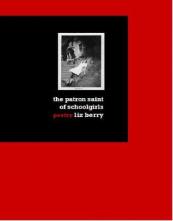
15998895The designation ‘a young poet to watch’ is over-used but on this occasion it needs to be said loudly. Giraffe contains a number of fresh, intriguing and fully-achieved poems. It’s well worth seeking out. I well remember reading and being very impressed by Liz Berry’s 2010 Tall Lighthouse debut chapbook, the patron saint of schoolgirls, and this selection from Bryony Littlefair’s early work runs it close. My review of Liz Berry’s subsequent, prize-winning full collection, Black Country, can be read here.
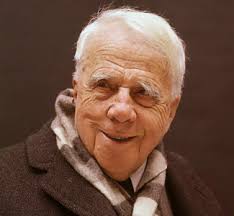


Explaining Robert Frost’s ‘Education by Poetry’

An earlier post in which I talked my way through Frost’s essay ‘The Figure a Poem Makes’  has proved to be one of my most visited pieces. As both teacher and poet, I wanted to explore Frost’s often teasing pronouncements and here I want to do the same with his longer essay, ‘Education by Poetry’. This was originally a talk delivered at Amherst College. It was subsequently revised for publication in the Amherst Graduates’ Quarterly (1931). Frost also separately printed an extract from the conclusion of the essay under the title ‘The Four Beliefs’. Frost’s full text can be accessed here.   In the essay, Frost argues that nothing (other than mathematics)is known in itself – our knowledge is only via relations. So we must live by crediting metaphors of self, love, art, nation and deity, among others. Yet all these break down at some point and it this awareness that education ought to provide us with. There is a clear connection to Frost’s idea of a poem as a “clarification of life [. . .] a momentary stay against confusion” (‘’The Figure a Poem Makes’).


download

Paragraphs 1-7

Frost does not do rebarbative. Even when ultimately – as here – he has complex and profound issues to discuss, he invites us in and we follow trustingly. Here, he lulls us with the idea that he will “urge nothing”, will merely consider and describe. Only once he has finished will we grasp that his sometimes infuriating reluctance to commit lies at the core of his thinking.

His subject is how poetry is treated in American education. One approach is to bar it which, he admits with full-on irony, “takes the onus off the poetry of having to be used to teach children anything”.

Only slightly less ridiculous is the method of other institutions which permit a few examples of traditional poetry but “bar all that is poetical in it by treating it as something other than poetry”. What Frost means by “poetical” emerges later but here he mocks the way that poems are treated as no different to other conventional knowledge-based texts (“science”) or are examined merely for their linguistic and technical illustrations (“syntax, language”).

In a passage that all English teachers will recognise, Frost ironically concedes that education treats poetry in this way in large part because we have to submit marks for assessment. The brute simplicity of a marking regime has its attractions, but it inevitably narrows our focus until we mark for little else but “for accuracy, for correctness”. Still keeping what constitutes the “poetical” up his sleeve, Frost tempts us on by suggesting that such accuracy is “the least part of my marking. The hard part is the part beyond that, the part where the adventure begins”. The adventure is the real nature of a poetic text.

The Big Idea

Paragraphs 8-9

Having considered the abolition and the denaturing of poetry as ways of dealing with its “nuisance” value in education, Frost considers a third way of neutralising it. Mockingly once more, he describes those who accept poetry as a separate discourse but assign it to a “nowhere”, exile it to the “flowery”, to a place diametrically opposed to the “rigorous and righteous”. Poetry here becomes mere entertainment with no truth value, no concern for, or capacity for, knowledge. Poetry occupies only that part of the curriculum that “scatter[s] brains over taste and opinion” but this is hard to assess. Teachers may resort to “a general indefinite mark of X” in such courses and if a marking regime cannot be imposed then such a course can hardly be graced with the description of ‘education’. Frost’s tone is simultaneously sarcastic and passionately concerned: “How shall a man go through college without having been marked for taste and judgment? What will become of him? What will his end be? He will have to take continuation courses for college graduates. He will have to go to night schools”.

Coming closer to his real intention, Frost really does lament this lack of education in taste and opinion. Look at the rising seriousness of concern in this passage: “they have not been educated enough to find their way around in contemporary literature. They don’t know what they may safely like in the libraries and galleries. They don’t know how to judge an editorial when they see one. They don’t know how to judge a political campaign”.

This is a key moment because Frost makes it clear that for all his self-deprecatory tone, the foolery and sarcasm, he is leading us to a declaration that education does have a responsibility to prepare young people to be citizens as well as members of a skilled work force. Frost expects education to inculcate interpretative skills and too many Americans leave school/college ill-equipped to “know when they are being fooled by a metaphor, an analogy, a parable”. This is not science, nor is it merely syntax or language: “metaphor is, of course, what we are talking about”. For Frost, an understanding of how metaphor works is a key part of understanding the world (he will explain this later in the essay) and an understanding of metaphor is best learned through a study of how poetry works. Education about metaphor is education through poetry and “Education by poetry is education by metaphor”.

Paragraphs 10-11

I find the next two paragraphs hard to follow. Frost’s end point is to return to the importance of metaphor but here he detours through the idea of enthusiasm. As much as taste, enthusiasm is not something the academy can easily mark, but Frost wants it, or at least he wants enthusiasm “taken through the prism of the intellect”. This prism metaphor suggests that enthusiasm, when processed through the intellect, refracts a pure-blooded enthusiasm (Frost calls this latter “crude” and likens it to the “oh’s and ah’s” of someone admiring – without any thought? – a sunset). Such a refraction gives rise to a continuum of different levels of enthusiasm, from “something of overstatement, something of statement, and something of understatement”. The prism of the intellect is now re-named as “an idea”. I think Frost wants a not-unsurprising blend of passion and thought in his enthusiasm – neither cold assessment (marking?) nor the oh’s and ah’s of thoughtless fanaticism.

flowermoonPNG[1]

Paragraphs 12-14

Frost now returns to his main theme via a slight revision of his thought, suggesting he’s really been discussing “enthusiasm tamed by metaphor”. His next point is much clearer: “I do not think anybody ever knows the discreet use of metaphor, his own and other people’s, the discreet handling of metaphor, unless he has been properly educated in poetry”. Metaphor is the prism (spawned from intellect, something of an idea) through which our emotional responses are projected to achieve knowledge. But Frost is convinced that an awareness of this fact is not shared equally amongst us and that education through poetry will serve to increase this awareness.

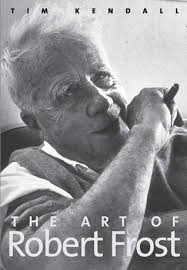
Now Frost begins to talk more clearly about metaphor itself. The importance of it lies in the fact that it “begins in trivial metaphors, pretty metaphors, “grace” metaphors” but (as his essay argues) metaphor also “goes on to the profoundest thinking that we have”. Frost talks elsewhere of what Tim Kendall calls “ulteriority”, glossed here as the method of poetry of “saying one thing and meaning another”. The way Frost discusses this he is sure it is not an abstruse poetic idea but a day to day, almost instinctive human preference: “People say, “Why don’t you say what you mean?” We never do that, do we, being all of us too much poets. We like to talk in parables and in hints and in indirections—whether from diffidence or some other instinct”.

untitledFrost wants to make big claims for metaphorical thinking: “I have wanted in late years to go further and further in making metaphor the whole of thinking”. He allows the exception of “mathematical thinking” but wants all other knowledge, including “scientific thinking” to be brought within the bounds of metaphor. He suggests the Greeks’ foundational thought about the world, the “All”, was fundamentally metaphorical in nature, especially Pythagoras’ concept of the nature of things as comparable to number: “Number of what? Number of feet, pounds and seconds”. This is the basis for a scientific, empirical (measurable) view of the world and hence “has held and held” in the shape of our still-predominating scientific view of it.

Paragraphs 15-19

Frost refers to a visiting scientist who tried to mix spatial and temporal metaphors: “The two don’t go together”. Another such modern metaphor is that a thing is “an event”. Another is that space “is something like curved”. Another is that individual particles possess a freedom. Another is the “metaphor of evolution” or indeed that the whole universe, the whole of everything, “is like unto a growing thing”. Frost wants to alert his audience to the role of such metaphors – often unrecognised as such – in both our everyday and more refined scientific views of the world. He briefly dwells on the metaphor of evolution, accepting its brilliance (in terms of its still-continuing applicability) but insisting that even this “will break down at some point”.

evolution

Paragraph 20-23

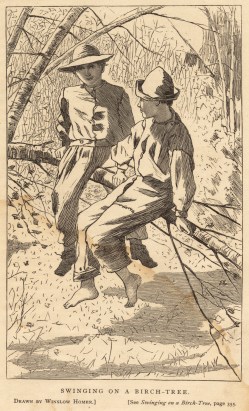
These are the key paragraphs. Frost argues that our lack of understanding of how metaphor works will leave us “not safe”. We must understand “figurative values” and so be able to assess “the metaphor in its strength and its weakness”. In an image that brings to mind his poem ‘Birches’, he explains we will not “know how far [we] may expect to ride it and when it may break down”. The point is that it will break down (the boy riding the birch always comes back to earth) and education ought to give us the experience and the equipment to recognise a “good metaphor, as far as it goes, and [we] must know how far”. As I understand it, Frost wants us to approach human knowledge more tentatively, more sceptically, recognising its provisional nature because it is based in metaphors which will at some moment break down and need to be replaced by a better, more “brilliant” metaphor. The study of poetry offers us experiences of figurative thinking and (if we think of Frost’s poems) the sense of provisionality they often inculcate.

5727567383_f719380140_oThat we have a tendency to forget this provisional nature of knowledge and understanding seems to be Frost’s next point. We take up arms (as it were) by taking up certain metaphorical ideas and making totems of them. He berates Freudianism’s focus on “mental health” as an example of how “the devil can quote Scripture, which simply means that the good words you have lying around the devil can use for his purposes as well as anybody else”. That this is dangerous (makes us not safe) is illustrated by the passage of dialogue Frost now gives between himself and somebody else. The other argues that the universe is like a machine but Frost (adopting a sort of Socratic interrogation technique) draws out the limits of the metaphor, concluding he “wanted to go just that far with that metaphor and no further. And so do we all. All metaphor breaks down somewhere. That is the beauty of it. It is touch and go with the metaphor, and until you have lived with it long enough you don’t know when it is going. You don’t know how much you can get out of it and when it will cease to yield. It is a very living thing. It is as life itself”.

Paragraphs 24-26

Frost now returns us to the school room and what it is for a student to “Think”. It is now clear that this frequent exhortation from teachers really means “just putting this and that together; it is just saying one thing in terms of another”. In a clear allusion to his poem ‘After Apple-picking’, Frost says to explain to students about the workings of metaphor is to “set their feet on the first rung of a ladder the top of which sticks through the sky”. The most significant example of such metaphorical thinking is “the philosophical attempt to say matter in terms of spirit, or spirit in terms of matter.” This – like all metaphors in the end – is an attempt that must fail but “it is the height of poetry, the height of all thinking, the height of all poetic thinking, that attempts to say matter in terms of spirit and spirit in terms of matter”. Frost clearly feels each realm is more clearly understood via metaphors of the other but (speaking in the 1930s) the main danger he foresees is a too-materialist vision of the world: “The only materialist – be he poet, teacher, scientist, politician, or statesman – is the man who gets lost in his material without a gathering metaphor to throw it into shape and order. He is the lost soul”. He is lost because blind to metaphors.

Paragraphs 27-37

Frost starts to look at metaphors through some “trivial ones” from the Odyssey – a shield and seeds of fire. These are the raw materials for an education by metaphor and recall his definition of a poem as “a momentary stay against confusion” in The Figure a Poem Makes where he arguesI would rather have trivial ones of my own to live by than the big ones of other people. But there are more significant metaphors: “the ones we live by”. Frost repeats: “[metaphor] is all there is of thinking”. He explains we do not have to write poetry to understand metaphor. Reading it serves as long as we read it “not as linguistics, not as history, not as anything but poetry”. The only form of assessment a teacher can apply to someone reading poetry is how “close” they come to it. This remains vague, to say the least, but Frost insists “everything depends on the closeness with which you come, and you ought to be marked for the closeness, for nothing else”.

Paragraphs 38-43

Evidence of such closeness to the true nature of poetry (and hence metaphor) is now termed a form of “belief”. He gives five different forms of such belief. Frost makes each sound like a sense of conviction, arising from the perception of a metaphorical connection between two things. Our giving credence to this sense of connection is also what can give rise to a fulfilling of such a connection, almost as if our belief in it gives rise to it.

His first illustration of this is in a young person’s self-belief. Is this like a young woman seeing herself as an engineer, giving that vision credit and hence pursuing it towards fulfilment? Of course, such metaphors break down and this is something more clearly acknowledged in Frost’s second example: “the belief of love”. The metaphor of a romantic relationship between two individuals must be given credence (on both sides) to be pursued but “the disillusionment that novels are full of is simply the disillusionment from disappointment in that belief. That belief can fail”.

kadın-türk-mühendis-790x445

The third form of belief is literary or art belief. Frost focuses on the creation of a work of art which should arise not from cunning or calculation but from “belief. The beauty, the something, the little charm of the thing to be.” This is more “felt than known” (again recalling The Figure a Poem Makes) and we need to see the artist sensing a connection to something other, giving it credence, and trying to fulfil the insight, working towards it, bringing it in existence (not merely recording something already known). This is also the model for Frost’s fourth belief –  the God-belief. He’s most brief on this but the implication seems to be that God is something we bring into existence through our belief. Again, we need to remember that both literary- and God-belief is liable to failure and break down.

Here, Frost’s final belief is national belief, a belief in a nation to which we give credence and hence bring about its fulfilment, bringing it into existence. The particular and personal nature of each of these beliefs is brought out when Frost reaches for the metaphor of the painter’s palette. As he says elsewhere, being forced to adopt others’ metaphors, even a whole culture’s metaphors, becomes a form of tyranny that he would resist. This is partly because all metaphors break down eventually, but also because “I want my palette, if I am a painter, I want my palette on my thumb or on my chair, all clean, pure, separate colours. Then I will do the mixing on the canvas”. Whether we are engaged in self-, love-, art-, God- or nation-creation, we must make our own.

Paragraph 44

Interestingly, Frost concludes by reviewing and re-ordering the five areas of metaphorical belief. Each has a “shyness” about it in that we are reluctant or incapable of pronouncing upon it until we have tried to pursue it: “only the outcome can tell”. This must be, in part, the source of Frost’s slipperiness, the sense we often have that his commitment is always provisional, or yet forthcoming. Even in national-belief, “it has got to be fulfilled, and we are not talking until we know more, until we have something to show”. This is understandably true of writing a poem which arises “not of cunning and craft [. . .] but of real art”. This is now glossed as “believing the thing into existence, saying as you go more than you even hoped you were going to be able to say, and coming with surprise to an end that you foreknew only with some sort of emotion”. In this conclusion, Frost holds back God-belief for its more traditional, ultimate position: “And then finally the relationship we enter into with God to believe the future in – to believe the hereafter in”.

cri_000000136377


The Poems of Mary MacRae

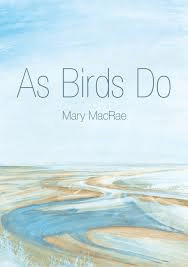
I knew Mary MacRae as a member of a poetry workshop we both attended in north London. She came to writing poetry late and published just two collections – As Birds Do (2007) and (posthumously) Inside the Brightness of Red (2010) both from Second Light Publications. Her poem ‘Jury’ was short-listed for the Forward single poem prize and was re-published in the Forward anthology, Poems of the Decade (2011). That anthology is now set as an A Level text and it was through teaching from it recently that Mary’s work came back to mind.

untitled

Mary died in 2009 at the age of 67. As a writer she was just beginning to hit her stride. Mimi Khalvati praises her as “a poet of the lyric moment in all its facets” and judges Mary’s ten years of work as an “extraordinarily coherent” body of poems. Khalvati goes on: “Because of the natural ease and grace of her diction, it would be easy to overlook Mary’s versatile formal skills, employed in sonnets, syllabics (à la Marianne Moore), numerous stanzaic forms, but nowhere evidenced more forcefully than in her ‘Glose’ poem, inspired by Marilyn Hacker’s examples, in which she pays homage to Alice Oswald, as in a previous glose to Mary Oliver – a trinity of wonderful lyric poets, in whose company Mary, modest but not lacking in ambition, shyly holds her own.”

In 2009/10 many friends and writers contributed pieces in memory of Mary to the magazine Brittle StarMost of this material can now be found here with prose contributions from Jacqueline Gabbitas, Myra Schneider, Lucy Hamilton and Dilys Wood. I wrote a poem at the time (remembering meetings of the poetry workshop in London) and I have more recently revised it more than a little. I’m posting it here alongside the review I wrote of Mary’s posthumous collection with the idea of making the review more easily available and perhaps encouraging others to seek out Mary’s published work.


Before the rain arrives

i.m. Mary MacRae


Perhaps five or six of us standing there

at the familiar purple door

those afternoons we lost beneath poetry’s

red weather our voices and lines


while the genuine thing built unremarked

beyond the window’s diamond panes

till it was time to depart

then our turning back in the familiar porch


our repeated goodbyes being called

our uncertain bunching

that coheres and delays until one of us

breaks loose and we are each free to disperse—


yet on that day there were raindrops

on the back of a hand on another’s cheek

and though we fiddled with car keys

we fidgeted in trainers and faded jeans


we were an ancient chorus for a moment

crying the single syllable

the drawn-out sound of r—a—i—n

because we were weary of weeks of drought


and now it came and we saw where it fell

the raindrops beginning

to shrill their high-pitched release

from interlaced shadows


from the skirts of clouds

and what none of us knew until we’d seen

one more year was that one of us there

despite our sharp eye for openings


and endings would have to face last things

like the white vanishing of panicked doves

into dark thunderheads—

on these more recent afternoons


just four or five of us here perhaps

in our minds her shrewd observations

her words urging us closer to listen

for the noise rain makes before the rain arrives


maxresdefault


Review:  Mary MacRae, Inside the Brightness of Red (Second Light Publications, 2010), 96pp, £8.95, ISBN 978-0-9546934-8-0

Mary MacRae’s 2007 debut collection was titled As Birds Do. It is true that birds feature variously in that and this, her sadly posthumous new collection, but if we are unaware of the earlier title’s provenance, we might anticipate no more than a delicate, poetic take on the natural world, the kind of thing that fills so many small magazines. But MacRae alludes to the moment in Macbeth, when Lady Macduff and her son contemplate death. The mother asks, “How will you live?” and the son, with a wisdom far beyond his years, replies, “As birds do Mother . . . . With what I get I mean”. MacRae’s poetry is full of such emotionally-charged, vital identifications with natural creatures and, more profoundly, with the sense that what can sustain us in life must be derived from everyday common objects.

book 1

As a title, Inside the Brightness of Red, also flirts a little with poetic affectation, but once inside the book’s covers, it is MacRae’s precise, even astringent, penetration that is so impressive. She reads the world around her and finds spiritual meanings. It is no surprise that R.S. Thomas supplies the epigraph to this new collection: “It is this great absence / that is like a presence, that compels / me to address it without hope / of a reply”. So a poem called ‘Yellow Marsh Iris’ promises to be a naturalist’s observation then startlingly wrong-foots the reader with its opening line (“It’s how I imagine prayer must be”) and proceeds to its seamless business of combining accuracy of observation with an emotional and intellectual narrative. She studies the flower stems crammed into a glass vase:


their stiff stems magnified

by water, criss-crossing

white, pale green, green

in a shadowy coolness


We are reminded that there is a kind of intensity of observation that succeeds in prising open our relationship with the outer world in such a way that while encountering the Other, we more clearly glimpse ourselves. MacRae concludes her process of “looking and looking” at the flowers that has given rise to the sense that “they seem to hold / all words, all meaning, / and what I’m reading / is a selving, a creation.”

MacRae’s visions are almost always peripheral, fleeting, askance. The unfolding of daffodils – which, in a quite different age, Wordsworth could contemplate steadily and then stow away for future use – here can never be more than something


waiting for us somewhere in the wings

like angels,


your darting after-image

between the pear-tree

and the brick wall.

(‘Daffodils’)


In the same vein, MacRae has Bonnard, paint his mistress, Marthe de Meligny, and declare that his sensibility is triggered by “looking askew”. The visionary moment occurs only when “Glimpsed through the half-open door / or the crack of the hinge-gap” (‘Bonnard to Marthe’) and this collection’s editors (Myra Schneider and Dilys Wood) have drawn it to a close with yet another such moment: “Turning back to look through an open door” the narrator sees an ordinary room “utterly transformed, / drained dry and clear, unweighted” (‘Un-Named’).

book 2It may be that this ability to be sustained by scraps and glimpses, the sense that the self is most fully resolved in a lack of egotism, in its encounter with ordinary things, can diminish some of the sting of mortality. In a poem like ‘White’, MacRae manages to celebrate again the ordinariness of familiar things while at the same time sustaining a contentedness (or at least an absence of fear) at the prospect of the self’s vanishing: “You can disappear in a house where / you feel at home; the rooms are spaces / for day-dreams, maps of an interior / turned inside out”. Rather than Macbeth, it is Hamlet’s resolve to “let be” that comes to mind as this calm, accessible, colourful and wonderfully dignified poem concludes:


Let

it all go; soon the door of your room


will be locked, leaving only a slight

hint of you still, a ghostly perfume

lingering in the threadbare curtains and sheets.


But MacRae’s contemplation of her own death, most likely, was no such safely distanced envisaging. Dying at 67 years old, she’d had only 10 years of writing poetry, but it had evidently become a vessel into which she could pour her experience without ever abandoning herself to artistic ill-discipline. ‘Prayer’ is almost too painful to read. The narrator is emerging from the “thick dark silt” of anaesthetic to hear someone sobbing and a second voice trying to offer comfort. As her befuddled perceptions clear and the poem’s tight triplet form unfolds, the second voice is understood to be saying “’Don’t cry, Mary, / there’s no need to cry’”. The collection’s title poem can bluntly report that “the cancer’s come back” yet artfully balances such devastating news with the landscape of Oare Marsh in Kent where colours “are so spacious, / and have such depth they’re like lighted rooms // we could go into” (‘Inside the Brightness of Red’).

untitledFor MacRae’s interest in and skill with poetic form, we need look no further than the extraordinary glose on a quatrain from Alice Oswald (the earlier collection contained another on lines from Mary Oliver). For most poets, this form is little more than an exhibitionist high-wire act, but MacRae’s poems are moving and complete. Her use of poetic form here, particularly in some of these last poems, reminds me of Tony Harrison’s conviction that its containment “is like a life-support system. It means I feel I can go closer to the fire, deeper into the darkness . . . I know I have this rhythm to carry me to the other side” (Tony Harrison: Critical Anthology, ed. Astley, Bloodaxe Books, 1991, p.43). Appropriately, in ‘Jar’, she contemplates with admiration an object that has “gone through fire, / risen from ashes and bone-shards / to float, nameless, into our air”. Here, the narrator movingly lays aside the wary scepticism of the Thomas epigraph and rests her cheek on the jar’s warmth to “feel its gravity-pull / as if it proved the afterlife of things”.


This inspiring collection contains a short Afterword by Mimi Khalvati who MacRae frequently praised as a critical figure in her work’s development. Khalvati lauds her as “a poet of the lyric moment in all its facets”. She judges MacRae’s ten years work as an “extraordinarily coherent” body of poems, suggesting that, among the likes of Oswald and Oliver, MacRae’s work is “modest but not lacking in ambition”. For me, her two collections certainly exhibit a modesty before the world of nature that is really a genuine humility, allowing both the physical and spiritual worlds to flower in her work. This was her true ambition, pursued in full self-awareness and one that, before her sad leaving, she had triumphantly fulfilled.


Two Cat Burglar Poems Compared: Copus and Crucefix

Here are two poems about climbing in through windows. I’m sure it’s ill-advised to pit something of one’s own against one of the best poems appearing in the Forward Poems of the Decade anthology, but the similarities were so interesting that I decided to lay good sense aside. I hoped also to put aside any spirit of competition and to further that you will find that I have adopted a very impersonal tone towards my own poem. That poem – ’17 Britannia Square’ – was first published in 2004 and it certainly feels remote from me now, as if written by someone else. The following essay zig-zags to compare the two poems as students are asked to do in the Edexcel A level examination (9ETO/03). The text of Julia Copus’s poem can be found here. My poem can be read by scrolling down the page on this link.

untitled

Both poems convey details of the climb into a house which, in each case, is taken to represent something about the progression of individual lives, about developing identity. Copus’s climbing girl is on the brink of womanhood, a journey into “the way of the world” and her poem implies the difficulties ahead, especially, perhaps, for a woman in a patriarchal world. Crucefix’s poem is altogether more male and concentrates more on what has come to divide the two men, the surprising shift (“strangeness”) in identity over time. The forms of the two poems are similar: continuous blocks of unrhymed verse, though Copus uses a more variable line length and flowing syntax that evokes the ‘ease’ of the girl’s passage. In contrast, Crucefix’s verse halts and re-starts on several occasions, suggestive of the disjunction between his two characters.

Julia Copus’s 13 year old girl is repeatedly imaged in border territory, a “halfway” stage, a liminal state of age, sexuality, friendship and her literal broaching/breaching of “the warm flank of the house”. The journey or passage she is taking is into adulthood, a transition presented as exciting, anxious and relatively “easy”, though what awaits her is more uncertain and even forbidding. The opening descriptions emphasise her vulnerability (crouched, trembling, narrow windowsill, sharp drop). Yet she continues to find reassurance in the presence of her (similarly aged) friend, though this is precisely what she is climbing away from. For further reassurance, she dwells on the tangible details of the moment: “the fact of the open window, / the flimsy, hole-punched, aluminium lever”. Crucefix’s ‘17 Britannia Square’ also opens with a concern to keep things “steady” but here it foreshadows the narrator’s growing awareness of changes in personal identity and relationships. The details and onomatopoeia of line 3, quickly settle us into a concrete situation, but the simile of the “coins being scraped together” is the first indication of one of the poem’s divisive elements, material wealth. Given her age, Copus’s girl was not trusted with the keys; Crucefix’s narrator readily accepts responsibility for the lock out (he forgot to pick up the keys) and self-deprecatingly confesses his own inadequacy which is again linked to the material successes of his friend: “I could not manage ten minutes / in charge of your tall, Edwardian house”.

imagesPKEZLQ6M

Copus’s girl’s physical position, perched perilously on the porch roof with its rough asphalt like “a square of petrified beach” is marvellously conveyed. The word “petrified” works physically and psychologically, evoking both stoniness and felt fear simultaneously, but it also foreshadows her eventual dive through the window, mermaid-like, into the ambiguous ocean of her future. The omniscient narrative voice asks, “What can she know / of the way the world admits us less and less / the more we grow?” The narrative voice knows the future as the girl does not and the personal pronoun (“us”) probably implies the voice is female and is making a comment on the patriarchal nature of the world of adulthood into which the girl is moving. It is a world that will “admit” her less and less. The choice of the word “admit” suggests the future will acknowledge the girl’s existence less as well as give her less literal admission to what it might offer. By contrast, watching his friend climb the ladder, it is the past that preoccupies Crucefix’s narrator. It’s interesting that the “cat-burgling high-jinks” are already distanced by being something they “might” have done, though it seems likely they did not in reality. It’s not clear whether this suggests their earlier relationship also had its limits or whether the familiar image of the wall-climbing wayward students is itself being ironised – a cliché that is displaced by the later more painfully honest assessment of their relationship. The elaborate, polysyllabic phrase used to describe what the two students hoped to evade – “vigilant authority” – also suggests the way the poem looks to evade accepted modes of presenting such male friendships.

untitled k

This is even more clear when we reach the narrator’s statement about the subject of their earlier, collegiate discussions. They focused on personal identity and the allusion to John Keats points to that poet’s ideas about Negative Capability. Keats records the sensation of feeling annihilated in a crowded room because “the identity of every one in the room begins to press upon me”. Yet this absence of a resolved (what the poem calls “determined”) self, pushing confidently outwards, facilitates delicately perceptive encounters such as catching a glimpse of a “fieldmouse peeping out of the withered grass – the creature hath a purpose and its eyes are bright with it” (229). The resultant freshness and truth, the absence of pre-judgement in such a moment, is what Keats valued and perhaps it is what this poem strives for in its examination of male friendship. The startling simile introduced here (“how a man / could possess no determined self, like a state / that sees no need of a constitution”) also gestures towards an underlying concern about national identity too. This is reinforced by the title of the poem and suggests that the issues of identity and division on a personal level might be reflected more broadly in contemporary Britain and the narrator’s observation that such a view now “looks as much risk as opportunity” indicates he sees subsequent developments (personally or politically) as putting closeness and cohesiveness at risk.

untitled 4

In ‘An Easy Passage’, lines 19-22, create a dramatic pause or lull in the poem, a briefly “lit”, but still present, paradise of innocence. The statement that “for now the house exists / only for them” pre-empts the most significant change in perspective in Copus’s poem. Their innocence is indicated by the girls’ small scope of vision and the second half of the poem enacts its innocence / experience theme by drawing away to the wider perspectives of the street, the absent mother, the workers and finally the secretary. It is the latter who is said to be “most far” from the girl. The phrase ironically has the effect of associating the two characters, perhaps implying that the girl’s future can be seen in the older woman’s present situation. If so, the portrait is not inspiring with her small plans for an “evening class” or contrastingly improbable plans for the “trip of a lifetime”. The tone adopted about the “stirring omens” in an astrology column comes close to a sarcasm at the secretary’s expense. Growing distance and division are also indicated in lines 19-27 of ‘17 Britannia Square’ via the vivid details of the friend’s climb to the top of the ladder and his awkward tipping in through the bathroom window. The paralleling of the climb up the (social?) ladder and the reflections on identity are made explicit in the yoking together of literal and psychological facts: “I see you pull up the sash, begin to wriggle /into your bathroom and it seems less a truth / to last beyond our teens”. The simile describing the damage caused by the friend’s flailing foot, as he slips through the window (breaking it and making a “white star-burst like a rifle shot”), perhaps implies the demise of the earlier self. This is again reinforced by the forcible linking of immediate, physical events with more personal developmental vocabulary: “you vanish at last, absorbed to your house, / your job, your family”.

untitled 3

But ‘17 Britannia Square’ is not really a poem about envy. In fact, the narrator waits below, watching his old friend vanish into his house/life, yet remains “in love with mine”. Furthermore, the closing lines of the poem present an act of Keatsian sympathetic imagination as the narrator melds past and present, himself and his friend into a moment of alertness to the possibilities of life, even if the possibilities are of growing alienation. The tone is not dark – the friend will re-appear at his own front door “laughing” – and the explicit birthing image of line 30 is equivocally described with the phrase “bruised and quivering”. The poem leaves the reader with a heightened sense of the unpredictability of individual lives as expressed in the choice of the word “strangeness”. The word implies estrangement but also of the richness of mutability and the unexpected, perhaps reminiscent of Ariel’s song to Ferdinand in The Tempest: “Nothing of him that doth fade, / But doth suffer a sea-change / Into something rich and strange”.

untitled 2

By contrast, I think the youth and still-retained freedom of Copus’s two girls is described (from the secretary’s perspective now) with some envy (silver, neat, shimmering, flash, gracefully). It’s not clear if this is mere personal envy or that of an older generation viewing the more secure freedoms of younger women. Certainly, Copus loads ambiguity in at the close. The “shimmering- / oyster-painted toenails” re-evoke the beach image of line 16 and the graceful movement of the girl into the house suggests an assured transition into another element/time. Yet the simile of the nails flashing like “armaments” complicates matters. Is the suggestion that she will need not only grace and beauty but also an arsenal of weapons with which to defend herself in the adult world? Does the simile persuade us that the girl does possess such means to defend herself? Or that she lacks it (what use are painted toe-nails)? There is something surely ominous in the very last phrase, as she drops “into the shade of the house”.

So ‘An Easy Passage’ is full of the girls’ grace and beauty on the verge of adulthood. Through predominantly concrete description, the poem conveys complex emotions about their likely transition into the adult world and Copus leaves the nature of their future experiences carefully undefined. Crucefix’s poem is equally honest about what divides his two male figures as they have grown into maturity. It is largely money but also the divergent demands of house, job and family. Yet the poem develops ideas about the fluidity of personal identity from Keats’ thoughts on the matter and concludes that the human heart draws its sustenance as much from distance as closeness, pain as much as pleasure.

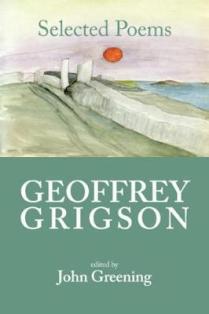
Flowers of Lime: Geoffrey Grigson’s ‘Selected Poems’

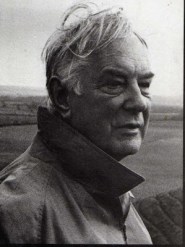
Surely we all have one or two Faber anthologies edited by Geoffrey Grigson on our shelves? Love Poems, Popular Verse, Reflective Verse, Nonsense Verse, Poems and Places, Epigrams and Epitaphs . . . As a critic he often wielded a savage power through his magazine New Verse. And as a big beast on the literary scene of the early 1980s, Hermione Lee interviewed him on Channel 4. But since his death in 1985, he’s better known merely as the husband of Jane Grigson, the celebrated cookery writer. His own poetry has been wholly neglected which makes John Greening’s new Selected Poems from Greenwich Exchange a welcome opportunity to re-consider it. I think Grigson’s contrasting themes were established early on. The influence of two great poets (not Eliot, not Yeats) is clear from the start and it may be that the limits of Grigson’s poetic achievement and the absence of much development in his style, are because he never chose one path or fully escaped either.


9781910996133

The influence of Auden is very clear in Grigson’s first collection, Several Observations (1939). ‘Meeting by the Gjulika Meadow’ presents an enigmatic narrative in a “frontier” landscape; a meeting between two men whose conversation is in large part concerned with “the thunder / about Europe”. There are sketched fragments of personal dependencies and guilts but the whole reads as a slice of narrative that has been carefully shorn of its explicatory elements. A poem from 1946 shows Grigson using similar methods but on matters much closer to home; ‘In a Dark Passage’ draws material from the deaths of two of Grigson’s brothers in WW1 and the early death of his first wife, Frances. The situations are still relatively distanced by being told in the third person and the timings of the incidents are compressed to form a litany of heartfelt if rhetorical griefs: “O floes of ice, you float downstream / But do not disappear”.

There is certainly a very dark river running through Grigson’s work. ‘Two A.M.’, from the 1970s, records a wakefulness at night filled – as so often – by nothing but questions: “all emptiness, all gravity, / Ultimacy, nothingness”. He captures vividly the way this kind of mood, at such an hour, insists on expanding exponentially, racing to fill the world’s “Sierras, monadnocks, lakes, prairies, taiga, ice”. On this occasion, there is the possibility of an erotic reply: “At least now, with our bodies close, / Be comforted”. But even that response is absent from ‘Again Discard the Night’ from the 1980 collection, History of Him. Written as a first person narrative this time, the poem pulls no punches in its flinty and unforgiving portrait of old age waking:


… you call, the kettle gathers

And talks, and Are you all right? comes your


Usual cry, and my habit insists, without sound, Reply,

Be bright, wash, shave, dress, and this once,

Again discard the night.


maxresdefault

Of course, Grigson’s sense of an ungoverned and likely meaningless universe matched with his frequent backward glances also calls to mind Hardy’s work. One of Grigson’s earliest poems, ‘The Children’, has an 11-line stanza of complex rhyme patterning that Hardy would have been proud of. The children are portrayed as playing in a natural environment and in a state of temporal innocence: “They looked for no clocks, noticed no hours”. But ending each stanza, the triple rhyme words with “hours” are (ambiguously) “sours” and “flowers”. Between the third and fourth stanza, there is the kind leap in time often found in folk songs. We have instantaneously passed many years: “The rooms were pulled down, but they always abide / In the minds of the children born in them”. These are the best lines in the poem with the much cooler closing lines for me falling flat:


They see the clocks and notice the hour

And aware that restriction of love turns sour,

They feel the cold wind and consider the flower.


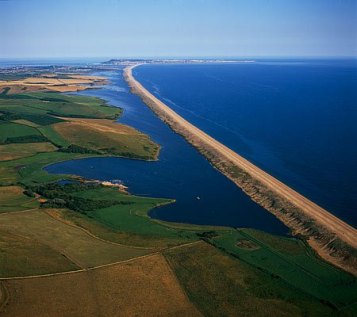
It is certainly Hardy that Grigson is thinking of in ‘In View of the Fleet’. The Fleet is the lagoon behind Chesil Beach in Dorset and the poem borrows phrases from Hardy, empathetically suggesting that each poet’s vision has the same sequential locus: “Things not as firstly well, a sparkling day, and / tolling of a bell”.


chesil-beach-aw-17-3
The Fleet and Chesil Beach


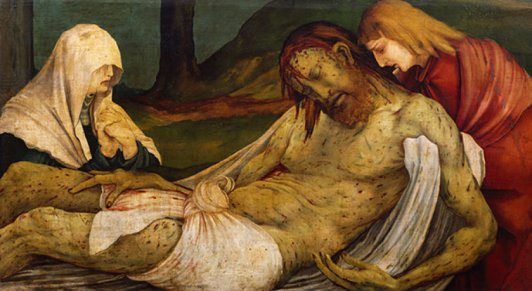
John Greening suggests in his very helpful Introduction that Grigson is also capable of an “extraordinary lyricism” and these are moments when he captures this “sparkling” quality of the natural world. In ‘A New Tree’, helped by the holding up of a child to a window, the narrator sees again with a newly cleansed perception, “a sun / being fiercely / let loose again”. Delight in the natural world recurs in a key poem, ‘Note on Grunewald’. In it, Grigson also expresses the scepticism about literary achievements which must have driven much of his own, often acerbic, critical comments on the work of others. In a man who devoted a lifetime to literary endeavours, it’s hard to take wholly seriously the poem’s assertion that he’d rather live to sniff the “scent of the flowers of lime” than to create lasting “poems”. But the scent is praised in contrast to the art of “Grunewald’s spotted green-rotted Christ”. Grigson sides with (“I join”) Cowper in deciding that death holds no attraction and that he too would choose to “leave this world never”. The perceived dichotomy between a vivid inhabiting of the world of the senses and the ‘rotten’ achievement of artists is by no means Grigson’s final comment on these issues, but the poem certainly expresses unresolved tensions.


stufftoblowyourmind-23-2014-08-isenheimdeadchrist-blog
Grunewald’s ‘spotted green-rotted Christ’


As Greening reminds us, Grigson as a critic was a feared and fearsome creature, liable to “dismissiveness and intolerance of shoddy work”. Perhaps, in his own mind, he never quite settled his assessment of his own poems. A lovely translation from Tu Fu was perhaps chosen because it laments lack of achievement, or at least of recognition: “Writing gives me no name”.*   More vigorously, ‘Lecture Note: Elizabethan period’ is an hilarious and outrageous account of a poet’s final work. While the ink was still wet on the page, he dropped dead. The poem fell to the floor only for the maid to drop it in “the jakes”. The final lines laugh cynically, sarcastically, as if this illustrates the fate of most artistic endeavours: “Now irretrievably beshitten, it was, dear sirs, / The one immortal poem he had written”. Yet this is delicate stuff compared to Grigson taking aim with both barrels in ‘Perhaps So’. The premise is that too much is being written:


Too much is told. Banish polymath Steiners

And seventy-seven other British Shiners,

Naturalists, archaeologists, publishers

Of publications in parts,

Norman Mailer

And all long-winded farts . . .


It’s hard to reconcile this voice with that of ‘A New Tree’. Interestingly, Grigson’s address to an ancestor whose name was ‘Nazareth Pitcher’ is critical on the surface, disparaging of Nazareth’s “pride”, suggesting his “lips were too thin”, that he might “be pleased” if he was to witness the parlous state of the world now (1960s). But it’s also difficult to dismiss the feeling that Grigson chose to address Nazareth because he sensed a kinship with this judgemental, sceptical and meanly satirical man.


2344
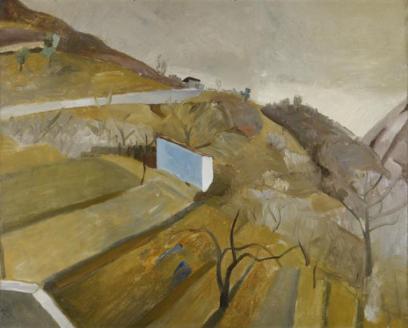
Castagnola (1923) – Ben Nicholson

But Grigson did admire, if very judiciously. Greening draws attention to an Eliotesque belief in tradition, that the best poems are made by “members of a long narrow community through time”. The word “narrow” here indicates Grigson felt that much of what was truly best was not appreciated by many. In one word perhaps, we see here his motivation to be harsh with what he felt not good enough and his hard work in anthologising what was. There are two tribute poems in Greening’s selection which show Grigson at his complimenting best. ‘A Painter of Our Day’ is about Ben Nicholson and has the feel of a Coleridgean conversation poem about it. Its tone is confiding, admiring, ranging from observations about playing with children, shared days out, discussions of Nicholson’s work, ageing and the nature of art. Nicholson seems to teach an appreciation of “what is” and an avoidance of nostalgia. But at the same time, he recognises the value of the “reiterated wisdom of perceiving”. That both poet and artist set the bar of achievement very high indeed is suggested by Grigson’s admission that, of their chosen role models, “most have been / Long dead”. I find it hard to pin down a more precisely articulated aesthetic, but these lines are revealing of any artist’s relation to his/her elders:


Suddenly when young or in our first ability

We find them, slowly we find the reasons

For our love, finding ourselves, and what we lack

As well or need the most


Finally, ‘To Wystan Auden’ records the moment Grigson learned of Auden’s death in the “English September” of 1973. His admiration for the younger poet is fulsome. With the appearance of his early work, Auden became “living’s healer, loving’s / Magician”. From the other end of the temporal telescope, now we can see what the young Grigson gleaned from Auden’s poetry:


You were our fixture, our rhythm,

Speaker, bestower, of love for us all

And forgiving, not condemning, extending

To all who would read or would hear

Your endowment of words.


41xZt262WYL._SL500_SX319_BO1,204,203,200_

For all Auden’s own protesting about poetry making nothing happen, for Grigson, “time, after you, by you / Is different by your defiance”. One might ungratefully gripe that these are rather vague compliments from one poet to another. But Greening quotes Grigson suggesting that Auden’s achievement was in destroying “a too familiar, too settled monotony in manner and subject”. This is undeniable and this selection shows Grigson following Auden’s lead, yet at the same time, through his life, also being drawn back to a different, more traditional poetic style in the model of Hardy. Here, for example, in his last years, he recalls his childhood in Cornwall:


Staring down from that broken, one-arched bridge,

In that vale of water-mint, saint, lead-mine and midge,

I was amazed by that fat black-and-white water bird

Hunting under the current, not at all disturbed.


How could I tell that what I saw then and there

Would live for me still in my eightieth year?


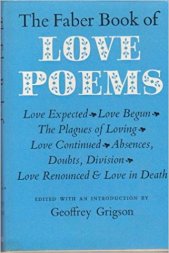
BookrideGrigsonPhoto£££*As a labouring translator myself, I have long remembered Grigson’s brilliant put-down in his Introduction to the Faber Book of Love Poems (1973). Explaining why he has not included any translations at all, he declares that their “unmeasured, thin-rolled short crust” would prove detrimental to the health of the nation’s poetic taste. Times have changed, thank goodness.

Being In and Above: on Friedrich Hölderlin’s ‘Hyperion’

This is my review of Friedrich Hölderlin’s only novel, Hyperion or The Hermit in Greece. The review first appeared in the Temenos Academy Review (No. 20, 2017).  The translation I am discussing is a very recent one by India Russell which was published by Melrose Books in 2016. 


untitled 1

Begun in Tübingen in 1792 in the aftermath of the French Revolution, and published in two volumes in 1797 and 1799, Hölderlin’s only novel is really a philosophical and spiritual biography of its eponymous hero. It does not deliver what a novel reader might expect in terms of characterisation, suspense or specificity of incident (though its retrospective narrative is cleverly designed). It is best read as a doorway to the more metaphysical thought that underpins the later poetry. But Hölderlin’s youthful passion and urgency are evident, for example, in the portrait of his native Germany. Its people and culture are subjected to a withering satirical attack, with the corrupt state of German life acting as the penultimate phase of Hyperion’s long education. He reports, ‘I can think of no people more torn than the Germans. Artisans you see, but no human beings, thinkers, but no human beings, priests, but no human beings […] – is that not like a battlefield, where hands and arms and all limbs lie dismembered amongst one another, whilst the shed life-blood runs away into the sand?’ Such vivid images of division – between warring powers, within bodies of individuals – are central to Hölderlin’s critique of what was wrong with late eighteenth-century Europe.

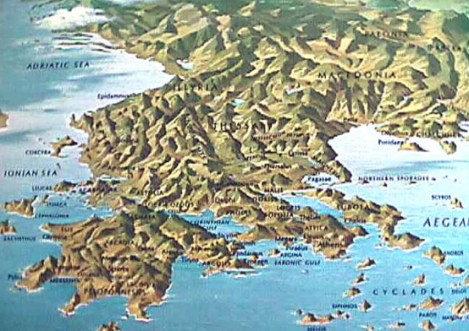
Hyperion is an epistolary novel, the narrator writing from his native Greece to a friend, Bellarmin, who lives in Germany. Hölderlin’s prose is heightened and mellifluous, dramatically ebbing and flowing; and India Russell’s translation catches this far better than Willard Trask’s 1965 version or David Schwartz’s from 1990. The writing is breathless and aspiring; it is Shelley’s prose not Keats’s. The novel’s picaresque narrative records Hyperion’s travels after his birth on the Greek island of Tenos, where he spends his childhood and school years. He moves to Smyrna, returns home, then travels again to Calaurea, an island close to the eastern coast of the Peloponnese. It is here he meets and falls in love with the young woman, Diotima. Called back to action in the world, he fights the Turkish forces occupying Greece and later fights alongside Russian troops. He is defeated and wounded, then travels to Sicily, thence to Germany, befriending Bellarmin. Only on his return to Tenos does the novel’s account of his life open. So the narrative trajectory means that Hyperion reflects on his own life’s journey in the letters. Importantly, though no significant external events intervene, we perceive a difference between the Hyperion of letter one and the man writing the final words of the novel.


friedrich-hoelderlin-1-sized
Holderlin

The retrospective nature of the narrative only partly accounts for what Hölderlin calls in the Preface Hyperion’s ‘elegiac character’. In his opening letters, the protagonist regards reflection/judgement (‘Urteil’) as a curse, cutting him off from an unthinking sense of oneness with the world. As the novel opens, it is especially in relation to the natural world that Hyperion feels this alienation, though the limits of his current understanding are revealed: ‘I know not what happens to me when I lift my eyes before your beauty […] My whole being becomes quiet and harkens’. He later exclaims, ‘To be one with all, that is the life of the Divine, that is the heaven of man’ and yet ‘a moment’s reflection casts me down […] Nature closes her arms and I stand like a stranger before her’. He identifies his schooling as having made the first break between the sense of oneness experienced by a child and this later sense of estrangement. The loss is blamed on ‘Knowledge’ which inculcates the desire to be ‘absolutely reasonable, [to] have thoroughly learnt to distinguish myself from that which surrounds me’; and in such a state of nurtured division he suffers solitude and rejection from the world about him.


Hölderlin’s preface to the Thalia fragment of Hyperion (published by Schiller in 1794) lays these issues out more philosophically. ‘Man would like to be in everything and above everything’ he argues, quoting Loyola: ‘Not to be confined by the largest, but to be contained in the smallest, is divinity’. He observes how this pronouncement ‘designates the all-desiring, all-subjugating dangerous side of man as well as the […] most beautiful condition he can achieve’. On one side, we desire the freedom to be above our lives, to shape them, yet on the other we long to feel at home in our world, to be in it at the cost of our liberty. With one eye on the Revolution in France, it seems to Hölderlin that pursuit of freedom at the expense of a sense of unity with the world leads to a deracinated fanaticism that harms both ourselves and the world. But on the other hand, to experience existence without liberty and self-determination is to be sunk deeply in a form of passivity verging on idiocy. Hölderlin’s originality lies in his view of human life as being endlessly dynamic, the two impulses – to be both in and above our own lives – are to be held in tension, the self drawn in contrary directions with no anticipation of a resolution.

1349998856

In the novel, Hyperion’s early and brief encounters with Adamas on Tenos present one possible easement of his sense of alienation. Excited by the older man’s devotion to the past, he reads the Classics and visits Mount Athos, Olympia, Mount Cynthus and the grave of Homer. Hölderlin’s earlier poems frequently echo just this nostalgic impulse in his idealisation of the Classical past. David Constantine points out that for Hölderlin, ‘the civilisation of Periclean Athens seemed to him the best the human race had ever achieved and he wanted an equivalent of it for his own day and age and even believed the French Revolution might bring it about’. So this is not, for Hölderlin, any simple nostalgia but rather a call to spiritual and philosophical revolution. A poem like ‘The Archipelago’ portrays the devastation of eighteenth-century Greece (under the rule of the ‘Persian’) but also anticipates its renovation:


Lovingly back to the waiting abandoned river

Come the people of Athens and down from the homeland’s mountains

The shining crowds, meeting like waters, replenish

The emptied plain with joy.


(tr. Constantine)


6777857-M

But in the novel, Adamas’ overly literal idealisation of the past is quickly dismissed by Hyperion. Alone, Adamas travels on into Asia in search of peoples of ‘rare excellence’ who, he hopes, are still living out such ancient virtues. Left dissatisfied, Hyperion is bored and restless on Tenos. He leaves for Smyrna and encounters a very different solution to his problems in the form of Alabanda, a man devoted not to the worship of a past age but to the struggle for social change. For a period Alabanda and Hyperion live ‘like two streams which roll down from the mountains and cast off the burden of earth and stone and rotten wood and the whole inert chaos that had impeded them, to forge the way to one another and break through until where, seizing and seized with equal strength, united in one majestic River, they then begin the journey in to the wide Sea’. Such a sentence is a good illustration of Russell’s skill in this translation – the results are flowing, energetic, with just the right degree of distancing from conventional language usage. For the two men, the present state of society is like a ‘barren, rotten tree’, needing to be felled so that a ‘new world’ can grow in its place. But Alabanda is too much a man of action, a fighter, consumed with the wish to exercise freedom to effect social change and (as the simile above suggests) liable to destructive violence and a moral fanaticism. His mode of operation is to ‘burn the weeds […] blast the dull clods from the Earth!’. He himself admits to being ‘rough and offensive and unsociable’. Hyperion finds he cannot commit himself to this course either and we become conscious of his tendency to vacillate between (again) being within and without, between commitment and alienation and aware too of the fact he perceives this as is a problem needing to be resolved.

untitled 2

It is on the visit to Calaurea that Hyperion meets Diotima, a young woman who is unreflectively at home in the natural world. This character was introduced into later drafts of the novel and is a portrait of Susette Gontard, the married woman whose children Hölderlin was appointed to tutor in 1795, the woman he loved. Though Susette seems to have reciprocated Hölderlin’s affections, the relationship was doomed. He dedicated the second volume of Hyperion to her. The name Diotima appears frequently in Hölderlin’s later poetry and is the name of the seer or priestess who first taught Socrates to regard love as the means of ascent to a contemplation of the Divine. In Hyperion she lives contentedly in the world as opposed to Alabanda’s position above the world, and his wish to change it. Her heart is most at home among flowers, ‘as though it were one of them’, and Hyperion enviously observes her unreflective unity with the natural world: ‘Diotima’s eyes opened wide and quietly, as a bud opens, her dear little face opened before the airs of Heaven, became pure speech and soul and, as though she began a flight into the clouds, her whole form stood stretched gently upwards in easy majesty, her feet hardly touching the Earth’.

Diotima is initially unconscious of the beauty Hyperion sees in her but she becomes more self-aware in the letters documenting their relationship. She also comes to understand the real nature of Hyperion himself, recognising that (as Hölderlin’s philosophical thinking suggests) he cannot remain content with what she has to offer. Though Hyperion may indeed wish for such oblivious contentment, it is ironically Diotima who suggests he must do otherwise: ‘Will you lock yourself in the heaven of your love, and leave the world that needs you? […] You must, like the ray of light, descend like the all-refreshing rain, you must go down into the land of the mortals, you must enlighten like Apollo’. Light, healing and poetry are, of course, among Apollo’s many attributes and it will be as an artist that Hyperion must give (as Diotima puts it) ‘what you have within you’. In ‘As on a holiday…’, one of his later hymns, Hölderlin advises his fellow poets:


us it behoves to stand

Bareheaded beneath God’s thunder-storms,

To grasp the Father’s ray, no less, with our two hands

And, wrapping in song the heavenly gift,

To offer it to the people.


(tr. Hamburger)


michaelhamburger
Michael Hamburger

It takes a long time for Hyperion to accept Diotima’s proposal that his true role must be that of an artist. Only after the process of recording his life for Bellarmin does Hyperion achieve what Hölderlin’s Preface refers to as the ‘resolution of dissonances’ in his character. At one point he notes, ‘I am an artist, but I am not skilled’. He returns to Alabanda for a period, fighting and being wounded in a war with the ‘Persians’, then suffers the loss of Diotima. Her last words to him suggest that he has been ‘put to the test and it is bound to become clear who you are’. Hyperion’s test will include the writing of his self-examining epistles. In effect, Hyperion ends by pursuing an art, like Hölderlin’s mature poetry, that essays some interim representations of the Heraclitean ‘One differentiated in itself’. Russell’s essay, accompanying her translation, interprets this as the lightning strike of a ‘Divine force’, an insight that (loosely) links Hölderlin, Shelley and Empedocles. She tends to replace philosophical incisiveness with a blustering, autobiographical style, but what her exposition lacks in rigour it makes up for in enthusiasm.


heart-veins-arteries-helps-blood-flow-40454786

In a letter of 1801, Hölderlin declares there ‘is only one quarrel in the world: which is more important, the whole or the individual part’. Hyperion finally accepts that the irresolvable tension, the pulse or heartbeat vital to the fully-lived human life is that between unity and freedom, Being and reflection, living in life and above it. With new-found optimism, he compares these ‘dissonances of the world’ to lovers’ quarrels, where ‘Reconciliation is in the midst of strife and all that is parted finds itself again’. He offers a further encouraging metaphor: ‘The arteries divide and return to the heart and one, eternal glowing life is All’. What remains to us is an unending quest or process not liable to completion or final stasis. The impossibility of completion is famously expressed in the novel’s final, almost throw-away phrase (‘Nächstens mehr’). In Russell’s fine translation this is rendered as ‘More shortly’ and the ‘more’ that followed was, of course, the poetry for which Hölderlin is now most famous.


Twenty Pointers to Translating Poetry

Writing_Real-

Recently I took part in a panel discussion about the art of translating poetry. It was chaired by Connie Bloomfield from UCL and held at the Enitharmon Gallery in Bloomsbury. I was joined by David Harsent (translating Yannis Ritsos), Emma Wagstaff and Nina Parish (co-editors of Writing the Real: A Bilingual Anthology of Contemporary French Poetry) and Jane Duran (translating Lorca). Part of the evening was spent comparing our differing approaches to translating a poem in Catalan by Josep Lluis Aguilo. Inevitably, we differed on our approaches both to the specific and general issues raised by poetry translation. But it has prompted me to gather up these 20 thoughts on the issues in this blog post.

While preparing it, I also happened across further observations on the issue as quoted in the recently published Peepal Tree Press translation of Pedro Mir’s Countersong to Walt Whitman. The late Donald Walsh is quoted as saying “The translator’s first task is to discover exactly what the author has said . . . He must try to re-create in his language the miraculous fusion of thought and expression that produced the original work . . . the translator’s role is humble and secondary . . . he must do his best to circumvent obstacles . . . his duty is to express not himself but his author”.

As what follows will suggest, I find myself largely in agreement with such views – though the compromising, tentative, humble processes that Walsh describes here and the inevitably pyrrhic kind of victories one can expect from them are unlikely to make for dramatic headlines in literary journals or publishers’ blurbs – but I believe this is what the best translators do.

9781845233563_0

Twenty Pointers to Translating Poetry

  1. Ask the big question: can we translate a poem? Because there are so many uncertainties, so many sacrifices, the absolute and perhaps only truly safe reply is to say: ‘No – too much will be lost’. But see #13 below – and now go to #2 (who wants to be safe anyway?)


  1. Ignore such crushing absolutism as expressed in #1. Roll up your sleeves and, like Shakespeare’s Ferdinand believe “some sports are painful, and their labour / Delight in them sets off”. Whatever the apparent obstacles, just do it: start shifting those logs of poetry translation if only because you want the challenge, if only because it’s a fascinating process – but mainly because it’s important (see #20)


  1. Know that to translate is to incur guilt. The moralistic tone in discussions of translation proves the importance of the task and suggests the passionate intimacies involved in this weird relationship between source author, translator and reader

images91M7X9MY

  1. Define translation broadly (1): responding to the emoji on my phone is an act of translation. Plus, it is not merely to transpose to another language, but from one language period to another, one language level to another (formal to vernacular), to paraphrase with clarity, to lay out logical and grammatical links more clearly, to interpret signs, symbols, gestures, facial expressions


  1. Define translation broadly (2): any good poem is a form of translation. Transtromer saw poems as manifestations of invisible poems written beyond languages themselves. Rita Dove says translators often understand best that any poem is merely a silhouette of our attempt to capture elusive original communications – like stepping stones across a river, the better to hear the silence

floral_silhouette_vector_pack_572116

  1. Think of turning the original source into something in the target language with the same information and with the same force as the original


  1. Use these simple methods (naturally used by native speakers to achieve greater clarity in communication – thanks, David Bellos) to begin to convey information and force:
    1. Synonymy – word for word replacement (literal translation)
    2. Expansion – replacement of problematic words with longer versions in the target
    3. Contraction – replacement with nothing, elision, skipping, abbreviations – turning a blind eye
    4. Topic Shifting – rearranging the sequence of the expressions for more clarity
    5. Change of Emphasis – other methods of making parts of the original expression stand out from the rest, in order to assist communication
    6. Clarification – adding expressions (not in the original) – making what was implicit in the original more explicit

 9780865478763

  1. Accept it – poetry is poetry so its translation is mostly a question of force – the shades and emotional colours, the rhetorical temperature, the ramifications of meaning of a word/phrase/form


  1. Discuss this: force is what Robert Frost called the sound of sense – poetry’s confessedly ineffable tones, gestures, interrelations, patterns – and to convey it we need to match such constituents (though not necessarily preserve them like lifeless bones)

download

  1. Measure the force in a source poem via a process of triangulation – determine your direction of travel via multiple reference points connected to the source text – not only the text but also good old-fashioned literary interpretation, wider cultural perspectives, the source author’s wider oeuvre, anything you can lay your hands on


  1. Empathise and keep ego quiet – imagination is the major part of this triangulation process: so work hard to imagine what motivated the poem, re-live the act which gave rise to it and is enmeshed in it (thanks, Yves Bonnefoy). In translation we hope to release it from its source form into a new form that resembles/matches its original intention, intuition, yearning


  1. Measure the success of your empathetic act not by a term-for-term resemblance to the original poem (thanks again, Yves) but by the ontological necessity of your new words/forms/images


  1. Contradict my #1 – so it turns out, translation is possible if, with Bonnefoy, we regard the process of translation as poetry re-begun                                                                       . .
    images.
  2. Be inspired by Charles Tomlinson’s formulation of the task: we look to preserve not the metre, but the movement of each poem – its flight, or track through the mind


  1. Close the source text, says Michael Hofmann, rightly, once your translation is beginning to gain some height in its flight. Close it!

InternationalFlight_B2C_22-min

  1. Don’t confuse translation with versioning – the permission we give ourselves is different. To translate puts us in a position of responsibility to both the source text and a working English poem, equally. Versioning puts us in a position of responsibility only to a final working English poem


  1. Ask yourself how might I like my own poems to be treated – translation or version? Will you feel well served or misrepresented? Pleased or aggrieved? I’m not pre-judging your choices, but they will affect your view of your own translating processes


  1. Discuss this: Peter Robinson argues versions result in failures of tone or meaning, that they impoverish and almost invariably lower the tone, reducing the complexity of the original. But surely, such radical revisions might equally result in a better poem than the original? Still – neither will be a translation

 images0VYVDXZC

  1. Label versions and translations appropriately – we have a responsibility to the paying public who, in my experience, are always very clear about what they want to read


  1. Keep translating – because the desire to translate and read in translation is optimistic, humanistic and hopeful. Contra Babel, it provides evidence of a powerful urge towards community and communication. It shows there is more that unites us than divides us

untitled

Fewer Jellyfish: Jack Underwood on Poetry and Uncertainty

The French Alps, a Scottish island, a breezy, autumnal lake in the USA . . . These all came back to mind* as I read Jack Underwood’s just-published essay ‘On Poetry and Uncertain Subjects’ (Poetry Review, Winter 2017). To be clear, I am sympathetic to the general drift of his argument, his interest in language and epistemology and his enthusiasm for poetry as contributing a necessary part of our understanding of the world. But Underwood is too disparaging about language (it’s most of what we’ve got) and this leads to his own imprecision with it (because words don’t yield the whole truth doesn’t mean we should use them carelessly). I wish he’d given better examples of what he is urging poets to pursue (so I’ve included one below) and I’m horrified that he recommends vague, woolly raptures (fog and smudge) to poets rather than genuine provisionality and uncertainty reflected in language that is sceptically self-aware.


1074-Poetry-Review_Cover-RGB-300-w-shadow-429x600[1]

Starting from a remembered childhood scene, Underwood argues, as his title suggests, that poetry is an area of discourse which both highlights and thrives on epistemological uncertainty. Such uncertainties arise firstly from “the innate inaccuracy of language as a system that cannot catch or hold onto anything securely”. In a postmodern world, this hardly makes headlines, but the hyperbolic expression is too much, given that language gets me through most of my days reasonably well; it has to be grasping something. A second uncertainty arises from the poet’s raw material – particularly the “gunk of unconscious activity” – all of which is subjective and unstable because any meaning/knowledge is actually a concept only associated with human perception and not something corresponding to a universe existent apart from human perception. Hence, in the end, Underwood argues, “all of meaning and knowledge is apprehended, expressed and configured unstably [. . .] a shoal of jellyfish”.

jellyfish[1]

Except that mostly it is not. Surprisingly for a poet, Underwood doesn’t take the potency of language seriously enough, in particular the way the words we use have the habit of becoming idolatrous (in the sense used by Owen Barfield); they can determine how we see, think and feel. Here’s a pretty, remembered scene of my own: in the French Alps above the Trois Vallees, the woven steel cables of chair lifts hang quite still during the night and the cold air seals them in icy sheaths. Come morning, when the engines whir into action at either end of the lifts, the cables suddenly tense and jump, brought to life, and in doing so they shuck off their icy jackets. The frozen moisture cracks, fragments and detaches from the cables. Down it falls into the snow to print a strange hieroglyphic language in a neat line up the mountainside, looking something like this:

/

=

\

|

/

>

..

_-

^:

__

\

..-

|

\-

– `

I bet the locals have a word for this modern phenomenon. But from above, it looks like a language in which nothing is cursive (and life tends to the cursive, is always diverging from the linear). This icy steel cable language is – I’d suggest and Underwood would agree – like much of our everyday language use, mostly false. Yet it does possess a certain utilitarian precision, enough to perform its functions within broad criteria. But if our wish is to be more precise, to say something difficult to grasp, a more unusual observation, something more emotionally cursive, then we have to choose our words more carefully, put them together in a different sort of way: we have to unsettle them, bend them, occasionally find new ones, revive old ones in new contexts.

alpine-skiing-877410_640[1]

Surprisingly, Underwood’s response to this difficulty is to recommend poets use language which is “foggier” than we might ordinarily use, or language that has been calculatedly blurred or aspires to a kind of “smudging”. This simply doesn’t square with most people’s feelings about poetry which is that it tends to clarify experience rather than ‘smudge’ it. The truth is that we need to respond to language’s limits by working harder with language not neglecting it. Underwood would do well to read Robert Macfarlane’s book, Landmarks (Hamish Hamilton, 2015), which passionately argues against the loss of regional, place-specific language, a loss which means we are progressively perceiving natural landscapes in fewer dimensions, slipping into an ever more abstract, narrow, linear understanding of experience. Macfarlane argues that “Language deficit leads to attention deficit” and perhaps Underwood would agree but Macfarlane grasps that we do not liberate ourselves from the tyranny of language by using it vaguely, but ever more precisely. In Landmarks, he is concerned that the Oxford Junior Dictionary of 2007 deletes heron, ivy, kingfisher, pasture and willow among many other words considered irrelevant in reflecting the “consensus experience of modern-day childhood”. The word blackberry has been replaced by Blackberry.

cover

And this is no narrow Cambridge academic’s concern. Macfarlane also tells the story of the proposed building of a vast wind farm on Brindled Moor on the Isle of Lewis in 2004: 234 wind turbines, each 140 metres high, 5 million cubic metres of rock and 2.5 million cubic metres of peat excavated and displaced. The debate centred around “the perceived nature and worth of the moor”. Proponents discussed it as a “wasteland”, a “wilderness”, a “vast, dead place”. Opponents – including 80% of the island’s inhabitants – argued for the fecund particularity of the moor. Tellingly, part of the defence was lexical in the shape of a Gaelic ‘Peat Glossary’ – hundreds of words describing the subtle features and moods of what is clearly no “dead place” at all. Macfarlane links this “Counter-Desecration Handbook” to poets like Hugh MacDiarmid and Norman MacCaig but it also reminds me of Blake’s insight: “The tree which moves some to tears of joy is in the eyes of others only a green thing that stands in the way”.

Underwood and I would agree that the man who sees only a “green thing” is suffering a lack of poetry – a limitation or failure of perception which is also a failure of linguistic precision. I think of it as an example of that icy steel cable language in the French Alps which falls (or more dangerously is handed down – this is where politics enters the debate) from on high, from some remote, cold place, handed down into our lives and so it begins to determine how we see the world. I share Underwood’s sense of urgency and importance that it is for those who concern ourselves with language and try to scrutinize our relations to the other, to others, to ourselves, to re-double our efforts to make further brief, individual Counter-Desecration Handbooks, to tell what we see as the truths of our lives as accurately as possible. Whatever form they may take, let’s call the resulting texts ‘poems’ and take inspiration finally from a marvellous one by the American poet, David Ferry.


Jack-Underwood-square-460x460
Jack Underwood

Here, Ferry’s poem can also act as an illustration of several of Underwood’s comments about poetry. He suggests poems convey meanings beyond the “sharper constraints” of everyday language. By “sharper” he surely means narrower and more meanly delimited and Ferry’s poem illustrates that a quite different sharpness (a vividness from the cleansing of the doors of perception) is something poetry does well and yields pleasure for the reader. The poem doesn’t contradict Underwood’s suggestion that we know when we are reading poetry because of its formal qualities, its frequent use of metaphor, its preference for connotation as opposed to denotation. Our acquaintance with the poem certainly sets us “wondering” (Underwood’s rather foggy word) about what we are reading and it suggests and explicitly discusses “a resistance to finality in language”. I don’t think Underwood’s own examples help illustrate his point; I think Ferry’s poem does, confirming how poetry can be the “prime medium for the articulation of our knowledge of the unknown” (Underwood).

untitled

Ferry’s original poetry has long flourished in the shadow of his translation work but his collection, Bewilderment: New Poems and Translations (University of Chicago Press, 2012) won the National Book Award. In the UK, his selected poems are published as On This Side of the River (Waywiser Press, 2012). In fluidly, cursively, yet precise language, ‘Lake Water’ brilliantly conveys Ferry’s attentiveness to the world’s presence without losing a sense of the provisional nature of both self and other, the root inscrutabilities of experience (one of Underwood’s main points). There is a pressure exerted in favour of clarity and truth to both inner and outer worlds.

Ferry kicks off with specificity: “a summer afternoon in October”, the narrator gazing at a lake. The opening 20 lines, even as they evoke the light, the shimmer of water, the trees, engage in continual re-interpretations via similes (“As if it were a shimmering of heat”; “as if the air / Had entirely given itself over to summer”) and revisions (“Or rather”; “Or from”) until, in the final lines of this opening passage, paradox seems the only way to encapsulate the experience: “The light / Is moving and not moving upon the water”.

The second section of ‘Lake Water’ reaffirms this process, the perception of the lake “compelling with sweet oblivious / Authority alterations in light and shadow”. Earlier the water had evoked “something infantile [. . .] a baby at the breast” but now – in a progress from innocence to experience – the slapping of the water is “decidedly sexual”. The lake water, at one with the whole process of perceiving it, has become “an origination of life”. The lake surface is “like a page” or “like an idea for a poem not yet written”, or equivocally the “surface of the page is like lake water” before a mark has been made on it. What seeks to be written down is elusive partly as the result of the ambivalent gifts of time: “all my language about the lake [. . . ] erased with the changing of the breeze”.

1

Ferry saves a poignant twist for the final 6 lines which record a death-bed scene; he watches his wife – distinguished literary scholar, Anne Ferry – who died in 2006. After the moment of her passing, her face is “as untelling” as the lake, “unreadable”, though Ferry clings to and at once denies a last hope: “Her mouth was open as if she had something to say; / But maybe my saying so is a figure of speech”. For all their elegance and plain-speaking, Ferry’s best poems are marvellously unstable, bravely eschewing the linear, poignantly facing up to the limits of the faulty equipment we are given to grasp the world. Elsewhere, Ferry gently devastates with the idea that “death lives in the intention of things / To have a meaning”. Other poets might advocate fogs and smudge, or be reduced to silence, or rip language to shreds, or resort to an icy words, the dead counters of the pre-conceived at this, but Ferry’s provisional songs instruct, console and are to be much admired.

Listen to David Ferry reading ‘Lake Water’ here.

Lake Water

It is a summer afternoon in October.

I am sitting on a wooden bench, looking out

At the lake through a tall screen of evergreens,

Or rather, looking out across the plane of the lake,

Seeing the light shaking upon the water

As if it were a shimmering of heat.

Yesterday, when I sat here, it was the same,

The same displaced out-of-season effect.

Seen twice it seemed a truth was being told.

Some of the trees I can see across the lake

Have begun to change, but it is as if the air

Had entirely given itself over to summer,

With the intention of denying its own proper nature.

There is a breeze perfectly steady and persistent

Blowing in toward shore from the other side

Or from the world beyond the other side.

The mild sound of the little tapping waves

The breeze has caused—there’s something infantile

About it, a baby at the breast. The light

Is moving and not moving upon the water.


The breeze picks up slightly but still steadily,

The increase in the breeze becomes the mild

Dominant event, compelling with sweet oblivious

Authority alterations in light and shadow,

Alterations in the light of the sun on the water,

Which becomes at once denser and more quietly

Excited, like a concentration of emotions

That had been dispersed and scattered and now were not.

Then there’s the mitigation of the shadow of a cloud,

And the light subsides a little, into itself.

Although this is a lake it is as if

A tide were running mildly into shore.

The sound of the water so softly battering

Against the shore is decidedly sexual,

In its liquidity, its regularity,

Its persistence, its infantile obliviousness.

It is as if it had come back to being

A beginning, an origination of life.


The plane of the water is like a page on which

Phrases and even sentences are written,

But because of the breeze, and the turning of the year,

And the sense that this lake water, as it is being

Experienced on a particular day, comes from

Some source somewhere, beneath, within, itself,

Or from somewhere else, nearby, a spring, a brook,

Its pure origination somewhere else,

It is like an idea for a poem not yet written

And maybe never to be completed, because

The surface of the page is like lake water,

That takes back what is written on its surface,

And all my language about the lake and its

Emotions or its sweet obliviousness,

Or even its being like an origination,

Is all erased with the changing of the breeze

Or because of the heedless passing of a cloud.

When, moments after she died, I looked into

Her face, it was as untelling as something natural,

A lake, say, the surface of it unreadable,

Its sources of meaning unfindable anymore.

Her mouth was open as if she had something to say;

But maybe my saying so is a figure of speech.


*Several of the ideas and illustrations that I’ve used here first appeared in my Guest Blog Post for Anthony Wilson’s blog in January 2016.