More than 10 years of blogging on poetry and translation – over 39,000 views in 2024 – now captured and preserved at the UK Web Archive: 'one of the top 10 poetry blogs' (Rogue Strands)
Terry Gifford’s Cambridge Companion to Ted Hughes is a fantastic summing up of where Hughes’ reputation now is, including articles by various hands on Hughes and animals, Plath, myth, feminism (it’s complicated) and a clear account of the poet’s fascination with Shakespeare by Jonathan Bate.
Julian of Norwich: Revelations of Divine Love – a book I’ve intended to read for decades and though I baulk at much of it still I love her focus on the visions taking place in “an ordinary, household light”, her vivid descriptions and tentative, undogmatic prose. She also boldly talks of Christ as our mother: “Who showed you this? Love. What did he show? Love. Why did he show it to you? For love.”
Few poets can travel such distances with such ease and brevity as Penelope Shuttle. I saw her read at the recent Second Light Festival in London and picked up her Templar Poetry chapbook, In the Snowy Air. It belies it’s rather Xmas-y title by being rather a hymn to London (with occasional snow showers) including the Shard, the Walbrook, the British Library and even Waitrose in Balham.
Hands and Wings: Poems for Freedom for Torture has been edited by Dorothy Yamamoto in support of the Freedom from Torture charity and includes work by Gillian Allnutt, Alison Brackenbury, David Constantine, Carrie Etter, Vicki Feaver, Pippa Little and Susan Wicks.
Up-dated November 2015
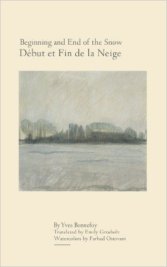
With the cold weather coming, Yves Bonnefoy’s 1991 Beginning and End of Snow(Bucknell University Press, 2012) is an exquisite read in Emily Grosholz’s translation, including an original essay by the poet on ‘Snow in French and English’.
I’m convinced Bonnefoy’s response to snow is not a million miles distant from the Daoist idea of the uncarved block and Rudolph G Wagner’s second magnificent volume on Wang Bi’s A Chinese Reading of the Daodejing is full of insights through its literal readings of the 81 chapters. I have been comparing his readings with my own new versions before going to press in the next few weeks.
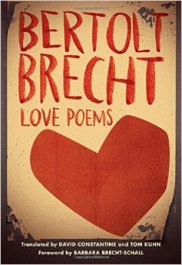
Bertolt Brecht: Love Poems (Norton, 2015) is the first instalment in David Constantine and Tom Kuhn’s project to translate anew Brecht’s complete poems. Ranging from the delicate, literary, erotic and plainly pornographic, here’s yet more evidence (should we need it) of Brecht’s breadth as a poet. The Introduction also reveals that Brecht refused to award any prizes in a poetry competition he was asked to judge – because none of the poems successfully communicated anything of any value to anybody, they were all of no use.
Maggie Butt’s new collection is published by The London Magazine and contains work from the period in which she also published the themed books Ally Pally Prison Camp(Oversteps, 2011) and Sancti-Clandestini – Undercover Saints (Ward-Wood, 2012). Though miscellaneous in nature, it is time that dominates this book – historical time in a variety of European locations and personal time in several moving elegies and acts of remembrance.
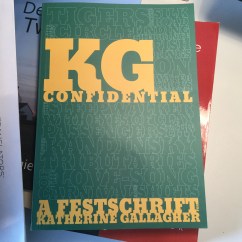
KG Confidential: a festschrift for Katherine Gallagher is a wonderful tribute to one of the great movers and shakers in poetry (in London and in her native Australia and in translation from the French). These tributes of poems or prose include contributions from Liz Berry, Jane Duran, Kate Foley, Mimi Khalvati and Les Murray.
Up-dated October 2015
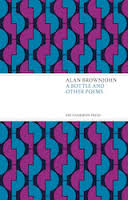
Alan Brownjohn’s new book is full of excellent poems, several of which (a few decades ago) would have been designated ‘secret narratives’. The title poem, ‘A Bottle’, is a strange noir thriller set in some undefined coastal region, an enigma of messages, relationships, landscape and murder. Always surprising; no let up in vigour and inventiveness.
Kate Foley’s ‘The Don’t Touch Garden’ (Arachne Press) is a treatment of adoption to rival Jackie Kay’s ‘The Adoption Papers’. “Mirror, mirror, on the wall” the old joke says, “I am my mother after all”. But which one? Brilliantly focused and carefully sequenced, these poems provide a thrilling and moving account of the processes by which any of us – adopted or not – become who we are.
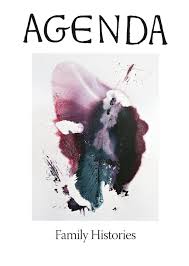
Agenda’s ‘Family Histories’ issue has poems from Tony Curtis, Claire Crowther, Sean Street, Peter McDonald, Sheenagh Pugh, Maitreyabandhu and Danielle Hope, an interview with Robin Robertson and reviews of Abse, Hugo Williams, Sebastian Barker, Bryce, Liardet, McVety and Eilean Ni Chuilleanain.
The new issue of Stand has tributes to the late John Silkin from John Matthias and Anne Stevenson. I remember seeing Silkin selling Stand in the late 1970s on the campus at Lancaster University. This issue also has new poems from Muldoon, Mort, Valerie Jack, Sam Gardiner and (even) Martyn Crucefix.
Don Paterson’s 101 Sonnets is certainly a varied selection of the form (it strikes me it would be a good, coherent text for students to study). The editor is never short of an opinion, ranging from the good sense of “Academics, in particular, have talked an awful lot of rubbish on the subject of rhyme” to the much more questionable “the whole point of [a] poem – that it should lodge itself permanently in our brains”
That the novelist Ursula K Le Guin should be a fan and translator of Lao Tzu’s 81 ancient poems/chapters known as the Tao Te Ching is perhaps less surprising than the fact that her translation is one of the most enjoyable around (and I’ve been reading plenty of them in preparation for my version’s appearance next Spring).
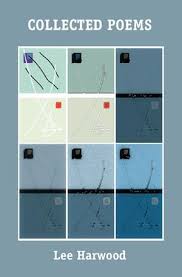
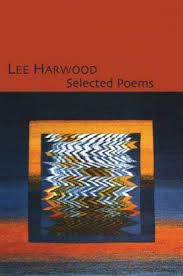
Two chunky collecteds have been pre-occupying me in the last month or so. Lee Harwood’s Collected Poems is – by the nature of his aesthetic perhaps – uneven, but almost every page turns up new ways of writing and reading poetry: an invigorating pleasure.
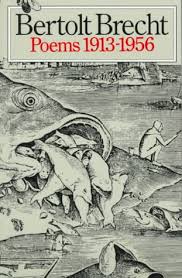
I have blogged on Bertolt Brecht’s Poems 1913-1956 before – in more recent weeks I have been tracking him out of Germany, to Denmark and hence to the USA. Extraordinary how contemporary most of these poems feel, though already 60 plus years old.
Updated August 2015
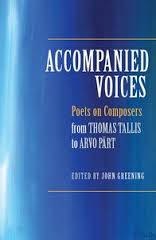
John Greening’s anthology of poems about music, Accompanied Voices (Boydell & Brewer), is a lovely thing, full of variety, full of poems to be re-acquainted with from Hill, Hughes, Longley and Porter and brand new contemporary work including Stainer, Allnutt, O’Donoghue, Reid, Rumens, Shuttle and Greening’s own little gem on John Field (being walked all over by Chopin).
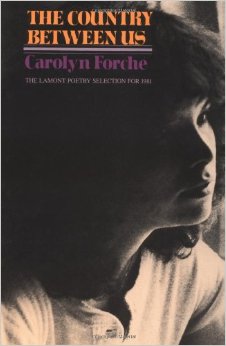
I tweeted a couple of weeks ago that I found Carolyn Forche’s second collection, The Country Between Us (HarperPerennial, 1982) in a Highgate secondhand bookshop and having raced through the poems before going away I’m now keen to get back to them for a more reflective read.
Tim Liardet’s poem-sequence of self-portraits, The World before Snow (Carcanet) is actually motivated and (to some degree evokes) an illicit trans-Atlantic affair. The poems have the density and intensity of Liardet’s previous work with an even greater fertility and fluency of imagination.
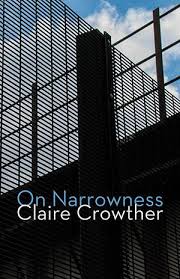
On Narrowness, Claire Crowther’s third collection from Shearsman is a chewy, twisting, sometimes vertiginous read; that’s another way of saying I don’t know what’s going on half the time. But the poems are confident in themselves and leap boldly from one image to another.
Up-dated July 2015
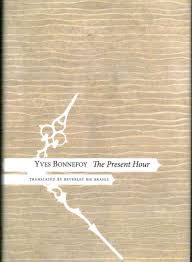
I find Yves Bonnefoy’s writing unfailingly nutritious though sometimes wonder if his ideas are at least as exciting as the classically restrained lexis of his verse. Beverley Bie Brahic’s 2013 translation of The Present Hour (2011) has Bonnefoy in sonnet-shaped Wordsworthian mood recalling his childhood, writing enigmatic prose pieces and a thought-provoking (because not always easy to follow) essay, ‘In a Piece of Broken Mirror’, once again discussing image, dream, reality and language.
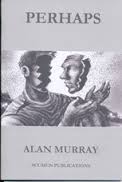
Perhaps is Alan Murray’s Acumen chapbook from 2013 and it quotes Nietzsche’s observation that the word ‘I’ is the point at which our ignorance begins and several poems do press at the boundaries and mysteries of the self. Murray is a philosopher as well as poet and his colloquial, skilfully turned verse sounds Larkinesque in its precision and equivocations. Great to read poems unafraid of complex ideas.
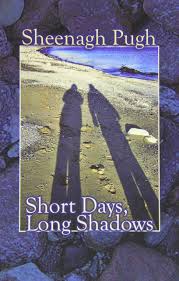
Sheenagh Pugh’s 12th book leaves Cardiff and Wales for the Shetland Islands. Wide skies, rough oceans, bright stars. But I share her obsession with the passage of time and there are some powerful poems here, though I find her historical delvings less enjoyable.
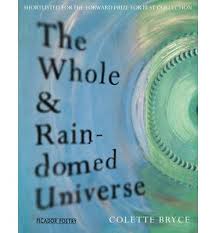
Collette Bryce’s ultra-brief outing (from 2014) into her childhood growing up in Derry during the Troubles is an object lesson in how to focus a collection (just 30 poems). She writes plain, rather withdrawn poems, but this seems right for the material which is therefore allowed to speak for itself.
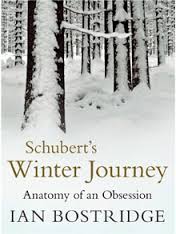
I’ve taken a while getting through the almost 500 pages of Ian Bostridge’s fascinating musical, artistic, poetical, historical, political discussion of Schubert’s Winter Journey.Taking Wilhelm Muller’s poem sequence Die Winterreise, Schubert re-organised it (otherwise changing little) to produce his own Winterreise and, discussing this process and his own performances of the piece over many years, Bostridge touches on Kant, Goethe, Darwin, Friedrich, Alfred Hitchcock, and Aristotle’sMeteorology among others. The Muller text would make an interesting translation project.
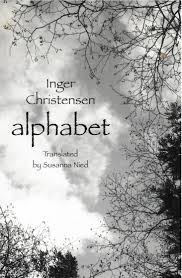
An earlier post about the abecedary form lead several people to ask me whether I’d read Inger Christensen’s 1981 sequence alphabet. Well I have now and it is just stunning. Based on the Fibonacci sequence and moving from A to N in alphabetical sequence too, Christensen writes fluid, Whitmanesque passages, laying aside ‘either/or’ for ‘and’, page after page of which reminds me of Rilke at his most passionate. This is a brilliant translation too by Susanna Nied. Christensen is a writer I need to explore more.
A few weeks ago I blogged on Lee Harwood’s work which I was also discovering for the first time. Since then I have read Selected Poems published by Shearsman; and I have the Collected Poems waiting for the summer holidays too.
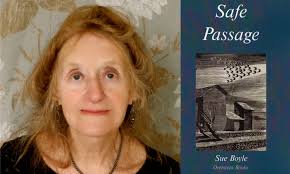
Sue Boyle is a poet I have followed since working with her as a tutor for the Poetry School. She has now published, Safe Passage, a first collection with Oversteps Books and I recommend it (though I confess to also being one of the blurbists on the back cover, where I quote one of her most interesting lines: “in seizing the unexpected lies the art”).
Updated May 2015
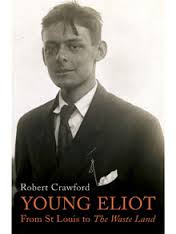
I’m still working through Robert Crawford’s magnificent biography of young Eliot up to The Waste Land. An almost day by day account of his youth, school and college days, Paris, Laforgue, Pound and Vivien Haigh-Wood. Particularly good on Eliot’s philosophical reading and development which I’m loving.
Mimi Khalvati’s The Weather Wheel consists wholly of 16-line poems – stretched sonnets or irregular ghazals – which seem able to encompass almost any mood, topic or subject matter. Particularly impressive is her desire to draw from the most ordinary of events lines which often soar to the complexly emotional and the (frankly) spiritual.
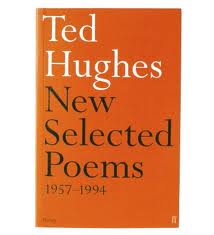
I’m also back re-reading Hughes because it looks like we’ll be teaching this from September onwards – surprisingly not something I have done (except one or two isolated poems). I first read many of these poems at Lancaster University in the late 1970s and nowadays many of these early poems read like objects of nature themselves: fixed as in granite, awe-inspiring, part of the mental landscape I have lived in for years.
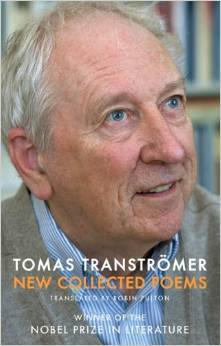
As my most recent blog recounts, I have been also re-reading Transtromer’s work.
Up-dated April 2015
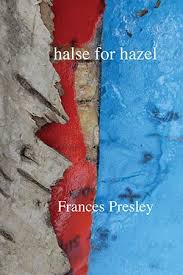
I’ve been reading two impressive contributions to the growing field of eco-poetics. Frances Presley’s halse for hazel is a visually pleasing book from Shearsman (illustrations by Irma Irsara) and the poems encompass geographical, linguistic, political and environmental issues without strain.
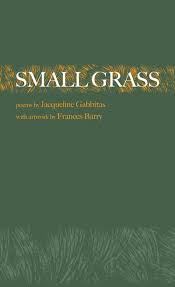
Jacqueline Gabbitas’ Small Grass gives grass a voice and runs with the idea with charm, cleverness and power: “From where I lie, I see man walking, / his legs sheathed in green, // I strop my edges. Soon, they’ll cut through / fabric, the tissue beneath”.
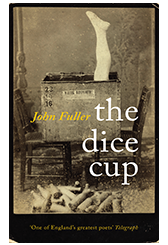
I’ve not always been an enthusiastic reader of John Fuller’s work but the recent The Dice Cup is a book of prose poem sequences full of his characteristic erudition, wit and observation.
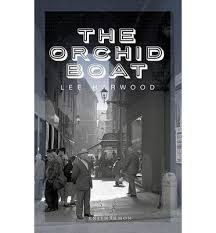
Lee Harwood is a poet who I’ve known of for years without really having read him much. I’d had him down as an English Ashbery/O’Hara and maybe I thought I ought to just go straight to the source. But Enitharmon’s The Orchid Boat is wonderful; full of fluid, sensuous, intelligent poems that twist and turn and take the reader by surprise. Not as flip as O’Hara, not as self-regarding as Ashbery.
I confess to having a contribution in it but, apart from that, Tony Fraser’s new issue of Shearsman (103/4) is full of delightful things from the likes of Zoe Skoulding , James Byrne, Rupert Loydell and Kate Miller, plus translations of Virgil, Ponge and Jansma.
Writing is always a rough translation from wordlessness into words – Charles Simic
I arrived at about 8pm on the Friday evening. Leuchars station is not close to St Andrews itself and (it made me feel at home) there were roadworks disrupting the usual route so instead of 5 miles it was a 10 mile trip. Actually, it was dark and I had no idea where I was so I’m just quoting the chatty taxi driver here – who also lamented the decline in business in recent years. Lack of local money generally he said and the changing habits of students who go out less, pre-drink more and choose to stumble home rather than call his cab. We waited a few minutes for Pascale Petit’s train to arrive. She’d been travelling for 12 hours (from Cornwall) which made my 5 hour train ride feel like nothing much. Unpacking, I reflected north is a very long way north.
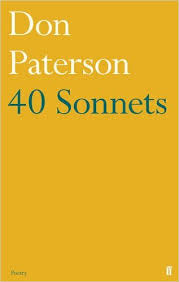
I was staying at the Greyfriars Hotel but walked up to the Byre Theatre on Abbey Street, the main Festival venue. The headline reading for the evening was Lemn Sissay (who I’d just missed) followed by Don Paterson. I arrived at the interval and the talk at the bar was of a local heckler interrupting Sissay. I never got to hear how he dealt with it but it seemed to say something about the tone of this festival that there was as much talk about inclusion as there was annoyance at the interruption. The auditorium was sold out (typical of this StAnza while I was there – you needed to book your event fast). I had no ticket but Jim Carruth took me to the studio theatre to a live relay of what remained of the event. Paterson read mostly from 40 Sonnets including ‘Here’, ‘Wave’, ‘A Powercut’, ‘Little Aster’ and the curiously moving death-of-a-dog poem ‘Mercies’. He also read aphorisms from an iPad and I remember ‘Poetry is not a vocation but a diagnosis’. And (one for his students, he said) ‘If a poem is read slowly enough we begin to hear things – which – are – not – there’.
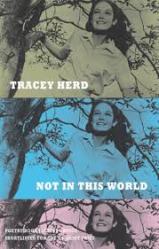
I was woken by seagulls in the grey dawn and through a gap in the Greyfriars curtains I could make out a CCTV camera on its right-angled gantry across the road, white and intent and about the size of a large gull. Perhaps I was dreaming. I was reading next morning with Tracey Herd in St John’s Undercroft, a long brick-arched room, with a great acoustic and atmospherically lit. Andrew Jackson generously introduced us and I read most of my A Hatfield Mass sequence which I think of as celebratory poetry about nature, perception, growing up/older, the body. Tracey’s book Not In This World was a PBS Choice and shortlisted for the TS Eliot Prize this year and is her first collection for 14 years. She did not read those poems about film stars or racehorses for which she’s justly renowned but powerful, recent poems of loss: “Somewhere, someone much loved is leaving”.
I was also reading in the afternoon at a ‘Past and Present’ event – where poets talk on writers from the past. This was the first occasion (in the Council Chamber of St Andrews’ Town Hall – where marriages are performed we were told) at which I could read some of my new, just-off-the-press versions of the Daodejing. Pascale Petit was also appearing and she talked about her enthusiasm for Tomas Transtromer, in particular the way in which his poems often use an aerial perspective; from his first published poem: “Waking up is a parachute jump from dreams”. I’m sure she said she’d consulted a Swedish friend who said his surname meant something like crane-over-water – ornithological crane obviously.
Later in the afternoon, at the Parliament Hall, Fiona Benson and Andrew McMillan read. Benson was nervous in front of the large crowd (and who can blame her) but she was soon absorbed in the poetry itself and her demeanour was not at odds with the work. Sections of ‘Love-Letter to Vincent’ (Van Gogh) were read with great intensity. Other poems of pregnancy, miscarriage, birth and motherhood were more moving and (as Dave Coates has suggested) her book’s up-beat title, Bright Travellers, misleads. The contrast with McMillan was not to either poet’s detriment. I reviewed physical on this blog back in July 2015 and his (in various senses) naked poems, even when sad, manage to stir great pleasure in the audience. In person, he adds to this a wise-cracking, witty style of introduction and between-poem chat. Given his marvellous success this year I wasn’t sure why he wanted to discuss some of the negative criticisms he’s had but even that does not prevent me wanting to use that old Hollywood term ‘star’ in listening to McMillan perform.
Nora Gomringer
It was another sell-out in the Byre Theatre on Saturday evening with an event indicative of the Director, Eleanor Livingstone’s innovative approach to programming (and part of the German poetry emphasis to this year). Nora Gomringer performed work (with percussionist Philipp Scholz) which reminded me at moments of Laurie Anderson, at others of the much-missed Bob Cobbing (who I saw read/sing in London in the 1980s), at all times evoking a jazz-like improvised feel. Quite brilliant. Jo Shapcott had the tricky job of following this and chose to read a number of ‘The Roses’ poems from Tender Taxes, her responses to Rilke’s poems in French. These are a bit delicate and brief to come over very strongly in a live reading and other new poems on pain (but without mentioning the word) I found not easy to appreciate. But the brilliant prose poem ‘Scorpion’, the touching ‘Somewhat Unravelled’ and the finisher, ‘Piss Flower’ ended the evening in style.
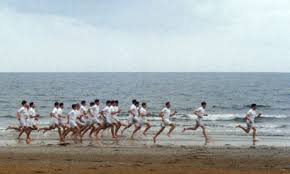
I had a train to catch next day but managed to get to stride along the Chariots of Fire beach early in the morning plus take a peek at St Andrews Old Course before the Poetry Breakfast discussion on translation. Diplomatically and informally chaired by Annie Rutherford, the theme emerged that we ought to think more loosely, more liberally about the idea of translation. Aurelia Maurin suggested we should think of it more as we do cover versions of songs. Claudia Daventry opened the field up by quoting Charles Simic’s idea that all poems are translations from silence. Nora Gomringer remembered a professor urging her to find ‘the game’ of any poem she intended to translate not merely to work line by line. She’d been asked to translate Yoko Ono’s poems into German but felt unable to and the importance of the rightness of a translator to a source text was demonstrated when, on another occasion, she’d translated from Russian (I think) and had actually been spat at by a disapproving reader. I was struck – as before – by what powerful emotions the idea of translation stirs up, involved as it is with ideas of truth, honesty and fidelity. I especially liked Daniela Seel’s take on the process, stressing the almost chance meeting of suitable translator with appropriate source text and the way in which the linguistic and emotional ‘body’ of the translator (his/her resources) need to be matched to the varied demands of the source text.
But I had to catch my train and, though exhausted, I spent some of the six hours back re-reading Montale’s loving lament and memorial to his wife, Drusilla Tanzi, here translated by G. Singh:
With my arm in yours I have descended at least a million stairs,
And now that you aren’t here, a void opens at each step.
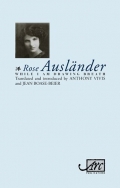
What follows is a review – originally published by Poetry London earlier last year – of Rose Auslander’s poetry. As I say below, her work has been surprisingly little noticed in the UK literary world. The situation is rather different in her own culture where she is well-known and much admired as this entry on the germanlit.org website makes clear. She is an unusual and original poet well worth seeking out and you can find this book on the Arc website.
While I Am Drawing Breath is a revised version of Mother Tongue, Anthony Vivis and Jean Boase-Beier’s 1995 volume of Rose Auslander’s poems. That book strode across an effectively empty stage and the same is surprisingly true of this new version: there are really no rival translations into English currently available (she’s not even included in Michael Hoffman’s Twentieth-Century German Poems (Faber, 2005)). This sadly reflects Auslander’s reception through the first half of last century. Only at the age of 64 did her work begin to be noticed, though until her death, 23 years later, she received prizes and accolades, mostly in Germany. Her relative neglect is surprising given her extraordinary personal story, surviving the worst horrors of the twentieth century, and the vivid, gem-like minimalism of her work.
The life is important. Rose Scherzer was born into a German-speaking Jewish family in 1901, growing up in Czernowitz (then part of Austria-Hungary). The First World War forced the family to Vienna, then Budapest, but later Auslander returned to study at Czernowitz University. She made the acquaintance of philosopher, Constantin Brunner, but in 1921 emigrated to America with Ignaz Auslander (to whom she was briefly married). She returned to Czernowitz only to find it occupied by the Nazi’s in 1941. She lived in the Jewish ghetto, surviving against the odds, writing poetry and meeting Paul Antschel (later Paul Celan). The town was liberated by the Russians but while Auslander tried to arrange for the family to emigrate to America, her mother died, precipitating her daughter’s breakdown. She did not write in her native tongue again for another 10 years.
While I Am Drawing Breath contains work written in these later years (it’s a shame the arrangement of this book gives no sense of chronological development). By then the friendship with Celan had been revived and Auslander abandoned the rhyme schemes and metrical patterning of earlier work for a more free, highly compressed, yet colloquial style, rejecting all punctuation. It is this style that German readers recognise as her distinctive achievement and is the culmination of the tragic restlessness of her life as well as her fascination with language. It was hard to speak of what she had witnessed:
From the eyes
of sated man-eaters
smoke surges
and my words
have blackened
in it
(‘Smoke’)
Paul Celan
Eloquence, volubility, the pleasures of the text risked disrespect for the victims of war. Auslander’s words are never far from mourning:
I call out
my willow-word
to the sunken souls
the squall has
driven down
to the pebbles
(‘Willow Word’)
Czernowitz, probably 1941
Yet she seldom speaks directly of pogroms and persecution. ‘And Shut Out Their Love’ does record the advent of “guns and jagged banners”, but Auslander’s imagery is more mythic, more folk tale: hunger, blood, fire, snow, ashes, smoke. Faced with the “unbearable reality” of the Czernowitz ghetto, the options were to despair or dwell in “dreamwords” and there are strong escapist longings as in ‘In Those Years’ with its snow-bound world into which come seductive rumours of a “country / where the lemons flower” (an allusion to Goethe’s 1795 lyric ‘Mignon’). ‘Immer Atlantis’ (translated here as ‘Atlantis Always Glittering’) re-creates that mythic city:
there are always celebrations in swaying gardens
well-proportioned people
always holy and delicate
But her friendship with Brunner suggests Auslander was pursuing something more complex than the sort of consolatory fantasy this suggests. He warned against the dangers of superstition, or pseudo-contemplation: unfounded beliefs creating a distortion of true insight. Auslander regards language itself as a ‘third way’, a melding of self and world, without the risks of denying reality. In ‘Mother Tongue’, movement along the “word path” leads to transformation “from myself into myself / from moment to moment”. In ‘Words’, language is neither slave to reality nor liberated self-expression, but “my source”. In ‘The Net’ the goal is “one word / which says it all” as Brunner suggested, an ascent to a plane of spiritual (geistig) contemplation encompassing love, art, and philosophy.
That Auslander’s work pursues such goals without tumbling into arid abstraction and commentary is one of the pleasures of these tough, unselfpitying poems. She is open to “dull brown” as well as “radiant blue” (‘As If’) and her obsession “for binding words” is an attempt “to reach even further / into this known / unknowable / world” (‘Sentences’). What she hears through the cuckoo, rainbow, snow, camomile, mills, carnivals, islands and trees is a spiritual realm, given validity not by any organised religion but by the suffering she has endured:
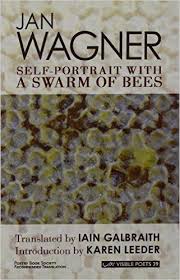
Iain Galbraith’s really skillful translations of the German poet Jan Wagner have just won the Popescu European Poetry Prize. Wagner’s poems brew a formal brilliance (Karen Leeder remarks in her Introduction to Arc’sSelf-Portrait with a Swarm of Bees, that“virtuoso” is the compliment most often applied to him) with an intense concentration on really existing things. In the German tradition, of course, such a meticulous and sensual evocation of things (‘die Dinge’) harks back to Rilke’s advice in the ninth of his Duino Elegies (1922):
Perhaps we are here to say: house,
bridge, fountain, gate, jug, fruit tree, window –
at most: column, tower . . .
Rilke’s cycle of poems arrives at this conclusion (“Praise this world to the angel, not some / inexpressible other”) not at all in the spirit of defeat but in a celebratory mood because it is only through honest interaction with the world that we define and refine our sense of ourselves. Equally and dialectically, through, our emotional and artistic responses to the world of things we are able to translate the inanimate and unconscious world into something more significant, lasting, spiritualized.
And these things, which live by passing away,
acknowledge your praise of them, as they vanish,
they look to us to deliver them, we, the most
fleeting of all. They long for us to change them,
utterly, in our invisible hearts – oh, endlessly,
to be within us – whoever, at last, we may be.
It is just this ebb and flow between self and other, each re-defining the other, each growing in response to the other, that Wagner seems intent on recording. But it’s not always an easy process as the poem ‘Mushrooms’ suggests. The narrator must listen for the snap of a twisted stem as if cracking a safe, “hoping for the right combination”. But when the right balance (I’m afraid it has to be this dull-seeming word) is achieved between active exploration and passive sensitivity then two worlds are miraculously joined.
But we need not get too po-faced about the process. Wagner suggests a tea-bag might help us envisage it. In two haikus, he wryly evokes both facets of such communion in a religious visionary and a rope-dangling, Indiana Jones-type adventurer:
1
draped only in a
sackcloth mantle. the little
hermit in his cave
2
a single thread leads
to the upper world. we shall
give him five minutes
Jan Wagner
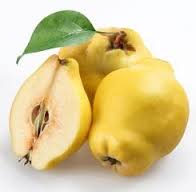
Wagner reflects the often rebarbative nature of the process partly through typographical choices, abandoning capital letters throughout (a far more disturbing move in German, of course, which capitalizes all nouns, all things). It’s also reflected in the choice of fruit in ‘Quince Jelly’. Knobbly and ugly, even ripe quinces are inedible when raw, astringent and tough. Wagner acknowledges the “tough and foreign” quality of the fruit and its taste which makes “our palates baulk”. Yet the human work invested in the transformative domestic process yields great rewards:
quinces, jellied, lined up in bellied jars on
shelves and set aside for the darkness, stored for
harsher days, a cellar of days, in which they
shone, are still shining.
Such meticulous observation and sensual details held in the form of verse ensure Wagner’s things are always more than themselves and here the quince jelly is a poem, much like Wordsworth’s daffodils, an accumulation of “wealth” to flash upon “that inward eye” in days and years to come.
Wagner also chooses a ‘Chameleon’ to represent the poet. Describing the creature’s curved tail as a “pastoral staff” raises the spiritual stakes with a wonderfully light touch. The animal’s perceptive acuity is likewise explored with its tongue like a “telescope”, snapping up the “constellation” of a dragonfly. Its eye is a “fortress” yet contains a flickering pupil; an indefinable restlessness is suggested by its shed skin like “an outpost or long-discarded theory”. Most tellingly, the chameleon’s independently moving eyes enable Wagner to suggest the balance of both centrifugal and centripetal thrusts of the true perception: the animal gazes “simultaneously at the sky / and the ground, keeping his distance / from both”.
The title poem of Arc’s selection (taken from 5 collections between 2001-2014) is another portrait of the poet. ‘Self-Portrait with a Swarm of Bees’ has the narrator wearing an ever-accumulating beard of swarming bees. The risks and dangers are part of the point but the poem focuses on the accumulating “weight and spread”, suggesting the swarm extends and adds to the narrator in some intrinsic way. Indeed, he becomes “the stone-still centre of song”. In the next quatrain, the passive singer is converted into an “ancient knight” arming for battle, yet he does not either advance or retreat:
just stands there gleaming, with barely a hint
of wind behind the lustre, lingering breath,
and only vanishing becomes distinct.
This teasing last line (“und wirklich sichtbar erst mit dem verschwinden”) is best understood again through Rilke. Auden affectionately ribbed Rilke as a poet whom “die Dinge bless, / The Santa Claus of loneliness” but it is in the challenge to self confronted through honest encounters with the world of things that we re-make and re-define our sense of self. Here is the idea expressed in Rilke’s Sonnet to Orpheus, 2, 13:
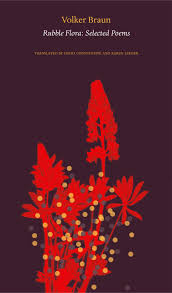
Volker Braun’s Rubble Flora (tr. David Constantine and Karen Leeder (Seagull Books, 2014)) was one of the commended texts in this year’s Popescu Translation Prize. I was surprised it did not make it to the final shortlist. His passionate and abrasive voice (in these excellent translations) is certainly worth sampling as a model for poetry engaging with political change. Here he is writing from the GDR after the Berlin Wall has come down.
Property
That’s me still here. My country’s going West.
WAR ON THE POOR GOD BLESS THE PALACES.
I helped it out the door with all the rest.
What paltry charms it has it gives away.
After winter comes the summer of excess.
And I can go to hell is what they say.
I don’t know the meaning of my text.
What I never owned, they’ve taken even this.
What I never lived, I know I’ll always miss.
It was hope that came before this fall.
My property, you flog from stall to stall.
When will I say mine again and mean of all.
(tr. Karen Leeder)
Braun was born in Dresden in 1939. His childhood was spent in the post-war ruins of that city which he describes as a locus of re-birth as much as devastation: “Fiery lupins and / Widows in the ruins set up house and home” (‘Rubble Flora’). His early work reflects the pioneering spirit of the foundation of the GDR, though a poem like ‘Demand’, with its vigour and idealism expressed through bold exclamatory phrases, already runs counter to the growing repressiveness of the state. Braun consistently relishes the provisional:
Don’t come to us with it all sewn up. We need work in progress.
Out with the venison roast – in with the knife and the forest.
Here experiment is king, not fixed routine.
His urge to move forward becomes an unhealed wound. ‘At Dawn’, in its entirety reads: “Every step I’ve still to take / tears me apart”.
There is also a strong streak of sensuality throughout Braun’s work and eros is celebrated in contrast to what ‘Afternoon’ terms “the pre-printed schedules / And fully synchronised reports” that constituted ‘really existing socialism’. Karen Leeder’s Introduction discusses Braun’s ability to “manoeuver within the [Communist} system” and, feeling the pressures of history unfolding, ‘Fief’ expresses something of a stoical attitude: “I’ll hold out here, find succour in the East”. By the 1980s, Braun’s hopes for a fitting fief were also taking the form of Rimbaudian flights of fancy as here in the landscape of ‘Innermost Africa’:
Under the soft tamarisks
Into the tropical rains that wash
The slogans off, the dry memoranda
Also around this time, Braun alludes to Goethe’s idyllic images of lemon trees in bloom from his 1795 lyric ‘Mignon’. Here they flash past in a fragmentary manner, alongside other literary references, prose passages, graffiti-like capitalised phrases and seeming non-sequiturs. Both Leeder and Constantine deal brilliantly with the challenge such a style presents to its translators. In this way, Braun’s work betrays the pressures of speaking in a repressive regime and so it is interesting that the more lucid lyrics of The Zig-Zag Bridge (1988) pre-empt the fall of the Berlin Wall and the possibility of speaking out.
But Braun’s visions of the fulfilled life were hardly advanced with the advent of capitalism. The changes of 1989 are repeatedly portrayed as a false dawn. The magnificent sequence, ‘West Shore’, roars with hopes and disappointments in the embrace of the new ideology:
the abrupt come-down
Of the roped-together
From the north face of the Eager
Into nothing—
As above, ‘Property’ sees the old GDR “going West” yet the poet is bewildered even by his own “text” as everything gets “flog[ged] from stall to stall”. Braun pursues intertextual effects with Eliot-like allusions as in ‘O Chicago! O Contradiction’ where he draws on Brecht’s 1927 poem ‘Vom armen B.B.’ (see my earlier blog and translation of this poem) and Hamlet to evoke “the chilly byways / Of market economics”. But after 1989, such allusions are more frequently to brand names and consumer goods as here in the mock-jaunty optimism of “Socialism’s out the door, but here comes Johnnie Walker”.
Neither communism nor capitalism nurtures the life Braun seeks and he turns his vitriol on the new world where “King Customer” rules (‘Common Ownership’), where the “supercontinent [. . . ] COCA COLA” rises from the ocean (‘West Shore’) and fashion shows in ‘Lagerfeld’ show capitalism making people “more beautiful but not better”. It’s Helena Christensen who stalks the catwalks of this poem only to arrive at:
the throwaway society
The arena full of the last screams Ideas
Rome’s last era, unseriousness
Now watch the finale ME OR ME
Greetings, barbarians.
If Braun still finds pleasure in the world it is despite political change not because of it. ‘Art’ asks torturedly, rhetorically, “How / Is it possible that things the way they are / Are dancing?” Rubble Flora concludes with work since 2005 and there is more Rilkean “praise [of] the world as it appears” (‘When He Could See Again’) and this affords some relief from the “stifling / Of [the] ability to be human” (‘Conversation About the Trees in Gezi Park’). One of the “things” still dancing for Braun is the erotic. The loss of desire is the sole subject of ‘My Fear’ and the hope that “some gentle breast might fasten for a while / And quicken my blood” (‘Findings’) offers some counterbalance to the almost deafening, continuing “twitter-storm” (‘Wilderness’) of injustice, greed, poverty and violence in the world generally, more specifically in his own “re-disunited Germany” (‘De Vita Beata’).
This review originally published in Poetry London (March 2015)
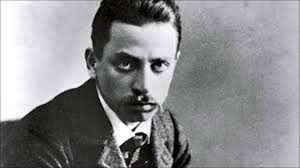
Idris Parry writes in the current PN Review (March/April 2015) comparing Rilke’s Duino Elegies with the Sonnets to Orpheus. The poet always spoke of the sonnets as subsidiary to the elegies, but Parry argues that while the elegies “talk about” the poet’s task, the sonnets perform it. I’d agree and, in translating both in the last 20 years or so, I have come to prefer the vivid enactments of the sonnets. Parry explores Rilke’s response to Rodin in Paris in 1902. What struck Rilke was Rodin’s “dark patience which makes him [as creative artist] almost anonymous”. What the young poet learned was to pursue an “unhurried and uncommitted exposure to experience” (Parry’s words). This is opposed to impatience which is (contra-Keats) an irritable reaching after clarity: “making up your mind before the event instead of letting the event shape your mind” (Parry again).
Rilke’s “praise” is just this acceptance and faithful utterance and is predicated on the truth of an underlying unity of existence. The poet is obliged to speak of this unity but can only use the language of division, a language deluded by the conviction of finality. Parry epigrammatically concludes: “We punctuate to retain our sanity, but we should not come to believe the punctuation”. The PN Review piece ends by looking at sonnet II, 18 and asks, if Rilke’s own German is a poor translation (using shabby tools) of an ultimate reality, how can translators hope to do it justice in bringing it over into English?
My own grappling with the issue of what can be lost and gained in translation began over 10 years ago when London’s Blue Nose Poetry group staged an evening to celebrate Rilke’s work. This was partly in response to a Poetry Review survey of the original 1994 New Generation Poets, several of whom declared his work to have been influential. Though a name I was familiar with, I have to confess I hadn’t gotten far through my Penguin Selected. Perhaps on account of my ignorance, I was to contribute only by reading aloud from the Elegies. The Ninth was chosen but as I practised, I found myself stumbling, losing the thread and, frankly, I hardly knew what it was I was reading:
Here is the time for the Tellable, here is its home.
Speak and proclaim. More than ever
Things we can live with are falling away, for that
Which is oustingly taking their place is an imageless act.
Act under crusts, that will readily split as soon
As the doing within outgrows them and takes a new outline.
This is Leishman’s translation of the Ninth Elegy and I supposed the obscurity was part of the point – that it must signal hitherto unplumbed depths of profundity. My view on this remains equivocal, but I believe a proportion of the difficulty is obfuscation and the impression of slippery ‘mysticism’ it generates has misleadingly become part of Rilke’s appeal for many readers. For me, the bottom line was I could not read this aloud with the kind of conviction that I demanded. I tried a couple of other easily available translations – Stephen Cohn’s and David Young’s – but still was not happy with the sound these poems made in my mouth.
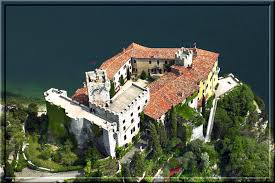
Castle Duino
Within a month I had produced a ‘version’ of my own. By version, I meant a close-ish translation, but I had taken considerable liberties with the more difficult passages and inserted what I thought Rilke might have meant or what I wanted him to mean. At the time this seemed to me a risky strategy compelled by necessity, though there is nowadays a good deal more debate about the role and value of versioning. My own position is that I prefer a genuine attempt to translate the original into a contemporary target language. I see the point of versions – but it is hardly ever what I am seeking as a reader. Nobody imagines translation is easy; but only a fool anticipates a perfect rendering. We expect translators to work in good faith and that their work will read sufficiently well in the target language not to distract us with the stale sweat of their strenuous wrestling with the original. Nor should they cover the difficulties of translation by delivering obscurities that defensively resist comprehension.
It was coming across my first attempt a couple of years later that set me systematically picking my way through the million pitfalls of the Elegies. Take for instance Rilke’s opening lines, the great cry at the start of the sequence. Rilke writes “Wer, wenn ich schriee, hörte mich denn aus der Engel / Ordnungen?” Not too much of a problem you might think, but William Gass, in his book, Reading Rilke: Reflections on the Problems of Translation (Basic Books, 1999), considers no fewer than 15 versions of these 11 words. Most – though by no means all – accept Rilke’s opening word – “Who” – and most, though not all, take over Rilke’s relative clause “if I cried”. But is he merely crying or crying out? And beyond this point of relative agreement lie terrible dragons of disagreement, especially over the word “Ordnungen”. How are the angels deployed? Are they in “angelic orders”, “amid the host of the angels”, “among the hierarchy of angels”, “the order of the angels”, “among the angels’ hierarchies”, “among the ranked Angels”, “through the Angel Orders” or even (Gass gives his own version) “among the Dominions of Angels”? In such company, my own version, “Who, if I cried out, would hear me among the ranks / of the angels?” runs the risk of a watery plainness but it has the advantages of clarity, echoes the rhythm, syntax and line break of the original closely, and (remembering my first concern was for oral performance) the line has a satisfying aural quality. I hear in the first phrases high, thin vowels that contrast the second half’s weightier, assonantal ‘a’ sounds: the cry of alienated humanity contrasts the solid, seemingly impregnable powers that lie beyond our reach.
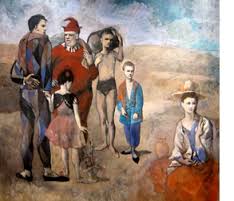
But the best-equipped translator faces especially difficult problems in Rilke. In the Fifth Elegy, for example, the poem describes some acrobats. This is a combined portrait of a troupe Rilke knew while living in Paris and a painting by Picasso (La Famille des Saltimbanques, 1905) with which Rilke lived in the summer of 1915 in the house of the dedicatee of this Elegy, Frau Hertha Koenig. This is, formally, one of the freer of the Elegies, its lines extending and contracting to reflect the energy of the tumblers.
Picasso’s ‘La Famille des Saltimbanques’ (1905)
But in the Picasso painting the figures are arranged in an almost imperceptible D-shape and Rilke writes: “Und kaum dort, / aufrecht, da und gezeigt: des Dastehns / großer Anfangsbuchstab . . .” In my version: “And barely discernible, / yet up-standing and unmistakeably on display, / the capital D of Destiny . . .” The original word “Dastehns” (something like “standing there”) reflects the visual pun and it would be a great loss not to bring this into the English. Stephen Mitchell uses the word “Duration”; Young’s looser version loses the pun with “existence . . . presence”. On this occasion, I found myself following Stephen Cohn and opting for “Destiny” (more usually the translation of “Schicksal”) which I felt conveyed Rilke’s sense of how these individuals are driven to perform by forces external to them, rather than by a more truthful inner compulsion.
Another critical decision arises in the Tenth Elegy with its tribe of people who enjoy a closer, more authentic relationship with death and grief than Rilke perceived in contemporary Western culture. He uses the word “Klage” and an English equivalent has to be found that works as the name of a young woman, her tribe, her ancestors and her country. Like the sound of the original, the word also has to reflect the harshness of the grief felt, while at the same time suggesting a dignity in such powerful emotions. For Rilke, the role of this personification and her whole tribe is certainly heroic. Most previous translators have opted for the word “Lament” but I felt this suggested a rather affected, almost poetic attitude – precisely the kind of posturing that Rilke asks us to avoid in our confrontation with these difficult aspects of life. I chose the word “Keening” to convey the genuine edginess of feeling (aurally again I liked the harsh initial K and the word’s trailing, wailing fall). This word seemed to me to work perfectly as personal and tribal name and geographical location: “gently she guides him through the vast / Keening landscape, shows him temple columns, / ruins of castles from which the Keening princes / once wisely governed”.
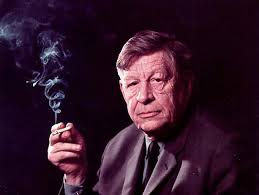
One thing I have learned is that translators take sustenance from their chosen originals. This is not just in the obvious way of extending their range, but also that they feed on a familiar. They find in their subject an answering voice, a confirmation of something already present within themselves. I experienced this in a surprising way. Rilke’s influence on Auden was particularly evident in the late 1930s. The sonnet sequence In Time of War refers directly to him and Mendelson’s Later Auden (Farrar, Straus and Giroux, 1999) argues that ‘In Memory of W. B. Yeats’ concludes with “an explicit echo” of Rilke’s Ninth Elegy and its famous injunction to “praise this world to the angel”.
Auden asks Yeats’ spirit to “Teach the free man how to praise”. Interestingly, Auden has never been a strong influence for me, yet the elegy to Yeats is a poem I have always loved. In fact, five or six years before I got to know Rilke, I remember modelling an elegy of my own on Auden’s – from the choice of title, the formal variety of its sections, to a finale in which I too celebrated one who “loved the world, craved its taste”, elevating him to a teacher of praise: “Listen, let me make this master speak: / Laughter, love, the senses are profound. / Drink deep, remember, Jeremy Round” (‘In Memory of Jeremy Round’). Reading Mendelson’s book has convinced me that I had been responding not merely to Auden but also – unknowingly – to Rilke. It turns out I have been finding a sympathetic familiar in him for longer than I had imagined.






















 Martyn Crucefix