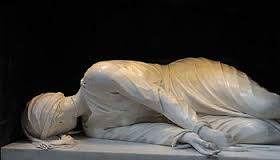
On the Importance of Considering Nothing #2

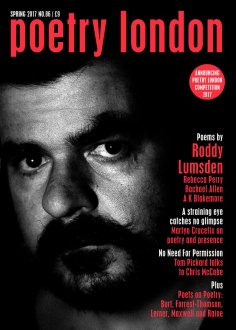
Last week I blogged the first part of a longer essay first published in the Spring 2017 issue of Poetry London. What follows is the second half of it. The whole piece starts and ends with thoughts prompted by my experiences with my father and his growing dementia. Dad has since suffered a series of heart attacks and died on May 24th. I am re-producing the essay unchanged in the hope that it still says something of value about types of ‘confusion’ and in memory of a man who would have had little time for such morbid reflections. Thanks to Tim Dooley who commissioned the essay for Poetry London and published it under the original title: A Straining Eye Catches no Glimpse.
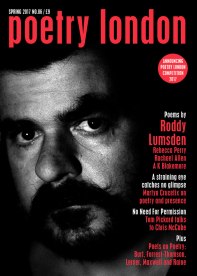
PL-COVER-Spr17-web

In Part 1, I linked my father’s forgetfulness and confusion with recurrent references to “nothing” in King Lear and to Anne Carson’s concept of “the dementia of the real”. I suggested this was also a correlative of Yves Bonnefoy’s interest in the “state of indifferentiation” he often refers to as “Presence”. For Bonnefoy, Presence contrasts the conceptual/linguistic world through which we most often move and we take to be real.

Part 2

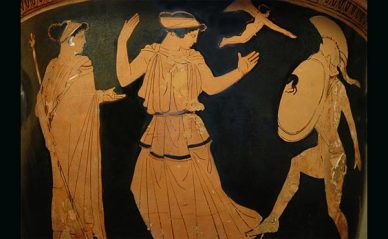
Yves Bonnefoy’s poem ‘Wind and Smoke’ (from The Wandering Life (1993)) has the abduction of Helen as its nominal subject. But he allows the poem to be taken over by dissenting voices, irritably seeking to “explain, to justify, ten years of war”. Such an expense of men, ships and spirit (argues one such “commentator”) must have been for the sake of something more permanent than the merely human figure of Helen. The poem entertains the suggestion that she herself was never abducted, “only an image: a statue”, something of great beauty to be displayed on the terraces of Troy, a fixed image of Helen, blessed with permanence, “always [. . .] this smile”. The poem is concerned then with the limitedness of the conceptual view which finds worth only in things of assured, definable permanence. In contrast, Part One of the poem ends with a proliferation of images of “spilling”, lovers as “clouds” or “lightning” on an “earthly bed”, so fully involved with time that their pleasures in the moment are “already empty, still full”. [i]
 

search-helen-troy
Helen of Troy (Red Figure Vase)


There’s that paradox again and Bonnefoy’s versions of it articulate the impossibility of capturing Presence because it encompasses and exists in time (and language wishes to stop time):


Every time that a poem,

A statue, even a painted image,

Prefers itself as form, breaks away

From the cloud’s sudden jolts of sparkling light,

Helen vanishes [. . . ][ii]


The “jolts” here are akin to Lily Briscoe’s “jar on the nerves” as our paradigms and preconceptions are challenged. The figure of Helen has become that visionary experience – for Bonnefoy usually of beauty, for Carson more often a violent disturbance – that we intuit exists just beyond the range of our usual instruments. Helen, the poem argues, “was only / That intuition which led Homer to bend / Over sounds that come from lower than his strings / In the clumsy lyre of earthly words”.

Part Two of ‘Wind and Smoke’ concludes with a child, an image of the poet, the last person to see the figure of Helen as Troy burns:


singing,

He had taken in his hands a little water,

The fire came to drink there, but the water

Leaked out from the imperfect cup, just as time

Ruins dreams and yet redeems them.[iii]
 

download
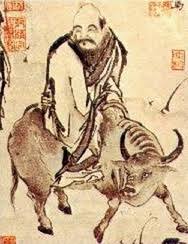
Traditional image of Laozi


This same image of water slipping from our human grasp is recurrent in the Ancient Chinese writings that make up Laozi’s 4th/5th century BCE text, the Daodejing. Since they were published earlier this year, I have been reading my versions of these texts up and down the country and the one thing audiences want to say about them is they contain “wisdom”.[iv] It’s an old-fashioned word but it’s also bound up with the nothing that is really a fuller something we seldom manage to grasp. The Daodejing texts use water as an image of the ineffable One, the plenitude that lies behind all things. They employ water metaphors in such a way that the vehicles are clear and recurrent (ocean, pool, river, stream) but the tenor remains an empty set, never defined. So Chapter 1 deploys water imagery but is clear about the short-comings of all language: “the path I can put a name to / cannot take me the whole way”. Even what can be named can only be grasped through further metaphors: the “nursery where ten thousand things / are raised each in their own way”. What lies behind the phenomenal world can only be gestured towards through figures such as “mould”, “source”, “mystery”. Even then it’s “a riddle set adrift on a mystery”. The original Chinese text shifts its metaphors rapidly in just this way and this is what gives this opening Chapter the peculiar sensation of telling a clear truth that remains beyond our grasp. Chapter 14 puts it this way:


because a straining eye catches no glimpse

it is called elusive


as the ear attends but latches onto nothing

it is called rarefied


since a hand reaches but clasps only thin air

it is called infinitesimal


and these are resistant to further analysis
File 03-03-2016, 09 03 15

The difficulty of grasping this something that seems nothing is revisited in Chapter 4. There, the tenor of the metaphor is reduced to “it”, the context indicating this refers to the Dao itself, the One, that state of wholeness and plenitude towards which the path of the Dao leads. The opening formulation emphasises the Dao’s infinite nature, its resource as “a vessel to be drawn from / one that never needs to be re-filled // the bottomless source of all things”. But the image is revised a few lines later in the form of a question: “is it rather a pool that never runs dry”, yet this follows four other metaphorical formulations of the Dao’s beneficial effects: “fretted edges are smoothed within it / knots untangled all dazzle eased / all blinding clouds of dust slowly cleared”. The poem calmly declares its own ineffectiveness: “we cannot know it as a bodiless image / it must pre-date every beginning”. Even the concept of origin or beginning is not adequate to convey the nature of the Dao. But the fluidity of water – impossible to grasp, capable of taking any shape, a life-giving source – comes close.

That there is wisdom to be gained from such visionary encounters with the mystery of nothing is clear in Chapter 66. It’s no coincidence that these lines can serve as a commentary on Lear, his suffering bringing him low till he realises he has paid too little attention to the “looped and ragged” nature of his own nation:


—how do rivers and seas secure mastery

over the hundreds of lesser streams

through lying lower than they do


so to govern or teach you must stand

and acknowledge you are beneath the people

to guide them put yourself at the rear
 

md1187823288

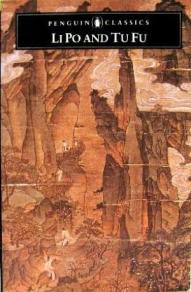
But as Auden suggested and Chinese tradition affirms, such visionary insight cannot be actively sought or taught. This is one of the points of the traditional narrative trope in Chinese poetry of ‘Visiting a Hermit and Not Finding Him’. Don Paterson turned this into a good joke in a poem called ‘On Going to Meet a Zen Master in the Kyushu Mountains and Not Finding Him’.[v] The reader’s eye descends from this lengthy title only to look in vain – it’s a blank page. Perhaps Paterson had been reading the Penguin Classics selection of Li Po and Tu Fu.[vi]  The Li Po selection opens with the poem ‘On Visiting a Taoist Master in the Tai-T’ien Mountains and Not Finding Him’. But such poems were never just an excuse for descriptive nature poetry but related to the frequent ‘spirit-journeys’ that Li Po was fond of writing. We are all like that student in Li Po’s poem, seeking out certainties and facts, a something to depend on when true wisdom gently (or violently) deflects us away from shelter towards a world where we glimpse a more full-blooded, full-bodied, open-minded encounter with what really is.
 

download
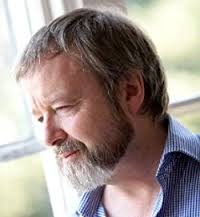
Iain McGilchrist


I have really been talking about two attitudes to knowledge or to put it more carefully, two contrasting “ways of being”.  This is how Iain McGilchrist’s book, The Master and his Emissary (Yale, 2009) expresses it.[vii] McGilchrist argues parts of the human brain deliver quite different kinds of attention to the world. The left brain perceives the world as “static, separable, bounded, but essentially fragmented [. . .] grouped into classes”.[viii] This is the attitude to knowledge and education the anxious student of Li Po’s poem possesses as well as the place where most of us live amongst Carson’s clichés and Bonnefoy’s conceptual language. In contrast, McGilchrist associates the right brain with the perception of “the live, complex, embodied, world of individual, always unique beings, forever in flux, a net of interdependencies, forming and reforming wholes, a world with which we are deeply connected”[ix] yet one at risk of being perceived or judged as a mere confusion, a seeming nothing.

This is the view of the Daoist master whose teaching evokes the as-yet-uncarved block of wood, who teaches best without words. Ordinary language usage, dependent as it is on conceptual thought, is left-brain work – ordering, categorising, re-presenting the minute particulars of the world as they are perceived by the right brain. Li Po’s teacher is surely hiding somewhere beyond the cherry blossom – and this is part of the student’s lesson. Don Paterson’s blank page represents a rather glib, post-modern joke, a scepticism about language in danger of throwing out the interconnected but bewildering “dementia” of the real world along with the suspect tokens and counters of left-brain language: “To say that language holds truth concealed is not to say that language simply serves to conceal truth [. . .] or much worse, that there is no such thing as truth”[x]. Bonnefoy, engaging in his own battles with the early stirrings of French post-modernism, declared: “This world here exists, of that I am certain [. . .] It is simply with us.”[xi] The right brain knows this and it’s from there we want to write poems; the left brain serves to fragment it, utilise it, get it under control, disappear it. And yet . . . there’s no much here suitable for a chat with a forgetful father. His visions are more frightening and may get worse; here, for a while, his son has been imagining ways of seeing that need not be so.
Elevation of Tomb of Theodoric, Ravenna

Notes

[i] tr. Naughton, Naughton and Rudolf, pp. 197-203.

[ii] tr. Naughton, Naughton and Rudolf, p. 201.

[iii] tr. Naughton, Naughton and Rudolf, p. 203.

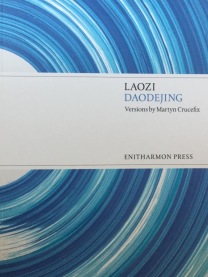
[iv] Laozi, Daodejing, versions by Martyn Crucefix (Enitharmon, 2016). All quotations are from this version.

[v] Don Paterson, God’s Gift to Women (Faber, 1997).

[vi] Li Po and Tu Fu, selected and translated by Arthur Cooper (Penguin Classics, 1973).

[vii] Iain McGilchrist, The Master and His Emissary (Yale UP, 2009), p. 25.

[viii] McGilchrist, p. 31.

[ix] McGilchrist, p. 31.

[x] McGilchrist, p. 6.

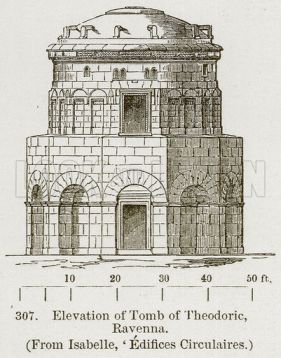
[xi] Yves Bonnefoy, The Tombs of Ravenna, tr. John Naughton (1953; PN Review (No. 226, Nov-Dec 2015), p. 62).
On the Importance of Considering Nothing #1

I have not blogged regularly since April 2017  as, having managed to get both my parents settled into a Care Home in Wiltshire, Dad suffered a series of heart attacks and died – fairly quickly and peacefully – on May 24th. Not wholly coincidentally, the Spring 2017 issue of Poetry London published an essay I had written which starts and ends with some thoughts on my experiences with my father and his growing dementia. In the next two blogs, I re-produce this essay unchanged in the hope that it still says something of value about types of ‘confusion’ and in memory of a man who would have had little time for such (in his view morbid and abstruse) reflections. Thanks to Tim Dooley who commissioned the essay for Poetry London and published it under the original title: A Straining Eye Catches no Glimpse.

 PL-COVER-Spr17-web

Part 1

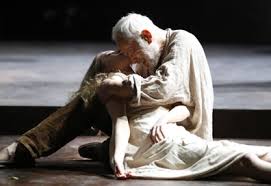
An old king leans over his daughter’s body seeking signs of life, yet he finds “Nothing, nothing, nothing, nothing, nothing”. Given that I teach literature and this is one of Shakespeare’s more famous lines with its repetition and trochaic revision of the iambic pentameter, I’m not proud of mis-remembering this moment in King Lear (the repeated word is, of course, ‘Never’). Yet I know why I mistake it, this year, in these fretful months. Seeing Anthony Sher play the role recently – haranguing a foot-stool, giving toasted cheese to a non-existent mouse – put me in mind of my father, though he’s not quite so far gone. These days he has trouble recognising the house he’s lived in for 60 years; he will refer to his wife as a woman from the village who has come to look after him; he seeks news of his mother (she died in the 1970s). What can this feel like? Years of memories gone; a whirling fantasmagoria that evidently frightens him; a something becoming nothing he makes too little sense of.

download

So it’s not just that the idea of nothing is prominent from the very start of Shakespeare’s play. Cordelia fails to reply flatteringly to Lear’s question about which of his daughters loves him most. The gist of her brutal answer is “Nothing, my lord”. Lear warns her: “Nothing will come of nothing. Speak again”. But she sticks to what she sees as her truth (as against her elder sisters’ oleaginous falsehoods) and pays the consequences. But so does the King. Reduced eventually to a wholly unexpected state of wretched nothingness in the storm scenes and beyond, he learns much from this nothing in pointed contradiction of his earlier warning. It doesn’t stop there; once reunited with Cordelia and faced with the prospect of prison, possible execution, what is remarkable is the King’s acceptance of his fate. Confronting this further reductio, he declares he’ll go and finds a reason to be cheerful: “we will take upon’s the mystery of things”. I’ve always been struck by Shakespeare’s phrasing here. The mystery of things is imaged not as some modernly pedagogic check-list, tabulated and absorbed like a set of principles, rather it’s something to be folded about us – a garment, an investiture, a way of seeing, feeling, not quite of self, not quite other either – and Shakespeare’s point is that Lear’s encounter with nothingness in various guises is what has prepared him for such a re-vision of his place in the world.

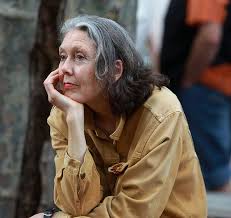
I’m interested in the idea that such a nothing can be worth something. Of course, it’s not exactly nothing, a void, that Cordelia’s father encounters. It is a bewildering set of experiences of which he can make nothing. Lear – I don’t know how far this is like my father – suffers because his previous paradigms are failing: he is shocked into his encounter with the mystery of things or what Anne Carson calls the “dementia of the real”. When my father talks, he yearns for the ordinary reassuring certainties of his old life, as if they would close round him with the feel of a comfortable coat. Carson has explored this reliance we all have on the familiar in her 2013 Poetry Society lecture concerned with ‘Stammering, Stops, Silence: on the Methods and Uses of Untranslation’.[i]  She explores moments when language ceases to perform what we consider its primary function and we are confronted with nothingness in the form of silence. In the fifth book of The Odyssey when Hermes gives Odysseus the herb “MVLU”, Homer intends the name of the plant to be untranslatable since this sort of arcane knowledge belongs only to the gods. In a second example, under interrogation at her trial, Joan of Arc refuses to employ any of the conventional tropes, images or narratives to explain the source of her inspiration. Carson wants to praise Joan’s genius as a “rage against cliché”, the latter defined as our resort to something pre-resolved, pre-shaped, because, in the face of something so unfamiliar that it may seem more like nothing, “it’s easier than trying to make up something new”.


images
Anne Carson


Carson associates this rage to ‘out’ the real with Lily Briscoe’s problems as an artist in Woolf’s To the Lighthouse. She struggles to complete her painting, aware that the issue is to “get hold of something that evaded her”.[ii] She dimly senses “Phrases came. Visions came. Beautiful pictures. Beautiful phrases. But what she wished to get hold of was that very jar on the nerves, the thing itself before it had been made anything”. Unlike Homer and Joan of Arc, the knowledge Lily seeks (undistracted by the divine) is not so much prohibited as, in a profound sense, beyond conception (it is a nothing before it has been made something). For Carson, we each dwell behind the “screens” of cliché for most of our lives, so when the artist pulls them aside the impact of the revelation may well have the force of violence. She suggests artistic freedom and practice lie in such a “gesture of rage”, the smashing of the pre-conceived to find the truth beyond it, her goal remaining the articulation of the nothing she insists is actually the “wide-open pointless meaningless directionless dementia of the real”.

This is the nothing I am interested in: it is no void or vacancy but, paradoxically, a wealth of experience, a “flux of phenomena” about which we cannot think in conventional ways. We cannot name the parts of it, so for convenience, maybe a bit defensively, we prefer to designate it nothing. The artist seeks to articulate such an “experience of what goes beyond words: call it the fleeting perception [. . . ] a state of indifferentiation”. [iii] This is one of the many formulations of the issue by the late Yves Bonnefoy who unrelentingly explored the limits of conceptual thinking in terms similar to Carson’s distrust of cliché: “It is not that I incriminate the concept – which is merely a tool we use to give form to a place where we can dwell. I am merely pointing out a bad tendency [ . . . ] of its discourse to close discussion down, to reduce to the schematic and to produce an ideology existing in negation of our full relation to what is and to whom we are”. He concludes it is a “temptation to stifle dissenting voices” – the kind of voices who see something in nothing. [iv]

images

The always evangelical Bonnefoy terms the mystery encountered in a “state of indifferentiation” as “Presence”. In 1991, Bonnefoy’s temporary residence in the snowy landscapes of Massachusetts gave him a new way of evoking these ideas. In The Beginning and the End of the Snow (1991) he reads a book only to find “Page after page, / Nothing but indecipherable signs, / [. . .] And beneath them the white of an abyss”[v]. Later, the abyss is more explicitly, if paradoxically, identified: “May the great snow be the whole, the nothingness”.[vi] These occasional moments when the screens of cliche and conceptual thought fall are moments of vision as sketched by Auden in his discussion of Shakespeare’s sonnets – they are given, not willed; are persuasively real, yet numinous; they demand a self-extinguishing attentiveness.[vii] The inadequate, provisional, always suspect nature of language to record such moments is clear in these lines from Bonnefoy’s poem ‘The Torches’:


. . . in spite of so much fever in speech,

And so much nostalgia in memory,

May our words no longer seek other words, but neighbour them,

Draw beside them, simply,

And if one has brushed another, if they unite,

This will still be only your light,

Our brevity scattering,

Our writing dissipating, its task finished.[viii]


Rather than the forced disjunctions and the quasi-dementia of Carson’s recommended methods, Bonnefoy is reluctant to abandon the lyric voice, though he still intends to acknowledge the provisional nature of language in relation to Presence. The “fever” and “nostalgia” we suffer is the retrogressive lure of conceptual simplification. Bonnefoy’s imagery suggests a more delicate, tentative relationship between words, a neighbouring, a brushing up against each other (like snowflakes), though even then, if they “unite” or manage to cast “light” on what is, this can only be brief, always subject to dissipation.

(to be continued)

download

Footnotes

[i] Poetry Review, Vol. 103, No. 4 (Winter 2013).

[ii] Virginia Woolf, To the Lighthouse (1927; Penguin Modern Classics, 1992), p. 209.

[iii] Yves Bonnefoy, In the Shadow’s Light, tr. Naughton (Chicago Press, 1991), interview with John Naughton, p. 162.

[iv] Yves Bonnefoy, ‘The Place of Grasses’ (2008), in The Arriere-pays, tr. Stephen Romer (Seagull Books, 2012), pp. 176/7.

[v] Yves Bonnefoy, ‘Hopkins Forest’, tr. Naughton in Yves Bonnefoy: New and Selected Poems, eds. Naughton and Rudolf (Carcanet, 1996), p. 181.

[vi] Yves Bonnefoy, ‘The Whole, the Nothingness’, tr. Naughton, Naughton and Rudolf, p. 187.

[vii] W. H. Auden, ‘Introduction to Shakespeare’s Sonnets’ (1964; reprinted in William Shakespeare: The Sonnets and Narrative Poems, ed. William Burto (Everyman, 1992)).

[viii] tr. Naughton, Naughton and Rudolf, p. 177.

Two poems by Martyn Crucefix

I’m afraid I have been unusually silent on the blog for the last few weeks. My last posting was in early April, a review of Jacob Polley’s book, Jackself. Life has been getting in the way of blogging and though I appreciate a lot of people like to read a lot of personal stuff on blogs that’s not really why I write. Suffice to say that I have been preoccupied with organising my parents move into a Care Home and the selling of their house, my house I should say; we moved into it when I was a year old and I left to go to university at 18. I imagine there will be poems emerging from the experience – but they tend to take a long time.

Added to this I was called up to do jury service at the Old Bailey during the last 3 weeks and this proved both fascinating and dull at the same time. The case was strange and disturbing (the defence consisting of the claim that what was done was done as research for a novel, so throwing up questions about the boundaries between fact and fiction). The dullness was, of course, the slowness with which the wheels of the law roll round (in the name of clarity, precision and fairness). The events and characters of the people involved were wholly consuming for the period we were sitting as a jury.

Emerging from that in the last couple of days, the news came that my father has gone back into hospital after a heart attack.

So – with no headspace for poetry really, I’m resorting to re-blogging a couple of poems which very recently appeared on Jo Corcoran’s great website And Other Poems. Both poems will also appear in my new book, The Lovely Disciplines, to be published by Seren Books this summer.

images

Both these poems have had a long gestation. ‘East-running road’ originated with observations about the angles of sunlight on sunflower fields in the north-west of France, slowly becoming concerned with the idea of writing and seeing, which then became associated in my mind with the dedicatee of the poem, the poet Katherine Gallagher. ‘Boy-racer’ is even older in origins. But I do still recall the central image as a real event: on some dusty European road down to a beach, a kid on a motorbike skidding out from a side track, wobbling to regain balance and powering off ahead. The wind ruffling his carefully un-helmeted head . . .

Read the two poems here: Two poems by Martyn Crucefix

7926ca533543e64e15591592aae83fd8

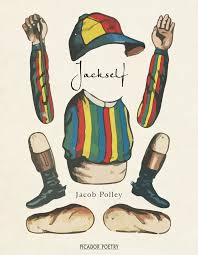
Two-Headed Calf: Review of Jacob Polley’s ‘Jackself’

Of those people I spoke to, many poetry readers were surprised and delighted that Jacob Polley’s Jackself recently won the 2016 T.S. Eliot Prize against competition from the likes of Capildeo, Duhig, Oswald and Riley among others. Caught between a desire that prizes go only to the very best work and a wish that poetry’s few rewards be more equitably distributed, I was also delighted as this is a book which is bold and inventive, against the grain and successfully ambitious. (Apologies for some loss of formatting of any quotes that follow).

imgres

The book’s novelistic aspects have been noted in reviews – they are easier to discuss than its poetic achievements. Jackself is a boy growing up in the rural north of England, befriended by Jeremy Wren who, within a few years, commits suicide, leaving Jackself to deal with the grief. As ‘novel’ material, both the opening and close of the book refuse to provide what a reader might be looking for but as poetry it delivers what Heaney characterised as the “superfluity of language’s own resources. It’s a kind of overdoing it. Enough is not enough when it comes to poetry” (Giving Their Word, 2002). Polley’s language is charged, improvisatory and colloquial. It is fluid and rhythmic (more modern, less ballad-like than some reviews have suggested). It has a crusted, superfluous quality to it that reminds me of Shakespeare, or what Hughes has described of Shakespeare’s excess, and Jackself is not thinned out by constant ironising, rather it’s thickened by a weight of language, history and imaginative hard work. It’s very impressive – but needs a few reads before it gives itself up.

It’s best to begin with Jackself’s birth poem, ‘Every Creeping Thing’, the second in the collection (I’ll return to the first, ‘The House that Jack Built’ later). The natural world is important to the boy and this book and his arrival “at the door / of the door of the door” is also a journey “by water mite / by the snail on its slick of light”. There’s a Hughesian feel to some of the poems (Crow’s ‘Examination at the Womb-door’ here?) but Jackself enters a childhood freshly and vividly caught in its exploration by mouth and “curatorial spit”, cat-watching, one-piece suits and sleep that ends by “mak[ing] / the world over again” (‘Jack Sprat’). All seems good and safe though by the sixth birthday party with its “six / goody candles” there is a noting of absence: “no wishing it wouldn’t be / or wasn’t or would better be / no wondering how so hard it hurts” (‘The Goodies’). This seems proleptic of darker questions to come and is also a good example of Polley’s vigorously colloquial style, full of dynamic sound patterning.

images

It’s never easy to determine Jackself’s age in the book (occasionally I felt he was older than his responses suggested). I think Rimbaud suggests the detachment of self-consciousness kicks in around 7 years old so it’s perhaps at that age that Jackself is “afraid like snow he’ll wane or drift / before he can hold /  the road out front” (‘Jackself’s Quality’). He also explores “the lovely lofts / of Lamanby” – his house – showing a reflective, curiosity which is notably not catered for at school. ‘Lessons’ is great poem about the failures of education (I write as a teacher) with Jackself taken away to a corner, impelled to worship, to eat shit school dinners, to be humiliated before his parents. The thumbnail sketch of the Headmaster, Mr Workbench is worthy of Dickens as he “solemnly inclines / his one-thought- / at-a-time head”. Polley captures Jackself’s alternative headspace beautifully:


his mind a corner

of beehives

his fingers a box of matches

his nose the afternoon rain

[. . . ]

his tongue an earwig

before it hatches

imgres

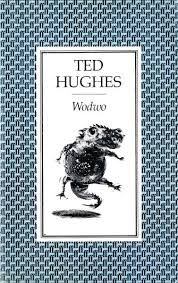
Where Jackself is at home is in the natural world. ‘Applejack’ has strong echoes of Hughes’ ‘Wodwo’ with its instinctual, open-minded, pre-language, exploratory movement:


by hedgehog path

and badger path, Jackself

happens with the clouds

into sunlight

images

The book lights up differently with the appearance of Jeremy Wren, a more wise-cracking, cynical, entrepreneurial and ultimately more troubled young man than Jackself. The pair strike up a double act – they both respond powerfully to the natural world and their dialogues are both funny and poignant. In ‘Les Symbolistes’, getting drunk on “white cider and Malibu”, Jackself let’s slip for the first time an interest in poetry: “A POEM! Wren roars / you’re creepy as a two-headed calf”. This is also one of the early moments when we see Wren’s troubled side – his father beats him. The jigsaw pieces of the boy’s troubles are carefully placed by Polley. He and Jackself meet in a goose shed, as if both on the run from something; ‘It’ asks “tell us what’s wrong, Jeremy Wren”; in ‘Snow Dad’ Wren insists they make a replacement father snow-man but also recalls when he climbed into a chest freezer. He hangs himself in ‘Pact’. He “hangs thinking fuck I’ve left / no note until he’s fucking dead”. Maitreyabandhu has written of not dissimilar events in his sequence ‘Stephen’ in The Crumb Road (Bloodaxe, 2013).

images

Jackself now becomes a study in teenage grief. ‘The Hole’ has Jackself contemplating Wren’s grave (this is one of the poems where the language seems less comfortably matched with the likely age of the boy). One way he tries to deal with the loss is by writing. ‘Jack O’Lantern’ is a deconstructed – or as they say of websites, still in construction – ballad with Jackself trying, then rejecting, lines in a fashion that is both humorous and touching (“no           again . . .  no          again”).

Polley’s achievement is to find a form and voice which can encompass all this . . . stuff. Long and short lines are scattered across the pages, poems often start in media res, often lack an explicit subject, dialogue is unmarked and the reader must sort things out. But this all adds urgency to the telling and a fluidity to the narrative perspectives. Polley’s Jackself often reminded me of David Jones’ protagonist, Private John Ball, from In Parenthesis (1937). The two share a mythic quality, representative but individualised. In ‘The Misery’ Jackself becomes/sees himself as a heroic dragon-slayer and the dragon he wishes to kill is his grief at the death of Wren. The disturbed psychological perspective implied by this is a result of his depression over the suicide of his friend – but the poem manages a marvellous mock-heroic tone:


from his weapon chest,

the sheath knife, Eglantine                      from his wardrobe,

his denim jacket, torch, tool belt, tin camping cup,

rucksack, horned hat and Gore-Tex breastplate

imgres

What he kills in the end is just a rabbit but the ritualistic/symbolic nature of his action has an effect. It takes a while, during which he continues his (often hilarious) dialogues with the dead Wren and finds solace in the natural world but ‘Tithe’ indicates through its page lay-out, its vast white spaces, that Wren vanishes eventually, Jackself moves on.

Hard to end such a book and I confess I didn’t find the ballad-like ‘Jack O’Bedlam’ very satisfying, but perhaps I’m falling foul of the novel reader’s desire for narrative closure (though I thought we’d all grown out of that). This is in contrast to the opening poem of the book, ‘The House that Jack Built’, which I found powerful in its own right as a historical survey of the region in which Jackself’s brief story takes place. Polley writes of the trees being felled and used, re-growing through history, interactions with burgeoning human society, the Industrial Revolution, canal building, eventually to the construction of Lamanby itself. Critics will want to debate its relevance to the sequence of personal biography that follows it and concludes with no explicit ‘picking up’ of the opening poem’s themes. It is a problem; but the depth of history this opening poem implies, its focus on the natural world, its foregrounding of (for want of a better word) folk culture surely gains Polley permission for the way in which he tells Jackself’s tale, for it as a poem. Like Jones’ use of mythic, folkloric and Shakespearean materials in In Parenthesis, Polley raises the small-scale biographical to a type without losing anything of the minute particulars which enable its readers to read Jack as themselves.

‘From Palette to Pen’ – a bit more ekphrasis

My blog post a couple of weeks ago on ekphrastic poems (ie. poems stimulated by visual art) proved to be one of the most popular I’ve ever written. This was in part the ‘how to’ aspect of the blog. In preparing to run a workshop at the Holburne Museum in Bath in February, 2017, I’d been reading a wide variety of poems derived in some fashion from the poet’s encounter with visual art and I tried to categorise the various approaches. I came up with 14: 

  1. Describe – and do no more.
  2. Describe but imagine beyond the frame
  3. Describe but incorporate researched materials
  4. Make Main Figure Speak – the most common approach
  5. Make Minor Figure/s Speak
  6. Make Objects Speak
  7. Make the Artist Speak
  8. Interrogation of the Artist
  9. Interrogation of illustrated Figure/s
  10. Interrogation of Yourself
  11. An Account of Your Encounter with the Art
  12. An Account of Gallery Visitors’ Experience
  13. An Account of Others’ Experience
  14. Come at a Tangent – the ekphrastic experience as after-thought or illustration

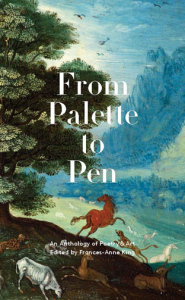
From-Palette-to-Pen-185x300

While at the Holburne Museum I was given their recent anthology of ekphrastic poems, From Palette to Pen, edited by Frances-Anne King in 2016. It contains 20 poems stimulated by art objects in the Holburne and as well as recommending it as a great resource for ekphrastic writing, I thought I’d use it to test my earlier analysis of the form to see if it held water.

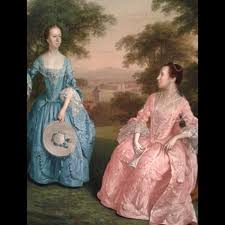
It did pretty well. It goes without saying that all the poems engaged to some degree in method 1 – description of the art object itself. But beyond that, by far the commonest approach was method 4 – making the main figure speak. This was adopted by Anna-May Laugher, Claire Dyer, Carrie Etter, Frances-Anne King, Pascale Petit, Linda Saunders and Lesley Saunders. Petit manages to make Adam speak, remembering his naming of the animals; Claire Dyer makes Rosamund Sargent speak from her own portrait by Allan Ramsay; Lesley Saunders makes one of the sisters, Alicia and Jane Clarke, speak and so betray their “little sisterly difficulties”.

imgres

Another common approach was my method 8, an interrogation of the artist (without getting the artist to actually speak for themselves (method 7)). Jenny Lewis’ poem on a 17th century Rosewater basin began in this way, inquiring “What’s on his mind as he hammers / the silver, makes light flower”. Her poem goes on to incorporate some obvious research into the object too (my method 3) which takes her poem away from a narrow view into the colonial world of “London, the world, New England” in which it was made. David Hale, writing about Jan Asselyn’s ‘Landscape with Drover’ also imagines and interogates the artist’s approach, gazing at his own picture in process:

Ah, the south. He feels the heat of it

on his face and hands, smells dust, dung

and crushed thyme as he sips his coffee,

wonders again what the bull is looking at –

where time and life have gone.

imgres

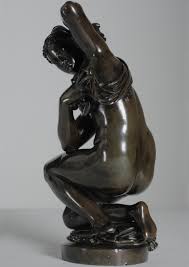
I’d be tempted to widen this category of approach – or even introduce a new one – because several poems in the anthology interrogate the artist specifically about the artistic methods used to create the art object. Sue Boyle does this in detail about the making of Antonio Susini’s bronze figure, ‘Crouching Venus’: “Coated in plaster, lowered into fire, / she must be negated, melted from her mould”. There are also elements of this approach in the poems by Dawn Gorman and Phillip Gross, the latter dwelling as much on the making of a Beadwork Basket as on its illustrations of Charles II and Catherine of Braganza. Gill Learner’s poem also looks over the artist’s shoulder as he glazes a 15th century earthenware dish.

My method 9 – interrogating or engaging with one of the figures in the art work – was used by Caroline Heaton, Wendy Klein and Tim Liardet. Klein and Liardet both directly address figures in the image (for example, “Someone chose the best for you, Mary Bourchier” and “You let the baby grip his fingers”). Heaton’s engagement with Plura’s marble statue of ‘Diana and Endymion’ is a bit less direct, using the third person (rather than a second person address) to think herself into Diana’s state of mind:

Confined to the island

of the self, she laments

the chill of her lunar circuit,

its lonely eminence.

imgres

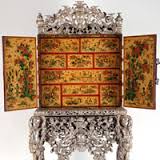
Rosie Jackson approached a piece of furniture, ‘The Witcombe Cabinet’, via a brief description of it but quickly developed thoughts about her own mother and indeed herself which I’d take to be my method 10 – using the art object to interrogate or enquire into one’s own life: “”My mother would have loved it here, / the roped off beauty […] But I ask questions of locked drawers”.

imgres

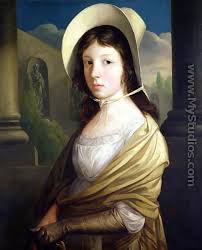
I think Claire Williamson mostly used method 3 – describe and make use of researched materials – in her poem on Thomas Barker’s painting of ‘Priscilla Jones’. The relationship between the sitter and the artist is the focus here, their romantic engagement and subsequent “passionless” marriage. In fact, I’ve not checked details of the painting/poem and I suppose it maybe that Williamson is making all this up – in which case she’s adopting method 2 – describe and imagine beyond the frame as George Szirtes does in anticipating the adult life of the boy in ‘Garton Orme at the Spinet’.

So the methods used in this anthology are fairly limited – seven of the fourteen I proposed. Those not adopted here are several varieties of ventriloquism (getting minor figures or objects to speak up; getting the artists to speak directly), the kinds of poem that more narratively describe encounters with art objects in a gallery or other location and a more tangential approach.

imgres

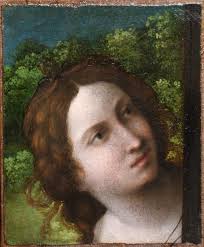
Finally, Lawrence Sail’s poem describes a Mantuan School ‘Female Head’ and is probably the ‘purest’ ekphrastic poem in the anthology in that it does little more than describe the image – method 1. However, Sail addresses the woman imaged as “Our lady of the liminal” and as such he breaches the borders (“offstage”) a fair bit, beginning to imagine beyond the frame to some degree (method 2). It’s a lovely poem and deserves quoting in full:

Female Head, about 1525

Our lady of the liminal –

witness at her back the margins of

the unruly forest,

and the focus of all her attention

being offstage.


But the heart of the story is locked

in the ghost of her gaze – its candour,

the early signs

of grief, a drift to the verge

where hope wavers.


And everywhere, time on the make –

in the darkening turquoise of the sky,

the slow swell

of the trees, the craquelure moving up

to infect her soft features.

An Interview with Hilary Davies

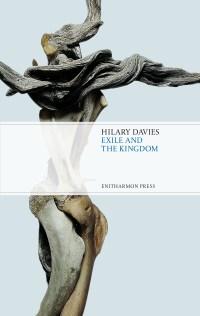
In January this year, I posted a review of Hilary Davies’ powerful new collection, Exile and the Kingdom. In what follows, she has been kind enough to answer a few questions which presented themselves as I read the book. In her replies, Davies ranges across poetic influence, the importance to her work of a European perspective, the question of structuring a poetry collection, the relation between the spiritual and the everyday, and the difficulty of writing about grief and loss.

9781910392171

MC: Could you say a little about the significance of the title of the book, Exile and the Kingdom?

HD: Exile and the Kingdom treats of preoccupations that have been with me all my life.  The collection consists of five distinct but interrelated sequences which all have to do with pilgrimage in some way. Our pilgrimage through life is in a very real sense an exile but how we approach it, are changed by it and by those we meet and love is also how we may approach the kingdom.

MC: The book’s five parts have a clear structure and I found myself wondering how that architectural ordering of poems came about and how it related to the chronological sequence of their being written.

HD: Since my first book of poems, The Shanghai Owner of the Bonsai Shop, back in 1991, I have written in all my collections in sequences. This is because I found that discrete lyrics, unconnected to any wider context, were no longer sufficient by themselves to allow me to address the themes I wanted to address. I began to think in terms of a broader architectonic for the poems I wanted to write: each time I have embarked on new subject matter, I have sought a scaffolding, a framework, to give my work the reach I felt my chosen topic needed. Sometimes these have been quite simple, sometimes very complex, requiring a great deal of research in a dizzying variety of areas. This research has been an integral part of the poetic voyage and creative process for me over the years, and I find it exciting and exhilarating.

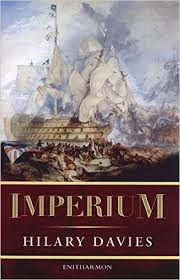
Exile and the Kingdom is no exception. The eponymous section comes last. It was, however, actually the first to be written.  Finding this particular theme took a long time, over a year; the title, much longer. There were several false starts and considerable frustration. This was in part the normal consequence of having just published my third collection, Imperium. At such moments, there is always a period, first, of satisfaction and repletion, then an insidious feeling of lack of purpose, then increasing anxiety that you may never be able to do it again.

imgres

MC: The use of the liturgical ‘hours’ as the structuring device in the concluding ‘Exile and the Kingdom’ sequence is very powerful. Is this something that formed part of your original thinking about the sequence or a later ‘addition’ that seemed right?

HD: I knew I wanted to write something about the stages in my spiritual life up till then, including my conversion to Catholicism, but couldn’t see how to do it. Slowly, I discovered a structure: the liturgical hours or divine office.  These are amongst the very oldest of Christian prayers, dating back to the time of the apostles and influenced by Jewish practice. They were incorporated, in altered form, into Cranmer’s Book of Common Prayer and are consequently familiar to Anglicans the world over, in, for example, evensong; they are still observed in monastic communities and in both the Eastern and Catholic churches. What was especially interesting to me was their symbolism, which is a dual one. They mark out the day and the night, and are thus associated with different states of the soul, different spiritual aspirations, different signposts on the journey of life. Traditionally, they have also been attached to different texts in the New Testament, something of which I was not aware initially and which became part of the quest, to see how these passages related to events in my own life. They did, of course, as all great religious texts do, because part of their aim is to explain ourselves and the forces that we encounter to us.

MC: The closeness of the spiritual to the everyday seems to be one of the points of the book’s second sequence, ‘Songs from the Lea Valley’ which strikes a very different note, more personal, urban and multicultural.

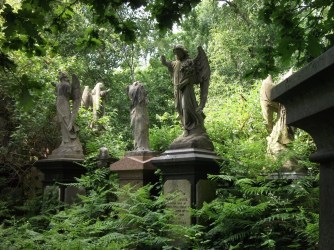
HD: My home for the last 25 years has been the Lea valley, on the eastern edge of London. It is of huge importance to the history of the city, and yet remains unknown to many inhabitants in spite of being chosen for the site of the Olympic park in 2012.  In order to celebrate it, I began writing occasional lyrics over a period of years, evoking the river, marshlands, the city, those who have lived here and given it its character way back even into the Stone Age.  It is a hugely cosmopolitan place – more languages are spoken in my constituency than anywhere else in Europe – and that spirit of ‘live and let live’, the melting pot of cultures and the vibrant atmosphere it creates, is what I wanted to convey in the poem ‘In Abney Park’. This is a 19th century cemetery in Stoke Newington, now a nature reserve beloved of walkers and mothers with babies. It is peopled with mourning angels, as was the custom of the time, but lies only yards from the bustle of Ermine Street, the great Roman road north to York, along which the trade and armies of empire have been travelling for two millennia.

36680070
Abney Park, Stoke Newington, north London

MC: Throughout the book you make use of two quite distinctive poetic styles. One is a more discursive, even philosophical, free style of unrhymed verse; the other is more formal and lyrical. Are they contrasting or complementary?

HD: The question of styles emerged really from the differing subject matters. The personal poems naturally spoke in a lyric voice, the longer sequences do mirror the fact I am trying to reflect on larger historical and philosophical themes

MC: In that variety of poetic voice, I seem to hear the influence of writers like T.S. Eliot, David Jones, even George Herbert. Which predecessors do you look to when you write, or perhaps which predecessors do you try to circumvent?

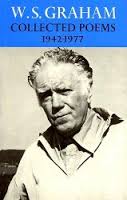
HD: I don’t consciously look to any poets when I am writing, which of course is not to say I am not influenced by certain writers, as we all are. But these influences hopefully have become fully digested in a mature style.  I have been influenced by and admire the poetry of Jones, Herbert, Eliot, Donne, Traherne, Vaughan, Yeats, Dickinson, Hopkins, Patrick Kavanaugh, W.S. Graham, David Gascoyne, George Barker.  But also Baudelaire, Apollinaire, Verlaine, Rilke, Jean Follain, Hofmannsthal, Goethe, Lorca. And others no doubt that temporarily escape my mind.  These are for wildly different reasons and sometimes as much for subject matter as prosody.

images

MC: Your love of the landscape and culture of France and Germany comes through powerfully in the book. Do you see yourself as an British poet who travels, or a European poet who lives in the UK?

HD: I first crossed the Channel at the age of fifteen, at a time when Britain was negotiating its entry into the Common Market. In those less blasé times, the land on the other side seemed unimaginably exotic and profoundly exciting. Two years later I went to Germany, West Germany as it then was – a tiny difference in nomenclature that encapsulated the catastrophe of the 20th century.  These visits changed the course of my life: I went on to read French and German at university, and to earn my living teaching these languages and cultures for over thirty years while pursuing my writing as a poet.

This means I am a committed European. I have lived in Paris and spent over 20 summers in France. I have written poems about the 12th century lovers and thinkers, Abelard and Héloïse, and poems set in the great Paleolithic landscapes of the Dordogne and the Vézère: I have charted the spiritual pilgrimage that began for me in Poitiers and the Marais in Paris.

MC: So that sense of connectedness to the European mainland and its cultures has been important to you for a very long time?

HD:  The theme of interconnectedness, of the richness that the admixture of peoples brings, was the major inspiration behind the fourth section of the collection, ‘Rhine Fugue’.  This was an ambitious project which required a great deal of research over 5 years. France and Germany are part of my psyche and part of my heritage as a European.  They have also, as we notoriously know, been for many centuries alternately brothers and enemies, and the Rhine is the great watercourse that both unites and divides them.

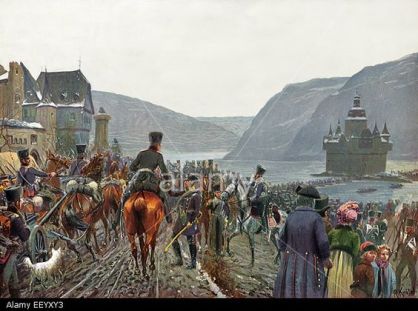
The notion of fugue was suggested to me by the fact that Beethoven was born on the banks of the river in Bonn; the contrapuntal nature of this musical form exactly fits the interweaving, recapitulations and reversals of the history of the Rhine.  I wrote the poem in seven overlapping and yet distinctive sections, drawing on my own experiences with the kindness of strangers as a teenager; the Prussian general Blücher’s crossing of the Rhine in the cold dead of night to go and help Wellington at Waterloo; evocations of the benign influence of the river in different French and German locations; the rich Jewish Ashkenazim tradition during the Middle Ages in Worms; William Tyndale’s publication of his world-changing English translation of the New Testament while in exile, also in Worms; Beethoven as a exemplar of man’s attempts to reach the spiritual world through music and, finally, a return to the Rhine as a symbol of the need for cohesion and friendship in Europe, and what happens when we don’t have that.

1f6e1630809227d75ce1fe345fbb9ac4
Blucher crossing the Rhine

When I began this poem, it seemed like a rather private concern of mine that might have little resonance with my readership; in 2017, it has all the urgency of a warning against a not so benign return to the nationalisms and wars of the past,

MC:  This is where we wish poetry had a wider and more powerful reach! You catch that admonitory sense so well in the lines: “O the melancholy of broken-backed bridges! / For razed cities never gave garlands.”  

HD:  At the height of the Second World War, two men from Rhenish backgrounds, Robert Schuman, a Frenchman of German and Luxemburg origin, and Konrad Adenauer, former mayor of Cologne, were both in hiding from the Nazis. Independently, and later together, influenced by the Christian democratic thinking of Jacques Maritain, they conceived of a post-war Europe transformed and redeemed by reconciliation and co-operation. Their vision underlies the European project and the peace that has obtained in Europe for the last 70 years. It is the Europe that I grew up in and which has sustained me poetically and professionally all my life.

MC: Despite a number of ‘in memoriam’ poems, it struck me that this was a book as much about love as grief. Did the book grew organically in that direction or was there something more willed about it?

HD: Yes, the poems were about grief, its extreme and shocking impact, but also about how in the end love overcomes this. But ‘overcomes’ makes it sound trite. It is a much more subtle, protracted and painful process than this in reality, and actually one that goes on for the rest of your life. I know this now because in the summer of 2013, my husband, the poet and editor Sebastian Barker, was diagnosed with inoperable lung cancer and given three months to live.

In fact, he lived another seven; he also lived to see his last and best collection, The Land of Gold (Enitharmon, 2014), reach publication. It contains his farewell to life, to love, his family, to the landscapes he loved in France and Greece. It contains his last and most profound statement about hope and faith, from which he gave a reading in Cambridge two days before he died.  This journey is one he had begun many years earlier but one which I had gone with him, in marriage, poetically and spiritually. His death provoked profound grief and a sudden and violent realignment of everything in my life that had seemed so certain. I have described it as ‘severe growth’: growth that was not sought for nor wanted, but which came upon me just the same.  I am still discovering what this means.  The central sequence of the book is about the loss, confusion, terror and celebration that the death of one we love occasions.  ‘Lympne Hill’ is a memory of looking out over the huge panorama at Lympne on the south coast towards Romney Marsh and the sea, where my husband seemed to touch, just for a moment, heaven. It is my thanksgiving to him.


You turn towards me, burning and happy,

That boy running the clouds over and over

Pell-mell into the hollows, this man

In his years reaching with all his might

Far out on life’s cantilever to touch his soul’s blue.


Whitesands Bay
Whitesands Bay, near St Davids

MC: The final poem of the collection is set at St Davids in Wales. You seem to be responding partly to the bleakness of the landscape. What streams of thought and experience seem to be coalescing there?

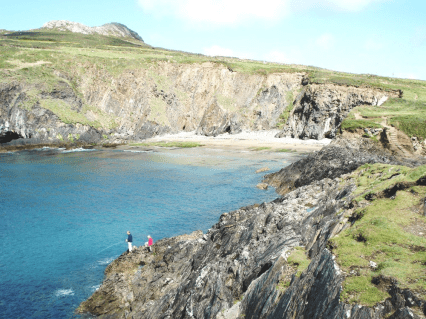
HD: That poem came out of a visit I made there at Christmas 2007, not the first by any means, as I am half Welsh. By chance we met a friend there who was visiting her very devout, sweet and Catholic mother, sitting in her ‘ragged kitchen’, and the friend then took us to St. Non’s Chapel, which is right out on a promontory exposed to the sea. Its situation struck me very much. The dusk came down in a very clear sky, with that indigo you get in winter twilight. And I was very conscious of the geology of that part of the world. Some of the oldest rocks in the world are exposed near St. David’s. Pre-Cambrian, pre-life on land, 620 million years old estimated. Hence the reference to the ‘oldlands’ where the human presence is compared to a baby in its mother’s arms.  At Whitesands Bay, near St. David’s, the shales are Cambrian and the rounded domes you see at the top are characteristic of those very old rocks.

I also remember I had Stanley Spencer’s painting of ‘Christ Carrying the Cross’ in mind in writing the line ‘The saints lean from her windows against the night’. And the final line – the concluding line of the whole collection – is from the liturgy of Compline: ‘God grant us a quiet night and a perfect end’. But the whole poem is shot through with liturgical references as is, of course, the whole sequence.


christ-carrying-the-cross-1920[1]
Stanley Spencer, ‘Christ Carrying the Cross’


:


Unquiet to Unbusy – Coleridge, Hartley Coleridge and ‘Frost at Midnight’

This week I was invited to another of Michael Glover’s wonderful Bowwowshop soirees at the Omnibus Arts Centre in Clapham. The focus was on the work of Coleridge. Tom Lowenstein read from From Culbone Wood – in Xanadu (Shearsman Books). There was also fiddle music and an aria from Mozart and parts of ‘The Ancient Mariner’ performed as a sea shanty (it really worked!). What follows is the text of my contribution (at some length, I’m afraid). By the way, Hartley Coleridge must be in the air at the moment as this blog post has just been put up by Alan Price.

I have been asked to read ‘Frost at Midnight’ – the 1798 poem in which the young father watches his sleeping child, thinks of his own past and foresees for the boy a bright future. The suggestion was also to focus on the more human side of Coleridge, less on the unique genius, the flood of ideas and knowledge, more on what we must all share with him: quiet moments of reflection, how we are made by our past, our hopes for the future, how blood is thicker than water.

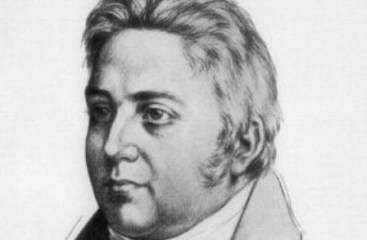
So – in 1824, the young Thomas Carlyle visited Coleridge in Highgate, where he was now staying with Dr Gillman. The poet was 52 years old. Carlyle describes  – “ a fat, flabby, incurvated personage, at once short, rotund, and relaxed, with a watery mouth, a snuffy nose, a pair of strange, brown, timid, yet earnest looking eyes, a high tapering brow, and a great bush of grey hair” He seemed a good soul (thought Carlyle), “full of religion, and affection and poetry and animal magnetism”.  Perhaps his observations had already been influenced by William Hazlitt’s earlier description, noting the poet’s nose, “the rudder of his face, the index of his will, [how it] was small, feeble, nothing – like what he had done”. Carlyle also concluded with that thought, “he wants will. He has no resolution”.

samuel-taylor-coleridge-448

Given what Coleridge had been through in his life, Carlyle’s portrait is really one of a survivor against the odds. A couple of years earlier, Coleridge was contemplating the four greatest sorrows of his life. He noted: his failed marriage with Sara Fricker, his wife of almost 30 years, the mother of his 3 children; the bitter quarrel with Wordsworth; the relationship, that perhaps never even got going, with Sara Hutchinson – Asra. Coleridge’s fourth sorrow was a much more recent wound, still raw, on-going when Carlyle met him in 1824. It bears on my main subject, Coleridge’s poem about his first born son, Hartley.

To explain, I’ll go back a few years  . . . In a life that Richard Holmes in his wonderful biography has described as full of “black storms and glittering sunlit spells”, the year 1819 was a great, sunlit moment. The 23 year old Hartley had just secured a Probationary Fellowship at Oriel College, Oxford. His father and mother were overjoyed, a feeling they shared – so an unusual moment. Coleridge could reasonably conclude that the boy he had always loved best had perhaps not been harmed or disabled by his peculiar brand of absentee fathering, the difficult marriage of his parents, his father’s often public financial, literary and opium-related humiliations.

But storm always follows sunlight for Coleridge. In June 1820, Hartley – the little child who, 22 years earlier, had slept so peacefully on a frosty night in Stowey in Somerset – Hartley was accused of drunkenness, of “sottishness, a love of low company, and general inattention to the College rules”. In a moment of ghastly, public humiliation, his Fellowship was not to be renewed. Hartley himself seems not to have dared to inform either parent; he vanished for days on end and try as Coleridge might the College would not relent.

Flock-of-Starlings

It was a disaster. Ann Gillman remembers Coleridge being “convulsed with agony” over it – surely in part because the accusation of intemperance and drunkenness reflected his own long-established, unshakeable addictive behaviours. The sins of the fathers, is what Coleridge must have been thinking.

And really, if we look back at Hartley’s life the disaster was not so unexpected. With the benefit of hindsight, we can trace events, poignantly, in reverse. During his third year at Oxford, in 1817, Hartley had come to visit Highgate and among the promising signs Coleridge fretted about his son’s unsystematic approach to life, there was some drunkenness, an evident loneliness.  On a return visit to Stowey, the clever college boy had tried to enamour himself with the local girls but they recoiled from his strangeness, melancholy, his dark shaggy beard. They called him the Black Dwarf.

At the age of 18, in 1815, he’d visited his father in Calne, Wiltshire, first ever summer vacation with his father. They celebrated the victory at Waterloo but Hartley was fascinated by the travelling players, by itinerants. He seemed solitary, a bit restless. People again remarked on his odd manners, his scrawny black beard. At 15, Hartley’s mother was optimistically thinking he might make a lawyer, with his “Gift of the Gab”. They were living in the Lake District and Hartley was a great local favourite, though Sara thought “a little spoilt” – in adult company he was not only permitted to speak, he was expected to speak.

At 13 he was brilliant – but quarrelsome. At the age of 10, planning a visit to his West Country relations, Coleridge wrote him a letter – a Polonius sort of letter – on how to behave. His son, he pointed out possessed a “self-gratifying fancy”, his spirits always at “high tide and flood”. The father recognised a tendency that swept away all “unpleasant and painful thoughts”. There were refusals to accept discipline; there was stealing food, snatching at things, standing in half-open doorways. Too often, the boy used his cleverness for lies, fantasies, false excuses. Coleridge urged on his son no procrastination, no self-delusion.

Even as a young child, Hartley had once asked his father what it would be like if there were Nothing! – just darkness and coldness. Apparently, he’d be thinking of it all day. The boy was 5. He often found playmates more a burden than a delight. A year earlier, celebrating moving from baby clothes into trousers, Coleridge already mourned the child’s old, joyous ways of playing. His activity now seemed governed by a more self-conscious “eager & solemn gladness”.

imgres

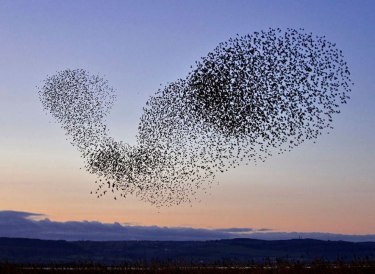
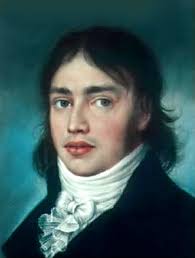
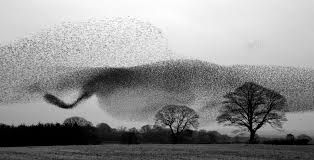
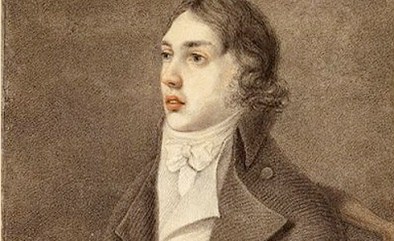
I imagine him watching the boy – the young father as he was described by Dorothy Wordsworth in 1797. She thought Coleridge then plain looking, pale and thin, a wide mouth, thick lips, not very good teeth. He had longish, loose-growing, half-curling rough black hair, his eyes large and full, not dark but grey, fine dark eyebrows, an overhanging forehead. And this is the man who, around this time, watched a massive starling flock in flight. He described it “like smoke, mist, or any thing misty without volition – now a circular area inclined in an Arc – now a Globe – now from complete Orb into an Ellipse and Oblong [. . . ] & still it expands & condenses, some moments glimmering & shivering, dim and shadowy, now thickening, deepening, blackening”.

imgres

This image haunted him for the rest of his life. It became more and more clear he had been fascinated by a self-image, a counter image of uncertainty, a lack of volition and determination, a swirling, aimless life quite unlike the one he had imagined for himself and his first born son in ‘Frost at Midnight’. In the poem Coleridge finds another self-image – the thin carbon film accumulated on a fire grate. Superstition told that this ‘stranger’ as it was called, foretold some new arrival. Coleridge remembers thinking of it as a sign of good things to come in his own unhappy school days at Christ’s Hospital in London.

In lieu of my reading of ‘Frost at Midnight’, here it is read by Richard Burton with accompanying text.

images

Such hopes were not to be. After the Oriel College disaster, Hartley was urged into school-mastering but he was never very good at classroom control. The boys must have found him odd, melancholy, solitary – apparently suicidal at times.

By 1829 – now fully 5 years after Carlyle had visited Coleridge in Highgate that time – Hartley had drifted out of teaching, was just wandering aimlessly through the Lake District, living with farmers, writing a few sonnets while the aging father fretted vainly in Gillman’s Highgate garden. In 1825, Coleridge made a self-portrait in sonnet form. In the poem ‘Work Without Hope’ he is the “sole unbusy thing”, uncreative, not having built anything to last, nor preparing to build. In the octave, amaranth is the mythical flower awarded to successful poets.

Work without Hope

All Nature seems at work. Slugs leave their lair—

The bees are stirring—birds are on the wing—

And Winter slumbering in the open air,

Wears on his smiling face a dream of Spring!

And I the while, the sole unbusy thing,

Nor honey make, nor pair, nor build, nor sing.

Yet well I ken the banks where amaranths blow,

Have traced the fount whence streams of nectar flow.

Bloom, O ye amaranths! bloom for whom ye may,

For me ye bloom not! Glide, rich streams, away!

With lips unbrightened, wreathless brow, I stroll:

And would you learn the spells that drowse my soul?

Work without Hope draws nectar in a sieve,

And Hope without an object cannot live.

If we humanise Coleridge – if we turn aside from the work achieved, half-achieved, the fragments and Notebooks – perhaps we see too much of tragedy: the great potential, a life unfulfilled. After all this is the man who watched Hartley play and understood that for children the means is the end; he knew beauty is the intuition of the one in the many and therefore the first-born of beauty is the geometrical shape, the triangle; he thought of the sonnet as a sigh, something we let escape us, a single thought; he understood the poet must possess the ear of a wild Arab listening in the silent desert, the eye of a North American Indian tracker, the touch of a blind man feeling the face of a darling child; he thought poets were those who knew where the riddle of the universe remained unsolved; he thought a punchy, crisp style of writing lacked the cement of thought, the hooks and eyes of memory; he thought altruism required a generosity to oneself, without which we live in a despotism of the present moment.

tumblr_lw9ofoo8l21qf4hl5o1_500
Hartley Coleridge

And perhaps there was a little honey at the last. In 1833, Hartley published the poems he had been working on and dedicated them to his father. He offered them in thanks for what Coleridge, for all his flaws and personal failings – had given him. It’s the note for us, who love English literature, to strike too: gratitude. Hartley’s sonnet, like a sigh, poignantly alludes to and quotes ‘Frost at Midnight’ on his father’s early hopes for the boy whose own life went awry.

Father, and Bard revered! to whom I owe,

Whate’er it be, my little art of numbers,

Thou, in thy night-watch o’er my cradled slumbers,

Didst meditate the verse that lives to show,

(And long shall live, when all alike are low)

Thy prayer how ardent, and thy hope so strong,

That I should learn of Nature’s self the song,

The lore which none but Nature’s pupils know.

The prayer was heard: I ‘wander’d like a breeze’,

By mountain brooks and solitary meres,

And gather’d there the shapes and phantasies

Which, mixt with passions of my sadder years,

Compose this book. If good therein there be,

That good, my sire, I dedicate to thee.

William Carlos Williams’ Brueghel Poems

Last week I travelled down to the Holburne Museum in Bath to take a look at their Brueghel dynasty exhibition – this is where I am running a poetry workshop this coming weekend (25th Feb – it’s waiting list only now I believe). So after last week’s blog post about the varieties of ekphrastic poetry, my mind is still on the same topic. Unsurprisingly I have been looking at William Carlos Williams’ late ekphrastic poems in Pictures from Brueghel (1962). I think the reasons why Williams was so drawn to these images 50 years ago remain the reasons why Brueghel’s star continues to rise in popularity (not just among ekphrastically-inclined writers) in our century.

pieter_bruegel_the_elder_-_wedding_dance_in_the_open_air_-_wga03505

We like Pieter Brueghel the Elder’s work because it gives an impression of conveying a plain, unvarnished truth and this was done by self-consciously reacting against Romanist and more conventional, stylised Renaissance models. This gives many of the images a democratic or at least a demotic feel (something Melvyn Bragg and his guests pursued in the In Our Time edition on Brueghel’s painting ‘The Fight Between Carnival and Lent’). We also respond to Brueghel’s gentle caricaturing of human figures which seems to be done at least as much out of amused sympathy as satire. We are intrigued as well by Brueghel’s tendency to literal eccentricity, to displace the expected centre of his canvas, most notably in Biblical subjects where the Nativity or the journey to the Cross is subsumed – hard to spot – in a larger, village scene. In other images, there seems almost to be no clear centre of focus (in pictures on children’s games or Netherlandish proverbs, for example). For Williams, a 20th century poet interested in breaking with tradition (linguistically and formally), on fully recording the modern world as it is, and with a clear democratic (American) focus, Brueghel’s work makes an obvious rhyme.

Most of Williams’ poems about Brueghel’s pictures simply describe what is to be seen. There is a fidelity to the fidelity of what Brueghel does. The closing lines of ‘Children’s Games’ praises the way “Brueghel saw it all / and with his grim // humor faithfully / recorded / it”. ‘The Wedding Dance in the Open Air’ describes plainly the “riotously gay rabble of / peasants”, the poem intent mostly on conveying the sheer energy and vitality of the scene, climaxing in the “Oya!” cry which comes as much from the mouths of the peasants as from the admiring poet. What adds interest to this poem is the opening statement that such a fizzing and spilling of energy is “Disciplined by the artist / to go round / & round”.

512px-pieter_bruegel_the_elder-_the_corn_harvest_august

‘The Corn Harvest’ is likewise largely descriptive of the particular canvas though the role of the artist as ‘organiser’ is noted at the outset. The poem ‘Peasant Wedding’ repeats this descriptive method, varied only by the poet’s opening imperative address to one of the figures: “Pour the wine bridegroom”. The tension in this poem is less between artist and his boisterous subjects but between the boisterous wedding guests and the bride who sits “awkwardly silent”. Williams’ frequent thoughts about the nature of the artist surface most clearly in ‘Self-Portrait’ (a Williams’ mistake – in fact a painting not by or of Brueghel at all).  Starting again from plain description, the poem comes to focus on the artist’s eyes (“he must have / driven them hard”) and the poem deduces/speculates on the artistic commitment this implies: “no time for any- / thing but his painting”.

icarus

In ‘Landscape with the Fall of Icarus’, Williams looks at the same painting that Auden did some 20 years earlier. Williams’ take is very much like Auden’s and both are finely attuned to Brueghel’s image which characteristically displaces the centre of interest (the falling boy’s body). For Williams, the event occurs “unsignificantly” and the splash goes “quite unnoticed” or as W H Auden put it more memorably as the Second World War got under way: “everything turns away / Quite leisurely from the disaster”.

anbetung_der_konige_bruegel_1564_-_cropped

‘The Hunters in the Snow’ mixes plain description with an interrogation of the artist’s choices as “organiser” of the image, his placing of objects to left or right, background or foreground. Williams again expresses his admiration for Brueghel’s concern “with it all”, for the older artist’s inclusive, comprehensive engagement with the world; this from the poet who wrote of wheelbarrows and cold plums. This insistence on art’s encompassing what is there (more than what we’d like to be there) emerges again in ‘The Adoration of the Kings’ (Williams also wrote about this image in Paterson (1958)). Here. Williams uses a bit of art history to point out Brueghel’s divergence from “the Italian masters”. Brueghel’s mind is said to be “alert” and “dissatisfied with / what it is asked to”. Rather than a slavish adherence to tradition, Brueghel is a “chronicler”, in particular in the eccentric portrayal of Joseph, chatting distractedly in the background, and Mary, eyes downcast, self-deprecating, almost hidden from view.

1024px-pieter_bruegel_the_elder_-_the_parable_of_the_blind_leading_the_blind_-_wga3511

The best of these poems is ‘The Parable of the Blind’. Using his usual devices of description of the image and comments on the artist’s judgment (its colours and diagonal arrangement of figures), the punch of the poem arises from an imaginative reading into the image. Some of the blind men’s faces are raised skywards, Williams says ironically, “as towards the light”, yet in reality they follow one another “stick in / hand triumphant to disaster”. It’s a “horrible but superb” picture” says the poem and perhaps Williams’ sense of the horror lies in the fact Brueghel has portrayed this moment (one of many that seem to have proverbial roots) with a fidelity that, on this occasion, accentuates the grimness far more than any possible humour: it’s an unusually cruel image.

14 Ways to Write an Ekphrastic Poem

Update (June 2019): I have written more on ekphrastic choices in a recent review published in Agenda Poetry.

Ekphrastic poems (ie. poems stimulated by visual art) are on my mind a great deal as I have been planning the all-day workshop I have been asked to run at the Holburne Museum in Bath on the 25th February, 2017. This particular exhibition, ‘Breughel: Defining a Dynasty’, opens on the 11th February and was in the news recently as it will include, among many others, a newly-rediscovered painting by Peter Breughel. I’ve been reading a variety of poems derived in some fashion from the poet’s encounter with visual art and I wondered if there was a way of categorising the various approaches. There are probably many – but these 14 ways (in 5 subgroups) are what I have come up with and they might usefully serve as a way to kick-start ekphrastic poems of your own. Try one a day for the next fortnight!

Through Description

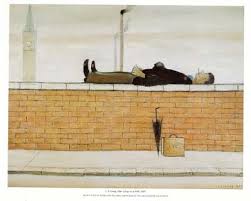
  1. Describe – and do no more. This is always the poet’s initial desire, to put into words what has caught our attention visually (and because attention has been visually caught there is something about this image or object that chimes with the writer’s subconscious). In terms of the poet’s intention, the wish to describe may be sufficient (the subconscious may do the rest). Examples might be Michael Longley’s ‘Man Lying on a Wall’ (from Lowry’s paiting of the same name) or William Carlos William’s ‘The Dance’ (from Breughel the Elder’s ‘Peasant Dance’).

imgres

  1. Describe but imagine beyond the frame – Derek Mahon’s ‘Girls on the Bridge’ (after Munch’s painting of the same name) does this, beginning with description of the scene but then wonders where the road leads away to in space, asks what the next day will bring (in time) and concludes with allusions to Munch’s more famous image ‘The Scream’: “bad dreams / You hardly know will scatter / The punctual increment of your lives”.

imgres

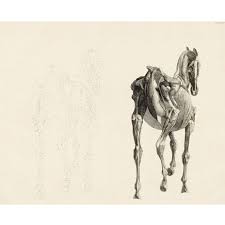
  1. Describe but incorporate researched materials – an easy option in the world of Google where the artist’s life or love life, the political context etc are easily accessed. Edward Lucie-Smith does this in ‘On Looking at Stubbs’ ‘Anatomy of the Horse’’, working with the gossip of local people in the Lincolnshire village where Stubbs worked at preparing the horse’s carcass: ‘His calm knife peeling putrid flesh from bone”.

imgres

Through Ventriloquism

  1. Make Main Figure Speak – the most common approach as famously done in Carol Ann Duffy’s ‘Standing Female Nude’ (from Georges Braque’s ‘Bather’). Thomas Hardy makes the Elgin Marbles speak in ‘Christmas in the Elgin Room’.


  1. Make Minor Figure/s Speak – UA Fanthorpe’s ‘Not my Best Side (Uccello’s ‘St George and the Dragon’) might be considered a hat-trick of the category above but her decision to make all 3 characters in the painting speak, casting side-lights to and fro, means I put it here. Delmore Schwartz’s ‘Seurat’s Sunday Afternoon along the Seine’ – while more free indirect speech than ventriloquism – has a similar effect, visiting each of the characters in Seurat’s picture and allowing their perspective to be aired.

imgres

  1. Make Objects Speak – this is an obvious category though I’m a bit short on illustrations of it. BC Leale’s ‘Sketch by Constable’ almost does it by concentrating attention on a tiny dog sketched in the corner of an image of Flatford Mill. Ann Ridler also comes close by largely ignoring the foreground figures and focusing on the landscape only in ‘Backgrounds to Italian Paintings’.


  1. Make the Artist Speak – writing about Van Gogh’s ‘Portrait of the Artist’s Mother’, Robert Fagles makes the artist speak, denouncing photography and preferring the expressive qualities of paint: “Of the life hereafter I know nothing, mother, / but when I paint you what I feel is yellow, / lemon yellow, the halo of rose”.


Through Interrogation

  1. Of the Artist – Vicki Feaver’s ‘Oi yoi yoi’ (on Roger Hilton’s image of the same name) starts with description but quickly begins talking directly to Hilton (“You were more interested / in her swinging baroque tits”). Interestingly, ekphrastic poems need not always stand in awe of the work; looking at Francis Bacon’s ‘Study for Portrait on Folding Bed’, Thomas Blackburn has a long one-sided conversation with the artist, charting a growing disenchantment with Bacon’s work, accusing him of “uttering, with superb, pretentious / Platitudes of rut, that you have said and said”.

 imgres

  1. Of the Figure/s – I have always admired Gerda Mayer’s poem, ‘Sir Brooke Boothby’ (after Joseph Wright’s image), in which she addresses with Sir Brooke about his languid pose, his copy of Rousseau, his intense scrutiny of the observer. Peter Porter’s many poems about art objects are hard to categorise but ‘Looking at a Melozzo da Forli’ (an image of the Annunciation) interrogates both image and the figure of Mary herself.

imgres

  1. Of Yourself – probably all ekphrasis is a sort of self-interrogation but some poems make this more clear. The address often takes the form of admissions of ignorance or obtuseness in the face of the image or the asking of rhetorical questions. Robert Wallace on ‘Giacometti’s Dog’ once again begins in description but asks questions about the fascination of the image, eventually concluding “We’ll stand in line all day / to see one man / love anything enough”.


Through Giving an Account

  1. Of Your Encounter – Wallace’s poem spills across these artificial categories and might be placed here, among poems where the poet explicitly records details of his/her encounter with the work of art. Yeats famously does this in ‘The Municipal Gallery Revisited’, looking at images of Augusta Gregory and John Synge. David Wright (who lost his hearing at the age of seven) movingly describes his visit to Rome to see Maderno’s sculpture of St Cecilia (patron saint of music) in his poem ‘By the Effigy of St Cecilia’.

imgres

  1. Of Gallery Visitors – poets often comment on the behaviour or experiences (imagined) of gallery visitors (and even the gallery attendants!). Gillian Clarke does this in ‘The Rothko Room’: “In this, / the last room after hours in the gallery, / a mesh diffuses London’s light and sound. / The Indian keeper nods to sleep, marooned / in a trapezium of black on red”.


  1. Of Others – admittedly a catch-all category this one, but sometimes (especially when the works of art appear in churches) the poet can be interested in speculating about the responses of more ‘ordinary’ people. Thom Gunn does this toward the end of ‘In Santa Maria del Popolo’ where Caravaggio’s ‘Conversion of St Paul’ is displayed. Having recorded his own response to the image he ends by staring at the old Roman women who come to kneel before it: “each head closeted // In tiny fists holds comfort as it can. / Their poor arms are too tired for more than this / – For the large gesture of solitary man, / Resisting, by embracing, nothingness”.

 imgres

Come At a Tangent

  1. Finally, the ekphrastic moment can be presented as if an after-thought, or illustration of a poem already half composed. There are famous examples of this, especially Auden’s ‘ Musee des Beaux Arts’ which spends most of its length contemplating in very general terms the way old paintings present suffering. Only towards the end does Auden refer to Breughel’s ‘Fall of Icarus’ which he describes in some detail to suggest how “everything turns away / Quite leisurely from the disaster”. RS Thomas’ ‘Threshold’ does something similar, only concluding with allusions to Michaelangelo’s painting of Adam in the Sistine Chapel. And Seamus Heaney’s ‘Summer 1969’ records a visit to Madrid as the Troubles boiled in Northern Ireland, and only latterly does the poem focus on Goya’s ‘Panic’: “Saturn / Jewelled in the blood of his own children, / Gigantic Chaos turning his brute hips / Over the world.imgres

Three poems by Martyn Crucefix

Sharon Larkin's avatarGood Dadhood

Empty the bath

Late and quiet with all my keys
for the door, I hope you’ve not
yet been laid in your cot,
but find in the bathroom
a tubful of water, empty, well-
used and barely lukewarm

 and to tell you the truth,
there’s the earth of my regret,
the little warmth the water
has, its tiny fractions
stolen from your playful heat

how it shows I’ve come too late
for the intimacy
of your straight-backed body
cut at the waist by cooling water,
those few gallons of sudsy wash
that cooled that much more slowly
for you being there

that now I let go, stir away
with both hands, think something
obvious, grasping what is gone. 

Nightmare

His first, its sudden grotesque
smashing up
through the trusted surface
of sleep, a scrabbling clutch
to be escaped from,
a tightening on leg and arm,
fastened to his vulnerable

View original post 297 more words