Helen Farish’s new collection, ‘The Penny Dropping’, reviewed

An edited (shorter) version of this review first appeared in Poetry Salzberg Review in June 2025. Many thanks to the editor, Wolfgang Görtschacher, for commissioning the writing of it. The collection, The Penny Dropping, was shortlisted for the TS Eliot Prize in 2024.
Tennessee Williams once wrote that ‘memory takes a lot of poetic licence’, but Helen Farish’s memory poems in The Penny Dropping (Bloodaxe Books, 2024) declare from the outset that their intention is to set things (here quoting TS Eliot) ‘in order’, by settling ‘life accounts bravely in the face of now and then, and [to] settle them honestly’ (here quoting Charlotte Bronte’s Villette). This is quite a task given the love affair the book recalls and reflects on occurred almost 40 years ago (the absence of mobile phones, internet and social media is particularly striking and hence evokes the ‘period’). But how ‘honest’ these poems are, of course, we cannot tell, though Farish’s commitment to autobiographical fidelity means any potential reviewer must be warily self-conscious – we do not want to criticise a (real) life, with all its choices good and bad, but to focus on the artistry of the poems. This commitment to honesty also has implications for the poet: a plain-speaking truth demands (as did Othello’s) a plain, unvarnished re-telling.

Indeed, Farish’s lyric poems are very plainly told (readers tiring of a lot of contemporary poetry’s tricksy obfuscation and language ‘breaking’ will be delighted to read poems here which are immediately direct and accessible) and formally they are unrhymed, irregularly lined verse paragraphs, attuned to the colloquial, the storytelling. But, with its age-old narrative (girl meets boy, they fall in love, fall out of love, difficult break up) and insistence on plain-speaking, Farish runs the risks of cliché. Often, she does not steer clear of very (over-) familiar phrases such as ‘pick up the pieces’, ‘a weight off his mind’ (‘Premonition’), ‘on the breadline’, ‘when push came to shove’ (‘Qui e Li’), ‘winning smiles’, doing ‘things by the book’ (‘The Butcher’s Boy’). Moreover, the male love interest is stereotypically a ‘hero’ in the poem of that name, is even designated ‘Tall, Dark, Handsome’ (‘Thanking the Universe’), and the rather feeble title of the collection – the penny dropping, the realisation of the end of the relationship – seems all rather too familiar for contemporary poetry (in fact, Farish is better than this and the penny that drops is not quite so obvious – more of this later).

So, the collection traces – in old-fashioned chronological order – the start, middle, end, and aftermath of a decades old love relationship. It’s a little bit Shirley Valentine, a little bit The End of the Affair, though the role model Farish herself suggests is Woody Allen’s Annie Hall. Despite the long distance recall, there is a vivid, sensuous immediacy to the writing. In lesser hands, a likely recourse would be to old photograph albums, but Farish is as liable to start a poem from an old map, still in her possession, on which the young lovers scribbled notes for their anticipated, future return (which never happened). And there must have been a lot of maps, as the book unfolds in an almost picaresque fashion with the lovers meeting in Morocco, travelling to Italy, and Sicily, onto Greece, and Crete, before a return to the UK in Oxford. One of the key methods Farish uses to convey the thrill, freedom and passion of early love is through these exotic locations, the colours and customs, the names, the booze, the food. ‘Things We Loved’ – the book’s first poem – does this via Morocco’s markets, rose sellers, taxis, tagines, its acrobats and a dilapidated cinema. In Palermo, we’re along the Via Maqueda, sampling gelato, or polishing off a bottle of Donnafugata in bed (‘Mozart’s 233rd Birthday’). Later in the book, the woman – now looking back over the decades – finds it’s still a bold Italian red, penne, gorgonzola, and oranges that conjure those long-lost days in true Proustian fashion (‘Pasta alla Gorgonzola’).

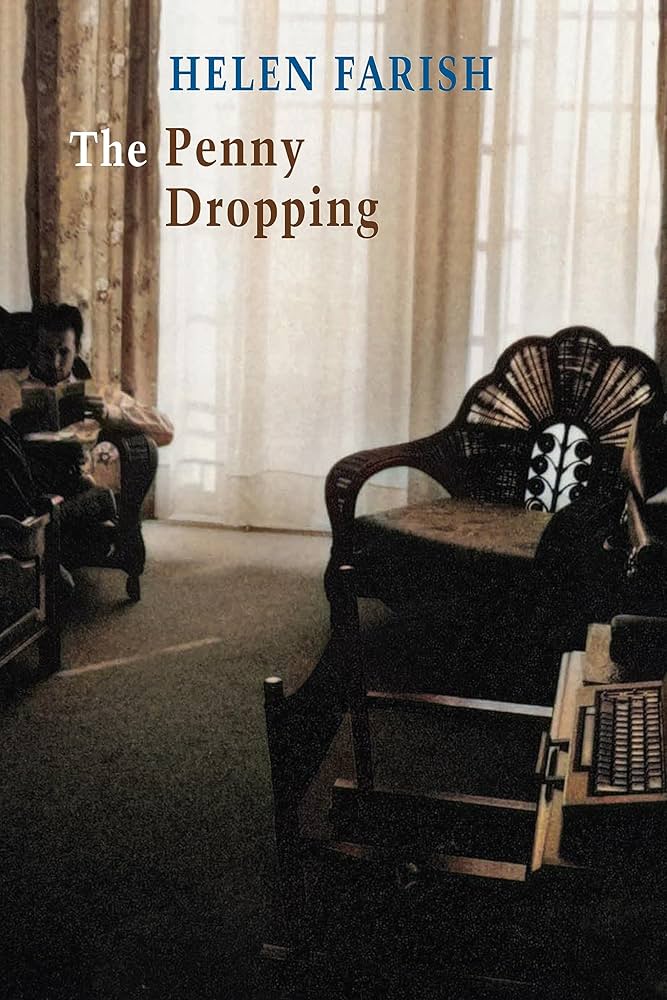
Bernard O’Donoghue praises The Penny Dropping not only as a book of poems but also as possessing the ‘coherence of a novel’. There is a clear narrative, but the characterisation of the male lover is very sketchy and, if the genders were reversed, surely we’d be railing against the male writer’s disservice to the female figure’s reality? Though a photograph (in ‘Exposure’), taken in Fez, is said to have caught him unawares, with his ‘own barriers down’, we never get much more about him than that he is sociable (more than the woman), is ‘too much the gentleman’ (‘May Day’), is good with children (and wants them; she doesn’t), has bouts of unexplained illness, and is eventually unfaithful to her. Bloodaxe’s unattributed cover image – in shadowy, ‘memoir’ sepia – has a self-absorbed, book-reading man almost out of frame and this seems about right. But, fair enough, the book is (a la Bronte) the author’s settling of her own accounts and Farish really does do this with tremendous honesty and an astonishing absence of blame (though plenty of self-criticism).

Even in the early days of the affair, she is conscious of the couple’s differences. At a Greek Orthodox Easter celebration, he is at ease and happy, ‘good with the little ones’ but she has ‘said no to the tripe and only joined in / for one glass of tsikoudia / before going back to [their] room to write’ (‘Christ Has Risen! He Has Risen Indeed!’). In ‘May Day’ he ‘would have joined in’ another local celebration and (in retrospect) she berates herself: ‘I should have said You go’. The self-blame here feels truthful, and is so commonly gendered, and the same perhaps for her (perceived) faults of passivity and sense that ‘I always had guilt inside’ (‘Scapegoat’). ‘In Seville That Spring’, at the moment of crisis (you ‘couldn’t go on, / you wanted space’) the woman again regrets and self-lacerates: ‘I should have made you talk to me, / I should have fought for you, stomping my feet [. . .] Instead, British-style, I drove north, / three hundred miles’.
These are painful poems in the end and the reader may well share in some of the criticism Farish levels at herself. But we are often wrong-footed. In the book’s title poem, there are two pennies dropping: one is the man’s sudden realisation that the relationship (in his view) is finished, but the other (in the poem, presented as an explicatory parallel to his realisation) is Farish’s sudden grasping that her mother is terminally ill. And it’s not until close to the end of the book, in ‘Beauty Spot’, that we are given to understand that her mother’s early death traumatised Farish, so much so that (speaking of herself), ‘she’ll lose you if she doesn’t absorb / how self-absorbed she is, / [. . .] you’ll look elsewhere’. Perhaps this is what happened. The story valorises truth, rather than being any sort of role model narrative for young women (or men for that matter). This is admirable and it’s in these final few poems that the emotional complexity of the relationship really emerges, the woman, now in her sixties, is left with a Goethean ‘blessed longing’, an emotional state, ‘not sorrow, and more sinuous than sadness’, not resolved, no longer rawly anguished, but with a desire to place, to settle, what has happened, to ‘have the memory / and be through the loss itself’ (‘That Selige Sehnsucht Feeling’).

That Selige Sehnsucht Feeling

I’d name it Selige Sehnsucht, that feeling

my home gave me yesterday, words

you used once in a note –

I must have forgotten something,

I have that Selige Sehnsucht feeling.

It’s an indefinable ache – not melancholy,

ot sorrow, and more sinuous than sadness –

a feeling on a journey, picking up

strands of other like-hearted feelings on its way.

Is it possible to be sick for home while still there?

I think you were saying you missed me

before you’d even left. And yesterday,

as the red sun lowered, picking up other reds

on its way – flame red, orange red, ember red –

I ached for what I was looking at:

the long tawny-brown grass which,

from across the field, the house seemed

to grow out of putting me in mind

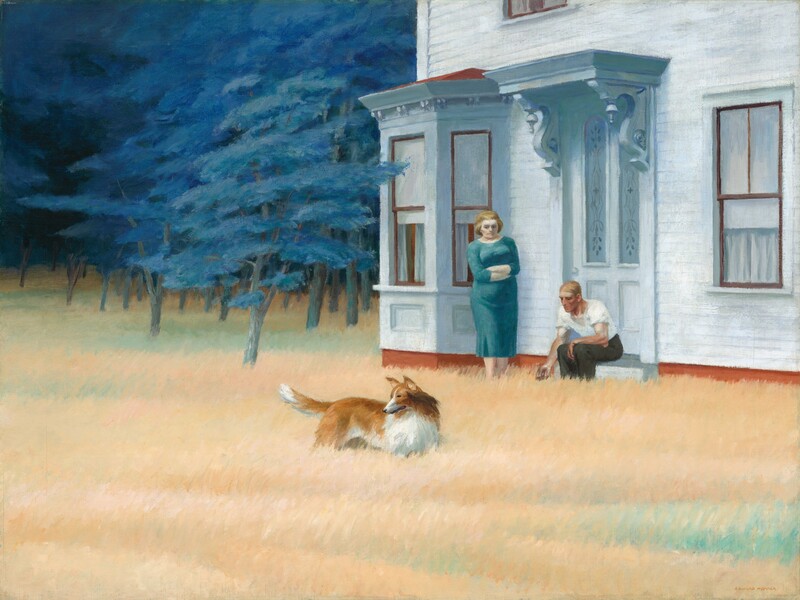
of an Edward Hopper house in a timeless

American field and the house retreating

into itself in the restful silence.

The bats came out. A barn owl flew close.

And the wind which often stirs at the end

of a summer’s day stirred. Take the place from me,

I almost thought, so I can have the memory

and be through the loss itself.

Was it something similar, a feeling in the same family

of feelings, that prompted your use of Selige Sehnsucht

in that long-ago note? I must have forgotten something,

you wrote, though whatever it was that was

taking you away for a few nights hadn’t even begun:

Or is it just that I love you so?
Translating Georg Heym’s ‘Berlin II’

Michael Hofmann’s Faber Book of Twentieth Century German Poems includes four pieces by Georg Heym – not bad for someone who died at the age of 24 (in 1912 – an accidental drowning in the frozen Havel River, probably while trying to save a friend). Heym is generally regarded as an early Expressionist writer (of poems and short prose/novellas), though his early poems are very much under the influence of Hölderlin, then much of the surviving work suggests the powerful influence of Baudelaire (in both form and content), though in his final months there seems to have been a return to the looser forms of Hölderlin. His best-known poems combine a gothic, morbid imagination, often with extremes of Expressionistic distortion, with a counterbalancing devotion to regular forms. The sonnet ‘Berlin II’, when it appeared in Der Demokrat, in November 1910, led to the publication of Heym’s only collection published during his lifetime: Der ewig Tag (The Eternal Day).

Antony Hasler’s translations, published by Libris in 2004 (Hofmann also includes translations by Babette Deutsch and Avrahm Yarmolinsky, and Christopher Middleton), are the best to be had at the moment and I’d definitely recommend searching them out (Libris has since folded). I’ve been in a bit of a translation lull for a few months so thought I’d try a few of Heym’s poems myself. The challenge is to make something readable in English, while not toning down the dark brutality, yet also staying close to his classical chosen forms.

In ‘Berlin II’, Heym’s Petrarchan rhyme scheme is ABBA CDDC EFE GHG. The opening quatrain is fairly straightforward. A literal transcription might be: ‘Betarred barrels rolled from the thresholds / of dark warehouses onto the high barges/boats). / The tugboats moved in. The smoke’s mane / hung sooty above the oily waters’.

Hasler has:

From the dim warehouse thresholds barrels caulked

with tar went rolling down to the tall lighters.

The tugboats started. On the oily waters

a mane of soot was trailing from the smoke.

The ‘lighters’ / ‘waters’ rhyme is a stroke of genius (a lighter is a river boat) but the opening line and the fourth seemed to me less successful. I kept the opening line simple and turned ‘waters’ into a possessive and I rather saw the (lion’s) mane more visually linked to the billowing of the smoke which is ‘soot-filled’ (I also tried ‘sooty’, even ‘smutty’). This is what I ended up with:

The tarred barrels rolled from open doorways

of dark warehouses onto the tall lighters.

The tugboats closed in. Across the waters’

oily surface hung the smoke’s soot-filled mane.

I went for the tugboats ‘closing in’ – not merely approaching, but something more threatening – as it seemed in keeping with the ominous atmosphere which develops as the poem goes on (the drumming in line 11).

The second quatrain might be given as: ‘Two steamers came with musical bands. / Their funnels cut/clipped the arch of the bridge. / Smoke, soot, stink lay on the dirty waves / of the tanneries with their brown skins’.

Hasler has:

Two pleasure-steamers came with music playing.

They dipped their funnels at the bridge’s curve.

Smoke, soot, stench lay on the dirty waves

by tanneries where the brown hides were drying.

I couldn’t quite see the funnels being dipped under the bridges (though I believe some boats do this) and I feel the bridge’s ‘curve’ (for roof or arch?) not quite right. So I went with the sense of the funnels actually scraping the roof of the bridges (as if these pleasure steamers did not really fit the generally grim, sordid scene). I was very happy to arrive at the bridge/stench half-rhyme for the middle couplet because the sounds there conveyed more of the Heymian ugliness of the scene. Like Hasler, I felt the need to explain a little what the pelts/skins/hides were doing hanging up at the tanneries. Here’s my second quatrain:

With music playing, two steamers passed by:

their funnels clipped the roof of the bridge.

On the filthy waves, smoke, smut, and stench

at the tanneries, where brown pelts hung to dry.

Lines 9-11 probably caused me the greatest difficulty, not so much in getting the word order and form right, but in simply grasping what was being said in relation to the bridges, the barge, and the narrator’s position. Literally they might read: ‘In/at/all the bridges, beneath us the barge / Carried through, the signals sounded / As if in drums, growing in the silence’.

As I see it, the speaker is being carried on a barge, through and under bridges, and there are signals/sirens sounding that bring to his mind an ominous drumming. So Hasler has:

Every time the barge that bore us travelled

beneath a bridge, the signal’s sudden parley

swelled out of stillness like a deep drum’s rattle.

The ‘barge that bore us’ has echoes of TS Eliot (perhaps not irrelevant in context, and I felt I couldn’t better it in the end) but I’m not sure Hasler makes sense (to me) of the signals and the ‘parley’ metaphor he introduces here is not there in the original. The ‘deep drum’ also seems to be picking up on the ‘ominousness’ of the scene but (for me) a bit heavy-handedly. In the end, I went for:

Through all the bridges, the barge that bore us

made its way, signals resounding as if

a drum’s beat grew louder in the stillness.

In the final 3 lines I made the biggest alteration, the biggest interference with the original poem. Literally, the lines might read: ‘We let go and drifted in the canal / Alongside the gardens slowly. In the idyll / We saw the giant chimneys’ night beacons’. Hasler loses the ‘letting go’ idea, but otherwise keeps the order of these lines well:

We entered the canal, and drifting journeyed

slowly alongside gardens. In the idyll

we saw the night-flares of the giant chimneys.

‘In the idyll’ is perhaps puzzling, though it’s pretty clear there is a bitter irony at work – this is no idyllic scene, and Heym’s other Berlin poems confirm this, the city is a monstrous megalopolis. But there has been a slight shift of scene with the boat moving along a canal now, between gardens. Perhaps this (more bourgeois?) setting might be thought of as more idyllic? But even so, the massive smoking and flaring chimneys of industrial Berlin can still be seen. I confess that I shifted the ‘idyll’ to the final lines to get the final rhyme with ‘canal’. But I have left it – translators, like poets, have the power of veto, whether we exercise it or not. And I have persuaded myself that the savagery of the irony comes out better if the final phrase of the poem contains it. So I went with:

We cut loose, went drifting along the canal,

gradually, between gardens, glimpses of

the vast chimneys’ night-flares in the idyll.

So – to sum up (though translations are always really a work in progress) – here is Heym’s original German followed by my own version of the poem:

Berlin II

Beteerte Fässer rollten von den Schwellen

Der dunklen Speicher auf die hohen Kähne.

Die Schlepper zogen an. Des Rauches Mähne

Hing rußig nieder auf die öligen Wellen.

Zwei Dampfer kamen mit Musikkapellen.

Den Schornstein kappten sie am Brückenbogen.

Rauch, Ruẞ, Gestank lag auf den schmutzigen Wogen

Der Gerbereien mit den braunen Fellen.

In allen Brücken, drunter uns die Zille

Hindurchgebracht, ertönten die Signale

Gleichwie in Trommeln wachsend in der Stille.

Wir ließen los und trieben im Kanale

An Gärten langsam hin. In dem Idylle

Sahn wir der Riesenschlote Nachtfanale.

Berlin II (tr. Martyn Crucefix)

of dark warehouses onto the tall lighters.

The tugboats closed in. Across the waters’

oily surface hung the smoke’s soot-filled mane.

With music playing, two steamers passed by:

their funnels clipped the roof of the bridge.

On the filthy waves, smoke, smut, and stench

at the tanneries, where brown pelts hung to dry.

Through all the bridges, the barge that bore us

made its way, signals resounding as if

a drum’s beat grew louder in the stillness.

We cut loose, went drifting along the canal,

gradually, between gardens, glimpses of

the vast chimneys’ night-flares in the idyll.

Review of ‘Modern Fog’ by Chris Emery (Arc Publications, 2024)

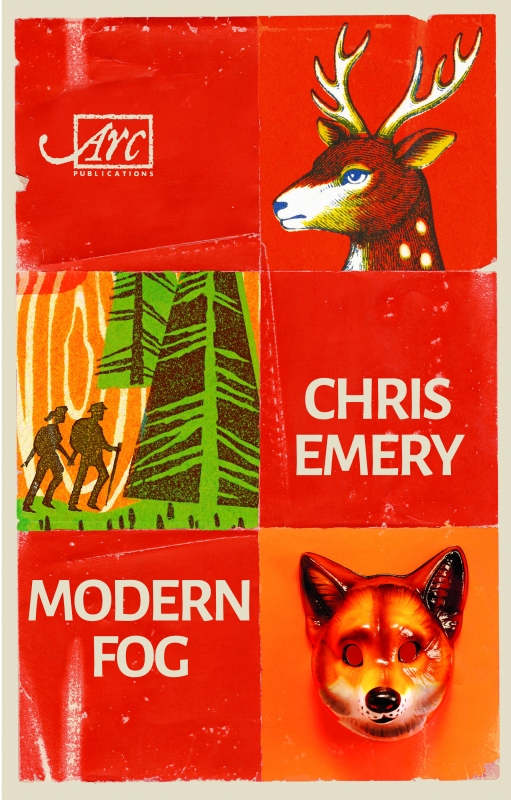
Chris Emery’s most recent collection both presents, and intends to see beyond, the Modern Fog of its title. The poems revel in describing aspects of this world and – in keeping with the images on the book’s cover – the occasions for such descriptions arise from journeys (often walking – the cover shows a hand-holding rambling couple) and the highlights of such journeys are frequently encounters with creatures (the cover has a deer and a fox). So ‘The Path’ leads us past ‘chalk beds’ and ‘clay beds’ and ‘dirt paths’ to excited sightings of a jay and a buzzard. Presenting more of a pause in such a walk, ‘The Day Storm’ is composed largely of the poet’s characteristic ‘noticing’ of blackthorn, blackberry and nettle. But once the eponymous storm has passed, the trees are now found to be ‘gashed . . . / splintered’ and this gives rise to one of Emery’s most interesting observations that, in their damaged state, the trees are in some mysterious way ‘clarified’. More of this later.

There is more than a little of Philip Larkin in Emery’s work – particularly the detail-listing-Larkin of ‘Here’ and ‘To the Sea’. Emery’s ‘All the Routes Home’ offers us an inclusive list of a Roman road, a Viking lane, an unclear path, a Puritan track. The poem ‘The Bay’ might be read as a more condensed version of Larkin’s ‘Here’ as, ‘after hours of hill torture’, the trail walker arrives at a bay, dotted with ruined buildings: ‘the afterthought of winter crofting’. This image of transience, of ultimate human failure, in effect a memento mori, is softened a little with Emery’s insistence that the homesteads ‘still hold their ounce of love’. In contrast to Larkin, and reminiscent of those earlier ‘gashed’ trees (somehow being advantaged by their damage), Emery is reluctant to accept death as an absolute ending and it is in this that the reader will find indications of his religious belief.

Similar spiritual themes emerge in the many encounters these poems have with creatures. ‘The Buzzard’ is another hill walk on a ‘churchless’ afternoon, but the flight of the bird on its thermal suggests an upward aspiration, a craving that the human observers also ‘hope to crave’. There is a beautiful little poem ostensibly about a dove returning to its dovecot:  

Small snatch of air, sole white arc,

crisp handclap, then ritual landing.

All followed by cossetting and fuss

at the stoop. The laughable dance

with lots of nodding and wittering

before the tricky hop up

to the dovecote . . .

The poem is transformed to something unconventionally angelic by being given the title ‘Pentecost’. The more lengthy ‘Day Fox’ vividly captures the ‘living amber’ of the creature against the green of grass, but its death at the roadside is equally clear: ‘his pelt was tar black and slicked back / on the tiny lump of him’. Here again, Emery goes a step or two beyond the plain facts of death as, in the corpse’s decomposition, ‘the world / relaxed into him with all its fiery prayers’. To suggest this is an image of an afterlife is to lack the poem’s own subtlety, but Emery is surely probing Eliot’s idea (not original to TSE) that ‘In order to arrive at what you are not / You must go through the way in which you are not’ (‘East Coker’). The remarkable poem ‘Stags’ does this more explicitly in that the momentary sighting of the creatures is (in the poem itself) now no more than a shaky memory, an ‘absence’ that stands ‘at the edge of what’s never / fully grasped’. But the recall of their passing still has a potency as a ‘store of grace and loss’ and is here declared ‘the last religion of these woods’.

St. Andrew’s, Wickhampton in Norfolk

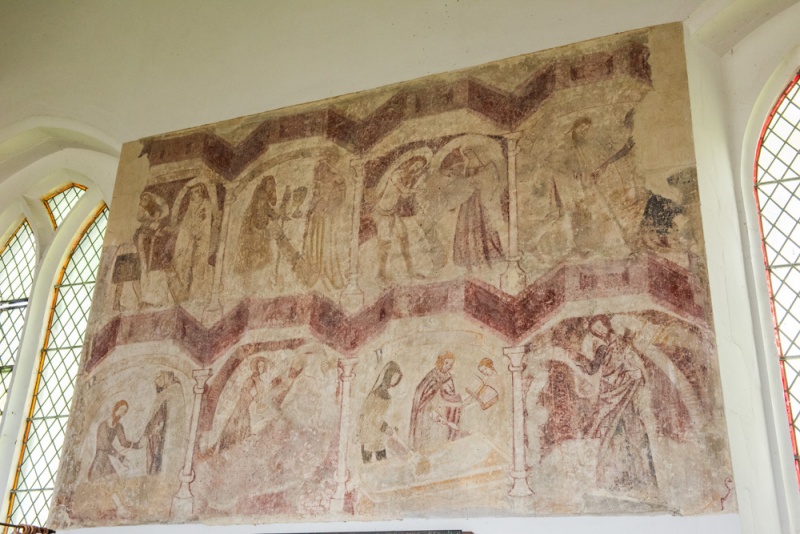
But Emery is equally at home describing the ‘dreck’ of our modern world. It’s surely more this sort of thing that constitutes the ‘modern fog’ of the book’s title. There is an NCP car park, the final destination perhaps of the couple in ‘Newbies’ who are driving along ‘old roads, lobbed estates seeping / by the rim of each roundabout’. The tacky nature of modern life is also found in ‘Edgeworlds’ which encompasses 4x4s parked up beside a ‘ratty beach’ and coach tours, detergent-smelling corridors and TV reruns. But such scenes function in this book partly as a foil to the (again) Larkinesque ‘churchgoing’ side of Emery’s character. ‘The Wall Paintings’ – a visit to St. Andrew’s, Wickhampton in Norfolk – opens, not with cycle clips, but with the equally evocative ‘thunk of a latch and then your eyes adjust’. And far more monumentally, ‘At St Helen’s, Ranworth’ is a 12-part sequence (each shaped like the church’s tower) more explicitly contemplating the building’s impact on the poet’s religious experience.

I guess I’m more attuned to Emery’s art when he is working up from the roots of the secular and material world, as in ‘One Drive in Winter’, in which the travelling couple go beyond satnav reach, the petrol tank close to empty, beyond any very obviously attractive destination, yet they still discover something worthy of a return, something about themselves, an opportunity to ‘solemnise the marginal and lost’. It may be that the great churches of the Norfolk Broads are themselves part of the category of the ‘marginal and lost’ these days and I do admire Emery’s attempts to bring them back into contemporary poetry, but I find his more slantwise and paradoxically inclined images (evocative of ‘East Coker’s ‘In my end is my beginning’) more accessible emotionally. To give one more example, in ‘The Elders’ – a poem written in memory of Adam Zagajewski – Emery again deploys an image of trees damaged after a storm (this time perhaps more metaphorically damaged by ‘revolution’) and these oak limbs also ‘lie / broken with new life’.

This intriguing collection’s two concluding poems are perhaps variations on this same theme. ‘The Start of It’ is – here’s the paradox again – the beginning of the end prior to the beginning: in this poem we read of frank intimations of mortality, of moments when ‘something abstract stiffens in the grace’ of a life, when we may come to glimpse ‘the formal shape [we] make in time’. In a completely different mode, ‘The Legacy’ eventually reveals itself to be a poem about the gentle removal of an empty wasps’ nest, its ‘featherweight’ and ‘strange paper weather’. In the transformative effect of real poetry, the nest comes to be seen as a human life lived, ‘sad and gorgeously dented’, but from which the creatures that made it have departed to another place: ‘to drone in apple acres / elsewhere darkening / with sweet ruin now.’ Whether we believe in such a place – and the oxymoronic ‘sweet ruin’ casts a shadowy doubt – is, with writing as good as this, hardly the point, appealing as it does, through vivid imagery, confidently written, to a fundamental human longing for continuation in the face of what we think we know of the end of life.

Hesiod Harangues His Lazy Brother

Happy New Year to all my readers. Stats from WordPress tell me that in 2018 there were 32,000 visitors to my website and they took a look at various pages on almost 50,000 occasions. Phew. It seems a lot to me. Many thanks.
discarded christmas trees piled on pavement for trash collection

But with Christmas now over – my local park has a stack of Christmas trees the size of several London buses waiting to be shredded – with resolutions having been left unmade or already in pieces, I suspect I’m not the only one to be suffering a horrible sense of deja vue as the great Brexit debate and debacle has started up again. You thought it was safe to go back into the water? You thought you’d heard the last of the Irish Back Stop? It seems not. I’m as tempted as many to shriek ‘Oh get on with it!’ but what is ‘on’ and what is ‘it’?
91lk9o2gr0l

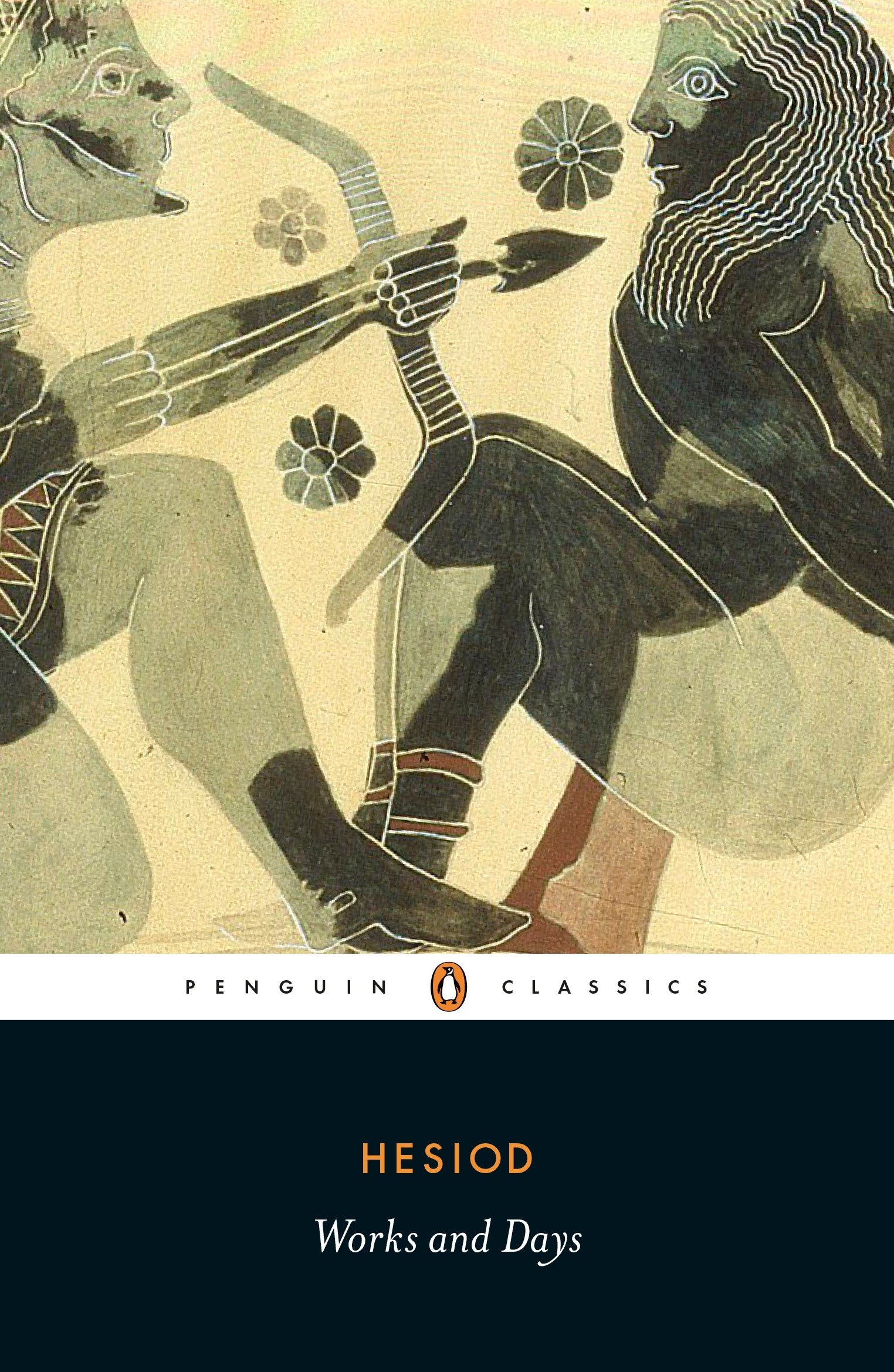
Actually, I have a genuine fear that the depth of national disillusion with the process and with conventional politicians makes this country more vulnerable to even more coarsened debate and extremism of various kinds, all promising to solve problems at a stroke. But really we know that’s pie in the sky. Right? Hesiod, of Ancient Greece, would agree. His Works and Days sounds very familiar. It is about conflict in a family, the problematic (perhaps intractable) nature of the world and the sense of a sequential decline in the fortunes of a society – all of which he counterbalances with advice, particularly about the importance of work – of keeping on keeping on.

To be honest, for many years, I’ve only known Works and Days by name. The title always attracted me with its Antaeus-like focus on groundedness, labour, the need to start from where ever we are now; it’s rejection of flighty idealism that quickly shades into the unconsidered fundamentalism. We need to work – nothing is given on a plate. And work needs to be sustained (through days) to be effective. Boring? Only if untrue and this is as true as anything can be.

I first came across the title of Hesiod’s poem in T. S. Eliot’s ‘The Love Song of J. Alfred Prufrock’:


There will be time, there will be time

To prepare a face to meet the faces that you meet;

There will be time to murder and create,

And time for all the works and days of hands

That lift and drop a question on your plate;


download

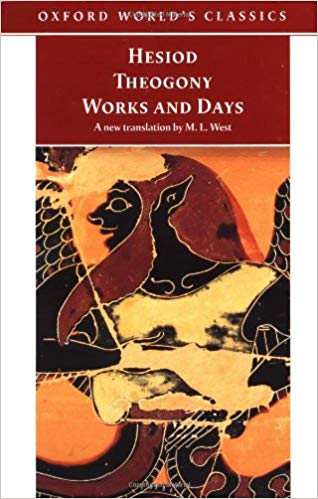
My old student’s guide to Eliot (by B.C. Southam, published by Faber) told me the allusion was to the 8th century BC writer Hesiod – to a poem which “gives an account of the primitive conditions in the country, together with maxims and practical instructions adapted to the peasant’s life”. Last year, Penguin Classics published a new translation of the poem by A. E. Stallings. It’s a lively and very readable version, though her decision to convert Hesiod’s dactylic hexameters into iambic pentameter couplets makes the ancient poem sound too English and 18th century for me. Another older prose translation by H. G. Evelyn-White is freely available here. 

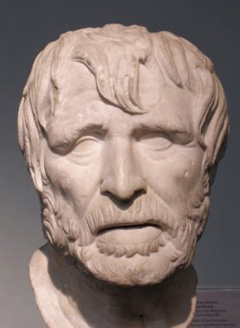
hesiod-smDid you know Hesiod probably pre-dates Homer? Hesiod is aware of the siege of Troy but he makes no reference to Homer’s Iliad. He’s usually placed before Homer in lists of the first poets. The other striking aspect of Works and Days is that (unlike Homer) he is not harking back to already lost eras and heroic actions. Hesiod talks about his own, contemporary workaday world, offering advice to his brother because they seem to be in a dispute with each other. Hesiod’ anti-heroic focus is an antidote to the Gods, the top brass and military heroes of Homer. Most of us live – and prefer to live – in Hesiod’s not Homer’s world.
Hesiod also talks about himself – his long poem has a lyric and personal quality to it. We hear that he grew up in the unremarkable town of Askra, in Boeotia. He disparagingly refers to it as “bad in winter, sultry in summer, and good at no time” (tr. Evelyn-White). In fact, his family were recent economic migrants from Aeolian Kyme in Asia Minor across the Aegean.  Hesiod’s father made the journey: “[he] used to sail on shipboard because he lacked sufficient livelihood. And one day he came to this very place crossing over a great stretch of sea; he left Aeolian Cyme and fled, not from riches and substance, but from wretched poverty” (tr. Evelyn-White). As Stallings points out, “Hesiod’s is not a static, stay-at-home sort of world, but one of opening horizons, widespread trade, far-flung Greek outposts with freedom of movement, cultural festivals [. . .] and social mobility.”

512pxannbrl._sx316_bo1,204,203,200_He seems to have been a poet-farmer who makes sure we are aware that he has already won a literary competition at a funeral games on the island of Euboea. His prize-winning piece may well have been his earlier Theogony, a cosmological work describing the origins and genealogy of the gods. But Works and Days presents him as something of a magpie writer rather than a poet with a neatly conceived architectonic design. The poem mashes together myth, allegory and personal asides, as well as more philosophical passages, theology, natural description, proverbial advice and an almanac or calendar based on phenology (the study of periodic plant and animal life cycle events and how these are influenced by seasonal variations in the climate).
The occasion of the poem is also very personal. Hesiod has a brother – Perses – and they seem to be in dispute (perhaps as a result of their intrepid and entrepreneurial father’s death and the inheritance of the estate). Stallings has this: “Already we’ve divvied up our lots, but you / Keep laying hold of more than is your due”. It is this inclination to give advice to his (younger?) brother that controls much of the text. The name ‘Perses’ is unusual and may mean something like ‘waster’ or ‘wastrel’ and the brother seems to be trying to take more than he is due and the motivation for this (according to Hesiod) is a mile-wide streak of laziness. Perses wants his fortune on a plate rather than having to work for it. His big brother intends to give him some “plain truths to steer him[self] by” (tr. Stallings).

By way of correcting his brother’s indolence, Hesiod firstly explains there are two types of strife. One of these is the kind of Brexit bickering (and potentially far worse) that we are all too familiar with: “One brings forth discord, nurtures evil war: / Wicked, there’s nothing mortals love her for” (tr. Stallings). But the other is a more benign sense of competitiveness based on envy: this sense of strife “spurs a man who otherwise would shirk, / Shiftless and lazy, to put his hands to work”. Wow! That’s telling your brother like it is. Is this being listened to? Hesiod makes sure: “Perses, take this to heart, lest Strife, whose quirk / Is mischief-making, draw your mind from work” (tr. Stallings).

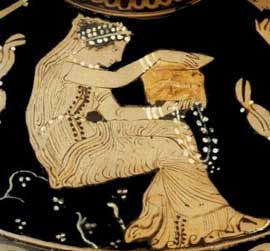
pandora2There are further reasons to set to work in the very nature of the cosmos and the human world. Hesiod tells the Pandora story here. Zeus causes the creation of a female figure, Pandora, as a way of avenging Prometheus’ pro-humankind actions (stealing fire from the gods, for example). Her name suggests she is a concoction or committee-created figure from contributions from all the Olympian Gods. She is given a jar which she opens: “ere this the tribes of men lived on earth remote and free from ills and hard toil and heavy sickness [. . .] But the woman took off the great lid of the jar with her hands and scattered all these and her thought caused sorrow and mischief to men” (tr. Evelyn-White). Hesiod’s locating of the root of human sorrow in the actions of a woman echoes the Christian story of the loss of Paradise and it is one of the reasons why Hesiod has been accused of misogyny, though as Stallings suggests, he’s not any more complimentary about the males of the human race.

Plagued by the ills of Pandora’s jar (only Hope is said to get lodged in the rim of the jar), Perses is then given a longer lecture on the decline of the human condition in Hesiod’s portrayal of the five ages of man. Here is the classic description of the Golden Age of man when we imagine we once lived “like gods [. . .] with spirits free from care; / And grim old age never encroached” (tr. Stallings). The ages of Silver, Bronze and (present-day) Iron are described. Between the latter two, Hesiod locates a brief Heroic age (the age of Thebes, Oedipus and the Trojan war). But despite this diversion, Works and Days makes it plain to Perses that the age he lives in is unpleasantly harsh and demands work work work to survive: “For now truly is a race of iron, and men never rest from labour and sorrow by day, and from perishing by night; and the gods shall lay sore trouble upon them. [. . .] The father will not agree with his children, nor the children with their father, nor guest with his host, nor comrade with comrade; nor will brother be dear to brother” (tr. Evelyn-White).

An obscure natural symbolic passage follows (a “fable” Hesiod calls it) in which a hawk has seized a song bird and mocks its struggles and shrieks: “Miserable thing, why do you cry out? One far stronger than you now holds you fast, and you must go wherever I take you, songstress as you are. And if I please I will make my meal of you, or let you go. He is a fool who tries to withstand the stronger” (tr. Evelyn-White). It’s tempting to see the songbird as the poet savaged by philistine powers though, in the Perses context, perhaps the songbird is a lazy good-for-nothing who is being shaken up and challenged by the world of necessity and work. A bit later Hesiod suggests another interpretation: that the natural world is red in tooth and claw, unlike human society which is governed by “law and right” (tr. Stallings) and so Perses ought to be obedient to Zeus’ powers out of gratitude for that. It’s interesting to think this of this as the first passage in Western Literature open to a variety of critical interpretations.

imagesIt’s certainly the lazy, self-serving, arrogant younger brother who forms the focus of the rest of the poem: “So Perses, you be heedful of what’s right . . . So Perses, mull these matters in your mind . . . Fool Perses, what I say’s for your own good” (tr. Stallings). It’s true that his name gradually fades from the text in the final 500 lines but the torrent of imperatives, offering advice and guidance on a range of practical issues, often sounds like haranguing from a concerned, perhaps slightly pissed off, brother. Much of this material is phenological – when to sow crops, when to harvest, when to shear your sheep. In winter, don’t hang around the blacksmith’s forge where other wasters gather to chat and pass the time. It’s safe to put to sea when the new fig leaves are the size of crow’s feet.
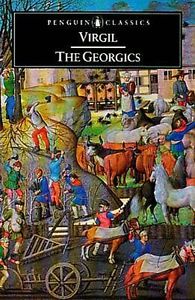
s-l300These are the passages that, around 29BC, inspired Virgil to his own farmer’s manual, the Georgics. Hesiod ends his poem in a rather perfunctory manner, roughly saying he who follows this good advice will become “blessed and rich”. But given Pandora’s jar and the Iron Age we live in, even this seems a mite optimistic. And of course, Perses never gets the chance to speak for himself. But I guess the tensions between his brother’s call for social and religious conformity and Perses’ individualistic disobedience to the demands of the gods and the sense of what is best for a society have gone on to form the basis of the continuing Western literary canon. And does any of this help with Brexit? I conclude (largely with Hesiod) the bleeding obvious: it’s complicated – solutions must be negotiated, don’t hope for some golden age because in a fallen, less-than-ideal, complex society it’s better for the future to be decided in the glacier-slow committee rooms of a plurality of voices than in the stark divisions and dramas of the battlefield. Work hard – have patience – don’t buy into fairy tales of a recoverable golden age.
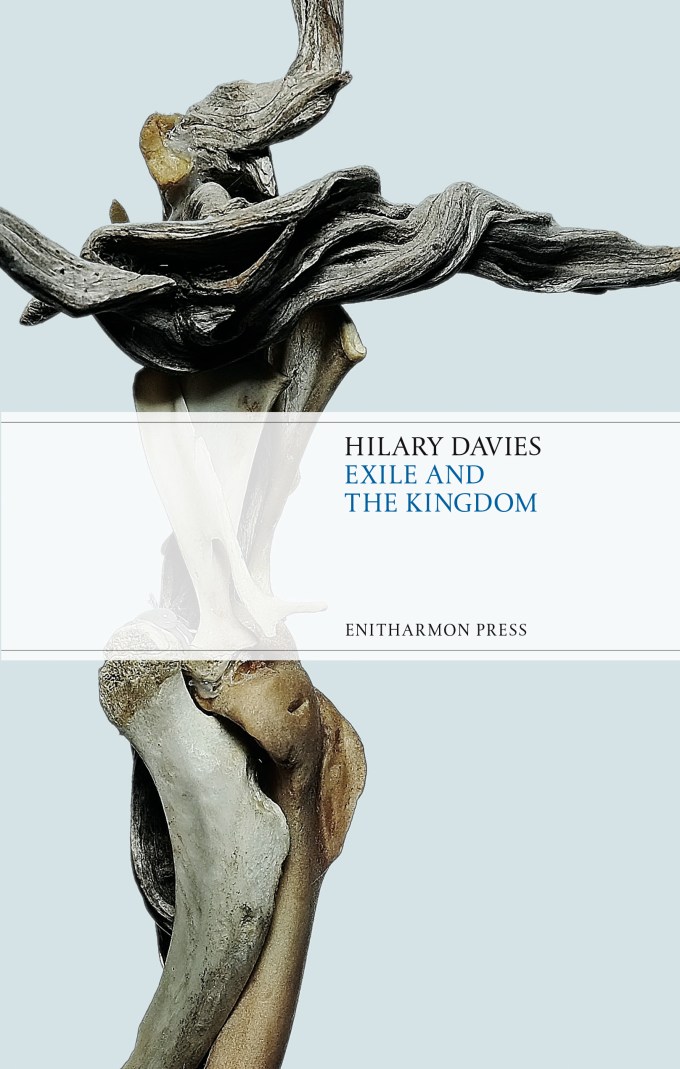

What Love Is: Hilary Davies’ ‘Exile and the Kingdom’

9781910392171

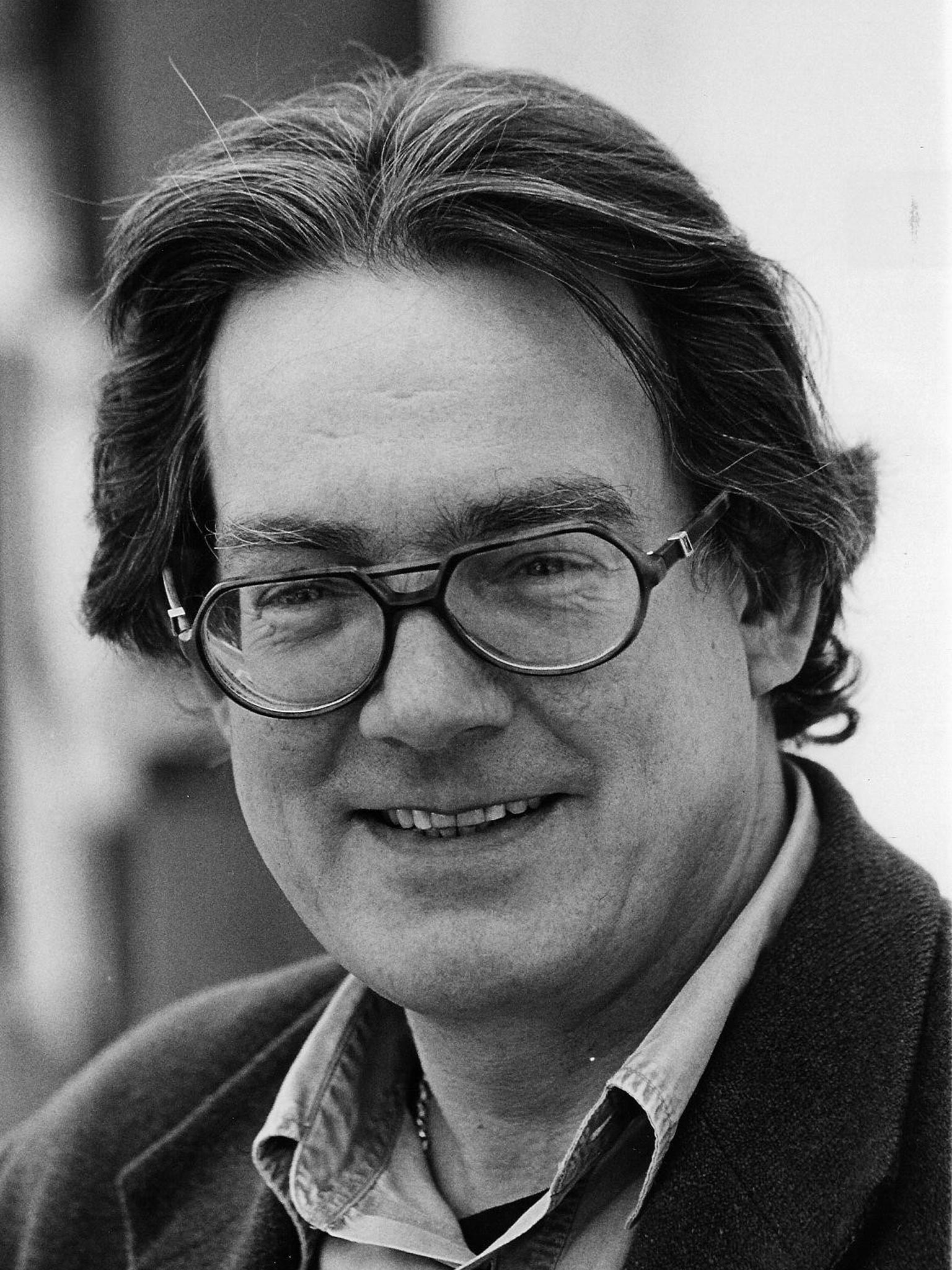
I met poet, translator and critic, Hilary Davies, back in the early 1980s and our paths have kept crossing since. She was one of the first intake of women undergraduates at Wadham College, Oxford, where she read French and German. She won an Eric Gregory award in 1983, has been a Hawthornden Fellow and chair of the Poetry Society (1992–3). With David Constantine, she co-founded and edited the poetry magazine Argo and has three previous collections of poetry (published by Enitharmon): The Shanghai Owner of the Bonsai Shop (1991); In a Valley of This Restless Mind (1997); Imperium (2005). She was head of languages at St Paul’s Girls’ School, London, for 19 years and was married to the poet, Sebastian Barker, who died in 2014.

hilarydavies-180x235

Davies’ new collection, Exile and the Kingdom (Enitharmon, 2016), is framed by two very powerful sequences. It opens with ‘Across Country’, a series of seven poems which add up to an autobiographical ‘growth of the poet’s mind’. The book concludes with ‘Exile and the Kingdom’ itself, a further eight poems which are nothing less than a meditation on the poet’s raw grief and re-discovery, or reassertion, of her religious faith. Both sequences contain weddings.

‘Across Country’ opens with an evocation of a child’s first moments, “what gets forgotten”, in a state of inarticulacy, no ability to exert our own will, with no will even, language-less and effectively silent, being “carried by gods”.  Passive in the hands of mother and father, the journey variously begins in “The reindeer saddle and the motor car, / the sighing desert and the plateau wind”. Davies seems to suggest these first human experiences fall onto a tabula rasa as they “Etch the first surfaces of particularity / And settle in our souls”. The particular development traced here is Davies’ own, of course, and crucially this involves a later period of travel in France. Happily alluding to Wordsworth’s own tracing of his youthful days and Revolutionary enthusiasm in France (“Bliss it was in that dawn to be alive /But to be young was very heaven” – The Prelude, Book 11), Davies praises “the glory of the cornfield and belltower, / Granite, limestone, vineyard and cloister”. As with Wordsworth, France offers an experience of human love, but Davies is also drawn to intellectual pursuits, the thrilling confusion of “many minds passing”, arguments of “polity and governance” and to the “meretricious fruit / Of the ideology tree”. We are being told this in order for such concerns to be ultimately dismissed:


The lords of existence

Are neither economist nor philosopher

The Lord of existence

Shows himself not in systems


The fourth poem in ‘Across Country’ seems to record the young woman’s first realisation that religion was to be the answer to many of the questions she was asking: “I crossed into church after church that summer, / Thinking of erudition, but beside me trod Love”. The capitalisation and conventional personification makes it clear that Davies is deliberate and happy to place herself in a long tradition of poetry dealing with religious experience; there is no radical re-making of poetic form or language. Davies does not use masks. Discursive passages are in unrhymed, fairly irregular paragraphs which are punctuated every so often with more lyrical rhyming passages, song-like.

Poem five of ‘Across Country’ is just such a lyrical piece, portraying a wedding, but not one that lasts:


Hate has eaten my bridegroom’s heart

And remorse is become my fury

Now I must go the road of affliction

Searching for mercy.


That search, Davies argues, is more a matter of “Waiting, not willing”. It is the traditional negative road in the sense of the centrality of “self-surrender”, imaged in the seventh poem as the sensation of being on a boat on a threatening ocean: “No measure but the dark blue breathing of the opening deep, / Where personhood dissolves beyond mere terror”. I don’t share Davies’ faith but I share her belief that, in terms of our daily acts and choices, we are to be judged in the long run: “Only perdurance delivers”. And in terms of the nature of those acts and choices, whatever set-backs are faced, we need to be accompanied by that same figure who walked beside her into the churches in France: “what love is, and does”. Read as the record of the poet’s experiences, it’s likely that this opening sequence concludes with Davies meeting with Sebastian Barker, the beginning of new happiness (“I knew instantly I had to go the hard way with you / To learn how to love better”).

.

p46-sebastian-barker
Sebastian Barker


The central sections of this collection are made up of poems more directly engaged with the contemporary world of north London, Stamford Hill, Walthamstow, the valley of the River Lee, Abney Park in Stoke Newington (I blogged one of these poem’s a few weeks ago). There are also poems more explicitly concerned with the relationship with Barker with titles like ‘Night’s Cloak’, ‘Aubade’, ‘Love Song’. I’ve always thought it a premature admission of defeat to declare ‘happiness writes white’ but some of these poems slip too easily into a mode in which this reader feels more like eavesdropping than sharing the experience of years of happy marriage; technically there is a flowering of lyricism and some softening of the vocabulary. On the other hand nobody is going to read these poems and not be thinking of Hardy’s tributes to Emma Gifford – it seems whether the marriage was mutually loving or not, the sense of loss remains overwhelming.

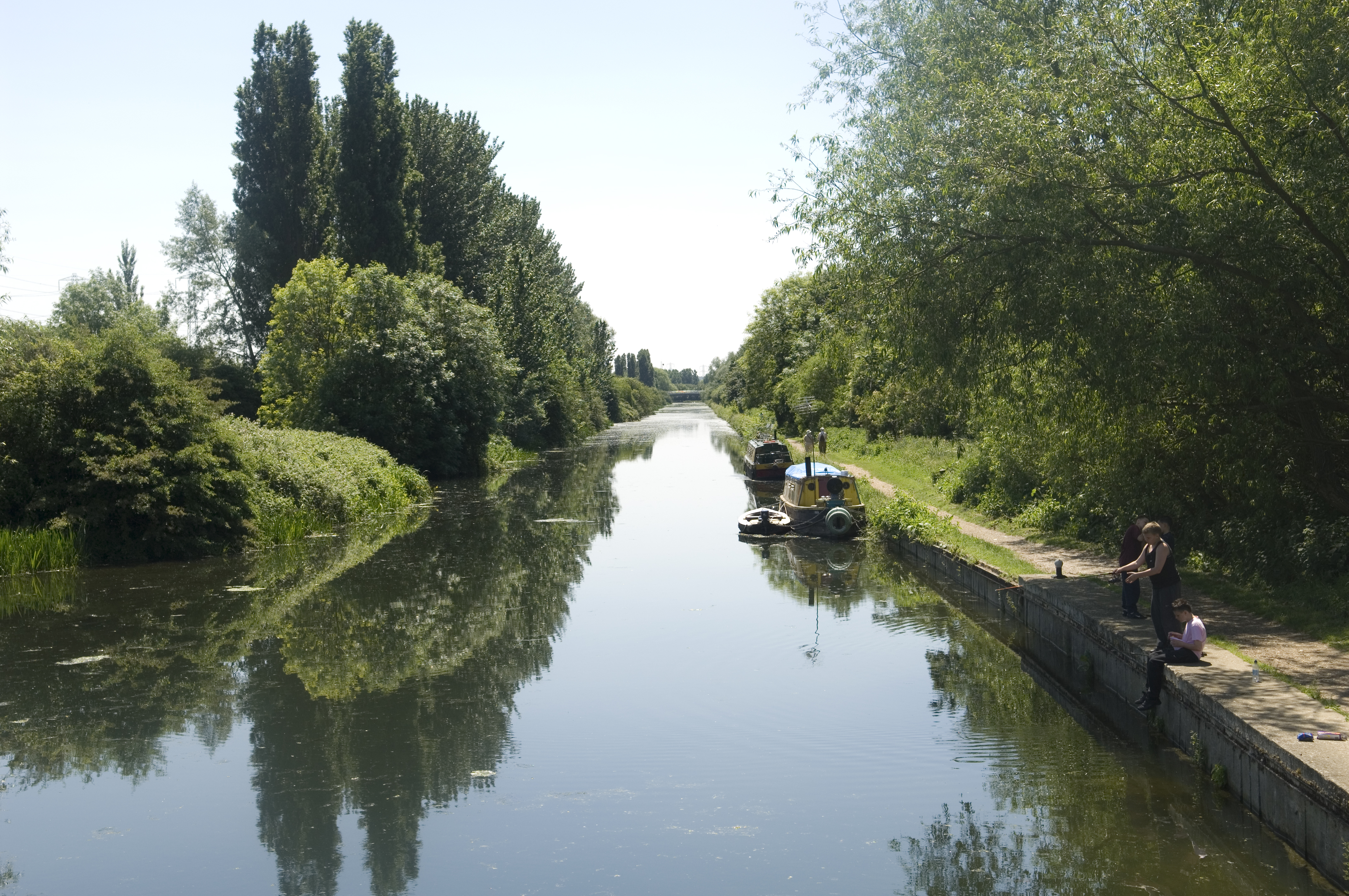
Lee Valley Park.  Photo: Eleanor Bentall 2nd June 2007 Tel: 07768 377413
River Lee and Valley Park

This is where the concluding sequence picks up though there is no need to narrow Davies’ focus wholly to the autobiographical. As I’ve said, these poems are in the tradition of religious verse and there are passages here that stand comparison with the Eliot of the Four Quartets. The opening poem – a little sequence in itself – paints a state of despair, initially social and political, latterly more personal:


Then there’s the heartache

At the core of things: attachment, the blank certainty

Of letting go, the arbitrary wing of accident,

Wrong gene or partner, a lifetime bled into the dusty ground

Of non-fulfilment, the waste [. . . ]”


The temptation is to try to counter this by accepting “ourselves as measure”, to focus simply on career, material gain, simply being busy, keeping warm. That this is never enough in itself is suggested when Davies recalls a favourite uncle who, having apparently a comfortable and successful life kills himself. For the young Davies what this taught was clear: “the impossibility of loving begets despair, / And despair kills”. The third poem of ‘Exile and the Kingdom’ seems to mark the beginning of the end of exile and returns to one of the many French churches mentioned in the earlier sequence.


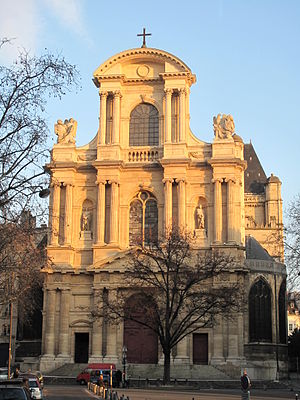
300px-facade_st-gervais_st-protais
Church of St-Gervais-et-St-Protais, Paris


Out of the bustling Parisian streets, the narrator turns aside and understands, “Even if I have all gifts without love I am nothing”. As in Four Quartets, Davies mixes philosophical discursiveness with personal reminiscence and poem four recalls a Christmas morning in a country church. The priest, apparently ill, still takes the service, his gasping for breath making his faith even more memorable, a Wordsworthian spot of time worthy of recall in darker moments in the struggle to “retain that sudden downrush / Of the numinous that was supposed to change us”.  Poem seven expresses the sense of hard-won joy through another lyrical presentation of a second wedding. On this occasion, no clouds foreshadow failure but as the bride stands at the door, a wind blows her veil up like a candle flame or flower:


The guests are gathered in the church at Salle

The light falls on the floor;

For all eternity the rose

Stands at heaven’s door.


But the sequence and whole book ends in the altogether wilder landscape of St David’s, Wales. The final poem suggests such rose and flame moments are but parts of the coherence of a life where experience must inevitably consist of “Innocence and loss, hope, wisdom, regret and thanksgiving”. Exile and the Kingdom intends to convey this in full. Although propelled most often by loss of a loved one, the burden of the book remains love not grief. It matters little whether we share Davies’ particular form of faith, since what comes strongly from these pages is her concern for the way we treat each other, our overloaded preoccupation with ourselves, how our acts and choices are affected. Poems like these themselves form spots of time for the reader and I’m not going to forget their human concern for what love is and does.

Stand-to-Arms: David Jones’ ‘In Parenthesis’ (1937)

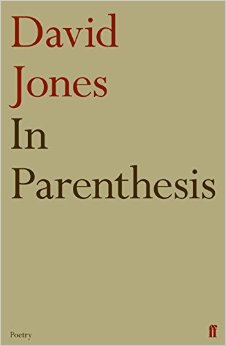
31kdwrvzonl-_sy344_bo1204203200_

There’s an extraordinary moment in the final pages of David Jones’ magnificent poem-novella, In Parenthesis (1937), when his hero, John Ball, dying at the Battle of the Somme in 1916, imagines the tourist industry that has since grown up around the World War One battlefields. In his last moments, he abandons his rifle: “leave it for a Cook’s tourist to the Devastated Areas”. Jones’ footnote acknowledges the risk of this sounding anachronistic but insists he remembers such discussions among the soldiers, how holiday-makers will later be photographed “on our parapets”. It’s the unexpected sense of territorial ownership that makes him angry (not the sense of injustice at different lives unfolding so differently): he compares it to strangers “occupying a house you live in, and which has, for you, particular associations”.

entrance-to-a-sandbag-dugout

This searing, revelatory sense of the documentary – what it was like to be there – is just one of the reasons to read Jones’ book. Another extended footnote considers the multiple usage of the hessian material of sandbags. In their intended role “they constituted, filled with earth, the walls, ceiling, and even floor surface of half our world”. But it was also “utilized as a wrapping for food; for a protection to the working parts of a rifle, and cover for bayonet against rust. The firm, smooth contour of a steel-helmet was often deprived of its tell-tale brightness [. . .] by means of a piece of stitched-on sack-cloth. The sand bag could be cut open and cast over the shoulders against the weather or tied round the legs against the mud or spread as a linen cloth on the fire-step for a meal, or used in extremity as a towel or dish-cloth; could be bound firmly as an improvised bandage or sewn together as a shroud for the dead”. Such human and humane improvisation in the midst of nightmare reminds us that Jones did not intend In Parenthesis to be a “War Book”, but rather one about a “good kind of peace”. He himself gives us another reason to read his book in these contemporary times that we consider so ‘difficult’: “We find ourselves privates in foot regiments. We search how we may see formal goodness in a life singularly inimical, hateful, to us”.

51navnxu-nl-_sx331_bo1204203200_

For those interested in poetic techniques, Jones mixes prose and verse as naturally as walking and running. He is fiercely allusive throughout, particularly drawing on Shakespeare, Malory, The Mabinogion, The Song of Roland, other Welsh and Anglo-Saxon poems, Romantic and Classical poetry. TS Eliot tends to use his intertextual or allusive techniques forensically to dissect our Modern condition, how far we fall short of heroism, how far we are from spiritual pilgrimage, how sordid and smutty our lives have become. Curiously, Jones achieves something opposite, managing to elevate his fallible, cursing Tommies to some sort of reflection of the heroism of the past. The fields of northern France are compared to Malory’s Le Morte d’Arthur in ways that establish rather than sever the links between myth and legend and the twentieth century. Bursts of shrapnel are associated with “the Thunder God” as discussed in Fraser’s The Golden Bough; the death of soldiers is rhymed with the myth of the king buried to protect and make the land fruitful. Jones’ interest in and identification with the ordinary soldiers is also expressed through his use of their words, in vivid, direct, often (knowingly) hilarious forms of demotic which put Eliot’s awkward efforts at doing the ordinary people’s voices into the shade.

antic-dispositionhenry-v-12

For a certain type of soldier, Jones tells us, trench life in 1916 with the “infantry in tin-hats, with ground-sheets over their shoulders, with sharpened pine-stakes in their hands”, brought Shakespeare’s Henry V “pretty constantly to the mind”. It’s from that play that one of the recurring phrases in In Parenthesis is drawn. In Part 3, Lance-Corporal Lewis sings as he walks, yet he sings softly, “because of the Disciplines of War”. Jones’ soldiers treat the idea with both respect and sarcasm on differing occasions though it’s striking that in the midst of battle, as things begin to turn against them:


Captain Cadwaladr restores

the Excellent Disciplines of the Wars.

3118806_orig

The book invites the reader in with knockabout drill on the parade ground at home to begin with. Then a long march to the port of embarkation, the troops looking smart as they march through town but once beyond civilian observation “with a depressing raggedness of movement and rankling of tempers they covered another mile between dismal sheds, high and tarred”. Proleptic of what lies ahead, they get lost among the port buildings, eventually waiting for departure to France in a “spacious shed [. . .] open at either end, windy and comfortless”.

Part 2 has the men marching through France, Jones capturing their first naïve witnessing of war’s destruction where a shell has fallen on the road they are pursuing: “men were busy here shovelling rubble into a great torn upheaval in the paving. A splintered tree scattered its winter limbs, spilled its life low on the ground. They stepped over its branches and went on”. One of the great themes of In Parenthesis ironically is the presence of Nature, often offering some consolation, some mythic pattern of life, death and re-birth to the soldiers, as well as (here) being subject to the destructions of human warfare. The natural processes of time, night and day, the seasons turning – also offer some consolation. Here is the magnificent opening to Part 4, John Ball seeing dawn break over the trenches:

standto

So thus he sorrowed till it was day and heard the foules sing, then somewhat he was comforted.


Stand-to.

Stand-to-arms.

Stealthily, imperceptibly stript back, thinning

night wraps

unshrouding, unsheafing—

and insubstantial barriers dissolve.

This blind night-negative yields uncertain flux.

At your wrist the phosphorescent dial describes the equal seconds.


The flux yields up a measurable body; bleached forms emerge and stand.


Where their faces turned, grey wealed earth bared almost of last clung weeds of night weft—

behind them the stars still shined.


The final seventh Part breaks more consistently into verse. Jones seldom uses line breaks to create the swaying rhythmic units of lyric verse but more usually for disjunction. His free verse recreates the soldier’s eye swinging from one thing to another, often in panic and confusion, the sudden bursting of danger from left field, from shells above, mines below. It allows him also to recreate the thrilling illogic of the stream of consciousness of his fighting men. Private Ball survives longer than many but is eventually wounded.


[. . .] it came as if a rigid beam of great weight flailed about his calves, caught from behind by ballista-baulk let fly or aft-beam slewed to clout gunnel-walker

below below below.


When golden vanities make about,

you’ve got no legs to stand on.


He thought it disproportionate in its violence considering the fragility of us.


He crawls away, encumbered by the weight of his rifle which he eventually leaves behind. An Ophelia-like figure, the Queen of the Woods, cuts garlands for the dying soldiers, whispering quietly to each of them, according respect (when the real circumstances of their deaths received anything but) elevating their passing to ritual. (Here is a brief animation and reading of this moment). That Jones can achieve this mythic sense, simultaneously dwelling on the clumsy encumbrance of Private Ball’s rifle, and allowing his fleeting thoughts about the future Cook’s tourists is a breath-taking moment of literary achievement. The whole is “a work of genius” (TS Eliot) and “a masterpiece” (WH Auden). For Adam Thorpe it “towers above any other prose or verse memorial of that war (indeed, of any war)”; for Thomas Dilworth it is “probably the greatest work of British Modernism written between the wars”.


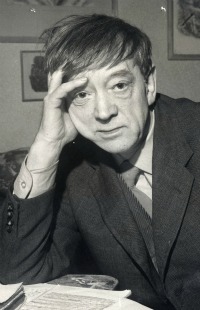
david_jones_artist_poet
David Jones


I have been reading little other than In Parenthesis for the last few weeks. The narrative precision clarifies with each re-reading, as does the characterisation, the recurring motifs become more significant, the gem-like passages of exquisite poetry leap out. I have come to it very late; a reason for some regret but it is the best thing I have read in years. Perhaps the title put me off. It sounds arid and a bit tricksy. Jones suggests the parenthesis was the war itself (perhaps again indicating his real concern with how we live our peace), though he also cryptically adds “because our curious type of existence here is altogether in parenthesis”. The whole work concludes with lines taken from The Song of Roland: “the man who does not know this has not understood anything”.