The Launch of ‘Magma’ 60 at LRB bookshop

Last Friday night I read briefly (partly from my Worple Press book: https://martyncrucefix.com/publications/a-hatfield-mass/) at the LRB bookshop, 14 Bury Place, London WC1A 2JL (in fact just doors along from Enitharmon Press’ new offices). It was the launch of Magma magazine’s new issue (http://magmapoetry.com/). Magma really has become one of the must-read magazines in UK poetry and the event was one of two national launches (the other is on Thursday 11 December at 7pm at the Lit & Phil, 23 Westgate Rd, Newcastle upon Tyne, NE1 1SE, with guest reader Sean O’Brien). The LRB is a spectacularly good bookshop but you feel acutely the vanishing of bookshops elsewhere – to be surrounded by shelves of ‘proper’ books is a real pleasure, distressingly beginning to take on the quality of a sepia-tinted memory. Yet, as one of the readers commented, this is a dangerous place to visit if you’re not prepared to part with hard cash: so many temptations. It’s also a good place for a reading: chairs from front to back on the ground floor, seating well over 50, and on Friday it was packed.

images

Magma 60 is edited by Rob A. Mackenzie and Tony Williams (one of the good and distinctive things about the magazine is its rolling editorship) and 19 poets were asked to read a couple of poems each, with Kei Miller putting in a longer shift at the end as guest poet. Among others, Peter Daniels’ poems evoked a quiet, desperate sense of things not holding, of wider societal failing (‘you might discover you’re painting the house / while the other side’s on fire’). Jacqueline Saphra remembered being seventeen and then dealing with her own seventeen-year olds, boys and girls, the latter crying from their rooms, ‘Come in, I won’t let you in, Come in’. Michael Henry recalled Finals exams and wanting to write about Brecht, which he does in his poem ‘Agent provocateur’: ‘The Brechtian grape is a dry white grape / and it tastes like the white corpuscles in blood’. Martha Sprackland and Jasmine Simms found common ground and a source of poetry in drifting off in science classes at school (I remember it well).

imgres

John Greening read about visiting the archaeological dig at Sutton Hoo and an intriguing poem about ‘The Battle of Maldon’ which knowingly fails to offer ‘an explanation // of what happens in the end [. . .] about how     whatever it is     was broken’. DA Prince also evoked an earlier age with ‘The bell-makers’ reminding me of sequences from Tarkovsky’s film Andrei Rublev (1966): ‘the brilliant blistering light, / that cataract of blazing air, the stream / of liquid pain’. Karen Leeder presented new translations of German poet, Volker Braun. Braun was writing in part through the upheavals of 1989, exploring the triumph of capitalism: ‘EVERYTHING AND NOTHING / Was it ever really yours? Fuck you, fantasist. / The encore: all that you could never need!’ (http://www.amazon.co.uk/Rubble-Flora-Selected-Seagull-German/dp/0857422189/ref=sr_1_1?s=books&ie=UTF8&qid=1417365225&sr=1-1&keywords=volker+braun).

At the end of the first half, Gwen Adshead, a forensic psychiatrist and psychotherapist who works in secure hospitals, talked about her work and love of Philip Larkin’s poetry and read ‘Talking in Bed’ (one of my own Larkin favourites; see below). Kei Miller’s live delivery illuminates and energises his own words on the page. I’ve written more about his prize-winning The Cartographer Tries to Map a Way to Zion (Carcanet) on this blog (https://martyncrucefix.com/2014/10/22/kei-millers-cartographer-and-friels-translations/). He read several of the Place Name pieces, the poem where the Cartographer asks for directions and gets indirections instead (‘all true’ Kei said), the ‘Hymn to the Birds’ and the 28,000 rubber ducks poem which moves (almost imperceptibly) from children’s bath toys to captives lost overboard on trans-Atlantic passages years ago. Miller finished with his short poem ‘Distance’ which seemed to be something of an answer to Larkin’s poem chosen by Gwen Adshead; here are the two of them. . .

Talking in bed

Talking in bed ought to be easiest,

Lying together there goes back so far,

An emblem of two people being honest.

Yet more and more time passes silently.

Outside, the wind’s incomplete unrest

Builds and disperses clouds in the sky,

And dark towns heap up on the horizon.

None of this cares for us. Nothing shows why

At this unique distance from isolation

It becomes still more difficult to find

Words at once true and kind,

Or not untrue and not unkind.

Distance

Distance is always reduced at night

The drive from Kingston to Montego Bay is not so far

Nor the distance between ourselves and the stars

And at night there is almost nothing between

The things we say, and the things we mean.

Kei Miller’s ‘Cartographer’ and Friel’s ‘Translations’

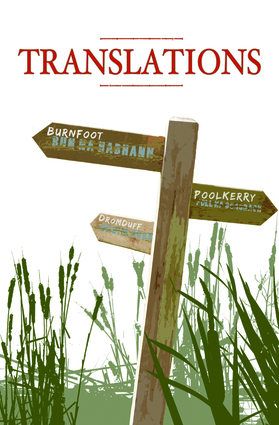
Kei Miller’s third collection, The Cartographer Tries to Map a Way to Zion (Carcanet), recently carried off the Forward Prize for poetry and it struck me that it shares concerns about language, colonialism and map-making with Brian Friel’s play, Translations (1980) which has become something of a staple teaching text in recent years for several exam boards.

Miller’s poems explore knowledge of place. To begin with there are two opposing views. The cartographer of the title is schooled in “Babylon science” and seeks objective, timeless, abstracted knowledge of Jamaica, knowledge of worth (to his mind) because rid of all contingent distraction. The rastaman knows his island more subjectively, historically, full of local detail, more politically. For the rastaman the island is “unsettled . . . unsugared . . . unmapped”. It “fidget[s]” and slips from “your grip”, is full of what the objective gaze can “never see”. The cartographer arrives with the colonial mission to “untangle the tangled, / to unworry the concerned”, to set a nation and its people back on the right path from which they “may have wrongly turned”.

images

The 27 sections of the title sequence then proceed to track the dialectic between these two viewpoints. But the book itself is less Ordnance Survey, more a full colour, illustrated map stuffed with half-sketched houses, trail signs, characters, places. This wonderful effect is achieved by Miller’s scattering, along the trail of the dialogue, poems that explore the etymology of place names as well as others that praise various aspects of Jamaica (especially its creatures). So the outcome of the dialogue – proceeding as it does as a pretty civilized skirmish – is loaded in the rastaman’s favour. It’s true that he is said to dismiss “too easily the cartographic view”, though even here the particular poem ends with an acknowledgement that the Eurocentric Mercator projections of the world (1569) misrepresent the size of Africa and have long “gripped like girdles / to make his people smaller than they were”. Rather, it is the position of the cartographer that shifts significantly. Though initially he too “dismisses too easily the rastaman’s view”, he soon begins to “lose himself” among the “I-drens & I-formants . . . smoking a chillum”. Eventually a question rises in his mind, “between his learning / and awakening: how does one map a place / that is not quite a place? How does one draw / towards the heart?”

It’s on this basis, in his more illumined state, that the cartographer begins to try to “map a way to Zion”. Of course, he needs the rastaman to point out that Zion is less a “where” than a “what” and that it cannot be plotted towards but rather must be waited for. Nevertheless, the book’s conclusion is comedic; the whole begins and ends with a “heartbless”. The brutal facts and bloody history of colonialism are conveyed more in the place name poems, many of which record displacement, floggings, shootings, “suspicion . . . centuries deep”. The brevity of most of the poems, the switching between standard voice and forms of Jamaican patois, the details of landscape and people, all combine to make a very enjoyable read, rewarded with a convincing up-lift at the end.

Translations 4

Remarkably similar territory is explored in Brian Friel’s modern classic drama Translations, about the re-mapping of Ireland by British colonial forces around 1833. But Friel writes a tragedy, recording (with historical hindsight) the almost complete stamping out of Gaelic culture and language in the 19th century. The British sappers (like Miller’s cartographer) claim they are there to benefit the Irish people, to rationalize and clarify what they perceive/assume is a backward country in need of modernization. But Friel (like Miller) portrays the native culture as sophisticated, if different, so that with the British process of improvement comes inevitable loss. The hedge-school teacher, Hugh, closes the play, failing to recall lines from Virgil and Friel is implying, with dramatic economy, with the stage lights fading, the loss of knowledge, of language, of personal and national identity. In contrast, Miller’s book ends in peaceable benediction:

In leaving

The rastaman bids you

Mannaz and respeck

Izes and protecshun

Upfullness

He bids you

Guidance and healt

Inity and Strenth

Bids you, Trod Holy

To I-ly I-ly I-ly

Mount Zion-I

Trod Holy.

Michael Donaghy – 10 Years On

With the South Bank in London about to stage a celebration of Michael Donaghy’s work (http://www.southbankcentre.co.uk/whatson/michael-donaghy-a-celebratio-85980) and several new publications forthcoming, I remember reading with him around 1990 at that same venue. I’m sure the event was recorded but I’ve never heard it since. He was reading from Shibboleth (1988) and I must have been reading from Beneath Tremendous Rain (1990). I reviewed his posthumous book Safest (2005) for Poetry London (I think) and thought it might be appropriate to post it here unchanged. My intention was to review his work as a whole as well as commenting on the short collection that Picador had then produced.

imgres

Michael Donaghy’s death in 2004 is rightly regarded as a great loss to English poetry. With the publication of Safest – poems he had been preparing for a fourth collection – we can see his work over 30 years forming a tragically curtailed, but significant whole. I wonder if he tired of the early ‘metaphysical’ label, so easily applied to a poem like ‘Machines’ which opened his first book and remarkable in 1988 for its elegance of form and delicate wit. What is really distinctive in the first two books is his pursuit of the dramatic lyric. Donaghy is a terrific storyteller and a key part of his success is the irresistable address of his narrators. This is usually combined with astonishingly fluid transitions from colloquialism to the complexly erudite (the metaphysical bit). Drama lies in Donaghy’s precision of voice, the accessibility of character and narrative and his superb, often comic, sense of timing. His deployment of these various devices results in the other distinctive property of a Donaghy poem – the sheer distance it can travel from start to finish and the surprises on the way. Particularly for those who saw him perform, these are the elements he triumphantly combined in feast-like poems such as ‘Smith’, ‘Letter’, ‘Cadenza’, ‘Liverpool’, ‘The Hunter’s Purse’ and ‘Erratum’.

In retrospect, the traditional nature of his subjects is clear: love, art, death, time. Perhaps the absence of politics will come to be seen as a bar to real greatness, though the opening 20 pages of Shibboleth and the first two sections of Errata are very powerful evidence in his favour. Perhaps all his concerns are subsumed in his continual meditation on the temporal – how identity is composed of past events, how the past can seem more real than the present, how “the past falls open anywhere” (‘Black Ice and Rain’ from Conjure). Always restless, Donaghy’s third book seemed significantly darker in tone and contained fewer stories. What the blurb referred to as his most “vulnerable” work is a series of heart-broken love lyrics and a number of poems on his relationship with his dead father. Of the latter, ‘Caliban’s Books’ is outstanding and need give no quarter to Plath’s ‘Full Fathom Five’ in the evocation of parent/child relationships and Donaghy’s poem is full of tenderness and astringent nostalgia for the lost man and his Irish childhood.

Now Safest gives us 24 new poems – barely half a full collection – and one can only wonder at what might have been. Maddy Paxman’s note on the contents suggests these were the pieces Donaghy had approved for publication, but even so the repetition of a brief passage in two quite different poems (page 21 and 27) suggests an inevitable lack of finish. The book seems to have been shaping up more to resemble Conjure than the early work. Vintage Donaghy can be found in poems like ‘A Darkoom’, an imagined/remembered portrait of Klein, a holocaust survivor and photographer, visited in the garrulous narrator’s youth but whose memories of the man are at risk of being forgotten. The opening poem’s image of a Claude Glass (an 18th century device for creating picturesque images of landscapes that lie at the viewer’s back) is a perfect vehicle to articulate Donaghy’s retrospective habit of  “squinting to recall some fading pleasure, / or [being] blinded by some private scrim of tears” (‘Upon a Claude Glass’).

imgres

‘From the Safe House’ is another narrative tour de force, blurring the boundaries of memory and imagination, compacting time to an eternal instant in writing a letter from Reagan-era Chicago to send in the present day to a friend who has just died prematurely but imagining him a happily married father in Vera Cruz! Against all the odds this works – and is deeply moving. This is an almost baroque extension of earlier modes, but Donaghy’s bold re-writing of the original in ‘Akhmatova Variations’ looks like a new direction. As does ‘The Moko’, which reads as a hypnotic paean to some whale-like creature: “Muscles of silence are rolling miles offshore at night”. Such environmental concerns are new in Donaghy’s work and his lyricism invests these creatures with grace and nobility:

They knew the stars and steered by singing them

and when the stars were dark, by wind,

and when the winds died, by wave swell,

bird flight, swirled shoals of luminous algae,

by phosphorescence a fathom under the outrigger.

The fact that the moko turns out to be a Polynesian mythical beast of the sea only adds to the poem’s intrigue.

Donaghy’s art – as far as it was allowed to develop – owes its success to contradictory impulses. It thrives on tensions between fluid and formal, colloquial and erudite, humour and seriousness, personal and impersonal. It strikes me there was a movement over the years from the first of each of these contrasts towards the second – whether a permanent sea change or mere local turbulence we will never know. Of course, hindsight tempts us to see the darkening as prophetic but, as I have said, this was under way in his third book. Safest has its preponderance of troubled and troubling lyrics, less love-torn this time, more concerned with the dissolution of self. ‘Midriver’ is a bold language experiment in which the lyric voice is almost wholly stripped of its personal pronoun and identity seems lost in a swirl of the temporal and spatial: “so stops halfway and, neither there nor there, / but cold and rained on and intransitive”. Even more explicitly in ‘Exile’s End’ and ‘Disquietude’, it is death that lowers and Donaghy writes not with Larkin’s horror, nor Thomas’ raging, but from an intrigued distance: “No recording devices are allowed in this hall. / The lights dim . . . / for the next movement / which features no one and is silent”. (‘Disquietude’).

Teaching Edward Thomas’ ‘Adlestrop’

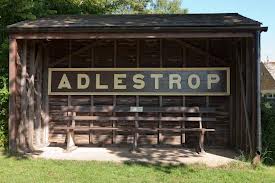
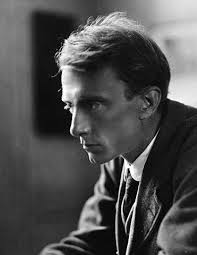
We teach the OCR exam board’s AS module F661, opting for Edward Thomas as the poet for close analysis. Oddly, the board do not include ‘Adlestrop’ in their selection of poems. So in the opening sessions, here’s a way of gentling students in to the processes of closely analysing a poem while also showing them Thomas’ most well-know piece.

imgres

Discuss with the class the idea of syllable counting in a verse line. Get them to try it by asking students to write an 8 or 10 syllable line beginning “Yes. I remember . . .”. Perhaps one of each.

For the exercise that follows (for those who want more restrictions) suggest keeping to an 8 or 10 syllable per line. Others (possibly the less able) may prefer more freedom . . .

Now . . . tell them to imagine they are travelling – some form of transport, walking, bike, train, bus. Ask around to reveal what they are imagining. Try pushing it a bit further, for more details, the car, the time of day, the scenery . . .

Now write 4 lines – a quatrain – in which you describe travelling and arrival at a particular location, at a particular time of year. They stop there. Maybe suggest they might open with “Yes. I remember . . .”. again – but not compulsory  . . .

Yes. I remember Adlestrop —
The name, because one afternoon
Of heat the express-train drew up there
Unwontedly. It was late June.

Next, write 4 lines in which you have stopped at this place – you hear a variety of noises – describe them . . .

The steam hissed. Someone cleared his throat.
No one left and no one came
On the bare platform. What I saw
Was Adlestrop — only the name

imgres

Next write 4 lines in which you give a description of what you see – first 2 lines things close by – second 2 lines things further off . . .

And willows, willow-herb, and grass,
And meadowsweet, and haycocks dry,
No whit less still and lonely fair
Than the high cloudlets in the sky.

Finally write 4 lines in which your attention continues to drift away into the distance, ever more remote from where you stopped; suggest it is wholly up to them where they stop with this one – attention may be drifting for miles, even for years . . .

And for that minute a blackbird sang
Close by, and round him, mistier,
Farther and farther, all the birds
Of Oxfordshire and Gloucestershire.

Very optional 4 lines depending on how well they are going – in which they may conclude the piece in any way they wish. Interestingly, Thomas does not make use of this option, does not conclude in any neat fashion; a point for discussion later perhaps. . .

Finally, show Thomas’ own poem. Give out copies. By this stage, students will be likely to have opinions and/or questions about the way the original piece deals with the same material they have just written about.

Homework: to type out the lines created during the lesson – taking any opportunity to alter or just tidy them up to be presented next lesson.

Next lesson – Take the poems they have typed up. Copy them and re-distribute them, one to each student (not their own poem though). Ask them to identify and annotate SIX items from the poem in front of them where they perceive the writer has made use of technical devices.

Ask each student to present and illustrate orally TWO of these devices to the rest of the class. These will range from the simple (a moment of alliteration perhaps) to the more complex (the way the writer develops over quatrain 2 and 3 a lexical field associated with illness)

The teacher might ‘mark’ the original creative piece; certainly a ‘mark’ might be derived from a student’s annotation of another student’s poem.

Re-packaging ‘percussive’ Ted Hughes

Anthologies are the reluctant poetry readers’ hedging bet. There’s a good chance that something good will turn up and prove a winner. They sell well – they are the infrequent poetry buyer’s punt for a gift that will please at least in parts. So Alice Oswald’s compilation of Ted Hughes’ animal poems into a Bestiary will certainly put more cash into the Faber vault. But few complaints – anything to get more people reading any poetry cannot be bad.

Ted-Hughes-001

Oswald discusses her approach to the selection in The Guardian: 

http://www.theguardian.com/books/2014/aug/29/ted-hughes-alice-oswald-animal-poetry-bestiary

She picks up Hughes’ own early image of his poems as creatures with a “vivid life” of their own. He condemns poems which fail to possess this coherent vitality as likely to walk with a pronounced limp – a wonderful way, I’ve found, of imaging that elusive ‘rightness’ of a poem for students and workshoppers. Interestingly though, there is a shimmering, vacillatory quality to others things Oswald writes and this comes directly from Hughes himself. His animals are very much themselves yet they are expressive of human qualities too. Oswald quotes from Moortown Diary; Hughes on the poet “getting close to what is going on, and staying close, and of excluding everything else that might be pressing to interfere with the watching eye”. Held in tension with this are other Hughes’ statements such as this, in a letter, warning of the dangers of mere observation: “When a man becomes a mirror, he just ceases to be interesting to men.”

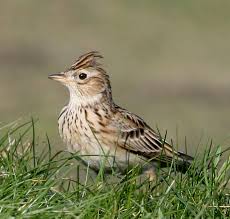
Oswald goes on to suggest that it is the “percussion” of Hughes’ language that instills such vivid life into his poems, quoting from ‘Skylarks’:

The lark begins to go up
Like a warning
As if the globe were uneasy –

Barrel-chested for heights,
Like an Indian of the high Andes,

A whippet head, barbed like

a hunting arrow,

But leaden
With muscle
For the struggle
Against
Earth’s centre.

And leaden
For ballast
In the rocketing storms of the breath.

Leaden
Like a bullet
To supplant
Life from its centre.

imgres

If it is a percussive effect that is critical here it is more Mozart than Stomp. Oswald has precious little space to develop her argument, but what I find in such a passage is Hughes’ distinctive manipulation of scale and perspective, not unrelated to his paradoxical comments above. Microcosm and macrocosm are continually leant against each other here, or – it being a more metamorphic, high-pressured process – they are spun about each other till it’s hard to pick one from the other. The tiny body of the lark is a warning to the globe; its braced, needle-thin ribs conjure images of Andean mountains; its crested, whippet head seems to speed lethally through remote forests. The three stanzas focusing on the “leaden” nature of the bird – less weight it seems to me, more loaded with quiddity, self-ness – provoke the reader to focus closely on its body, only again for our attention to be spun outwards to “Earth’s centre . . . rocketing storms”, vulnerable life beating at its “centre”.

In part, what Hughes achieves is a sense of interconnectedness – which he would have intended in both spiritual and environmental terms. What the reader experiences is a sudden inflation or deflation of scale and perspective, a magical effect, an effect created through language, an effect achieved so skillfully and instantaneously that one might well have some sense of a percussive, explosive or implosive quality. I don’t hear or feel a noise as such – my sense of the world pulses, is stretched or compressed in the most exciting fashion. An effect with a moral dimension to it as well – a serious, ludic experience, in which we see and re-see our own place in the world.

Two mindfulness narratives for Tim Parks

A fascinating and honest account of taking up mindfulness or meditation exercises by novelist Tim Parks.

http://www.theguardian.com/lifeandstyle/2014/aug/30/meditation-mindfulness-tim-parks-more-than-medicine

He says: Being simultaneously immobile, wakeful and wordless is an experience that runs contrary to all our habits, and for which there is no model in our culture, nothing we can visualise, no narrative we can follow.. . 

I’m reminded of a couple of specific chapters from the Daodejing I have been working on for the last year or so . . .

Resistance

chapter 10

Can you stop your mind from straying?

Can you hold to the one? Never let it slip?

Can you make your breath soft as a child’s?

Can you listen to its long-drawn out and in?

Can you renew the glass through which you gaze

so the world is sharp and vivid?

Can you feel love of others? And persuade them?

Yet resist the desire to dictate?

Can you latch and unlatch the doors of perception—

yet be content to play the female part?

Can your insight range, penetrate far and near,

then back away—not interfere?

Then raise them, every one—nourish them all.

Raise them, but make no claim.

Influence them, but do not dictate.

Govern them, but do not legislate.

Only this, says Berenice, can be called power.

Focus

chapter 12

The spectrum of colours

dazzles the eye.

A plethora of sounds

dulls the ear.

The palate is coarsened

by explosions of taste.

Excess of pursuit,

too much of the hunt,

leads to nothing but

the mind’s disturbance.

The much-coveted rarity,

the limited issue,

serves only to cramp

its owner’s liberty.

The teacher’s focus

is steadily within—

not on what catches

the common eye.

The truth is: she shuns

that, prefers this.

Marxian glory days

The number of Marxian ideas and expressions I have forgotten since reading him at university is perhaps something not decently, publicly admissible. But one idea has stayed with me, become something of a talisman of a personal rather than political kind. In The German Ideology (1845) he declares that in the well-governed society, in a communist society, where nobody has one exclusive sphere of activity but each can become accomplished in any branch he wishes, society regulates the general production and thus makes it possible for me to do one thing today and another tomorrow, to hunt in the morning, fish in the afternoon, rear cattle in the evening, criticise after dinner, just as I have a mind, without ever becoming hunter, fisherman, herdsman or critic. 

Karl Marx - portrait

The well-governed life continues to prove as elusive as the well-governed society, of course, but a day of real/metaphorical hunting, fishing, rearing and criticising has remained an ideal of contentment. It was Henry de Montherlant (http://en.wikipedia.org/wiki/Henry_de_Montherlant) whose aphorism suggested that ‘happiness writes white (“Le bonheur écrit à l’encre blanche sur des pages blanches.” (Don Juan II, IV, 1048)) but in recording something like the perfect day I am running the greater risk of the plush, crushed raspberry colourings of complacency and self-satisfaction. But perhaps describing one’s own pleasure can be a political act.

My daughter has to be dropped off at 7am at school. Elevated to the dizzying heights of Year 7 prefect she is off to Wiltshire to accompany the ‘new kids’ on some bonding, outward-bound sessions. This leaves me near Hampstead Heath and time to jog/walk my way round it in the early morning with just dog-walkers and others getting the sluggish blood moving. Back at home with that serotonin high, paradoxically both both pumped-up and emptied-ready-to-be-filled, I work through some drafts of my current project, a version of  Daodejing. As a writer, I came to the Daodejing after translating the German poetry of Rainer Maria Rilke. Perhaps more importantly, it was as a long-standing teacher that I read Laozi’s 81 ‘chapters’. There are colourful myths about their origins, but they were probably a series of orally transmitted seed verses compiled as far back as the 7th century BCE by many Chinese hands, an aide memoire, certainly an aid to teaching.

imgres

The Dao or Way is not an individual entity, still less anything divine. It is a mode of being, all encompassing, a phenomenal, existential primacy, perhaps akin to the Western idea of original chaos. The text emphasises its feminine characteristics. It can be viewed from spiritual, epistemological, educational, political or environmental perspectives, though none of these exhausts its true nature. The poems enthusiastically accept that their profound and urgent messages are inevitably compromised by the need to express them in language, hence demanding a variety of technical manoeuvres – they stay light on their feet.

Into college for the afternoon, interviewing students, mostly about mistakes, choices, salvage operations possible for them after GCSE, AS or A2 exams. But also some preparation for the new course we have devised for A2 Coursework combining Fitzgerald’s The Great Gatsby, T S Eliot’s Prufrock and Other Observations, and Nathanael West’s The Day of the Locust. W H Auden’s brief discussion of West in The Dyer’s Hand is interesting, suggesting he portrays a Kingdom of Hell, ruled by the Father of Wishes. I read it, knowing I’m having a good day, some wishes coming true in contrast to West’s visions of West Coast apocalypse. Right here, right now, a brief, various-faceted jewel in the setting of others of more usual monotony. (More of West in another blog perhaps).

Driving home – the rolling dice of Henley’s Corner – I listen to the opening bars of tonight’s Prom: Brahm’s Third Symphony. By 9.30pm I’m walking into the Albert Hall myself for the late-night show: Beethoven’s Missa Solemnis. Didn’t I promise a good day? It’s John Eliot Gardiner and the Monteverdi Choir and Orchestre Révolutionnaire et Romantique  (http://www.bbc.co.uk/programmes/b04f8vlq). Gardiner says in a brief introductory interview that Beethoven’s unconventional Mass often skims more traditional moments of the text but is ‘marvellous’ on the ineffability of the Godhead, the humbleness of mankind and I’m in the mood to hear it…

Driving back up the Edgware Road, the sky is big as it seldom seems in London. The lights are bright in the Lebanese restaurants, my eyesight – usually close to blurry – seeming sharp tonight, hyperreal, resonant, woven still with the threads of earlier hours. Tomorrow, will be a thinner diet, more monotone, less good.

Liz Berry’s ‘Black Country’ reviewed

Liz Berry, Black Country (Chatto Poetry, 2014)

If a reputation can be earned through the writing of half a dozen poems of real worth then Liz Berry has probably already written them, earning her place in the landscape of early 21st century British poetry. Her debut collection (containing 14 poems from the earlier chapbook The Patron Saint of Schoolgirls (tall-lighthouse, 2010) has charm, accessibility and a humour that belies the serious ways in which she exerts pressure to counter the hegemonies of language, gender, locality, even of perception. Berry is a teacher by profession and will, no doubt, have equivocal feelings about her work appearing in classrooms – but it will rapidly and rightfully find a place there.
Liz-Berry

We resist what tries to define and suffocate us in part by declaring who we are. Berry’s confident, natural, even uninhibited use of her own Black Country dialect is one of the most superficially striking things about this book. Against “hours of elocution”, she opts for “vowels ferrous as nails, consonants // you could lick the coal from” (‘Homing’). Variously her grandmother and mother influence her in this and, in ‘The Sea of Talk’, her father also urges her never to forget the place of her birth with “its babble never caught by ink or book”. The definition of a community against the pull of a conventional linguistic centre is explicit here. Her grandmother is a frequent role model and the growing girl studies “her careful craft”. “Right bostin fittle”, the older woman declares (ie. great food – brains, trotters, groaty pudding) and the budding poet willingly touches her “lips to the hide of the past” to inherit the authentic gift.

Other poems, making it clear that locality is as much a component of who we are, record and celebrate the Black Country as “a wingless Pegasus” composed of scrub, derelict factories, disused coal shafts, yet still a “gift from the underworld” whose nature and fate is enough literally to make grown men weep (‘Black Country’). Berry takes huge pleasure in enumerating the details of her locale. “Come wi’ me, bab, wum Tipton-on-Cut” invites one poem which then takes a tour of waterways, allotments, parks, mosques, steelworks and canals (‘Tipton-On-Cut’). Similarly, ‘Christmas Eve’ seems to improvise from the great concluding paragraphs of Joyce’s story ‘The Dead’, using the ubiquitous fall of snow to lead the reader across the landscape of Beacon Hill, Bilston and Molineux.

We elude being imposed on and defined by others by changing. This, for me, is the more profound aspect of Berry’s work; so many poems unfold as processes of self-transformation. A mark of the book’s self-confidence can be found in ‘Bird’ which announces this motif of liberation: “When I became a bird, Lord, nothing could stop me”. Here, it is the mother’s voice urging, “Tek flight, chick, goo far fer the winter”. In keeping with this, the poems display a formal variety – free verse, short-lined quatrains, couplets, tercets, ballad forms, punctuation comes and goes. This is further reinforced by Berry’s bold, category-dissolving imagination which instinctively reaches for metamorphic possibilities. In ‘Birmingham Roller’ the escapee is a bird again, “jimmucking the breeze, somersaulting”; people become dogs, trees, pigs, fade to mere echoes, girls become boys. The donning of a pair of red shoes invigorates, eroticises: “rubies that glistened up a dress, / flushed thighs with fever” (‘The Red Shoes’).

Sexuality features so prominently in Black Country in part because of its potential for transgressive energy. I’m sure ‘Sow’ is anthology-bound with its “farmyardy sweet” female narrator, rejecting external definitions (“I’ve stopped denying meself”), accepting her true nature as a “guzzler, gilt. / Trollopy an’ canting”. This is a real tour de force of dialect, imaginative transformation and downright feminist self-realisation that “the sow I am / was squailin an’ biting to gerrout”, even daring the reader to “Root yer tongue beneath / me frock an’ gulp the brute stench of the sty”. Berry’s power of imaginative transformation is so powerful that the book creates mythic figures at will: the sow girl, the Black Country pegasus, the patron saint of school girls, Carmella the hairdresser, the Black Delph bride, the last lady ratcatcher. ‘Fishwife’ presents another of these figures like something from a quasi-pornographic Grimm’s tales. Attending a 17 year old girl’s wedding, she brings the gift of oysters, erotic energy, transgressive flirtation, power and ultimately pleasure:

                                            I slipped
from my bare skin
alive oh alive         all tail           all fin
how the tide tossed
until alive ohhh alive
the waves flung my shining body        upon the rock

She kisses the bride with “her tongue a plump trout” and other poems also resist categories to the extent of a sensation of gender-bending, or more accurately gender neutrality. I’ve already mentioned the girl who becomes a boy. ‘Trucker’s Mate’ reads like a homosexual “romance” and ‘In the Steam Room’ positively drips with sexuality – but of an explicitly “sexless” kind in which “any body / might give you pleasure”. ‘The Silver Birch’ achieves the extraordinary feat of evoking “sex [. . .] before sex” (eroticism before gender), “when I was neither girl or boy [. . .] a sheaf / of unwritten-upon paper”.

With so much dissolution of the normative, Berry dallies with the surreal and there can be dangers if the work does not also bear a weight of darkness. A poet like Tomaz Salamun writes in the tradition of Rimbaud’s systematic disorganisation of the senses, but combines, as Ed Hirsch suggests, “exuberant whimsy and fierce rebellion” to resist too easy a relationship with the pressures of the real. Happily, Black Country encompasses some richly productive tensions between the real and imagined, home and away, past and future, conformity and rebellion, sex and death. The latter rises to the surface through the middle of the book in poems like ‘The Bone Orchard Wench’, ‘Echo’ and the murder ballad ‘The Black Delph Bride’, acknowledging that the traffic between real and imagined contains plenty of irresolvable grit, impossible to wish away in any facile manner.

The collection concludes in more plainly autobiographical terms with the approach of the birth of a child and perhaps there is less imaginative pressure here, a risk of sentiment, “waiting [. . .] for the little creature that grew inside me”. Nevertheless, in reviewing first collections it’s traditional to look forward to achievements to come but this is inappropriate with Black Country simply because there is so much confidence, focus, shapeliness, already achieved uniqueness. Rather, this is a poet whose work presently demands our admiration. Oh yes . . . and what about those half dozen or so poems of real worth? I’d suggest ‘Bird’, ‘Bostin Fittle’, ‘Black Country’, ‘Tipton-On-Cut’, ‘The Silver Birch’, ‘Sow’, ‘Fishwife’. You’ll hear more of these in years to come.

W S Merwin – The Moon Before Morning

This review by Fiona Sampson says all I’d want to say about Merwin’s brilliant new book.

I was delighted when Bloodaxe wanted to excerpt from a review I wrote for ‘Poetry London’ about his last – The Shadow of Sirius (2009) – for the blurb of the new collection.

Here’s what I wrote then:

The Shadow of Sirius won its author a second Pulitzer in 2009 and this UK edition from Bloodaxe is a PBS Recommendation so Merwin hardly needs a plug from me. Yet his original poetry (as opposed to his wide-ranging translation work) remains relatively little known here and this book is so good that I am delighted to be able to add to the praise it has already garnered. These poems are lyrical, majestic, sceptical and tenderly gorgeous meditations on time and the nature of perception. They are also technically thought provoking. Since 1970 Merwin has abandoned punctuation and the resulting texts are thrilling processes in which syntax drifts in and out of focus, never a word out of place, and technique is made to carry metaphysical and psychological weight. Merwin intends the poem – because it must reflect human consciousness – to re-present a unified field of experience, especially of the temporal.

Early poems here are autobiographical and the shadow of Sirius is mortality and time for a writer in his eighties. It “appears now that there is only one / age and it knows / nothing of age as the flying birds know / nothing of the air” (‘Still Morning’). Later, age itself “seems to be without substance” since “the bird lies still while the light goes on flying” (‘Unknown Age’). Many of these sinuous, seamless poems appear to be enacted in a present tense that is re-focused on a remembered past which then contains anticipations of the future. So in ‘Accompaniment’, a child is washing his hands on a train journey, hearing his mother’s instructions about what they will do next, but the journey is long:

I will

wake up far away

we are going south

where I know that my father

is going to die

but I will grow up before he does that

the hands go on washing themselves

‘Photographer’ reads like a little myth of this process. The artist’s death goes unremembered by most but “someone who understood” rescues hundreds of glass plates and from them come “apple trees flowering in another century / lilies open in sunlight against former house walls”.

Though ‘A Likeness’ ends by declaring “I have only what I remember”, there is such generosity, breadth and richness to memory beyond any roseate nostalgia or cheap remorse that Merwin enacts Eliot’s observation that “all time is eternally present (‘Burnt Norton’). In doing so he accesses a redemptive quality yet does not underestimate the epistemological complexities. Many pieces are in search of deeper meaning and can be regarded as versions of ‘A Note From the Cimmerians’ who dwell “in utter darkness”. Towards the end of this marvellous book, landscapes recur which might be Merwin’s childhood USA, or the Pacific island of Maui where he know lives, but most often suggest the France where he once lived (a squabbling Plath and Hughes stayed with Merwin and his first wife in 1961) and seems now to be revisiting. ‘Cold Spring Morning’ notes “At times it has seemed that when / I first came here it was an old self / I recognized in the silent walls”. ‘Youth of Grass’ opens with what reads like straight landscape description but concludes (only 15 lines later) having gathered all the tenses together: “so the youth of this spring all at once is over / it has come upon us again taking us / once more by surprise just as we began / to believe that those fields would always be green”.

“The trouble with pleasure is the timing” declares ‘One of the Butterflies’ and the extent to which Merwin wrests pleasure from the passage of time is extraordinary; and extraordinarily Keatsian since these poems do not reach for fixity or facts, their fluidly unpointed forms unfolding with a marvellous aptness. It is not merely that pleasure is “gone before I know it is here” but more importantly “if I could make it stay / as I want to it would turn into pain” (‘One of the Butterflies’). These are unashamedly late poems and Merwin argues the mark of such work is that they employ “words / that have come the whole way / they have been there” (‘Worn Words’). Just listen to the settled human voice singing in this final poem: “yes this is the place and the one time / in the whole of before and after / with all of memory waking into it” (‘The Laughing Thrush’).

My brief career in medicine

At this time of year, students are leaping into the air with their exam results. Forty years ago to the day, a spotty, be-feathered upper sixth form student in Wiltshire was about to embark on a life-changing 9 months. The following account appeared in the magazine Agenda recently – here it’s dedicated to all those students making wrong decisions, wishing them the possibility of recovering from them.

August and as I walked from the red-roofed, Wiltshire house where I’d lived most of my 18 years, I had a vision of a child, a baby staring up at me, waiting to be lifted. It lasted only a few seconds but I returned to the house happier and resolved that I could not turn my back on such an opportunity.

I’d applied to study Medicine for reasons I cannot now recover and may not have been clear at the time. I’d had a series of interviews during the Upper Sixth year but only rejections had come back though I was held on a short list at Guys in London. But I’d already been struggling to focus on Biology, Chemistry and Physics, preferring to pick up the blonde, resonant body of my guitar and play Neil Young, Bowie, Lindisfarne, Don Maclean’s American Pie. I had written a few poems but from an almost complete ignorance of poetry. Shakespeare and Chaucer at O-level really was about it. My models were exclusively song lyrics which I listened to intensely, following them on the lyric sheets inside the unfolding gates of album covers. My head was unhelpfully full of phrases from Van der Graaf Generator’s Peter Hammill and Jon Anderson of Yes – one a merchant of genuine, existential, gothic angst, the other a lyrical fantasist. Then Guys rang to offer me a reserve place to start in ten days time. Then came the vision of the child.

imgres*
Because of the lateness of the arrangements in getting to London, I lodged in a room in Eltham Park and commuted into London Bridge. The city I’d been parachuted into was in the midst of the Provisional IRA bombing campaign. The medical school worked us hard though I never found it easy, or easy to devote myself to it. Within a week or so, we filed into the long upper room overlooking the inner quad. The windows down one side were filled with pallid light, a cloud-light flooding in from the London morning. We had watched a film which included queasy moments of blades easing through human skin though even as I watched, it struck me as less informative, more likely to be readying us for the shock of encountering our first lifeless body.

His head was to the pale light of the morning. His feet were dry and yellowy and up-turned from the horizontal table where he lay. Though he’d once been human, he hardly seemed to be any longer. His skin was tough and thick-seeming, exactly like leather. The mound of a belly rose and fell to his groin dusted with greying pubic hair, a shrivelled prick and half-hidden balls. His legs ran on, thin and bony at the knee down to the up-turned toes. We all avoided looking at his face.

I wish I could remember who made the first cut. One of us must have done: into the leathery skin above the sternum. The blade needed pressing firmly and the upper layers peeled open a bit like a zip fastener, down towards the abdomen. We did not give him a name though we turned up to visit him every week for the rest of term. But then, he wasn’t ours alone. As we gradually opened up thorax and abdomen, arms and legs, students in the year above us were coming at other times and we’d arrive to find his skull opened, his cheeks slipping down his face, his eyes suddenly gaping and exposed to the light that greyed and wizened as the winter term progressed.
*
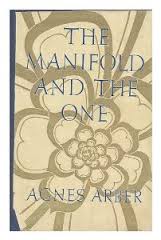
By November, I’d already bolted back to Wiltshire a couple of times and instead of medical text books, I’d started reading Hardy, Lawrence and H.E. Bates. In a poignant reminder of happier times, the school asked me to choose my books for a prize-giving at Christmas. On a trip to Bath, I bought Graham Greene’s The End of the Affair, Leonard Cohen’s Beautiful Losers and Lawrence’s England, My England. In Trowbridge, I scoured the second-hand bookshelves of Newbury’s, a bric-a-brac shop long since demolished and one morning I found a copy of George Eliot’s Silas Marner and a book called The Manifold and the One by Agnes Arber. I knew nothing of the latter but must have been attracted to the philosophical sounding title. In my growing tribulations at Guys, I was becoming deep. The questions I seemed to ask myself more and more had no easy answers and I had a notion this was called philosophy.

.imgres

The Arber book was a wide-ranging and syncretic survey, drawing on literary, scientific, religious, mystical and philosophical traditions, in pursuit of the experience which Arber defines as “that direct and unmediated contemplation which is characterised by a peculiarly intense awareness of a Whole as the Unity of all things”. Amidst the dissections, test tubes, bunsens, the red- and blue-dyed lung trees and chemical equations with which I uneasily engaged back in Southwark, I found consolation in Arber’s idea that life is an imperfect struggle. In those winter months, failing to work hard enough or get a firm footing in the bewildering city, I did not read passages about the “inevitable appearance of the awry and the fragmentary which we isolate in our minds” in a very philosophical fashion. Rather this was my daily diet, strap-hanging on a delayed train into London Bridge, sneaking into emergency exits to catch the second half of Diana Rigg in Pygmalion on St Martin’s Lane, trudging up a drizzly Charing Cross Road to buy sheet music I could not afford, drinking with others in The Bunch of Grapes on St Thomas Street, complaining how much work I had yet to do.

Already letters to old school friends were raising the prospect of leaving medical school. When Arber wrote of the limited and artificial confinement of conventional thought (“a hard and fast orthodox system of logical regulations – many of which resemble the rules of a complicated game and have little concern with the attainment of truth”) I felt she was talking of my current studies. I had developed an attraction to the esoteric – it made me feel more justifiably the outsider that I felt myself to be – and I got untold pleasure from hearing that masters of Zen Buddhism might declare to my lecturers, “Supreme Enlightenment goes beyond the narrow range of intellection – Cease from measuring heaven with a tiny piece of reed”.
*
But work piled up rapidly in the new term and after renewed attempts to devote myself to it, still the old patterns of neglect and procrastination returned. Even though there were months left before I managed to act on my desire to leave Guys, to beat a retreat from the big city, to set a new and more deliberate course, still the length of remembered time now seems short. After Lawrence’s Apocalypse and Sartre’s The Age of Reason, I raced through Cohen’s Beautiful Losers, bewildered by its episodic narrative, its explicit sexuality. It was Arber’s utterly different book that haunted me. One evening, staring out at Eltham, I wrote: “Down in the street / the puddles turn to raging light / night-time folds away the day / packing up the sun. Turning / through the broken stars, over, under / the chosen Far, making for homeward”. I listened to Radio Caroline in the evenings when I’d managed – not always and increasingly less often – a couple of hours of legitimate work.

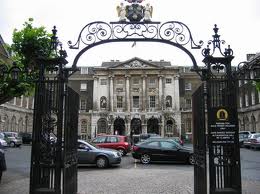
Then travelling blearily east from London Bridge, I forgot to grab my briefcase before stepping down onto the platform. It was a self-inflicted injury but had little real influence on the string of failures I achieved in the final exams. On another day – this was my nineteenth birthday – Margaret Thatcher defeated Ted Heath for the Conservative leadership. One day – it was a Friday – a train from Drayton Park failed to stop at Moorgate, overshooting the platform into a dead-end tunnel at 8.46 in the morning. As I walked gloomily from London Bridge through the black, wrought-iron gates of Guys, forty-three people were killed.

imgres

One morning three months later, I found myself sitting in the room in Crookston Road, the noise of the busy A2 a distant growling. I stared at my packed bags and felt calm if utterly becalmed. One day, months later again – this was now the end of a second strangely untethered summer – the thought had begun to form that I might see myself as a student of philosophy, maybe work harder at the writing.