As in the previous five years, I am posting – over the summer – my reviews of the 5 collections chosen for the Forward Prizes Felix Dennis award for best First Collection. This year’s £5000 prize will be decided on Sunday 25th October 2020. Click here to see my reviews of all the 2019 shortlisted books (eventual winner Stephen Sexton); here for my reviews of the 2018 shortlisted books (eventual winner Phoebe Power), here for my reviews of the 2017 shortlisted books (eventual winner Ocean Vuong), here for my reviews of the 2016 shortlisted books (eventual winner Tiphanie Yanique), here for my reviews of the 2015 shortlisted books (eventual winner Mona Arshi).
The full 2020 shortlist is:
Ella Frears – Shine, Darling (Offord Road Books) – reviewed here.
Will Harris – RENDANG (Granta Books) – reviewed here.
Rachel Long – My Darling from the Lions (Picador)
Nina Mingya Powles – Magnolia 木蘭 (Nine Arches Press)
Martha Sprackland – Citadel (Pavilion Poetry)
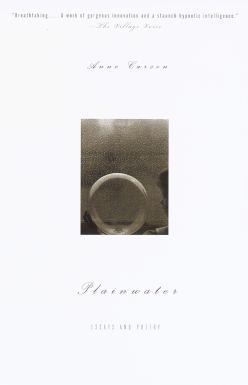
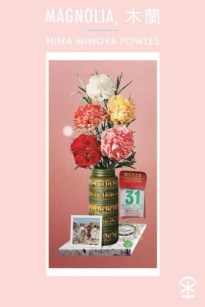 Nina Mingya Powles’ collection, Magnolia 木蘭, is an uneven book of great energy, of striking originality, but also of a great deal of borrowing. This is what good debut collections used to be like! I’m reminded of Glyn Maxwell’s disarming observation in On Poetry (Oberon Books, 2012) that he “had absolutely nothing to say till [he] was about thirty-four”. The originality of Magnolia 木蘭 is largely derived from Powles’ background and brief biographical journey. She is of mixed Malaysian-Chinese heritage, born and raised in New Zealand, spending a couple of years as a student in Shanghai and now living in the UK. Her subjects are language/s, exile and displacement, cultural loss/assimilation and identity. Shanghai is the setting for most of the poems here and behind them all loiter the shadows and models of Ocean Vuong, Sarah Howe and, especially, Anne Carson. Powles refers to the impact of reading Carson’s Sappho versions but a much earlier book like Plainwater (1995) with its extraordinary inventiveness of form, gives an idea of what Magnolia 木蘭 contains. (See also Carson’s lecture, ‘Stammering, Stops, Silence: on the Methods and Uses of Untranslation’ (2008), revised for Poetry Review (2013)).

Powles has said that the opening poem is the oldest. Called ‘Girl Warrior, or: watching Mulan (1998) in Chinese with English subtitles’, it is written sections of prose (though divided by / every so often as if to suggest line breaks). The Disney animation – about a young Chinese girl who pretends to be a man in order to fight and prove herself – turns out to be an important reference point for the whole collection. The Mulan figure is recognised as idealised (disneyfied) compared to the narrator who laments her “thick legs / and too much hair that doesn’t stay”. Mulan cuts her hair short; the narrator’s mother trims hers. The issue of the subtitles raises the language question (“I understand only some of the words” of the spoken Chinese). There are suggestions of early encounters with boys, her mother dressing her up as Mulan and (later, presumably) what sounds like a writing workshop comment: “Why don’t you ever write about yourself”. All this works well as a cryptic, cut up sort of a bildungsroman, though the ending fades away less effectively and the earlier hair-cutting episode ends with a disproportionately hyperbolic image of the trimmed hair falling out of place, “ungracefully caught / in the wind of some perpetual / hurricane”.
 I don’t think the intriguing glimpses of an individual young woman in this first poem are much developed in later ones. The Mulan figure makes a couple of other appearances in the book and is reprised in the concluding poem, ‘Magnolia, jade orchid, she-wolf’. This consists of even shorter prose observations. In Chinese, ‘mulan’ means magnolia so the fragments here cover the plant family Magnoliaceae, the film again, the Chinese characters for mulan, Shanghai moments, school days back in New Zealand and Adeline Yen Mah’s Chinese Cinderella. It’s hard not to think you are reading much the same poem, using similar techniques, though this one ends more strongly: “My mouth a river in full bloom”.
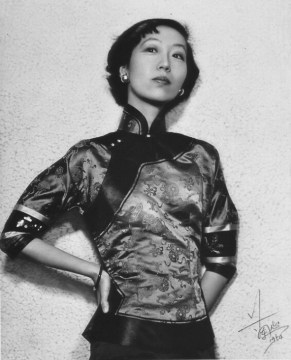
 Unlike Carson’s use of fragmentary texts, Powles is less convincing and often gives the impression of casting around for links. This is intended to reflect a sense of rootlessness (cultural, racial, personal) but there is a willed quality to the composition. One of the things Powles does have to say (thinking again of Maxwell’s observation) is the doubting of what is dream and what is real. The prose piece, ‘Miyazaki bloom’, opens with this idea and the narrator’s sense of belonging “nowhere” is repeated. This is undoubtedly heartfelt – though students living in strange cities have often felt the same way. Powles also casts around for role models (beyond Mulan) and writes about the New Zealand poet, Robin Hyde and the great Chinese author Eileen Chang, both of whom resided in Shanghai for a time. ‘Falling City’ is a rather exhausting 32 section prose exploration of Chang’s residence, mixing academic observations, personal reminiscence and moments of fantasy to end (bathetically) with inspiration for Powles: “I sit down at one of the café tables and begin to write. It is the first day of spring”.
But there’s no doubting the range of reference in Magnolia 木蘭 is refreshing and bringing something new to UK poetry. Poems allude to writers like Hyde and Chang, filmmakers like Miyazaki, the actor Maggie Cheung, Princess Mononoke (a Japanese spirit figure) as well as images from her New Zealand home. Powles’ enthusiasm is also infectious when it comes to formal experimentation. There is little conventional ‘verse’ to be found here. Prose in various guises is frequent, lists and fragments predominate. There are instructional texts, quiz and QandA forms, text and footnote, quoting and re-purposing of other texts, two-column poems (read two ways) and (very frequently) a jotting or journalistic form. This latter gives rise to the best sequence in the collection, ‘Field Notes on a Downpour’. Its 8 short sections return to the question of what is real, expressing a fear of things/words slipping away: “There are so many things I am trying to hold together”. Powles’ time studying Mandarin is contributory here as each section explores the homophonic/polysemic nature of Chinese characters. The first character of her mother’s name, for example, also suggests rain, language, warm, lips and lines/veins. Such moments are fascinating and often poetically suggestive. Another character, ‘zong’, encompasses assemble, trace and the uneven flight of a bird; all aspects of Powles’ technique as a writer. The sequence ends with a sense of language having been lost, though the image of a dropped jar of honey perhaps suggests something holds, something remains: “The glass broke but the honey held its shards together, collapsing softly”.
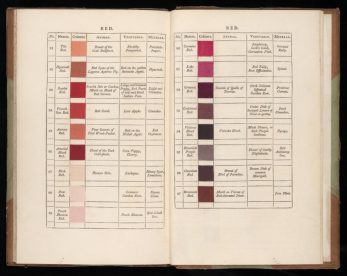
Indeed, another of the pleasures of Powles’ poems is her vivid writing about food. She has said the book is a love poem to Shanghai and it certainly does justice to its culinary offerings. There are four options for ‘Breakfast in Shanghai’, egg noodles crisping in a wok, dumplings, white cabbage and pork and a whole dishful of pink-hearted pomelo fruit. She also has a heightened sense of colour (reflected in Nine Arches’ cover perhaps) and there are ekphrastic responses to Agnes Martin, Lisa Reihana and Werner’s ‘Nomenclature of Colours’ (1814).
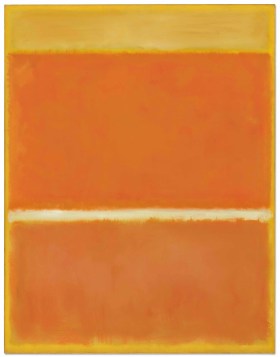
Mark Rothko’s ‘Saffron’ (1957) makes an appearance in ‘Colour fragments’ and, after a vivid evocation of the original image, Powles’ response is too unremarkable in that she imagines climbing into the painting, “and you are floating or drowning or both at the same time”. This is not original (or originally expressed) and has something of an undergraduate feel to it. That’s harsh – but what Powles has to say at the moment does not live up to the impressive technical and referential aspects of her writing. I don’t think listing ‘Some titles for my childhood memoir’ (none of them very striking, all dealt with in other poems) or ‘Faraway Love’, a re-purposing of Tate gallery notes on a piece by Agnes Martin, should have made the cut to this first book. The book Nine Arches Press presents here is quite a feast – unselfconsciously delighting in colour, taste and a strong sense of place – but it’s also too self-conscious about its nature as poetry and hence I’m left with the less pleasing taste of a poet in hiding or at least one often arrayed in other writers’ clothes.
 Akbar doesn’t generally do the more familiar, simply focused poem. There are a few in the book like ‘Learning to Pray’, in scattered unrhymed triplets, in which a young boy (Akbar allows a straight autobiographical reading usually) watches his father pray, “kneeling on a janamaz” or prayer mat. The wish to emulate the admired father is conveyed pin-sharp. A later poem also starts from childhood and (mostly in loose unrhymed couplets) traces the boy’s later maturing in an America “filled with wooden churches / in which I have never been baptized” (‘Personal Inventory: Fearless (Temporis Fila)’). This poem also attracts threads of two of Akbar’s other main themes: his personal addictions and the ubiquitous sense of living in a fallen world.
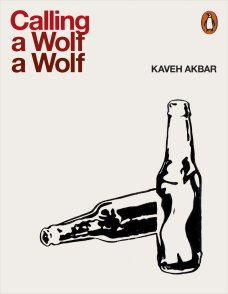
 One of the main elements of this fallen state (again Akbar allows a simple autobiographical interpretation) is the damage caused by his past addictions, especially to alcohol. This is the main hook Penguin hang the book on (a cover of empty beer bottles, for example). Poems styled ‘Portrait of the Alcoholic …’ recur throughout the book, but the first section is most focused on this. A familiar comment from W.H. Auden is used to firmly yoke spirit to bottle: “All sins tend to be addictive, and the terminal point of addiction is damnation”. Many of the poems then have this sense of inebriation, muddling, confusion which Akbar’s style of writing is very at home with. ‘Portrait of the Alcoholic with Home Invader and Housefly’ presents the drinker waking up, seemingly attacked by a home invader with a knife. Memories of keeping a housefly on a string intervene, perhaps because in the fly’s death the young boy confronted the idea of death: “I opened myself to death, the way a fallen tree // opens itself to the wild”. The poem returns to the threatening situation, then to more abstract thoughts of scale, a TV programme and the speaker passively returns to sleep. This is a great poem of the self as both endangered and paranoid, distanced from danger, the blurring of perception, thought and memory.
 But when it works, these are marvellous poems – and, for my money, this book would make a worthy winner of the 2018 Felix Dennis Prize. ‘Wild Pear Tree’ – as if in one breath – conveys a wintry scene/mental state, recalls halcyon days (of spring) and ends lamenting the forgetting of an “easy prayer” intended for emergencies: “something something I was not / born here I was not born here I was not”. ‘Exciting the Canvas’ is much more risky in its jig-sawing together of disparate elements – a bit of Rumi, the sea, a child’s drawing, a drunken accident, the Model T Ford, crickets, snakes – but somehow manages to hold it all together to make a snap-shot of a troubled, curious, still-open consciousness. And finally, ‘So Often the Body Becomes a Distraction’, dallies with the Rilkean idea of dying young, alludes to recovery from addiction, then grasshoppers, ice-cubes, personal ambitions and the self-image of “rosejuice and wonderdrunk” (which is merely one side of Akbar’s work). This one ends with the not-infrequent trope of a re-birth from burial in the earth. I like these images, suggesting that, for all the fretting about lost paradise, the absence of God, the self-destructiveness of the individual, whatever redemptive re-birth may be possible is only likely to come from our closeness and attentiveness to things about us, an eschewing of the “self-love” Akbar struggles to free himself from in ‘Prayer’: in a lovely phrase –though I’m still figuring it – he concludes, “it is not God but the flower behind God I treasure”.

 Martyn Crucefix