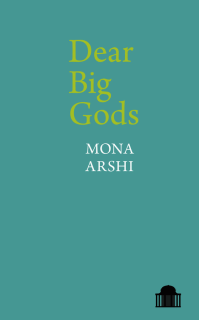
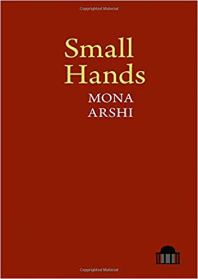
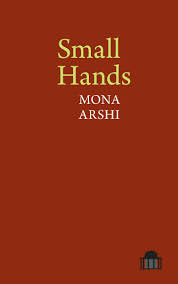
 In a recent launch reading for her second collection, Dear Big Gods (Pavilion Poetry/Liverpool University Press, 2019), Mona Arshi suggested it was a book she wrote only reluctantly. Her first book, Small Hands (2015), had at its centre a number of poems in memory of her brother, Deepak, who died unexpectedly in 2012. On her own admission, these new poems continue to be imbued with this grief and – though poets surely always write the book that needs to be written – there is a sense that the development of the new work has been stalled by such powerful feelings. My 2015 review of Small Hands saw Arshi as “an intriguing writer, potentially a unique voice if she can achieve the right distance between herself and her powerful formative influences”. The influences I had in mind then were literary rather than personal, but I find the lack of distance travelled between the earlier and this more recent work rather disappointing.
In fact, Deepak’s death is the explicit subject on only a few occasions. The poem ‘When your Brother Steps into your Piccadilly, West Bound Train Carriage’ isn’t much longer than its own title but it evokes that familiar sense of (mis-)seeing our dead in a public place. The emotions remain raw, from the accusatory “how-the-fuck-could-you?” to the final “I am sorry, I’m so sorry”. A dream or daydream meeting is also the basis for ‘A Pear from the Afterlife’ in which the brother’s affectionate tone advises, “Sis, you gotta let go / of this idea of definitive knowledge”. ‘Five Year Update’ is by far the most extended of these reflections on the brother’s passing, written in very long raking lines (rotated 45 degrees to stretch vertically on the page). “I hope it’s fine to contact you”, it opens and goes on to recall the moment the news of his death was received (see also ‘Phone Call on a Train Journey’ from Small Hands), remembers their childhood together and the sister’s continuing life: “I’ve gone down one lump not two, I still don’t swim and yes I still can’t / take a photograph”.
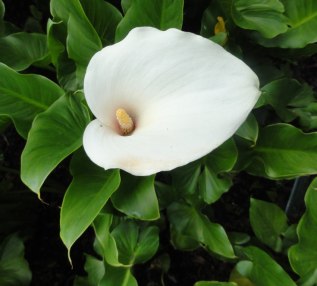 As the blurb suggests, these poems are indeed “lyrical and exact exploration[s] of the aftershocks of grief”. But ‘Everywhere’ adopts a little more distance and develops the kind of floating and delicate lyricism that Arshi does so well. The absent brother/uncle is still alluded to: “We tell the children, we should not / look for him. He is everywhere”. As that final phrase suggests, the rawness of the grief is being transmuted into a sense of otherness, beyond the quotidian and material. It’s when Arshi takes her brother’s advice and lets go of “definitive knowledge” that her poems promise so much. ‘Little Prayer’ might be spoken by the dead or the living, left abandoned, but either way it argues a stoical resistance: “I am still here // hunkered down”. In a more conventional mode, ‘The Lilies’ develops the objective correlative of the flowers suffering from blight as an image of a spoliation that hurts and reminds, yet is allowed to persist: “I let them live on / beauty-drained / in their altar beds”.
Like so many first books, Small Hands experimented with various poetical forms. This book also – a bit wilfully – tries out tanka, poems in two columns, right justification, centre justification, ghazals, inter-cut texts, prose poems, a sestina, an Emily Dickinson parody and responses to Lorca and The Mahabharata. They don’t all work equally well and Arshi perhaps senses this in lines like these:
My little bastard verses
tiny polyglot faces
how light you are
how virtually weightless
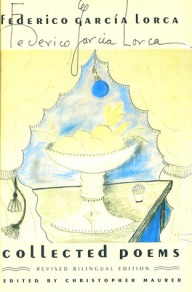
The irony may be that this sort of form and reach actually does show Arshi at her best. The sequence of tiny poems modelled on Lorca’s ‘Mirror Suite’ (1921-1923) is fascinating. Jerome Rothenburg, discussing Lorca’s poems, describes them as possessing “a coolness & (sometimes) quirkiness, a playfulness of mind & music that I found instantly attractive”. These same qualities – as with Lorca, a version of surrealism, a firm but gentle turning aside from “definitive knowledge” – I enjoy in Arshi’s work as she explores states of the heart and realms of knowledge not ordinarily encountered or encompassed. Dear Big Gods contains other such Lorca-esque sequences such as ‘Autumn Epistles’, ‘Grief Holds a Cup of Tea’ and ‘Let the Parts of the Flower Speak’ and these are far more interesting than the poems drawn from The Mahabharata or the experiments in prose.
 Arshi’s continuing love affair with ghazals also seems to me to be an aspect of this same search for a form that holds both the connected and the stand-alone in a creative tension. ‘Ghazal: Darkness’ is very successful with the second line of each couplet returning to the refrain word, “darkness”, while the connective tissue of the poem allows a roaming through woods, soil, mushrooms and a mother’s praise of her daughters. Poems based on – or at least with the qualities of – dreams also stand out. The doctor in ‘Delivery Room’ asks the mother in the midst of her contractions, “Do you prefer the geometric or lyrical approach?” In ‘The Sisters’ the narrator dreams of “all the sisters I never had” and within 10 lines Arshi has expressed complex yearnings about loneliness and protectiveness in relation to siblings and self.
Given the traumatic disruption of her own, it’s no surprise that Arshi’s most frequently visited subject area is family relationships. I’ve referred to several of these poems already and ‘Gloaming’ floats freely through the fears of losing a child, the care of an ageing father, a mother “entering/leaving through a narrow lintel” and the recall of the “thick soup of our childhood”. The soup works well both as literal food stuff and as metaphor for the nourishing, warming milieu of an up-bringing, though the girl who looks up at the end of the poem is already exploring questions of identity. She asks, “where are you from, what country are we in?” Given Arshi’s own background – born to Punjabi Sikh parents in West London – such questions have obvious autobiographical and political relevance, though I sense Arshi herself is also asking questions of a more spiritual nature.
 So, in ‘My Third Eye’, the narrator is “more perplexed than annoyed” that her own third eye – the mystical and esoteric belief in a speculative, spiritual perception – has not yet “opened”. The poem’s mode and tone is comic for the most part; there is a childish impatience in the voice, asking “Am I not as worthy as the buffalo, the ferryman, / the cook and the Dalit?”. But in the final lines, the holy man she visits is given more gravitas. He touches the narrator’s head “and with that my eyes suddenly watered, widened and / he sent me on my way as I was forever open open open”. The book also closes with the title poem, ‘Dear Big Gods’, which takes the form of a prayer: “all you have to do / is show yourself”, it pleads. The delicate probing of Arshi’s best poems, their stretching of perception and openness to unusual states of emotion are driven by this sort of spiritual quest. Personal tragedy has no doubt fed this creative drive but – as the poet seems to be aware – such grief is only an aspect of her vision and not the whole of it.

 Akbar doesn’t generally do the more familiar, simply focused poem. There are a few in the book like ‘Learning to Pray’, in scattered unrhymed triplets, in which a young boy (Akbar allows a straight autobiographical reading usually) watches his father pray, “kneeling on a janamaz” or prayer mat. The wish to emulate the admired father is conveyed pin-sharp. A later poem also starts from childhood and (mostly in loose unrhymed couplets) traces the boy’s later maturing in an America “filled with wooden churches / in which I have never been baptized” (‘Personal Inventory: Fearless (Temporis Fila)’). This poem also attracts threads of two of Akbar’s other main themes: his personal addictions and the ubiquitous sense of living in a fallen world.
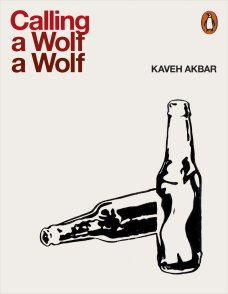
 One of the main elements of this fallen state (again Akbar allows a simple autobiographical interpretation) is the damage caused by his past addictions, especially to alcohol. This is the main hook Penguin hang the book on (a cover of empty beer bottles, for example). Poems styled ‘Portrait of the Alcoholic …’ recur throughout the book, but the first section is most focused on this. A familiar comment from W.H. Auden is used to firmly yoke spirit to bottle: “All sins tend to be addictive, and the terminal point of addiction is damnation”. Many of the poems then have this sense of inebriation, muddling, confusion which Akbar’s style of writing is very at home with. ‘Portrait of the Alcoholic with Home Invader and Housefly’ presents the drinker waking up, seemingly attacked by a home invader with a knife. Memories of keeping a housefly on a string intervene, perhaps because in the fly’s death the young boy confronted the idea of death: “I opened myself to death, the way a fallen tree // opens itself to the wild”. The poem returns to the threatening situation, then to more abstract thoughts of scale, a TV programme and the speaker passively returns to sleep. This is a great poem of the self as both endangered and paranoid, distanced from danger, the blurring of perception, thought and memory.
 But when it works, these are marvellous poems – and, for my money, this book would make a worthy winner of the 2018 Felix Dennis Prize. ‘Wild Pear Tree’ – as if in one breath – conveys a wintry scene/mental state, recalls halcyon days (of spring) and ends lamenting the forgetting of an “easy prayer” intended for emergencies: “something something I was not / born here I was not born here I was not”. ‘Exciting the Canvas’ is much more risky in its jig-sawing together of disparate elements – a bit of Rumi, the sea, a child’s drawing, a drunken accident, the Model T Ford, crickets, snakes – but somehow manages to hold it all together to make a snap-shot of a troubled, curious, still-open consciousness. And finally, ‘So Often the Body Becomes a Distraction’, dallies with the Rilkean idea of dying young, alludes to recovery from addiction, then grasshoppers, ice-cubes, personal ambitions and the self-image of “rosejuice and wonderdrunk” (which is merely one side of Akbar’s work). This one ends with the not-infrequent trope of a re-birth from burial in the earth. I like these images, suggesting that, for all the fretting about lost paradise, the absence of God, the self-destructiveness of the individual, whatever redemptive re-birth may be possible is only likely to come from our closeness and attentiveness to things about us, an eschewing of the “self-love” Akbar struggles to free himself from in ‘Prayer’: in a lovely phrase –though I’m still figuring it – he concludes, “it is not God but the flower behind God I treasure”.



 Martyn Crucefix