Forward First Collections Reviewed #5 – Sarah Howe

Stop Press January 2016: Sarah Howe’s collection has just become the first ‘first collection’ winner of the TS Eliot prize. A fantastic achievement. What follows is the review I wrote of the book during the summer of 2015.

This is the fifth and last in the series of reviews I have been posting over the last two months of the 5 collections chosen for the 2015 Forward Prizes Felix Dennis award for best First Collection. The £5000 prize will be decided on 28th September. The shortlist is:

Mona Arshi – Small Hands (Liverpool University Press, Pavilion Poetry) reviewed here;
Sarah Howe – Loop of Jade (Chatto & Windus); reviewed here;
Andrew McMillan – physical (Cape Poetry); reviewed here;
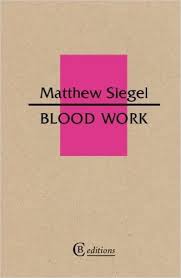
Matthew Siegel – Blood Work (CB Editions) reviewed here;
Karen McCarthy Woolf – An Aviary of Small Birds (Carcanet) reviewed here.

Sarah Howe – Loop of Jade (Chatto & Windus); author’s website.

imgres

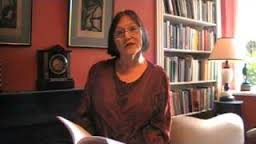
Howe reading at the Southbank Centre:

Sarah Howe’s first full collection is packed with journeys, stories, bits of language, calligraphy, mothers and daughters – but mostly it should be admired for its readiness to experiment. The concluding poem, ‘Yangtze’, might be read as an evocation of the Daoist belief in the primacy of fluidity and the watercourse way. A moon glimmers uncertainly on water’s surfaces, a river flows, a diving bird vanishes into it, fishermen’s nets catch on something submerged, a bridge remains only “half-built”, a travelling boat merely “points” to its destination. What remains hidden and inarticulate predominates; as the Daodejing argues, our life’s journey often runs against the current because we mostly lack the proper perspective to see the world is really one, not the parts we think we know. Those 81 wonderful ancient Chinese poems also argue that our way forward is really backwards, to recover an understanding of what has always been: that sense of unity of being which underlies all phenomena. Their wisdom is a sort of nostalgia and this is what drives much of Howe’s work.

dscf6175

Two nostalgic tributaries flow into Loop of Jade – one philosophical, the other autobiographical. As in Daoist thought, words are not to be relied on and this is why Howe’s epigraph is by Borges, out of Foucault. It is a mock absurd taxonomy of the animal kingdom, sub-divided into a) belonging to the emperor, b) embalmed, c) tame, and so on to n) that from a long way off look like flies. The butt of the joke is language’s categories, organised perhaps in such quasi-random ways. Several poems play with the pleasant thought that Chinese calligraphy can bring us closer to the truth. A scholar sits in his study and “lends his brush the ideal pressure – / leaves his mind there, on the paper”. Jesuit missionaries arriving at Canton likewise thought they’d discovered “Adam’s perfect tongue”, the language of Eden, an “anchoring of sign to thing”. The poems address the risk that we “might forget // words’ tenuous moorings” but as we are all signed-up postmodernists nowadays the joke ends at the scholar-poet’s expense in the poem ‘(k) Drawn with a very fine camelhair brush’ when his poorly tethered boat drifts away and leaves him helplessly marooned upstream.

Strigel_1506-detail

Yet Howe is poet enough (‘poet-scholar’ is more of a disjunction than a working synthesis) to allow a woman in a Bonnard painting to long for “someone who will teach her the names of trees” (‘Woman in the Garden’) and the technique of the banderole – those speech scrolls often included in paintings – makes an unusual subject for a poem because it is a way to “make / mute canvas speak” (‘Banderole’). Perhaps it even bears some resemblance to Chinese calligraphy. Certainly, we need names as a form of geography, “for knowing where we are and names / of fixed and distant things” (‘Islands’). Accordingly, Howe scatters brief lyric poems, mostly descriptive, through the book and these seem also to aspire towards the state of calligraphy – one way at least of negotiating with the recalcitrance, the difficulty of mooring words; but these are not among the most successful poems in the book.

wumen-huikai
Wumen Huikai

Instead, Howe’s experimentalism is more iconoclastic as shown in ‘(m) Having just broken the water pitcher’. This poem draws on a story from Wumen Huikai’s The Gateless Gate in which the sage Baizhang asks his pupil ‘If you cannot call it a water pitcher, what do you call it?’ The correct reply, we are told, is to kick the pitcher over and leave! There are some fascinating insights buried in this book about the rebelliousness of Chinese bloggers reinventing forms of language to avoid censorship and there’s no doubt they can be seen as partaking in the ancient traditions of their country. To paraphrase the opening chapter of the Daodejing: the words you are permitted to use are not the words that will remain. The kicked-over pitcher – to shift the metaphor as the Daodejing does – breaks the paradigm, returns us to the uncarved block of wood, the original state, before words, government, censorship.

SH photo

This original state is characterised in Laozi’s Dao poems as the ‘mother of all’ and the second nostalgic tributary flowing powerfully into Howe’s book is an autobiographical exploration of her Chinese mother’s life and culture. This is the more immediately accessible and marketable thread of the book that the Chatto blurb draws attention to and these poems are very vivid and moving. Most of them build in a documentary style, full of specific, often period, details to demonstrate yet another way of negotiating between words and things. ‘Crossing from Guangdong’ (a poem that might be usefully read beside Elizabeth Bishop’s ‘Arrival at Santos’) has the narrator arriving on a paradoxically “strange pilgrimage to home”, trying to imagine her mother’s earlier life:

Something sets us looking for a place.

Old stories tell that if we could only

get there, all distances would be erased [. . . ]

This search is as much philosophical/spiritual as autobiographical: “Soon we will reach / the fragrant city”, though arriving at the putative destination, there is still so much “you can no longer see”. The title sequence of the book itself is in this mode, becoming even more documentary in its largely prose passages, interspersed with lyrical folk tale material and ventriloquistic evocations of the mother’s speaking voice. It ends with a more conventional poem on the jade pendent itself , given by the mother, blessed by a grandmother. It is worn to protect: “if baby // falls, the loop of stone – a sacrifice – / will shatter / in her place”. Curiously, the final line suggests some sort of fall has already taken place though the jade remains intact and I guess this is the fall from cultural roots torn up in Howe’s childhood move to the West: “And if I break it now – will I be saved?’

slide-2

This is a fecund book, full of poetic ideas and a variety of forms. But it’s not exactly easy reading – Howe isn’t always inclined to swing her poems far across the chasm between writer and reader. But their richness derives from the twin sources of Howe’s thinking: on one side erudite and philosophical, on the other intimate and autobiographical and the use she makes of the myths, thinkers, stories and landscapes of her Chinese background means this is a book unlike any other.

How to Closely Analyse a Poem (and keep exam boards happy) #3 Edward Thomas’ ‘This is no case of petty right or wrong’

Having declared in my review of one year of blogging that I wanted to include more about teaching literature, I am posting three examples of the type of essay required by OCR exam board in module F661 (see also Essay 1 and Essay 2). The essay below focuses on Edward Thomas’ poem ‘This is no case of petty right or wrong’ which can be read in full here. The poem has Thomas probably remembering bitter arguments with his patriotic father about the rights and wrongs of the war. Beyond this essay written for specific purposes, the poem seems to me to contain so much unresolved material that it rather falls apart at the seams. Poems may well travel long distances in a few words but this one seems to me to trip itself up in doing so though it also seems to record Thomas’ final and fatal decision to join the fight in France. As can be seen below, OCR students are supposed to present a close analysis of one selected poem (AO2) while also putting that poem into relation with some others by Thomas (AO4).

imgres
Thomas in uniform

“I am one in crying, God save England”. Explore the ways in which Thomas’ poem ‘This is no case . . . ’ wrestles with the idea of patriotism in a time of war.

In your answer, explore the effects of language, imagery and verse form, and consider how this poem relates to other poems by Thomas that you have studied.

Key:  close analysis is in bold;           comparative comments are in italics

In this poem Thomas seems to be continuing a debate – or argument even – with a more conventionally patriotic person (perhaps based on his own father) and trying to define his own view of patriotism and why he might join up to fight in WW1.The single block stanza suggests a dense or intense passage of speech. Though there are some vivid images included, this is an unusual poem for Thomas as it is argumentative rather than descriptive. Although it contains some of his characteristic uncertainties (as seen, for example, about memory in ‘Old Man’ for example), it does end with what seems to be a strong affirmation of patriotism: “God save England”. This love of England and its history is very typical of Thomas as in poems like ‘Words’ and the lovingly portrayed rural English landscape of ‘As the team’s head brass’.

The opening couple of lines contain a bold reply, suggesting a discussion is already underway. Thomas denies that the issue of patriotism can be easily resolved (even by “politicians and philosophers” – probably jingoists and pacifists respectively) because the rights and wrongs of it are not “petty”. This adjective with its plosive first sound conveys something of the anger that Thomas feels. He provocatively declares, “I hate not Germans”, the delaying of the “not” giving extra emphasis and the clashing ‘t’ sounds of “hate” and “not” again suggesting the anger, even aggression of the debate. Lines 3 and 4 make use of contrasting terms (Germans/Englishmen; hate/love) to make the point that the narrator will not simply obey the conventions or propaganda of “newspapers” of the times. Lines 5 and 6 repeat this contrasting device (hate/love) and hyperbolically and dramatically declare that his hate of a “patriot” makes his “hatred” of the Kaiser (the German leader) “love true”. This is evidently exaggeration as he goes on to describe the Kaiser metaphorically as “a kind of god . . . banging a gong”. This metaphor gives the Kaiser the powers of a god but he is portrayed as using them merely to create irritation and noise in the onomatopoeic, consonantal phrase “banging a gong”. The Kaiser’s actions seem pointless.

Scene from the Battle of Arras 1917

Line 8 again declares an independent viewpoint with heavy emphasis on the monosyllabic “not”, denying that the choice is a simple one “between the two” warring sides, or between “justice” (England) and “injustice (Germany) as jingoistic “newspapers” would have put it in 1914/18. The verb “Dinned”, prominently placed at the end of line 9, again suggests that Thomas feels the debate is a loud and noisy one (perhaps more shouting than clear argument?) and as a result he can “read no more”. This image of reading may refer back to the debates in the “newspapers” of the time or it might be more metaphorical, suggesting his ‘reading’ of the situation in general. What Thomas suggests is that he gets little more sense from these debates than he might find watching “the storm smoking along the wind / Athwart the wood”. This image of a natural landscape is much more typical of Thomas’ poetry in general, reminding me of the opening lines of ‘Melancholy’ where Thomas uses repetition, heavy punctuation and personification to evoke another stormy scene: “The rain and wind, the rain and wind, raved endlessly”. The storm image in ‘This is no…’ is ominous and perhaps war-like with the bad weather approaching, metaphorically “smoking”  and the sweeping and whistling of the weather evoked through sibilance and repeated ‘w’ sounds and even the enjambment of “wind / Athwart”. Perhaps this storm suggested to Thomas the next image, recalling the storms and wicked witches in Shakespeare’s Macbeth. The imagery here becomes more gothic briefly (again not at all characteristic of Thomas’ poetry in general). The irony is though that what emerges from these apparent alternatives (Thomas again using contrasting terms in this poem) is similar. The adjectives “clear and gay” and “beautiful” suggest that there is little to choose between these alternatives, echoing line 8 with its phrase “I have not to choose”.

imgres

Thomas’ discussion of patriotism continues at line 16 with a dismissive tone: “Little I know or care”. The admission that he may be “being dull” is surely ironic and his reference to “historians” must echo line 2 with its reference to “politicians or philosophers”. In each case, these reputedly clever and intelligent figures are being mocked as unable to solve the “case” being discussed. Thomas uses the mythical image of the phoenix (re-born from the ashes of its own destruction) and imagines the historians raking at the ashes when the bird itself – the valuable, beautiful – “broods serene above their ken”. The archaic word “ken” suggests the historians fail to understand (perhaps are behind the times?) and the verb/adjective combination (“broods serene”) again evokes the beauty and value of what they have completely missed.

It’s at this point that the poem abandons its blank verse form and breaks out into rhyming couplets. It has been suggested that these final 7 lines were added later and it is interesting that it is these that declare the patriotic view more confidently with the ringing rhyme sounds supported the confident tone. In line 20, the contrasting terms (“best and meanest”) now suggest a unity of purpose or viewpoint rather than the futile oppositions earlier. Thomas is more typically alone in his poems, an isolated figure as in ‘Rain’ where the narrator repeats the word “solitude” and says he has “no love” left to offer except the “love of death”. In complete contrast, here he declares he is “one” with many of his countrymen and the passion of their patriotism is conveyed in the powerful verb “crying” suggesting loud and vigorous support rather than grief in “God save England”. His discussion concludes here with his motive for patriotism: “lest / We lose what never slaves and cattle blessed”. This is a difficult line but the image of what never blessed slaves suggests that it is English tradition of freedom/liberty that he hopes to preserve and would fight for.

images

The final four lines use the traditional personification of England as a woman. This sort of personification is not something Thomas does a great deal though he does personify the sun in ‘March’ to evoke the mixed nature of the weather of that month: “the mighty sun wept tears of joy”. In these final lines, England (as often for Thomas) is linked with history with the phrase “ages made her”. The bold declarative tone is aided by the hyperbole in line 24 (“all we know”) and the connecting “and” is repeated which gives a rhetorical tone. There is an  interesting contrast in the rhyme words “dust” and “trust” suggesting that England has raised her people up from almost nothing to a more complex relationship of trust in the country being “good”. The statement that she “must endure” conveys a determination or perhaps a hope that England will survive the world war. The final line again uses contrasting words and creates a sense of paradox as well as drawing the argument of the poem to a conclusion: “as we love ourselves we hate our foe”. Most of this line is monosyllabic which also gives a sense that these final words are clear and simple and explicit in deciding for English patriotism and against “our foe”.

So the poem starts by seeming to reject conventional ideas of patriotism and jingoism and suggesting that this “case” or issue cannot be easily decided. Thomas employs lots of contrasting terms throughout the poem and suggests (especially through the phoenix image) that this sort of black/white argument tends to miss the real point. Thomas’ real point seems to emerge in the final rhyming lines: it is the old traditions of English liberty that are at stake in the war. This is something he does feel passionately about and it is on that basis that he chooses patriotic commitment: “God save England”.

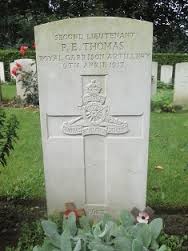
Photograph of Helen Thomas found on her husband’s body at Arras

How to Closely Analyse a Poem (and keep exam boards happy) #2 Edward Thomas’ ‘The Sun Used to Shine’

Having declared in my review of one year of blogging that I wanted to include more about teaching literature, I am posting some examples of the type of essay required by OCR exam board in module F661 (see also Essay 1). The essay following focuses on Edward Thomas’ poem ‘The Sun Used to Shine’ which can be read in full here. The poem has Thomas recalling happy days, walking with Robert Frost in the Gloucestershire countryside. Though the Great War  had begun, neither of them had yet become entangled with it. Students are supposed to present a close analysis of one selected poem (AO2) while also putting that poem into relation with some others by Thomas (AO4).

FDPhist
Little Iddens – where Robert Frost lived in 1914

Explore Thomas’ response to the English countryside of 1914 in the poem ‘The sun used to shine’. Your focus should be on close analysis of language, imagery, tone and form.

NB: Comparative sections here are in italics only to indicate the proportion of the essay devoted to that Objective (AO4). The main Objective remains AO2)

In this poem Thomas describes the English landscape as a place of pleasure and relaxed enjoyment as he walks with Robert Frost. These are remembered scenes and as the poem develops thoughts of the war of 1914-18 become more prominent. In the end perhaps the poem explores ideas about permanence and change, putting the war into a more historical perspective. The features which are typical of Thomas in the poem are the focus on the small details of the natural landscape (like ‘But These Things also’), the way the war lies in the background of the poem (like ‘Rain’ and ‘Tears’) and his interest in memory (‘Old Man’).

The opening stanza describes the two men walking at peace and the sun shining and here is an example of pathetic fallacy, the sun reflecting their happy mood. The easy rhythm of their walking is also reflected in the enjambement of lines 1-4 and the caesura in lines 2 and 4, giving a lilting, relaxed and flowing movement to the verse. At this early point in the poem, the regular ABAB rhyming adds to this impression and adverbs such as “slowly” and “cheerfully” obviously reinforce this sense of easy pleasure. The phrase “sometimes mused, sometimes talked” also suggests their free and easy life, with the caesura here again giving the steady walking rhythm of the opening as they contentedly (but thoughtfully – “mused”) explore the English landscape. This is similar to ‘As the Teams’ Head Brass’ where Thomas uses enjambement in many of the opening lines to reflect the flowing movement of the horse and plough up and down the fields. In that poem there is even less punctuation, reinforcing the idea that in ‘The Sun Used…’ the caesuras’ reflect the stopping and starting of the two men’s walking pace.

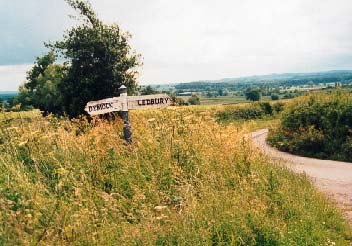
FDPsignpost

The narrator’s statement that the two men “never disagreed” about which gate to lean on is probably hyperbolic but again suggests their closeness and harmony and even the action of leaning on the gate with no urgency or hurry  reflects their relaxed state of mind. From line 6 the narrator conveys their mental focus as they walk through the landscape and suggests that they are wholly occupied in the enjoyment of the present moment. The phrases “to be” and “late past” suggest both past and future to which they give “small heed”. Other subjects are suggested by the phrase “men or poetry” and the “or” here suggests their easy freedom even in topics of conversation. However, it is at the end of stanza 2 that the war is first mentioned though at this point the word “rumours” is used, suggesting that the subject is only vaguely picked up and this is reinforced by the use of the adjective “remote” which is placed at the end of line 9 giving it an particular emphasis. At this point the war is not an important element as they walk through the landscape and this is also suggested by the word “Only” at the start of line 10 which rather dismisses the war topic of conversation in place of their focus on the landscape, this time in the form of the apples they find there.

The description of the apples is ambivalent because they are initially described with the adjectives “yellow” and “flavorous” suggesting their attractiveness and sweet taste so the reader may be a bit taken aback to hear in the next line that wasps have “undermined” the skin of the apples. The most important thing about this latter word is that it suggests the mines and mining associated with the battlefields of World War One and therefore suggests that thoughts of the war even penetrate the pleasant walks through the countryside of the two men. Something like this can also be seen in ‘Rain’ in which the narrator listens to rainfall in a depressed mood and hopes that no one who he “once loved” is doing the same. That poem uses a natural image of “Myriads of broken reeds all still and stiff” which also can be interpreted as referring to the many dead on the battlefields of France. ‘The Sun Used…’ was actually written in 1916 when Thomas was about to join up though the memory of the walks refers to 1914 when the war did seem further from him personally. These suggestions of war are continued in stanza 4 with the line of betonies described as both “dark” in colour (a contrast to the yellow apples?) and with the metaphor of “a sentry”. This makes very explicit the war reference and this is continued with the description of the crocuses (their “Pale purple” suggesting both weak vulnerability and shade) as having their birth in “sunless Hades fields”. Each of the words in this phrase might suggest the war with the darkness of “sunless”, the reference to death in “Hades” (the Classical land of the dead) and “fields” which surely refers to the battlefields in France.
robert_frost
Robert Frost

These suggestions that thoughts of war cannot be excluded from pleasant walks in the English countryside in 1914 are confirmed with the very next line: “The war / Comes back to mind”. Here it is the rising moon that reminds the two men of the war as they remember that the same moon would also be visible to soldiers on the battlefields of France “in the east”. The next word “afar” again suggests the distance of the war, though actually the poem has suggested that thoughts of it are not at all remote. The narrator’s thoughts now go beyond thoughts of the 1914 war. Typical of Thomas, he develops a more historical perspective, referring to earlier wars, “the Crusades / Or Caesar’s battles”. This has an ambiguous effect as it might suggest some consolation that war has always occurred and perhaps always will. On the other hand, perhaps it suggests the more depressing thought that humankind cannot avoid warfare. This sense of long stretches of time is quite common in Thomas’ work such as in ‘Aspens’ where he describes the trees at the crossroads and there implies that they are permanent, even indifferent to the human world: “it would be the same were no house near. / Over all sorts of weather, men, and times”.
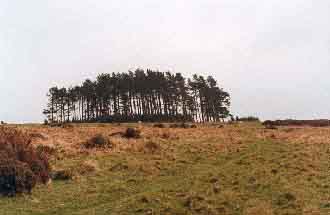
FDPmayhill2
May Hill – where Thomas and Frost often walked together

Perhaps it is this longer historical perspective that creates the thoughts of the final 11 lines of this poem. They open with a hyperbolic statement that “Everything” fades away and Thomas then uses a series of similes of things which he regards as transient, starting with the “rumours” of war, running water vividly described as “glittering // Under the moonlight” and the two men’s “walks” through the English countryside, even the men themselves (in line 26) and the apples from stanza 3 (now more pessimistically described with the adjective “fallen”) and the men’s “talks and silences”. This is a very inclusive list which gives the impression of time sweeping away many of the pleasures of life. The climax of the list is the last simile that seems to wipe away memories too (an important element in many of Thomas’ poems). He seems to suggest that memories are like marks on sand and the tide washes them away (is the tide an image of Time?). The poem ends with images of “other men” enjoying the same “easy hours” that the poem began with though now Thomas and Frost have vanished. In these last lines some things have changed (“other flowers”) but the moon alone remains “the same” suggesting that much of the landscape even will have changed (this reminds me of the felled elm tree in ‘As the Team’s Head Brass’ in which the English landscape is shown to be changing).

In this poem, Thomas records pleasures gained from walking in the English countryside in 1914 though he also suggests that thoughts of the war cannot be excluded. As the poem goes on, it seems to become detached from the countryside but does return to it at the end in suggesting that though people may vanish and die and even aspects of the countryside itself may change in the long perspectives of Time, there are a few things – like the moon – can be seen to remain constant.

How to Closely Analyse a Poem (and keep exam boards happy) #1 Edward Thomas: ‘Old Man’

Having declared in my review of one year of blogging, that I wanted to include more about teaching literature and having spent the last 3 weeks or so congratulating, consoling, interviewing and advising students post-results, I thought this would be a chance to post something of that sort. Part of my job during August is to talk to students who have fallen short at schools and colleges (largely at A level) and it never ceases to astonish me that so many of them – clearly capable of better grades than they have achieved – seem muddled and even ignorant of the Assessment Objectives required by exam boards. Now I’m the first to loathe this kind of acronymic reductiveness but if AOs are what the examiners want, it’s either a brave or stupid teacher who screws them up.

Of course, English A level courses are changing significantly this academic year but I’ll talk here about the OCR English Literature specification I have been teaching for a few years (both AS and A2 levels are available for the last time this year). Module F661 involves study of prose and poetry. The latter involves a study of 15/16 poems by an author and essays are close analyses of one selected poem (AO2) with the student putting that poem into relation with some of the other poems (OCR call this AO4 in this module – though elsewhere AO4 is historical and cultural context) . . .

See what I mean – it’s not really complicated but it’s easy to find this sort of stuff very boring indeed.

My advice is that it’s always better to show than tell. I show essays performing this relatively complex task written by students as homework or in past years’ exams (photocopied to the class, read and discussed). Alternatively, I’ll occasionally write something myself. The latter has the advantage that I can make specific points about style and strategy (and teachers doing what they ask their students to do is another piece of good advice). What follows is an example of the latter on OCR’s selection of Edward Thomas’ poems, focusing on ‘Old Man’. I’ve also included in this one a kind of meta-commentary on what the essay is doing. The poem can be read here.

imgres

“I have mislaid the key” (‘Old Man’). Explore how Thomas tries to get to grips with his feelings about the real nature of the Old Man plant.

  • In your answer, explore the effects of language, tone, imagery and verse form, and consider how the poem ‘Old Man’ relates to other poems by Thomas that you have studied.

 NB.  Bolded phrases signal close analysis to the examiner

Introduction

‘Old Man’, on the face of it, is a poem that tries to describe and explore the narrator’s feelings about a particular plant. Ironically, the descriptions tend to be rather vague and the point of the poem seems to be that the narrator cannot precisely pin the plant down, nor can he pin down the memories which smelling the plant’s odour brings to his mind.

Brief comparative suggestions here …

This sort of uncertainty is very common in Thomas’ poetry (for example in ‘The Glory’) as is his interest in states of memory. This is also a poem where we see evidence of Thomas’ love of Nature and his close attention to its many details which also appears in a poem like ‘Aspens’.

*

Para 1: Get well into your close analysis of stanza 1 . . .

Line 1 opens with the alternate names of this plant. Old Man and Lad’s Love are contrasting terms – suggesting both youth and old age – and this immediately announces the ways in which the narrator finds it difficult to define this plant. In the opening stanza, the narrator is preoccupied with the plant’s names, probably because this might be one way to get to grips with the thing itself. But the narrator, after the caesura in line 1, immediately declares that “there’s nothing” in the name. This feels rather hyperbolic but the second line’s repetition of the two names perhaps gives the reader the sense that nothing is really conveyed by them. He then tries some simple descriptions of the plant itself but line three calls the plant both a “herb” and a “tree” which seems contradictory again and the hyphenated phrase “hoar-green” has the same effect because the first word is associated with grey (grey hair – old age?) whereas the second word is more associated with youth and freshness. The phrase is therefore oxymoronic and confirms the difficulty of defining this plant. The metaphorical “feathery” also suggests something soft, something whose shape is hard to define. Reinforcing this idea, the narrator goes on to say that (even for someone who actually does know “well” what the plant looks like) its names “Half decorate, half perplex”. The repetition of “half” here suggests that nothing about the plant is straightforward or clearly defined. Also if the name decorates the plant perhaps it also obscures it from sight, while the word “perplex” suggests that the name actually confuses things rather than clarifies.

A brief comparison . . .

This is surprising given Thomas’ evident love of language as seen in a poem like ‘Words’ where he praises words in a series of images such as “Tough as oak, / Precious as gold”.

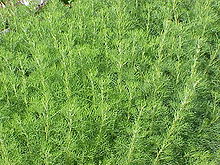
220px-Artemisia_abrotanum0
Old Man or Lad’s Love

Para 2 is till focused on stanza 1 – it’s detailed but I’m taking a long time…

Line 6 of ‘Old Man’ uses a phrase which does make clear what the narrator is after: “the thing it is”. But the language used here is vague and does not convey an image of the plant at all. This stanza ends with the narrator suggesting that the “thing” is not something that “clings” to the names of the plant. Despite the names not seeming much use in getting to grips with the plant, the stanza ends with a half line in which the narrator, rather contradictorily, says he does “like” them (the names). This short sentence is begun with the conjunction (“And”) though I would expect it to begin with a more contrasting word (like “but”) and this reinforces the way the opening stanza of the poem has been wrestling with trying to define things and names but failing to do so.

A brief comparison . . .

This sort of failure to get to the heart of experiences occurs in ‘The Glory’ too. There, having praised the beauty of the English countryside, the narrator suggests there is something further that he cannot access: “I cannot bite the day to the core”.

*

Para 3 covers lines 9-16…

Line 9 of ‘Old Man’ uses the word “herb” for the second time to characterise the plant itself (rather than its names) and begins by sounding more definite with the monosyllabic “I like not”. This seems reinforced with the line’s final word “certain” but the enjambement to line 10 plays a trick on the reader: “for certain / I love it”. I think this surprises the reader but again the narrator seems to be struggling to define his own feelings about the plant. This second stanza goes on to focus on the narrator’s child’s interaction with the same plant. He wonders if the child will also have a strong attachment to it. This seems to be one of the ways in which he is trying to work out his own feelings about it, though I don’t think it helps him to be any more definite. Lines 10 – 17 focus on the child’s actions in relation to the plant. These lines are full of active verbs as she “plucks” a “feather” from the plant. The “feather” metaphor again suggests something about the type of leaves the plant has and “plucks” has a plosive opening, a harsh ‘k’ sound and sibilance at the end which is perhaps suggestive of the plucking motion, even the sound it might make. Sound is also important in lines 13-15 as the child is “snipping  . .  tips and shrivelling / The shreds”. Sibilance hisses through these lines, to me suggesting the quite aggressive action of tearing the leaves off. The short hard vowel sounds (mostly ‘i’) also suggest this to me. The noun “shreds” again suggests the destructive way the girl behaves. The girl seems unaware of what she is doing and this is suggested by how she just drops the leaves “on to the path”. This is reinforced with the casual-seeming repetition of the word “perhaps” (another example of vague lack of definition in this poem) but especially because the girl is perhaps “thinking, perhaps of nothing”. She then “runs off” though we are not told where to and the reader gets the impression she has not taken much notice of the plant. Her casual attitudes are perhaps reflected in the poem’s form (mostly iambic lines of about 10 syllables, but no rhyme) which gives a loose, colloquial, even casual tone. This suits the poem’s meandering, thoughtful qualities – though perhaps is a contrast to the way the narrator seems to want to be more precise and definite.

A brief comparison…

Thomas uses the same sort of lines in the opening of ‘As the Team’s Head-brass’, where the long lines running on reflect the movements of the horse and plough as they move up and down the field beside the fallen elm.

*

Para 4 covers 16-23

Despite the child’s casual attitude to the plant in the present moment, the narrator wonders if she will remember it in the future, or as he puts it in line 19, the “hereafter”. Later in the poem we realise that this is part of his fascination with the plant: its smell reminds him of something in his own past. Lines 16-18 suggest some sort of comparison between the girl and the plant as the narrator compares their heights and ages. But his main sense seems to be that the girl is oblivious to the plant and this is emphasised when we are told that she says “Not a word”. The narrator now wonders what she might remember later in life of the “bitter scent”. This is an oxymoronic phrase which again suggests the puzzling nature of the plant with its acrid “bitter” smell, which is here described using the more attractive sounding word “scent”. This stanza ends with a listing technique. The narrator lists the elements of the landscape which he thinks the girl may later associated with the smell of the plant. The items in the list are not very remarkable but conclude with “me / Forbidding her to pick”. The father/narrator here takes on an authoritative character (the garden imagery might remind the reader of the original garden of Eden and God’s forbidding to pick from the Tree of Knowledge) though it seems from the poem that his warnings are ignored by the girl.

*

Para 5 to the end of the poem…

It’s at this point that the narrator’s puzzling obsession with the plant becomes more clear as he admits that he too shrivels and sniffs the leaves but where he first “met” the scent is unclear to him. ‘Tears’ is similar in that it describes a fox-hunting scene and then soldiers parading, and the narrator tells us that they revealed to him “truths” that he has now “forgotten since their beauty passed”.

A brief comparison…

Thomas is fascinated by these areas of uncertainty and this is also reflected in his interest in those moments when seasons change as in the way ‘But These Things Also’ ends with an asyndeton: “Spring’s here, Winter’s not gone”.

In line 25 of ‘Old Man’ the narrator personifies the plant’s scent into a character he might encounter and in the following lines the repeated verbs (shrivel, sniff, think, sniff and try) suggest his fascination with the plant once again. But here too he fails to get to grips with its real significance as he declares that his efforts are “Always in vain”. The paradoxical thread that has run throughout the poem is again clear as he says that he “cannot like” the smell of the plant and yet he’d give up “sweet” smells rather than this contrastingly “bitter” one. The mystery remains unsolved as the final stanza begins and this is conveyed very simply with the metaphor that he has “mislaid the key” to the experience and to his understanding of the plant. This sentence fills only half a line in line 32 and so is short, dramatic and striking because longer sentences are far more typical of Thomas’ poems. The final lines use the repetition of negatives like “nothing” and “no” to suggest the absence of any clear understanding of the plant or the memory associated with it. These final lines are also heavily punctuated, slowing the pace of the poem, perhaps suggesting hopelessness. The absences of child, mother, father and play-mate, create a sense of loneliness in the final lines though the mystery remains unsolved. The last line of the poem conveys this very powerfully with the memory being imaged in the metaphor of an “avenue, dark, nameless, without end”. Again the caesura here slows the pace so that the reader emphasises each element of the scene, the final phrase especially suggesting eternity while the darkness might well suggest death itself, in an image

A final comparison…

that reminds me of the bleak ending of ‘Rain’ where everything seems to have dissolved for the narrator except the “love of death”, a suicidal thought that we know was something Thomas himself felt at times.

*

Conclusion

So the narrator may try to get to grips with what the plant represents or suggests to him but he fails. He tries to consider the plant through its names, its physical appearance and smell, through the child’s experiences of it and lastly through his own memories. It is clear that the plant provokes powerful feelings but the “key” remains lost. The colloquial tone of the poem and its simple language make the reader feel as if we are hearing the narrator talk aloud but what he ends up saying is that he cannot tell us what is really behind this plant nor what memory it suggests.

6946098312_ccae29204e_b

A new translation of Brecht’s ‘Of poor B.B.’

Having posted last week about Brecht’s poem ‘Of poor B.B.’ it felt pretty inevitable that I should have a go at translating it myself. Though it can’t always be the case, most translations are like this – undertaken as a tribute to the original poet and poem, a public declaration that this fascinated me, an attempt to really work out how the text functions and achieves its ends. Disseminating the text to the target language’s reading public is also an aspect of this tribute paid.

249y242_mpt_no22015_coverfront

David Constantine, writing in Modern Poetry in Translation (No. 2 2015) about Derek Mahon’s recently published translations (Echo’s Grove (Gallery Press, 2013)) considers the “liberties” Mahon tends to take with such work to produce “almost” original poems in English while allowing their sources to remain audible. Mahon does this by working from “cribs of one kind or another” and Constantine suggests that this has become a very common practice. Indeed, “Mahon practices the belief that you don’t actually need to know well or even at all the languages you translate out of; even – a possible sub-text – that knowing them might be a disadvantage” (MPT, No. pp.111-113). As someone who was remarkably poor at languages at school, this is something I have found myself saying in recent years since going public with a few translations (for example, see post on translating Rilke). I like to think of the source poem as a series of gestures – like a dance performed by the original author – so the translator must try to achieve similar effects but with his/her own body (of language). A crib will guide me to the main movements, even to much of the details, but tone, emotional colour, shades of irony are harder to trans-late and cannot merely be copied. This gesture made by this body, if repeated precisely by my body, will more likely look awkward, or meaningless, or comic when it was intended as serious. I have to achieve the end (as far as I see it and understand its intended impact – you have to rely on the translator for that certainly) by using the resources at my disposal, my physique, my body of language.

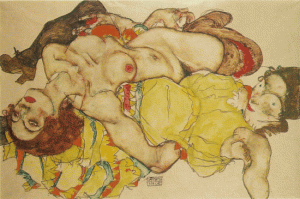
egon-schiele4-300x199

In practice, what this means is that once the basic outline and incontrovertible details are in place in a translation, I have to close the source book and try to pump some life into the target text. Ted Hughes imagined a poem without true life in it as limping (Poetry in the Making, p.15); a translation without true life in it is only going to be a halting performance you’d rather not witness, worrying about whether such a gesture was intended or not, ironic or not, you fear the whole is not coherent, a mere series of movements, not a dance at all. I’ve always liked Charles Tomlinson’s formulation of the translation task: in introducing his now 50-year-old translations of Fyodor Tyutchev, he claimed ‘The aim of these translations has been to preserve not the metre, but the movement of each poem – its flight, or track through the mind’ (Versions from Fyodor Tyutchev 1803-1873 (Oxford: OUP, 1960)).

Happily, ‘Of poor B.B.’ is not a text of great complexity. Brecht is usually concerned to communicate clearly and he says in ‘On Rhymeless Verse with Irregular Rhythms’ (Poems 1913-1956, pp. 463-471)) “what was needed was the tone of direct and spontaneous speech”. He mostly wanted to use “everyday speech” and “sobriety of expression” which he felt was “by no means irreconcilable with poetry”. So Brecht is not exactly Rilke or Mallarme for the translator. Looking at Hofmann and Hamburger’s translations (as referred to in last week’s post), most of Brecht’s dance is clearly conveyed with little variation between the two versions. Though Brecht’s lines are pretty irregular he does keep a ballad-like rhyme in lines 2 and 4 of each quatrain and I miss this in Hofmann’s version. Hoffman also (to my mind) overelaborates in a few of his English choices. “Sterbsakrament” (Hamburger has “last sacrament”) becomes “every sacramental perquisite”. Hofmann’s narrator looks at the two women in quatrain 4 “insouciantly” and his pine trees “micturate” (when the point of the contrast with the city asks for something more downright like Hamburger’s “piss”). I don’t think lexical adventures here are quite right for this poem. Also in quatrain 7, Hofmann’s antennae “underwire” the Atlantic. Brecht is referring to transatlantic cables but the allusion to supportive bras seems distracting and gives mankind’s efforts too much power. I read the point as suggesting our technology is dwarfed by the ocean in the remarkable image that our best advances merely entertain (“unterhalten”) or “amuse” (Hamburger) the Atlantic.

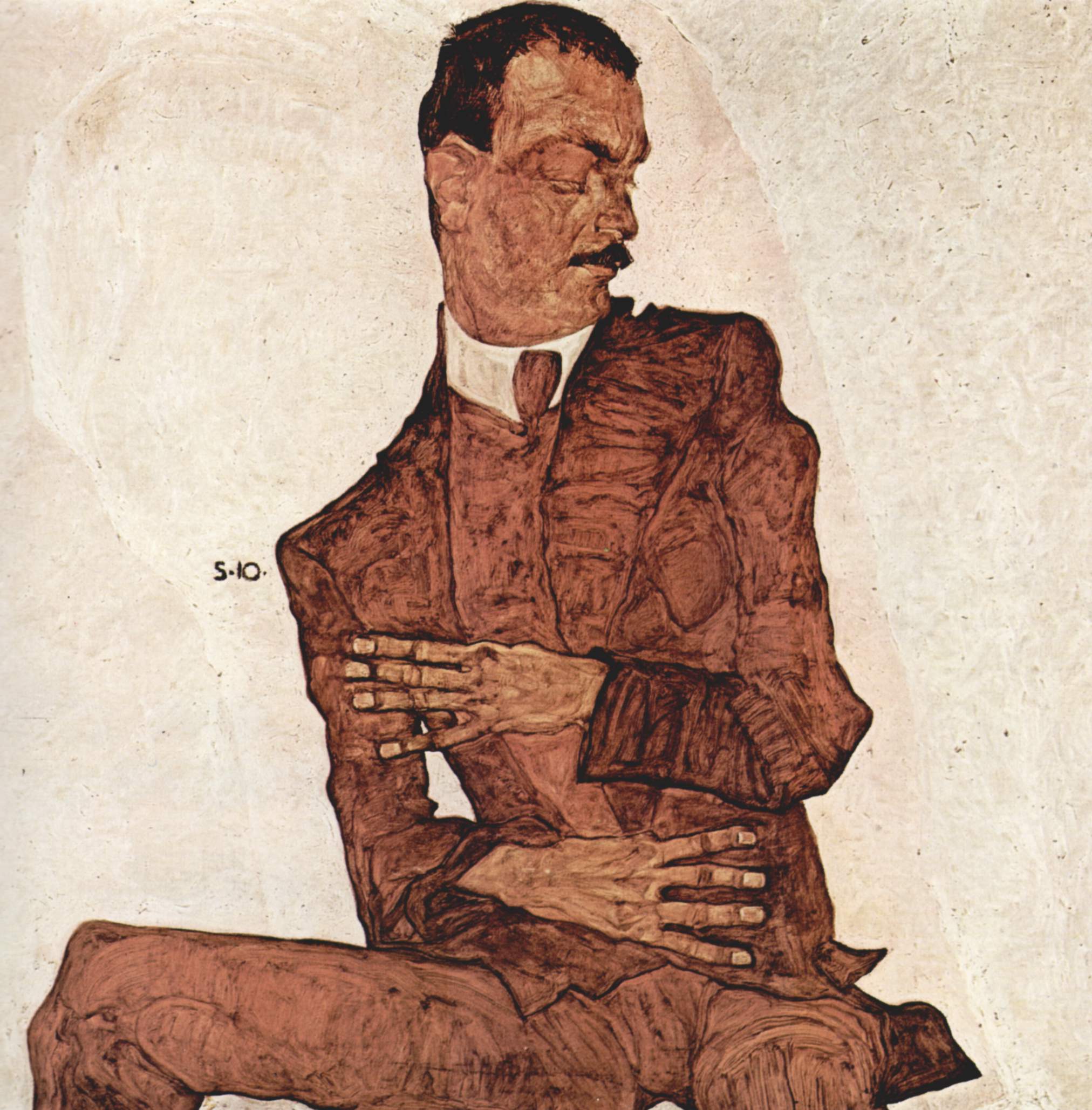
Egon_Schiele_060

Regarding the hat donned by the narrator to fit in with city folk, Hofmann’s “top hat” seems a little too up-market, while Hamburger’s “hard hat” conjures up a building site. I have gone for “bowler hat” of a clerk or business man. The sound of the birds in quatrain 6 is important. Hofmann’s “bawl” catches the anti-pastoral tone of the poem but Hamburger is forced by the needs of form to go for “twitter and cheep” (to rhyme with “sleep”). There is also some ambiguity in the final stanza where the narrator hopes to keep his “Virginia” alight in the coming earthquakes of social disruption. The German suggests the cigar will hopefully not go out (“nicht ausgeher”) and the cause: “lassen durch Bitterkeit”. Hofmann renders this as hoping the cigar will not “go bitter on me” whereas Hamburger (again in part for the sake of form) hopes to keep the cigar alight “embittered or no”. Hofmann’s phrase feels too narrowly concerned with the smoking experience but Hamburger’s rather awkward phrase does successfully suggest what I see in the final lines – the narrator’s hope (if not altogether sincerely) that he himself may avoid becoming bitter. My solution tries to hold both literal and transferred metaphorical senses of the bitter cigar equally within the line. I’ve come to think of this as important to the poem as the narrator is blessed with a degree of self awareness as much as he is cursed with a cynical, dismissive hedonism.

images

Of poor B.B.

I, Bertolt Brecht, came from the black forests.
My mother bore me into the city
while I was in her womb. And till my dying day
the chill of the woods will lie there inside me.

In the asphalt city I’m at home. From the beginning
supplied with every last sacrament:
with newspapers – and tobacco – and with brandy.
To the end, suspicious, lazy, content.

I’m amicable with the people I meet. I don
a bowler hat in just the way they do.
I say: they’re animals with a quite peculiar smell.
And I say: so what – I am too.

In the morning, in my vacant rocking chairs,
I sometimes set for myself a couple of women
and carelessly gaze at them and converse with them:
in me you have one here you can’t rely on.

When night falls, I gather men around me;
we address each other as ‘gentlemen’.
They swing their feet onto my table tops.
They say: things will improve for us. I don’t ask when.

Come morning, in dawn’s grey light, pine trees piss
and their vermin, the birds, start to shriek.
At that hour, in the city, I drain a glass and fling
my cigar butt away and, troubled, fall asleep.

We have settled, a superficial crew,
in houses that to our minds will never fall derelict
(we’ve built tower blocks over Manhattan Island
and spindly antennae that tickle the Atlantic).

What will last of cities is what blows through them: wind!
Houses make happy eaters: wolfed in a moment.
We know it – we are temporary
and after us comes nothing really worthy of comment.

In the earthquakes that are to come, I hope I’ll keep
my Virginia lit, not doused, grown bitter.
I, Bertolt Brecht, carried off to the asphalt cities
long ago from the black forests inside my mother.

tr. Martyn Crucefix

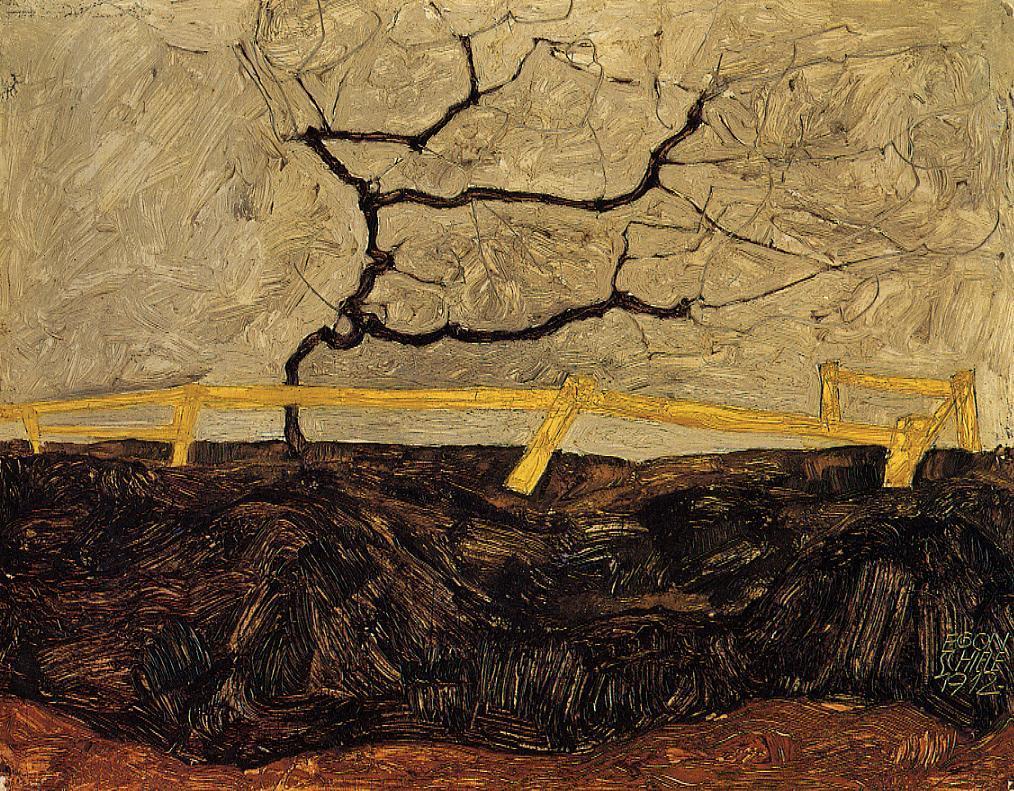
bare-tree-behind-a-fence-1912

Bertolt Brecht’s ‘Of Poor B.B.’

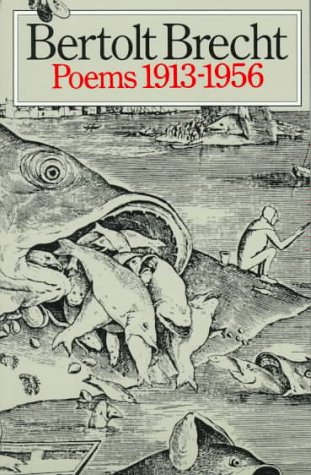
I have taken too little heed of BB, the poet. The chances are that you have too. This would certainly have been the case in 1976 when John Willett and Ralph Mannheim published Brecht’s Poems 1913-1956 (Eyre Methuen) with its stellar cast of translators. The Introduction to that selection pointed out that, until well after his death in 1956, “Brecht the poet remained like an unsuspected time-bomb ticking” under world literature. It’s our desperate bad luck that most of us have only ever been encouraged to approach Brecht through his dramatic theories, then his plays, “only coming to the poems as a by-product of his theatre work”.

94584

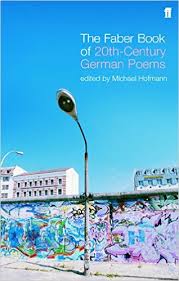
Things may have changed more quickly on mainland Europe, but only 10 years ago Michael Hofmann could still argue that the “prevailing British view of [Brecht was] as an arid theorist of drama [. . .] and  the author of a few baffling but conniving plays” (Introduction to The Faber Book of 20th Century German Poems). In fact, Hofmann thinks of Brecht as the writer who took “poetry into the twentieth century”, its single most crucial figure. Against the claims of Eliot, Valery or Lorca this may seem a bold statement but Hofmann is thinking of poetry as “a living counter-force in socio-political reality [. . .] poetry of dissent and fear and protest and rebuke and pleasure”, an art that is “heartening and inspiring”. There is some risk of this drifting back towards BB the purveyor of proletarian political messages, but Hofmann’s contrast of Brecht with “his great counter-pole” in German poetry, Gottfried Benn, a poet of more familiar “private griefs and musics, of monologue, of fascination”, makes Brecht’s distinctive contribution clearer.

imgres

In beginning to explore Brecht’s poetry I’ve been looking at poems from 1925-1928 and, like plenty before me, I’ve become intrigued by ‘Of Poor B.B.’ (German original and Michael Hamburger’s translation here; Hofman’s translation read here). Apparently the poem derives from lines jotted down on a speeding express train at 9.30pm in April 1922, when Brecht was travelling home to Augsburg after spending a difficult first winter in Berlin. The impact of the Great War is still visible here but Brecht is also very interested in exploring the impact of big city life. ‘A Reader for Those who Live in Cities’ was the title of a projected group of poems from around 1926.

Bertolt-Brecht

From the notes in Poems 1913-1956 it’s possible to reconstruct Brecht’s early draft which, compared to the final published version, demarcates town and countryside more simplictically: “I, Bertolt Brecht, came out of the black forests.” Paradoxically, the use of his own initials in the title and the bold use of his full name in the opening line, actually distances the poem from the straightforwardly autobiographical. BB is a representative figure and his move from countryside to town (is this the Industrial Revolution?) was wholly passive, beyond his control, as he moved while still in his pregnant mother’s body. In fact Brecht’s mother had died before he began visiting Munich and Berlin and the poem claims that the “coldness” of the forests remains inside BB and will do so till his “dying day”. Quatrains 3, 4 and half of 5 of this ballad-like ABCB poem-draft also characterize the cold, unrestful, uncomfortable woods, even to the extent that the pine trees “piss” with rain and the birds are “vermin”.

The early draft’s modernist anti-pastoral seems to be confirmed by the opening of the second quatrain: “In the asphalt city I’m at home” and quatrain 5 follows the noise of the bird-vermin in the trees with the seemingly-content city-dwelling BB: “At that hour in the city I drain my glass”. But there is clearly trouble in the urban paradise. Quatrain 2 portrays BB at ease (with a dig at religion in describing newspapers, tobacco and brandy as ‘sacraments’) yet there is something unsettling in the three adjectives that follow: BB is mistrustful, lazy content. Having drained his glass and stubbed his cigar he “worriedly” goes to sleep. In quatrain 6 of the draft the reasons for this worry are clarified (one of the changes in the final version is to remove some of these more logical connections) as BB plays a guitar to an uncomprehending audience and has “difficulty understanding” himself as the city dwellers seem “different animals”. Quatrain 7 wonders whether this is because he has been “carried off to paper and women” (which I take to mean the ‘pleasures’ of the city) from the black forests which still thrive “in me” along with the “roar of pines”. So the early draft suggests BB’s displacement to the city has not achieved an escape from the darkness and coldness of the black forests of his birth and he seems therefore ill-equipped to live truly contentedly in the modern city.

hofmann2
Michael Hofmann

Brecht’s revisions of the poem between 1924 and 1925 make it both more modern and more mysterious. Hofmann has described the result as “strange and pitiless”. The most clear change is in the final version’s quatrain 3 where BB makes efforts to fit into city life (being friendly, polite, wearing a hat), finding other inhabitants “animals with a quite peculiar smell” (I’m now quoting Michael Hamburger’s rhymed translation). But then BB admits “does it matter? I am too”. The draft’s more ‘easy’ theme of the outsider is being dismissed. Two new stanzas follow in which BB seems ever-more at home in the city, with both its women and men. With the former he is “untroubled”, boastfully suggesting he is “someone on whom you can’t rely”. With the men he heartily hails them, feet up on a table as they say “things will get better for us” but he knows not to “ask when”. BB is now wholly complicit in the urban insincerities, the lies and pretence that make life bearable.

MichaelHamburger
Michael Hamburger

So the changes show neither city nor the black forest offers any real contentment or fulfillment and it’s this profound sense of alienation that Hofmann links to the Modernist pessimism of an Eliot: “nature and culture, friendship and love, are all travestied and diminished”. This is why BB still falls asleep “worriedly”. In the new stanzas (7, 8 and 9) this pessimism becomes positively apocalyptic as the poem becomes about a cultural moment, a whole culture. Quatrain 7 uses the first person plural significantly; we are “an easy generation” (Hamburger) or “a whimsical tribe” (Hofmann) living in great cities that we hubristically believe are “indestructible” (Brecht refers to Manhattan here, a place he had yet to visit in 1924). In reality, of our cities only the “wind” will survive and we are (in our hearts and as we fall asleep perhaps) dimly aware that “we’re only tenants, provisional ones / And after us there will come: nothing worth talking about”.

21_bb-yeni

Had the poem ended here the comparison with Eliot’s 1922 wasteland pessimism would be more apt but, in the apocalyptic “earthquakes to come”, BB hopes to keep his Virginia cigar alight and whether we read this as a perky priapic image, a gesture of New World hope, or insouciant resilience to prevailing socio-political conditions, it’s here that we find something heartening and inspiring, even if the tone is mostly pyrrhic. The concluding balladic repetition (“I, Bertolt Brecht, carried off to the asphalt cities”) now reads like a more determined declaration of identity, a will to life, to a better world. This is despite the whole poem’s extraordinarily thoroughgoing portrait of alienation and cultural decadence. There’s life in poor BB yet.

181-NKSwingle_Pucho-Cigars1-726x484

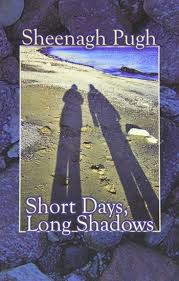
Review of Sheenagh Pugh’s ‘Short Days, Long Shadows’

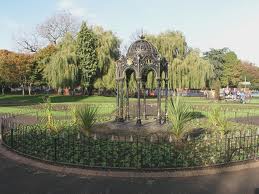
Sheenagh Pugh’s Short Days, Long Shadows strongly bears the mark of her re-location in recent years from Cardiff to the Shetland Islands. There are a couple of leaving-taking pieces here with ‘How to Leave’ re-enacting the slow, even painful, notation of local details and the levels of self-deception often accompanying what looks like a partly reluctant move. ‘Ghosts of Cardiff’ more reflectively argues that it is less the “now” that proves so hard to turn away from, it is “all the thens” which, even walking down St Mary Street or through Victoria Park, remain at least as vivid as any present moment. These hauntings form just one of the many sub-sets of ‘Long Shadows’ in this collection and Pugh’s much-remarked sense of history is a further important manifestation of this too.

imgres
Victoria Park, Cardiff

But it is the northern landscapes that dominate the book, the Shetlands and Scandinavia. ‘Big Sky’ makes the scenic novelty clear when the gaze from a window meets “no branch, no office block”, but “overflows with sky”. The breadth and variety of cloudscape and the bright night’s “cluster and prickle” of stars are vividly evoked yet the individual’s humility before such a natural scene is undermined by a final line suggesting a yearning for “the way out”. There is something of this reflected in the book’s structuring where, instead of blockish sequences of related poems, individual pieces tend to bounce and ricochet off each other. Pugh’s language risks becoming a little dull but I find this quality of restlessness in her work very engaging. It is a determination not to accept limits as in ‘Living in a Snow Globe’ where a northern blizzard again concludes with a small figure “fixed in a shaking flux and unsure / where here is, or how to get out”.

imgres
View of the Shetlands

It must be just such an isolated figure who, in one of the best poems here, talks to the ocean and asks why our figures and metaphors for it – though accurate in some ways – are always inadequate: “you / swallow each likeness, each true word / and spit it out, rejected” (‘Sea’s Answer’). I’m not sure I quite follow the sea’s reply, but it seems to imply that our endless figuring is really driven by our own desire “to be like” the sea, implying perhaps our existential uncertainties, at least when confronted with the sea’s Olympian-seeming, seeming unconditional, independent life, reminding me of Whitman’s 1871 ‘Song of the Exposition’ (as used by Vaughan Williams in ‘A Sea Symphony’) where he declares the sea remains always and only “the sea itself”.

images

But such metaphysical themes are infrequent in Pugh’s work (or at least they remain well-buried) and she focuses usually on the more common personal experience. She often approaches this through historical time in, for example, a sequence on sixteenth century spies in ‘Walsingham’s Men’ and several later pieces clearly based on encounters with museum exhibits. There are also poems here about the approach (for a father?) of cancer and death, reminisces about wartime experiences and several touching poems about the author’s mother: “I shall look back at her from my seventies // before long, saying this is how it is, / the age you never reached” (‘Catching Up’). As this suggests, Pugh’s over-riding obsession is the passage of time, both in the shadows it casts back and forth and in the sense of transience implied in the phrase ‘Short Days’. ‘Wasting Time’ is a fine poem opening with the narrator watching the sea’s actions of building and destroying along the coastline. Quoting “I wasted time, and now doth time waste me” from Shakespeare’s Richard II, the poem goes beyond this, acknowledging “the one thing / you cannot do is keep it”. Here also, Pugh resists the lure of a neatly tied up conclusion, merely suggesting that the sequential linearity of time must mean that in focusing on – or even in loving and appreciating – one thing, we must be missing out on another or absently on the look-out for something better. That restlessness again.

Since she gave out the hostage to fortune that being judged “too accessible” as a poet was the best sort of compliment, there has been much discussion of Pugh’s plainness, simplicity, even her unchallenging art. It’s true there are poems here that do little more than make a few well-turned observations in plain language in skilfully handled, mostly free verse. But I think – in the face of a pretty bleak view of temporal change – the stoicism which underlies much of her thought manifests itself in lexical and formal choices as the desire to communicate truth as plainly as possible. There is surely something of this in the astutely placed opening poem, ‘Extremophile’. The title refers to those life forms which, against all the odds, manage to carve out a life in extreme conditions around hydrothermal vents, in permanently darkened caves, in Antarctic valleys. It is this determination that Pugh finds inspiring: “There is nowhere / life cannot take hold, nowhere so salt, / so cold, so acid, but some chancer / will be there”. Look at that brilliantly chosen colloquialism “chancer” to suggest the risk-taking, against-the-odds, stubborn resilience of life itself that Pugh’s human subjects more often than not also share.

images

Even so, it’s a very long way from this Hughesian Crow-like affirmation of life against the odds to another poem later in the collection which confirms that, whatever the questions over accessibility, Pugh remains a poet capable of facing up to the terrifying brevity of life. ‘The Vanishing Bishop’ is one of the museum-inspired pieces, I think, but we are taken to the moment when a coffin is unearthed and opened and news is sent to the archaeologists while the digger/narrator remains waiting, observing the corpse: “face, full lips, firm lines, / furrowed brow”. But suddenly, as the narrator sits in imagined silent dialogue with the dead bishop’s body, the air attacks the long-preserved face:

[as] when a big log

has burned so long, it’s ash

in the shape of wood, nothing

holding it together

but habit. His whole face

suddenly settled, fell in on itself,

letting go its last memory

of who he’d been.

Though uneven, Short Days, Long Shadows is a highly readable collection with perhaps half a dozen of the best poems Pugh has written and these wear their profundity so lightly that you will want to go back and re-read them to find out with what cunning, near-invisible skill they have been composed.

imgres

Forward First Collections Reviewed #4 – Andrew McMillan

This is the fourth in the series of reviews I will post over the next two months of the 5 collections chosen for the 2015 Forward Prizes Felix Dennis award for best First Collection. The £5000 prize will be decided on 28th September. The shortlist is:

Mona Arshi – Small Hands (Liverpool University Press, Pavilion Poetry) reviewed here;
Sarah Howe – Loop of Jade (Chatto & Windus); reviewed here;
Andrew McMillan – physical (Cape Poetry); reviewed here;
Matthew Siegel – Blood Work (CB Editions) reviewed here;
Karen McCarthy Woolf – An Aviary of Small Birds (Carcanet) reviewed here.

Andrew McMillan – physical (Cape Poetry); author’s website here.
Article from The Independent on Andrew McMillan here.

A man’s torso, from just below the shoulder to half-way down the rounded buttocks, tastefully lit from the back to catch the curves, his left hand visible clutching (quite hard) his own right flank. It’s sexy and lonely and longing and anonymous. It’s a bit Fifty Shades but Cape Poetry’s cover image does say something about Andrew McMillan’s first full collection, though it’s too confining. It’s the sort of sharply targeted thing marketing people come up with and the author (who is achieving cleanly-shaped, clear, bold things in terms of subject-matter and form) may squirm at.

imgres

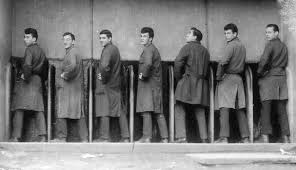
But the image is flauntingly male (and happily the skin blemishes have not been air-brushed) and what it is to be a man is certainly one of McMillan’s concerns. In ‘strongman’ a nephew wants to be bench-pressed by the male narrator and (even from the young child) this is a clear challenge as “his mother’s lover” often does it, the boy has declared the narrator’s boyfriend “illegal” and he brings with him the freight of traditional masculine values: “his dad’s voice and jaw”. The narrator obliges “because / what is masculinity if not taking the weight // of a boy and straining it from oneself?” It’s not just the bench-press requiring careful balance here in the close masculine contact, the show of strength, the carefully maintained distance in the preposition “from”. The inculcation of traditional male values starts early as in ‘The Schoolboys’ who clamber onto a bus, all bulge and muscle and “sprints of growth”, wrestling “to impress the girls”. The poem ‘things men take’ is one of McMillan’s lists, articulating a more adult version of this: they take “the room above the ceiling / the better pay the jobs / your space at the bar”. But it’s with a poem like ‘the men are weeping in the gym’ that we begin to see this poet’s determination to challenge the status quo in its brief fantasy of male affectiveness: “their hearts have grown too big / for their chests their chests have grown too big / for their shirts [. . . ] they are crying in the toilet”. There is real humour here as the gym is turned from a place of physical exercise to a place where emotions are released and flexed, a re-definition of those traditional ideas of ‘strength’: “they don’t hear / the thousands of tiny fracturings / needed to build something stronger”.

images

But masculinity as in what it is to be a gay man in love is even more central to physical. A definition of love emerges at the end of one poem which begins with awkward fears of (literally) bumping into men in a urinal, causing spillage, splash, a turning, the revelation: “neither of us will look / or he’ll look at me avoiding looking / feigning interest in the hard cream tiles”. This is funny again though halfway through the bluntly titled ‘urination’, McMillan considers the privacy and intimacy of “the toilet”, the poem lifting into praise of waking to hear (and smell) a lover pissing “the morning’s pale yellow loss” into the toilet “and take the whole of him in your hand / and feel the water moving through him”. Such intimacy of contact is one of the provisional definitions of love: “the prone flesh / what we expel from the body and what we let inside”. Poems that explore the physicality of the male body make this book remarkable, even given McMillan’s acknowledged debt to Thom Gunn. Much after the pattern of ‘urination’, ‘yoga’ begins with the physical stretching and breathing of the class, but shades seamlessly into a love-making which echoes the breath, control, weightlessness and absence of “judgement” in the discipline of yoga. ‘Saturday night’ takes lines from Gunn’s poem of that name this time to explore a more roaming, disjointed experience of love and sexuality. The rule of ‘Boss Cupid’ is no more reliable than in the straight world, of course, and McMillan gives us other images of sleeping with “Thom night after night / open at the spine”, rather than any flesh and blood lover. And ‘screen’ imagines how even a gay porn star, so perfect and capable on screen, in real life “without direction” struggles to express himself, “stopping mid kiss pulling back mumbling”.

imgres

As my quotes suggest, McMillan abandons most punctuation in these poems, using only line and stanza breaks and long spaces to create pauses and some sense of syntactical form. This works well – it doesn’t for me interrupt or confuse at all – and contributes to the often passionate flow of the poems. It’s hard to convey this in short quotes but ‘choke’, running for just 22 lines, takes us rapidly through a relationship break up, weeping, talking, loving and next day reflections, managing to evoke the agitation, fluidity of feelings, and final resolve “to tough it out” and the lack of pointing is part of this success. Elsewhere, the flow and even blurring achieved syntactically is just right for the loss of self-consciousness associated with sexual pleasure.

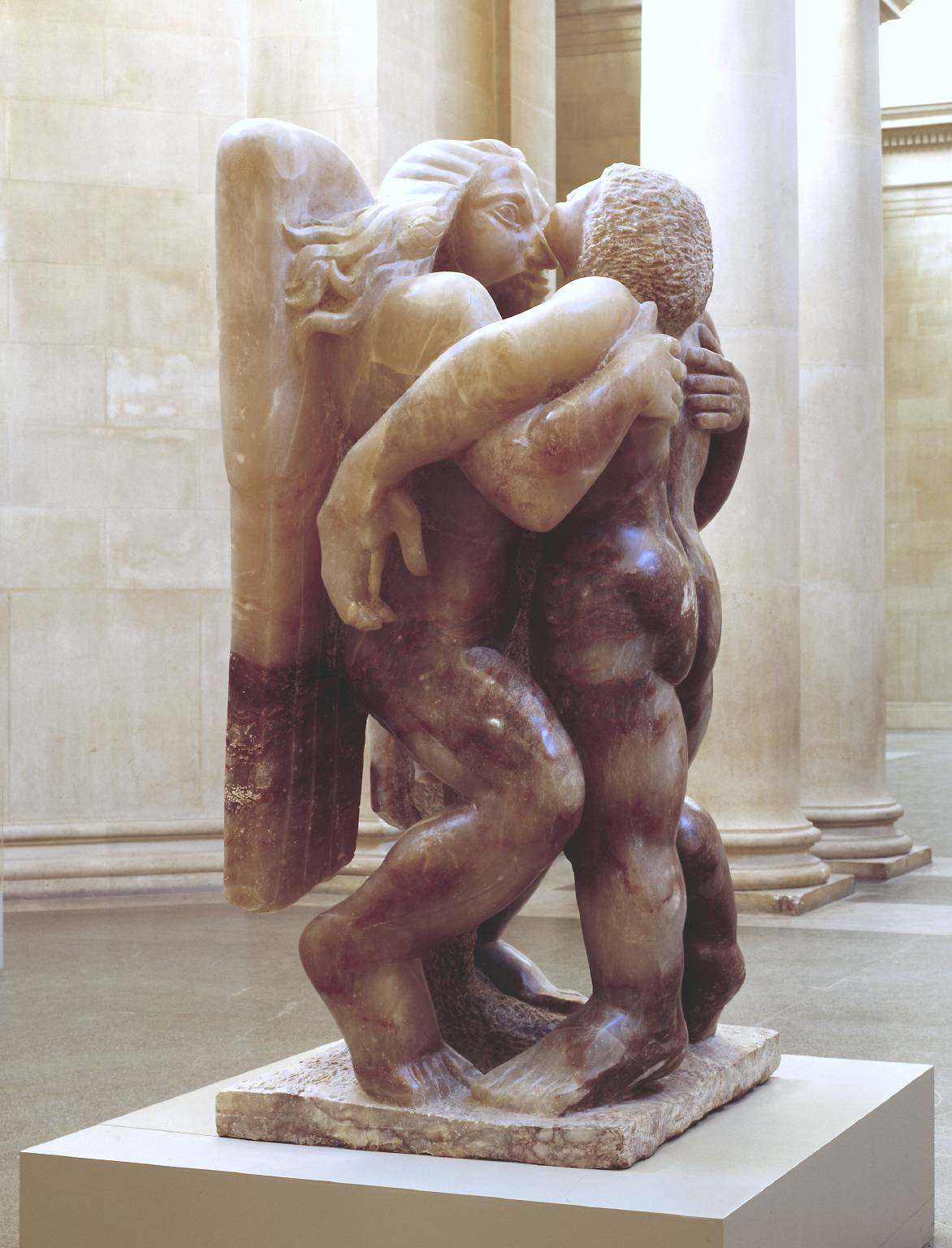
Jacob and the Angel - Epstein
Jacob and the Angel – Jacob Epstein

What is interesting is that beside the passionate and “carnal” (Michael Symmons Roberts) nature of much of this book and alongside Thom Gunn as mentor and role model, McMillan also name-checks C.S. Lewis’ Mere Christianity. The opening poem of the book portrays gay sexuality with Jacob wrestling the angel and I’ve mentioned the paralleling in ‘yoga’ and those beefy men crying in the gym are said to have “God” entering them as they weep. Furthermore, ‘revelations’ argues that each subsequent love is only a searching for the first, “in the manner of the humble saints who make / the worship of a nameless god relatable”. Each lover is renamed, Saint Gavin Saint Ged Saint Unknown / of Manchester Bedsit”. Humour is used here but it hardly disguises the poet’s interest in the more spiritual implications of the physicality his poems work so hard to evoke. This religious sensibility emerges in the brief foray, moving from Eros towards Thanatos, in poems in the third part of the book. The deaths of a grandfather and a young girl strike a very different note and suggest that McMillan may have found in Gunn not merely ways to explore his own sexuality in verse but also (from early Gunn) that existential sense, so wonderfully expressed in ‘On the Move’ (1957), that movement (whether on a motor bike or in bed) is at least one way towards self-definition: “astride the created will / They burst away [. . . ] Reaching no absolute in which to rest, / One is always nearer by not keeping still”.

imgres
Thom Gunn

There is something of this in the final poem of physical. Ironically titled ‘finally’, it evokes a new morning in “the xylophone / of sunthroughblinds”, but the lover is gone, not to return and the poet is like the birds who, though it hasn’t rained, pretend that it has, so “they can sing”. Earlier, the longer sequence ‘protest of the physical’ noted “there is beauty in the ordinary” but this is a pallid observation in contrast to this poet’s determination towards self-definition through loving, through singing when the loving is over.

In a collection full of humour and sadness alongside the plain-spoken eroticism, I really like what McMillan is doing with the fluidity of his form. I don’t think the longer sequence ‘protest of the physical’ is as good as the other sections of the book (I believe it preceded them in terms of date written) but here is a really talented and bold writer and I can see further areas of exploration opening up and it will be exciting to follow him there.

237946238_ca1d002403_b

Forward First Collections Reviewed #3 – Matthew Siegel

This is the third in the series of reviews I will post over the next two months of the 5 collections chosen for the 2015 Forward Prizes Felix Dennis award for best First Collection. The £5000 prize will be decided on 28th September. The shortlist is:

Mona Arshi – Small Hands (Liverpool University Press, Pavilion Poetry) reviewed here;
Sarah Howe – Loop of Jade (Chatto & Windus); reviewed here;
Andrew McMillan – physical (Cape Poetry); reviewed here;
Matthew Siegel – Blood Work (CB Editions) reviewed here;
Karen McCarthy Woolf – An Aviary of Small Birds (Carcanet) reviewed here.

Matthew Siegel – Blood Work (CB Editions); Forward Prize webpage on Matthew Siegel: here.

imgres

This is a really good first collection because of its remarkable consistency of tone and manner and it possesses what I, perhaps narrow-mindedly think of, as that American quality of confident fluency, indeed fluidity, which seems capable of encompassing so much experience without straining at the seams. In their very different ways, I find this in the work of poets like Billy Collins, Louise Gluck, Jorie Graham, Robert Hass and Larry Levis. I’d trace it back to the big enfolding arms and lines of Whitman who, along with Rilke, are Siegel’s two declared influences. But this ‘all I survey’ quality of the book is rather undermined by the publicity surrounding it which narrowly focuses on the fact that Siegel was diagnosed at the age of sixteen with Crohn’s disease and that his debut collection is all about this. Mark Doty (no less) considers the book “a genuine contribution to the literature of illness”.

It may well be – but like Robert Lowell, Thom Gunn and more recently (Siegel’s CB Editions stable-mate) Dan O’Brien, Blood Work’s focus on a very specific milieu or set of experiences does not prevent the alchemical transformation into an art with which those not brought up in the upper reaches of New England society, in the West Coast gay scene, embroiled in modern war zones can identify. In old money terms, they find the universal in the particular and Siegel does this in poems that move beyond a young American with Crohn’s disease to explore family relations, love relationships, questions of self-definition and the tensions between speech and silence.

imgres

The opening poem is important in carving out a certain distance, an ironic space, between the Crohn’s sufferer and the poetic voice (there are a few ekphrastic poems scattered through the book which do the same job). It is one of the few poems narrated in the third person and we are urged to “look” at a hospital attendee, back in what seems familiar territory (the chronic aspect of Crohn’s), the floral prints on the walls, the hospital gown “like an old costume / pulled out of a locked trunk in the attic / of bad dreams”. He feels sexless or desexualised, but is writing a poem “in lowercase”, particularly the first person pronoun. The writing of the poem becomes the subject of the poem but this self-reflectiveness is not rebarbative in the way it often can be (self-regarding, aggrandising, clever-clever) but more modestly self-mocking, an awkward self-consciousness. The patient/poet would rather be drawing a comic book, with himself as a “small mammal”. He sees himself as a fox and in the poem’s final line he changes the title of the poem he is writing which is the title at the head of the first page we have just read: ‘fox goes to the fox hospital’.

The space created by this poem around the very specific medical context gives the remaining book permission to range widely and introduces the idea of “containment”. What can or cannot contain the individual is a recurring idea (picked up by Doty in the cover blurb). The title poem has the narrator’s blood being taken from a vein (already a familiar experience to this young man – the context seems to be earlier in the poet’s life). The nurse allows him to hold the warm filled tubes of his own blood: “I nod, think about condoms, tissues / all the things that contain us but cannot”. Containment here means summation perhaps, but with overtones of imprisonment in the sense that a medical condition (a disability? a gender? a skin colour?) may determine much about the individual, yet ought not be allowed to fully define the person. This too is Siegel’s subject in the book; the spillage, or extension, we can achieve or are permitted beyond what might define us.

So ‘Sometimes I don’t know if I’m having a feeling’ may or may not be closely related to the poet’s own medical condition but it is a familiar experience for most of us. The uncertainty of thoughts and feelings, the sensation of having missed “the entire party”, of being known only as “a strange / version of the person you thought you knew”, the old question, “Who am I?” It’s a sign of the ironic distance maintained by these poems (not at all the same as cool inconsequentiality) that Siegel can answer that question with humour: “A question / for the Lord only to decide as She looks over / my resume”. Elsewhere, such questions are more difficult to answer. ‘Love Parade’ stresses the distance the narrator feels from others (‘I fear my body incapable of loving’) or he plays with the idea that the opportunity of a poem is little more than a late-night phone-in for the lost and lonely. The desire for contact with others (that wish for spillage and extension) can grow to “the size of a building”, taking Siegel down avenues of surrealistic imagery, creating a city-scape from the thoughts of a lover’s body.

images

These ‘others’ do feature significantly in this book. We meet the heater repair woman, a Vietnamese masseuse, Nancy the dentist, a supermarket flower seller, stall-holders at a Farmer’s Market, a multitude of doctors and nurses, various romantic entanglements. Though all these dip and dance about the central consciousness, they are given individuality (more Whitman here, I think). Thirteen year old Bryan is a sleepy student and the narrator is the teacher who watches him doze at his desk, bored by a literature class. The poem is a lovely act of empathy with the boy, his awkwardness and uncertainties, concluding with the self-discovery that the boy may well become the watching adult who “instead of chastising him / wants to touch his hair”. Not what child protection might want to hear, but true enough for those who teach.

imgres

But the book is also concerned with family, in particular a mother-figure who, like Bryan, is observed while sleeping and Siegel asks “What world / contains you”. In this poem, she dozes, exhaling “in little puffs” and perhaps it is her son’s inability to quite define her that means he can “only watch for so long”. She is a mystery, though in poem after poem she is shown crying, smoking dope to forget, mourning an ex-fiance, the son helplessly, left to “wonder if I could reassemble my mother”. In ‘Matthew you’re leaving again so soon’ we hear her reported voice fussing and trying to bestow love and affection through gifts of pens, an umbrella, socks, as he prepares to leave, in an effort to say what seems impossible to be said explicitly. We see her (smoking another joint) listening to the music of Enya (‘it’s in Gaelic’), tearful again, yet smiling “as if hurt is the balm”. For all the lack of specific detail about her life and loves, this mother-figure is a powerful creation we may hear more of in Siegel’s later work.

So the book does not duck difficult experiences, nor distance them defensively. Siegel’s watchwords are openness and a winning tenderness. Despite the questions of illness, he can apply such qualities to himself too and in ‘Overlooking the City’ there is a brief respite which amounts to something like redemption: “No, I am not hurting in this moment”. As the sun sets over the city, “red does not remind me of blood” and the imagined blessing of the sun’s rays reach “even me, surrounded here and alone”.

stock-footage-time-lapse-sunset-over-los-angeles-city-landscape

Even in a poem that gets pretty explicit about his medical condition, some reconciliation seems possible. ‘Rain’ opens:

I thought I knew desperation until I found myself
tightening my asshole like a bolt,

gripping the banister and crossing both legs,
knees shaking.

I tried to read a poem on the toilet [. . .]

But still the narrator can elude such a total, imprisoning self-definition to find some pleasure in the view from a window to “see grass // glowing green in rain and streetlight – / so many bright beads of water”.

So a book I really admire for its capacity to encompass such variety without bursting into fragmentary utterances. It doesn’t do anything startling formally or linguistically, but its achievement is more emotional and empathetic, Siegel’s voice engages the reader at all times in just the way he seems to engage and commit to the many people who inhabit these poems with him. Would make a worthy Forward First Collection winner.

How to Write a (Poetry) Blog

A provocative blog title perhaps but hard to resist sometimes – see point 2.18 later – but this is less generally instructional and more a prompt to self-reflection. Amazingly, it is a year this week since I started this blog. Never the same river twice, of course, but I thought it right to post a few reflections on how it’s gone so far. My intentions, changes, thoughts on and lessons learned – plus nine bits of Blog Wisdom picked up along the way.

imgres


  1. My original intentions

1.1  I always enjoy critical writing but chafe sometimes against waiting to be asked to review or the choice of review books I have been given, or word limits. My own place where I could be editor and reviewer seemed very attractive

1.2  I wanted to become familiar with the idea, techniques and impact of blogging as this seemed a form of cultural contribution that was of growing importance and I didn’t want to feel wholly left behind

1.3  I could pick out three vaguely-defined areas of blogging possibilities for myself: poetry, teaching, translation

1.4  I had been reviewing poetry books and writing about poetry writing for years in a variety of paper magazines prior to starting the blog. Part of my intention was to be able to post up some of these older pieces (where I still thought them relevant and worthwhile) so that they would be searchable on the web, hopefully preserving their lifetime

1.5  I can’t remember how I came across the WordPress system – probably by chance, or perhaps via another’s blog – but it seemed so user friendly that I thought even I might manage it (I’d had a few false starts trying to create a web page)

1.6  I understood intuitively and then found it out there as Blog Wisdom that regular posting is important and I set myself the task of a weekly post.

images

1.7  I was anxious before I got started about whether I would find things to write about on a weekly basis – I sort of hoped it would acquire a momentum of its own

1.8  I never intended the blog to be very personally revealing (though this is advised in the Blog Wisdom) – this was to be a place where I might discuss the art of poetry (and teaching literature and issues of translation) with myself and in the hope of drawing a response from others

1.9  On the other hand, I’d also been writing sections of autobiographical material in recent years and I vaguely  thought I might be able to post this up in experimental posts – something I was not likely to be asked to do by the usual journals and magazines

1.10  I thought the blog would contribute to my self-promotion – after all a writer is supposed to actually sell booksimages

  1. How the year unfolded

2.1  Having begun very tentatively with WordPress, it quickly became clear that I could easily create a full website using its simple tools – not merely a blogging site

2.2  I’d not been much of a blog follower before starting my own – since then I have enjoyed following others and not merely as a means of spying on the competition (though of course it’s not a competition)

imgres

2.3  I figured out how to tag posts to make the site more searchable by Google etc (the Blog Wisdom seems to be that no more than a dozen tags should be used – beyond that they become less effective – still a bit foggy on this)

2.4  I also figured how to Tweet a link to the blog posting and link to FaceBook and other blog sharing sites (also still a work in progress)

2.5  I had problems preserving stanza breaks as the WordPress system seemed to collapse everything down to standard line break widths once posted. Thank you, Josephine Corcoran for helping out with this one.

2.6  I have really enjoyed choosing a variety of images to decorate the blogs – and captioning some of them (once I’d worked out how to make a caption)

2.7  The Blog Wisdom has it that the more active you are on others’ blogs (liking and commenting etc) the more likely you are to get traffic back. I’m sure this is true and I’m sure I don’t do it enough. This could be a full time job in itself but I’m sure it would reap benefits if I did it

images

2.8  I thought I would post some of my own poems on the blog but in fact have not done much of this at all – these days the definition of ‘publication’ often includes even a personal blog and that may not be the best place for work to appear first. On a few occasions I’ve posted up already published work

2.9  The Blog Wisdom has it that embarking on a series of related posts is a good idea assuming that you might gather up an audience on the way, create expectations etc. I’ve had a go at this a couple of times. Jury’s out on this one

2.10  Fairly early on in the year I had the idea of recording briefly my own reading (mostly poetry related texts) and set up the What Have I Mostly Been Reading page. I’m updating this roughly every month and it has proved a page that people visit quite often. There is a temptation to make my brief comments less brief

2.11  I realised that what I was doing with the blog was journalism. Pretty obvious to most but it struck me forcibly as a different sort of writing with its own rules and I rather enjoyed the frequent deadlines

2.12  I also tried reviewing live poetry events that I attended and these seem to have proved quite popular – certainly there is not much of this sort of reviewing around and it’s good to record these ephemeral occasions in some way

Poetry-182-150x150[1]

2.13  The Blog Wisdom has it that blogs develop any kind of following slowly and that is true enough. But when even a few comments and likes start coming in there is a surprisingly immediate sense of a community. WordPress provides statistical analysis of visitors and views on a blog site and these also give some sense that what you are writing is not being wholly ignored (but see dangers later . . . )

2.14  The Blog Wisdom also has it that to associate posts with specific events, times of year, cultural events, prizes, other publications etc is a good thing. I’ve tried to do this with live event reviews, prize lists, magazine publications, book publications

2.15  As the year has gone on I have sadly found less room for blogging about the teaching of literature – largely because (as it turned out) I had plenty of pressing ideas in the other two areas of poetry and translation. I regret this

2.16  As the year has gone on, I’ve been more drawn than I expected towards reviewing new collections of poetry. I’m not sure about the wisdom of this, though it has proved quite popular

2.17  I posted one week on How Do You Judge a Poem which proved very popular and it struck me (as it has struck many publishers) that offering (or seeming to offer) instruction was a way of courting more hits

2.18  I see dangers (as 2.17 suggests) in the temptation to court more hits by naming blogs provocatively, like a journalistic headline or an advertiser. Blog Wisdom suggests this is exactly what one should be doing but I don’t feel comfortable with this

2.19  I see dangers also in the temptation to be wilfully controversial as Blog Wisdom also suggests one should be. But I don’t want to write a tabloid blog

images

2.20  I see dangers in getting obsessed by checking the blog stats several times a day. It’s like checking emails or phones in the same way. As someone once said, this is like opening the front door every few minutes to check whether the postman is coming. Get on with life

2.21  I see dangers of my life being taken over by blog writing and planning what to write. Rilke warned against critical writing of any kind sapping one’s strength and time for real creativity. Was he ever tempted to write a blog?

imgres