‘I am not I’: the Slippery First-Person in Poems

A couple of recent experiences with my own poems being posted/published on-line and kind readers then commenting on them has made me think again about the use of the first-person singular in poems – the use of ‘I’. Perhaps ‘think again’ is the wrong phrase as I have never – or at least not since my far distant teen years – really thought of the ‘I’ appearing in my poems as identical to the biographical, historical, personal ‘me’ tapping this out on a keyboard on a sunny Tuesday morning after the Easter weekend. How many millions of times have I suggested to students: let’s not make the assumption that the ‘I’ in Sylvia Plath’s poems is necessarily Sylvia Plath. And that perhaps is not the best example to give as we’ll then get into a debate about what exactly ‘confessional’ poetry is. But the fact that there has sprung up a category of ‘confessional’ suggest that the majority of other poems are not of that type. In which case the ‘I’ is to be taken with a large pinch of salt. Poems are not diaries or even journals but finely (I mean carefully) constructed mechanisms and the ‘I’ is but one of the building blocks.

Artists regularly move trees I’m told (within their frame). A painting is not a documentary. Some way back I remember reading that Auden would switch a positive to a negative for the sake of the music he aspired to. I’ve often found myself suggesting (in workshops) that the writer might try shifting the first person to the third, even the masculine pronoun to the feminine. These are just the little lies we tell in order to express the larger truth we are aspiring to and I’d fight to preserve that freedom of language and imagination, even the questions it might raise about ‘identity’. But what about the two poems I mentioned before. What was going on there?

The first poem appeared on Bill Herbert’s fascinating Ghost Furniture Catalogue site – which if you haven’t been there – go! Responses to this poem seemed to suggest the literalness with which some readers will approach a poem as voicing a ‘personal’ experience. Perhaps I was already wary of a too literal reading even in sending it out for publication. The title (‘A bedroom paranoia’) I chose wants to warn readers: there is something fantastical or imaginary here – there is a paranoia at work (that is not really the truth). One thing I’d say about the poem was that the experience – based on a real incident – had been sitting in a notebook for several years. I’d always felt there was something interesting in it – but couldn’t get it anywhere near right. I think my own learning experience was that to succeed you have to move a few trees… The opening 5 lines are (I’ll admit) close to the truth…

Pitch-dark, the carpet brushed by the door,

  hush-ush, you’re up, a while, now you’re back,

damp from the shower, waking the radio,

  and – who knew? – a king’s birthday, his anthem

limping on while you find clothes for the day

…. but by the time I felt I was getting close to the true poem that I wanted, the Queen had died and I had to substitute her son, Charles III, for her, in order not to make the whole thing misleadingly ‘historical’. The door brushing the carpet is something to be heard every morning. The woman rising before the (loafing) poetic voice is also not uncommon in real life. It’s the second line that is crucial: ‘hush-ush, you’re up, a while, now you’re back’. I wanted to evoke my own experience of dozing to and fro, time slipping forwards without being conscious (awake) to experience it. And that experience is taken up in the next 4 lines:

  and I roll – the pomp now fading – to take

my usual plunge, all the way to the floor,

  turning to smile at you. But the shadows

are vacant where you stood moments before

The first person has dozed off again for several minutes and the woman has simply gone downstairs to begin her day. The paranoia kicks in in the final 5 lines, despite the rational mind knowing what has happened. I wanted to capture (something I did feel to a degree) the sense of ‘what if’? What if the partner had gone not merely down the stairs but off into the world, away from home, never to return? I thought ‘brute stab of abandonment’ was a decent phrase for this emotional moment.

  and – though explaining this is easy

as my drifting in and out of sleep – all day

I’ll nurse the brute stab of abandonment,

  gone – the shock – you left no word – worse,

you were sure no word was worth the leaving.

Looking back, the verb ‘nurse’ seems important. The paranoia is largely self-inflicted, even encouraged (even as the day goes on), in a kind of picking at a scab, a masochistic inclination to ‘try out’ how that ‘abandonment’ would feel. I don’t think this is an admirable trait – but one which of us would say we have never felt? It’s here that the fictionalising comes in. I don’t think I DID feel like this all day, but I’m happy to represent ‘myself’ in this way to explore the (rather male?) emotional response. One of the comments on this poem was to commiserate with me that my partner had indeed actually left me. I guess that needs to be read as a compliment: it suggests the poem conveys the ‘stab’ as pretty convincingly ‘true’.

The second poem was recently published in Poetry Scotland and I trumpeted the fact (as you do) with a Facebook post to which there were a number of likes and comments. Several clearly implied that the reader had read the poem as autobiographical. In fact, there is less here that is personal than the previous poem. It derives from notes I made back in the time of Covid. My own father in fact died before the pandemic (a fact for which I often feel grateful… then guilty). So – as the poem discusses an absent father – the truth it is exploring is my own ‘feeling’ about an absent parent (though the cause of death is different). The title was a late addition (‘How to Address the Inquiry’), chosen as the Covid Inquiry has been taking place (to very little public response. The tone of the poem is angry:

If he was still in his armchairbeside me

I guess I’d try to raise a smile—

perhaps, for want of better, with this tale

of last night’s troubled tossing in bed

one arm snagging the bedside lamp

to bring it thump onto the bridge of my nose

to leave a bleb of dried blood

in the mirror this morning proving

I fought and lost—or else I might

tease him with his beloved City

in the fight for relegation again

or perhaps I’d pull back the curtain

you see there! a few primroses!

Plenty of the detail here is personal – the wrestling with the bedside lamp actually happened (to me – though after Dad had died), he supported (rather unenthusiastically, Bristol City), he loved his garden. The next detail is pure fiction but I felt the showing of the image to a man already dead would be a powerful one:

or I’d find my phone and maybe show

the newly done memorial bench

bearing his name by a tree in the park

And I wanted to let him speak for himself, to express his own anger. To me he is one of the many voiceless dead, resulting from Covid, especially those in care homes (both my parents ended in such a place and died there), those who could not be visited by relatives and friends due to contact restrictions:

and in the quiet I’d hear ashes stir

a murmuring of lips beyond cracked

and inaudible though I know the gist

that I was let down—they’re slow to act

letting people come they let people go

running it’ll be fine! up their fucking flagpole

then backhanding fat cat chums

with a hundred and fifty thousand lives

a fire sale fobbed me off with shit deals

even dangling one last Christmas before me

only to shove it—old ashy whisperer—

foldedinto yourself a dishcloth

on the drainer—a hiccupping cough

into your pillow—a last companion—

too old to ventilate . . .

We all read the stories of deaths of this sort. None of this is ‘true’ to my own experience (or my parents) but this is where the ‘larger’ truth surfaces, and this was my own way of trying to say something about it. The poem ends very emotionally (for me) because it returns again to autobiographical details. I DO have this picture on my mantlepiece (behind me as I type this out). I’m drawing on my own sense of loss, but I hope the dovetailing with what is fictional (for me) is effective enough. People wrote indicating their compassionating sense that I had indeed lost a parent during Covid and I want to again take this as a compliment to the technical success of the poem in its final state.

        I’ve his wedding day

on my fireplace—you should come see

how young they are with what awkward pride

he stands in sunlight at the end of the war

in his mid-twenties in his air force uniform    
Two New Poems – at ‘The High Window’

Two new poems by yours truly – one featuring class, eroticism, and valeting a car and the other of 4 quatrains of mourning modelled on a little-know poem by Bertolt Brecht – have just been published/posted on The High Window website here. Do click the link and read the poems there – the site (edited by poet David Cooke) publishes a number of poems by different authors, so to see mine scroll down (alphabetically). There is of course lots of other interesting work on show by these excellent poets: Anindya Banerjee • Robyn Bolam • Pat Boran • Malcom Carson • Maggie Castle • Martyn Crucefix  Peter Daniels • Mair De-Gare Pitt • Frank Dullaghan • Alexis Rhone Fancher • Marilyn Francis • Greg Freeman • Jeff Gallagher • Mark Granier • Gill Learner • Emma Lee • Alison Mace • Patricia McCarthy •  Beth McDonough • Fokkina McDonnell • Maggie McKay • Ted Mico • Sean O’Brien • Tanya Parker • Sheenagh Pugh • Tracey Rhys • Padraig Rooney • Ernesto P. Santiago • Andrew Seear and Victor Adereth • Richard Skinner • Angela Topping • Mark Totterdell • Miriam Valencia • Scotia Vincent • Rodney Wood  Marc Woodward . In my experience, people are always eager to hear about the origins of poems (perhaps because their beginnings are often both mundane and utterly mysterious) so I thought it might be a chance to say something about these two in particular.

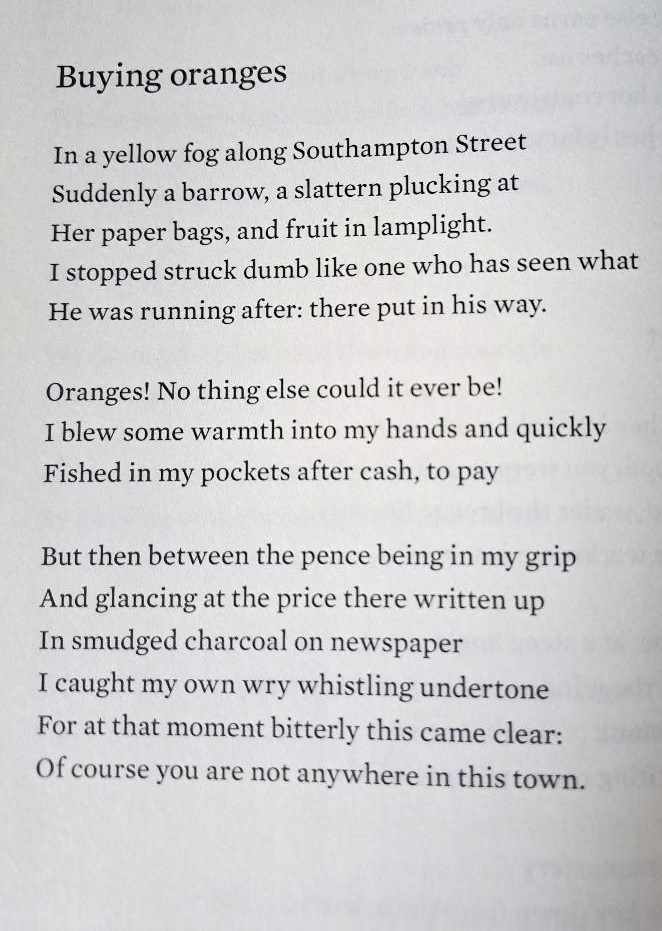
The Brecht-related poem arose after I’d attended a discussion on the German poet/dramatist by David Constantine. One of the poems he presented to those attending (with his translation) was ‘Buying Oranges’. This is one of the poems Brecht wrote for his lover, Margarete Steffin, in the 1930s. Constantine’s translation (from The Collected Poems of Bertolt Brecht (Norton, 2019) goes like this (hear it read by Daisy Lafarge here):

It was the circumstances surrounding my first acquaintance with this poem that led me to write a very loose version of it. I’d booked the event with David Constantine months before, but it happened that my mother sadly (but not unexpectedly) died in her Wiltshire care home the night before. I debated what I should do but decided in the end to attend the talk (I figured there was nothing urgently to be done; Dad had died a year or two before). The world looked different of course. In fact the day was bright and sunny. The event was near Holborn (not far from Southampton Street itself). As you’ll see, I turned oranges into chrysanthemums (my mother’s favourite flowers) and I find now that I lengthened BB’s irregular sonnet to 16 lines. Here’s my version:

ON SOUTHAMPTON STREET
after Bertolt Brecht

A mizzling cold fog on Southampton Street
then suddenly a market stall
with its spectral blooms
under a bare bulb preternaturally lit

a sullen frizz-haired girl cutting stems
and I’m dumbstruck as one who’s found
the thing he looked for
here—at arm’s length—chrysanthemums—

nothing but them! I blow on stiff fingers
plunge them into a pocket for coins
but between fumbling silver
and glancing back up to check the price

scrawled on a yellow card it feels as if I
interrupt myself—a dull under-voice
lifted in bleak remembrance—
since last night you’re not here or any place

The second poem appearing on The High Window this week had a much more mundane beginning. Several years ago (how long can some poems take to arrive in their proper form?) I was staring from a window (in a classroom – perhaps I was invigilating a test) and down in the car park below I saw a car valet parking up his van next to a much fancier car. I seem to have watched him pretty carefully if the poem is to be believed (which I’d usually say not to). Gradually, the poem acquired its erotic undertones (the lovers back to back in bed, the intimacy of the hand-washing, the moisture, the smells, the final turning away) which surprised me as I thought the poem was mostly a comment on work, labour (I love poems about processes) and ultimately about class differences (for money, one man cleans another man’s car). The epigraph is, of course, from Donne’s great love poem ‘To His Mistress Going To Bed’ but here is intended to reflect the working man’s thoroughness!

MOBILE CAR VALET
‘Before, behind, between, above, below’

Like a pair of lovers back-to-back bored in bed
his white van closes rear bumper to bumper

he opens the doors wide and starts to squeegee
the mucky hubs of the big black German

from a sudsy bucket he works the dusty body
with a chamois leather inscribing S-shapes

like the briefest foaming of bold graffiti over
and round wing mirrors and shining roof rails

then balanced on a tyre sweeps half the roof
now the other side and inside across the length

of the dash a pale duster the armrests especially
working the driver’s side then a jet-spray

jumps into hissing life spilling gassy whites
over the wings and the tyres his best weapon

set back in the van then out with the ancient Henry
its scarlet chess piece and snaking black hose

used to scour the seats deep into the footwells
and the chamois is back again to buff stray drops

on windows with windolene it smells good to him
now the doors slammed the remote locking chirps

as he carries the fob back into the marble foyer
like a hatchling his van waits out the length

of one smoke nothing to say to the big German
where it glitters alongside already turning away

Remembering Blue Nose Poetry events in London

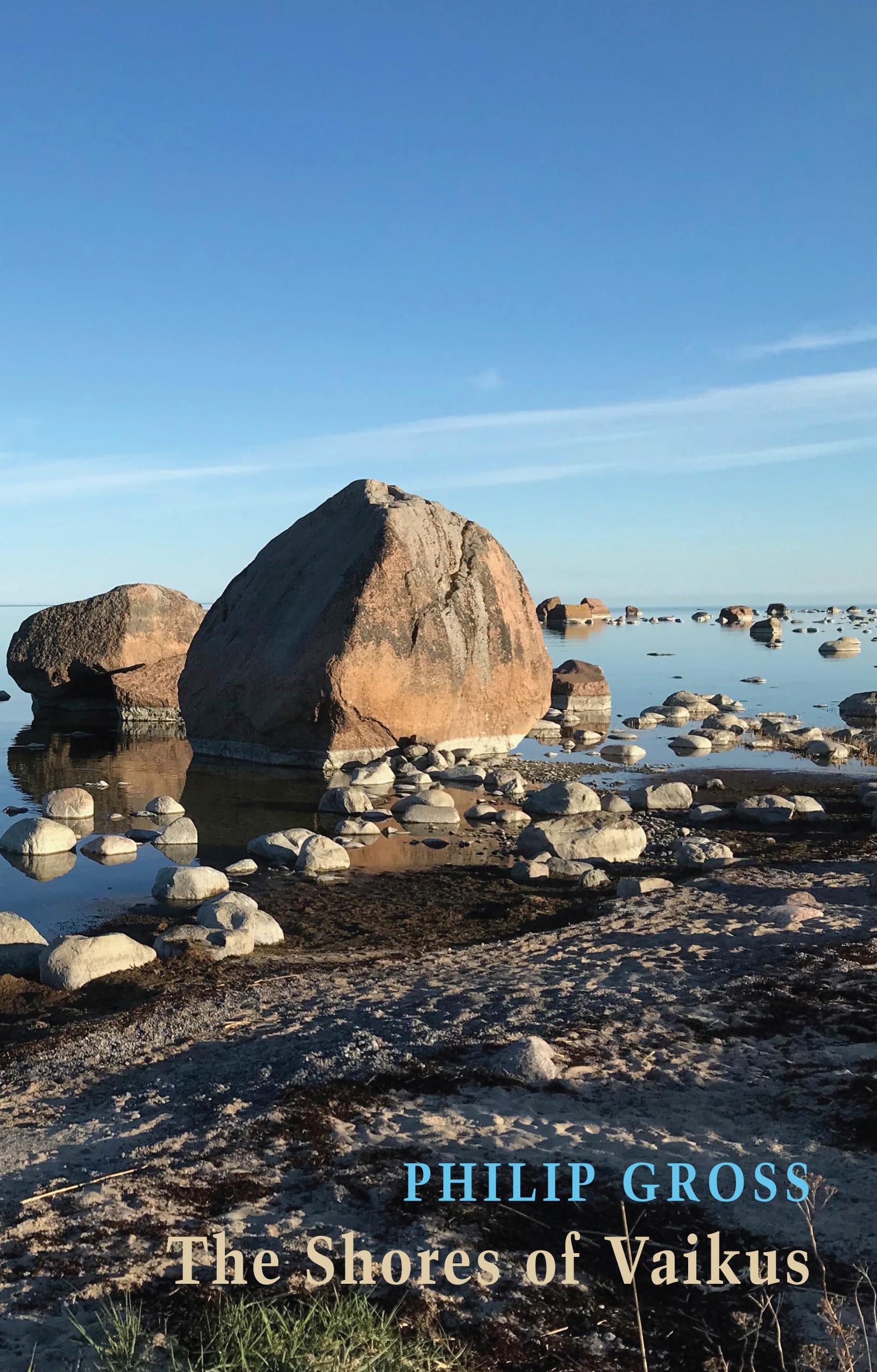
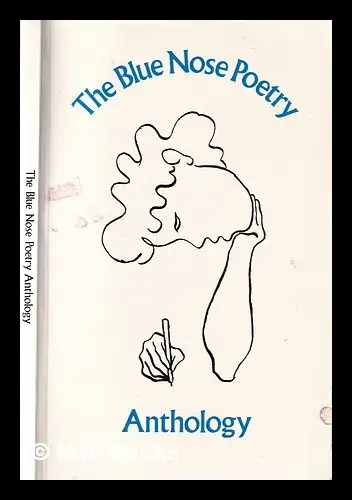
I recently attended the launch of Philip Gross’ new collection, The Shores of Vaikus (Bloodaxe Books, 2024) at the Estonian Embassy (the poems and prose pieces in the book refer to Gross’ father’s Estonian heritage and the poet’s visits to that country). I’ve followed his poetry since Faber published The Ice Factory in 1984. Neither of us could recall when we’d last met up but, after the event, I remembered that Philip was one of the first poets to read at the series of poetry readings (and associated workshops) I helped curate in the late 1980s/early 1990s, the Blue Nose Poetry series in London. I introduced him on the occasion (I still have the notes I made for the event in a Notebook for Spring 1989). I checked out the precise date in The Blue Nose Poetry Anthology (1993) which has sat on my shelves for many years now. The Blue Nose Poets (for personnel see below) invited all those who had read in the series to submit work and it strikes me now that it would be a shame if a record of our endeavours over a number of years was lost to sight completely. So, I’m posting here the Introduction to the Anthology and the full list of readers who appeared (often being paid nothing or a mere pittance) between 1989 and 1993. Interesting? I think so – given we hosted the likes of Dannie Abse, Patience Agbabi, Moniza Alvi, Simon Armitage, James Berry, Robert Creeley, Fred D’Aguiar, Michael Donaghy, Carol Ann Duffy, Michael Horowitz, Jackie Kay, Adrian Mitchell, Peter Porter, Peter Reading, Michèle Roberts, Ken Smith, and many more.

Introduction to The Blue Nose Poetry Anthology

This anthology celebrates four years of Blue Nose Poetry in London. Its beginnings can be traced back to 1988, when Sue Hubbard advertised for members to join a small poetry workshop at her house in Highbury. Amongst others who began meeting regularly were the four founder members of the Blue Nose: Sue, Martyn Crucefix, Mick Kinshott and Denis Timm. At that time, poetry readings in London seemed to be in the doldrums. Uninviting rooms and draughty halls with chairs in impersonal ranks were often depressingly matched by poor organisation. The Blue Nose Poetry activities were set up with the express intention of providing workshops and readings in a friendly, accessible and organised atmosphere for new voices, up and coming writers and the already established. We were convinced that a cabaret setting of tables, candles and a drink with other enthusiasts could make poetry enjoyable. It was only with the discovery of The Blue Nose Cafe in Mountgrove Road, close to Highbury Stadium, that we found a name for the project and the real success of the Blue Nose began.

Our first poets came to the Cafe and read out of the goodness of their hearts. We thank them all once again. The first event with Michèle Roberts was packed and exceeded our wildest expectations. Within the course of one evening we had proved that exciting contemporary poetry could be presented really successfully. Soon, in response to Blue Nose’s track record of commitment and quality, GLA (later LAB) and Islington Borough agreed to support the project. Since then, there have been various changes. Mick Kinshott felt unable to continue as an organiser in 1990 and his commitment and humour was a great loss. His place was taken for two years by Bruce Barnes, whose knowledge of the poetry and arts funding world in London proved invaluable to the development of the project. More recently, Mimi Khalvati and Mario Petrucci have joined the three original members. In the middle of the Spring 1991 season, the Cafe where we held the events went into liquidation and a reading by Tom Pickard and Rosemary Norman sadly had to be called off. Regular events did not begin again until May 1991, when we moved into the more accessible, roomy and centrally located Market Tavern in Islington. Despite the many advantages of this new venue, there are a few who still regret the passing of the old Café which, though tiny, disorganised and terminally broke, did have a superb atmosphere for poetry.

In an appendix to this anthology, we list all the readers who have appeared at the venue/s – a genuinely comprehensive survey of poetry in recent years. This, of course, does not include the many poets who have had the opportunity to read from the floor at Blue Nose events. More importantly, this book contains no record of the hundreds and hundreds of people who have enjoyed and supported Blue Nose Poetry. This book is dedicated to them.

Martyn Crucefix / Sue Hubbard / Mimi Khalvati / Mario Petrucci / Denis Timm

Full List of Main/Support Readers for Blue Nose Poetry Seasons 1989 – 1993

March – July 1989

Michèle Roberts read with Martyn Crucefix; Philip Gross read with Sue Hubbard; Jeremy Silver read with Mick Kinshott; Jo Shapcott read with Denis Timm; Leo Aylen read with Gerda Mayer; Alison Fell read with Hume Cronyn; The Blue Nose Poets; Carole Satyamurti read with Barbara Zanditon; Michael Donaghy read with Rupert Slade; Adam Thorpe read with Al Celestine.

Philip Gross

September – December 1989

Ken Smith read with Mimi Khalvati; Anna Adams and Julian May; Gerda Mayer read with Chris Powici; The Blue Nose Poets; The Performing Oscars; Maura Dooley read with Sara Boyes; Fred D’Aguiar read with Matt Caley; Matthew Sweeney read with Hilary Davies.

January – April 1990

Fleur Adcock read with John Harvey; Dannie Abse read with Myra Schneider; Elaine Randell read with Frances Presley; Hugo Williams read with Keith Spencer; Pitika Ntuli read with Bruce Barnes; John Cotton read with Bridget Bard; Michele Roberts read with Peter Daniels.

Robert Creeley

May – July 1990

The Blue Nose Poets; Sarah Maguire read with Vicki Feaver; Jeni Couzyn read with W N Herbert; James Berry read with Susan McGarry; Simon Armitage read with Chris Gutkind; E A Markham read with Mimi Khalvati; Brian Patten.

September – December 1990

In the Gold of Flesh anthology with Valerie Sinason, Dinah Livingstone, Pascal Petit, Jenny Vuglar; George Szirtes read with Gabriel Chanan; Kit Wright read with Candice Lange; The Blue Nose Poets; Michael Horovitz read with Raggy Farmer; Patience Agbabi and Judi Benson; Jenako Arts Writers; Carol Ann Duffy read with Steve Griffiths.

January – March 1991

Judith Kazantzis read with Mario Petrucci; Robert Creeley read with Mick Kinshott; Jackie Kay read with the Speech Painters; Peter Forbes and Eva Salzman; [Blue Nose Cafe in Highbury suddenly closes]; Lemn Sissay read with Adam Acidophilus.

May – July 1991

Peter Porter read with Elizabeth Garrett; The Blue Nose Poets; Carole Satyamurti read with Leon Cych; Peter Scupham read with Lucien Jenkins; Leo Aylen read with Rosemary Norman.

October – December 1991

Sylvia Kantaris read with Andrew Jordan; Gillian Allnutt read with Helen Kidd; Alan Jenkins read with Eric Heretic; Sean Street and Hubert Moore; Lee Harwood and Richard Cadell; Xmas Party – Tony Maude, Speech Painters and music from Dean Carter.

January – April 1992

Adrian Mitchell; David Constantine read with Tim Gallagher; David Morley with Martyn Crucefix; Sue Stewart read with Bruce Barnes; Glyn Maxwell read with Sue Hubbard; Peter Abbs read with Nicky Rice.

Adrian Mitchell

May – July 1992

Jo Shapcott read with Mick Kinshott; Bobbie Louise Hawkins read with Robert Sheppard; Birdyak – Bob Cobbing and Hugh Metcalfe; Colin Rowbotham read with Richard Tyrrell; Ken Smith read with Eric Heretic.

October – December 1992

Connie Bensley and Felicity Napier; The Poetry Show at Rebecca Hossack Gallery; Donald Atkinson read with Jane Duran; Ruth Fainlight read with Moniza Alvi.

January – April 1993

Peter Reading read with Briar Wood; Ruth Valentine; Myra Schneider read with Mario Petrucci; Carol Rumens read with Daphne Rock.

On Revisiting Blockley

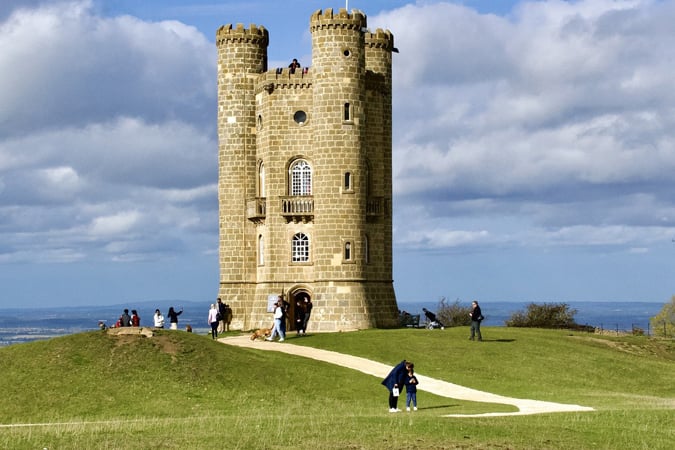
A rather more personal post than usual, though a poem (an older one of my own) is attached to it. Last week, I spent a few days with family in the beautiful village of Blockley, in the Cotswolds. The weather was very good for late November and we walked a couple of times – from Broadway up the muddy hill to the folly of Broadway Tower (once frequented by William Morris apparently) and around Hailes Abbey (now a ruin, local lore has it that Thomas Cromwell watched the destruction of the Abbey from a nearby hilltop). Blockley itself is near Moreton-in-Marsh, a place almost destroyed by the volume of traffic flowing through it (even in November), where The Bell Inn was once a favourite of JRR Tolkein, and is supposedly the model for The Prancing Pony in The Lord of the Rings. But Blockley, for me at least, had another powerful ghost haunting it.

As a couple, with young children, we stayed in the village over 20 years ago, in one of the original silk weavers cottages built along Park Road, which looks down over the village and valley. The house was owned by a colleague of mine at the time, Laurence Bowkett. He taught Classics and Latin and often spent the summer vacations away on archaeological digs of various kinds. That must have been the situation then as he’d allowed us to use the house in his absence. His early death, within a year or two of this, was a shock to us all. He had no family of his own and I don’t know what happened to the house later. So, fast forward to 2024, and here we are staying in Blockley again, only partly by coincidence. We have always had good memories of the place and (again, partly by an AirB&B chance) we ended up renting an almost identical cottage in the very same terrace above the village. Indeed, maybe it was the same cottage – I couldn’t remember enough of the details. The layout was certainly the same – the front door in off the road, straight into a little front room, a chilly basement kitchen and upstairs two small bedrooms.

Laurence’s was not the first death of a contemporary I knew well, but it greatly affected me and I tried to express something of this in the poem – an elegy – I wrote for him later. It is called ‘The umbrella and the bay tree’ and it mixes memories of him, his enthusiasms (he had a lot of those – all his students loved him for it), with details from my own family life at the time. It opens with an imagined scene, all his teaching colleagues gathered (as we often did then) in the local pub, remembering him in his absence. The ‘laral gods’ – the Lares – are Classical Roman guardian deities. The laurus nobilis refers to a little bay tree I bought after our first stay in Blockley as a thank you gift . . .

By seven-thirty, you are with us all

tonight in the gloom of The Washington,

though we omit you from every round.

Powerless as laral gods who gave you

no protection, even laurus nobilis,

the bay tree I bought you, proved no use.

Our children were at Infant and Junior School at the time and – to be honest – I can’t now remember if the details the poem goes on to mention are truth or fiction. But Laurence was the kind of guy who’d keep his own books in scrupulous order (as he did with his extensive collection of Marvel comics) so the library setting has always felt right . . .

Today, I searched 570 and 790,

in the Dewey decimal classification

your fingers ran through a thousand times,

for the facts of death and irrepressible life,

as if I looked for you now and you then.

You taught shard-life and careful fieldwork,

the near-dead language of not giving in.

You offered the heroic a modern face,

though death proved the more determined.

You understood lives alter what they touch:

a house, a street, a flowering tree,

for those who know us are not struck dumb,

a library unread the moment we die.

They roar like a lantern with our life inside.

The idea of lives of the dead altering the lives of those they have touched in life is familiar enough, though I was working on my translations of Rainer Maria Rilke around this time and I’m sure his influence is in here. It is not just the remembering of a friend who has passed away, but also that our own perceptions of ‘a house, a street, a flowering tree’, for want of a better word, spiritualises the material object, giving it a life, a light, an existence, beyond the ordinary. The resurrection of the bugs stomped by my daughter in what follows is probably an allusion to the early primitive computer games the kids used to play in which a failed – hence fatal – leap from a high building would result only in a brief ‘death’ and their 1st person avatar would soon revive and carry on in pursuit of adventure.

In Hornsey Central at 570

this morning, I found books to undermine

my daughter’s smiling confidence

that bugs she crushes beneath her shoe

lie dead a while, then revive good as new.

At 790, I leafed through life and death

in Ancient Egypt for her older brother:

how they wash their dead in water and oil,

then bind them in linen smeared with gum

and priests wrap lucky charms inside

in hope that none will break the seal

till the dead themselves in time of need.

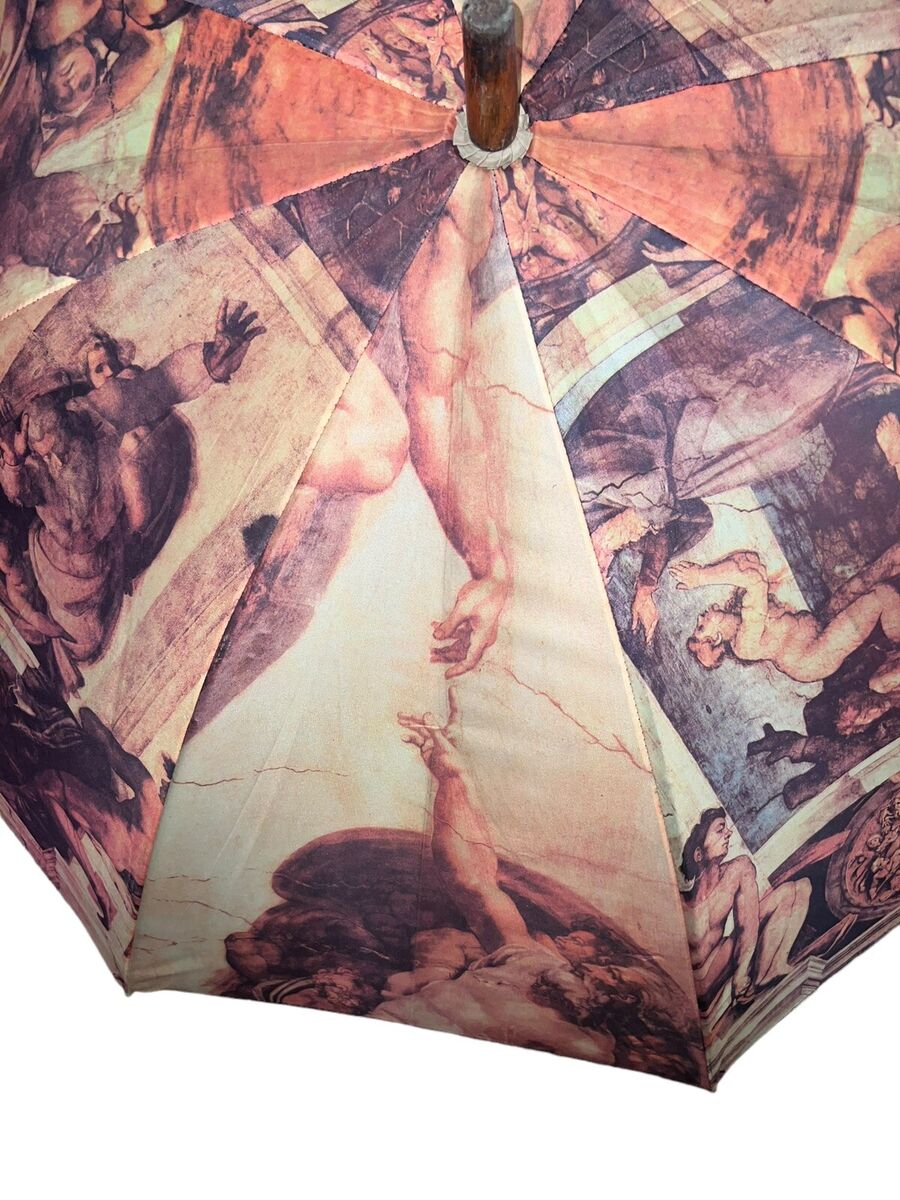
The ‘lucky charms’ idea naturally led the poem on to what I myself might place in a good friend’s sarcophagus and gave rise to a list of his multifarious likes and loves, concluding with the heartfelt wish that his (prematurely unhirsute) head might – even in death (though he had no religious belief as far as I know) – remain somehow protected. The image on the underside of Laurence’s umbrella is a truth!

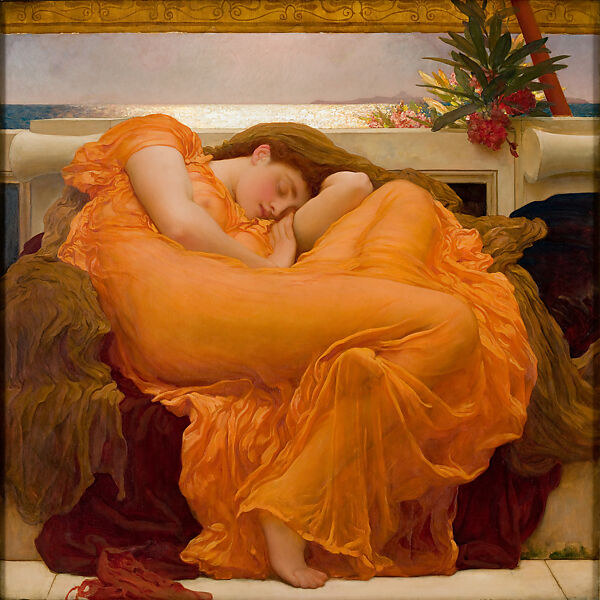
Then I’ll wrap Homer for you, Wolves black-

and-gold, your Micra, Marvel, Blockley

and booze, moist, sweet cake for the road,

Frederick Leighton, Sir Frankie Howerd,

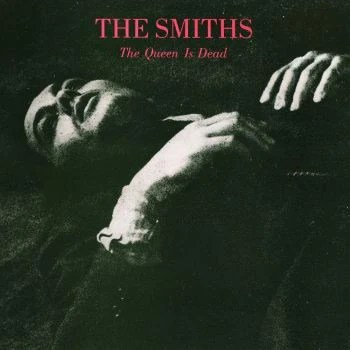
Wisden, The Smiths and that Italian umbrella

you flourished one day and thundered open –

behold! the Sistine roof appeared

to keep your bald head from the hissing rain.

‘The umbrella and the bay tree’ was originally published in An English Nazareth (Enitharmon Press, 2004).

‘Letter to my Younger Self’ – a third brief Royal Literary Fund talk

As a Royal Literary Fund Fellow based at The British Library in London (though working on-line for the most part), I was asked way back in May 2020 (feels like a different world) to write and record three brief talks. One of these was on ‘Writing and Technology’ which I posted (as text and audio file) on this blog a few months ago. Another commision was to be titled ‘How I Write’ – not an easy subject on which to be clear and succinct but with a little help from WH Auden and Louise Gluck I hope I managed to say something that might be of help to all kinds of writers – poets, novelists and (the target audience of the RLF project) those writing at the varied levels of academe.You can read my blog (and hear me read the essay) here. The third and final essay was an intriguing invitation to write a ‘Letter to My Younger Self’. The recording of that piece has now been released and is available as an audio file on the RLF’s VOX site. You can read the Letter below – or listen to me read it by clicking here – or both at the same time if you’d like. Afterwards I have also posted a poem relevant to that particular biographical moment. An earlier version of this poem first appeared, a long while back, in The London Magazine.

Letter to my Younger Self

Dear Martyn,

You will have just got off the train from London Bridge. It’s 1976. The end of a day studying Medicine which you begin to hate. And now back to Eltham Park, to digs you’ve loathed since you arrived (the well-meaning landlady is no substitute for your mother). Probably you walked past that little music shop somewhere near the station, spending minutes gazing at the red sunburst acoustic guitar in the window. If it doesn’t sound too weird, I can tell you – you’ll buy it and strum on it for 10 years or more. I can also confirm your fear: you fail your first-year exams. The Medical School allows you to leave . . . But listen, that sense of failure and lostness, it will pass.

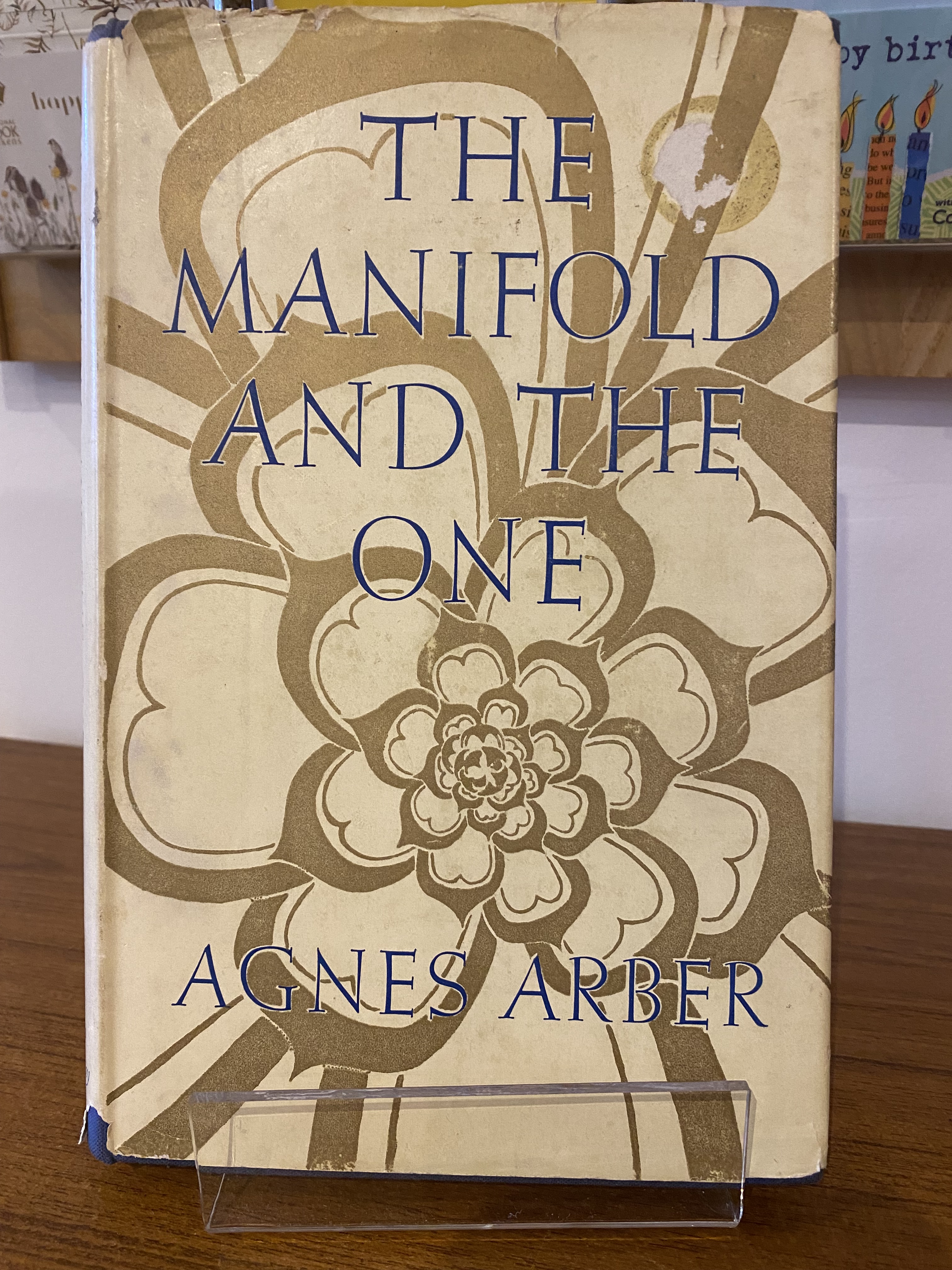
Keep on with the music, though your playing is not up to much and your singing . . . well, the less said. But writing songs will eventually lead somewhere. And the illicit books! You are supposed to be reading the monumental Gray’s Anatomy, textbooks on Pharmacology, Biochemistry, all emptying like sand out of your head. You’ve yet to go into that charity shop and pick up a book called The Manifold and the One by Agnes Arber. You’ll be attracted by the philosophical-sounding title; in your growing unhappiness at Medical School you have a sense of becoming deep. The questions you ask don’t have easy answers. You have a notion this is called philosophy. Amidst the dissections, test tubes and bunsens, you’ll find consolation in Arber’s idea that life is an imperfect struggle of “the awry and the fragmentary”.

And those mawkish song lyrics you are writing? They will become more dense, exchanging singer-songwriting clichés for clichés you clumsily pick up from reading Wordsworth (you love the countryside), Sartre’s Nausea (you know you’re depressed) and Allan Watts’ The Wisdom of Insecurity (you are unsure of who you are). Up ahead, you take a year out to study English A level at an FE College. Your newly chosen philosophy degree gradually morphs into a literature one and with a good dose of Sartrean self-creativity (life being malleable, existence rather than essence) you edit the university’s poetry magazine, write stories, write plays, even act a little (fallen amongst theatricals!).

At some point, the English Romantic writers get a grip on you, taking you to Oxford where you really do conceive of yourself as a poet, get something published, hang out with others who want the same. Then guess what – for a teenager who’d so little to say for himself in class – teaching becomes a way of continuing to study and write while making a living. It suits. It takes us out of ourselves.

Along the way, you write some poems you are proud of. You will suffer the writer’s curse, of course: the recurrent fear of not being able to turn the trick again. But I’m sending you this to say, through all the years ahead, it is words that will infinitely enrich your life. So pick up the pad you doodle on in lectures. Write a line. Write another line. I see you hunched over a dim-lit desk, but no question – yes – you are heading in my direction.

With best wishes,

Martyn

x

How to fail at anatomy

x

This one believed

he maybe had the brains

another that he had

the right demeanour

x

but the Schools denied him

till it was too late

then reprieved him

with the offer of a place

x

that by then he knew

could not be refused

(such anticipation

had struck such roots)

x

so he has no recall

of the moment of choice

before those appalling

digs in Eltham

x

where he had to stow

his dislocated skeleton

under the bed—crammed

one side of his head

x

with tendons muscles

and pharmacol

with biochem and

bright sets of nerves

x

everything spilling out

the other side

into failure—fallen

to wandering streets

x

to stealing Everyman’s

Selected Wordsworth

he was John Stuart Mill

wishing his soul

x

saved though he felt

love etiolating

the girl from home

now a girl from home

x

her kisses like shrugs

at London Bridge

saying go your own way

at least not imposed

x

not merely allowed

and if you want to live

deliberately first

you slit the shroud

‘How I Write’ – a second brief Royal Literary Fund talk

As a Royal Literary Fund Fellow, I was asked in May 2020 to write and record three brief talks. One of these was on ‘Writing and Technology’ which I posted (as text and audio file) on this blog a few weeks ago. Another commision was to respond to the intriguing invitation to write a ‘Letter to My Younger Self’. The recording of that piece is still in the RLF pipeline, but the third of these short pieces has now been made available as an audio file on the RLF’s VOX site. The given topic of this newly published piece is ‘How I Write’ – not an easy subject on which to be clear and succinct but with a little help from WH Auden and Louise Gluck I hope I have said something here that might be of help to all kinds of writers – poets, novelists and (the target audience of the RLF project) those writing at the varied levels of academe.

So – you can hear me reading the piece here.

Alternatively – or both at the same time if you’d like – you can read it below.

How I Write

Always I have to commit something to paper as soon as possible after the initial inkling of a poem. Most writers use notebooks. Some use audio recorders, others their phones. Though first drafts are always terrible, what I’m doing is laying a path back towards the first emotional impulse, a way for myself to return there. You’ll often find me re-reading notebooks to pick up such trails among barely readable, fragmentary scribbles.

These scraps are what may develop into poems. I like W. H. Auden’s view of the poem as a “verbal contraption”. It reminds me a poem (actually, any piece of writing you are doing) is a purposeful device. It needs to be an effective device and poems look to impact a reader’s feelings. This view downplays one of the commonest stumbling blocks about creative writing, which is that what poets try to do is express their own inner moods. If that’s all I focus on, I’ll pay too little attention to the writing’s receiver, my reader.

Anyway, what I want ‘to express’ is seldom fixed at this stage. It’s important I’m willing to add on – simply write more connected material – even beyond the point at which I might think the job done. That tempting voice claiming early completion may be a lazy demon or a censoring one. It’s my practice at this stage to draft loosely, with as much energy and freedom as possible. If I watch children playing, I see them enjoying an excess of energy, movement, voice, and it’s out of this that real creativity arises – new moves, ideas, developments, reformed, revised, played again, played better. So in writing, spinning off new phrases or metaphors leads not only to decorative grace-notes but often to the still-hidden, true heart of the poem. This is why poets often talk of writing as a process of discovery.

For me, most of these stages still take place using pen and paper. The shift to a screen, a keyboard remains a critical transition. On screen, or on a phone, typed lines acquire an inertial resistance to being changed. On screen, I find my eye starts to narrow down to look at the poem’s physical shape and appearance on a would-be page. Such aspects are important in the long run, but they can prematurely cool the fluidity of the molten drafting process if they dominate too early. Beware the linearity of the screen!

But once it’s there, now I’m thinking ‘economy’. A linguistic cosmetic surgeon, I cut off verbal flab, repetition, redundancy. Crossing out is my most familiar activity. The American poet, Louise Gluck, says that a writer’s only real exercise of will “is negative: we have toward what we write the power of veto”. One of the keys to this is reading aloud. I go the whole hog: standing as if to deliver to an audience. Loud. And. Clear. This helps me listen to rhythm and line breaks. Actually, for any writer of poetry, prose, essays for your course, reading aloud highlights stumbling blocks of all kinds. My sense of the ebb and flow of a poem is always clarified because I distract myself in the physical act of standing and speaking. I experience my words more objectively, more as my potential reader would. Try it. It’s a revelation!

The Writer and Technology – a Royal Literary Fund brief talk

As a Royal Literary Fund Fellow, I was asked in May 2020 to write and record three brief talks. One of these was a ‘Letter to My Younger Self’ and another piece was entitled ‘How I Write’. These two recordings are still in the RLF pipeline, but the third of these has now been made available as an audio file on the RLF’s VOX site. The given topic of this published piece is ‘The Writer and Technology’ – a subject about which I have some experience in relation to the former and not a huge competence in relation to the latter. Nevertheless, I’m not one to duck a challenge.

So – you can hear me reading the piece here.

Alternatively – or both at the same time if you’d like – you can read it below.

Writing and Technology

It frightens me: she gives with one hand and takes away with the other. I become too monogamous. I don’t look up. I google recipes using oregano or the name of the drummer in Coltrane’s 1960s quartet. I love her library of reference all within clicking distance. I email friends, family, writers, publishers (I remember stamps and letterboxes with no fondness). Zoom, Microsoft Teams, FaceTime make it a breeze to stay in touch, offer advice, give poetry readings to people around the globe. I’m never lost; I use Google maps. I post and follow on Twitter, Instagram, FaceBook. All this she gives me.

And most days I crave her distractions, her sensational sweep of sights and sounds, her informational vistas at the swipe or dab of a fingertip. I substitute longer, slower satisfactions with a preference for her novelties. Though I’ve read about how our cultural (and fiscal) economies promote such transitory stabs at contentment in the absence of other satisfactions, still – I can seldom resist. I do glimpse vicious cycles – her short-lived pleasures liable to collapse, disappointing anticipation – yet I play her perfect subject, eyes flicking without rest from screen to screen. I do not look up. Her multitudinousness spawns my passive respect for numbers, speed, spectacle, calculation, all of which barely disguises the non-event. I attend with others – but spend as much time watching a screen as the performance. I still tell my friends: I was there, it was huge, so many people . . .

She makes me fear something’s missing. Addicted to her click bait, I love her machines in their elegant black and silver. They seem to promise to breach the ancient laws of time and space. Yet having acquired the newest devices with which I calculate, communicate, translate, find millions of pages of information, actually, I can’t remember what it was I hoped to do with them.

Sometimes I remember. What she interrupts – with her shows of pleasure, power, riches, praise – is the creative impulse to look up, observe (look out!). Once this ceases – prophetically, the poet Shelley said this back in 1821 – new imagery stops being generated, language withers and dies. Only in my relations with the world (not with her) am I truly warmed. Then I’m the matrix through which the world steps – as the world becomes the matrix through which I step – to rediscover myself not ‘me’ (an atom in an empty universe), but ‘mine’ (living in relation to others, other things).

When I leave her, often there’s the startling beauty or strangeness of scenes that draw me away from my ‘self’. Perhaps for a moment, I’m lost for words. It’s not enough to take a picture, post it up, surround it with talk, comments, likes, shares. Poetry expresses such sensations as record, reminder, model and vicarious experience for its readers. Using form, figurative and musical language, I write to re-present such ineffable, inexpressible moments. The French poet and philosopher, Yves Bonnefoy, says: poetry is not about something but it restores the self to the lucid intensity of the truth of relational experiences.

The Coherence of Rilke’s ‘Letters to a Young Poet’

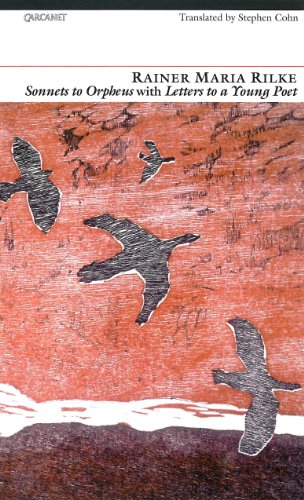
Last week I was invited to take part in an on-line discussion about Rilke’s Letters to a Young Poet, written to a young would-be poet in the early 1900s. This event was organised by the Kings Place group, Chamberstudio, and the panel included two other poets, Martha Kapos and Denise Riley, musicians Mark Padmore, Amarins Weirdsma and Sini Simonen and composer Sally Beamish. We had such a fascinating discussion on Rilke’s advice to young artists (though perhaps we hardly scratched the surface) that I wanted to re-visit it and re-organise my own thoughts about the letters; hence this blog post. Though warm in tone and supportive, the letters are a way of Rilke talking to himself, developing coherent ideas that can be traced through the New Poems (1907/8), Requiem to a Friend (1909), even to the Duino Elegies and Sonnets to Orpheus of 1922. I am quoting throughout from Stephen Cohn’s translation of the letters, included in his translation of Sonnets to Orpheus (Carcanet, 2000).

Rilke’s advice to Franz Kappus was evidently received with gratitude as the correspondence between them continued (if sporadically) from early 1903 to December 1908. We don’t have Kappus’ side of things, but from Rilke’s comments it’s clear the younger, aspiring poet’s letters were remarkably open, even confessional in substance, as suggested by the published letters’ recurring observations about sexual relations. But as for practical advice to a young poet, Rilke offers little, opening with, “I am really not able to discuss the nature of your poems” to “You ask if your poems are good poems . . . You doubtless send your poems out to magazines and you are distressed each time the editors reject your efforts . . . my advice is that you should give all that up”. Probably not what Kappus hoped to hear, though he will have quickly understood that Rilke has more profound points to make. But it means these letters ought to be read less as advice to aspiring writers and more as advice on the best ways to ripen (Rilke’s metaphor) the inner self, a consequence of which might be the conviction that creative work was a necessity for the individual. Peter Porter once suggested a better title for the sequence would have been, ‘Letters to a Young Idealist’ (Introduction to Cohn’s Carcanet translation).

download
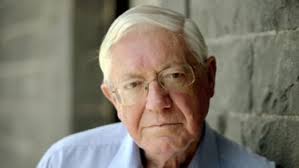
Peter Porter

The advice given is carefully positive – what to seek – and fulsomely negative – what ought to be avoided. Friendly and remarkably sympathetic as his tone is through the series of letters, what Rilke asks, in truth, is extraordinarily demanding for mere ordinary mortals. Rilke urges a priest-like devotion to his High Romantic, Godless programme. In brief, what is to be sought is a clear, honest and open relationship with one’s own inner life and that demands a corresponding avoidance of everything that might distance us from it, especially the pernicious influence of social and cultural conventions, what has been thought, said, written or done before. Rilke makes no bones about how difficult the former is and how frightening the latter is going to feel.

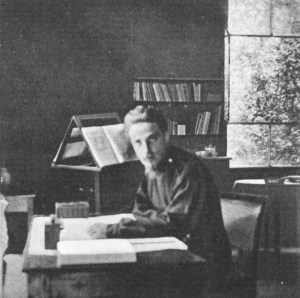
Rilke at his writing desk

The only way, Letter 1 insists, is to “go inside yourself”. And in Letter 3, we need to “allow each thing its own evolution, each impression and each grain of feeling buried in the self, in the darkness, unsayable, unknowable, and with infinite humility and patience to await the birth of a new illumination”. For reasons discussed later, there has to be a degree of passivity about this process: we must “await with deep humility and patience the moment of birth”. In his reply, Kappus must have enumerated the pain and suffering he was experiencing as a young man because Letter 8 spins this positively: “did not these sorrows go right through you – and not merely past you? Has there not been a great deal in you that has changed? Were you not somewhere . . . transformed while you were so sorrowful?” These often rough inner weathers of our emotional lives are precisely what is required. Only then, “something unfamiliar enters into us, something unknown; our senses, inhibited, and shy, fall silent; everything within us shrinks back, there is silence, and at its centre this new thing, strange to us all, stands mutely there”. In one of several memorable images, Rilke explains, through such emotional experience (the pains as much as, or even more than, the pleasures) “we have been changed as a house changes when a guest enters it”.

Those familiar with Keats’ ideas (expressed in his 1819 Letters) about the world as a ‘vale of soul-making’ will find something very familiar here. But Rilke’s take on the process of ‘spirit creation’ lays far heavier emphasis on the need for solitude to achieve it. Letter 5 tells Kappus, “win yourself back from the insistence of the talk and the chatter of the multitude (and how it chatters!)”. The chattering world is a distraction from what ought to be the subject of our study (our inner selves): “What is required is this: solitariness, great inner solitariness. The going-into oneself and the hours on end spent without encountering anyone else: it is this we must be able to achieve” (Letter 6). Such solitude enables greater concentration but also more true (uninfluenced) perception of our inner life. Yet to turn away from so much that is familiar will be frightening. In Letter 8, Rilke compares this to someone “plucked from the safety of his own small room and, unprepared and almost instantaneously, set down upon the heights of some great mountain-range”. What must then be experienced is “a never-to-be-equalled sense of insecurity, of having fallen into the power of something nameless [and this] would virtually destroy him”.

The negative influences of those (us, the timid majority) who have pulled back from such a state of perception is explained. Rilke’s basic tenet is that we are all “solitary”. But the uncertainty of a ‘true’ perception of this is too much for most people: “mankind has been pusillanimous in this respect [and] has done endless harm to life itself: all phenomena we call ‘apparitions’, all the so-called ‘spirit-world’, death, all these things so closely akin to us have been fended off . . . and so thoroughly purged from our lives that the senses by which we might have grasped them have atrophied. To say nothing at all of God”. What Rilke describes here are a number of the conventional ideas – pure figments about the truth of spirituality, death and a deity – that people have populated their world with in seeking greater security. Kappus is told, “a perilous uncertainty is so very much more human” and the truly human, let alone the ambitious poet, must accept the principle that “we arrange our lives in accordance with the precept that teaches us always to hold to what is difficult – then everything that still appears most alien will become all that is best-trusted, most dependable”. Rilke’s chosen metaphor here is the folkloric/mythic image of the terrifying dragon that turns into a rewarding princess at the last moment.

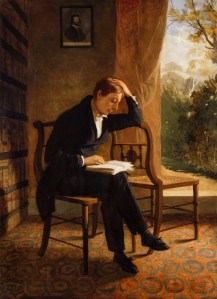
John Keats in Hampstead

Herein lies also the wisdom of passivity. As Keats argued in parallel, with his idea of negative capability (the knack of remaining “in uncertainties, mysteries, doubts, without any irritable reaching after fact and reason”), so Rilke’s fourth Letter advises Kappus not to seek out answers now but to “love the very questions, just as if they were locked-up rooms or books in an utterly unknown language”. The key is to “live them” by which Rilke (like Keats) means to examine and attend to them as fully as possible. He goes so far as to advise a child-like incomprehension (which is at least based on an openness to the questions asked) over a cowardly defensiveness or contempt (which falls back on a distancing from those questions). This is why, in Letter 2, he sharply advises Kappus to avoid irony. There are, says Rilke, “great and serious subjects before which irony stands helpless and diminished” because irony is, by definition, a standing outside of a question or topic. For the same reason, Rilke distrusts engagement with literary or aesthetic criticism (precisely what Kappus has asked of him in relation to his own poems). Letter 3 argues such critical discussions are “received opinions, opinions grown petrified and meaningless, insensitive . . . clever word games”, hence far distant from life itself. The same Letter suggests the artist needs to retain an innocence, even a lack of awareness of his/her creative powers, lest self-consciousness diminish freedom and “purity”. Indeed language itself – the common method of exchange between people – is suspect in representing, in its unexamined use, conventional thought and feeling: “it is so often on the name of a transgression that a life is shipwrecked, and not on the individual, nameless act-in-itself”.

Even these letters, Rilke says in Letter 9, need to be treated with caution and patience: “receive them quietly and with not too many thanks, and let us, please, wait and see what may come of them”. This is a warning not enough heeded by subsequent generations of readers, but Rilke’s real humility is re-emphasised at the end of the preceding Letter. Perhaps feeling he has been delivering advice from ‘on high’, Rilke warns Kappus, “do not believe that he who seeks to console you dwells effortlessly among the quiet and simple words which sometimes content you. His own life holds much trouble and sorrow, and it falls far short of them”. Surely Rilke is not merely alluding here to the life of the creative artist. Prompted, as I have said, by Kappus’ own openness about what we might call ‘romantic’ aspects of his own life, Rilke devotes a lot of space to interpersonal relationships in these letters. His point in Letter 7 is that this area of human life too is poisoned (“well-furnished” – this topic brings out Rilke’s satirical side) with conventional thinking and language: “here are life belts of the most varied invention, boats and buoyancy packs . . . safety aids of all conceivable kinds”. Such ‘safety’ features are more fictions designed to forestall a true encounter with the kinds of questions that human relationships inevitably throw up. Letter 3 particularly criticises male sexual attitudes (lustful, drunken, restless, arrogant, prejudiced) and Letter 7 anticipates a “new and individual flowering” of female sexuality which will lead to relationships not defined as male/female but as “one person and another person”.

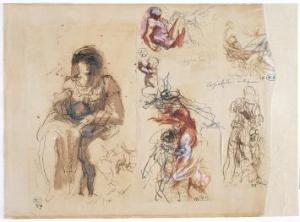
Some of Rodin’s sketches

Such a renovation of individuals, from the inside out, is the urgent call of this series of letters. As to advice to Kappus the wannabe writer, Rilke offers very little, but what he does suggest is wholly in keeping with his other ideas. Letter 1 urges close observation as the only viable method. As I have made clear, this is especially close observation of our inner lives. But one’s whole life needs to be built around this principle, so “you must approach the world of Nature… try to tell of what you see and experience”. Rilke says don’t try to write love poems or on other common subjects of poetry. This is because they will be infected with those conventions of thought and expression I have discussed above. Rather, “favour the subjects which your own day-to-day experience can offer you”. The poet’s approach to such everyday subjects needs to be “quiet, humble, [with] passionate sincerity” to avoid clichés of thought and feeling, hand-me-down solutions or worn out, petrified language. These are the methods Rilke learned from watching Rodin sketching in Paris. Pre-empting likely objections that such an approach would produce work of little importance, Rilke goes on: “If your daily life seems mean to you – do not find fault with it; rather chide yourself that you are not poet enough to evoke its riches” (Letter 1).

The everyday is rich and complex enough for Rilke without any irritable searching after more conventionally dramatic, sensational, controversial subjects to address. The images that Letter 3 associates with this humble creative process is of gestation (“to carry, come to term, give birth”) and the slow growth of trees (“letting the sap flow at its own pace”). In Letter 6 he compares it to bees gathering honey (“drawing what is sweetest from all that there is”). Whether focusing within or without, the artist must begin from what is “unremarkable” and we become better acquainted “with things” and if this is too frightening a prospect – with no off-the-shelf solutions to human fears and insecurities, no God above all – Rilke has few comforts to offer the young poet. As regards God (or, as letter 6 refers to him, the “one who never was”), Rilke allows the idea of God only as the ideal or terminus towards which we travel, a state of full comprehension – through knowing humble things: “Does he not have to be the last, if everything is to be comprehended in him? And what meaning would there be in us, if the one we crave had already been there?”. God, for Rilke, does not pre-date us as an origin. He is the goal towards which we travel, aspire, build, create – ‘he’ is no more nor less than our fullest comprehension of life and death, hence our fullest sense of being in the world.

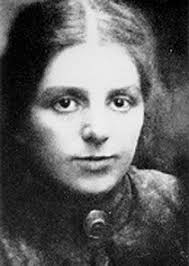
Paula Modersohn-Becker

That the young Franz Kappus, after all this, decided to pursue a military career rather than a creative one is perhaps hardly surprising. It may be that the former presented the least frightening option! Rilke asks such a lot. His poem Requiem to a Friend of 1909 (the year after his correspondence with Kappus came to an end), dwells on the “old enmity / between life lived and great work to be done” (tr. Crucefix). The tragic lament of that particular poem arises from his conviction that the subject of its in memoriam, the painter Paula Modersohn-Becker, had proved herself strong enough to carry forward the huge burden of being an artist and that, therefore, her untimely death (just after the birth of her first child) was an irreparable loss to a world that needs all the true artists it can nurture.

Everything Moving: Tamar Yoseloff’s ‘The Black Place’

Last week I attended the launch of Tamar Yoseloff’s new collection, published by Seren Books. Tammy and I have known each other for a long while, are both published by Seren and, in her role at Hercules Editions, she has just published my own recent chapbook, Cargo of Limbs. So – in the small world of British poetry – I’m hardly an unconnected critic, but I have the benefit of having followed her work over the years, reviewing her most recent New and Selected, A Formula for Night (2015) here.

In an earlier blog post, I spoke – in rather tabloid-y terms – of the tension in Yoseloff’s poems between the “sassy and the sepulchral”. In 2007’s Fetch (Salt), there were “racy, blunt narratives” which in their exploration of female freedom, restraint and taboo made for vivid, exciting reading. The other side of her gift inclines to an “apocalyptic darkness”, a preoccupation with time, loss, the inability to hold the moment. In A Formula for Night, the poem ‘Ruin’ invented a form in which a text was gradually shot to pieces as phrases, even letters, were gradually edited out, displaying the very process of ruination. Interestingly, The Black Place develops this technique in 3 ‘redaction’ poems in which most of a text has been blacked out (cut out – see Yoko Ono later), leaving only a few telling words. A note indicates the source text in all three cases was the booklet Understanding Kidney Cancer and the author’s recent experience of illness is an important element in this new collection.

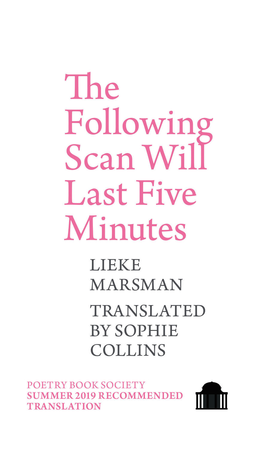
But unlike, for example, Lieke Marsman’s recent The Following Scan Will Last Five Minutes (Pavilion Poetry, 2019 – discussed here), Yoseloff’s book is not dominated by the experience of illness (and one feels this is a deliberated choice). The book opens with ‘The C Word’ which considers the phonetic parts of the word ‘cancer’, as well as its appearance: “looks like carer but isn’t”. But – within its 12 lines – Yoseloff also considers the other C word, “detonated in hate / murmured in love”. The poem is really about how an individual can contain such divergent elements, “sites of birth / and death”. So unanticipated personal experience is here being filtered through the matrix of this writer’s naturally ambivalent gift.

Illness re-emerges explicitly later in the collection, but for much of it there is a business as usual quality and I, for one, am inclined to admire this:

I refuse the confessional splurge,

the Facebook post, the hospital selfie.

I’m just another body, a statistic,

nothing special. Everyone dies –

get over yourself.

So Yoseloff gives us a marvellous send-up of Edward Thomas’ ‘Adlestrop’ in ‘Sheeple’, a central place on the darker side of Yoseloff-country: “The heartland. Lower Slaughter”. There is urbanite humour in ‘Holiday Cottage’ with its “stygian kitchen”, bad weather, boredom and kitsch:

We stare at the knock-off Hay Wain

hung crooked over the hearth

and dream of England: the shire bells,

the box set, the M&S biscuit tin

‘The Wayfarer’ is one of many ekphrastic poems here – this one based on a Bosch painting – but the “sunless land” is patently an England on which “God looked down / and spat”. These are poems written in the last 3 years or so and, inevitably, Brexit impinges, most obviously in ‘Islanders’ (“We put seas between ourselves, / we won’t be rescued”) but the cityscape equally offers little in the way of hope. There is a caricaturing quality to the life lived there: everything “pixilates, disneyfies” (‘Emoji’) and gender relationships seem warped by inequitable power, by self-destructive urges and illness: “I’d super-shrink my dimensions, / wasting is a form of perfection” (‘Walk All Over Me’).

Perhaps ‘Girl’ shows us the figure of a survivor in such a hostile environment, her energy reflecting those female figures in Fetch – “a slip, a trick, a single polka dot” – but the darkness seems thicker now, the lack of lyricism, the impossibility of a happy ending more resolved:

She’s good for nothing because nothing’s

good: sirens drown out violins

and crows swoop to carnage in the street.

As the blurb says, the book boldly eschews the sentimental sop, the capitalist hype, for truths that are hard, not to say brutal. ‘Little Black Dress’ takes both the archetypal ‘girl’ and the author herself from teen years to widowhood in a dizzyingly rapid sonnet-length poem:

drunk and disorderly, dropping off bar stools one

by one, until the time arrives for widow’s weeds

and weeping veils, Ray-Bans darkening the sun.

And it is – unsurprisingly – mortality (the sepulchral) that eventually comes to the fore. A notable absence is the author’s mother, who has often been a powerful presence in previous books. Here she re-appears briefly in ‘Jade’. The stone is reputed to be efficacious in curing ailments of the kidneys and a jade necklace inherited from Yoseloff’s mother leads her to wonder about the inheritance of disease too: “a slow / release in her body, passed down, // down”. Both parents put in a fleeting appearance in the powerful sequence ‘Darklight’, the third part of which opens with the narrator standing in a pool of streetlight, “holding the dark / at bay”. She supposes, rather hopelessly, that “this must be what it’s like to have a god”. Not an option available to her; the dark holds monsters both within and without and not just for the child:

                                                Back then

my parents would sing me to sleep;

now they’re ash and bone. Our lives are brief

like the banks of candles in cathedrals,

each a flame for someone loved;

It’s these thoughts that further the careful structuring of this collection and return it to the experience of a life-threatening illness. ‘Nephritic Sonnet’ is an interrupted or cut off – 13 line – sonnet that takes us to the hospital ward, the I.V. tubes and – as she once said of the city – the poet finds “no poetry in the hospital gown”. Except, of course, that’s exactly what we get. The determination or need to write about even the bleakest of experiences is the defiant light being held up. Yoseloff does not rage; her style is quieter and involves a steady, undeceived gaze and also – in the sequence ‘Cuts’ – the powerful sense that (as quoted above) “I’m just another body, a statistic, / nothing special. Everyone dies”.

It’s this sense of being “nothing special” that enables ‘Cuts’ dispassionately to record very personal experiences of hospital procedures alongside the contemporaneous facts of the Grenfell Tower fire and (another ekphrastic element) a 1960s performance piece by Yoko Ono called ‘Cut Piece’. These elements are ‘leaned’ against each other in a series of 13 dismembered sonnets, each broken up into sections of 6/3/4/1 lines. The fragmentary, diaristic style works well though there are risks in equating personal illness with the catastrophic accident and vital political questions surrounding Grenfell. Ono’s performance piece offers a further example of victimhood, one more chosen and controllable perhaps. What’s impressive is how Yoseloff avoids the magnetic pull of the ego, displaying – if anything – a salutary empathy for others in the midst of her own fears.

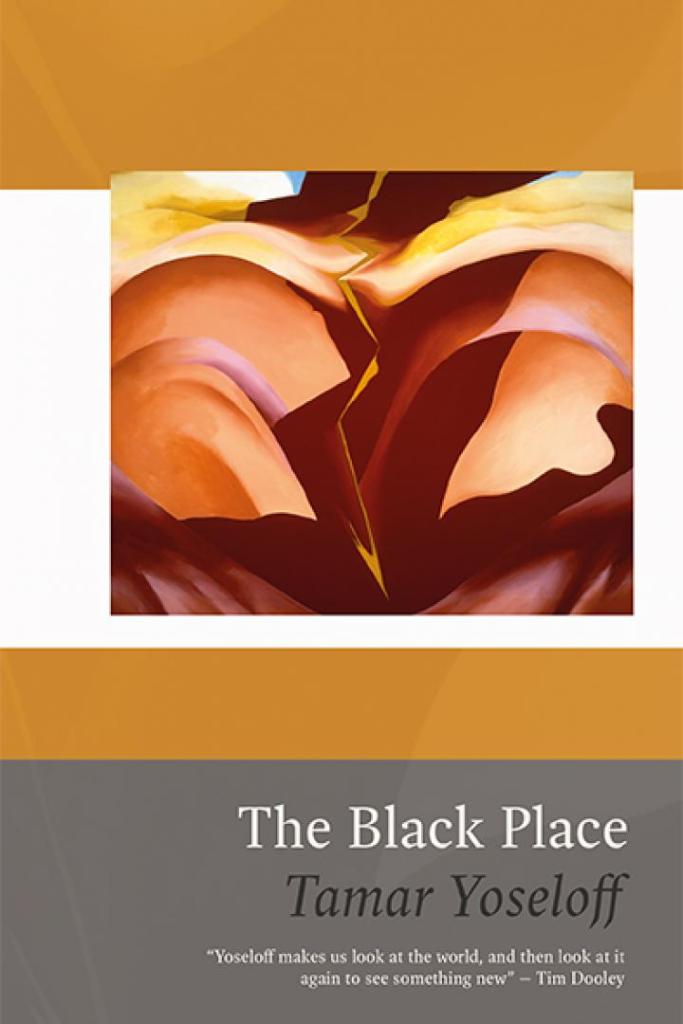
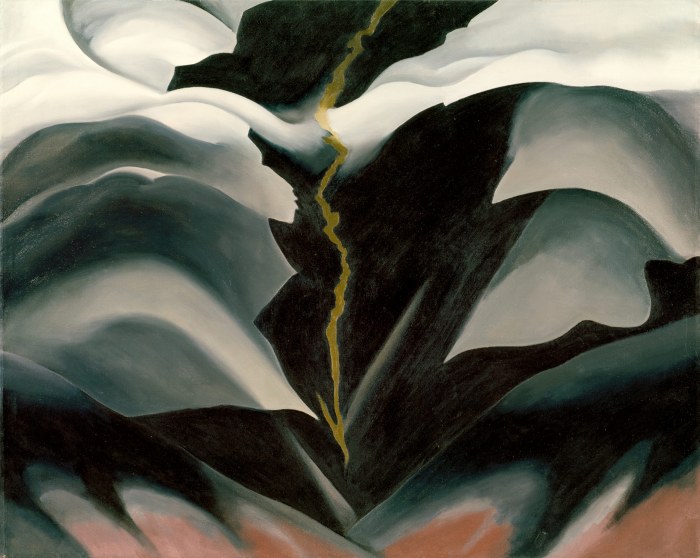
The book is titled after a Georgia O’Keefe picture, reproduced on the cover. O’Keefe’s steady gaze into the darkness created by the jagged relief of the Navajo country is something to which Yoseloff aspires, though it “chills me / just to think it into being”. It is the ultimate reality – a nothing, le néant – though like the ultimate presence of other writers (Yves Bonnefoy’s le presence, for example), can at best only be gestured towards:

We’ll never find it; as soon as we arrive,

the distance shifts to somewhere else,

we remain in foreground, everything moving

around us, even when we’re still.

Along such a difficult path, Yoseloff insists, O’Keefe’s art found “the bellow in a skull, / the swagger in a flower”. And, even in the most frightening brush with her own mortality, the poet will follow and does so in a way that is consistent with her own nature and work over many years.

A Robert Frost Primer or ‘All Life is Cellular’

A few weeks back, I was asked to contribute to an afternoon event in Palmers Green Library, north London, with the title – from Robert Frost’s poem – ‘The Road Not Taken’. It was introduced by Maggie Butt, with readings of their own poetry around the theme by Mark Holihan and Denise Saul. I was also asked to deliver a few thoughts on the work of Robert Frost. What follows is an edited transcript of what I said then and I think of it as a basic introduction for the general reader to Frost’s work and some of the ideas which I see recurring in it. As previous posts have mentioned, I’ve been teaching Frost for a few years recently – thanks to all those students who made me go back and read the poems again!

Despite the apparent simplicity of many of his poems, the real identity of Robert Frost (1874-1963) is hard to pin down. Though raised in late 19th century America, his first book was published in England. Though on the brink of the Modern, a year before the First World War, these poems used plain language and traditional forms. He loved Europe, befriending Edward Thomas – stirring him from prose into poetry – yet Frost sailed back to the US, to farming, north of Boston. By all accounts he was never a very successful farmer, though he often presented himself as talking downright farmer-like common sense. Some find his work consolatory; but he was famously called a ‘terrifying’ poet, a bleak Modernist.

If all this sounds slippery, then Frost took it into his poetics too. He said that, while writing a poem, he was conscious of saying two things at once. But he always wanted to say the first thing so well that any reader who liked that part of the poem might feel able to rest there. Yet, he implies, for those interested in going further, beyond the particular, overt or explicit meaning – say, two farmers re-building a wall between their properties, a man stopping to watch snow fall in a wood, a mower and a butterfly – there is always an ulterior meaning (at least one) that might also be opened up.

At all levels, such defining walls, barriers and boundaries – physical, mental, spiritual – proliferate in Frost’s work. But his view of them is complex. These walls are often porous. But sometimes they can seem impenetrable. I can’t vouch for the accuracy of his biological knowledge, but here is something else Frost repeatedly jotted down in his Notebooks: “All life is cellular. No living particle of matter however small has yet been found without a skin – without a wall.”

On one side, these secure boundaries seem necessary for a successful life – like the wall round all cellular organisms. He would say: “I want to be a person. And I want you to be a person”. But the dangers are obvious. The cellular wall of identity becomes more than a means of self-definition and grows to become an exclusion zone, a solitary place, a state of solipsism. Many of Frost’s figures and narrators are found to be struggling with this state. Yet Frost’s comments about identity, wanting to be a person, wanting you to be a person, in fact continue: “then we can be as interpersonal as you please. We can pull each other’s noses – do all sorts of things”.

So the presence of these cellular walls do not necessarily hold us back. They are as often porous or permeable. Yet they seem also to offer a firm foundation from which we may reach out, we can humanly interact. We can pull each other’s noses. And there is indeed much pulling of noses in Frost’s poems. In particular, he liked to pull the nose of the person he chose to narrate many of his poems. There is very often an irony at work against the speaker. His poems are often more dramatic than lyric.

We might ask why is Frost so concerned about being a person, about the relative security of identity? Because, in other moods, he knows the dangers posed by the absence of any functioning cellular membrane: the leaking out of personality into the surrounding world, of identity dissipating to become nothing, the risk – as it were – of personal extinction.

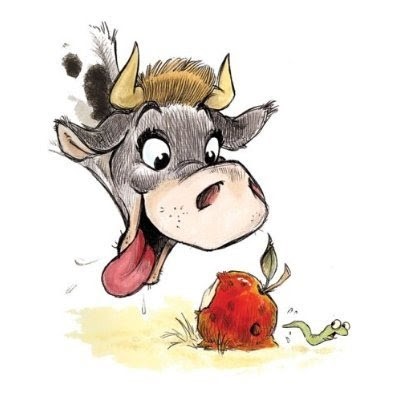
There is a little poem called ‘The Cow in Apple Time’ which (on the face of it) is about a cow who is driven by an unspecified desire to disregard the walls about her pasture. The wall is no more than an open gate to her. She charges through and greedily eats fallen apples, growing intoxicated, her face splattered with apple juice. But in this kind of gluttonous state she grows sick, in pain:

She bellows on a knoll against the sky.

Her udder shrivels and the milk goes dry.

It’s a perfectly satisfying poem about a rural incident – perhaps Farmer Frost, had once witnessed it himself. But there is Frost’s ulteriority too. The cow is consistently described using terms which anthropomorphise her. The wall breaker is perhaps on one level really human, a rebel, a sinner – written in 1914, some have even suggested the cow is an invasive force. However we see her, she is punished for her disregard of, her undervaluing of, those walls and boundaries which perhaps ought to serve to define her life.

Remember this is the same Robert Frost who disparaged the writing of free verse, by many of his more obviously Modernist contemporaries, as trying to play tennis with the net down. The same Robert Frost who disparaged the, then fashionable, interest in Surrealism with its wild leaps over convention, its dislocation of the senses, the shock value of the illogical. For Frost such practices could lead only “to undirected associations and kicking ourselves from one chance suggestion to another in all directions as of a hot afternoon in the life of a grasshopper”.

The cow with the aching stomach is paralleled by a dying peach tree in ‘There Are Roughly Zones’. The narrator has moved “far north” and has transplanted a peach tree and now the northern winter is threatening it. He sits indoors and frets about it, trying to blame the weather rather than himself. But self-criticism arises all the same and it is human “ambition” that gets the blame, that “limitless trait in the hearts of men”. More precisely:

[. . .] though there is no fixed line between right and wrong,

There are roughly zones whose laws must be obeyed.

I love the messy pragmatism implied by “roughly zones”. One of his recurring concerns, Frost said, was with “the impossibility of drawing sharp lines and making exact distinctions” – no red lines, lines in the sand, defined boundaries, but zones of negotiation, places calling for compromise, no fundamental clarity, rather a feeling-out, a region requiring a dialogue.

As in a poem like ‘The Tuft of Flowers’. A man comes to a mown field to turn the cut grass, the hay, to help its drying. He looks about for the man who had earlier mowed the grass:

But he had gone his way, the grass all mown,

And I must be, as he had been, – alone,

‘As all must be,’ I said within my heart

The hermetically cellular, or as we would now say, atomised nature of society seems to be assumed by the narrator. It looks like there is going to be no breaking of boundaries here. But a “[be]wildered” butterfly passes him, looking for flowers that grew there yesterday, now cut down. The butterfly leads him to a “leaping tongue of bloom” left deliberately, out of “sheer morning gladness” by the mower. The narrator hears the message from this “tongue of bloom” which speaks of each man as a “spirit kindred” to the other. It’s as if they now enter into a dialogue, revising the earlier solipsistic observation. Now:

‘Men work together,’ I told him from the heart,

‘Whether they work together or apart.’

There is a rosy-edged hint of sentimentality here perhaps. But the fanciful dialogue between the two men (who actually never meet) represents a successful negotiation into that rough zone between individuals, the cellular membrane is actually permeable, and the result here is consolatory.

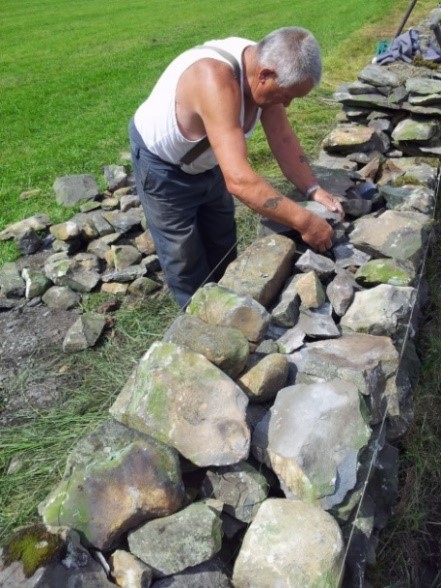
In ‘Mending Wall’, two farmers meet to patrol on either side of a dry-stone wall marking the boundary between their farms. Parts of it are always falling down. They build it back up. But the paradox is that the action of building up what separates them, brings them together each year to perform the task. The wall does not prevent or act as a brake on their relationship – rather it facilitates it – it perhaps is their relationship, what links them. From their respective sides – from their respective identities or persons – they are free to become ‘interpersonal’. But the mischievous, sceptical, modern-minded narrator expresses doubts about the importance of walls, particularly when “He is all pine and I am apple orchard”. His neighbour is a more traditional, unquestioning man, who likes to repeat his father’s advice: “Good fences make good neighbours”. The narrator mocks him (though in silence, in his head) as “an old-stone savage”, lost in actual and intellectual “darkness”. But it is significant that the wall-believer has the last word. For me, it is the moderniser is the one being ironised. If he was a versifier, he’d be trying to write poems with the net down.

Why Frost’s concern with the importance of walls? Because – in still other moods – he has looked into the abyss of experience without them. One example is given in the 16 terrifying lines of ‘Desert Places’. The narrator here seems to have taken the more modern, sceptical wall-mender’s view to heart. It seems there are no bounds here – all have vanished under “Snow falling and night falling fast oh fast”. That note of fear there adds to the nightmare feeling and when the outward-looking eye turns to look within – to find himself – he finds nothing: “I am too absent-spirited to count”. That phrase is an echo of ‘absent-minded’. There is a vacancy within and without – no mind, spirit, self, identity. There is only the concluding, devastating rhymes of “empty spaces . . . where no human race is . . . my own desert places”.  

And if ‘Desert Places’ evokes the desolation of a world viewed in the absence of a relatively secure cell-walled self, then ‘The Most of It’ shows us the horrifying effects of being walled in. In this poem, the narrator “thought he kept the universe alone”. There seems nothing else but him, only a “mocking echo of his own [voice]”. Yet he does remotely feel a desire for dialogue – perhaps just in being human – and does express a desire not for “copy speech. / But counter-love, original response”. But when the universe does eventually break into his consciousness, it arrives not in the form of dialogue or a negotiated relationship but as an utterly alien thing.

It emerges only as a strange, vague “embodiment” that “crashed” and “splashed” towards him and is recognised only by means of a simile. Perhaps it is an elk.

As a great buck it powerfully appeared,

Pushing the crumpled water up ahead,

And landed pouring like a waterfall,

And stumbled through the rocks with horny tread,

And forced the underbrush—and that was all.

There, Frost captures the egoist’s struggle to comprehend what is other than him; followed by the arrogance of his dismissal of it. And perhaps this is a particularly masculine thing. Yet there is no need to attribute these feelings to Frost himself. The speaker is best read as a dramatic representation of one extreme of Frost’s concern for borders and boundaries that are vital for our own selfhood yet must be porous enough to allow for knowledge and experience.

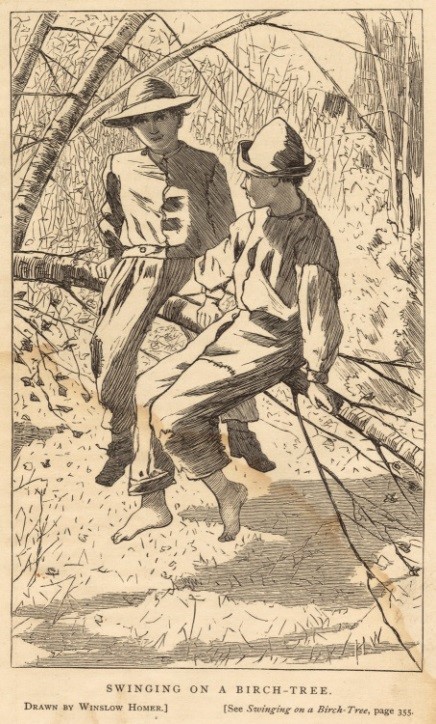
So in ‘Birches’ the narrator remembers – as a boy – climbing slender birch trees, to the top, only to leap out and bend them down with his weight. This swinging of birches can be seen – ulteriorly – as representing Frost’s belief in those negotiated rough zones of a life. We climb up, out of our element, but not too far:

It’s when I’m weary of considerations,
And life is too much like a pathless wood
Where your face burns and tickles with the cobwebs                                   
Broken across it, and one eye is weeping
From a twig’s having lashed across it open.
I’d like to get away from earth awhile
And then come back to it and begin over.
May no fate wilfully misunderstand me                                                              
And half grant what I wish and snatch me away
Not to return. Earth’s the right place for love:
I don’t know where it’s likely to go better.

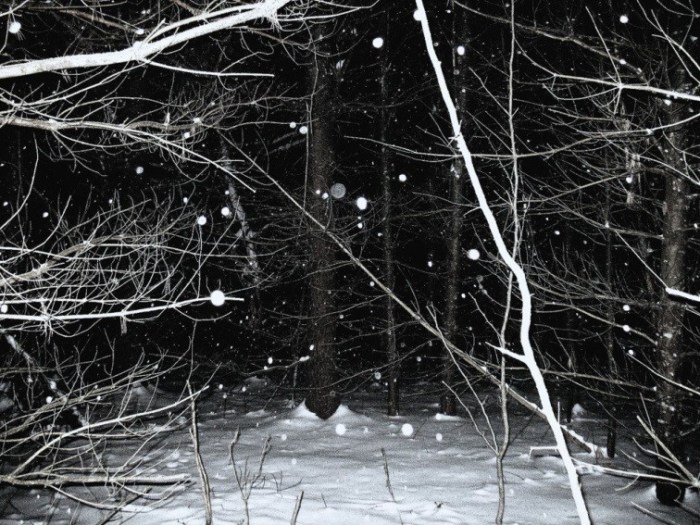
And if we find this frustratingly ambivalent – Frost sitting carefully on the fence – then he often rubs our noses in it. ‘Stopping by Woods on a Snowy Evening’ famously concludes with two lines which are identical. For me, the repetition introduces greater ambiguity into the moment. Does the narrator stop, perhaps to die, entranced by the snowfall? Or does he shake himself up, turn back to his life in the village, his roles and responsibilities?

Whose woods these are I think I know.
His house is in the village, though; 
He will not see me stopping here
To watch his woods fill up with snow.

My little horse must think it queer                                           
To stop without a farmhouse near
Between the woods and frozen lake
The darkest evening of the year.

He gives his harness bells a shake
To ask if there is some mistake.                                                
The only other sound’s the sweep
Of easy wind and downy flake.

The woods are lovely, dark, and deep,
But I have promises to keep,
And miles to go before I sleep,                                                    
And miles to go before I sleep. 

Frost throws the question back to the reader. What Frost knows is that we do not keep the universe alone. We are parts of a whole – but the borderlands are uncertain – sometimes we cross them and lose touch with ourselves, at other times we too easily accept them and fall into egotistical isolation. There maybe be a happy medium – but Frost’s dynamic poems suggest the truth is we can never find and hold to that; we are always involved in the complicated fraught business of negotiation, of swinging birches, of chasing butterflies, of building walls that will promptly fall down again.