This is the second in the series of reviews I am posting over the next two months of the 5 collections chosen for the 2018 Forward Prizes Felix Dennis award for best First Collection. The £5000 prize will be decided on 18th September 2018. Click on this link to access all 5 of my reviews of the 2017 shortlisted books (eventual winner Ocean Vuong), here for my reviews of the 2016 shortlisted books (eventual winner Tiphanie Yanique), here for my reviews of the 2015 shortlisted books (eventual winner Mona Arshi).
The full 2018 shortlist is:
Kaveh Akbar – Calling a Wolf a Wolf (Penguin UK)
Abigail Parry – Jinx (Bloodaxe Books) – click here for my review of this book.
Phoebe Power – Shrines of Upper Austria (Carcanet)
Shivanee Ramlochan – Everyone Knows I Am a Haunting (Peepal Tree Press)
Richard Scott – Soho (Faber & Faber)
Its publisher, Carcanet, describes Phoebe Power’s debut collection like this: “Wandering in central Europe, a traveller observes and records a landscape”. I guess this is meant to conjure the rootlessness and identity-angst of a modern Euro-existentialist but, for me, Shrines of Upper Austria, too often reads like the jottings of a year-abroad student. The posture is almost always of the naif – impressed, even a bit bewildered by the strangeness she finds, yet she tries hard to absorb and/or be absorbed into the foreign culture yet manages little more than a tourist’s view (if one with a striking ability to ventriloquise and a remote familial backstory in that country).
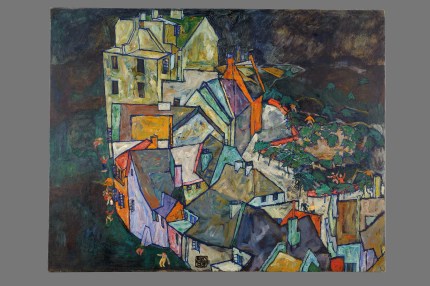
Power raises the humble note or jotting to an ars poetica, often collaging together such “brief records of points, usually used as an aide memoire” into disjointed sequences which don’t gather much cumulatively or possess much divinable direction. One of these has a protagonist in a café, his right hand on the “open pages of an empty notepad”. It’s not the author, of course, but the distanced observation this image implies is what the book mostly offers. Simply because what is being described has a European setting does not make ‘fasching’, for example, very interesting: “at Elli’s schmankerlstube it’s all / drinking and bosners” (End notes translate for us where required: here, a carnival before Lent; a snack bar; a type of sausage). The poem begins with these two lines of verse then resorts to prose for a couple of short paragraphs. There’s drinking, dancing, children, teachers, music and a “multicoloured snake or train of people tooting its bells and flute, curving down the road beneath the green banks and a big sky, the mountains”. I can see such a passage in many a poet’s notebook but the clichés and obvious word choices surely need more working up? And if the improvisatory quality is the point, then I wish the brief apercu had a good deal more striking ‘apercevoir’ about it. Likewise, an ekphrastic poem, ‘children’, baldly describes an Egon Schiele painting while trying to get a bit more emotional leverage with frequent exclamation marks.
The note-taker in the café, appears in the poem sequence, ‘Austrian Murder Case’, which reads like a series of (prose) screenplay notes for an all-too familiar Scandi-noir that the director has torn the best bits out of: a dull quotidian town, a moody disengaged observer, lumpen exposition from the pension owner, a woman’s dismembered body in suitcases in a lake, her husband, the murderer, does himself in at the same time. The note-taking protagonist walks away having gained some “insight into one dramatic story” and for that I’m a bit envious. The best bit of all this is the lake (“the See”) which is personified and perceiving in ways beyond the limitedly human, the humans being left at the end trying to fit bits of the story together. It’s all a bit obvious.
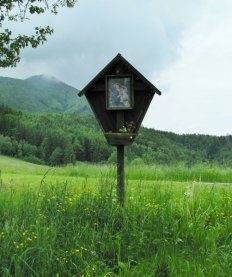
 You will have gathered that one of Power’s things is to mix English and Austrian German. This happens several times in ‘A Tour of Shrines of Upper Austria’ (though in this book we only get 7 parts of the full sequence). An observer stops at various shrine sites, jotting down some thoughts and taking a picture or two. Nothing is developed though Power’s poems do show an interest in religion on several other occasions. ‘The Moving Swan’ opens with a centre-justified prose description of candles flickering in a cathedral and another poem is drawn to the grave of two goats, observing: “two heaps of ivy/straw / one unlit red tealight”. And ‘Epiphany Night’ is a more extended series of notes recording a local celebration with bells, dressing-up, boats, lanterns. This is all observed in loosely irregular lines by the narrator from her “wohnung” (apartment). To wring all engagement or emotional or imaginative response from such a text is, I suppose, quite an achievement but to spend 70-odd pages in such company really is wearisome.
Power’s playing with her two languages is unusual and there are occasions when her poems read as poor, incomplete translations into English. This draws attention to the poet’s materials – language/s – as in ‘Epiphany’ again: “step down drei konige / in fancy robe and blackface paint”. In ‘Installation for a New Baby’ the effect is more comical and perhaps reflects the muddled perceptions of such an occasion: “We save soup cans, bean and veg tins / to clatter where they trail the grass, / pin a spray of rubber dummies and a / pillow, sagging rain”. And ‘8th May’ has a Google Translate feel to it: “bells are ringing, there’s a fire / sailboats calmly over the lake”. Perhaps the problem with these experiments is that we never know who the “protagonist”, the speaker, is. When Power ventriloquises more explicitly the effects are startling as in ‘Isis and Marija’. Again, mixing verse and prose, this short poem conveys Isis’ concerns about her own name (she’s from Columbia and speaks Spanish) and Marija’s more dominating personality and immigrant background: “My mother come first from Croatia for one year. Then we all come. I live in a hotel, five minutes”. Here, the buckle and twist of the language is effective in illuminating the two girls’ uneasy residence in Austria. For an older Italian woman, ‘Georgiana’ does the same in the same way: “she sets up, gets the car, / takes German class and speaks / fast with a curly accent she won’t change”.
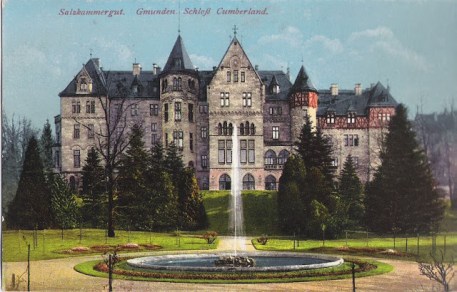
Power’s ‘doing different voices’ also occurs in the longer sequence which circles around events in which her grandmother, whose name was Chris or Christl, was found abandoned as a baby in Austria, taken in by a family (but not properly adopted) then came to Britain after WW2. Other sections suggest that the author/protagonist has later returned to Austria in search of her origins., and/or is living for a while near Gmunden in Austria. There’s a fair bit of historical and biographical exposition needed and this gives Power’s style of notation room to switch from verse to prose and back again. It’s the pieces in Christl’s demotic voice that stand out: “now I’m a bit mad at me mam, never adopted me properly, why not?” Elsewhere, her ignorance of the existence of concentration camps is stunning as is her clumsily expressed and moving sense of the fragility of her own survival: “It’s funny life when you think you get born, you weren’t here before, then you die and it’s just, you’re not there anymore”. It’s this sequence (pp. 41–52) that you should start from when you read this book.

Unfortunately, the collection trails away towards the end because, like any GCSE Modern Languages project worth its salt, there has to be section addressing Climate Change. I’m not sure what Julie Andrews would make of ‘silver white winters that melt into springs’ but its two prose passages do little more than portray a before and after climate change. Also ‘notes on climate change’ is pretty much what it says in the title and, strangely, Christl’s voice begins to recur here too: “When I came to England first the weather was really / warm and I thought it’s warm in England nice here not so cold”. ‘Milk’ is an amusing, enjoyable prose piece detailing familiar anxieties about products like milk which adversely affect the environment though the irony that our avoidance strategies usually give rise to further problems is a bit obvious.
The closing poem is one of several in which Power interleaves two differing voices on alternate lines. I hear Christl’s voice here again, seeming to lament leaving Austria and perhaps the second voice is her granddaughter’s who might have been Austrian in another version of history. The result is a poignant sense of not quite belonging “here” but also of not really belonging “somewhere else”. It is this rootlessness that lies behind all of Powers’ poems. Not being at home in the world is an important and contemporary topic and, when she earths this in voices of specific characters, this works well. But too many of these poems record fragments without meaning without any attitude to those fragments without meaning. To end positively, ‘In and Out of Europe’ is a very good poem where the disjointed lives of grandmother and granddaughter are again aligned. But, on this occasion, it is during the June 2016 Brexit vote and the shared history of the family’s international link here has a much more profound significance and Power’s notes and jottings leap off the page with a purpose.

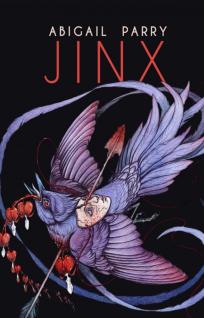
 Mr Knightley is an absent figure in that poem, but Jinx is repeatedly visited by powerful, seductive, dangerous males who – in ways now very familiar since Angela Carter started the ball rolling – are morphed into animal figures. ‘Hare’ is an early example, leaning invasively over the female narrator at a wedding party, “those fine ears folded smooth down his back, / complacent. Smug. Buck-sure”. As in ‘Daddy’, the woman is drawn to the man despite (or because of) his obvious threat but unlike Plath’s powerful final repulse (“Daddy, daddy, you bastard, I’m through”), Parry’s narrator is fatalistic: “Your part is fixed: // a virgin going down, / a widow coming back”. Elsewhere, ‘Goat’ and ‘Magpie as gambler’ work similarly and ‘Ravens’ is a particularly Plathian version: “In fact, every man I thought was you / had a bird at his back / and a black one too”.
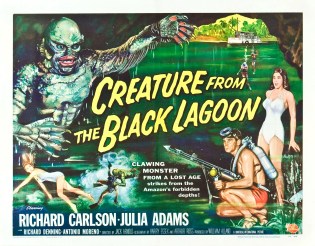 For all the frenetic playfulness of the book, Parry’s mostly female narrators and subjects are beset by threats. ‘The Lemures’ re-Romanises the creatures into psychological pests, aspects of self-doubt perhaps, appearing on the furniture, at the roadside, in a reflection in a lift door: “They will steal from you. Pickpockets, / rifling the snug pouches at the back of your mind”. Parry is evidently a fan of mid-twentieth century film and she explores Creature from the Black Lagoon and The Wolf Man from the perspective of dark powers surfacing. The question being asked is whether such forces represent the overturning of the real self or the manifestation of it in contrast to what a later poem calls “the dreary boxstep of propriety”. Locks and keys recur in the poems – are we confined, or about to set something loose, or to leap to real freedom?

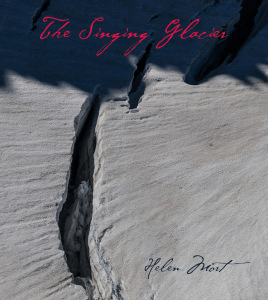
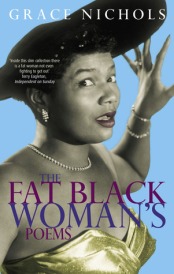 Then I have been reading poems for Grenfell Tower (The Onslaught Press) and picking away at some link between the (in)adequacy of a certain English poetic voice to confront the scale of ecological issues, or as a vehicle for expressing certain cultural differences, or as a way of exploring the kind of tragic and grievous event represented by the Grenfell fire and its aftermath. This struck me particularly as, in the Grenfell anthology, there are well-know poets alongside others less well-known, plus some who felt impelled to write as a direct result of the catastrophe. I felt many of the more well-known names struggled to find a sufficient voice for this appalling event, often sounding too careful, overly subtle, perhaps too concerned with Mort’s “linguistic originality”. Does such a devastating, large scale, well publicised event require a different kind of voice from poets?
 The difficulties of addressing such a subject are expressed by Joan Michelson’s contribution which announces and extinguishes itself in the same moment: “This is the letter to the Tower / that I cannot write”. One of the best poems which does display evident ‘literary’ qualities is Steven Waling’s ‘Fred Engels in the Gallery Café’. It cleverly splices several voices or narratives together, one of these being quotes from Engels’ 1844 The Condition of the Working Class in England. Other fragments used allude to gentrification and the wealth gap in the Borough of Kensington and Chelsea. Other poems, like Pat Winslow’s ‘Souad’s Moon’, focus on the presence of refugees in the Tower, or the role of the profit-motive in the disaster (‘High-Rise’ by Al McClimens), or the presence of an establishment cover-up after the event (Tom McColl’s ‘The Bunker’).
 But more often than not, these poets opt for more tangential routes to expression. Other disasters – such as Nero watching Rome burn, the 1666 Fire of London, the bomb falling on Hiroshima and the Aberfan disaster – prove ways in for Abigail Elizabeth Rowland, Neil Reeder, Margaret Beston and Mike Jenkins. The naivety and innocence of a child’s eye is another common device. Andrew Dixon’s ‘Storytime’ takes this approach, the child’s language and vision allowing simple but nevertheless powerful statements: “Mama don’t be afraid. Do you / want us to pray? I know what / to say. We’re both in a rocket / and we’re going away.” Finola Scott does the same with a Glasgow accent, a child staring from her own tower block home: “she peers doon at hir building, wunners / Whit’s cladding?’ A young life cut off before its full development by the fire is also the theme of two poems that refer to the death of Khadija Saye. She was a photographer who died in the blaze, whose work had been exhibited in Britain’s Diaspora Pavilion at the 2017 Venice Biennale. Michael Rosen’s contribution again uses childlike simplicity and obsessive repetition – as much representing a struggle to comprehend as the gnawing of realised grief:


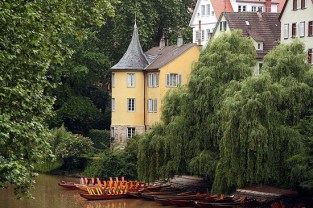
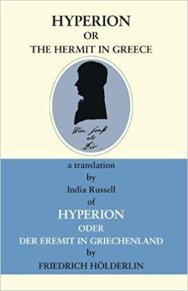 Waiblinger was a real Holderlin fan. The older poet’s novel, Hyperion, had appeared in 1822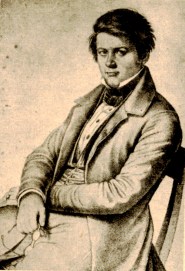

![moulin-glacier-11[2]](https://martyncrucefix.com/wp-content/uploads/2018/05/moulin-glacier-112.jpg?w=352&h=264)
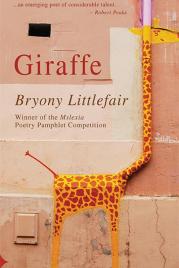
 Another young female narrator deliberately stays at home while her parents (conventionally) go to church on Sundays. She’s a teenage rebel without a cause as “The truth is I’m not sure what I did / those mornings”. The poem is built from a list (one of Littlefair’s favourite forms) of what she did and did not do. Littlefair is almost always good with her figurative language and here the girl is variously an undone shoelace, an open rucksack, a blunt knife. The urge to non-conformity outruns her imagination as to how she might spend her growing independence and there is an interesting tension at the last as her parents return, “whole” having “sung their hallelujahs” while the young girl is till restlessly revising her choice of nail polish, as yet unable to find what she’s after.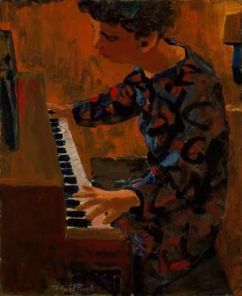
 I think I find this with some other poems too, though it’s partly because Littlefair is admirably intent on presenting the working world, the world of labour, as routine in contrast to the allure of a more adventurous life. ‘Assignment brief’ presents itself as an old familiar’s introduction to a new girl’s routine office job; the lists and proffered options are funny but they slowly run out of steam. Likewise, the promisingly titled ‘Usually, I’m a different person at this party’ flags latterly. I’m imagining this as narrated by an older version of the girl who half fell in love with Tara Miller. Here, she shadow-boxes the risks of conventionality by over-insisting on her own sweeping and glamorous life, in the process claiming all sorts of ‘interesting’ aspects of herself: “I only ever have large and sweeping illnesses. / My lymph nodes swell glamorously. I never snuffle”. But the contrasts here are again rather roughly hewn and, in the end, close to cartoonish.
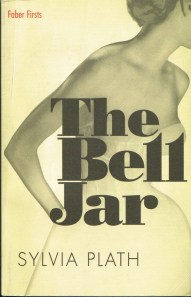 The latter view is more than a possibility given that Littlefair’s poems also boldly explore the self’s relation with itself. The encounter between self and future self is plainly and humorously told in ‘Visitations from future self’ and it finds the present self in trouble, pleading “I can’t go on / like this, my life a tap that won’t / switch on”. Here, the present self’s cliched and optimistic hopes for a “rain-before-the-rainbow thing” are denigrated and stared down by the future self. ‘Sertraline’ echoes Plath’s The Bell Jar in its evocation of a summer spent on an anti-depressive drug. And ‘Giraffe’ itself is a prose poem (there are 3 prose pieces in the whole book) in which a voice is offering reassurances to someone hoping to “feel better”. In a final list, images of a return to ‘health’ are offered. Particularly good is the idea that suffering will remain a fact but “your sadness will be graspable, roadworthy, have handlebars”. And lastly, “When you feel better, you will not always be happy, but when happiness does come, it will be long-legged, sun-dappled: a giraffe.”
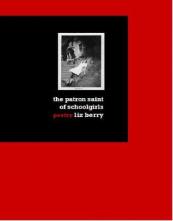 The designation ‘a young poet to watch’ is over-used but on this occasion it needs to be said loudly. Giraffe contains a number of fresh, intriguing and fully-achieved poems. It’s well worth seeking out. I well remember reading and being very impressed by Liz Berry’s 2010 Tall Lighthouse debut chapbook, the patron saint of schoolgirls, and this selection from Bryony Littlefair’s early work runs it close. My review of Liz Berry’s subsequent, prize-winning full collection,

![flowermoonPNG[1]](https://martyncrucefix.com/wp-content/uploads/2017/10/flowermoonpng1.png?w=437&h=291)
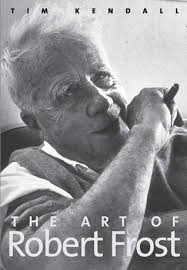 Frost wants to make big claims for metaphorical thinking: “I have wanted in late years to go further and further in making metaphor the whole of thinking”. He allows the exception of “mathematical thinking” but wants all other knowledge, including “scientific thinking” to be brought within the bounds of metaphor. He suggests the Greeks’ foundational thought about the world, the “All”, was fundamentally metaphorical in nature, especially Pythagoras’ concept of the nature of things as comparable to number: “Number of what? Number of feet, pounds and seconds”. This is the basis for a scientific, empirical (measurable) view of the world and hence “has held and held” in the shape of our still-predominating scientific view of it.
 That we have a tendency to forget this provisional nature of knowledge and understanding seems to be Frost’s next point. We take up arms (as it were) by taking up certain metaphorical ideas and making totems of them. He berates Freudianism’s focus on “mental health” as an example of how “the devil can quote Scripture, which simply means that the good words you have lying around the devil can use for his purposes as well as anybody else”. That this is dangerous (makes us not safe) is illustrated by the passage of dialogue Frost now gives between himself and somebody else. The other argues that the universe is like a machine but Frost (adopting a sort of Socratic interrogation technique) draws out the limits of the metaphor, concluding he “wanted to go just that far with that metaphor and no further. And so do we all. All metaphor breaks down somewhere. That is the beauty of it. It is touch and go with the metaphor, and until you have lived with it long enough you don’t know when it is going. You don’t know how much you can get out of it and when it will cease to yield. It is a very living thing. It is as life itself”.


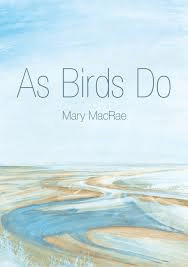 It may be that this ability to be sustained by scraps and glimpses, the sense that the self is most fully resolved in a lack of egotism, in its encounter with ordinary things, can diminish some of the sting of mortality. In a poem like ‘White’, MacRae manages to celebrate again the ordinariness of familiar things while at the same time sustaining a contentedness (or at least an absence of fear) at the prospect of the self’s vanishing: “You can disappear in a house where / you feel at home; the rooms are spaces / for day-dreams, maps of an interior / turned inside out”. Rather than Macbeth, it is Hamlet’s resolve to “let be” that comes to mind as this calm, accessible, colourful and wonderfully dignified poem concludes:
 For MacRae’s interest in and skill with poetic form, we need look no further than the extraordinary glose on a quatrain from Alice Oswald (the earlier collection contained another on lines from Mary Oliver). For most poets, this form is little more than an exhibitionist high-wire act, but MacRae’s poems are moving and complete. Her use of poetic form here, particularly in some of these last poems, reminds me of Tony Harrison’s conviction that its containment “is like a life-support system. It means I feel I can go closer to the fire, deeper into the darkness . . . I know I have this rhythm to carry me to the other side” (Tony Harrison: Critical Anthology, ed. Astley, Bloodaxe Books, 1991, p.43). Appropriately, in ‘Jar’, she contemplates with admiration an object that has “gone through fire, / risen from ashes and bone-shards / to float, nameless, into our air”. Here, the narrator movingly lays aside the wary scepticism of the Thomas epigraph and rests her cheek on the jar’s warmth to “feel its gravity-pull / as if it proved the afterlife of things”.

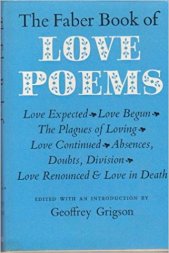
 *As a labouring translator myself, I have long remembered Grigson’s brilliant put-down in his Introduction to the Faber Book of Love Poems (1973). Explaining why he has not included any translations at all, he declares that their “unmeasured, thin-rolled short crust” would prove detrimental to the health of the nation’s poetic taste. Times have changed, thank goodness.
 Martyn Crucefix