2016 Forward First Collections Reviewed #5: Harry Giles

This is the fifth and final installment in the series of reviews I have been posting of the collections chosen for the 2016 Forward Prizes Felix Dennis award for best First Collection. The £5000 prize will be decided on 20th September. Click here for all 5 of my reviews of the 2015 shortlisted books (eventual winner Mona Arshi).

The 2016 shortlist is:

Nancy Campbell – Disko Bay (Enitharmon Press) – click here for my review of this book

Ron Carey – Distance (Revival Press) – click here for my review of this book

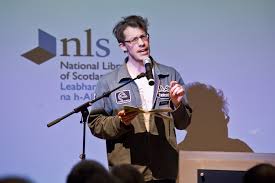
Harry Giles – Tonguit (Freight Books)

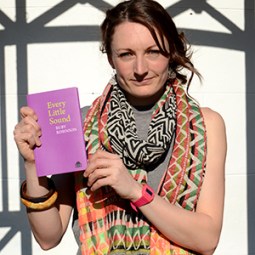
Ruby Robinson – Every Little Sound (Liverpool University Press) – click here for my review of this book

Tiphanie Yanique – Wife (Peepal Tree Press) – click here for my review of this book

imgres

Thanks to Freight Books for providing a copy of Harry Giles’ book for review purposes.

I’d only come across Harry Giles’ work as a Guardian featured poem in June in response to his Forward short-listing. The chosen poem was ‘Piercings’ and suggested Giles was working the same area that Andrew McMillan did so successfully last year. What might be an autobiographical masculine narrative voice recognises a passer-by as an old encounter: “four years since / he hauled me into a lift with / Want to make out?” But the man had then been sporting various body piercings which have since been removed in order to become “employable, less obvious” whereas the narrator has continued making “more holes”, continued to accumulate the badges of a rebelliousness the other has given up on. The final question, “So what do you do now?” is therefore made poignantly redundant, each, surely, reading the tell-tale signs of the other’s body.

But ‘Piercings’ is by far the most conventional poem in Tonguit and Giles is no McMillan, nor does he want to be. On the facing page is a poem made from extracts from One Direction’s Harry Styles’ fanfiction. The title, ‘Slash poem in which Harry Giles meets Harry Styles’, gives a feel for its playfulness though the poem itself does not seem to amount to much. Perhaps it amounts to more if read in the context of Giles’ other manipulations of texts and discourses which have a more obviously seditious intent. The last poem in the collection offers ‘Further Drafts’ of a phrase often used by Alistair Gray: “work as if you live in the early days of a better nation”. Giles works various rhyming turns on the first and last words of this phrase eventually to arrive at “lurk as if you live in the early days of a better sedition”. It’s ‘Harry Styles’, manufactured pop idol and X Factor/Simon Cowell cash cow, that is the real target of Giles’ poem (though it lurks with some seditious intent, it’s still not among his best).

images

Giles is interested in the processing of texts, sampling from George R R Martin’s A Game of Thrones, or creating cut-up texts from information associated with Abu Dhabi’s artificial island and cultural centre, ‘Saadiyat’.  The satirical effects are delivered through simple repetition and disjunction, questioning the original source’s coherence and integrity, where ecological sustainability becomes “a core value integrated into the design approach / in terms of throughout the the the concept design” [sic]. ‘You Don’t Ever Have to Lose’ does something similar with advertising text from IT services company Atos. ‘Your Strengths’ is a more powerful text in its own right, this time using source material from the Department of Work and Pensions Capability Assessment, the UK Citizenship Test and other psychometric tests to make a thunderous barrage of questions ranging from the invasive, absurd, profound, squirm-inducing and piddling to the politically loaded. Giles also works textual legerdemain in ‘Sermon’, based on a speech by David Cameron in which the word “terrorism” is replaced by the word “love”:


We must make it impossible

for lovers to succeed. We need to argue

that love is wrong. To belong here

is to believe in these things.

imgres

This processing of texts, often randomly, often derived from the internet or Google searches, sometimes with editorial influence in the final result is presented as politically subversive. As the Tonguit blurb suggests, it derives from the belief that we are all warped and changed by the language/s that surround us and inhabit us. The hope of the lyric poet working towards his/her own truth is devalued, considered delusional, impossibly bound up in Blake’s socio-psycho-political “mind-forged manacles”. We liberate ourselves by breaking these, unpicking or smashing the dominating discourses around us. And if our deliberate intention is already suspect then we must achieve it randomly, perhaps via a machine. It’s a form of surrealism which profoundly questions our use of language and owes a lot to the Oulipian experiments of Raymond Queneau. Giles’ collection title, Tonguit, productively seems to hover between an urgent imperative to individual vocalisation – tongue it! – and more passive implications about the way other people’s language/s oppress the individual – we have been tongued!

images

The more imperative mood is obvious in ‘Curriculum’ which takes aim at normative education and gives it both barrels:


Mix me a metaphor of noble gases,

economic engines and avant-garde

taxonomies, with Kingdom Phylum Order

gone to bloody Dada. Get down and dirty


with transects, quadrants.


There is a Wildean element to this sort of systematic over-turning though there is no doubt about Giles’ seriousness beneath the often funny, ludic quality of these poems and there is none of Wilde’s self-regarding quality. Harry Giles himself – as a recognisable, recurring, coherent, autobiographical figure – is curiously absent from most of these poems though I don’t doubt the sincerity of a poem like ‘Waffle House Crush’:


I’ll have you smothered n covered

diced n peppered n

capped n lathered n

lustred n smoothed n

spread


Giles’ various linguistic masks don’t hide so much as free him into more liberated forms of expression. I’ve deliberately not yet mentioned his most obvious, deliberately chosen mode of expression: what he calls his own “mongrel and magpie” form of Scots. Dave Coates has pointed out that, as in Kathleen Jamie’s The Bonniest Companie, Giles provides no glosses in the book on his particular Scots, “an implicit assertion of the language’s place within the broader spectrum of Englishes”. Giles’ Scots sets itself deliberately against discourses like those of the DWP and Atos as a declaration of variousness. Nor is he averse to something like a declaration of war:


Let’s be arsonists. Let’s birn the year.

[. . .]

Let’s mak like airtists

n birn the leebrars [libraries] acause we shoudna, n birn

Pairlament acause we shoud.


What follows is an apocalyptic conflagration of all things, down to the “thocht o fire”.

But the sheer vigour of Giles’ intent means his Scots is a lot harder to follow than Jamie’s. In fact, he does provide his readers with a full gloss/translation on his website. I needed this to be honest to deal with a lot of the Scots text, though the ‘translations’ then read as somewhat awkward, watered down versions of a quite different language (rather than a form of English). But it is worth the effort to really appreciate the tour de force of national- and self-assertion that is ‘Brave’. Like some Highland Whitman, making himself and his nation through singing (I’m losing some of the lay-out here):


A sing o google Scotland

o laptop Scotland,

o a Scotland sae dowf on [dulled by] bit-torrentit HBO

drama series n DLC packs fer

paistapocalyptic RPGs

imgres

But also the Scotland “whit chacks the date o Bannockburn on Wikipaedia” and fears “o wan day findin oot / juist hou parochial aw hits cultural references mey be”. ‘The Hairdest Man in Govanhill’ takes all the clichés that phrase might suggest and instead describes a man who “has thay lang white scairs on / baith sides o his mooth fae smiling that damn wide” (my italics). This is of a piece with the Cameron subversion as we hear that the man is “that bluidy haird he’s a hairt tattoed wi Dulux on his bicep n aw hit says is A LUV YE”. There’s a risk of this getting as caricatured as the cliché it intends to subvert but Giles’ Scots is put to terrific seditious intent in ‘Tae a Cooncillor’ – a kind of one-sided flyting in which the local councillor who wants to close down a swimming pool is mocked mercilessly:


Wee glaikit, skybald, fashious bastart,

whit unco warld maks ye wir maister?

Whit glamour has ye risin fest as

projectile boak?

Hit’s time tae gie yer feechie fouster [nasty fester]

an honest soak.


This is committed, bolshie, rebel-script done with great skill and immense energy but Harry Giles is too interested in too much to settle merely for this. I was interested in his Scots (or rather specifically Orcadian) versions of a few chapters of the Laozi’s Daodejing. He astutely titles these ‘Aald rede fir biggin a kintra’ [Old advice for building a country] again recalling Alistair Gray’s dictum. The opacity of the language makes Giles’ versions a hard read but (if I may) here’s his boldly economical version of chapter 53 (some indentations lost here again) followed by my own recently published version:


53

a bit wittins

whan waakan the wey

are a rod tae dree


the wey is snod

an fock cheust fancy the ramse


govrenment divided

sheens growen-up

kists empie

but heidyins’ claes are braa

thay’ve barrie blads

are stecht wi maet

gey rowthie


caa this the darg o reivers

an no the wey


Crooked avenue

chapter 53


—perhaps you have begun well

one step after another along the way


yet you walk in fear of side-tracks

the great way running level and plain


still who can resist those side-tracks

soon as good governance is in place


we’re liable to neglect our business

too soon the tall barns lie empty


sooner wear fashionable clothes heels

daggers for glances glut on food and booze


have more than we can sensibly use—

dawn breaks on some crooked avenue


what was it happened to the way


Tonguit is a bubbling cauldron of a book, willing to take risks that don’t always come off, but guided by a belief in the need to challenge the assumptions and languages of the status quo. Harry Giles is a fascinating figure (go to his website here ) and his characterisation of his Scots as “magpie” is as much applicable to his multifaceted work in theatre, software, twitterbots and visual arts, all forms of “art about protest and protest about art”. Whether contemporary poetry, as in books like this one, will prove sufficiently interesting and flexible for his creativity remains to be seen.
imgres


2016 Forward First Collections Reviewed #4: Tiphanie Yanique

This is the fourth in the series of reviews I am posting of the 5 collections chosen for the 2016 Forward Prizes Felix Dennis award for best First Collection. The £5000 prize will be decided on 20th September. Click here for all 5 of my reviews of the 2015 shortlisted books (eventual winner Mona Arshi).

The 2016 shortlist is:

Nancy CampbellDisko Bay (Enitharmon Press) – click here for my review of this book

Ron CareyDistance (Revival Press) – click here for my review of this book

Harry GilesTonguit (Freight Books)

Ruby RobinsonEvery Little Sound (Liverpool University Press) – click here for my review of this book

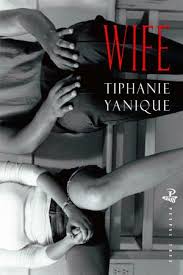
Tiphanie YaniqueWife (Peepal Tree Press)

imgres

Thanks to Peepal Tree Press for providing a copy of Tiphanie Yanique’s book for review purposes.

Early in Tiphanie Yanique’s book there is a moment (which happily turns out to be misleading) when, in a series of prose passages, she gives the impression that precise, once-and-for-all definition is what she seeks. Imitating something of the tone and style of a dictionary, she explores the meaning of ‘wife’, ‘wifey’, ‘get wife’ and ‘to wife’. Yet even here, Yannique’s point is that the simple word ‘wife’ has a plurality of meanings from married woman, to woman plain and simple, to types of relationships between men and women, to “a direct translation of ‘sex’”, to a verb suggestive of securing a heterosexual relationship, preferably with a rope “made of gold [with] a diamond at the knot”. Early on, Wife flashes up its warning signs not to trust any simple reading of language, much of which has its roots in historical, patriarchal attitudes, nor to go looking for a single coherent lyric voice in this collection.images

Proving to be a clever ironising of the book’s epigraph from Coventry Patmore’s The Angel in the House (“She casts her best, she flings herself”), the book turns out to be a babel of different voices, casting perspectives across the territory of heterosexual relationships from dating to divorce, via sex, marriage, marriage counselling, children (a bit), broken families and glimpses of modern forms of marital happiness. There is something rather systematic about the way Yanique ensures the ground is thoroughly covered, the variety of angles, which reminds me of those analytical Cubist paintings that so invite close-up observation that it’s easy to neglect the wider view. From the Acknowledgements page, some of these poems appear to be 10 years old, so the collection is the fruit of much writing and accumulation of materials: the overall impression is of Yanique’s impressive range of experience and imaginative projection, her reluctance to side once-and-for-all, as suggested by those poems which wrestle with such dichotomies as intimacy versus individuation (‘Feminist Methodology: a found poem’) and instinct versus contrivance (‘The Falling Out’).

ss1_usvi

But Yanique – who was born in the Virgin Islands and now teaches on an MFA programme in New York City – is coming firmly and deliberately from a post-colonial and feminist place as can be seen in the book’s opening poem, ‘Dangerous Things’. The narrative voice slides from what seems a neutral tone (“This is the island”) to a more confident self-awareness in the course of 21 short lines (“And so I am the island”). The woman is at first a “small and vulnerable” geographical feature to be inhabited/colonised by the “you” addressed in the poem: “the space / that you take up / is a space where she cannot exist”. The colonising power, who is also the husband, is given due warning. In being an island, “dangerous things” live within the woman, as well as “beautiful things” which are said to be “most dangerous”. History is alluded to twice in the course of the poem (what makes the writing so good is that its huge freight of ideology does not unbalance it). Colonial as well as gender history is implied here and though “we will never be / beyond our histories”, the warning stands: the self-awareness of the island is awakened and whatever power or person positions itself in relation to her, her own selfhood and identity needs to be duly considered.

In a later, whirling, chant of a poem, another more assertive female voice declares “I am both body and nation” (‘Last Yanique Nation’). In contrast, ‘I try’ is a delicate lyric sequence in which a haunted-sounding female narrator believes she sees a bride’s veil in a tree like the bodies swaying like ‘Strange Fruit’ in Abel Meeropol’s 1936 poem/lyric. Such marital victimhood is more obviously self-willed in ‘To Fall or Fly’ where the woman declares “I don’t want to survive. I want to die of my Diego”. This contrasts ‘A note to the couple’s therapist’ where the woman self-diagnoses her problem with the relationship: “It’s just this body” she declares. Yanique is very good at the urgencies of the body in relationships and here she develops a water metaphor. The woman does not want to be left to rust; she’s too young to “flake away”. But when touched, she feels she is no more than “a pail of water” beneath the man’s advances. She has ambitions beyond her current relationship: “if I am water then I plan to be the ocean. / I’ll leave salt behind”.

imgres

More often the addressee, there are very few male voices in Wife. One speaks with great reasonableness only to dismiss any notion of marriage as a partnership because “we are one body, mind and all”. It’s not long before such high-sounding notions crash into the assertion that “husband means the one who cares”. Such self-regard is not only spoken from the mountain-top but, he declares, “we are the mountain”. ‘African Animal’ is a more interesting poem which analyses aspects of masculinity through a voice taken from a TV nature documentary. We are told the son is eventually driven out by the community, being dangerous, likely to “turn bull” and attack the young. Yanique balances the voice delicately between observations about natural history and more human details. The poem arrives, chillingly and seemingly logically, at a place where violence against all-comers seems the only result:


In battle there is recognition among the bulls.

Is this his son, now grown and come to challenge him?

Is this his brother?


But perhaps surprisingly it is the traditional institution of marriage that Wife really wants to explore. “There is always blood at a wedding” starts one poem expressing a familiar, feminist scepticism about the institution. Not only blood, but bones too, the world filled by “phantoms of all us amputees”. A zuihitsu is a genre of Japanese literature consisting of loosely connected personal, ideas and Yanique writes a ‘Zuihitsu for the day I cheat on my husband, to my fiance’. As this title suggests, the fluid, random quality of the (prose) form allows her to begin to question the traditional categories of the marriage arrangement. There is much switching of verb tenses, into future and past, which undermines the rigid categories of terms such as fiancé, husband, lover, adultery, monogamy and marriage.

imgres

Something similar happens in ‘The Story of our Elopement’ which adopts the free-wheeling style of a fairy tale with kings, kingdoms and princesses but remains grounded in the reality of a Brooklyn marriage bureau. The couple wait “among couples coming together for reasons / not always concerning love”. This is a point made throughout Wife: the sheer variety of human relationships which can be found in the baggy tent of marriage. This particular couple consider themselves different to “the others at the bureau” and it is a sense of freedom gained within marriage that marks them out:


We were fleeing

to make our own kingdom.

Now any myth

could be true if we communicated it:

I said, I am a princess

I said, you are charming

I said, I will witness

you.


The penultimate poem is a ‘Traditional Virgin Islands Wedding Verse’, a form focused on the idea of ‘belonging’ to father, town, land, church, tribe. Yet it’s a story of “self-creation”, the climax of which is marriage in which the partners “belong / to each other”. As in the elopement poem, Yanique’s proviso is, of course, that the marriage is “by your own choice” though her collection has been raising questions all along about the nature of choice. Even this traditional verse emphasises the power of each individual’s history. It would be too cynical to suggest that only the well educated, reasonably wealthy can experience such freedom of choice, but the emphasis on “self-creation” does reinforce an uneasiness I have about the book’s willed and systematic qualities. I am struck by how few of the poems involve children. Two poems suggest the loneliness and grief that result from broken families, another records the abandonment of unwanted babies. ‘Things that baby put into his mouth’ suggests, in its movement from the realistic to the hyperbolic, that the child devours almost everything, a sensation familiar enough to all parents who are perhaps not always prepared for the need to lay “self-creation” aside in the face of such demanding, dependent vulnerability.

imgres

2016 Forward First Collections Reviewed #3: Ruby Robinson

This is the third in the series of reviews I will post over the next two months of the 5 collections chosen for the 2016 Forward Prizes Felix Dennis award for best First Collection. The £5000 prize will be decided on 20th September. Click here for all 5 of my reviews of the 2015 shortlisted books (eventual winner Mona Arshi).

The 2016 shortlist is:

Nancy CampbellDisko Bay (Enitharmon Press) – click here for my review of this book
Ron CareyDistance (Revival Press) – click here for my review of this book
Harry GilesTonguit (Freight Books)
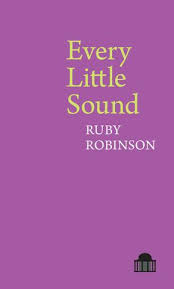
Ruby RobinsonEvery Little Sound (Liverpool University Press)
Tiphanie YaniqueWife (Peepal Tree Press)

imgres

Thanks to Pavilion Poetry/Liverpool University Press for providing a copy of Ruby Robinson’s book for review purposes.

It wasn’t until his second book that Don Paterson was inviting his reader into the “little church” of the poem. Ruby Robinson’s first book’s opening poem ushers us in through “the trap / door of a modern barn conversion” and though full of apparent comforts (paintings, chairs for guests, soup, bread, socks, duvet) it’s really a decidedly unnerving place. The walls are explicitly said not to have eyes, but the narrative voice surely knows too much about us: our loneliness, right down to our “deepest thread, like a baked-in hair”. And even if the walls do not watch, they are full of the “shadows of stags [. . .] cast like stalking giants”. There’s a lot in Robinson’s book which reminds me of another debut collection from way back in 1983 where the lovers describe themselves as “fascinated by our own anaesthesia, / our inability to function”, the TV buzzes half-watched in a corner, emotions grow ever more dysfunctional, “shorter and faster now”, and there is talk of separation in halting, heavily punctuated non sequiturs.

imgres

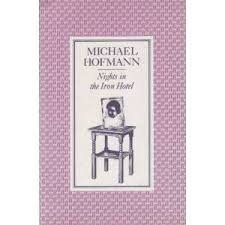
That was Michael Hofmann’s Nights in the Iron Hotel (1983) and Robinson’s book shares an interest in disconnected scientific facts to express the troubling gulf between thought and feeling. One of Hofmann’s characters moves “the fifty-seven muscles it takes to smile” and Robinson’s ‘Time’ sets out from the knowledge that with a stethoscope a rodent’s heart murmur can be divided into “constituent beats”, spurring the lovers to analyse themselves as closely, as if that might reveal something important about their emotional lives. Stethoscope and heart-beats recur in ‘Love’ where again the biological processes of nerve impulse and ventricles are searched for something resembling meaning. ‘Breathe Deep’ does the same with the stomata on the undersides of leaves and this close observation (of a certain type) lies behind the collection’s title. The process of ‘internal gain’ occurs when we are under threat and is an increase in our perception (of sound especially) so that we hear Every Little Sound. As with Hofmann, Robinson’s attention to detail – a sort of hyper-perception – is really a symptom of a soul in trouble. Reading these poems is often like watching a fragment of material caught on a barbed fence, trembling and thrilling hopelessly in the wind.

The world of Every Little Sound is a thoroughly deracinated one – most everything has been torn up by the roots. Amongst snow, bluebottles, the word ‘thanks’, the remains of a kebab, ‘Hope’ notes “one IKEA bag like a dead bird whose wings won’t die”. All these items, hardly more than listed, seem to be thrown “overboard” into uprooted, meaningless chaos yet the human mind still despatches its uncertain “search party”. The emotional impact of many poems in the book lies in this: the continuing desire to make some sense in the face of chaos. In the midst of a discussion of romantic feelings, a narrator reflects, “I am // in touch with my feelings” but the line-break subverts the truth of the statement and the poem ends in disconnects of feeling, a brusqueness of tone, the brutal chopping of punctuation: “I could tell he felt like crying / and I didn’t mind. We finished our beer, shook hands, went home”.

imgres

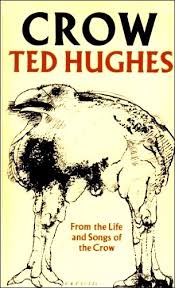
Another poem’s narrator talks of her “nerve endings in exile (‘Love II’) and in ‘This Night’ (which might be a distant parody of Lorenzo and Jessica’s “In such a night” speeches from Act 5 of The Merchant of Venice) the narrator confesses she is “more in love tonight, with ideas / and arbitrary things, / than I am with you”. Even in the throes of sexual ecstasy, there remain “two glazed eyes, observing it” (‘Orgasm’). ‘Winter’ uses both right and left justified lines to create an unnaturally evenly-spaced robot-toned prose passage about keeping a tortoise in the fridge through winter. This is where the real originality of these poems is to be found alongside several pieces which evoke the inevitable consequence of such deracinated perception – the fragmentation of the sense of self. Robinson has named Ted Hughes as one of her influences and, in one of the best poems here, ‘Unlocatable’, we hear him in the representation of psychic fragmentation through the physical. The narrator records her dismemberment at her own hands; at one point “a crow on a hard shoulder / delicately inspect[s] the entrails”. Her head is sawn off until the self lies in fragments, “half-witted, unpicked, flaked / out, half a leg, a spewing mouth, brittle hair, / scooped-out heart”.

Close_up_of_Hand_Cut_Jigsaw_Puzzle

There are moments in the book when this sort of Hughesian shrillness and hyperbole-ramped-past-10 is reached for too easily. But ‘Unlocatable’ also  hints at the real life grounding for the edge-of-panic, urgent, deadly serious nature of Robinson’s shattered vision. In the poem’s penultimate stanza we are told:


My mother, somewhere,

like a drowned fish on the very end of some

fucker’s very long line

smashing herself against the floor

to an unnatural beat


To her great credit Robinson does not use past dislocations in her childhood and family relationships to pursue poetic confessionalism or misery memoir. This potentially gossipy backdrop is aptly sketched only in a fragmentary manner across several poems (the reader left to piece things together as must the family).

RubyRobinsonPavilion-1h

‘Truth’ seems to be an ars poetica of sorts and it is the finding of the mother’s voice “behind the sofa”, the gathering up of this “small voice” and handing it round (as poems?) that spurs the writer on. In particular, the mother’s experiences seem to find echoes in other people, in the media, in the family. A reference to the “death of a violinist” seems obscure but is surely to Frances Andrade whose history of sexual abuse by a music teacher led to her suicide. As I’ve said, the exact events of the mother’s life are left unclear but there is no doubt that men have played a destructive role. One of the more explicit poems, ‘My Mother’, records tragically self-destructive attitudes in her belief that men “cannot be blamed” and that a woman must “know her place, should wait”. Robinson is more clear elsewhere that comments made by her mother have yielded material for poems (including the book title). The images of men are seldom appealing or sympathetic: both ‘Undress’ and ‘Ire’ suggest manipulative and coercive figures, more often than not treating women as sex objects: “He peeled the duvet away // slowly, dragging heat from the flesh / just as you’d freeze-dry meat or fresh fruit”. Robinson mostly treats these issues on a personal level though in ‘Flashback’ the wider context of sexual abuse and domestic violence comes into view with allusions to Radio 1 DJs, another woman’s suicide, courtroom scenes and the earlier image of the fisherman reappears: “He keeps her on a line like a fish / against a rip current”.

All these elements feed into the major poem in this book, ‘Apology’. This seems more explicit about the relationship between mother and daughter and is a howl of survivor guilt, regret, anger, apologising to her mother that things in their lives have turned out as they have. The book’s jacket blurb talks about the poems’ expressions of connectedness and a capacity to love but it has to be said there is precious little of these themes and most of what there is comes in ‘Apology’. Written in spilling, rolling 3/4 line sections (like Ginsberg’s Howl perhaps) the narrator obsessively apologises (mostly for things beyond her control, of course): “I’m sorry you’ve had to withstand such torrents of knowledgeless advice and legal toxification”. More than anywhere else in this painful book, this poem manages to ask, “Is it too ambitious to hope?” The answer given is not reassuring or confident: “We learn to accept the clouds for what they are and wait, patiently”. For the end of a major poem this is undramatic and anticlimactic but Robinson’s aim throughout is more concerned with telling the truths as she and her family have experienced them than with crafting something more consolatory. The final poem is addressed ‘To My Family’ and enacts an interesting withdrawal from such painfully personal material. Robinson retains/regains an artistic distance that augurs well for future collections which will have to draw inspiration from other materials. There is a quiet, deserved, hard-won confidence here: “I’m just words. And you have not the tenacity / to smother me, so I’ll wait here, written, biding my time”.

images


2016 Forward First Collections Reviewed #1 – Ron Carey

This is the first in a series of reviews I will post over the next two months of the 5 collections chosen for the 2016 Forward Prizes Felix Dennis award for best First Collection. The £5000 prize will be decided on 20th September. Click here for all 5 of my reviews of the 2015 shortlisted books (eventual winner Mona Arshi).

The 2016 shortlist is:

Nancy CampbellDisko Bay (Enitharmon Press)
Ron CareyDistance (Revival Press)
Harry GilesTonguit (Freight Books)
Ruby RobinsonEvery Little Sound (Liverpool University Press)
Tiphanie YaniqueWife (Peepal Tree Press)

imgres

Thanks to Revival Press for providing a copy of Ron Carey’s book for review purposes.

On the cover of Distance a male figure has already travelled well down a track through flat, open countryside. He’s heading determinedly away from us, hands thrust in his coat pockets. I think this is Ron Carey and though the image pretty literally evokes one aspect of the book’s title, it contradicts the stated direction of the poems within which hope to “bring us a little closer”. An epigraph from Elizabeth Burns suggests a more philosophical “sense / of time and place dissolving” so that (in an image that would have pleased Antonio Machado) “we are all / drops of water in this enormous breaking wave”. Ron Carey’s first collection sticks more firmly to the former, more commonplace, more personal of these formulations but is at its most interesting when it ventures an almost magic realist evocation of the latter.

The dissolution of strict linear time provides occasions for many of the most appealing poems here. They are acts of recall of a twentieth century childhood in Ireland (in this Carey invites comparisons with Heaney and, before him, Kavanagh). The boy who is the focus of these recollections is both highly observant and very imaginative. His conviction that there is a leopard in the coal-shed as he is tucked up in bed is grounded in vivid details of it tiptoeing “through the tin-pot Dulux jungle, on / Quick, painted feet”. ‘Breakfast’ is also troubled by imaginary big cats (lions this time) who chase his father from the house, their “claws pinging the spokes of [his] bicycle”. The idea of a ‘water-table’, as discussed by Driller Flanagan and the boy’s father, unleashes images of a real “table of Marian blue; its top shimmering” but when the geological reference is clarified for him, the boy swears never to ask “questions that have / The possibility of such dull answers”. We see the birth of a certain type of poet here, though Carey’s long wait for a first book reassures us that such unbridled (if vivid) fantasy will not be the whole story. So watching Aunt Babbie wring the necks of chickens, while blithely questioning him about his day at school, gives rise to more troubling childhood experiences as the birds’ “squawking souls” pursue him home and (the writing of the poem confirms) continue to haunt him forever.

imgres

Everyday remembrance seldom loses sight of the gulf between then and now, but Carey’s poems occasionally record more profound moments of the collapse of the temporal. ‘Moving’ records the day a family move to a newly built housing estate. All their belongings piled in a horse-drawn cart (old world), as they approach the house the boy’s mother runs ahead with a “100-watt Solus” light bulb in her hand (new world). The electricity that runs metaphorically through the boy’s hands as he is given the horse’s reins and literally through the bulb filament so that the “black eyes of the front-room suddenly blazed” form an instantaneous circuit in which the whole family experiences renewal, the mother now “a young girl” calling from an open window ahead. It is the intensity of the emotions which supercharges such changes in perception. ‘Kilkee’ sees the six-year-old boy partaking of the grief of another Aunt’s broken heart, lying like lovers themselves on sand dunes: “He put his finger into the ring of the sun / And pulled it down the sky till it entered the water”. This drawing down of blinds is a fantasy of sorts but far more profoundly linked to the truth of the moment than the boy’s water-table imaginings. It’s in ‘Upstairs’ that Carey brings this technique to its apogee where the boy (now grown but of an uncertain age) agrees to wear his father’s old coat and lie beside his ageing mother. It’s her desire to re-live earlier days and intimacies that dominates, but the poem cleverly reveals the boy’s own uncertainty of identity: “We pretend to sleep, Danny and me”. He feels he can’t get up, though she’s now asleep, “Because she will not let go of his hand” (my italics).

1899C_British_Bicycle_man

The figure of the father is a powerful one and recurs throughout the book. We see him relishing “pig’s toes with a pint”; elsewhere he comes home from work: “Your cold, great hands shocking / Our new skins; your goat’s kiss rough as love”. Even more memorably, in ‘My Father Built England’, he works as an immigrant labourer, a “solid Paddy full of gristle”, learning how to harden his hands with urine, then with the onset of World War Two, returning to Ireland to work for Hogan and Son. He is one of many characters who populate this enjoyable book – Miss O’Mahoney, a pub quiz-master, an irregular Postman, several Aunts, Grandmother and Grandfather – most of them firmly enough grounded in close observation to avoid caricature. And it’s the quietness with which Carey achieves his aims which is notable. New technologies are alluded to in the context of the past. ‘Churchfields’ makes familiar use of a photographic image but in ‘Background’ an image of a Grandfather is set as background on a computer screen, allowing Carey to “click a short-cut icon on his broad shoulders” in another striking image of the collapse of time differences. Elsewhere, the sweep of a dry stone wall is compared to the curve of a “Large Particle Collider” (unlikely, but successful). And a visit to Patrick Kavanagh’s grave yields an encounter with his ghost, in fact on film, “rasping and jumping on a screen”.

Inisheer_Gardens_2002_dry-stone_walls

Unfortunately, there is a rather soft middle to this book in the sections titled ‘The Beloved’ and ‘New Oceans’. The first seems a rather brief, miscellaneous collection of poems only vaguely linked to the theme of love and includes an up-dating of the Icarus myth and an incongruously Yeatsian lyric, ‘Diarmuid and Grainne’. ‘New Oceans’ appears to be an ill-judged venture into exotic climes and idioms (I think Central America). But there are more interesting poems in the final section of the book, ‘The World Will Break Your Heart’. Here Carey is less intent on conventional narrative and (in contrast to the youthful recall of earlier poems) focuses on the moment as it passes and on last things. ‘Lineage’ is a confident celebration of the Irish landscape – confident enough to admit ignorance of names as well as to leave the poem more open-ended, with no evident pay-off. ‘Catching My Death’ is short-lined, elegant, unpushy. Sounding more like Michael Longley here, the boy has grown up, encountered much:


I find life now – much the same

As the robin does – wriggling

In my mouth


Mortality is now envisaged as a return to the earth, though some sort of reawakening into the future is imagined:


Until

The earth warms

And the soil opens

To the resurrection of the worms

images

Philip Gross, Carey’s supervisor on the South Glamorgan Creative Writing MA course, has written of the tenderness and detail of his work and this is true. He has a long list of competition wins and placings behind him and individual poems are touching and colourful and well-done. Distance covers a great deal of ground between childhood and old age and Carey is above all honest. But as a first book there are trails here which come to nothing and others which promise poems of a more adventurous kind. I hope that’s where the man in the coat is really heading.

An interview with Ron Carey about his work can be read here. 

Forward First Collections: Some Early Results 2015/2014

The 2015 Forward Prizes Felix Dennis award for Best First Collection (with its £5000 cheque) will be awarded finally on 28th September. I have been reviewing the shortlisted books this summer as follows:

Mona Arshi – Small Hands (Liverpool University Press) reviewed here;
Sarah Howe – Loop of Jade (Chatto & Windus); reviewed here;
Andrew McMillan – physical (Cape Poetry); reviewed here;
Matthew Siegel – Blood Work (CB Editions) reviewed here;
Karen McCarthy Woolf – An Aviary of Small Birds (Carcanet) reviewed here.

Who will win?  I can give you what blog-mathematics tells me and I can give you my own modest opinion and I can give you a prediction of who I think might be picked by the judges who are A L Kennedy (Chair), Colette Bryce, Carrie Etter, Emma Harding & Warsan Shire.

  1. Judging merely by hits on the reviews on this blog (statistically wholly unreliable) the winner will be Andrew McMillan – agreed this might just reflect the fact that he and his supports are more social media savvy than others but I suspect it reveals an real interest in his work out there. (And for completists among you, the remaining rank order was then Arshi, Howe, Siegel, McCarthy Woolf).
  2. Who do I think should win? All five books have been hung on topic-hooks by their publishers (illness, ancestry, cultural difference, sexuality, miscarriage) though only Howe and McMillan really justify this as complete volumes. It’s a sign of the need to market a book these days and I’m sure this trend will grow more powerful though I don’t think it’s a great idea for either writer or reader (is it an appeal to the ‘general’ reader?). But the ground being broken by McMillan has been thoroughly ploughed by his (acknowledged) hero Thom Gunn and Howe’s cross-cultural explorations and formal experiments I find interesting but not necessarily volume-coherent. My favoured book was actually the American one, Blood Work by Matthew Siegel which I thought was a wonderfully coherent, moving, funny and achieved collection (despite being a first book). So he’s my pick – and I’ll be wrong on the night!
  3. Who will the judges choose? McMillan – that combination of (sufficient) controversy and accessibility.

Whoever it is in the end, congratulations to them and to all the shortlisted poets.  It’s been a feast and thanks to those who have been following my travels through these books.

As a final footnote, in October last year (somewhat after the event, I confess), I reviewed Liz Berry’s winning first collection and as a bit of context I’ll post that again below. For the record, I think her book is better than any of this year’s five.

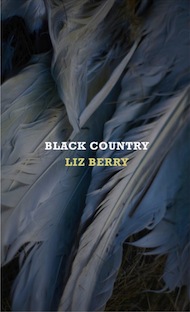
Liz Berry, Black Country (Chatto Poetry, 2014)

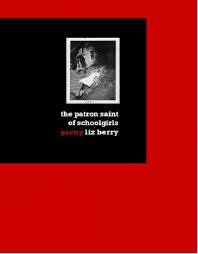
If a reputation can be earned through the writing of half a dozen poems of real worth then Liz Berry has probably already written them, earning her place in the landscape of early 21st century British poetry. Her debut collection (containing 14 poems from the earlier chapbook The Patron Saint of Schoolgirls (tall-lighthouse, 2010) has charm, accessibility and a humour that belies the serious ways in which she exerts pressure to counter the hegemonies of language, gender, locality, even of perception. Berry is a teacher by profession and will, no doubt, have equivocal feelings about her work appearing in classrooms – but it will rapidly and rightfully find a place there.

imgres

We resist what tries to define and suffocate us in part by declaring who we are. Berry’s confident, natural, even uninhibited use of her own Black Country dialect is one of the most superficially striking things about this book. Against “hours of elocution”, she opts for “vowels ferrous as nails, consonants // you could lick the coal from” (‘Homing’). Variously her grandmother and mother influence her in this and, in ‘The Sea of Talk’, her father also urges her never to forget the place of her birth with “its babble never caught by ink or book”. The definition of a community against the pull of a conventional linguistic centre is explicit here. Her grandmother is a frequent role model and the growing girl studies “her careful craft”. “Right bostin fittle”, the older woman declares (ie. great food – brains, trotters, groaty pudding) and the budding poet willingly touches her “lips to the hide of the past” to inherit the authentic gift.

Other poems, making it clear that locality is as much a component of who we are, record and celebrate the Black Country as “a wingless Pegasus” composed of scrub, derelict factories, disused coal shafts, yet still a “gift from the underworld” whose nature and fate is enough literally to make grown men weep (‘Black Country’). Berry takes huge pleasure in enumerating the details of her locale. “Come wi’ me, bab, wum Tipton-on-Cut” invites one poem which then takes a tour of waterways, allotments, parks, mosques, steelworks and canals (‘Tipton-On-Cut’). Similarly, ‘Christmas Eve’ seems to improvise from the great concluding paragraphs of Joyce’s story ‘The Dead’, using the ubiquitous fall of snow to lead the reader across the landscape of Beacon Hill, Bilston and Molineux.

Liz-Berry

We elude being imposed on and defined by others by changing. This, for me, is the more profound aspect of Berry’s work; so many poems unfold as processes of self-transformation. A mark of the book’s self-confidence can be found in ‘Bird’ which announces this motif of liberation: “When I became a bird, Lord, nothing could stop me”. Here, it is the mother’s voice urging, “Tek flight, chick, goo far fer the winter”. In keeping with this, the poems display a formal variety – free verse, short-lined quatrains, couplets, tercets, ballad forms, punctuation comes and goes. This is further reinforced by Berry’s bold, category-dissolving imagination which instinctively reaches for metamorphic possibilities. In ‘Birmingham Roller’ the escapee is a bird again, “jimmucking the breeze, somersaulting”; people become dogs, trees, pigs, fade to mere echoes, girls become boys. The donning of a pair of red shoes invigorates, eroticises: “rubies that glistened up a dress, / flushed thighs with fever” (‘The Red Shoes’).

Sexuality features so prominently in Black Country in part because of its potential for transgressive energy. I’m sure ‘Sow’ is anthology-bound with its “farmyardy sweet” female narrator, rejecting external definitions (“I’ve stopped denying meself”), accepting her true nature as a “guzzler, gilt. / Trollopy an’ canting”. This is a real tour de force of dialect, imaginative transformation and downright feminist self-realisation that “the sow I am / was squailin an’ biting to gerrout”, even daring the reader to “Root yer tongue beneath / me frock an’ gulp the brute stench of the sty”. Berry’s power of imaginative transformation is so powerful that the book creates mythic figures at will: the sow girl, the Black Country pegasus, the patron saint of school girls, Carmella the hairdresser, the Black Delph bride, the last lady ratcatcher. ‘Fishwife’ presents another of these figures like something from a quasi-pornographic Grimm’s tales. Attending a 17 year old girl’s wedding, she brings the gift of oysters, erotic energy, transgressive flirtation, power and ultimately pleasure:

                                            I slipped
from my bare skin
alive oh alive         all tail           all fin
how the tide tossed
until alive ohhh alive
the waves flung my shining body        upon the rock

She kisses the bride with “her tongue a plump trout” and other poems also resist categories to the extent of a sensation of gender-bending, or more accurately gender neutrality. I’ve already mentioned the girl who becomes a boy. ‘Trucker’s Mate’ reads like a homosexual “romance” and ‘In the Steam Room’ positively drips with sexuality – but of an explicitly “sexless” kind in which “any body / might give you pleasure”. ‘The Silver Birch’ achieves the extraordinary feat of evoking “sex [. . .] before sex” (eroticism before gender), “when I was neither girl or boy [. . .] a sheaf / of unwritten-upon paper”.

imgres

With so much dissolution of the normative, Berry dallies with the surreal and there can be dangers if the work does not also bear a weight of darkness. A poet like Tomaz Salamun writes in the tradition of Rimbaud’s systematic disorganisation of the senses, but combines, as Ed Hirsch suggests, “exuberant whimsy and fierce rebellion” to resist too easy a relationship with the pressures of the real. Happily, Black Country encompasses some richly productive tensions between the real and imagined, home and away, past and future, conformity and rebellion, sex and death. The latter rises to the surface through the middle of the book in poems like ‘The Bone Orchard Wench’, ‘Echo’ and the murder ballad ‘The Black Delph Bride’, acknowledging that the traffic between real and imagined contains plenty of irresolvable grit, impossible to wish away in any facile manner.

The collection concludes in more plainly autobiographical terms with the approach of the birth of a child and perhaps there is less imaginative pressure here, a risk of sentiment, “waiting [. . .] for the little creature that grew inside me”. Nevertheless, in reviewing first collections it’s traditional to look forward to achievements to come but this is inappropriate with Black Country simply because there is so much confidence, focus, shapeliness, already achieved uniqueness. Rather, this is a poet whose work presently demands our admiration. Oh yes . . . and what about those half dozen or so poems of real worth? I’d suggest ‘Bird’, ‘Bostin Fittle’, ‘Black Country’, ‘Tipton-On-Cut’, ‘The Silver Birch’, ‘Sow’, ‘Fishwife’. You’ll hear more of these in years to come.

Results Are In: How Do You Judge a Poem? (2)

One of my most visited blogs in recent months was the provocatively titled How Do You Judge a Poem?, sparked by my judging the Torriano Poetry Competition 2015. The results are now in the public sphere and on the evening of Sunday 12th April, at the Torriano Meeting House in Camden, north London, many of the winners in the Competition gathered to share their poems.

All proceeds go towards funding the future work of the Torriano Meeting House and this year as there were no plans for winning and highly placed poems to appear in print, I thought I might grace this blog with them. The authors whose poems are included below have kindly given permission for them to appear and I have also included my own brief comments – all this in continuing pursuit of the vexed question of what it is that makes a good poem.

At the beginning of the awards evening I alluded to the sad news of the recent death of Swedish poet and Nobel prize-winner, Tomas Transtromer. In reading his work again in the last week or so, I was struck by this passage from his 1970 poem ‘The Open Window’ (in Robin Fulton’s translation). I thought it relevant to the evening as it starts in a familiar world, undergoes a mysterious transformation, all the while never losing sight of the need to keep our eyes open, our senses open. This for me is what poetry can do, must do perhaps, if we insist on setting poems into a competitive environment.

I stood shaving one morning

before the open window

one storey up.

I switched the shaver on.

It began to purr.

It buzzed louder and louder.

It grew to an uproar.

It grew to a helicopter

and a voice – the pilot’s – penetrated

through the din, shrieked:

‘Keep your eyes open!

You’re seeing all this for the last time.’

We rose.

Flew over the summer.

So many things [. . . ]

OH38RjAAnwyRKrrdd5REvW4WJ_yZpR0lWRKtSzYQ1zw

The urgency of (as if) seeing things for the last time is something we want from poems, the need to be spoken. We want the ability of a poem to open itself to the world around it, not to shutter it out with preconceptions, indeed with language itself. We want poems to contain ‘so many things’. Scanning the top 25 poems in this competition, their topics are love, relationships, war, the self, the body, ageing, politics (broadly defined), nature, language itself. So many things . . .

With apologies to the poets for some loss of some stanza break formatting (I still can’t make WordPress obey me on that), here are the texts of those poems for which I have permission, followed by my comments:

Winning Poem:

One Small Act of Survival – Claire Dyer (NB. this poem should appear in couplets)

In my hand a shiny new hammer

bought to forge a carapace from commonplace things:

door handles, empty soup cans, the almost-over

hyacinth blooms in my mother’s blue vase.

The shape I’ll fashion will not be symmetrical

but I’ll spend a while writing charms on its underside

then flip it, polish its surface until I can see my face in it.

It’ll be shallow and, roughly the size of silence.

Next up, a Stanley knife to incise my chest, peel back the skin.

My blood will blossom like chrysanthemums as I slide my creation in.

So much done in 10 lines! The poet as maker, as technician, rather than inspired Romantic genius – I have always loved poems that deal with the processes of things; how to, rather than look at me doing it. I like the modesty of the title, though that is promptly undermined by the importance of the word ‘survival’. The poem starts so well with its hammer and precise verb ‘forge’, though this is also immediately, clearly metaphorical, a gathering of raw materials, adding a little magic, till the object (as in all poems) is also a reflection of the self that made it. The brutality of the final lines has – by what has preceded them – come to be balanced between self-harm and self-repair. Blood as flowers is Sylvia Plath to some degree but this re-birth has more, is more, and is more convincingly, of the future tense than Plath’s ‘difficult borning[s]’ ever were.


*

Second Place Poem:

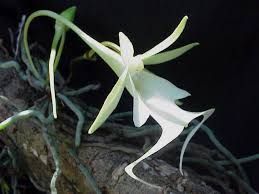
The Ghost Orchid* – Dilys Wood 

I hear him claim, “A flower for all seasons –

only she needs no sun, no seasons . . . “, as if

this grey-haired plant hunter is thrusting

into the woven thickness of the forest

like a man into a woman. I ask

how rare this orchid is, has he seen it,

what kind of plant is it? “A plant

for the heart”, he says, “Of old woodland like this.

She’s very rare, in fact – has no green parts,

doesn’t photosynthesise, doesn’t exist

but the hundredth time you look in the same place

she’s there”. He’s fixated but quite normal,

stopping for a break in my patch of shade.

Common plants are there, low-growing Wood Sorrel,

Wind Flowers he calls ‘Wood Anemone’

with petals that blush like adolescence.

Her ashes (that’s my thin girl’s ashes)

are indistinct among small white flowers,

ferns, wood-ash from log-burnings on this spot;

but he sees how, with the box still in my hand,

I stare into the thicker trees for glimpses

of my strange one and how I’ve not spread out

but spilled her heap of absence on the ground.

We exchange photos for a minute. “It’s weird

enough?”, giving me his colour snap

of the ‘Ghost’ lit by a camera-flash,

and so albino, transparent, spectral,

I catch my breath. It’s so like my daughter,

or what we saw inside, her ‘lit-up’ self.

Running his fingers under Wood Sorrel leaves

to show delicate, bent flowers, he says,

“Life-cycles are so utterly diverse –

see a miracle in all lives, if you like”.

*The Ghost Orchid, Epipogium Aphyllum, is Britain’s rarest flower with findings reported in 1986 and 2010. It has been described, ‘In a torch beam . . . they appear translucent white . . . almost like a photographic negative’.

Dialogue is difficult to use convincingly in a poem but this poet dives straight in without context or scene setting, though as we are baffled we are also intrigued. The “grey-haired plant hunter” is a near relation of Coleridge’s Ancient Mariner initially, though on this occasion he seems to need a little prompt or two to get going. Instead of a victim of experience though, he turns out to be a seeker – for the rare, the beautiful, the elusive, valuable precisely because so seldom of this world. The compassionate heart of the poem is only introduced (bravely) half way through with the more than strange coincidence of what the narrator is up to. The exchange they pursue is very moving, a quiet (can I say) English version of those often more hysterical scenes of mothers holding out photographs of the disappeared. The throw away ending is a stroke of genius, throwing this extraordinarily intimate moment back to the reader.

pzFA62XC3Ne6kPqJvOmD-0NjmAx4zx5Myw3CqgZYukY


*

Third Place Poem:

The Haircut – Catherine Edmunds 

She stands in front of the bathroom mirror, ties her hair back, presses

the fringe down flat on her forehead. It reaches over her eyes. She

picks up the scissors for the last time. First she thins the fringe, just a little.

There’s not much hair. Alopecia – stress related.

That’s what the nurse said. Here, have some pills.

Next she cuts along in a gentle curve, level

with the underside of her eyebrows.

He’s never known the colour of her eyes. They’d played that game once:

what would you sooner lose, a leg or an arm? Your hearing or your sight?

Okay, she’d said, go on – tell me the colour of my eyes. She’d shut them

tight, laughing, expecting the right answer, expecting a kiss.

The hairs drop into the sink. It will be blocked

by the time she’s finished.

She looks at her face in the mirror. There they are; her eyes,

her beautiful hazel eyes.

The fringe isn’t straight. She levels it, brushes it out.

Still isn’t straight. Snip-snip-snip.

Still. Not. Straight. snip-snip-snip-snip-snip-snip-snip-snip-snip

He’s suggested she dye it. Cover up the grey. Maybe bleach it,

go blonde, but get it done properly, he’ll pay. She’d sooner be a redhead.

She sticks the point of the scissors into her scalp, watches the blob of blood.

Stands and watches. Watches. The red blob settles, works its way

along a few hairs, glues them together. Darkens. She preferred the brighter red.

She slips the scissors under the skin. Snip. Snip-snip.

Raw and pink underneath.  Snip. Snip.

And then she slashes at the hair, all the hair, and cuts and cuts until

it’s reduced to tufts across her head, and then she hacks at her scalp

to get rid of the tufts, hacks and hacks.

Pink. Oozy.

Her eyes are crying. She doesn’t want to see

her eyes crying. She holds the scissors firmly with both hands.


I agonised over this one because I doubted, at times, the intentionality of the effects. Yet even if the monstrously powerful impact was fortuitous – does that matter? The words do their work. I was agnostic because of the looseness, the long lines, the repetitions, the plainness, the directness. But aren’t these elements precisely what makes the poem so gut-wrenchingly unforgettable? Well – I stopped agonising and I went with the opening – so familiar as a moment of self-reflection, though not the condition briefly, dismissively alluded to. The relationship information is quick, convincing, just a facet of this person, not the whole story. How brave to be so repetitively onomatopoeic in the middle of the poem. Then it turns – sickeningly – on the word “redhead”, making it ambiguous, and so begins its horrible descent into drama. Perhaps into melodrama – but I teach teenagers and melodrama is a currency they trade in, knowing that it’s real.


*

5 Highly Commended Poems: Highly Commended of course means, that on another day, certainly perhaps with another judge, these poems might have been in the top three.

The Disappeared – Norbert Hirschhorn 

What makes us human is soil.

Landfill of bones, shredded tees, jeans;

mass graves paved over for parking.

What makes us human are portraits

– graduation, weddings –

mounted in house shrines and on fliers, Have You Seen?


Names inscribed around memorial pools

or incised on granite. Names waiting,

waiting for that slide of DNA, any piece of flesh –

for the haunted to be put to rest.

What makes us human is soil.

To stare into a hole in the ground,

fill with the deceased, throw earth down,

place a stone. Bread. Salt.

For Fouad Mohammed Fouad


A triumph of tone this one – from the intriguing, imperturbable, magisterial judgement of the opening, end-stopped line through to the stalling, breathlessly punctuated, fragmenting, grief-stricken ending. Between those lines the poem plays with the tension between its hard, objective tone, concerned with evidence, details, the empirical gathering of science and its efforts to articulate what it is that makes us what we are.


*

When I Heard Your Chemo Hadn’t Worked – Carole Bromley 

I had the urge to pick blackcurrants,

why it had to be blackcurrants and not blueberries,

raspberries or strawberries I don’t know. We never eat

blackcurrants, I guess because they must be cooked

with added sugar and if you boil the pan dry they stick

like crazy and even if the compote works it stains

and the stains never come out however many times

you put the clothes through the hot wash.

It rained on me so hard I had to park my bike

under a tree and try to shelter though the rain

meant business and hit my back over and over

like my mother that time I flicked water

down the stairs at my brother and didn’t know

she’d spent all day painting the landing and hall.

When I got there the notice said Far Field

and I walked miles and there were only blackberries

and I’d set my heart on blackcurrants.

Then I spotted the bushes and there was no-one

else and even though it started to rain again and my shoes

were getting stained purple, I didn’t care, just crouched

down and milked the fat black drops into the bowl.

A poem that triumphantly recovers from its own title – because the poem itself avoids any reference to the situation about which the title has to inform the reader. What we are left with is a direct, if self-mystifying, narrative. This is a search, a little quest, haunted by the indelible, the irrevocable, by stains. It’s a trial narrative, a coming through, a survival, but the grail here is extraordinarily equivocal; listen to the verb applied in the final line to the gathering of this ominous crop.

ZzrkO_fXONFIvJUF3EtgSeStCDYccEEdnPdvKn29mtg


*

My Humble Body – Kate Foley 

Just as a cloud becomes more

or less as it frays,

my humble body

is slowly learning to speak.

Not hint, not whinge

but say direct to my face

‘I am your face.’

‘Oh?’ I answer from somewhere

up here.

Yes! Not the memory

of your face, its trace

in old mirrors

but the now of it.’

And my body, no longer so humble,

like an old donkey with a spring

in its heels says ‘Listen!

Rough bits, wrinkles, furrows

where half-buried truths lie,

twinges, and you up there, we

can’t wait forever. It’s

now or never

to get together!’

‘Cliche!’ I smile,

scoring a point

but my body raises

its suddenly wise

hand and places

a gentle finger on my lips.


I’ve always disliked those poems which record a dialogue between the soul and the body, but this one convinced me (though I don’t know if ‘soul’ is the right word). The directness with which the humble body begins to speak is reflected throughout the poem in its clean, economical, lean lines. The progressive ironising – indeed, mickey-taking – of the soul/self’s arrogance is an object lesson in gradualist narrative development


*

At the War Museum – Tony Lucas 

Here is the shadow that was always at

our backs, though we were shielded. We knew

the stories – or the ones they chose to tell

to us, to tell themselves. Also the silences,

events that no one dared to mention.

These faces look familiar – recall the ones

who brought us up, who filled our world, but here

in uniform, removed to strange locations,

and performing tasks we never saw

them do. This is the world made strange, furnished

with obsolete contraptions that delivered

death, the well-known places mostly wrecked –

a quiet church you visited last year,

calm as Wren left it, is shown broken, open

to the sky, with shattered monuments;

a library’s hush, all raucous debris, plaster dust –

and if that happened to the books, what of

the people shelved in tidy residential

streets, gap-toothed with rubble, bathrooms

bared, paper hung ripped from private walls?

They had their modes of coping with it all –

swagger and slang, ‘business as usual’, wink

of an eye – that got them through. Styles

at first quaint to us, and now a foreign language.

Pictures, writings that seemed so peripheral

at the embattled time, now offer

our most intimate approach to this

alternate world. While, always, looming

back behind, what they themselves half knew,

an elder dark – of shells and mud, of gas

and blasted stumps, torn flesh and broken minds,

that forged, and warped, the world in which we grew.


This struck me as the most ‘well made’ poem in the top rankings. Though not using end rhyme, the quatrains are carefully controlled, making good use of the de-stabilising of enjambement. There is a formality in tone too, from the title onwards. A distance perhaps but that enables the narrative voice to reflect, to judge and in the end to compassionate with the elder generation who suffered the horrors of war.


*

Theft – Josh Ekroy 

Awaiting permission for this text


The opening lines of this poem have an epigrammatic quality to them which the subsequent lines proceed to follow to their logical conclusion (though perhaps with a bit of black magic thrown in). This is like Blake in the mood of ‘The Marriage of Heaven and Hell’ and this poem gives us more modern Proverbs of Hell, reversing our preconceptions to both comic and politically serious effects.


*

10 Commended Poems:

Body Evidence – Alexandra Davis

Kentucky Fried Chicken in Georgia – Valerie Darville

The Man Whose Car was Stolen… – Christopher North

Ordinary Love – Noel Williams

Vulcano – Julie Mellor

Dear Revisionist – Martin Malone

A Sedge of Herons – Noel Williams

Teign – Roland Malony

As the days play on – Maria Stasiak

Quickly – Sue MacIntyre

How Do You Judge a Poem?

I am half way through the process of judging this year’s Torriano Poetry Competition (https://torrianomeetinghouse.wordpress.com/2014/10/27/torriano-poetry-competition-2015/). I’ve been lucky enough to judge a few such competitions in the last few years and what follows is a compilation of thoughts on the judging process. Though the initial sifting can be a slog, the latter stages are fascinating as poems that set little hooks in you at first reading, gradually become more clear, their internal coherence emerging alongside their skills with language and form. What follows is inevitably a personal take on the business – more so as the process unfolds – but I hope it may cast some light on it for those (of us) tempted to spend hard-earned cash on entering the numerous competitions now running (here are a few . . . http://www.poetrylibrary.org.uk/competitions/).

In the 2003 comedy film Bruce Almighty, Jim Carey plays God and, alongside with more obviously useful powers, he has to respond to the prayers of the world. But people are always praying; he rapidly approaches a kind of madness as voices swim around him, clamouring for attention.  He takes to reading the prayers in the form of e-mails. He tries to answer them individually but is receiving them faster than he can respond. He sets his e-mail account to automatically answer “yes” to all, assuming this will make everybody happy. Of course, it does not.

imgres

A poetry competition judge comparing himself to a character playing God lays himself open to criticism – but I have indeed found the initial phases of judging rather like Jim Carey’s experience. There are so many and such a variety of voices clamouring to be heard and every one of them is heart-felt, recording significant moments in people’s lives. There is a similar sense of responsibility too – the raw nature of much of the writing is impossible to deny. I’d like to set my response mechanism to say yes to everybody, but the judge’s task has to be how to distinguish submissions as poetry.

**

The numbers are always frightening. Many hundreds of poems will be submitted. Perhaps only 10% of these will demand a further reading after the brutal first sifting. Poems face an early red light from most judges because basic elements are not competently done:

  • Competitions are full of pieces where a particular verse form or rhyme pattern tyrannises the sentiment. The writer’s submission to this tyranny becomes clear quickly through the contortions imposed on the language to achieve a rhyme.
  • The writer’s choice of language can be devastating to the life of the poem. It just isn’t right to opt for forms of language or abbreviations that died out early in the nineteenth century.
  • Choice of diction also derails an entry if it is doggedly abstract. Sure, there remains much debate about whether it is the narrow English tradition that insists on things rather than ideas – but poems about Fear, Ignorance, Poverty, Eternity and Love which refuse to dip a toe into anything resembling a real life situation are going to find progress hard.

leaning-stack-of-papers-and-files

  • A fourth error is using language without being fully aware of its likely resonance with a possible reader. A poem called ‘Mother’s Pride’ which turns out not to be aware of the loaf of bread is going to have unanticipated clutter to climb over in the reader’s mind. Louis MacNeice wanted the poet not to be an ivory tower type, but rather “able-bodied, fond of talking, a reader of the newspapers, capable of pity and laughter, informed in economics . . . actively interested in politics”. All a bit Boys Own perhaps, but if this means the poet stays up to date with the way words live then he’s right.

 **

If you are thinking of submitting to a competition, it’s worth recalling Wordsworth’s formulation – familiar though it will feel – that poetry is built from “emotion recollected in tranquillity”. Poems made in the heat of the moment (and not revised and reviewed in the name of not tainting spontaneity) are seldom without their flaws. This is the kind of distinction Rilke also makes when he denies poetry is composed of feelings. Its constituents are rather “experiences” which he clarifies as “memories” though even with these, we “must be able to forget them when they are many and one must have the immense patience to wait until they come again . . . Only when they have turned to blood within us, to glance and gesture, nameless and no longer distinguished from ourselves – only then can it happen that in a most rare hour the first word of a poem arises in their midst and goes forth from them”. On the other hand, such recollection can sometimes create an intellectualised distance that may do harm to a good poem. Who said writing a poem was easy?

louis-macneice

Stephen Spender argues that a poet should try to acquire skill and virtuosity through the study and interpretation of other poetic works in the way Mozart and Beethoven did in playing the music of their predecessors.  Spender suggests translating poetry is the best possible exercise in interpretation. But the really important lessons (Spender says) are those of the eye, the ear, the athletic/poetic muscles. A poet can go a long way without a developed heart, but, he says, can get nowhere at all without these skills. The poet must ask continually of his lines: ‘Do they make the reader see, or hear, or feel, this experience which I am trying to re-create?’

 **

Reaching the final stages, the judge will be focusing more positively and more clearly on the sense, the story, the thought of a poem. Personally, I like poems that focus on small things and, in effect, make arguments for the ways in which they communicate the bigger issues that concern us all. I’m with Thomas Hardy in believing that “he used to notice such things” is one of the greatest of compliments. Edward Thomas’ poem about Spring, ‘But these things also’, likewise echoes this focus on what most people tend to overlook:

The shell of a little snail bleached

In the grass; chip of flint, and mite

Of chalk; and the small birds’ dung

In splashes of purest white . . .

Perhaps one explanation of why the question ‘what is poetry?’ is difficult to answer is because it is an art of the negative, of avoidance. The Daodejing says what is rigid and inflexible is a companion of death; what is flexible is a companion of life. I’d guess there would be general agreement that poetry is an art on the side of life. So poetry must eschew the inflexible; we must avoid the posture. And that’s very hard. In judging a competition one comes across the Wordsworth-posture, the Ginsberg-posture, alongside those of Betjeman, Hughes, Plath, Duffy . . . But we also posture like mad in ‘real life’. We may take up the pose of grief, melancholy, love, liberalism, environmentalism . . . The mark of the absence of posturing is an instability, an openness, an awareness of time (which posture tries to deny) and this is something I look for in a good poem. If a poem strikes an attitude my attention diminishes (even the attitude that wants to show a rejection of attitudinising through the hall of mirrors of ironic distancing). When the poem unearths a pulsing, shifting, live relationship between the self and the other, then I am captivated, recognising something that is both commonly human and uniquely personal.

But having said all this, I’d assure potential competition entrants that anything resembling a rule is there to be broken. Philip Pullman has said, “We don’t need a list of rights and wrongs, tables of dos and don’ts: we need books, time, and silence. Thou shalt not is soon forgotten, but Once upon a time lasts forever.”

114650911_345473c

So any poem in any form can work its magic. It will haunt its reader for days; it will make me change the way I think and feel; make me see the world differently. Ultimately, a poem contributes to who the reader is becoming. That is an exciting prospect for the writer. It is an even more exciting one for the judge who settles down to read.

Helen Mort’s ‘Division Street’ wins Aldeburgh First Collection Prize

The winner of the Fenton Aldeburgh First Collection Prize 2014 – one of the most long-established poetry awards in the UK – was announced at the opening of the 26th Aldeburgh Poetry Festival on Friday 7th November. The judges were Imtiaz Dharker, Robert Seatter (Chair) and Anthony Wilson. Here, Anthony Wilson assembles the competitors on his own blog: http://anthonywilsonpoetry.com/2014/11/08/the-fenton-aldeburgh-first-collection-prize-2014/

The prize went to Helen Mort, Division Street (Chatto, 2013): http://www.thepoetrytrust.org/news/fenton-aldeburgh-first-collection-prize-2014-ndash-winner-announced/

And here’s the review I did of the book a few months back for Poetry London:

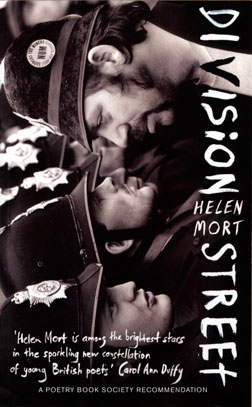
Mort’s first collection has been much anticipated (no-one else has been five-times winner of the Foyle Young Poets Award!) and Chatto have snapped her up but given her a rather ugly cover with its chalk-board script and rotated image of police confronting striking miners in 1984. Michael Symmons Roberts identifies the bedrock of the book as “the north of England” and the semiology of Division Street means the reader anticipates something more politically engaged than the poems deliver: this is not Heaney’s North, a bit more North of Boston. The north is often setting if not subject, but it is a place almost too recognisable where a girl learns “the name / for artificial hills, the bridge / where a man was felled by bricks / in the strike” (‘Twenty-Two Words for Snow’). She might learn to dance, but sniggers at the teacher’s pretentious “parr-durr-shat” (‘Miss Heath’). A man grows old “in the same bungalow for thirty years / and dreams of digging his way out” (‘Fur’). A stage comedian gets a more lively balladic treatment which suggests a more resilient culture amongst the “empty works” and “braziers / that vanished thirty years ago” but the juke box still dates from 1971(‘Stainless Steven’).

division_street_cover

The risk is regional cliché here and I’m not sure this is really Mort’s true subject. The miners’ strike is dealt with via a re-enactment of the battle of Orgreave by conceptual artist, Jeremy Deller, in 2001. Mort’s desire to write about it is important but the sequence of poems is more an exploration of good old class guilt as the narrator leaves the “Calow WMC” to study in Cambridge, a place where she “cannot learn the tune”. The resonating image is of a different “picket line/ . . . crossed” into a “gilded College gate, / a better supermarket” (‘Scab’). This is why Mort’s epigraph is from Stevenson’s doppelganger novel about the “profound duplicity” of life, but both writers are less concerned with political divisions than personal. Much of Division Street is given over to explorations of the self’s development. The finely-tuned sequence, ‘North of Everywhere’, treats location as psychological landscape where the heart can be let “go on ahead of me”, where “silences become the better part of us”. Such questing is transmuted to a mother gazing at a group of deer, “on pound-coin-coloured hooves”. They are something she denies seeing, though the daughter also finds them, “closer / than before [. . .] their eyes, like hers” (‘Deer’). There is a recurring sense that “doors to other worlds exist” (‘Lowedges’). However much a narrator likens herself to her dogs, she is different:

one night I’ll set off past the meadow, down

behind the beck, beyond the blunt profile of Silver Howe

and nobody will call me back.

‘The Dogs’

Mort’s love of landscape is profound and, like Wordsworth, her hills and skies remain a locus, as well as image of, the process of self-exploration. She boldly plays on her own name in ‘The French for Death’, fantasising of a “girl / who takes the worst route home, pauses // at the mouths of alleyways, or kisses / strangers”. But this transgressive trouble-maker is not so prominent elsewhere where a more compromised, tentative identity emerges. ‘The Girl Next Door’ becomes a haunting double who seems to co-opt the narrator’s weakening identity. ‘The Year of the Ostrich’ wittily suggests a new astrological sign for those of us with “unlikely grace, / who hide our heads, or bear the weight / of wings that will not lift us”. Mort is always good at animals and while jogging she sees a fox, supple, slinking, sly, always about to vanish: “And what she sees she cannot tell, / but what she knows of distances, / and doesn’t say, I know as well” (‘Fox Miles’).

We find and define ourselves against others and Mort does this through romantic love, mostly its loss. “I turned to ask you something and you’d gone” (‘Fagan’s’) is a recurring sentiment. The title poem itself refers to the place where “You brought me [. . .] to break it off”, though in this case it is the other whose “head-down walk” we see, passing pubs in whose windows can be seen “nothing but your own reflection”. Pessimistically, ‘End’ suggests that “Death is // the shape / beneath romance” but the hauntings a writer sustains through such poems as these, though they do not revive the love, at least reinvigorate the lover and persuade that such deaths may only be “le petit mort”.

mort_helen

Liz Berry’s ‘Black Country’ reviewed

Liz Berry, Black Country (Chatto Poetry, 2014)

If a reputation can be earned through the writing of half a dozen poems of real worth then Liz Berry has probably already written them, earning her place in the landscape of early 21st century British poetry. Her debut collection (containing 14 poems from the earlier chapbook The Patron Saint of Schoolgirls (tall-lighthouse, 2010) has charm, accessibility and a humour that belies the serious ways in which she exerts pressure to counter the hegemonies of language, gender, locality, even of perception. Berry is a teacher by profession and will, no doubt, have equivocal feelings about her work appearing in classrooms – but it will rapidly and rightfully find a place there.
Liz-Berry

We resist what tries to define and suffocate us in part by declaring who we are. Berry’s confident, natural, even uninhibited use of her own Black Country dialect is one of the most superficially striking things about this book. Against “hours of elocution”, she opts for “vowels ferrous as nails, consonants // you could lick the coal from” (‘Homing’). Variously her grandmother and mother influence her in this and, in ‘The Sea of Talk’, her father also urges her never to forget the place of her birth with “its babble never caught by ink or book”. The definition of a community against the pull of a conventional linguistic centre is explicit here. Her grandmother is a frequent role model and the growing girl studies “her careful craft”. “Right bostin fittle”, the older woman declares (ie. great food – brains, trotters, groaty pudding) and the budding poet willingly touches her “lips to the hide of the past” to inherit the authentic gift.

Other poems, making it clear that locality is as much a component of who we are, record and celebrate the Black Country as “a wingless Pegasus” composed of scrub, derelict factories, disused coal shafts, yet still a “gift from the underworld” whose nature and fate is enough literally to make grown men weep (‘Black Country’). Berry takes huge pleasure in enumerating the details of her locale. “Come wi’ me, bab, wum Tipton-on-Cut” invites one poem which then takes a tour of waterways, allotments, parks, mosques, steelworks and canals (‘Tipton-On-Cut’). Similarly, ‘Christmas Eve’ seems to improvise from the great concluding paragraphs of Joyce’s story ‘The Dead’, using the ubiquitous fall of snow to lead the reader across the landscape of Beacon Hill, Bilston and Molineux.

We elude being imposed on and defined by others by changing. This, for me, is the more profound aspect of Berry’s work; so many poems unfold as processes of self-transformation. A mark of the book’s self-confidence can be found in ‘Bird’ which announces this motif of liberation: “When I became a bird, Lord, nothing could stop me”. Here, it is the mother’s voice urging, “Tek flight, chick, goo far fer the winter”. In keeping with this, the poems display a formal variety – free verse, short-lined quatrains, couplets, tercets, ballad forms, punctuation comes and goes. This is further reinforced by Berry’s bold, category-dissolving imagination which instinctively reaches for metamorphic possibilities. In ‘Birmingham Roller’ the escapee is a bird again, “jimmucking the breeze, somersaulting”; people become dogs, trees, pigs, fade to mere echoes, girls become boys. The donning of a pair of red shoes invigorates, eroticises: “rubies that glistened up a dress, / flushed thighs with fever” (‘The Red Shoes’).

Sexuality features so prominently in Black Country in part because of its potential for transgressive energy. I’m sure ‘Sow’ is anthology-bound with its “farmyardy sweet” female narrator, rejecting external definitions (“I’ve stopped denying meself”), accepting her true nature as a “guzzler, gilt. / Trollopy an’ canting”. This is a real tour de force of dialect, imaginative transformation and downright feminist self-realisation that “the sow I am / was squailin an’ biting to gerrout”, even daring the reader to “Root yer tongue beneath / me frock an’ gulp the brute stench of the sty”. Berry’s power of imaginative transformation is so powerful that the book creates mythic figures at will: the sow girl, the Black Country pegasus, the patron saint of school girls, Carmella the hairdresser, the Black Delph bride, the last lady ratcatcher. ‘Fishwife’ presents another of these figures like something from a quasi-pornographic Grimm’s tales. Attending a 17 year old girl’s wedding, she brings the gift of oysters, erotic energy, transgressive flirtation, power and ultimately pleasure:

                                            I slipped
from my bare skin
alive oh alive         all tail           all fin
how the tide tossed
until alive ohhh alive
the waves flung my shining body        upon the rock

She kisses the bride with “her tongue a plump trout” and other poems also resist categories to the extent of a sensation of gender-bending, or more accurately gender neutrality. I’ve already mentioned the girl who becomes a boy. ‘Trucker’s Mate’ reads like a homosexual “romance” and ‘In the Steam Room’ positively drips with sexuality – but of an explicitly “sexless” kind in which “any body / might give you pleasure”. ‘The Silver Birch’ achieves the extraordinary feat of evoking “sex [. . .] before sex” (eroticism before gender), “when I was neither girl or boy [. . .] a sheaf / of unwritten-upon paper”.

With so much dissolution of the normative, Berry dallies with the surreal and there can be dangers if the work does not also bear a weight of darkness. A poet like Tomaz Salamun writes in the tradition of Rimbaud’s systematic disorganisation of the senses, but combines, as Ed Hirsch suggests, “exuberant whimsy and fierce rebellion” to resist too easy a relationship with the pressures of the real. Happily, Black Country encompasses some richly productive tensions between the real and imagined, home and away, past and future, conformity and rebellion, sex and death. The latter rises to the surface through the middle of the book in poems like ‘The Bone Orchard Wench’, ‘Echo’ and the murder ballad ‘The Black Delph Bride’, acknowledging that the traffic between real and imagined contains plenty of irresolvable grit, impossible to wish away in any facile manner.

The collection concludes in more plainly autobiographical terms with the approach of the birth of a child and perhaps there is less imaginative pressure here, a risk of sentiment, “waiting [. . .] for the little creature that grew inside me”. Nevertheless, in reviewing first collections it’s traditional to look forward to achievements to come but this is inappropriate with Black Country simply because there is so much confidence, focus, shapeliness, already achieved uniqueness. Rather, this is a poet whose work presently demands our admiration. Oh yes . . . and what about those half dozen or so poems of real worth? I’d suggest ‘Bird’, ‘Bostin Fittle’, ‘Black Country’, ‘Tipton-On-Cut’, ‘The Silver Birch’, ‘Sow’, ‘Fishwife’. You’ll hear more of these in years to come.