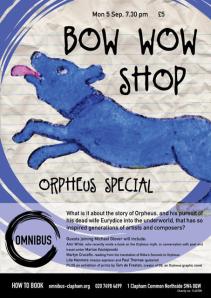
The Bow-Wow Shop’s Aspects of Orpheus

Bow Wow Shop Orpheus Poster_v2

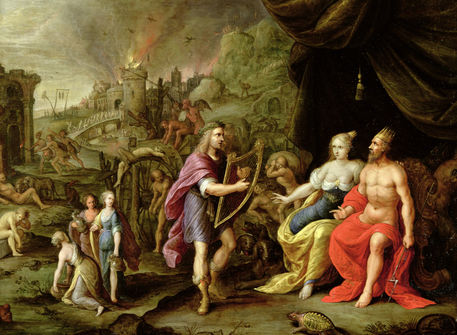
Last week I was pleased to be involved in the first of the on-line journal Bow-Wow Shop’s evening events in Clapham. Its focus was the figure of Orpheus: What is it about the story of Orpheus and his pursuit of his dead wife, Eurydice, into the underworld that has so inspired generations of artists, writers and composers?

Editor of The Bow-Wow Shop, poet and Independent arts and culture journalist, Michael Glover organises and he programmed a terrific mix of material. Ann Wroe’s 2011 book, Orpheus: the song of life (Cape), explores the roots of the Orphic story and traces its many manifestations through Classical to modern times. I was lucky enough to read with her at an event at Lauderdale House a couple of years ago. In Clapham she was in conversation with Marius Kociejowski. I was there on the strength of my 2012 translations of Rilke Sonnets to Orpheus (Enitharmon Press). Providing musical illustrations of the power of the Orpheus story were mezzo-soprano Lita Manners and guitarist Paul Thomas. There was also an exhibition of prints by Tom de Freston, creator of OE, a graphic novel on the Orpheus material.

imgres

Lita and Paul performed extracts for Gluck’s opera Orfeo ed Euridice (1762), songs by Vaughn-Williams and from the 1959 film Black Orpheus. Marius interviewed Ann though she needed little prompting to discuss several aspects of what is a wonderfully original book. Rilke’s inspired writing of the Sonnets to Orpheus (1922) form a thread through the book but she steered clear of that and concentrated more on the first evidence of the myth in the 6th BCE: a painting in black figure on a Greek vase, pictured with a huge lyre that almost seems part of him. Already at that early stage he is called ‘famous’. A 13th century BCE Cretan vase perhaps images him, again with the super-sized lyre (denoting divine powers, his music powerful even over inanimate objects birds, trees). Elsewhere he seems imaged as a bird himself – the power of song and music so strong that he must take on the attributes of a bird-god.

imgres

Perhaps even further back, Ann suggested, the figure is based on fertility myths, perhaps of Indian origin. His wife Eurydice likewise is linked to the figure of Persephone, the whole narrative in its original forms reflecting ideas of the seasons, death and re-birth of the earth, the crops. But there remains something irresolvable about the Orpheus myth – this polyvalent quality is one of the reasons for its productive quality in terms of inspiring artists. We kept recurring to the question: why must Orpheus turn as he is leading Eurydice out of the Underworld? The story contains its own tragedy. Ann suggested one interpretation might be to do with the fact the Eurydice represents the mystery of the natural world, or perhaps of knowledge/speech about the natural world, and that must necessarily remain hidden. Such a thing is the remit of the Gods alone. Orpheus must leave the Underworld empty-handed.

images

I spoke about Rilke in 1921, settling into the Château de Muzot in the Swiss Valais. How he liked to walk in the garden with its orchards and roses in full bloom, a landscape often evoked in the sonnet sequence which eventually arrived. He later declared that in the month of February 1922, he ‘could do nothing but submit, purely and obediently, to the dictation of [an] inner impulse’. In an extraordinary inspirational period, between the 2nd and 5th of that month, most of the 26 sonnets of Part One of Sonnets to Orpheus were written. He then polished off the ten year old sequence of the Duino Elegies. Between the 15th and the 23rd, Rilke went on to complete the 29 poems of Part Two.

Perrcy Bysshe Shelley wrote a longish fragment on the myth in 1820:


His [song]

Is clothed in sweetest sounds and varying words

Of poesy. Unlike all human works,

It never slackens, and through every change

Wisdom and beauty and the power divine

Of mighty poesy together dwell,

Mingling in sweet accord.


Here, as often, Orpheus is an image of the (male) artist/poet as well as being an image of our desire to find or create order or harmony in the world about us.

Rilke’s inspired poems brim with optimism and confidence about the role of poetry. In contrast, but more typical of the growing 20th century gloom, perhaps with intimations of a second world war, 15 years later – Auden’s brief 1937 poem ‘Orpheus’ is mired in uncertainty, asking “What does the song hope for?” Is it to be “bewildered and happy” – a sort of ecstatic but unthinking bliss? Or is it to discover “the knowledge of life”? No answer is given. The poem ends: “What will the wish, what will the dance do?” This is the Auden who doubts the power of poetry – it makes nothing happen – in his Elegy to Yeats.

And more like Auden than Rilke, the 20th century tended to take a more sceptical view of the myth – giving a more powerful voice to the traditionally passive Eurydice – more critical of Orpheus as careless, self-centred, weak. For example, in 1917 – 4 years before Rilke arrived in his chateau, H.D.’s Eurydice was condemning Orpheus:


for your arrogance

and your ruthlessness

I have lost the earth

and the flowers of the earth


Such radical revisions come also from more explicitly feminist poets like the American, Alta:


all the male poets write of orpheus

as if they look back & expect

to find me walking patiently

behind them, they claim I fell into hell

damn them, I say.

I stand in my own pain

& sing my own song

fullsizerender-11-360x348

Carol Ann Duffy’s revision (in her 1999 book The World’s Wife) gives Eurydice both poem title and narrative perspective. Her Orpheus is:


the kind of a man

who follows her round

writing poems, hovers about

while she reads them,

calls her his Muse,

and once sulked for a night and a day

because she remarked on his weakness for abstract nouns.


She saves herself from having to accompany Orpheus back to the upper world by offering to listen to his poem again. Orpheus, seduced and flattered, turns. “I waved once and was gone” she comments.

imgres

In this context Rilke’s take on the myth is (not surprisingly) very traditional and brimming with confidence in the role of the poet and patriarchal sidelining of Eurydice. So Rilke’s interest lies with the world and the underworld, life and death. He is more like Shelley who set his fragmentary poem after the loss of E and it’s coming through that experience that seems to add power to his song. Rilke is interested in the idea of transition. Orpheus tries to recover Eurydice; he moves from life, into death and then back again. This fluidity, the courage and a readiness to renew ourselves, to be risked in the absorption with something other, to be translated from one realm to another, to come and go, to be and not to be is what draws Rilke to the myth.

This is also Don Paterson’s thinking behind his versions of the Sonnets in Orpheus (Faber, 2006). He argues Man is unique in having foreknowledge of his own death, meaning we act as if we are already dead, or historical. This means that we construct life as an authentic and intelligible narrative, a life with meaning, but it is death that drives the plot of our life. This is one of Paterson’s key ideas and he refers to it as our ‘ghost-hood’. So we are like Orpheus: we too have descended to the land of the shades and then returned to the present moment – our condition is therefore existentially transgressive, riven, divided.

It’s the singing of the Orphic artist that addresses and bridges such divisions. This explains Rilke’s interest in the Orpheus myth: its narrative is a metaphor for the longed-for transit or communion between the realms of life and death. He possesses the desired ability to inspire the renovation of human perception that can initiate a more comprehensive, joyful and celebratory experience of life. One of the things most people know of Rilke is his exhortation to praise. Praise is a form of secular prayer for Rilke and it demands a renovation of conventional language through Orpheus’ song – as also noted by Shelley in Prometheus Unbound:


Language is a perpetual Orphic song,

Which rules with Daedal harmony a throng

Of thoughts and forms, which else senseless and shapeless were

imgres

Orpheus’ singing as a way to think about the language of poetry can clearly be seen in Rilke’s celebratory sonnets about the garden at Muzot. Here’s my translation of sonnet I  13:


Pear and plump apple and gooseberry,

banana . . . all of these have something to say

of life and death to the tongue . . . I guess . . .

Read it in the expression on a child’s face


as she tastes them. It comes from far off.

Slowly, does speechlessness fill your mouth?

In place of words, a flood of discovery

from the flesh of fruit, astonished, free.


Try to express what it is we call ‘apple’.

This sweet one with its gathering intensity

rising so quietly – even as you taste it –


becomes transparent, wakeful, ready,

ambiguous, sunny, earthy, native.

O experience, touch, pleasure, prodigal!


Rilke’s vigorous and self-conscious mutations of the sonnet form create a variety of rhyme schemes, line lengths, iambic and dactylic pulses. David Constantine has described this as suitably fitting forms for the figure of Orpheus because he is himself a figure of transition, fluency and mystery.
234203

Forthcoming Bow-Wow Shop events in Clapham will focus on the work of Edward Lear and Gabriel Garcia Lorca.
Jan Wagner: the Poet as Tea-Bag and as Chameleon

imgres

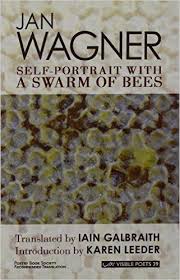
Iain Galbraith’s really skillful translations of the German poet Jan Wagner have just won the Popescu European Poetry Prize. Wagner’s poems brew a formal brilliance (Karen Leeder remarks in her Introduction to Arc’s Self-Portrait with a Swarm of Bees, that “virtuoso” is the compliment most often applied to him) with an intense concentration on really existing things. In the German tradition, of course, such a meticulous and sensual evocation of things (‘die Dinge’) harks back to Rilke’s advice in the ninth of his Duino Elegies (1922):


Perhaps we are here to say: house,

bridge, fountain, gate, jug, fruit tree, window –

at most: column, tower . . .


Rilke’s cycle of poems arrives at this conclusion (“Praise this world to the angel, not some / inexpressible other”) not at all in the spirit of defeat but in a celebratory mood because it is only through honest interaction with the world that we define and refine our sense of ourselves. Equally and dialectically, through, our emotional and artistic responses to the world of things we are able to translate the inanimate and unconscious world into something more significant, lasting, spiritualized.


And these things, which live by passing away,

acknowledge your praise of them, as they vanish,

they look to us to deliver them, we, the most

fleeting of all. They long for us to change them,

utterly, in our invisible hearts – oh, endlessly,

to be within us – whoever, at last, we may be.


It is just this ebb and flow between self and other, each re-defining the other, each growing in response to the other, that Wagner seems intent on recording. But it’s not always an easy process as the poem ‘Mushrooms’ suggests. The narrator must listen for the snap of a twisted stem as if cracking a safe, “hoping for the right combination”. But when the right balance (I’m afraid it has to be this dull-seeming word) is achieved between active exploration and passive sensitivity then two worlds are miraculously joined.

10117b9d-d35e-424f-8aba-89d57234ee71-vision

But we need not get too po-faced about the process. Wagner suggests a tea-bag might help us envisage it. In two haikus, he wryly evokes both facets of such communion in a religious visionary and a rope-dangling, Indiana Jones-type adventurer:


1

draped only in a

sackcloth mantle. the little

hermit in his cave


2

a single thread leads

to the upper world. we shall

give him five minutes

Jan Wagner
Jan Wagner

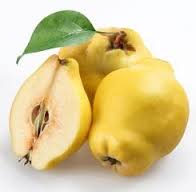
Wagner reflects the often rebarbative nature of the process partly through typographical choices, abandoning capital letters throughout (a far more disturbing move in German, of course, which capitalizes all nouns, all things). It’s also reflected in the choice of fruit in ‘Quince Jelly’. Knobbly and ugly, even ripe quinces are inedible when raw, astringent and tough. Wagner acknowledges the “tough and foreign” quality of the fruit and its taste which makes “our palates baulk”. Yet the human work invested in the transformative domestic process yields great rewards:


quinces, jellied, lined up in bellied jars on

shelves and set aside for the darkness, stored for

harsher days, a cellar of days, in which they

shone, are still shining.

imgres

Such meticulous observation and sensual details held in the form of verse ensure Wagner’s things are always more than themselves and here the quince jelly is a poem, much like Wordsworth’s daffodils, an accumulation of “wealth” to flash upon “that inward eye” in days and years to come.

Wagner also chooses a ‘Chameleon’ to represent the poet. Describing the creature’s curved tail as a “pastoral staff” raises the spiritual stakes with a wonderfully light touch. The animal’s perceptive acuity is likewise explored with its tongue like a “telescope”, snapping up the “constellation” of a dragonfly. Its eye is a “fortress” yet contains a flickering pupil; an indefinable restlessness is suggested by its shed skin like “an outpost or long-discarded theory”. Most tellingly, the chameleon’s independently moving eyes enable Wagner to suggest the balance of both centrifugal and centripetal thrusts of the true perception: the animal gazes “simultaneously at the sky / and the ground, keeping his distance / from both”.

imgres

The title poem of Arc’s selection (taken from 5 collections between 2001-2014) is another portrait of the poet. ‘Self-Portrait with a Swarm of Bees’ has the narrator wearing an ever-accumulating beard of swarming bees. The risks and dangers are part of the point but the poem focuses on the accumulating “weight and spread”, suggesting the swarm extends and adds to the narrator in some intrinsic way. Indeed, he becomes “the stone-still centre of song”. In the next quatrain, the passive singer is converted into an “ancient knight” arming for battle, yet he does not either advance or retreat:


just stands there gleaming, with barely a hint

of wind behind the lustre, lingering breath,

and only vanishing becomes distinct.


This teasing last line (“und wirklich sichtbar erst mit dem verschwinden”) is best understood again through Rilke. Auden affectionately ribbed Rilke as a poet whom “die Dinge bless, / The Santa Claus of loneliness” but it is in the challenge to self confronted through honest encounters with the world of things that we re-make and re-define our sense of self. Here is the idea expressed in Rilke’s Sonnet to Orpheus, 2, 13:


To the used up – to all Nature’s musty and mute,

its brimming storehouse, its inexpressible sum –

joyously add yourself and the account’s done.

 (All translations from Rilke here taken from my translations of  ‘Duino Elegies’ and ‘Sonnets to Orpheus’)

bee-beard

Hear Galbraith read ‘December 1914’ below:


Olivia Byard’s ‘ The Wilding Eye’ reviewed

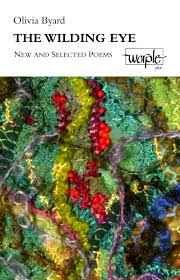
I confess to being unacquainted with Olivia Byard’s work before I was paired to read with her at last year’s Cheltenham Poetry Festival. We had both just had new books from the always enterprising Worple Press. I read with her again last week at Oxford’s Albion Beatnik Bookshop. I wanted to try to convey something of her methods and concerns in this blog.

imgres

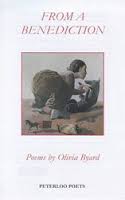
In The Wilding Eye, Worple Press have gathered new poems and others selected from Byard’s previous two collections, From a Benediction (Peterloo, 1997) and Strange Horses (Flambard, 2011). Her work ranges from vivid evocations of childhood scenes, to mythic treatments of subterranean psychic hurt, sketches of domestic exchanges, more politically engaged poems and (recently) a more expansive concern with our relationship with nature. Her work is hard to pigeon-hole but acclaim from the likes of Les Murray and Bernard O’Donoghue is well deserved.

Some of those hyper-lit childhood scenes appear in ‘From Benediction’ which is a brilliantly detailed account of a child’s encounters with an eccentric, kindly grandfather. But even though his “disembodied” false teeth are more likely to be caught smiling “in their cut-glass jar”, it does not take a very close read of the poem to sense unease. The child is “trapped outside” her grandfather’s room, yet inside the furniture looms like “black giants” and dolls are trapped in “glass cases”. ‘Without Blessing’ reinforces this sense that all is not well. Why should the two sisters be sleeping in “Aunt Audrey’s bed” at all? Where are the parents? Are they perhaps part of the “razzle dazzle beyond the door”? Why should one sister be happily “abandoned” to sleep while the narrator eyes the mirror, all too awake, eying a “dark opponent” there? All she can think of are “stratagems for escape” yet memory reminds her any attempt at flight is “futile”. When the word “menaced” finally arrives as a way of describing her state of mind it is the wholly appropriate one.

imgres

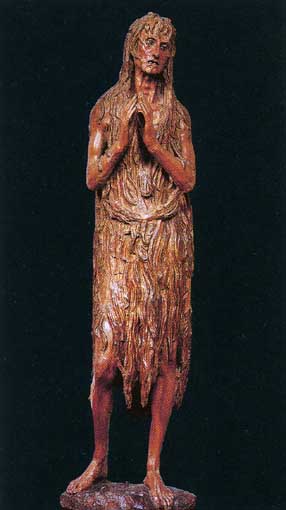
‘Theft’ is more explicit. “Her childhood was thieved”. These were bold poems in 1997, four years before Pascale Petit’s The Zoo Father (Seren). But Byard does not allow herself to be wholly defined by past events. Whatever their source, the wounds send out shock waves that surface variously. Here as a strange fascination with a schoolgirl’s traffic accident, now in the landscape of Lake Huron, now in the way Byard is drawn to characters from Christian myth (Christ, Mary, Mary Magdalene, Lilith, Lazarus) all of whom are co-opted into micro-dramas of pain and survival. Magdalene is just the most obvious example of this with her mouth’s “bruised hole battered / by harsh sounds” and in a second poem the character herself speaks out: “My nature haunts you; it wrecks / your peace”.

magdalena2

Yet Magdalene is partly addressing men (surely the root of disturbance) and what she demands is some self-knowledge, or at least less blindness. She says “Search for where I reside in you”. But the re-making of the masculine ego is not really Byard’s preoccupation in her poems. Instead, there is an internalising of what she calls plainly the “dark side”. ‘Whores in Amsterdam’ is a memorable poem as the female narrator watches the sex workers closely, she imagines their thoughts – then returns the next day to do exactly the same again. Why? Perhaps “to learn the limits of my own dark side”. Or perhaps “to hide”. Many poems from Byard’s second book, Strange Horses, pursue this sense of the dark carried unwillingly, but inevitably within ourselves. ‘Mappa Mundi’ half-mockingly records the strange mythic creatures illustrated on the map but quite seriously concludes with the wish to forget “our roaming monsters”. ‘The Torturer’s Horse’ revisits Auden’s ‘Musee des Beaux Arts’ only to locate the root of worry, blood and unease in “you or me”.

the-forest-fire-piero-di-cosimo-1505

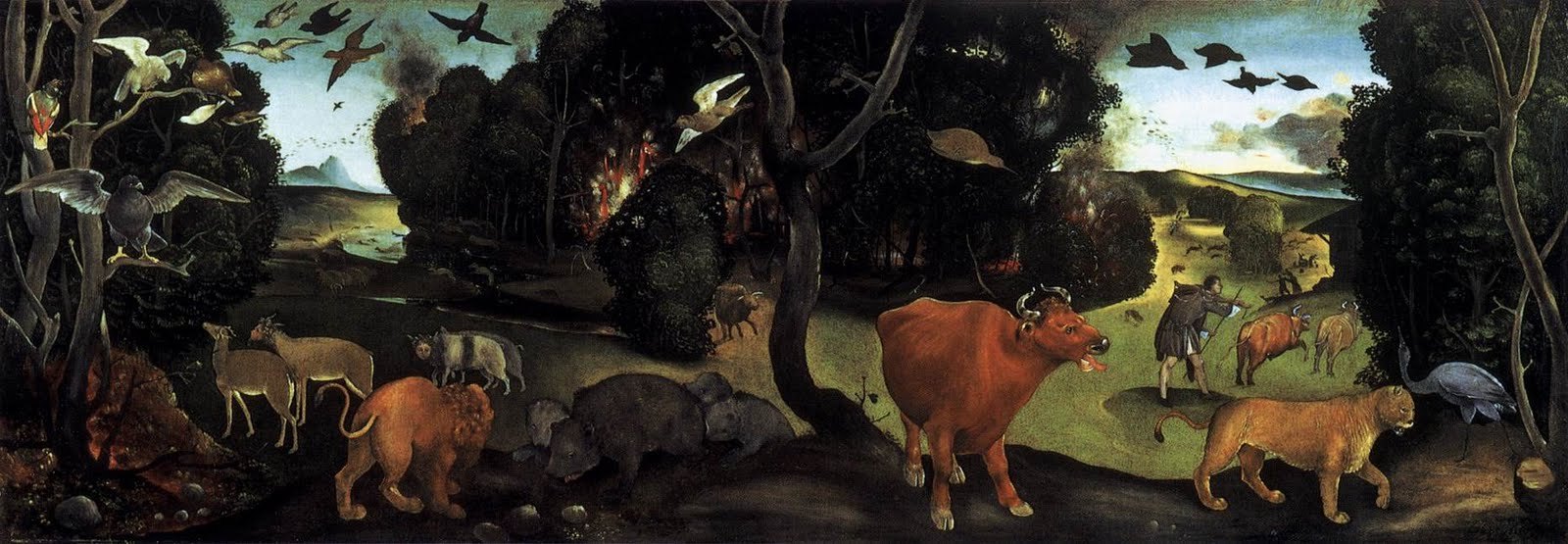
In another ekphrastic piece on Piero di Cosimo’s ‘The Forest Fire’, the beasts fleeing the fire – many of them with human faces – are plainly identified as our own nightmares, briefly dislodged but all too soon returning into the mind’s undergrowth, to lie in wait again, “for the dark dreams to quicken”. And such darknesses can be set loose at the slightest provocation. In ‘At the Kennels’, a casual comment about the dogs is made: “they never really / forget abuse” and a delirious, Plathian, nightmarish torrent of images is released, culminating in “a twitching thing” attached to an ECT machine. In part, it is the presence of, perhaps the responsibility for, the needy creature in the narrator’s arms that steadies the situation on this occasion, enabling a homecoming where, in a more assertive tone, deftly managing the shift from literal to figurative, we are told “I throw open the windows. / Everywhere, I throw open windows”.

Each of Byard’s collections contains cave dwellers. ‘At Ruffignac’ (1997) has the narrator time-transporting to watch the cave painters at their “serious joy”, secluded, secretive, their art a translation or distillation to be held aloof from the outer world. In ‘The Horse at Ystradfellte’ (2011) the outer world is again an almost fairy-tale-like, maze-like rummage and bustle in contrast to the small white horse image, “whole, complete, protected / from marauding eyes” in the cave. Interestingly, in ‘Homo Erectus’ (2015), the bustle of the world is this time presented more satirically through big-bummed, munching cave-men, who seem intent on excluding those who do not fit in. The poem notes the old, the hobbling, the dim, the infertile. And one other outsider: the needlessly observant one who stops, distracted from the merely necessary, to watch a bird, only to be “irredeemably entranced / by breath and song”.

imgres

Poets like to dramatise themselves as neglected heroes; we like to believe our ‘useless’ art has its uses. In the unfolding drama of Olivia Byard’s speleological sequence of poems, I can’t help but read the more recent access to light and air, to bird song and branches, as a further metaphorical opening of psychic windows. And it’s not merely in the acquisition of a new household pet that the new poems lean upon the natural world. ‘Inheritance’ lists a plethora of natural details in a celebratory tone as something “not withheld” and nature’s gifts prove a likely “fresh furrow” in ‘Wood’. In ‘The Wilding Eye’ itself, the abandonment of the manicured lawn to unregimented disorder is in part ecological, part psychical as years of trimming, reserve and restriction give way to “great / gulping breaths, of sweet riot /  and tangle”.

There is real delight in Byard’s recent poems, all the more powerfully felt for the sense (after DH Lawrence) of ‘Look, we have come through!’ The gifts of nature (and the need to protect them) are foremost in this but ‘Besetting Sins’ (despite its title) also triumphantly expresses a far less corrosive, self-critical assessment of mankind’s – of this particular poet’s – “wonky wings, wrong angles, pratfalls”. We may know happiness begins in forgiving ourselves but it may prove an almighty struggle towards that point at which “it’s time / to turn, be returned” (‘Way Out’).

imgres

Douglas Dunn’s ‘Terry Street’ and Thoughts of 1969

Recently, in my local Oxfam shop, I found a remarkably well-preserved hardback first edition of Douglas Dunn’s debut collection, Terry Street (Faber, 1969). Since living in a very similar street in Lancaster exactly 10 years after Dunn’s book was published (Aberdeen Road, up on the northwest-facing terraced streets above the town, looking out across Morecambe Bay to the – occasionally snow-capped – peaks of Cumbria), I’ve always had a soft spot for the book. But I hadn’t read it in years, I now realise.

images
Aberdeen Road, Lancaster, in a recent photo

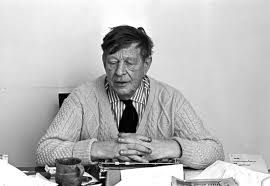
The particular copy I bought (for £2.50) still had the Poetry Book Society’s Bulletin in it as Terry Street was the PBS Choice for Autumn 1969. It printed a review by Julian Jebb of the PBS’s second Poetry International staged at the QEH, South Bank, in July 1969. Jebb praises the organisers for attending to the faults of the first such event (noted as an over-crowded audience and over-running readings by poets). WH Auden is there in the “blackest of spectacles”, reciting recent work from memory including ‘On the Circuit’ (1963) in which he satirises the lecture/reading round he has been treading in the USA: “so large / So friendly, and so rich”. He read precisely: “15 minutes and hardly a fluff”, reports Jebb.

images

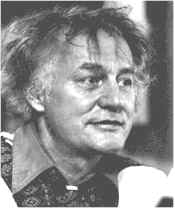
He was followed by “a ponchoed American poet, Robert Bly”. Jebb’s tone here will have been addressed to the original readership of his review (it appeared in The Financial Times) but it’s still an interesting period piece. Bly seems to have flailed his arms while reading “in tragic-comic, uncoordinated circles, strongly reminiscent of Peter Cook’s imitation of Macmillan in Beyond the Fringe”. Later he over-ran shockingly with 20 minutes of his “sloppy, deranged images about Vietnam”. This was delivered, Jebb tells us, to a growing slow hand-clap.

bly
A young-ish Robert Bly

Later in the evening, Edward Brathwaite, Derek Walcott, Ogden Nash, Miroslav Holub, Vasko Popa and Janos Pilinszky also read. Few details are given on these contributions unfortunately, but the experience of the latter three poets of the Second World War and Eastern Europe in the first half of the 20th century prompts Jebb to observe: “We have felt safer than these three men and we are grateful to them for their eloquence in telling us so”. Here is evidence that poetry was making very little happen when it came to the heavy lifting required to shift the entrenched sense of superiority and national egocentricity of the period.

So the review both evokes an earlier age of extraordinary poetry and also shows how far we have come. With Ted Hughes’ and Daniel Wiessbort’s founding of Modern Poetry in Translation in 1965. British poetry was just at this moment becoming exposed to worldwide influences (even if some were hardly listening). In this light, Douglas Dunn’s PBS Choice reads like the dying edge of the 1950s, of The Movement. The Terry Street poems themselves may be memorable evocations of working class life in Hull but what I notice now more than anything is Dunn’s obsessive use of the plural subject: young women, girls, the children, mothers, old men, the chatty women, men of Terry Street, old women, revellers, neighbours, street tarts, trawlermen, young women, the people who live here, men on bikes. These are versions of Larkin’s typological  “cut-price crowd” (‘Here’), the women in ‘Faith Healing’ and the fathers and mothers and newly married couples of ‘The Whitsun Weddings’. The difference is that Larkin would as often turn his acerbic gaze on himself. In Terry Street, Dunn makes the choice to keep himself out of the picture (behind glass) and there are hardly any delineated individuals in the book (though we all remember the man who wheels an optimistic lawnmower down Terry Street).

File 22-10-2015, 15 18 59

Dunn viewed ‘these people’ through a window – “our window” says a self-lacerating, retrospective poem of mourning addressed to his late wife, Lesley (‘Envoi’ in 1981). While the belief that these people were a fit subject for poetry is admirable, many of the poems now read as patronising, still mired in the English class system (despite Dunn’s Scottishness). To that extent I disagree with Terry Eagleton who, in 1970, praised Dunn for being able to “transcend the two major pitfalls of poetry concerned with working people – bourgeois voyeurism or sympathetic mythification”. Dunn seems to me to fall foul of both of these.

imgres

In the 1969 PBS Bulletin, the young Dunn himself wrote “Terry Street became for me a place of sad sanity . . . an alternative to the gaudy shams everywhere”. It was this sense of the real that Dunn needed (for himself) as a mature student in Hull, pursuing an English degree, and perhaps was a substitute for what he was already declaring: “Scotland is what I most want to write about and what I am least able to”. Later, Morrison and Motion’s 1982 Penguin anthology of contemporary British poets, pigeon-holed Dunn with Tony Harrison in being “sharply conscious of background and upbringing, which sets them at an angle to the cultural establishment”. But Dunn’s chosen strategy in the longer run was to acquire the ‘language’ of the poetic establishment in formal terms and try to speak up for those men and women of Terry Street (or their Scottish equivalent) rather than merely observe them from afar. ‘The Come-On’ appeared in Barbarians (1979):

Our level is the popular, the media,

  The sensational columns,

Unless we enter through a narrow gate

  In a wall they have built

To join them in the ‘disinterested tradition’

  Of tea, of couplets dipped

In sherry, and the decanted, portentous remark.

  Therefore, we will deafen them

With the dull staccato of our typewriters.

  But do not misbehave –

Threats and thrashings won’t work: we’re outnumbered.

Whatever piece it was Bly read that night in July 1969, the voice of the establishment regarded it as threats and thrashings and was too easily able to dismiss it.

How far have we come? Is it still the case that alternative poetic voices look to disguise themselves – whether with formal display like Dunn’s or with an obscuring erudition – to pass through the narrow gate into poetic acceptability? Or is it now that we anxiously seek out and fetishise what is different so poets and their publishers feel the need to define and confine work with USPs like race, gender, sexual orientation, locality, even disease – whole books focused on life events that begin to sound like the prose genre known as ‘misery memoirs’? Do poets actually articulate this to themselves: in my Creative Writing graduation ceremony, how do I ensure I stand out?

One of the Best Poets of the Present Moment in France

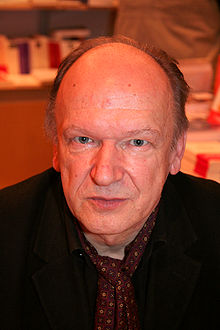
So here’s a poet well worth getting to know (if you don’t already). The new issue of Modern Poetry in Translation contains a new translation by Marilyn Hacker of the great contemporary French poet, Guy Goffette. Hacker has referred to Goffette as “one of the most unabashedly lyrical contemporary French poets, who claims Verlaine . . . as one of his literary godfathers”. He’s an admirer of Auden and his own work is not oppressively ‘literary’, not referential, not obscurely self-referential. He’s a poet somewhat to the ‘English’ taste (OK – you got me – to my taste), using quotidian words, everyday expressions, making them new, re-investing them with humour, connotation and emotion. Hacker has argued that “after a period in which much of French poetry eschewed the concrete, the narrative and the quotidian”, Goffette’s poems have recently found an enthusiastic readership. Yves Bonnefoy admires him as a writer who “has decided to remain faithful to his own personal life, in its humblest moments. He keeps things simple, he is marvellously able to capture the emotions and desires common to us all . . . without question one of the best poets of the present moment in France”.

images

The new poems in MPT – a sequence of 6 sonnet-like pieces published in 2009 – make up an ‘Elegy for a Friend’, the poet Paul de Roux. The form used is a thirteen-liner, made up of three usually unrhymed quatrains and a last line which sometimes, though not always, reaches the classic 12 syllables. Since the early 1990s, this has become “Goffette’s ‘signature’ strophe” (Hacker again), whether used as part of a sequence or standing on its own. I reviewed Goffette’s last recent major appearance in English, Charlestown Blues, for Poetry London in 2007. I reproduce the review here and add comments on the new poems at the end.

The longer term coherence and success of a poet’s work is not – ought not – to be something willed. Like the oyster with its grain of sand, there is surely always something fortuitous about it. Marilyn Hacker’s fine translations from the French of Guy Goffette’s work suggest that, in this instance, Rimbaud’s declaration that “You never leave (“On ne part pas”) has proved a spectacularly productive starting point.  Rimbaud’s comment suggests restlessness and desire for the other, yet also the tragic recognition of human limits as well as the idea that imaginative travel is more real than any form of mere physical tourism. These are indeed the topics and tensions that weave through Charlestown Blues.

220px-Guy_Goffette_20080316_Salon_du_livre_1

Hacker’s introduction characterises Goffette in contrast to the Anglo-American preconception of contemporary French poets and not only due to his interest in form. She suggests we see modern French poetry as “abstract, more concerned with concepts than with human experience  . . . resolutely “difficult””. Goffette’s work, in contrast, is diffused with “humour, longing, tenderness, nostalgia and occasional cruelty” and, though Hacker over-states his likeness to James Wright and Seamus Heaney, the general thrust of her argument is right. Born in 1947, of the same generation as our Motion and Raine, Goffette grew up on the shifting French/Belgian border (travelling without moving?). He now lives in Paris but still tends to look to the provinces while the metropolis is more often “a place from which his speaker is perpetually ready to depart” (Hacker’s introduction).

The title sequence, using a decasyllabic dixain and written during a residence in Rimbaud’s Charleville, seems scatter-shot and observational but with a strong thread of erotic longing: “your drying / stockings and scanties of a nun at bay – / poisonous flowers for a lonely man” (‘Letter to the Unknown Woman across the Street, 1’). Sex is one form of ‘leaving’ and Goffette catches such longing vividly: “oh beautiful stranger, / that creature who’s so often on the move” ((‘Letter to the Unknown Woman across the Street, 2’). Goffette’s work certainly revels in such demotic pleasures and Rimbaud himself puts in an appearance shouting “Fuck off! to puttering poetry” (‘February ‘98’). Earlier he wrings “the neck of the azure, which always puts / too much honey on the tails of verse-worms” (‘Farewell, Chateaux’). In the context of French poetry, it is this combative stance that leads Goffette towards the more grounded – even sordid – presentations of life that Hacker argues make him attractive to readers of English and American poetry.

imgres

Goffette’s natural reach approximates to the sonnet and these are frequently arranged in sequences, such as in ‘Waiting’. Largely from the point of view of a woman addressing her lover, these pieces suggest that it is the ultimate ‘leaving’ of death as well as desire that fuels his poetry. Here, eroticism is more explicitly a stay against death and time – “the judgment of this absence crushing me // like an insect on the pane” – though the final poem ventures a kind of romantic nostalgia, suggesting that even sex must fall short of human longing. The woman is made to envisage an island “where the surprise / of being lasts . . . the heart is still / in place, captain of the old ship”. This paradisal view is left to stand in stark contrast to the lovers’ reality, as they undress each other “amidst time’s peelings”.

So Goffette’s themes are the classical ones of love, time and death and though his diction is familiar enough with the contemporary, much of his imagery has a timelessness in its reference to journeys, rivers, trees, rooms, seashore, roads, stars. ‘Boarding the Streetcar: Variations’ responds to a photograph of New York in 1900 in which a woman climbs onto a streetcar watched intently by a male passenger and a (male) conductor. In a miracle of economy, the passenger’s viewpoint is sketched in and within six lines the moment of voyeuristic pleasure has come to represent “everything”:

the swift brightness of minnows

in a current, the taste of the first

fruit swiped from a market-stall, and how

the hazel switch whistled in the air

when it was about to strike a child’s

back

Yet when the passenger tries to articulate this moment he can manage “nothing” or the best he achieves are “words // like paper littering the grass after a fair / when shadows as they lengthen chill our hearts”. In contrast, the conductor’s view of the incident suggests its mix of beauty and danger, its very ordinariness, provides him with some memory which makes “the blood of things beat lengthily like a heart / in the shadow of dead rooms”.

imgres

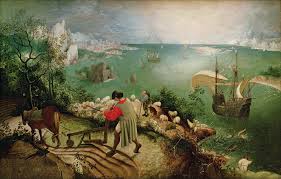
Hacker’s selection covers ten years from 1991 and concludes with a longer sequence published in 2001. ‘The Raising of Icarus’ is based on the same Breughel painting that inspired Auden’s ‘Musee des Beaux Arts’. Constructed from sonnet-like pieces once more, Goffette does not dwell long on the painting itself and instead seems to be observing people in the Paris metro, “running // against each other, same face same / night, and each one was night for every other” (‘In the Depths of the Labyrinth’). Rimbaud’s phrase is again apposite; these commuters travel without arriving anywhere and yet “To embark and not return is what they wanted” (‘In the Depths of the Labyrinth’). Later, they turn on the Shepherd in the painting who – they enviously feel – leads an idyllic pastoral life, while they must be “winning gold . . . cheers . . . bread” (‘The Shepherd Reproached’). It may be that the Shepherd is an artist figure but his response is that his life is no different to the crowd, though the one thing he does know is that death and the final dissolution of things is what serves to “raise every object up from darkness” (‘The Shepherd Answers’).

Goffette2
Guy Goffette

Death is, of course, the subject of the more recent sequence, ‘Elegy for a Friend’. It opens with memories of two friends in their youth, “When life was strong”, once again drawing on Rimbaud’s sense of restlessness, the youthful ease of travel, transformation, the passage of time unnoticed, yet (ominously) “it was already dancing there”, the shadow that “burns all shadows”. In the second section, temporal words become sand grains, become silence that eventually “takes up all the space and screams”. Yet, as the Shepherd figure in ‘The Raising of Icarus’ suggested, it is the presence of death that leads the poet to his creative “double question” about identity and time. If there is any regret, it is that this wisdom was not learned soon enough and, like stricken teenagers, the youthful poets sat too long in their “afflicted bedrooms”, or bickered unsympathetically, ignorant for too long of the real “desert of life”. Goffette’s elegy maintains a classical distance and relative impersonality with the sixth section using the first personal plural pronoun to sound more universal than intimate: “One day we must depart”. It’s a bleak ending full of thorns, scorched earth, what remains is “paltry”. There do remain the words on paper, “read and reread”, but their author is ambiguously described as a “blind man dancing in the fire”. Do we stress the blindness, our ultimate ignorance? Or the all-consuming fire? Or should it be the struggle to make art, the act of dancing?

This is challenging and wonderful contemporary poetry and – though the parallel text faces each page in Charlestown Blues – I seldom found myself checking the original which suggests that Hacker is doing a magnificent and valuable job of bringing Goffette’s work into English.

goffette3

How Can I Write Poems About Current Events?

Recent reports coming out of Iraq suggest that Islamic State are destroying ancient artefacts, buildings, bulldozing cities like Nimrud. (see – http://www.theguardian.com/world/2015/mar/12/isis-ransack-ancient-assyrian-city-confirmed-iraq-head-of-antiquities-dur-sharrukin and http://www.theguardian.com/world/2015/mar/06/isis-destroys-ancient-assyrian-site-of-nimrud). Reading these reports has taken me straight back to the Taliban’s destruction of the two immense images of Buddha in the Bamiyan valley in 2001.

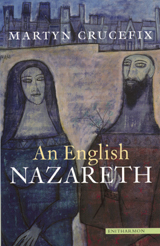
Whether it is possible to write poetry about such events is a question continually haunting me. It’s not a question I answer well or often I’m afraid – I’ve written precious few ‘political’ poems (four short pieces have recently been published here: http://themissingslate.com/2015/03/10/four-songs/). But I did manage to write about the Bamiyan valley (eventually published in 2004, in An English Nazarethhttps://martyncrucefix.com/publications/an-english-nazareth/ ). As I struggled with the poem I felt something interesting happening and I kept a drafting diary, some extracts of which I am posting below after the finished poem. I hope they provide some insight into the (often chaotic, chancy) thought processes of a writer, though they are necessarily fragmentary and I haven’t felt able to include copies of the drafts referred to (most of which I kept). I remember discussing the process of writing this particular poem with a workshop group in Bath a few years back and they responded well to the material though I’ve never organized it into a full account.

bamiyan_buddha_bg


The valley history

Over wind-eroded, bleached badlands,

creaking packs come past buttress and crevasse

through which scrolls of Chinese silk unfold,

beside green glassware from Alexandria,

poised bronze wrought in the dust of Rome

and Indian lattice-work, ivory figurines.

With an almost audible sigh of the road,

merchants and drovers lower themselves

to the lush place, benignant Bamiyan’s

sweet water, bird-song, best of all its shade.

Their hearts livened by its fine excess.

The valley gives rest beside standing pools.

There is time and reason enough to praise.

A million hammer blows hollow a place

for rough giants daubed with mud and straw,

for feet and face and Buddhas’ folded robes

in plaster-work, paint – one red, one blue –

their moonlike features, loose, gilded hands.

Yellow-robed priests are like tiny flowers

that spring beneath each benevolent gaze

by day and night, a new thousand years.

In brief intervals between battles that ebb

and flow indifferently now,

Kalashnikovs stashed between the toes

of the red figure – dry there, defendable.

Smooth head and sloping shoulder of the blue

irrupt orange as an order of dust rolls down

and the cry is All we are breaking is stone.

images

 Extracts from a diary about drafting this poem:

An article in the Saturday newspaper in the spring of 2001, recorded the apparent betrayal of his word by the Taliban leader, Mullah Mohammed Omar. In meetings with the Society for the Preservation of Afghanistan’s Cultural Heritage (SPACH), promises had been made to preserve two magnificent colossi, statues of Buddha, in the remote valley of Bamiyan. Within days of agreement being reached, rather than safeguarding the statues, the Taliban were shelling them. I sit and read this, as is usual, half-minded on other things, as I have been reading several articles the same morning, but I decide to tear this one out because I have had that inner stirring which I recognise as the voice of a poem to be. Writing the poem is finding a context – language, form, tone, narrative structure etc – what Auden calls the ‘verbal contraption’ – which will allow something of the reaction I experienced on reading the piece to re-create itself in my reader. It is that communication with which I am concerned. This is the truth I intend to communicate – not the literal honest truth.

*

I don’t progress far with a draft; I suspect because I have not yet found the distance from the informational aspects of the incident. This may or may not have been aggravated by my searching out information about the Buddhas of Bamiyan on the Internet – photos and earlier reports of concerns about the Taliban intentions and some historical details too.

Reading the first draft, it struck me that what I felt I was responding to was less a religious concern – this confirmed my uneasiness about writing about such geographically and culturally remote subjects – more an artistic one – about which I felt I might have something to say. The desecration and denial of the powers of art. This matched itself up in my mind with my sense that art arises out of an excess – economically and temporally – a luxury of a sort and the Bamiyan valley (in contrast to the surrounding rugged and desolate landscapes) seemed to suggest this contrast of the frugal and the rich. I mean the richness enough to devote survival time to the creation of art. I was therefore interested, in a second draft, in this contrast and the relation between trade – the Silk Road I began with – and the skill and beauty of the statues, the way in which they celebrate the excess and wealthiness and goodness of life – are separate from it, but at the same time arise out of it.

*

images

Then it was on Radio Four – possibly on Thought for the Day – half heard between the toast and marmalade and children’s cereals bowls. Between periods of blank inattention, I think I heard the speaker musing that she felt an irony in the situation – that it is the iconoclast who appears to attribute great power to the icon – often more so than the creators of the icon (this especially so in Buddhism where icons are certainly not created to be worshipped). The iconoclast fears the statues’ powers and this is why he feels they must be destroyed. This idea struck me as an interesting light on the situation and the tension between this idea and the declaration of Mullah Omar that these icons were just ‘rocks’ immediately presented itself as a likely ending to the poem – resonant, surprising, gesturing away from the topical towards something more universal.

*

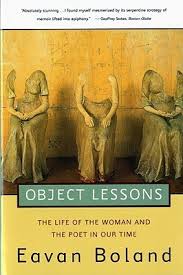
One comment from a reader of a later draft stuck in my mind and grew into something that began to feel problematic. The comment was to the effect that the poem as it now stood had rather grand, magisterial tone, a kind of confident utterance, that swept the reader along. This had seemed fine originally, something related to the historical process and sweep I had hoped to capture and imitate in the poem as a whole. But it now hooked up with a remote dissatisfaction I had begun to feel that the poem had a remoteness that could be construed – I’m being coy here, I mean, I did construe it – as a lack of engagement with the material, in the sense that the statements the poem was making were too monolithic, confident, not as poetry, but as political/cultural comment. This took several weeks of re-reading the poem to come to the fore in my response to it and it wasn’t until – by chance – I had been reading Eavan Boland’s book, Object Lessons, that I could articulate what my objection to the poem had become.

url

In her book, Boland traces her own development as a poet, particularly as a woman poet in Ireland where she felt the tradition of Irish poetry, though vibrant and respected in ways which we, on the other side of the North Sea, often envy, did not readily allow the writer of poems to be female. One effect of this was for Boland, as an aspiring woman poet, to adopt the modes and language of the dominant male tradition. She argues that she recognised this effect in the poem ‘The War Horse’.  The poem, she felt after completing it, suffered from a confusion between “the political poem and the public poem”. She felt that she had allowed the subject of her poem “to be a representative and the object to be ornamental. In such a relation, the dangerous and private registers of feeling of the true political poem [are] truly lost. At the very moment when they [are] most needed”. I began to feel the same thing had occurred in my poem. It was a public poem (something I’d worried about from early on) and in being so, it had not encompassed, or involved, anything more personal or private of my own self, that might serve to give perspective, even to undermine the position so evidently held by the poem. This is where the confidence of the poem’s voice derives from, but also its, arguably, simplistic nature.

*

At this stage, I couldn’t see how I was going to be able to re-shape the whole piece in answer to a fundamental criticism like this. In all sorts of other ways I was pleased with the poem as it stood. Others liked it too. It might be argued that there ought to be room for a simplistic poem on a subject that seemed to provoke such outrage. Was my desire for a more destabilising ‘personal’ voice, the weakness of the liberal who tries to see all sides of a question? Perhaps. I felt uneasy aligning myself with journalists (even quality ones!) and I felt my gradually formulated criticism of the poem was a valid one. One thing I felt I could do was to remove the final two lines of the poem. These ringingly ironic lines were hard to cut, but they did end the poem on the moral high ground, as it were, assertive and confident, inviting the reader to dismiss the Mullah’s words as patently and unmistakably weasel words. The removal of this – leaving the poem to end on the rather more interesting irony of ‘Only children dare not deface a Buddha’s foot’ – went a little way to destabilising the, almost arrogance in the poem’s tone. Perhaps the Mullah’s phrase – which has been a crucial part of my poem from the very start – could be a title?

The title it became and there followed a number of drafts in which I seemed to be wrestling with the failures of the fourth stanza. There I was attempting to record in too documentary a style what the Taliban actually did with the statues. I was becoming over-involved in the image of their trepanning of the Buddhas and then placing explosives in the heads, as well as the burning tyres. In both these cases, part of the problem was that the poet in me had fallen in love with striking images which I found satisfying but which – on further reflection – probably had no real place in the poem. They were too much powered by my love of language – too little linked to the purpose they might serve at that specific point in a specific poem.

*

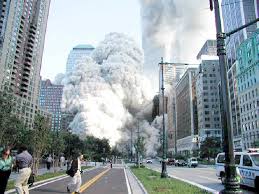
The poem was begun in March of 2001. And I was still working on it in September of that year – when the World Trade Centre was attacked. Al Qaeda’s links with Afghanistan are well known and the image of the monuments of East and West both being destroyed were impossible to keep apart in my mind now. I had a sense – again reflected in newspapers of the time that what had happened in Afghanistan had tortuously precipitated the Twin Towers attack. But too explicit a link would never serve so, at this stage, I tried to work in references to “stone dreams” falling not only in Bamiyan but elsewhere in the world. There were all kinds of ironies in linking these religious icons with the West’s most iconic images of capitalism and, though I don’t think I thought these through too rationally, they appealed to me and seemed to be apt in the context as Mullah Omar’s original statement caught my ear in large part because of its brutal materialism.

url

Around this stage, the form of the poem changed from the irregular stanzas it had been in since the start to unrhymed couplets. This, I hoped, would assist the lightening – the easing? – of the tone of the poem, as I’d begun to feel the clumped stanzas gave it a rather oratorical, speechifying feel, whereas the couplets would give a more unstable, edgy impression. Now called ‘The valley history’, it was still the final few lines, which seemed problematic. But with the eventual loss of the personification of ”fright”, the final choice of the phrase “irrupt orange” to suggest the splitting open of the Buddhas by the Taliban shells, and the removal of the rather too obviously paradoxical and (again) grandiose falling “stone dreams”, I felt the poem was finished enough. What eventually replaced the image of the falling towers was a phrase I was pleased to find. The “order of dust rolls down” alliterated well in the context, suggested the literal plumes of smoke and dust which accompanied the statues’ demise and, of course, also suggested the rolling dust clouds which followed 9/11. As well as literal truth, the “order” is intended to suggest a rule of government, or at least the decree of leaders, which tends towards destruction rather than construction and this was one of the originating impulses of my beginning the poem many months earlier.

crucefix_nazareth

On Translating Rilke’s ‘Duino Elegies’

Idris Parry writes in the current PN Review (March/April 2015) comparing Rilke’s Duino Elegies with the Sonnets to Orpheus. The poet always spoke of the sonnets as subsidiary to the elegies, but Parry argues that while the elegies “talk about” the poet’s task, the sonnets perform it. I’d agree and, in translating both in the last 20 years or so, I have come to prefer the vivid enactments of the sonnets. Parry explores Rilke’s response to Rodin in Paris in 1902. What struck Rilke was Rodin’s “dark patience which makes him [as creative artist] almost anonymous”. What the young poet learned was to pursue an “unhurried and uncommitted exposure to experience” (Parry’s words). This is opposed to impatience which is (contra-Keats) an irritable reaching after clarity: “making up your mind before the event instead of letting the event shape your mind” (Parry again).

Rilke’s “praise” is just this acceptance and faithful utterance and is predicated on the truth of an underlying unity of existence. The poet is obliged to speak of this unity but can only use the language of division, a language deluded by the conviction of finality. Parry epigrammatically concludes: “We punctuate to retain our sanity, but we should not come to believe the punctuation”. The PN Review piece ends by looking at sonnet II, 18 and asks, if Rilke’s own German is a poor translation (using shabby tools) of an ultimate reality, how can translators hope to do it justice in bringing it over into English?

Reading Parry this week, reminded me of my own thoughts, not long after having translated Duino Elegies (https://martyncrucefix.com/publications/translations/duino-elegies/). They were originally published in Magma Magazine; I hope they are worth making public again:

My own grappling with the issue of what can be lost and gained in translation began over 10 years ago when London’s Blue Nose Poetry group staged an evening to celebrate Rilke’s work. This was partly in response to a Poetry Review survey of the original 1994 New Generation Poets, several of whom declared his work to have been influential. Though a name I was familiar with, I have to confess I hadn’t gotten far through my Penguin Selected. Perhaps on account of my ignorance, I was to contribute only by reading aloud from the Elegies. The Ninth was chosen but as I practised, I found myself stumbling, losing the thread and, frankly, I hardly knew what it was I was reading:

Here is the time for the Tellable, here is its home.

Speak and proclaim. More than ever

Things we can live with are falling away, for that

Which is oustingly taking their place is an imageless act.

Act under crusts, that will readily split as soon

As the doing within outgrows them and takes a new outline.

This is Leishman’s translation of the Ninth Elegy and I supposed the obscurity was part of the point – that it must signal hitherto unplumbed depths of profundity. My view on this remains equivocal, but I believe a proportion of the difficulty is obfuscation and the impression of slippery ‘mysticism’ it generates has misleadingly become part of Rilke’s appeal for many readers. For me, the bottom line was I could not read this aloud with the kind of conviction that I demanded. I tried a couple of other easily available translations – Stephen Cohn’s and David Young’s – but still was not happy with the sound these poems made in my mouth.

images
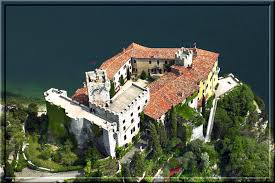
Castle Duino

Within a month I had produced a ‘version’ of my own. By version, I meant a close-ish translation, but I had taken considerable liberties with the more difficult passages and inserted what I thought Rilke might have meant or what I wanted him to mean. At the time this seemed to me a risky strategy compelled by necessity, though there is nowadays a good deal more debate about the role and value of versioning. My own position is that I prefer a genuine attempt to translate the original into a contemporary target language. I see the point of versions – but it is hardly ever what I am seeking as a reader. Nobody imagines translation is easy; but only a fool anticipates a perfect rendering. We expect translators to work in good faith and that their work will read sufficiently well in the target language not to distract us with the stale sweat of their strenuous wrestling with the original. Nor should they cover the difficulties of translation by delivering obscurities that defensively resist comprehension.

It was coming across my first attempt a couple of years later that set me systematically picking my way through the million pitfalls of the Elegies. Take for instance Rilke’s opening lines, the great cry at the start of the sequence. Rilke writes “Wer, wenn ich schriee, hörte mich denn aus der Engel / Ordnungen?” Not too much of a problem you might think, but William Gass, in his book, Reading Rilke: Reflections on the Problems of Translation (Basic Books, 1999), considers no fewer than 15 versions of these 11 words. Most – though by no means all – accept Rilke’s opening word – “Who” – and most, though not all, take over Rilke’s relative clause “if I cried”. But is he merely crying or crying out? And beyond this point of relative agreement lie terrible dragons of disagreement, especially over the word “Ordnungen”. How are the angels deployed? Are they in “angelic orders”, “amid the host of the angels”, “among the hierarchy of angels”, “the order of the angels”, “among the angels’ hierarchies”, “among the ranked Angels”, “through the Angel Orders” or even (Gass gives his own version) “among the Dominions of Angels”? In such company, my own version, “Who, if I cried out, would hear me among the ranks / of the angels?” runs the risk of a watery plainness but it has the advantages of clarity, echoes the rhythm, syntax and line break of the original closely, and (remembering my first concern was for oral performance) the line has a satisfying aural quality. I hear in the first phrases high, thin vowels that contrast the second half’s weightier, assonantal ‘a’ sounds: the cry of alienated humanity contrasts the solid, seemingly impregnable powers that lie beyond our reach.

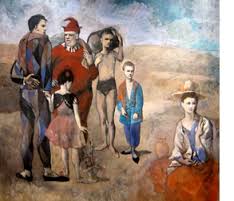
But the best-equipped translator faces especially difficult problems in Rilke. In the Fifth Elegy, for example, the poem describes some acrobats. This is a combined portrait of a troupe Rilke knew while living in Paris and a painting by Picasso (La Famille des Saltimbanques, 1905) with which Rilke lived in the summer of 1915 in the house of the dedicatee of this Elegy, Frau Hertha Koenig. This is, formally, one of the freer of the Elegies, its lines extending and contracting to reflect the energy of the tumblers.

imgres
Picasso’s ‘La Famille des Saltimbanques’ (1905)

But in the Picasso painting the figures are arranged in an almost imperceptible D-shape and Rilke writes:  “Und kaum dort, / aufrecht, da und gezeigt: des Dastehns / großer Anfangsbuchstab . . .” In my version: “And barely discernible, / yet up-standing and unmistakeably on display, / the capital D of Destiny . . .” The original word “Dastehns” (something like “standing there”) reflects the visual pun and it would be a great loss not to bring this into the English. Stephen Mitchell uses the word “Duration”; Young’s looser version loses the pun with “existence . . . presence”. On this occasion, I found myself following Stephen Cohn and opting for “Destiny” (more usually the translation of “Schicksal”) which I felt conveyed Rilke’s sense of how these individuals are driven to perform by forces external to them, rather than by a more truthful inner compulsion.

imgres

Another critical decision arises in the Tenth Elegy with its tribe of people who enjoy a closer, more authentic relationship with death and grief than Rilke perceived in contemporary Western culture. He uses the word “Klage” and an English equivalent has to be found that works as the name of a young woman, her tribe, her ancestors and her country. Like the sound of the original, the word also has to reflect the harshness of the grief felt, while at the same time suggesting a dignity in such powerful emotions. For Rilke, the role of this personification and her whole tribe is certainly heroic. Most previous translators have opted for the word “Lament” but I felt this suggested a rather affected, almost poetic attitude – precisely the kind of posturing that Rilke asks us to avoid in our confrontation with these difficult aspects of life. I chose the word “Keening” to convey the genuine edginess of feeling (aurally again I liked the harsh initial K and the word’s trailing, wailing fall). This word seemed to me to work perfectly as personal and tribal name and geographical location: “gently she guides him through the vast / Keening landscape, shows him temple columns, / ruins of castles from which the Keening princes / once wisely governed”.

One thing I have learned is that translators take sustenance from their chosen originals. This is not just in the obvious way of extending their range, but also that they feed on a familiar. They find in their subject an answering voice, a confirmation of something already present within themselves. I experienced this in a surprising way. Rilke’s influence on Auden was particularly evident in the late 1930s. The sonnet sequence In Time of War refers directly to him and Mendelson’s Later Auden (Farrar, Straus and Giroux, 1999) argues that ‘In Memory of W. B. Yeats’ concludes with “an explicit echo” of Rilke’s Ninth Elegy and its famous injunction to “praise this world to the angel”.

imgres

Auden asks Yeats’ spirit to “Teach the free man how to praise”. Interestingly, Auden has never been a strong influence for me, yet the elegy to Yeats is a poem I have always loved. In fact, five or six years before I got to know Rilke, I remember modelling an elegy of my own on Auden’s – from the choice of title, the formal variety of its sections, to a finale in which I too celebrated one who “loved the world, craved its taste”, elevating him to a teacher of praise: “Listen, let me make this master speak: / Laughter, love, the senses are profound. / Drink deep, remember, Jeremy Round” (‘In Memory of Jeremy Round’). Reading Mendelson’s book has convinced me that I had been responding not merely to Auden but also – unknowingly – to Rilke. It turns out I have been finding a sympathetic familiar in him for longer than I had imagined.

Review of ‘The Pity’: new war poems commissioned by the Poetry Society

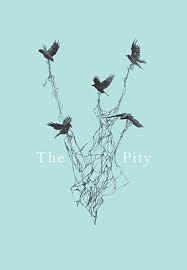
On National Poetry Day (October 2014) four contemporary poets performed new work about the legacy of the First World War. Two months later the Poetry Society published The Pity as a limited edition anthology. Given free to Society members (it has just now come through my letterbox with the new issue of Poetry Review) it is also available to purchase online.

 imgres

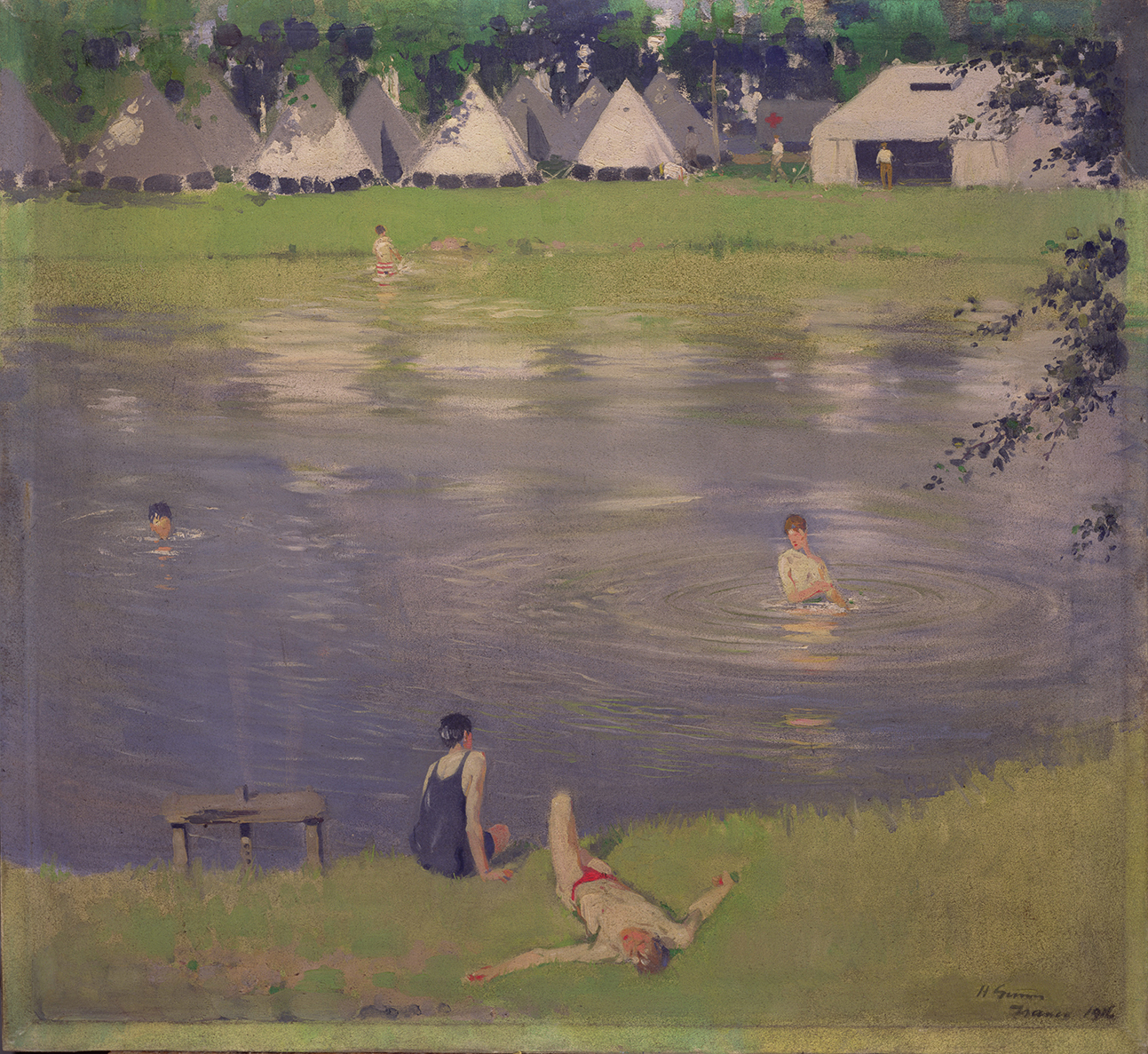
So The Pity contains substantial poems commissioned by the Poetry Society, in which Steve Ely, Zaffar Kunial, Denise Riley and Warsan Shire (chosen to represent “different poetics and perspectives”) respond to the centenary and legacy of the First World War. The Pity was published in collaboration with Cockayne – Grants for the Arts and The London Community Foundation to mark the centenary of the First World War. John Glenday’s poem, ‘The Big Push’ is also included, providing a short coda to the volume. His poem takes inspiration from Sir Herbert James Gunn’s 1916 painting, ‘The Eve of the Battle of the Somme’, held in The Fleming Collection of Scottish Art.

In this blog, I will discuss only the contributions of Ely and Glenday; on another occasion, those of Kunial, Riley and Shire.

Steve Ely’s ‘How dear is life’ is a sequence in 7 parts mixing literary, historical and personal materials to very powerful effect. He presents nothing less than a vision of war and its causes, the careful placing of the comma in the title of the first section – ‘Business, as usual’ – indicating where he wants to lay the blame:

This time it’s oil, not markets.

This time it’s oil, not borders.

This time it’s oil, not ideas.

This time it’s money and power –

like last time and every time before.

Ely has said the whole sequence is much influenced by Henry Williamson’s fictionalized autobiography, A Chronicle of Ancient Sunlight, which presents the First World War as a sacrifice of the innocents on the altar of capital. The sequence is intended to portray a liberation from a “world-destroying growth-and-profit system”, not merely a release from the horrors of war. Though writing with commitment (see Morning Star: http://www.morningstaronline.co.uk/a-1063-Steve-Ely-commissioned-by-the-Poetry-Society-for-centenary-of-World-War-I#.VL0uW0esWss) there are two aspects of the sequence that prevent it ossifying into predictable attitudes: one a matter of materials, the other of technique.

SteveEly-SquareWeb

Ely draws on material linked with his maternal great-grand-father, Thomas Sellars, killed on the Somme in February 1917, contrasting the glorious send-off by friends and family with his eventual fate (and the shifting attitudes of those left at home):

They stuffed his lungs with poppies and crushed him

under a cenotaph. Where they weep.

Likewise, he uses material from a more extensive time period, linked with his own background in the mining communities of Yorkshire. The pressures of economic activity which determine that (on one occasion) it will take too long to recover the body of a killed miner mean that the bereaved family is fobbed off with a “screwed down coffin            packed with the stone that / killed him” (one of 262 deaths in the pits in the twentieth century). Ely deploys this alongside the 216 deaths of Frickley and Kirkby, “ragged up through two world wars”. There are moments reminiscent of Wilfred Owen’s poems here. Owen’s ‘Disabled’ is inevitably evoked when Ely treats the plight of individuals injured in wars, sickeningly evoked in ‘The Story of my Heart’:

on spoon-fed rusk-mush

matted in my beard                 pus from a crusted wound

[. . . ]

I was more than a mouth        more than shit

once                 I was

whole

But it is the first, fifth and seventh parts of the sequence where Ely’s technical choices are fully displayed. Under the creative pressure of his unifying political vision, he draws together fragments (often separated by blank spaces on the same line) into new relations with each other, melding biblical, historical, mythical and more contemporary elements together to make his point:

and what did they see

river running red         with Empire

river running green      with Deutschmarks

sterling                        Frenchfrancs        roubles        dollars

the promissory land                 of bilk and money

Using the same techniques, ‘The Vision of the White Crow’ springs from information that Hitler (while recovering from a gas attack at Pasewalk Military Hospital in 1918) experienced episodes of ‘hysterical blindness’ in which he claimed to have seen his eventual rise to power. Ely voices Hitler’s convictions that the “Reichsblood” was being drained by “socialists democrats profiteers bankers” but then propels his vision forward into the later twentieth century, “unwritten pages of world book turning”. We are whirled through Washington, Moscow, Sarajavo, Maastricht, past John Lennon, and (maybe?) Andy Warhol, towards the X-Factor and twerking with Angela Merkel. This is heady poetry of conviction and the persuasiveness of phrase-making (phrase-making that leaves syntax and causality behind) is intoxicating but perhaps is the intoxication that Auden warned himself against in the late 1930s. But Ely is clearly on the side of Shelley, echoing ‘The Masque of Anarchy’ in the final section, urging the disenfranchised – who, the poem has made it clear are always the victims of the powerful and wealthy in both war and peace – urging them to “Rise . . .Rise  . .  Rise”.

John Glenday’s single poem is as different as could be. It is an ekphrastic piece, the pictorial inspiration being Herbert James Gunn’s 1916 painting, ‘The Eve of the Battle of the Somme’.

GUNN-Sir-James-The-Eve-of-the-Battle-of-the-Somme

Much of the poem’s impact is already evident in the image: the naked, vulnerable, beautiful figures of pale youth, relaxed, hedonistic, while across the swirl of the River Somme itself, the ominous daubs and pointed shapes of the army camp are almost – but not quite – out of sight. ‘The Big Push’, in its 7 regularly lined quatrains, rhyming ABAB, is calculated to be a more conventional poem than any part of Ely’s. It’s a dramatic monologue, perhaps spoken by one of Gunn’s swimmers and it tries on many familiar tropes we might now associate with WWI and its poetry: the singing in the face of imminent extinction, the waggish black humour of the Tommies, the football playing, the stoical resilience of the trench soldier. We even have a reference to Shelley’s ‘To a Skylark’, “like an unbodied joy”.

imgres

It’s this image, drawn from the narrator’s past, that opens the way to the final two stanzas which are a sequence of associations after taking over German-dug trenches from occupying French troops, the “tiny, brilliant flowers” blooming in that place, the speculation that, if the dead might someday return, “they’ll come back green”. The poignancy of these images returns us to the Gunn painting. The young men are at one with Nature, having passed through the horrors of the Somme are gifted a return to that pastoral scene where:

. . . all the things they suffered will mean no more to them

than the setting in of the ordinary dark, or a change of weather.

I take the irony here to be at the expense of the narrative voice, whose steady, rather plangent tone and period-shaped imagination is not yet able to encompass the horrors that a modern reader all too readily associates with the battle to commence the very next day. I’m reminded of Owen again. In ‘A Terre’ (completed July 1918), his wounded officer blackly recalls Shelley (again!): “I shall be one with nature, herb, and stone”. But Owen’s narrator re-shapes the Romantic idea of the one life by envying the lives of rats, cheese mites and microbes: he already understands the horrors that Glenday’s naïve narrator has yet to learn.

W. H. Auden, West and Wannabes

In The Dyer’s Hand (1962), W H Auden throws off one of his critical Interludes on the subject of Nathanael West’s fiction from the 1930s. With the passage of time and the continuing prominence of Simon Cowell, his observations only become more relevant. I currently have classes in process of preparing OCR A2 Coursework on West’s The Day of the Locust (1939), Fitzgerald’s The Great Gatsby (1925) and T S Eliot’s Prufrock and Other Observations (1917) and I’m finding that Auden’s piece, while difficult, provides a framework of terms and ideas which relate all three texts.

images

Auden denies West’s status as a novelist first, then as a satirist. The first point is because of West’s lack of interest in the accurate representation of either the “social scene” or “subjective life”. Auden’s definition, I guess, demands forms of realism, while West delivers forms of caricature. As for satire, Auden also holds a conventional position on it, demanding not merely a critique of American society and its behaviours but also positive elements, a way out, a solution however faintly sketched. West does not provide the latter (though I disagree that this disbars him as a satirical writer) and I wonder if later work might have developed a more positive message. West’s death, at the age of 37 in a car accident in Southern California in 1940, was one of the greatest losses suffered by US literature in the 20th century.

Auden argues West fictions are “Cautionary Tales” from an infernal land ruled by the “King of Wishes”. All his main characters suffer from what Auden christens “West’s Disease” in which the sufferer is incapable of converting wishes into desires. A wish here is a fantasy, a refusal of reality, particularly self-directed so that it proclaims “I refuse to be what I am”. Momentary, innocent, frivolous wishing is a form of play; if allowed to predominate in one’s psychic life, a wish becomes a form of self-hatred, leading to guilt and despair. In contrast, a desire (Auden is less clear on this) is an ambition, an intention which acknowledges the conditional nature of reality and the self, accepts the present state of both but seeks a pragmatic course to pursue the desire. Wishes begin as whimsy and grow poisonous; desire is the fuel that drives us out into the world.

imgres

West’s characters know only wishes. They are doomed because they cannot truly desire anything since wishers deny themselves; they can believe nothing because wishers are always drawn to the next novelty. Faye Greener (from Locust) amuses herself by running through fantasies, stories she plays in her head, like “a pack of cards”. She loves to slip into a dream, she says, because “any dream was better than none”. But Faye is young and her wishes have some vitality. She may be convincing herself that they may sometime become desires. The strange case of Homer Simpson (yes, West got there long before Matt Groening) is of an older man who has ceased to entertain wishes at all. His is a passive sort of despair: “It took him a long time to get all his clothing on. He stopped to rest after each garment with a desperation far out of proportion to the effort involved”.

Both characters demonstrate the utter self-centred nature of wishers. Auden argues that, for such people, others exist only as images of what s/he is or is not, all feelings are mere projections of what is felt about the self. As perceived from the outside, all behavior therefore appears fraudulent, erratic, incoherent. Born of frustration and anger, the final stages of West’s Disease is a craving for violence, symbolically reflected in Locust in the stomach-churningly sanguinary cock fight of Chapter 21 and then literally in the film premiere riot of the final pages.

imgres

In 1962, Auden speculated that the promises of democracy and modern living only served to exacerbate this Disease, encouraging hopes of personal achievement beyond the bounds of reality and supplying apparent means of satisfying wishes through technological advances: “In societies with fewer opportunities for amusement, it was easier to tell a mere wish from a real desire”. We have probably only progressed in precisely the wrong direction on these issues. The instantaneous satisfaction of our wants blurs the wish/desire distinction Auden wants to make and we now have a slangy, slurred word for Faye Greener. Wannabe is a noun formed from a complex verb combination and is defined as someone who wishes for something but fails to have the drive, ambition or talent to make the journey in reality; a poser, a follower, a charlatan of sorts whose grip on reality is tenuous even when Simon Cowell tells them they are talentless.

More troublingly, it strikes me West’s Disease is an essential component of extremist, fundamentalist views – both political and religious – which achieve their existence and persistence only through the wisher’s denial of the indubitably various nature of reality. Faye Greener’s innocent deck of Hollywood dreams disturbingly travels, via West’s scenes of riot and sexual abuse, into the mouths of fanatics, to the deserts of Syria where real crimes are being committed because other human beings have become no more than mere projections of what is felt about the self.

Marxian glory days

The number of Marxian ideas and expressions I have forgotten since reading him at university is perhaps something not decently, publicly admissible. But one idea has stayed with me, become something of a talisman of a personal rather than political kind. In The German Ideology (1845) he declares that in the well-governed society, in a communist society, where nobody has one exclusive sphere of activity but each can become accomplished in any branch he wishes, society regulates the general production and thus makes it possible for me to do one thing today and another tomorrow, to hunt in the morning, fish in the afternoon, rear cattle in the evening, criticise after dinner, just as I have a mind, without ever becoming hunter, fisherman, herdsman or critic. 

Karl Marx - portrait

The well-governed life continues to prove as elusive as the well-governed society, of course, but a day of real/metaphorical hunting, fishing, rearing and criticising has remained an ideal of contentment. It was Henry de Montherlant (http://en.wikipedia.org/wiki/Henry_de_Montherlant) whose aphorism suggested that ‘happiness writes white (“Le bonheur écrit à l’encre blanche sur des pages blanches.” (Don Juan II, IV, 1048)) but in recording something like the perfect day I am running the greater risk of the plush, crushed raspberry colourings of complacency and self-satisfaction. But perhaps describing one’s own pleasure can be a political act.

My daughter has to be dropped off at 7am at school. Elevated to the dizzying heights of Year 7 prefect she is off to Wiltshire to accompany the ‘new kids’ on some bonding, outward-bound sessions. This leaves me near Hampstead Heath and time to jog/walk my way round it in the early morning with just dog-walkers and others getting the sluggish blood moving. Back at home with that serotonin high, paradoxically both both pumped-up and emptied-ready-to-be-filled, I work through some drafts of my current project, a version of  Daodejing. As a writer, I came to the Daodejing after translating the German poetry of Rainer Maria Rilke. Perhaps more importantly, it was as a long-standing teacher that I read Laozi’s 81 ‘chapters’. There are colourful myths about their origins, but they were probably a series of orally transmitted seed verses compiled as far back as the 7th century BCE by many Chinese hands, an aide memoire, certainly an aid to teaching.

imgres

The Dao or Way is not an individual entity, still less anything divine. It is a mode of being, all encompassing, a phenomenal, existential primacy, perhaps akin to the Western idea of original chaos. The text emphasises its feminine characteristics. It can be viewed from spiritual, epistemological, educational, political or environmental perspectives, though none of these exhausts its true nature. The poems enthusiastically accept that their profound and urgent messages are inevitably compromised by the need to express them in language, hence demanding a variety of technical manoeuvres – they stay light on their feet.

Into college for the afternoon, interviewing students, mostly about mistakes, choices, salvage operations possible for them after GCSE, AS or A2 exams. But also some preparation for the new course we have devised for A2 Coursework combining Fitzgerald’s The Great Gatsby, T S Eliot’s Prufrock and Other Observations, and Nathanael West’s The Day of the Locust. W H Auden’s brief discussion of West in The Dyer’s Hand is interesting, suggesting he portrays a Kingdom of Hell, ruled by the Father of Wishes. I read it, knowing I’m having a good day, some wishes coming true in contrast to West’s visions of West Coast apocalypse. Right here, right now, a brief, various-faceted jewel in the setting of others of more usual monotony. (More of West in another blog perhaps).

Driving home – the rolling dice of Henley’s Corner – I listen to the opening bars of tonight’s Prom: Brahm’s Third Symphony. By 9.30pm I’m walking into the Albert Hall myself for the late-night show: Beethoven’s Missa Solemnis. Didn’t I promise a good day? It’s John Eliot Gardiner and the Monteverdi Choir and Orchestre Révolutionnaire et Romantique  (http://www.bbc.co.uk/programmes/b04f8vlq). Gardiner says in a brief introductory interview that Beethoven’s unconventional Mass often skims more traditional moments of the text but is ‘marvellous’ on the ineffability of the Godhead, the humbleness of mankind and I’m in the mood to hear it…

Driving back up the Edgware Road, the sky is big as it seldom seems in London. The lights are bright in the Lebanese restaurants, my eyesight – usually close to blurry – seeming sharp tonight, hyperreal, resonant, woven still with the threads of earlier hours. Tomorrow, will be a thinner diet, more monotone, less good.