A bundle of 50 sticks for William and Juliet

Last Saturday I travelled down to Chepstow to read at an event organized by William Ayot who, with his wife Juliet, runs the On the Border series of readings. They tend to bill a Welsh poet with A. N. Other; I was the latter and Richard Gwyn the former. Richard runs the Creative Writing MA at Cardiff University and is a brilliant poet and translator from the Spanish (especially South American poetry). He read some heart-stoppingly powerful new work from three Mexican poets recently published in Poetry Wales and some of his own prose poems from Sad Giraffe Café (Arc Publications). I read from my translations of Rilke’s Sonnets to Orpheus and also extracts from The Time We Turned.

Richard Gwyn

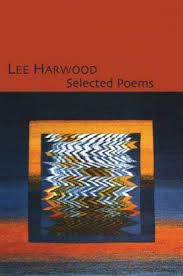
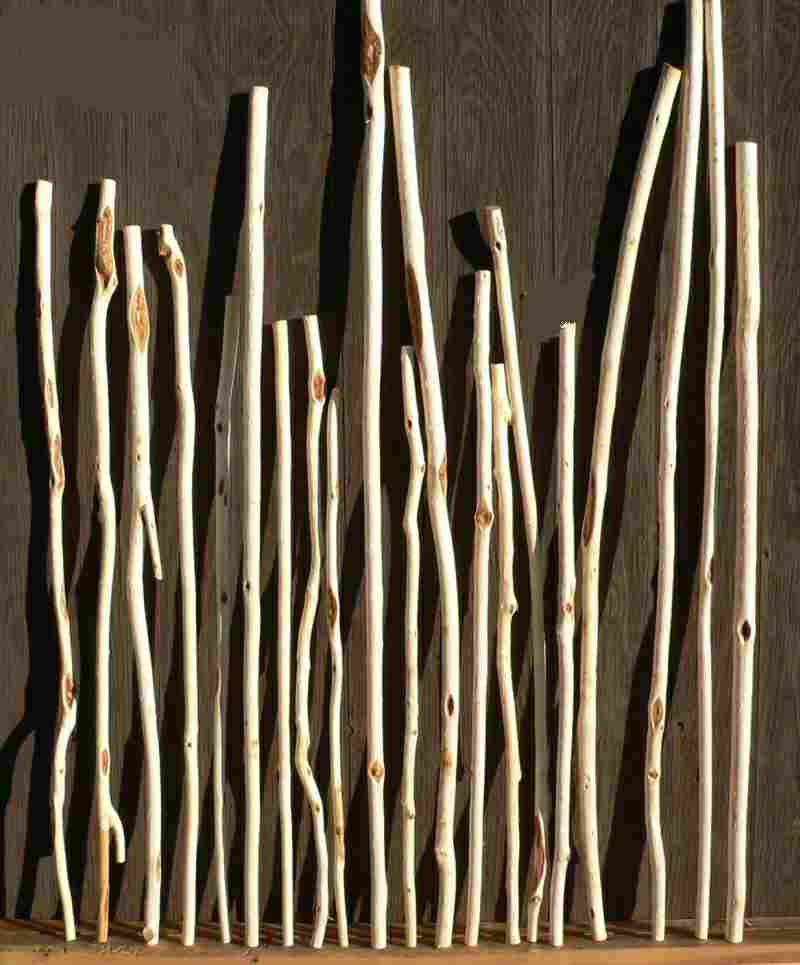
On the train down I was again reading Lee Harwood’s work (see my last blog post) and came across ‘Days and Night: Accidental Sightings – a bundle of 50 sticks for Joseph Cornell and others’. I’ve put together my own loose bundle of sticks as a modest thank you to William and Juliet for their hospitality in their extraordinary house, their passion for poetry in its widest sense, and that marvellous coronation chicken!

scout-sticks1

A bundle of 50 sticks for William and Juliet

At the track side willow belts always unkempt trunks leaning some broken

*

luminous blue sky in early May

*

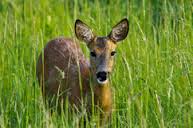
On a diversionary loop the train slows as if to allow the doe standing knee deep in meadow grass to watch us as we pass we watch her

*

She wears muddy walking boots and has brought out a flask of something hot

*

clipping tickets he is careful to be polite though from those upgrading to First Class he has had money already

*

‘why do you do this’ the effect is never quite the same twice

*

In a faded green t-shirt a man walking with arms folded across his chest as if he had breasts he hoped to steady

*

mud-brown canal waters held eight of nine feet high behind a lock gate

*

An upturned wheelbarrow on a long houseboat its purple paint job a statement of optimistic intent

*

Words carve out sense as tractor tyres embrown the field’s new growth each year their lines down the hillside conclude at an iron gate

*

I feel with each mile nearer home I mean nearing the place I grew up in

*

Hills like the scarp edge of Salisbury Plain wait O this is not a likeness this is ‘the actual place’

*

a diversion to a chalk white horse full of memories

*

the Tory heartlands a tractor slowly turning over the ground

*

I ring home and wake my sleeping parents

*

‘Let’s make flying fun again’

*

a basket of split logs waits for the fire

*

On a wooden writing desk three animal skulls

*

‘quietude not inquietude’

*

Nine owl feathers in a china mug a sort of chalice

*

A glazed bowl with an assortment of matte pebbles from the beach

*

His son spoke out but the police were in bed with the FARC who saw to it he and his friends were tortured and killed can you believe it

*

I like to work I prefer to work with those who want to want to stop

*

a tall poplar tree like an exclamation mark he wrote as if to say this is it

*

One skull another skull then another skull beside another skull

*

rose gardens and orchards

*

If they haven’t killed enough by their early 20s they’re losers whose life expectancy is anyway no more than 24

*

Down to the underworld but returns if somewhat empty-handed he does return

*

mausoleums for themselves a cult of death

*

Bluebells in the hedgerows on either side of the road

*

left hand short by two digits his wife’s wrist broken by a fall

*

shut-eyed Blake above the flat-screen TV seems to offer the room a challenge

*

the watercourse way

*

Everything is a fiction the novel in your shoulder bag is the bank statement you use as a bookmark inside it that too

*

The narrative of the oh-eight crash there are other ways for it to be recounted that’s not a joke

*

Oppositional to a large degree I guess we are not pebbles from the same beach but it’s more than just rubbing along

*

A chimney balloon

*

On-line so many ‘friends’ devastated by the surprise results

*

It’s staying in places like this makes me feel a Londoner

*

He waves his paddle to let the train go then flips it up inside the back of his orange hi-viz jacket and pushing the handle into his back pocket it’s safely stowed

*

A speck of thistledown drifting up the aisle

*

attentiveness

*

banked blue rectangles squat in meadows to scoop the sunlight

*

Dirt is matter out of place but this is not dirt it is marvelously out of place

*

Red kite above the monkey puzzle

*

on an elevated hillside ahead yellow rape now level with me receding away behind

*

In tunnels my ears close as if valved

*

either that or everything is a metaphor I see myself turning socks inside out little involved packages

*

What will Rose and Richard be doing this morning

*

Wishing Iolo courage for his father’s passing

images

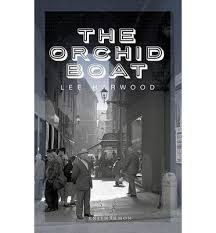
Lee Harwood’s ‘The Orchid Boat’ reviewed

I’m ashamed to confess I’ve read little of Lee Harwood’s work before, though I’m sure my old friend and poet Keith Jebb has been telling me to do so for years. Since finding this book, I’ve rushed on to the Shearsman Selected Poems with great excitement. Lee Harwood was born in 1939 and grew up in Surrey. He has spent the majority of the past 35 years living in Brighton. In a writing career that began in the early 1960s, he has published over 20 volumes of poetry and prose, as well as translations of Tristan Tzara. His work has been widely anthologised and his Collected Poems (also Shearsman) appeared in 2004.

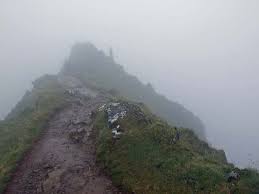
Exterior shots in The Orchid Boat (published by Enitharmon) are full of sketchy paths, remote horizons, fogs and mists; similarly, interiors sway, hide or semi-reveal with fabrics, curtains, drapes, dresses, veils. Come to think of it, these latter images are exactly right for much of Harwood’s work as the reader seems often to be moving through lucid, well-lit spaces that are partially obscured by hangings, veils impossible to identify with any clarity, suspended above, but from what and to what end is unclear. On the other hand, I don’t want to suggest that your reading of these fantastic poems will be a disembodied or disembodying experience: Harwood is a very sensual writer and I can feel the stones on his paths beneath my feet, the heft of his furniture, the texture of a dress. If veils do fall about me they are always specific, as tactile as they should be, silken, velvet, embroidered, studded with glass and jewels. There is so much to enjoy on the journey.

imgres

One of the more subtle, ironising veils Harwood deploys is his habit of enclosing lines in inverted commas. Here’s the opening of ‘Ornithology’: “A wall of dense fog ahead / – blocked, all knowledge denied. / ‘The flying bird brings the message.’” In some writers, such a device would read as an abstracted and overly-intellectual exercise in confronting one discourse with another, but Harwood’s use of it is always far more human. There is a dialogue implied, a companionship, or at least an internal conversation occurring. The intended effect is achieved but is something as much felt as understood: a destabilising of the objective view and, of course, this is what all the fog and mist is about. World is hard to know. But Harwood’s birds, to take one example, though they may be remote and elusive, are definitely there: “As the mist shifts you see swallows set on a wire, / a wagtail bobbing on a rock”.

images

Uncertainties in The Orchid Boat are temporal as well as spatial. In ‘New Zealand Playback’ voices are cross-cutting again: “‘I don’t want to be here’ // stumbling around in and out of history. // No answers to that one. // ‘You should get out more.’” The latter phrase also suggests one of the things I really like about Harwood’s work: it never wanders far from the spoken, colloquial voice, however complexly layered the over-arching arrangement of phrases may be. The poems explore what can be known and what cannot and the resulting movement is to “Zig-zag around, as usual” as ‘Sailing Westwards’ expresses it. The voyage, the far horizon, appears to be one way of putting it; the mountain path with its uncertain fog-shrouded cairns, is another. Either way, the one certainty is that “We just don’t know the full story”.

lee_harwood

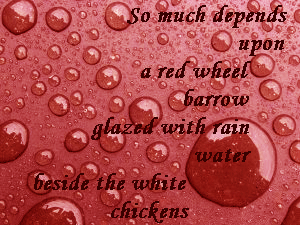
The orchid boat itself is brought into view in the beautiful poem ‘Departures’. A summer night, the sound of rain, swaying curtains, a female voice, an implied intimacy between a man and a woman, but perhaps all this was “years ago”. Yet even if a memory, it is vivid as in a mirror. But such reflections are already one step away from the thing itself and there rises the lure of fixing such experiences, our human need to do so. It’s in this context that the orchid boat appears to represent the workings of our desire to protect the provisional nature of what we know and feel. “How to imagine an orchid boat? / It gets harder. But days come and go”. The boat, always boarded without “thinking” over much, carries us “beyond all mirrors”. Though age seems to increase the allure of fixity (we grow more frightened as we grow old), Harwood believes both age and childishness are states of mind rather than temporally-defined cell blocks. So ‘Childish’ presents a free-running phantasmagoria of Wordsworth-worth cleansed perceptions, concluding: “the red handrail of the pagoda / glistens with raindrops”. There goes the ghost of Carlos Williams’ red wheelbarrow too.

 a_red_wheel_barrow

Indeed, Williams is a better comparison than Wordsworth. Harwood is often associated with the New York School, with Frank O’Hara and John Ashbery. Personally, I’ve always found Ashbery’s work hard to like much because (actually more like Wordsworth) there is too much of the egotistical, of the centripetal force, too much pressure from within, too little from without, too much abstraction. I prefer the way Harwood’s poems float more centifugally. They travel outwards spatially, to and fro temporally: “I’ll stamp my foot / and, checking the rear-view mirror, / head for the frontier” (‘The Books’).

There is in Harwood always the desire (and it is partly erotic) to tune in to the fullness of experience, its full presence and contradictoriness: “To stand back from the bare times – alive and alert” (‘Palaeontology’). The adjective “bare” here probably means that slimmed-down, rationalised, processed version of human experience we glide absent-mindedly though every day (a processing done in large part through the magical powers of language). In the same vein, ‘A Steady Light’ evokes the dusty orderliness of a museum with its “robes and rituals and attempts at clarity [. . . ] all copied, copied again, amended, copied again”. In the face of such suffocating restriction, to be “alive and alert” is an aspiration for Harwood, a daily hope, an occasional thrill, an anticipation of the drawing of the veil:

A curtain stirs in the tired room

while the same breeze slowly shifts

the hangings in the nearby hospital.

Distant sounds from the streets below.

Get up from the couch or chair.

Walk across the room to stop by the window.

The air heavy with the heat of summer.

Much more of Harwood’s work is available through Shearman who publish his Selected as well as a Collected 1964-2004.

Another review of The Orchid Boat, by Robert Sheppard, is available here

Nostalgia, Spots of Time and Ourselves

My Dad is getting more forgetful. True, he has just made his 95th birthday but like that stain that slowly spreads into “a gigantic ace of hearts” at the murderous climax of Hardy’s Tess of the D’Urbervilles, there is a growing realisation among family members that this is a bit more than a run-of-the-mill absentmindedness.

lgekkc3tperdvzis70v3

Do we vanish with our memories? I’ve been repeatedly reminded, in judging a poetry competition recently, how much poetry depends on remembering, how much any of us depend on memory for a sense of who we are. So perhaps memory is a candidate for what makes us distinctly human – better even than language, the uniqueness of which has been challenged the more we understand of the animal kingdom (See Christine Kenneally’s book, The First Word)? Recalling moments from our own lives – Wordsworth’s “spots of time” that retain, he believes,  a “renovating virtue“ – seems to have something to do with identity, mental health, even our own ethical behaviour: they shall not be forgotten, we have been saying a lot recently.

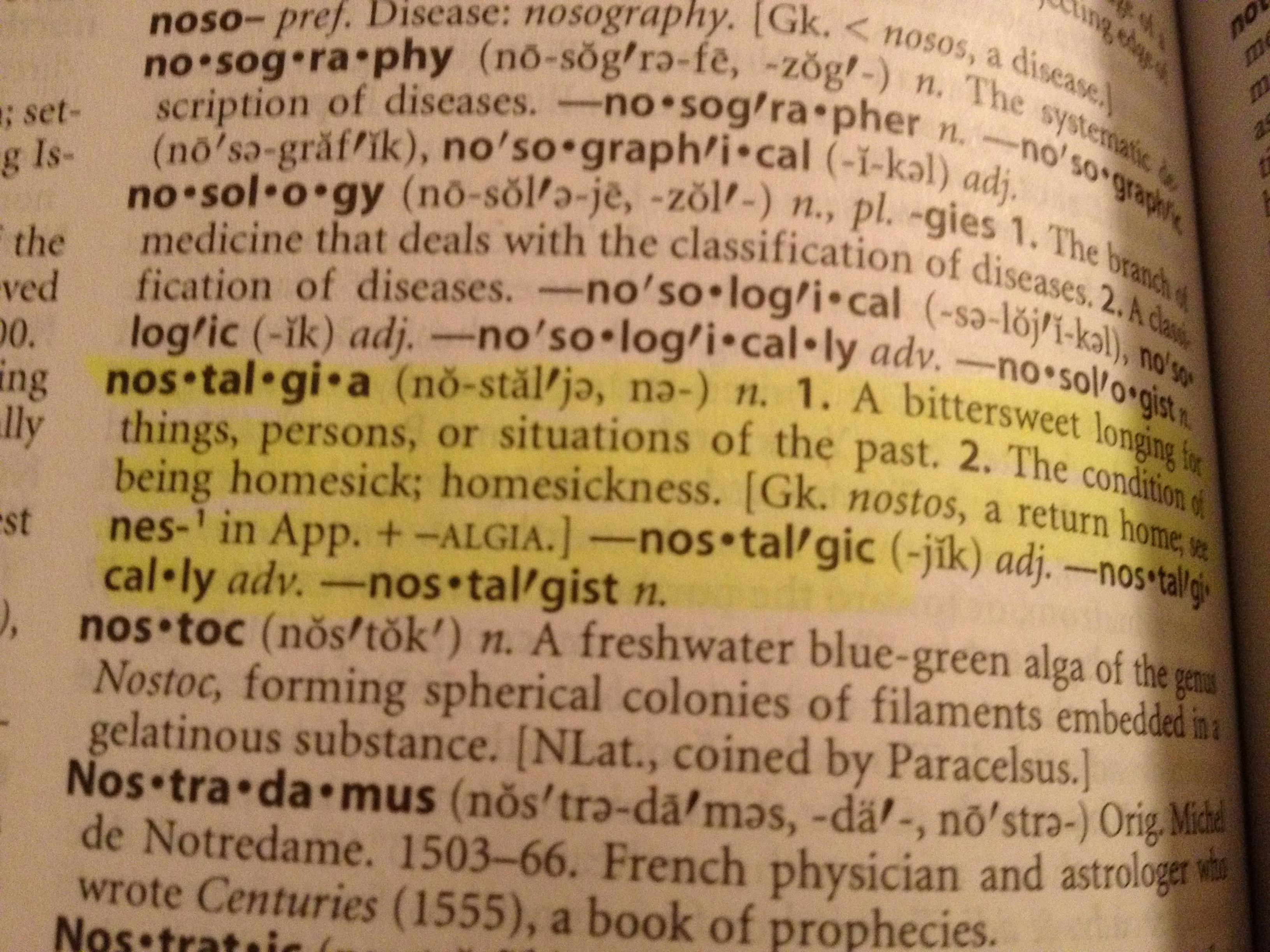
A few months ago, I read a Guardian piece about nostalgia and have kept a copy of it with me since. Nostalgia as a term was coined by a 17th-century Swiss army physician who traced the fragile mental and physical health of his troops to their longing for home – nostos in Greek means home and algos is the pain they found in such thoughts. So its roots are in mental disorder or depressive illness and for centuries it has been considered unhealthy to dwell in this way on the past, a yearning for something lost, a debilitating rosy-tinted malady.

nostaliga-defention

But psychologists have started to think of nostalgia as a more profoundly rooting experience, even a stimulant to optimism, to psychic health. At Southampton University, Constantine Sedikides and Tim Wildschut have shown the universality of nostalgia and, among its measurable effects, it is now seen as a driver of empathy and social connectedness, an antidote to loneliness and alienation. Nostalgia, by connecting our past and present, by proving the temporal oneness of being, points optimistically to the future, acts to protect against negative thoughts and situations.

The article quotes Wildschut: “Nostalgia compensates for . . . feelings of meaninglessness or discontinuity between past and present . . . it elevates meaningfulness, connectedness and continuity.” Anecdotal evidence comes from women in concentration camps who “responded to starvation by waxing nostalgic about shared meals with their families and arguing about recipes”. This is a sort of imaginative “as if” loop that writers will readily recognise and evidence suggests it can temporarily affect our body states.  Concentration camp survivors recount: “We used our memories to temporarily alter our perception of the state we were in. It was not a solution, but the temporary change in perception allowed you to persevere.”

!BYlPmUQBWk~$(KGrHgoOKj!EjlLmZDmvBKiW2UyIkw~~_35

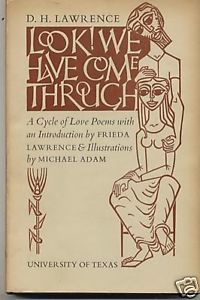
Remembering our past serves to remind us of who we are, what we have been, what intimacy we have achieved, what we are capable of, then and now, in the future. It builds resilience because, though often concerned with trauma and sadness, it is posed in a redemptive sequence: ‘look we have come through’ cries D H Lawrence and even Larkin’s depressed-sounding “first boredom then fear” might be read in this light. As to ethical consequences, apparently, in strongly nostalgic states individuals are more liable to act altruistically; the value of money is weakened; couples and families bond more closely; gratitude and connectedness increase; children grow less selfish.

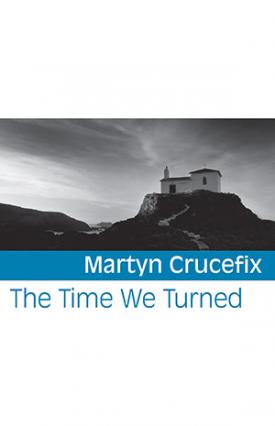
Meagre comfort when it’s you, or your father, losing the ability to recall; really this makes the loss of memory associated with old age that much more devastating. But at Southampton they are investigating nostalgia-based therapies for illnesses, including clinical depression and perhaps Alzheimer’s. Robert Lowell somewhere talks of the Christian trinity of God, Son and Holy Ghost, being replaced in the 20th century by Dad, Mum and memories of my family. Perhaps now we are gathering scientific evidence (if it was ever needed) that such a shift in focus was as much gain as loss. My poem ‘Four trees fallen’ (from The Time We Turned (Shearsman, 2014)) recollects the observation of trees fallen, the roots up-turned an image intended to evoke the unearthing of past experience:

this tree up-turned

with its metres-wide plate

of spreading roots tipped fully

ninety degrees from the horizontal

so what lay underground

is now exposed to the air [. . .]

I imagine it must have been

this same wind though perhaps

in the tempestuous pitch

of night that blew with such power

to topple a tree like this

to lever its roots up-turned

from almost immemorial dark

into the temporary dark

of one night’s storm—if it was

at night—left exposed at dawn

to new sunlight to noon and sunset

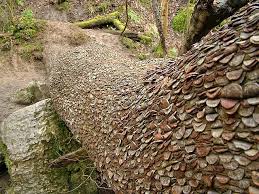
The final section remembers a pair of those fallen trees you sometimes come across where people have hammered coins into the rotting bark – a form of payment perhaps, but what for? A journey we hope always to be able to make.

images

Walking on—and with each step

I remember a third fallen tree

this morning this one skirted

some miles back beside a stream

yet this other trunk bristled

weirdly with half-moons of coins

in its papery folds each hammered

by walkers till the coins were bent

and stressed from blows

of rocks needed to sink them deep

and this tree I also remember

was not the first of its kind—what

year was it what walk beside

what stream of whisky-brown waters

did I stand by a fourth fallen trunk

in that same way gleamingly

scaled with hundreds of coins—

some had planted light-hearted

coppers while others had

invested more heavily with silver

or the thick edges of pounds

and even two-pound coins—

I suppose just taking a breather

or something to amuse the kids

while others thought playfully

to placate the spirits of the place

with its damps and shades

and slippery rocks—perhaps to give

a gift that could never be spent

digging deep in their pockets

as I too hammered and thought

I might pay the fare for a journey

yet to be made to find my way

back to dispense with the need

for daylight tempests or storms

in the pitch of night to retrace

my steps to the original place

whether it might be noon or dusk

or rain or shine a decisive taking

back a preternatural reprise

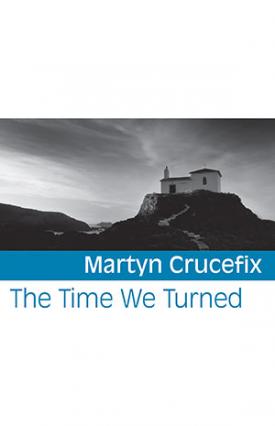
TTWT Cover image

The art of the line break

I do like Glyn Maxwell’s thoughts on this in his 2013 book, On Poetry (Oberon Books, 2012). I’m roughly quoting:

Poets work with two materials, one’s black and one’s white. Call them sound and silence, life and death, hot and cold, love and loss . .  don’t make the mistake of thinking the white sheet is nothing. It’s nothing for your novelist etc . . . for those folks it’s a tabula rasa, a giving surface. For a poet it’s half of everything. If you don’t know how to use it you are writing prose. If you write poems that you might call free and [Maxwell] might call unpatterned then skillful, intelligent use of the whiteness is all you’ve got. Put more practically, line-break is all you’ve got, and if you don’t master line break – the border between poetry and prose – then you don’t know there is a border. . .  a prose poem is prose done by a poet. . .

I like the physical sensation he creates here of the two spaces a poet works with – that almost dizzying cliff-edge of the line breaking, the powerful effect that must have, that it does have. And I’ve, personally, long puzzled over the prose poem, wondering ‘why?’. Some of my best friends write prose poems – look out Linda Black’s published by Shearsman – but they remain a closed book to me – ha ha. Why would you not exploit the white space Maxwell talks of? Surely not just because the art of the line break is a hard one to master? Oh – the discussions in workshops I’ve had! Briefly – something to do with breath, to do with reading the lines aloud, to do with the line having some weight before you snap it off. The rest – intuition.

New pamphlet

New Pamphlet from Shearsman Books

O Farso

To begin with not clear what the lighthouse does
with its absence of glass lens and bulb
at least to the naked eye—
just a spindly array of instruments up top

above the disappointingly stubby column
on a cliff-top with its padlocked metal doorway
but no sooner has the walking begun
than its subtle powers become obvious

your every step determined by its position
the heather the stony paths the steep incline
each locked in communication with it

and where all might have flowed before you
in a salted windswept wide plenitude
the lighthouse utters its singular word