Remembering Blue Nose Poetry events in London

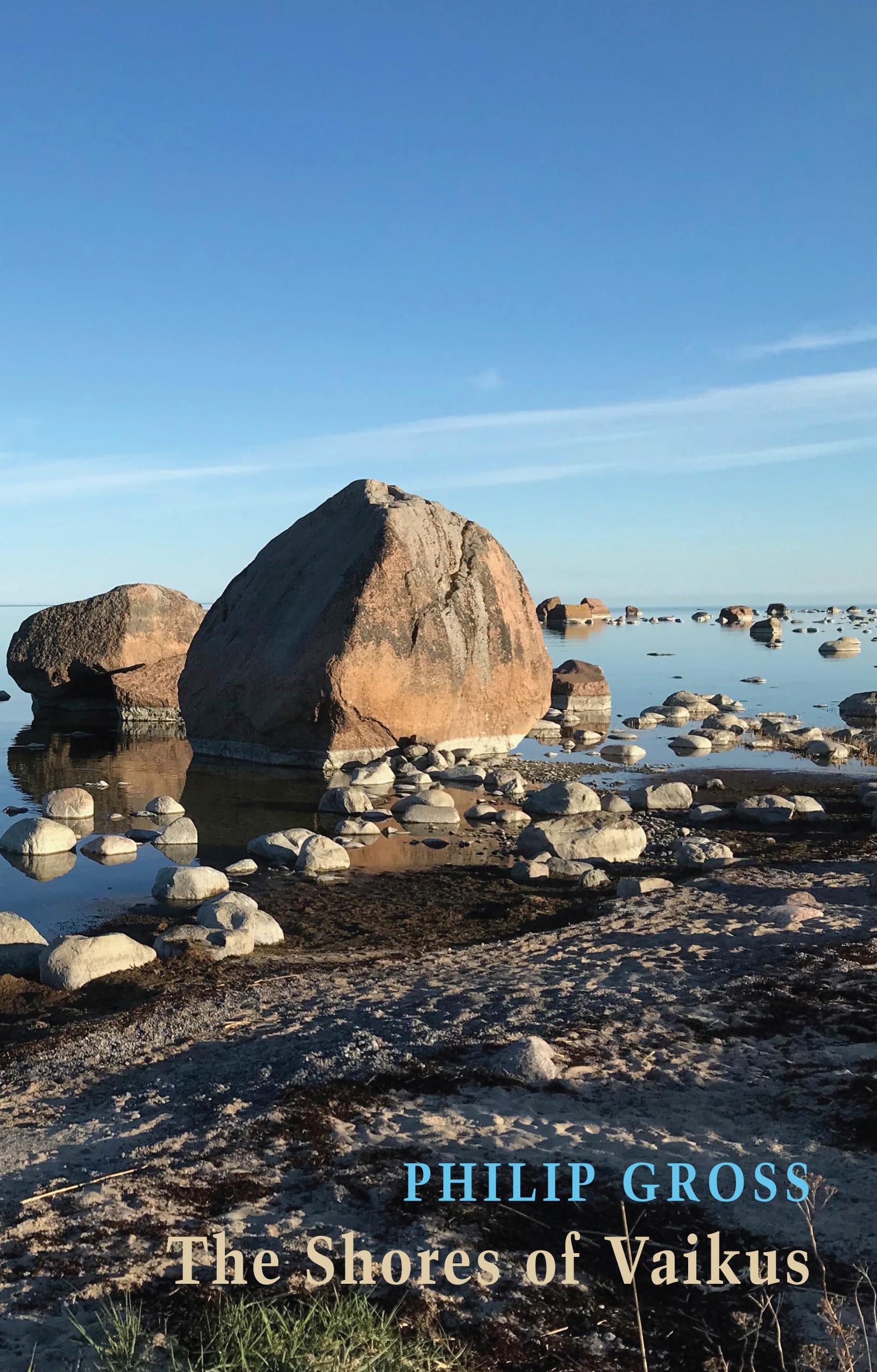
I recently attended the launch of Philip Gross’ new collection, The Shores of Vaikus (Bloodaxe Books, 2024) at the Estonian Embassy (the poems and prose pieces in the book refer to Gross’ father’s Estonian heritage and the poet’s visits to that country). I’ve followed his poetry since Faber published The Ice Factory in 1984. Neither of us could recall when we’d last met up but, after the event, I remembered that Philip was one of the first poets to read at the series of poetry readings (and associated workshops) I helped curate in the late 1980s/early 1990s, the Blue Nose Poetry series in London. I introduced him on the occasion (I still have the notes I made for the event in a Notebook for Spring 1989). I checked out the precise date in The Blue Nose Poetry Anthology (1993) which has sat on my shelves for many years now. The Blue Nose Poets (for personnel see below) invited all those who had read in the series to submit work and it strikes me now that it would be a shame if a record of our endeavours over a number of years was lost to sight completely. So, I’m posting here the Introduction to the Anthology and the full list of readers who appeared (often being paid nothing or a mere pittance) between 1989 and 1993. Interesting? I think so – given we hosted the likes of Dannie Abse, Patience Agbabi, Moniza Alvi, Simon Armitage, James Berry, Robert Creeley, Fred D’Aguiar, Michael Donaghy, Carol Ann Duffy, Michael Horowitz, Jackie Kay, Adrian Mitchell, Peter Porter, Peter Reading, Michèle Roberts, Ken Smith, and many more.

Introduction to The Blue Nose Poetry Anthology
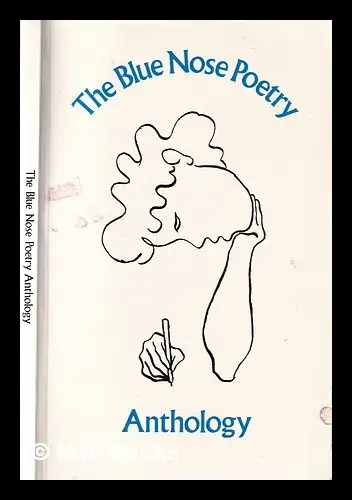
This anthology celebrates four years of Blue Nose Poetry in London. Its beginnings can be traced back to 1988, when Sue Hubbard advertised for members to join a small poetry workshop at her house in Highbury. Amongst others who began meeting regularly were the four founder members of the Blue Nose: Sue, Martyn Crucefix, Mick Kinshott and Denis Timm. At that time, poetry readings in London seemed to be in the doldrums. Uninviting rooms and draughty halls with chairs in impersonal ranks were often depressingly matched by poor organisation. The Blue Nose Poetry activities were set up with the express intention of providing workshops and readings in a friendly, accessible and organised atmosphere for new voices, up and coming writers and the already established. We were convinced that a cabaret setting of tables, candles and a drink with other enthusiasts could make poetry enjoyable. It was only with the discovery of The Blue Nose Cafe in Mountgrove Road, close to Highbury Stadium, that we found a name for the project and the real success of the Blue Nose began.

Our first poets came to the Cafe and read out of the goodness of their hearts. We thank them all once again. The first event with Michèle Roberts was packed and exceeded our wildest expectations. Within the course of one evening we had proved that exciting contemporary poetry could be presented really successfully. Soon, in response to Blue Nose’s track record of commitment and quality, GLA (later LAB) and Islington Borough agreed to support the project. Since then, there have been various changes. Mick Kinshott felt unable to continue as an organiser in 1990 and his commitment and humour was a great loss. His place was taken for two years by Bruce Barnes, whose knowledge of the poetry and arts funding world in London proved invaluable to the development of the project. More recently, Mimi Khalvati and Mario Petrucci have joined the three original members. In the middle of the Spring 1991 season, the Cafe where we held the events went into liquidation and a reading by Tom Pickard and Rosemary Norman sadly had to be called off. Regular events did not begin again until May 1991, when we moved into the more accessible, roomy and centrally located Market Tavern in Islington. Despite the many advantages of this new venue, there are a few who still regret the passing of the old Café which, though tiny, disorganised and terminally broke, did have a superb atmosphere for poetry.

In an appendix to this anthology, we list all the readers who have appeared at the venue/s – a genuinely comprehensive survey of poetry in recent years. This, of course, does not include the many poets who have had the opportunity to read from the floor at Blue Nose events. More importantly, this book contains no record of the hundreds and hundreds of people who have enjoyed and supported Blue Nose Poetry. This book is dedicated to them.

Martyn Crucefix / Sue Hubbard / Mimi Khalvati / Mario Petrucci / Denis Timm

Full List of Main/Support Readers for Blue Nose Poetry Seasons 1989 – 1993

March – July 1989

Michèle Roberts read with Martyn Crucefix; Philip Gross read with Sue Hubbard; Jeremy Silver read with Mick Kinshott; Jo Shapcott read with Denis Timm; Leo Aylen read with Gerda Mayer; Alison Fell read with Hume Cronyn; The Blue Nose Poets; Carole Satyamurti read with Barbara Zanditon; Michael Donaghy read with Rupert Slade; Adam Thorpe read with Al Celestine.
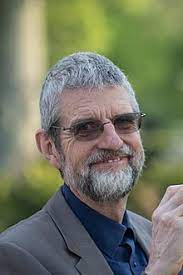
Philip Gross

September – December 1989

Ken Smith read with Mimi Khalvati; Anna Adams and Julian May; Gerda Mayer read with Chris Powici; The Blue Nose Poets; The Performing Oscars; Maura Dooley read with Sara Boyes; Fred D’Aguiar read with Matt Caley; Matthew Sweeney read with Hilary Davies.

January – April 1990

Fleur Adcock read with John Harvey; Dannie Abse read with Myra Schneider; Elaine Randell read with Frances Presley; Hugo Williams read with Keith Spencer; Pitika Ntuli read with Bruce Barnes; John Cotton read with Bridget Bard; Michele Roberts read with Peter Daniels.
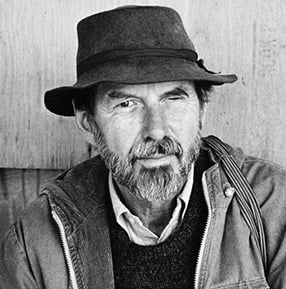
Robert Creeley

May – July 1990

The Blue Nose Poets; Sarah Maguire read with Vicki Feaver; Jeni Couzyn read with W N Herbert; James Berry read with Susan McGarry; Simon Armitage read with Chris Gutkind; E A Markham read with Mimi Khalvati; Brian Patten.

September – December 1990

In the Gold of Flesh anthology with Valerie Sinason, Dinah Livingstone, Pascal Petit, Jenny Vuglar; George Szirtes read with Gabriel Chanan; Kit Wright read with Candice Lange; The Blue Nose Poets; Michael Horovitz read with Raggy Farmer; Patience Agbabi and Judi Benson; Jenako Arts Writers; Carol Ann Duffy read with Steve Griffiths.

January – March 1991

Judith Kazantzis read with Mario Petrucci; Robert Creeley read with Mick Kinshott; Jackie Kay read with the Speech Painters; Peter Forbes and Eva Salzman; [Blue Nose Cafe in Highbury suddenly closes]; Lemn Sissay read with Adam Acidophilus.

May – July 1991

Peter Porter read with Elizabeth Garrett; The Blue Nose Poets; Carole Satyamurti read with Leon Cych; Peter Scupham read with Lucien Jenkins; Leo Aylen read with Rosemary Norman.

October – December 1991

Sylvia Kantaris read with Andrew Jordan; Gillian Allnutt read with Helen Kidd; Alan Jenkins read with Eric Heretic; Sean Street and Hubert Moore; Lee Harwood and Richard Cadell; Xmas Party – Tony Maude, Speech Painters and music from Dean Carter.

January – April 1992

Adrian Mitchell; David Constantine read with Tim Gallagher; David Morley with Martyn Crucefix; Sue Stewart read with Bruce Barnes; Glyn Maxwell read with Sue Hubbard; Peter Abbs read with Nicky Rice.
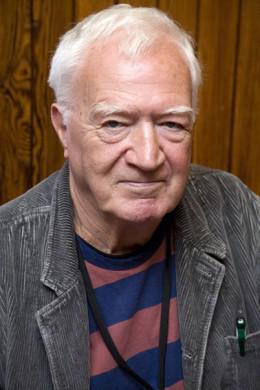
Adrian Mitchell

May – July 1992

Jo Shapcott read with Mick Kinshott; Bobbie Louise Hawkins read with Robert Sheppard; Birdyak – Bob Cobbing and Hugh Metcalfe; Colin Rowbotham read with Richard Tyrrell; Ken Smith read with Eric Heretic.

October – December 1992

Connie Bensley and Felicity Napier; The Poetry Show at Rebecca Hossack Gallery; Donald Atkinson read with Jane Duran; Ruth Fainlight read with Moniza Alvi.

January – April 1993

Peter Reading read with Briar Wood; Ruth Valentine; Myra Schneider read with Mario Petrucci; Carol Rumens read with Daphne Rock.

How to Answer the Poetic Influence Question #1

A Boat..._quicksand cover

With my new collection just out from Seren Books, I’m happy to have a number of promotional events and readings coming up over the next couple of months. I love the business of giving a reading, but there’s often a moment that arises that makes me uneasy as to how to how to respond. It’s the question of influence; the hand going up to ask: what other poets do you consider to have been an influence on your own poems?

It’s my problem I’m sure, but I’ve always had two ludicrously extreme responses spring to mind on hearing the question. Firstly, to list pretty much every single poet I’ve read in the last 40 years because the truth is every single one has added a grain, a pebble (for better or worse) to the path I walk to write a poem. Alternatively, since I can’t think of one, or even two, clear contenders for powerful influence when I sit down at a blank page or screen, it must be that I have emerged ex nihilo, a peculiar original. The first would be a lengthy reply of little use or interest; the second would seem positively dripping with arrogance (and equally of little use or interest).

Actually, I can think of a third answer: it’s not for the poet to identify influences; it’s a job for a reader. But I wanted to use the next two posts to kick the idea of influence around, to sort out my own ideas and to answer it in two ways. Early in a writing career, the revelation of, or encounter with, a new voice, style, or even subject area can lead to great lurching changes of direction in a poet’s own work. The lurch or swerve becomes progressively less marked the older a poet gets. Put that down to a more confident self belief perhaps, or to a growing inertia, or a more sophisticated process of absorption of such novelty, or sheer bloody mindedness . . .

images

For me, I started in the business convinced that I was composing song lyrics because poetry as such was not a familiar thing – except in occasional English classes at school and I dropped that subject at the age of 16. As I’ve said elsewhere, science was what I did through most of my teens. With too much time on my hands and too little joy to be found elsewhere, in the mid 1970s I began to turn to other sorts of books. From Foyle’s in London, I stole a copy of Everyman’s Selected Poems of Wordsworth. They seemed a bit dull and plodding but reminded me of rural Wiltshire where I grew up. For a few months I copied Wordsworth. Perhaps a year later, after a good dose of Sartre, I was finding my way back to the academic study of literature. It was the poetry (and drama) of T S Eliot that I fell in love with (not Dylan Thomas – the other poet on the curriculum). I still have those early Eliotesque poems somewhere, mostly Prufrock period style, though also a horrifyingly pretentious sequence of poems like a clumsy, anaphora-laden Waste Land.

00014096-390x540

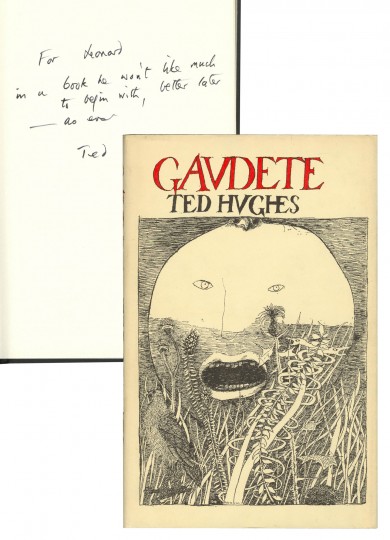
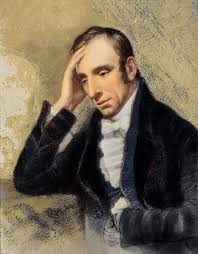
Re-starting my Higher Education took me to Lancaster University, studying Literature and Philosophy (and a few sessions of Creative Writing with poet, David Craig) and Hughes and Larkin were served up and readily ingested. At first, I swerved to the latter’s urban details and personal gloom; later it was the Hughes of Gaudete (recently published, 1977) that I copied, writing a long, quasi-mythic, magic-real, psychodrama about sex and power that I eventually self-published in Oxford. As a post-graduate among the dreaming spires, it was Percy Byshe Shelley who I was working on for several years and, though not a model for poems as such, his ideas about the role of the Imagination and poetry as an “Orphic language” have been important to me ever since.

md7773056273

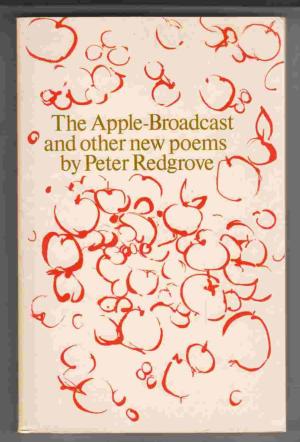
Among contemporary poets, I’d discovered Heaney (not the rural Ireland stuff so much as his wrestling with private and public responsibilities – Station Island, for example), Peter Redgrove’s fluid take on mind’s encounter with the natural world (The Apple Broadcast) and Ken Smith’s urban-political Americana (oh how I wanted to have written Fox Running). I wrote individual poems modelled on all these writers while absorbing much more deeply the work of the Romantic period – only now did I really find Keats, his poems and letters, Wordsworth still, Coleridge’s Conversation poems especially. What might have been expected – Hardy, Auden, Yeats, Frost, Stevens, Lowell, Bishop, Plath, Dickinson – were all missing or they missed me.


download
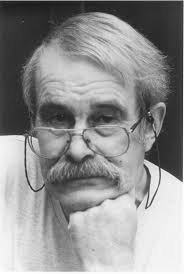
Ken Smith


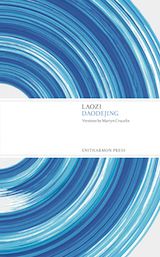
A decade of writing, reading, plus some reviewing too. A couple of my own books published and I’d stumbled my way to Rilke’s New Poems, Elegies and Sonnets, the second and third of which I began to translate and (whether visible on the surface or not) were a great influence on me – the Duino Elegies  for their thoughtful drive from existential mourning to praise, the Sonnets to Orpheus for that same thought (more of the praise) and their use of form. From Whitman I found my way to W S Merwin’s marvellous fluidity (something I was comparing to Paul Eluard’s work too) and from Rilke it seemed a logical (not the right word at all) step towards the 81 texts of the Daodejing which again I felt I had to try to English because it both rhymed with what I already knew and I knew it would develop further what I needed to know.

daodejing

A few years back, an article in PN Review sent me to the work of Yves Bonnefoy. A heart-rate raising sense of another writer who had fought the two-faced dragon of language and seen enough to conclude that at the bottom of its filthy lair gleamed the concept and the concept promises a “strange immortality” but only if we can “forget brutal reality”. One reason (I’m now quoting an earlier blog post on a 1953 essay by Bonnefoy) we do this is that there are “general truths in conceptual thinking and a particular kind of power derived from it. It ‘allows thinking’ of a certain kind; it is linked with ‘the vast power of words’. But any gain is predicated on a significant loss, the abandonment of the actually existing ‘world of things’. Conceptual thinking is ‘systematized’, generalizing, categorizing; it’s in this that its ‘flight’ from the real is found. The only sort of thing that can be held up to counter the concept are specific particularities of human experience: Bonnefoy asks ‘Is there a concept for footsteps in the night, for a cry, for a stone rolling in the brushwood? For the feeling evoked by an empty house? No [. . . ]’”


images
Yves Bonnefoy


Reading Bonnefoy did not send me lurching to right or left but rather nudged, re-calibrated, re-assured me that my own direction of travel was not a wholly isolated one. I don’t write like Bonnefoy – there can be a dull abstraction to his poems which seems to me to contradict his ideas about real presence expressed as specific particularities – but I know what thought underlies my own work has close parallels to his (as far as I understand him). That’s influence, I’d say.

In my next blog, I’ll look at the question of influence from a different angle – what ghosts of other writers can be seen in more recent work?

The Death of Philip Levine

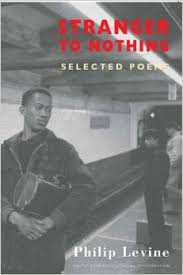
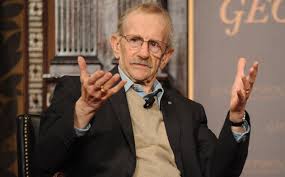
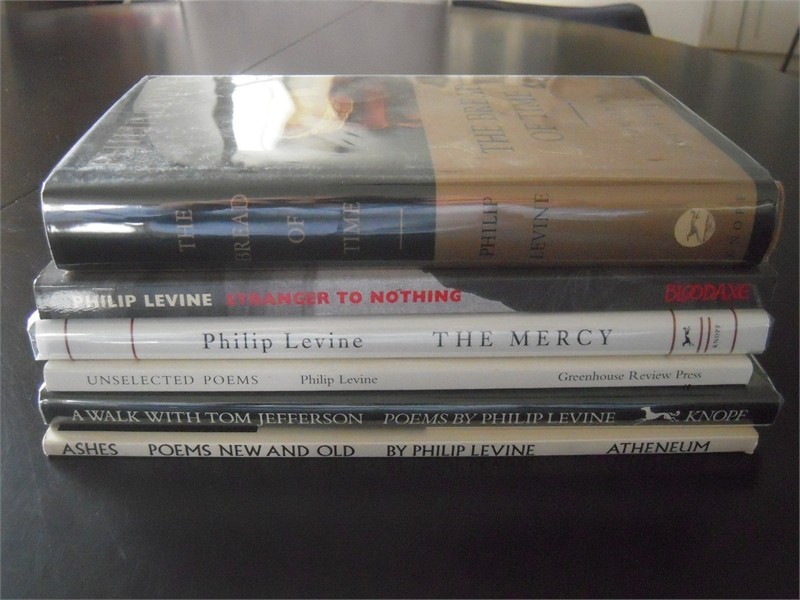
The death of Philip Levine, one of the greats of modern American poetry, was announced yesterday. Bloodaxe published his selected poems, Stranger to Nothing, in 2006: http://www.bloodaxebooks.com/titlepage.asp?isbn=1852247371. Astonishingly, this was his first UK publication since Secker produced an earlier Selected Poems in 1984. Not as well known as he should have been in this country, there has been a good deal more attention given to him in very recent years.

imgres

I’m ashamed to say I only came across him when Poetry London asked me to review Stranger to Nothing alongside Dan Chiasson’s Natural History and Other Poems (Bloodaxe, 2006). It was on the strength of the review that Anne-Marie Fyfe asked me to contribute to a Troubadour Poetry event in London celebrating Levine’s work. Sadly Levine was unable to attend on the evening due to illness and I had the honour of reading some of his work in his stead. For what they are worth, I’ll append the notes I made to myself on the poems I selected to read that evening at the end of this blog. Happily, I think I remember Anne-Marie later reporting back that Levine approved of my brief selection.

Some time later, Naomi Jaffa discussed his life and work with him at Aldeburgh in 2009. The Poetry Channel’s blurb for the recording of that conversation gives a flavour of Levine as follows: A giant of American poetry and now the newly appointed US Poet Laureate, Philip Levine memorably appeared at Aldeburgh in 2009 where he enjoyed a 45-minute conversation with Naomi Jaffa, The Poetry Trust director. In this absorbing, funny and wide-ranging interview, Levine covers growing up as a Jew in anti-semitic Detroit, working for General Motors, finding his voice as a poet, life at college with teachers Lowell and Berryman, his fascination with Lorca and Spain, his love of jazz (and loathing of Wagner), and which four writers he could bear to be stuck in a lift with: listen to that here: http://thepoetrytrust.libsyn.com/philip-levine-s-journeys

And as tribute to a truly great poet here is my September 2006 review of Stranger to Nothing:

On the face of it, the contrast between Dan Chiasson and Philip Levine could hardly be more striking. Bloodaxe have produced a fascinating selection from a poet whose relative absence from discussions of US poetry on this side of the Atlantic is a huge loss. Born in 1928 in Detroit, the son of Russian-Jewish immigrants, the first poems included here were not published until 1963. Like Raymond Carver, to whom he bears some resemblance, Levine spent many years labouring in industry  and much of his later poetry recalls these experiences and the people with whom he worked. Whereas Chiasson is urbane and metropolitan, Levine is urban and industrial. Though encompassing a long writing career, this is not a selection that reveals very much in the way of artistic development; Levine’s characteristic style and tone seems to have come to him fully formed and he has seen little need to alter it. One reason must be the premium he clearly places upon being true to his materials – and in particular the experience of the American working people he portrays.

imgres

Accordingly, there are poems in which Levine doubts the value of the imagination in its tendency to romanticise real experience. ‘Salt and Oils’ from the mid-eighties moves rapidly through moments in a life, but then concludes:

“These were not

the labours of Hercules, these were not

of meat or moment to anyone but me

or destined for story or to learn from

or to make me fit to take the hand

of a toad or a toad princess”

With very different results this might be seen as another attempt to achieve the “transparent eyeball” that Chiasson refers to. Things are what they are and it is in this sense that the collection title works. The phrase comes from an early poem in which a visit to a graveyard leads the narrator to contemplate the realities of life so that “in time one comes / to be a stranger to nothing”. This is also typical of Levine’s style – a loosely constructed, colloquial blank verse, driven along powerfully by the syntax across lengthy sentences that work by slow accumulation rather than the local explosions of linguistic surprises.

But if the fantasies of imagination are dismissed, Levine holds firmly to its role in the re-creation of the past. Often precisely dated, he vividly and lovingly portrays scenes and people from his past. A truck-driving uncle from “black Detroit” is sketched through telling detail – his “two hands kneading / each other at the sink” – and this summoning up into a type of art remote from the original life is, Levine seems to suggest, a kind of redemption or dignifying, so that the Uncle can at last “rise / above Belle Isle and the Straits, / your clear eye / rid of our rooms forever”. Throughout this book, lives are invoked in this fashion in finely-judged poems that neither underplay the poverty and misery within them, nor uncomfortably rose-tint the strength and humour such individuals need to survive.

dscn2747

Perhaps for some, there will be something too fatalistic in these portraits of working-class America. Ought there not to have been more overt political agitation? But Levine works the vein of the individual, the idiosyncratically human and, I’m sure, for him that represents political position enough. In the very recent poem ‘Our Reds’, he again memorialises three characters from school days (1930s/40s?) and their promotion of Communist doctrine. Though the poem indeed acknowledges that what the future brought was “an America no one wanted” it is to “bless” the three that the poem intends: “bless / their certainties, their fiery voices / we so easily resisted . . . their faith in us, especially / that faith, that hideous innocence”. It is perhaps only in moments that working lives are felt redeemed as in the stunning ‘An Ordinary Morning’ with its plain recounting of workers arriving in the city on a bus. The driver and a passenger strike up a song – “O heavy hangs the head” – and as dawn breaks the other passengers wake, momentarily allowed the nobility that their exterior lives seem to deny:

“the brakes

gasp and take hold, and we are

the living, newly arrived

in Detroit, city of dreams,

each on his black throne”

Levine has said that the tradition of poetry he inherited in the 1940s was “utterly lacking” in the kind of people and experiences he had grown up with. His intention was to add to US poetry “what wasn’t there” before. To have done this so consistently – to record the plight and resilience of the poor and inarticulate in America without breaking into the angry simplicities of blame or party politics or caricature is a monumental achievement. This is a collection that deserves to become a significant feature in the twenty-first century landscape of UK poetry.

And here are my notes from the Troubadour event (page numbers here refer to the Bloodaxe edition of Stranger to Nothing):

Reading Philip Levine’s poetry I was immediately put in mind of Carver’s admiration for Chekhov – he quotes Chekhov’s letter again and again in which he says “you don’t have to write about extraordinary people who accomplish extraordinary and memorable deeds”. Also like Carver, Levine worked in industry for many years – born in 1928, his first book didn’t appear till 1963. Both seem fully paid up members of the working classes – Carver said he could never write down to his own people. ‘Saturday Sweeping’ – p 26

I like the way Levine’s poems seem to meander organically from one thing to another – without a hint of irrelevance. He also plays great tricks with chronology – memory of his working years often playing such a large part in his current thinking and writing. ‘Sweet Will’ – p 84

images

Levine – like Carver – would sign up to Pound’s dictum that the only worthwhile morality in writing is “fundamental accuracy of statement”. But there is another current in Levine which can take him towards the surreal. This poem reminds me of Ken Smith’s ‘Fox Running’ (both 1981). ‘The Fox’ – p 68

In later Levine, the political anger is often transmuted into a kind of less deceived tenderness – an amazed sense of good fortune. ‘Philosophy Lesson’ – p 150

Levine often writes of visits to Europe – particularly Spain – and the Civil War clearly stimulated his imagination. Here though – I take it – he is also commenting on one of the great American poets who came to Europe – one I guess temperamentally very contrasting to Levine and I think this has to be intended partly as literary critical comment. ‘The Trade’ – p 127

Levine is also unfashionably willing to walk naked – emotionally. Some will think he sails the wrong side of sentimentality but I’d disagree.’Starlight’ – p 55

Working on Rilke for so long in recent years – I see him everywhere. In the Elegies he claims that even the street girls – prostitutes – are momentarily aware of the visionary possibilities his poems are concerned with. But here – lastly – is Levine working from a position of a good deal of factual knowledge and communicating the same thing – moments of vision without the religious baggage. ‘An Ordinary Morning’ – p 86