RIP Michael Longley

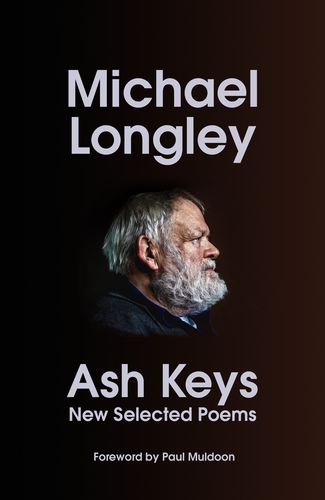
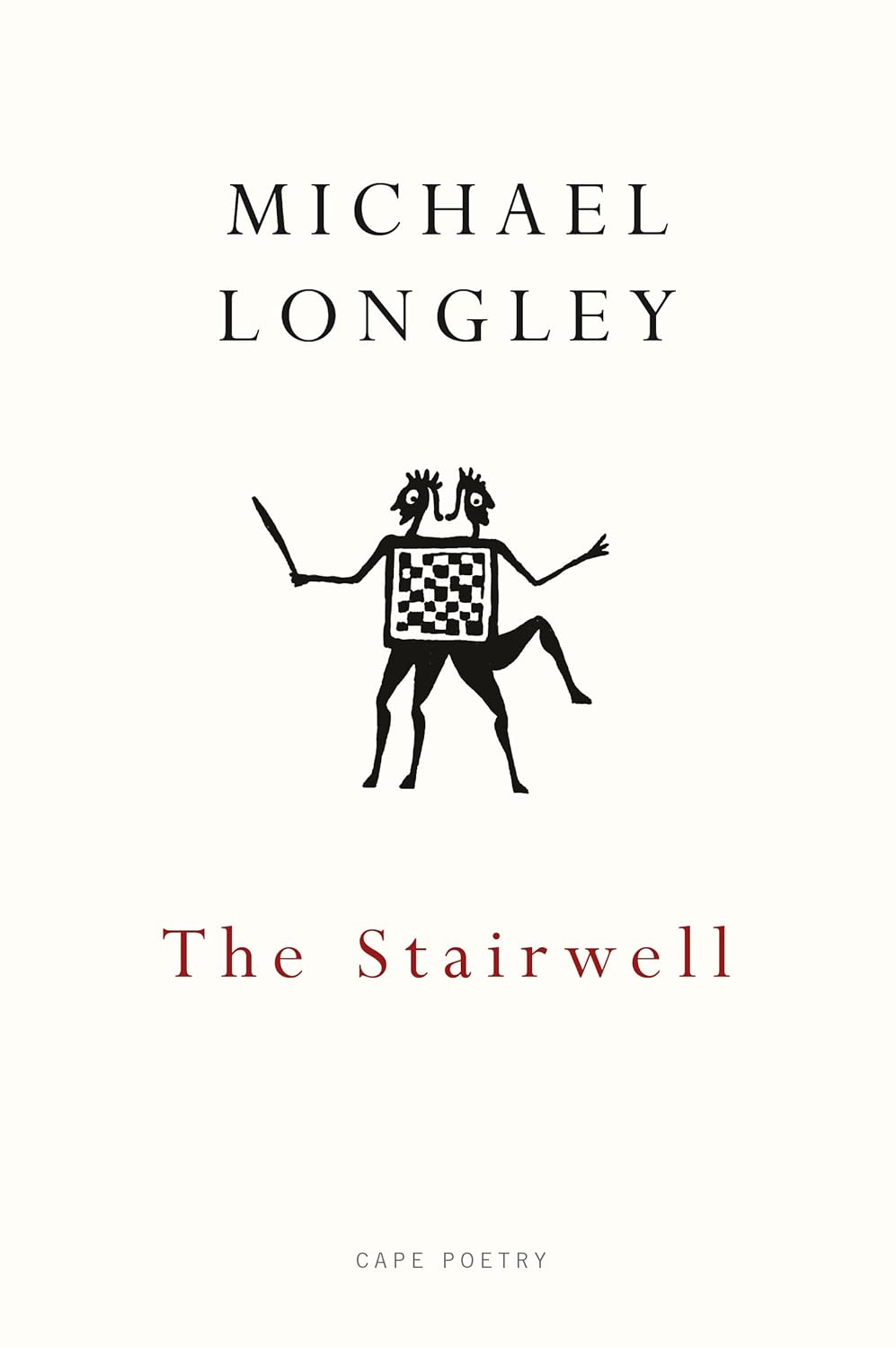
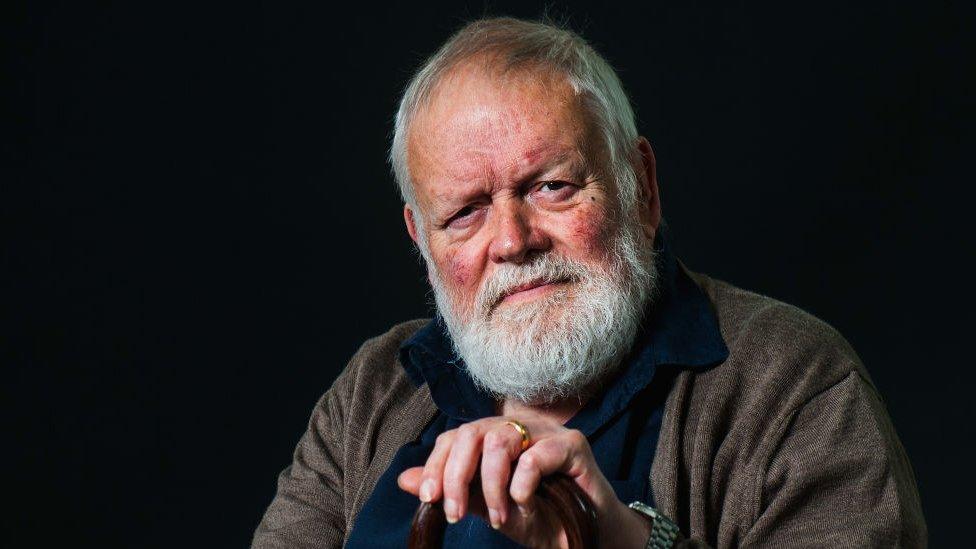
Social media – at least the bit of it that arrives on my screens – is alive this morning with many expressions of sadness at the announcement of the death of Michael Longley. I heard him read just a few months ago to launch his most recent new selected poems, Ash Keys, at the LRB Bookshop in London. He insisted then on trying to stand to read his poems, though his breathlessness and physical wobbling often made him have to take his seat again; but the humour and mischievous twinkle were as powerful as ever. Over the years, I have to admit it took me a while to really come to appreciate his work; I think I did not really ‘get’ the force of his brevity, his precision. If you have not seen it yet, do watch the brilliant, moving, inspiring BBC programme about him, his life and work here. I’m posting below my review of his 2014 collection, The Stairwell (the review originally published in Poetry London) and I hope it manages to say something useful to both new and older readers of this wonderful poet. Here he is reading ‘Remembering Carrigskeewaun’ on The Poetry Archive.
Keeper, custodian, traditionalist whose work is stringent, formalist, always elegant: critical judgments on Michael Longley’s work fence him round too closely, running the risk of misleading, even discouraging, new readers. It’s true, as a member of Philip Hobsbaum’s Group in Belfast in the 1960s, Longley’s poems were criticized for their elegance of form, rhetorical grace and verbal eloquence, though he found something of a kindred spirit in Derek Mahon. Longley wrote poems that were “polished, metrical and rhymed; oblique rather than head-on; imagistic and symbolic rather than rawly factual; rhetorical rather than documentary” (The Honest Ulsterman, November, 1976). But Seamus Heaney’s different aesthetic was Hobsbaum’s star turn and quickly became a national, then international preference. Attitudes solidified around Longley although (perhaps in the cause of self-definition) this was not something he resisted, casting himself and Mahon in the 1973 poem ‘Letters’ as “poetic conservatives”.

‘Epithalamium’, the poem that since 1969 has opened Longley’s selections and collecteds reinforces the caricature and in ‘Emily Dickinson’ he sees the need to dress “with care for the act of poetry”. But Longley’s long standing admiration of Edward Thomas was not for nothing and he shared a desire to dismiss Swinburnian “musical jargon that [. . . ] is not and never could be speech” so that in The Echo Gate (1979) he is experimenting, on the one hand with the plainly Frostian ‘Mayo Monologues’, and on the other with short, imagistic pieces in which the authorial voice seems to have taken a vow of non-intervention. ‘Thaw’ reads, in its entirety:

Snow curls into the coalhouse, flecks the coal.

We burn the snow as well in bad weather

As though to spring-clean that darkening hole.

The thaw’s a blackbird with one white feather.

This is a mode that Longley has continued to explore in accordance with another (surprisingly) early statement of poetic intent. The poet’s duty is to “celebrate life in all its aspects, to commemorate normal human activities. Art is itself a normal human activity. The more normal it appears in the eyes of the artist and his audience, the more potent a force it becomes” (Longley, ed. Causeway: The Arts in Ulster, 1971).
Subsequent collections have become concerned to list, to name, as it were ‘merely’ to record experience for its own sake, often in vivid short poems which run the risk of seeming inconsequence, though Longley has never lost his unerring eye and ear for the poetic line. Nor has he ever seriously questioned the adequacy of language (within conventional bounds) to represent experience. It’s in these ways that his work is conservative but his poems’ intention to encompass and witness is far more radical. To witness – whether it is the song of a wren near Longley’s beloved Carrigskeewaun, a Belfast bombing, or the camp at Terezin – is to acknowledge that we are bound together by what happens. From Gorse Fires (1991) to The Weather in Japan (2000) Longley comes to sound like Eliot’s Tereisias who, as the pages turn, has “seen and foresuffered all”. The beauty of nature, the horrors of mankind, birth and death, the present and the distant past are all absorbed into his steady gaze, a steady voice, intent on an anatomy of connection.

One such connection is the way Longley has been re-visiting the Iliad and Odyssey for years now, producing vivid, contemporary accounts of key scenes. Priam’s visit to Achilles tent in Book 24 of the Iliad famously became Longley’s poem ‘Ceasefire’, appearing in The Irish Times in 1994 when the IRA were considering a ceasefire themselves. The poem forges links and connections between enemies and across millennia. As ‘All of these people’ puts it, “the opposite of war / Is not so much peace as civilization” and civilization needs to be founded on a right relationship with even the smallest of things. Among many poems that articulate an ars poetica, ‘The Waterfall’ envisages the best place to read his own collected works as “this half-hearted waterfall / That allows each pebbly basin its separate say”. It is such civilized allowance, rather than the much-vaunted preservation of a tradition, that is the mark of Longley’s aesthetic, moral and political outlook.

His new collection, The Stairwell, is much obsessed with death though its inevitable reality has already been embraced by the poet’s allowance. An Exploded View (1973) already contained ‘Three Posthumous Pieces’ and twenty years later, ‘Detour’ mapped out his own funeral procession. Here, Longley has been “thinking about the music for my funeral” (‘The Stairwell’) and much of the book has the feeling of an ageing figure readying to depart. Longley himself refers to his “unassuming nunc dimittis” (‘Birth-Bed’) and the only ceremonial he anticipates is to be provided by robins, wrens, blackbirds: “I’ll leave the window open for my soul-birds” (‘Deathbed’). The counterweight to civilized allowance, even in the approach of death, is modesty and humility. If gifts are to be handed on to the future then they ought to include a little poem about a wren: “Its cotton-wool soul, / Wire skeleton [. . . ] / Its tumultuous / Aria in C” (‘Another Wren’).
Such unassuming gifts to future generations are balanced, in the civilized society Longley seeks out, by the commemoration of the past. This is something his poems continue to do with his re-imagining of his father’s experiences in the Great War and this new collection contains more of these poems; his father at ‘High Wood’ among “unburied dead”, befriending the future Hollywood star, Ronald Colman, or taking an ironic “breather before Passchendaele” (‘Second Lieutenant Tooke’). Whether looking forwards or backwards, the true gift lies in the specific, not the generalized. ‘Insomnia’ recalls Helen Thomas calming and consoling the mad Ivor Gurney, by guiding his “lonely finger down the lanes” of her husband’s map of Gloucestershire. Longley looks for this too. Here is the whole of ‘Wild Raspberries’:

Following the ponies’ hoof-prints

And your own muddy track, I find

Sweet pink nipples, wild raspberries,

A surprise among the brambles.

Having translated a poem by Mikhail Lermontov, Longley goes on to wonder what his “understated” neighbours around Carrigskeewaun would make of such “grandiloquence” (‘After Mikhail Lermontov’). It’s in the avoidance of a hyper-inflated language and tone that Longley’s re-makings of Homer are so good. The new book contains a fair sampling of these too, many of them in the second half which forms an extended elegy, commemorating Longley’s twin brother, Peter. The Homeric paralleling works less well in this context, though the unrhymed double sonnet, ‘The Apparition’, in which the ghost of Patroclus pleads to be buried by Achilles, addressing him as his “dear brother” is powerful. But I’m reminded of Heaney’s Station Island (1984) in which he revised and regretted his earlier use of “the lovely blinds of the Purgatorio” in writing a poem about the murder of Colum McCartney in Field Work (1979). Longley’s Homeric material casts such a strong shadow and the vital life of Peter is insufficiently conveyed, except in a few recollections of their shared childhood, tree-climbing, bows and arrows, boxing, visiting the zoo. Nevertheless, Longley’s determination to commemorate his twin, with whom he shared “our gloomy womb-tangle” (‘The Feet’), re-confirms human closeness, allowance, the giving of space to others, to nature, is what has driven this poet’s work for more than forty years. 
14 Ways to Write an Ekphrastic Poem

Update (June 2019): I have written more on ekphrastic choices in a recent review published in Agenda Poetry.

Ekphrastic poems (ie. poems stimulated by visual art) are on my mind a great deal as I have been planning the all-day workshop I have been asked to run at the Holburne Museum in Bath on the 25th February, 2017. This particular exhibition, ‘Breughel: Defining a Dynasty’, opens on the 11th February and was in the news recently as it will include, among many others, a newly-rediscovered painting by Peter Breughel. I’ve been reading a variety of poems derived in some fashion from the poet’s encounter with visual art and I wondered if there was a way of categorising the various approaches. There are probably many – but these 14 ways (in 5 subgroups) are what I have come up with and they might usefully serve as a way to kick-start ekphrastic poems of your own. Try one a day for the next fortnight!

Through Description

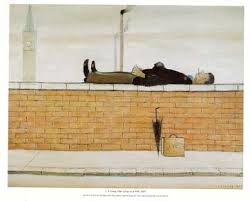
  1. Describe – and do no more. This is always the poet’s initial desire, to put into words what has caught our attention visually (and because attention has been visually caught there is something about this image or object that chimes with the writer’s subconscious). In terms of the poet’s intention, the wish to describe may be sufficient (the subconscious may do the rest). Examples might be Michael Longley’s ‘Man Lying on a Wall’ (from Lowry’s paiting of the same name) or William Carlos William’s ‘The Dance’ (from Breughel the Elder’s ‘Peasant Dance’).

imgres

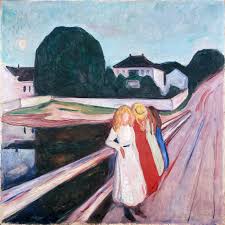
  1. Describe but imagine beyond the frame – Derek Mahon’s ‘Girls on the Bridge’ (after Munch’s painting of the same name) does this, beginning with description of the scene but then wonders where the road leads away to in space, asks what the next day will bring (in time) and concludes with allusions to Munch’s more famous image ‘The Scream’: “bad dreams / You hardly know will scatter / The punctual increment of your lives”.

imgres

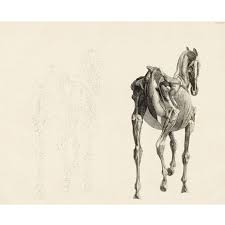
  1. Describe but incorporate researched materials – an easy option in the world of Google where the artist’s life or love life, the political context etc are easily accessed. Edward Lucie-Smith does this in ‘On Looking at Stubbs’ ‘Anatomy of the Horse’’, working with the gossip of local people in the Lincolnshire village where Stubbs worked at preparing the horse’s carcass: ‘His calm knife peeling putrid flesh from bone”.

imgres

Through Ventriloquism

  1. Make Main Figure Speak – the most common approach as famously done in Carol Ann Duffy’s ‘Standing Female Nude’ (from Georges Braque’s ‘Bather’). Thomas Hardy makes the Elgin Marbles speak in ‘Christmas in the Elgin Room’.


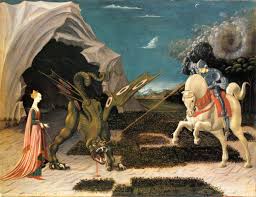
  1. Make Minor Figure/s Speak – UA Fanthorpe’s ‘Not my Best Side (Uccello’s ‘St George and the Dragon’) might be considered a hat-trick of the category above but her decision to make all 3 characters in the painting speak, casting side-lights to and fro, means I put it here. Delmore Schwartz’s ‘Seurat’s Sunday Afternoon along the Seine’ – while more free indirect speech than ventriloquism – has a similar effect, visiting each of the characters in Seurat’s picture and allowing their perspective to be aired.

imgres

  1. Make Objects Speak – this is an obvious category though I’m a bit short on illustrations of it. BC Leale’s ‘Sketch by Constable’ almost does it by concentrating attention on a tiny dog sketched in the corner of an image of Flatford Mill. Ann Ridler also comes close by largely ignoring the foreground figures and focusing on the landscape only in ‘Backgrounds to Italian Paintings’.


  1. Make the Artist Speak – writing about Van Gogh’s ‘Portrait of the Artist’s Mother’, Robert Fagles makes the artist speak, denouncing photography and preferring the expressive qualities of paint: “Of the life hereafter I know nothing, mother, / but when I paint you what I feel is yellow, / lemon yellow, the halo of rose”.


Through Interrogation

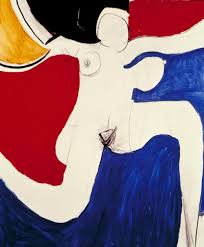
  1. Of the Artist – Vicki Feaver’s ‘Oi yoi yoi’ (on Roger Hilton’s image of the same name) starts with description but quickly begins talking directly to Hilton (“You were more interested / in her swinging baroque tits”). Interestingly, ekphrastic poems need not always stand in awe of the work; looking at Francis Bacon’s ‘Study for Portrait on Folding Bed’, Thomas Blackburn has a long one-sided conversation with the artist, charting a growing disenchantment with Bacon’s work, accusing him of “uttering, with superb, pretentious / Platitudes of rut, that you have said and said”.

 imgres

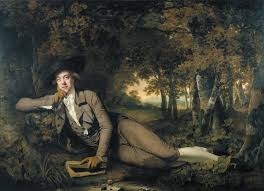
  1. Of the Figure/s – I have always admired Gerda Mayer’s poem, ‘Sir Brooke Boothby’ (after Joseph Wright’s image), in which she addresses with Sir Brooke about his languid pose, his copy of Rousseau, his intense scrutiny of the observer. Peter Porter’s many poems about art objects are hard to categorise but ‘Looking at a Melozzo da Forli’ (an image of the Annunciation) interrogates both image and the figure of Mary herself.

imgres

  1. Of Yourself – probably all ekphrasis is a sort of self-interrogation but some poems make this more clear. The address often takes the form of admissions of ignorance or obtuseness in the face of the image or the asking of rhetorical questions. Robert Wallace on ‘Giacometti’s Dog’ once again begins in description but asks questions about the fascination of the image, eventually concluding “We’ll stand in line all day / to see one man / love anything enough”.


Through Giving an Account

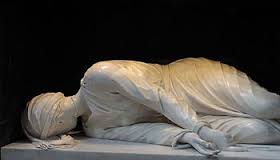
  1. Of Your Encounter – Wallace’s poem spills across these artificial categories and might be placed here, among poems where the poet explicitly records details of his/her encounter with the work of art. Yeats famously does this in ‘The Municipal Gallery Revisited’, looking at images of Augusta Gregory and John Synge. David Wright (who lost his hearing at the age of seven) movingly describes his visit to Rome to see Maderno’s sculpture of St Cecilia (patron saint of music) in his poem ‘By the Effigy of St Cecilia’.

imgres

  1. Of Gallery Visitors – poets often comment on the behaviour or experiences (imagined) of gallery visitors (and even the gallery attendants!). Gillian Clarke does this in ‘The Rothko Room’: “In this, / the last room after hours in the gallery, / a mesh diffuses London’s light and sound. / The Indian keeper nods to sleep, marooned / in a trapezium of black on red”.


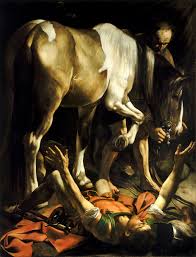
  1. Of Others – admittedly a catch-all category this one, but sometimes (especially when the works of art appear in churches) the poet can be interested in speculating about the responses of more ‘ordinary’ people. Thom Gunn does this toward the end of ‘In Santa Maria del Popolo’ where Caravaggio’s ‘Conversion of St Paul’ is displayed. Having recorded his own response to the image he ends by staring at the old Roman women who come to kneel before it: “each head closeted // In tiny fists holds comfort as it can. / Their poor arms are too tired for more than this / – For the large gesture of solitary man, / Resisting, by embracing, nothingness”.

 imgres

Come At a Tangent

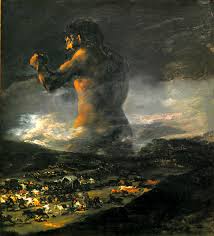
  1. Finally, the ekphrastic moment can be presented as if an after-thought, or illustration of a poem already half composed. There are famous examples of this, especially Auden’s ‘ Musee des Beaux Arts’ which spends most of its length contemplating in very general terms the way old paintings present suffering. Only towards the end does Auden refer to Breughel’s ‘Fall of Icarus’ which he describes in some detail to suggest how “everything turns away / Quite leisurely from the disaster”. RS Thomas’ ‘Threshold’ does something similar, only concluding with allusions to Michaelangelo’s painting of Adam in the Sistine Chapel. And Seamus Heaney’s ‘Summer 1969’ records a visit to Madrid as the Troubles boiled in Northern Ireland, and only latterly does the poem focus on Goya’s ‘Panic’: “Saturn / Jewelled in the blood of his own children, / Gigantic Chaos turning his brute hips / Over the world.imgres

A new translation of Brecht’s ‘Of poor B.B.’

Having posted last week about Brecht’s poem ‘Of poor B.B.’ it felt pretty inevitable that I should have a go at translating it myself. Though it can’t always be the case, most translations are like this – undertaken as a tribute to the original poet and poem, a public declaration that this fascinated me, an attempt to really work out how the text functions and achieves its ends. Disseminating the text to the target language’s reading public is also an aspect of this tribute paid.

249y242_mpt_no22015_coverfront

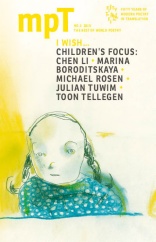
David Constantine, writing in Modern Poetry in Translation (No. 2 2015) about Derek Mahon’s recently published translations (Echo’s Grove (Gallery Press, 2013)) considers the “liberties” Mahon tends to take with such work to produce “almost” original poems in English while allowing their sources to remain audible. Mahon does this by working from “cribs of one kind or another” and Constantine suggests that this has become a very common practice. Indeed, “Mahon practices the belief that you don’t actually need to know well or even at all the languages you translate out of; even – a possible sub-text – that knowing them might be a disadvantage” (MPT, No. pp.111-113). As someone who was remarkably poor at languages at school, this is something I have found myself saying in recent years since going public with a few translations (for example, see post on translating Rilke). I like to think of the source poem as a series of gestures – like a dance performed by the original author – so the translator must try to achieve similar effects but with his/her own body (of language). A crib will guide me to the main movements, even to much of the details, but tone, emotional colour, shades of irony are harder to trans-late and cannot merely be copied. This gesture made by this body, if repeated precisely by my body, will more likely look awkward, or meaningless, or comic when it was intended as serious. I have to achieve the end (as far as I see it and understand its intended impact – you have to rely on the translator for that certainly) by using the resources at my disposal, my physique, my body of language.

egon-schiele4-300x199

In practice, what this means is that once the basic outline and incontrovertible details are in place in a translation, I have to close the source book and try to pump some life into the target text. Ted Hughes imagined a poem without true life in it as limping (Poetry in the Making, p.15); a translation without true life in it is only going to be a halting performance you’d rather not witness, worrying about whether such a gesture was intended or not, ironic or not, you fear the whole is not coherent, a mere series of movements, not a dance at all. I’ve always liked Charles Tomlinson’s formulation of the translation task: in introducing his now 50-year-old translations of Fyodor Tyutchev, he claimed ‘The aim of these translations has been to preserve not the metre, but the movement of each poem – its flight, or track through the mind’ (Versions from Fyodor Tyutchev 1803-1873 (Oxford: OUP, 1960)).

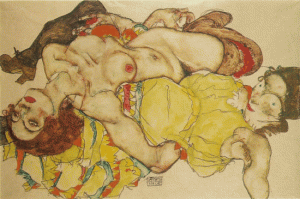
Happily, ‘Of poor B.B.’ is not a text of great complexity. Brecht is usually concerned to communicate clearly and he says in ‘On Rhymeless Verse with Irregular Rhythms’ (Poems 1913-1956, pp. 463-471)) “what was needed was the tone of direct and spontaneous speech”. He mostly wanted to use “everyday speech” and “sobriety of expression” which he felt was “by no means irreconcilable with poetry”. So Brecht is not exactly Rilke or Mallarme for the translator. Looking at Hofmann and Hamburger’s translations (as referred to in last week’s post), most of Brecht’s dance is clearly conveyed with little variation between the two versions. Though Brecht’s lines are pretty irregular he does keep a ballad-like rhyme in lines 2 and 4 of each quatrain and I miss this in Hofmann’s version. Hoffman also (to my mind) overelaborates in a few of his English choices. “Sterbsakrament” (Hamburger has “last sacrament”) becomes “every sacramental perquisite”. Hofmann’s narrator looks at the two women in quatrain 4 “insouciantly” and his pine trees “micturate” (when the point of the contrast with the city asks for something more downright like Hamburger’s “piss”). I don’t think lexical adventures here are quite right for this poem. Also in quatrain 7, Hofmann’s antennae “underwire” the Atlantic. Brecht is referring to transatlantic cables but the allusion to supportive bras seems distracting and gives mankind’s efforts too much power. I read the point as suggesting our technology is dwarfed by the ocean in the remarkable image that our best advances merely entertain (“unterhalten”) or “amuse” (Hamburger) the Atlantic.

Egon_Schiele_060

Regarding the hat donned by the narrator to fit in with city folk, Hofmann’s “top hat” seems a little too up-market, while Hamburger’s “hard hat” conjures up a building site. I have gone for “bowler hat” of a clerk or business man. The sound of the birds in quatrain 6 is important. Hofmann’s “bawl” catches the anti-pastoral tone of the poem but Hamburger is forced by the needs of form to go for “twitter and cheep” (to rhyme with “sleep”). There is also some ambiguity in the final stanza where the narrator hopes to keep his “Virginia” alight in the coming earthquakes of social disruption. The German suggests the cigar will hopefully not go out (“nicht ausgeher”) and the cause: “lassen durch Bitterkeit”. Hofmann renders this as hoping the cigar will not “go bitter on me” whereas Hamburger (again in part for the sake of form) hopes to keep the cigar alight “embittered or no”. Hofmann’s phrase feels too narrowly concerned with the smoking experience but Hamburger’s rather awkward phrase does successfully suggest what I see in the final lines – the narrator’s hope (if not altogether sincerely) that he himself may avoid becoming bitter. My solution tries to hold both literal and transferred metaphorical senses of the bitter cigar equally within the line. I’ve come to think of this as important to the poem as the narrator is blessed with a degree of self awareness as much as he is cursed with a cynical, dismissive hedonism.

images

Of poor B.B.

I, Bertolt Brecht, came from the black forests.
My mother bore me into the city
while I was in her womb. And till my dying day
the chill of the woods will lie there inside me.

In the asphalt city I’m at home. From the beginning
supplied with every last sacrament:
with newspapers – and tobacco – and with brandy.
To the end, suspicious, lazy, content.

I’m amicable with the people I meet. I don
a bowler hat in just the way they do.
I say: they’re animals with a quite peculiar smell.
And I say: so what – I am too.

In the morning, in my vacant rocking chairs,
I sometimes set for myself a couple of women
and carelessly gaze at them and converse with them:
in me you have one here you can’t rely on.

When night falls, I gather men around me;
we address each other as ‘gentlemen’.
They swing their feet onto my table tops.
They say: things will improve for us. I don’t ask when.

Come morning, in dawn’s grey light, pine trees piss
and their vermin, the birds, start to shriek.
At that hour, in the city, I drain a glass and fling
my cigar butt away and, troubled, fall asleep.

We have settled, a superficial crew,
in houses that to our minds will never fall derelict
(we’ve built tower blocks over Manhattan Island
and spindly antennae that tickle the Atlantic).

What will last of cities is what blows through them: wind!
Houses make happy eaters: wolfed in a moment.
We know it – we are temporary
and after us comes nothing really worthy of comment.

In the earthquakes that are to come, I hope I’ll keep
my Virginia lit, not doused, grown bitter.
I, Bertolt Brecht, carried off to the asphalt cities
long ago from the black forests inside my mother.

tr. Martyn Crucefix

bare-tree-behind-a-fence-1912