‘I Hear the Unheard Heart’: the Poems of Rose Auslander

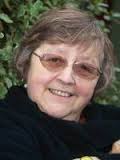
What follows is a review – originally published by Poetry London earlier last year – of Rose Auslander’s poetry. As I say below, her work has been surprisingly little noticed in the UK literary world. The situation is rather different in her own culture where she is well-known and much admired as this entry on the germanlit.org website makes clear. She is an unusual and original poet well worth seeking out and you can find this book on the Arc website.

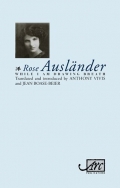
While I Am Drawing Breath is a revised version of Mother Tongue, Anthony Vivis and Jean Boase-Beier’s 1995 volume of  Rose Auslander’s poems. That book strode across an effectively empty stage and the same is surprisingly true of this new version: there are really no rival translations into English currently available (she’s not even included in Michael Hoffman’s Twentieth-Century German Poems (Faber, 2005)). This sadly reflects Auslander’s reception through the first half of last century. Only at the age of 64 did her work begin to be noticed, though until her death, 23 years later, she received prizes and accolades, mostly in Germany. Her relative neglect is surprising given her extraordinary personal story, surviving the worst horrors of the twentieth century, and the vivid, gem-like minimalism of her work.

mc_While_I_am_Drawing_Breath_cvr_pbk_6_May_14

The life is important. Rose Scherzer was born into a German-speaking Jewish family in 1901, growing up in Czernowitz (then part of Austria-Hungary). The First World War forced the family to Vienna, then Budapest, but later Auslander returned to study at Czernowitz University. She made the acquaintance of philosopher, Constantin Brunner, but in 1921 emigrated to America with Ignaz Auslander (to whom she was briefly married). She returned to Czernowitz only to find it occupied by the Nazi’s in 1941. She lived in the Jewish ghetto, surviving against the odds, writing poetry and meeting Paul Antschel (later Paul Celan). The town was liberated by the Russians but while Auslander tried to arrange for the family to emigrate to America, her mother died, precipitating her daughter’s breakdown. She did not write in her native tongue again for another 10 years.

While I Am Drawing Breath contains work written in these later years (it’s a shame the arrangement of this book gives no sense of chronological development). By then the friendship with Celan had been revived and Auslander abandoned the rhyme schemes and metrical patterning of earlier work for a more free, highly compressed, yet colloquial style, rejecting all punctuation. It is this style that German readers recognise as her distinctive achievement and is the culmination of the tragic restlessness of her life as well as her fascination with language. It was hard to speak of what she had witnessed:


From the eyes

of sated man-eaters

smoke surges

and my words

have blackened

in it

(‘Smoke’)

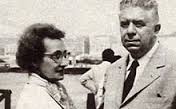
Paul Celan

Eloquence, volubility, the pleasures of the text risked disrespect for the victims of war. Auslander’s words are never far from mourning:

I call out

my willow-word

to the sunken souls

the squall has

driven down

to the pebbles

(‘Willow Word’)

Czernowitz, probably 1941

Yet she seldom speaks directly of pogroms and persecution. ‘And Shut Out Their Love’ does record the advent of “guns and jagged banners”, but Auslander’s imagery is more mythic, more folk tale: hunger, blood, fire, snow, ashes, smoke. Faced with the “unbearable reality” of the Czernowitz ghetto, the options were to despair or dwell in “dreamwords” and there are strong escapist longings as in ‘In Those Years’ with its snow-bound world into which come seductive rumours of  a “country / where the lemons flower” (an allusion to Goethe’s 1795 lyric ‘Mignon’). ‘Immer Atlantis’ (translated here as ‘Atlantis Always Glittering’) re-creates that mythic city:

there are always celebrations in swaying gardens

well-proportioned people

always holy and delicate

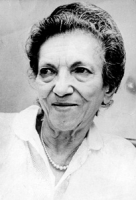
tn_auslander

But her friendship with Brunner suggests Auslander was pursuing something more complex than the sort of consolatory fantasy this suggests. He warned against the dangers of superstition, or pseudo-contemplation: unfounded beliefs creating a distortion of true insight. Auslander regards language itself as a ‘third way’, a melding of self and world, without the risks of denying reality. In ‘Mother Tongue’, movement along the “word path” leads to transformation “from myself into myself / from moment to moment”. In ‘Words’, language is neither slave to reality nor liberated self-expression, but “my source”. In ‘The Net’ the goal is “one word / which says it all” as Brunner suggested, an ascent to a plane of spiritual (geistig) contemplation encompassing love, art, and philosophy.

That Auslander’s work pursues such goals without tumbling into arid abstraction and commentary is one of the pleasures of these tough, unselfpitying poems. She is open to “dull brown” as well as “radiant blue” (‘As If’) and her obsession “for binding words” is an attempt “to reach even further / into this known / unknowable / world” (‘Sentences’). What she hears through the cuckoo, rainbow, snow, camomile, mills, carnivals, islands and trees is a spiritual realm, given validity not by any organised religion but by the suffering she has endured:

I hear the unheard heart

in my breathing

like a clock made of air

then the melody of the music-box

is alive in my temples

its tones muted like the moving spheres

(‘The Unheard Heart’)

Images of the Child in Laozi’s ‘Daodejing’

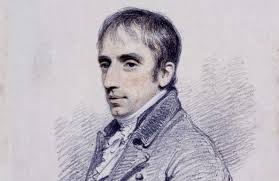
Most images of the child in Laozi’s Daodejing appear as metaphors. For a text that has a strongly backward-looking, even primitivist tendency there is surprisingly little of our own post-Romantic fetishisation of childhood. For Wordsworth, the child could be seriously considered father of the man and the loss of childhood an event from which we never recover. But for Laozi (almost as paradoxically) the child is more often used as an image of the state of being towards which the wise man or woman strives.

imgres

For example in Chapter 20, the narrative voice compares himself to a child (all translations in what follows are from my forthcoming book (Spring 2016)). This is one of the few parts of the Daodejing where we hear a reasonably consistent lyric voice (not the figure of the teacher) expressing a troubled state of mind because he tries to adopt the teachings of Laozi. Though opening optimistically, “—in putting by what / passes for knowledge / truth is there are / fewer reasons to grieve”, the narrator is soon perturbed by his observations of “the grinning crowd”. What follows is a vivid description of the worldly mob, intent on their own petty, material lives, their narrow purposes:


as if celebrating

closing some deal


about to embark

on a summer vacation

crowd-2

This is the world that Laozi (the putative author of the Daodejing) is said to have despaired of in his own time. The story goes that he vanished from Chinese society sometime in the sixth century BCE, leaving behind only the 81 Chapters of the Daodejing as a kind of despairing, if consolatory handbook. In Chapter 20, the narrator reaches for the image of a child in trying to characterise himself:


I live in solitude

I’m like a quiet child


though one who’s yet

to take his first steps

I’m like an infant

incapable of smiling


I dither and droop

find no place to belong

[. . . ] I seem
to have let things slip

imgres

His contrast to the determined mob is vivid and for most of the poem it seems not strongly in his favour. However, the concluding lines present a more satirical tone, a more defiant effort at self-confidence, declaring that he finds:


no significance

in those things

that do not drive roots

deep in the way


On several occasions, the poems present those who follow the way, the teachings of Laozi, as ill-adjusted to the world as we find it. Chapter 28 begins to explain why. The follower of the way does not divide or discriminate; her vision of life is comprehensive:


—know the male

yet hold to the female

become a valley

in receipt of all things


in becoming a valley

know the power

that cannot be

called on in vain


In achieving such a state of perception (we might say vision), the poem again calls on the image of a child: “this the reprise / to the child-like state”. That this is a reprise, a return of some sort, is an idea repeated throughout the 81 Chapters of the Daodejing. I think this sounds more Wordsworthian than it really is. Laozi is more concerned to draw his readers’ attention back to the wisdom of a previous age rather than one innately the preserve of childhood and subsequently lost as the bars of the prison house fall. But perhaps both images really ought to be read as no more than metaphors. Interestingly, Chapter 28, deploys an alternative metaphor in its effort to convey the wholeness of vision:


be the reversion

to the uncarved block

when the block is cut

shaped for use


by the teacher’s hand

a controlling force

the truth is who carves

best carves least

uncarvedblockblog1

Reprise here becomes “reversion” but the “uncarved block” represents the oneness of being that Laozi’s teaching is founded on. The resort to the figurative suggests the basic inadequacy of language to encompass this oneness – just one of the very modern-seeming themes of these wonderful poems.

The premise of this oneness yields the (again modern-sounding) corollary that even our individual selves are provisional at best. The opening of Chapter 49 suggests:


—the true teacher is like a poet

who has no self to speak of

using the self of others as his own


And Laozi is under no illusions about how such beliefs distance the believer from the world as it is lived. The sage, or master, or (as I have translated it) the teacher, inevitably seems a square peg in a round hole. But it is ironically she who perceives the underlying truth of things:


in the way she deals with the world

the teacher may seem dazed

confused as if her wits were dull


yet even as the nation’s households

strain ears and eyes she listens

she watches in the guise of a child

9482381-Closeup-portrait-of-cute-little-baby-girl-crying-in-pink-pajama-hat--Stock-Photo

The most developed consideration of the image of the child comes in Chapter 55. Those who manage to follow the way possess a child-like innocence that William Blake would recognise as built not on narrowness, naivety and ignorance but on a fullness of knowledge beyond what most of us can aspire to and such transcendent innocence is like a protective charm. In Chapter 55, images of children include indications of sexuality and pain suggesting a world undivided by conventionally shallow ideas of morality or ‘happiness’, a world of profound harmony discovered in the recognition of the oneness of all things. The poem also powerfully argues that to be ignorant of this truth breeds egotism and greed which, under the guise of acquisition and self-aggrandisement, turn out to be nothing less than a primrose path to a form of extinction.


Dead inflexibility

chapter 55


—the immunity of one pursuing the way

is like the charm of innocence about a child


winged insects will not sting nor beasts

attack sharp beaks do not swoop to peck


though bones may be soft and sinews weak

yet the grip of the child is powerful still


and though the sexual life is still remote

the boy’s prick stands stiff as a thumb


despite the hungry child’s keening all day

she sleeps with no rawness in her throat


the body of a child has such harmony—

to know harmony is to find the ever-here


finding the ever-here is enlightenment

but cramming life to the brim is foolish


when such a person asks so much of life

the resulting glut is dead inflexibility


such irritable reaching only ends in decay


11-30-12_Glut

A Living Hanging Hemisphere: Ted Hughes’ ‘Meeting’:

One of my most visited blog posts in recent months has been the discussion/analysis  of Ted Hughes’ poem ‘November’, The Month of the Drowned Dog: click here. The poem had been in my mind as we are studying it (along with a range of other poems by Hughes) in the Cambridge International Exam Board’s A level course for Literature in English. I suspect I am getting hits from students around the world also following the same course and – without wanting to become a major source of plagiarism – I thought this week I might discuss another poem from the same selection.

static1.squarespace

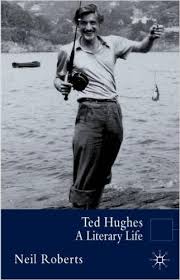
‘Meeting’ was first published in The Hawk in the Rain (Faber, 1957) and is one of several poems in that collection to present what has been called “the central theme or event in Hughes’ poetry: the usurpation or invasion of the world that the rational intellect has constructed by a power that is represented as greater and ultimately more real” (Neil Roberts, Ted Hughes: A Literary Life (Palgrave, 2006). The poem ‘Egg-Head’ is a much less concise treatment of the same issue. The common meaning of ‘egg-head’ – an intellectual, probably arrogant, person (usually a man?) – operates in Hughes’ poem which intends to berate such characters for what they exclude from their life experiences. But the egg image also implies a fragility which suits the poet’s purpose of critiquing the limits of such attitudes. Egg-heads, like Humpty-Dumpty, are always in danger of being cracked open. So the ‘Egg-Head’ character peers at life (this latter word gathers to itself extraordinary power and significance in Hughes’ as in D H Lawrence’s work) “through his fingers”. He deploys methods of “defence”, is “walled in” and “shuts out” and he “resists”. All this is achieved, Hughes roars in an angry, flurried combination of chewy consonants and Latinate vocabulary (that is perhaps not as controlled as it might be):


By feats of torpor, by circumventing sleights

Of stupefaction, juggleries of benumbing,

By lucid sophistries of sight


This is the vitriolic tone of the attack on the rational mind’s defences. It is countered by not wholly convincing phrases intended to be representative of life such as a “leaf’s otherness, / The whale-monstered sea-bottom, eagled peaks / And stars that hang over hurtling endlessness” quickly supplemented by “the flash / Of the sun, the bolt of the earth”, then “the looming mouth of the earth” and finally “the whelm of the sun”. What does emerge from such phrases is the link of life with the natural world, with great power, with incalculable scale.

horse-in-the-rain-750395940

All these ideas are better conveyed in ‘Meeting’ and a prose/short story version of Roberts’ “central theme or event” can be seen in ‘The Rain Horse’ (from Wodwo (1967); also found in the CIE Prose Anthology called Stories of Ourselves (p.271)). The young man at the start of this story has already come “too far” from the orderly “tarmac lanes” he had intended to walk. He had come hoping vaguely for “something, some pleasure, some meaningful sensation, he didn’t quite know what”. His encounter with the uncanny, threatening, apparently evil-intentioned horse of the title instead gives him a “fright and shame”. At the end he strips himself naked, sits staring at the ground “as if some important part had been cut out of his brain”. Roberts again interprets this sequence of events such that the horse is representative of un-delimited life, a “shamanic spirit” challenging the young man’s rational control and perception. So it’s less that something has been cut out of his brain (though he may feel the loss of self-constructed barriers as a loss) more that whole fields of experience, emotional and spiritual possibilities have been opened to him. This misinterpretation of the impact of life (in Hughes’ sense) is something also seen in ‘Meeting’.

imgres

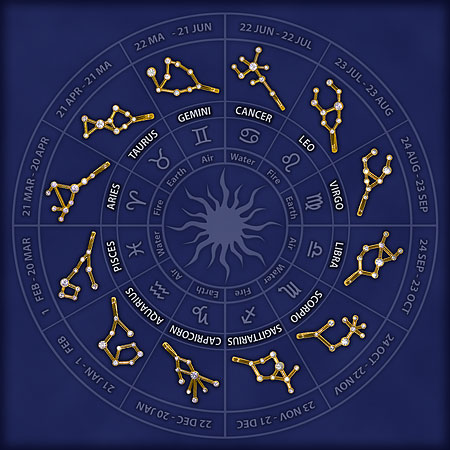
‘Meeting’ opens with another of Hughes’ straw-men, a self-regarding male whose “smile”, in the first phrase, suggests he is well-pleased with what he views in the “mirror”. But as with ‘Egg-Head’, it is the exclusion of all else, all otherness, that concerns Hughes. Even as he smiles, the man “shrink[s]” the rest of the world to a “trinket”, the tinkling consonants (t-k-t) here neatly suggesting the insignificant bauble all else becomes in his view. The word is then countered by the grand sweep of the poem’s key phrase intended to evoke the too-often unregarded universe beyond the rationalist’s view: “the whole / Sun-swung zodiac of light”. Here the wide open vowels (o-u-u-o-a-i) suggest breadth and scale, the sibilance suggests a dynamism, the zodiac evokes images of both night sky and astrological/mythic  elements, the light suggests the elusiveness of life on this scale. For all this to be reduced to a “trinket” feels both absurd and tragic (for Keith Sagar this is both “hubristic and solipsistic”, reducing the universe to the point where man can erroneously “feel himself to be a god in it”). To drive the reductive point home even more clearly the trinket shape is said to appear “On the rise of his eye” which I take to be the curvature of the man’s pupil, but describing it as a “rise” also reminds us of the man’s own arrogantly elevated self-image.

zodiac-header

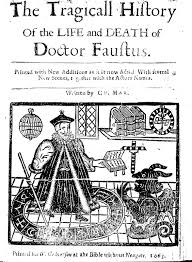
After the colon/caesura of line 3, Hughes uses the metaphor of a dramatic “role” for the man’s behavior to stress both its importance and falsehood. The role Hughes gives the man (or the role the man imagines himself to be playing) is that of Dr Faustus, the arrogant over-reacher, so consumed with his own importance that (in Christopher Marlowe’s play) he barters his soul for earthly power and pleasure though clearly warned of the consequences. He simply doesn’t seem to think the ordinary rules apply to him. The image of flinging “a cape” suggests an Elizabethan stage scene and that word “life” reappears here in all its significance since this is what the actor/man feels he can “outloom”. That Faustus himself outloomed ordinary life and religious sanctions for 24 years is relevant here; as is the fact that he was dragged screaming to Hell at the close of the play. Hughes imagery contains within it the condemnation he intends in the poem.

images

These opening four and a half lines set up the character of the young man. After the full stop in line 5 the “event” begins (and consists of one sweeping, irresistible sentence). Like the man in ‘The Rain Horse’, this man also wanders into the wilder realms of nature, to “an empty mountain slope”. To apply the adjective “empty” to this place is just one of the man’s errors, imagining a terra nullius where there is multifarious life and significance. What he actually encounters here is a “black goat”. It’s around here perhaps that a reader becomes more conscious of the poetic form Hughes is using. It’s terza rimaa form of triplets rhyming aba bcb cdc and so on. On the whole, Hughes manages this really well (line breaks at lines 5 and 8 perhaps turn more for form than sense and the rhyme word demanded in line 16 is awkward). The difficulty and complexity of this form might be a gesture to the rational man whose mind enforces order and organization, or contrastingly, the looping, self-involvement of the scheme might suggest Hughes’ own perception of the lived world’s interconnectedness.

The goat’s appearance has conventional features suggestive of threat and this means we are seeing it from the man’s perspective. Colours of “black” and “yellow-eyed” are ugly, as is the hyphenated phrase “square-pupilled”. Its onomatopoeic, assonontal and threatening movements (“clattered and ran”) are a challenge as is the position it takes up, “forefeet firm on a rock”, the sizzling fricatives and the ‘clatter’ of the monosyllabic “rock” further reinforce this. Of course, the goat’s placement “above” the man is significant of Hughes’ true valorization of this encounter. This is contrasted with line 11, as the “black devil head” is the man’s assessment of the creature, a designation that what lies beyond his usual comprehension must be categorized as evil.

images

One reason why this poem is more successful than ‘Egg-Head’ is that Hughes, in the final 7 lines, takes us seamlessly into the man’s transformative experience as a result of the encounter. Images of startling differences in scale occur. In contrast to the earlier belittling of the universe as a “trinket”, the man’s experience is now likened to being gathered up in “gigantic fingers” and placed on a “bare / Palm” for examination. The man’s littleness is the point and the “eye” of the universe (via a simile in line 15) is likened to “a living hanging hemisphere”. This eye is like the whole visible sky above him; a powerful contrast to the way in which the whole “zodiac” was itself reduced to a flickering shape on the man’s own “eye”. The reversal from arrogance to a newly-realised humility is brilliantly conveyed.

But perhaps there are doubts about the man’s epiphany. He is studied (or feels he is being studied) by the vastness of the real universe. His littleness and vulnerability, as in the phrase “his blood’s gleam”, is being examined by the “ray” of the world’s eyebeam. The differences in scale between “gleam” and “ray” are accentuated in line 17’s cosmic simile, describing the ray’s gaze as “Slow and cold and ferocious as a star”, the polysyndeton slowing the phrase down to again evoke a sense of great scale and distance. The goat’s exit is rapid (and again onomatopoeic) and the final ray/away rhyme of the terza rima brings the event to a definite sense of closure. So the man does not have a moment like the young man in ‘The Rain Horse’ where actual changes in his mind are suggested but it’s hard to believe he will return to his mirror smiling in quite such a self-satisfied way. I’d like to think him more open to experiences of “world” such as Louis MacNeice describes (from a less primitivist, more political perspective) in his poem ‘Snow’:

The room was suddenly rich and the great bay-window was
Spawning snow and pink roses against it
Soundlessly collateral and incompatible:
World is suddener than we fancy it.

World is crazier and more of it than we think,
Incorrigibly plural. I peel and portion
A tangerine and spit the pips and feel
The drunkenness of things being various.

And the fire flames with a bubbling sound for world
Is more spiteful and gay than one supposes–
On the tongue on the eyes on the ears in the palms of your hands–
There is more than glass between the snow and the huge roses.

(read Olivia Cole’s discussion of ‘Snow’ from Magma Magazine. 

p01g51yw
Louis MacNeice

Jan Wagner: the Poet as Tea-Bag and as Chameleon

imgres

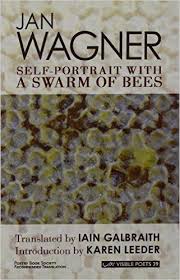
Iain Galbraith’s really skillful translations of the German poet Jan Wagner have just won the Popescu European Poetry Prize. Wagner’s poems brew a formal brilliance (Karen Leeder remarks in her Introduction to Arc’s Self-Portrait with a Swarm of Bees, that “virtuoso” is the compliment most often applied to him) with an intense concentration on really existing things. In the German tradition, of course, such a meticulous and sensual evocation of things (‘die Dinge’) harks back to Rilke’s advice in the ninth of his Duino Elegies (1922):


Perhaps we are here to say: house,

bridge, fountain, gate, jug, fruit tree, window –

at most: column, tower . . .


Rilke’s cycle of poems arrives at this conclusion (“Praise this world to the angel, not some / inexpressible other”) not at all in the spirit of defeat but in a celebratory mood because it is only through honest interaction with the world that we define and refine our sense of ourselves. Equally and dialectically, through, our emotional and artistic responses to the world of things we are able to translate the inanimate and unconscious world into something more significant, lasting, spiritualized.


And these things, which live by passing away,

acknowledge your praise of them, as they vanish,

they look to us to deliver them, we, the most

fleeting of all. They long for us to change them,

utterly, in our invisible hearts – oh, endlessly,

to be within us – whoever, at last, we may be.


It is just this ebb and flow between self and other, each re-defining the other, each growing in response to the other, that Wagner seems intent on recording. But it’s not always an easy process as the poem ‘Mushrooms’ suggests. The narrator must listen for the snap of a twisted stem as if cracking a safe, “hoping for the right combination”. But when the right balance (I’m afraid it has to be this dull-seeming word) is achieved between active exploration and passive sensitivity then two worlds are miraculously joined.

10117b9d-d35e-424f-8aba-89d57234ee71-vision

But we need not get too po-faced about the process. Wagner suggests a tea-bag might help us envisage it. In two haikus, he wryly evokes both facets of such communion in a religious visionary and a rope-dangling, Indiana Jones-type adventurer:


1

draped only in a

sackcloth mantle. the little

hermit in his cave


2

a single thread leads

to the upper world. we shall

give him five minutes

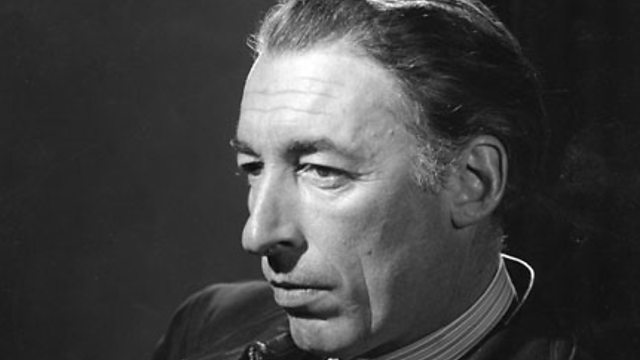
Jan Wagner
Jan Wagner

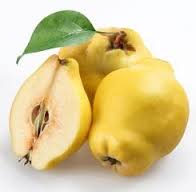
Wagner reflects the often rebarbative nature of the process partly through typographical choices, abandoning capital letters throughout (a far more disturbing move in German, of course, which capitalizes all nouns, all things). It’s also reflected in the choice of fruit in ‘Quince Jelly’. Knobbly and ugly, even ripe quinces are inedible when raw, astringent and tough. Wagner acknowledges the “tough and foreign” quality of the fruit and its taste which makes “our palates baulk”. Yet the human work invested in the transformative domestic process yields great rewards:


quinces, jellied, lined up in bellied jars on

shelves and set aside for the darkness, stored for

harsher days, a cellar of days, in which they

shone, are still shining.

imgres

Such meticulous observation and sensual details held in the form of verse ensure Wagner’s things are always more than themselves and here the quince jelly is a poem, much like Wordsworth’s daffodils, an accumulation of “wealth” to flash upon “that inward eye” in days and years to come.

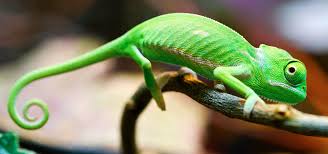
Wagner also chooses a ‘Chameleon’ to represent the poet. Describing the creature’s curved tail as a “pastoral staff” raises the spiritual stakes with a wonderfully light touch. The animal’s perceptive acuity is likewise explored with its tongue like a “telescope”, snapping up the “constellation” of a dragonfly. Its eye is a “fortress” yet contains a flickering pupil; an indefinable restlessness is suggested by its shed skin like “an outpost or long-discarded theory”. Most tellingly, the chameleon’s independently moving eyes enable Wagner to suggest the balance of both centrifugal and centripetal thrusts of the true perception: the animal gazes “simultaneously at the sky / and the ground, keeping his distance / from both”.

imgres

The title poem of Arc’s selection (taken from 5 collections between 2001-2014) is another portrait of the poet. ‘Self-Portrait with a Swarm of Bees’ has the narrator wearing an ever-accumulating beard of swarming bees. The risks and dangers are part of the point but the poem focuses on the accumulating “weight and spread”, suggesting the swarm extends and adds to the narrator in some intrinsic way. Indeed, he becomes “the stone-still centre of song”. In the next quatrain, the passive singer is converted into an “ancient knight” arming for battle, yet he does not either advance or retreat:


just stands there gleaming, with barely a hint

of wind behind the lustre, lingering breath,

and only vanishing becomes distinct.


This teasing last line (“und wirklich sichtbar erst mit dem verschwinden”) is best understood again through Rilke. Auden affectionately ribbed Rilke as a poet whom “die Dinge bless, / The Santa Claus of loneliness” but it is in the challenge to self confronted through honest encounters with the world of things that we re-make and re-define our sense of self. Here is the idea expressed in Rilke’s Sonnet to Orpheus, 2, 13:


To the used up – to all Nature’s musty and mute,

its brimming storehouse, its inexpressible sum –

joyously add yourself and the account’s done.

 (All translations from Rilke here taken from my translations of  ‘Duino Elegies’ and ‘Sonnets to Orpheus’)

bee-beard

Hear Galbraith read ‘December 1914’ below:


‘The Bell Jar’, Lakes, Doors and Identity

I’ve had a major dose of the flu recently and have been too busy catching up with teaching and marking missed to devote much thought to blogging. So please forgive this brief and slightly self-absorbed effort. Talking about my own poetry is not really what I want to do too much of here. Nevertheless . . .

I gave a reading a couple of weeks ago in which the main focus was the idea of identity. It has been on my mind since and this week we have been looking at Sylvia Plath’s fictional self, Esther Greenwood. She is seen struggling in 1953 to appreciate she ought to be “the envy of thousands of other college girls . . . all over America”. She has won the opportunity of working for the summer as what we might now call an intern at a leading New York women’s magazine. In one of those flashes of figurative language that marks Plath the poet-novelist, Esther confesses she ought be “steering New York like her own private car”. Instead: “I wasn’t steering anything, not even myself”.

images

Esther’s ensuing breakdown – closely following Plath’s own –  can be interpreted as her searching for a clearer sense of her own identity as she ponders and then rejects role models offered by Doreen (the wild girl), Betsy (the traditional), Joan (the lesbian), Cee Jay (the older career woman) and her own mother (hard-working single parent with no prospects). If we can manage to ignore the subsequently brilliant then tragic ten years of Plath’s own life after 1953, The Bell Jar, her only-completed novel, ends on an upward trajectory. Esther is re-born in the end: “patched, retreaded and approved for the road”. She finds a more sure sense of herself. As she waits for her release from the psychiatric ward she listens to her own heart beating: “I am, I am, I am”.

To borrow from Wikipedia, identity is defined as the distinctive characteristic belonging to any given individual or shared by all members of a particular social category or group. Identity, then, is a label. However, the formation of one’s identity occurs through one’s identifications with significant others (primarily with parents and other individuals during one’s life and also with identifiable groups). These others may be benign – such that one aspires to their characteristics, values and beliefs (a process of idealistic-identification), or malign – when one wishes to dissociate from their characteristics (a defensive contra-identification).

url

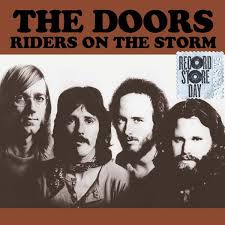
Plath’s Esther Greenwood seems initially to have lost or never really determined or had no faith in her identity though I suspect this is a common enough feeling among adolescents. In retrospect this seems to be the point of one of the poems I read (first published in Hurt (2010)). It features a bunch of adolescents walking in Cumbria, one of their number too pre-occupied with fretting about a fading relationship. ‘Riders on the Storm’, the song by The Doors which they choose to put on the pub juke box, operates as a sort of mock-heroic image which the main character signally fails to live up to. Heroes know who they are; he does not. The point seems to be that the pain caused by the dissolving of the fledgling relationship is an early opportunity, perhaps, to define himself a little more clearly.


Riders on the storm


With no schedule to drive us,

we wait for rain to stop beside Ullswater’s


southern lip, for the landlord of The White Lion

to determine when it’s time to open.


Ducking through the door, Helen, Clive, Steve,

each a few weeks shy of university,


and I’m there too, heart awash

with absence, her love letters at looked-for drops,


the girl I feel leaving gradually

as the tedious route past Thirlmere to Catstye.


But it’s OK for a while – passing midday snug

in a deserted pub


while outside the downpour gurgles, begins to blur

and double with the torrential roar


of the juke-box: The Doors the only thing

we key in, its electric piano’s limpid fingering


like the give and tender recoil of water,

the lugubrious voice . . . Fifteen years later,


at his paint-spattered Pere-Lachaise stone,

I remember that wretched lunchtime


under the wettest rain in England,

when I was too ill-formed to understand.


I barely displaced a drop of local weather,

could only conceive of myself as either


a body slumped beside a dry stone wall

or drenched and raging on the dramatic fell


on the path to Ambleside bus station,

its oily tarmac smoking under black rain,


her blonde voice fluent on the phone:

‘You hear me?’ I could not even hear my own.

images

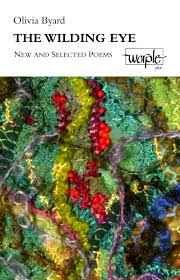
Olivia Byard’s ‘ The Wilding Eye’ reviewed

I confess to being unacquainted with Olivia Byard’s work before I was paired to read with her at last year’s Cheltenham Poetry Festival. We had both just had new books from the always enterprising Worple Press. I read with her again last week at Oxford’s Albion Beatnik Bookshop. I wanted to try to convey something of her methods and concerns in this blog.

imgres

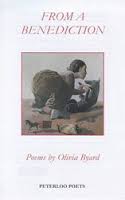
In The Wilding Eye, Worple Press have gathered new poems and others selected from Byard’s previous two collections, From a Benediction (Peterloo, 1997) and Strange Horses (Flambard, 2011). Her work ranges from vivid evocations of childhood scenes, to mythic treatments of subterranean psychic hurt, sketches of domestic exchanges, more politically engaged poems and (recently) a more expansive concern with our relationship with nature. Her work is hard to pigeon-hole but acclaim from the likes of Les Murray and Bernard O’Donoghue is well deserved.

Some of those hyper-lit childhood scenes appear in ‘From Benediction’ which is a brilliantly detailed account of a child’s encounters with an eccentric, kindly grandfather. But even though his “disembodied” false teeth are more likely to be caught smiling “in their cut-glass jar”, it does not take a very close read of the poem to sense unease. The child is “trapped outside” her grandfather’s room, yet inside the furniture looms like “black giants” and dolls are trapped in “glass cases”. ‘Without Blessing’ reinforces this sense that all is not well. Why should the two sisters be sleeping in “Aunt Audrey’s bed” at all? Where are the parents? Are they perhaps part of the “razzle dazzle beyond the door”? Why should one sister be happily “abandoned” to sleep while the narrator eyes the mirror, all too awake, eying a “dark opponent” there? All she can think of are “stratagems for escape” yet memory reminds her any attempt at flight is “futile”. When the word “menaced” finally arrives as a way of describing her state of mind it is the wholly appropriate one.

imgres

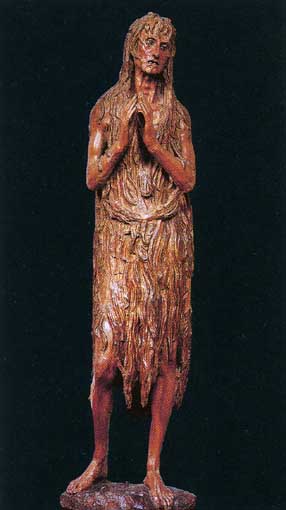
‘Theft’ is more explicit. “Her childhood was thieved”. These were bold poems in 1997, four years before Pascale Petit’s The Zoo Father (Seren). But Byard does not allow herself to be wholly defined by past events. Whatever their source, the wounds send out shock waves that surface variously. Here as a strange fascination with a schoolgirl’s traffic accident, now in the landscape of Lake Huron, now in the way Byard is drawn to characters from Christian myth (Christ, Mary, Mary Magdalene, Lilith, Lazarus) all of whom are co-opted into micro-dramas of pain and survival. Magdalene is just the most obvious example of this with her mouth’s “bruised hole battered / by harsh sounds” and in a second poem the character herself speaks out: “My nature haunts you; it wrecks / your peace”.

magdalena2

Yet Magdalene is partly addressing men (surely the root of disturbance) and what she demands is some self-knowledge, or at least less blindness. She says “Search for where I reside in you”. But the re-making of the masculine ego is not really Byard’s preoccupation in her poems. Instead, there is an internalising of what she calls plainly the “dark side”. ‘Whores in Amsterdam’ is a memorable poem as the female narrator watches the sex workers closely, she imagines their thoughts – then returns the next day to do exactly the same again. Why? Perhaps “to learn the limits of my own dark side”. Or perhaps “to hide”. Many poems from Byard’s second book, Strange Horses, pursue this sense of the dark carried unwillingly, but inevitably within ourselves. ‘Mappa Mundi’ half-mockingly records the strange mythic creatures illustrated on the map but quite seriously concludes with the wish to forget “our roaming monsters”. ‘The Torturer’s Horse’ revisits Auden’s ‘Musee des Beaux Arts’ only to locate the root of worry, blood and unease in “you or me”.

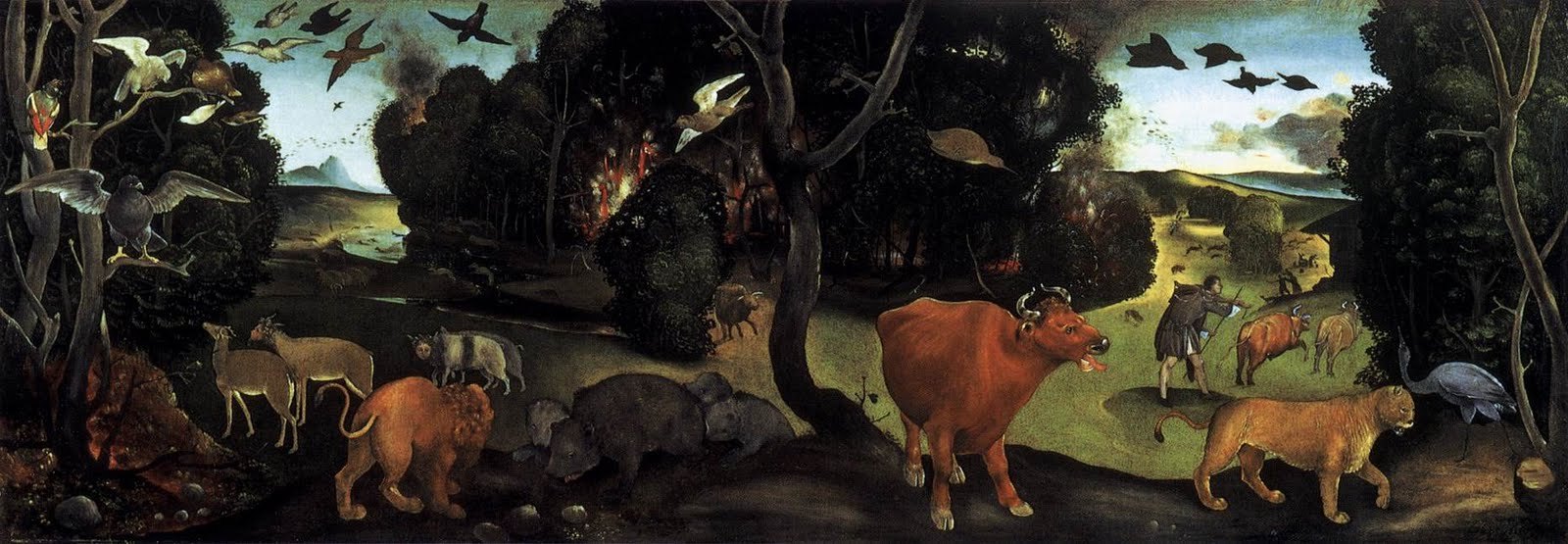
the-forest-fire-piero-di-cosimo-1505

In another ekphrastic piece on Piero di Cosimo’s ‘The Forest Fire’, the beasts fleeing the fire – many of them with human faces – are plainly identified as our own nightmares, briefly dislodged but all too soon returning into the mind’s undergrowth, to lie in wait again, “for the dark dreams to quicken”. And such darknesses can be set loose at the slightest provocation. In ‘At the Kennels’, a casual comment about the dogs is made: “they never really / forget abuse” and a delirious, Plathian, nightmarish torrent of images is released, culminating in “a twitching thing” attached to an ECT machine. In part, it is the presence of, perhaps the responsibility for, the needy creature in the narrator’s arms that steadies the situation on this occasion, enabling a homecoming where, in a more assertive tone, deftly managing the shift from literal to figurative, we are told “I throw open the windows. / Everywhere, I throw open windows”.

Each of Byard’s collections contains cave dwellers. ‘At Ruffignac’ (1997) has the narrator time-transporting to watch the cave painters at their “serious joy”, secluded, secretive, their art a translation or distillation to be held aloof from the outer world. In ‘The Horse at Ystradfellte’ (2011) the outer world is again an almost fairy-tale-like, maze-like rummage and bustle in contrast to the small white horse image, “whole, complete, protected / from marauding eyes” in the cave. Interestingly, in ‘Homo Erectus’ (2015), the bustle of the world is this time presented more satirically through big-bummed, munching cave-men, who seem intent on excluding those who do not fit in. The poem notes the old, the hobbling, the dim, the infertile. And one other outsider: the needlessly observant one who stops, distracted from the merely necessary, to watch a bird, only to be “irredeemably entranced / by breath and song”.

imgres

Poets like to dramatise themselves as neglected heroes; we like to believe our ‘useless’ art has its uses. In the unfolding drama of Olivia Byard’s speleological sequence of poems, I can’t help but read the more recent access to light and air, to bird song and branches, as a further metaphorical opening of psychic windows. And it’s not merely in the acquisition of a new household pet that the new poems lean upon the natural world. ‘Inheritance’ lists a plethora of natural details in a celebratory tone as something “not withheld” and nature’s gifts prove a likely “fresh furrow” in ‘Wood’. In ‘The Wilding Eye’ itself, the abandonment of the manicured lawn to unregimented disorder is in part ecological, part psychical as years of trimming, reserve and restriction give way to “great / gulping breaths, of sweet riot /  and tangle”.

There is real delight in Byard’s recent poems, all the more powerfully felt for the sense (after DH Lawrence) of ‘Look, we have come through!’ The gifts of nature (and the need to protect them) are foremost in this but ‘Besetting Sins’ (despite its title) also triumphantly expresses a far less corrosive, self-critical assessment of mankind’s – of this particular poet’s – “wonky wings, wrong angles, pratfalls”. We may know happiness begins in forgiving ourselves but it may prove an almighty struggle towards that point at which “it’s time / to turn, be returned” (‘Way Out’).

imgres

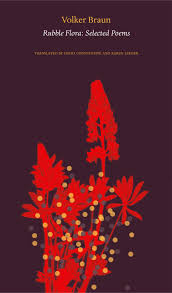
War on the Poor God Bless the Palaces: Volker Braun’s ‘Rubble Flora’ reviewed

imgres

Volker Braun’s Rubble Flora (tr. David Constantine and Karen Leeder (Seagull Books, 2014)) was one of the commended texts in this year’s Popescu Translation Prize. I was surprised it did not make it to the final shortlist. His passionate and abrasive voice (in these excellent translations) is certainly worth sampling as a model for poetry engaging with political change. Here he is writing from the GDR after the Berlin Wall has come down.

Property

That’s me still here. My country’s going West.

WAR ON THE POOR GOD BLESS THE PALACES.

I helped it out the door with all the rest.

What paltry charms it has it gives away.

After winter comes the summer of excess.

And I can go to hell is what they say.

I don’t know the meaning of my text.

What I never owned, they’ve taken even this.

What I never lived, I know I’ll always miss.

It was hope that came before this fall.

My property, you flog from stall to stall.

When will I say mine again and mean of all.

(tr. Karen Leeder)

Braun was born in Dresden in 1939. His childhood was spent in the post-war ruins of that city which he describes as a locus of re-birth as much as devastation: “Fiery lupins and / Widows in the ruins set up house and home” (‘Rubble Flora’). His early work reflects the pioneering spirit of the foundation of the GDR, though a poem like ‘Demand’, with its vigour and idealism expressed through bold exclamatory phrases, already runs counter to the growing repressiveness of the state. Braun consistently relishes the provisional:

Don’t come to us with it all sewn up. We need work in progress.

Out with the venison roast – in with the knife and the forest.

Here experiment is king, not fixed routine.

His urge to move forward becomes an unhealed wound. ‘At Dawn’, in its entirety reads: “Every step I’ve still to take / tears me apart”.

A_012

There is also a strong streak of sensuality throughout Braun’s work and eros is celebrated in contrast to what ‘Afternoon’ terms “the pre-printed schedules / And fully synchronised reports” that constituted ‘really existing socialism’. Karen Leeder’s Introduction discusses Braun’s ability to “manoeuver within the [Communist} system” and, feeling the pressures of history unfolding, ‘Fief’ expresses something of a stoical attitude: “I’ll hold out here, find succour in the East”. By the 1980s, Braun’s hopes for a fitting fief were also taking the form of Rimbaudian flights of fancy as here in the landscape of ‘Innermost Africa’:

Under the soft tamarisks

Into the tropical rains that wash

The slogans off, the dry memoranda

Also around this time, Braun alludes to Goethe’s idyllic images of lemon trees in bloom from his 1795 lyric ‘Mignon’. Here they flash past in a fragmentary manner, alongside other literary references, prose passages, graffiti-like capitalised phrases and seeming non-sequiturs. Both Leeder and Constantine deal brilliantly with the challenge such a style presents to its translators. In this way, Braun’s work betrays the pressures of speaking in a repressive regime and so it is interesting that the more lucid lyrics of The Zig-Zag Bridge (1988) pre-empt the fall of the Berlin Wall and the possibility of speaking out.

berlin20wall20freedom

But Braun’s visions of the fulfilled life were hardly advanced with the advent of capitalism. The changes of 1989 are repeatedly portrayed as a false dawn. The magnificent sequence, ‘West Shore’, roars with hopes and disappointments in the embrace of the new ideology:

the abrupt come-down

Of the roped-together

From the north face of the Eager

Into nothing—

As above, ‘Property’ sees the old GDR “going West” yet the poet is bewildered even by his own “text” as everything gets “flog[ged] from stall to stall”. Braun pursues intertextual effects with Eliot-like allusions as in ‘O Chicago! O Contradiction’ where he draws on Brecht’s 1927 poem ‘Vom armen B.B.’ (see my earlier blog and translation of this poem) and Hamlet to evoke “the chilly byways / Of market economics”. But after 1989, such allusions are more frequently to brand names and consumer goods as here in the mock-jaunty optimism of “Socialism’s out the door, but here comes Johnnie Walker”.

johnnie-walker-logo-old

Neither communism nor capitalism nurtures the life Braun seeks and he turns his vitriol on the new world where “King Customer” rules (‘Common Ownership’), where the “supercontinent [. . . ] COCA COLA” rises from the ocean (‘West Shore’) and fashion shows in ‘Lagerfeld’ show capitalism making people “more beautiful but not better”. It’s Helena Christensen who stalks the catwalks of this poem only to arrive at:
the throwaway society

The arena full of the last screams Ideas

Rome’s last era, unseriousness

Now watch the finale ME OR ME

Greetings, barbarians.

If Braun still finds pleasure in the world it is despite political change not because of it. ‘Art’ asks torturedly, rhetorically, “How / Is it possible that things the way they are / Are dancing?” Rubble Flora concludes with work since 2005 and there is more Rilkean “praise [of] the world as it appears” (‘When He Could See Again’) and this affords some relief from the “stifling  / Of [the] ability to be human” (‘Conversation About the Trees in Gezi Park’). One of the “things” still dancing for Braun is the erotic. The loss of desire is the sole subject of ‘My Fear’ and the hope that “some gentle breast might fasten for a while / And quicken my blood” (‘Findings’) offers some counterbalance to the almost deafening, continuing “twitter-storm” (‘Wilderness’) of injustice, greed, poverty and violence in the world generally, more specifically in his own “re-disunited Germany” (‘De Vita Beata’).
This review originally published in Poetry London (March 2015)

A Great Alteration in My Sensations

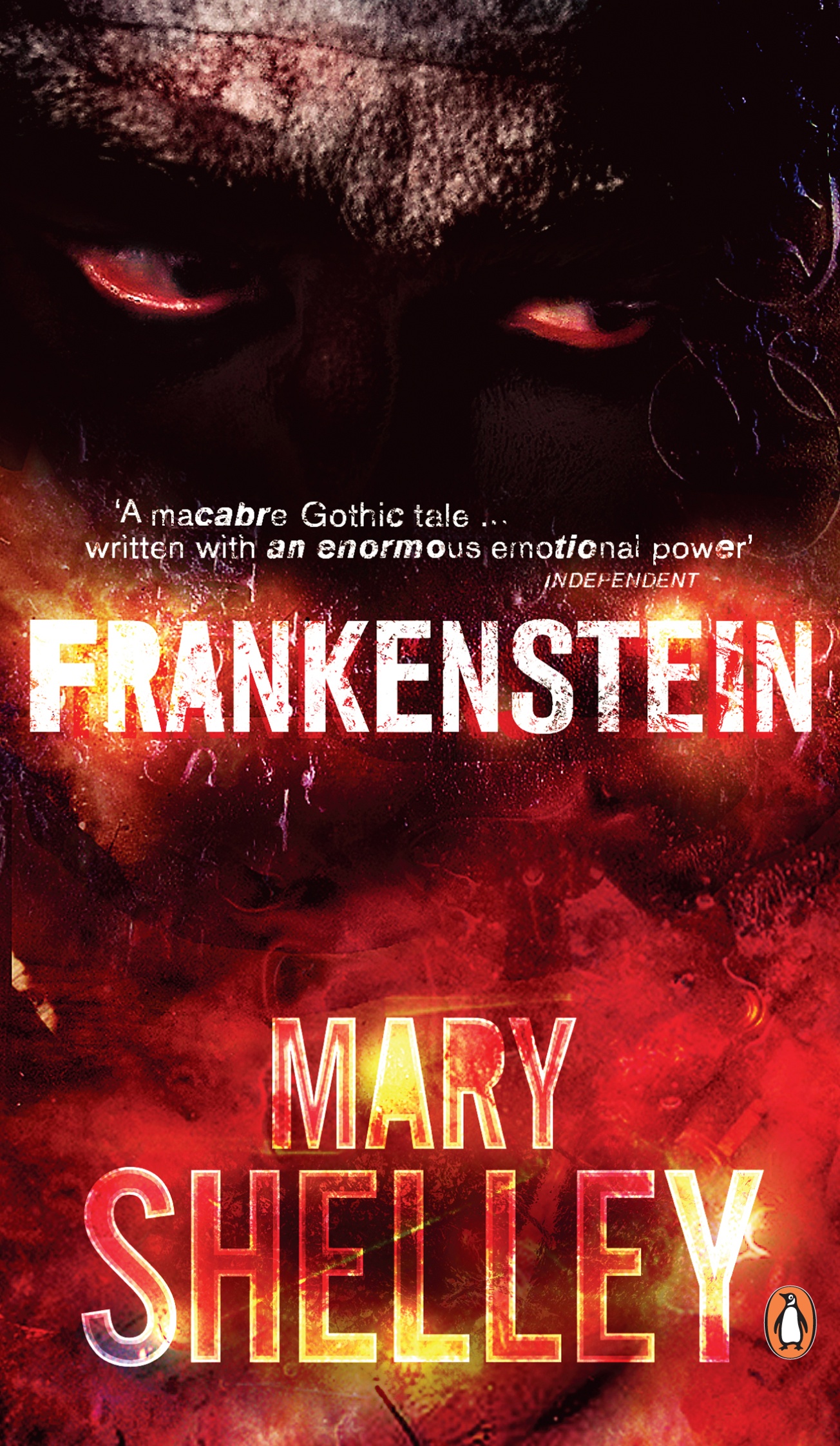
I was again visiting my mother in Bath Royal United Hospital at the weekend. She has fallen and broken her right hip at home but is making a good recovery so far (see earlier blog). The hip operation has caused thankfully few problems or pains. She was showing off the scar which looks like something Victor Frankenstein might have managed – a raw purple wound from waist to half way down her thigh it seemed. A closed up gash, sewn together at intervals like the mouthful of grinning teeth in a Halloween pumpkin.

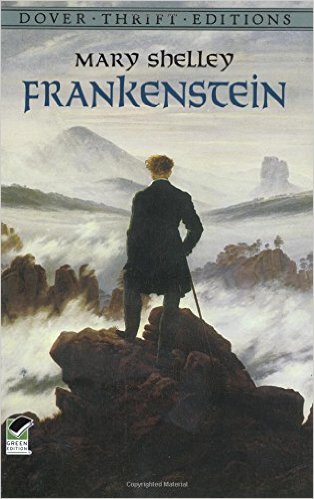
frankenstein

It really did make me think of Mary Shelley’s novel but in particular of one of my favourite passages in which the newly created Creature stumbles into the world, his senses ill-tuned, untuned, his mind void of language or any categorising facility. He sees a blur which only slowly becomes a recognizable world. And to be brutally honest, it was also in thinking of my father that this passage came to mind. I have written a little about his growing forgetfulness in this blog (see earlier blog). With his wife’s absence for almost 3 weeks now, his confusion becomes ever more obvious.

How strange that two related phenomena have such opposite effects. I love Shelley’s version of the first few years of a child’s perception because of its freshness and original immediacy of observation, to a great extent freed from the categories of language and preconception. But once we have grown used to such enabling props and supporting structures, the loss of them yields not freshness at all but absolute panic, fear, anger and bewilderment. I wondered whether playing over Shelley’s words (in edited form) and then systematically reversing them would evoke something of both states at either end of a life. The result, in the form of a specular poem, is given below, and I hope is an equivocal sort of success perhaps  . . .


A Great Alteration in My Sensations

after Mary Shelley’s Frankenstein


It is with considerable difficulty that I remember the original era of my being

all the events of that period appear confused and indistinct

I saw, felt, heard, and smelt at the same time

and it was, indeed, a long time

between the operations of my various senses

light pressed upon my nerves so that I was obliged to shut my eyes

darkness then came over me and troubled me, but hardly had I felt this when

light poured in upon me

a great alteration in my sensations

dark and opaque bodies surrounded me

the light became more and more oppressive

I sought a place

I felt cold also and half frightened

I knew and could distinguish nothing

I gazed with a kind of wonder

innumerable sounds

on all sides various scents

a pleasant sound, which often saluted my ears, proceeded from the throats of little winged animals

the boundaries of the radiant roof of light which canopied me

the uncouth and inarticulate sounds which broke from me frightened me

when I was oppressed by cold I found a fire

I thrust my hand into the live embers, but quickly drew it out again

how strange, I thought, that the same cause should produce such opposite effects


how strange, I thought, that the same cause should produce such opposite effects

I thrust my hand into the live embers, but quickly drew it out again

when I was oppressed by cold I found a fire

the uncouth and inarticulate sounds which broke from me frightened me

the boundaries of the radiant roof of light which canopied me

a pleasant sound, which often saluted my ears, proceeded from the throats of little winged animals

on all sides various scents

innumerable sounds

I gazed with a kind of wonder

I knew and could distinguish nothing

I felt cold also and half frightened

I sought a place

the light became more and more oppressive

dark and opaque bodies surrounded me

a great alteration in my sensations

light poured in upon me

darkness then came over me and troubled me but hardly had I felt this when

light pressed upon my nerves so that I was obliged to shut my eyes

between the operations of my various senses

and it was, indeed, a long time

I saw, felt, heard, and smelt at the same time

all the events of that period appear confused and indistinct

it is with considerable difficulty that I remember the original era of my being

51Ww0FqYJDL._SX312_BO1,204,203,200_


The Month of the Drowned Dog: Ted Hughes’ ‘November’

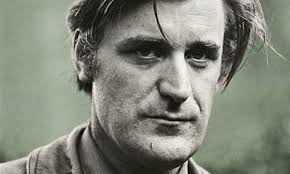
Though November has just transformed itself into December here, still Ted Hughes’ sodden, rain-soaked poem from Lupercal (1960) comes to mind as I watch the TV footage of floods in the North-West of England. I’ve never thought enough attention has been given to the role of the narrator in this poem. It’s one of the selected poems studied on the Cambridge International Examinations’ A-level. Students are asked to discuss one specific poem in detail or two poems from a more thematic perspective. What follows is a loose version of the first type of question (apologies for some loss of formatting in the poem itself). NB. For another close discussion of an early Ted Hughes poem – ‘Meeting’ – click here.

The month of the drowned dog. After long rain the land
Was sodden as the bed of an ancient lake,
Treed with iron and bird less. In the sunk lane
The ditch – a seep silent all summer –

Made brown foam with a big voice: that, and my boots
On the lane’s scrubbed stones, in the gulleyed leaves
Against the hill’s hanging silence;

Hughes opens the poem with a bewildering mix of images of motion and stasis. Flooding must account for the “drowned dog” (more literal than figurative or colloquial here) and the absence of a verb emphasizes the stillness of death, the burden of the month, the real entrance way to winter. The land is so sodden as to have suffered inversion to become “the bed of an ancient lake”. It’s an alien landscape – trees (as so often in Hughes) are now composed of industrial “iron” and inevitably “birdless”. Yet in contrast to such stillness, the ditch water (which in summer is a soothing sibilant “seep silent”) is now possessed of a “big voice” composed of brown foam and beside it, the narrator’s boots scrape along the lane. These two sounds are all that can be arrayed against “the hill’s hanging silence” and the contrasts of movement and stillness, noise and silence compose the greater world of this poem.

Mist silvering the droplets on the bare thorns

Slower than the change of daylight.
In a let of the ditch a tramp was bundled asleep;
Face tucked down into beard, drawn in
Under his hair like a hedgehog’s. I took him for dead,

But his stillness separated from the death
From the rotting grass and the ground. The wind chilled,
And a fresh comfort tightened through him,
Each hand stuffed deeper into the other sleeve.

His ankles, bound with sacking and hairy band,
Rubbed each other, resettling.

It’s this greater world that the narrator fears and the tramp entrusts himself to. To the narrator, the tramp sleeping in a let of the ditch, is comparable to an animal, a “hedgehog”. In the narrator’s world view, this is no compliment and indeed in the next phrase (line 12), he considers the tramp “dead”. To give the narrator credit he perceives his mistake and next sees the tramp’s vitality, though (in a reversal of our preconceptions) it is his “stillness” rather than animation that “separate[s him] from the death” all around. The animation of the “wind” evokes a corresponding movement in the tramp: “a fresh comfort tightened through him, / Each hand stuffed deeper into the other sleeve”. There is paradox here too in that the tramp’s movements are intended both to shield him from the elements yet also settle him more comfortably among them.

The wind hardened;
A puff shook a glittering from the thorns,
And again the rains’ dragging grey columns

Smudged the farms. In a moment
The fields were jumping and smoking; the thorns
Quivered, riddled with the glassy verticals.

Lines 18 – 23 seem to represent a moment in which the narrator looks away from the tramp. What he sees is a world he might once have been familiar with dissolving before his very eyes. This is partly a result of optical effects brought on by atmospheric conditions, but Hughes’s language systematically destabilizes the solid and still (the farms, the fields, the thorns) and solidifies the diffuse and shapeless (the wind, the rains). Such a renovation of perception is comparable to the stunned narrator at the end of Hughes’ story ‘The Rain Horse’ (from Wodwo, 1967) who, after the terrifying encounter with the horse, sits “staring at the ground, as if some important part had been cut out of his brain”. The poem’s narrator reports in line 24 that he “stayed on under the welding cold” and the colloquialism of the first two words here implies that any sane person might have retired to shelter; whatever transformative process Hughes is representing in the encounter between narrator and tramp is already under way. The narrator seems to surprise himself by staying as if he were watching the actions of another.

I stayed on under the welding cold

Watching the tramp’s face glisten and the drops on his coat
Flash and darken. I thought what strong trust
Slept in him- as the trickling furrows slept,
And the thorn-roots in their grip on darkness;

And the buried stones taking the weight of winter;
The hill where the hare crouched with clenched teeth.

In fact he stays to continue to watch the tramp becoming part of the landscape: “I thought what strong trust / Slept in him”. All the critics you’ll read agree this is the key idea; but as Keith Sagar asks: in what exactly does “the tramp trust?” The image of sleep links this trust also to the fields’ “furrows”, to “thorn-roots”, to “buried stones” and to the hill itself where the hare is “crouched with clenched teeth”. Is this merely a trust in a viable future? A sort of wishful thinking? A consolation? Perhaps it is if the furrows imply next year’s crop, the roots suggest the new year’s growth, the stones will be unearthed to build new walls, the hare will survive to unclench in the Spring. There is something Romantically attractive about this reading and we might remember Wordsworth’s encounter with the Leech Gatherer who also seems part of the landscape (“as a huge stone”). Wordsworth is equally uncertain of the man’s status: “not all alive nor dead, / Nor all asleep”. As their conversation continues, the Leech Gatherer’s voice becomes indistinguishable from “a stream” and in some low level psychic derangement Wordsworth imagines the Gatherer as “Like one whom I had met with in a dream; / Or like a man from some far region sent, / To give me human strength, by apt admonishment”.

Rain plastered the land till it was shining
Like hammered lead, and I ran, and in the rushing wood

Shuttered by a black oak leaned.
The keeper’s gibbet had owls and hawks
By the neck, weasels, a gang of cats, crows:
Some stiff, weightless, twirled like dry bark bits

In the drilling rain. Some still had their shape,
Had their pride with it; hung, chins on chests,
Patient to outwait these worst days that beat
Their crowns bare and dripped from their feet.

But Hughes’ tramp is far less consoling, far more frightening. In the concluding stanzas, the narrator runs away – on the face of it to shelter from the rain though earlier this had not troubled him. He runs into a wood in something of a panic as the breathless, long-delayed verb here suggests: “in the rushing wood // Shuttered by a black oak leaned”. It’s what the narrator encounters in the wood that provides the final piece of the jigsaw for this poem. He confronts death in the shape of a gamekeeper’s gibbet and it is really death in which the tramp trusts, as much as he trusts himself to life. This is the point of the poem’s many transformational oppositions, of stasis and movement, solid and diffuse, sleep and waking, dead and alive. As the “flash and darken” of raindrops on his coat suggest, the tramp’s instinct is to entrust himself to both life and death without making any clear, rational distinction between the two.

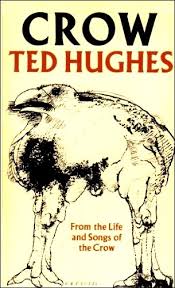
I think the narrator has preserved this distinction and perhaps does so even at the end. Of the bodies on the gibbet, some are fresh, others are like “dry bark bits” being twirled in the rainfall. The narrator seems inclined to focus on those retaining their living “shape”, those who he says retain “their pride”, those who seem (like Wordsworth’s Gatherer) to teach patience, and endurance against “these worst days”. But the incontrovertible fact is they are all dead and death is lesson 101 in Hughes’ work as can be seen in Crow’s ‘Examination at the Womb-Door’ (Crow, 1970). It is the denial of death’s reality that leads to delusion and a false consciousness of our own position in the world. The narrator of ‘November’ still hankers after the human scale of virtues such as patience and Wordsworthian endurance. It is the tramp – ironically rather forgotten by the end of the poem, lying foetal in the let of the ditch, still huddled against the month’s elements – who entrusts himself to the risks of exposure and death, but in doing so may hear (what the sheltered narrator will never hear) the reply that Crow gives to the final question he faces:

But who is stronger than death?

                                         Me, evidently.

Pass, Crow.

imgres

Let Me Murmur a Few Spells for My Mother

I have spent these last several days in Wiltshire as my mother has had a fall and broken her hip. Dad is not able to look after himself around the house so we are trying to patch things as best we can for a couple of weeks. She says her feet got muddled as she turned from the microwave and went down hard on one side. The ambulance (from Bath, in these days of centralised medical care) took an appalling 2 hours to reach her. She seems pretty well considering she’s in her 90s but now the ward has been closed to all visitors due to an outbreak of Novovirus in the hospital. I have an atavistic sense that muttering a few spells about her, in trying to describe her in younger more vigorous days might help her recovery (and it sort of helps me too).

*

I am lifted then strapped into the child’s seat on the rear carrier of Mum’s bike. I remember the simple folding mechanism: the two sides inwards, then the back-rest folding forwards on top. She opens it and settles me in while the bike leans in the Passage (the covered pathway along one side of the house, outside the back door). Then I am wheeled out, up the front garden path, a little bump up the step onto the public path, now right and out to the main road. My limbs vividly remember the sense of her scooting for a few feet, gathering speed, then a more violent wobble to either side as she kicks off, begins to balance, threading her right leg through the bike frame onto the peddle. Steadying now, speeding up, the sense of her wide hips beginning to roll there before my face as we start to bowl along, lean into the left hand corner into Horse Road, heading for Trowbridge.

deaf32a26d5d3e990b449191ed45572e

Perhaps we go to the old market hall. I have the sensation of progressing through it, through the high wrought-iron ribbed roof of the echoing hall with stalls of all kinds around. Then Mum and I emerge into sunlight out of the rear door which overlooks the old cattle market which is suddenly right there, spread out beneath us. There are steps down to the lower level; all the sounds of animals and people welling up from below. It seems a huge and dizzying prospect, an image of a far wider and utterly unmanageable society to a child unused to such things.

2880e0c5de74d08e6997f318b59d48eae3a495cf

I am moving or more likely being moved in a push chair or (again) on the back seat of Mum’s bike, in through the rectory gate that stands at the corner of Church Street, across from the main gate of St James’ Parish Church. Little more than a sensation of broad lawns with a grand old house beyond them and in the foreground a gathering of people – women mostly, with their high voices – around trestle tables at some sort of sale, perhaps cakes. Perhaps it has been organised by the Young Wives group that meets in the strange narrow gothic building – accessed by a worn flight of steps – across the road.

3975485172_bc361c22dc

The Young Wives is more of a play group really. We go there each week and probably I have been there today but now I am being taken to the rectory, though whether we are going to buy or to help behind the stalls I don’t know. This is where the poet George Crabbe lived the last 18 years of his life as parish vicar, inspired to write whilst sitting under the mulberry tree in these rectory grounds. In one of the town’s earlier, spasmodic efforts at self-harm, the building was summarily demolished in 1964, only a year or two after this memory of the broad lawns of Crabbe’s old house.

8741286739_7da097588a_b

There is a photograph of her around the same time. We must have walked across the main road, down the lane to Oatley’s farm and then on to where the Kennet and Avon canal crosses the flat landscape. Dad has carried a deck chair or perhaps two and set it down, rakishly on the lowest rung for his wife who reclines in her white blouse and flowered skirt. A grassy field stretches into the distance – the shape of a cow, the field edged by darker trees, a brick wall and the whitewashed gable end of a house.

*

The sky is white so there is really no distinction between the upper part of the picture and the thick white border of the print. I am on her lap. Her right hand is at my back, her left reaching towards me as I seem to be twisting away to look at something out of view. Her gaze is fixed on me, mine is fixed elsewhere. Perhaps Andrew is running too far off. Or a bee is buzzing too close in what must be the summer heat. My 1960s children’s top seems the same pure white as hers but in the instant of the shutter falling all my energies are directed beyond the invisible white frame.

Me and Mum

There is knocking at the back door and Mum moves hurriedly, perhaps glancing a moment into the mirror on her way to open it. A figure blocks the light, wearing a brown overall or a working coat of some kind, over his right arm a huge wicker basket. Over his other shoulder, a worn leather money bag is slung. In the basket are loaves and rolls of all sorts. On a different day, a small grocer’s van is pulling up, its rear doors open and the smell of earthy potatoes spills out to where I stand, knuckles pressed to Mum’s skirt. Onions are like dusky suns, cabbages dripping with moisture and in the winter there are brussel sprouts, mushrooms still wrapped in the cold dark in which they grew. Other afternoons, a honking from the main road and the same flurry from Mum which – in hindsight – has something of a woman preparing to meet a lover about it. The callers are always men, punctuating her long days at home with the children, bringing gossip, simple treats, decisions to be made and a little flirting, merely oiling the wheels of commerce.

Grocery_van_in_Windmill_Road_1952.CNTHH.S371

Tuesday it’s the Co-op van stopping right outside our house. A folding step or two up into the back of the van, a high counter flap, an array of colours I can barely see. This must also have been the van that brought the pink paraffin for the living-room heater that clanked resonantly when moved and emitted a harsh warmth and oily fumes when lit. More on my diminutive level, the paraffin for sale flowed from a large container into a can Mum brought with her from the outhouse – a pink ribbon twisting and glinting like pop, its acrid smell the only sign of its poisonous combustibility.

*

Her calm rooted in humility – despite her evident brains and the few brief opportunities to exercise them. Her fear of upsetting the balance of a greater world. Her reluctance, as she will often express it while we are children, of ‘saying boo to a goose’. Shy certainly – but her social background was always part of that baggage. Extraordinary that this worked in partnership with his restive nature. That in part due to the pressures of disappointed expectations. Yet also driven by his reluctance to remain too long in one place, to forestall unwelcome thoughts, questions that might slow the skittering across the surface of himself from one completed DIY job to the next.

*

And now without her presence and without the holdfast of his own memory he skitters more and more out of control. All families nurture and elaborate their own particular myths for the hard times ahead.