More than 10 years of blogging on poetry and translation – over 39,000 views in 2024 – now captured and preserved at the UK Web Archive: 'one of the top 10 poetry blogs' (Rogue Strands)
I will be contributing to an event in London next week which will mark 100 years since Rilke’s death. I will read from my translations of Rilke as published in Change Your Life (Pushkin Press, 2024).
To quote from the Goethe-Institut’s publicity for the evening: Please join us us for a vibrant evening celebrating Tanzt die Orange —a groundbreaking new anthology that brings Rilke’s poetry into the language of today. Curated by award-winning poets Jan Wagner and Norbert Hummelt, the collection features reinterpretations of Rilke’s verses by 75 leading voices in contemporary German-language poetry.
At this special London event, Wagner and Hummelt will read selections from the anthology and discuss the enduring resonance of Rilke’s work. Co-presenting the event are the acclaimed translators Karen Leeder and Martyn Crucefix, who will guide the conversation and provide English translations of the poems, opening a dialogue between Rilke’s legacy and today’s poetic voices. The event will be presented in both German and English. Tickets £6, £3 concessions and for Goethe-Institut language students & library members. For more information and booking click here.
Venue: Goethe-Institut London Library, 50 Princes Gate, Exhibition Road, London SW7 2PH
Also on the horizon is the launch reading for my new full collection of original poems, Our Weird Regiment (Shearsman Books). This will take place on Tuesday 10th March at 7.30pm at the Swedenborg Hall, 20/21 Bloomsbury Way, London WC1A 2TH. (See map here.) Admission is free.
The reading will be hosted by Tony Frazer, publisher of Shearsman Books, as one of Shearsman’s regular programme of launches and readings. I will be reading alongside Jorge Valdés Díaz-Vélez.
With the sad news of the passing of Tony Harrison, who as a working class poet had a great impact on me during my formative years of writing in the 1980s, I went back to a piece I was commissioned to write for an OUP collection of essays on his writing – both poetic and dramatic – in 1997. The book, Tony Harrison: Loiner, was edited by Sandie Byrne and included articles from Richard Eyre, Melvyn Bragg, Alan Rusbridger, Rick Rylance, and Bernard O’Donoghue. This is the full text of what I contributed: an intense focus on and close analysis of two of Harrison’s key poems, ‘A Cold Coming’ (for Harrison reading this poem click here) and ‘Them & [uz]’ (for the text of this poem click here).
The Drunken Porter Does Poetry:Metre and Voice in the Poems of Tony Harrison
Part I
Harrison’s first full collection, entitled The Loiners after the inhabitants of his native Leeds, was published in 1970 and contained this limerick:
There was a young man from Leeds
Who swallowed a packet of seeds.
A pure white rose grew out of his nose
And his arse was covered in weeds.
Without losing sight of the essential comedy of this snatch, it can be seen as suggestive of aspects of Harrison’s career. For example, the comic inappropriateness of the Leeds boy swallowing seeds becomes the poet’s own ironic image of his classical grammar school education. As a result of this, in a deliberately grotesque image, arises the growth of the white rose of poetry – from the boy’s nose, of course, since Harrison in the same volume gave credence to the idea that the true poet is born without a mouth (1). The bizarrely contrasting weed-covered arse owes less to the intake of seeds (rose seeds wherever transplanted will never yield weeds) than to the harsh conditions Harrison premises in the Loiner’s life, as indicated in an early introduction to his work, where he defines the term as referring to “citizens of Leeds, citizens who bear their loins through the terrors of life, ‘loners'”(2).
Harrison’s now-legendary seed-master on the staff of Leeds Grammar School was the one who humiliated him for reciting Keats in a Yorkshire accent, who felt it more appropriate if the boy played the garrulous, drunken Porter in Macbeth.(3) The truth is that the master’s attitudes determined the kind of poetic rose that grew, in particular its technical facility which Harrison worked at to show his ‘betters’ that Loiners could do it as well as (better than?) they could. Yet this was no sterile technical exercise and Harrison’s success lies in the integrity with which he has remained true to those regions “covered with weeds” and in the fact that his work has always struggled to find ways to unite the weed and the rose. Perhaps the most important of these, as the limerick’s anatomical geography already predicted in 1970, is via the rhythms of his own body.
Harrison has declared his commitment to metrical verse because “it’s associated with the heartbeat, with the sexual instinct, with all those physical rhythms which go on despite the moments when you feel suicidal” (4). In conversation with Richard Hoggart, he explains that without the rhythmical formality of poetry he would be less able to confront, without losing hope, the unweeded gardens of death, time and social injustice which form his main concerns. “That rhythmical thing is like a life-support system. It means I feel I can go closer to the fire, deeper into the darkness . . . I know I have this rhythm to carry me to the other side” (5). There are few of Harrison’s poems that go closer to the fire than the second of his Gulf War poems, ‘A Cold Coming’ (6). Its initial stimulus, reproduced on the cover of the original Bloodaxe pamphlet, was a photograph by Kenneth Jarecke in The Observer. The picture graphically showed the charred head of an Iraqi soldier leaning through the windscreen of his burned-out truck which had been hit by Allied Forces in the infamous ‘turkey-shoot’ as Saddam’s forces retreated from Kuwait City. In the poem, Harrison makes the Iraqi himself speak both with a brutal self-recognition (“a skull half roast, half bone”) as well as a scornful envy of three American soldiers who were reported to have banked their sperm for posterity before the war began (hence, with a scatological nod to Eliot, the title of the poem). There are undoubtedly echoes in the Iraqi’s speech of the hooligan alter ego in the poem ‘V’, yet Harrison worries little over any narrow authenticity of voice in this case, and he does triumphantly pull off the balancing act between the reader’s emotional engagement with this fierce personal voice and a more universalising portrayal of a victim of modern warfare. Furthermore, it is Harrison’s establishment and then variation of the poem’s metrical “life-support system” that enables him to achieve this balance, to complete a poem which weighs in against Adorno’s view that lyric poetry has become an impossibility in the shadow of this century’s brutality.
The poem’s form – rhymed iambic tetrameter couplets – seems in itself chosen with restraint in mind, as if the photographic evidence of the horror lying in front of him led Harrison to opt for a particularly firm rhythmical base “to carry [him] to the other side”. Indeed, the opening five stanzas are remarkable in their regularity with only a brief reversed foot in the fourth line foreshadowing the more erratic energies soon to be released by the Iraqi soldier’s speech:
I saw the charred Iraqi lean
towards me from bomb-blasted screen,
his windscreen wiper like a pen
ready to write down thoughts for men.
The instant the Iraqi’s voice breaks in, the metre is under threat. Each of his first four stanzas opens with trochaic imperatives or questions and at one point he asks if the “gadget” Harrison has (apparently a tape-recorder but a transparent image of poetry itself) has the power to record “words from such scorched vocal chords”. Apart from the drumming of stresses in lines such as this, Harrison deploys sibilance, the alliteration of g’s and d’s, followed by an horrific mumbling of m’s to suggest the charred figure’s effortful speech in the first moments of the encounter. Regularity is re-established the moment the tape-recorder’s mike is held “closer to the crumbling bone” and there is a strong sense of release from the dead man’s initial aggressive buttonholing as his voice (and the verse) now speeds away:
I read the news of three wise men
who left their sperm in nitrogen,
three foes of ours, three wise Marines,
with sample flasks and magazines . . .
In the stanzas that follow, the dead man’s angry, envious sarcasm is controlled within the bounds of the form and it is rather Harrison’s rhymes which provide much of the kick: God/wad, Kuwait/procreate, fate/ejaculate, high tech’s/sex. It is only when the man demands that Harrison/the reader imagines him in a sexual embrace with his wife back home in Baghdad that the metrical propulsion again begins to fail. It is in moments such as this that the difficult emotional work in the poem is to be done. This is our identification with these ghastly remains, with the enemy, and it is as if the difficulty of it brings the verse juddering and gasping to an incomplete line with “the image of me beside my wife / closely clasped creating life . . .”
The difficulty of this moment is further attested to by the way the whole poem turns its back upon it. Harrison inserts a parenthetical section, preoccupied not with the empathic effort the dead Iraqi has asked for but with chilly, ironic deliberations on “the sperm in one ejaculation”. Yet all is not well, since this section stumbles and hesitates metrically as if Harrison himself (or rather the persona he has adopted in the poem) is half-conscious of retreating into safe, calculative and ratiocinative processes. Eventually, a conclusion yields itself up, but it is once again the metrical change of gear into smooth regularity (my italics below) that suggests this is a false, defensive even cynical avoidance of the difficult issues raised by the charred body in the photograph:
Whichever way Death seems outflanked
by one tube of cold bloblings banked.
Poor bloblings, maybe you’ve been blessed
with, of all fates possible, the best
according to Sophocles i.e.
‘the best of fates is not to be’
a philosophy that’s maybe bleak
for any but an ancient Greek . . .
That this is the way to read this passage is confirmed by the renewed aggression of the Iraqi soldier who hears these thoughts and stops the recorder with a thundering of alliterative stresses: “I never thought life futile, fool! // Though all Hell began to drop / I never wanted life to stop”. What follows is the Iraqi soldier’s longest and most impassioned speech, by turns a plea for attention and a sarcastic commentary on the collusion of the media whose behaviour will not “help peace in future ages”. Particular mention is given to the “true to bold-type-setting Sun” and, as can be seen from such a phrase, Harrison once more allows particular moments of anger and high emotion to burst through the fluid metrical surface like jagged rocks. There is also a sudden increase in feminine rhyme endings in this section which serves to give a barely-caged impression, as if the voice is trembling on the verge of bursting its metrical limits and racing across the page. This impression is further reinforced in the series of imperatives – again in the form of snapping trochees at the opening of several stanzas – that form the climax to this section of the poem:
Lie that you saw me and I smiled
to see the soldier hug his child.
Lie and pretend that I excuse
my bombing by B52s.
The final ten stanzas culminate in a fine example of the way in which Harrison manipulates metrical form to good effect. In a kind of atheistic religious insight, the “cold spunk” so carefully preserved becomes a promise, or perhaps an eternal teasing reminder, of the moment when “the World renounces War”. However, emphasis falls far more heavily on the seemingly insatiable hunger of the present for destruction because of the way Harrison rhythmically clogs the penultimate stanza, bringing it almost to a complete halt. The frozen semen is “a bottled Bethlehem of this come- /curdling Cruise/Scud-cursed millennium”. Yet, as we have seen, Harrison understands the need to come through “to the other side” of such horrors and the final stanza does shakily re-establish the form (though the final line opens with two weak stresses and does not close). However, any naive understanding of the poet’s comments about coming through the fire can be firmly dismissed. This is not the place for any sentimental or rational synthetic solution. Simply, we are returned to the charred face whose painful, personal testament this poem has managed to encompass and movingly dramatise but without losing its form, thus ensuring a simultaneous sense of the universality of its art and message:
I went. I pressed REWIND and PLAY
and I heard the charred man say:
Part II
It was Wordsworth whose sense of physical rhythm in his verse was so powerful that he is reported to have often composed at a walk. It should come as no surprise that Harrison has been known to do the same. Though it was Keats’ ‘Ode to a Nightingale’ Harrison ‘mispronounced’ at school, it is actually Wordsworth who is more important to him because both share a belief in poetry as the voice of a man speaking to men. This conception of poetry as speech is a powerful constituent in Harrison’s work and perhaps one not clearly understood. John Lucas, for example, has attacked what he sees as loose metrics in the poem ‘V’ (7) but, to reverse Harrison’s comment that all his writing (theatrical or otherwise) is poetry, all his poetry needs to be read as essentially dramatic and deserves to be tested in the spoken voice as much as in the study. On occasions, Harrison, only half-humourously, draws attention to the fact that two uncles – one a stammerer, the other dumb – had considerable influence on his becoming a poet and it is the struggling into and with voice that such a claim highlights.(8) I have already mentioned Harrison’s interest in the curious idea that the true poet is born without a mouth. This too, implies the difficult battling for a voice or voices which can be found everywhere in his work and it is in this clamour that I find its dramatic quality. In a public poem like ‘A Cold Coming’, Harrison makes use of the contrasting and conflicting voices by playing them off against a regular form. This is almost always the case, but in what follows I prefer to concentrate less on metrical effects than on the way voices interweave, in this case, in more personal work from The School of Eloquence sequence.
The very title of the pair of sonnets, ‘Them & [uz]’, seems to promise conflict, at best dialogue, and it opens with what could be taken as the howl of inarticulacy. In fact each pair of these opening syllables gestures towards crucial worlds in Harrison’s universe. The αίαι of classical dramatic lament is echoed by the “ay, ay!” of the musical hall comedian cheekily working up an audience. Immediately, the reader is plunged into the unresolved drama of two differing voices, instantly implying the two cultures of the sonnets’ title. The line and a half which follows, sketching Demosthenes practicing eloquence on the beach, is intriguing in that its locus as speech is hard to pin down. It is perhaps intended at this stage (apart from introducing the poems’ central issue) to hover in an Olympian fashion above the ruck of dialogue that follows, implying the heroic stance which will be taken up in the second sonnet.
Line 3 opens again into a dramatic situation with the voice of the narrator (the adult Harrison), repeating his own interrupted recital of Keats in the classroom, while the master’s scornful comments appear fresh, unreported, as if still raw and present, in speech marks. The narratorial comment on this – “He was nicely spoken” – confirms this poem’s tendency to switch voices for its effects, this time its brief sarcasm barely obscuring the unironic comment likely to be made by an aspiring Loiner, or by an ambitious parent. The example of nice speaking given (again in direct quotes in the following line) is the master’s claim to possession, to authority in matters of language and culture and the separated-off reply of the narrator – “I played the Drunken Porter in Macbeth – with its full rhyme and sudden regular iambic pentameter, implies both a causal link between the two lines, painting Harrison as dispossessed specifically by the master’s attitudes, as well as conveying the tone of resignation in the young schoolboy.
It will be clear that much of the tension and success of the poem has already arisen from the dramatic interchange of voices and the master’s voice asserts itself again in line 7, ironically claiming a kind of monolithic, aristocratic purity to poetry which this poem has already attempted to subvert:
Poetry’s the speech of kings. You’re one of those
Shakespeare gives the comic bits to: prose!”
The following lines contain a curious wavering in the clear interplay of dramatic voices, only part of which is resolved as the poem proceeds. Evidently, the intrusive, even hectoring, parenthesis (at line 9) is the narrator’s questioning of what appears to be the master’s voice’s continuing argument that “All poetry” belongs to Received Pronunciation. Yet the aggression of this attack, with its harsh alliteration and sarcastic question mark, is out of key with the other narratorial comments in part I, though the tone is re-established in part II. In addition, I have some difficulty in accepting the master’s words as appropriate to the situation which – with no break – continues the speech made to the young Harrison. For example, the word “dubbed”, with its implication of the deliberate laying of a second voice over an ‘original’, already hands victory in the argument to Harrison’s claim for the authenticity of ‘dialect’ and, as such, would not be used by the believer in “the speech of kings”. Equally, the apparent plea, “please believe [Λs] / your speech is in the hands of the Receivers”, does not accord with the voice that summarily dismissed the pupil as a “barbarian” 7 lines earlier. In this case, Harrison’s desire for the dramatic has foundered momentarily on that old dramatist’s rock, the necessity for exposition which compromises the integrity of the speaking voice.
The true note of the master returns – interestingly, following one of Harrison’s moveable stanza breaks, as if confirming a shift in voice though the speech actually continues across the break – with “We say [Λs] not [uz], T.W.!” The tone of the responding voice, after the suggestion of a more spirited response in the Keats comment, has returned to the resignation of the brow-beaten pupil. This is reinforced by the more distant comparison of the boy to the ancient Greek of the opening lines, heroically “outshouting seas”, while the young Harrison’s mouth is “all stuffed with glottals, great / lumps to hawk up and spit out”. This first sonnet draws to a close with this tone of frustrated defeat for the boy, yet the drama has one final twist, as the voice of the master, sneering, precise and italicised, has the last word – “E-nun-ci-ate!“. There can be little doubt that the boy must have felt as his father is reported to have done in another sonnet from The School of Eloquence, “like some dull oaf”. (9)
The second part of ‘Them & [uz]’ contrasts dramatically with the first, though the seeds of it lie in the image of heroic Demosthenes and the accusatory tone of the reference to Keats which seemed a little out of place in part I. This second sonnet’s opening expletive aggression strikes a new tone of voice altogether. “So right, yer buggers, then! We’ll occupy / your lousy leasehold Poetry”. The poem’s premise is that it will redress the defeat suffered in part I in an assertive, unopposed manner. Not the master, nor any spokesman for RP is allowed a direct voice, yet the interchange of speech and implied situation can still be found to ensure a dramatic quality to the verse.
Demosthenes
The passionate and confrontational situation of the opening challenge is clear enough, yet it’s striking how it has taken the autobiographical incident in part I and multiplied it (“yer buggers . . . We’ll occupy”) to present the wider political and cultural context as a future battlefield. Even so, there is no let up in the clamour of voices raised in the poem. Immediately, the narratorial voice shifts to a more reflective, past tense (at line 3) as the rebel reports actions already taken – and with some success, judging from the tone of pride and defiance: “[I] used my name and own voice: [uz] [uz] [uz]”. Even within this one line, the final three syllables are spat out in a vivid reenactment of Harrison’s defiant spoken self-assertion. It is this slippery elision of voice and situation which creates the undoubted excitement of these and many of Harrison’s poems as they try to draw the rapidity and short-hand nature of real speech, its miniature dramas and dramatisations into lyric poetry. A further shift can be found in lines 9 and 10, in that the voice now turns to address a different subject. The addressee is not immediately obvious as the staccato initials in the line are blurted out in what looks like a return to the situation and voice with which this sonnet opened. Only at the end of line 10 does it become clear that the addressee is the poet’s younger self, or the self created as the “dull oaf” by the kind of cultural repression practised by the schoolmaster. The reader is further drawn into the drama of the situation by this momentary uncertainty: RIP RP, RIP T.W. / “I’m Tony Harrison no longer you!”.
The remaining 6 lines are, as a speech act, more difficult to locate. There is an initial ambiguity in that they may continue to address “T.W.”, though the stanza break suggests a change and, anyway, this makes little sense as T.W. is now dead (“RIP T.W.”). In fact, these lines use the second person pronoun in the impersonal sense of ‘one’, addressing non-RP speakers in general, and it is the generalised nature of these lines which disarms the effectiveness of the passage. This is particularly important in line 14, “[uz] can be loving as well as funny”, the tone of which, commentators like John Haffenden have questioned. (10) The difficulty here is that if Harrison is addressing those who might use [uz] anyway, though there may well be many amongst them for whom the fact that “Wordsworth’s matter / water are full rhymes” is useful ammunition and reassurance, the same cannot be said of the “loving as well as funny” line which might be variously construed as patronising, sentimental or just plain unnecessary. Nevertheless, the poem regains a surer touch in the final lines in its use of the reported ‘voice’ of The Times in renaming the poet “Anthony“. The effect here is both humorous (this, after all the poet’s passionate efforts!) and yet ominous in that the bastions of cultural and linguistic power are recognised as stubborn, conservative forces, still intent on re-defining the poet according to their own agenda, imposing their own voice where there are many.
Harrison’s use of both metre and voice reflect the struggle in much of his work between the passion for articulation, especially of experiences capable of overwhelming verse of less conviction, and the demands of control which preserve the poet’s utterance as art. Harrison’s more recent work – especially that written in America – is more relaxed, meditative, less inhabited by differing and different voices, more easily contained in its forms. There are undoubtedly great successes amongst these (‘A Kumquat for John Keats’, ‘The Mother of the Muses’, part III of ‘Following Pine’) but there are moments when Harrison seems to idle within his technique, perhaps too able to ruminate aloud without the clamour of voices rising around him. It is likely that Harrison’s legacy will eventually be seen as a reassessment of the uses of formal verse and an exploration of the dramatic potential of lyric verse. These elements are rooted ultimately in his attempts to unite the rose of poetry with the weeds of truth and (often painful) experience, by trusting to the measures of his own body and to a language he returns to the mouth.
Footnotes
1. In a note to section III of ‘The White Queen’, Harrison records that “Hieronymus Fracastorius (1483-1553), the author of Syphilis, was born, as perhaps befits a true poet, without a mouth”. Selected Poems, p.30.
2. ‘The Inkwell of Dr. Agrippa’, reproduced in Tony Harrison: Critical Anthology, p.34.
3. See Richard Hoggart, ‘In Conversation with Tony Harrison’, Critical Anthology, p.40.
4. John Haffenden, ‘Interview with Tony Harrison’, Critical Anthology, p.236.
5. Hoggart, Critical Anthology, p.43.
6. The Gaze of the Gorgon, pp.48-54.
7. John Lucas, ‘Speaking for England?’, Critical Anthology, pp.359/60.
I was recently tagged in a social media post by someone doing the Sealey Challenge – one poetry book a day for the month of August! I do admire people’s stamina. I was tagged because the book of the day for this person – and a mercifully short one at that – turned out to be my own chapbook, published by Hercules Editions back in 2019 under the title Cargo of Limbs. Originating in events almost 10 years ago now, it is utterly depressing that the longish poem that constitutes most of the book remains relevant. Now – as then – the news is full of people in small boats. Then, refugees and migrants were embarking in the Mediterranean. Now, most of the talk here is of people embarking from the coast of France to risk the real dangers of the English Channel. The book remains in print and can be bought from Hercules here or by contacting me directly.
I posted a short piece about the chapbook during the Covid lockdown in April 2020. I was preoccupied then with what writers can/cannot do in such dire circumstances as pandemics and wars: ‘Beyond feeling helpless, what do writers do in a crisis? I think of Shelley hearing news of the Manchester Massacre from his seclusion in Italy in 1822; Whitman’s close-up hospital journals and poems during the American Civil War; Edward Thomas hearing grass rustling on his helmet in the trenches near Ficheux; Ahkmatova’s painfully clear-sighted stoicism in Leningrad in the 1930s; MacNeice’s montage of “neither final nor balanced” thoughts in his Autumn Journal of 1938; Carolyn Forche witnessing events in 1970s El Salvador; Heaney’s re-location and reinvention of himself as “an inner émigré, grown long-haired / And thoughtful” in 1975; Brian Turner’s raw responses to his experience as a US soldier in Iraq in 2003′. You can read more of that piece – and hear me read the opening of the poem – here.
In the chapbook I wrote a ‘How I Wrote the Poem’ type of discussion and it’s that that I felt would be worth posting in full here because, though times have changed, nothing seems very different about the refugee crisis and the moral issues surrounding it . . .
It’s early in 2016 and I am on a train crossing southern England. On my headphones, Ian McKellen is reading Seamus Heaney’s just-published translation of Book 6 of Virgil’s Aeneid. This is the book in which Aeneas journeys into the Underworld. As he descends, he encounters terror, war and violence before the house of the dead. He finds a tree filled with “[f]alse dreams”, then grotesque beasts, centaurs, gorgons, harpies. At the river Acheron, he sees crowds of people thronging towards a boat. These people are desperate to cross, yet the ferryman, Charon, only allows some to embark, rejecting others. At this point, in Heaney’s translation, Aeneas cries out to his Sibyl guide: “What does it mean [. . . ] / This push to the riverbank? What do these souls desire? / What decides that one group is held back, another / Rowed across the muddy waters?”
The timing is crucial. I’m listening to these powerful words in March 2016 and, rather than the banks of the Acheron and the spirits of the dead, they conjure up the distant Mediterranean coastline I’m seeing every day on my TV screen: desperate people fleeing their war-torn countries. The timing is crucial. It’s just six months since the terrible images of Alan Kurdi’s body – drowned on the beach near Bodrum, Turkey – had filled the media. In the summer of 2015, this three-year-old Syrian boy of Kurdish origins and his family had fled the war engulfing Syria. They hoped to join relatives in the safety of Canada and were part of the historic movement of refugees from the Middle East to Europe at that time. In the early hours of September 2nd, the family crowded onto a small inflatable boat on a Turkish beach. After only a few minutes of their planned flight across the Aegean, the dinghy capsized. Alan, his older brother, Ghalib, and his mother, Rihanna, were all drowned. They joined more than 3,600 other refugees who died in the eastern Mediterranean that year.
Beyond my train window, the fields of England swept past; Virgil’s poem continued to evoke the journeys of refugees such as the Kurdi family. It struck me that some form of versioning of these ancient lines might be a way of addressing – as a poet – such difficult, contemporary events. I hoped they might offer a means of support as Tony Harrison has spoken of using rhyme and metre to negotiate, to pass through the “fire” of painful material. I also saw a further aspect to these dove-tailing elements that interested me: the power of the image. The death of Alan Kurdi made the headlines because photographs of his drowned body, washed up on the beach, had been taken. When Nilüfer Demir, a Turkish photographer for the Dogan News Agency, arrived on the beach that day, she said it was like a “children’s graveyard”. She took pictures of Alan’s lifeless body; a child’s body washed up along the shore, half in the sand and half in the water, his trainers still on his feet. Demir’s photographs, shared by Peter Bouckaert of Human Rights Watch on social media, became world news.
Demir’s images were indeed shocking, breaking established, unspoken conventions about showing the bodies of dead children. I remember passionate online debates about the rights and wrongs of disseminating such images. Yet the power of the images, without doubt, contributed to a shift in opinion, marked to some degree by a shift in language as those people moving towards Europe came to be termed “refugees” more often than the othering word, “migrants”. This tension between the desire to draw attention to suffering and the risks of exploitation has arisen more recently. In June 2019, the hull of a rusty fishing boat arrived in Venice to form part of an installation at the Biennale by the artist, Christoph Buchel. The vessel had foundered off the Italian island of Lampedusa in April 2015 with 700 people aboard. They too were refugees seeking a better life. Only 28 people survived. When the Italian authorities recovered the vessel in 2016 there were 300 bodies still trapped inside. Buchel called his exhibit Barca Nostra (Our Boat) and there is little doubting his (and the Biennale organisers’) good intentions to raise public awareness of the continuing plight of refugees travelling across the Mediterranean. Yet Lorenzo Tondo, for example, has argued that Buchel’s exhibit diminishes, even exploits, the suffering of those who died, “losing any sense of political denunciation, transforming it into a piece [of art] in which provocation prevails over the goal of sensitising the viewer’s mind” (The Observer, 12.05.19).
Interestingly, in Book 6, Virgil asks the Gods to strengthen his resolve to report back the horrifying truths he’s about to witness and I came to realise that the narrative voice in my new version ought to be the voice of a witnessing photojournalist. It is this narrator who accompanies my Aeneas (renamed Andras) through a more contemporary ‘underworld’. I imagine Andras also as a journalist, though he is a man of words rather than images. At some distance now from the writing of the poem, I see that the two western journalists have differing reactions to what they encounter. The photographer holds firm to recording events with a distanced objectivity. He considers it his role, his duty, to deliver such truths (perhaps as Nilüfer Demir felt on the beach at Bodrum; perhaps as Amel El Zakout felt on her own harrowing journey from Istanbul in 2015, the extraordinary images of which accompany this poem). My photographer’s partner, Andras, has a lot less poem-time, yet – following the outline of Virgil’s poem closely – he has a more emotional, empathetic response. By turns, he is fearful and compassionate. I think he has more moral scruple. As well as presenting the plight of contemporary refugees, between them I hope they are also debating, in part, the role of any artist impelled to bear witness to the suffering of others.
So Virgil’s original lines provided guidance but I have changed some things. As I have said, early on he apostrophises the Gods, asking for assistance in accurately reporting his journey to the Underworld. I saw no justification for my own narrator to be appealing to divine powers, though he understands those people fleeing might well put their trust in their own God. So it’s with tongue in cheek that he asks to be allowed to “file” his work in a way that is accurate (“what / happens is what’s true”) and these lines become his moment to make his faith in objectivity clear: “let me file // untroubled as I’m able”. The “brother” he alludes to is one-time journalist, Ernest Hemingway, who would often risk gunfire to file his despatches in Madrid, during the Spanish Civil War.
Later, Virgil describes the journey of Aeneas and the Sibyl through an ill-lit landscape, drained of colour, approaching the jaws of Hell. All around are personifications of Grief, Care, Disease, Old Age, Fear, Hunger, War and Death itself (Heaney’s translation buries these personifications to a large degree; in general, I prefer Allen Mandelbaum’s 1961 translation). I wanted to retain the device of personification but shifted the physical contexts of the actions to evoke the kind of experiences refugees are still fleeing from: bombing, persecution, the use of chemical weapons (“yellow dust of poison breeze running // into the trunks of trees” – an image I have borrowed from Choman Hardi’s fine poem ‘Gas Attack’). Aeneas then discovers “a giant shaded elm” (tr. Mandelbaum). Heaney’s translation associates this with “False dreams”; Mandelbaum has “empty Dreams”. All around the tree are grotesque beasts (centaurs, gorgons, harpies) which frighten Aeneas and he draws his sword against them. In my version, the tree of false dreams becomes an image of the often vain hopes that drive people to flee their homes, while Virgil’s menagerie of beasts suggest the kinds of distortions, the physical and mental lengths to which such people are driven and the dangers they face in such extremities: “bestialised women // girls groomed to new shape”. It’s here my Andras reveals his more volatile emotional nature in fearing what he sees, thinking these figures may be a threat to him. In the original, it is the Sibyl who calms Aeneas; in my version it is the less emotionally engaged narrator/photojournalist who lends Andras the defence of more emotional “distance”.
Virgil’s Aeneas begins to descend towards the River Acheron and the “squalid ferryman”, Charon. The landscape of my version is a portrait of routes overland to the sea’s edge and my figure of Charon, “the guardian of the crossing”, becomes an inscrutable and unscrupulous people smuggler. Virgil makes it clear he is aged, “but old age in a god is tough and green”. I took this hint of ambiguity further in terms of Charon’s eyes, his outstretched hand, even his physical appearance and presence: “young and attentive / yet from the choppy tide / he’s older gazing / a while then—ah— // gone—”. Virgil describes the “multitude” rushing eagerly to Charon’s boat and makes use of two epic similes comparing the human figures to falling autumn leaves and flocks of migrating birds. I’ve kept the ghosts of these images and extended the people’s approach to the ferryman as an opportunity to describe the kinds of perilous vessels that since 2015 have been launched into the Mediterranean: “they long to stagger // into the dinghy’s wet mouth / the oil-stinking holds / where shuttered waters / pool”. Virgil’s Charon permits some to board but bars others. As Book 6 proceeds, it is made clear those who are rejected are the dead who remain as yet unburied. In my version, the people smuggler also retains the power to choose who travels, but his reasons for doing so are not clear (probably money, possibly caprice). The irony is that in not permitting some to embark he may also be saving lives.
In Virgil’s poem, before he hears the full explanation of Charon’s selection process, Aeneas is baffled and deeply moved by it. He cries out – this time in Mandelbaum’s translation – for an explanation to the guiding Sibyl: “by what rule / must some keep off the bank while others sweep / the blue-black waters with their oars?” I wanted my Andras to be equally moved by their plight and the seeming injustice. But the question he tries to articulate is directed not merely at those who make a living from such dangerous journeys but also (I hope) to those in more official, political, public capacities – those who represent us – who also possess the power to accept or deny entry to people fleeing for their lives. There is no Virgilian equivalent to my final five lines but I wanted to accentuate the growing disparity between the ways the two western journalists are responding to what they witness. The narrator still wants to take good images. But Andras is moved enough to see the need for less distance, to dash the camera to the ground, to engage with those who are fleeing, to try to help.
I recently attended the launch of Philip Gross’ new collection, The Shores of Vaikus (Bloodaxe Books, 2024) at the Estonian Embassy (the poems and prose pieces in the book refer to Gross’ father’s Estonian heritage and the poet’s visits to that country). I’ve followed his poetry since Faber published The Ice Factory in 1984. Neither of us could recall when we’d last met up but, after the event, I remembered that Philip was one of the first poets to read at the series of poetry readings (and associated workshops) I helped curate in the late 1980s/early 1990s, the Blue Nose Poetry series in London. I introduced him on the occasion (I still have the notes I made for the event in a Notebook for Spring 1989). I checked out the precise date in The Blue Nose Poetry Anthology (1993) which has sat on my shelves for many years now. The Blue Nose Poets (for personnel see below) invited all those who had read in the series to submit work and it strikes me now that it would be a shame if a record of our endeavours over a number of years was lost to sight completely. So, I’m posting here the Introduction to the Anthology and the full list of readers who appeared (often being paid nothing or a mere pittance) between 1989 and 1993. Interesting? I think so – given we hosted the likes of Dannie Abse, Patience Agbabi, Moniza Alvi, Simon Armitage, James Berry, Robert Creeley, Fred D’Aguiar, Michael Donaghy, Carol Ann Duffy, Michael Horowitz, Jackie Kay, Adrian Mitchell, Peter Porter, Peter Reading, Michèle Roberts, Ken Smith, and many more.
Introduction to The Blue Nose Poetry Anthology
This anthology celebrates four years of Blue Nose Poetry in London. Its beginnings can be traced back to 1988, when Sue Hubbard advertised for members to join a small poetry workshop at her house in Highbury. Amongst others who began meeting regularly were the four founder members of the Blue Nose: Sue, Martyn Crucefix, Mick Kinshott and Denis Timm. At that time, poetry readings in London seemed to be in the doldrums. Uninviting rooms and draughty halls with chairs in impersonal ranks were often depressingly matched by poor organisation. The Blue Nose Poetry activities were set up with the express intention of providing workshops and readings in a friendly, accessible and organised atmosphere for new voices, up and coming writers and the already established. We were convinced that a cabaret setting of tables, candles and a drink with other enthusiasts could make poetry enjoyable. It was only with the discovery of The Blue Nose Cafe in Mountgrove Road, close to Highbury Stadium, that we found a name for the project and the real success of the Blue Nose began.
Our first poets came to the Cafe and read out of the goodness of their hearts. We thank them all once again. The first event with Michèle Roberts was packed and exceeded our wildest expectations. Within the course of one evening we had proved that exciting contemporary poetry could be presented really successfully. Soon, in response to Blue Nose’s track record of commitment and quality, GLA (later LAB) and Islington Borough agreed to support the project. Since then, there have been various changes. Mick Kinshott felt unable to continue as an organiser in 1990 and his commitment and humour was a great loss. His place was taken for two years by Bruce Barnes, whose knowledge of the poetry and arts funding world in London proved invaluable to the development of the project. More recently, Mimi Khalvati and Mario Petrucci have joined the three original members. In the middle of the Spring 1991 season, the Cafe where we held the events went into liquidation and a reading by Tom Pickard and Rosemary Norman sadly had to be called off. Regular events did not begin again until May 1991, when we moved into the more accessible, roomy and centrally located Market Tavern in Islington. Despite the many advantages of this new venue, there are a few who still regret the passing of the old Café which, though tiny, disorganised and terminally broke, did have a superb atmosphere for poetry.
In an appendix to this anthology, we list all the readers who have appeared at the venue/s – a genuinely comprehensive survey of poetry in recent years. This, of course, does not include the many poets who have had the opportunity to read from the floor at Blue Nose events. More importantly, this book contains no record of the hundreds and hundreds of people who have enjoyed and supported Blue Nose Poetry. This book is dedicated to them.
Martyn Crucefix / Sue Hubbard / Mimi Khalvati / Mario Petrucci / Denis Timm
Full List of Main/Support Readers for Blue Nose Poetry Seasons 1989 – 1993
March – July 1989
Michèle Roberts read with Martyn Crucefix; Philip Gross read with Sue Hubbard; Jeremy Silver read with Mick Kinshott; Jo Shapcott read with Denis Timm; Leo Aylen read with Gerda Mayer; Alison Fell read with Hume Cronyn; The Blue Nose Poets; Carole Satyamurti read with Barbara Zanditon; Michael Donaghy read with Rupert Slade; Adam Thorpe read with Al Celestine.
Philip Gross
September – December 1989
Ken Smith read with Mimi Khalvati; Anna Adams and Julian May; Gerda Mayer read with Chris Powici; The Blue Nose Poets; The Performing Oscars; Maura Dooley read with Sara Boyes; Fred D’Aguiar read with Matt Caley; Matthew Sweeney read with Hilary Davies.
January – April 1990
Fleur Adcock read with John Harvey; Dannie Abse read with Myra Schneider; Elaine Randell read with Frances Presley; Hugo Williams read with Keith Spencer; Pitika Ntuli read with Bruce Barnes; John Cotton read with Bridget Bard; Michele Roberts read with Peter Daniels.
Robert Creeley
May – July 1990
The Blue Nose Poets; Sarah Maguire read with Vicki Feaver; Jeni Couzyn read with W N Herbert; James Berry read with Susan McGarry; Simon Armitage read with Chris Gutkind; E A Markham read with Mimi Khalvati; Brian Patten.
September – December 1990
In the Gold of Flesh anthology with Valerie Sinason, Dinah Livingstone, Pascal Petit, Jenny Vuglar; George Szirtes read with Gabriel Chanan; Kit Wright read with Candice Lange; The Blue Nose Poets; Michael Horovitz read with Raggy Farmer; Patience Agbabi and Judi Benson; Jenako Arts Writers; Carol Ann Duffy read with Steve Griffiths.
January – March 1991
Judith Kazantzis read with Mario Petrucci; Robert Creeley read with Mick Kinshott; Jackie Kay read with the Speech Painters; Peter Forbes and Eva Salzman; [Blue Nose Cafe in Highbury suddenly closes]; Lemn Sissay read with Adam Acidophilus.
May – July 1991
Peter Porter read with Elizabeth Garrett; The Blue Nose Poets; Carole Satyamurti read with Leon Cych; Peter Scupham read with Lucien Jenkins; Leo Aylen read with Rosemary Norman.
October – December 1991
Sylvia Kantaris read with Andrew Jordan; Gillian Allnutt read with Helen Kidd; Alan Jenkins read with Eric Heretic; Sean Street and Hubert Moore; Lee Harwood and Richard Cadell; Xmas Party – Tony Maude, Speech Painters and music from Dean Carter.
January – April 1992
Adrian Mitchell; David Constantine read with Tim Gallagher; David Morley with Martyn Crucefix; Sue Stewart read with Bruce Barnes; Glyn Maxwell read with Sue Hubbard; Peter Abbs read with Nicky Rice.
Adrian Mitchell
May – July 1992
Jo Shapcott read with Mick Kinshott; Bobbie Louise Hawkins read with Robert Sheppard; Birdyak – Bob Cobbing and Hugh Metcalfe; Colin Rowbotham read with Richard Tyrrell; Ken Smith read with Eric Heretic.
October – December 1992
Connie Bensley and Felicity Napier; The Poetry Show at Rebecca Hossack Gallery; Donald Atkinson read with Jane Duran; Ruth Fainlight read with Moniza Alvi.
January – April 1993
Peter Reading read with Briar Wood; Ruth Valentine; Myra Schneider read with Mario Petrucci; Carol Rumens read with Daphne Rock.
Social media – at least the bit of it that arrives on my screens – is alive this morning with many expressions of sadness at the announcement of the death of Michael Longley. I heard him read just a few months ago to launch his most recent new selected poems, Ash Keys, at the LRB Bookshop in London. He insisted then on trying to stand to read his poems, though his breathlessness and physical wobbling often made him have to take his seat again; but the humour and mischievous twinkle were as powerful as ever. Over the years, I have to admit it took me a while to really come to appreciate his work; I think I did not really ‘get’ the force of his brevity, his precision. If you have not seen it yet, do watch the brilliant, moving, inspiring BBC programme about him, his life and work here. I’m posting below my review of his 2014 collection, The Stairwell (the review originally published in Poetry London) and I hope it manages to say something useful to both new and older readers of this wonderful poet.Here he is reading ‘Remembering Carrigskeewaun’ on The Poetry Archive.
Keeper, custodian, traditionalist whose work is stringent, formalist, always elegant: critical judgments on Michael Longley’s work fence him round too closely, running the risk of misleading, even discouraging, new readers. It’s true, as a member of Philip Hobsbaum’s Group in Belfast in the 1960s, Longley’s poems were criticized for their elegance of form, rhetorical grace and verbal eloquence, though he found something of a kindred spirit in Derek Mahon. Longley wrote poems that were “polished, metrical and rhymed; oblique rather than head-on; imagistic and symbolic rather than rawly factual; rhetorical rather than documentary” (The Honest Ulsterman, November, 1976). But Seamus Heaney’s different aesthetic was Hobsbaum’s star turn and quickly became a national, then international preference. Attitudes solidified around Longley although (perhaps in the cause of self-definition) this was not something he resisted, casting himself and Mahon in the 1973 poem ‘Letters’ as “poetic conservatives”.
‘Epithalamium’, the poem that since 1969 has opened Longley’s selections and collecteds reinforces the caricature and in ‘Emily Dickinson’ he sees the need to dress “with care for the act of poetry”. But Longley’s long standing admiration of Edward Thomas was not for nothing and he shared a desire to dismiss Swinburnian “musical jargon that [. . . ] is not and never could be speech” so that in The Echo Gate (1979) he is experimenting, on the one hand with the plainly Frostian ‘Mayo Monologues’, and on the other with short, imagistic pieces in which the authorial voice seems to have taken a vow of non-intervention. ‘Thaw’ reads, in its entirety:
Snow curls into the coalhouse, flecks the coal.
We burn the snow as well in bad weather
As though to spring-clean that darkening hole.
The thaw’s a blackbird with one white feather.
This is a mode that Longley has continued to explore in accordance with another (surprisingly) early statement of poetic intent. The poet’s duty is to “celebrate life in all its aspects, to commemorate normal human activities. Art is itself a normal human activity. The more normal it appears in the eyes of the artist and his audience, the more potent a force it becomes” (Longley, ed. Causeway: The Arts in Ulster, 1971).
Subsequent collections have become concerned to list, to name, as it were ‘merely’ to record experience for its own sake, often in vivid short poems which run the risk of seeming inconsequence, though Longley has never lost his unerring eye and ear for the poetic line. Nor has he ever seriously questioned the adequacy of language (within conventional bounds) to represent experience. It’s in these ways that his work is conservative but his poems’ intention to encompass and witness is far more radical. To witness – whether it is the song of a wren near Longley’s beloved Carrigskeewaun, a Belfast bombing, or the camp at Terezin – is to acknowledge that we are bound together by what happens. From Gorse Fires (1991) to The Weather in Japan (2000) Longley comes to sound like Eliot’s Tereisias who, as the pages turn, has “seen and foresuffered all”. The beauty of nature, the horrors of mankind, birth and death, the present and the distant past are all absorbed into his steady gaze, a steady voice, intent on an anatomy of connection.
One such connection is the way Longley has been re-visiting the Iliad and Odyssey for years now, producing vivid, contemporary accounts of key scenes. Priam’s visit to Achilles tent in Book 24 of the Iliad famously became Longley’s poem ‘Ceasefire’, appearing in The Irish Times in 1994 when the IRA were considering a ceasefire themselves. The poem forges links and connections between enemies and across millennia. As ‘All of these people’ puts it, “the opposite of war / Is not so much peace as civilization” and civilization needs to be founded on a right relationship with even the smallest of things. Among many poems that articulate an ars poetica, ‘The Waterfall’ envisages the best place to read his own collected works as “this half-hearted waterfall / That allows each pebbly basin its separate say”. It is such civilized allowance, rather than the much-vaunted preservation of a tradition, that is the mark of Longley’s aesthetic, moral and political outlook.
His new collection, The Stairwell, is much obsessed with death though its inevitable reality has already been embraced by the poet’s allowance. An Exploded View (1973) already contained ‘Three Posthumous Pieces’ and twenty years later, ‘Detour’ mapped out his own funeral procession. Here, Longley has been “thinking about the music for my funeral” (‘The Stairwell’) and much of the book has the feeling of an ageing figure readying to depart. Longley himself refers to his “unassuming nunc dimittis” (‘Birth-Bed’) and the only ceremonial he anticipates is to be provided by robins, wrens, blackbirds: “I’ll leave the window open for my soul-birds” (‘Deathbed’). The counterweight to civilized allowance, even in the approach of death, is modesty and humility. If gifts are to be handed on to the future then they ought to include a little poem about a wren: “Its cotton-wool soul, / Wire skeleton [. . . ] / Its tumultuous / Aria in C” (‘Another Wren’).
Such unassuming gifts to future generations are balanced, in the civilized society Longley seeks out, by the commemoration of the past. This is something his poems continue to do with his re-imagining of his father’s experiences in the Great War and this new collection contains more of these poems; his father at ‘High Wood’ among “unburied dead”, befriending the future Hollywood star, Ronald Colman, or taking an ironic “breather before Passchendaele” (‘Second Lieutenant Tooke’). Whether looking forwards or backwards, the true gift lies in the specific, not the generalized. ‘Insomnia’ recalls Helen Thomas calming and consoling the mad Ivor Gurney, by guiding his “lonely finger down the lanes” of her husband’s map of Gloucestershire. Longley looks for this too. Here is the whole of ‘Wild Raspberries’:
Following the ponies’ hoof-prints
And your own muddy track, I find
Sweet pink nipples, wild raspberries,
A surprise among the brambles.
Having translated a poem by Mikhail Lermontov, Longley goes on to wonder what his “understated” neighbours around Carrigskeewaun would make of such “grandiloquence” (‘After Mikhail Lermontov’). It’s in the avoidance of a hyper-inflated language and tone that Longley’s re-makings of Homer are so good. The new book contains a fair sampling of these too, many of them in the second half which forms an extended elegy, commemorating Longley’s twin brother, Peter. The Homeric paralleling works less well in this context, though the unrhymed double sonnet, ‘The Apparition’, in which the ghost of Patroclus pleads to be buried by Achilles, addressing him as his “dear brother” is powerful. But I’m reminded of Heaney’s Station Island (1984) in which he revised and regretted his earlier use of “the lovely blinds of the Purgatorio” in writing a poem about the murder of Colum McCartney in Field Work (1979). Longley’s Homeric material casts such a strong shadow and the vital life of Peter is insufficiently conveyed, except in a few recollections of their shared childhood, tree-climbing, bows and arrows, boxing, visiting the zoo. Nevertheless, Longley’s determination to commemorate his twin, with whom he shared “our gloomy womb-tangle” (‘The Feet’), re-confirms human closeness, allowance, the giving of space to others, to nature, is what has driven this poet’s work for more than forty years.
I’ve always enjoyed Ladybird spotting the ways poets present themselves in a reading situation. Last night’s TS Eliot prize readings at the Festival Hall was a grand opportunity for such a pursuit. Ten readers in a row. Here are a few jotted down impressions, gleaned from the on-line version of the show. Before you crucify me for such poor, ill-informed critical judgements, I do hereby declare I have only thoroughly read two of the contenders, so these are very much impressions of ‘what happened on the night’. I’ll leave mentioning my favourite and my predicted winner (not the same poet) to the end. The award will be announced this evening (Monday 13th January 2025).
The housekeeping…. This year, the shortlist was chosen by judges Mimi Khalvati (Chair), Hannah Sullivan and Anthony Joseph. The TS Eliot Prize (it says on their website) is among the world’s most celebrated awards. Inaugurated in 1993 to celebrate the Poetry Book Society’s 40th birthday and to honour its founding poet, the prize is now awarded by the TS Eliot Foundation. The evening was introduced by Ian McMillan.
In the order the shortlist for this year’s prize was presented last night:
Katrina Porteous Rhizodont (Bloodaxe Books) – KP was described as a northern lighthouse by Ian McMillan – finding the universal in the local – the north east of England – Holy Island – this is poetry full of its concrete ‘subject’ – details and actuality, a powerful wish to communicate (the book is full of explanatory Notes) – here, the coal beginning (to be formed) again – Our Billie – a local girl, forms the backbone of one poem – some unfortunate ‘down with the kids’ moments, referencing Insta and emojis – KP reads in a bobbing, fidgeting sort of way – does stillness evoke more power? – ‘The children STARE at their phones’ – particular words picked out for heavy emphasis – a bit over insistent on their significance – a robot explores the moon surface now – an interest in new technology – but then, the Antarctic without ice – the book title, rhizodont, is a fish transitioning onto land a very long time ago – the delivery here surely too mimetic – snarly, is that how a fish sounds? But passionately held views without a doubt.
Rachel Mann Eleanor Among the Saints (Carcanet Press) – McMillan suggested that Mann takes up liturgical language and re-invents it (for a modern audience?) – Eleanor the central figure is a trans woman of the 14th century – at one point she’s in conversation with Julian of Norwich and Margery Kemp, so lots of hazelnut references – but thank goodness I didn’t hear ‘all shall be well’ – the delivery a slow emphatic one, I actually wrote ‘from the pulpit’ before I noticed (I think) the dog collar – am I right? – lots of first person voice going on here – often in an ecstatic (religious) mode, a few grand arm gestures – the language often moving towards Hopkins (why not?) – masculinity? –embroidering a priest, sanctus, sanctus, then love – the murdering of a trans girl, drawing a bead on contemporary relevance – in 1394 Eleanor was arrested – the dark shades worn by RM curiously out of keeping with the verse lines.
Carl Phillips Scattered Snows, to the North (Carcanet Press) – from the US –‘quiet’ being the word here – rather sweetly alluded to his sponsors for the evening – Lemsip – welcome to England – the lines being read in the cadence of a breath, a dying fall – suggestive here of an interior communion, very delicate, exploration of an emotional life – McMillan suggested this is where time and intimacy meet – what do they say to each other I wonder? – a taking off of clothes – then he also takes his clothes off – colours and a bell – a concern (as technique and subject matter) for precision, for what is true? (how unfashionable in the US) – snows in the title poem, Phillips manages to take us to Roman history and love without us getting lost along the way – quietly persuasive and good company – a forest journey – things almost said – a vulnerability to this writer (someone else posted this idea) I’ll borrow it.
Gustav Parker Hibbett High Jump as Icarus Story (Banshee Press) – opening with allusions to Ovid for the Icarus link – reaching for the sunlight (not the best of phrases) – but athletics as a metaphor it seems at first – sliding into athletics for real – practising high jumps with a friend – in a world where they are regarded as ‘interchangeable’ because of ethnicity – the dark body hanging – the poems delivered head down, reading from the page, a whispering voice, not coming from the throat or diaphragm, so intimate as to be rather too in-turned – these are plain narratives, lots of ‘stuff’ – one later poem is longer, more sustained and the insistence on these real details begins to transform the poem into something a bit more visionary – jumping 6’ 8” – Noah, all he wanted was the stars – black boys doing anything – the USA and Mexico – to customise paradigms if they don’t fit.
Karen McCarthy Woolf Top Doll (Dialogue Books) – this turns out to be a verse novel so rather hard to convey a clear impression of it – Hugette a female recluse who lived with lots of dolls – KMW read several dramatic monologues this evening – Maman being spoken by a French doll – a rag doll speaking as if a military general, denying that he is a ‘gollywog’ – big pause on that – these are probably funny in many ways – but with their points to be made – but Woolf is acting them out with neck, eyes and eyebrows – male dolls, deep-voiced, female, light, a dancer doll flighty voiced – Ballerina Barbie is all en pointe and pirouette (arms being waved on stage) – yes, fictional and imaginative recreation, but this begins to feel like a sort of ventriloquism in the delivery – the mask is evident – being acted out – I can’t hear the verse of this verse novel – a Japanese doll to finish off with – cherry blossom, bento, the moon. My review of KMW’s earlier collection An Aviary of Small Birds.
Interval
Helen Farish The Penny Dropping (Bloodaxe Books) – a book-long retrospective on an old ended relationship – trying to say what is perhaps inarticulate – joy and ache – biographical narrative as universal – McMillan suggests the relationship is merely a ‘hook’ rather than the ‘focus’ that it surely is? – the delivery is slow and fluting, very deliberate and clear almost as if Farish is finding the words (for the first time) as she goes – effective I think – again poetry with a lot of subject stuff – lists of local colour, places, events, food and drink – things we loved, a list – though spoken of as ‘a’ relationship this feels really quite narrowly autobiographical – driving the M40 discussing having (not having) children – a bit toe-curling, some allusions to film Pretty Woman with Gere and Roberts – who is it says ‘we were made for each other’ these days – a valentine card? – nice recipe at the end, pasta and red wine – but surely a candle was on the table too?
Peter Gizzi Fierce Elegy (Penguin Poetry) – also from the US – the delivery here a steady pulsing (these are short lines, I think, and Gizzi seems to be breathing and voicing that – a rich, resonant voice (the kind you’re born with) – a terrific flow and a shifting from concrete to abstract – the moon and then ‘kinda real, kinda not’ – the ingenious light – a letting out of inner weather – a rather self-conscious making of fine phrases and with the ‘self’ as the primary subject (not the outer) there are passages of pure lyricism – risks even allusions to the Muse, a lyre, but bedded in American colloquial – neatly done – forests, shapes, landscapes all becoming the inner life, representing it – shapes become the beloved – without reading more I’m none the wiser as to what is elegiac here or fierce – but interesting poems.
Hannah Copley Lapwing (Pavilion Poetry) – McMillan suggesting Copley’s book pushes language to the state of music – do we expect Mallarme? – not at all – the lapwing gives the chance for some birdsong – but lapwing does not speak but is rather spoken about – another bird, a daughter… Peet? – all the folksy names for a lapwing, of course – the bird is found to be missing – a mosaic, otherwise know as – the bird becoming person – a poem about addiction – our creaturely behaviours – the difficulty of caring for someone (some bird) – raggedy, slugs, let him disintegrate, love – Copley also reads in cadences that fall every time, not quite clear whether these are the lines of verse or her grammatical units – the lapwing figure is anthropomorphised or a human being is birdified – a nice balancing act mostly – though some less so – a family tree and (very human) grief – something to feather – ready to give – think I’d have liked more musicality.
Gboyega Odubanjo Adam (Faber & Faber) – Odubanjoof course not present after his tragic, untimely death – this his first and only collection – Adam the name given to the torso of a boy pulled from the Thames some years back – a couple of recordings of the author were played – poems read by Joe Carrick-Varty and Gabriel Akamo – the latter the much better reader – a memorial set of poems to the disappeared, the dispossessed – the dead boy’s imagined journey through Germany to the UK – thank you to the woman, the people, the police – this language is more like music – a montage-like, even Whitmanesque feel to the rolling cadences, a riffing and use of repetition, the material rising towards the mythic – blow trumpet as if apocalyptic – chorus, musical bridge transition, outro – a burned CD, its track-listing – a weird fairy tale about water – frog and scorpion, two sisters, ocean and sun in a dialogue – gosh – yes this is good work.
Raymond Antrobus: Signs, Music (Picador Poetry) – this was introduced as a book about fatherhood and masculinity – wasn’t that the 1990s? – a subject for all time – the pleasures (and anxiety) about bathing with your own child – coded with scripture – the son doesn’t pee, but it would have been OK if he did – this is poetry with a lot of ‘I’ – but surreal little flights and often incantatory, an enjoyable allowance of the musical nature of language – I broke up with, I broke up with – anaphora-driven here – the buying of a second hand noise – but I said nothing is where it ends – the intrigue of what remains silent – poems are being performed but not acted out – though there’s a bit of surf-board business, arms keeping balance, as the poem is read – teaching his son BSL – for music – another swaying, conducting sort of motion – yes – very engaging – ‘poetry is music from the place we were born’ (though that’s a very constricting definition). I reviewed two of RA’s earlier collections – The Perseverance and All the Names Given.
On the night, my favourite was Carl Phillips (despite his sore throat). But Gboyega Odubanjo’s work was also powerful in ways that I cannot articulate and for that reason – but also for reasons external to the poetry – I think he will be posthumously awarded the TS Eliot Prize 2025.
Late Addendum (11pm Monday 13th January) – and the winner was Peter Gizzi Fierce Elegy (Penguin Poetry)
This week’s announcement of the award of the King’s Gold Medal for Poetry to George Szirtes gives me the opportunity to re-post a long and detailed review I wrote (for Poetry London) of the two books that Bloodaxe Books published to celebrate Szirtes’ 60th birthday. These were the New and Collected Poems and a critical book about his work, Reading George Szirtes, written by John Sears. Though Szirtes has continued to publish a good deal since the late 2000s, this review still seems to me to have something useful to say about the development and poetical achievement of this outstanding writer and might be of interest to those not yet familiar with his work. (For WordPress readers, I am experimenting with posting also on Substack. Do subscribe here if you’d like to read in that format: https://open.substack.com/pub/mcrucefix/)
This 500-page New and Collected Poems demonstrates the breadth and depth of George Szirtes’ achievements and will bring his work to even wider notice, casting the poet as a recording angel. His lines of literary influence run from Eliot’s phrase-making and metaphysics, through Auden’s formalism and politics, to earlier contemporaries like Peter Porter and Martin Bell (at the Leeds College of Art and Design). There are distinct phases to Szirtes’ oeuvre, but his work tends to a density of fragmented detail, bound by a allegiance to visible form, shot through with explicit theorising about perception, language, time, memory, self, the art itself. This is a heady and immensely ambitious mix – not one likely to appeal to popular tastes, but there is no-one more dedicated to poetry, to playing the long game, to bringing a uniquely European perspective to the theme of our age, the search for personal identity.
Szirtes’ career illustrates what Pasternak discusses in An Essay in Autobiography (Harvill, 1990). Though our experience of the world is necessarily subjective, there is a sufficient underlying matrix that remains “the common property of man” – the hard-wiring implicit in being human. Superimposed on this is the softer wiring derived from upbringing, environment and education, and the self is ultimately a function of these base matrices in progressive interaction with individual decision-making in the flow of experience. So the objective world is processed through the individual’s particular matrices – his/her sets of harmonies and disharmonies – and must emerge coloured, spun, texturised as it were, accordingly. From this, Pasternak argues that when an individual dies he leaves behind his own unique “share of this . . . the share contained in him in his lifetime . . . in this ultimate, subjective and yet universal area of the soul”. This, of course, is where “art finds its . . . field of action and its main content . . . the joy of living experienced by [the artist] is immortal and can be felt by others through his work . . . in a form approximating to that of his original, intimately personal experience”. Art can be defined as the expression of experience playing across the matrices of the self, saying not this is me, but this is, this was, mine.
It is the raw imagery of stasis and movement that emerges in Szirtes’ early work as being truly his and it blooms into the maturity of the late 1980s. In short lyrical pieces the point of stasis is associated with the preservative of art in the spit ball gobbed by a foreign worker in ‘Anthropomorphosis’ which is caught and “suspended” by the poem. The afternoon rearranges itself around it and even the narrator “hung there / Encapsulated in that quick pearled light”. Versions of this encapsulation abound: girls creating a silver foil tree find themselves absorbed into a Keatsian “cold pastoral”. Such freeze-frame moments anticipate Szirtes’ sustained meditations on photography but early on, images of snow and frost suggest the ambivalent status of such suspension. In ‘The Car’ a snowfall is both beautiful and sepulchral: “Fantastic Gaudi-like structures hung / Under the mudguard . . . . / Wonderful, cried the girls under the snow”. A girl who is observed sewing causes consternation (“I do not like you to be quite so still”) caught in a stasis that can “eat away a life” that can “freeze the creases of a finished garment” (‘A Girl Sewing‘).
In contrast, it is movement in the shape of the passage of time that spurs many other early poems and the artist’s power is limited to “measure breath in a small space” (‘Group Portrait with Pets’). The enigmatic title poem of the first collection seems to teeter elegantly along the knife-edge of the sense of threat to domesticity and the desire to secure in a “cage” and convert to “metaphors” (‘The Slant Door’). It seems for time there is “no use, no cure” (‘Silver Age’) and Szirtes senses this especially in the domestic sphere. ‘House in Sunlight’ casts the busy sun as the agent of transience threatening the house itself and the life within it:
Whoever lives here knows what they are about –
Forms appear suddenly in mirrors and photographs,
We do not think however that they are entirely at home.
x
At night the doors are locked. We lock them now.
John Sears’ book is a comprehensive academic review of Szirtes’ career, tracing the development of both key themes and formal experimentation. He suggests Martin Booth’s 1985 critique of Szirtes’ early work as “withdrawn and laidback” was influential on the poet. Booth suggested that Szirtes might try writing about “his childhood” (Sears, p. 61). If true, we have reason to be thankful to Booth, but there are signs that Szirtes was moving in this direction already. He travelled to Hungary in 1984 and was casting his gaze beyond these shores towards people who “lie in complete unity / In graves as large as Europe and as lonely” (‘Assassins’). The title poem of Short Wave (1984) deploys its central image to suggest the deciphering of voices that are obscure yet seem suggestive of “all Europe in her song”. The self-deprecating picture of Szirtes “listening / and turning dials, eavesdropping” is something to be treasured given the explosive impact these deciphered voices will eventually have on his work.
Several members of Szirtes’ family were caught up in the Holocaust and later in the Soviet invasion of Hungary in 1956, escaping to the UK. Much of this was known to Szirtes only sketchily and he set himself the task of recovering what seemed lost. It is because Szirtes’ underlying matrices as an individual – stasis and movement, preservation and loss – mapped so powerfully onto his family’s own history and this history encompassed important European historical events that his work becomes in the late Eighties so much more complex, ambitious and important. History had determined his nature as a poet; his nature as a poet primed him to be able to encompass the burden of his own history.
So the title poem of The Photographer in Winter (1986) attempts the imaginative recovery of Szirtes’ mother from the Budapest of the 1940s and 50s. She was herself a photographer and her son traces her movements with “thoroughness and objectivity” as far as he can. Both as an artist and poet, Szirtes declares he has been “trained / To notice things” (the deliberate echo of Hardy’s ‘Afterwards’ is but one example of Szirtes’ very frequent intertextual allusions). But the recovery process seems often subject to disintegration, “trying to focus through this swirl / And cascade of snow”. At times the tone is more optimistic, like the final section of ‘The Swimmers’ in which a drowning girl survives the “icy Danube”. Elsewhere, intervening time destroys so much, and the later sequence ‘Metro’ (1988) uses the image of the Budapest underground system for “everything that is past, the hidden half”. His choice here of the deliberately curtailed thirteen-line sonnet is a characteristic recognition in formal terms that the search must remain incomplete.
The balance between one man’s search for his background and the conversion of this to poetry is a difficult one and if the marvelous sequence ‘The Courtyards’ is counted as one of the great successes, for me ‘Metro’ itself tips too far away from the memorial towards the monumental. There are occasions when Szirtes’ desire to recover and pay respects to his own history impels him to erect such elaborately formal accumulations of images that the reader may feel excluded, even if always impressed. The later ‘Transylvana’ is another occasion when the act of imaginative recovery can seem propelled for its own sake and despite the glittering formal achievement – terza rima in this case – the piling of detail on detail can become wearisome.
But Szirtes’ openness to theoretical thinking has always propelled his work forward and often derives more from his training in the visual rather than the literary arts. Blind Field (1994) draws on Barthes’ idea that in photography all that is not portrayed in an image may be implied by the presence of a “punctum” or detail within it. As Sears suggests (this is the sort of idea he is very good at elucidating) this bears some relation to Eliot’s objective correlative but is seen by Szirtes as a solution to the paradox that art stills the life it presents: “Out of this single moment a window opens” (‘Window’). This sense of the ballooning fluidity of experience, past and present, is one thing that marks his work as Modern and Post-Modern and it’s no surprise to see Szirtes countering Larkin’s belief that the passage of years makes us “smaller and clearer” arguing we grow “blurrier, vaster, ever more unfocused” (‘On a Young Lady’s Photograph Album’). It’s this slipperiness of personal identity that is Szirtes’ true theme and the one that elevates his work above the merely personal into a body of work addressing urgent contemporary concerns. As the poem ‘Soil’ puts it “there is nowhere to go / but home, which is nowhere to be found . . . / the very ground / on which you stand but cannot visit / or know”.
Everywhere these days, the recovery/re-construction of our own identities seems to be a pressing issue and the three sonnet sequences in Portrait of My Father in an English Landscape (1998) triumphantly present and simultaneously enact this process. Sears describes Szirtes’ form here as a “deliberately baroque form of the Hungarian sonnet sequence” or sonnets redouble (Sears, p. 145) in which the final line of each sonnet is repeated (approximately) as the opening line of the next and the final (fifteenth) sonnet is composed of approximations of each preceding sonnet’s closing line. Yet this is not an arid exercise in form as the recurrences and accumulations enact precisely what Szirtes believes is the process of the construction of the self – largely via language into a “lexical demesne” – in this case said to be “part Hungary, part England” (‘The Looking-Glass Dictionary’).
Retaining his love of the titled sequences, sections and subsections which had helped him draw a bead on his family’s obscured past – a tendency which produces the most typographically diverse and complex contents pages I’ve ever seen – from the late 1990s Szirtes’ work turns a firmly European gaze on the UK. An English Apocalypse ranges through Great Yarmouth, Keighley, Orgreave, Preston North End. all-in-wrestling and antisemitic violence towards images of “a tense / empire that could fall” (‘All In’), towards something “crumbling – a people possibly” (‘Dog-Latin’) and specific individuals “speaking the innate vernacular // of the trapped. He’s shit. Scum” (‘Offence’). Despite the success of Reel (2004), the new poems in this 2001 compilation, portraying an outmoded and disconnected England, are one of the high points of Szirtes’ career so far and they culminate in the extraordinary sequence of imagined apocalypses by meteor, power cut, deluge and suicide that caught the flip side of millennial euphoria and seem now years ahead of their time.
Apart from the sceptical cinematic pun Reel/real, the title of Szirtes’ 2004 T.S. Eliot prize-winning collection is an allusion to the predominance of the rolling, unravelling impact of his majestic terza rima. By this stage, there is a greater ease to the looping to and fro, the past and present, which Szirtes encompasses in this form.
Here I find bits of my heart. In these
Dark corridors and courtyards something true
x
Survives in such obsessive images
As understand the curtains of the soul
Drawing together in the frozen breeze.
(‘Reel’)
‘Sheringham’ also reinforces Szirtes’ familiar cumulative techniques remarking on the “boiled down particulars that regularly come / knocking at the skull”. Sonnets too continue to be a favoured form, though in the beautiful meditation on the aging processes, ‘Turquoise’, the neatly closing couplet of the “Shakespearian ending” is both employed and simultaneously questioned.
Indeed, echoes of the Bard’s obsessive negotiations with “swift-footed Time” (XIX) re-emerge as one of the most striking features of Szirtes’ more recent poems. A pizza can be enjoyed – but not to the exclusion of the river nearby, an unavoidable “emblem of time” (‘In the Pizza Parlour’). Szirtes is re-visiting the concerns of younger days from more slant-lit uplands. Now images of dust recur, here in the woman’s “dust-laden hair” while elsewhere birds are “swimming through dust” (‘Winter Wings’) and – in one of Szirtes’ most beautiful sonnets – a woman regards herself in the mirror, contemplating the impact of the passing years and gazing at her face “drowned in a cloud of dust: / How beautiful, she thought, and how unjust” (‘The Breasts’).
Many thanks to Mat Riches for this fulsome and acute reading of my recent collection from Salt Publishing. The review first appeared onThe High Window – Jan 2024
The introduction to the first section of Between a Drowning Man states that it draws on two texts. The first is Hesiod’s Works and Days, and the second of which is described as
the type of poem known as a vacanna originated in the bhakti religious protest movements in 10-12th century India. using plain language, repetition and refrain they were written to praise the god, Siva, though also expressed a great deal of personal anger, puzzlement, even despair about the human condition […]
This helped put everything into context for what followed. One third of the way in I started to think of it as a man shouting at clouds in book form, of someone railing at things in the world that are beyond our control. And maybe it is all of this, but it also much more than this. I think it becomes a lesson in acceptance.
In a post on his own Blog, Crucefix describes these poems as starting to arrive after reading the vacanna poems in 2016, and how the poems began to accumulate after that while ‘staying in Keswick at the time and I vividly remember scribbling down brief pieces at all times of the day and night’ and of having been influenced by Brexit (the bridges are down indeed). However, he also describes in a follow up post that:
I thought of the poetry I was writing as a quite narrowly focused topical intervention, but in the last 4 or 5 years …the poems have come to seem less dependent on their times and more capable of being read as a series of observations – and passionate pleas – for a more generous, open-minded, less extremist, less egotistical UK culture.
And while the Brexit reading is there, these poems speak more to grounding a modern and disconnected world (despite plenty of references to devices for and modes of communication—we’ll come back to that shortly) in timeless themes like love and desire, parenting, ageing, joy in nature, false idols, and much more, and this is just in the first twenty or so pages.
Picking one of those themes at random, we can see how false idols are covered, but also how deftly he weaves in modern references to something that is both timeless, and of its time, and with that very human. In ‘the six pack on the side’ we are told:
the clock is a sinister and impassive god for the ancients rumour was a kind of god …
the god of WiFi when we curse its absence and when did difference become a god
We have always been a narcissistic species that pays attention to gossip (‘rumour was a kind of god’), but while our gods have changed as the centuries have passed, we still curse our gods when they forsake us. Not a bad return for a 19-line poem in my opinion.
In order to achieve the ‘more generous, open-minded, less extremist, less egotistical UK culture’ we can see several pleas for more open lines of communication throughout the poems. Some are located in the specific and familial, as in ‘watch the child’ and its discussion of a child chattering away to herself in a coffee shop with her ‘bright picture book’ juxtaposed with ‘her mother at her cooling latte / at her macchiato / at her cooling skinny medium cappuccino // […] her mother’s ears wired casually // with two scarlet buds.
The child is broadcasting and communicating in a carefree way vs the mother’s more deliberate inward-looking approach, a shutting the world out for some respite. And while this could be a judgmental poem; it’s not. It feels like an invitation to consider both sides, both needs here. The refrain of ‘all the bridges are down’ lands particularly well here, both for the protagonists of the poem, but also for the reader.
However, while some pleas are located in the specific there are some more general ones to be found. In ‘he thought of this time’ one man recounts a litany of disappointments and emotions from his father. The poem draws from Hesiod and his idea of the fifth age where modern man was created by Zeus to be evil, selfish, weary, and burdened with sorrow. It’s a two-footed tackle on humanity from the whistle:
he thought of this time as a fifth age that he’d be better off dead or not yet born working all day he would fear the night had heard of children born prematurely grey and the fraying bond between fathers and sons between mothers and daughters between host and guest between different races
It continues without reprieve about a world where:
[…]the hopeless are advanced and further advancement lavished for no more than just chancing it respect a word more spoken than heard the educated full of corrosive cleverness and compassion the greatest of virtues an ebbing tide you see where it glints on the horizon
At the time of writing, it’s easy to feel like these lines are as contemporary as it’s possible to be, and yet it’s arguable they are evergreen observations about humanity. However, I suspect that’s the point.
We’ve touched upon references to modern-day totems like WiFi, coffee types and headphones already, but this section is filled with them. Further examples include references to Google Maps and ‘five-star online reviews’ in ‘fifteen kilometres of traffic’ and ‘stoke a fire under your silk blouse’ respectively.
This all reaches its zenith in the final poem of the section, ‘this morning round noon’. The poem moves from personal notes about scattering ashes, a son’s birthday (and him being in huge debt at 21, one presumes from being at university) through to:
an American punk band form Nashville posting abuse about a young Buddhist woman refusing anaesthetic
The lines are punctuated by phrases like ‘likesharelike’ or ‘likeclicklike’ or ‘smileyfaceicon’. It’s the diaristic nature of the whole section writ large and transmitting thoughts to the page (albeit the printed page, not the Facebook page) as they occur. As an aside, this running together of words, coupled with the entire book’s distinct and clearly deliberate lack of punctuation (save a few dashes here and there) add to the observational nature of the poems, of thoughts being pulled from the ether. However, this is very much not to say that these poems aren’t considered and crafted—they very much are.
The final line of the poem and section is ‘I say the Pantone chart is one of my favourite things’, and while the poem that proceeds this line could be read as a darker version of the Sound of Music classic, less Raindrops on roses and more ‘I was hit by a car likeshare’, but I prefer to take it as a sign that the poem end on acceptance of nuance, variation and being able to communicate the same needs.
As the first section comes to an end there are two poems where the last line of one resurfaces as the start of the next, and it feels like a teaser for what follows in the second section, O. at the Edge of the Gorge.
This was previously published as a pamphlet by Guillemot Press in 2017 and is a crown of sonnets. After the hectic modernity of the first section, there is much to be said for the relative calm of following a traveller, Orpheus, on a journey through Italian countryside observing ‘Glossy fleet black clods of carpenter bees / swirl at the corner of the house / then sink onto spindly lavender stems / alight on blooms stooped // with the weight of insect lives’.
It’s a beautiful opening and a beautiful image that should perhaps be filmed and used as a fine example of what was briefly known as slow TV and shown on BBC4, but in the second poem he describes ‘astronomical time marked by light’ as the sun descends the gorge and church bells tolling, but:
yet come nightfall a different sense these same sounds sound notes more chilling…
A very real sense of for whom the bell tolls, indeed. As the traveller wends their way round the area, taking notes and sketches of birds, a ‘flock of white doves’, that darkness returns in the form of a buzzard in the eighth sonnet, and gets deeper still in the ninth where he mentions:
like Urbisaglia or some place has seen and survived change of use from sacred temple to church to slaughterhouse and no gully nor hill can stop it
Urbisaglia is an ancient town in Mid-East Italy that became the site of an internment camp during the second world war, and that knowledge adds further weight to the stanza that begins sonnet ten:
The truth is some survive a while most fail to conceive the scale of paperwork to follow change of use from church to temple next to slaughterhouse.
The cruelty of humanity to itself is mirrored in the “bloody festival / of the bird” in sonnet thirteen as it discusses a raptor above the gorge, and the final sonnet off this crown muses on the fragility of life:
All creatures die sooner blind to the hawk— left clutching no more than this as if the hammock he occupies each and all night too as if strung out
[…] not falling yet not ever at ease
‘not ever at ease’ could so easily be a final motif for the whole collection. There is a sense that the learnings of this collection are hard won, but there is a connection to the wider world to be had, and that we can find comfort in travelling through it. The final lines of ‘you are not in search of’ in the first section seem apt as a place to leave it:
you might say this aloud—by way of ritual— there goes one who thought much of life
who found joy in return for a little gratitude.
Mat Riches is ITV’s unofficial poet-in-residence. Recent work has been in Wild Court, The New Statesman, The Friday Poem, Bad Lilies, Frogmore Papers and Finished Creatures. He co-runs Rogue Strands poetry evenings. A pamphlet called Collecting the Data is out via Red Squirrel Press. Twitter @matriches Blog: Wear The Fox Hat
Last week, with the imminent arrival of my new book of poems, Between a Drowning Man, I decided it would be useful – for those who would like to know – if I re-blogged a piece I wrote and posted early in 2019 about one of the key sources and inspirations of the new book’s main sequence of poems called ‘Works and Days’. The focus then was on my reading of AK Ramanujan’s collection of vacana poems. But later in the process of completing the full sequence, it was further formed (or reformed or deformed) by rather different pressures derived from a second literary antecedent, the reading of which was itself influenced by the febrile and divided atmosphere surrounding political events in the UK between 2016 and 2019. I mean, of course, Brexit.
At the time, I thought of the poetry I was writing as a quite narrowly focused topical intervention, but in the last 4 or 5 years (partly with the greater clarity with which the Brexit heist can be now seen to have been foisted on the country), the poems have come to seem less dependent on their times and more capable of being read as a series of observations – and passionate pleas – for a more generous, open-minded, less extremist, less egotistical UK culture. It was Hesiod’s pre-Homeric poem, Works and Days, that suddenly felt oddly familiar: in it he is not harking back to an already lost era, nor to past heroic (in our case imperial) events. Instead, Hesiod talks about his own, contemporary workaday world, offering advice to his brother because the pair of them seem to be in some sort of a dispute with each other (a squabble over limited resources – that sounded familiar).
So my developing sequence took over from Hesiod the idea of familial disputes, the importance of the persistence of Hope (in the Pandora’s jar story), the idea that we need to understand that we are living in an Age of Iron (not idealised Gold). Poetry can never be summarised by its own conclusions but the poems seemed to me to be arguing the need to work hard – to have patience – not to buy into fairy tales of a recoverable golden age that probably never existed anyway. If all this sounds interesting, do click on the blog title below to read the whole of my original post. After a bit of New Year 2019 preamble, the discussion of Hesiod begins at paragraph 3.
My first public reading of these poems from my new book will be on the evening of Tuesday 24th October at The Betsey Trotwood in Clerkenwell. I’ll be reading alongside 2 other Salt poets: Elisabeth Sennitt-Clough – ‘My Name is Abilene’ (Shortlisted for the 2023 Forward Prize); and Becky Varley-Winter – ‘Dangerous Enough’ (‘daring, danger and risk in poems that are packed with imagery from the natural world’).
Genuinely acclaimed first books can be hard to follow up. Raymond Antrobus’ The Perseverance (Penned in the Margins, 2018) was a Poetry Book Society Choice and won the Ted Hughes Award and the Rathbone’s Folio Prize in 2019. I reviewed the book that year as one of the five collections shortlisted for the Forward Felix Dennis First Collection Prize. In many ways it was a conventional book of poems – its voice was colloquial, it successfully employed a range of (now) traditional forms (dramatic monologues, prose poem, sestina, ghazal, pantoum), its syntax and punctuation were nothing out of the ordinary. Its subject matter was to a large extent dominated by a son’s difficult relationship with his father, by questions of racial identity and (this is what made it especially distinctive) the experience of a young Deaf man. Besides the latter, what really marked the book out (I argued) was ‘that impossible-to-teach, impossible-to-fake, not especially ultra-modern quality of compassion’. Listen to Raymond Antrobus talking about his first collection here.
Now several years on and literary acclaim, a new publisher (this book is published by Picador Poetry – Penned in the Margins has since sadly ceased operations), a recent marriage and a broadening of perspective (particularly towards the USA) all place Antrobus in a very different environment. He has set aside a lot of the experimentation with recognised forms (which is not to say the new poems do not experiment with poetic form) and the book opens very positively:
Give thanks to the wheels touching tarmac at JFK,
give thanks to the latches, handles, what we squeeze
x
into cabins, the wobbling wings, the arrivals,
departures, the long line at the gates, the nerves held,
x
give thanks to the hand returning the passport [. . .]
In a similar tone, ‘The Acceptance’ concludes with the word ‘Welcome’ being signed. But the 30 lines preceding this hark back to that ‘complicated man’ (a phrase from ‘Dementia’, from The Perseverance), the poet’s father. Though dead for several years now, he continues to haunt his son’s dreams and a number of these new poems. In ‘Every Black Man’, the ‘dark dreadlocked Jamaican father’ meets his prospective, English mother-in-law for the first time. He’s already drunk, there is shouting, he lashes out, she racially insults him: they never meet in the same room again. The father’s ‘heartless sense of humour’ is turned into a slow blues: ‘I think that’s how he handled pain, drink his only tutor’ (‘Heartless Humour Blues’). And the man’s ‘complication’ is reaffirmed in the poem, ‘Arose’, in which, talking to his embarrassed son, the father boasts of the great sex had with the boy’s mother, but then is touchingly remembered, calling out her name: ‘Rose? And he said it like something in him / grew towards the light.’
But All The Names Given also pays more fulsome tribute to Antrobus’ mother. In ‘Her Taste’, despite her conventional, English, religious background, she drops out, joins a circus (literally, I think!), has various relationships, and eventually gets pregnant by Seymour, the ‘complicated man’ from Jamaica, who left her to raise the children. Thirty years on, she’s defiant, independent, ‘holding her head higher at seventy’. We see her leafing through a scrapbook of her past, ‘rolling a spliff on somebody’s balcony’ or again, ‘in church reading Bertrand Russell’s ‘Why I’m Not a Christian’.’ Despite such moments, the maternal portrait does not quite possess the vivid distinctiveness of the paternal one. But, with the benefit of the passing years, Antrobus can now write, ‘On Being A Son’, in which he unreservedly praises Rose in her neediness, her self-sufficiency, her helplessness with IT, her helpfulness in so much else. He concludes, channelling her voice: ‘mother / dyes her hair, / don’t say greying / say sea salt / and cream’.
This greater focus on the mother is partly a redressing of the previous book’s gender imbalance, but it is also at one with Antrobus’ interest in family and heritage as offering clues to his own identity. It turns out the Antrobus name – from his mother’s English side – is anciently English (or far distantly Norse) and associated with Antrobus in Cheshire. ‘Antrobus or Land of Angels’ records a visit (by mother and son) to the place, to face the suspicious looks in The Antrobus Arms, the guard dogs at the Hall:
A farmer appears, asks if we’re descended
from Edmund Antrobus.
x
Sir Edmund Antrobus, (3rd baronet)
slaver, beloved father,
over-seer, owner of plantations
x
in Jamaica, British Guiana and St Kitts.
Peter Tosh with Robbie Shakespeare, 1978
The son’s quick denial of the line of descent is a complex moment. Despite carrying the same name, his mother is not truly a descendant. But given His Lordship’s slave-owning history, who is to say whether there is any genetic relation, ironically, through his Jamaican-born father, Seymour. The thought surfaces in ‘Horror Scene as Black English Royal (Captioned)’. Antrobus’ note tells us this poem was sparked by tabloid/CNN speculations in 2019 about the likely ‘blackness’ of the Sussexes’ royal baby. The poem’s narrator looks down at his own hands and sees ‘your great-great-great Grandfather’s owner’s hands’.
Tyrone Givans
So All The Names Given quickly reveals itself to be a book deeply troubled by the kinds of questions raised in the poem ‘Plantation Paint’: ‘Why am I like this? // What am I like? / Who does / it matter to?’ In this second book, Antrobus is still working towards an ‘overstanding’. The idea was alluded to in The Perseverance via a Peter Tosh lyric: ‘love is the man overstanding’. It is a form of understanding that emerges after all untruths have been overcome. The truths, untruths and complications of identity preoccupy the majority of these new poems. Only occasionally does Antrobus set aside such profound (perhaps irresolvable) anxieties. The African/Vietnamese waitress in ‘A Short Speech Written on Receipts’ is a figure who seems to outweigh the poet’s wrangling over his own selfhood, leading him to wonder: ‘Maybe kindness is how / you take down the stalls’. The gates of compassion also open frankly and to great effect in ‘At Every Edge’ and ‘A Paper Shrine’, two brief poems remembering very different students in creative writing classes. Likewise, ‘For Tyrone Givans’, commemorates a young Deaf man (a friend and contemporary of Antrobus) who committed suicide in Pentonville Prison in 2018. Here too, the vector of attention is outwards, towards Tyrone’s mistreatment by the authorities, his suffering and despair, rather than inwards towards the poet’s own ‘complications’:
Tyrone, the last time I saw you alive
I’d dropped my pen
on the staircase
x
didn’t hear it fall but you saw and ran
down to get it, handed it to me
before disappearing, said,
x
you might need this.
This review was originally commisioned and published by The High Window


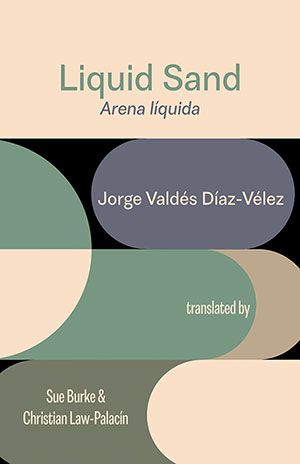


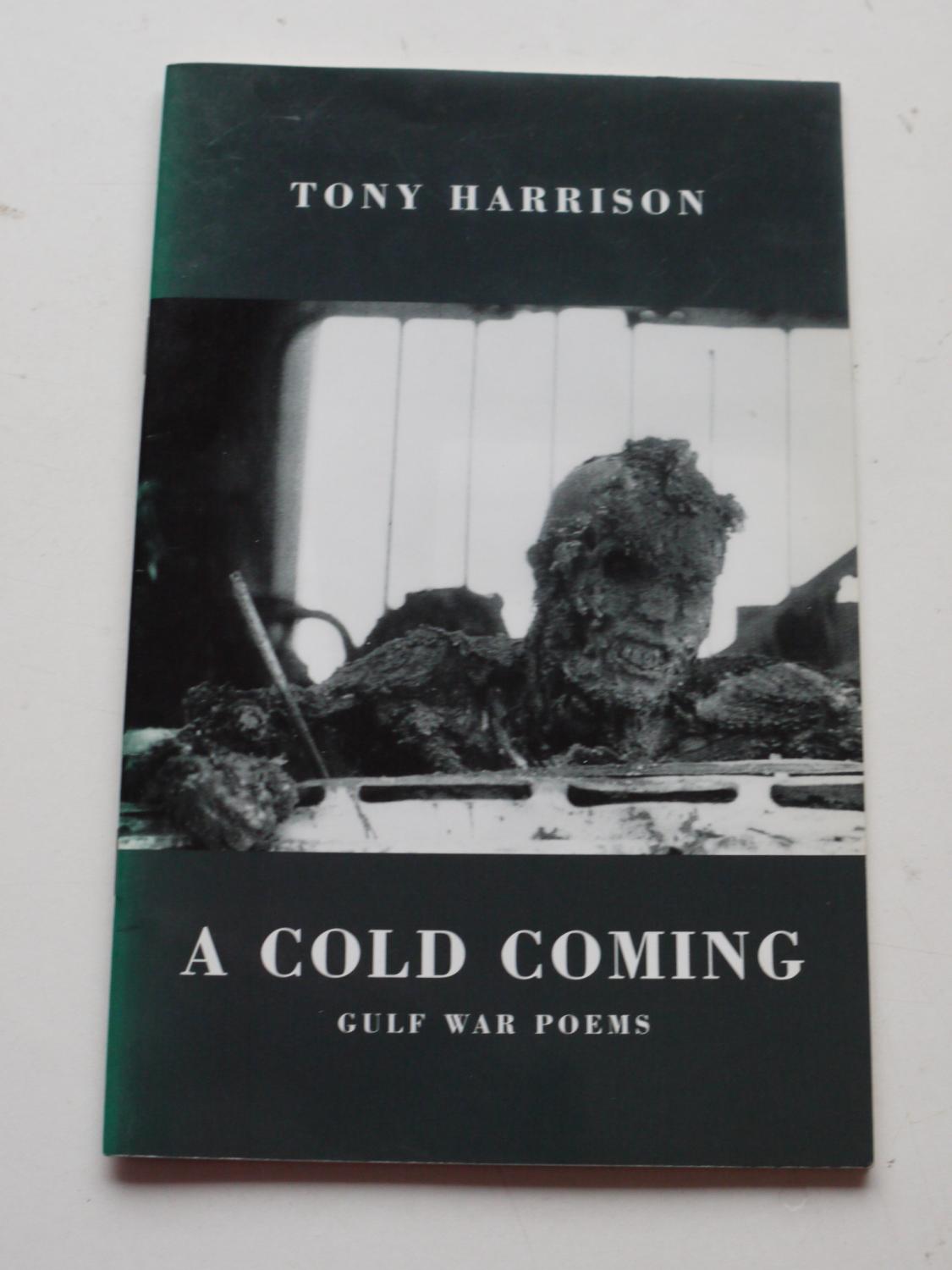
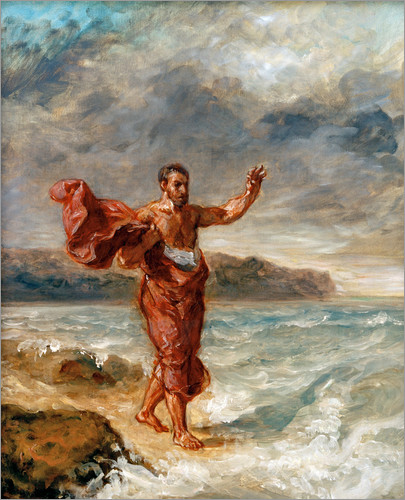
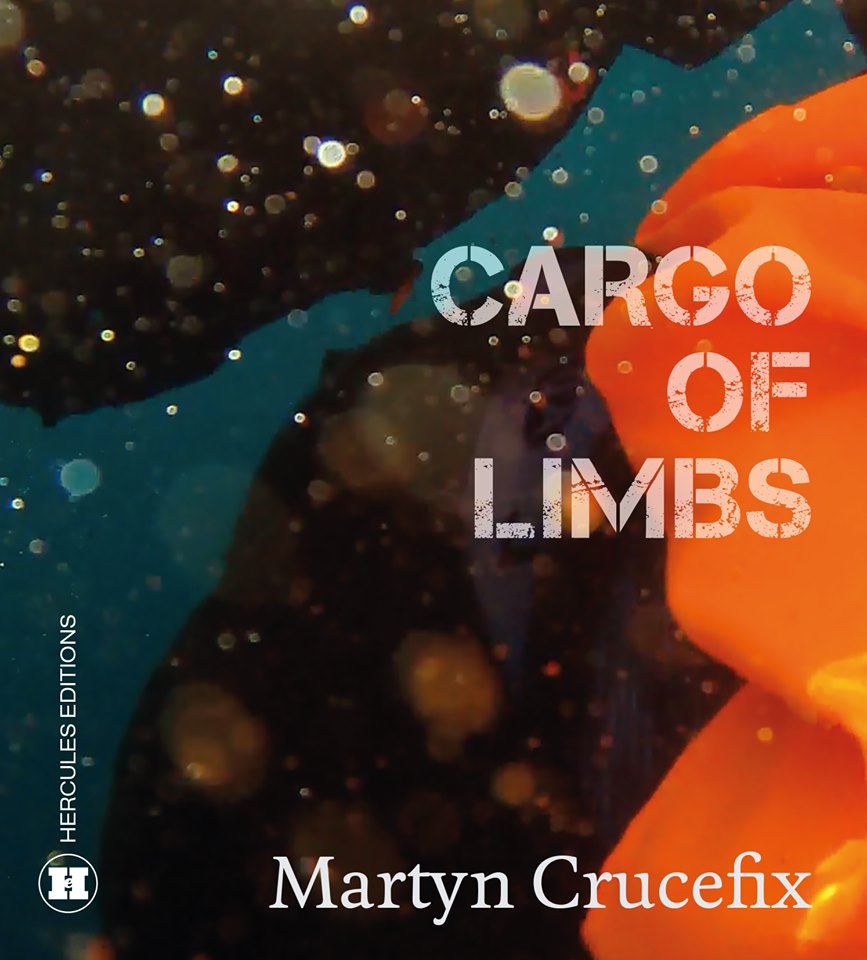
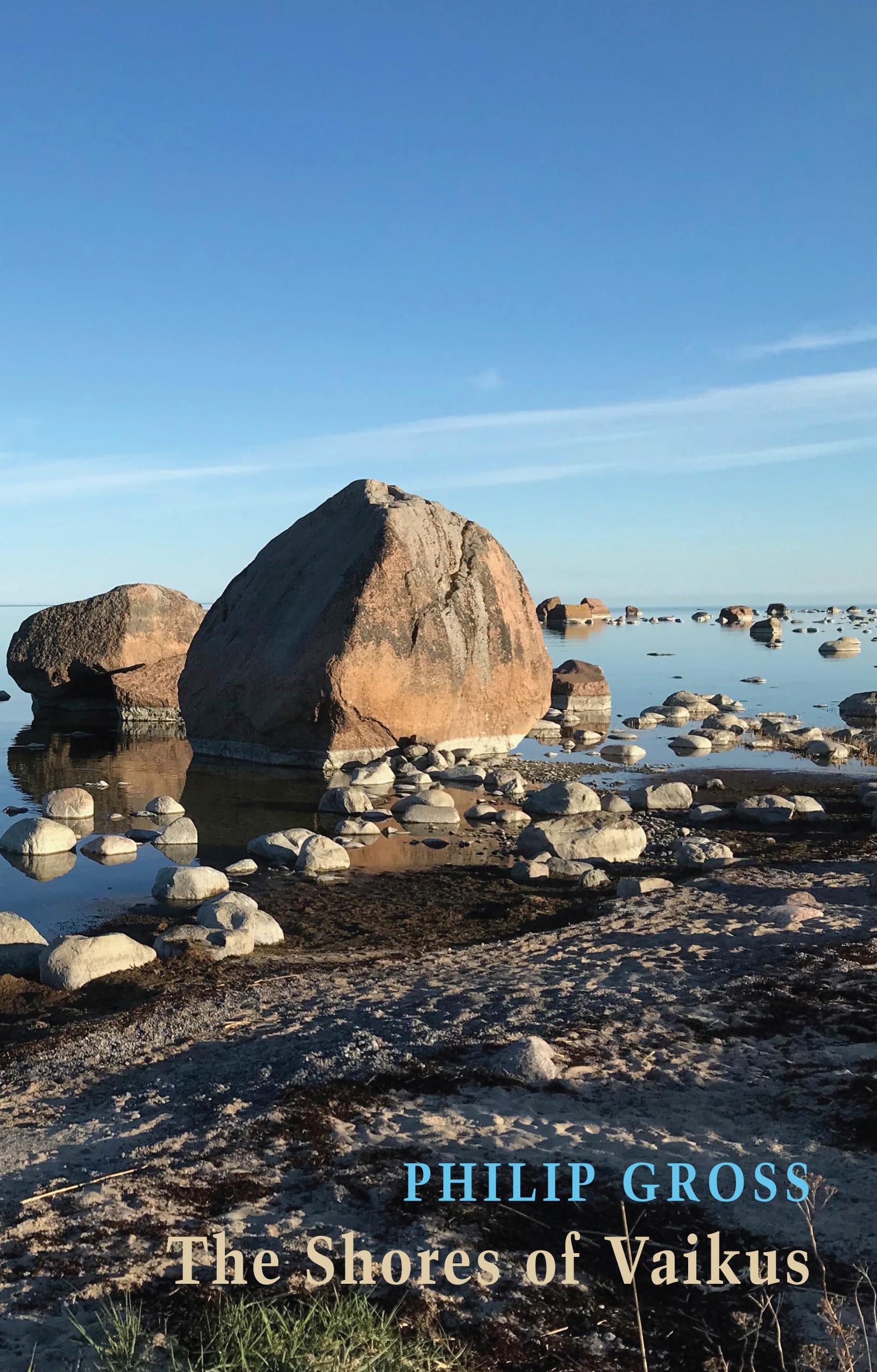
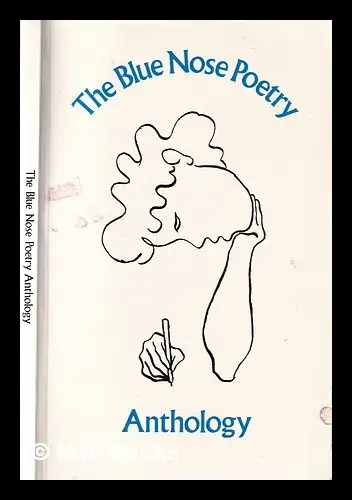
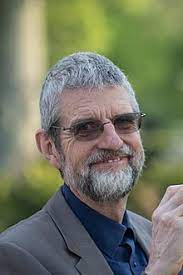
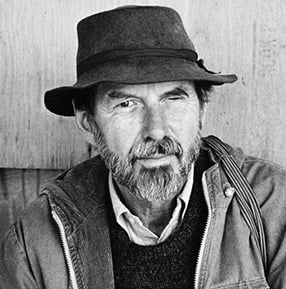
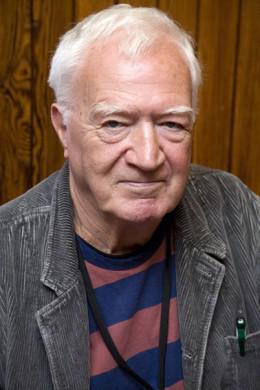
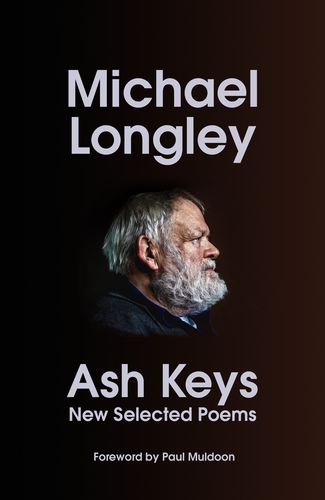
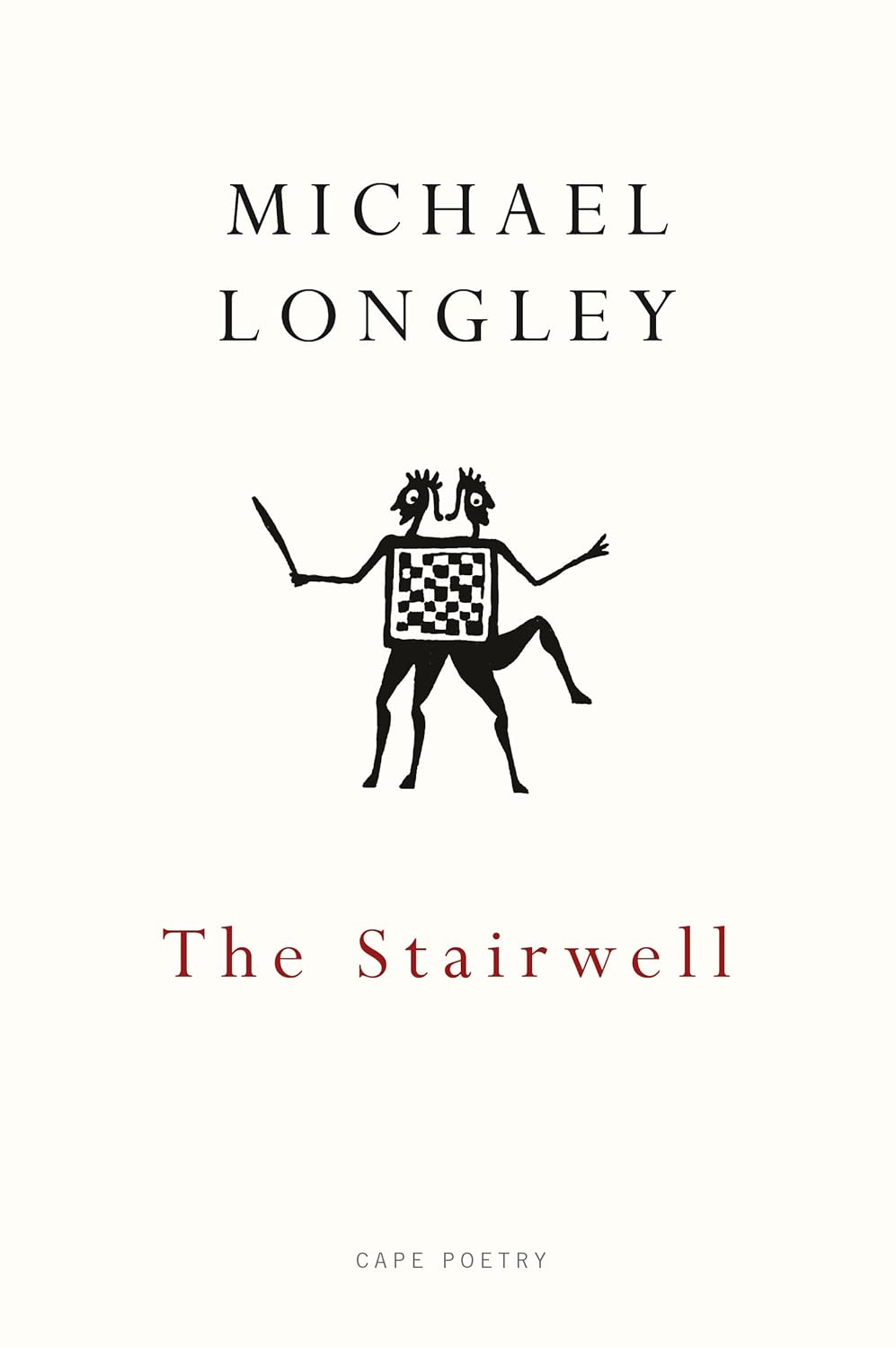
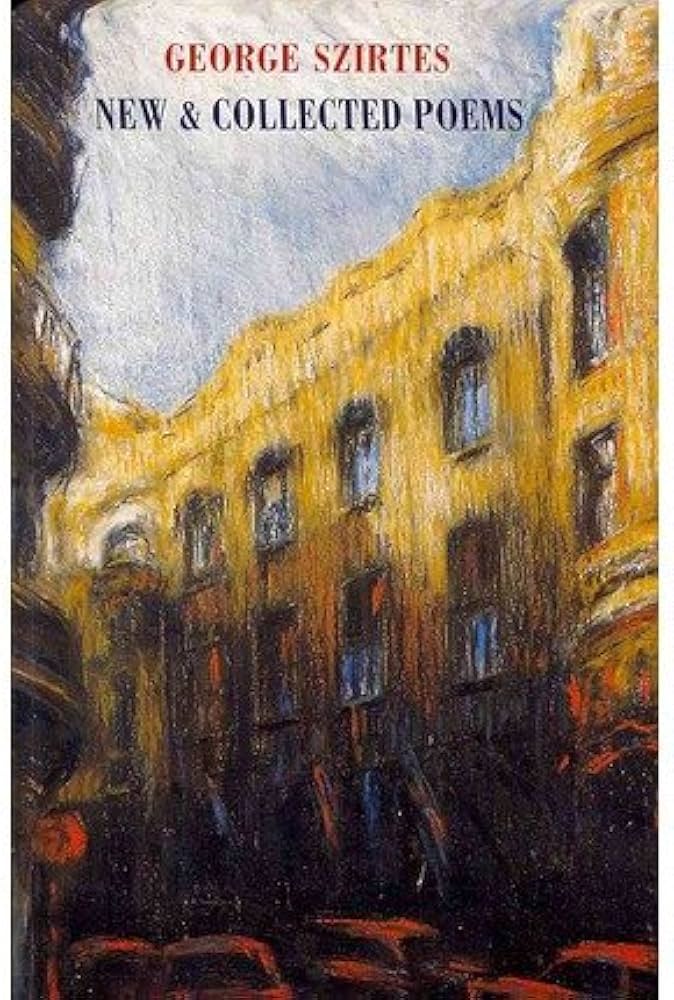
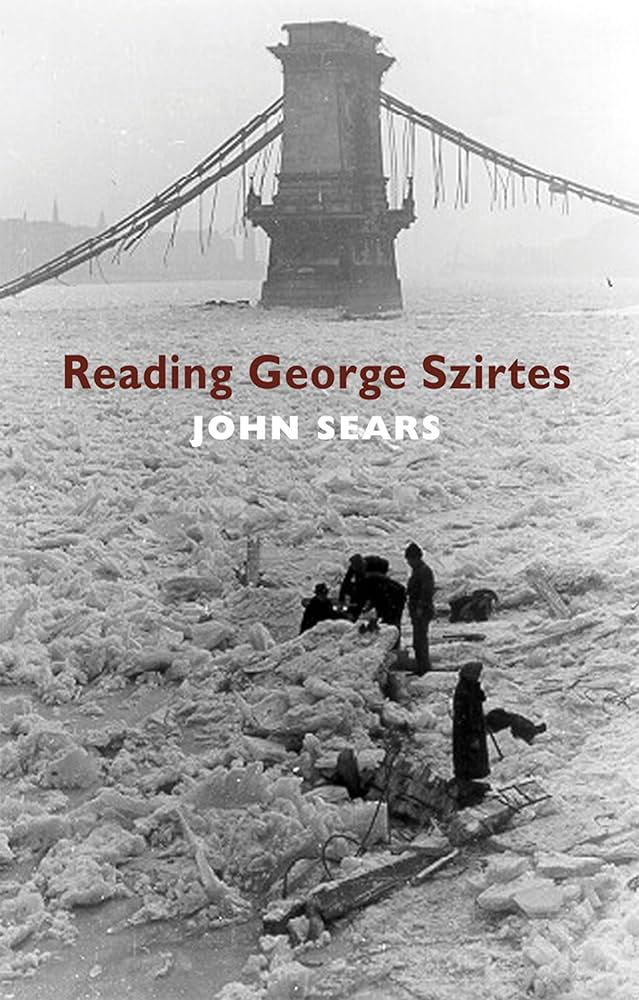

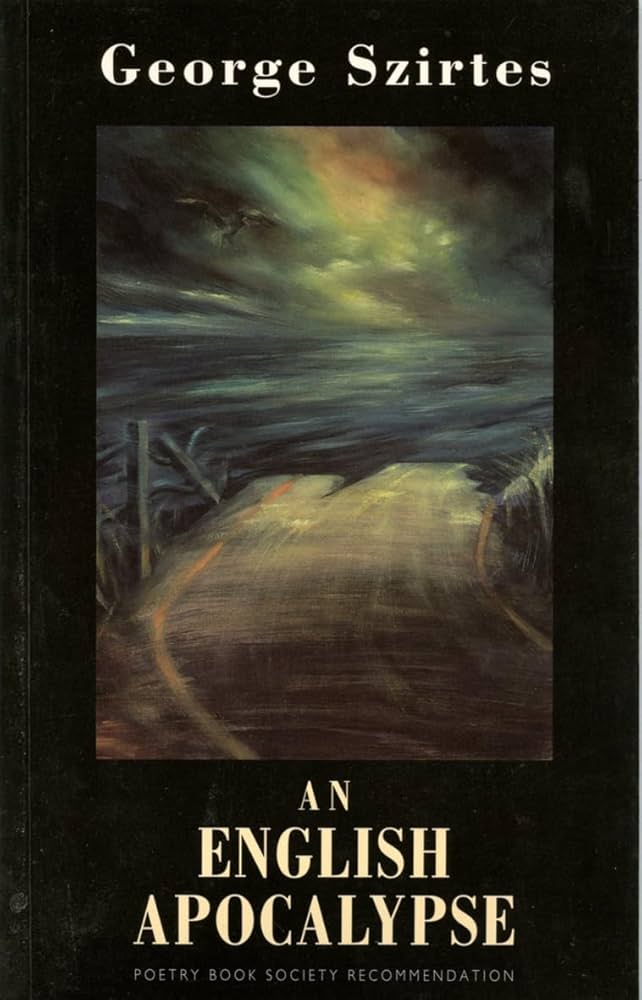
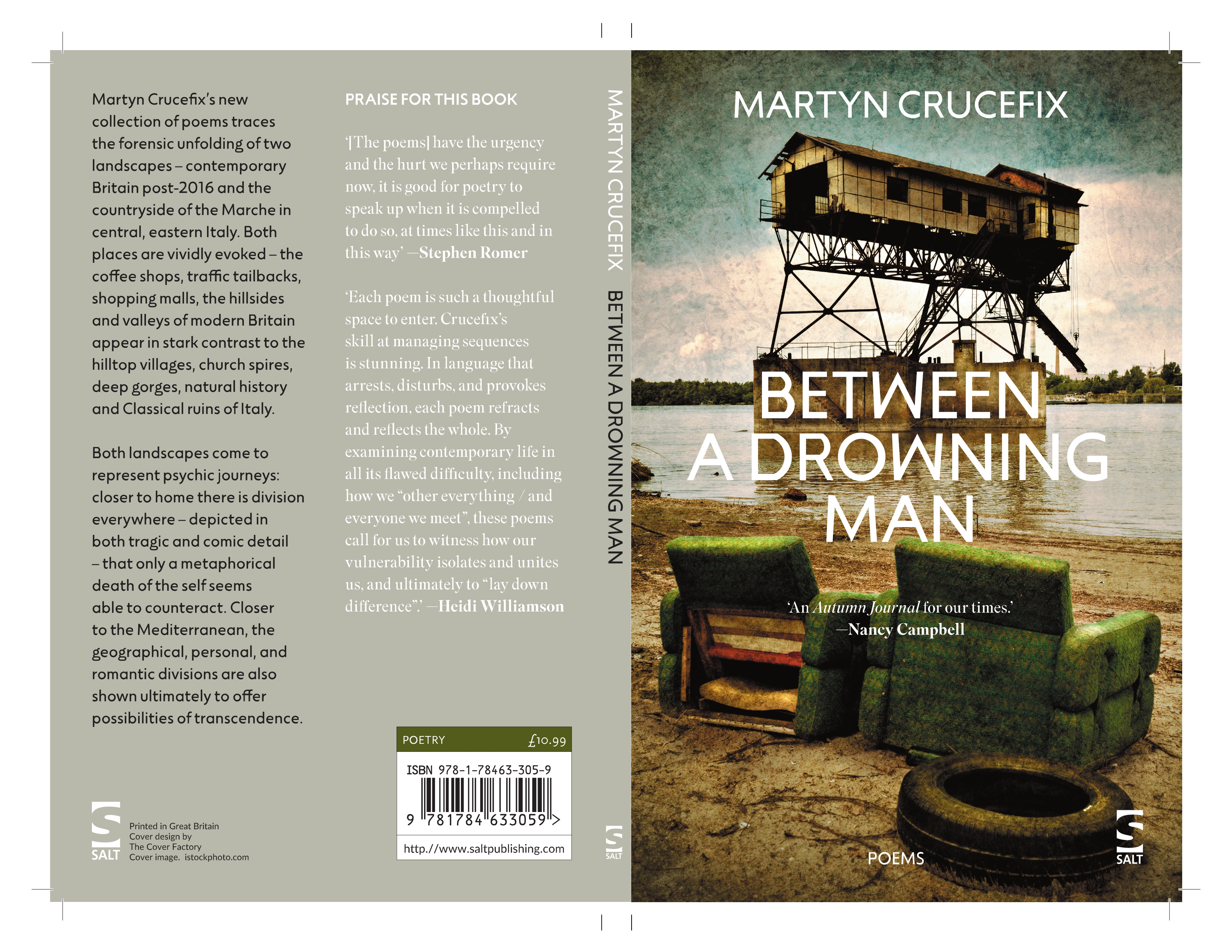


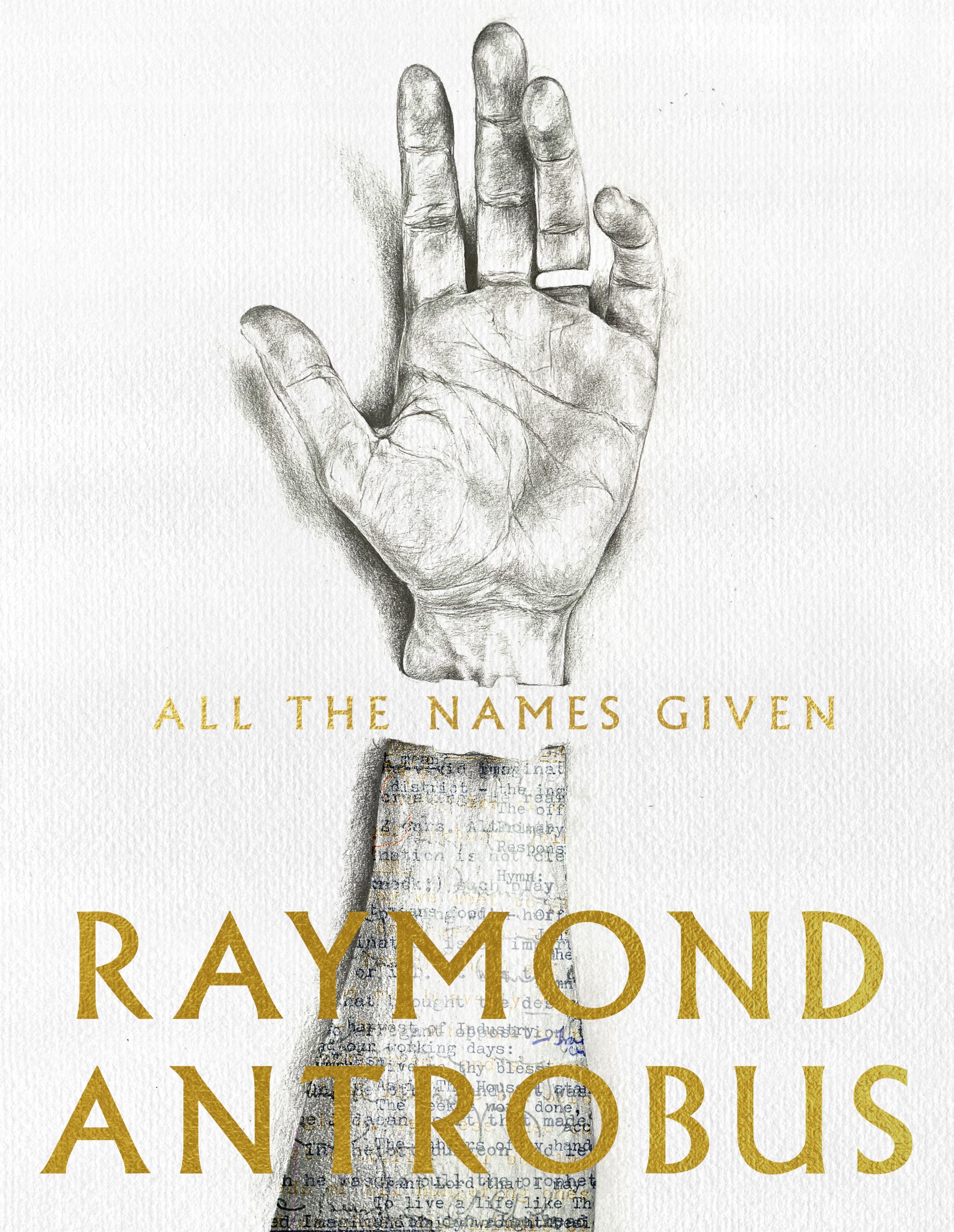
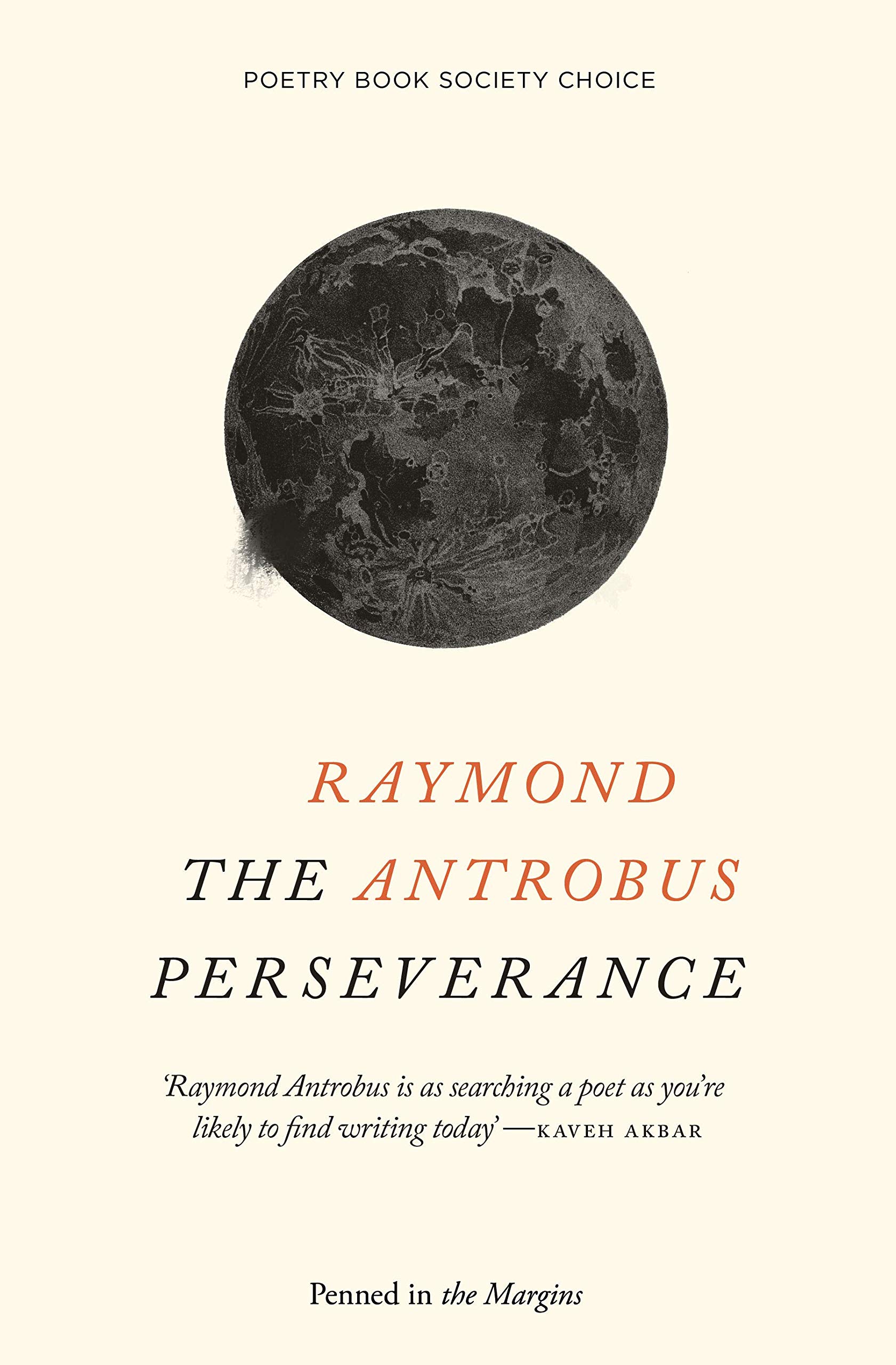

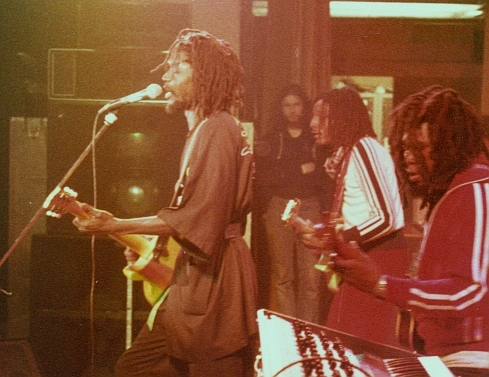

 Martyn Crucefix