Into the Swims – or She’s Leaving Home

A remarkable thing has happened in our house this week. My daughter’s room has been tidied – and it has remained that way.

The duvet is unrumpled on the bed. A phone charger remains thoughtfully unplugged on the floor beside the bed. The pages of Donna Tartt’s The Little Friend have not been turned any further. The few coins on the desk wait to be spent. No rubbish is accumulating in the plastic bin beside the desk. A laundry basket has been emptied and seems not to be refilling as it usually does. There are few clothes hanging in the wardrobe. The door stands open onto the landing for days on end. There is hardly a movement in the wave-shaped mirror beside which, vertically, a friend wrote in pencil  ‘Don’t crack the mirror’. Actually, to be truthful, there is the slightest of motions to be seen there – it’s me standing in the centre of the room, staring around.

We took her to university last weekend. We miss her. And in the absence of more detailed news we’re pretty sure she’s having a good time. She’s never friended us on Facebook but she somehow did so ages ago with my parents. So we hear remotely about smiling pictures, roseate cheeks in flashlight, black backdrops. I think yesterday she was supposed to be attending her first dissection (I remember that vividly – more of that in a later post perhaps).

In the mean time, to wish her well and permit myself some lovely sentimental thoughts of her in younger days, I thought I’d post a couple of older pieces I wrote which feature her.
2007_0413Northumberland0139

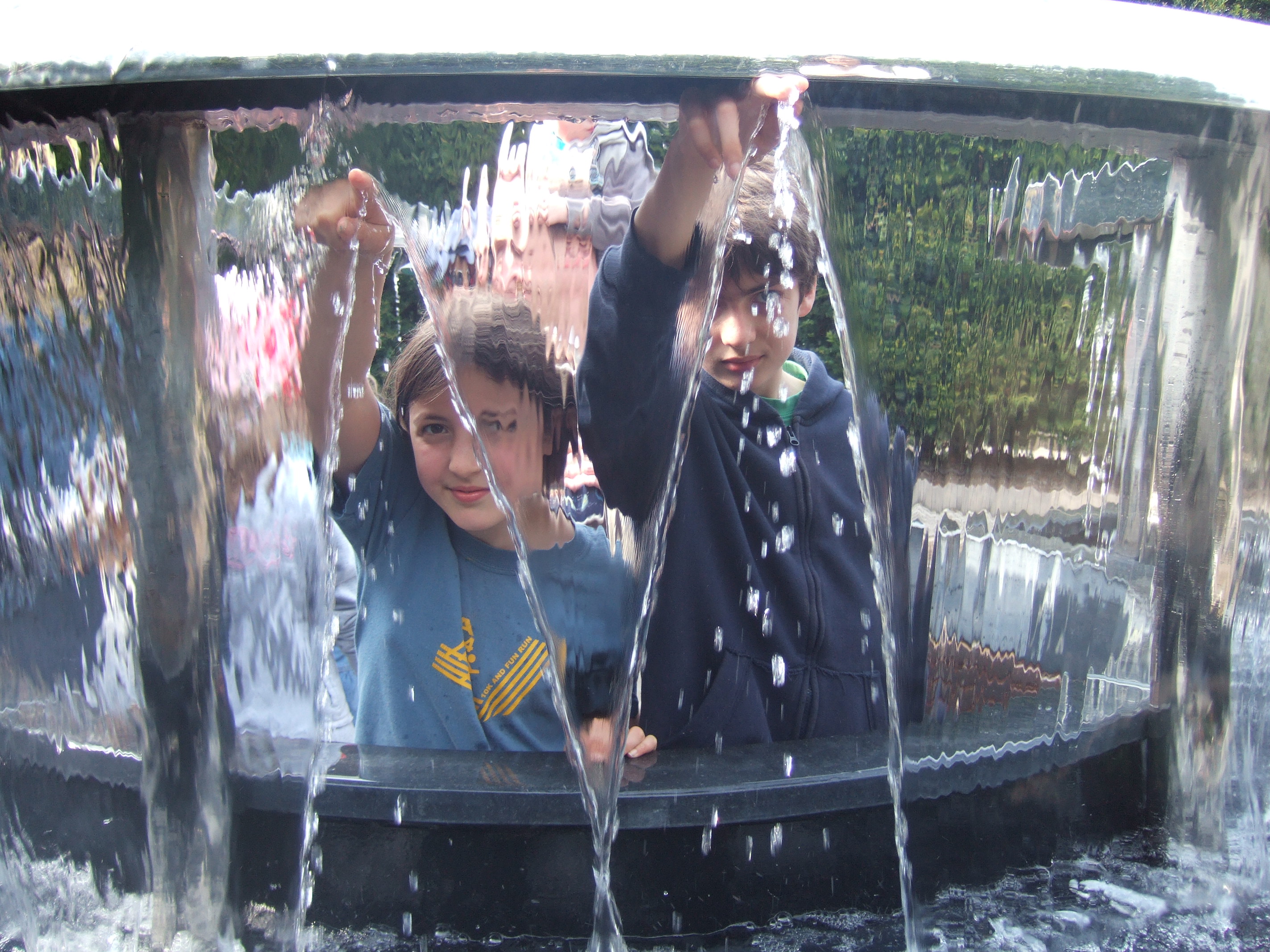
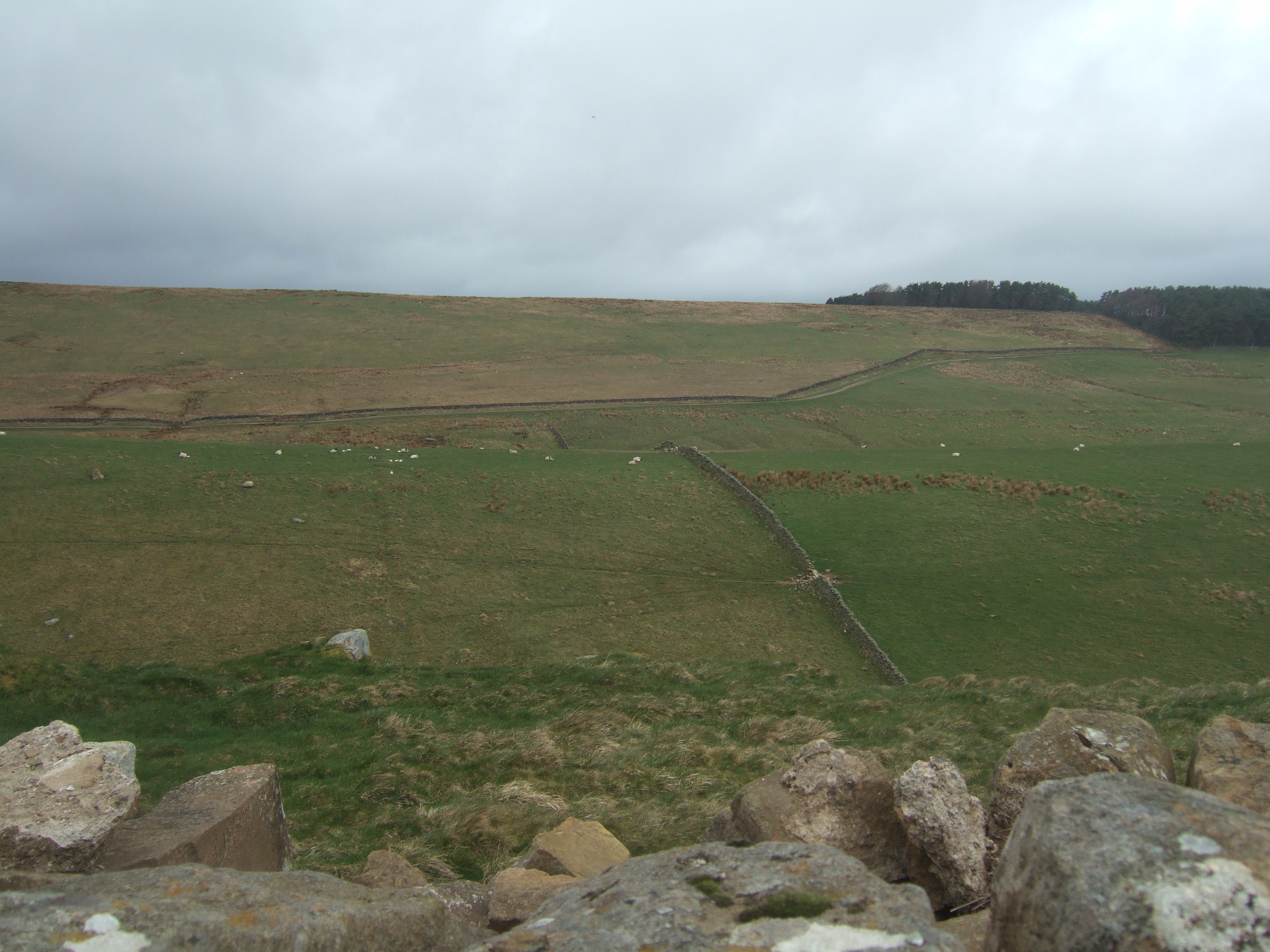
Both these poems originally appeared in Hurt (Enitharmon, 2010). The first derives from a walk we pursued when she was about 5, I think. By walk I mean, she walked a bit and I carried her on my shoulders the rest of the way. This was probably in the hills near Sedburgh – sheep country, close-cropped grass, heather, little stony paths. I suspect we plotted a waterfall or two into the route for a few squares of chocolate (temptation) for her and her older brother.

One thing after another

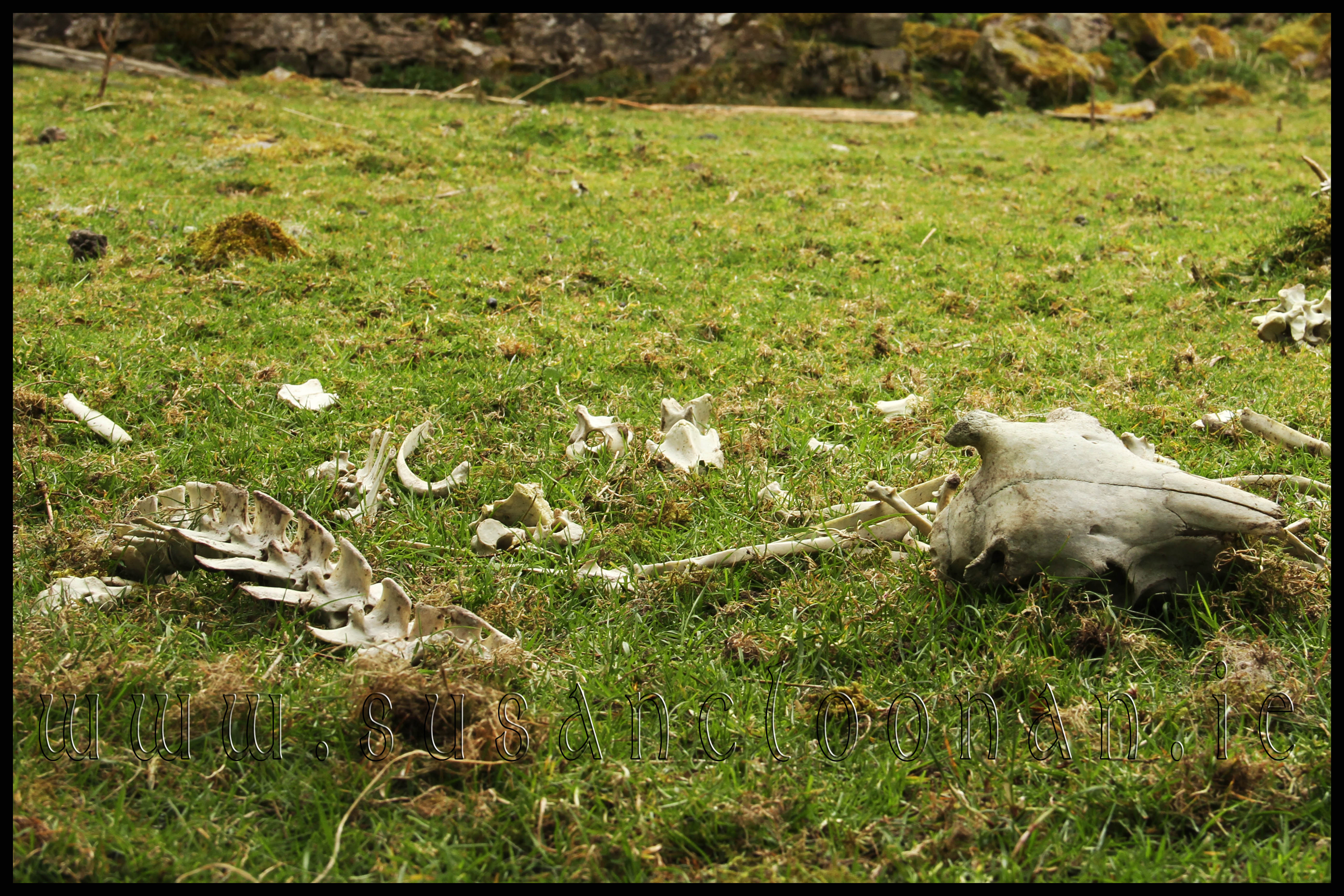
The ivory, angular vertebra I found
the day after the day my daughter found

and tried out her new word – fuck –
was bony, spiky to touch, rough as fuck.

I thought: Depths! Essence! Bone!
She bent to it, touched it, turning bone.

Leave it, I called. She said, Is it real?
White in the grass the contrast was real.
skull4

The second poem is later, from an occasion when we were visiting Canadian cousins, staying in a house in the Lake Country north of Toronto. To me it felt like something out of early Margaret Atwood and we spent ages fishing from the rickety wooden dock, paddling in a rowing boat and (as here) swimming out to a tethered raft (she has always been a good swimmer).

2008_0809Canada20080117

There is a well-buried allusion to Milton’s Paradise Lost in the middle of this poem – from the description in Book 1 of the fallen angels or devils closing in around Satan (“their doubl’d ranks they bend / From wing to wing, and half enclose him round / With all his peers” ll. 616-8). This is the second part of a sequence called Wilderness:

See my flesh and blood

here, bright and true

as a sun on the rise,

she launches herself

from the anchored platform,

flies into the air

over the blue-lit water,

unaware of tethers

beneath the surface,

of ropes, trailing weed,

slime, mud and scales

stiffening in reaction

to her vigorous action.

Here she is, hanging,

all parts my daughter,

curling like a ball,

the sudden black water,

while the white trunks

of ten thousand trees

cram the lake shore

and enclose her round.

All sounds hang back

as she arcs and peaks,

begins her slow bow

to the pull of gravity,

the smash of water,

the great churning

of foam and white limbs

yellowing as they spread

to carve out stroke

after buoyant stroke

into the swims of joy

and grief she’ll tread.
2007_0413Northumberland0079

Forward First Collections: Some Early Results 2015/2014

The 2015 Forward Prizes Felix Dennis award for Best First Collection (with its £5000 cheque) will be awarded finally on 28th September. I have been reviewing the shortlisted books this summer as follows:

Mona Arshi – Small Hands (Liverpool University Press) reviewed here;
Sarah Howe – Loop of Jade (Chatto & Windus); reviewed here;
Andrew McMillan – physical (Cape Poetry); reviewed here;
Matthew Siegel – Blood Work (CB Editions) reviewed here;
Karen McCarthy Woolf – An Aviary of Small Birds (Carcanet) reviewed here.

Who will win?  I can give you what blog-mathematics tells me and I can give you my own modest opinion and I can give you a prediction of who I think might be picked by the judges who are A L Kennedy (Chair), Colette Bryce, Carrie Etter, Emma Harding & Warsan Shire.

  1. Judging merely by hits on the reviews on this blog (statistically wholly unreliable) the winner will be Andrew McMillan – agreed this might just reflect the fact that he and his supports are more social media savvy than others but I suspect it reveals an real interest in his work out there. (And for completists among you, the remaining rank order was then Arshi, Howe, Siegel, McCarthy Woolf).
  2. Who do I think should win? All five books have been hung on topic-hooks by their publishers (illness, ancestry, cultural difference, sexuality, miscarriage) though only Howe and McMillan really justify this as complete volumes. It’s a sign of the need to market a book these days and I’m sure this trend will grow more powerful though I don’t think it’s a great idea for either writer or reader (is it an appeal to the ‘general’ reader?). But the ground being broken by McMillan has been thoroughly ploughed by his (acknowledged) hero Thom Gunn and Howe’s cross-cultural explorations and formal experiments I find interesting but not necessarily volume-coherent. My favoured book was actually the American one, Blood Work by Matthew Siegel which I thought was a wonderfully coherent, moving, funny and achieved collection (despite being a first book). So he’s my pick – and I’ll be wrong on the night!
  3. Who will the judges choose? McMillan – that combination of (sufficient) controversy and accessibility.

Whoever it is in the end, congratulations to them and to all the shortlisted poets.  It’s been a feast and thanks to those who have been following my travels through these books.

As a final footnote, in October last year (somewhat after the event, I confess), I reviewed Liz Berry’s winning first collection and as a bit of context I’ll post that again below. For the record, I think her book is better than any of this year’s five.

Liz Berry, Black Country (Chatto Poetry, 2014)

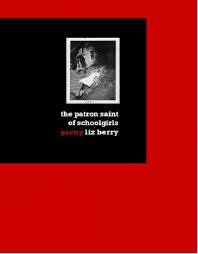
If a reputation can be earned through the writing of half a dozen poems of real worth then Liz Berry has probably already written them, earning her place in the landscape of early 21st century British poetry. Her debut collection (containing 14 poems from the earlier chapbook The Patron Saint of Schoolgirls (tall-lighthouse, 2010) has charm, accessibility and a humour that belies the serious ways in which she exerts pressure to counter the hegemonies of language, gender, locality, even of perception. Berry is a teacher by profession and will, no doubt, have equivocal feelings about her work appearing in classrooms – but it will rapidly and rightfully find a place there.

imgres

We resist what tries to define and suffocate us in part by declaring who we are. Berry’s confident, natural, even uninhibited use of her own Black Country dialect is one of the most superficially striking things about this book. Against “hours of elocution”, she opts for “vowels ferrous as nails, consonants // you could lick the coal from” (‘Homing’). Variously her grandmother and mother influence her in this and, in ‘The Sea of Talk’, her father also urges her never to forget the place of her birth with “its babble never caught by ink or book”. The definition of a community against the pull of a conventional linguistic centre is explicit here. Her grandmother is a frequent role model and the growing girl studies “her careful craft”. “Right bostin fittle”, the older woman declares (ie. great food – brains, trotters, groaty pudding) and the budding poet willingly touches her “lips to the hide of the past” to inherit the authentic gift.

Other poems, making it clear that locality is as much a component of who we are, record and celebrate the Black Country as “a wingless Pegasus” composed of scrub, derelict factories, disused coal shafts, yet still a “gift from the underworld” whose nature and fate is enough literally to make grown men weep (‘Black Country’). Berry takes huge pleasure in enumerating the details of her locale. “Come wi’ me, bab, wum Tipton-on-Cut” invites one poem which then takes a tour of waterways, allotments, parks, mosques, steelworks and canals (‘Tipton-On-Cut’). Similarly, ‘Christmas Eve’ seems to improvise from the great concluding paragraphs of Joyce’s story ‘The Dead’, using the ubiquitous fall of snow to lead the reader across the landscape of Beacon Hill, Bilston and Molineux.

Liz-Berry

We elude being imposed on and defined by others by changing. This, for me, is the more profound aspect of Berry’s work; so many poems unfold as processes of self-transformation. A mark of the book’s self-confidence can be found in ‘Bird’ which announces this motif of liberation: “When I became a bird, Lord, nothing could stop me”. Here, it is the mother’s voice urging, “Tek flight, chick, goo far fer the winter”. In keeping with this, the poems display a formal variety – free verse, short-lined quatrains, couplets, tercets, ballad forms, punctuation comes and goes. This is further reinforced by Berry’s bold, category-dissolving imagination which instinctively reaches for metamorphic possibilities. In ‘Birmingham Roller’ the escapee is a bird again, “jimmucking the breeze, somersaulting”; people become dogs, trees, pigs, fade to mere echoes, girls become boys. The donning of a pair of red shoes invigorates, eroticises: “rubies that glistened up a dress, / flushed thighs with fever” (‘The Red Shoes’).

Sexuality features so prominently in Black Country in part because of its potential for transgressive energy. I’m sure ‘Sow’ is anthology-bound with its “farmyardy sweet” female narrator, rejecting external definitions (“I’ve stopped denying meself”), accepting her true nature as a “guzzler, gilt. / Trollopy an’ canting”. This is a real tour de force of dialect, imaginative transformation and downright feminist self-realisation that “the sow I am / was squailin an’ biting to gerrout”, even daring the reader to “Root yer tongue beneath / me frock an’ gulp the brute stench of the sty”. Berry’s power of imaginative transformation is so powerful that the book creates mythic figures at will: the sow girl, the Black Country pegasus, the patron saint of school girls, Carmella the hairdresser, the Black Delph bride, the last lady ratcatcher. ‘Fishwife’ presents another of these figures like something from a quasi-pornographic Grimm’s tales. Attending a 17 year old girl’s wedding, she brings the gift of oysters, erotic energy, transgressive flirtation, power and ultimately pleasure:

                                            I slipped
from my bare skin
alive oh alive         all tail           all fin
how the tide tossed
until alive ohhh alive
the waves flung my shining body        upon the rock

She kisses the bride with “her tongue a plump trout” and other poems also resist categories to the extent of a sensation of gender-bending, or more accurately gender neutrality. I’ve already mentioned the girl who becomes a boy. ‘Trucker’s Mate’ reads like a homosexual “romance” and ‘In the Steam Room’ positively drips with sexuality – but of an explicitly “sexless” kind in which “any body / might give you pleasure”. ‘The Silver Birch’ achieves the extraordinary feat of evoking “sex [. . .] before sex” (eroticism before gender), “when I was neither girl or boy [. . .] a sheaf / of unwritten-upon paper”.

imgres

With so much dissolution of the normative, Berry dallies with the surreal and there can be dangers if the work does not also bear a weight of darkness. A poet like Tomaz Salamun writes in the tradition of Rimbaud’s systematic disorganisation of the senses, but combines, as Ed Hirsch suggests, “exuberant whimsy and fierce rebellion” to resist too easy a relationship with the pressures of the real. Happily, Black Country encompasses some richly productive tensions between the real and imagined, home and away, past and future, conformity and rebellion, sex and death. The latter rises to the surface through the middle of the book in poems like ‘The Bone Orchard Wench’, ‘Echo’ and the murder ballad ‘The Black Delph Bride’, acknowledging that the traffic between real and imagined contains plenty of irresolvable grit, impossible to wish away in any facile manner.

The collection concludes in more plainly autobiographical terms with the approach of the birth of a child and perhaps there is less imaginative pressure here, a risk of sentiment, “waiting [. . .] for the little creature that grew inside me”. Nevertheless, in reviewing first collections it’s traditional to look forward to achievements to come but this is inappropriate with Black Country simply because there is so much confidence, focus, shapeliness, already achieved uniqueness. Rather, this is a poet whose work presently demands our admiration. Oh yes . . . and what about those half dozen or so poems of real worth? I’d suggest ‘Bird’, ‘Bostin Fittle’, ‘Black Country’, ‘Tipton-On-Cut’, ‘The Silver Birch’, ‘Sow’, ‘Fishwife’. You’ll hear more of these in years to come.

A bundle of 50 sticks to start a fire

I have used this form – derived from Lee Harwood – for a blog-poem before. I rather like its loose encompassment and also as a welcome change to the often ‘lit crit’ nature of my usual blogs. Just roll with it . . . it’s what I say to myself. This one is dedicated to Stephen Stuart-Smith and all at Enitharmon Press.

images


A bundle of 50 sticks to start a fire

(for Stephen)

I did not break my fast Thursday last

Rose and showered at 7am before realizing and getting back under the covers for another 20 minutes

The street strangely lit there seemed to be so much more sky

The council have cut down flowering cherries claiming they are diseased but the word is it is to prevent – in both senses – claims against them for subsidence

At the surgery I was sixth in line

reading Blake Morrison on Ted Hughes published 5 September 1993 on yellowing newspaper pages that had tumbled out of a book I was re-shelving

As for his marriage to Plath, one day he may choose to speak about it, but for now –

I glimpse an old neighbor now divorced his wife and children have moved out we nod but very remotely

never watch when the blood is taken

images

Starbucks trade in the medical centre I watched being built years ago when I’d swim more often even then imagining myself at one of the windows waiting for news of some test or other

T. has woken by the time I return to eat but it’s me who puts away the groceries that have been delivered

handed me the bottle of wine laughing you don’t want to lose that he said my hesitation as I re-envisaged him as a romantic gift-bringer left an awkward pause I couldn’t cover

How does I have plenty of time transform itself swiftly into running late

hardly anywhere to park

Queens Wood stretches up behind these houses then bridges a road then sinks following its contours to the pond then rises again climbing to Muswell Hill and this is to be boxed into the word ‘topography’

A half empty carriage

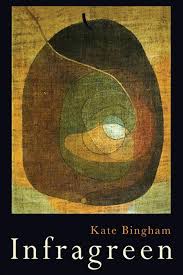
‘Ultragreen’ in which what is out there seems to come inside in a process Kate cleverly likens to photosynthesis and cleverly this gets away from me

imgres

The Whitehill Food Market I have passed that place

Walking up from the Emirates when I can’t get my mind off the strange limps and weaves of the way other people walk they are not hell but merely unfamiliar ways of moving

the fountains flow in the centre of the square

A dog wets its feet and drops a red ball into the pool and I guess its owner will be irritated by that

Brecht refused to award the prize to any of the five hundred entries. In none, he said, was there any successful attempt to communicate anything of any value

‘Nothing makes me feel more like a poet than being unable to talk’

Pub date Isobel calls it pub date

The absence of punctuation is in the spirit of the Daodejing it is the water course way one drop of water in the ocean no trace of it but don’t tell me it’s not there

A house in Selbourne

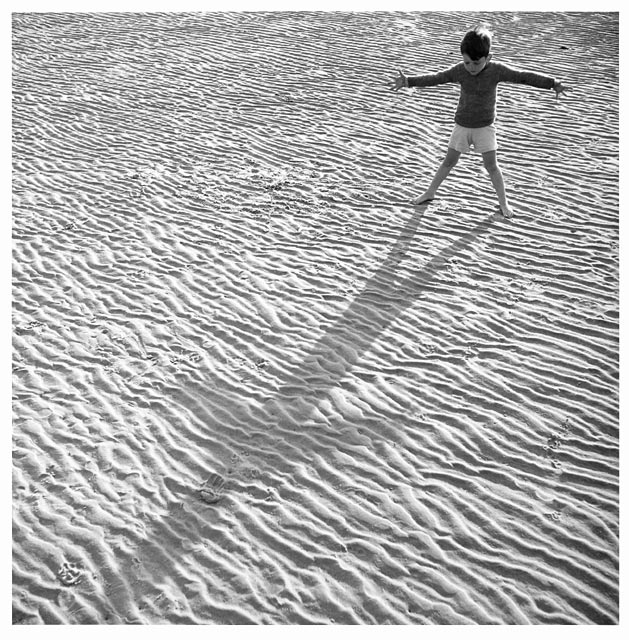
An image of a child with arms outstretched fingers widespread so much he might be a tree

Ripples of damp sand are the footprints of the shaggy oceanic beast

‘To embrace’

y30

A plain cheese and tomato brown bread roll and I am back madeleine-like to dinner-time sandwiches at Junior School during which we’d meet Mum from work and sit in Trowbridge Park why did we do that

It must have saved money

A timetable is the opposite of the way water flows and this grid dominates my life

Poems not even by rote but by the hour of the day

‘Pike’ so we watched YouTube clips of fish ducklings kittens being devoured it gets them started

Town kids city dwellers

as out of place as John Wyndham’s alien creatures like little pink M&Ms on four legs two of which are really arms they carry fire sticks

‘A sort of genocide’

The original Homer Simpson whose hands are uncontrollable

‘his thumb received a nasty cut. Although the wound must have hurt, the calm, slightly querulous expression he usually wore did not change’

images

Explore how far West’s presentation of Homer suggests he is a trapped man

The spider plant on the windowsill looks anaemic in its white pot against white painted window frames against thunderheads miles off

I am free at 17.10

I don’t need most of this

Occasionally there are evenings I can’t remember where I parked the car once I thought I’d left it on the garage forecourt after filling it up and I went in and got them to review the CCTV footage which told me that I had driven it away earlier that day and like some log-jam shifting slightly I had a vision of parking it on First Avenue and there it was all along

I need a framework perhaps

‘Echo Beach far away in time Echo Beach far away in time’

I like to change my clothes after a day’s work

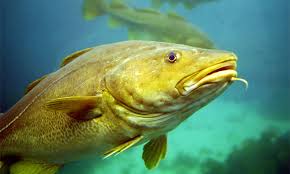
So I asked them to bring in pictures of pike and this one brought in a picture of a cod

A Delia recipe

The evening is filled with cakes of varying heights

42

How to write about ‘sacred objects’

Recently, I spent a weekend at the house I now know as ‘Wiltshire’. It’s where I grew up through the late 1950s, 1960s and early 1970s. I’ve been living elsewhere for so many years now and ‘home’ is in north London so the old county name suffices in most conversations to communicate what I mean: ‘I’m going back to stay in the house of my childhood’.

File 01-09-2015 09 18 16
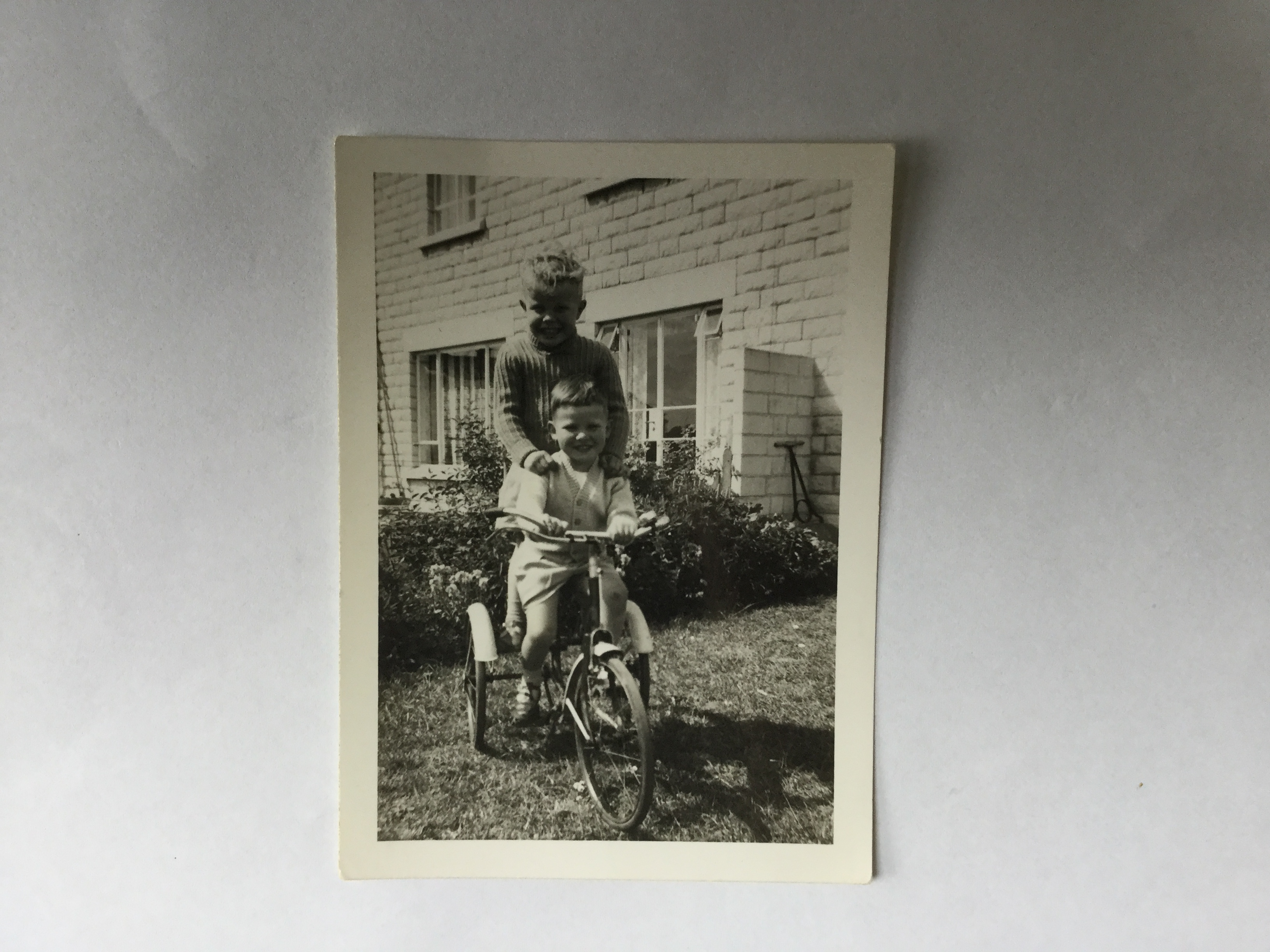
I’m doing the pedaling here – circa 1960

My parents still live there, both into their 90s, but managing with a little help to live independently. (See my earlier blog on memory and nostalgia here) It’s what has happened there over the years that makes me want to label it ‘sacred’ ground. From the Latin ‘sacer’ meaning holy, the word originally meant connected with God, sanctioned by religion, a valorisation that was religious rather than secular, a value determined from outside the sphere of the self and in the Latin words ‘sacerdos’ and ‘sanctum’ implying something cut off from the mundane, something distant.

But even in the continuing absence of any religious sense in my life, certainly any external religious authority that might determine this or that object or action as ‘sacred’ I still want to use the word – even as I confess this is a value determined solely by my own view of the world. But I do think that my sense of the ‘sacred’ is coupled with the passage of time. I don’t think anything can be instantly ‘sacred’. It has to be re-examined, worn, re-visited.

File 14-09-2015 08 33 42

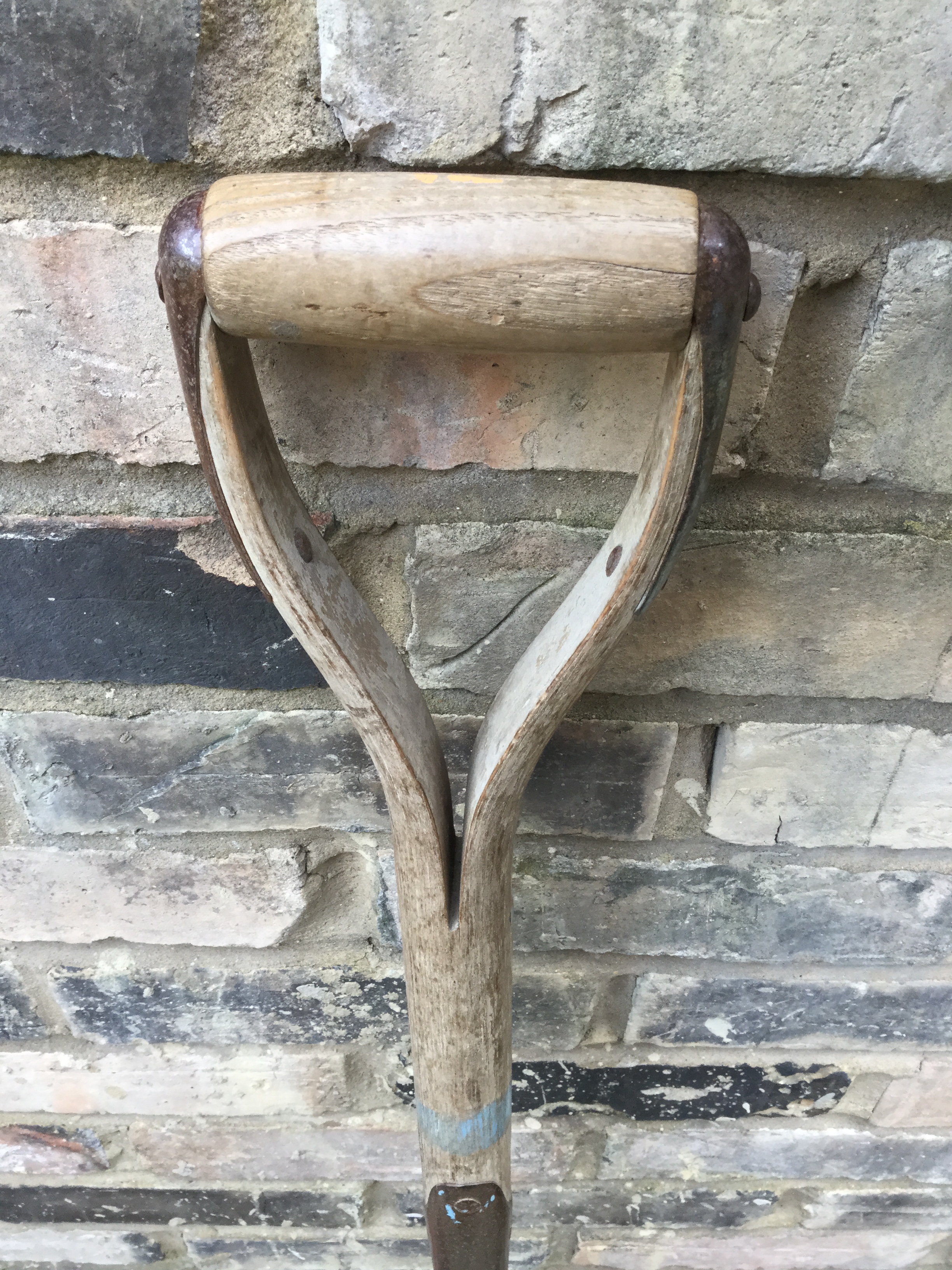
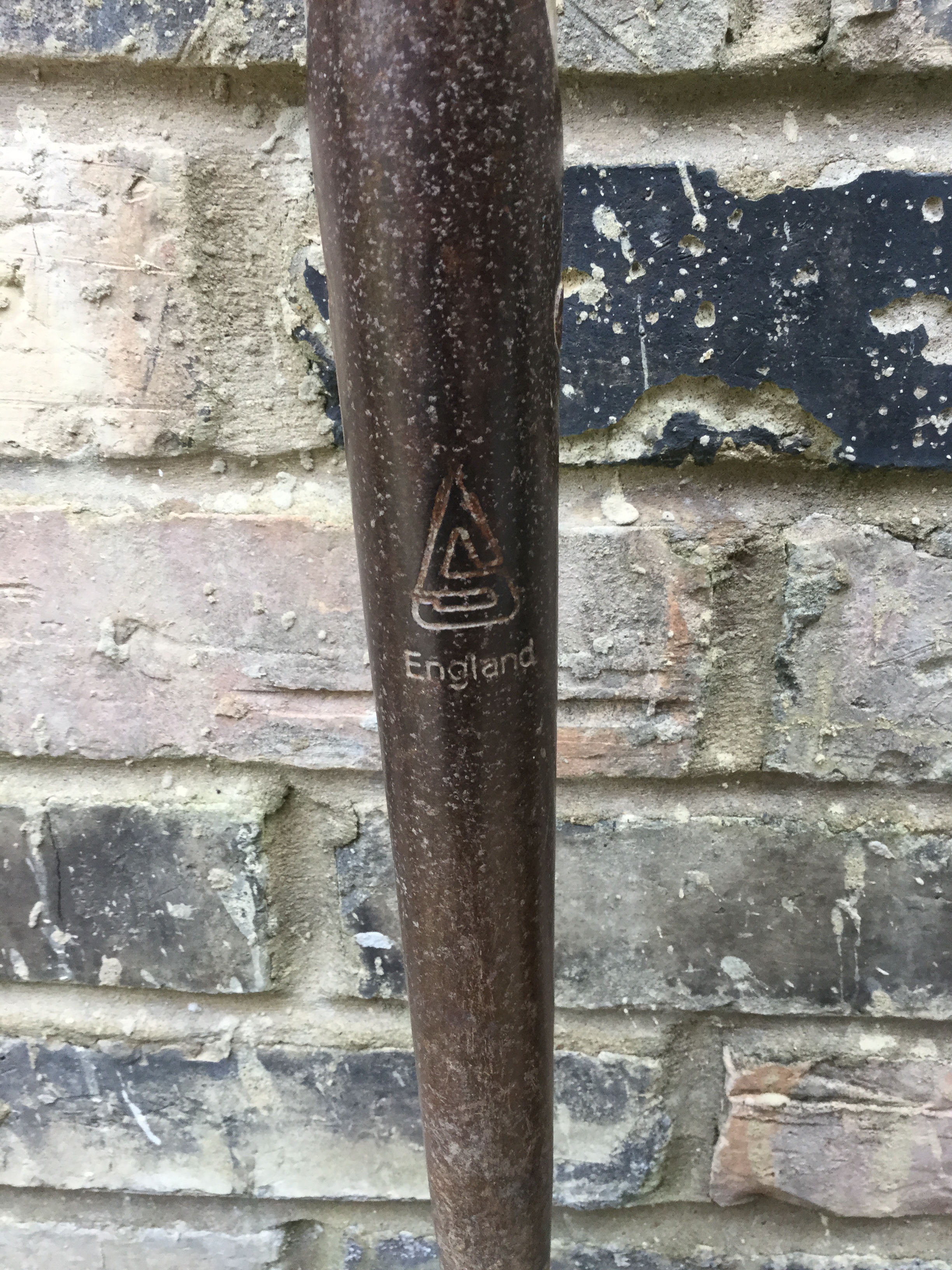
My Dad is well into that phase of old age when he wants to give everything away. There has never been very much to give, of course, and recently he has taken to wandering round the car-empty garage, picking out old tools and rather hopelessly asking myself and my two brothers whether we have any need of them, because he doesn’t any longer. The answer is really ‘no’ but occasionally I relent not to appear too ungrateful. However, on my last visit, I’d broken my flimsy Homebase-bought garden fork a couple of weeks earlier, trying to lever out a slab of paving. So when Dad offered me his old fork I took it.

File 14-09-2015 08 33 25

It’s unpromising material for sacred eminence but because his hands have held it for over 60 years, wearing the shaft smooth, because his muscles and the instep of his right foot have pressed and shoved and pulled at it over that length of time it makes the grade. Sacredness is sort of metonymic here then. It stands for him. This is something I respond to in Seamus Heaney’s poems, in particular the first part of ‘Mossbawn’, dedicated to his aunt, Mary Heaney. (Read the full poem here)

Reading it over again I’m struck by its focus on particular ‘sacred’ objects – the “helmeted pump”, the “slung bucket”, the warm wall, the bakeboard, the stove projecting its “plaque” of heat (that perfect choice of word suggestive of decorative and commemorative without becoming over-blown or monumental). His aunt’s actions and her domestic implements are likewise noted and linguistically nailed (the poet’s precision echoes his aunt’s):

Now she dusts the board
with a goose’s wing,
now sits, broad-lapped,
with whitened nails

and measling shins:
here is a space
again, the scone rising
to the tick of two clocks.

The final quatrain reverses the more usual order of figurative language to begin with the abstraction which is said to be “like” the actual object, love embedded in its everyday setting as much as the meal scoop is submerged, absorbed, integral to the meal bin, sustaining domestic life:

And here is love
like a tinsmith’s scoop
sunk past its gleam
in the meal-bin.

Heaney performs this magic in the present tense (a fact he rather flaunts with that “Now [. . .] now”) despite it being evidently a long-harboured, cherished memory. What might have been lost to the ravages of time is brought back into the present. I like to note that the word ‘holy’ dates back to the 11th century and the Old English word ‘hālig’, an adjective derived from hāl meaning “whole”, used to mean “uninjured, sound, healthy, entire, complete”. Lacking the authority of an external God, what is sunk deep into our past lives can be simultaneously brought back into the present, whole and holy, and this is what we might designate as ‘sacred’.

File 01-09-2015 09 17 39

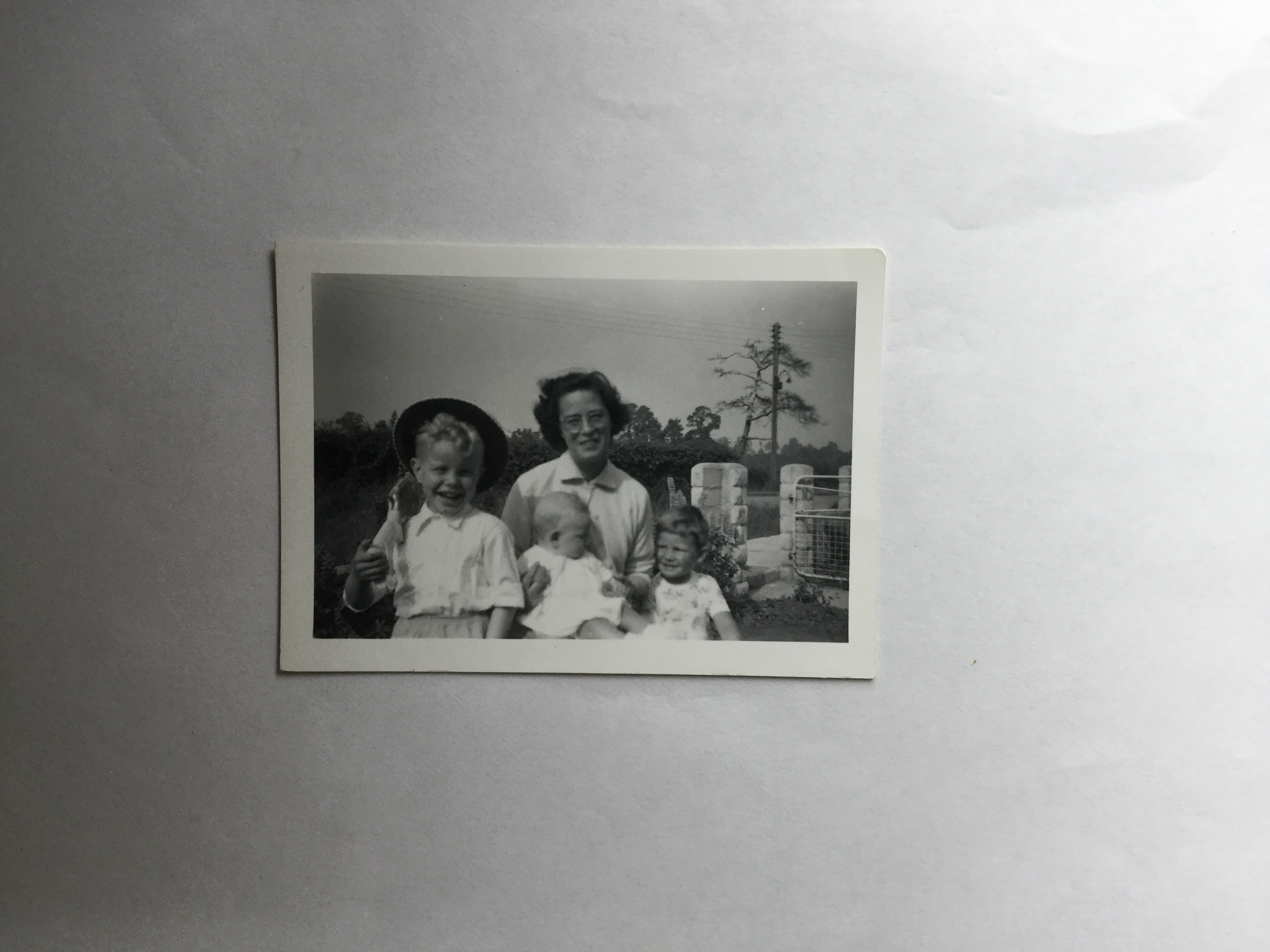
One object from ‘Wiltshire’ I once managed to write about is the garden gate. You can just glimpse it in the background of the picture above. The adult is my own aunt (not really an aunt but my mother’s best friend). I’m on the left of her here. The poem originated in workshop exercises directed by Myra Schneider (her website is here) a few years ago now. With thanks to her, what follows is my own formulation of her process.

  1. This is an exercise in memory and tapping into feelings surrounding specific objects. It seems to work for most people and I have tried it among school children as well as with experienced writers.
  2. List a few – 2 or 3 – objects which have significance to you. They may be possessions, objects once possessed now lost, toys, gifts, even houses or rooms, but try to think of specific objects – your sense of it needs to be precise rather than diffuse.
  3. From your list select one you feel now particularly drawn to
  4. Now write a description of it. Try to avoid infusing it with any particular feeling – the more objective the better to begin with.
  5. Now underline a few phrases in what you have written which you find interesting.
  6. Now write more freely around your object, allowing in specific memories and feelings which perhaps cluster around this object, people associated with it.
  7. Again underline particular phrases and passages you like.
  8. From all this material, especially what you have underlined, try to assemble a more finished piece.

And here’s my poem – originally published in ‘An English Nazareth’ (2004)

The gate

was inch-tubular for economy’s sake,

a post-war issue for a self-built house –

Hammerite black now, but once white,


earlier cream, its soft curves and corners

a rough square between cement gate-posts.

A big-thumbed latch on the left,


beside it, a schematic sun-rise of tubing,

beneath, the squared-off wire grid

I’d work my toes into, find the springy dip


of my weight on the straining hinges,

hook in elbows and I’d swing, I’d swing.

Then a jarring crash and decrescendo:


the muddy-booted, casual back-heel

of my brother after football on the grass.

Gentle click-clank of the sneck as Mum


bent to secure it with as much care as

she shook slippy fried eggs onto my plate.

The half-way firm, suddenly stunned


impact as Dad’s hand swiped, held shut –

his sluggish pirouette and up the path,

coming home with an empty Thermos.


And then me, arms shaking at the ridges

of concrete under my trike, Dad stooping

to frame the cream gate, the hedge beyond,


the telegraph wires converging on clouds,

wires dividing the bright air at my every

effort to remember until it appears


all that muddle of love has so long gone

unremarked between us, there is no need

to hearken to it, though a bad day shows


every possible latch broken while another

is effortless, finds the point of purchase

into the give and spring and swerve and space.


Forward First Collections Reviewed #5 – Sarah Howe

Stop Press January 2016: Sarah Howe’s collection has just become the first ‘first collection’ winner of the TS Eliot prize. A fantastic achievement. What follows is the review I wrote of the book during the summer of 2015.

This is the fifth and last in the series of reviews I have been posting over the last two months of the 5 collections chosen for the 2015 Forward Prizes Felix Dennis award for best First Collection. The £5000 prize will be decided on 28th September. The shortlist is:

Mona Arshi – Small Hands (Liverpool University Press, Pavilion Poetry) reviewed here;
Sarah Howe – Loop of Jade (Chatto & Windus); reviewed here;
Andrew McMillan – physical (Cape Poetry); reviewed here;
Matthew Siegel – Blood Work (CB Editions) reviewed here;
Karen McCarthy Woolf – An Aviary of Small Birds (Carcanet) reviewed here.

Sarah Howe – Loop of Jade (Chatto & Windus); author’s website.

imgres

Howe reading at the Southbank Centre:

Sarah Howe’s first full collection is packed with journeys, stories, bits of language, calligraphy, mothers and daughters – but mostly it should be admired for its readiness to experiment. The concluding poem, ‘Yangtze’, might be read as an evocation of the Daoist belief in the primacy of fluidity and the watercourse way. A moon glimmers uncertainly on water’s surfaces, a river flows, a diving bird vanishes into it, fishermen’s nets catch on something submerged, a bridge remains only “half-built”, a travelling boat merely “points” to its destination. What remains hidden and inarticulate predominates; as the Daodejing argues, our life’s journey often runs against the current because we mostly lack the proper perspective to see the world is really one, not the parts we think we know. Those 81 wonderful ancient Chinese poems also argue that our way forward is really backwards, to recover an understanding of what has always been: that sense of unity of being which underlies all phenomena. Their wisdom is a sort of nostalgia and this is what drives much of Howe’s work.

dscf6175

Two nostalgic tributaries flow into Loop of Jade – one philosophical, the other autobiographical. As in Daoist thought, words are not to be relied on and this is why Howe’s epigraph is by Borges, out of Foucault. It is a mock absurd taxonomy of the animal kingdom, sub-divided into a) belonging to the emperor, b) embalmed, c) tame, and so on to n) that from a long way off look like flies. The butt of the joke is language’s categories, organised perhaps in such quasi-random ways. Several poems play with the pleasant thought that Chinese calligraphy can bring us closer to the truth. A scholar sits in his study and “lends his brush the ideal pressure – / leaves his mind there, on the paper”. Jesuit missionaries arriving at Canton likewise thought they’d discovered “Adam’s perfect tongue”, the language of Eden, an “anchoring of sign to thing”. The poems address the risk that we “might forget // words’ tenuous moorings” but as we are all signed-up postmodernists nowadays the joke ends at the scholar-poet’s expense in the poem ‘(k) Drawn with a very fine camelhair brush’ when his poorly tethered boat drifts away and leaves him helplessly marooned upstream.

Strigel_1506-detail

Yet Howe is poet enough (‘poet-scholar’ is more of a disjunction than a working synthesis) to allow a woman in a Bonnard painting to long for “someone who will teach her the names of trees” (‘Woman in the Garden’) and the technique of the banderole – those speech scrolls often included in paintings – makes an unusual subject for a poem because it is a way to “make / mute canvas speak” (‘Banderole’). Perhaps it even bears some resemblance to Chinese calligraphy. Certainly, we need names as a form of geography, “for knowing where we are and names / of fixed and distant things” (‘Islands’). Accordingly, Howe scatters brief lyric poems, mostly descriptive, through the book and these seem also to aspire towards the state of calligraphy – one way at least of negotiating with the recalcitrance, the difficulty of mooring words; but these are not among the most successful poems in the book.

wumen-huikai
Wumen Huikai

Instead, Howe’s experimentalism is more iconoclastic as shown in ‘(m) Having just broken the water pitcher’. This poem draws on a story from Wumen Huikai’s The Gateless Gate in which the sage Baizhang asks his pupil ‘If you cannot call it a water pitcher, what do you call it?’ The correct reply, we are told, is to kick the pitcher over and leave! There are some fascinating insights buried in this book about the rebelliousness of Chinese bloggers reinventing forms of language to avoid censorship and there’s no doubt they can be seen as partaking in the ancient traditions of their country. To paraphrase the opening chapter of the Daodejing: the words you are permitted to use are not the words that will remain. The kicked-over pitcher – to shift the metaphor as the Daodejing does – breaks the paradigm, returns us to the uncarved block of wood, the original state, before words, government, censorship.

SH photo

This original state is characterised in Laozi’s Dao poems as the ‘mother of all’ and the second nostalgic tributary flowing powerfully into Howe’s book is an autobiographical exploration of her Chinese mother’s life and culture. This is the more immediately accessible and marketable thread of the book that the Chatto blurb draws attention to and these poems are very vivid and moving. Most of them build in a documentary style, full of specific, often period, details to demonstrate yet another way of negotiating between words and things. ‘Crossing from Guangdong’ (a poem that might be usefully read beside Elizabeth Bishop’s ‘Arrival at Santos’) has the narrator arriving on a paradoxically “strange pilgrimage to home”, trying to imagine her mother’s earlier life:

Something sets us looking for a place.

Old stories tell that if we could only

get there, all distances would be erased [. . . ]

This search is as much philosophical/spiritual as autobiographical: “Soon we will reach / the fragrant city”, though arriving at the putative destination, there is still so much “you can no longer see”. The title sequence of the book itself is in this mode, becoming even more documentary in its largely prose passages, interspersed with lyrical folk tale material and ventriloquistic evocations of the mother’s speaking voice. It ends with a more conventional poem on the jade pendent itself , given by the mother, blessed by a grandmother. It is worn to protect: “if baby // falls, the loop of stone – a sacrifice – / will shatter / in her place”. Curiously, the final line suggests some sort of fall has already taken place though the jade remains intact and I guess this is the fall from cultural roots torn up in Howe’s childhood move to the West: “And if I break it now – will I be saved?’

slide-2

This is a fecund book, full of poetic ideas and a variety of forms. But it’s not exactly easy reading – Howe isn’t always inclined to swing her poems far across the chasm between writer and reader. But their richness derives from the twin sources of Howe’s thinking: on one side erudite and philosophical, on the other intimate and autobiographical and the use she makes of the myths, thinkers, stories and landscapes of her Chinese background means this is a book unlike any other.

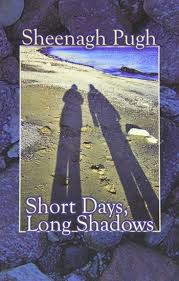
Review of Sheenagh Pugh’s ‘Short Days, Long Shadows’

Sheenagh Pugh’s Short Days, Long Shadows strongly bears the mark of her re-location in recent years from Cardiff to the Shetland Islands. There are a couple of leaving-taking pieces here with ‘How to Leave’ re-enacting the slow, even painful, notation of local details and the levels of self-deception often accompanying what looks like a partly reluctant move. ‘Ghosts of Cardiff’ more reflectively argues that it is less the “now” that proves so hard to turn away from, it is “all the thens” which, even walking down St Mary Street or through Victoria Park, remain at least as vivid as any present moment. These hauntings form just one of the many sub-sets of ‘Long Shadows’ in this collection and Pugh’s much-remarked sense of history is a further important manifestation of this too.

imgres
Victoria Park, Cardiff

But it is the northern landscapes that dominate the book, the Shetlands and Scandinavia. ‘Big Sky’ makes the scenic novelty clear when the gaze from a window meets “no branch, no office block”, but “overflows with sky”. The breadth and variety of cloudscape and the bright night’s “cluster and prickle” of stars are vividly evoked yet the individual’s humility before such a natural scene is undermined by a final line suggesting a yearning for “the way out”. There is something of this reflected in the book’s structuring where, instead of blockish sequences of related poems, individual pieces tend to bounce and ricochet off each other. Pugh’s language risks becoming a little dull but I find this quality of restlessness in her work very engaging. It is a determination not to accept limits as in ‘Living in a Snow Globe’ where a northern blizzard again concludes with a small figure “fixed in a shaking flux and unsure / where here is, or how to get out”.

imgres
View of the Shetlands

It must be just such an isolated figure who, in one of the best poems here, talks to the ocean and asks why our figures and metaphors for it – though accurate in some ways – are always inadequate: “you / swallow each likeness, each true word / and spit it out, rejected” (‘Sea’s Answer’). I’m not sure I quite follow the sea’s reply, but it seems to imply that our endless figuring is really driven by our own desire “to be like” the sea, implying perhaps our existential uncertainties, at least when confronted with the sea’s Olympian-seeming, seeming unconditional, independent life, reminding me of Whitman’s 1871 ‘Song of the Exposition’ (as used by Vaughan Williams in ‘A Sea Symphony’) where he declares the sea remains always and only “the sea itself”.

images

But such metaphysical themes are infrequent in Pugh’s work (or at least they remain well-buried) and she focuses usually on the more common personal experience. She often approaches this through historical time in, for example, a sequence on sixteenth century spies in ‘Walsingham’s Men’ and several later pieces clearly based on encounters with museum exhibits. There are also poems here about the approach (for a father?) of cancer and death, reminisces about wartime experiences and several touching poems about the author’s mother: “I shall look back at her from my seventies // before long, saying this is how it is, / the age you never reached” (‘Catching Up’). As this suggests, Pugh’s over-riding obsession is the passage of time, both in the shadows it casts back and forth and in the sense of transience implied in the phrase ‘Short Days’. ‘Wasting Time’ is a fine poem opening with the narrator watching the sea’s actions of building and destroying along the coastline. Quoting “I wasted time, and now doth time waste me” from Shakespeare’s Richard II, the poem goes beyond this, acknowledging “the one thing / you cannot do is keep it”. Here also, Pugh resists the lure of a neatly tied up conclusion, merely suggesting that the sequential linearity of time must mean that in focusing on – or even in loving and appreciating – one thing, we must be missing out on another or absently on the look-out for something better. That restlessness again.

Since she gave out the hostage to fortune that being judged “too accessible” as a poet was the best sort of compliment, there has been much discussion of Pugh’s plainness, simplicity, even her unchallenging art. It’s true there are poems here that do little more than make a few well-turned observations in plain language in skilfully handled, mostly free verse. But I think – in the face of a pretty bleak view of temporal change – the stoicism which underlies much of her thought manifests itself in lexical and formal choices as the desire to communicate truth as plainly as possible. There is surely something of this in the astutely placed opening poem, ‘Extremophile’. The title refers to those life forms which, against all the odds, manage to carve out a life in extreme conditions around hydrothermal vents, in permanently darkened caves, in Antarctic valleys. It is this determination that Pugh finds inspiring: “There is nowhere / life cannot take hold, nowhere so salt, / so cold, so acid, but some chancer / will be there”. Look at that brilliantly chosen colloquialism “chancer” to suggest the risk-taking, against-the-odds, stubborn resilience of life itself that Pugh’s human subjects more often than not also share.

images

Even so, it’s a very long way from this Hughesian Crow-like affirmation of life against the odds to another poem later in the collection which confirms that, whatever the questions over accessibility, Pugh remains a poet capable of facing up to the terrifying brevity of life. ‘The Vanishing Bishop’ is one of the museum-inspired pieces, I think, but we are taken to the moment when a coffin is unearthed and opened and news is sent to the archaeologists while the digger/narrator remains waiting, observing the corpse: “face, full lips, firm lines, / furrowed brow”. But suddenly, as the narrator sits in imagined silent dialogue with the dead bishop’s body, the air attacks the long-preserved face:

[as] when a big log

has burned so long, it’s ash

in the shape of wood, nothing

holding it together

but habit. His whole face

suddenly settled, fell in on itself,

letting go its last memory

of who he’d been.

Though uneven, Short Days, Long Shadows is a highly readable collection with perhaps half a dozen of the best poems Pugh has written and these wear their profundity so lightly that you will want to go back and re-read them to find out with what cunning, near-invisible skill they have been composed.

imgres

Forward First Collections Reviewed #4 – Andrew McMillan

This is the fourth in the series of reviews I will post over the next two months of the 5 collections chosen for the 2015 Forward Prizes Felix Dennis award for best First Collection. The £5000 prize will be decided on 28th September. The shortlist is:

Mona Arshi – Small Hands (Liverpool University Press, Pavilion Poetry) reviewed here;
Sarah Howe – Loop of Jade (Chatto & Windus); reviewed here;
Andrew McMillan – physical (Cape Poetry); reviewed here;
Matthew Siegel – Blood Work (CB Editions) reviewed here;
Karen McCarthy Woolf – An Aviary of Small Birds (Carcanet) reviewed here.

Andrew McMillan – physical (Cape Poetry); author’s website here.
Article from The Independent on Andrew McMillan here.

A man’s torso, from just below the shoulder to half-way down the rounded buttocks, tastefully lit from the back to catch the curves, his left hand visible clutching (quite hard) his own right flank. It’s sexy and lonely and longing and anonymous. It’s a bit Fifty Shades but Cape Poetry’s cover image does say something about Andrew McMillan’s first full collection, though it’s too confining. It’s the sort of sharply targeted thing marketing people come up with and the author (who is achieving cleanly-shaped, clear, bold things in terms of subject-matter and form) may squirm at.

imgres

But the image is flauntingly male (and happily the skin blemishes have not been air-brushed) and what it is to be a man is certainly one of McMillan’s concerns. In ‘strongman’ a nephew wants to be bench-pressed by the male narrator and (even from the young child) this is a clear challenge as “his mother’s lover” often does it, the boy has declared the narrator’s boyfriend “illegal” and he brings with him the freight of traditional masculine values: “his dad’s voice and jaw”. The narrator obliges “because / what is masculinity if not taking the weight // of a boy and straining it from oneself?” It’s not just the bench-press requiring careful balance here in the close masculine contact, the show of strength, the carefully maintained distance in the preposition “from”. The inculcation of traditional male values starts early as in ‘The Schoolboys’ who clamber onto a bus, all bulge and muscle and “sprints of growth”, wrestling “to impress the girls”. The poem ‘things men take’ is one of McMillan’s lists, articulating a more adult version of this: they take “the room above the ceiling / the better pay the jobs / your space at the bar”. But it’s with a poem like ‘the men are weeping in the gym’ that we begin to see this poet’s determination to challenge the status quo in its brief fantasy of male affectiveness: “their hearts have grown too big / for their chests their chests have grown too big / for their shirts [. . . ] they are crying in the toilet”. There is real humour here as the gym is turned from a place of physical exercise to a place where emotions are released and flexed, a re-definition of those traditional ideas of ‘strength’: “they don’t hear / the thousands of tiny fracturings / needed to build something stronger”.

images

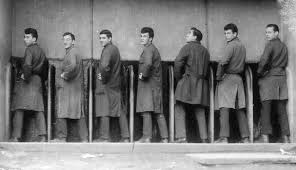
But masculinity as in what it is to be a gay man in love is even more central to physical. A definition of love emerges at the end of one poem which begins with awkward fears of (literally) bumping into men in a urinal, causing spillage, splash, a turning, the revelation: “neither of us will look / or he’ll look at me avoiding looking / feigning interest in the hard cream tiles”. This is funny again though halfway through the bluntly titled ‘urination’, McMillan considers the privacy and intimacy of “the toilet”, the poem lifting into praise of waking to hear (and smell) a lover pissing “the morning’s pale yellow loss” into the toilet “and take the whole of him in your hand / and feel the water moving through him”. Such intimacy of contact is one of the provisional definitions of love: “the prone flesh / what we expel from the body and what we let inside”. Poems that explore the physicality of the male body make this book remarkable, even given McMillan’s acknowledged debt to Thom Gunn. Much after the pattern of ‘urination’, ‘yoga’ begins with the physical stretching and breathing of the class, but shades seamlessly into a love-making which echoes the breath, control, weightlessness and absence of “judgement” in the discipline of yoga. ‘Saturday night’ takes lines from Gunn’s poem of that name this time to explore a more roaming, disjointed experience of love and sexuality. The rule of ‘Boss Cupid’ is no more reliable than in the straight world, of course, and McMillan gives us other images of sleeping with “Thom night after night / open at the spine”, rather than any flesh and blood lover. And ‘screen’ imagines how even a gay porn star, so perfect and capable on screen, in real life “without direction” struggles to express himself, “stopping mid kiss pulling back mumbling”.

imgres

As my quotes suggest, McMillan abandons most punctuation in these poems, using only line and stanza breaks and long spaces to create pauses and some sense of syntactical form. This works well – it doesn’t for me interrupt or confuse at all – and contributes to the often passionate flow of the poems. It’s hard to convey this in short quotes but ‘choke’, running for just 22 lines, takes us rapidly through a relationship break up, weeping, talking, loving and next day reflections, managing to evoke the agitation, fluidity of feelings, and final resolve “to tough it out” and the lack of pointing is part of this success. Elsewhere, the flow and even blurring achieved syntactically is just right for the loss of self-consciousness associated with sexual pleasure.

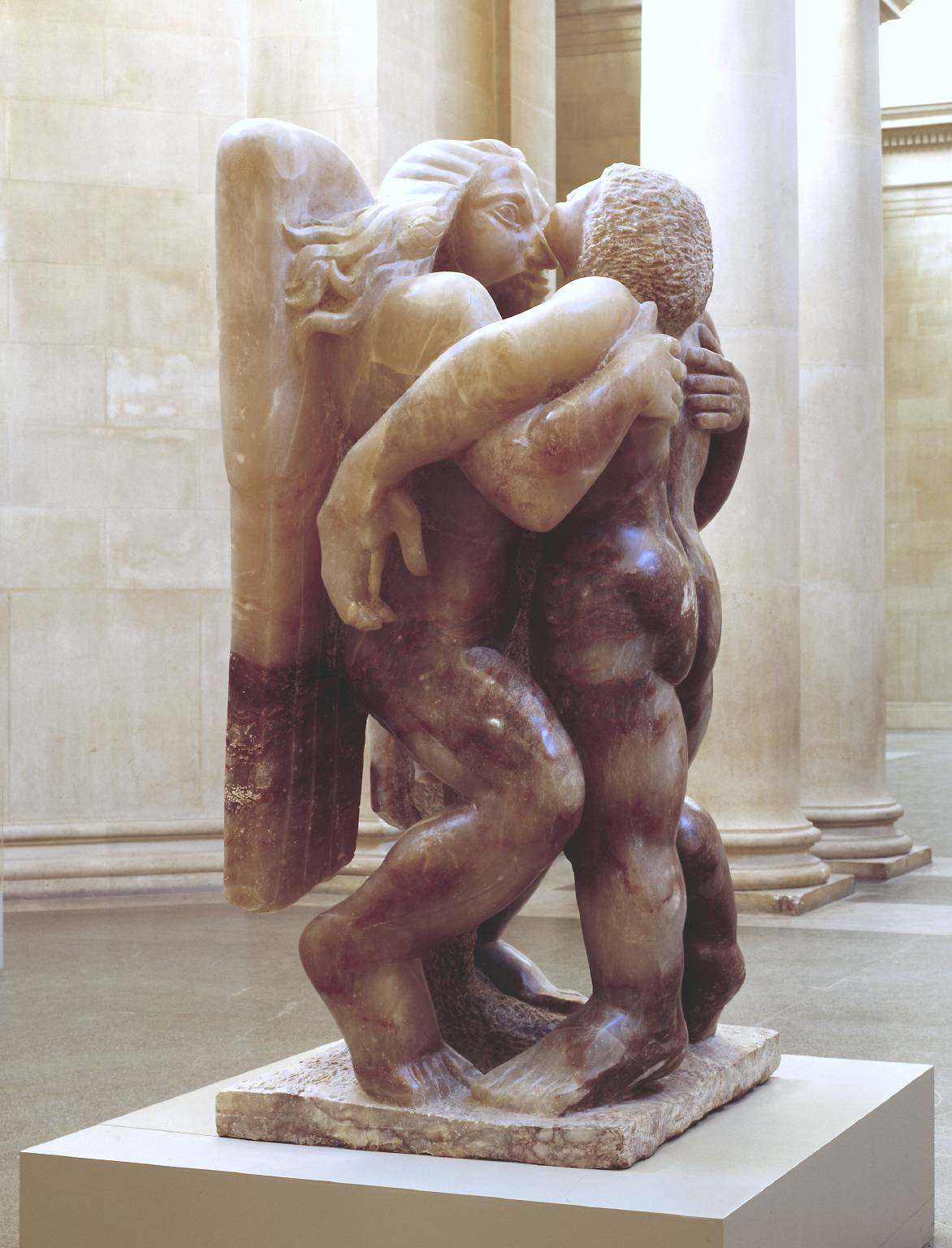
Jacob and the Angel - Epstein
Jacob and the Angel – Jacob Epstein

What is interesting is that beside the passionate and “carnal” (Michael Symmons Roberts) nature of much of this book and alongside Thom Gunn as mentor and role model, McMillan also name-checks C.S. Lewis’ Mere Christianity. The opening poem of the book portrays gay sexuality with Jacob wrestling the angel and I’ve mentioned the paralleling in ‘yoga’ and those beefy men crying in the gym are said to have “God” entering them as they weep. Furthermore, ‘revelations’ argues that each subsequent love is only a searching for the first, “in the manner of the humble saints who make / the worship of a nameless god relatable”. Each lover is renamed, Saint Gavin Saint Ged Saint Unknown / of Manchester Bedsit”. Humour is used here but it hardly disguises the poet’s interest in the more spiritual implications of the physicality his poems work so hard to evoke. This religious sensibility emerges in the brief foray, moving from Eros towards Thanatos, in poems in the third part of the book. The deaths of a grandfather and a young girl strike a very different note and suggest that McMillan may have found in Gunn not merely ways to explore his own sexuality in verse but also (from early Gunn) that existential sense, so wonderfully expressed in ‘On the Move’ (1957), that movement (whether on a motor bike or in bed) is at least one way towards self-definition: “astride the created will / They burst away [. . . ] Reaching no absolute in which to rest, / One is always nearer by not keeping still”.

imgres
Thom Gunn

There is something of this in the final poem of physical. Ironically titled ‘finally’, it evokes a new morning in “the xylophone / of sunthroughblinds”, but the lover is gone, not to return and the poet is like the birds who, though it hasn’t rained, pretend that it has, so “they can sing”. Earlier, the longer sequence ‘protest of the physical’ noted “there is beauty in the ordinary” but this is a pallid observation in contrast to this poet’s determination towards self-definition through loving, through singing when the loving is over.

In a collection full of humour and sadness alongside the plain-spoken eroticism, I really like what McMillan is doing with the fluidity of his form. I don’t think the longer sequence ‘protest of the physical’ is as good as the other sections of the book (I believe it preceded them in terms of date written) but here is a really talented and bold writer and I can see further areas of exploration opening up and it will be exciting to follow him there.

237946238_ca1d002403_b

How to Write a (Poetry) Blog

A provocative blog title perhaps but hard to resist sometimes – see point 2.18 later – but this is less generally instructional and more a prompt to self-reflection. Amazingly, it is a year this week since I started this blog. Never the same river twice, of course, but I thought it right to post a few reflections on how it’s gone so far. My intentions, changes, thoughts on and lessons learned – plus nine bits of Blog Wisdom picked up along the way.

imgres


  1. My original intentions

1.1  I always enjoy critical writing but chafe sometimes against waiting to be asked to review or the choice of review books I have been given, or word limits. My own place where I could be editor and reviewer seemed very attractive

1.2  I wanted to become familiar with the idea, techniques and impact of blogging as this seemed a form of cultural contribution that was of growing importance and I didn’t want to feel wholly left behind

1.3  I could pick out three vaguely-defined areas of blogging possibilities for myself: poetry, teaching, translation

1.4  I had been reviewing poetry books and writing about poetry writing for years in a variety of paper magazines prior to starting the blog. Part of my intention was to be able to post up some of these older pieces (where I still thought them relevant and worthwhile) so that they would be searchable on the web, hopefully preserving their lifetime

1.5  I can’t remember how I came across the WordPress system – probably by chance, or perhaps via another’s blog – but it seemed so user friendly that I thought even I might manage it (I’d had a few false starts trying to create a web page)

1.6  I understood intuitively and then found it out there as Blog Wisdom that regular posting is important and I set myself the task of a weekly post.

images

1.7  I was anxious before I got started about whether I would find things to write about on a weekly basis – I sort of hoped it would acquire a momentum of its own

1.8  I never intended the blog to be very personally revealing (though this is advised in the Blog Wisdom) – this was to be a place where I might discuss the art of poetry (and teaching literature and issues of translation) with myself and in the hope of drawing a response from others

1.9  On the other hand, I’d also been writing sections of autobiographical material in recent years and I vaguely  thought I might be able to post this up in experimental posts – something I was not likely to be asked to do by the usual journals and magazines

1.10  I thought the blog would contribute to my self-promotion – after all a writer is supposed to actually sell booksimages

  1. How the year unfolded

2.1  Having begun very tentatively with WordPress, it quickly became clear that I could easily create a full website using its simple tools – not merely a blogging site

2.2  I’d not been much of a blog follower before starting my own – since then I have enjoyed following others and not merely as a means of spying on the competition (though of course it’s not a competition)

imgres

2.3  I figured out how to tag posts to make the site more searchable by Google etc (the Blog Wisdom seems to be that no more than a dozen tags should be used – beyond that they become less effective – still a bit foggy on this)

2.4  I also figured how to Tweet a link to the blog posting and link to FaceBook and other blog sharing sites (also still a work in progress)

2.5  I had problems preserving stanza breaks as the WordPress system seemed to collapse everything down to standard line break widths once posted. Thank you, Josephine Corcoran for helping out with this one.

2.6  I have really enjoyed choosing a variety of images to decorate the blogs – and captioning some of them (once I’d worked out how to make a caption)

2.7  The Blog Wisdom has it that the more active you are on others’ blogs (liking and commenting etc) the more likely you are to get traffic back. I’m sure this is true and I’m sure I don’t do it enough. This could be a full time job in itself but I’m sure it would reap benefits if I did it

images

2.8  I thought I would post some of my own poems on the blog but in fact have not done much of this at all – these days the definition of ‘publication’ often includes even a personal blog and that may not be the best place for work to appear first. On a few occasions I’ve posted up already published work

2.9  The Blog Wisdom has it that embarking on a series of related posts is a good idea assuming that you might gather up an audience on the way, create expectations etc. I’ve had a go at this a couple of times. Jury’s out on this one

2.10  Fairly early on in the year I had the idea of recording briefly my own reading (mostly poetry related texts) and set up the What Have I Mostly Been Reading page. I’m updating this roughly every month and it has proved a page that people visit quite often. There is a temptation to make my brief comments less brief

2.11  I realised that what I was doing with the blog was journalism. Pretty obvious to most but it struck me forcibly as a different sort of writing with its own rules and I rather enjoyed the frequent deadlines

2.12  I also tried reviewing live poetry events that I attended and these seem to have proved quite popular – certainly there is not much of this sort of reviewing around and it’s good to record these ephemeral occasions in some way

Poetry-182-150x150[1]

2.13  The Blog Wisdom has it that blogs develop any kind of following slowly and that is true enough. But when even a few comments and likes start coming in there is a surprisingly immediate sense of a community. WordPress provides statistical analysis of visitors and views on a blog site and these also give some sense that what you are writing is not being wholly ignored (but see dangers later . . . )

2.14  The Blog Wisdom also has it that to associate posts with specific events, times of year, cultural events, prizes, other publications etc is a good thing. I’ve tried to do this with live event reviews, prize lists, magazine publications, book publications

2.15  As the year has gone on I have sadly found less room for blogging about the teaching of literature – largely because (as it turned out) I had plenty of pressing ideas in the other two areas of poetry and translation. I regret this

2.16  As the year has gone on, I’ve been more drawn than I expected towards reviewing new collections of poetry. I’m not sure about the wisdom of this, though it has proved quite popular

2.17  I posted one week on How Do You Judge a Poem which proved very popular and it struck me (as it has struck many publishers) that offering (or seeming to offer) instruction was a way of courting more hits

2.18  I see dangers (as 2.17 suggests) in the temptation to court more hits by naming blogs provocatively, like a journalistic headline or an advertiser. Blog Wisdom suggests this is exactly what one should be doing but I don’t feel comfortable with this

2.19  I see dangers also in the temptation to be wilfully controversial as Blog Wisdom also suggests one should be. But I don’t want to write a tabloid blog

images

2.20  I see dangers in getting obsessed by checking the blog stats several times a day. It’s like checking emails or phones in the same way. As someone once said, this is like opening the front door every few minutes to check whether the postman is coming. Get on with life

2.21  I see dangers of my life being taken over by blog writing and planning what to write. Rilke warned against critical writing of any kind sapping one’s strength and time for real creativity. Was he ever tempted to write a blog?

imgres

Forward First Collections Reviewed – #2 Karen McCarthy Woolf

This is the second in a series of reviews I will post over the next two months of the 5 collections chosen for the 2015 Forward Prizes Felix Dennis award for best First Collection. The £5000 prize will be decided on 28th September. The shortlist is:

Mona Arshi – Small Hands (Liverpool University Press, Pavilion Poetry) reviewed here;
Sarah Howe – Loop of Jade (Chatto & Windus); reviewed here;
Andrew McMillan – physical (Cape Poetry); reviewed here;
Matthew Siegel – Blood Work (CB Editions) reviewed here;
Karen McCarthy Woolf – An Aviary of Small Birds (Carcanet) reviewed here.

*

Karen McCarthy Woolf – An Aviary of Small Birds (Carcanet/Oxford Poets): Woolf’s website.

imgres

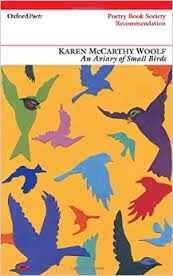
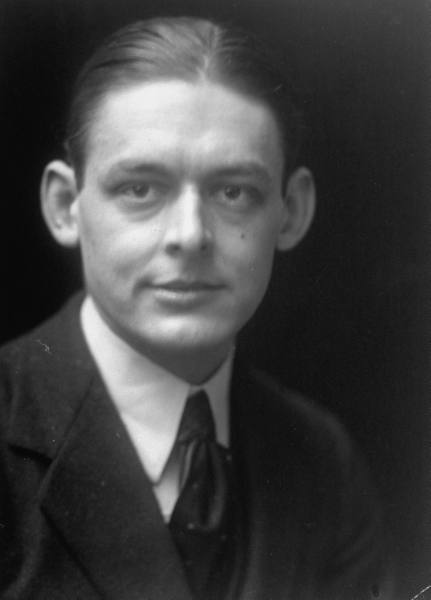
Carcanet’s colourful cover image of fluttering songbirds belies the terrific freight of grief that this book carries. The poems are presented as highly autobiographical and there are actually three deaths involved: that of a friend from cancer, a mother-in-law, and the central focus is the stillbirth of the author’s son in August 2009. The very personal nature of the materials makes critical discussion difficult but, in reading the poems, I found myself thinking of T S Eliot’s observations about what he regarded as the failure of Hamlet. This is the 1919 essay in which Eliot proposes his idea of the objective correlative, “a set of objects, a situation, a chain of events which shall be the formula of [a] particular emotion”. The emotion is re-evoked in the reader when the objective correlative is supplied by the writer. But Eliot argues Shakespeare could never quite unearth or disentangle the true emotions which he hoped would empower the play’s chain of events of a father’s untimely death and a mother’s remarriage.

tseliot_03

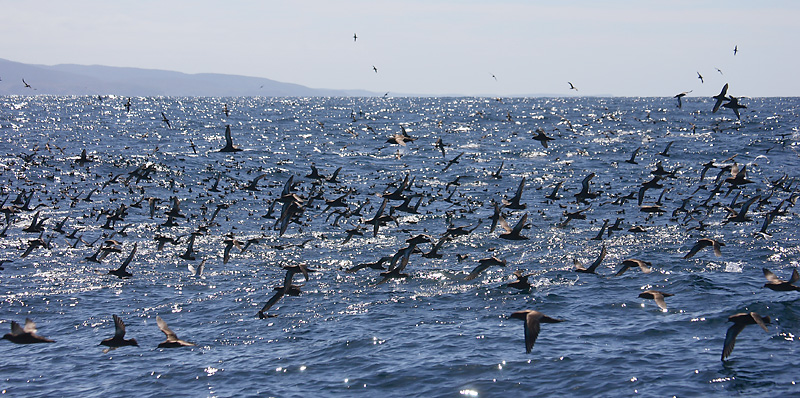
McCarthy Woolf’s book suggests something quite the opposite in that the specific emotions and key events of the child’s death always form the underlying premise on which every single one of these poems runs. This is both a strength and a weakness. The problem can be seen in ‘The Sooty Shearwaters’ which plainly describes the birds heading out to sea to feed. Their return at night time is aided by the switching off of TVs and streetlamps so the birds can “navigate by starlight / to find their young”. The birds’ cry is unique we are told; DJs come to sample it. But what the poem gives us is a chain of events, an objective correlative, which fails to evoke a strong response unless and until the reader brings to the poem the prior knowledge of the stillborn child’s loss. Only when plugged into that does the shearwaters’ determined, instinctive return to their young (and the island population’s touching assistance to that end), really gain force.

76557098.meqOaT2U.000sootyOZ9W1835

Also, as an exploration of the experience of grief, the book faces inevitable limitations because of the nature of the loss. There are several poems set in the acute moments surrounding the stillbirth and immediately afterwards but the majority are set sometime later (the book was six years in the making). Poems are arranged in a broadly chronological fashion and in an interesting reflection of the way a reader must keep in mind the premise of the original loss, many of the poems record the mother’s inability to move on from that same loss so that she, and the world around her, is repeatedly haunted by it. There are powerful moments here to be sure but no broadening religious dimension (Tennyson’s In Memoriam), no political thread (Tony Harrison’s The School of Eloquence), nor can there be any development (other than speculatively) about the nature of the lost one as in Hardy’s 1912 poems, Douglas Dunn’s Elegies, Anne Carson’s Nox, or Rilke’s Requiem for a Friend. The utterly tragic nature of the child’s loss in still birth imposes its own limits on the artistic response.

Nevertheless, An Aviary of Small Birds is admirably experimental in formal terms, some successful, others reading (surprisingly) like exercises carried out. For example, ‘The Museum of Best Laid Plans’ is a prose listing of the items on a bedside shelving unit, ending with a lock of infant hair. In contrast, ‘Morbleu’ takes us into the panic-stricken, semi-chaos of the delivery room, which is frighteningly conveyed through typographical layout and spacing: “ – we haven’t got – / a heart beat”. These are examples of the poems that stand up well independently, communicating fully to any reader whether in the context of this intensely-focused collection or not. Some of the best and most moving of other pieces take a markedly tangential approach to the tragic circumstances (perhaps the only way to approach such a grief). So ‘The Paperwork’ focuses on filling in a post-mortem form and makes powerful use of the tone and language of formality and administration so that one of the last options to be considered acquires, by contrast, even greater emotional weight: “Eyes not to be touched. / The doctor bites her lip, writes it in the box”. ‘The Registrar’s Office’ also manages to contain and convey its grief through indirectness as the bereaved mother, in a lightly punctuated flow and flurry of words, unburdens herself to the Registrar, but ends being more concerned about the windowless room in which the woman works. This illogical transference of the mother’s grief to a separate object is clear and credible and powerfully communicated to the reader.

imgres

What the book does not offer in a sustained fashion is a more forensic analysis of grief, its impact and evolution; it says mainly that grief does not go away. ‘Where Steel Clatters’ is a strong poem describing a threatening-seeming landscape of whining saws, bullet holes, “a burnt-out Renault” – but the bereaved mother is unmoved by it, having learned that “the worst things happen in brash, / fluorescent rooms where steel clatters / and silence is the total absence of movement”. ‘Starlight’ is a curbed, curtailed, halting poem – as if it were weighed down by grief – expressing more directly the desire to be “away / from the gurney // and the empty metal cot”. It is perhaps through experiences with the natural world that some sort of consolation begins to be felt. ‘The Calf’ is set off the Canary Islands and makes untypical but important use of the islanders mythic belief that “the animal you need // always comes to you”. What the bereaved mother wants is to swim with a pilot whale calf, though this is “against the law”. There is a sighting from a boat: “then he’s gone // down into the dark. / Something is better than nothing.” In fact, the poem, which has surely ended here, goes on for another four lines (over a page break) and there are a few other moments where a final edit might have been considered.

pilot-1

McCarthy Woolf has great empathy with the many animals in her poems and not only concerning the bird motif that runs through the collection. A dead hawk lying in a stream provides some “comfort” in a godless and faithless age; the “return to water, to the stream, to the earth” suggests some sort of cycle of life thing. And this is one of the most moving aspects of these poems of contemporary grief – the signal lack of outlets or rituals that might serve as ways of dealing with the loss. Latterly, rivers are imagined as speaking of the need to “endure” and the title poem itself redeploys the image of the lost child as a small bird in an aviary. The instinct of the natural creature, its need to be let go, is what teaches right action to the atomised, isolated, faithless individual of the mother in this book: though there is precious little evidence of moving on to be found in the collection, there is a realisation that it will be achieved only when the mother learns “to leave the door ajar”.

So: critical comment feels inappropriate at times with this book but it is presented to the reader as a poetry collection not a memoir. There is, throughout, a reaching for poetic variety not wholly matched by a variety of perspectives on the fundamental grief portrayed. There are several very powerful poems which I admire as technical achievements (given the powerful emotions from which they are derived, I don’t mean that as faint praise). But there are also a few make-weight pieces. McCarthy Woolf, whose book runs to only 63 pages, might, even so, have learned from the ultra-brevity and resultingly intense focus and consistency of a book like Colette Bryce’s The Whole and Rain-domed Universe (Picador), which weighed in last year at just 49 pages.

Poems, Swerve and Alan Brownjohn’s Sky Blue Trousers

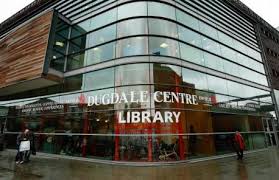
Life should be full of swerve is what I have been thinking recently. It’s how I prefer my days to unfold and certainly one of the main reasons why I value poetry. In dipping and swooping from this to that, swerve serves to exercise our capacities in terms of tension, torque, balance and force. I’m talking emotionally and psychological here, of course, though last Saturday evening did find me doing swerving obeisance to the sat nav woman as I drove up to the Dugdale Centre in Enfield, north London.

imgres

It had also been a pretty swervy week in the more serious sense too. My brother and I have been emailing trying to organise a Lasting Power of Attorney in regard to our nonagenarian parents, alongside my daughter’s final events in the Sixth Form, filled with promise and talented and beautiful friends. A liking for swerve also accounts for why I have always loved that moment in The Winter’s Tale when the Old Shepherd talks of meeting both things dying and things new-born.

As it’s also the end of my teaching year, the week had also been spent revising what I think of these days (thanks for nothing Sam Riviere) as my ‘81 Laozis’: my new versions of the 81 chapters of Laozi’s Daodejing which Enitharmon will be publishing next Spring. There’s a good deal of swerve in the poems’ urging towards openness, flexibility, sense of balance:

[to be] circumspect as a man

who crosses a stream in winter

watchful and alert to danger on all sides

respectful as on a first visit

yielding like ice when the thaw sets in

blank as a piece of uncarved wood

receptive as a valley cut through hills

I think of what the Daodejing proposes as the exact opposite of the (too much blood-stained) rigidities of fundamentalism. As I said, this is why I love poetry’s ability to swerve quickly, often without transition, from one thing to another, one emotion or image to another. And so, I was off to Enfield where Alan Murray runs the meetings of Enfield poets at the unprepossessing Dugdale Centre which – as its name might suggest – contains a Lidl store, an Argos store, a multistory car park and a theatre and arts complex. The readings on Saturday took place in a municipal box within a municipal box but even that didn’t spoil the event (poetry does make something happen when it’s read and shared like this).

imgres

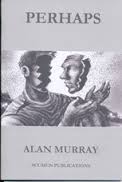
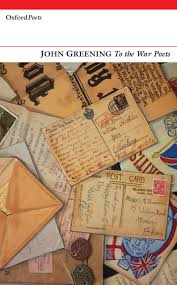
Alan (whose thoughtful book Perhaps was published by Acumen in 2013) introduced floor readers then handed over to Patricia Oxley as the three main poets were Acumen magazine related. John Greening first, whose quiet, measured delivery belies the time he has spent teaching literature to classes of schoolchildren. Dressed in chinos and pale shirt (yes, I’m doing the fashion notes too this time), I grudgingly admit (being a teacher myself) that he looked like a teacher, suggesting nothing of the real powerhouse of writing, editing, anthologising, reviewing and social-medi-ing that Greening is beneath that mild Clark Kent exterior. Born and raised in Hounslow he read ‘Heath Row’ from To the War Poets.

images

Topical, given the recent scandalous report suggesting a third runway to plague the poor citizens of west London, the poem reverses time’s arrow, unearthing what lies beneath tarmac and terminals, back to the original heath and bog, to sarsen stones and druidic rites, back further to a time when “the earth shudders, floods, howls, ignites”. His most recent book is threaded with addresses to the First World War poets and each short poem cunningly, often wittily, says something about the work of each. ‘To Edward Thomas’ notes: “You died at an observation post. / You looked and looked, and saw the detail / we do not”. Greening has also just published a major anthology, Accompanied Voices, with one of the world’s great music-publishing companies, Boydell Press. He read his own ‘Field’ from it, about poor John Field (inventor of the Nocturne) and the artistic irony that it was Chopin who superceded him, or as the poem puts it with all the brutality of the historical process, he “walked all over him”.

imgres

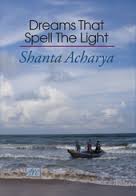
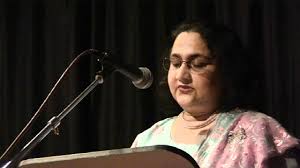
Shanta Acharya’s poems often record the phenomena of the natural world in part for themselves but also, as (her DPhil subject) Emerson suggests, because they can be read as the language of the “Universal Being”. Set in the artistic beauty of a Catholic church, the opening lines of ‘Italian Prayer’ ask: “How does one accustomed to the cold candour of stones / bend one’s knee in reverence”. Acharya’s work is, as Mimi Khalvati has said, “unafraid to take on the abstract, metaphysical, spiritual”. Dressed in an exquisite ivory-cream shalwar-kameez she also read the poem ‘Somewhere, Something’ from Dreams That Spell The Light (Arc Publications, 2010) that argues we do not travel “to explore another country / but to return home fresh, bearing gifts”. In fact, these gifts are for the self because all true experiences – thus discounting those of the ‘mere’ tourist – inevitably change us. The poem concludes, “Let’s fly free, not nailed to a mast; / see the universe with new eyes / not blinded by shadows that light casts”.

images

She also spoke of the Sanskrit phrase ‘neti neti’ (the title of an earlier collection) meaning ‘not this, not that’ as a definition of God or spiritual experience. This provoked a later discussion on the link between this idea and Laozi’s Daoist ideas, then The Cloud of Unknowing, followed by the writings of Julian of Norwich. Good swerves all. Lidl and Argos were well closed by this time of night.

imgres

My maternal grandmother would look sceptically up to a cloudy sky on occasions and make a meteorological call on the basis of whether or not there was enough blue sky to make a man’s pair of trousers. Well, those very trousers were being worn by Alan Brownjohn last Saturday evening, teamed with an unthreatening-cloud-coloured pale shirt. Brownjohn’s delivery is also very quiet, words seeming to emerge more from the side of his mouth, confirming that his tongue is often firmly in his cheek, doing deconstruction and the humour of post-modern irony before it was called such. Yet he manages to load poems with a weight of emotion too; he burns away sentiment, but still moves his readers.

Alan Brownjohn more formally attired

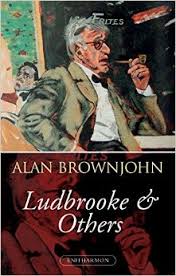
I was pleased he read several of the Ludbrooke & Others poems, 13 line sonnets for our austere age and an anti-hero-loser who nevertheless somehow gets our sympathy. Ludbrooke boasts of his “transformative” love-making in ‘His Classic Modesty’ (he persuades us it “is like the Acropolis”). In ‘His Jealousy’ he wants to persuade us (and himself, of course) that he has “deconstructed” and “junked” that emotion, only to feel the full force of it around line 12 to 13. We recognise a commonality at the same time as being allowed the space to imagine ourselves better than Ludbrooke. See the setting, re-setting, re-positioning of the powerful swerve going on there? That feeling you get after vigourous physical exercise of being stronger, more balanced, more capable? Poetry makes that happen to your heart – the figurative one.

imgres