Remembering Blue Nose Poetry events in London

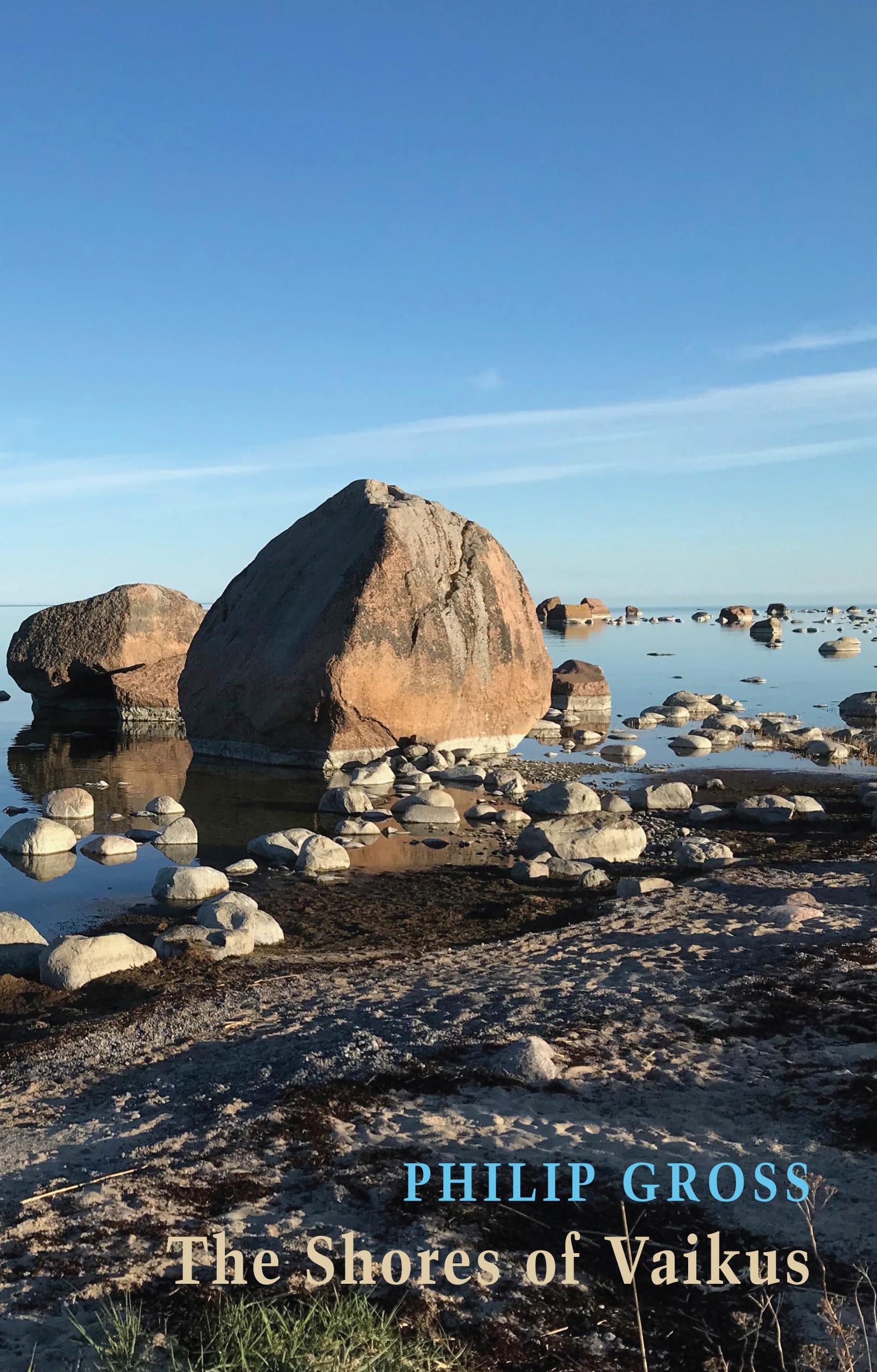
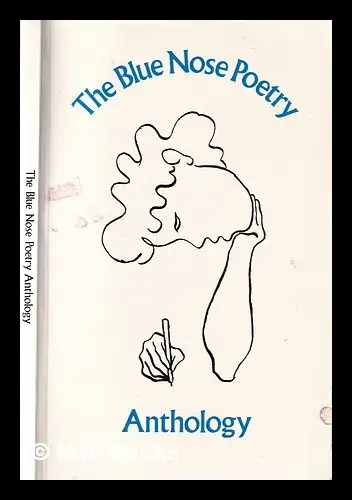
I recently attended the launch of Philip Gross’ new collection, The Shores of Vaikus (Bloodaxe Books, 2024) at the Estonian Embassy (the poems and prose pieces in the book refer to Gross’ father’s Estonian heritage and the poet’s visits to that country). I’ve followed his poetry since Faber published The Ice Factory in 1984. Neither of us could recall when we’d last met up but, after the event, I remembered that Philip was one of the first poets to read at the series of poetry readings (and associated workshops) I helped curate in the late 1980s/early 1990s, the Blue Nose Poetry series in London. I introduced him on the occasion (I still have the notes I made for the event in a Notebook for Spring 1989). I checked out the precise date in The Blue Nose Poetry Anthology (1993) which has sat on my shelves for many years now. The Blue Nose Poets (for personnel see below) invited all those who had read in the series to submit work and it strikes me now that it would be a shame if a record of our endeavours over a number of years was lost to sight completely. So, I’m posting here the Introduction to the Anthology and the full list of readers who appeared (often being paid nothing or a mere pittance) between 1989 and 1993. Interesting? I think so – given we hosted the likes of Dannie Abse, Patience Agbabi, Moniza Alvi, Simon Armitage, James Berry, Robert Creeley, Fred D’Aguiar, Michael Donaghy, Carol Ann Duffy, Michael Horowitz, Jackie Kay, Adrian Mitchell, Peter Porter, Peter Reading, Michèle Roberts, Ken Smith, and many more.

Introduction to The Blue Nose Poetry Anthology
This anthology celebrates four years of Blue Nose Poetry in London. Its beginnings can be traced back to 1988, when Sue Hubbard advertised for members to join a small poetry workshop at her house in Highbury. Amongst others who began meeting regularly were the four founder members of the Blue Nose: Sue, Martyn Crucefix, Mick Kinshott and Denis Timm. At that time, poetry readings in London seemed to be in the doldrums. Uninviting rooms and draughty halls with chairs in impersonal ranks were often depressingly matched by poor organisation. The Blue Nose Poetry activities were set up with the express intention of providing workshops and readings in a friendly, accessible and organised atmosphere for new voices, up and coming writers and the already established. We were convinced that a cabaret setting of tables, candles and a drink with other enthusiasts could make poetry enjoyable. It was only with the discovery of The Blue Nose Cafe in Mountgrove Road, close to Highbury Stadium, that we found a name for the project and the real success of the Blue Nose began.

Our first poets came to the Cafe and read out of the goodness of their hearts. We thank them all once again. The first event with Michèle Roberts was packed and exceeded our wildest expectations. Within the course of one evening we had proved that exciting contemporary poetry could be presented really successfully. Soon, in response to Blue Nose’s track record of commitment and quality, GLA (later LAB) and Islington Borough agreed to support the project. Since then, there have been various changes. Mick Kinshott felt unable to continue as an organiser in 1990 and his commitment and humour was a great loss. His place was taken for two years by Bruce Barnes, whose knowledge of the poetry and arts funding world in London proved invaluable to the development of the project. More recently, Mimi Khalvati and Mario Petrucci have joined the three original members. In the middle of the Spring 1991 season, the Cafe where we held the events went into liquidation and a reading by Tom Pickard and Rosemary Norman sadly had to be called off. Regular events did not begin again until May 1991, when we moved into the more accessible, roomy and centrally located Market Tavern in Islington. Despite the many advantages of this new venue, there are a few who still regret the passing of the old Café which, though tiny, disorganised and terminally broke, did have a superb atmosphere for poetry.

In an appendix to this anthology, we list all the readers who have appeared at the venue/s – a genuinely comprehensive survey of poetry in recent years. This, of course, does not include the many poets who have had the opportunity to read from the floor at Blue Nose events. More importantly, this book contains no record of the hundreds and hundreds of people who have enjoyed and supported Blue Nose Poetry. This book is dedicated to them.

Martyn Crucefix / Sue Hubbard / Mimi Khalvati / Mario Petrucci / Denis Timm

Full List of Main/Support Readers for Blue Nose Poetry Seasons 1989 – 1993

March – July 1989

Michèle Roberts read with Martyn Crucefix; Philip Gross read with Sue Hubbard; Jeremy Silver read with Mick Kinshott; Jo Shapcott read with Denis Timm; Leo Aylen read with Gerda Mayer; Alison Fell read with Hume Cronyn; The Blue Nose Poets; Carole Satyamurti read with Barbara Zanditon; Michael Donaghy read with Rupert Slade; Adam Thorpe read with Al Celestine.
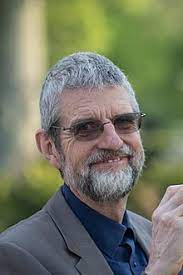
Philip Gross

September – December 1989

Ken Smith read with Mimi Khalvati; Anna Adams and Julian May; Gerda Mayer read with Chris Powici; The Blue Nose Poets; The Performing Oscars; Maura Dooley read with Sara Boyes; Fred D’Aguiar read with Matt Caley; Matthew Sweeney read with Hilary Davies.

January – April 1990

Fleur Adcock read with John Harvey; Dannie Abse read with Myra Schneider; Elaine Randell read with Frances Presley; Hugo Williams read with Keith Spencer; Pitika Ntuli read with Bruce Barnes; John Cotton read with Bridget Bard; Michele Roberts read with Peter Daniels.
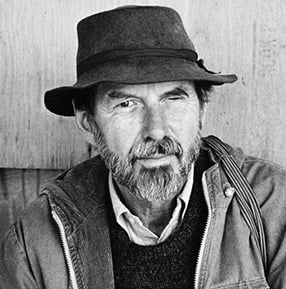
Robert Creeley

May – July 1990

The Blue Nose Poets; Sarah Maguire read with Vicki Feaver; Jeni Couzyn read with W N Herbert; James Berry read with Susan McGarry; Simon Armitage read with Chris Gutkind; E A Markham read with Mimi Khalvati; Brian Patten.

September – December 1990

In the Gold of Flesh anthology with Valerie Sinason, Dinah Livingstone, Pascal Petit, Jenny Vuglar; George Szirtes read with Gabriel Chanan; Kit Wright read with Candice Lange; The Blue Nose Poets; Michael Horovitz read with Raggy Farmer; Patience Agbabi and Judi Benson; Jenako Arts Writers; Carol Ann Duffy read with Steve Griffiths.

January – March 1991

Judith Kazantzis read with Mario Petrucci; Robert Creeley read with Mick Kinshott; Jackie Kay read with the Speech Painters; Peter Forbes and Eva Salzman; [Blue Nose Cafe in Highbury suddenly closes]; Lemn Sissay read with Adam Acidophilus.

May – July 1991

Peter Porter read with Elizabeth Garrett; The Blue Nose Poets; Carole Satyamurti read with Leon Cych; Peter Scupham read with Lucien Jenkins; Leo Aylen read with Rosemary Norman.

October – December 1991

Sylvia Kantaris read with Andrew Jordan; Gillian Allnutt read with Helen Kidd; Alan Jenkins read with Eric Heretic; Sean Street and Hubert Moore; Lee Harwood and Richard Cadell; Xmas Party – Tony Maude, Speech Painters and music from Dean Carter.

January – April 1992

Adrian Mitchell; David Constantine read with Tim Gallagher; David Morley with Martyn Crucefix; Sue Stewart read with Bruce Barnes; Glyn Maxwell read with Sue Hubbard; Peter Abbs read with Nicky Rice.
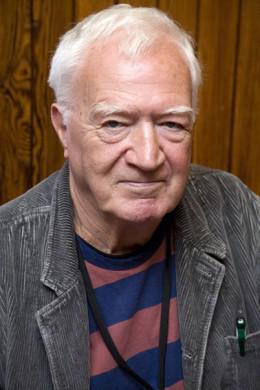
Adrian Mitchell

May – July 1992

Jo Shapcott read with Mick Kinshott; Bobbie Louise Hawkins read with Robert Sheppard; Birdyak – Bob Cobbing and Hugh Metcalfe; Colin Rowbotham read with Richard Tyrrell; Ken Smith read with Eric Heretic.

October – December 1992

Connie Bensley and Felicity Napier; The Poetry Show at Rebecca Hossack Gallery; Donald Atkinson read with Jane Duran; Ruth Fainlight read with Moniza Alvi.

January – April 1993

Peter Reading read with Briar Wood; Ruth Valentine; Myra Schneider read with Mario Petrucci; Carol Rumens read with Daphne Rock.

Impressions of the TS Eliot Prize Readings 2025

I’ve always enjoyed Ladybird spotting the ways poets present themselves in a reading situation. Last night’s TS Eliot prize readings at the Festival Hall was a grand opportunity for such a pursuit. Ten readers in a row. Here are a few jotted down impressions, gleaned from the on-line version of the show. Before you crucify me for such poor, ill-informed critical judgements, I do hereby declare I have only thoroughly read two of the contenders, so these are very much impressions of ‘what happened on the night’. I’ll leave mentioning my favourite and my predicted winner (not the same poet) to the end. The award will be announced this evening (Monday 13th January 2025).

The housekeeping…. This year, the shortlist was chosen by judges Mimi Khalvati (Chair), Hannah Sullivan and Anthony Joseph. The TS Eliot Prize (it says on their website) is among the world’s most celebrated awards. Inaugurated in 1993 to celebrate the Poetry Book Society’s 40th birthday and to honour its founding poet, the prize is now awarded by the TS Eliot Foundation. The evening was introduced by Ian McMillan.

In the order the shortlist for this year’s prize was presented last night:

Katrina Porteous Rhizodont (Bloodaxe Books) – KP was described as a northern lighthouse by Ian McMillan – finding the universal in the local – the north east of England – Holy Island – this is poetry full of its concrete ‘subject’ – details and actuality, a powerful wish to communicate (the book is full of explanatory Notes) – here, the coal beginning (to be formed) again – Our Billie – a local girl, forms the backbone of one poem  – some unfortunate ‘down with the kids’ moments, referencing Insta and emojis – KP reads in a bobbing, fidgeting sort of way – does stillness evoke more power? – ‘The children STARE at their phones’ – particular words picked out for heavy emphasis – a bit over insistent on their significance – a robot explores the moon surface now – an interest in new technology – but then, the Antarctic without ice – the book title, rhizodont, is a fish transitioning onto land a very long time ago – the delivery here surely too mimetic – snarly, is that how a fish sounds? But passionately held views without a doubt.

Rachel Mann Eleanor Among the Saints (Carcanet Press) – McMillan suggested that Mann takes up liturgical language and re-invents it (for a modern audience?) – Eleanor the central figure is a trans woman of the 14th century – at one point she’s in conversation with Julian of Norwich and Margery Kemp, so lots of hazelnut references – but thank goodness I didn’t hear ‘all shall be well’ – the delivery a slow emphatic one, I actually wrote ‘from the pulpit’ before I noticed (I think) the dog collar – am I right? – lots of first person voice going on here – often in an ecstatic (religious) mode, a few grand arm gestures – the language often moving towards Hopkins (why not?) – masculinity? –embroidering a priest, sanctus, sanctus, then love – the murdering of a trans girl, drawing a bead on contemporary relevance – in 1394 Eleanor was arrested – the dark shades worn by RM curiously out of keeping with the verse lines.

Carl Phillips Scattered Snows, to the North (Carcanet Press) – from the US –‘quiet’ being the word here – rather sweetly alluded to his sponsors for the evening – Lemsip – welcome to England – the lines being read in the cadence of a breath, a dying fall – suggestive here of an interior communion, very delicate, exploration of an emotional life – McMillan suggested this is where time and intimacy meet – what do they say to each other I wonder? – a taking off of  clothes – then he also takes his clothes off – colours and a bell – a concern (as technique and subject matter) for precision, for what is true? (how unfashionable in the US) – snows in the title poem, Phillips manages to take us to Roman history and love without us getting lost along the way – quietly persuasive and good company – a forest journey – things almost said – a vulnerability to this writer (someone else posted this idea) I’ll borrow it.

Gustav Parker Hibbett High Jump as Icarus Story (Banshee Press) – opening with allusions to Ovid for the Icarus link – reaching for the sunlight (not the best of phrases) – but athletics as a metaphor it seems at first – sliding into athletics for real – practising high jumps with a friend – in a world where they are regarded as ‘interchangeable’ because of ethnicity – the dark body hanging – the poems delivered head down, reading from the page, a whispering voice, not coming from the throat or diaphragm, so intimate as to be rather too in-turned – these are plain narratives, lots of ‘stuff’ – one later poem is longer, more sustained and the insistence on these real details begins to transform the poem into something a bit more visionary – jumping 6’ 8” – Noah, all he wanted was the stars – black boys doing anything – the USA and Mexico – to customise paradigms if they don’t fit.

Karen McCarthy Woolf Top Doll (Dialogue Books) – this turns out to be a verse novel so rather hard to convey a clear impression of it – Hugette a female recluse who lived with lots of dolls – KMW read several dramatic monologues this evening – Maman being spoken by a French doll – a rag doll speaking as if a military general, denying that he is a ‘gollywog’ – big pause on that – these are probably funny in many ways – but with their points to be made – but Woolf is acting them out with neck, eyes and eyebrows – male dolls, deep-voiced, female, light, a dancer doll flighty voiced – Ballerina Barbie is all en pointe and pirouette (arms being waved on stage) – yes, fictional and imaginative recreation, but this begins to feel like a sort of ventriloquism in the delivery – the mask is evident – being acted out – I can’t hear the verse of this verse novel – a Japanese doll to finish off with – cherry blossom, bento, the moon. My review of KMW’s earlier collection An Aviary of Small Birds.

Interval

Helen Farish The Penny Dropping (Bloodaxe Books) – a book-long retrospective on an old ended relationship – trying to say what is perhaps inarticulate – joy and ache – biographical narrative as universal – McMillan suggests the relationship is merely a ‘hook’ rather than the ‘focus’ that it surely is? – the delivery is slow and fluting, very deliberate and clear almost as if Farish is finding the words (for the first time) as she goes – effective I think – again poetry with a lot of subject stuff – lists of local colour, places, events, food and drink – things we loved, a list – though spoken of as ‘a’ relationship this feels really quite narrowly autobiographical – driving the M40 discussing having (not having) children – a bit toe-curling, some allusions to film Pretty Woman with Gere and Roberts – who is it says ‘we were made for each other’ these days – a valentine card? – nice recipe at the end, pasta and red wine – but surely a candle was on the table too?

Peter Gizzi Fierce Elegy (Penguin Poetry) – also from the US – the delivery here a steady pulsing (these are short lines, I think, and Gizzi seems to be breathing and voicing that – a rich, resonant voice (the kind you’re born with) – a terrific flow and a shifting from concrete to abstract – the moon and then ‘kinda real, kinda not’ – the ingenious light – a letting out of inner weather – a rather self-conscious making of fine phrases and with the ‘self’ as the primary subject (not the outer) there are passages of pure lyricism – risks even allusions to the Muse, a lyre, but bedded in American colloquial – neatly done – forests, shapes, landscapes all becoming the inner life, representing it – shapes become the beloved – without reading more I’m none the wiser as to what is elegiac here or fierce – but interesting poems.

Hannah Copley Lapwing (Pavilion Poetry) – McMillan suggesting Copley’s book pushes language to the state of music – do we expect Mallarme? – not at all – the lapwing gives the chance for some birdsong – but lapwing does not speak but is rather spoken about – another bird, a daughter… Peet? – all the folksy names for a lapwing, of course – the bird is found to be missing – a mosaic, otherwise know as – the bird becoming person – a poem about addiction – our creaturely behaviours – the difficulty of caring for someone (some bird) – raggedy, slugs, let him disintegrate, love – Copley also reads in cadences that fall every time, not quite clear whether these are the lines of verse or her grammatical units – the lapwing figure is anthropomorphised or a human being is birdified – a nice balancing act mostly – though some less so – a family tree and (very human) grief – something to feather – ready to give – think I’d have liked more musicality.

Gboyega Odubanjo Adam (Faber & Faber) – Odubanjoof course not present after his tragic, untimely death – this his first and only collection – Adam the name given to the torso of a boy pulled from the Thames some years back – a couple of recordings of the author were played – poems read by Joe Carrick-Varty and Gabriel Akamo – the latter the much better reader – a memorial set of poems to the disappeared, the dispossessed – the dead boy’s imagined journey through Germany to the UK – thank you to the woman, the people, the police – this language is more like music – a montage-like, even Whitmanesque feel to the rolling cadences, a riffing and use of repetition, the material rising towards the mythic – blow trumpet as if apocalyptic – chorus, musical bridge transition, outro – a burned CD, its track-listing – a weird fairy tale about water – frog and scorpion, two sisters, ocean and sun in a dialogue – gosh – yes this is good work.

Raymond Antrobus: Signs, Music (Picador Poetry) – this was introduced as a book about fatherhood and masculinity – wasn’t that the 1990s? – a subject for all time – the pleasures (and anxiety) about bathing with your own child – coded with scripture – the son doesn’t pee, but it would have been OK if he did – this is poetry with a lot of ‘I’ – but surreal little flights and often incantatory, an enjoyable allowance of the musical nature of language – I broke up with, I broke up with – anaphora-driven here – the buying of a second hand noise – but I said nothing is where it ends – the intrigue of what remains silent – poems are being performed but not acted out – though there’s a bit of surf-board business, arms keeping balance, as the poem is read – teaching his son BSL – for music – another swaying, conducting sort of motion – yes – very engaging – ‘poetry is music from the place we were born’ (though that’s a very constricting definition). I reviewed two of RA’s earlier collections – The Perseverance and All the Names Given.

On the night, my favourite was Carl Phillips (despite his sore throat). But Gboyega Odubanjo’s work was also powerful in ways that I cannot articulate and for that reason – but also for reasons external to the poetry – I think he will be posthumously awarded the TS Eliot Prize 2025.

Late Addendum (11pm Monday 13th January) – and the winner was Peter Gizzi Fierce Elegy (Penguin Poetry)

A Run of Readings in October/November

Talk to whomsoever (among the poets you may know) and a common theme is just how hard it can be to get invitations to read. It really is hard going and for those of us – most of us – who have an aversion to the push and flaunt that is required – it can even feel quite painful. But do it we must. So it’s really nice when it produces a few results. This, by way of saying that I have a few appearances – brief in the main – not as headline reader – coming up at the end of this month and the opening of November. A couple of these readings are translation-related, two others are to mark the publication of extracts from some more experimental work (in original poetry) that I have been pursuing in the last couple of years. I’m particularly happy that these more ‘odd’ compositions have found such warm responses and it makes me think I ought to be looking to publish them in full. Though I have another, other book sitting ready to go… publishers??

Some more event details….

On 26th October, 2pm, at The Library, Conway Hall, London, as part of the Small Publishers Fair, Wivenhoe-based Dunlin Press will be launching four new pamphlets of writing: Kathmandu by Andrew Shaw, Bomb by Samuel Reid, From Stone to Clay to Butter by Lily Petch, and A Raven on a Writing Desk by Julie Hogg. These talented people were the winners of the Press’ 2024 competition for experimental writing. Sad to say, I’ll not actually be reading here, but some of my work is included in the accompanying anthology (those who just missed out I like to think!). My contribution is an extract from A Shout Across Dursey Sound, a sequence of poems set on the Beara Peninsula in Ireland. The anthology’s title is Objects (buy it here) and it includes work by Galia Admoni, MW Bewick ,Emma Bolland, Richard Capener, Tessa Foley, Anthony Ogbonnaya Chukwu, Richard Skinner, Isabella Streffen, and others.

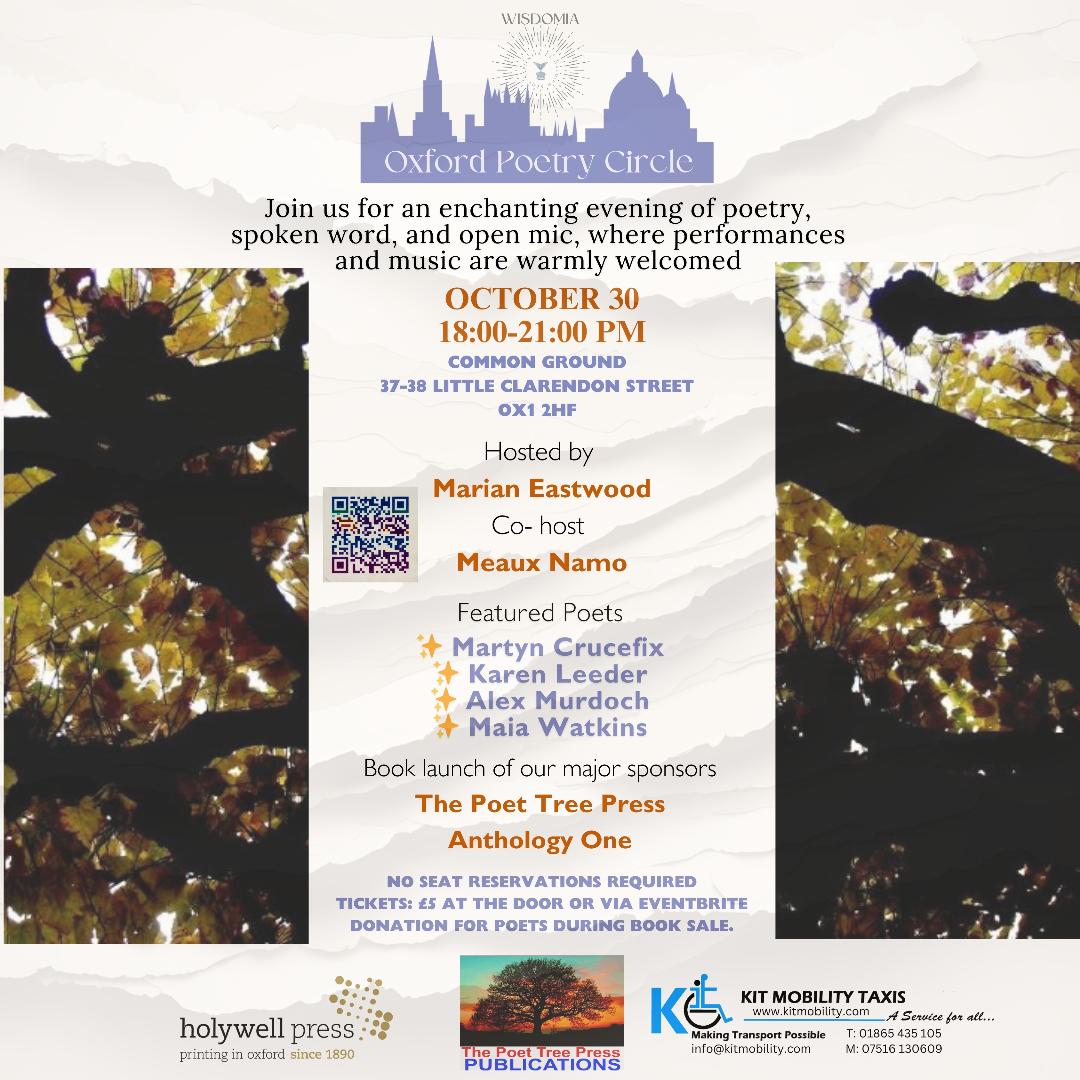
Then, on Wednesday, 30th October, 6pm-9pm, I’m off to Oxford to read for the Oxford Poetry Circle, as announced in a previous post. This is taking place at Common Ground, on Little Clarendon Street, Oxford. There, I’ll be reading work in translation only – from my recent Rilke book published by Pushkin Press (reviewed here on The Friday Poem by Victoria Moul) and from my 2019 Shearsman Books collection of poems by Peter Huchel. I’m particularly pleased to be reading on this occasion with the brilliant and super-industrious translator, academic and friend, Karen Leeder. Other readers are Alex Murdoch and Laia Watkins – and there will be readers from the floor.

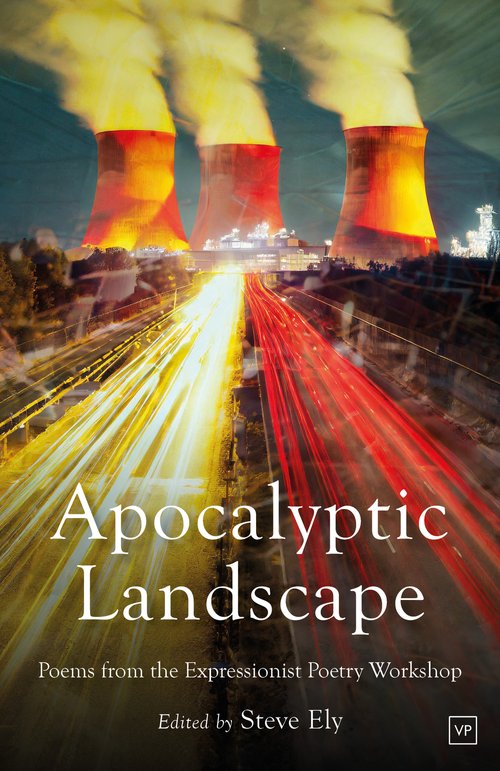
A couple of days later, the evening of Friday 1st November, I will be reading from a second experimental sequence of my own poems at the launch reading for Steve Ely’s anthology called Apocalyptic Landscape (Valley Press). My poems, a sequence called Olga Liking Sunflowers, roam through the pandemic experience, the work of David Jones, my local landscape and the delights (or otherwise) of social media. Contributors were encouraged to generate visionary responses to the crisis of the Anthropocene in the context of landscapes important to them. I will be reading alongside Steve, Jill Abram (who is organising the London launch for the book), as well as Katy Evans-Bush, JP Seabright, Anita Pati, and Caroline Maldonado. Steve Ely is also reading from his book Orasaigh, a collaboration between Steve and photographer Michael Faint, inspired by the landscape around the tidal island of Orasaigh, located on the coast of South Uist at Boisdale. This event will take place upstairs at the Devereux pub, 20 Devereux Ct, London WC2R 3JJ. Doors open 6:30, Poetry starts 7pm FREE event.

Finally, I have also been lucky enough to have a translated longer poem (by the contemporary German poet Jürgen Becker) accepted to appear in Issue 32 of The Long Poem Magazine and I will be reading ‘Travel film: re-runs’ at their launch event in the afternoon of Saturday 16th November 1.30 to 3.45, at the Barbican Library, Barbican Centre, Silk Street, London, EC2 8DS. Other readers will be: Angela Gardner, Charlie Baylis, Sue Burge, Sharon Holm, Claire Cox, Sian Thomas, Peter RobinsonKhaled HakimTimothy AdesJulian Stannard. FREE ENTRY and there will be a short interval for sales and chats. Refreshments are available downstairs from the Barbican Cafe and Bar. I hope to see you at one or another of these events. I’ll leave you with a few lines from my sequence in Steve Ely’s apocalyptic anthology:

Olga likes my post of the tall sunflowers in the square.

Through google translate, her post in Russian reads: adrenaline is my doping.

I draw for the soul.

There are hundreds of images of herself. Some with wild animals.

Surely, they’re not really wild.

In a zoo. Under lock and key.

Others touch the hem of the pornographic.

Others look like cheap advertisements for luxury cars.

The kind of posts, I wonder, that end with an offer of marriage from the viewer.

Another shows her bald headed, holding a snake, just weeks after the remission of her illness.

I want to ask her: what was the exact nature of the disease?

I want to ask her.

What mark will this make in history?

I want to ask her. When will this stop?


New podcast discussion on Between a Drowning Man

I’m very pleased to announce that Mark McGuinness’ excellent poetry podcast, A Mouthful of Air, which has recently featured poets such as Mona Arshi, Judy Brown, Rishi Dastidar, Ian Duhig, Mimi Khalvati, Clare Pollard, Tom Sastry, and Denise Saul, has recorded a discussion about my new Salt collection, Between a Drowning Man.

Mark’s method is to focus on one particular poem and between us we chose the poem ‘you are not in search of’, on page 57 of the new book, from the latter end of the ‘Works and Days’ sequence. You can listen to the podcast here. It’s about 40 minutes in length and includes a reading of the poem at the beginning and end. There is also a helpful transcription of our discussion.

Here is the poem text – though without the indents which are hard to reproduce here:

‘you are not in search of’

There has to be / A sort of killing – Tom Rawling

you are not in search of a gilded meadow

though here’s a place you might hope to find it

the locals point you to Silver Bay

to a curving shingled beach where once

I crouched as if breathless as if I’d followed

a trail of scuffs and disappointments

and the wind swept in as it usually does

and the lake water brimmed and I knew the thrill

of its mongrel plenitude as colours

of thousands of pebbles like bright cobblestones

slid uneasily beneath my feet—

imagine it’s here I want you to leave me

these millions of us aspiring to the condition

of ubiquitous dust on the fiery water

one moment—then dust in the water the next

then there’s barely a handful of dust

compounding with the brightness of water

then near-as-dammit gone—

you might say this aloud—by way of ritual—

there goes one who thought much of life

who found joy in return for a little gratitude

before its frugal bowls of iron and bronze

set out—then vanished—then however you  try

to look me up—whatever device you click

or tap or swipe—I’m neither here nor there

though you might imagine one particle

in some stiff hybrid blade of grass

or some vigorous weed arched towards the sun

though here is as good a place as any

you look for me in vain—the bridges down—