Jeremy Reed’s ‘Collusive Strangers: new selected poems’ (1979-2016) reviewed

An edited (shorter) version of this review first appeared in Poetry Salzberg Review in June 2025. Many thanks to the editor, Wolfgang Görtschacher, for commissioning the writing of it.
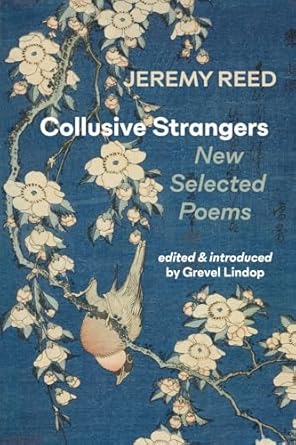
As the editor, Grevel Lindop, says in his Introduction to Collusive Strangers: New Selected Poems (Shearsman Books, 2024), the literary world has not taken enough notice of the remarkable oeuvre of Jeremy Reed. Many of his recent collections have appeared without much, if any, critical notice, so it’s to be hoped that this substantial new selection, from 1979 -2016, will bring this misfit-poet’s work back to more general attention. The problem is that the protean Reed fits no pigeonhole, plus the fact that he’s been astonishingly prolific. Intensity of perception and a phenomenal dynamism of language and creativity are his hallmarks, and he matches the best in nature poetry (Clare and Hughes), the decadent, urban flaneur (Baudelaire), then writes as Symbolist and Surrealist (Gascoyne), pursues sci-fi, focuses on pop and fashion, next becomes a portraitist and moving elegist. Even given these 300 pages, Reed – a sometime Peter Pan now into his 70’s – continues to be elusive. Compared to the prolific poet/novelist John Burnside, the difference is clear: we all knew what the brilliant, much-missed John was up to. With Reed, we are endlessly being caught by surprise.

Even Reed’s earliest work arrived fully formed. In the late 1970s and early 1980s, the urban, neurasthenic wanderer appears in ‘Claustrophobia (Kings Cross)’, the narrator’s need being ‘so strong it might involve the police’. In contrast, ‘Dwight’s Brother’ is an early stanzaic, sci-fi piece, a character from the future obsessed with Manson’s and Nixon’s careers, and ‘the monomania that burns planets’. And the magnificent ‘John Clare’s Journal’ ventriloquises the nature poet’s concerns for the natural world of Helpston, his stumbling literary repute, and fear for the future of his children, ‘laid / out as corpses’. Reed’s ambition is clear from the start, and in a poem like ‘Visit to George Barker’ he evidently empathises with the older poet’s withdrawal and seclusion, his writing contemporaries being harshly judged for a lack of ambition as ‘poets whose very aim is minimal / gesture, earning [Barker’s] dismissal’.
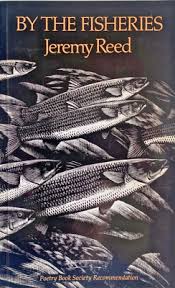
My own first acquaintance with Reed’s writing was in the two volumes from Cape in 1984/5, By the Fisheries and Nero, when James Lasdun edited him. These particularly highlighted the Nature poems, for example ‘Conger’ which outdid Ted Hughes: ‘They’ll shave a finger off with precision, / clean as a horse bite, or close round a hand / and leave it as taut gristle strung on bone.’ In a quieter poem, the narrator is fishing in a harbour, near a ‘desalination plant’, the tautly strung reactions of a shoal of mullet seemingly reflected in the fisherman’s own alertness and nerves (‘By the Fisheries’). ‘Spider Fire’ plays brilliantly with perspectives as every sort of tiny beast and insect flees a wildfire, while the narrator, at a distance, observes ‘a black hoop / ironed into the shire’. Though the first-person pronoun recurs in many poems, Reed is usually not much interested in self-revelation. One wonders, if he was/had been, he might be more widely appreciated, because it’s not that he can’t do it. ‘Visiting Hours’, for example, is enough to make a grown wo/man weep as the narrator visits his father in hospital, economical with the truth that this is ‘terminal’, the child compelled to play the father, the father, ‘like a diver gone on down // to find an exit that was always there, / but never used’. In characteristic ABCB quatrains, ‘Changes’ perhaps records the poet’s re-visiting Jersey and a brother, or boyhood friend, who stayed behind as a farmer, both recognising ‘our youth survives, the present is a gap’. And Lindop includes two remarkable poems from the Nineties collection, in which we seem to get close to Reed’s own autobiographical difficulties, when personal survival seems ‘to be the question’ (‘Samaritans’), and, in ‘Prayer’, Reed addresses a divinity of an uncertain variety, pleading for illumination, for help, a hearing, a pointing of a way out, from guilt, dread, self-injury, poverty, ‘the unappeasable, involuntary / inheritance of lucklessness’.
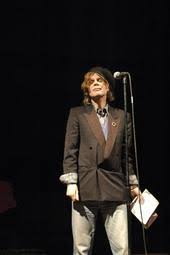
But Reed deals with topics, rather than ‘issues’, and his work is descriptive in character, never preachy or judgemental, so he seldom offers us his ‘views’. The work is driven by his ‘curiosity’, which both ‘holds us to life and feeds us to the flame’ (‘Moth-Trapper’). His praise of the artist, in ‘Cezanne’, is revealing of his fascination for the ‘ordinary’ and for the shared knowledge that ‘the beautiful / is inherent in all that lives, / and once externalised in its true form, / remains as that’. Over and over again, Reed captures – hence externalises – the true form of things in the colourful, vigorous, unblinking poems selected here. And as the millennium approached, Reed extended his range even further towards ‘all that lives’. There are uncharacteristic political poems (Tony Blair is a particular target), but Reed also writes of the experience of AIDS, and with a Baudelairean dwelling on sexuality, in poems like ‘Transsexual’ and ‘Brothels’, and is drawn closer to popular culture, its fashions, music, and iconic figures. But many of the poems on Madonna, Billie Holiday, Elvis and The Rolling Stones drift to looser forms of summary and the decade from 1993 to the early 2000s contains less brilliant work, though 2006’s Orange Sunshine with its evocations of 1960s London marks a return to form.
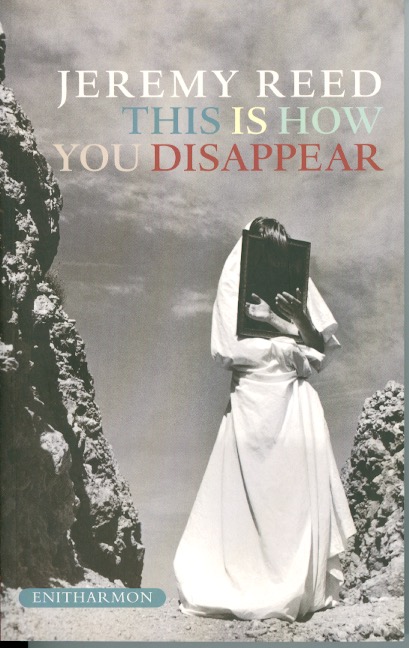
Reed as elegist, as in This Is How You Disappear (Enitharmon Press, 2007), was perhaps unexpected, but poems like ‘Paula Stratton’ and ‘John Berger’ (not the art critic) must rate amongst the finest in that genre produced in the last 100 years. The honesty, attention to detail, the empathy extended to his subjects (Stratton was a drug addict; Berger a difficult Jersey friend and Nazi-collaborator), and the apparent ease and beauty of the writing, mean these poems ought to have been anthologised everywhere. The elegiac note is hardly surprising as Reed moves through his seventh decade and poems about socks, potted plants, tea, honey, and cupcakes seem to mark shifts in focus though Reed remains true to his repeated maxim that ‘everything I see [is] poetry’ (‘London Flowers’). The poems retain the vigour and speed that he admires in Plath’s work: ‘her fast ball imagery / on speed-trajectories [. . .] her plugged-in dare-all energies’ (‘Re-reading Sylvia Plath’). As he puts it in an extract from ‘White Bear       and Francis Bacon’, Reed has remained true to his early ambitions ‘to kick poetry into near sci-fi / [. . .] like dirty-bombing the dictionary into my face’ and there are thrills to be had by any reader on every one of these 300 pages in which Reed makes so many contemporary poets look sluggish, mired in virtue signalling, lumbering in form, and monotone compared to his vivid technicolours.

Here is the whole of ‘Elegy for a Polka Dot Shirt’ from Orange Sunshine (2006):

Unreconstructed 60s
ostentation snowed on blue
labelled Jacques Fath, tailored fit,
fished from Retro on a simmmery
cloud hung-over August day,
bought for pop connotations –
high collar with flouncy points,
cotton married to the skin.
Medium size:
              38 cm:
structured for a defined waist
sexless to the vanity
of ownership.
Affordable at £15,
the item begged me to retrieve
its showy staginess.
             Outside, airless haze,
W11 backpacking crowds
random like footage spilled
into a documentary.

Later I tore a fragile seam
tracking towards left underarm,
the fissure sounding like hot oil
pronouncing itself in a pan.
The tear backtracked through history
to the anonymous wearer,
who bought sensation, sold it on
into a chain, the onion skin
thinning from use;
              the scar re-sewn,
but evident, a little glitch
caught in the fabric like a blues
lament,
the singer head-bowed on a stool,
cooking up trouble, while the club
tug at his vulnerability
and modulate applause from hot to cool.
Charlie Louth’s Rilke + new Rilke translations

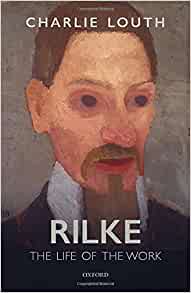
As I mentioned in my last blog post, much of my time through lockdown and in the last few months has been taken up with translation. One of these projects is as daunting as it is exciting. Pushkin Press have commissioned me to complete a new selection and translation of the work of Rainer Maria Rilke to appear in 2023. Some of you will be aware of my earlier published versions of the Duino Elegies and the Sonnets to Orpheus (both available from Enitharmon Press). The new project will contain selections from those sequences and a good selection of earlier poems, including from the New Poems. As well as trying out a few of my new translations in this post (and the following one), the body of it is an uncut version of my recent review of Charlie Louth’s excellent book on Rilke, Rilke: the Life of the Work (OUP, 2020). A shorter version of this review appeared in the latest Agenda magazine, ‘Altered Distances’ (Vol 54, Nos. 1/2). Many thanks to the editor, Patricia McCarthy for asking me to write it.

Part I

Rilke has long suffered from two types of criticism. Among his enthusiasts, some declare his work close to sacred and therefore hardly open to ‘normal’ practices of critical analysis, at risk of spoiling the ‘bloom’ of mystery they find there. Others, of a more negative inclination, accuse him of an aloof aestheticism, a likely fatal distance from ‘real’ life. One such was Thomas Mann who can be found, Charlie Louth notes, “(rather richly) calling him an ‘arch aesthete’”. Both viewpoints risk downplaying the skilled crafting of Rilke’s work (he thought long and hard about poems as artefacts, things consciously and intricately made) but also risk mistaking the particular power of his poetry. Rilke: the Life of the Work is comprehensive, erudite, always clear and – most importantly – keeps returning us to the poetry to which Louth enthusiastically responds: “When we read Rilke, the poems do not feel aloof, and they do not feel merely aesthetic in their claims. They press upon us and make us examine ourselves, and they help us experience our life in the world with greater clarity and depth”. Most readers will recognise this as an allusion to the ‘Archaic Torso of Apollo’ (from New Poems) which concludes “You must change your life”. Louth again: “It is unusual for Rilke to be so direct, but as I see it a similar spirit animates most if not all of his poems”.

This book aims to bridge the gulf between enthusiastic, non-specialist readers of poetry (Louth translates his foreign language quotations himself) and the German lang/lit academic and student. The balance between engaged readability and academic thoroughness is very well judged. I particularly value Louth’s close readings of ‘the work’, viewed as objectively as possible (Louth declares early on that he has no “overarching thesis”). There are other readily available biographical and critical works, but the strength of Rilke: the Life of the Work is that, with its discussion of the formal choices, wording and syntax of so many poems, it is a comprehensive attempt at ‘Reading Rilke’. The structure of the book’s 600 pages is primarily chronological, from the poet’s earliest publication, Lives and Songs (1894) through to Vergers (1926). Louth only departs from this chronological survey twice. Early on, he looks at several poems that open Rilke’s published books, then, in Chapter 6, he discusses the four poems Rilke wrote as requiems.

Lou Andreas Salome

So Louth’s Rilke is a craftsman and moralist who urges us to live better. The kind of closed system of a purely aesthetic art was the poet’s abhorrence. In a lecture he gave early in his career, Rilke is already sure that “‘art is only a path, not a destination’. In a letter to Lou Andreas-Salomé in 1903 he confirms: ‘I do not want to tear art and life apart; I know that in the end they are one and the same’. As so often, Louth articulates his subject’s attitude with great clarity: “for Rilke, there can be no question of shutting oneself away from life, of retreating into the work, and the desk, if it is to be the place of necessary writing, must be a ‘vitale Mitte’, a site right in the middle of life and exposed to all its risks and promises. To write is not to withdraw but precisely to engage”.

Rilke’s poetry pays particular attention to the processes of change associated with being human. Poems record such moments of change but also act, in the process of being read and openly experienced, as opportunities where change in an individual might take place. For those with faith in literature, Louth articulates the exciting prospect: “to read at all is to pause, is to take your time in times when an anxious haste pervades much of what we do. In some sense it is to live better whether poetry makes anything happen or not”. Writing to Thankmar von Münchhausen in 1915, Rilke asks, “What is our job if not, purely and freely, to provide occasions for change?” Louth finds these ideas in ‘Eingang’ / ‘Entrance’, one of the poems Rilke placed at the start of The Book of Images (1902/06). The furniture of this poem – the self, a house, a tree – is a grouping that recurs throughout Rilke’s work and what interests him is the suggestion that, as we leave the familiarity of our house, “the house of our habits, we enter the imaginary space of another building [. . .] coming from life into the poem, and passing through the poem into life”. Here is my new translation of this poem:

Whoever you are: in the evening, step out

of your living room, from all that’s familiar;

in the distance, the last thing, your house:

no matter who you are.

And although your eyes have grown so weary

you can barely lift them from the worn threshold,

slowly, with them, you still raise a black tree

and set it before the sky: lean and alone.

And you have made a world. And it is immense,

like a word, in silence, it continues to grow.

And as your will grasps its significance,

so your eyes, tenderly, let it go . . .

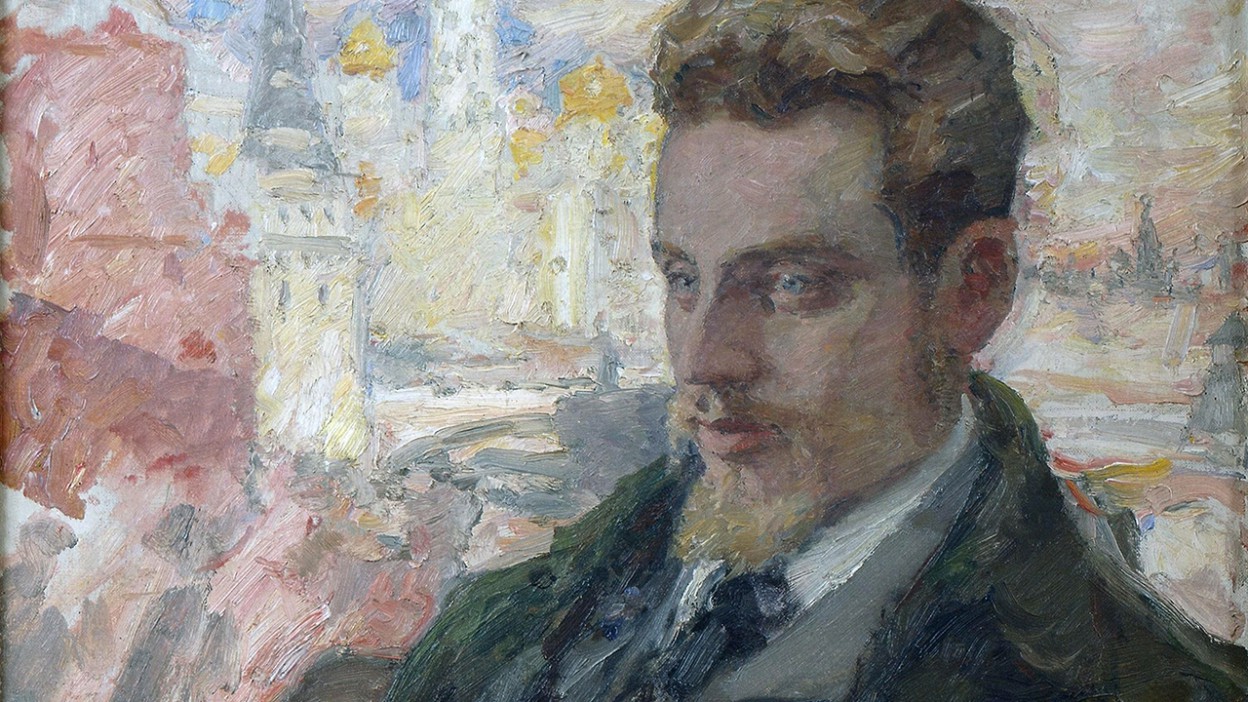
Portrait of Rainer Maria Rilke, 1928, by Leonid Pasternak

For Rilke’s own life and work, the key meeting was with Lou Andreas-Salomé in May 1897. Lou changed his handwriting and his name (from René to Rainer), but it was the confidence and groundedness in the world that she brought to his life that pushed his art “closer to the details of lived experience”. Rilke himself wrote: “The world lost its cloudiness [. . .] I learnt a simplicity, learnt slowly and laboriously how simple everything is, and I gained the maturity to talk of simple things”. Lou’s influence can be seen in the lecture he gave in Prague in 1898, where he distances himself from Symbolism and aestheticism (the dominant strands of ‘modern poetry’ at the turn of the century) to argue that the artist must not be “shut out of the great channel of life”, but must evoke the constant dialogue between the individual and things, “the strange coincidences between inner and outer out of which experience is made”. As Louth says, this is an early statement of the theme which will occupy his whole life.

Here is a brief poem – actually naming Lou and indicating her influence in persuading Rilke of the sacredness of the ordinary. It went unpublished for years, but was part of Rilke’s sequence called To Celebrate You (Dir zur Feier):

The rain runs its chilly fingers

down our windows, unseeing;                             

we lean back in deep armchairs

and listen, as if the quiet hours

dripped from a weary mill all evening.

x

And then Lou speaks. Our souls incline

one to another. Even cut flowers

at the window nod their topmost bloom

and we are completely at home,

here in this tranquil, white house.

For Rilke, the successful poem is a space in which the mysteries of things and personal confession are both explored, or revealed, simultaneously. Louth argues that, from the outset, Rilke’s view of this was always positive: “there is no unnerving consciousness of the self ’s arbitrary dependence on chance encounters with the outside world”, but equally, there is “no doubt about the existence of an underlying unity to which the poet has access”. What he feared was ‘the interpreted world’ (‘der gedeuteten Welt’), a world view shorn of all mystery, a perspective that perhaps most of us inhabit, a view in which language has become dominantly instrumental, “narrowing our vision so that life appears cut and dried without any possibility of the unknown and the unknowable”. Louth explains what readers of Rilke value in his work: “poetic language, as he understands it, is precisely a way of talking that avoids directness and allows the mutability of experience and the mystery of the world to be expressed. It releases rather than limits possibility”. Beyond this stands what Rilke might have meant by the term ‘God’. ‘He’ is “an experience of totality, life felt as a whole, in which self and other are not distinct or momentarily lose their distinctness”.

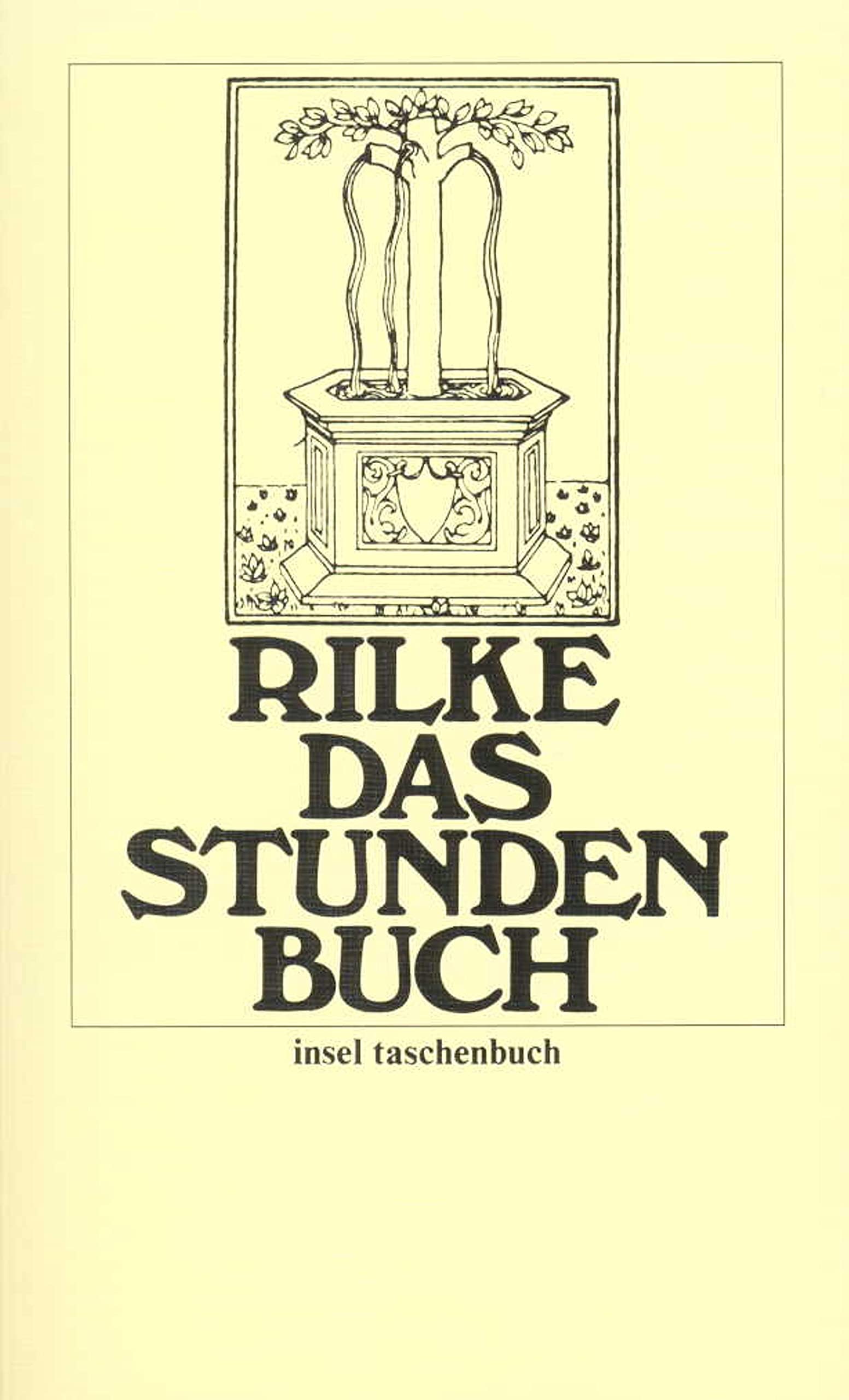
Here is my new translation of an early poem from The Book of Hours (Das Stundenbuch) in which Rilke is developing these ideas:

You, the darkness from which I came,

I love you more than the flame

scoring the world’s edge

with a glimmer

upon some sphere,

beyond which no-one has more knowledge.

x

Yet the darkness binds everything into itself:

all forms, flames, creatures, myself,

it seizes on them,

all powers, everything human . . .

x

And it may be: there is an immense might

stirring nearby –

x

I believe in the night.

It is in part because the enemy of mystery is language (too casually used) that poetry (constructed from language more carefully used) has an advantage over other art forms like painting. There’s an irony here, of course, because Rilke learned so much from other workers in the fine arts. Most know about the debt he owed to Rodin and Cezanne, but Louth argues Rilke’s journey towards the poetics of the New Poems began in the period he resided in the artists’ community in Germany at Worpswede. A lot of his thinking there concerned images of man and landscape. For the majority of the time, humans and nature live “side-by-side with hardly any knowledge of one another” and it is in the ‘as if’ of the work of art that they can be brought closer, into a more conscious relation. But because a poem works through time, such a correspondence is acknowledged as “something one traverses and gains knowledge of but cannot hold onto”.

Part 2 of this review coming next week…..

That Infinite Showplace: Rilke in Paris 1902-1914

NB This review first appeared in a shortened form on the Agenda Magazine website.

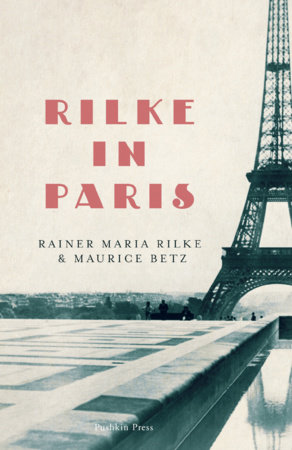
Rilke in Paris, Rainer Maria Rilke & Maurice Betz, tr. Will Stone (French original 1941; Pushkin Press, 2019).

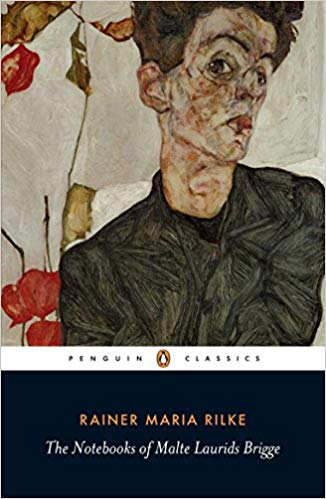
The argument of Maurice Betz’s memoir on Rilke’s various residencies in Paris between 1902 and 1914 is that the young poet’s experience of the French capital is what turned him into a great poet. Betz worked closely with Rilke on French translations of his work (particularly his novel The Notebooks of Malte Laurids Brigge (1910)). Will Stone’s excellent translation of Betz’s 1941 book, Rilke a Paris, elegantly encompasses its wide range of tones from biographical precision, to gossipy excitement and critical analysis. The book particularly focuses on Rilke’s struggle over a period of eight years to complete the novel which is autobiographical in so many ways, as Betz puts it “in effect a transcription of his own private journal or of certain letters”.

Rilke first arrived in Paris from Worpswede in northern Germany, a community of artists where he had met and married Clara Westhoff. But never one to truly reconcile himself either to community or intimacy, he had already left his wife to travel to Paris. Yet the anonymity, bustling energy and inequalities of the French capital appalled him. In letters to his wife and many others, it became clear that, as Stone’s Introduction argues, Paris had “unceremoniously torn Rilke out of his safe, somewhat fey nineteenth-century draped musings”. In ways reminiscent of Keats’ observations about feeling himself extinguished on entering a room full of people, Rilke would later recall how the city’s “grandeur, its near infinity” would annihilate his own sense of himself. Living at No.11, Rue Touillier, these initial impressions form the opening pages of The Notebooks.

But there were also more positive Parisian experiences, particularly in his meetings with Rodin who he was soon addressing as his “most revered master”. Famously, Rodin advised the young poet, “You must work. You must have patience. Look neither right nor left. Lead your whole life in this cycle and look for nothing beyond this life”. In terms of his patience and willingness to play such a long game, not only with his novel but also with the slow completion of Duino Elegies (1922), Rilke clearly took on this advice. Interestingly, Betz characterises Rilke’s methods of working on the novel, creating letters, notes, journal pages over a number of years, as “like sketches, studies of hands or torsos which the sculptor uses to prefigure a group work”.

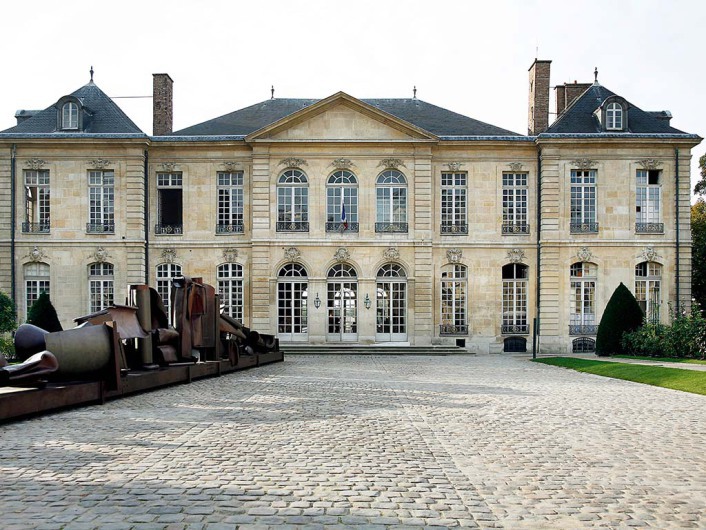
Rilke was even employed briefly by Rodin as “a sort of private secretary”. Betz suggests Rilke simply offered to help out for a couple of hours a day with the famous sculptor’s correspondence. But this quickly expanded to fill the whole day and Rilke was soon confessing to Karl von der Heydt that “I must get back to a time for myself where I can be alone with my experience”. A break was inevitable though in later visits to Paris the two artists patched up any quarrel. In terms of his location during this period, Rilke had moved on to the Hotel Biron at 77 Rue de Varenne on the recommendation of Clara. Rilke in turn suggested it as a suitable studio base for Rodin who also settled there and over a number of years gradually took over more and more of the rooms. It is this building that, in 1919, was converted to the now much-visited Musee Rodin.

Maurice Betz

Betz suggests that the traumatic impact of Paris was the making of Rilke as an artist. Between 1899 and 1903, Rilke had been working on The Book of Hours, representing a “religious and mystical phase”. In contrast, Paris presented the poet with an often brutal but also more “human landscape”. He also discovered this was reflected in the French capital’s painters and poets. Baudelaire in particular was important. In personal letters (as well as in his finished novel) Rilke identifies the poem ‘Une Charogne’ (‘A Carcass’) as critical in “the whole development of ‘objective’ language, such as we now think to see in the works of Cezanne”. Baudelaire’s portrayal of a rotting body seems to have taught Rilke that “the creator has no more right to turn away from any existence [. . .] if he refuses life in a certain object, he loses in one blow a state of grace”.

But it took Rilke a while to arrive at this sort of inclusivity of vision. One of his earliest impressions of the city was that there were invalids, broken human bodies everywhere. “You see them appear at the windows of the Hotel-Dieu in their strange attire, the pale and mournful uniform of the invalid. You suddenly sense that in this vast city there are legions of the sick, armies of the dying, whole populations of the dead”. As Betz points out, this is one of the important observations made by the hero of The Notebooks. It is the “multiform face of death” that Brigge (and Rilke) confronts in Paris. And the irony is not lost on either of them because Paris, of course, at this time was renowned for its social and cultural vitality. Here, Rilke is being forced to make critical distinctions which he then worked on for the rest of his life: “Vital impulse, is that life then? No. Life is calm, immense, elemental. The craving to live is haste, pursuit. There is an impatience to possess life in its entirety, straight away. Paris is bloated with this desire and that’s why it is so close to death”. Years later, near the end of the fifth of the Duino Elegies, Rilke expresses something very similar (tr. Crucefix):


Squares, oh, the squares of that infinite showplace –

Paris – where Madame Lamort, the milliner,

twists and winds the unquiet ways of the world,

those endless ribbons from which she makes

these loops and ruches, rosettes and flowers and artificial fruits

all dyed with no eye for truth,

but to daub the cheap winter hats of fate.

Hotel Biron Musée Rodin

But unlike Brigge, Rilke escapes Paris. Reflecting later, he feared that people might read his novel as seeming “to suggest that life was impossible”. Betz – who had many discussions with Rilke during the process of translating the novel – reports that the poet, accepted that the book contained “bitter reproaches [yet] it is not to life which they are addressed, on the contrary, it is the continual recognition of the following: through lack of strength, through distraction and hereditary blunders we lose practically all the innumerable riches which were destined for us on earth”. Though the Duino Elegies opens with the despairing existential cry (“Who, if I cried out, would hear me among the ranks / of the angels?”), by the seventh poem of the sequence Rilke expresses his affirmative view: “Just being here is glorious!”. In Rilke in Paris, Betz records some of Rilke’s conversations: “Instead of perpetually hesitating between action and renunciation, we fundamentally only ‘have to be there, to exist, that’s all”.

Will Stone

Betz’s admiration for Rilke is palpable throughout this fascinating little book. In its concluding pages, he sums up: “In seeking to express in his own way the world we thought we knew, Rilke helps us to hear more clearly what already belongs to us and permits us access to the most sinuous and iridescent forms, to profound emotive states and to that strange melody of the interior life”. This is marvellously put (and translated). Will Stone also includes a translation of a little know early sequence of prose poems by Rilke, ‘Notes on the Melody of Things’. In it, the poet reflects – through thoughts on theatrical experience and on fine art – on the relationship between background and figures in the foreground. Something of the personal angst and despair of The Notebooks can be heard in section XXXVII where we are told that “All discord and error comes when people seek to find their element in themselves, instead of seeking it behind them, in the light, in landscape at the beginning and in death”. The vastness and reality of what lies behind the solitary figure – and the negotiated relationships between the two – suggests to me that Yves Bonnefoy may well have been thinking of these pieces when he was writing L’Arriere-Pays (1972). Betz is right to conclude Rilke in Paris by praising Rilke as a poet who matured through “solitude and lucid contemplation of the loftiest problems of life”, but also one who never failed in patience or effort to express “in poetic terms the fruit of that inner quest”.