Introduction to Laozi’s ‘Daodejing’ – Part 1

What follows is taken from the Introduction to my new versions of Laozi’s Daodejing. References to the tradition 81 chapters of this ancient text are accompanied here by the titles I have given them in my versions.
File 03-03-2016, 09 02 50

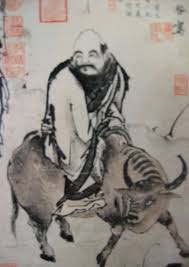
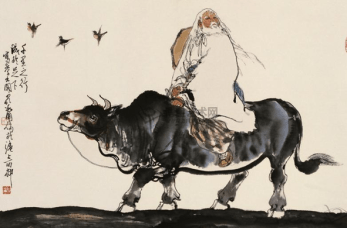
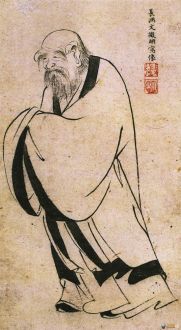
It’s said the keeper of the western gate, whose name was perhaps Yin Xi, realised the old librarian from the royal archives of the state of Zhou did not intend to return. He knew the old man as a quiet, wise character, never someone at the heart of activities, never excluded by others, an observer, seldom observed, always ready to offer advice, not eager to thrust himself forward, often ignored, never wisely. The gatekeeper called, ‘Old Master, Laozi! If you intend not to return, if you mean to renounce the world, then leave a record of your thoughts. Write me a book to remember you by.’ The old man climbed down from his humble oxcart, borrowed pen and ink. A few hours later, he handed Yin Xi a script of some 5000 characters and then continued westwards, never to be seen again.
a-journey-of-thousand-miles

So the poems of the Daodejing are a gift, freely given at a point of change, a gateway to new experience. They are also a turning away from the world (Laozi is said to have despaired of its venality and corruption), yet a transmission intended to aid, an inspired out-pouring of poetry as much as a moral and political handbook. Perhaps above all we should think of them as a response to a personal request. Bertolt Brecht’s 1938 poem, ‘Legend of the origin of the book Tao-Te-Ching on Lao-Tzu’s road into exile’, seeks to praise the “customs man” who “deserves his bit. / It was he who called for it” (tr. John Willett). Modern scholarship, of course, has long since stripped away such eloquent myths. Most likely, the current 5000 characters of the Daodejing were far fewer to begin with, a series of orally transmitted seed verses compiled by many hands, an aide memoire, certainly an aid to teaching from as far back as the 7th century BCE. Passed on orally, then transcribed, with the usual levels of error, displacement, ‘correction’ and happenstance, the text has also been subject to the Chinese tradition of written commentaries and these intercalated texts have themselves become vanishingly absorbed into the original. Such an uncertain state of the text legitimates considerable levels of ‘correction’ for most would-be translators; in this case, I have excised material only from ‘Dangers of prominence’ (Chapter 13) and ‘The great clamour’ (Chapter 23), silently removing a few lines of (what I thought of as) redundant repetition.
41mGYLTsCVL._SX331_BO1,204,203,200_

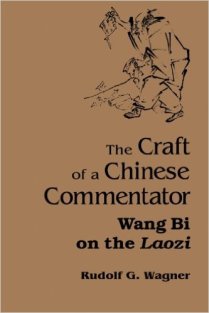
Yet the poems are still vivid, astonishingly fresh, irresistible. They are also still subject to continuing textual debate and archaeological inquiry. The standard text has long been the one associated with the scholar Wang Bi (226-49CE) which divides the Daodejing into 81 Chapters and those into two sections. On the importance and insights of Wang Bi, see Wagner, Rudolf G., The Craft of a Chinese Commentator: Wang Bi on the Laozi (SUNY Press, 2000). The Dao or Way is made up of the first 37 Chapters; the De or Power occupies Chapters 38 to 81. But an archaeological dig as recently as 1973 at Mawangdui revealed two new versions of the text, dating from around 200BCE. Surprisingly, both Mawangdui texts reverse this order and some recent versions into English have adopted this change. Most notably, see Robert G. Hendricks who produced a re-shaped Lao-tzu Te-Tao Ching: A New Translation Based on the Recently Discovered Ma-wang-tui Texts (Ballantine Books, 1989). Also see D. C. Lau’s second translation of the texts published as Lao-Tzu Tao Te Ching (Everyman Books, 1982). I have not done so. The traditional division between the Way and the Power of the Dao is by no means watertight or proven but I feel it makes more sense to explore the nature of the Way before considering its more specific manifestations. Also, as a sequence of poems, ‘Nursery’ (Chapter 1), summing up as it does so much of what is to follow, surely has to come first.

Though probably the work of many hands over many years, it’s still hard not to hear (with Wang Bi) a distinctive voice, a coherent poetic style – alluringly laconic, clipped, coolly enigmatic; it flaunts its paradoxes, is boldly metaphorical, juxtapositional, repetitive to the point of liturgical, urgent, unashamedly epigrammatic. In short, we seem to hear Laozi writing a kind of poetry which enthusiastically accepts that its profound and heartfelt messages are inevitably compromised by the need to express them in the form of language, hence demanding that it employ a variety of technical manoeuvres, that it stays light on its feet. Of course, language is imperfect but it’s what we must use and I have given titles to each of the Chapters to encourage contemporary readers to approach them in large part as language, I mean as poetry.
laozi-painting

For a text so geographically, culturally and temporally remote, some consideration of key images and ideas is necessary. The Dao is not an individual entity, still less anything divine, it is more a mode of being that is all encompassing, a phenomenal, an existential primacy – perhaps akin to the western idea of original chaos. It can usefully be seen from epistemological, temporal, perceptual, political or environmental perspectives, though none of these exhaust its real nature. It is not subject to time yet contains it. It is never fixed. It is the ever-here, both omnipresent and unchanging. We might be tempted to say the Dao is the substratum of all things, the ground base – but language’s introduction of levels and hierarchical ideas is not helpful to our already feeble grasp of it. Certainly, it is the whole, the one that precedes the many.

So these poems explore how the Dao becomes manifest in the individual objects, the actions and creatures of the world we are familiar with. They suggest the Dao initially gives rise to two things, heaven and earth (‘Nursery’ (Chapter 1)) and the poems subsequently make use of the formulation ‘the ten thousand things’ to suggest the Dao’s proliferation or subdivision into all there is. It is in this way that the Dao is the mother of all things (‘Of all things’ (Chapter 25)); it is like water, a pool from which all things draw life (‘Something greater’ (Chapter 4); it is the uncarved block of wood that has inherent within it all things that have been, are, will be (‘Uncarved wood’ (Chapter 15). Most importantly, the Dao is beyond conception and so beyond any conventional use of language, the limits of which constitute a recurring motif in the Daodejing: ‘Nursery’ (Chapter 1); ‘Awareness (Chapter 56); ‘Store (Chapter 81). Of course, our quotidian lives must pass in this ‘fallen’ state, full of a misplaced confidence in the reality of the ten thousand things, including our own discrete selves, so Laozi emphasises – in recurrent images of reprise or re-visiting – that only if we can return to a more clear awareness of the presence and reality of the Dao, can our behaviour and experience of life be more true, fulfilled, harmonious. Tennyson’s otherwise unremarkable poem, ‘The Ancient Sage’ (1885), describes approaching the “mortal limit of the Self” and passing “into the Nameless [. . .] and thro’ loss of Self / The gain of such large life as match’d with ours / Were sun to spark – unshadowable in words”.
images

 Part 2 of this Introduction to the Daodejing will be posted next week (and is now available by clicking here).


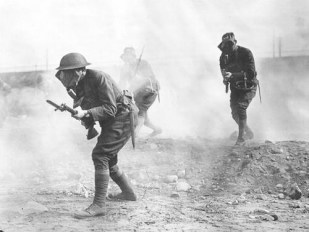
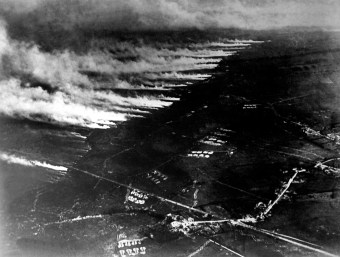
Two Gas Attack Poems: Wilfred Owen and Choman Hardi

Ian Duhig has recently written for Poetry London about the genre of ‘poetry of witness’ (Poetry London). In 2014, Carolyn Forche and Duncan Wu edited The Poetry of Witness: The English Tradition, 1500–2001 (Norton) and the genre was there described as a tradition that runs through English-language poetry: “composed at an extreme of human endurance – while their authors awaited execution, endured imprisonment, fought on the battlefield, or labored on the brink of breakdown or death”. Though Duhig’s discussion raises doubts about both the genre itself, this definition, and its ethical stance, the two poems I discuss here are surely examples of it.

poetry-of-witness-cover

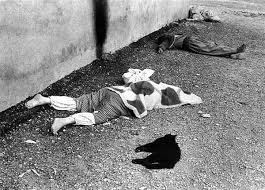
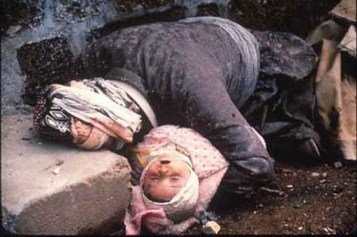
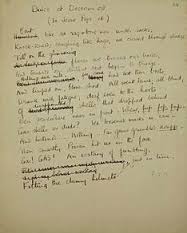
I’ve recently been reading Choman Hardi’s new collection and the link with Owen’s very well-known (well-studied) poem is obvious. Choman Hardi’s poem ‘Gas Attack’ comes from the ‘Anfal’ sequence in her recent book, Considering the Women (Bloodaxe, 2015). The narrator is a woman whose community is bombed by the Iraqi state in the notorious attacks on the Kurdish people in 1988. Wilfred Owen’s famous poem (‘Dulce et Decorum Est’) draws on his experiences of trench warfare on the Western Front in World War One. Owen’s title is a reference to Horace’s Odes (III, ii l. 13), the full phrase translating as “Sweet and fitting it is to die for one’s country”. It is this sort of ardent, patriotic jingoism that Owen looks to counter in the poem as it is the world’s blindness to real events in Kurdish-Iraq that Hardi wishes to correct.

Structurally both poems are similar in that they open by setting a scene of relative calm even suggesting the ordinariness of what, to most readers, must seem extraordinary. It is into these already difficult situations that the gas attacks fall and both poems (Owen’s at greater length) detail the nature of the attack and some of its immediate effects. Both poems have a third and final part in which they focus on specific victims. In Hardi’s poem this is the son of the mother narrator; in Owen’s case it is one of the gas-affected soldiers, flung onto a “wagon”, and suffering the agonizing effects of the gas. So both poems open, in effect, making use of a wide-angled lens but proceed to focus on individuals and this reflects the shared intention of both authors to elicit understanding and sympathy from their readers. It is Owen who makes this purpose more explicit in the final, bitter address to “My friend” (possibly the jingoistic writer, Jessie Pope, the original dedicatee of the poem).

imgres
Choman Hardi

The scene set in ‘Gas Attack’ is of the routine persecution of the Kurdish people under Saddam Hussein. The deliberate plainness of the opening line (“Bombs could fall anywhere, any time of the day”) with its repetition around the caesura suggests this – as does the unruffled sense given by the line’s end-stopping. The statement that such events are to be regarded as a mere “nuisance” that can be “got used to” wrenches the reader away from the more usual evaluation of such events into a world where these things are everyday incidents. There is however something proleptic about the awkwardly enjambed breaking of line 2, the reference to “shelters” and the unease implied by words like “haunting” and “muffled”. This is confirmed (after 2 more run-on lines) by the deliberate puzzle that the explosions “deceived us”. The faint personification here and the idea that explosions (surely pretty straightforward things) might have the capacity for deception alerts the reader, creating tension: in what way are these explosions unlike other explosions?

gas_attack_WW1

Owen’s opening 8 lines are immediately more harsh and noisy though even here there is some sense of routine in that the retreating men “marched asleep” (from fatigue and perhaps on ‘automatic pilot’). The fact they are heading for “distant rest” invites the reader to some mistaken sense of ease (no doubt reflecting the feelings of the men themselves as they march away from the Front Line). But through figurative language and physical positioning, Owen’s men are more distressed than Hardi’s Kurdish woman: “Bent double, like old beggars under sacks, / Knock-kneed, coughing like hags, we cursed through sludge”. Like Hardi, Owen also uses the word “haunting” but here for distant flares falling and the brief, stumbling phrases of lines 5-8 reflect the men’s difficult progress. Such devices elevate the reader’s anticipation of drama to come though again, on the surface, the men have “outstripped” shells (Five-Nines) that are dropping “behind” them. Their deafness to the sound of these shells on one side suggests their (safe) distance from them, on the other, “deaf even” (my italics) implies potential danger to come from this source.
WAR & CONFLICT BOOK ERA: WORLD WAR I/THE FRONT

Owen’s lines on the attack itself are a nightmare of panic initiated by the exclamatory, capitalized shouts of the men: “Gas! GAS! Quick, boys!” This is an “ecstasy” in that their consciousness is so agitated and extra-ordinary that they feel to be watching themselves as in an out of body experience (ex-stasis). Their flurry to don gas masks is suggested by 6 present participle verbs in as many lines though most of these are equally descriptive of the poor individual who fails to get his mask on fast enough. Figurative language conveys his agonising plight as he is “like a man in fire or lime” and he moves “As under a green sea [. . . ] drowning”. By contrast, the impact of the attack in Hardi’s poem is at first a strange calm, once again related to the deceiving nature of these Iraqi bombs (thought to be conventional; in reality chemical weapons). Owen’s men are familiar with these chemical weapons; Hardi’s Kurdish community is not – yet.
imgres

There is still no shift to the level tone of Hardi’s poem, even as the mother narrator observes how “a chalky-yellow powder settled // on our skin”. These lines seem to extend time agonisingly for the reader who, aware of the topic from the plainly informative poem title, waits for the narrator to comprehend events. In contrast to Owen’s figurative language of pain by fire and water, Hardi’s narrator’s ignorance (and therefore her innocence) is caught in her image of the powder “smelling of sweet apples at first” and it “seemed safe”. It’s the caesura of line 8 that marks the transition from ignorance to knowledge as the impact of the gas is evoked (again through a series of active present participles (going, laughing, buckling, twisting running, bumping)). The people’s erratic, tortured behavior has a black comedic, or surreal, quality which probably suggests the few shreds of the observer’s naivety (something Owen’s more experienced narrator never expresses).

In a notable contrast between the two poems, lines 15/16 of ‘Dulce et Decorum Est’ break from the retrospective narrative into the present tense (“I saw him [. . .] He plunges”). The lines provide another image of sight, perhaps launched partially by the heightened visual quality of the glimpse of the man “through the misty panes” of the narrator’s own mask. But in these lines the “helpless sight” is one derived instead from dream-vision and memory. The fact that, at an undefined moment after these events, they still haunt the narrator gives additional weight to the horrors unfolding in the past tense narrative.

daf16862692e4bb2a52873a4ec3c9bc5

This is not something Hardi’s poem does and to this extent Owen’s narration is more complex, implying an attitude towards the events which emerges most obviously in the long single sentence of lines 17-25. The third section of Hardi’s poem continues with the level-toned witnessing: “Villages from the region came to our aid”. At first it seems curious that they are the ones to draw attention to the narrator’s son who “looked strange”. At this point it is almost as if the mother does not want to refer to her son’s injuries, a kind of denial, though eventually it emerges that it is her own blindness (as a result of the chemical weapon) that has actually prevented her even seeing its effects on her son. The boy’s strangeness is conveyed in the plain statement that “his face was blistered, blackened” but also through the strange phrase (difficult to visualize) that it was “as if his eye-colour had spilt // out”. This probably refers to the “blackened” image but also suggests the physically horrific melting of eye-balls not unlike Owen’s “white eyes writhing” and the dissolving of “froth-corrupted lungs”.

Hardi continues to hold back the fact of the mother’s blindness which accounts for the recourse to the aural image of the boy’s groan “like a calf faced with the knife”. This in turn conjures up Owen’s opening to ‘Anthem for Doomed Youth’: “What passing-bells for these who die as cattle?” I don’t see influence here other than the fact that both writers are wanting to evoke sympathy by drawing attention to the dehumanising impact of warfare’s mass slaughter. Hardi’s narrator finally reveals her own injury (“I was still blind”) and after another run of destabilizing enjambment (ll. 11-14) the last line is more heavily punctuated, slowing and emphasizing and again keeping the tone level and factual: “he / died, [I] could not see him, did not say goodbye”. The mother’s passivity is very prominent; her hopelessness is what expresses her grief. It is as though the continual persecution and horror has left her drained even of the energy to mourn with passion.

Owen

This is obviously very different to the passionately angry conclusion of Owen’s poem. Owen’s focus on the dying soldier begins at line 17 but its vivid descriptions of the man’s death are already contained within a hypothetical syntax – a point is evidently being made with the surprising appearance for the first time of the second person pronoun (“you”). Far more assertively than Hardi’s poem, Owen demands his readers, those who knew too little of the realities of warfare in 1918, put themselves in a position of greater insight: “pace / Behind the wagon that we flung him in, / And watch”. Likewise Owen does not pull punches in terms of the gruesome description of the soldier’s suffering with his “writhing” eyes, his “hanging” face (upside down, hanging off the wagon?), his “gargling” lungs. The two similes he introduces achieve the same levels of hyper-intensity with the suffering “as cancer” (obscurely or – in another draft – obscenely) and the blood in his throat like a “cud”, yet another livestock allusion to match Hardi’s doomed “calf”. The cud on this occasion is itself developed metaphorically into “vile, incurable sores on innocent tongues”, further emphasizing the appalling injustice of this slaughter.

It’s at line 25 that the “you” is addressed more directly with the ironically amicable “My friend”. The “zest” and “arden[cy]” of those eager for patriotic glory is mocked (“glory” rhyming with “mori”) but the potentially ‘hedging’ effect of these ironies is vigorously and fiercely pushed aside by the plainly monosyllabic description of the Horatian tag as “The old Lie”. Owen’s poem takes the reader into the trenches, to the post-traumatic world of nightmares, but also manages to encompass this declarative, even propagandist, point. Likewise, Hardi’s poem plunges us into the gas attack and its aftermath but never ventures into the same argumentative, passionate point-making. Her decision to allow the details of this poem to speak for itself is a brave one (of tone and manner) given the horrors of which it speaks and the author’s evident commitment to bringing them to notice.

imgres

Images of the Child in Laozi’s ‘Daodejing’

Most images of the child in Laozi’s Daodejing appear as metaphors. For a text that has a strongly backward-looking, even primitivist tendency there is surprisingly little of our own post-Romantic fetishisation of childhood. For Wordsworth, the child could be seriously considered father of the man and the loss of childhood an event from which we never recover. But for Laozi (almost as paradoxically) the child is more often used as an image of the state of being towards which the wise man or woman strives.

imgres

For example in Chapter 20, the narrative voice compares himself to a child (all translations in what follows are from my forthcoming book (Spring 2016)). This is one of the few parts of the Daodejing where we hear a reasonably consistent lyric voice (not the figure of the teacher) expressing a troubled state of mind because he tries to adopt the teachings of Laozi. Though opening optimistically, “—in putting by what / passes for knowledge / truth is there are / fewer reasons to grieve”, the narrator is soon perturbed by his observations of “the grinning crowd”. What follows is a vivid description of the worldly mob, intent on their own petty, material lives, their narrow purposes:


as if celebrating

closing some deal


about to embark

on a summer vacation

crowd-2

This is the world that Laozi (the putative author of the Daodejing) is said to have despaired of in his own time. The story goes that he vanished from Chinese society sometime in the sixth century BCE, leaving behind only the 81 Chapters of the Daodejing as a kind of despairing, if consolatory handbook. In Chapter 20, the narrator reaches for the image of a child in trying to characterise himself:


I live in solitude

I’m like a quiet child


though one who’s yet

to take his first steps

I’m like an infant

incapable of smiling


I dither and droop

find no place to belong

[. . . ] I seem

to have let things slip

imgres

His contrast to the determined mob is vivid and for most of the poem it seems not strongly in his favour. However, the concluding lines present a more satirical tone, a more defiant effort at self-confidence, declaring that he finds:


no significance

in those things

that do not drive roots

deep in the way


On several occasions, the poems present those who follow the way, the teachings of Laozi, as ill-adjusted to the world as we find it. Chapter 28 begins to explain why. The follower of the way does not divide or discriminate; her vision of life is comprehensive:


—know the male

yet hold to the female

become a valley

in receipt of all things


in becoming a valley

know the power

that cannot be

called on in vain


In achieving such a state of perception (we might say vision), the poem again calls on the image of a child: “this the reprise / to the child-like state”. That this is a reprise, a return of some sort, is an idea repeated throughout the 81 Chapters of the Daodejing. I think this sounds more Wordsworthian than it really is. Laozi is more concerned to draw his readers’ attention back to the wisdom of a previous age rather than one innately the preserve of childhood and subsequently lost as the bars of the prison house fall. But perhaps both images really ought to be read as no more than metaphors. Interestingly, Chapter 28, deploys an alternative metaphor in its effort to convey the wholeness of vision:


be the reversion

to the uncarved block

when the block is cut

shaped for use


by the teacher’s hand

a controlling force

the truth is who carves

best carves least

uncarvedblockblog1

Reprise here becomes “reversion” but the “uncarved block” represents the oneness of being that Laozi’s teaching is founded on. The resort to the figurative suggests the basic inadequacy of language to encompass this oneness – just one of the very modern-seeming themes of these wonderful poems.

The premise of this oneness yields the (again modern-sounding) corollary that even our individual selves are provisional at best. The opening of Chapter 49 suggests:


—the true teacher is like a poet

who has no self to speak of

using the self of others as his own


And Laozi is under no illusions about how such beliefs distance the believer from the world as it is lived. The sage, or master, or (as I have translated it) the teacher, inevitably seems a square peg in a round hole. But it is ironically she who perceives the underlying truth of things:


in the way she deals with the world

the teacher may seem dazed

confused as if her wits were dull


yet even as the nation’s households

strain ears and eyes she listens

she watches in the guise of a child

9482381-Closeup-portrait-of-cute-little-baby-girl-crying-in-pink-pajama-hat--Stock-Photo

The most developed consideration of the image of the child comes in Chapter 55. Those who manage to follow the way possess a child-like innocence that William Blake would recognise as built not on narrowness, naivety and ignorance but on a fullness of knowledge beyond what most of us can aspire to and such transcendent innocence is like a protective charm. In Chapter 55, images of children include indications of sexuality and pain suggesting a world undivided by conventionally shallow ideas of morality or ‘happiness’, a world of profound harmony discovered in the recognition of the oneness of all things. The poem also powerfully argues that to be ignorant of this truth breeds egotism and greed which, under the guise of acquisition and self-aggrandisement, turn out to be nothing less than a primrose path to a form of extinction.


Dead inflexibility

chapter 55


—the immunity of one pursuing the way

is like the charm of innocence about a child


winged insects will not sting nor beasts

attack sharp beaks do not swoop to peck


though bones may be soft and sinews weak

yet the grip of the child is powerful still


and though the sexual life is still remote

the boy’s prick stands stiff as a thumb


despite the hungry child’s keening all day

she sleeps with no rawness in her throat


the body of a child has such harmony—

to know harmony is to find the ever-here


finding the ever-here is enlightenment

but cramming life to the brim is foolish


when such a person asks so much of life

the resulting glut is dead inflexibility


such irritable reaching only ends in decay


11-30-12_Glut

A Living Hanging Hemisphere: Ted Hughes’ ‘Meeting’:

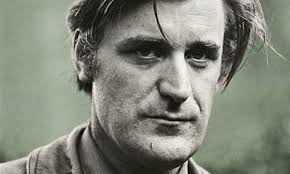
One of my most visited blog posts in recent months has been the discussion/analysis  of Ted Hughes’ poem ‘November’, The Month of the Drowned Dog: click here. The poem had been in my mind as we are studying it (along with a range of other poems by Hughes) in the Cambridge International Exam Board’s A level course for Literature in English. I suspect I am getting hits from students around the world also following the same course and – without wanting to become a major source of plagiarism – I thought this week I might discuss another poem from the same selection.

static1.squarespace

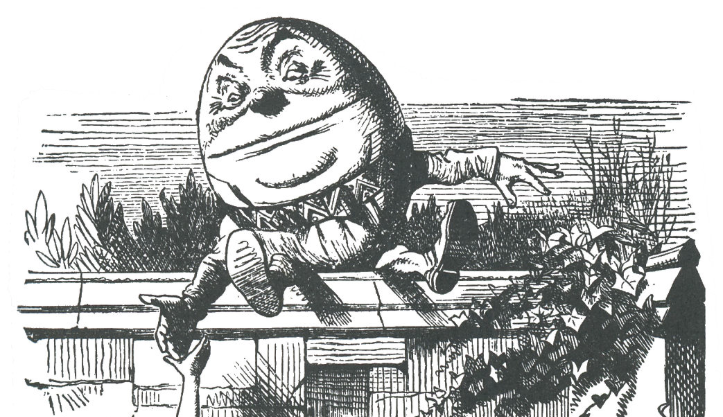
‘Meeting’ was first published in The Hawk in the Rain (Faber, 1957) and is one of several poems in that collection to present what has been called “the central theme or event in Hughes’ poetry: the usurpation or invasion of the world that the rational intellect has constructed by a power that is represented as greater and ultimately more real” (Neil Roberts, Ted Hughes: A Literary Life (Palgrave, 2006). The poem ‘Egg-Head’ is a much less concise treatment of the same issue. The common meaning of ‘egg-head’ – an intellectual, probably arrogant, person (usually a man?) – operates in Hughes’ poem which intends to berate such characters for what they exclude from their life experiences. But the egg image also implies a fragility which suits the poet’s purpose of critiquing the limits of such attitudes. Egg-heads, like Humpty-Dumpty, are always in danger of being cracked open. So the ‘Egg-Head’ character peers at life (this latter word gathers to itself extraordinary power and significance in Hughes’ as in D H Lawrence’s work) “through his fingers”. He deploys methods of “defence”, is “walled in” and “shuts out” and he “resists”. All this is achieved, Hughes roars in an angry, flurried combination of chewy consonants and Latinate vocabulary (that is perhaps not as controlled as it might be):


By feats of torpor, by circumventing sleights

Of stupefaction, juggleries of benumbing,

By lucid sophistries of sight


This is the vitriolic tone of the attack on the rational mind’s defences. It is countered by not wholly convincing phrases intended to be representative of life such as a “leaf’s otherness, / The whale-monstered sea-bottom, eagled peaks / And stars that hang over hurtling endlessness” quickly supplemented by “the flash / Of the sun, the bolt of the earth”, then “the looming mouth of the earth” and finally “the whelm of the sun”. What does emerge from such phrases is the link of life with the natural world, with great power, with incalculable scale.

horse-in-the-rain-750395940

All these ideas are better conveyed in ‘Meeting’ and a prose/short story version of Roberts’ “central theme or event” can be seen in ‘The Rain Horse’ (from Wodwo (1967); also found in the CIE Prose Anthology called Stories of Ourselves (p.271)). The young man at the start of this story has already come “too far” from the orderly “tarmac lanes” he had intended to walk. He had come hoping vaguely for “something, some pleasure, some meaningful sensation, he didn’t quite know what”. His encounter with the uncanny, threatening, apparently evil-intentioned horse of the title instead gives him a “fright and shame”. At the end he strips himself naked, sits staring at the ground “as if some important part had been cut out of his brain”. Roberts again interprets this sequence of events such that the horse is representative of un-delimited life, a “shamanic spirit” challenging the young man’s rational control and perception. So it’s less that something has been cut out of his brain (though he may feel the loss of self-constructed barriers as a loss) more that whole fields of experience, emotional and spiritual possibilities have been opened to him. This misinterpretation of the impact of life (in Hughes’ sense) is something also seen in ‘Meeting’.

imgres

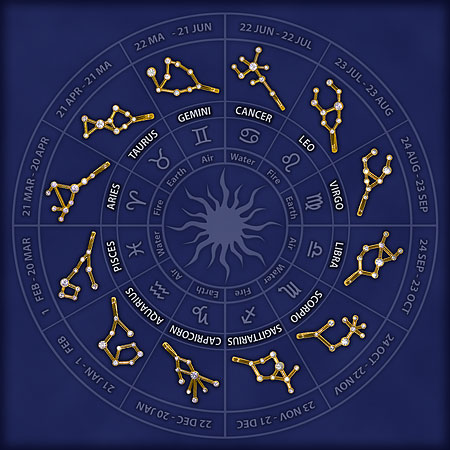
‘Meeting’ opens with another of Hughes’ straw-men, a self-regarding male whose “smile”, in the first phrase, suggests he is well-pleased with what he views in the “mirror”. But as with ‘Egg-Head’, it is the exclusion of all else, all otherness, that concerns Hughes. Even as he smiles, the man “shrink[s]” the rest of the world to a “trinket”, the tinkling consonants (t-k-t) here neatly suggesting the insignificant bauble all else becomes in his view. The word is then countered by the grand sweep of the poem’s key phrase intended to evoke the too-often unregarded universe beyond the rationalist’s view: “the whole / Sun-swung zodiac of light”. Here the wide open vowels (o-u-u-o-a-i) suggest breadth and scale, the sibilance suggests a dynamism, the zodiac evokes images of both night sky and astrological/mythic  elements, the light suggests the elusiveness of life on this scale. For all this to be reduced to a “trinket” feels both absurd and tragic (for Keith Sagar this is both “hubristic and solipsistic”, reducing the universe to the point where man can erroneously “feel himself to be a god in it”). To drive the reductive point home even more clearly the trinket shape is said to appear “On the rise of his eye” which I take to be the curvature of the man’s pupil, but describing it as a “rise” also reminds us of the man’s own arrogantly elevated self-image.

zodiac-header

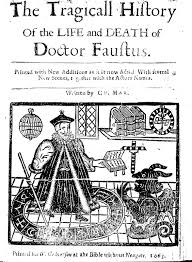
After the colon/caesura of line 3, Hughes uses the metaphor of a dramatic “role” for the man’s behavior to stress both its importance and falsehood. The role Hughes gives the man (or the role the man imagines himself to be playing) is that of Dr Faustus, the arrogant over-reacher, so consumed with his own importance that (in Christopher Marlowe’s play) he barters his soul for earthly power and pleasure though clearly warned of the consequences. He simply doesn’t seem to think the ordinary rules apply to him. The image of flinging “a cape” suggests an Elizabethan stage scene and that word “life” reappears here in all its significance since this is what the actor/man feels he can “outloom”. That Faustus himself outloomed ordinary life and religious sanctions for 24 years is relevant here; as is the fact that he was dragged screaming to Hell at the close of the play. Hughes imagery contains within it the condemnation he intends in the poem.

images

These opening four and a half lines set up the character of the young man. After the full stop in line 5 the “event” begins (and consists of one sweeping, irresistible sentence). Like the man in ‘The Rain Horse’, this man also wanders into the wilder realms of nature, to “an empty mountain slope”. To apply the adjective “empty” to this place is just one of the man’s errors, imagining a terra nullius where there is multifarious life and significance. What he actually encounters here is a “black goat”. It’s around here perhaps that a reader becomes more conscious of the poetic form Hughes is using. It’s terza rimaa form of triplets rhyming aba bcb cdc and so on. On the whole, Hughes manages this really well (line breaks at lines 5 and 8 perhaps turn more for form than sense and the rhyme word demanded in line 16 is awkward). The difficulty and complexity of this form might be a gesture to the rational man whose mind enforces order and organization, or contrastingly, the looping, self-involvement of the scheme might suggest Hughes’ own perception of the lived world’s interconnectedness.

The goat’s appearance has conventional features suggestive of threat and this means we are seeing it from the man’s perspective. Colours of “black” and “yellow-eyed” are ugly, as is the hyphenated phrase “square-pupilled”. Its onomatopoeic, assonontal and threatening movements (“clattered and ran”) are a challenge as is the position it takes up, “forefeet firm on a rock”, the sizzling fricatives and the ‘clatter’ of the monosyllabic “rock” further reinforce this. Of course, the goat’s placement “above” the man is significant of Hughes’ true valorization of this encounter. This is contrasted with line 11, as the “black devil head” is the man’s assessment of the creature, a designation that what lies beyond his usual comprehension must be categorized as evil.

images

One reason why this poem is more successful than ‘Egg-Head’ is that Hughes, in the final 7 lines, takes us seamlessly into the man’s transformative experience as a result of the encounter. Images of startling differences in scale occur. In contrast to the earlier belittling of the universe as a “trinket”, the man’s experience is now likened to being gathered up in “gigantic fingers” and placed on a “bare / Palm” for examination. The man’s littleness is the point and the “eye” of the universe (via a simile in line 15) is likened to “a living hanging hemisphere”. This eye is like the whole visible sky above him; a powerful contrast to the way in which the whole “zodiac” was itself reduced to a flickering shape on the man’s own “eye”. The reversal from arrogance to a newly-realised humility is brilliantly conveyed.

But perhaps there are doubts about the man’s epiphany. He is studied (or feels he is being studied) by the vastness of the real universe. His littleness and vulnerability, as in the phrase “his blood’s gleam”, is being examined by the “ray” of the world’s eyebeam. The differences in scale between “gleam” and “ray” are accentuated in line 17’s cosmic simile, describing the ray’s gaze as “Slow and cold and ferocious as a star”, the polysyndeton slowing the phrase down to again evoke a sense of great scale and distance. The goat’s exit is rapid (and again onomatopoeic) and the final ray/away rhyme of the terza rima brings the event to a definite sense of closure. So the man does not have a moment like the young man in ‘The Rain Horse’ where actual changes in his mind are suggested but it’s hard to believe he will return to his mirror smiling in quite such a self-satisfied way. I’d like to think him more open to experiences of “world” such as Louis MacNeice describes (from a less primitivist, more political perspective) in his poem ‘Snow’:

The room was suddenly rich and the great bay-window was
Spawning snow and pink roses against it
Soundlessly collateral and incompatible:
World is suddener than we fancy it.

World is crazier and more of it than we think,
Incorrigibly plural. I peel and portion
A tangerine and spit the pips and feel
The drunkenness of things being various.

And the fire flames with a bubbling sound for world
Is more spiteful and gay than one supposes–
On the tongue on the eyes on the ears in the palms of your hands–
There is more than glass between the snow and the huge roses.

(read Olivia Cole’s discussion of ‘Snow’ from Magma Magazine. 

p01g51yw
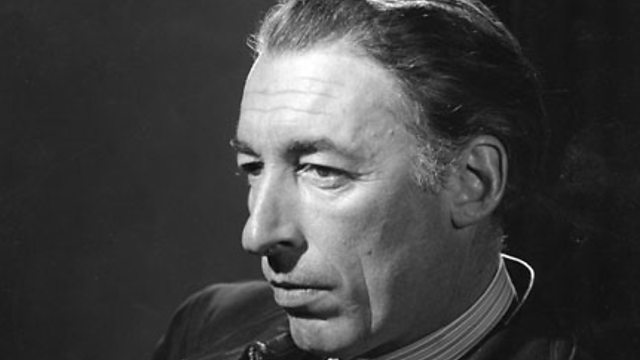
Louis MacNeice

‘The Bell Jar’, Lakes, Doors and Identity

I’ve had a major dose of the flu recently and have been too busy catching up with teaching and marking missed to devote much thought to blogging. So please forgive this brief and slightly self-absorbed effort. Talking about my own poetry is not really what I want to do too much of here. Nevertheless . . .

I gave a reading a couple of weeks ago in which the main focus was the idea of identity. It has been on my mind since and this week we have been looking at Sylvia Plath’s fictional self, Esther Greenwood. She is seen struggling in 1953 to appreciate she ought to be “the envy of thousands of other college girls . . . all over America”. She has won the opportunity of working for the summer as what we might now call an intern at a leading New York women’s magazine. In one of those flashes of figurative language that marks Plath the poet-novelist, Esther confesses she ought be “steering New York like her own private car”. Instead: “I wasn’t steering anything, not even myself”.

images

Esther’s ensuing breakdown – closely following Plath’s own –  can be interpreted as her searching for a clearer sense of her own identity as she ponders and then rejects role models offered by Doreen (the wild girl), Betsy (the traditional), Joan (the lesbian), Cee Jay (the older career woman) and her own mother (hard-working single parent with no prospects). If we can manage to ignore the subsequently brilliant then tragic ten years of Plath’s own life after 1953, The Bell Jar, her only-completed novel, ends on an upward trajectory. Esther is re-born in the end: “patched, retreaded and approved for the road”. She finds a more sure sense of herself. As she waits for her release from the psychiatric ward she listens to her own heart beating: “I am, I am, I am”.

To borrow from Wikipedia, identity is defined as the distinctive characteristic belonging to any given individual or shared by all members of a particular social category or group. Identity, then, is a label. However, the formation of one’s identity occurs through one’s identifications with significant others (primarily with parents and other individuals during one’s life and also with identifiable groups). These others may be benign – such that one aspires to their characteristics, values and beliefs (a process of idealistic-identification), or malign – when one wishes to dissociate from their characteristics (a defensive contra-identification).

url

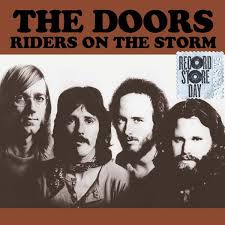
Plath’s Esther Greenwood seems initially to have lost or never really determined or had no faith in her identity though I suspect this is a common enough feeling among adolescents. In retrospect this seems to be the point of one of the poems I read (first published in Hurt (2010)). It features a bunch of adolescents walking in Cumbria, one of their number too pre-occupied with fretting about a fading relationship. ‘Riders on the Storm’, the song by The Doors which they choose to put on the pub juke box, operates as a sort of mock-heroic image which the main character signally fails to live up to. Heroes know who they are; he does not. The point seems to be that the pain caused by the dissolving of the fledgling relationship is an early opportunity, perhaps, to define himself a little more clearly.


Riders on the storm


With no schedule to drive us,

we wait for rain to stop beside Ullswater’s


southern lip, for the landlord of The White Lion

to determine when it’s time to open.


Ducking through the door, Helen, Clive, Steve,

each a few weeks shy of university,


and I’m there too, heart awash

with absence, her love letters at looked-for drops,


the girl I feel leaving gradually

as the tedious route past Thirlmere to Catstye.


But it’s OK for a while – passing midday snug

in a deserted pub


while outside the downpour gurgles, begins to blur

and double with the torrential roar


of the juke-box: The Doors the only thing

we key in, its electric piano’s limpid fingering


like the give and tender recoil of water,

the lugubrious voice . . . Fifteen years later,


at his paint-spattered Pere-Lachaise stone,

I remember that wretched lunchtime


under the wettest rain in England,

when I was too ill-formed to understand.


I barely displaced a drop of local weather,

could only conceive of myself as either


a body slumped beside a dry stone wall

or drenched and raging on the dramatic fell


on the path to Ambleside bus station,

its oily tarmac smoking under black rain,


her blonde voice fluent on the phone:

‘You hear me?’ I could not even hear my own.

images

The Month of the Drowned Dog: Ted Hughes’ ‘November’

Though November has just transformed itself into December here, still Ted Hughes’ sodden, rain-soaked poem from Lupercal (1960) comes to mind as I watch the TV footage of floods in the North-West of England. I’ve never thought enough attention has been given to the role of the narrator in this poem. It’s one of the selected poems studied on the Cambridge International Examinations’ A-level. Students are asked to discuss one specific poem in detail or two poems from a more thematic perspective. What follows is a loose version of the first type of question (apologies for some loss of formatting in the poem itself). NB. For another close discussion of an early Ted Hughes poem – ‘Meeting’ – click here.

The month of the drowned dog. After long rain the land
Was sodden as the bed of an ancient lake,
Treed with iron and bird less. In the sunk lane
The ditch – a seep silent all summer –

Made brown foam with a big voice: that, and my boots
On the lane’s scrubbed stones, in the gulleyed leaves
Against the hill’s hanging silence;

Hughes opens the poem with a bewildering mix of images of motion and stasis. Flooding must account for the “drowned dog” (more literal than figurative or colloquial here) and the absence of a verb emphasizes the stillness of death, the burden of the month, the real entrance way to winter. The land is so sodden as to have suffered inversion to become “the bed of an ancient lake”. It’s an alien landscape – trees (as so often in Hughes) are now composed of industrial “iron” and inevitably “birdless”. Yet in contrast to such stillness, the ditch water (which in summer is a soothing sibilant “seep silent”) is now possessed of a “big voice” composed of brown foam and beside it, the narrator’s boots scrape along the lane. These two sounds are all that can be arrayed against “the hill’s hanging silence” and the contrasts of movement and stillness, noise and silence compose the greater world of this poem.

Mist silvering the droplets on the bare thorns

Slower than the change of daylight.
In a let of the ditch a tramp was bundled asleep;
Face tucked down into beard, drawn in
Under his hair like a hedgehog’s. I took him for dead,

But his stillness separated from the death
From the rotting grass and the ground. The wind chilled,
And a fresh comfort tightened through him,
Each hand stuffed deeper into the other sleeve.

His ankles, bound with sacking and hairy band,
Rubbed each other, resettling.

It’s this greater world that the narrator fears and the tramp entrusts himself to. To the narrator, the tramp sleeping in a let of the ditch, is comparable to an animal, a “hedgehog”. In the narrator’s world view, this is no compliment and indeed in the next phrase (line 12), he considers the tramp “dead”. To give the narrator credit he perceives his mistake and next sees the tramp’s vitality, though (in a reversal of our preconceptions) it is his “stillness” rather than animation that “separate[s him] from the death” all around. The animation of the “wind” evokes a corresponding movement in the tramp: “a fresh comfort tightened through him, / Each hand stuffed deeper into the other sleeve”. There is paradox here too in that the tramp’s movements are intended both to shield him from the elements yet also settle him more comfortably among them.

The wind hardened;
A puff shook a glittering from the thorns,
And again the rains’ dragging grey columns

Smudged the farms. In a moment
The fields were jumping and smoking; the thorns
Quivered, riddled with the glassy verticals.

Lines 18 – 23 seem to represent a moment in which the narrator looks away from the tramp. What he sees is a world he might once have been familiar with dissolving before his very eyes. This is partly a result of optical effects brought on by atmospheric conditions, but Hughes’s language systematically destabilizes the solid and still (the farms, the fields, the thorns) and solidifies the diffuse and shapeless (the wind, the rains). Such a renovation of perception is comparable to the stunned narrator at the end of Hughes’ story ‘The Rain Horse’ (from Wodwo, 1967) who, after the terrifying encounter with the horse, sits “staring at the ground, as if some important part had been cut out of his brain”. The poem’s narrator reports in line 24 that he “stayed on under the welding cold” and the colloquialism of the first two words here implies that any sane person might have retired to shelter; whatever transformative process Hughes is representing in the encounter between narrator and tramp is already under way. The narrator seems to surprise himself by staying as if he were watching the actions of another.

I stayed on under the welding cold

Watching the tramp’s face glisten and the drops on his coat
Flash and darken. I thought what strong trust
Slept in him- as the trickling furrows slept,
And the thorn-roots in their grip on darkness;

And the buried stones taking the weight of winter;
The hill where the hare crouched with clenched teeth.

In fact he stays to continue to watch the tramp becoming part of the landscape: “I thought what strong trust / Slept in him”. All the critics you’ll read agree this is the key idea; but as Keith Sagar asks: in what exactly does “the tramp trust?” The image of sleep links this trust also to the fields’ “furrows”, to “thorn-roots”, to “buried stones” and to the hill itself where the hare is “crouched with clenched teeth”. Is this merely a trust in a viable future? A sort of wishful thinking? A consolation? Perhaps it is if the furrows imply next year’s crop, the roots suggest the new year’s growth, the stones will be unearthed to build new walls, the hare will survive to unclench in the Spring. There is something Romantically attractive about this reading and we might remember Wordsworth’s encounter with the Leech Gatherer who also seems part of the landscape (“as a huge stone”). Wordsworth is equally uncertain of the man’s status: “not all alive nor dead, / Nor all asleep”. As their conversation continues, the Leech Gatherer’s voice becomes indistinguishable from “a stream” and in some low level psychic derangement Wordsworth imagines the Gatherer as “Like one whom I had met with in a dream; / Or like a man from some far region sent, / To give me human strength, by apt admonishment”.

Rain plastered the land till it was shining
Like hammered lead, and I ran, and in the rushing wood

Shuttered by a black oak leaned.
The keeper’s gibbet had owls and hawks
By the neck, weasels, a gang of cats, crows:
Some stiff, weightless, twirled like dry bark bits

In the drilling rain. Some still had their shape,
Had their pride with it; hung, chins on chests,
Patient to outwait these worst days that beat
Their crowns bare and dripped from their feet.

But Hughes’ tramp is far less consoling, far more frightening. In the concluding stanzas, the narrator runs away – on the face of it to shelter from the rain though earlier this had not troubled him. He runs into a wood in something of a panic as the breathless, long-delayed verb here suggests: “in the rushing wood // Shuttered by a black oak leaned”. It’s what the narrator encounters in the wood that provides the final piece of the jigsaw for this poem. He confronts death in the shape of a gamekeeper’s gibbet and it is really death in which the tramp trusts, as much as he trusts himself to life. This is the point of the poem’s many transformational oppositions, of stasis and movement, solid and diffuse, sleep and waking, dead and alive. As the “flash and darken” of raindrops on his coat suggest, the tramp’s instinct is to entrust himself to both life and death without making any clear, rational distinction between the two.

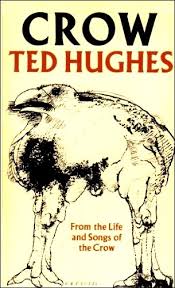
I think the narrator has preserved this distinction and perhaps does so even at the end. Of the bodies on the gibbet, some are fresh, others are like “dry bark bits” being twirled in the rainfall. The narrator seems inclined to focus on those retaining their living “shape”, those who he says retain “their pride”, those who seem (like Wordsworth’s Gatherer) to teach patience, and endurance against “these worst days”. But the incontrovertible fact is they are all dead and death is lesson 101 in Hughes’ work as can be seen in Crow’s ‘Examination at the Womb-Door’ (Crow, 1970). It is the denial of death’s reality that leads to delusion and a false consciousness of our own position in the world. The narrator of ‘November’ still hankers after the human scale of virtues such as patience and Wordsworthian endurance. It is the tramp – ironically rather forgotten by the end of the poem, lying foetal in the let of the ditch, still huddled against the month’s elements – who entrusts himself to the risks of exposure and death, but in doing so may hear (what the sheltered narrator will never hear) the reply that Crow gives to the final question he faces:

But who is stronger than death?

                                         Me, evidently.

Pass, Crow.

imgres

On Yves Bonnefoy’s ‘The Tombs of Ravenna’

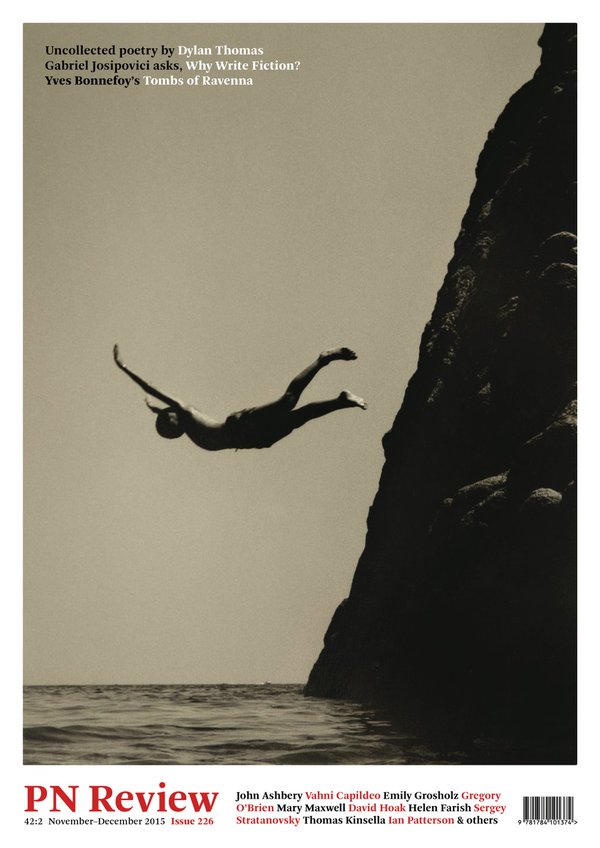
In my last blog I was discussing Keats’ ideas about Negative Capability, provoked by a visit to Keats House and a discussion there about Negative Capability and psychoanalysis. The speakers were Dr Margot Waddell, a child psychotherapist from the Tavistock Clinic, and Dr Toni Griffiths, Trustee of the Keats Foundation. Waddell focused on the acknowledged influence of Keats’ idea on the work of psychoanalyst Wilfred Bion. In the aftermath of such major stimulation, the new issue of PN Review fell through the front door, containing John Naughton’s excellent new translation of Yves Bonnefoy’s 1953 essay, The Tombs of Ravenna. Keats and Bonnefoy melded in my mind and I was reading the latter in terms of the former as follows.

CTnk-FAUYAA5TFU

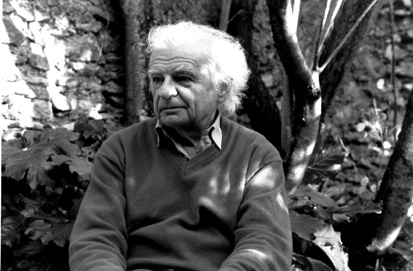
Bonnefoy observes that though many philosophers have discussed death, few have bothered to ponder the places where we traditionally lodge the dead: sepulchers and tombs. The explanation he offers introduces a key term for both his prose and poetry from 1953 to the present day: the concept. The concept, as in conceptual thinking, is a human creation, abstracted from the plentitude, the flood and flux of actual, particular human experience. It is “always a means of escape” into a more fixed abode. The concept denies time and is “a profound rejection of death”. It denies the fact of death as our inevitable fate and constructs an illusory “dwelling place of logic”, a more alluring place of “permanence and identity”. Also, and crucially, the concept is “made of words”. Language is a similar construct, also seeming to promise the same sort of escape into the timeless, the unchanging. All forms of conceptual thinking seem to promise an achievable resolution but, Bonnefoy argues, “what is pondered is no longer the real object”. Instead, we contemplate “a dubious knowledge” though it may soothe our “initial anguish and trivialises that most somber melody with words that mask the reality of death”.

Bonnefoy1

So the concept promises a “strange immortality” but only if we can “forget brutal reality” – which, of course, we can and readily do. One reason is that there are general truths in conceptual thinking and a particular kind of power derived from it. It “allows thinking” of a certain kind; it is linked with “the vast power of words”. But any gain is predicated on a significant loss, the abandonment of the actually existing “world of things”. Conceptual thinking is “systematized”, generalizing, categorizing; it’s in this that its “flight” from the real is found. The only sort of thing that can be held up to counter the concept are specific particularities of human experience: Bonnefoy asks “Is there a concept for footsteps in the night, for a cry, for a stone rolling in the brushwood? For the feeling evoked by an empty house? No [. . . ]”

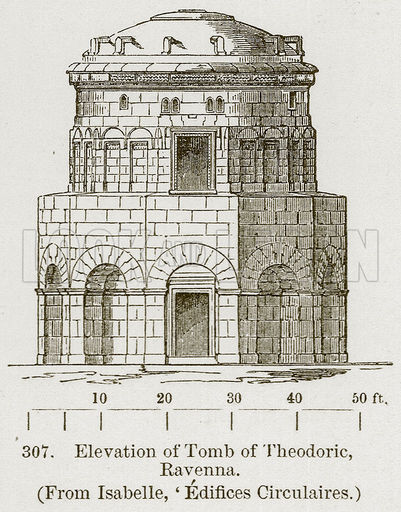
Elevation of Tomb of Theodoric, Ravenna

In his letters, Keats calls this sort of non-particular thinking “preresolved” and he encountered it especially in his friend Charles Dilke: “a man who [. . . ] has made his Mind up about every thing” (303; page numbers in brackets are to John Keats: Selected Letters (Oxford World Classics, newly revised 2002)). Dilke is one of the “stubborn arguers” who never begin on any subject “they have not preresolved upon” (303). In contrast, Keats argues the only means of strengthening one’s intellect and identity “is to make up one’s mind about nothing – to let the mind be a thoroughfare for all thoughts” (303). Keats’ best formulation of this idea arises when several things “dovetailed” in his mind after a frustrating debate with Dilke. The quality that marks out the artist – Shakespeare especially, he says – is Negative Capability. He defines this as consisting of a passive openness to the full range of particular human experience (“uncertainties, Mysteries, doubts”) without any imposition of preconceived notions, preresolved ideas or language: “without any irritable reaching after fact & reason” (41/2). Bonnefoy’s insight is that rather than being an occasional tendency, this reaching after fact and reason (conceptual thinking rather than direct, particular, various experience) is our default status. We pass our days in a delusion of resolution and systematization because if we did not we might fry our brains with the overload. In his last ever letter, Keats laments “the knowledge of contrast, feeling for light and shade, all that information (primitive sense)” as having become a great enemy to his “recovery” from his present state of illness. (369).

Yet the dully pragmatic ought not to be allowed to displace truth: Keats in better health argued this and Bonnefoy does the same in The Tombs of Ravenna. Bonnefoy’s essay for several paragraphs plays devil’s advocate, expecting to find “horror” in visiting the tombs of the dead, yet admitting that he felt “nothing but lightheartedness”. Initially, he locates this sense of up-lift in the ornamentation of the tombs, the “braids and interlacing [. . .] bows and foliage”. The essay playfully misleads its reader, suggesting that this effect of the ornamentation must be because it is comparable to the “concept” in denying the fact of death. Bonnefoy says he believed (note the past tense here) that ornamentation also abstracted towards the universal from the real, that the ornamentation presented “a closed world”, a world of “harmony”. Hence, just as the concept “seeks to establish truth without death [. . .] It seemed to me that ornamentation sought to build a dwelling place for us without death, and to have death no longer be here”. Visiting Ravenna, Bonnefoy felt lighthearted beside the tombs because its skilled and delicate ornamentation persuaded him of a world of permanence and consoling abstraction (beyond death, other than death).

20901_7280829414ee63113ca44b

But the essay now turns dramatically to deny the validity of such consoling sophistry. It’s invalid because Bonnefoy had failed to understand “the power of stone”. His insight is that it is not the ornamentation which is at the root of his lightheartedness but the very material out of which it has been carved. Stone is “unfathomable, and this abyss of plentitude, this night covered by an eternal light, is for [Bonnefoy] the exemplary form of the real”. What he means is that stone deflects the grasp of conceptual thought; conceptual thought distances itself from stone as it does from death. Stone is or represents “the difficult real” and it is or represents the “dawn of the sensory world”. Stone’s resistance, its very hardness, gestures towards the fullness and particularity of human experience (what Keats calls a “Life of Sensations”), towards “everything that has flesh, heartbeat, immanence”. The stone leads us towards the “truth tenaciously present beneath the truth of the concept”. And it is the latter ‘truth’ that Bonnefoy declares he must “tenaciously contest”.

The battle in Bonnefoy’s thought between the sensory world and the concept reflects Existentialism’s concern for existence rather than essence. His faith in a world resistant to and actually prior to the draining, withering forces of the intellect, his resistance to post-modernism, are reasons why he strikes many as such an inspiring figure. He says: “This world here exists, of that I am certain [. . .] It is simply with us. In what can be felt and sensed”. In The Tombs of Ravenna he names this underlying truth, not as existence, but “presence”. It is “what is perceived by the senses” and it was a dimly stirring awareness of this truth that constituted the “lightheartedness” he felt before the tombs of Ravenna. Through an encounter with the stone from which the tombs are constructed, the resistance of both life and death to the abstracting processes of conceptual thought was made clear and the pleasure induced arose from his closer approach to a fundamental truth.

Just as for Keats, such ideas have consequences for art and poetry. For Bonnefoy, poetry seeks to represent the real particular truths of human experience, to convey what it can of the “dawn of the sensory world”, as opposed to succumbing to the lure of conceptual thinking, even that conceptual thinking inherent in the very fabric of language itself. This specific paradox is not explored very far in The Tombs of Ravenna in which he confines himself to declaring that we require “another language than that of the concept” to articulate such truths. He concludes poetry’s only concern is “for that spot in the world I can sense” and because it must, as far as possible, resist the lure of conceptual truths (truth without death) it follows that “poetry and journey are of the same substance, the same blood”.

SONY DSC

What such a poem might look like is suggested in those few moments when Bonnefoy himself resorts to “minute particulars”. On one such occasion, drawing from his own life, he tells us of “the cry of a bird I heard as a child, at the crest of a kind of cliff. I don’t know where that valley is anymore, or why or when I was there. The light is the light of dawn or of evening, it doesn’t matter. Through the brushwood runs the pungent smoke of a fire. The bird sang. Rather I should say, to be exact, it spoke, raucous on its misty height, for a moment of perfect solitude”.

Or as Keats put it in 1819, having listened to a nightingale singing on Hampstead Heath:

Adieu! adieu! thy plaintive anthem fades

Past the near meadows, over the still stream,

Up the hill-side; and now ’tis buried deep

In the next valley-glades:

Was it a vision, or a waking dream?

Fled is that music:—Do I wake or sleep?

730052102

Keats’ Negative Capability Clearly Explained

Recently I went with some teaching colleagues to Keats House, London, to hear a discussion about the poet’s idea of Negative Capability and psychoanalysis. The speakers were Dr Margot Waddell, a child psychotherapist from the Tavistock Clinic, and Dr Toni Griffiths, Trustee of the Keats Foundation. Both were fascinating, condensing whole areas of scholarly knowledge into accessible (if intense) 45 minute talks. Waddell focused on the acknowledged influence of Keats’ idea on the work of psychoanalyst Wilfred Bion.

imgres

I’m not sure I feel very qualified to comment on that intriguing area without a good deal further reading, but a memorable phrase arose from it: Waddell argued that Bion saw the way that preconception obstructs perception and how this must adversely affect the therapist/patient relationship. Toni Griffiths’ elegant and economical discussion of Keats’ work (not merely the Negative Capability idea) set off several days of thought for me and has produced what I think will be two blog posts. Firstly, and perhaps largely for myself, I wanted to clarify my own understanding of Keats’ idea which has long meant a great deal to me. In my next post, I want to explain how those thoughts have “dove-tailed” (Keats’ own brilliant phrase in the Negative Capability letter to his brothers George and Tom, December 1817) with a recent translation of Yves Bonnefoy’s 1953 essay The Tombs of Ravenna (in the most recent PN Review (No. 226, Nov-Dec 2015, pp. 58-63).

This second blog is now available to be read here.

What follows below is my assemblage of observations from Keats’ letters, hopefully into a clear argument, indeed, into Keats’ coherent theory of poetic achievement and practice (though Negative Capability of course eschews all such systematizing). Page numbers in brackets are to John Keats: Selected Letters (Oxford World Classics, newly revised 2002).

imgres

In his 1817 letter to Benjamin Bailey, Keats wishes for “a Life of Sensations rather than of Thoughts!” (36). Just a year later, in a letter to James Hessey, he clarifies this distinction, suggesting that poetry is not “matured by law & precept, but by sensation and watchfulness” (146). The language use Keats associates with law and precept is evidently a fixed, a “preresolved” (303) language. What he seeks inits place is rather a language sufficiently flexuous and responsive to “watchfulness”, to attentiveness and often, when Keats discusses this, there is a strong sense of passivity. Writing to Bailey, characteristically using the phrase that an idea had “pressed upon” him (35), he says it has “increased my Humility and capability of submission”. The idea he is referring to is that artists (“Men of Genius”) “have not any individuality, any determined character”, as opposed to “Men of Power” who are replete and resolved in “a proper self” (35).

Keats’ distrust of such self-confident preresolution famously emerges in the 1818 letter to John Reynolds, as his dislike and distrust of poetry that has a “palpable design” on us (58) and to Bailey he contrasts this with an alertness to the “holiness of the heart’s affections and the truth of Imagination” (36/7). Preresolution pre-packages or pre-limits our emotional and spiritual life, whereas Keats is intent on welcoming “all”. This is what he means in the phrase “a Life of Sensations”, the latter word (rather misleadingly) encompassing both emotional and spiritual life as well as a full, open and alert response to the world about us. Such a full engagement with present experience is where we feel Imagination at work: Keats asks Bailey if he has not felt this in even such common experiences as listening to “an old Melody” and in the “elevation of the Moment” Keats declares we are “mounted on the Wings of Imagination” (37).

730052102

This ideal of a radical openness to present experience and its passive acceptance, was further clarified for Keats in his later dealings with his friend, Charles Dilke, who was becoming something of a political bore (spouting Godwinian philosophy and politics), a man who had resolved upon most issues. Keats again links this state to identity: Dilke is “a man who cannot feel he has a personal identity unless he has made his Mind up about every thing” (303). Dilke is one of the “stubborn arguers” who never begin upon any subject “they have not preresolved upon” (303). In contrast, Keats argues the only means of strengthening one’s intellect and identity “is to make up one’s mind about nothing – to let the mind be a thoroughfare for all thoughts” (303).

Keats’ best formulation of this idea arises when several things “dovetailed” in his mind after another frustrating debate with Dilke. The quality that marks out the artist – Shakespeare especially, he says – is Negative Capability. He defines this as consisting of a passive openness to the full range of human experience (“uncertainties, Mysteries, doubts”) without any imposition of preconceived notions, preresolved ideas or language: “without any irritable reaching after fact & reason” (41/2). Once again, the best way to understand this is through Keats’ word “watchfulness”, an attentiveness to the true nature of experiences. In yet another foray into these ideas, he experiments with the word “disinterestedness”. This again implies the absence of a forceful or dominating self, full of preconceived ideas, words, precepts. Writing to his brother George, he says “complete disinterestedness” is a difficult goal. He admits he is himself “far” from it though personally and in social terms he believes it “ought to be carried to its highest pitch” (213).

female-house-sparrow-on-gravel

Such moments of disinterested perception occur in his observation of a sparrow picking about on the gravel (37). Approached with Negative Capability this mundane moment becomes something that “startles” and Keats says “I take part in its existince [sic]” (37). In this way, the poet is continually “filling some other body” (148). Such is the truth in a “Life of Sensations”, fuelled by Imagination, and one of the delights of a human life is that these happy moments will continue to be “repeated in a finer tone and so repeated”. The mind develops in this way through the repetition “of its own silent Working” (36). These refinements of the mind can occur only when experience is encountered openly, nakedly, even dangerously. To Reynolds, Keats wrote that to become fully “fit for this world”, with all its pains and hardship, a man would have to have “the fine point of his soul taken off” (39). But the poet or artist cannot afford to be so blunted by experiences but must remain radically open, even submissive to them. In the same letter to Reynolds, Keats quotes Shakespeare’s Venus and Adonis: “As the snail, whose tender horns being hit, / Shrinks back into his shelly cave with pain”. Such a reaction of withdrawal must not be countenanced by the would be artist. To Richard Woodhouse, Keats wrote “What shocks the virtuous philosopher, delights the camelion [sic] Poet” (148). The work of the poet experiences “no harm from its relish of the dark side of things any more than from its taste for the bright one” (148).

John_Keats_by_Benjamin_Robert_Haydon

Keats recognizes and accepts the personal, experiential conclusion of such thoughts as he records his own sensation of feeling annihilated in a crowded room because “the identity of every one in the room begins to press upon me” (148). Yet this absence of a resolved self (pushing and barging over-confidently outwards) leaves room for such delicate encounters as that with the sparrow and on other occasions, catching a glimpse “of a stoat or fieldmouse peeping out of the withered grass – the creature hath a purpose and its eyes are bright with it” (213). Keats regards such escape from or evasion of this confinement to self as a form of purification: “there is an ellectric [sic] fire in human nature tending to purify” (213). He names Socrates and Jesus as perfections of this state, though “it is to be lamented that the history of the latter was written and revised by men interested in the pious fraud of Religion” (214). Of course, poetry must also aspire to this state and (as David Constantine has argued in his Bloodaxe lectures, A Living Language 2004)) Keats’ “gymnastics” in trying to broaden his native language-use (with its preresolutions) through a variety of foreign poetic experiments suggests he knew this well enough.

imgres

By the spring of 1819, Keats was further developing his ideas about the role and nature of the self with the letter discussing life as a “vale of Soul-making”. He dismisses naïve ideas of the “perfectibility” (232) of mankind, even doubting the real progress made by any “seldom appearing Socrates”. He jokes that fish are as likely to “philosophise the ice away from the Rivers” as man is likely to arrive at a perfect state because “the nature of the world will not admit it” (232). However much happiness a man can experience, there will still be worldly elements that “prey upon his nature”. It is from this conviction that Keats proposes – in stark contrast to any Christian reading of man’s life –the idea that we are born as intelligences (“sparks of the divinity” or “atoms of perception” (232)). Then through a system of “Spirit-creation”, the intelligence develops into a Soul by refining an individuality or identity. This process is an educative one, fuelled by Negative Capability, in that the world is allowed to impact fully on the human heart which is led to “feel and suffer in a thousand diverse ways” (233). Man can never achieve a state of perfection but as the world’s school of hard knocks is openly, vulnerably embraced so the process of individuation occurs via emotional experience. It follows that the human heart is “the teat from which the Mind or intelligence sucks its identity” (233). As various as the lives of all individuals are, so “various become their souls” since individual emotional experiences are the “fortifiers or alterers” of our ever-developing nature (234).

So Keats’ ideal poet must possess Negative Capability to fully experience the world before him without preresolution. Armed with sufficient language skills to express the plenitude of these experiences, the poet’s role is then to re-present them to the reader in such a way that the poem itself contributes to the reader’s own developing emotional life. The work of art is therefore an important contribution to the reader’s own on-going process of Spirit creation or individuation (though this is only going to occur if the reader too is possessed of Negative Capability and is not someone who opens a book of poems with firmly preresolved expectations and ideas).


A bundle of 50 sticks to start a fire

I have used this form – derived from Lee Harwood – for a blog-poem before. I rather like its loose encompassment and also as a welcome change to the often ‘lit crit’ nature of my usual blogs. Just roll with it . . . it’s what I say to myself. This one is dedicated to Stephen Stuart-Smith and all at Enitharmon Press.

images


A bundle of 50 sticks to start a fire

(for Stephen)

I did not break my fast Thursday last

Rose and showered at 7am before realizing and getting back under the covers for another 20 minutes

The street strangely lit there seemed to be so much more sky

The council have cut down flowering cherries claiming they are diseased but the word is it is to prevent – in both senses – claims against them for subsidence

At the surgery I was sixth in line

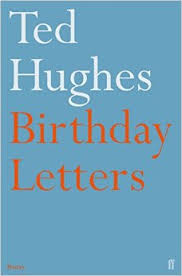
reading Blake Morrison on Ted Hughes published 5 September 1993 on yellowing newspaper pages that had tumbled out of a book I was re-shelving

As for his marriage to Plath, one day he may choose to speak about it, but for now –

I glimpse an old neighbor now divorced his wife and children have moved out we nod but very remotely

never watch when the blood is taken

images

Starbucks trade in the medical centre I watched being built years ago when I’d swim more often even then imagining myself at one of the windows waiting for news of some test or other

T. has woken by the time I return to eat but it’s me who puts away the groceries that have been delivered

handed me the bottle of wine laughing you don’t want to lose that he said my hesitation as I re-envisaged him as a romantic gift-bringer left an awkward pause I couldn’t cover

How does I have plenty of time transform itself swiftly into running late

hardly anywhere to park

Queens Wood stretches up behind these houses then bridges a road then sinks following its contours to the pond then rises again climbing to Muswell Hill and this is to be boxed into the word ‘topography’

A half empty carriage

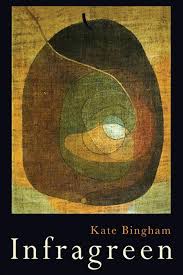
‘Ultragreen’ in which what is out there seems to come inside in a process Kate cleverly likens to photosynthesis and cleverly this gets away from me

imgres

The Whitehill Food Market I have passed that place

Walking up from the Emirates when I can’t get my mind off the strange limps and weaves of the way other people walk they are not hell but merely unfamiliar ways of moving

the fountains flow in the centre of the square

A dog wets its feet and drops a red ball into the pool and I guess its owner will be irritated by that

Brecht refused to award the prize to any of the five hundred entries. In none, he said, was there any successful attempt to communicate anything of any value

‘Nothing makes me feel more like a poet than being unable to talk’

Pub date Isobel calls it pub date

The absence of punctuation is in the spirit of the Daodejing it is the water course way one drop of water in the ocean no trace of it but don’t tell me it’s not there

A house in Selbourne

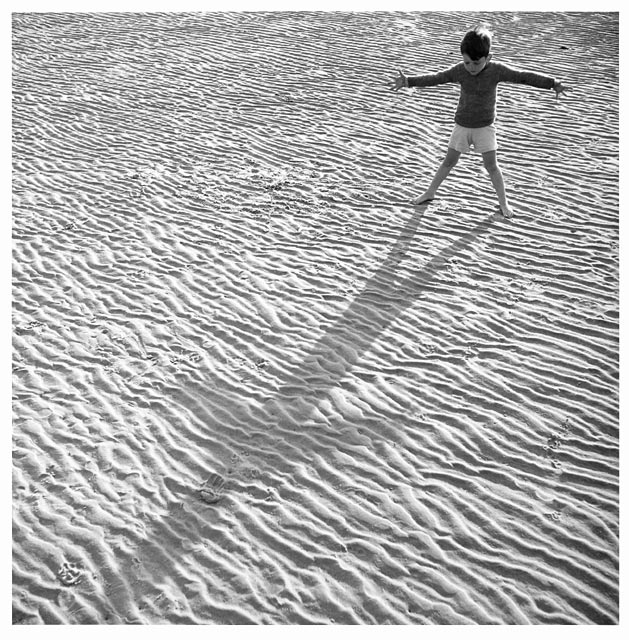
An image of a child with arms outstretched fingers widespread so much he might be a tree

Ripples of damp sand are the footprints of the shaggy oceanic beast

‘To embrace’

y30

A plain cheese and tomato brown bread roll and I am back madeleine-like to dinner-time sandwiches at Junior School during which we’d meet Mum from work and sit in Trowbridge Park why did we do that

It must have saved money

A timetable is the opposite of the way water flows and this grid dominates my life

Poems not even by rote but by the hour of the day

‘Pike’ so we watched YouTube clips of fish ducklings kittens being devoured it gets them started

Town kids city dwellers

as out of place as John Wyndham’s alien creatures like little pink M&Ms on four legs two of which are really arms they carry fire sticks

‘A sort of genocide’

The original Homer Simpson whose hands are uncontrollable

‘his thumb received a nasty cut. Although the wound must have hurt, the calm, slightly querulous expression he usually wore did not change’

images

Explore how far West’s presentation of Homer suggests he is a trapped man

The spider plant on the windowsill looks anaemic in its white pot against white painted window frames against thunderheads miles off

I am free at 17.10

I don’t need most of this

Occasionally there are evenings I can’t remember where I parked the car once I thought I’d left it on the garage forecourt after filling it up and I went in and got them to review the CCTV footage which told me that I had driven it away earlier that day and like some log-jam shifting slightly I had a vision of parking it on First Avenue and there it was all along

I need a framework perhaps

‘Echo Beach far away in time Echo Beach far away in time’

I like to change my clothes after a day’s work

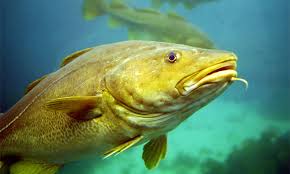
So I asked them to bring in pictures of pike and this one brought in a picture of a cod

A Delia recipe

The evening is filled with cakes of varying heights

42

How to Closely Analyse a Poem (and keep exam boards happy) #3 Edward Thomas’ ‘This is no case of petty right or wrong’

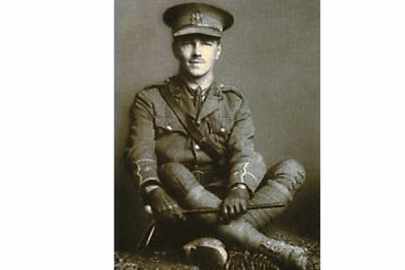
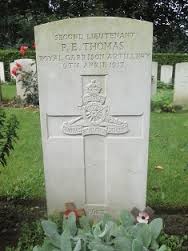
Having declared in my review of one year of blogging that I wanted to include more about teaching literature, I am posting three examples of the type of essay required by OCR exam board in module F661 (see also Essay 1 and Essay 2). The essay below focuses on Edward Thomas’ poem ‘This is no case of petty right or wrong’ which can be read in full here. The poem has Thomas probably remembering bitter arguments with his patriotic father about the rights and wrongs of the war. Beyond this essay written for specific purposes, the poem seems to me to contain so much unresolved material that it rather falls apart at the seams. Poems may well travel long distances in a few words but this one seems to me to trip itself up in doing so though it also seems to record Thomas’ final and fatal decision to join the fight in France. As can be seen below, OCR students are supposed to present a close analysis of one selected poem (AO2) while also putting that poem into relation with some others by Thomas (AO4).

imgres
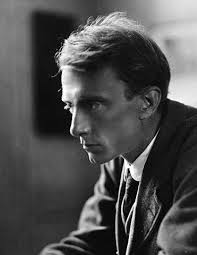
Thomas in uniform

“I am one in crying, God save England”. Explore the ways in which Thomas’ poem ‘This is no case . . . ’ wrestles with the idea of patriotism in a time of war.

In your answer, explore the effects of language, imagery and verse form, and consider how this poem relates to other poems by Thomas that you have studied.

Key:  close analysis is in bold;           comparative comments are in italics

In this poem Thomas seems to be continuing a debate – or argument even – with a more conventionally patriotic person (perhaps based on his own father) and trying to define his own view of patriotism and why he might join up to fight in WW1.The single block stanza suggests a dense or intense passage of speech. Though there are some vivid images included, this is an unusual poem for Thomas as it is argumentative rather than descriptive. Although it contains some of his characteristic uncertainties (as seen, for example, about memory in ‘Old Man’ for example), it does end with what seems to be a strong affirmation of patriotism: “God save England”. This love of England and its history is very typical of Thomas as in poems like ‘Words’ and the lovingly portrayed rural English landscape of ‘As the team’s head brass’.

The opening couple of lines contain a bold reply, suggesting a discussion is already underway. Thomas denies that the issue of patriotism can be easily resolved (even by “politicians and philosophers” – probably jingoists and pacifists respectively) because the rights and wrongs of it are not “petty”. This adjective with its plosive first sound conveys something of the anger that Thomas feels. He provocatively declares, “I hate not Germans”, the delaying of the “not” giving extra emphasis and the clashing ‘t’ sounds of “hate” and “not” again suggesting the anger, even aggression of the debate. Lines 3 and 4 make use of contrasting terms (Germans/Englishmen; hate/love) to make the point that the narrator will not simply obey the conventions or propaganda of “newspapers” of the times. Lines 5 and 6 repeat this contrasting device (hate/love) and hyperbolically and dramatically declare that his hate of a “patriot” makes his “hatred” of the Kaiser (the German leader) “love true”. This is evidently exaggeration as he goes on to describe the Kaiser metaphorically as “a kind of god . . . banging a gong”. This metaphor gives the Kaiser the powers of a god but he is portrayed as using them merely to create irritation and noise in the onomatopoeic, consonantal phrase “banging a gong”. The Kaiser’s actions seem pointless.

Scene from the Battle of Arras 1917

Line 8 again declares an independent viewpoint with heavy emphasis on the monosyllabic “not”, denying that the choice is a simple one “between the two” warring sides, or between “justice” (England) and “injustice (Germany) as jingoistic “newspapers” would have put it in 1914/18. The verb “Dinned”, prominently placed at the end of line 9, again suggests that Thomas feels the debate is a loud and noisy one (perhaps more shouting than clear argument?) and as a result he can “read no more”. This image of reading may refer back to the debates in the “newspapers” of the time or it might be more metaphorical, suggesting his ‘reading’ of the situation in general. What Thomas suggests is that he gets little more sense from these debates than he might find watching “the storm smoking along the wind / Athwart the wood”. This image of a natural landscape is much more typical of Thomas’ poetry in general, reminding me of the opening lines of ‘Melancholy’ where Thomas uses repetition, heavy punctuation and personification to evoke another stormy scene: “The rain and wind, the rain and wind, raved endlessly”. The storm image in ‘This is no…’ is ominous and perhaps war-like with the bad weather approaching, metaphorically “smoking”  and the sweeping and whistling of the weather evoked through sibilance and repeated ‘w’ sounds and even the enjambment of “wind / Athwart”. Perhaps this storm suggested to Thomas the next image, recalling the storms and wicked witches in Shakespeare’s Macbeth. The imagery here becomes more gothic briefly (again not at all characteristic of Thomas’ poetry in general). The irony is though that what emerges from these apparent alternatives (Thomas again using contrasting terms in this poem) is similar. The adjectives “clear and gay” and “beautiful” suggest that there is little to choose between these alternatives, echoing line 8 with its phrase “I have not to choose”.

imgres

Thomas’ discussion of patriotism continues at line 16 with a dismissive tone: “Little I know or care”. The admission that he may be “being dull” is surely ironic and his reference to “historians” must echo line 2 with its reference to “politicians or philosophers”. In each case, these reputedly clever and intelligent figures are being mocked as unable to solve the “case” being discussed. Thomas uses the mythical image of the phoenix (re-born from the ashes of its own destruction) and imagines the historians raking at the ashes when the bird itself – the valuable, beautiful – “broods serene above their ken”. The archaic word “ken” suggests the historians fail to understand (perhaps are behind the times?) and the verb/adjective combination (“broods serene”) again evokes the beauty and value of what they have completely missed.

It’s at this point that the poem abandons its blank verse form and breaks out into rhyming couplets. It has been suggested that these final 7 lines were added later and it is interesting that it is these that declare the patriotic view more confidently with the ringing rhyme sounds supported the confident tone. In line 20, the contrasting terms (“best and meanest”) now suggest a unity of purpose or viewpoint rather than the futile oppositions earlier. Thomas is more typically alone in his poems, an isolated figure as in ‘Rain’ where the narrator repeats the word “solitude” and says he has “no love” left to offer except the “love of death”. In complete contrast, here he declares he is “one” with many of his countrymen and the passion of their patriotism is conveyed in the powerful verb “crying” suggesting loud and vigorous support rather than grief in “God save England”. His discussion concludes here with his motive for patriotism: “lest / We lose what never slaves and cattle blessed”. This is a difficult line but the image of what never blessed slaves suggests that it is English tradition of freedom/liberty that he hopes to preserve and would fight for.

images

The final four lines use the traditional personification of England as a woman. This sort of personification is not something Thomas does a great deal though he does personify the sun in ‘March’ to evoke the mixed nature of the weather of that month: “the mighty sun wept tears of joy”. In these final lines, England (as often for Thomas) is linked with history with the phrase “ages made her”. The bold declarative tone is aided by the hyperbole in line 24 (“all we know”) and the connecting “and” is repeated which gives a rhetorical tone. There is an  interesting contrast in the rhyme words “dust” and “trust” suggesting that England has raised her people up from almost nothing to a more complex relationship of trust in the country being “good”. The statement that she “must endure” conveys a determination or perhaps a hope that England will survive the world war. The final line again uses contrasting words and creates a sense of paradox as well as drawing the argument of the poem to a conclusion: “as we love ourselves we hate our foe”. Most of this line is monosyllabic which also gives a sense that these final words are clear and simple and explicit in deciding for English patriotism and against “our foe”.

So the poem starts by seeming to reject conventional ideas of patriotism and jingoism and suggesting that this “case” or issue cannot be easily decided. Thomas employs lots of contrasting terms throughout the poem and suggests (especially through the phoenix image) that this sort of black/white argument tends to miss the real point. Thomas’ real point seems to emerge in the final rhyming lines: it is the old traditions of English liberty that are at stake in the war. This is something he does feel passionately about and it is on that basis that he chooses patriotic commitment: “God save England”.

Photograph of Helen Thomas found on her husband’s body at Arras