Remembering Blue Nose Poetry events in London

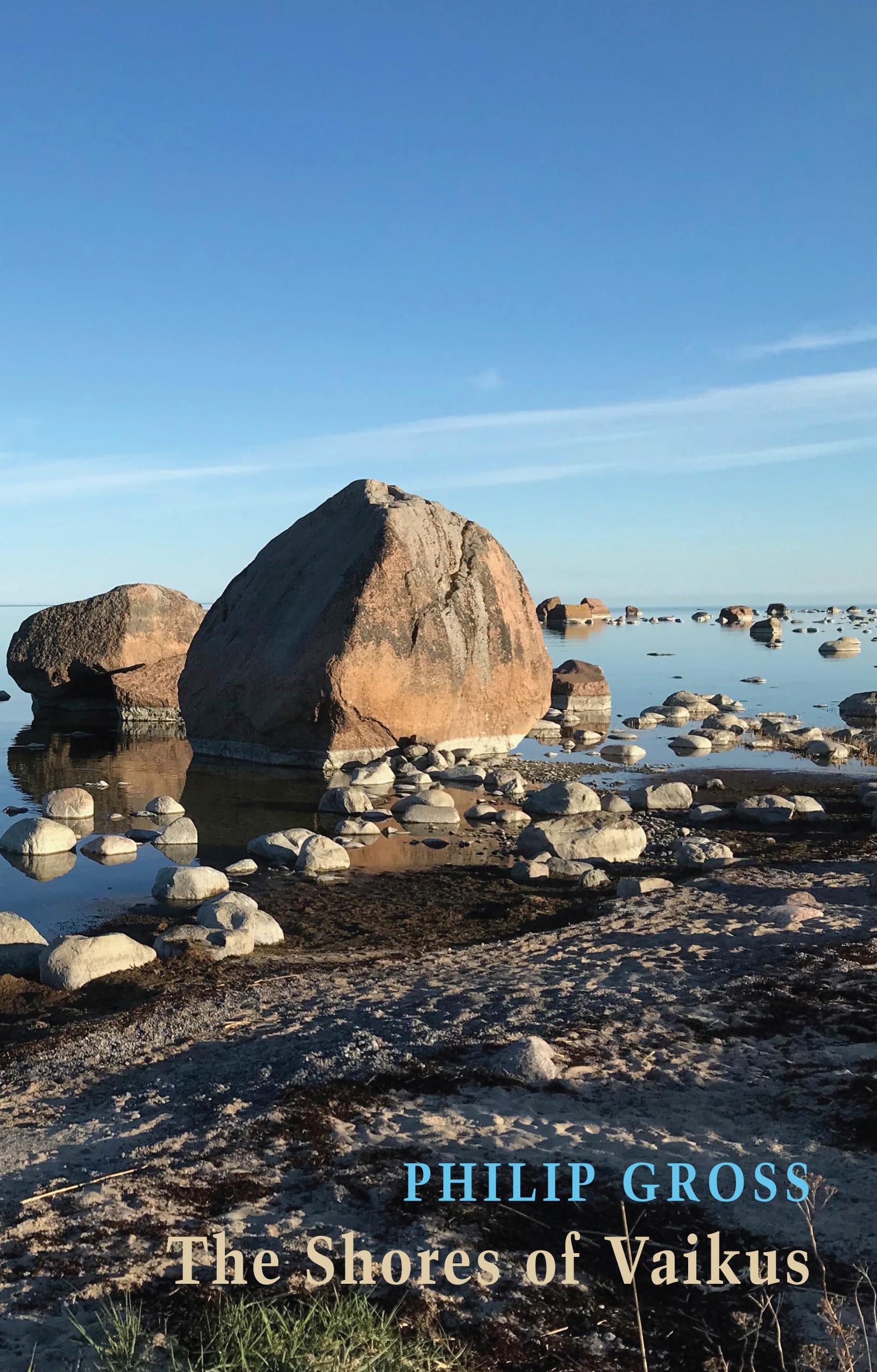
I recently attended the launch of Philip Gross’ new collection, The Shores of Vaikus (Bloodaxe Books, 2024) at the Estonian Embassy (the poems and prose pieces in the book refer to Gross’ father’s Estonian heritage and the poet’s visits to that country). I’ve followed his poetry since Faber published The Ice Factory in 1984. Neither of us could recall when we’d last met up but, after the event, I remembered that Philip was one of the first poets to read at the series of poetry readings (and associated workshops) I helped curate in the late 1980s/early 1990s, the Blue Nose Poetry series in London. I introduced him on the occasion (I still have the notes I made for the event in a Notebook for Spring 1989). I checked out the precise date in The Blue Nose Poetry Anthology (1993) which has sat on my shelves for many years now. The Blue Nose Poets (for personnel see below) invited all those who had read in the series to submit work and it strikes me now that it would be a shame if a record of our endeavours over a number of years was lost to sight completely. So, I’m posting here the Introduction to the Anthology and the full list of readers who appeared (often being paid nothing or a mere pittance) between 1989 and 1993. Interesting? I think so – given we hosted the likes of Dannie Abse, Patience Agbabi, Moniza Alvi, Simon Armitage, James Berry, Robert Creeley, Fred D’Aguiar, Michael Donaghy, Carol Ann Duffy, Michael Horowitz, Jackie Kay, Adrian Mitchell, Peter Porter, Peter Reading, Michèle Roberts, Ken Smith, and many more.

Introduction to The Blue Nose Poetry Anthology
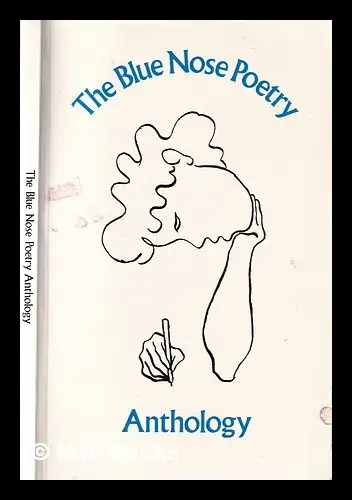
This anthology celebrates four years of Blue Nose Poetry in London. Its beginnings can be traced back to 1988, when Sue Hubbard advertised for members to join a small poetry workshop at her house in Highbury. Amongst others who began meeting regularly were the four founder members of the Blue Nose: Sue, Martyn Crucefix, Mick Kinshott and Denis Timm. At that time, poetry readings in London seemed to be in the doldrums. Uninviting rooms and draughty halls with chairs in impersonal ranks were often depressingly matched by poor organisation. The Blue Nose Poetry activities were set up with the express intention of providing workshops and readings in a friendly, accessible and organised atmosphere for new voices, up and coming writers and the already established. We were convinced that a cabaret setting of tables, candles and a drink with other enthusiasts could make poetry enjoyable. It was only with the discovery of The Blue Nose Cafe in Mountgrove Road, close to Highbury Stadium, that we found a name for the project and the real success of the Blue Nose began.

Our first poets came to the Cafe and read out of the goodness of their hearts. We thank them all once again. The first event with Michèle Roberts was packed and exceeded our wildest expectations. Within the course of one evening we had proved that exciting contemporary poetry could be presented really successfully. Soon, in response to Blue Nose’s track record of commitment and quality, GLA (later LAB) and Islington Borough agreed to support the project. Since then, there have been various changes. Mick Kinshott felt unable to continue as an organiser in 1990 and his commitment and humour was a great loss. His place was taken for two years by Bruce Barnes, whose knowledge of the poetry and arts funding world in London proved invaluable to the development of the project. More recently, Mimi Khalvati and Mario Petrucci have joined the three original members. In the middle of the Spring 1991 season, the Cafe where we held the events went into liquidation and a reading by Tom Pickard and Rosemary Norman sadly had to be called off. Regular events did not begin again until May 1991, when we moved into the more accessible, roomy and centrally located Market Tavern in Islington. Despite the many advantages of this new venue, there are a few who still regret the passing of the old Café which, though tiny, disorganised and terminally broke, did have a superb atmosphere for poetry.

In an appendix to this anthology, we list all the readers who have appeared at the venue/s – a genuinely comprehensive survey of poetry in recent years. This, of course, does not include the many poets who have had the opportunity to read from the floor at Blue Nose events. More importantly, this book contains no record of the hundreds and hundreds of people who have enjoyed and supported Blue Nose Poetry. This book is dedicated to them.

Martyn Crucefix / Sue Hubbard / Mimi Khalvati / Mario Petrucci / Denis Timm

Full List of Main/Support Readers for Blue Nose Poetry Seasons 1989 – 1993

March – July 1989

Michèle Roberts read with Martyn Crucefix; Philip Gross read with Sue Hubbard; Jeremy Silver read with Mick Kinshott; Jo Shapcott read with Denis Timm; Leo Aylen read with Gerda Mayer; Alison Fell read with Hume Cronyn; The Blue Nose Poets; Carole Satyamurti read with Barbara Zanditon; Michael Donaghy read with Rupert Slade; Adam Thorpe read with Al Celestine.
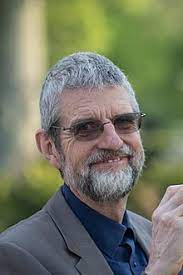
Philip Gross

September – December 1989

Ken Smith read with Mimi Khalvati; Anna Adams and Julian May; Gerda Mayer read with Chris Powici; The Blue Nose Poets; The Performing Oscars; Maura Dooley read with Sara Boyes; Fred D’Aguiar read with Matt Caley; Matthew Sweeney read with Hilary Davies.

January – April 1990

Fleur Adcock read with John Harvey; Dannie Abse read with Myra Schneider; Elaine Randell read with Frances Presley; Hugo Williams read with Keith Spencer; Pitika Ntuli read with Bruce Barnes; John Cotton read with Bridget Bard; Michele Roberts read with Peter Daniels.
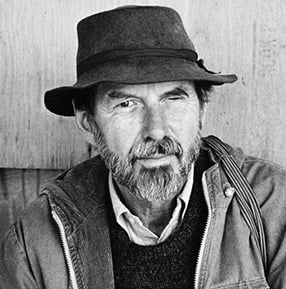
Robert Creeley

May – July 1990

The Blue Nose Poets; Sarah Maguire read with Vicki Feaver; Jeni Couzyn read with W N Herbert; James Berry read with Susan McGarry; Simon Armitage read with Chris Gutkind; E A Markham read with Mimi Khalvati; Brian Patten.

September – December 1990

In the Gold of Flesh anthology with Valerie Sinason, Dinah Livingstone, Pascal Petit, Jenny Vuglar; George Szirtes read with Gabriel Chanan; Kit Wright read with Candice Lange; The Blue Nose Poets; Michael Horovitz read with Raggy Farmer; Patience Agbabi and Judi Benson; Jenako Arts Writers; Carol Ann Duffy read with Steve Griffiths.

January – March 1991

Judith Kazantzis read with Mario Petrucci; Robert Creeley read with Mick Kinshott; Jackie Kay read with the Speech Painters; Peter Forbes and Eva Salzman; [Blue Nose Cafe in Highbury suddenly closes]; Lemn Sissay read with Adam Acidophilus.

May – July 1991

Peter Porter read with Elizabeth Garrett; The Blue Nose Poets; Carole Satyamurti read with Leon Cych; Peter Scupham read with Lucien Jenkins; Leo Aylen read with Rosemary Norman.

October – December 1991

Sylvia Kantaris read with Andrew Jordan; Gillian Allnutt read with Helen Kidd; Alan Jenkins read with Eric Heretic; Sean Street and Hubert Moore; Lee Harwood and Richard Cadell; Xmas Party – Tony Maude, Speech Painters and music from Dean Carter.

January – April 1992

Adrian Mitchell; David Constantine read with Tim Gallagher; David Morley with Martyn Crucefix; Sue Stewart read with Bruce Barnes; Glyn Maxwell read with Sue Hubbard; Peter Abbs read with Nicky Rice.
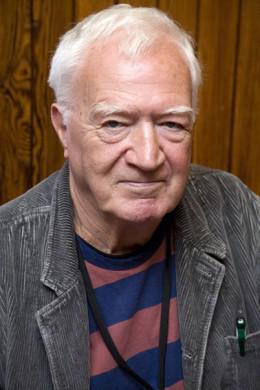
Adrian Mitchell

May – July 1992

Jo Shapcott read with Mick Kinshott; Bobbie Louise Hawkins read with Robert Sheppard; Birdyak – Bob Cobbing and Hugh Metcalfe; Colin Rowbotham read with Richard Tyrrell; Ken Smith read with Eric Heretic.

October – December 1992

Connie Bensley and Felicity Napier; The Poetry Show at Rebecca Hossack Gallery; Donald Atkinson read with Jane Duran; Ruth Fainlight read with Moniza Alvi.

January – April 1993

Peter Reading read with Briar Wood; Ruth Valentine; Myra Schneider read with Mario Petrucci; Carol Rumens read with Daphne Rock.

Impressions of the TS Eliot Prize Readings 2025

I’ve always enjoyed Ladybird spotting the ways poets present themselves in a reading situation. Last night’s TS Eliot prize readings at the Festival Hall was a grand opportunity for such a pursuit. Ten readers in a row. Here are a few jotted down impressions, gleaned from the on-line version of the show. Before you crucify me for such poor, ill-informed critical judgements, I do hereby declare I have only thoroughly read two of the contenders, so these are very much impressions of ‘what happened on the night’. I’ll leave mentioning my favourite and my predicted winner (not the same poet) to the end. The award will be announced this evening (Monday 13th January 2025).

The housekeeping…. This year, the shortlist was chosen by judges Mimi Khalvati (Chair), Hannah Sullivan and Anthony Joseph. The TS Eliot Prize (it says on their website) is among the world’s most celebrated awards. Inaugurated in 1993 to celebrate the Poetry Book Society’s 40th birthday and to honour its founding poet, the prize is now awarded by the TS Eliot Foundation. The evening was introduced by Ian McMillan.

In the order the shortlist for this year’s prize was presented last night:

Katrina Porteous Rhizodont (Bloodaxe Books) – KP was described as a northern lighthouse by Ian McMillan – finding the universal in the local – the north east of England – Holy Island – this is poetry full of its concrete ‘subject’ – details and actuality, a powerful wish to communicate (the book is full of explanatory Notes) – here, the coal beginning (to be formed) again – Our Billie – a local girl, forms the backbone of one poem  – some unfortunate ‘down with the kids’ moments, referencing Insta and emojis – KP reads in a bobbing, fidgeting sort of way – does stillness evoke more power? – ‘The children STARE at their phones’ – particular words picked out for heavy emphasis – a bit over insistent on their significance – a robot explores the moon surface now – an interest in new technology – but then, the Antarctic without ice – the book title, rhizodont, is a fish transitioning onto land a very long time ago – the delivery here surely too mimetic – snarly, is that how a fish sounds? But passionately held views without a doubt.

Rachel Mann Eleanor Among the Saints (Carcanet Press) – McMillan suggested that Mann takes up liturgical language and re-invents it (for a modern audience?) – Eleanor the central figure is a trans woman of the 14th century – at one point she’s in conversation with Julian of Norwich and Margery Kemp, so lots of hazelnut references – but thank goodness I didn’t hear ‘all shall be well’ – the delivery a slow emphatic one, I actually wrote ‘from the pulpit’ before I noticed (I think) the dog collar – am I right? – lots of first person voice going on here – often in an ecstatic (religious) mode, a few grand arm gestures – the language often moving towards Hopkins (why not?) – masculinity? –embroidering a priest, sanctus, sanctus, then love – the murdering of a trans girl, drawing a bead on contemporary relevance – in 1394 Eleanor was arrested – the dark shades worn by RM curiously out of keeping with the verse lines.

Carl Phillips Scattered Snows, to the North (Carcanet Press) – from the US –‘quiet’ being the word here – rather sweetly alluded to his sponsors for the evening – Lemsip – welcome to England – the lines being read in the cadence of a breath, a dying fall – suggestive here of an interior communion, very delicate, exploration of an emotional life – McMillan suggested this is where time and intimacy meet – what do they say to each other I wonder? – a taking off of  clothes – then he also takes his clothes off – colours and a bell – a concern (as technique and subject matter) for precision, for what is true? (how unfashionable in the US) – snows in the title poem, Phillips manages to take us to Roman history and love without us getting lost along the way – quietly persuasive and good company – a forest journey – things almost said – a vulnerability to this writer (someone else posted this idea) I’ll borrow it.

Gustav Parker Hibbett High Jump as Icarus Story (Banshee Press) – opening with allusions to Ovid for the Icarus link – reaching for the sunlight (not the best of phrases) – but athletics as a metaphor it seems at first – sliding into athletics for real – practising high jumps with a friend – in a world where they are regarded as ‘interchangeable’ because of ethnicity – the dark body hanging – the poems delivered head down, reading from the page, a whispering voice, not coming from the throat or diaphragm, so intimate as to be rather too in-turned – these are plain narratives, lots of ‘stuff’ – one later poem is longer, more sustained and the insistence on these real details begins to transform the poem into something a bit more visionary – jumping 6’ 8” – Noah, all he wanted was the stars – black boys doing anything – the USA and Mexico – to customise paradigms if they don’t fit.

Karen McCarthy Woolf Top Doll (Dialogue Books) – this turns out to be a verse novel so rather hard to convey a clear impression of it – Hugette a female recluse who lived with lots of dolls – KMW read several dramatic monologues this evening – Maman being spoken by a French doll – a rag doll speaking as if a military general, denying that he is a ‘gollywog’ – big pause on that – these are probably funny in many ways – but with their points to be made – but Woolf is acting them out with neck, eyes and eyebrows – male dolls, deep-voiced, female, light, a dancer doll flighty voiced – Ballerina Barbie is all en pointe and pirouette (arms being waved on stage) – yes, fictional and imaginative recreation, but this begins to feel like a sort of ventriloquism in the delivery – the mask is evident – being acted out – I can’t hear the verse of this verse novel – a Japanese doll to finish off with – cherry blossom, bento, the moon. My review of KMW’s earlier collection An Aviary of Small Birds.

Interval

Helen Farish The Penny Dropping (Bloodaxe Books) – a book-long retrospective on an old ended relationship – trying to say what is perhaps inarticulate – joy and ache – biographical narrative as universal – McMillan suggests the relationship is merely a ‘hook’ rather than the ‘focus’ that it surely is? – the delivery is slow and fluting, very deliberate and clear almost as if Farish is finding the words (for the first time) as she goes – effective I think – again poetry with a lot of subject stuff – lists of local colour, places, events, food and drink – things we loved, a list – though spoken of as ‘a’ relationship this feels really quite narrowly autobiographical – driving the M40 discussing having (not having) children – a bit toe-curling, some allusions to film Pretty Woman with Gere and Roberts – who is it says ‘we were made for each other’ these days – a valentine card? – nice recipe at the end, pasta and red wine – but surely a candle was on the table too?

Peter Gizzi Fierce Elegy (Penguin Poetry) – also from the US – the delivery here a steady pulsing (these are short lines, I think, and Gizzi seems to be breathing and voicing that – a rich, resonant voice (the kind you’re born with) – a terrific flow and a shifting from concrete to abstract – the moon and then ‘kinda real, kinda not’ – the ingenious light – a letting out of inner weather – a rather self-conscious making of fine phrases and with the ‘self’ as the primary subject (not the outer) there are passages of pure lyricism – risks even allusions to the Muse, a lyre, but bedded in American colloquial – neatly done – forests, shapes, landscapes all becoming the inner life, representing it – shapes become the beloved – without reading more I’m none the wiser as to what is elegiac here or fierce – but interesting poems.

Hannah Copley Lapwing (Pavilion Poetry) – McMillan suggesting Copley’s book pushes language to the state of music – do we expect Mallarme? – not at all – the lapwing gives the chance for some birdsong – but lapwing does not speak but is rather spoken about – another bird, a daughter… Peet? – all the folksy names for a lapwing, of course – the bird is found to be missing – a mosaic, otherwise know as – the bird becoming person – a poem about addiction – our creaturely behaviours – the difficulty of caring for someone (some bird) – raggedy, slugs, let him disintegrate, love – Copley also reads in cadences that fall every time, not quite clear whether these are the lines of verse or her grammatical units – the lapwing figure is anthropomorphised or a human being is birdified – a nice balancing act mostly – though some less so – a family tree and (very human) grief – something to feather – ready to give – think I’d have liked more musicality.

Gboyega Odubanjo Adam (Faber & Faber) – Odubanjoof course not present after his tragic, untimely death – this his first and only collection – Adam the name given to the torso of a boy pulled from the Thames some years back – a couple of recordings of the author were played – poems read by Joe Carrick-Varty and Gabriel Akamo – the latter the much better reader – a memorial set of poems to the disappeared, the dispossessed – the dead boy’s imagined journey through Germany to the UK – thank you to the woman, the people, the police – this language is more like music – a montage-like, even Whitmanesque feel to the rolling cadences, a riffing and use of repetition, the material rising towards the mythic – blow trumpet as if apocalyptic – chorus, musical bridge transition, outro – a burned CD, its track-listing – a weird fairy tale about water – frog and scorpion, two sisters, ocean and sun in a dialogue – gosh – yes this is good work.

Raymond Antrobus: Signs, Music (Picador Poetry) – this was introduced as a book about fatherhood and masculinity – wasn’t that the 1990s? – a subject for all time – the pleasures (and anxiety) about bathing with your own child – coded with scripture – the son doesn’t pee, but it would have been OK if he did – this is poetry with a lot of ‘I’ – but surreal little flights and often incantatory, an enjoyable allowance of the musical nature of language – I broke up with, I broke up with – anaphora-driven here – the buying of a second hand noise – but I said nothing is where it ends – the intrigue of what remains silent – poems are being performed but not acted out – though there’s a bit of surf-board business, arms keeping balance, as the poem is read – teaching his son BSL – for music – another swaying, conducting sort of motion – yes – very engaging – ‘poetry is music from the place we were born’ (though that’s a very constricting definition). I reviewed two of RA’s earlier collections – The Perseverance and All the Names Given.

On the night, my favourite was Carl Phillips (despite his sore throat). But Gboyega Odubanjo’s work was also powerful in ways that I cannot articulate and for that reason – but also for reasons external to the poetry – I think he will be posthumously awarded the TS Eliot Prize 2025.

Late Addendum (11pm Monday 13th January) – and the winner was Peter Gizzi Fierce Elegy (Penguin Poetry)

The Poems of Mary MacRae

I knew Mary MacRae as a member of a poetry workshop we both attended in north London. She came to writing poetry late and published just two collections – As Birds Do (2007) and (posthumously) Inside the Brightness of Red (2010) both from Second Light Publications. Her poem ‘Jury’ was short-listed for the Forward single poem prize and was re-published in the Forward anthology, Poems of the Decade (2011). That anthology is now set as an A Level text and it was through teaching from it recently that Mary’s work came back to mind.

untitled

Mary died in 2009 at the age of 67. As a writer she was just beginning to hit her stride. Mimi Khalvati praises her as “a poet of the lyric moment in all its facets” and judges Mary’s ten years of work as an “extraordinarily coherent” body of poems. Khalvati goes on: “Because of the natural ease and grace of her diction, it would be easy to overlook Mary’s versatile formal skills, employed in sonnets, syllabics (à la Marianne Moore), numerous stanzaic forms, but nowhere evidenced more forcefully than in her ‘Glose’ poem, inspired by Marilyn Hacker’s examples, in which she pays homage to Alice Oswald, as in a previous glose to Mary Oliver – a trinity of wonderful lyric poets, in whose company Mary, modest but not lacking in ambition, shyly holds her own.”

In 2009/10 many friends and writers contributed pieces in memory of Mary to the magazine Brittle StarMost of this material can now be found here with prose contributions from Jacqueline Gabbitas, Myra Schneider, Lucy Hamilton and Dilys Wood. I wrote a poem at the time (remembering meetings of the poetry workshop in London) and I have more recently revised it more than a little. I’m posting it here alongside the review I wrote of Mary’s posthumous collection with the idea of making the review more easily available and perhaps encouraging others to seek out Mary’s published work.


Before the rain arrives

i.m. Mary MacRae


Perhaps five or six of us standing there

at the familiar purple door

those afternoons we lost beneath poetry’s

red weather our voices and lines


while the genuine thing built unremarked

beyond the window’s diamond panes

till it was time to depart

then our turning back in the familiar porch


our repeated goodbyes being called

our uncertain bunching

that coheres and delays until one of us

breaks loose and we are each free to disperse—


yet on that day there were raindrops

on the back of a hand on another’s cheek

and though we fiddled with car keys

we fidgeted in trainers and faded jeans


we were an ancient chorus for a moment

crying the single syllable

the drawn-out sound of r—a—i—n

because we were weary of weeks of drought


and now it came and we saw where it fell

the raindrops beginning

to shrill their high-pitched release

from interlaced shadows


from the skirts of clouds

and what none of us knew until we’d seen

one more year was that one of us there

despite our sharp eye for openings


and endings would have to face last things

like the white vanishing of panicked doves

into dark thunderheads—

on these more recent afternoons


just four or five of us here perhaps

in our minds her shrewd observations

her words urging us closer to listen

for the noise rain makes before the rain arrives


maxresdefault


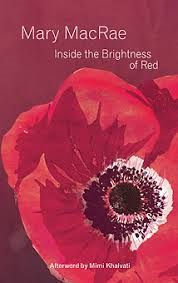
Review:  Mary MacRae, Inside the Brightness of Red (Second Light Publications, 2010), 96pp, £8.95, ISBN 978-0-9546934-8-0

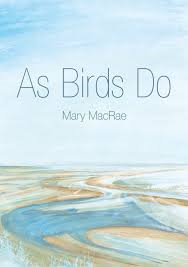
Mary MacRae’s 2007 debut collection was titled As Birds Do. It is true that birds feature variously in that and this, her sadly posthumous new collection, but if we are unaware of the earlier title’s provenance, we might anticipate no more than a delicate, poetic take on the natural world, the kind of thing that fills so many small magazines. But MacRae alludes to the moment in Macbeth, when Lady Macduff and her son contemplate death. The mother asks, “How will you live?” and the son, with a wisdom far beyond his years, replies, “As birds do Mother . . . . With what I get I mean”. MacRae’s poetry is full of such emotionally-charged, vital identifications with natural creatures and, more profoundly, with the sense that what can sustain us in life must be derived from everyday common objects.

book 1

As a title, Inside the Brightness of Red, also flirts a little with poetic affectation, but once inside the book’s covers, it is MacRae’s precise, even astringent, penetration that is so impressive. She reads the world around her and finds spiritual meanings. It is no surprise that R.S. Thomas supplies the epigraph to this new collection: “It is this great absence / that is like a presence, that compels / me to address it without hope / of a reply”. So a poem called ‘Yellow Marsh Iris’ promises to be a naturalist’s observation then startlingly wrong-foots the reader with its opening line (“It’s how I imagine prayer must be”) and proceeds to its seamless business of combining accuracy of observation with an emotional and intellectual narrative. She studies the flower stems crammed into a glass vase:


their stiff stems magnified

by water, criss-crossing

white, pale green, green

in a shadowy coolness


We are reminded that there is a kind of intensity of observation that succeeds in prising open our relationship with the outer world in such a way that while encountering the Other, we more clearly glimpse ourselves. MacRae concludes her process of “looking and looking” at the flowers that has given rise to the sense that “they seem to hold / all words, all meaning, / and what I’m reading / is a selving, a creation.”

MacRae’s visions are almost always peripheral, fleeting, askance. The unfolding of daffodils – which, in a quite different age, Wordsworth could contemplate steadily and then stow away for future use – here can never be more than something


waiting for us somewhere in the wings

like angels,


your darting after-image

between the pear-tree

and the brick wall.

(‘Daffodils’)


In the same vein, MacRae has Bonnard, paint his mistress, Marthe de Meligny, and declare that his sensibility is triggered by “looking askew”. The visionary moment occurs only when “Glimpsed through the half-open door / or the crack of the hinge-gap” (‘Bonnard to Marthe’) and this collection’s editors (Myra Schneider and Dilys Wood) have drawn it to a close with yet another such moment: “Turning back to look through an open door” the narrator sees an ordinary room “utterly transformed, / drained dry and clear, unweighted” (‘Un-Named’).

book 2It may be that this ability to be sustained by scraps and glimpses, the sense that the self is most fully resolved in a lack of egotism, in its encounter with ordinary things, can diminish some of the sting of mortality. In a poem like ‘White’, MacRae manages to celebrate again the ordinariness of familiar things while at the same time sustaining a contentedness (or at least an absence of fear) at the prospect of the self’s vanishing: “You can disappear in a house where / you feel at home; the rooms are spaces / for day-dreams, maps of an interior / turned inside out”. Rather than Macbeth, it is Hamlet’s resolve to “let be” that comes to mind as this calm, accessible, colourful and wonderfully dignified poem concludes:

 

Let

it all go; soon the door of your room


will be locked, leaving only a slight

hint of you still, a ghostly perfume

lingering in the threadbare curtains and sheets.


But MacRae’s contemplation of her own death, most likely, was no such safely distanced envisaging. Dying at 67 years old, she’d had only 10 years of writing poetry, but it had evidently become a vessel into which she could pour her experience without ever abandoning herself to artistic ill-discipline. ‘Prayer’ is almost too painful to read. The narrator is emerging from the “thick dark silt” of anaesthetic to hear someone sobbing and a second voice trying to offer comfort. As her befuddled perceptions clear and the poem’s tight triplet form unfolds, the second voice is understood to be saying “’Don’t cry, Mary, / there’s no need to cry’”. The collection’s title poem can bluntly report that “the cancer’s come back” yet artfully balances such devastating news with the landscape of Oare Marsh in Kent where colours “are so spacious, / and have such depth they’re like lighted rooms // we could go into” (‘Inside the Brightness of Red’).

untitledFor MacRae’s interest in and skill with poetic form, we need look no further than the extraordinary glose on a quatrain from Alice Oswald (the earlier collection contained another on lines from Mary Oliver). For most poets, this form is little more than an exhibitionist high-wire act, but MacRae’s poems are moving and complete. Her use of poetic form here, particularly in some of these last poems, reminds me of Tony Harrison’s conviction that its containment “is like a life-support system. It means I feel I can go closer to the fire, deeper into the darkness . . . I know I have this rhythm to carry me to the other side” (Tony Harrison: Critical Anthology, ed. Astley, Bloodaxe Books, 1991, p.43). Appropriately, in ‘Jar’, she contemplates with admiration an object that has “gone through fire, / risen from ashes and bone-shards / to float, nameless, into our air”. Here, the narrator movingly lays aside the wary scepticism of the Thomas epigraph and rests her cheek on the jar’s warmth to “feel its gravity-pull / as if it proved the afterlife of things”.

This inspiring collection contains a short Afterword by Mimi Khalvati who MacRae frequently praised as a critical figure in her work’s development. Khalvati lauds her as “a poet of the lyric moment in all its facets”. She judges MacRae’s ten years work as an “extraordinarily coherent” body of poems, suggesting that, among the likes of Oswald and Oliver, MacRae’s work is “modest but not lacking in ambition”. For me, her two collections certainly exhibit a modesty before the world of nature that is really a genuine humility, allowing both the physical and spiritual worlds to flower in her work. This was her true ambition, pursued in full self-awareness and one that, before her sad leaving, she had triumphantly fulfilled.


Visiting Torbay Poetry Festival 2017

p045rwch[1]

The 11am train out of Paddington is so packed that I expect to see Jeremy Corbyn sitting on the floor between carriages – disgruntled at the discomfort of his position, if more gruntled at the clear evidence of the underfunding of public transport. I usually choose the Quiet Carriage to varying degrees of success and on this occasion, from Reading to Swindon, I have the pleasure of eavesdropping on a phone conversation in a language I do not know. A contemporary version of Frost’s the sound of sense – though I’m not sure I make much sense of the sounds themselves, half of it murmuring like love-talk, the other staccato as a list of shopping. Maybe that’s just what it is!

Anyway, I have work to do – correcting replies I’m giving to an email interview to be published by South Bank Poetry in the next couple of weeks. I’ve already prepared the reading I’m giving on the Saturday night, so I don’t bother thinking about that. Getting off the train 3½ hours later, I meet up with Maggie Butt who is still recovering from running the recent Poem-a-Thon in support of the Enfield Refugee Fund. Possibly, I think, she’s reeling less from the sheer effort involved as from the whole event’s astonishing success, raising something like £14000 in one day. We walk along the breezy promenade at Torquay to the Livermead Cliff Hotel which is the focus of the Torbay Poetry Festival. It turns out they are not expecting me until the following day but with some juggling of rooms I’m soon ensconced and ready for some poetry.

train[1]

I had arrived in time to hear Myra Schneider and Alasdair Paterson reading. But Myra was unwell and absent, so her poems and little emailed introductions were beautifully read by Mimi Khalvati and Danielle Hope. I know Myra’s work well and it is often very location specific, so it was a strange feeling having north London brought so vividly before me when, just outside the expansive windows, the English Channel was rolling in towards the beach. Alasdair (amongst many other things) runs the Uncut Poetry series in Exeter, so he is both in-comer and relative local to the south west. With the kind of Scottish burr that in itself draws attention to the sound of any poem it is applied to, he read in a quiet, level voice. Especially memorable was a poem with a surrealist and Chinese slant, presenting a kind of bureaucratic Confucianism, managing to convey both a satirical edge and a rather joyful sense of freedom.

Early evening on the Friday, Kathy Miles read her poems layered with myth, history and personal experience. And Matthew Barnard, who is published by Eyewear, read several poems about visits – or maybe residence – on the Isle of Skye. One of the great recommendations of this little poetry festival (run by Patricia Oxley, who also edits Acumen, and her committee) is indeed its small scale. It means guests and readers are always in touching and chatting distance of each other. Someone who is a regular attendee described it to me as more like a house party and it certainly has that sense of a bunch of people meeting up in an endless, delightful carousel of combinations and re-combinations. Maybe all I mean is that it is very friendly!


DuncanForbes-200x245[1]
Duncan Forbes
 

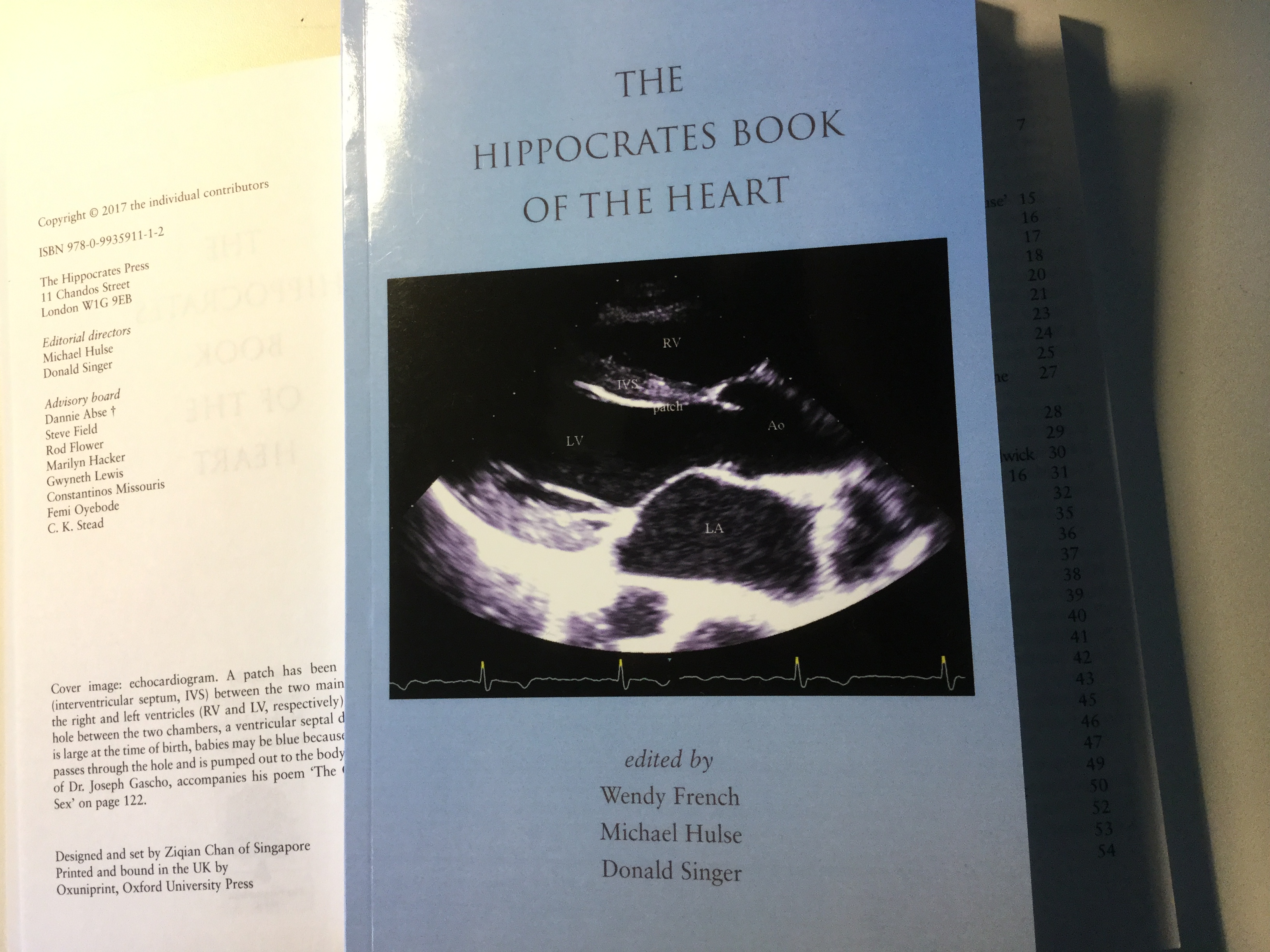
The first half of Friday evening’s reading was given by the urbane, witty and clever Duncan Forbes. One of his poems expressed the concern, shared by so many of us who work with language, about the number of words that seem to be dropping out of common usage. So many of these are associated with the natural world, the weather, earth and landscape. Duncan was smart and engaging on the subject but interestingly a number of his more recent poems seem to tone down the wit and word-play in order to focus on landscape – in one instance a gloriously evoked Portuguese setting. Mimi Khalvati’s work is well known and tends to provoke praise such as ‘lush’ and ‘graceful’ which is true enough though she also has a quiet almost metaphysical wit of her own. She read a poem from the just published Hippocrates Society anthology of the heart:


Old tramping grounds are bruises to the heart.

Go visit them at dusk when belisha beacons,

reflected in dark windows, flash and dart

like fireflies [. . .]

IMG_0287

We were expecting Storm Brian on the Saturday and being just metres from the water’s edge it was awaited with some trepidation. But living up to its rather un-tempestlike name, Brian blew only in brief gusts, ruffling Torbay into rather poetic white horses rather than anything more dangerous. It seemed appropriate that the main event of the morning was a celebration of Cornish poet Charles Causley. This was coordinated by John Miles and included members of The Causely Trust and the poet’s biographer, Laurence Green. We heard about Causley’s childhood, the early death of his father, his war experiences in the navy, then his years teaching at the same school he attended. A curious life of great rootedness and sense of locale, combined with his sense of the ocean always at his doorstep and the possibility of travel. Perhaps the highlight of the session was an unaccompanied singing of Causley’s ‘Timothy Winters’ by Roy Cameron. I’ve known some of the poems for ages, but the event made me want to go back and reread them. I always remember something Causley wrote, echoing Frost’s ideas about ulteriority, that poems are always about something else and that’s why they are so hard to write.


blogcharlescausley2[1]
Charles Causely
 

If Patrica Oxley sets the organisational tone for the Festival, it is her husband William who sets the sociability quotient. This is also reflected in his most recent publication, On and Off Parnassus (Rockingham Press), a collection of anecdotes, or Oxley-dotes, which has been described as giving readers “a finely judged mixture of anecdote and nuanced memoir”. William’s encounter with a much larger-than-expected tiger cub proved entertaining. Alongside him Maggie Butt read from her recent collection, Degrees of Twilight, taking us from a trip to Cuba to her very moving response to Dylan Thomas:


Why not go gentle into that good night

like drifting into sleep from sun-soaked day,

remembering the brightness of the light?


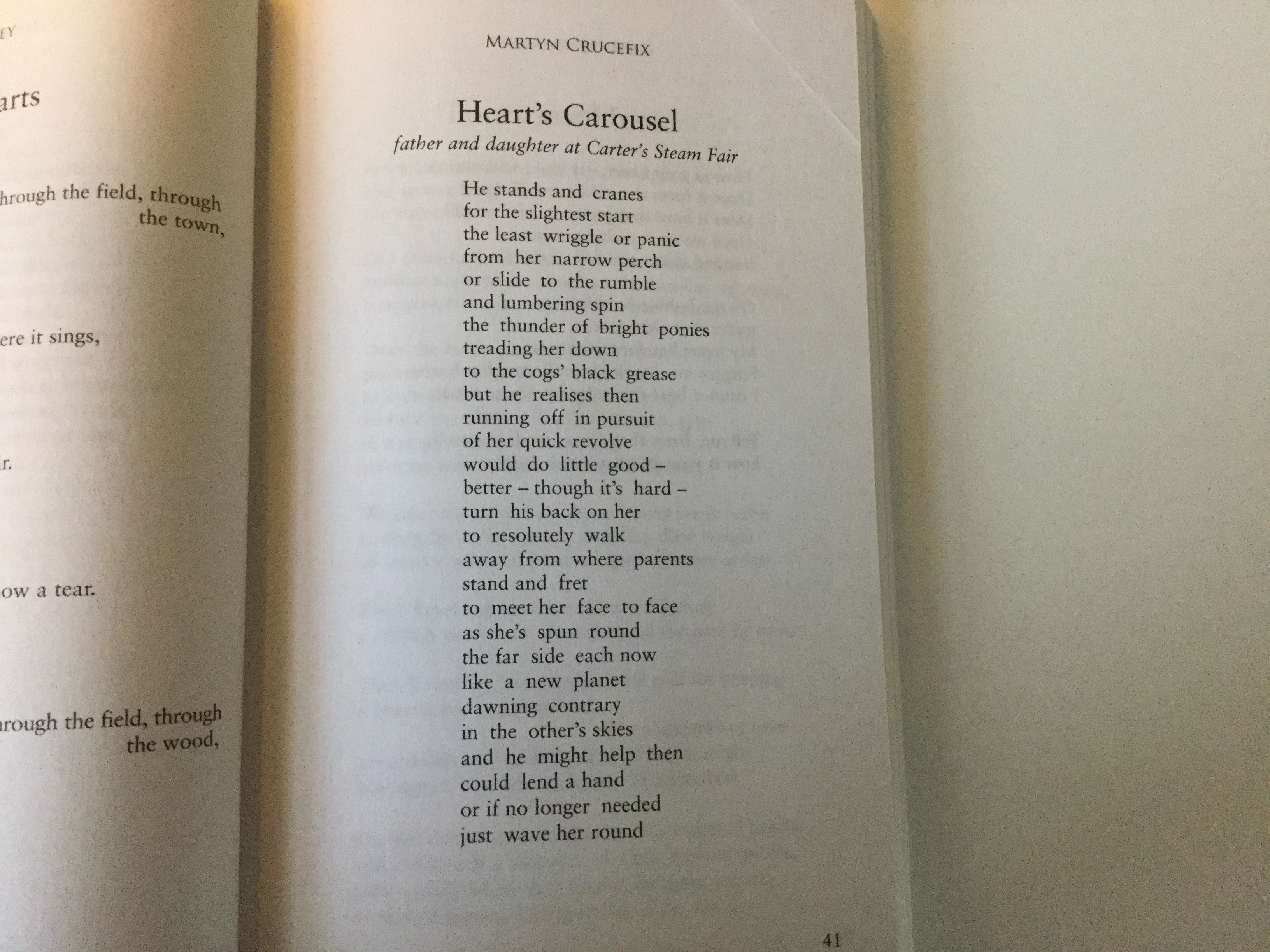
Penelope Shuttle had judged the Festival poetry competition this year and she announced the winners at an event later on Saturday afternoon. The winner was Cheryl Pearson with the poem, ‘The Fishwife’. My reading was before the dinner and the wine began to flow. I read almost wholly from my new book. I veered off plan by including a poem included in the new Hippocrates anthology. It seemed appropriate to place it after another poem about my daughter a few years ago – the first was about visiting a church and extinguishing somebody else’s candle and the heart poem about watching her, for the first time, riding a fairground carousel alone: anxious moments that yielded up thoughts for this father at least about the paradoxes of closeness and distance as children become more and more themselves:

IMG_0286

Regretfully I could not hang around long on the Sunday morning as I had to get back into London for a reading with Tim Ades and Caroline Maldonado (dear reader, my life is not usually so literarily busy, far from it). Sadly then, I had to miss Penny Shuttle’s main reading as well as work from Alwyn Marriage, Shanta Acharya and Isabel Bermudez. On the return train, I read and loved Penny’s most recent book, Will You Walk a Little Faster? (Bloodaxe Books). And – in the light of the TS Eliot shortlist which had been released over the weekend – I was left wondering why she was not on it. Her work is always so sharp, surprising, endlessly experimenting, touching, visionary, down to earth, above all immensely human. These are not things I could say about all the shortlisted books. Ah, literary prizes, the delight of the few chosen publishers everywhere. And while I’m busy complaining, why is Nick Makoha’s powerful book not on the list? But enough bitching – the Torbay Poetry Festival is remarkable for a number of things, but especially its inclusive and friendly tone. Stay with that.

wp2f72b580_06[1]


What Have I Been Reading: April – June 2015

Up-dated June 2015

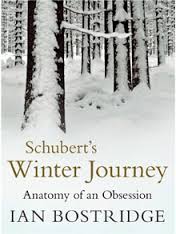
I’ve taken a while getting through the almost 500 pages of Ian Bostridge’s fascinating musical, artistic, poetical, historical, political discussion of Schubert’s Winter Journey.Taking Wilhelm Muller’s poem sequence Die Winterreise, Schubert re-organised it (otherwise changing little) to produce his own Winterreise and, discussing this process and his own performances of the piece over many years, Bostridge touches on Kant, Goethe, Darwin, Friedrich, Alfred Hitchcock, and Aristotle’sMeteorology among others. The Muller text would make an interesting translation project.

imgres

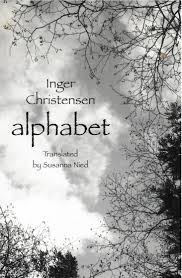
An earlier post about the abecedary form lead several people to ask me whether I’d read Inger Christensen’s 1981 sequence alphabet. Well I have now and it is just stunning. Based on the Fibonacci sequence and moving from A to N in alphabetical sequence too, Christensen writes fluid, Whitmanesque passages, laying aside ‘either/or’ for ‘and’, page after page of which reminds me of Rilke at his most passionate. This is a brilliant translation too by Susanna Nied. Christensen is a writer I need to explore more.

imgres

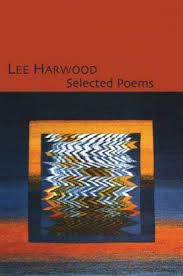
A few weeks ago I blogged on Lee Harwood’s work which I was also discovering for the first time. Since then I have read Selected Poems published by Shearsman; and I have the Collected Poems waiting for the summer holidays too.

imgres

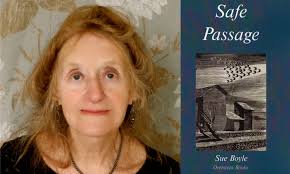
Sue Boyle is a poet I have followed since working with her as a tutor for the Poetry School. She has now published, Safe Passage, a first collection with Oversteps Books and I recommend it (though I confess to also being one of the blurbists on the back cover, where I quote one of her most interesting lines: “in seizing the unexpected lies the art”).

imgres

Updated May 2015

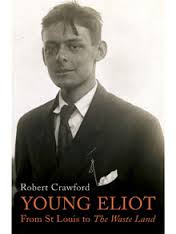
I’m still working through Robert Crawford’s magnificent biography of young Eliot up to The Waste Land. An almost day by day account of his youth, school and college days, Paris, Laforgue, Pound and Vivien Haigh-Wood. Particularly good on Eliot’s philosophical reading and development which I’m loving.

imgres

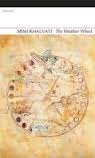
Mimi Khalvati’s The Weather Wheel consists wholly of 16-line poems – stretched sonnets or irregular ghazals – which seem able to encompass almost any mood, topic or subject matter. Particularly impressive is her desire to draw from the most ordinary of events lines which often soar to the complexly emotional and the (frankly) spiritual.

imgres

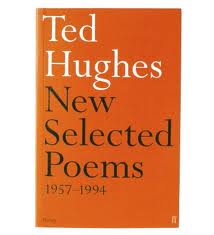
I’m also back re-reading Hughes because it looks like we’ll be teaching this from September onwards – surprisingly not something I have done (except one or two isolated poems). I first read many of these poems at Lancaster University in the late 1970s and nowadays many of these early poems read like objects of nature themselves: fixed as in granite, awe-inspiring, part of the mental landscape I have lived in for years.

images

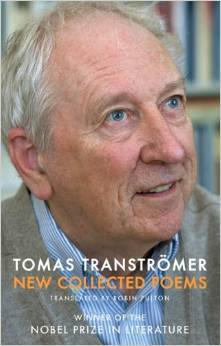
As my most recent blog recounts, I have been also re-reading Transtromer’s work.

2Q==

imgres

Up-dated April 2015

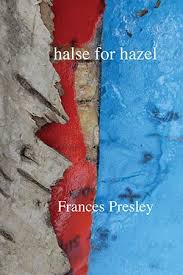
I’ve been reading two impressive contributions to the growing field of eco-poetics. Frances Presley’s halse for hazel is a visually pleasing book from Shearsman (illustrations by Irma Irsara) and the poems encompass geographical, linguistic, political and environmental issues without strain.

imgres

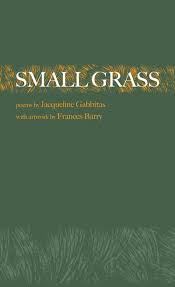
Jacqueline Gabbitas’ Small Grass gives grass a voice and runs with the idea with charm, cleverness and power: “From where I lie, I see man walking, / his legs sheathed in green, // I strop my edges. Soon, they’ll cut through / fabric, the tissue beneath”.

imgres

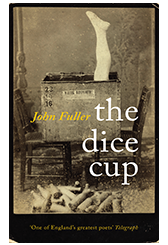
I’ve not always been an enthusiastic reader of John Fuller’s work but the recent The Dice Cup is a book of prose poem sequences full of his characteristic erudition, wit and observation.

thumbnailgenerator

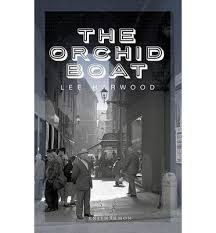
Lee Harwood is a poet who I’ve known of for years without really having read him much. I’d had him down as an English Ashbery/O’Hara and maybe I thought I ought to just go straight to the source. But Enitharmon’s The Orchid Boat is wonderful; full of fluid, sensuous, intelligent poems that twist and turn and take the reader by surprise. Not as flip as O’Hara, not as self-regarding as Ashbery.

imgres 

I confess to having a contribution in it but, apart from that, Tony Fraser’s new issue of Shearsman (103/4) is full of delightful things from the likes of Zoe Skoulding , James Byrne, Rupert Loydell and Kate Miller, plus translations of Virgil, Ponge and Jansma.

imgres