RIP Michael Longley

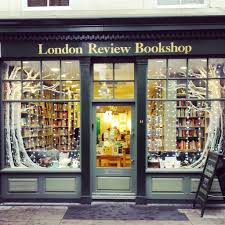
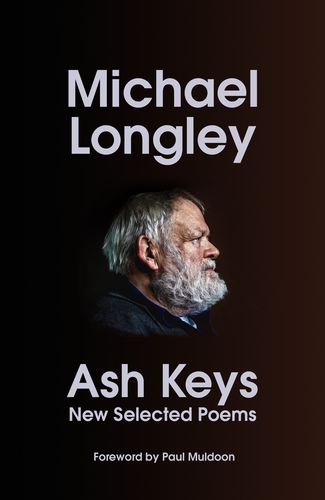
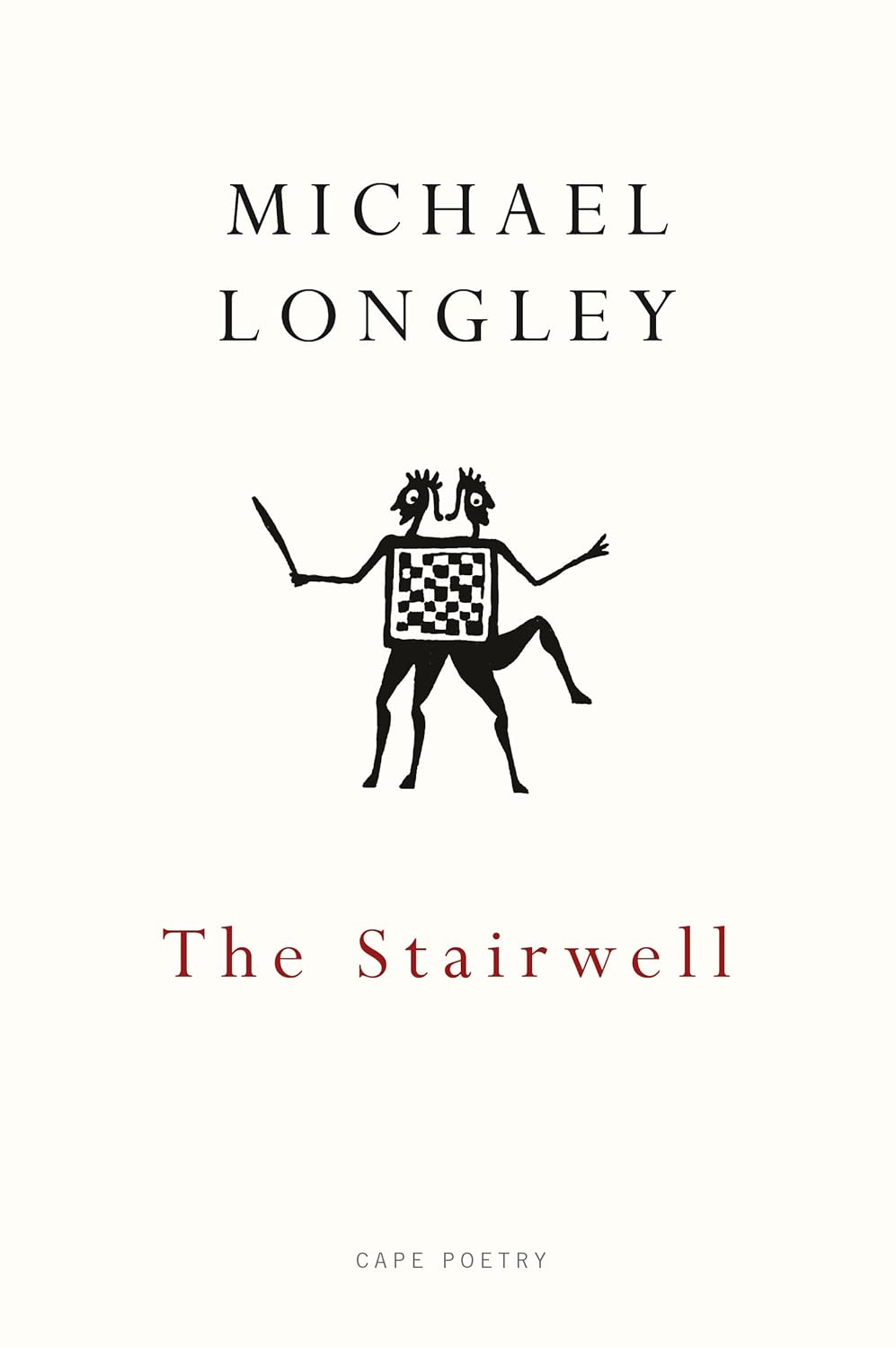
Social media – at least the bit of it that arrives on my screens – is alive this morning with many expressions of sadness at the announcement of the death of Michael Longley. I heard him read just a few months ago to launch his most recent new selected poems, Ash Keys, at the LRB Bookshop in London. He insisted then on trying to stand to read his poems, though his breathlessness and physical wobbling often made him have to take his seat again; but the humour and mischievous twinkle were as powerful as ever. Over the years, I have to admit it took me a while to really come to appreciate his work; I think I did not really ‘get’ the force of his brevity, his precision. If you have not seen it yet, do watch the brilliant, moving, inspiring BBC programme about him, his life and work here. I’m posting below my review of his 2014 collection, The Stairwell (the review originally published in Poetry London) and I hope it manages to say something useful to both new and older readers of this wonderful poet. Here he is reading ‘Remembering Carrigskeewaun’ on The Poetry Archive.
Keeper, custodian, traditionalist whose work is stringent, formalist, always elegant: critical judgments on Michael Longley’s work fence him round too closely, running the risk of misleading, even discouraging, new readers. It’s true, as a member of Philip Hobsbaum’s Group in Belfast in the 1960s, Longley’s poems were criticized for their elegance of form, rhetorical grace and verbal eloquence, though he found something of a kindred spirit in Derek Mahon. Longley wrote poems that were “polished, metrical and rhymed; oblique rather than head-on; imagistic and symbolic rather than rawly factual; rhetorical rather than documentary” (The Honest Ulsterman, November, 1976). But Seamus Heaney’s different aesthetic was Hobsbaum’s star turn and quickly became a national, then international preference. Attitudes solidified around Longley although (perhaps in the cause of self-definition) this was not something he resisted, casting himself and Mahon in the 1973 poem ‘Letters’ as “poetic conservatives”.

‘Epithalamium’, the poem that since 1969 has opened Longley’s selections and collecteds reinforces the caricature and in ‘Emily Dickinson’ he sees the need to dress “with care for the act of poetry”. But Longley’s long standing admiration of Edward Thomas was not for nothing and he shared a desire to dismiss Swinburnian “musical jargon that [. . . ] is not and never could be speech” so that in The Echo Gate (1979) he is experimenting, on the one hand with the plainly Frostian ‘Mayo Monologues’, and on the other with short, imagistic pieces in which the authorial voice seems to have taken a vow of non-intervention. ‘Thaw’ reads, in its entirety:

Snow curls into the coalhouse, flecks the coal.

We burn the snow as well in bad weather

As though to spring-clean that darkening hole.

The thaw’s a blackbird with one white feather.

This is a mode that Longley has continued to explore in accordance with another (surprisingly) early statement of poetic intent. The poet’s duty is to “celebrate life in all its aspects, to commemorate normal human activities. Art is itself a normal human activity. The more normal it appears in the eyes of the artist and his audience, the more potent a force it becomes” (Longley, ed. Causeway: The Arts in Ulster, 1971).
Subsequent collections have become concerned to list, to name, as it were ‘merely’ to record experience for its own sake, often in vivid short poems which run the risk of seeming inconsequence, though Longley has never lost his unerring eye and ear for the poetic line. Nor has he ever seriously questioned the adequacy of language (within conventional bounds) to represent experience. It’s in these ways that his work is conservative but his poems’ intention to encompass and witness is far more radical. To witness – whether it is the song of a wren near Longley’s beloved Carrigskeewaun, a Belfast bombing, or the camp at Terezin – is to acknowledge that we are bound together by what happens. From Gorse Fires (1991) to The Weather in Japan (2000) Longley comes to sound like Eliot’s Tereisias who, as the pages turn, has “seen and foresuffered all”. The beauty of nature, the horrors of mankind, birth and death, the present and the distant past are all absorbed into his steady gaze, a steady voice, intent on an anatomy of connection.

One such connection is the way Longley has been re-visiting the Iliad and Odyssey for years now, producing vivid, contemporary accounts of key scenes. Priam’s visit to Achilles tent in Book 24 of the Iliad famously became Longley’s poem ‘Ceasefire’, appearing in The Irish Times in 1994 when the IRA were considering a ceasefire themselves. The poem forges links and connections between enemies and across millennia. As ‘All of these people’ puts it, “the opposite of war / Is not so much peace as civilization” and civilization needs to be founded on a right relationship with even the smallest of things. Among many poems that articulate an ars poetica, ‘The Waterfall’ envisages the best place to read his own collected works as “this half-hearted waterfall / That allows each pebbly basin its separate say”. It is such civilized allowance, rather than the much-vaunted preservation of a tradition, that is the mark of Longley’s aesthetic, moral and political outlook.

His new collection, The Stairwell, is much obsessed with death though its inevitable reality has already been embraced by the poet’s allowance. An Exploded View (1973) already contained ‘Three Posthumous Pieces’ and twenty years later, ‘Detour’ mapped out his own funeral procession. Here, Longley has been “thinking about the music for my funeral” (‘The Stairwell’) and much of the book has the feeling of an ageing figure readying to depart. Longley himself refers to his “unassuming nunc dimittis” (‘Birth-Bed’) and the only ceremonial he anticipates is to be provided by robins, wrens, blackbirds: “I’ll leave the window open for my soul-birds” (‘Deathbed’). The counterweight to civilized allowance, even in the approach of death, is modesty and humility. If gifts are to be handed on to the future then they ought to include a little poem about a wren: “Its cotton-wool soul, / Wire skeleton [. . . ] / Its tumultuous / Aria in C” (‘Another Wren’).
Such unassuming gifts to future generations are balanced, in the civilized society Longley seeks out, by the commemoration of the past. This is something his poems continue to do with his re-imagining of his father’s experiences in the Great War and this new collection contains more of these poems; his father at ‘High Wood’ among “unburied dead”, befriending the future Hollywood star, Ronald Colman, or taking an ironic “breather before Passchendaele” (‘Second Lieutenant Tooke’). Whether looking forwards or backwards, the true gift lies in the specific, not the generalized. ‘Insomnia’ recalls Helen Thomas calming and consoling the mad Ivor Gurney, by guiding his “lonely finger down the lanes” of her husband’s map of Gloucestershire. Longley looks for this too. Here is the whole of ‘Wild Raspberries’:

Following the ponies’ hoof-prints

And your own muddy track, I find

Sweet pink nipples, wild raspberries,

A surprise among the brambles.

Having translated a poem by Mikhail Lermontov, Longley goes on to wonder what his “understated” neighbours around Carrigskeewaun would make of such “grandiloquence” (‘After Mikhail Lermontov’). It’s in the avoidance of a hyper-inflated language and tone that Longley’s re-makings of Homer are so good. The new book contains a fair sampling of these too, many of them in the second half which forms an extended elegy, commemorating Longley’s twin brother, Peter. The Homeric paralleling works less well in this context, though the unrhymed double sonnet, ‘The Apparition’, in which the ghost of Patroclus pleads to be buried by Achilles, addressing him as his “dear brother” is powerful. But I’m reminded of Heaney’s Station Island (1984) in which he revised and regretted his earlier use of “the lovely blinds of the Purgatorio” in writing a poem about the murder of Colum McCartney in Field Work (1979). Longley’s Homeric material casts such a strong shadow and the vital life of Peter is insufficiently conveyed, except in a few recollections of their shared childhood, tree-climbing, bows and arrows, boxing, visiting the zoo. Nevertheless, Longley’s determination to commemorate his twin, with whom he shared “our gloomy womb-tangle” (‘The Feet’), re-confirms human closeness, allowance, the giving of space to others, to nature, is what has driven this poet’s work for more than forty years. 
Sounds Like What?: a Review of Helen Mort’s ‘The Singing Glacier’

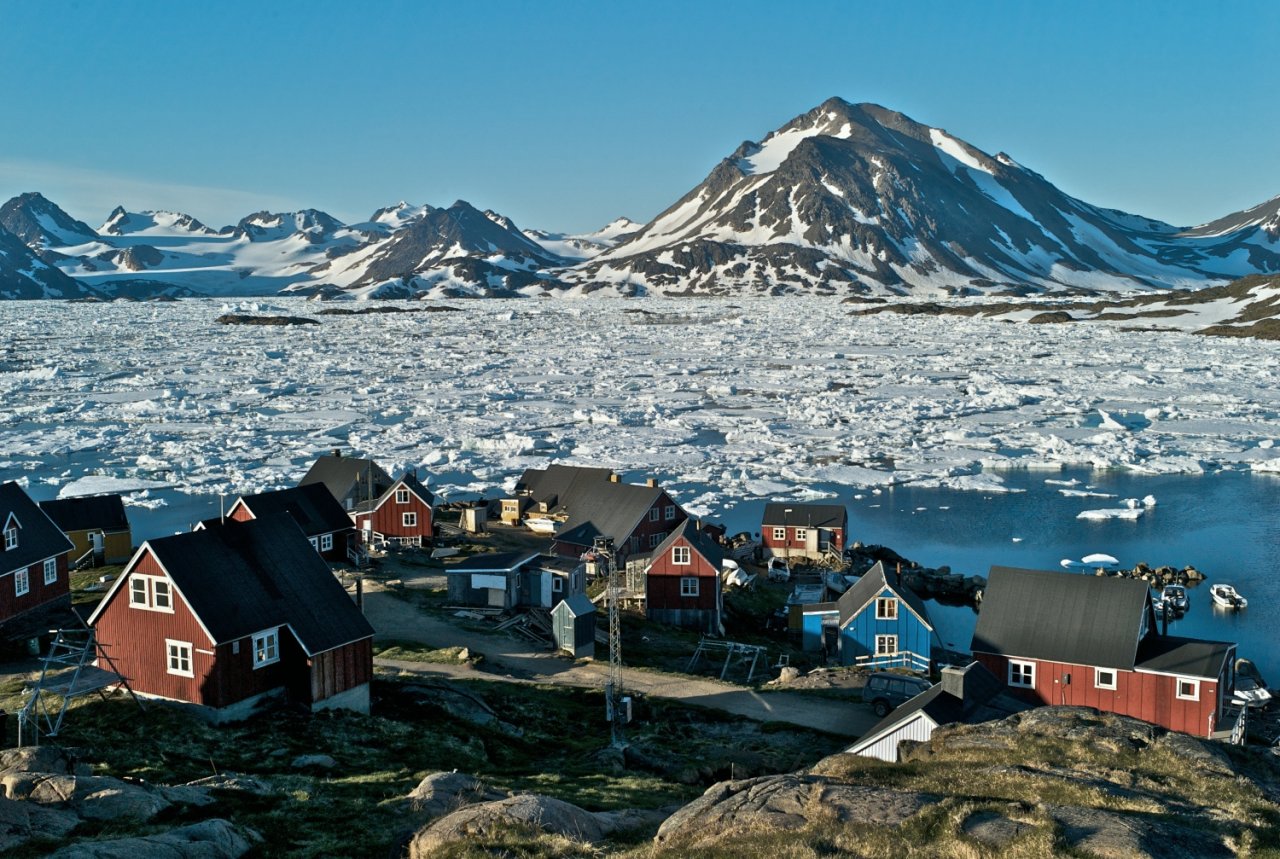
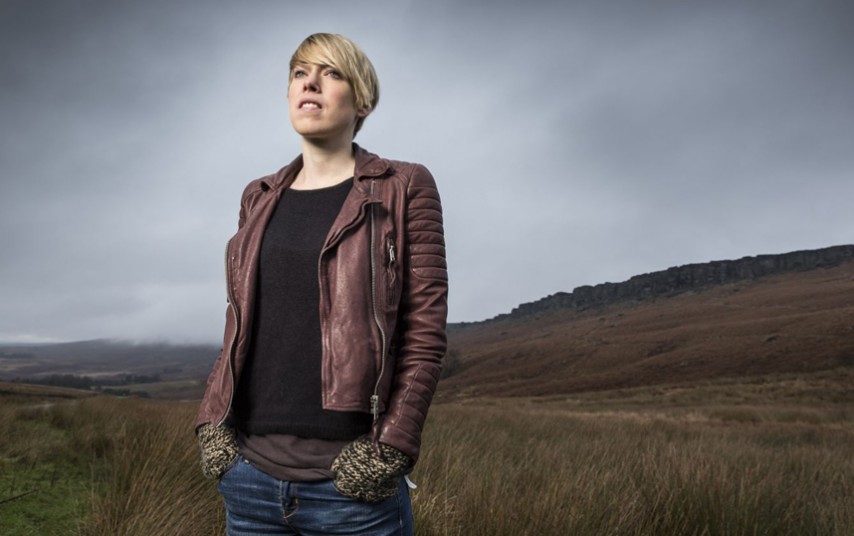
The new book from the innovative and enterprising Hercules Editions – launched at the LRB Bookshop in London’s Bloomsbury last week – contains poetry by Helen Mort, images by Emma Stibbon, a conversation with composer William Carslake and an essay from Manchester Met academic David Cooper. What holds these diverse components together (within 40 pages) is a trip Mort, Carslake and film-maker Richard Jones made to south-eastern Greenland in 2016. You can see the original Kickstarter post here.

1

So The Singing Glacier project is truly inter-disciplinary and the Hercules book is making available Mort’s poetic contributions to it. Mort’s conversation with Carslake serves to introduce the origins of the project in 2012 when the composer looked down from a plane to see Greenland’s regressing glaciers “like a hand with fingers”. More evocatively, and much closer, he talks of standing beside crevasses and moulins and listening to the sounds emanating from them, “like hearing a Welsh male voice choir singing from this great big hole in the ice!” The Hercules book has photos of Carslake’s notebook, clusters of notes and a few words jotted on the spot. Mort disarmingly says how she envied this seeming directness of acoustic transcription as her role was to come up with words and inevitably much of what she initially wrote down “was just cliché”. She wonders whether cliché is a reasonable response to the vast and alien landscapes they were moving through, sights before which “linguistic originality can almost seem a little arbitrary”. This is not her final conclusion, but her comment does raise one of the fascinating issues in this beautiful little book – what a poet does with the tensions between speech and silence, more abstractly between sound and its absence.

Stibbon_Emma-lr-DRB2015

In a review of Mort’s first book, Division Street, I thought her “love of landscape [was] profound and, like Wordsworth, her hills and skies remain a locus for, as well as an image of, the process of self-exploration”. On that basis she would be a good poet to send to Greenland but – she confesses – she was sometimes reduced to wanting simply to cry and – this hesitantly expressed – it felt “like being in the presence of a god”. These are unmistakable encounters with the sublime and the urge to anthropomorphise such a vast alien landscape is quick to arise, so any efforts at self-exploration might seem worse than arbitrary, positively disrespectful. But how then to engage? ‘In Defence of Cliché’ takes off from Mort’s honestly expressed concerns about inadequate linguistic responses to this landscape:


I write: ice in the fjord as pale as thought

then hear the calving face crash through my language

with a sound (like what?) like cannon fire


moulin-glacier-11[2]

Similarly, the moon fails to be adequately captured by images of “petal, snowball, sleeping moth”. She quotes Hopkins on the way observations of nature can correct our “preoccupation” with the world – again walking the fringes of the divine here – becoming a way in which we learn humility. Mort ends the poem cleverly. Our best word for this sort of experience is “awe” but the word baldly used would not possess enough freshness or fire (thank you Gerard Manley) to carry the weight of feeling. So Mort goes for a down-to-earth metaphor followed by a phrase that manages both to say and not-say it simultaneously:


… we stand like nothing, shaken

from the pockets of our lives, our mouths

stuck on the silent word for awe.
178223-004-FB8F1B4F

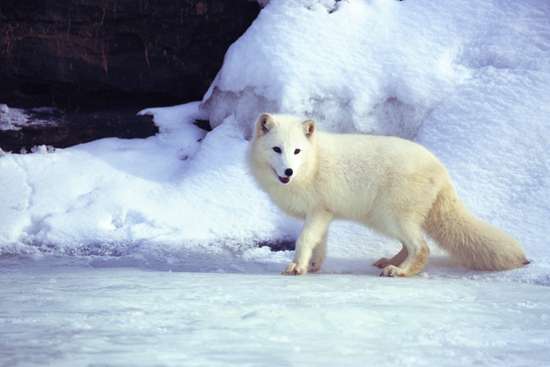
The poem, ‘Arctic Fox, August’, is more reminiscent of Mort’s favourite poet, Norman MacCaig. The creature is acutely observed in its colours and hesitant movements around the campsite but the poem ends with a series of rather coercive, descriptive metaphors: “a hunger-striker . . . a gathering memory . . . the habit you thought / you’d kicked”. For me these images circle and knot ever more tightly onto the observing human consciousness, almost doing violence to the creature so well observed at the start. The poem ‘Polynya’ – the word signifies an area of open water surrounded by sea ice – reverses this tendency to humanise the natural by naturalising the human:


Surely the heart

must have polynya

places where it’s never

hardened into ice.


The image of the partially melted heart turns easily into a love poem. Another method Mort adopts to try to respond to the Greenland landscape is through found language. So ‘And Noah’ arose from a conversation with an inhabitant of Kulusuk (though I think Mort said at the LRB launch that much of the detail came from the little museum in that town). The result manages to suggest something of the way of life in this landscape, a work place – the found nature of the phrases enabling the poet to avoid too strong a sense that neither she nor her work are an “imposition”.

2026338

David Cooper’s essay on acoustic geographies and poetry of place takes a more academic look at the multi-media project, suggesting that it –  like a lot of recent geographical creative writing – sets out to challenge the easy domination of the visual sense by accentuating the acoustic or aural. This is partly because sound “reminds us of our own embodied situatedness and inextricable embeddedness within the world”. The eye puts us at the controlling centre; the ear is more often passively assailed from all sides. The eye easily steps back and away; the ear is within the sensed world (I’ve discussed similar ideas of within/without or within/above in relation to Holderlin’s novel Hyperion in another blog post). Mort’s best work in this little book is done when she listens in to these sounds and silences. ‘The Glacier Speaks’ does succumb to the kind of anthropomorphism Mort says she was wary of. But it works well since the voice of the glacier is such a challenging, even taunting, one: “Go on then / says the glacier – / how are you going to score my silences?” The glacier reminds the poet of its silence through noting the kind of sounds which book-end it or by comparing its absence of sound with more familiar moments of silence such as that between lovers, between a mother and a daughter. Here the comparisons work not through similitude but dissimilitude – my silence, the glacier says, is nothing like these. I thought an odd note was struck at the end of this poem when the humans are described as impressed by such silence (“more like a vigil”) yet the glacier suggests they are each “trying / to get back to me”. This is intended, I presume, to evoke human puniness, a Lawrentian “pettiness”, but it also smacks a little of the glacier’s over-anthropomorphised self-regard.

helenmort_2787463k

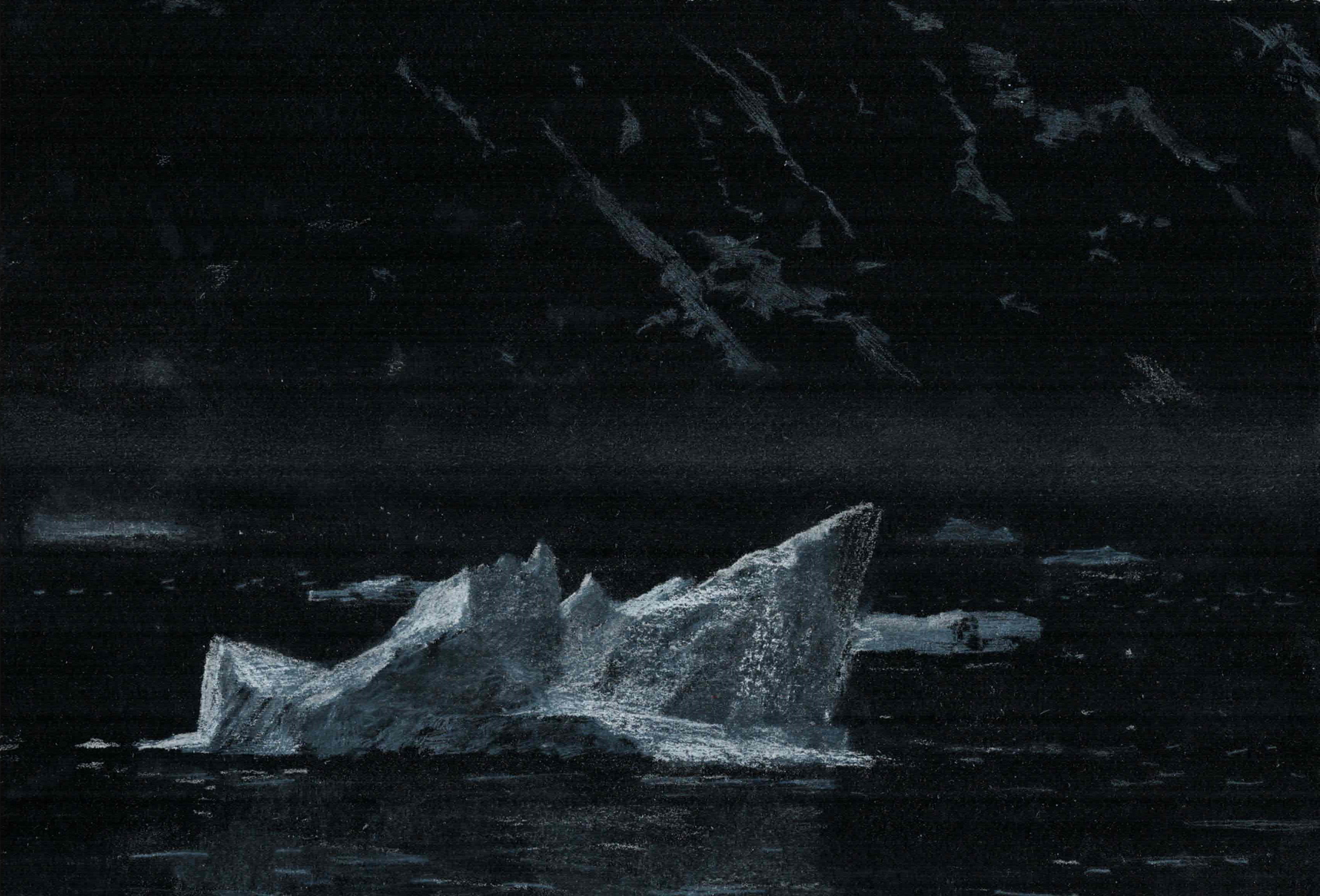
But the poem ‘Glacier Song’ is magnificent. Not the right word I’m sure, but it approaches the Greenland landscape – the Knud Rasmussen glacier in particular – with a right sense of decorum. Silent is what the glacier is again – a “library of absences” – and this is conveyed partly by suggesting that the nearby fjord is more talkative, more full of songs. But Mort then cunningly withdraws this idea: even the chatty fjord is really silent – how much more silent then is the glacier! Later, the Arctic light – remember Cooper’s discussion of the predominance of sight – interrogates the glacier like an airport security check, quizzing and questioning because light always knows better, light always wants the last word. But “The glacier carries on / rehearsing privately”. The final section of this longer poem alights on the distant figure of a woman (the poet?) who, herself, wants to be singing. Here, we feature as the little, forked animal, stuffed full of language bursting to get out, trying to communicate something about glacier climbing, about ptarmigans, the Northern Lights, even about the glacier itself. But the ice remains mum to the last:


The glacier has not slept

for centuries.


The glacier is restless, lithe,

insomniac


articulate


and doesn’t need

a word for itself.


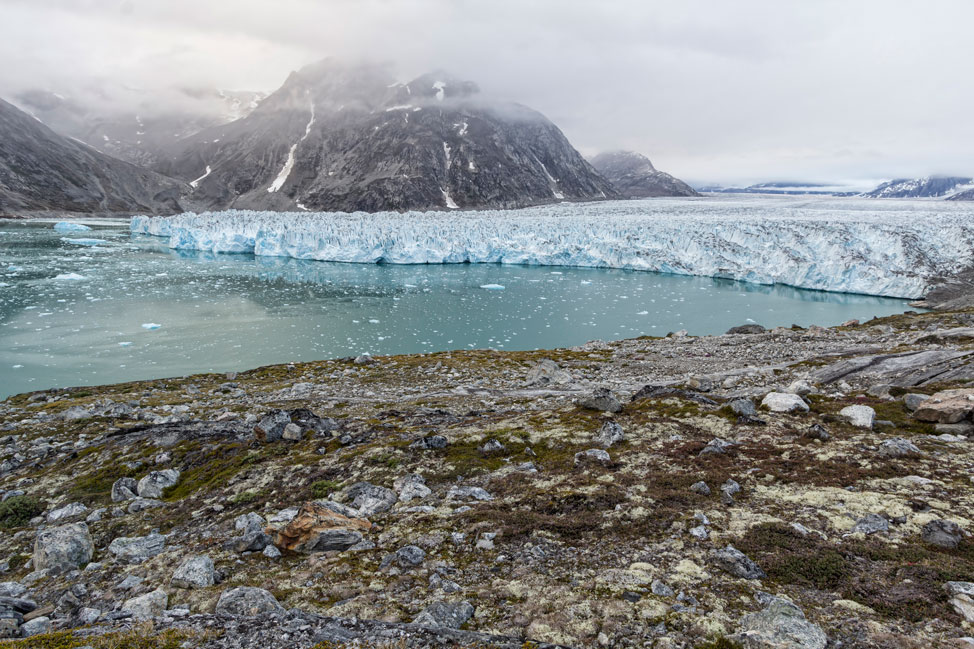
Knud Rasmussen Glacier Greenland


The Launch of ‘Magma’ 60 at LRB bookshop

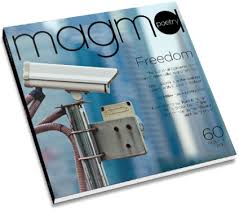
Last Friday night I read briefly (partly from my Worple Press book: https://martyncrucefix.com/publications/a-hatfield-mass/) at the LRB bookshop, 14 Bury Place, London WC1A 2JL (in fact just doors along from Enitharmon Press’ new offices). It was the launch of Magma magazine’s new issue (http://magmapoetry.com/). Magma really has become one of the must-read magazines in UK poetry and the event was one of two national launches (the other is on Thursday 11 December at 7pm at the Lit & Phil, 23 Westgate Rd, Newcastle upon Tyne, NE1 1SE, with guest reader Sean O’Brien). The LRB is a spectacularly good bookshop but you feel acutely the vanishing of bookshops elsewhere – to be surrounded by shelves of ‘proper’ books is a real pleasure, distressingly beginning to take on the quality of a sepia-tinted memory. Yet, as one of the readers commented, this is a dangerous place to visit if you’re not prepared to part with hard cash: so many temptations. It’s also a good place for a reading: chairs from front to back on the ground floor, seating well over 50, and on Friday it was packed.

images

Magma 60 is edited by Rob A. Mackenzie and Tony Williams (one of the good and distinctive things about the magazine is its rolling editorship) and 19 poets were asked to read a couple of poems each, with Kei Miller putting in a longer shift at the end as guest poet. Among others, Peter Daniels’ poems evoked a quiet, desperate sense of things not holding, of wider societal failing (‘you might discover you’re painting the house / while the other side’s on fire’). Jacqueline Saphra remembered being seventeen and then dealing with her own seventeen-year olds, boys and girls, the latter crying from their rooms, ‘Come in, I won’t let you in, Come in’. Michael Henry recalled Finals exams and wanting to write about Brecht, which he does in his poem ‘Agent provocateur’: ‘The Brechtian grape is a dry white grape / and it tastes like the white corpuscles in blood’. Martha Sprackland and Jasmine Simms found common ground and a source of poetry in drifting off in science classes at school (I remember it well).

imgres

John Greening read about visiting the archaeological dig at Sutton Hoo and an intriguing poem about ‘The Battle of Maldon’ which knowingly fails to offer ‘an explanation // of what happens in the end [. . .] about how     whatever it is     was broken’. DA Prince also evoked an earlier age with ‘The bell-makers’ reminding me of sequences from Tarkovsky’s film Andrei Rublev (1966): ‘the brilliant blistering light, / that cataract of blazing air, the stream / of liquid pain’. Karen Leeder presented new translations of German poet, Volker Braun. Braun was writing in part through the upheavals of 1989, exploring the triumph of capitalism: ‘EVERYTHING AND NOTHING / Was it ever really yours? Fuck you, fantasist. / The encore: all that you could never need!’ (http://www.amazon.co.uk/Rubble-Flora-Selected-Seagull-German/dp/0857422189/ref=sr_1_1?s=books&ie=UTF8&qid=1417365225&sr=1-1&keywords=volker+braun).

At the end of the first half, Gwen Adshead, a forensic psychiatrist and psychotherapist who works in secure hospitals, talked about her work and love of Philip Larkin’s poetry and read ‘Talking in Bed’ (one of my own Larkin favourites; see below). Kei Miller’s live delivery illuminates and energises his own words on the page. I’ve written more about his prize-winning The Cartographer Tries to Map a Way to Zion (Carcanet) on this blog (https://martyncrucefix.com/2014/10/22/kei-millers-cartographer-and-friels-translations/). He read several of the Place Name pieces, the poem where the Cartographer asks for directions and gets indirections instead (‘all true’ Kei said), the ‘Hymn to the Birds’ and the 28,000 rubber ducks poem which moves (almost imperceptibly) from children’s bath toys to captives lost overboard on trans-Atlantic passages years ago. Miller finished with his short poem ‘Distance’ which seemed to be something of an answer to Larkin’s poem chosen by Gwen Adshead; here are the two of them. . .

Talking in bed

Talking in bed ought to be easiest,

Lying together there goes back so far,

An emblem of two people being honest.

Yet more and more time passes silently.

Outside, the wind’s incomplete unrest

Builds and disperses clouds in the sky,

And dark towns heap up on the horizon.

None of this cares for us. Nothing shows why

At this unique distance from isolation

It becomes still more difficult to find

Words at once true and kind,

Or not untrue and not unkind.

Distance

Distance is always reduced at night

The drive from Kingston to Montego Bay is not so far

Nor the distance between ourselves and the stars

And at night there is almost nothing between

The things we say, and the things we mean.