Tony Harrison’s ‘Them and [uz]’

Last week I posted on Tony Harrison’s ‘A Cold Coming’. The following discussion of another extraordinary Tony Harrison poem originally appeared in book form in Tony Harrison: Loiner (Clarendon Press, 1997), edited by Sandie Byrne.

imgres

‘Them and [uz]’ – listen to Harrison read this poem here.

for Professors Richard Hoggart & Leon Cortez

I

αίαι, ay, ay! … stutterer Demosthenes

gob full of pebbles outshouting seas –


4 words only of mi ‘art aches and … ‘Mine’s broken,

you barbarian, T.W.!’ He was nicely spoken.

‘Can’t have our glorious heritage done to death!’


I played the Drunken Porter in Macbeth.


‘Poetry’s the speech of kings. You’re one of those

Shakespeare gives the comic bits to: prose!

All poetry (even Cockney Keats?) you see

‘s been dubbed by [Λs] into RP,

Received Pronunciation, please believe [Λs]

your speech is in the hands of the Receivers.’


‘We say [Λs] not [uz], T.W.!’ That shut my trap.

I doffed my flat a’s (as in ‘flat cap’)

my mouth all stuffed with glottals, great

lumps to hawk up and spit out… E-nun-ci-ate!


II

So right, ye buggers, then! We’ll occupy

your lousy leasehold Poetry.


I chewed up Littererchewer and spat the bones

into the lap of dozing Daniel Jones,

dropped the initials I’d been harried as

and used my name and own voice: [uz] [uz] [uz],

ended sentences with by, with, from,

and spoke the language that I spoke at home.

RIP, RP, RIP T.W.

I’m Tony Harrison no longer you!


You can tell the Receivers where to go

(and not aspirate it) once you know

Wordsworth’s matter/water are full rhymes,

[uz] can be loving as well as funny.


My first mention in the Times

automatically made Tony Anthony!

Read about the drafting of this poem – in the Tony Harrison Archive at Leeds University.

url

Though it was Keats’ ‘Ode to a Nightingale’ Harrison ‘mispronounced’ at school, it is actually Wordsworth who is more important to him because both share a belief in poetry as the voice of a man speaking to men. This conception of poetry as speech is a powerful constituent in Harrison’s work and perhaps one not clearly understood. John Lucas, for example, has attacked what he sees as loose metrics in the poem ‘V’ but, to reverse Harrison’s comment that all his writing (theatrical or otherwise) is poetry, all his poetry needs to be read as essentially dramatic and deserves to be tested in the spoken voice as much as in the study. Harrison’s interest in the curious idea that the true poet is born without a mouth implies the difficult battling for a voice or voices which can be found everywhere in his work and it is in this clamour that I find its dramatic quality. In a public poem like ‘A Cold Coming’, Harrison makes use of the contrasting and conflicting voices by playing them off against a regular form. This is almost always the case, but in what follows I prefer to concentrate less on metrical effects than on the way voices interweave.

The very title of the pair of sonnets, ‘Them & [uz]’, seems to promise conflict, at best dialogue, and it opens with what could be taken as the howl of inarticulacy. In fact each pair of these opening syllables gestures towards crucial worlds in Harrison’s universe. The ‘αίαιof classical dramatic lament is echoed by the “ay, ay!” of the musical hall comedian cheekily working up an audience. Immediately, the reader is plunged into the unresolved drama of two differing voices, instantly implying the two cultures of the sonnets’ title. The line and a half which follows, sketching Demosthenes practicing eloquence on the beach, is intriguing in that its locus as speech is hard to pin down. It is perhaps intended at this stage (apart from introducing the poems’ central issue) to hover in an Olympian fashion above the ruck of dialogue that follows, implying the heroic stance which will be taken up in the second sonnet.

poster-demostheness-spricht-meeresfluten-310780

Line 3 opens again into a dramatic situation with the voice of the narrator (the adult Harrison), repeating his own interrupted recital of Keats in the classroom, while the master’s scornful comments appear fresh, unreported, as if still raw and present, in speech marks. The narratorial comment on this – “He was nicely spoken” – confirms this poem’s tendency to switch voices for its effects, this time its brief sarcasm barely obscuring the unironic comment likely to be made by an aspiring Loiner, or by an ambitious parent. The example of nice speaking given (again in direct quotes in the following line) is the master’s claim to possession, to authority in matters of language and culture and the separated-off reply of the narrator – “I played the Drunken Porter in Macbeth – with its full rhyme and sudden regular iambic pentameter, implies both a causal link between the two lines, painting Harrison as dispossessed specifically by the master’s attitudes, as well as conveying the tone of resignation in the young schoolboy.
images

Much of the tension and success of the poem has already arisen from the dramatic interchange of voices and the master’s voice asserts itself again in line 7 ironically claiming a kind of monolithic, aristocratic purity to poetry which this poem has already attempted to subvert:


Poetry’s the speech of kings. You’re one of those

Shakespeare gives the comic bits to: prose!”


The following lines contain a curious wavering in the clear interplay of dramatic voices, only part of which is resolved as the poem proceeds. Evidently, the intrusive, even hectoring, parenthesis (at line 9) is the narrator’s questioning of what appears to be the master’s voice’s continuing argument that “All poetry” belongs to Received Pronunciation. Yet the aggression of this attack, with its harsh alliteration and sarcastic question mark, is out of key with the other narratorial comments in part I, though the tone is re-established in part II. In addition, I have some difficulty in accepting the master’s words as appropriate to the situation which – with no break – continues the speech made to the young Harrison. For example, the word “dubbed”, with its implication of the deliberate laying of a second voice over an ‘original’, already hands victory in the argument to Harrison’s claim for the authenticity of ‘dialect’ and, as such, would not be used by the believer in “the speech of kings”. Equally, the apparent plea, “please believe [ s] / your speech is in the hands of the Receivers”, does not accord with the voice that summarily dismissed the pupil as a “barbarian” 7 lines earlier. In this case, Harrison’s desire for the dramatic has foundered momentarily on that old dramatist’s rock, the necessity for exposition which compromises the integrity of the speaking voice.
imgres

The true note of the master returns – interestingly, following one of Harrison’s movable stanza breaks, as if confirming a shift in voice though the speech actually continues across the break – with “We say [Λs] not [uz], T.W.!” The tone of the responding voice, after the suggestion of a more spirited response in the Keats comment, has returned to the resignation of the brow-beaten pupil. This is reinforced by the more distant comparison of the boy to the ancient Greek of the opening lines, heroically “outshouting seas”, while the young Harrison’s mouth is “all stuffed with glottals, great / lumps to hawk up and spit out”. This first sonnet draws to a close with this tone of frustrated defeat for the boy, yet the drama has one final twist, as the voice of the master, sneering, precise and italicised, has the last word – “E-nun-ci-ate!“. There can be little doubt that the boy must have felt as his father is reported to have done in another sonnet from The School of Eloquence, “like some dull oaf”.

The second part of ‘Them & [uz]’ contrasts dramatically with the first, though the seeds of it lie in the image of heroic Demosthenes and the accusatory tone of the reference to Keats which seemed a little out of place in part I. This second sonnet’s opening expletive aggression strikes a new tone of voice altogether. “So right, yer buggers, then! We’ll occupy / your lousy leasehold Poetry”. The poem’s premise is that it will redress the defeat suffered in part I in an assertive, unopposed manner. Not the master, nor any spokesman for RP is allowed a direct voice, yet the interchange of speech and implied situation can still be found to ensure a dramatic quality to the verse.

The passionate and confrontational situation of the opening challenge is clear enough, yet it’s striking how it has taken the autobiographical incident in part I and multiplied it (“yer buggers . . . We’ll occupy”) to present the wider political and cultural context as a future battlefield. Even so, there is no let up in the clamour of voices raised in the poem. Immediately, the narratorial voice shifts to a more reflective, past tense (at line 3) as the rebel reports actions already taken – and with some success, judging from the tone of pride and defiance: “[I] used my name and own voice: [uz] [uz] [uz]”. Even within this one line, the final three stressed syllables are spat out in a vivid reenactment of Harrison’s defiant spoken self-assertion. It is this slippery elision of voice and situation which creates the undoubted excitement of these and many of Harrison’s poems as they try to draw the rapidity and short-hand nature of real speech, its miniature dramas and dramatisations into lyric poetry. A further shift can be found in lines 9 and 10, in that the voice now turns to address a different subject. The addressee is not immediately obvious as the staccato initials in the line are blurted out in what looks like a return to the situation and voice with which this sonnet opened. Only at the end of line 10 does it become clear that the addressee is the poet’s younger self, or the self created as the “dull oaf” by the kind of cultural repression practised by the schoolmaster. The reader is further drawn into the drama of the situation by this momentary uncertainty: RIP RP, RIP T.W. / “I’m Tony Harrison no longer you!”.

images

The remaining 6 lines are, as a speech act, more difficult to locate. There is an initial ambiguity in that they may continue to address “T.W.”, though the stanza break suggests a change and, anyway, this makes little sense as T.W. is now dead (“RIP T.W.”). In fact, these lines use the second person pronoun in the impersonal sense of ‘one’, addressing non-RP speakers in general, and it is the generalised nature of these lines which disarms the effectiveness of the passage. This is particularly important in line 14, “[uz] can be loving as well as funny”, the tone of which, commentators like John Haffenden have questioned. The difficulty here is that if Harrison is addressing those who might use [uz] anyway, though there may well be many amongst them for whom the fact that “Wordsworth’s matter / water are full rhymes” is useful ammunition and reassurance, the same cannot be said of the “loving as well as funny” line which might variously be construed as patronising, sentimental or just plain unnecessary. Nevertheless, the poem regains a more sure touch in the final lines in its use of the reported ‘voice’ of The Times in renaming the poet “Anthony“. The effect here is both humorous (this, after all the poet’s passionate efforts!) and yet ominous in that the bastions of cultural and linguistic power are recognised as stubborn, conservative forces, still intent on re-defining the poet according to their own agenda, imposing their own hegemonic voice where there might be many.
Where’s My Master Gone – Don Paterson v Li Po

Don Paterson’s 1997 book, God’s Gift to Women (Faber) includes a poem sporting the title ‘On Going to Meet a Zen Master in the Kyushu Mountains and Not Finding Him’. The reader’s eye hops off the perch of this lengthy title only to flutter down, looking in vain for a foothold, for a line, even a word – it’s a completely blank page. In a collection that includes a poem called ‘Postmodern’ and another on ‘The Alexandrian Library’, the joke is obvious enough. Any search for ‘masterly’ advice in the Kyushu Mountains or closer to home in a post-modern, relativist world in which language hides as much as it might reveal, must draw a blank. I remember seeing the poem – probably heard Paterson ‘read’ it too – the long title building expectation, a too-long pause, the announcement of the next poem (cue laughter) – and something bothered me. I think now I know what it was.

imgres

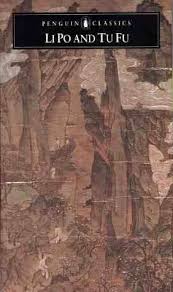
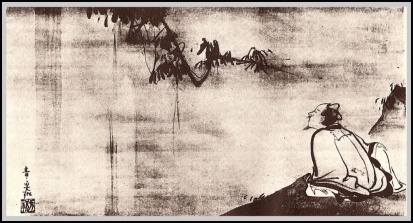
I wondered if Paterson had been reading the Penguin Classics selection of Li Po and Tu Fu (tr. Arthur Cooper, 1973). The Li Po selection opens with the poem ‘On Visiting a Taoist Master in the Tai-T’ien Mountains and Not Finding Him’. Cooper’s note tells us that ‘Visiting a Hermit and Not Finding Him’ is actually a very common theme in Chinese poetry. Such a poem (we are told) is not just an excuse for a “nature poem” but relates to the frequent “spirit-journeys” that Li Po was fond of writing. Here is Cooper’s translation:


Where the dogs bark

by roaring waters,

whose spray darkens

the petals’ colours,

deep in the woods

deer at times are seen;


the valley noon:

one can hear no bell,

but wild bamboos

cut across bright clouds,

flying cascades

hang from jasper peaks;


no one here knows

which way you have gone:

two, now three pines

I have leant against!

3-li-po

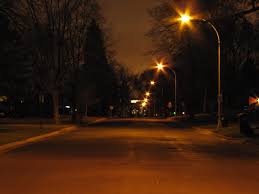
I had come across this poem while compiling my first book, Beneath Tremendous Rain (Enitharmon, 1990). I liked it for reasons I didn’t then understand and, in a very simple form of translation, I wrote an up-dated version:


Looking for an Old Man


Where red dogs bark

on the sodium ring-road

and traffic noise

blackens adjacent houses,

I’ve come to seek you.


In each garden I pass,

pale heads of bindweed.

The night is undistinguished.

The savour of coalsmoke

flattens across the kerb.


No-one here knows

which way you have gone:

two, now three lampposts

I’ve leant against.

images

Li Po is the more Daoist of the two poets presented as a complementary pair in this Penguin book. Now, with a bit more understanding of this tradition, I’m sure that 26 years ago I was responding to something at the heart of the poem. The fact that the Daoist master cannot be found by the searching student is precisely the point since the Daoist teacher teaches “in the absence of words” (Chapter 43, ‘Best Teaching’) as I translated it in my version of the Daodejing (Enitharmon, 2016).

Interestingly, Li Po’s poem expresses this not with a blank page but (as Cooper says) through further encounters with “nature” (petals, woods, deer, valley, bamboo, clouds) or, in my version, the natural and urban world (ring-road, traffic, houses, garden, bindweed, coalsmoke, kerb). Whether we designate this a ‘spiritual’ journey or not, the point remains that the student’s search for knowledge in the form of a direct download from some master must be denied. The student’s anxious search for guidance is reflected in the number of pines/lampposts he leans against as well as the geographical over-specificity of the titles of such poems. The student’s dependency and naïve optimism is the satirical butt of the poem as he is directed back to the source of all knowledge (the world surrounding him) even as he wanders in search of his master. So Paterson’s 1997 version achieves three things: it misrepresents the spirit of the original, it’s more dramatic (comic), it’s more superficial.

imgres

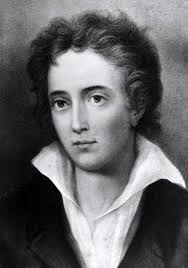
When I first read Li Po’s poem I was coming off the back of doctoral work on the Romantics, especially Shelley whose ‘A Defence of Poetry’ (1821) argues that the “poetry in [our] systems of thought is concealed by the accumulation of facts and calculating processes [. . .] we want the creative faculty to imagine that which we know”. This is succinctly put in Keats’ idea of Negative Capability, defined as a passive openness to the fullest range of human experience (“uncertainties, Mysteries, doubts”) without any imposition of preconceived notions, ideas or language: “without any irritable reaching after fact & reason”. The student in Li Po’s poem seeks just such certainties and facts and is gently deflected back into the world of observation where (I take it) he is encouraged to pursue a more full-blooded, full-bodied, open-minded encounter with the 10,000 things which (in Daoism) constitute the One, ‘what is’.

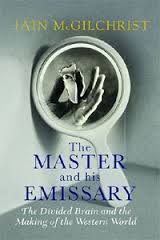
The two attitudes to knowledge here are really two ‘ways of being’ as Iain McGilchrist’s fascinating book, The Master and his Emissary (Yale, 2009) phrases it. McGilchrist argues that right and left human brain hemispheres deliver quite different kinds of attention to the world. The left perceives the world as “static, separable, bounded, but essentially fragmented [. . .] grouped into classes”. Shelley described this in 1821 and linked it to the processes of Reason and this is the attitude to knowledge and education that the anxious student of Li Po’s poem possesses. In contrast, what Shelley calls Poetry or the Imagination is what McGilchrist associates with the right brain. It tends to perceive “the live, complex, embodied, world of individual, always unique beings, forever in flux, a net of interdependencies, forming and reforming wholes, a world with which we are deeply connected”.

imgres

Without doubt, this is also the viewpoint of the Daoist master whose teaching evokes the uncarved block, the One, and who teaches best without words. Ordinary language usage is dependent on conceptual thought which is left-brain work – ordering, categorising, re-presenting the minute particulars of the world as they are perceived by the right brain. I imagine that Li Po’s master-teacher and sage is deliberately hiding somewhere beyond the bamboo canes – and this is part of the student’s lesson.

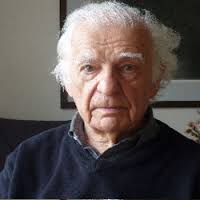
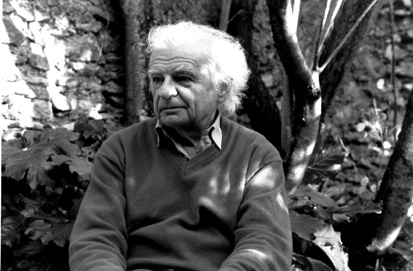
So Don Paterson’s blank page bothers me because – as McGilchrist expresses it – it represents a rather glib, post-modern position, a scepticism about language which is in danger of throwing out the interconnected real world along with the suspect tokens and counters of left-brain language: “To say that language holds truth concealed is not to say that language simply serves to conceal truth [. . .] or much worse, that there is no such thing as truth” (McGilchrist, p. 6). I’m also reminded of Yves Bonnefoy, engaging in his own battle with the early stirrings of French post-modernism. He writes: “This world here exists, of that I am certain [. . .] It is simply with us. In what can be felt and sensed”. In The Tombs of Ravenna (1953), he names this underlying truth, not as existence, but as “presence”. The right brain knows this; the left brain sets about fragmenting it, making use of it, disappearing it.

images
Yves Bonnefoy

Everything Burning: Review of Maitreyabandhu’s ‘Yarn’

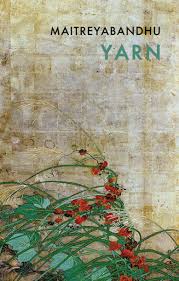
I love to follow the development of a poet’s work. This is often imaged as the finding of a voice but is really a process in which the poet brings into focus what centrally concerns them and sheds what is extraneous. A recognisable voice may be a secondary consequence of this but it is achieved through technical advances and deep thought about poetic predecessors and possible role models. Maitreyabandhu’s second collection, Yarn (Bloodaxe, 2015) is fascinating from this perspective.

images

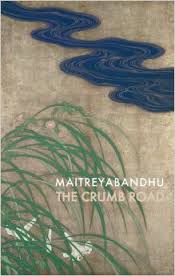
Born Ian Johnson in Warwickshire, Maitreyabandhu was ordained into the Triratna Buddhist Order in 1990. I once started a review of James Harpur’s  Angels and Harvesters (Anvil, 2012) by saying that I wanted contemporary poetry to address spiritual matters, so I was obviously excited to get hold of Maitreyabandhu’s first book, The Crumb Road, when it appeared in 2013. Given my rather narrow line of expectation, I suppose was a bit disappointed. But the book is full of vivid colloquial detail, many poems about childhood and a moving account of a homoerotic relationship between two young boys which ends with the death of one of them. The crumb road of the title is the Hansel and Gretel trail back to the past rather than a trail of stations towards spiritual enlightenment, though ‘Visitation’ is an awed encounter with something like that: “I saw you, in the mess of things, / [. . .] as a slant of grey”. The book was a PBS Recommendation, rightly praised for its melancholy modesty, quiet expression, its alert and attentive qualities, its models evidently Edward Thomas and Thomas Hardy.

imgres

Yarn develops similar materials. Maitreyabandhu’s poetic technique is even more evident in the range of forms – free verse, rhyme, prose poem, blank verse – employed to great effect. The Warwickshire childhood features again in a section called ‘The yard’ with the father’s wine-making – damson, raison and berry – and his war service, the mother’s involvement in the coach driving business, school, various distant relations. The first book’s portrayal of young love cut tragically short is echoed here in an elegiac sequence to a Buddhist friend, Mahananda. This man’s longer life (his mother’s flight from the Gestapo, his conversion to Buddhism, living in Primrose Hill, his friendships) is touchingly evoked and it is a thoroughly grief-stricken sequence: “what can I conclude on your departure? / that nothing came of it, with everything, / everything undone” (‘Souls’).

url
Ryokan

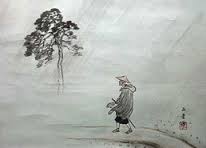
There is a curious echo of this latter phrase in a poem about the Zen Buddhist monk/poet Ryokan for whom the temple bell and old books seem to say “how everything is burning”. Such a sense of the ultimate insignificance of earthly things arises elsewhere in this book and Maitreyabandhu explores such spiritual issues more explicitly here than in The Crumb Road. Though there is often a strong response and pleasure in the natural world, ‘These Days’ suggests “our human calculus precedes / the given world” to negative effect. There is a fearful recognition that what we contribute amounts to no more than “error bred in the bone, the daily rancour / of the mind, / our clever ways to be unkind”. But the erasure of those things that we cling too can be almost as frightening. Nietzsche’s ‘The Parable of the Madman’ (1882) is alluded to, a sponge wiping away the “entire horizon”, yet the consolation (as in the death of a valued friend) can be hard to access: “I strained to see Vajra Guru’s face”. Perhaps the character in ‘The Postulant’ has “closed his eyes on this world” more successfully:


When night fell, the space between two worlds

Was all the shape he made, an empty dark [. . . ]

What he thought to be himself he didn’t know:

His pain was all that stopped the worlds unite.


But inevitably, what is ultimately not graspable in words is hard to write about and Maitreyabandhu’s often chosen model (the rhyming, song-like lyric voice) can lead to a mellifluousness that over-sweetens a poem, especially when trying to evoke more successful intuitions of “the Lotus Born” and the “illumined image” (‘The World of Senses’).

buddha-225x300

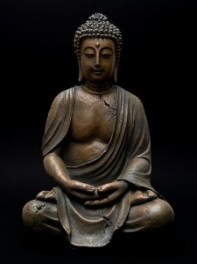
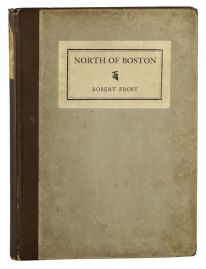
But Yarn contains three long yarns or stories in which the voice of the teller plays at least as much part as the narrative of events. This is what is new and particularly exciting in this book and reveals the influence of Robert Frost (not Edward Thomas who tried this early on with ‘Up in the Wind’ (1914) and then dropped it as not fit for his own purposes). Frost’s eclogues (especially in North of Boston (1914)) manage to convey a bleak, anti-pastoral, godless, modern world of death and often inexplicable suffering. One similarity is that ‘The Cattle Farmer’s Tale’ is spoken by a proprietorial, rather self-satisfied farmer (read Maitreyabandhu on the influence of Frost here). Like Frost, Maitreyabandhu immediately catches character and voice brilliantly. He encounters a mysterious figure: “his not pretending / to be meek or grateful to set me at my ease / and, funny thing, it stopped me in my tracks / so for a moment I stumbled on my words”. This is so like Frost’s ‘Death of the Hired Man’ – the enigmatic visitor, the farmer and his wife, the carefully sketched context, the skilful handling of dialogue in blank verse. Maitreyabandhu adds a few songs too but this is in no way a pastiche but a development of a neglected form for different purposes. The visitor is in fact Buddha and though he talks in cryptic terms, the farmer’s rootedness in the land, his evident pride in his worldly achievements, his bossiness followed by regret in dealing with his wife serve to make the Buddha’s pronouncements palatable in the poem’s world:


There are two thoughts, Dhaniya [. . .]

one leads to suffering, the other to joy.

The first is yoked to yearning like a calf,

a suckling calf that’s yoked unto it’s mother,

the other’s like a shadow that never parts.


So this really is the cattle farmer’s tale – his response to his encounter with a wholly different set of values (he and his wife are in fact deeply impressed by the visitor who stays for a month). The form of the poem allows the reader room to be sceptical in our modern fashion but also to be moved by the insights and wisdom (old fashioned word) being offered.

140905019

The second yarn, ‘The Travellers from Orissa’, is even more ambitious. Bhallika (the narrator) and Tapussa are again farmers, cattle men, who encounter Buddha in their younger days. Bhallika is again a sceptical voice (“I’m not a fool”) but is nevertheless impressed by the Master, who “spoke in a funny way with gaps / between the words as if he’d just been woken [. . .] his smile, / I shan’t forget, was like gazing at the sea”. But this is not an experience he can easily share with others and he resolves to “keep it to myself”. Tapussa’s response is quite different. The poem makes it clear Tapussa’s character inclines him to “yarns” and in the telling they grow “more fantastical each time”. His response to the meeting with Buddha is to cast himself as the rather attention-seeking disciple, who succeeds in becoming something of a cult figure: “his nodding head, how he held his finger up / each time he spoke to emphasise each word”.

But Tapussa dies, as does Bhallika’s wife and the widower lives on quietly, distantly aware of the Master’s growing fame and influence. At last he meets him again: “I said ‘Master’ before I knew I spoke”. Only now does Bhallika share the details of the original meeting with his son. In fact Tapussa had failed to understand, turning “the whole thing upside-down” to make it all “about himself”. What is moving in this yarn is the fact that Bhallika evidently understood the Buddha’s message (“There is a thorn buried / in the heart of man”) but with his commitment to wife and family and land he “walked back into [his] own life and tried to take it up”. Even years later, he understands “I’d betrayed my life” on that day and with that decision.

imgres
Coleridge’s Mariner and Wedding Guest

Such false and true followers feature in the third yarn too though the human situation is even more finely drawn and prevents any simplistic response to the questions it raises. In a still sketchy but more Westernised context (Sunday morning church) it is ‘Aaron’s Brother’ who narrates. Like Tapussa, it is Aaron who is the more overtly spiritual figure, famously suffering visitations and visions. But there is again a self-regarding quality in the way he readies himself for church before the mirror, “combing his hair”. The story is told to an unnamed guest – there’s much of Coleridge’s Ancient Mariner here – who is eager to speak to Aaron and not much interested in his brother. But the brother is in fact adopted and has further secrets to disclose of a homoerotic love between himself and Aaron and (he implies) this partly fuels Aaron’s interest in his young male acolytes.

The treatment of these ingredients of a far grander and dramatic tale than Maitreyabandhu wants to develop suggests a powerfully imaginative act by the poet, the kind of thing Keats admired in Shakespeare. In this third yarn in particular, there is no irritable reaching after facts and clarity; it is a poem which explores the perhaps irresolvable tensions  between the spiritual and the sensual life, the spiritual and materialism and fame, the spiritual and our mundane earthly loves and commitments. I’m interested that Maitreyabandhu has not yet attempted such renovations of the Frostian form in a more overtly contemporary setting. His skills with form and his brilliant capture of colloquial speech, his obviously profound engagement with Buddhist thought and his commitment to poetry as a form of expression make him a unique figure in the UK literary landscape and I really look forward to discovering the direction and innovations of his next collection.

images
Maitreyabanhu

On Yves Bonnefoy’s ‘The Tombs of Ravenna’

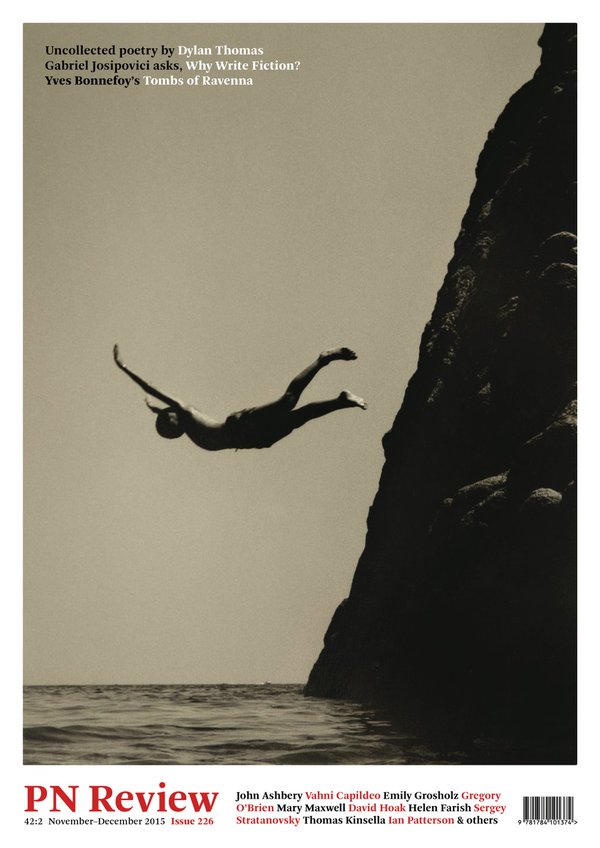
In my last blog I was discussing Keats’ ideas about Negative Capability, provoked by a visit to Keats House and a discussion there about Negative Capability and psychoanalysis. The speakers were Dr Margot Waddell, a child psychotherapist from the Tavistock Clinic, and Dr Toni Griffiths, Trustee of the Keats Foundation. Waddell focused on the acknowledged influence of Keats’ idea on the work of psychoanalyst Wilfred Bion. In the aftermath of such major stimulation, the new issue of PN Review fell through the front door, containing John Naughton’s excellent new translation of Yves Bonnefoy’s 1953 essay, The Tombs of Ravenna. Keats and Bonnefoy melded in my mind and I was reading the latter in terms of the former as follows.

CTnk-FAUYAA5TFU

Bonnefoy observes that though many philosophers have discussed death, few have bothered to ponder the places where we traditionally lodge the dead: sepulchers and tombs. The explanation he offers introduces a key term for both his prose and poetry from 1953 to the present day: the concept. The concept, as in conceptual thinking, is a human creation, abstracted from the plentitude, the flood and flux of actual, particular human experience. It is “always a means of escape” into a more fixed abode. The concept denies time and is “a profound rejection of death”. It denies the fact of death as our inevitable fate and constructs an illusory “dwelling place of logic”, a more alluring place of “permanence and identity”. Also, and crucially, the concept is “made of words”. Language is a similar construct, also seeming to promise the same sort of escape into the timeless, the unchanging. All forms of conceptual thinking seem to promise an achievable resolution but, Bonnefoy argues, “what is pondered is no longer the real object”. Instead, we contemplate “a dubious knowledge” though it may soothe our “initial anguish and trivialises that most somber melody with words that mask the reality of death”.

Bonnefoy1

So the concept promises a “strange immortality” but only if we can “forget brutal reality” – which, of course, we can and readily do. One reason is that there are general truths in conceptual thinking and a particular kind of power derived from it. It “allows thinking” of a certain kind; it is linked with “the vast power of words”. But any gain is predicated on a significant loss, the abandonment of the actually existing “world of things”. Conceptual thinking is “systematized”, generalizing, categorizing; it’s in this that its “flight” from the real is found. The only sort of thing that can be held up to counter the concept are specific particularities of human experience: Bonnefoy asks “Is there a concept for footsteps in the night, for a cry, for a stone rolling in the brushwood? For the feeling evoked by an empty house? No [. . . ]”

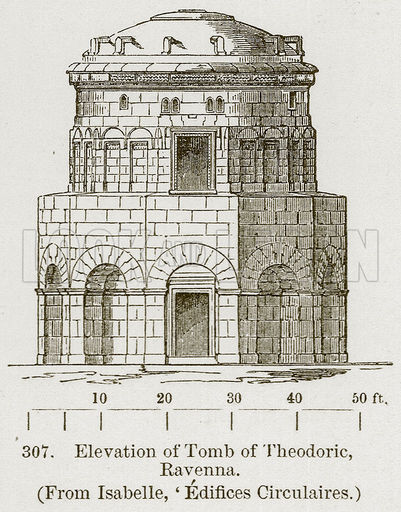
Elevation of Tomb of Theodoric, Ravenna

In his letters, Keats calls this sort of non-particular thinking “preresolved” and he encountered it especially in his friend Charles Dilke: “a man who [. . . ] has made his Mind up about every thing” (303; page numbers in brackets are to John Keats: Selected Letters (Oxford World Classics, newly revised 2002)). Dilke is one of the “stubborn arguers” who never begin on any subject “they have not preresolved upon” (303). In contrast, Keats argues the only means of strengthening one’s intellect and identity “is to make up one’s mind about nothing – to let the mind be a thoroughfare for all thoughts” (303). Keats’ best formulation of this idea arises when several things “dovetailed” in his mind after a frustrating debate with Dilke. The quality that marks out the artist – Shakespeare especially, he says – is Negative Capability. He defines this as consisting of a passive openness to the full range of particular human experience (“uncertainties, Mysteries, doubts”) without any imposition of preconceived notions, preresolved ideas or language: “without any irritable reaching after fact & reason” (41/2). Bonnefoy’s insight is that rather than being an occasional tendency, this reaching after fact and reason (conceptual thinking rather than direct, particular, various experience) is our default status. We pass our days in a delusion of resolution and systematization because if we did not we might fry our brains with the overload. In his last ever letter, Keats laments “the knowledge of contrast, feeling for light and shade, all that information (primitive sense)” as having become a great enemy to his “recovery” from his present state of illness. (369).

Yet the dully pragmatic ought not to be allowed to displace truth: Keats in better health argued this and Bonnefoy does the same in The Tombs of Ravenna. Bonnefoy’s essay for several paragraphs plays devil’s advocate, expecting to find “horror” in visiting the tombs of the dead, yet admitting that he felt “nothing but lightheartedness”. Initially, he locates this sense of up-lift in the ornamentation of the tombs, the “braids and interlacing [. . .] bows and foliage”. The essay playfully misleads its reader, suggesting that this effect of the ornamentation must be because it is comparable to the “concept” in denying the fact of death. Bonnefoy says he believed (note the past tense here) that ornamentation also abstracted towards the universal from the real, that the ornamentation presented “a closed world”, a world of “harmony”. Hence, just as the concept “seeks to establish truth without death [. . .] It seemed to me that ornamentation sought to build a dwelling place for us without death, and to have death no longer be here”. Visiting Ravenna, Bonnefoy felt lighthearted beside the tombs because its skilled and delicate ornamentation persuaded him of a world of permanence and consoling abstraction (beyond death, other than death).

20901_7280829414ee63113ca44b

But the essay now turns dramatically to deny the validity of such consoling sophistry. It’s invalid because Bonnefoy had failed to understand “the power of stone”. His insight is that it is not the ornamentation which is at the root of his lightheartedness but the very material out of which it has been carved. Stone is “unfathomable, and this abyss of plentitude, this night covered by an eternal light, is for [Bonnefoy] the exemplary form of the real”. What he means is that stone deflects the grasp of conceptual thought; conceptual thought distances itself from stone as it does from death. Stone is or represents “the difficult real” and it is or represents the “dawn of the sensory world”. Stone’s resistance, its very hardness, gestures towards the fullness and particularity of human experience (what Keats calls a “Life of Sensations”), towards “everything that has flesh, heartbeat, immanence”. The stone leads us towards the “truth tenaciously present beneath the truth of the concept”. And it is the latter ‘truth’ that Bonnefoy declares he must “tenaciously contest”.

The battle in Bonnefoy’s thought between the sensory world and the concept reflects Existentialism’s concern for existence rather than essence. His faith in a world resistant to and actually prior to the draining, withering forces of the intellect, his resistance to post-modernism, are reasons why he strikes many as such an inspiring figure. He says: “This world here exists, of that I am certain [. . .] It is simply with us. In what can be felt and sensed”. In The Tombs of Ravenna he names this underlying truth, not as existence, but “presence”. It is “what is perceived by the senses” and it was a dimly stirring awareness of this truth that constituted the “lightheartedness” he felt before the tombs of Ravenna. Through an encounter with the stone from which the tombs are constructed, the resistance of both life and death to the abstracting processes of conceptual thought was made clear and the pleasure induced arose from his closer approach to a fundamental truth.

Just as for Keats, such ideas have consequences for art and poetry. For Bonnefoy, poetry seeks to represent the real particular truths of human experience, to convey what it can of the “dawn of the sensory world”, as opposed to succumbing to the lure of conceptual thinking, even that conceptual thinking inherent in the very fabric of language itself. This specific paradox is not explored very far in The Tombs of Ravenna in which he confines himself to declaring that we require “another language than that of the concept” to articulate such truths. He concludes poetry’s only concern is “for that spot in the world I can sense” and because it must, as far as possible, resist the lure of conceptual truths (truth without death) it follows that “poetry and journey are of the same substance, the same blood”.

SONY DSC

What such a poem might look like is suggested in those few moments when Bonnefoy himself resorts to “minute particulars”. On one such occasion, drawing from his own life, he tells us of “the cry of a bird I heard as a child, at the crest of a kind of cliff. I don’t know where that valley is anymore, or why or when I was there. The light is the light of dawn or of evening, it doesn’t matter. Through the brushwood runs the pungent smoke of a fire. The bird sang. Rather I should say, to be exact, it spoke, raucous on its misty height, for a moment of perfect solitude”.

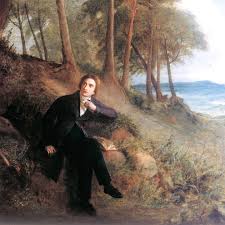
Or as Keats put it in 1819, having listened to a nightingale singing on Hampstead Heath:

Adieu! adieu! thy plaintive anthem fades

Past the near meadows, over the still stream,

Up the hill-side; and now ’tis buried deep

In the next valley-glades:

Was it a vision, or a waking dream?

Fled is that music:—Do I wake or sleep?

730052102

Keats’ Negative Capability Clearly Explained

Recently I went with some teaching colleagues to Keats House, London, to hear a discussion about the poet’s idea of Negative Capability and psychoanalysis. The speakers were Dr Margot Waddell, a child psychotherapist from the Tavistock Clinic, and Dr Toni Griffiths, Trustee of the Keats Foundation. Both were fascinating, condensing whole areas of scholarly knowledge into accessible (if intense) 45 minute talks. Waddell focused on the acknowledged influence of Keats’ idea on the work of psychoanalyst Wilfred Bion.

imgres

I’m not sure I feel very qualified to comment on that intriguing area without a good deal further reading, but a memorable phrase arose from it: Waddell argued that Bion saw the way that preconception obstructs perception and how this must adversely affect the therapist/patient relationship. Toni Griffiths’ elegant and economical discussion of Keats’ work (not merely the Negative Capability idea) set off several days of thought for me and has produced what I think will be two blog posts. Firstly, and perhaps largely for myself, I wanted to clarify my own understanding of Keats’ idea which has long meant a great deal to me. In my next post, I want to explain how those thoughts have “dove-tailed” (Keats’ own brilliant phrase in the Negative Capability letter to his brothers George and Tom, December 1817) with a recent translation of Yves Bonnefoy’s 1953 essay The Tombs of Ravenna (in the most recent PN Review (No. 226, Nov-Dec 2015, pp. 58-63).

This second blog is now available to be read here.

What follows below is my assemblage of observations from Keats’ letters, hopefully into a clear argument, indeed, into Keats’ coherent theory of poetic achievement and practice (though Negative Capability of course eschews all such systematizing). Page numbers in brackets are to John Keats: Selected Letters (Oxford World Classics, newly revised 2002).

imgres

In his 1817 letter to Benjamin Bailey, Keats wishes for “a Life of Sensations rather than of Thoughts!” (36). Just a year later, in a letter to James Hessey, he clarifies this distinction, suggesting that poetry is not “matured by law & precept, but by sensation and watchfulness” (146). The language use Keats associates with law and precept is evidently a fixed, a “preresolved” (303) language. What he seeks inits place is rather a language sufficiently flexuous and responsive to “watchfulness”, to attentiveness and often, when Keats discusses this, there is a strong sense of passivity. Writing to Bailey, characteristically using the phrase that an idea had “pressed upon” him (35), he says it has “increased my Humility and capability of submission”. The idea he is referring to is that artists (“Men of Genius”) “have not any individuality, any determined character”, as opposed to “Men of Power” who are replete and resolved in “a proper self” (35).

Keats’ distrust of such self-confident preresolution famously emerges in the 1818 letter to John Reynolds, as his dislike and distrust of poetry that has a “palpable design” on us (58) and to Bailey he contrasts this with an alertness to the “holiness of the heart’s affections and the truth of Imagination” (36/7). Preresolution pre-packages or pre-limits our emotional and spiritual life, whereas Keats is intent on welcoming “all”. This is what he means in the phrase “a Life of Sensations”, the latter word (rather misleadingly) encompassing both emotional and spiritual life as well as a full, open and alert response to the world about us. Such a full engagement with present experience is where we feel Imagination at work: Keats asks Bailey if he has not felt this in even such common experiences as listening to “an old Melody” and in the “elevation of the Moment” Keats declares we are “mounted on the Wings of Imagination” (37).

730052102

This ideal of a radical openness to present experience and its passive acceptance, was further clarified for Keats in his later dealings with his friend, Charles Dilke, who was becoming something of a political bore (spouting Godwinian philosophy and politics), a man who had resolved upon most issues. Keats again links this state to identity: Dilke is “a man who cannot feel he has a personal identity unless he has made his Mind up about every thing” (303). Dilke is one of the “stubborn arguers” who never begin upon any subject “they have not preresolved upon” (303). In contrast, Keats argues the only means of strengthening one’s intellect and identity “is to make up one’s mind about nothing – to let the mind be a thoroughfare for all thoughts” (303).

Keats’ best formulation of this idea arises when several things “dovetailed” in his mind after another frustrating debate with Dilke. The quality that marks out the artist – Shakespeare especially, he says – is Negative Capability. He defines this as consisting of a passive openness to the full range of human experience (“uncertainties, Mysteries, doubts”) without any imposition of preconceived notions, preresolved ideas or language: “without any irritable reaching after fact & reason” (41/2). Once again, the best way to understand this is through Keats’ word “watchfulness”, an attentiveness to the true nature of experiences. In yet another foray into these ideas, he experiments with the word “disinterestedness”. This again implies the absence of a forceful or dominating self, full of preconceived ideas, words, precepts. Writing to his brother George, he says “complete disinterestedness” is a difficult goal. He admits he is himself “far” from it though personally and in social terms he believes it “ought to be carried to its highest pitch” (213).

female-house-sparrow-on-gravel

Such moments of disinterested perception occur in his observation of a sparrow picking about on the gravel (37). Approached with Negative Capability this mundane moment becomes something that “startles” and Keats says “I take part in its existince [sic]” (37). In this way, the poet is continually “filling some other body” (148). Such is the truth in a “Life of Sensations”, fuelled by Imagination, and one of the delights of a human life is that these happy moments will continue to be “repeated in a finer tone and so repeated”. The mind develops in this way through the repetition “of its own silent Working” (36). These refinements of the mind can occur only when experience is encountered openly, nakedly, even dangerously. To Reynolds, Keats wrote that to become fully “fit for this world”, with all its pains and hardship, a man would have to have “the fine point of his soul taken off” (39). But the poet or artist cannot afford to be so blunted by experiences but must remain radically open, even submissive to them. In the same letter to Reynolds, Keats quotes Shakespeare’s Venus and Adonis: “As the snail, whose tender horns being hit, / Shrinks back into his shelly cave with pain”. Such a reaction of withdrawal must not be countenanced by the would be artist. To Richard Woodhouse, Keats wrote “What shocks the virtuous philosopher, delights the camelion [sic] Poet” (148). The work of the poet experiences “no harm from its relish of the dark side of things any more than from its taste for the bright one” (148).

John_Keats_by_Benjamin_Robert_Haydon

Keats recognizes and accepts the personal, experiential conclusion of such thoughts as he records his own sensation of feeling annihilated in a crowded room because “the identity of every one in the room begins to press upon me” (148). Yet this absence of a resolved self (pushing and barging over-confidently outwards) leaves room for such delicate encounters as that with the sparrow and on other occasions, catching a glimpse “of a stoat or fieldmouse peeping out of the withered grass – the creature hath a purpose and its eyes are bright with it” (213). Keats regards such escape from or evasion of this confinement to self as a form of purification: “there is an ellectric [sic] fire in human nature tending to purify” (213). He names Socrates and Jesus as perfections of this state, though “it is to be lamented that the history of the latter was written and revised by men interested in the pious fraud of Religion” (214). Of course, poetry must also aspire to this state and (as David Constantine has argued in his Bloodaxe lectures, A Living Language 2004)) Keats’ “gymnastics” in trying to broaden his native language-use (with its preresolutions) through a variety of foreign poetic experiments suggests he knew this well enough.

imgres

By the spring of 1819, Keats was further developing his ideas about the role and nature of the self with the letter discussing life as a “vale of Soul-making”. He dismisses naïve ideas of the “perfectibility” (232) of mankind, even doubting the real progress made by any “seldom appearing Socrates”. He jokes that fish are as likely to “philosophise the ice away from the Rivers” as man is likely to arrive at a perfect state because “the nature of the world will not admit it” (232). However much happiness a man can experience, there will still be worldly elements that “prey upon his nature”. It is from this conviction that Keats proposes – in stark contrast to any Christian reading of man’s life –the idea that we are born as intelligences (“sparks of the divinity” or “atoms of perception” (232)). Then through a system of “Spirit-creation”, the intelligence develops into a Soul by refining an individuality or identity. This process is an educative one, fuelled by Negative Capability, in that the world is allowed to impact fully on the human heart which is led to “feel and suffer in a thousand diverse ways” (233). Man can never achieve a state of perfection but as the world’s school of hard knocks is openly, vulnerably embraced so the process of individuation occurs via emotional experience. It follows that the human heart is “the teat from which the Mind or intelligence sucks its identity” (233). As various as the lives of all individuals are, so “various become their souls” since individual emotional experiences are the “fortifiers or alterers” of our ever-developing nature (234).

So Keats’ ideal poet must possess Negative Capability to fully experience the world before him without preresolution. Armed with sufficient language skills to express the plenitude of these experiences, the poet’s role is then to re-present them to the reader in such a way that the poem itself contributes to the reader’s own developing emotional life. The work of art is therefore an important contribution to the reader’s own on-going process of Spirit creation or individuation (though this is only going to occur if the reader too is possessed of Negative Capability and is not someone who opens a book of poems with firmly preresolved expectations and ideas).


Louise Gluck’s ‘Education of the Poet’

As Keats once said, several things dove-tailed together. One of these was being asked by Poetry London to review Louise Gluck’s new collection, the PBS Recommendation, Faithful and Virtuous Night (Carcanet, 2014). The other – yesterday – was discussing with students the opening quatrain of Edward Thomas’ ‘The Sun Used to Shine’ with its marvelous evocation of the happy days he spent with Robert Frost in the Gloucestershire countryside in 1914. The opening lines employ an ABAB rhyme scheme, enjambement, judiciously placed caesuras and simple colloquial choices of verb and adverb to create its effects. As often, students asked whether what we were discussing was ‘thought about’ by the poet. My usual answer is that a writer is far more conscious of his craft that they might expect, but also that he considers options and exercises a veto. Like evolution, what fails goes to the wall; what remains becomes more and more coherent and effective. This is an idea I first saw expressed in Gluck’s essay, ‘Education of the Poet’ (originally a lecture delivered in 1989, reprinted in Proofs and Theories: Essays on Poetry (Carcanet, 1999).

imgres

Gluck’s over-riding point is that her characteristic mode of thought defines itself “in opposition”. This gives rise to her image of the poet as fundamentally in a state of helplessness much of the time, absorbing whatever is regarded as ‘oppositional’ and looking for opportunities to speak back. She makes it clear that such an idea “does not mean to distinguish writing from being alive”. What it means in practice is that the life of the poet is a life of “yearning, not [one] made serene by sensations of achievement”. The image of the writer effectively, confidently, repeatedly decanting her self, her being onto a sheet of paper is a false one. There are periods of silence, preoccupied with the desire to make art, a restlessness that may be agony. When at last “some sound, some tone” precipitates, what follows is a period of concentrated work: “so called because as long as one is working the thing itself is wrong or unfinished: a failure”. Yet when the poem, the utterance, is finished – Gluck argues – the poet is no more, reverting “simply [to] someone who wishes to be one”.

This pattern of a powerful force, a cacophony being replied to by the artistic voice  can also manifest in the way a poet engages with language. Gluck rejects the idea that poets are people who can’t get enough of individual words like ‘incarnadine’, in favour of language deployed in larger swathes to create contexts in which the “simplest vocabulary” is liberated from custom. It is custom that is thus replied to through using the gestural aspects of language – setting, timing, pacing – releasing words into novel relationships with truth. The poet generates material, improvises, plays with language and replies to what is produced through the process of veto. Like evolution, what fails goes to the wall; what remains becomes more and more coherent and effective.

imgres

So it’s no surprise that Gluck’s taste in poets favours those whose mode of poetic speech is more like a spoken confidence, a reply, a conversation: “I read to feel addressed”. Accordingly, her personal preference is not for poets – like Wallace Stevens – whose work is a more solitary musing, like “intercepted meditation”, not concerned to be listened to. I find myself in agreement with much of what Gluck says and – re-reading the essay now – I remember that she also uncovers this pattern in the teaching process. She warmly recalls being taught by Stanley Kunitz, his application to the novice writer of a steady “scrutiny”, the oppositional force “from outside, from the world, from another human being”. It’s a scrutiny and compulsion she herself continues to provide for her own students; the teacher’s presence is to stir, to provoke the reply, to kick start the process of definition.

It seems even one’s own work can be seen in this light. Considering her early collections, Gluck regards each new book as a fresh reply to what went before. This is a good answer to my students’ inquiries about how conscious an artist can be. Gluck tells us – and we should more than half believe it – that here she sought latinate suspended sentences, there how to end a poem without sealing it shut; elsewhere she looked to learn a longer breath, to make better use of the present tense; later still to write something less heroic, devoid of mythic reference. The artist is conscious, manipulative, alert. The artist waits, responds, manoeuvres. The both.