New review of my translation of Peter Huchel’s ‘These Numbered Days’

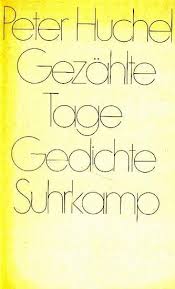
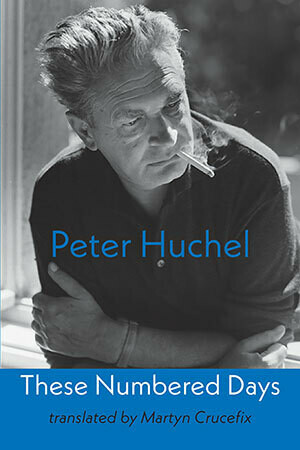
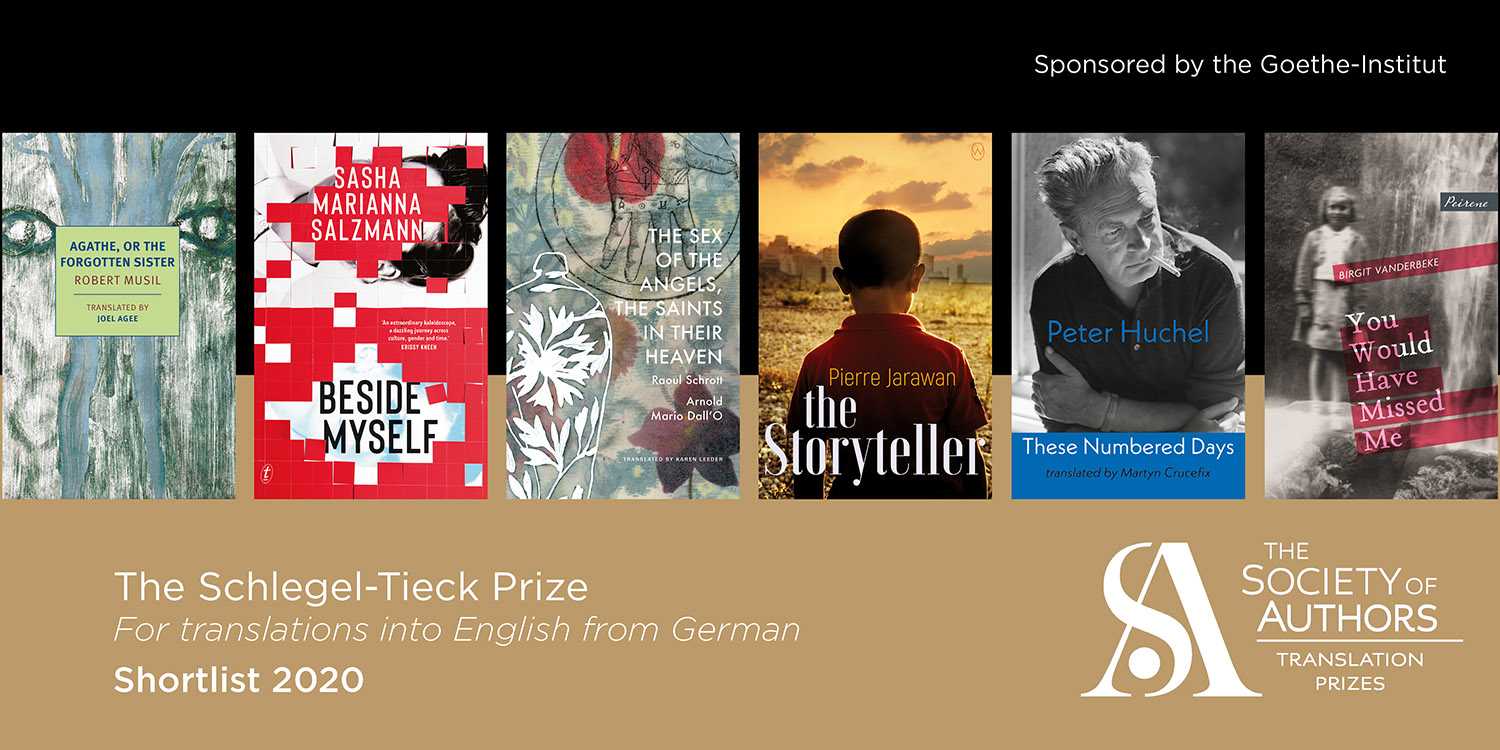
When Shearsman Books published my translations from the German of Peter Huchel’s 1972 collection These Numbered Days (Gezählte Tage), we were still in the early days of Covid restrictions and so launch events and so on were very difficult. I was pleased when the book was recognised in 2020 by winning the Schlegel-Tieck Prize for translation from German awarded by the Society of Authors. The judges were Steffan Davies and Dora Osbourne. Yet the wheels of reviewing such books turn very slowly. And I am pleased once more with the appearance of a lengthy review of the book by Frank Beck which has recently appeared in the excellent journal, The Manhattan Review, edited by Philip Fried. So, with due acknowledgements, I am reproducing Frank’s review here. Do check out his work and visit The Manhattan Review, an excellent US journal with a liking for pubishing reviews and work from the UK.

These Numbered Days (Gezählte Tage) by Peter Huchel, translated from the German by Martyn Crucefix and introduced by Karen Leeder. Emersons Green, Bristol, UK: Shearsman Books, 2019. 129 pp. $18.00 (paperback).
When poets look to the stars, often they are hoping to place their human worries in a wider context, in search of consolation. But what if they find, instead, that their concerns are reflected somehow in the sky overhead? Think of the famous fragment from Sappho: alone and unhappy, she watches the moon and the Pleiades descend together, like lovers lying down in bed. Readers may feel that something similar is happening in these lines from German poet Peter Huchel, as translated by British poet Martyn Crucefix:

                        Bent already by the night
                        into his icy harness,
                        Hercules drags
                        the star’s chain-harrow
                        up the northern sky. (p. 23)

            When have we felt so much heft in the distant stars? We might well wonder what weight Huchel himself was bearing when he wrote this last stanza of his poem, “Under the Constellation of Hercules” (Unterm Sternbild des Hercules).

            But first, let’s see how closely the English translation corresponds to the German stanza. Crucefix replicates Huchel’s pattern of three-beat lines, varied in line 3 with a two-beat phrase. He also makes use of the ready echoes some of Huchel’s words have in English: bent for gebeugt and icy for eisige. He creates a harsh music with chain-harrow, as does the clutter of consonants in Huchel’s Kettenegge. And Crucefix ties the stanza together with the r-sounds running through each of his five lines.

            Of course, acoustics aren’t everything: this closing stanza owes much of its power to the two, less portentous preceding stanzas, in which the speaker describes a small, rural settlement, “no larger/than the circle/a buzzard traces/in the evening sky.” All we are shown of the place is a rough stone wall, “glittering water,” and the smoke from a fire, “cut through with voices,/none of which you know.” This sense of elemental conflict prepares us for the star-hauling of the final lines: even in the heavens, it seems, the grinding struggles of the universe go on.

            In the German-speaking world, Peter Huchel is widely considered one of the finest 20th-century poets. He composed many of his poems out loud, rather than on paper, so their resonant language often seems, in the words of one critic, “as natural as air or breath.” Huchel is also admired for the way he endured years of harassment and confinement at the hands of the East German government. His reputation was consolidated in 1984, when Huchel’s poetry and prose were collected in two volumes, meticulously annotated by Axel Vieregg, a German scholar in New Zealand who had spent decades studying the poet’s work.
            English translations of Huchel’s poems have been difficult to find, although selections of them were compiled and translated by Michael Hamburger and Canadian poet Henry Beissel. (This despite Joseph Brodsky’s enthusiastic endorsement of Huchel’s poetry in The Wilson Quarterly in 1994, accompanied by translations by Joel Spector and a full-scale biography by British scholar Stephen Parker, in 1998.)

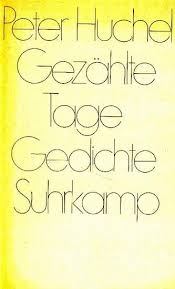
            These Numbered Days brings us graceful English versions of all 63 poems in Huchel’s 1972 collection, Gezählte Tage, the fourth of his five verse collections, published between 1948 and 1979. The translated poems appear side-by-side with the German originals. An introduction by Karen Leeder helps orient the English-speaking reader in Huchel’s world, while connecting his work with the most urgent issues of today. Crucefix’s fidelity to both the meaning and the manner of Huchel’s poems won his book the prestigious Schlegel-Tieck Prize for German Translation in 2020. 

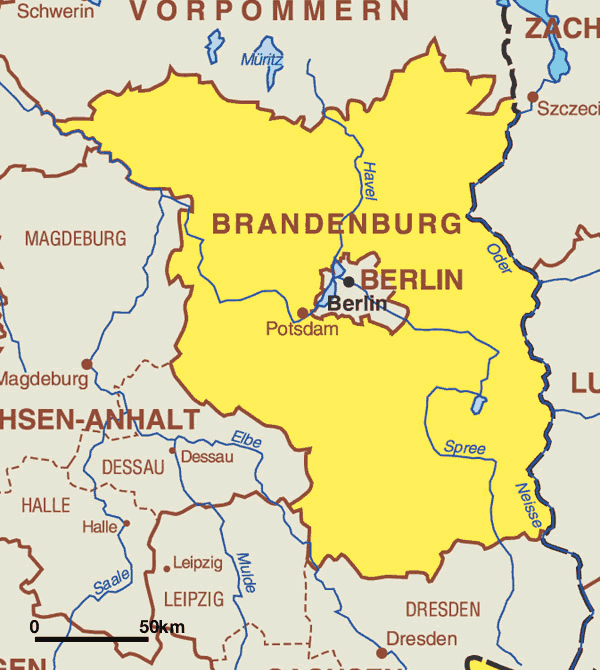
            Huchel was born Hellmut Huchel in 1903 (the “u” is pronounced like the double vowel in moon), the son of a civil servant and his wife, from Lichterfelde, a Berlin suburb. Hellmut spent much of his youth on his grandfather’s farm in the nearby Brandenburg countryside, where he developed a feeling of deep kinship with the natural world. After studying literature and philosophy briefly, he lived in Paris for two years, then traveled extensively in Hungary, Romania, and Turkey.

            In 1931, at the age of 28, Huchel returned to Berlin, first earning his living as an editor and then by writing plays for radio. He changed his first name to Peter and began to publish his poems in Die literarische Welt and other leading German journals. Those early lyrics often draw on his memories of country life, as in “Havelnacht,” which describes a night on the Havel River in Brandenburg. Here are the poem’s last two stanzas (my translation):

                        Scents of so many past years
                        lean gently here, into the water.
                        As we go quietly along,
                        the night’s brew blows through us.

                        The greened stars are floating
                        as they drip from the oars.
                        And the wind cradles our lives,
                        as it cradles willow and crane.

            As beguiling as these images are, the poem’s effectiveness depends largely on its delicately deployed A/B/A/B rhyme scheme, which I have not tried to replicate. (The German poem might remind an English-speaker of Yeats.) Already, Huchel had acquired the technical mastery that the Swiss critic Paul Schorno would later describe as “certainty of what is being said through certainty of form.”

            In 1941 Huchel was drafted into the Luftwaffe, where he served until being taken prisoner by the Russians. This led to his working for Radio Berlin in the Russian-occupied sector after the war; eventually he became its cultural director. In 1949, when the Federal Republic of Germany was established in western Germany and the German Democratic Republic in the east, Huchel was named editor-in-chief of the GDR’s new literary magazine, Sinn und Form (Sense and Form). Under his direction, it came to play an important role in East German culture and even earned an international reputation.
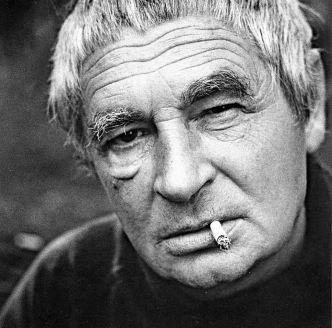
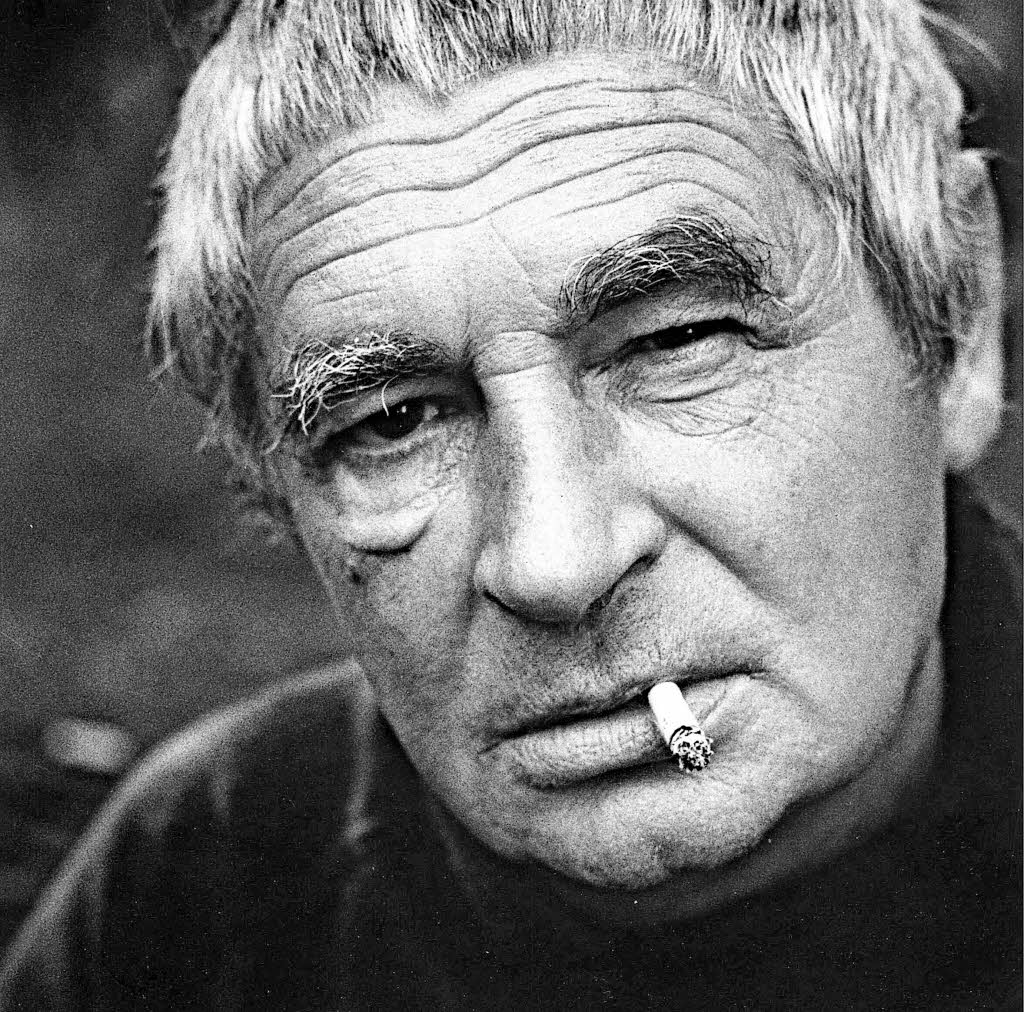
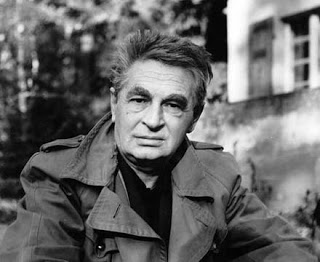
Peter Huchel

            However, Huchel’s interest in the diverse contemporary poetry flourishing abroad in those years was fundamentally at odds with Communist Party ideology, and he repeatedly came into conflict with party officials. In 1962, as East Berlin was sealed off from the West by a wall, Huchel was dismissed as editor of Sinn und Form. He was forbidden to publish in East Germany or to travel, and, along with his wife, Monica, a translator of Russian, and their son Stefan, was placed under round-the-clock surveillance at their home in Wilhelmshorst, near Potsdam.

            The poems in These Numbered Days were written during the subsequent nine years, as Huchel remained under virtual house arrest. (Several of them were published in West Germany during the poet’s confinement; others appeared in English-language journals in Henry Beissel’s translations.)

            In these poems, the rich, rhyming music of Huchel’s early poems is replaced by a spare but flexible flow of language that can contract to a beat or two or relax into longer lines. One of the book’s finest poems considers how the work of “The Dipper” (Die Wasseramsel), a small bird that feeds along the banks of rushing streams, resembles the poetry Huchel now wants to create:

                       If I could plunge
                        brighter downwards
                        into the flowing darkness

                        about me to fish out a word

                        like this dipper
                        beside the alder boughs
                        picks its food

                        from the stony river bed.

                        Gold-panner, fisherman,
                        relinquish all your gear.
                        The shy bird

                        looks to work without a sound. (p. 45)

            Few poems in the collection deal with the Huchels’ troubles overtly. When they do, the tone is wry, refusing to reward oppression with anger. Even as the house around him deteriorates, presumably because repairs are not permitted, the poet declares, “I will not write/the names of my enemies/on the spongy wall” (“Weeds”). One has the sense of a man and his poetry being tested and determined not to fail. That includes trying to heed the advice offered to Huchel in a song by his friend, Wolf Biermann: “Do not become embittered/in this embittered time.”

            Huchel’s few visitors in Wilhelmshorst had to subject themselves to police surveillance, with all the attendant risk in such a police state, or to approach in secret, under cover of darkness, as Huchel describes in “Weeds”:

                        Guests are always welcome,
                        those who love weeds,
                        those who do not shy away from stony paths
                        over-grown with grass.
                        No one comes.

                        The coalmen come —
                        from their filthy baskets they pour
                        the lumpen black grief
                        of earth into my cellar. (p. 123)

            Huchel is still the keen observer of nature he was in his earlier books, but the natural world that once buoyed and nourished him now often mirrors his constricted situation, as in “Exile”:

                        Come evening, friends close in,
                        the shadows of hills.
                        Slowly they press across the threshold,
                        darkening the salt,
                        darkening the bread
                        and with my silence they strike up a conversation.

                        Outside in the maple
                        the wind stirs:
                        my sister, the rainwater
                        in the chalky trough,
                        imprisoned,
                        gazes up at the clouds. (p. 27)

            Yet such confessions —  even any use of personal pronouns — are scarce in these poems. Sometimes main verbs disappear, and the lines rely on gerunds and participles to move them forward. What is always present is Huchel’s patient watchfulness, often refracted through history and myth, as in his image of Hercules climbing the winter sky. With all roads around one blocked, the mind’s pathways become more important than ever, and allusions abound here. These poems reach out to the poet Alcaeus (a contemporary of Sappho), Tang dynasty writer Pe-Lo-Thien, Shakespeare, Kierkegaard, Virginia Woolf and other writers past and present.

             Another connection that sustains Huchel, though more fleetingly, is his memory of happier times, especially his travels in the Mediterranean, as in “Dolphins”:

                        Gazing out across the sea
                        in white sunlight
                        I saw them leap
                        above the salty
                        weight of the water —
                        dolphins,

                        my secret brothers,
                        carrying my messages to Byzantium. (p. 91)

            Such flashes of joy are tempered by the narrow confines of the Huchels’ lives. In “Hubertusweg” (the name of their street), the poet wonders about the policeman standing guard outside his house in the rain (“What’s in it for him . . .  ?”) and then considers the vulnerability of each person before a totalitarian state (“The state’s a blade;/the people thistles.”) Yet even totalitarian states have a life-span. Huchel sees his son reading a cuneiform text about “the peaceful campaign” of the Bronze Age ruler, King Keret, and his poem concludes:

                        On the seventh day,
                        as the God IL proclaimed,
                        a hot wind blew and drank the wells dry,
                        the dogs howled,
                        the donkeys cried out with thirst.
                        And without the use of a battering ram the city surrendered.                                              (p. 121)

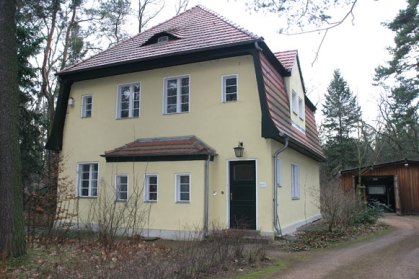
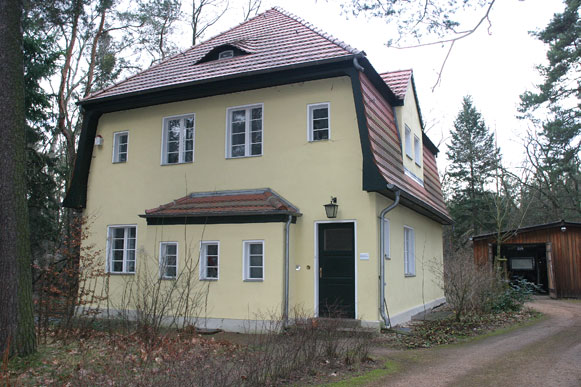
            In 1971, in response to efforts by Heinrich Böll, Arthur Miller, Henry Beissel and others, the GDR allowed Peter Huchel and his family to emigrate to West Germany. He continued to write there until his death, in 1981. Eight years later, the Berlin Wall fell without a shot’s being fired, and Germany was soon reunited. The Huchels’ house in Wilhemshorst, where these poems were written, is now a writer’s center, sponsored by the state and local governments.

            Today the once-divided city of Berlin is one of the most vibrant places in the world. Huchel’s poetry is still in print and still read, and, at number 10, Hanseatenweg, near the Tiergarten, Sinn and Form keeps producing new bimonthly issues, very much along the editorial lines Huchel had in mind. Thus far this year, alongside work by and about German-language writers, the journal offered its readers articles about Jorge Luis Borges, Clarice Lispector, Marcel Proust, Marina Tsvetaeva, and Adam Zagajewski.

—Reviewer Frank Beck is a writer and translator and serves as a trustee for Elgar Works, which publishes the scores of Edward Elgar. His recent thoughts on poetry and music can be found at WWW.DIEHOREN.COM.
The Outlaw Beyond the Wall: the poetry of Peter Huchel

To mark the shortlisting – for the Society of Authors’ Schlegel-Tieck Translation Prize 2020 – of my Peter Huchel translations, published by Shearsman Books, I’m posting here a piece I wrote about Huchel’s poetry which first appeared in Acumen 98 (September 2020). Peter Huchel’s work has its place in the tradition of the greats of twentieth-century German poetry – Rilke, Trakl, Brecht, Benn and Celan – but he is also, as Karen Leeder has argued, a “one off”.[i] Iain Galbraith also lists Huchel among a “handful of essential post-war poets” in German, but his poetry is far less well known than it deserves to be. His presence in English at all is thanks to Michael Hamburger’s 1983 translations published by Anvil[ii]. I came across isolated examples of his work a few years ago and was immediately drawn to his startling observations of the natural world which function often as “metaphors [to] take us deep into the social and historical landscape” of his era (Galbraith again). I believe he is a poet with important things to say to us in our own conflicted times and my translation of Huchel’s best collection, These Numbered Days (1972), was published last year by Shearsman Books. Here, I put Huchel’s work into the context of the great events in Europe in the twentieth century.


Huchel’s description of Pe-Lo-Thien, the poet, social critic and sometime exile from the Tang Dynasty, is intended also as a portrait of the poet himself – a dissident figure, an “outlaw, / who lives beyond the wall / with his cranes and cats” (‘Pe-Lo-Thien’). It’s no surprise that the spare, impersonal, often lapidary quality of the poems in These Numbered Days was remarked on by Karl Alfred Wolken as offering the reader something of a Chinese book in German.[iii] The poet himself, carefully scrutinising the natural world – the perception of which constitutes the substance of so many of his poems – tries to descry “Signs, / written by the hand / of a Mandarin” (‘No Answer’). If such allusions suggest a minimalist and tight-lipped quality to Huchel’s poems, this is precisely what might be expected from an artist forced to play, as he did for so many years, the role of inner émigré.

For readers of British and Irish poetry, the term ‘inner émigré’ will be familiar from Seamus Heaney’s use of it in his 1975 poem ‘Exposure’. Discussing the idea, Heaney acknowledged the term’s specific meaning in the 1920/30s in Soviet Russia as referring to a dissident who had not actually gone into exile but remained at home, disaffected from and under the surveillance of the authorities. Heaney saw himself in this light in relation to Northern Ireland. He also associated the idea with the position of George Seferis, concluding that “poetry secures some final place in your being, some little redoubt in your consciousness that will not be taken over by history or the world or disaster”.[iv] This same sense of confinement, wrestling with conscience and the frequent resort to codification which results from such a compromised position is the best way into Huchel’s work as a writer whose life and historical circumstances astonishingly led him to play the role of inner émigré twice over.

He was born Hellmut Huchel in 1903 in Alt-Lichterfelde, now part of Berlin. Due to his mother’s chronic illness, the boy was taken from the city to be raised on his grandfather’s farm at Alt-Langewisch, in the Brandenburg countryside near Potsdam. As an adult, Huchel was fond of quoting St. Augustine on the importance of memory as a “great field or a spacious palace, a storehouse for countless images of all kinds”.[v] Huchel argued that it is “the experiences of childhood, roughly between the ages of five and ten, that exercise a decisive influence in later years”.[vi] But if this period seems to have had something of the idyll about it for the 11 year old boy, it was dramatically shattered by the death of his beloved grandfather and the outbreak of war in Europe in 1914.

After his country’s defeat, the 17 year old Huchel took part in the conservative Kapp-Putsch against the Weimar Republic in 1920 which was fuelled by a resentment of the German government’s agreeing to the punishing conditions of the Treaty of Versailles. Huchel was wounded in the fighting associated with this failed coup but it was during his recovery in hospital that his sympathies for socialism and Marxism fully developed. His very early poems can be linked to the sort of art fostered by the League of Proletarian Revolutionary Writers. He has said: “What did I care about in those days? I wanted to make visible in the poem a deliberately ignored, suppressed class, the class of the people, the maidservants and coachmen”.[vii]

By 1932 he was working as an editorial assistant for Die Literarische Welt. His first collection of poems was accepted for publication under the title Der Knabenteich (‘The Boy’s Pond’). But with the rise of Hitler, Die Literarische Welt had to cease publication and it is at this moment that Huchel developed the strategy of the ‘inner émigré’. He published very little, eventually deciding to withhold Der Knabenteich. He was deeply troubled that the Nazis liked his work, reading into it as they did a version of the blood and soil nationalism they hoped to foster. So, by 1936 he was refusing permission for any publication and he did not publish any new poems during the rest of Hitler’s rule. Rather, he withdrew to the Brandenburg countryside. His response to tyranny was silence and non-cooperation, though he was eventually drafted in 1941 and ended the war in a Russian prisoner of war camp.

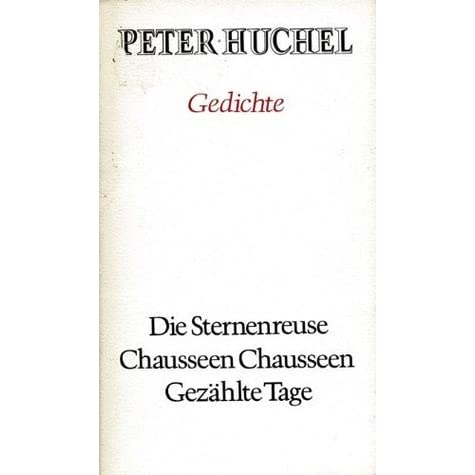
With the fall of the Third Reich, Huchel enthusiastically shared the democratic and socialist optimism of many of his compatriots for the reconstruction of East Germany. His short-lived faith in land reform in the immediate Soviet-Occupied post-war years is consistent with his earlier social concerns. He now began working for East German radio and in 1948 at last published his first collection, Gedichte (‘Poems’). In 1949 he became editor of the influential literary magazine Sinn und Form (‘Sense and Form’). Though Huchel’s poems were applauded both for their craft and socialist undercurrents, they did not satisfy those who were soon demanding much more explicit support for the German Democratic experiment. Huchel’s dark rural landscapes offered equivocal support at best for the governing regime and his instinctively conservative harking back to childhood and the natural world (rather than a modern revolutionary transformation of human society) were judged to fall short of the expected unquestioning celebration of the GDR’s project.

With the poet’s increasing sense of disaffection from the direction of GDR society, Huchel was once more forced to adopt the role of ‘inner émigré’. The tone of his work becomes increasingly sombre and melancholy, his poetic diction grows more clipped and cryptic, his palette narrowing. In his work at the journal Sinn und Form, he was determined to maintain editorial freedom and the publication flaunted an international outlook with contributions from Aragon, Bloch, Brecht (two special issues), Camus, Eluard, Langston Hughes, Thomas Mann, Neruda, Sartre, Yevtushenko and Zweig. Increasingly, he came into conflict with the authorities and was put under immense pressure to conform. He resisted for 13 years – in large part because of the determined support of Brecht. Brecht’s death in 1956 left Huchel exposed and he was asked to resign his editorship. He refused and so compelled the East German government publicly to force his resignation.

The Huchel house, Wilhelmshorst

A year after the building of the Berlin Wall in 1961, Huchel was banished at the age of 59 to effective house arrest in Wilhelmshorst. It was at this moment that his second collection of poems, Chausseen, Chausseen (‘Roads, Roads’), appeared. He published it – in bold defiance of the GDR authorities – in the West. It was much praised in the author’s absence. Henry Beissel describes the leanness and density of these new free verse poems: “images are more insistent on turning concreteness into a code; sadness emanates from a sense of the inevitability of loss and from a world bent on self-destruction”.[viii] Huchel’s images from nature are left to speak for themselves; his is often an impersonal poetry of a particularly haunted and pessimistic kind. Yet there is stoical survival too; the poems remain marvellous acts of observation.

The poem ‘Hubertusweg’ vividly portrays this period of his life, from 1962 to 1971, living in isolation, under Stasi surveillance. Gezählte Tage (‘These Numbered Days’) appeared in 1972, the title suggesting the counted days of Huchel’s time under house arrest, his poems recording them, marking them, but also a residual sense of them actually counting towards something, his legacy as a poet, his hoped-for release. Huchel repeatedly applied for an exit visa for himself, his wife and son and in this he was supported by PEN in an internationally orchestrated campaign.

Eventually, in 1971, the Ulbricht government granted his release and he lived first in Rome, then in a borrowed house near Freiburg in West Germany. But like many GDR artists who moved to the West, Huchel was equivocal – to put it mildly – about what he found here. Because the GDR had failed to bring about a truly democratic and socialist society did not mean that he had given up his ideals and the West’s materialism, egotism and faithless profiteering were repellent to him. There is a spiritual emptiness everywhere as in ‘Subiaco’, set in Italy, where Pilate’s bowl stands emptied of water so the taint of guilt cannot be washed away. Huchel’s gloom is partly determined by his own nature, partly by his background, by political persecution and by his divorce from his Brandenburg homeland. The poet bears witness to the inadequate present.

In Huchel’s few remaining years he was lauded in the West but perhaps this was just another form of exile, though one in which he was able to speak and publish. Even so, his final collection, Die Neunte Stunde (‘The Ninth Hour’) which appeared in 1979, is a book almost exclusively of elegy and lament. The ninth hour is the hour of despair, the hour in which Christ died on the Cross, crying out, “My God, my God, why have you forsaken me?” Huchel himself died in 1981, aged 78. Contemporary readers can hear something of his more personal voice – so finely attuned to the natural world, but gifted only a tragically powerless place in history, yet driven to labour and bear witness against the odds – in the words of the unnamed peasant who narrates ‘Middleham Castle’, one of Huchel’s more explicit and terrifying portraits of tyranny:

Familiar with the ways of great forests –

the year streaked with the jays’ colours,

painful brightness of frosted boughs,

the winter hair of deer stuck to bark,

fawns huddled together at evening,

warming themselves in the cloud of their breathing –

up the gorse-clad hill with rope and horses

I haul tree trunks to Middleham Castle.

Martyn Crucefix

London July 2020


[i] Karen Leeder, Introduction to These Numbered Days, Peter Huchel, tr. Martyn Crucefix (Shearsman, 2019).

[ii] The Garden of Theophrastus and other poems, tr. Michael Hamburger (Anvil Press, 2004).

[iii] Karl Alfred Wolken, in a review of Gezählte Tage (Rias Berlin, 1972), see http://www.planetlyrik.de/peter-huchel-gezahlte-tage/2011/10/

[iv] George Morgan, ‘Interview with Seamus Heaney’, Cycnos, Volume 15 No. 2, July, 2008: http://revel.unice.fr/cycnos/index.html?id=1594.

[v] Saint Augustine, Confessions, Book X, viii (Penguin, tr. R.S. Pine-Coffin).

[vi] Huchel’s acceptance speech for the 1974 Literature Prize of the Free Masons, quoted by Henry Beissel, A Thistle in His Mouth: Poems by Peter Huchel (1987), p. 10.

[vii] Quoted and translated by John Flores, Poetry in East Germany (1971), from Eduard Zak, Der Dichter Peter Huchel (1951), p. 124.

[viii] Beissel, p. 16.

The Poetry of Peter Huchel #2

This is the second blog posting arising from my work over the last year or so on translating the third collection by the German poet, Peter Huchel. I hope to complete this for publication in the next few months and here (and in my previous blog) I have been gathering information about his life and times. In a working life that saw him through some of the most traumatic events of European history, Huchel published only 4 collections of poetry in 1948, 1963, 1972 and 1979. Throughout his career the substance of much of his work is his vivid observation of the natural world, moving gradually towards a usually brief, free verse form, a withdrawal from the personal and a steadily darkening vision which comes to be dominated by elegy and lament. Quotations from the poems in this blog are from my own translations.

Huchel divorced in 1946 and married Monica Rosental in 1953. In his work at the journal Sind und Form he was always determined to maintain editorial freedom and the publication had an international outlook with contributions from Aragon, Bloch, Brecht (two special issues), Camus, Eluard, Langston Hughes, Thomas Mann, Marcuse, Neruda, Russell, Sartre, Yevtuchenko and Zweig. Inevitably he came into conflict with the authorities and came under immense pressure to conform. He resisted them for 13 years – in part because of the determined support of Brecht. Brecht’s death in 1956 left Huchel more exposed. He was asked to resign his editorship, refused and so compelled the East German government publicly to force his resignation. A year after the building of the Berlin Wall in 1961, Huchel was banished at the age of 59 to effective house arrest in Wilhelmshorst. The poem ‘Hubertsweg’ vividly portrays this period of his life, from 1962 to 1971, living in isolation and under Stasi surveillance:

huchel3

And at night

the roaring at the keyholes.

The fury of stems

splitting the earth.

And come morning

light roots out the dark.

Pine trees rake the mist from windowpanes.


He stands down there,

wretched as stale tobacco smoke,

my neighbour, my shadow

right on my heels as I leave the house.

Yawning sullenly

in flurries of rain from the bare trees,

he tinkers today with the rusty chicken wire.

What’s in it for him, scribing investigations

in his blue octavo book, my friends’ car numbers,

keeping watch on this hardly vulnerable street

for contraband,

forbidden books,

scraps for the belly,

stached in a coat lining.

A single twig to stoke the feeble fire.


Only his second collection of poems, Chausseen, Chausseen (‘Roads, Roads’) appeared in 1962. In defiance of the GDR authorities, he published it in the West. It was much praised – in the author’s absence. Henry Beissel has described the leanness and density of these new free verse poems: “images are more insistent on turning concreteness into code; sadness emanates from a sense of the inevitability of loss and from a world bent on self-destruction”.

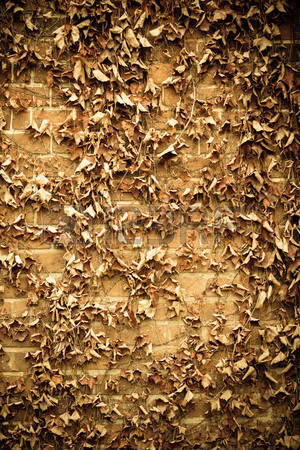
48935464-red-brick-wall-background-with-dry-withered-ivy-leaves-plants

Fuse-wires

of withered leaves

glint on the wall.

Salt-white air.

The flight of cranes,

arrowheads of autumn,


In bright boughs

the hour’s pulse subsides.

Spiders deploy

their rims and spokes,

veils of dead brides.


Huchel’s images from nature are left to speak for themselves; his is often an impersonal, Symbolist poetry of a haunted and pessimistic kind. There is stoic survival and brutishness reflected in the curbed, elliptical, briefly allusive verse. Yet the poems remain marvellous acts of observation; the weather seems forever cold, wintry, foggy:


Estates,

disordered,

dust across the ground,

the heirs dead.

And grim skies,

grey cellars

of fogbanks.

The cold breathes

in echoing colonnades.


Huchel applied for an exit visa for himself, his wife and son on numerous occasions. He was supported by an internationally orchestrated campaign and eventually in 1971 the Ulbricht government granted his release. He lived first in Rome, then in a borrowed house near Freiburg in West Germany. Gezählte Tage (‘Numbered Days’)  appeared in 1972, the title suggesting the counted days of Huchel’s years under house arrest, his poems recording them, marking them, but also a residual sense of them actually counting towards something, his legacy as a poet, his final release. But like many GDR artists who moved to the West, Huchel was equivocal about what he found there. Because the GDR had failed to bring about a truly democratic and socialist society did not mean that Huchel had given up his ideals and the West’s materialism, egotism and faithless profiteering were repellent to him.


Beside the whitewashed wall

a monk clambers up steps,

sweat trickling from his brows.


Everything fades in light and heat,

the rough ochre of walls,

the fragile, scant moss on stones,

the spare green by the river.

The bellringer walks in ripped canvas shoes,

soon midday will sound.

269285_4f92e840dfee5ec5e313ce224dfb8064_large
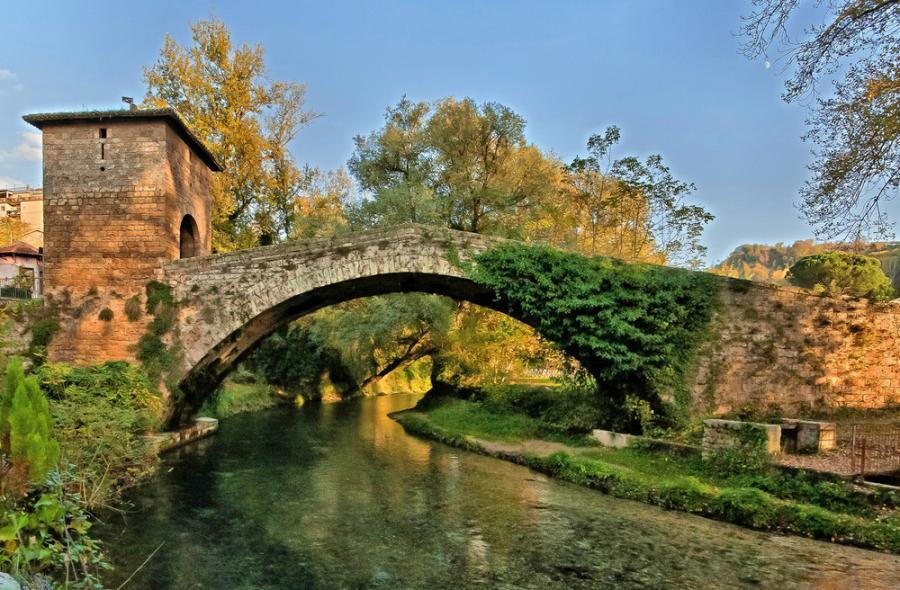
The medieval bridge at Subiaco, Italy

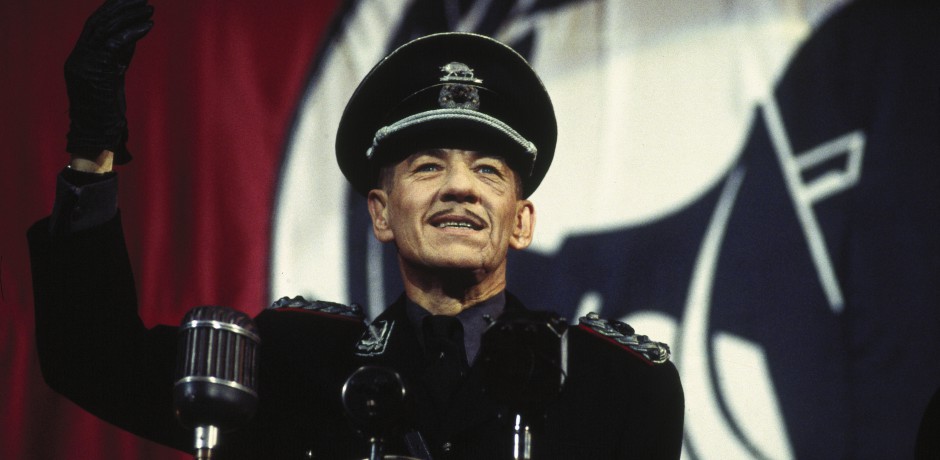
Huchel’s religious beliefs are difficult to pin down but certainly the poems of Gezählte Tage show a modern wasteland not confined to the East, a spiritual emptiness where, as in ‘Subiaco’, set in Italy, Pilate’s bowl stands emptied of water so the accumulation of guilt cannot be washed away. Nature still provides some recourse but not much of one. Huchel’s gloom is partly determined by his own nature, partly his background, political persecution, his divorce from his Brandenburg homeland. He often uses deliberate anachronism to make a point as well as Shakespearean and fairy tale motifs to evoke a lost time, a lost race, a golden age gone – with which he bears witness to his time. ‘Middleham Castle’ – where Richard III spent some of his youth – is a major poem in which Shakspeare’s tyrant lives on through the centuries as an image of oppressive power:


His foot is worm-eaten.

Gloucester walks to the stables,

the flagstones groaning.

The mastiffs lower their heads

anticipating the whip.


We are his servants,

we go in fear of his blade,

though his skull,

picked clean by so many winters,

lies deep in the ground.


richard-iii-5-940x460
Ian McKellen as Richard III

In Huchel’s brief years in the West he was lauded and awarded literary prizes but this was just another form of exile. His final book Die Neunte Stunde (‘The Ninth Hour’) appeared in 1979. It is a book almost exclusively of elegy and lament; the ninth hour is the hour of despair, the hour in which Christ is said to have died on the Cross, crying out, “My God, my God, why have you forsaken me?” Huchel himself died in 1981, aged 78. I think I hear something of his more personal voice, attuned to the natural world but gifted only a tragic place in history, compelled to labour against the odds, in the unnamed peasant who Huchel has narrate ‘Middleham Castle’:


Familiar with the ways of great forests –

the year streaked with the jays’ colours,

painful brightness of frosted boughs,

the winter hair of deer stuck to bark,

fawns huddled together at evening,

warming themselves in the cloud of their breathing –

up the gorse-clad hill with rope and horses

I haul tree trunks to Middleham Castle.

76799569

The Poetry of Peter Huchel #1

I have been working off and on over the last year on translating the third collection by the German poet, Peter Huchel. I hope to complete this for publication in the next few months and here (over this and my next blog post) I have been gathering information about his life and times. I’ve found people know of his work but not in much detail. In a working life that saw him through some of the most traumatic events of European history, Huchel published only 4 collections of poetry in 1948, 1963, 1972 and 1979. Throughout his career the substance of much of his work is his vivid observation of the natural world, moving gradually towards a usually brief, free verse form, a withdrawal from the personal and a steadily darkening vision which comes to be dominated by elegy and lament.

huchel

Peter Huchel was born Hellmut Huchel in 1903 in Lichterfelde (now part of Berlin). As a result of his mother’s ill health he was taken from the city to grow up on his grandfather’s farm at Alt-Langewisch, in the Brandenburg countryside near Potsdam. Huchel himself later argued “it is precisely the experiences of childhood, roughly between the ages of five and ten, that exercise a decisive influence in later years” (acceptance speech for the 1974 Literature Prize of the Free Masons). If this period was something of an idyll then it was shattered dramatically and forever by the death of the eleven year old boy’s grandfather and the outbreak of war in Europe.

brand-c-eu-komm

After defeat and his country’s humiliation at Versailles, Huchel, now 17 years old, took part in the conservative Kapp-Putsch against the Weimar Republic in 1920 which was fuelled by a resentment against the German government for signing up to the punishing conditions of the Treaty of Versailles. In the fighting associated with the failed coup, Huchel was wounded and it was during his recovery in hospital that his sympathies for socialism and Marxism fully developed.

From 1923 to 1926, Huchel studied literature and philosophy at the universities of Berlin, Freiberg and Vienna. Though always temperamentally an outsider, these were years of political, economic and artistic ferment (though ultimately something Huchel would react against) and in the final years of the 1920s he travelled to France, Italy, Greece, Hungary, Romania, Turkey. In 1930, he changed his first name to Peter. His early poems were being written and published from 1924 onwards and were already strongly marked by the atmosphere and landscape of Brandenburg. He appeared out of step with the times, writing nature lyrics, using conventional metre and rhyme, though the natural landscapes he portrayed were far from pastoral. The rural world he grew up in was providing ways of articulating concerns about the shortcomings of the world about him: his close observations of Nature showed her as a harsh mistress and the poverty and suffering of Huchel’s Brandenburg peasants were both very real and politically charged.

12106280_641080319366623_520747277_n

Working as an editorial assistant for Die Literarische Welt by 1932, Huchel’s poems won a prize and his first manuscript was accepted for publication under the title Der Knabenteich (‘The Boy’s Pond’). In 1934, Huchel married Dora Lassel but with the rise of Hitler in 1933, Die Literarische Welt ceased publication and Huchel withdrew his book partly for political reasons. He fled to Romania for a while and was deeply troubled that the Nazi’s liked his work, reading into it as they did a version of the blood and soil nationalism they hoped to foster. A few of his poems were published but by 1936 he was refusing permission and he did not publish a new poem during the rest of Hitler’s rule. Instead, he withdrew to the Brandenburg countryside but was eventually drafted in 1941, ending the war in a Russian prisoner of war camp.

With the fall of the Third Reich, Huchel enthusiastically shared the democratic and socialist optimism of many of his compatriots about the reconstruction of Eastern Germany offering a vision of freedom and equality to all. He began working for East German radio, published his first collection, Gedichte (‘Poems’), in 1948 and in 1949 became editor of the influential poetry magazine Sind und Form (Sense and Form’). Huchel’s poems were applauded both for their craft and evident socialist undercurrents though he did not satisfy some who demanded much more explicit support for the German Democratic experiment. Huchel’s dark rural landscapes offered at best equivocal support for the socialist regime and his instinctively conservative harking back to childhood and the natural world (rather than the modern revolutionary transformations of human society) were rightly seen by many as falling far short of the expected unquestioning celebration of the GDR’s project.

imgres

Here’s Huchel’s ‘The Polish Reaper’ – from this period – as translated by Michael Hamburger. Compared to Huchel’s later work, there is an exclamatory and ‘poetic’ quality to many of these lines (despite being nominally spoken by a migrant worker in Germany). Also the political content is more explicit in the fields mowed but not owned, the poor conditions of the workers and the rather hefty symbolism of the returning eastwards to a red dawn!


Do not cry, golden-eyed frog,

in the pond’s weedy water.

Like a great conch

the night sky roars.

Its roaring calls me home.


My scythe shouldered

I walk down the bright main road,

Dogs howling round me,

past the smithy’s grime

where darkly the anvil sleeps.


Down by the outwork

poplars are drifting

in the moon’s milky light.

Still the meadows exhale heat

in the crickets’ screeching.


O fire of the earth,

my heart holds a different glow.

Field after field I mowed,

not one blade was my own.


Blow, autumn gales!

On the bare boards of lofts

hungry sleepers awaken.

Not alone I walk

down the bright main road.


At the rim of night

the stars glitter

like grain on the threshing-floor,

where I go home to the eastern country,

into morning’s red light.


I’ll continue Peter Huchel’s life story in my next post.