This review first appeared in Acumen Poetry Magazine in the autumn of 2025. Many thanks to the reviews editor, Andrew Geary, for commissioning it.

Vanishing Points, by Lucija Stupica, is a translation from the Slovene (by Andrej Peric, published by Arc Publications in 2024) of the poet’s fourth collection, published in 2019, and is her first book to appear in English. Like Krisztina Tóth, whose book My Secret Life (translated by George Szirtes) I reviewed here, Stupica began publishing in the early 1990s, after the dissolution of the former Yugoslavia and Slovenian independence. Also like Tóth, this book suggests a searching restlessness, perhaps a carrying of deep scars that continue to affect a life. The book’s epigraph is taken from Elizabeth Bishop’s great poem, ‘Questions of Travel’ (1965): ‘Should we have stayed at home, / wherever that may be?’ The Vanishing Points Stupica seems to have in mind are those to do with distance, diminishment, travel and perspective. This has been stimulated by (or has itself provoked) her leaving Slovenia to live on the tiny island of Oaxen, near Stockholm, in 2012. This experiment in ‘island living’ proved unhappy and short-lived, as she and her family moved to Stockholm itself three years later and many of these poems explore this experience.

Of course, ‘home’ is partly temporal: the past, our family, our childhood. The book opens with memories of old Yugoslavia, what might be Stupica’s parents’ experiences in Zagreb in 1941. But memory itself is uncertain: ‘I try to breathe through some other time, / some other life [. . .] I feel I can touch it. Then I let go’ (‘The Blue Gondola’). Her mother’s recipe for ‘Chinese Cake’ gives a different sort of access to the past and perspectives through time (more than place) is important in ‘The Last Photo Together’ where two children are photographed with their old grandfather. The young girl gazes out of the image ‘towards a different place’, towards the future. But the book’s fifth poem is already called ‘The Point of Leaving’ and the sense of deracination is powerfully apparent: ‘Instead of the old plum tree, a house, / instead of the apple tree, a fence’. Perhaps like all such moves, there is optimism at the start (‘serenity in the eye’), but subsequent poems tell a different story.

Bishop (like early Lowell) manages the trick of making personal experiences resonate far beyond the merely autobiographical. I don’t think Stupica has the same magic for the most part. In ‘North’, there is something more narrowly personal in the differing wishes of the man and woman. He wishes for a lake, darkness, spruce trees, while she wishes for the sea and light. The re-location to Oaxen seems to provoke a divergence of views. The woman experiences boredom, a sense of death (the demise of a beetle in one poem, a toad in another) and a brief prose poem evokes a stultifying routine: ‘You’ve become heavy as a rock. Move it. Eat up your meal. Do the cleaning. Talk to the neighbour. Smile. Brush your teeth’. A more extended meditation on the fascination with islands, ‘Islomania’, presents some of the more attractive aspects of the wintry landscape, the wild orchids, seal spotting, but the midnight sun and the summer’s tourist invasion, convince the narrator that those who bear the ‘affliction’ of islomania have contacted a rare disease, an intoxication, even a ‘sort of scar until the end of time’.

One of the best poems here is an ekphrastic piece in response to Bosnian artist Safet Zec’s painting ‘The Bed’. Stupica’s neat narrative manipulation means we have the couple’s response to the painting first. They find its image of rumpled sheets ultimately dispiriting, reading ‘the anatomy of an absent body’ in them. This is followed by the couple’s earlier excited approach to the painting, ‘all fired up in the fresh promise of love’, momentarily to be disappointed and in the context of the collection as a whole, we must read this as a comment on the optimism in advance of a geographical re-location which leads to disappointment.
This poem does manage to make the shift from the personal to the more universal: it’s a little mythos, an illustration of life’s disappointments. One of the most devastating disappointments of Stupica’s move to Oaxen seems to have been the withering of her creativity, as ‘Things as They Are’ expresses it, her growing ‘incapacity of putting things into words’. We don’t hear much about the family’s move to Stockholm in 2015, but a couple of poems suggest the poet’s return to form. ‘On Beauty’ appears to be set in a health spa of some kind and is a piece of satirical observation of others, not unlike TV’s The White Lotus comedy-drama, unlike most other poems in Vanishing Points. It is women’s obsession with beauty that is the target here, the mantra to ‘Fix the body. Pull it tight. Clean it up’. The narrator takes a distanced, sceptical view of this and in ‘The Fortune-Teller’, another ekphrastic poem, Stupica’s more characteristic, feminist outlook emerges in her portrayal of the artist figure, gazing into the future, engaged in a process of self-creation, perhaps escaping the past, past mistakes, the malign influences of the ‘wrong’ place:
and there are no words anymore, just the strokes on the canvas,
and herself, liberated in a world, deprived of home,
pasting them on the stretched linen surface,
changing the colours, the contours, playing with her life,
in herself, on herself, always.
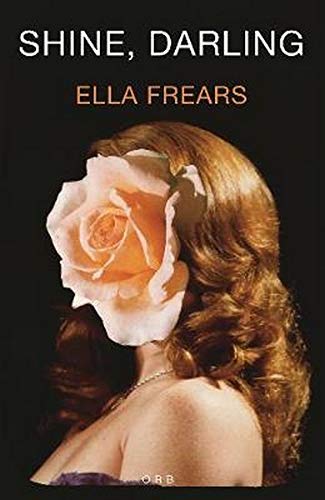 Ella Frears’ Shine, Darling is brimming with youthful exuberance and despair, yet not a jot lacking in thoughtful sophistication. Her subjects are boredom, sex, a woman’s body and the harassment that rushes to fill the void left by uncertain selfhood. A key poem is ‘The (Little) Death of the Author’, about a 13-year-old girl texting/sexting boys in her class, though the title is, of course, one Roland Barthes would have enjoyed. The narrator – looking back to her teen self – remembers pretending to be texting in the bath. The “triumph” is to make the boys think of herself naked (when she’s really eating dinner or doing homework). Hence “Text / and context are different things”. Her texts are careful constructions, evocative, alluring, full of tempting ellipses. On both sides, there is a filmic fictionalising going on (in the absence of any real sexual experience). The poem (which is a cleverly achieved irregularly lined sestina) ends with the authorial voice breaking cover: the poem itself is “a text I continue to send: Reader, I’m in the bath . . . / Nothing more to say than that. And if you like / you can join me”. The flirtation is a bit overdone (but other poems show Frears is wholly conscious of that) and the poem indicates one of this book’s chief concerns is with the difference between the truth of what happens and the truth of a poem.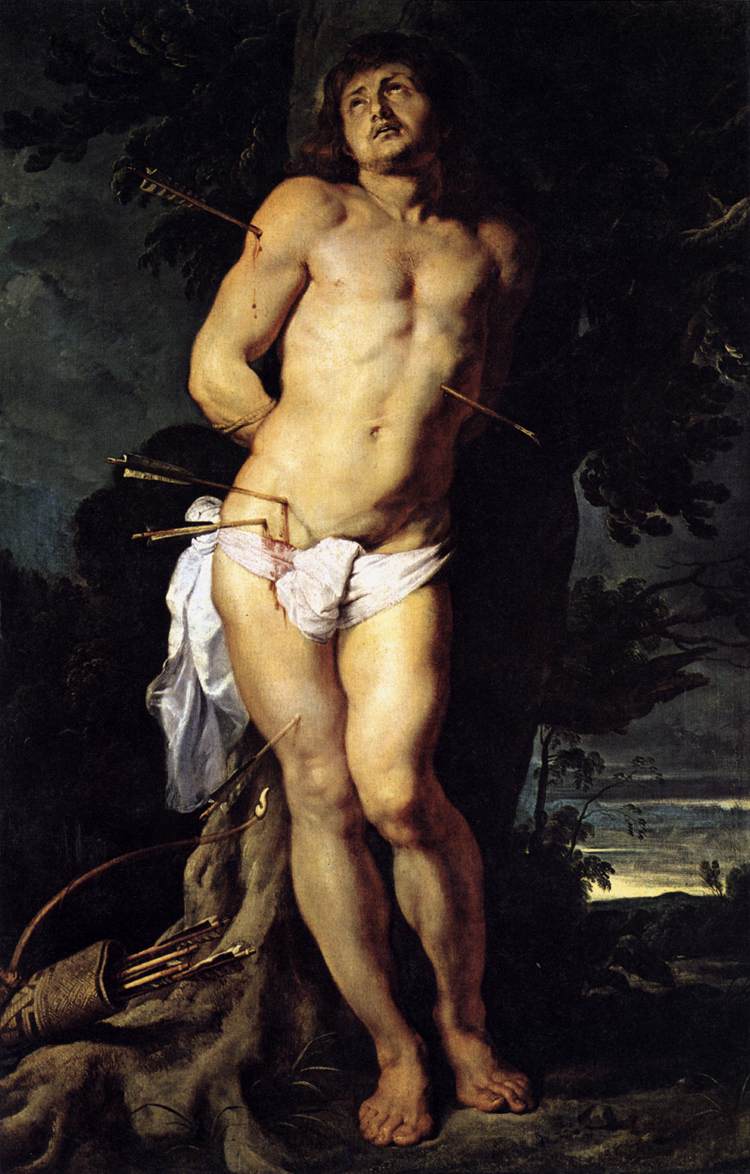
 The obvious risk of such sexual adventuring is the subject of ‘Hayle Services (grease impregnated)’. The parenthetical allusion here is to Elizabeth Bishop’s ‘Filling Station’ where everything is “oil-soaked, oil-permeated [. . .] grease / impregnated”, a poem which concludes, against the odds of its grimy context, that “Somebody loves us all”. In contrast, Frears’ crappy, retail-dominated English motorway service station is (ironically) the stage for a pregnancy scare, a desperate search for a test kit in Boots and an anxious, “[p]issy” fumbling in the M&S toilet cubicle, then waiting for the “pink voila”. The headlong, impossible-to-focus, sordid anxiety here is brilliantly captured in the short, run-on lines. Frears also catches the young woman’s multiplicity of streams of consciousness, the scattershot: the potential father is present but soon forgotten, his reassurances dismissed, the pushy sales staff avoided in anger and embarrassment, the difficulty of urinating, the cringingly inappropriate joke-against-self in “et tu uterus”, the conventional moral judgement (“soiled / ruined spoiled”) and the final phone call to “Mamma, can you come pick me up?”

 And yet, poems in Shine, Darling do regularly turn to the moon for possible explanations of actions (‘Phases of the Moon / Things I Have Done’), for a witness if not for protection (‘Walking Home One Night’) and for directions (‘I Knew Which Direction’). The latter poem is a beautiful lyric opener to the book but is rather misleading. The repetition of the word “moonlight” seems to give an almost visionary access: “no longer a word but a colour and then a feeling / and then the thing itself”. It is curious that a poet asserts the transparency of language in this way (Frears is not much concerned with the nature, limits and impositions of language, unlike Nina Mingya Powles’ shortlisted Magnolia 木蘭), but also the idea of such an untrammelled access to “the thing itself” is countered by every poem that follows. Frears’ world view may not be too much troubled by words but the very idea of a unitary truth to be beheld with clarity is profoundly doubted.







 Martyn Crucefix