Goethe’s poetry – some new translations by John Greening

In this blog post, I am discussing John Greening’s new translations of a small selection (9 poems in all) from the works of Johann Wolfgang von Goethe. With the original German texts provided on facing pages, these translations are published as Nightwalker’s Song, by Arc Publications (2022). This review was originally commisioned and published by Acumen poetry magazine early in 2023. By the way, Acumen will be presenting a free to attend on-line celebration of its latest issue on Friday September 1st at 18.30 BST. It will include a brief reading of new work by yours truly, Gill McEvoy, Anthony Lawrence , Sarah Wimbush, Simon Richey, Dinah Livingstone, Michael Wilkinson, Jill Boucher, Jeremy Page, and others.
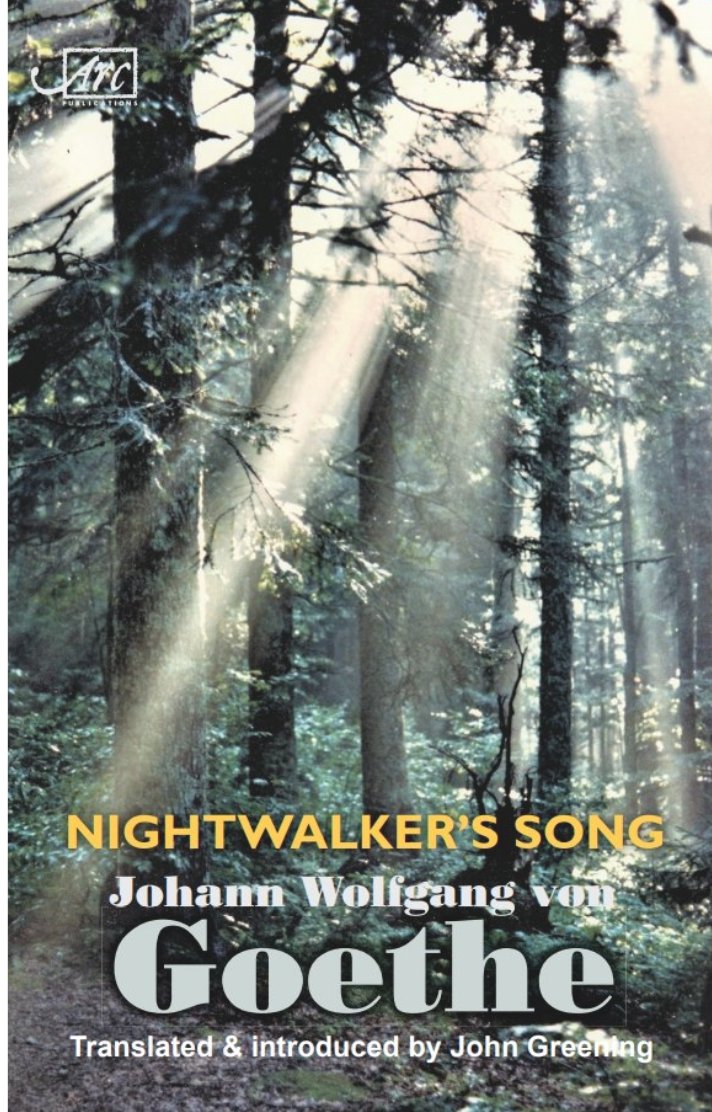
John Greening’s recent, self-confessedly ‘tightly-focused’ little selection from Goethe’s vast output is, in part, a campaigning publication. In his Introduction, Greening notes the difficulties surrounding the great German poet’s presence in English: the sheer volume of work, the range of that work, the man’s polymathic achievements (as poet, playwright, novelist, scientist, statesman, theatre director, critic), the long life untidily straddling all neat, period pigeon-holing. Christopher Reid has called him ‘the most forbidding of the great European poets’, but perhaps the English have come to see him as a mere jack-of-all-trades? And where do we turn to read and enjoy the poetry? Michael Hamburger’s and Christopher Middleton’s translations look more and more dated. David Luke’s Penguin Selected (1964; versified in 2005)is the most reliable source. But tellingly, as Greening says, one does not find young, contemporary poets offering individual translations of Goethe in their latest slim volume in the way we do with poems by Rilke or Hölderlin.
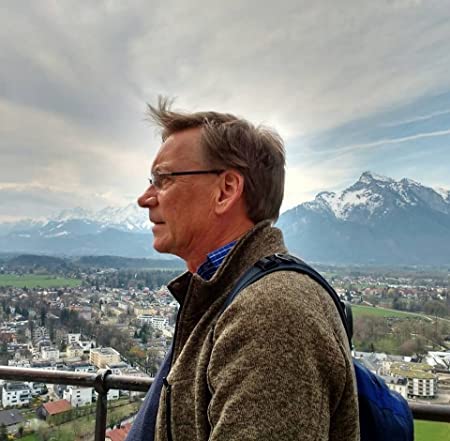
John Greening

So here Greening sets out a selection box of various Goethes to encourage other translators: we find nature poetry, romance, the artist as rebel, meditations on fate, erotic love poems, a rollicking ballad, dramatic monologue and a very fine sonnet. I like Greening’s determination not to lose the singing. Here, he has ‘shadowed’ the original metres and retained rhyme schemes, though he sensibly makes more use of pararhyme than Goethe’s full rhyming. While not approaching Lowellesque ‘imitations’, Greening has also sought a ‘contemporary texture’ by venturing to ‘modernise an image or an idea if it helped the poem adapt to a different age’. For example, in ‘Harz Mountains, Winter Journey’ (‘Harzreise im Winter’) Goethe’s buzzard has become the more familiar image, in southern England at least, of a red kite. The carriage or wagon (‘Wagen’) driven by Fortune becomes a car in a ‘motorcade’ and another vehicle is imagined ‘winking on to / the slip-road’. There’s also an enjoyable touch of Auden in Greening’s updating of ‘crumbling cliffs / and disused airfields’ (Middleton has ‘On impassable tracks / Through the void countryside’).
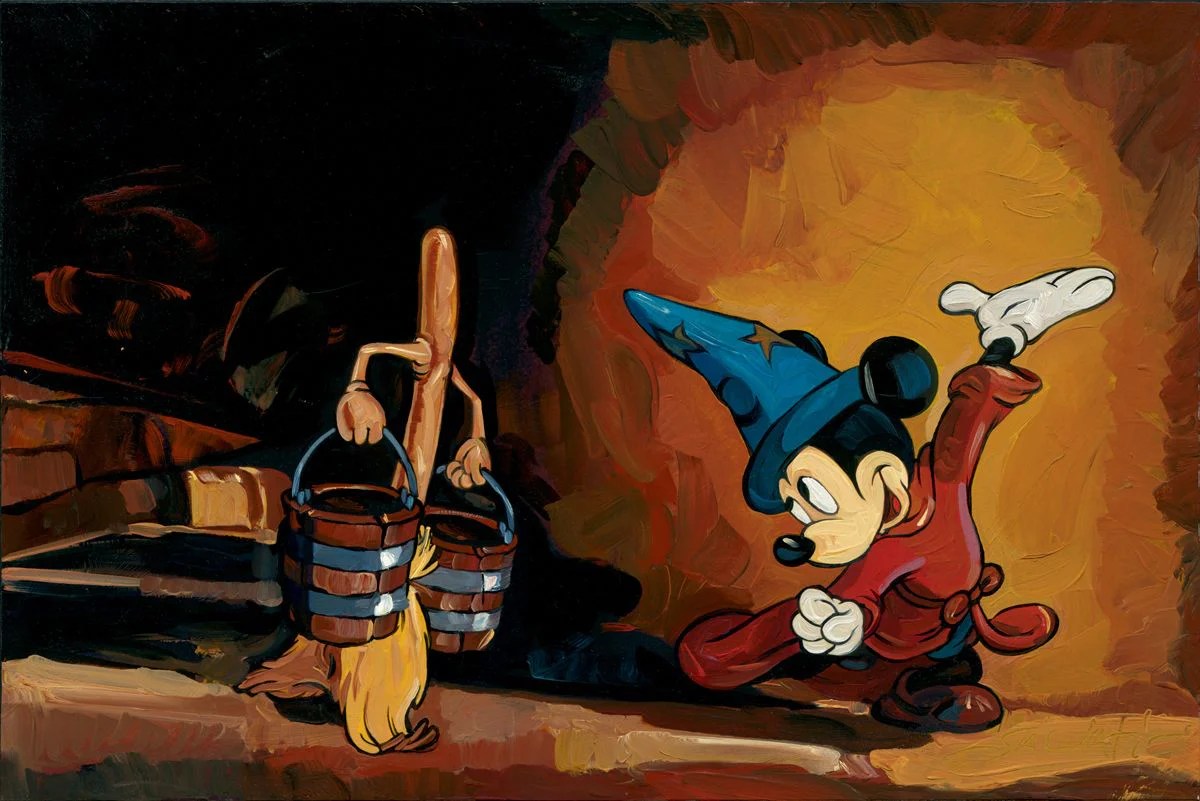
Walt Disney’s Sorcerer’s Apprentice

Greening’s skills in versification are well known and he deploys them all – and you can hear him enjoying himself – in ‘The Sorcerer’s Apprentice’: ‘Broomstick – up, it’s show time, haul your / glad rags on, so grey and grimy. / Seems you’ve seen long service, all you’re / fit for now is to obey me’. Though grace notes and fillers slow Goethe’s headlong verse (the opening line in German is simply ‘Und nun komm, du alter Besen!’ – ‘And now come on, you old broom!’), Greening’s rhyming is delightful and the modernising phrases (show time, glad rags) drive the poem along with a colloquial energy which is absolutely right.

Goethe’s ‘Prometheus’ – published in 1789, the year of revolution in France – is a growling dramatic monologue in which the rebel Titan (who stole fire from the gods to give to humankind) sneers and mocks the authority figure, Zeus. He belittles the top god in the opening lines by comparing him to a boy, thoughtlessly knocking the heads off thistles. Greening catches the mocking tone in the series of rhetorical questions later in the poem: ‘Honour you? For what? / Have you ever offered to lift / this agony?’ Prometheus ends – following one version of his story – by explaining he is creating the human race in his own image, ‘a new range’ translates Greening, neatly updating once more, ‘programmed / to suffer and to weep, or whoop and punch the air – / but who, like me, won’t care / about you’. In comparison, Luke’s version sounds rather fusty and less bolshie: ‘A race that shall suffer and weep / And know joy and delight too, / And heed you no more / Than I do!’
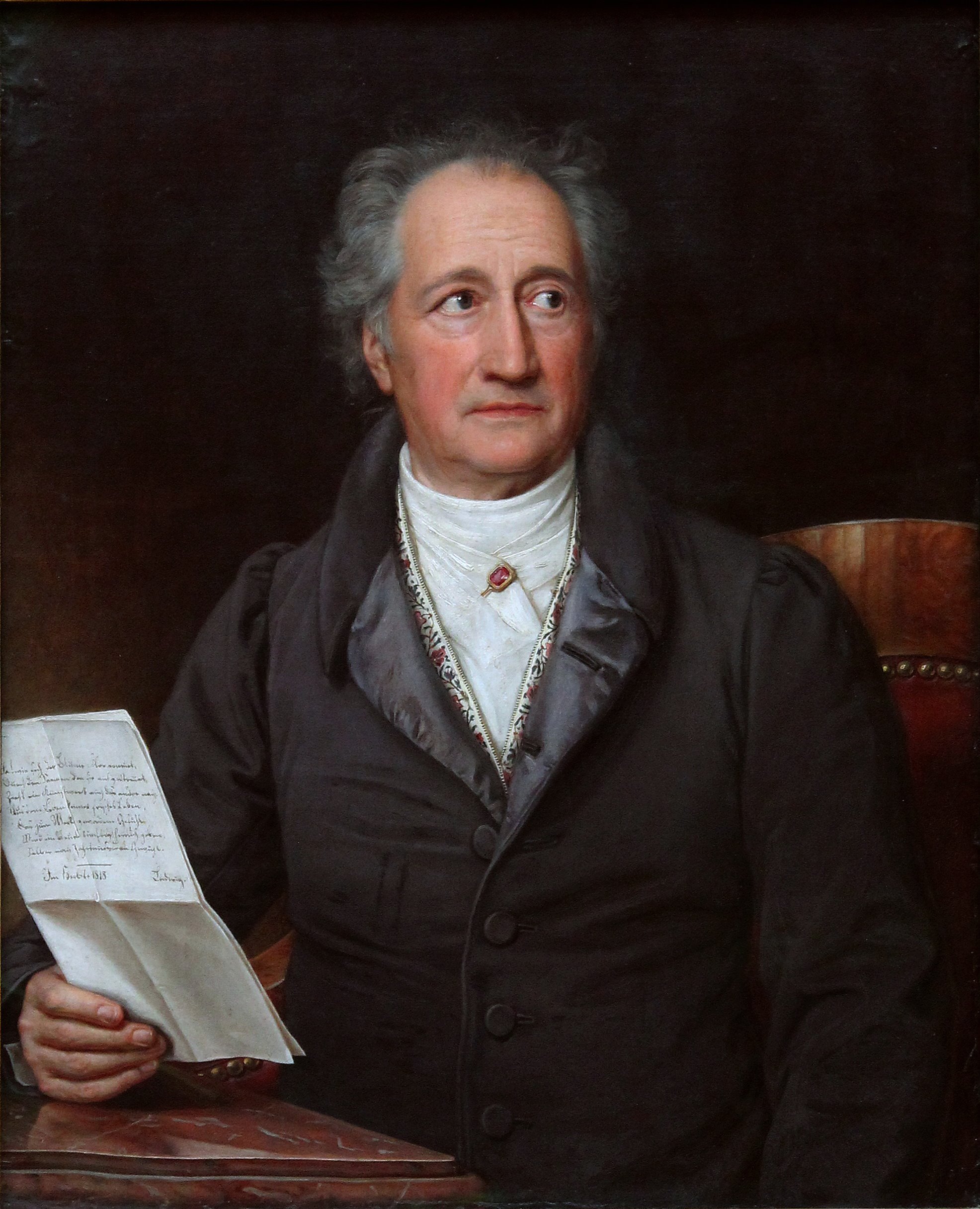
Johann Wolfgang von Goethe

Goethe is a great love poet. ‘Welcome and Farewell’ (‘Willkommen und Abschied‘) has a man approaching on horseback (Greening does not motorise on this occasion) through a moonlit landscape and the lover is spied at last: ‘how / I’d dreamt of (not deserved) all this’. The moment of union passes unspoken between stanzas three and four. As if instantaneously, now ‘the sun had risen’ and the parting must take place: ‘And yet, to have been loved – to love, / ye gods, such utter happiness’. It’s curious that Greening retains the rather archaic ‘ye gods’. One still hears the phrase, of course, but with more irony than I would have imagined here. The fifth of Goethe’s ‘Roman Elegies’ is a fabulous erotic piece. Written during the poet’s travels to Italy in the late 1780s, the narrator is studying classical culture by day and his female lover’s body by night. The latter nourishes the former: ‘I find I appreciate marble all the better for it, / and see with a feeling eye, feel with a seeing hand’. As he goes on, ‘compare and contrast’, I find Greening a little cool here. There is a selection of translations by D M Black (Love as Landscape Painter, from FRAS Publications in 2006) which generates more heat:

Yet how is it not learning, to scan that delectable bosom,

  Or when I slither my hands pleasantly over her hips?

Then I understand marble; then I discover connections,

  See with a feeling eye, feel with a seeing hand.
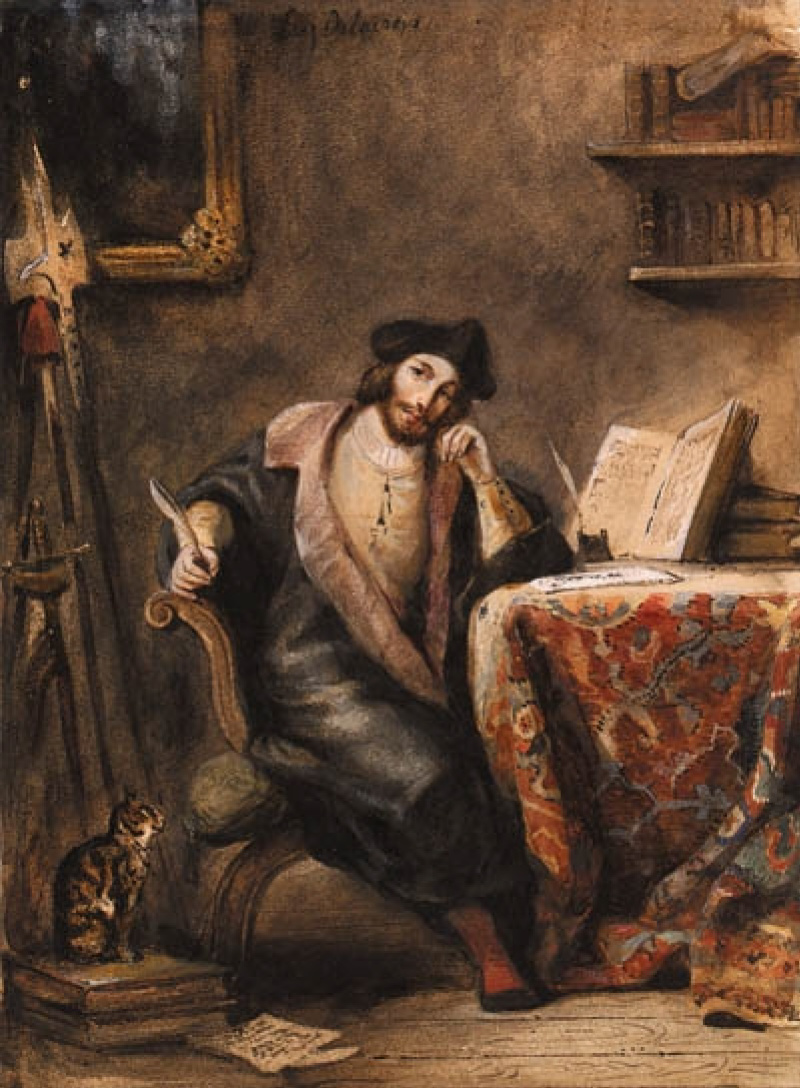
Faustus (by Eugene Delacroix)

Goethe’s Faust is represented here by the scholar’s opening speech to Part One (versioned, as it were, by Christopher Marlowe in the opening soliloquy of his Doctor Faustus). Greening excels in the handling of rhyme and line length, even compared to David Constantine’s 2005 Penguin translation. Perhaps most impressive of all is the sonnet ‘Nature and Art’ (‘Natur und Kunst’). Greening has the motor car in mind again in his updating of Goethe’s exploration of how the artist must labour incessantly to achieve the preparedness, the readiness to respond to Nature, to what is natural. Reading these lines, you feel Greening is translating as a skilled and experienced artist himself, triumphantly bringing a poem written in 1800 bang up to date:

It’s just a case of working long and late.

So once we’ve spent, let’s say, ten thousand hours

on steering, footwork, shifting through the gears,

it may be then some natural move feels right.

x

Creative though you be, you’ll strive in vain

to reach perfection if you’ve no technique,

however wired and woke your gifts may be.

x

You want a masterpiece? You’ll need to strain

those sinews, set your limits, drill and hack.

The rules are all we have to set us free.

For anyone yet to make the leap into Goethe-world, this little book is a terrific way into the great German writer’s work and such a reader will find Greening’s Introduction and his prefatory remarks to each of the chosen poems very helpful indeed. I recommend this collection.
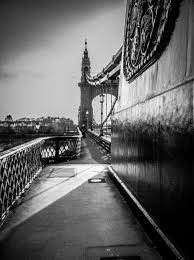
England is Finished: Sean O’Brien’s ‘Hammersmith’ reviewed

In the week of the EU Referendum it seemed appropriate to review a beautiful little chapbook by one of the UK’s most prominent poets, Sean O’Brien. Appropriate because it is a book exploring both personal and national identity, issues of migration and how new lives are begun in a new country. In particular it is a work always aware of the need for – and the difficulty of – pragmatism, honesty and truth in both personal and political worlds. Whether it is our own or our nation’s past or future, the idealism or fundamentalism of the simplistically pure, clear and incontrovertible is a false god. Worship at such an altar is the old fearful yearning for security in a world that simply is both contingent and mysterious and can only possibly be faced with a sense of compromise, processes of negotiation.

images

Beside a photograph of his own 1952 birth certificate, Sean O’Brien’s foreword to Hammersmith (Hercules Editions, 2016) ponders other people’s interest in their family histories. Perhaps our ancestors “underwrite” our lives in a way we cannot do for ourselves – in ways religion might once have done. But O’Brien assures us the two cantos (of what seems to be a longer sequence of poems yet to appear) are more the “work of the imagination” than anything narrowly documentary. He alludes to Robert Lowell’s dictum – “why not say what happened?” – only to dismiss it, suggesting Hammersmith aspires more to the condition of a dream or reverie.

If this is teasing, then it continues into the poem. With a neat circuitousness, O’Brien’s rhyming alter ego, Ryan, wanders the streets of Hammersmith recalling his parents early days and places (days and places shared with O’Brien’s own mother and father), yet his search is an endless deferral, not arriving at any clear goal, a sense of not belonging which (the Foreword has already told us) is precisely O’Brien’s experience of London: “I never feel entirely present there”. So the irresolvable uncertainty about one’s true self is re-evoked here along with a scepticism about how far delving into ancestry can really help with it and this narrative set-up allows O’Brien to pursue the dream-like interweaving of reality and imagination which has become more familiar in his work since The Drowned Book (2007). It goes without saying that this fantasmagoric journey also takes the poet back to that post-war era that so fascinates him: “a place forever on the cusp of realising the welfare state” (from Ben Wilkinson’s Guardian review of The Beautiful Librarians).

imgres

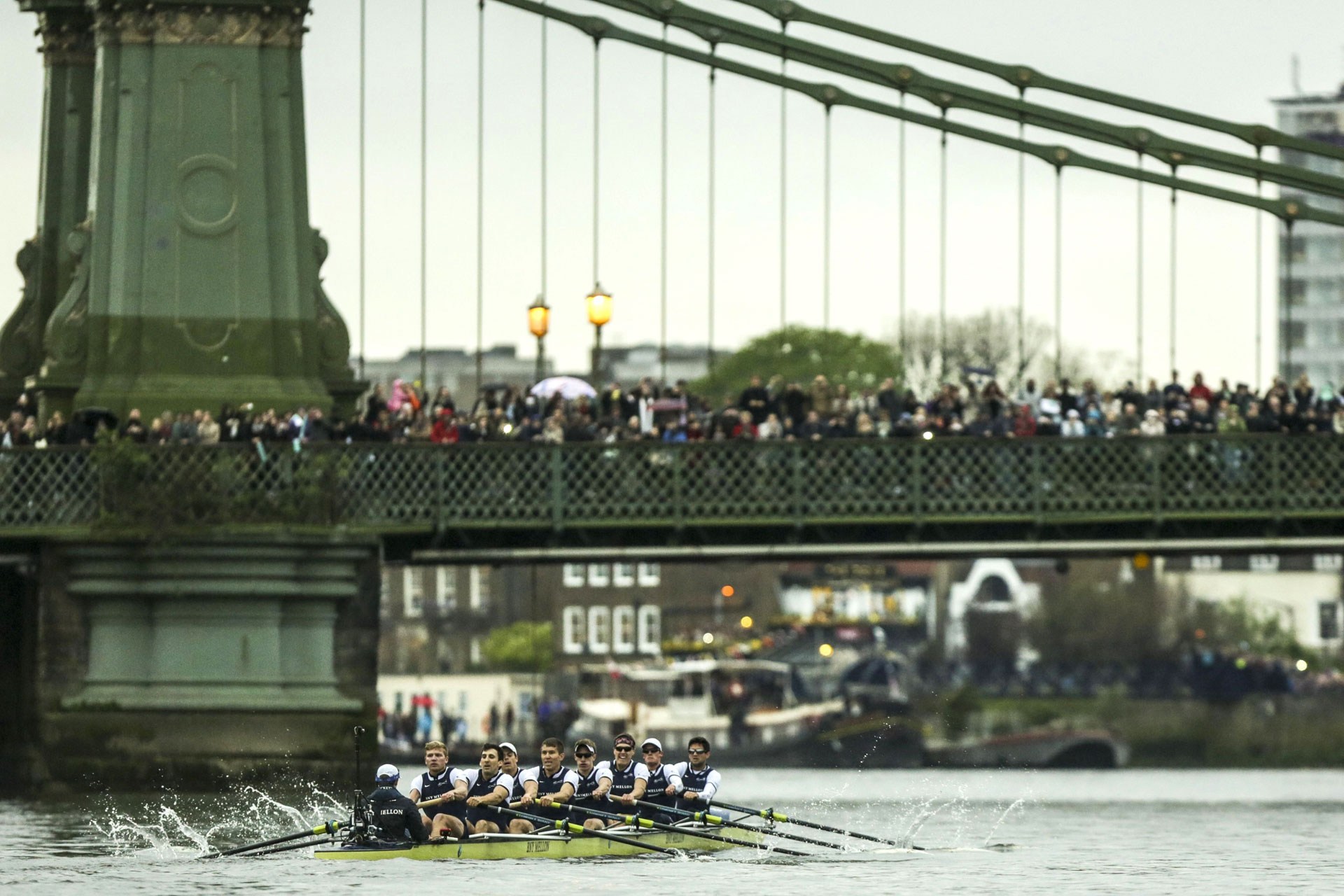
Mixing the personal, the historical and the political, most of the optimism of that earlier time has gone. Canto 1 opens dismissively: “England is finished”. Initially this seems about to be cast as an epic/tragic moment as a rower in the University Boat Race catches a crab and, amidst allusions to the “fields of Hades”,  is compared to Palinurus, Aeneas’ drowned steersman from Virgil’s Aeneid Book 6. But within a few lines, the oarsman recovers and the incident ends only in petty recriminations and unsportsmanlike appeals to umpires – more comedy than tragedy, more satire than epic. The narrative voice concludes: “I’m losing my faith in this annual fiction”. Like Aintree and Wembley, those great sporting occasions that at least gave the impression of a nation united, a clearer sense of self-identity and “name”, the Boat Race too loses its power to inspire a faith in a certain type of Englishness, “a special and definitive order of reality” (Foreword).

BoatRace-Tatler-7apr15_rex_b

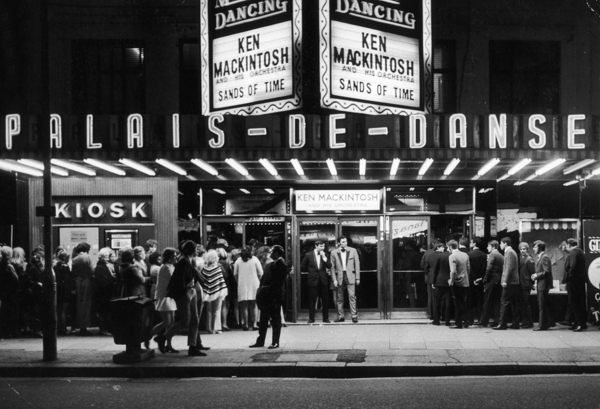
Perhaps it’s not wholly clear if this “order of reality” ever had any real existence and was lost, or whether the narrator lived the delusion of it briefly that was then corrected by his growing understanding of the significance of “class, the major stench of things”. And perhaps this is why the poem swings from imagined images of the 1940s and 1950s Hammersmith to the wanderings of Ryan/O’Brien in more contemporary settings (another photo in the chapbook is clearly O’Brien taking a selfie reflected in an underpass mirror). Canto 1 now more securely pursues the past, describing a young woman (the future mother) as nurse, teacher, doing the “pallais glide”. Such remembrance is labelled the “trap of elegy” at one moment. Ryan is caught in it and “Nor am I out of it” says another voice (O’Brien?) echoing Mephistophilis in Marlowe’s Doctor Faustus, that moment when he reveals the omnipresence of Hell.

HammersmithPalais_London_1970

What develops is a passage of a more documentary type (though no doubt the details are largely imagined) with an Irish ancestor stepping off the train at Euston, finding a room to rent: “Oh loneliness, your name is Hammersmith”. But canto 1 ends with an outbreak of irregular rhyming (the poem is written in triplets throughout) which holds together, as if in successful solution, references to Aneurin Bevan and Stafford Cripps, the ill-fated groundnut scheme of the late 1940s, Caliban and Ariel and a (more personal sounding) naïve, nursery-rhyme passage about “the boy with the curly brown hair”, who is perhaps the future father-to-be.

Canto 2 opens (having caught the habit of rhyme from the end of the preceding Canto) with another vision of the transience of London life, especially for migrants: “no fixed abode, where is no stay, / Not known at this address, / Or never known, or went away, // Gone where the post eventually goes”. This is both the contemporary figure’s fruitless search for an ancestral past as well as the post-war migrant’s experience where the world the nation fought for “admits / No Blacks and no dogs and no Irish”. There are passages here out of Dante, out of Yeats in which spectral figures go dancing through London streets “into Ravenscourt Park” and beyond the District Line. Once again, Ryan/O’Brien re-surfaces with a fierce thirst for Guinness which might “re-enchant / A world that is always and only prose”.

imgres

The earlier allusion (“where is no stay”) to Robert Frost’s comment that poetry can act as a “momentary stay against confusion” is repeated again in the context of what looks like suicidal thoughts, a personal as well as political history: “Here there is nowhere. Here is no stay”. It turns out the Ryan character has an engagement to read poems to an audience but the tone here is angrily dismissive (“Who gives a fuck?”) and heckled abuse from an audience is deemed appropriate somehow, the only thing to make sense “of a dying art”. O’Brien’s casting doubt on the efficacy – the very purpose – of poetry in the context of an ambitious poetic project like this might seem perverse but is perhaps just another de-stabilising element in the whole where past and present, political idealism and cynicism and failure battle it out across the fluid fields of the poet’s observation, memory and imagination (and anyway, if this is the opening of a long poem, this may not be the last word on the subject).

imgres

The poet’s heart seems most passionately engaged in passages concerning the mother figure, but Canto 2 ends, as did Canto 1, with allusions to the father. Like the son, he too seems to have looked always “for a sign”, for meaning in the bewildering flood and flow of the city’s life. What seems to be O’Brien’s pessimism again re-surfaces: “You will fail / Like your father before you”. The failure will be to “name” the waters (this leaves me thinking of Keats’ epitaph: one whose name was writ on water). The father’s ambition apparently yielded nothing more than a “suitcase – / Poems and politics, no fixed address” and later “Madness lay in wait”. Yet the narrative voice offers up the idea of witness, even if this does not lead to reassuring certainty: “You will lower your face to the water, // And through it, and open your eyes.” This is reminiscent of O’Brien’s poem ‘Cousin Coat’ with its self-urging to “Be memory, be conscience, will and rage” and to remain “cold and honest”, though since those lines were written in 1987 O’Brien’s range has continued to widen so that honesty in terms of documentary/historical evidence now also has to face new challenges, new types of honesty with regard to the imagination, in part those in-filling processes of personal memory, the making-up of our own past which many of us hope “underwrites” the people we have become.


tree in railing


A Living Hanging Hemisphere: Ted Hughes’ ‘Meeting’:

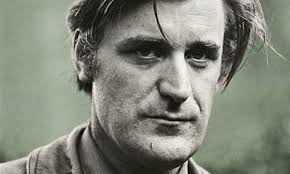
One of my most visited blog posts in recent months has been the discussion/analysis  of Ted Hughes’ poem ‘November’, The Month of the Drowned Dog: click here. The poem had been in my mind as we are studying it (along with a range of other poems by Hughes) in the Cambridge International Exam Board’s A level course for Literature in English. I suspect I am getting hits from students around the world also following the same course and – without wanting to become a major source of plagiarism – I thought this week I might discuss another poem from the same selection.

static1.squarespace

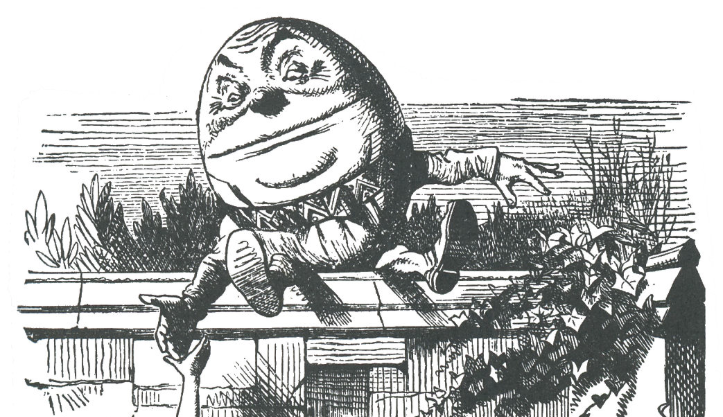
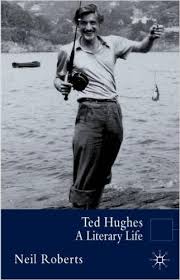
‘Meeting’ was first published in The Hawk in the Rain (Faber, 1957) and is one of several poems in that collection to present what has been called “the central theme or event in Hughes’ poetry: the usurpation or invasion of the world that the rational intellect has constructed by a power that is represented as greater and ultimately more real” (Neil Roberts, Ted Hughes: A Literary Life (Palgrave, 2006). The poem ‘Egg-Head’ is a much less concise treatment of the same issue. The common meaning of ‘egg-head’ – an intellectual, probably arrogant, person (usually a man?) – operates in Hughes’ poem which intends to berate such characters for what they exclude from their life experiences. But the egg image also implies a fragility which suits the poet’s purpose of critiquing the limits of such attitudes. Egg-heads, like Humpty-Dumpty, are always in danger of being cracked open. So the ‘Egg-Head’ character peers at life (this latter word gathers to itself extraordinary power and significance in Hughes’ as in D H Lawrence’s work) “through his fingers”. He deploys methods of “defence”, is “walled in” and “shuts out” and he “resists”. All this is achieved, Hughes roars in an angry, flurried combination of chewy consonants and Latinate vocabulary (that is perhaps not as controlled as it might be):


By feats of torpor, by circumventing sleights

Of stupefaction, juggleries of benumbing,

By lucid sophistries of sight


This is the vitriolic tone of the attack on the rational mind’s defences. It is countered by not wholly convincing phrases intended to be representative of life such as a “leaf’s otherness, / The whale-monstered sea-bottom, eagled peaks / And stars that hang over hurtling endlessness” quickly supplemented by “the flash / Of the sun, the bolt of the earth”, then “the looming mouth of the earth” and finally “the whelm of the sun”. What does emerge from such phrases is the link of life with the natural world, with great power, with incalculable scale.

horse-in-the-rain-750395940

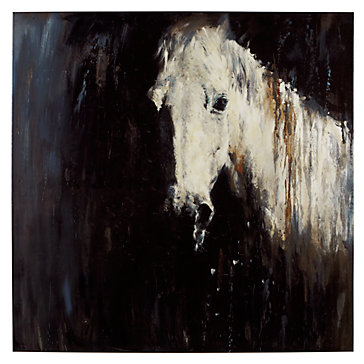
All these ideas are better conveyed in ‘Meeting’ and a prose/short story version of Roberts’ “central theme or event” can be seen in ‘The Rain Horse’ (from Wodwo (1967); also found in the CIE Prose Anthology called Stories of Ourselves (p.271)). The young man at the start of this story has already come “too far” from the orderly “tarmac lanes” he had intended to walk. He had come hoping vaguely for “something, some pleasure, some meaningful sensation, he didn’t quite know what”. His encounter with the uncanny, threatening, apparently evil-intentioned horse of the title instead gives him a “fright and shame”. At the end he strips himself naked, sits staring at the ground “as if some important part had been cut out of his brain”. Roberts again interprets this sequence of events such that the horse is representative of un-delimited life, a “shamanic spirit” challenging the young man’s rational control and perception. So it’s less that something has been cut out of his brain (though he may feel the loss of self-constructed barriers as a loss) more that whole fields of experience, emotional and spiritual possibilities have been opened to him. This misinterpretation of the impact of life (in Hughes’ sense) is something also seen in ‘Meeting’.

imgres

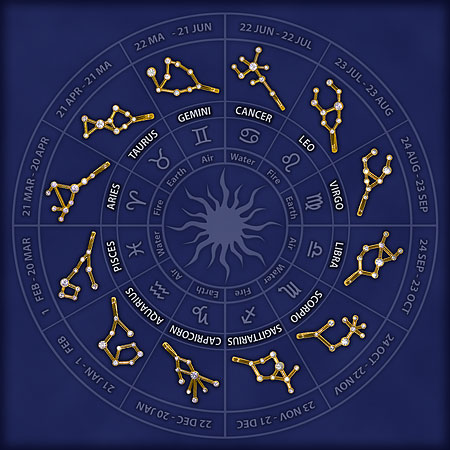
‘Meeting’ opens with another of Hughes’ straw-men, a self-regarding male whose “smile”, in the first phrase, suggests he is well-pleased with what he views in the “mirror”. But as with ‘Egg-Head’, it is the exclusion of all else, all otherness, that concerns Hughes. Even as he smiles, the man “shrink[s]” the rest of the world to a “trinket”, the tinkling consonants (t-k-t) here neatly suggesting the insignificant bauble all else becomes in his view. The word is then countered by the grand sweep of the poem’s key phrase intended to evoke the too-often unregarded universe beyond the rationalist’s view: “the whole / Sun-swung zodiac of light”. Here the wide open vowels (o-u-u-o-a-i) suggest breadth and scale, the sibilance suggests a dynamism, the zodiac evokes images of both night sky and astrological/mythic  elements, the light suggests the elusiveness of life on this scale. For all this to be reduced to a “trinket” feels both absurd and tragic (for Keith Sagar this is both “hubristic and solipsistic”, reducing the universe to the point where man can erroneously “feel himself to be a god in it”). To drive the reductive point home even more clearly the trinket shape is said to appear “On the rise of his eye” which I take to be the curvature of the man’s pupil, but describing it as a “rise” also reminds us of the man’s own arrogantly elevated self-image.

zodiac-header

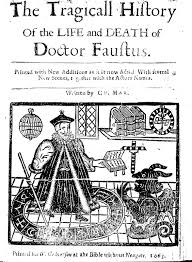
After the colon/caesura of line 3, Hughes uses the metaphor of a dramatic “role” for the man’s behavior to stress both its importance and falsehood. The role Hughes gives the man (or the role the man imagines himself to be playing) is that of Dr Faustus, the arrogant over-reacher, so consumed with his own importance that (in Christopher Marlowe’s play) he barters his soul for earthly power and pleasure though clearly warned of the consequences. He simply doesn’t seem to think the ordinary rules apply to him. The image of flinging “a cape” suggests an Elizabethan stage scene and that word “life” reappears here in all its significance since this is what the actor/man feels he can “outloom”. That Faustus himself outloomed ordinary life and religious sanctions for 24 years is relevant here; as is the fact that he was dragged screaming to Hell at the close of the play. Hughes imagery contains within it the condemnation he intends in the poem.

images

These opening four and a half lines set up the character of the young man. After the full stop in line 5 the “event” begins (and consists of one sweeping, irresistible sentence). Like the man in ‘The Rain Horse’, this man also wanders into the wilder realms of nature, to “an empty mountain slope”. To apply the adjective “empty” to this place is just one of the man’s errors, imagining a terra nullius where there is multifarious life and significance. What he actually encounters here is a “black goat”. It’s around here perhaps that a reader becomes more conscious of the poetic form Hughes is using. It’s terza rimaa form of triplets rhyming aba bcb cdc and so on. On the whole, Hughes manages this really well (line breaks at lines 5 and 8 perhaps turn more for form than sense and the rhyme word demanded in line 16 is awkward). The difficulty and complexity of this form might be a gesture to the rational man whose mind enforces order and organization, or contrastingly, the looping, self-involvement of the scheme might suggest Hughes’ own perception of the lived world’s interconnectedness.

The goat’s appearance has conventional features suggestive of threat and this means we are seeing it from the man’s perspective. Colours of “black” and “yellow-eyed” are ugly, as is the hyphenated phrase “square-pupilled”. Its onomatopoeic, assonontal and threatening movements (“clattered and ran”) are a challenge as is the position it takes up, “forefeet firm on a rock”, the sizzling fricatives and the ‘clatter’ of the monosyllabic “rock” further reinforce this. Of course, the goat’s placement “above” the man is significant of Hughes’ true valorization of this encounter. This is contrasted with line 11, as the “black devil head” is the man’s assessment of the creature, a designation that what lies beyond his usual comprehension must be categorized as evil.

images

One reason why this poem is more successful than ‘Egg-Head’ is that Hughes, in the final 7 lines, takes us seamlessly into the man’s transformative experience as a result of the encounter. Images of startling differences in scale occur. In contrast to the earlier belittling of the universe as a “trinket”, the man’s experience is now likened to being gathered up in “gigantic fingers” and placed on a “bare / Palm” for examination. The man’s littleness is the point and the “eye” of the universe (via a simile in line 15) is likened to “a living hanging hemisphere”. This eye is like the whole visible sky above him; a powerful contrast to the way in which the whole “zodiac” was itself reduced to a flickering shape on the man’s own “eye”. The reversal from arrogance to a newly-realised humility is brilliantly conveyed.

But perhaps there are doubts about the man’s epiphany. He is studied (or feels he is being studied) by the vastness of the real universe. His littleness and vulnerability, as in the phrase “his blood’s gleam”, is being examined by the “ray” of the world’s eyebeam. The differences in scale between “gleam” and “ray” are accentuated in line 17’s cosmic simile, describing the ray’s gaze as “Slow and cold and ferocious as a star”, the polysyndeton slowing the phrase down to again evoke a sense of great scale and distance. The goat’s exit is rapid (and again onomatopoeic) and the final ray/away rhyme of the terza rima brings the event to a definite sense of closure. So the man does not have a moment like the young man in ‘The Rain Horse’ where actual changes in his mind are suggested but it’s hard to believe he will return to his mirror smiling in quite such a self-satisfied way. I’d like to think him more open to experiences of “world” such as Louis MacNeice describes (from a less primitivist, more political perspective) in his poem ‘Snow’:

The room was suddenly rich and the great bay-window was
Spawning snow and pink roses against it
Soundlessly collateral and incompatible:
World is suddener than we fancy it.

World is crazier and more of it than we think,
Incorrigibly plural. I peel and portion
A tangerine and spit the pips and feel
The drunkenness of things being various.

And the fire flames with a bubbling sound for world
Is more spiteful and gay than one supposes–
On the tongue on the eyes on the ears in the palms of your hands–
There is more than glass between the snow and the huge roses.

(read Olivia Cole’s discussion of ‘Snow’ from Magma Magazine. 

p01g51yw
Louis MacNeice