Remembering Blue Nose Poetry events in London

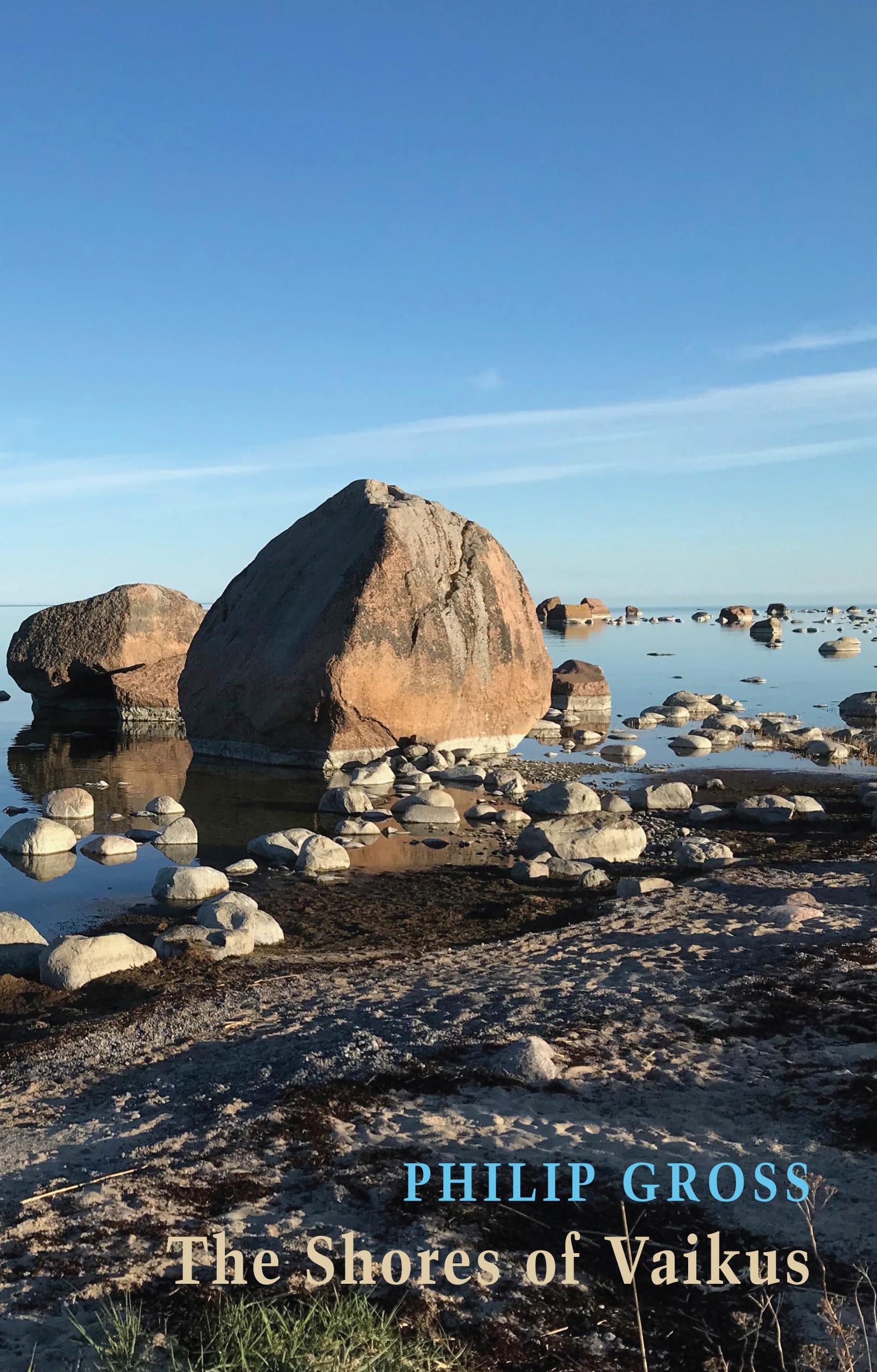
I recently attended the launch of Philip Gross’ new collection, The Shores of Vaikus (Bloodaxe Books, 2024) at the Estonian Embassy (the poems and prose pieces in the book refer to Gross’ father’s Estonian heritage and the poet’s visits to that country). I’ve followed his poetry since Faber published The Ice Factory in 1984. Neither of us could recall when we’d last met up but, after the event, I remembered that Philip was one of the first poets to read at the series of poetry readings (and associated workshops) I helped curate in the late 1980s/early 1990s, the Blue Nose Poetry series in London. I introduced him on the occasion (I still have the notes I made for the event in a Notebook for Spring 1989). I checked out the precise date in The Blue Nose Poetry Anthology (1993) which has sat on my shelves for many years now. The Blue Nose Poets (for personnel see below) invited all those who had read in the series to submit work and it strikes me now that it would be a shame if a record of our endeavours over a number of years was lost to sight completely. So, I’m posting here the Introduction to the Anthology and the full list of readers who appeared (often being paid nothing or a mere pittance) between 1989 and 1993. Interesting? I think so – given we hosted the likes of Dannie Abse, Patience Agbabi, Moniza Alvi, Simon Armitage, James Berry, Robert Creeley, Fred D’Aguiar, Michael Donaghy, Carol Ann Duffy, Michael Horowitz, Jackie Kay, Adrian Mitchell, Peter Porter, Peter Reading, Michèle Roberts, Ken Smith, and many more.

Introduction to The Blue Nose Poetry Anthology
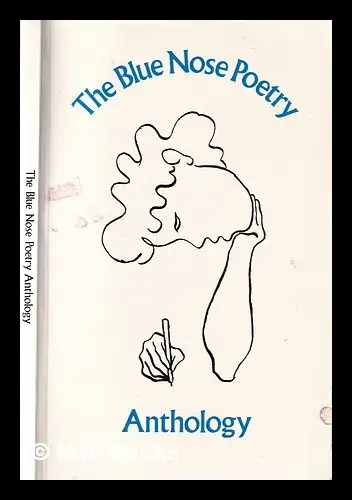
This anthology celebrates four years of Blue Nose Poetry in London. Its beginnings can be traced back to 1988, when Sue Hubbard advertised for members to join a small poetry workshop at her house in Highbury. Amongst others who began meeting regularly were the four founder members of the Blue Nose: Sue, Martyn Crucefix, Mick Kinshott and Denis Timm. At that time, poetry readings in London seemed to be in the doldrums. Uninviting rooms and draughty halls with chairs in impersonal ranks were often depressingly matched by poor organisation. The Blue Nose Poetry activities were set up with the express intention of providing workshops and readings in a friendly, accessible and organised atmosphere for new voices, up and coming writers and the already established. We were convinced that a cabaret setting of tables, candles and a drink with other enthusiasts could make poetry enjoyable. It was only with the discovery of The Blue Nose Cafe in Mountgrove Road, close to Highbury Stadium, that we found a name for the project and the real success of the Blue Nose began.

Our first poets came to the Cafe and read out of the goodness of their hearts. We thank them all once again. The first event with Michèle Roberts was packed and exceeded our wildest expectations. Within the course of one evening we had proved that exciting contemporary poetry could be presented really successfully. Soon, in response to Blue Nose’s track record of commitment and quality, GLA (later LAB) and Islington Borough agreed to support the project. Since then, there have been various changes. Mick Kinshott felt unable to continue as an organiser in 1990 and his commitment and humour was a great loss. His place was taken for two years by Bruce Barnes, whose knowledge of the poetry and arts funding world in London proved invaluable to the development of the project. More recently, Mimi Khalvati and Mario Petrucci have joined the three original members. In the middle of the Spring 1991 season, the Cafe where we held the events went into liquidation and a reading by Tom Pickard and Rosemary Norman sadly had to be called off. Regular events did not begin again until May 1991, when we moved into the more accessible, roomy and centrally located Market Tavern in Islington. Despite the many advantages of this new venue, there are a few who still regret the passing of the old Café which, though tiny, disorganised and terminally broke, did have a superb atmosphere for poetry.

In an appendix to this anthology, we list all the readers who have appeared at the venue/s – a genuinely comprehensive survey of poetry in recent years. This, of course, does not include the many poets who have had the opportunity to read from the floor at Blue Nose events. More importantly, this book contains no record of the hundreds and hundreds of people who have enjoyed and supported Blue Nose Poetry. This book is dedicated to them.

Martyn Crucefix / Sue Hubbard / Mimi Khalvati / Mario Petrucci / Denis Timm

Full List of Main/Support Readers for Blue Nose Poetry Seasons 1989 – 1993

March – July 1989

Michèle Roberts read with Martyn Crucefix; Philip Gross read with Sue Hubbard; Jeremy Silver read with Mick Kinshott; Jo Shapcott read with Denis Timm; Leo Aylen read with Gerda Mayer; Alison Fell read with Hume Cronyn; The Blue Nose Poets; Carole Satyamurti read with Barbara Zanditon; Michael Donaghy read with Rupert Slade; Adam Thorpe read with Al Celestine.
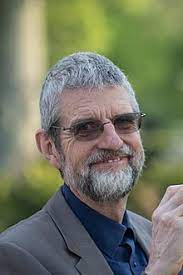
Philip Gross

September – December 1989

Ken Smith read with Mimi Khalvati; Anna Adams and Julian May; Gerda Mayer read with Chris Powici; The Blue Nose Poets; The Performing Oscars; Maura Dooley read with Sara Boyes; Fred D’Aguiar read with Matt Caley; Matthew Sweeney read with Hilary Davies.

January – April 1990

Fleur Adcock read with John Harvey; Dannie Abse read with Myra Schneider; Elaine Randell read with Frances Presley; Hugo Williams read with Keith Spencer; Pitika Ntuli read with Bruce Barnes; John Cotton read with Bridget Bard; Michele Roberts read with Peter Daniels.
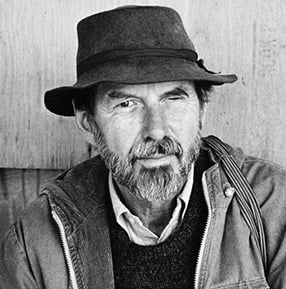
Robert Creeley

May – July 1990

The Blue Nose Poets; Sarah Maguire read with Vicki Feaver; Jeni Couzyn read with W N Herbert; James Berry read with Susan McGarry; Simon Armitage read with Chris Gutkind; E A Markham read with Mimi Khalvati; Brian Patten.

September – December 1990

In the Gold of Flesh anthology with Valerie Sinason, Dinah Livingstone, Pascal Petit, Jenny Vuglar; George Szirtes read with Gabriel Chanan; Kit Wright read with Candice Lange; The Blue Nose Poets; Michael Horovitz read with Raggy Farmer; Patience Agbabi and Judi Benson; Jenako Arts Writers; Carol Ann Duffy read with Steve Griffiths.

January – March 1991

Judith Kazantzis read with Mario Petrucci; Robert Creeley read with Mick Kinshott; Jackie Kay read with the Speech Painters; Peter Forbes and Eva Salzman; [Blue Nose Cafe in Highbury suddenly closes]; Lemn Sissay read with Adam Acidophilus.

May – July 1991

Peter Porter read with Elizabeth Garrett; The Blue Nose Poets; Carole Satyamurti read with Leon Cych; Peter Scupham read with Lucien Jenkins; Leo Aylen read with Rosemary Norman.

October – December 1991

Sylvia Kantaris read with Andrew Jordan; Gillian Allnutt read with Helen Kidd; Alan Jenkins read with Eric Heretic; Sean Street and Hubert Moore; Lee Harwood and Richard Cadell; Xmas Party – Tony Maude, Speech Painters and music from Dean Carter.

January – April 1992

Adrian Mitchell; David Constantine read with Tim Gallagher; David Morley with Martyn Crucefix; Sue Stewart read with Bruce Barnes; Glyn Maxwell read with Sue Hubbard; Peter Abbs read with Nicky Rice.
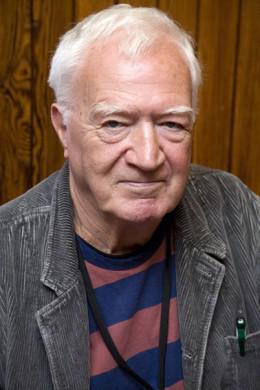
Adrian Mitchell

May – July 1992

Jo Shapcott read with Mick Kinshott; Bobbie Louise Hawkins read with Robert Sheppard; Birdyak – Bob Cobbing and Hugh Metcalfe; Colin Rowbotham read with Richard Tyrrell; Ken Smith read with Eric Heretic.

October – December 1992

Connie Bensley and Felicity Napier; The Poetry Show at Rebecca Hossack Gallery; Donald Atkinson read with Jane Duran; Ruth Fainlight read with Moniza Alvi.

January – April 1993

Peter Reading read with Briar Wood; Ruth Valentine; Myra Schneider read with Mario Petrucci; Carol Rumens read with Daphne Rock.

2016 Forward First Collections Reviewed #1 – Ron Carey

This is the first in a series of reviews I will post over the next two months of the 5 collections chosen for the 2016 Forward Prizes Felix Dennis award for best First Collection. The £5000 prize will be decided on 20th September. Click here for all 5 of my reviews of the 2015 shortlisted books (eventual winner Mona Arshi).

The 2016 shortlist is:

Nancy CampbellDisko Bay (Enitharmon Press)
Ron CareyDistance (Revival Press)
Harry GilesTonguit (Freight Books)
Ruby RobinsonEvery Little Sound (Liverpool University Press)
Tiphanie YaniqueWife (Peepal Tree Press)

imgres

Thanks to Revival Press for providing a copy of Ron Carey’s book for review purposes.

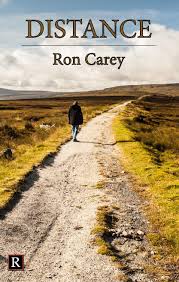
On the cover of Distance a male figure has already travelled well down a track through flat, open countryside. He’s heading determinedly away from us, hands thrust in his coat pockets. I think this is Ron Carey and though the image pretty literally evokes one aspect of the book’s title, it contradicts the stated direction of the poems within which hope to “bring us a little closer”. An epigraph from Elizabeth Burns suggests a more philosophical “sense / of time and place dissolving” so that (in an image that would have pleased Antonio Machado) “we are all / drops of water in this enormous breaking wave”. Ron Carey’s first collection sticks more firmly to the former, more commonplace, more personal of these formulations but is at its most interesting when it ventures an almost magic realist evocation of the latter.

The dissolution of strict linear time provides occasions for many of the most appealing poems here. They are acts of recall of a twentieth century childhood in Ireland (in this Carey invites comparisons with Heaney and, before him, Kavanagh). The boy who is the focus of these recollections is both highly observant and very imaginative. His conviction that there is a leopard in the coal-shed as he is tucked up in bed is grounded in vivid details of it tiptoeing “through the tin-pot Dulux jungle, on / Quick, painted feet”. ‘Breakfast’ is also troubled by imaginary big cats (lions this time) who chase his father from the house, their “claws pinging the spokes of [his] bicycle”. The idea of a ‘water-table’, as discussed by Driller Flanagan and the boy’s father, unleashes images of a real “table of Marian blue; its top shimmering” but when the geological reference is clarified for him, the boy swears never to ask “questions that have / The possibility of such dull answers”. We see the birth of a certain type of poet here, though Carey’s long wait for a first book reassures us that such unbridled (if vivid) fantasy will not be the whole story. So watching Aunt Babbie wring the necks of chickens, while blithely questioning him about his day at school, gives rise to more troubling childhood experiences as the birds’ “squawking souls” pursue him home and (the writing of the poem confirms) continue to haunt him forever.

imgres

Everyday remembrance seldom loses sight of the gulf between then and now, but Carey’s poems occasionally record more profound moments of the collapse of the temporal. ‘Moving’ records the day a family move to a newly built housing estate. All their belongings piled in a horse-drawn cart (old world), as they approach the house the boy’s mother runs ahead with a “100-watt Solus” light bulb in her hand (new world). The electricity that runs metaphorically through the boy’s hands as he is given the horse’s reins and literally through the bulb filament so that the “black eyes of the front-room suddenly blazed” form an instantaneous circuit in which the whole family experiences renewal, the mother now “a young girl” calling from an open window ahead. It is the intensity of the emotions which supercharges such changes in perception. ‘Kilkee’ sees the six-year-old boy partaking of the grief of another Aunt’s broken heart, lying like lovers themselves on sand dunes: “He put his finger into the ring of the sun / And pulled it down the sky till it entered the water”. This drawing down of blinds is a fantasy of sorts but far more profoundly linked to the truth of the moment than the boy’s water-table imaginings. It’s in ‘Upstairs’ that Carey brings this technique to its apogee where the boy (now grown but of an uncertain age) agrees to wear his father’s old coat and lie beside his ageing mother. It’s her desire to re-live earlier days and intimacies that dominates, but the poem cleverly reveals the boy’s own uncertainty of identity: “We pretend to sleep, Danny and me”. He feels he can’t get up, though she’s now asleep, “Because she will not let go of his hand” (my italics).

1899C_British_Bicycle_man

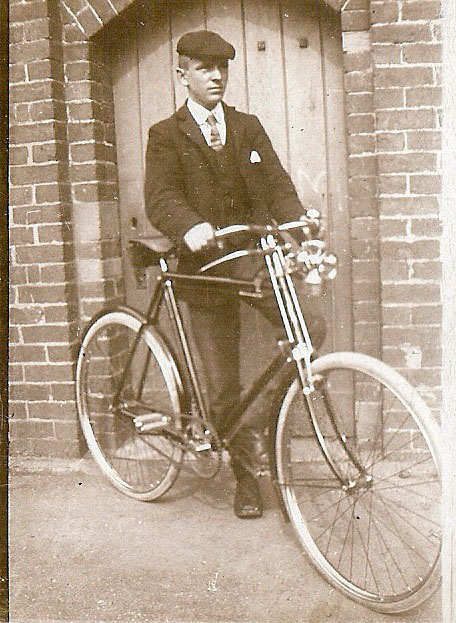
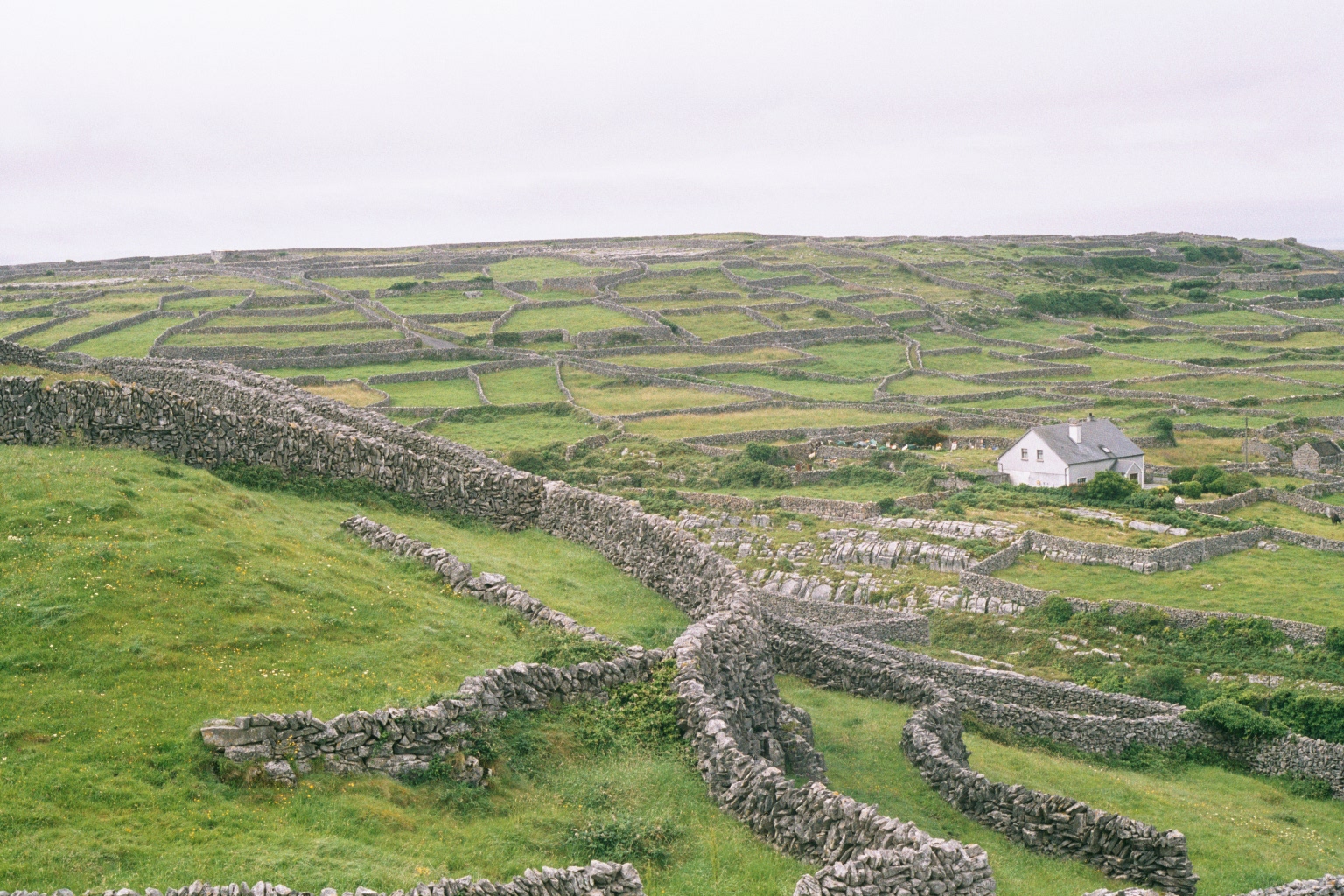
The figure of the father is a powerful one and recurs throughout the book. We see him relishing “pig’s toes with a pint”; elsewhere he comes home from work: “Your cold, great hands shocking / Our new skins; your goat’s kiss rough as love”. Even more memorably, in ‘My Father Built England’, he works as an immigrant labourer, a “solid Paddy full of gristle”, learning how to harden his hands with urine, then with the onset of World War Two, returning to Ireland to work for Hogan and Son. He is one of many characters who populate this enjoyable book – Miss O’Mahoney, a pub quiz-master, an irregular Postman, several Aunts, Grandmother and Grandfather – most of them firmly enough grounded in close observation to avoid caricature. And it’s the quietness with which Carey achieves his aims which is notable. New technologies are alluded to in the context of the past. ‘Churchfields’ makes familiar use of a photographic image but in ‘Background’ an image of a Grandfather is set as background on a computer screen, allowing Carey to “click a short-cut icon on his broad shoulders” in another striking image of the collapse of time differences. Elsewhere, the sweep of a dry stone wall is compared to the curve of a “Large Particle Collider” (unlikely, but successful). And a visit to Patrick Kavanagh’s grave yields an encounter with his ghost, in fact on film, “rasping and jumping on a screen”.

Inisheer_Gardens_2002_dry-stone_walls

Unfortunately, there is a rather soft middle to this book in the sections titled ‘The Beloved’ and ‘New Oceans’. The first seems a rather brief, miscellaneous collection of poems only vaguely linked to the theme of love and includes an up-dating of the Icarus myth and an incongruously Yeatsian lyric, ‘Diarmuid and Grainne’. ‘New Oceans’ appears to be an ill-judged venture into exotic climes and idioms (I think Central America). But there are more interesting poems in the final section of the book, ‘The World Will Break Your Heart’. Here Carey is less intent on conventional narrative and (in contrast to the youthful recall of earlier poems) focuses on the moment as it passes and on last things. ‘Lineage’ is a confident celebration of the Irish landscape – confident enough to admit ignorance of names as well as to leave the poem more open-ended, with no evident pay-off. ‘Catching My Death’ is short-lined, elegant, unpushy. Sounding more like Michael Longley here, the boy has grown up, encountered much:


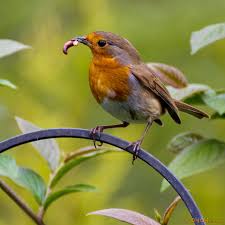
I find life now – much the same

As the robin does – wriggling

In my mouth


Mortality is now envisaged as a return to the earth, though some sort of reawakening into the future is imagined:


Until

The earth warms

And the soil opens

To the resurrection of the worms

images

Philip Gross, Carey’s supervisor on the South Glamorgan Creative Writing MA course, has written of the tenderness and detail of his work and this is true. He has a long list of competition wins and placings behind him and individual poems are touching and colourful and well-done. Distance covers a great deal of ground between childhood and old age and Carey is above all honest. But as a first book there are trails here which come to nothing and others which promise poems of a more adventurous kind. I hope that’s where the man in the coat is really heading.

An interview with Ron Carey about his work can be read here.