RIP Tony Harrison – a piece on metre and voice in his poetry

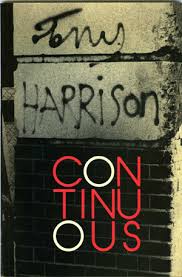
With the sad news of the passing of Tony Harrison, who as a working class poet had a great impact on me during my formative years of writing in the 1980s, I went back to a piece I was commissioned to write for an OUP collection of essays on his writing – both poetic and dramatic – in 1997. The book, Tony Harrison: Loiner, was edited by Sandie Byrne and included articles from Richard Eyre, Melvyn Bragg, Alan Rusbridger, Rick Rylance, and Bernard O’Donoghue. This is the full text of what I contributed: an intense focus on and close analysis of two of Harrison’s key poems, ‘A Cold Coming’ (for Harrison reading this poem click here) and ‘Them & [uz]’ (for the text of this poem click here).

The Drunken Porter Does Poetry: Metre and Voice in the Poems of Tony Harrison

Part I

Harrison’s first full collection, entitled The Loiners after the inhabitants of his native Leeds, was published in 1970 and contained this limerick:

There was a young man from Leeds

Who swallowed a packet of seeds.

A pure white rose grew out of his nose

And his arse was covered in weeds.

Without losing sight of the essential comedy of this snatch, it can be seen as suggestive of aspects of Harrison’s career. For example, the comic inappropriateness of the Leeds boy swallowing seeds becomes the poet’s own ironic image of his classical grammar school education. As a result of this, in a deliberately grotesque image, arises the growth of the white rose of poetry – from the boy’s nose, of course, since Harrison in the same volume gave credence to the idea that the true poet is born without a mouth (1). The bizarrely contrasting weed-covered arse owes less to the intake of seeds (rose seeds wherever transplanted will never yield weeds) than to the harsh conditions Harrison premises in the Loiner’s life, as indicated in an early introduction to his work, where he defines the term as referring to “citizens of Leeds, citizens who bear their loins through the terrors of life, ‘loners'”(2).

Harrison’s now-legendary seed-master on the staff of Leeds Grammar School was the one who humiliated him for reciting Keats in a Yorkshire accent, who felt it more appropriate if the boy played the garrulous, drunken Porter in Macbeth.(3) The truth is that the master’s attitudes determined the kind of poetic rose that grew, in particular its technical facility which Harrison worked at to show his ‘betters’ that Loiners could do it as well as (better than?) they could. Yet this was no sterile technical exercise and Harrison’s success lies in the integrity with which he has remained true to those regions “covered with weeds” and in the fact that his work has always struggled to find ways to unite the weed and the rose. Perhaps the most important of these, as the limerick’s anatomical geography already predicted in 1970, is via the rhythms of his own body.

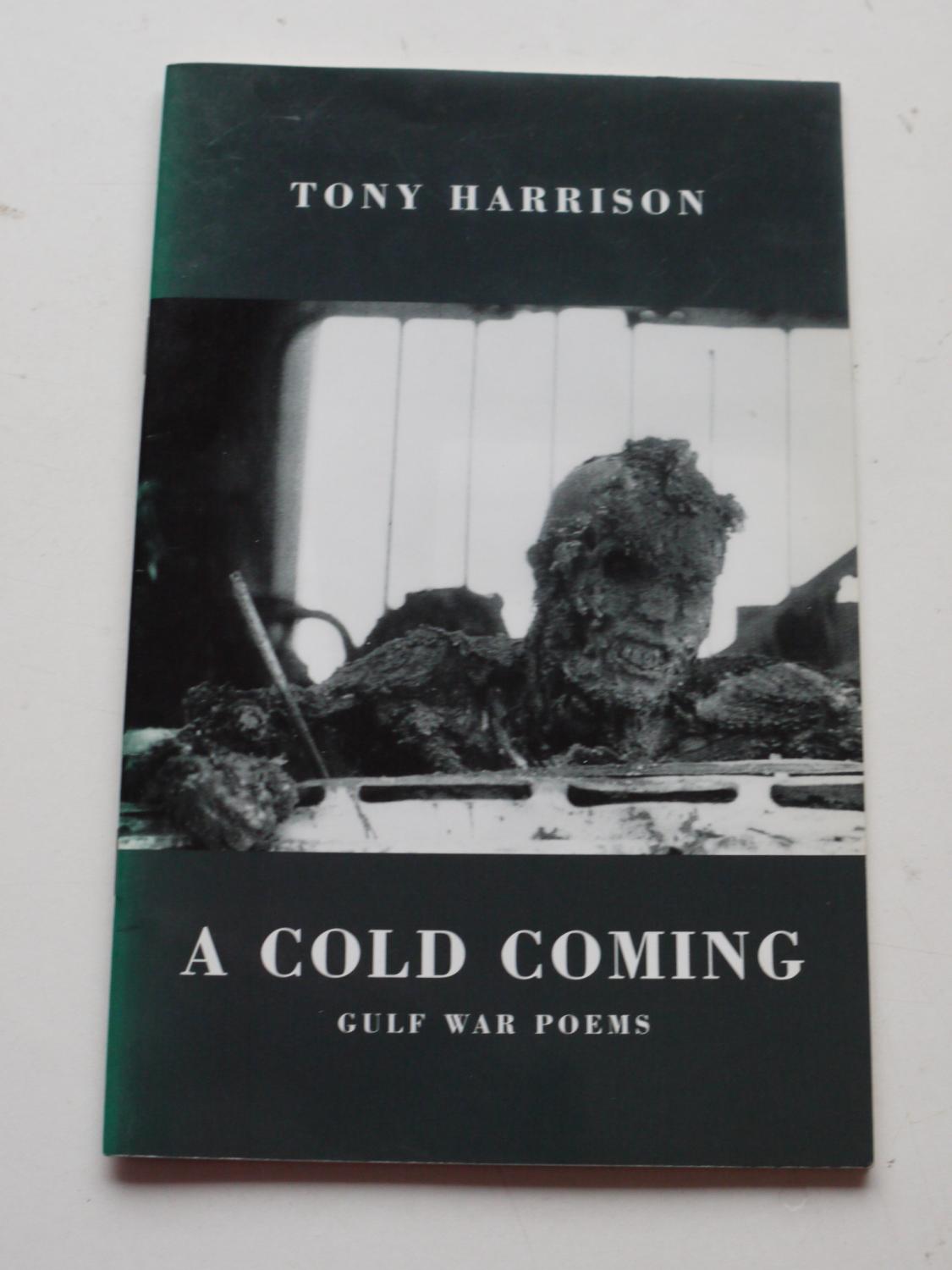
Harrison has declared his commitment to metrical verse because “it’s associated with the heartbeat, with the sexual instinct, with all those physical rhythms which go on despite the moments when you feel suicidal” (4). In conversation with Richard Hoggart, he explains that without the rhythmical formality of poetry he would be less able to confront, without losing hope, the unweeded gardens of death, time and social injustice which form his main concerns. “That rhythmical thing is like a life-support system. It means I feel I can go closer to the fire, deeper into the darkness . . . I know I have this rhythm to carry me to the other side” (5). There are few of Harrison’s poems that go closer to the fire than the second of his Gulf War poems, ‘A Cold Coming’ (6). Its initial stimulus, reproduced on the cover of the original Bloodaxe pamphlet, was a photograph by Kenneth Jarecke in The Observer. The picture graphically showed the charred head of an Iraqi soldier leaning through the windscreen of his burned-out truck which had been hit by Allied Forces in the infamous ‘turkey-shoot’ as Saddam’s forces retreated from Kuwait City. In the poem, Harrison makes the Iraqi himself speak both with a brutal self-recognition (“a skull half roast, half bone”) as well as a scornful envy of three American soldiers who were reported to have banked their sperm for posterity before the war began (hence, with a scatological nod to Eliot, the title of the poem). There are undoubtedly echoes in the Iraqi’s speech of the hooligan alter ego in the poemV’, yet Harrison worries little over any narrow authenticity of voice in this case, and he does triumphantly pull off the balancing act between the reader’s emotional engagement with this fierce personal voice and a more universalising portrayal of  a victim of modern warfare. Furthermore, it is Harrison’s establishment and then variation of the poem’s metrical “life-support system” that enables him to achieve this balance, to complete a poem which weighs in against Adorno’s view that lyric poetry has become an impossibility in the shadow of this century’s brutality.

The poem’s form – rhymed iambic tetrameter couplets – seems in itself chosen with restraint in mind, as if the photographic evidence of the horror lying in front of him led Harrison to opt for a particularly firm rhythmical base “to carry [him] to the other side”. Indeed, the opening five stanzas are remarkable in their regularity with only a brief reversed foot in the fourth line foreshadowing the more erratic energies soon to be released by the Iraqi soldier’s speech:

I saw the charred Iraqi lean

towards me from bomb-blasted screen,

his windscreen wiper like a pen

ready to write down thoughts for men.

The instant the Iraqi’s voice breaks in, the metre is under threat. Each of his first four stanzas opens with trochaic imperatives or questions and at one point he asks if the “gadget” Harrison has (apparently a tape-recorder but a transparent image of poetry itself) has the power to record “words from such scorched vocal chords”. Apart from the drumming of stresses in lines such as this, Harrison deploys sibilance, the alliteration of g’s and d’s, followed by an horrific mumbling of m’s to suggest the charred figure’s effortful speech in the first moments of the encounter. Regularity is re-established the moment the tape-recorder’s mike is held “closer to the crumbling bone” and there is a strong sense of release from the dead man’s initial aggressive buttonholing as his voice (and the verse) now speeds away:

I read the news of three wise men

who left their sperm in nitrogen,

three foes of ours, three wise Marines,

with sample flasks and magazines . . .
In the stanzas that follow, the dead man’s angry, envious sarcasm is controlled within the bounds of the form and it is rather Harrison’s rhymes which provide much of the kick: God/wad, Kuwait/procreate, fate/ejaculate, high tech’s/sex. It is only when the man demands that Harrison/the reader imagines him in a sexual embrace with his wife back home in Baghdad that the metrical propulsion again begins to fail. It is in moments such as this that the difficult emotional work in the poem is to be done. This is our identification with these ghastly remains, with the enemy, and it is as if the difficulty of it brings the verse juddering and gasping to an incomplete line with “the image of me beside my wife / closely clasped creating life . . .”

The difficulty of this moment is further attested to by the way the whole poem turns its back upon it. Harrison inserts a parenthetical section, preoccupied not with the empathic effort the dead Iraqi has asked for but with chilly, ironic deliberations on “the sperm in one ejaculation”. Yet all is not well, since this section stumbles and hesitates metrically as if Harrison himself (or rather the persona he has adopted in the poem) is half-conscious of retreating into safe, calculative and ratiocinative processes. Eventually, a conclusion yields itself up, but it is once again the metrical change of gear into smooth regularity (my italics below) that suggests this is a false, defensive even cynical avoidance of the difficult issues raised by the charred body in the photograph:

Whichever way Death seems outflanked

by one tube of cold bloblings banked.

Poor bloblings, maybe you’ve been blessed

with, of all fates possible, the best

according to Sophocles i.e.

‘the best of fates is not to be’

a philosophy that’s maybe bleak

for any but an ancient Greek . . .

That this is the way to read this passage is confirmed by the renewed aggression of the Iraqi soldier who hears these thoughts and stops the recorder with a thundering of alliterative stresses: “I never thought life futile, fool! // Though all Hell began to drop / I never wanted life to stop”. What follows is the Iraqi soldier’s longest and most impassioned speech, by turns a plea for attention and a sarcastic commentary on the collusion of the media whose behaviour will not “help peace in future ages”. Particular mention is given to the “true to bold-type-setting Sun” and, as can be seen from such a phrase, Harrison once more allows particular moments of anger and high emotion to burst through the fluid metrical surface like jagged rocks. There is also a sudden increase in feminine rhyme endings in this section which serves to give a barely-caged impression, as if the voice is trembling on the verge of bursting its metrical limits and racing across the page. This impression is further reinforced in the series of imperatives – again in the form of snapping trochees at the opening of several stanzas – that form the climax to this section of the poem:

Lie that you saw me and I smiled

to see the soldier hug his child.

Lie and pretend that I excuse

my bombing by B52s.

The final ten stanzas culminate in a fine example of the way in which Harrison manipulates metrical form to good effect. In a kind of atheistic religious insight, the “cold spunk” so carefully preserved becomes a promise, or perhaps an eternal teasing reminder, of the moment when “the World renounces War”. However, emphasis falls far more heavily on the seemingly insatiable hunger of the present for destruction because of the way Harrison rhythmically clogs the penultimate stanza, bringing it almost to a complete halt. The frozen semen is “a bottled Bethlehem of this come- /curdling Cruise/Scud-cursed millennium”. Yet, as we have seen, Harrison understands the need to come through “to the other side” of such horrors and the final stanza does shakily re-establish the form (though the final line opens with two weak stresses and does not close). However, any naive understanding of the poet’s comments about coming through the fire can be firmly dismissed. This is not the place for any sentimental or rational synthetic solution. Simply, we are returned to the charred face whose painful, personal testament this poem has managed to encompass and movingly dramatise but without losing its form, thus ensuring a simultaneous sense of the universality of its art and message:

I went. I pressed REWIND and PLAY

and I heard the charred man say:

Part II
It was Wordsworth whose sense of physical rhythm in his verse was so powerful that he is reported to have often composed at a walk. It should come as no surprise that Harrison has been known to do the same. Though it was Keats’ ‘Ode to a Nightingale’ Harrison ‘mispronounced’ at school, it is actually Wordsworth who is more important to him because both share a belief in poetry as the voice of a man speaking to men. This conception of poetry as speech is a powerful constituent in Harrison’s work and perhaps one not clearly understood. John Lucas, for example, has attacked what he sees as loose metrics in the poem ‘V’ (7) but, to reverse Harrison’s comment that all his writing (theatrical or otherwise) is poetry, all his poetry needs to be read as essentially dramatic and deserves to be tested in the spoken voice as much as in the study. On occasions, Harrison, only half-humourously, draws attention to the fact that two uncles – one a stammerer, the other dumb – had considerable influence on his becoming a poet and it is the struggling into and with voice that such a claim highlights.(8)  I have already mentioned Harrison’s interest in the curious idea that the true poet is born without a mouth. This too, implies the difficult battling for a voice or voices which can be found everywhere in his work and it is in this clamour that I find its dramatic quality. In a public poem like ‘A Cold Coming’, Harrison makes use of the contrasting and conflicting voices by playing them off against a regular form. This is almost always the case, but in what follows I prefer to concentrate less on metrical effects than on the way voices interweave, in this case, in more personal work from The School of Eloquence sequence.

The very title of the pair of sonnets, ‘Them & [uz]’, seems to promise conflict, at best dialogue, and it opens with what could be taken as the howl of inarticulacy. In fact each pair of these opening syllables gestures towards crucial worlds in Harrison’s universe. The αίαι of classical dramatic lament is echoed by the “ay, ay!” of the musical hall comedian cheekily working up an audience. Immediately, the reader is plunged into the unresolved drama of two differing voices, instantly implying the two cultures of the sonnets’ title. The line and a half which follows, sketching Demosthenes practicing eloquence on the beach, is intriguing in that its locus as speech is hard to pin down. It is perhaps intended at this stage (apart from introducing the poems’ central issue) to hover in an Olympian fashion above the ruck of dialogue that follows, implying the heroic stance which will be taken up in the second sonnet.

Line 3 opens again into a dramatic situation with the voice of the narrator (the adult Harrison), repeating his own interrupted recital of Keats in the classroom, while the master’s scornful comments appear fresh, unreported, as if still raw and present, in speech marks. The narratorial comment on this – “He was nicely spoken” – confirms this poem’s tendency to switch voices for its effects, this time its brief sarcasm barely obscuring the unironic comment likely to be made by an aspiring Loiner, or by an ambitious parent. The example of nice speaking given (again in direct quotes in the following line) is the master’s claim to possession, to authority in matters of language and culture and the separated-off reply of the narrator – “I played the Drunken Porter in Macbeth – with its full rhyme and sudden regular iambic pentameter, implies both a causal link between the two lines, painting Harrison  as dispossessed specifically by the master’s attitudes, as well as conveying the tone of resignation in the young schoolboy.

It will be clear that much of the tension and success of the poem has already arisen from the dramatic interchange of voices and the master’s voice asserts itself again in line 7, ironically claiming a kind of monolithic, aristocratic purity to poetry which this poem has already attempted to subvert:

Poetry’s the speech of kings. You’re one of those

Shakespeare gives the comic bits to: prose!”

The following lines contain a curious wavering in the clear interplay of dramatic voices, only part of which is resolved as the poem proceeds. Evidently, the intrusive, even hectoring, parenthesis (at line 9) is the narrator’s questioning of what appears to be the master’s voice’s continuing argument that “All poetry” belongs to Received Pronunciation. Yet the aggression of this attack, with its harsh alliteration and sarcastic question mark, is out of key with the other narratorial comments in part I, though the tone is re-established in part II. In addition, I have some difficulty in accepting the master’s words as appropriate to the situation which – with no break – continues the speech made to the young Harrison. For example, the word “dubbed”, with its implication of the deliberate laying of a second voice over an ‘original’, already hands victory in the argument to Harrison’s claim for the authenticity of ‘dialect’ and, as such, would not be used by the believer in “the speech of kings”. Equally, the apparent plea, “please believe [Λs] / your speech is in the hands of the Receivers”, does not accord with the voice that summarily dismissed the pupil as a “barbarian” 7 lines earlier. In this case, Harrison’s desire for the dramatic has foundered momentarily on that old dramatist’s rock, the necessity for exposition which compromises the integrity of the speaking voice.

The true note of the master returns – interestingly, following one of Harrison’s moveable stanza breaks, as if confirming a shift in voice though the speech actually continues across the break – with “We say [Λs] not [uz], T.W.!” The tone of the responding voice, after the suggestion of a more spirited response in the Keats comment, has returned to the resignation of the brow-beaten pupil. This is reinforced by the more distant comparison of the boy to the ancient Greek of the opening lines, heroically “outshouting seas”, while the young Harrison’s mouth is “all stuffed with glottals, great / lumps to hawk up and spit out”. This first sonnet draws to a close with this tone of frustrated defeat for the boy, yet the drama has one final twist, as the voice of the master, sneering, precise and italicised, has the last word – “E-nun-ci-ate!“. There can be little doubt that the boy must have felt as his father is reported to have done in another sonnet from The School of Eloquence, “like some dull oaf”. (9)

The second part of ‘Them & [uz]’ contrasts dramatically with the first, though the seeds of it lie in the image of heroic Demosthenes and the accusatory tone of the reference to Keats which seemed a little out of place in part I. This second sonnet’s opening expletive aggression strikes a new tone of voice altogether. “So right, yer buggers, then! We’ll occupy / your lousy leasehold Poetry”. The poem’s premise is that it will redress the defeat suffered in part I in an assertive, unopposed manner. Not the master, nor any spokesman for RP is allowed a direct voice, yet the interchange of speech and implied situation can still be found to ensure a dramatic quality to the verse.
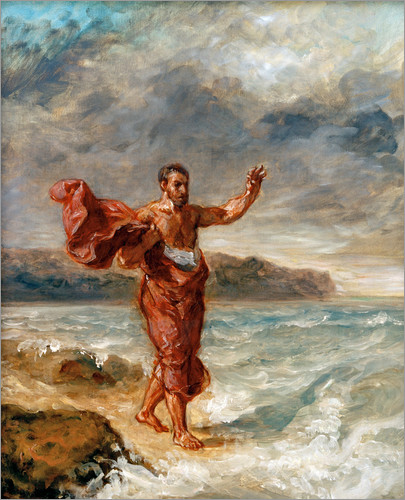
Demosthenes

The passionate and confrontational situation of the opening challenge is clear enough, yet it’s striking how it has taken the autobiographical incident in part I and multiplied it (“yer buggers . . . We’ll occupy”) to present the wider political and cultural context as a future battlefield. Even so, there is no let up in the clamour of voices raised in the poem. Immediately, the narratorial voice shifts to a more reflective, past tense (at line 3) as the rebel reports actions already taken – and with some success, judging from the tone of pride and defiance: “[I] used my name and own voice: [uz] [uz] [uz]”. Even within this one line, the final three syllables are spat out in a vivid reenactment of Harrison’s defiant spoken self-assertion. It is this slippery elision of voice and situation which creates the undoubted excitement of these and many of Harrison’s poems as they try to draw the rapidity and short-hand nature of real speech, its miniature dramas and dramatisations into lyric poetry. A further shift can be found in lines 9 and 10, in that the voice now turns to address a different subject. The addressee is not immediately obvious as the staccato initials in the line are blurted out in what looks like a return to the situation and voice with which this sonnet opened. Only at the end of line 10 does it become clear that the addressee is the poet’s younger self, or the self created as the “dull oaf” by the kind of cultural repression practised by the schoolmaster. The reader is further drawn into the drama of the situation by this momentary uncertainty: RIP RP, RIP T.W. / “I’m Tony Harrison no longer you!”.

The remaining 6 lines are, as a speech act, more difficult to locate. There is an initial ambiguity in that they may continue to address “T.W.”, though the stanza break suggests a change and, anyway, this makes little sense as T.W. is now dead (“RIP T.W.”). In fact, these lines use the second person pronoun in the impersonal sense of ‘one’, addressing non-RP speakers in general, and it is the generalised nature of these lines which disarms the effectiveness of the passage. This is particularly important in line 14, “[uz] can be loving as well as funny”, the tone of which, commentators like John Haffenden have questioned. (10)  The difficulty here is that if Harrison is addressing those who might use [uz] anyway, though there may well be many amongst them for whom the fact that “Wordsworth’s matter / water are full rhymes” is useful ammunition and reassurance, the same cannot be said of the “loving as well as funny” line which might be variously construed as patronising, sentimental or just plain unnecessary. Nevertheless, the poem regains a surer touch in the final lines in its use of the reported ‘voice’ of The Times in renaming the poet “Anthony“. The effect here is both humorous (this, after all the poet’s passionate efforts!) and yet ominous in that the bastions of cultural and linguistic power are recognised as stubborn, conservative forces, still intent on re-defining the poet according to their own agenda, imposing their own voice where there are many.

Harrison’s use of both metre and voice reflect the struggle in much of his work between the passion for articulation, especially of experiences capable of overwhelming verse of less conviction, and the demands of control which preserve the poet’s utterance as art. Harrison’s more recent work – especially that written in America – is more relaxed, meditative, less inhabited by differing and different voices, more easily contained in its forms. There are undoubtedly great successes amongst these (‘A Kumquat for John Keats’, ‘The Mother of the Muses’, part III of ‘Following Pine’) but there are moments when Harrison seems to idle within his technique, perhaps too able to ruminate aloud without the clamour of voices rising around him. It is likely that Harrison’s legacy will eventually be seen as a reassessment of the uses of formal verse and an exploration of the dramatic potential of lyric verse. These elements are rooted ultimately in his attempts to unite the rose of poetry with the weeds of truth and (often painful) experience, by trusting to the measures of his own body and to a language he returns to the mouth.

Footnotes

1. In a note to section III of ‘The White Queen’, Harrison records that “Hieronymus Fracastorius (1483-1553), the author of Syphilis, was born, as perhaps befits a true poet, without a mouth”. Selected Poems, p.30.

2. ‘The Inkwell of Dr. Agrippa’, reproduced in Tony Harrison: Critical Anthology, p.34.

3. See Richard Hoggart, ‘In Conversation with Tony Harrison’, Critical Anthology, p.40.

4. John Haffenden, ‘Interview with Tony Harrison’, Critical Anthology, p.236.

5. Hoggart, Critical Anthology, p.43.

6. The Gaze of the Gorgon, pp.48-54.

7. John Lucas, ‘Speaking for England?’, Critical Anthology, pp.359/60.

8. Selected Poems, p.111.

9. Selected Poems, p.155.

10. Haffenden, Critical Anthology, p.233.
Charlie Louth’s Rilke + new Rilke Translations (Part II)

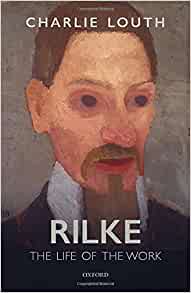
This is the second and final part of an uncut version of my recent review of Charlie Louth’s excellent book on Rilke, Rilke: the Life of the Work (OUP, 2020). A shorter version of this review appeared in the latest Agenda magazine, ‘Altered Distances’ (Vol 54, Nos. 1/2). Many thanks to the editor, Patricia McCarthy for asking me to write it. As I mentioned last week, much of my time through lockdown has been taken up with translation. One of these projects is a commission by Pushkin Press to complete a new selection and translation of the work of Rainer Maria Rilke, scheduled to appear in 2023. Some of you will be aware of my earlier published versions of the Duino Elegies and the Sonnets to Orpheus (both available from Enitharmon Press). This new project will contain selections from those sequences and a significant number of earlier poems – from the Book of Hours, the Book of Images and the New Poems. I am including a few of my new translations in these two posts (or at least these are reasonably progressed drafts – just as with original work, translations need to sit a drawer for a while before they can be more fairly judged)

Part II

Louth argues Rilke’s journey towards the poetics of the New Poems began in the period he resided in the artists’ community in Germany at Worpswede. A lot of his thinking there concerned images of man and landscape. For the majority of the time, humans and nature live “side-by-side with hardly any knowledge of one another” and it is in the ‘as if’ of the work of art that they can be brought closer, into a more conscious relation. These are the thoughts that preoccupied Rilke when he moved, in 1902, to Paris, in part to observe Rodin at work. Louth is right that the poet’s move towards a poetry that cultivated the “earthly”, the world of “things”, was already well under way. He then looked to Rodin’s methods for “dependability, concentration and craft” and in a poem like ‘The Panther’ the fruits of more compactness of diction, a more supple articulation of syntax, a lexis of more precise, everyday words and an increased emphasis on the visual are clearly seen.

Here is my translation of ‘The Panther’:

The Panther

in the Jardin des Plantes, Paris

With this pacing the bars’ back and forth, his gaze

grows so weary there is nothing it can hold.

To him, there appears to be a thousand bars

and beyond the thousand bars, no world.

x

The lithe, smooth steps of his powerful gait

(in the narrowest of circles he spins round)

is like a dance of power around a point

at which an immense will stands, stunned.

x

In moments only does the pupil’s curtain

sway noiselessly open – an image enters

and drives through the mute tension of each limb

into the heart, where it disappears.

Under Rodin’s influence, Rilke became a more self-conscious labourer in language. These are the poems that are held up as examples of ‘Kunst-Ding’ (art-thing). In August 1903, Rilke wrote to Lou: “The thing is definite, the art-thing must be even more definite; taken out of the realm of chance, removed from every unclarity, relieved of time and given to space’.

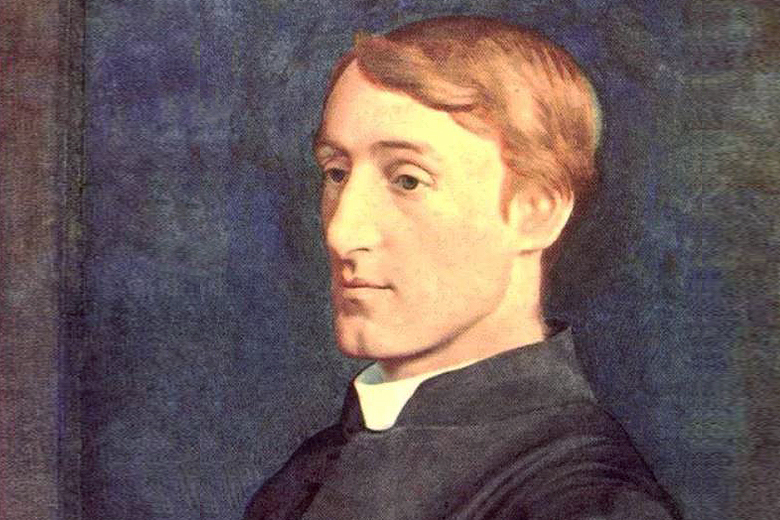
Gerard Manley Hopkins

Louth often draws comparisons between Rilke’s work and poets from the English language poetry sphere. Here he compares Hopkins’ ideas of ‘inscape’ and ‘instress’ as “akin” to Rilke’s ideas of object/form and its impact on the observing individual. Certainly, with Hopkins, Rilke valorises the moment of perception, the process of looking. This, from a letter to Clara Rilke in 1907, is worth quoting at length: “Looking is such a wonderful thing, and we know so little about it; with it, we are turned completely outwards, but precisely, when we are most so turned, things seem to go on inside us that have been longingly waiting not to be observed, and while, intact and curiously anonymous, they take place inside us, without us, their meaning grows in the object outside [. . .] without ourselves getting anywhere near it, grasping it only very faintly, from a distance, under the sign of a thing that was foreign to us and the next moment is estranged once more”. These are little contacts with God, transient though they may be. The way we are to put our conscious self into our gaze and let it stream out of us, so enabling us to ‘receive’ the object without, recalls the idea of kenosis. Louth’s account of it is cool and clear: “the whole process can be thought of as two parabolas intersecting at their tips, the mind going out as the gaze summons the object into its focus”. He goes on to say that the details of the process may seem mystical, or indeed oddly physical, but the point is that the precise perception and discovery of things is also self-discovery, suggesting that the New Poems are not objective (as is often blithely observed) and not subjective either, but complicatedly both at once.

T E Hulme

Another of Louth’s interesting contextualisations is the link he makes between Rilke’s practice and the Imagists in general and, in particular, T.E. Hulme’s essay from around 1911, ‘Romanticism and Classicism’. There, Hulme also associates poetry with “an extraordinary interest in a thing”, described with an accuracy that avoids “falling into the conventional curves of ingrained technique [. . .] from gliding through an abstract process”. For Hulme, the artist is one who simply can’t bear the idea of [. . .] ‘approximately’”; hence one who always struggles to get “the exact curve of the thing”. Rilke’s New Poems are on the same trail, though he complicated and extended it with what he learned about ‘surface’ from Rodin. Gazing at the sculptor’s work, Rilke began to understand that surface “consisted of infinitely many encounters of the light with the thing [. . .] There is no point on the surface of a statue that is dead, no point isolated from the others, not participating in the total effect and life of the whole”. In a Rodin sculpture – and this is what he wished for his poetry – Rilke saw that “[n]o part of the body was insignificant or slight: it lived”. Yet such an interconnected, encompassing vision is inevitably transient. Louth brilliantly concludes that the New Poems are “things which record moments that are over, at the very least strongly imply their loss”, hence revising the accepted reading of this work: “the collection is haunted by things rather than full of them”.

Here’s an example of close observation not a thing but an individual:

Going Blind

There she sat with the others, taking tea.

And beside the others, I felt, at first,

that she held out her cup differently.

At one point she smiled. It almost hurt.

x

And when at last they rose from their chairs

slowly, still talking, as it happened

(laughing and chatting), moving on elsewhere,

I noticed her again. She lagged behind,

x

reticent, more like a woman compelled

to sing in front of a crowd of people.

In her shining eyes, the light seemed to fall

as if from outside, reflected in a pool.

x

She followed on, slowly, biding her time,

as if something more had to be overcome,

and yet, as if following that translation,

she would never again walk, rather fly.

X

Louth’s chapters 7 and 8 are both titled ‘The Interim’, tracing Rilke’s life and work from 1914 to 1922. After the drafts of the first and second Duino Elegies in 1912, the following 10 years are often seen as a period of failure and difficulty, of writer’s block. Louth argues otherwise. Though Rilke felt it was a period of drought (and discussed it as such often in his letters), poems were being written (over 150 in 1913/4) and the poet seems to be deliberately marking a break in his writing career in order to spur himself on to greater experimentation. The interim is filled with reading and much translation work too. Also, the orientation toward the visual arts which was such an important aspect of the New Poems grows less strong and is replaced (in a poem like ‘Wendung’ in 1914) with ‘heart-work’ (‘Herz-Werk’). Louth explains, this “implies a stronger recognition that the qualities of things depend on being noticed, received and remembered and that these are processes which have to do with time”.

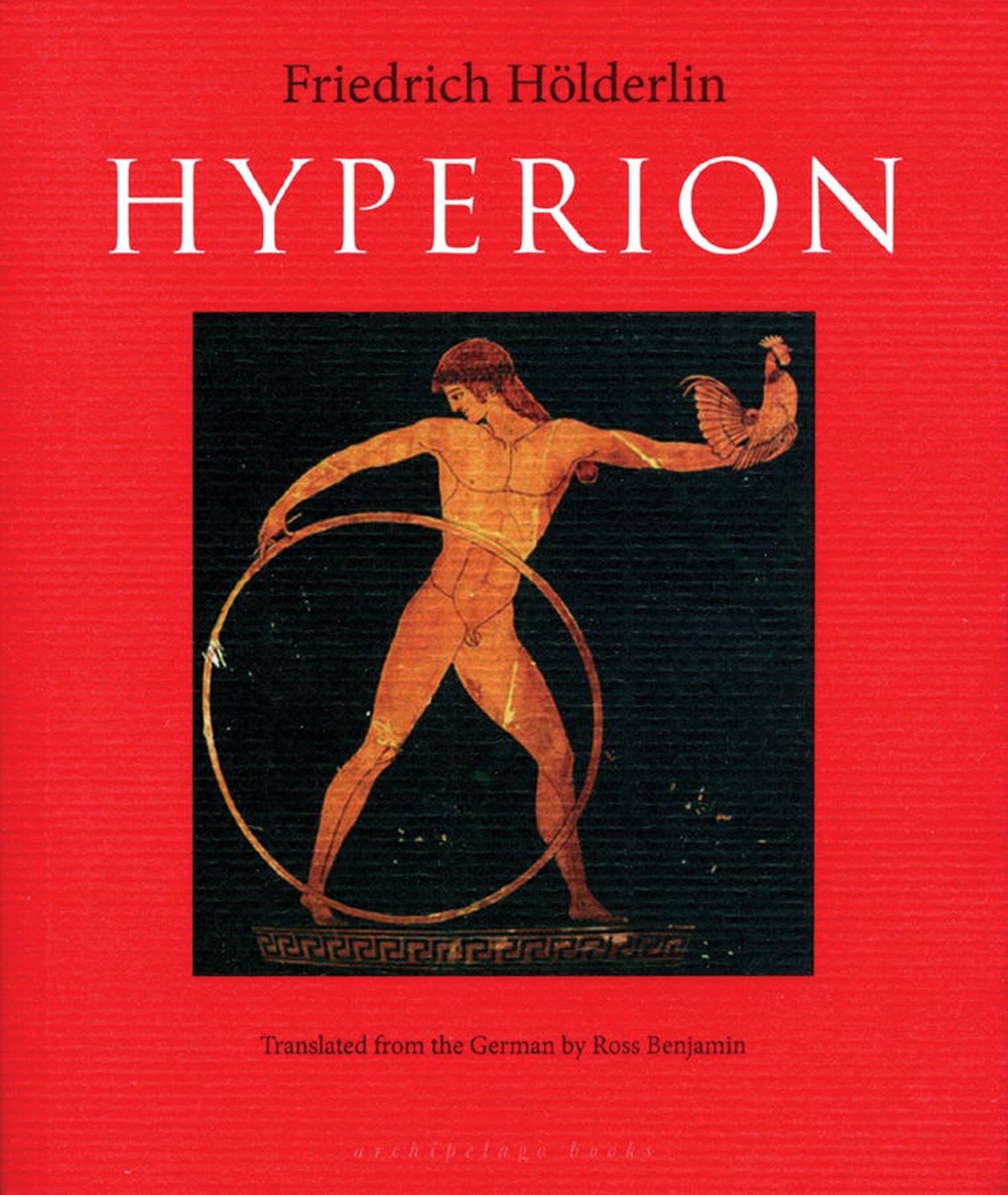
It was also his reading of Hölderlin that spurred Rilke forwards, both the poems and the novel Hyperion (1797/99). The New Poems are haunted by transience (as is the great ‘Requiem’ to Paula Modersohn-Becker (1909)), but Rilke comes to see poetry’s temporal nature not as something to be lamented and combated, but as its strength, what “allows it to enter into and elucidate the movement of life”. Years later, the unfolding of the Duino Elegies is just this: an initial lamentation at the transience of life, turning slowly towards celebration of that fact. Rilke learned from Hölderlin’s abrupt style, his winding, fractured or abbreviated syntax. The poem ‘To Hölderlin’ (1914) praises him and sets out a programme for Rilke himself. This is Louth’s translation:

To linger, even on what we know best,

is not for us; out of the fulfilled

pictures the spirit pitches to ones now to be filled; lakes

are only in eternity. Here falling is

the best we can do. Out of a feeling we’ve learnt,

falling onwards into one we divine, further.

Louth argues, “What Rilke apprehends in Hölderlin and works into the form of his poem to him, is movement itself, the poem as a passage ‘felt in departures’. It is ‘Herz-Werk’ in that it traces the flexion of time”.

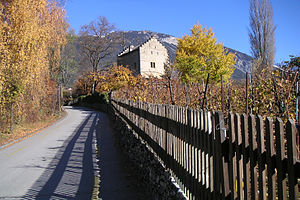
Rilke’s last house, Muzot

The long-nurtured fruits of these lessons in poetic diction, syntax and a vision of life are what burst from Rilke years later at Muzot. Much has been written about the inspired “hurricane of the heart and mind” that resulted in the completion of both the Duino Elegies and the Sonnets to Orpheus in February 1922. Some may find Louth’s 100 pages on the Elegies – a systematic ‘going through’ each poem in detail – to be at risk of losing the uplift and often dizzying experience that readers can have with this text which Rilke called a “great white sail”. But Louth’s forensic approach is not a dismantling of the poems, rather “a way of inhabiting them”. The poems are not elegies in any formal or traditional sense but about the kind of loss that had always been Rilke’s subject: the necessary loss of our necessary preconceptions about the world so that we can (if only passingly) experience its ultimate nature as a wholeness of being. The angels who make brief appearances stand for all that we are not (but might briefly glimpse). The lack of self-consciousness Rilke perceives in animals – their capacity to see the Open (“das Offene”) without reflection – proves an alternative way of critiquing the way we live. The acrobats in the fifth poem (the last to be completed) serve to suggest that life itself is “a questionable kind of performance, a contrivance, endlessly failing and having to be begun again”. Once this is felt in the blood and we distance ourselves from a world view in which “theories, the conception of things, have come to dominate over the things themselves”, then (as the seventh Elegy proclaims) “Just being here is glorious” (‘Hiersein ist herrlich’).

The only chance of preserving such glory is (following Hölderlin) to ensure no particular interpretation of experience becomes “the fixed and solely valid one”. The language of poetry becomes a way of “hooking ourselves to things, tangling ourselves in them” while retaining a sense of inevitable provisionality. So poetry reflects the nature of a life “improvised into a makeshift whole which acknowledges the complexity of life while also showing how it can still be experienced as a rich, meaningful practice”. Louth’s methodical tracking through the poems is an effective approach because the work itself is “extensive, various, not linear in progression, and often hard to construe, to read it is also to live in it, and the kind of reading required—to be willing to take things on trust, to allow rhythms to inform arguments, to carry unresolved moments, to connect disparate images into promising patterns—is akin to the ways we have of getting through life itself”.

Likewise, the Orphic song of the Sonnets also “comes and goes” and the self-contained, episodic, yet intricately interconnected form Rilke chooses (over 55 sonnets) yields what is Rilke’s greatest work. Louth takes a thematic approach, looking at Poetry and Technology, Sense and the Senses as well as Vera Oukama Knoop (the putative addressee of the Sonnets) and the marvellously inventive use Rilke makes of the sonnet form. This works less well because these poems are far more light-footed, less “hard to construe” than the Elegies. They require less explication and dance away from the forensic. But Louth knows as much: “The language of the [Sonnets] has two particularly striking aspects. One is its allusiveness and elusiveness, a curious looseness and lightness of reference, as if the words have become detached from their normal task of signifying and approach pure form [. . .] The other is the way the language grows out of itself, unfolding genetically and responding to its own promptings, as if it were listening to itself”.

Interesting though it is to see Louth complete his grand project with a discussion of the many French poems that Rilke turned to after 1922, there is once more a sense of trying to pin down the ineffable. Many poems were responses to the Vallais countryside, a place where the restless poet at last felt more rooted. But the lightness and playfulness of the poetry makes it hard to evaluate. Brief poems often aspire to the condition of haiku, or in Louth’s words, “almost avoid being writing at all”. Philippe Jaccottet in 1970, found in them a delicacy, preciosity, even a kind of soppiness. Many poems do have the Sonnets’ light-footedness and grace, yet often without their intensity and reach. Louth’s final judgement is suitably delicate: “There is a definite sense of Rilke taking his foot off the pedal in his last phase, productive though it was, but not as mere relaxation: as a deliberate exploring of unburdened existence”. So there is a dwelling in simple things, through simple language which can hardly be begrudged a man approaching his death from leukaemia in December 1926. His last published poem listens to and ventures out with the hunters in the Vallais, envying them their energy and vitality, as the dying poet (still fascinated by paradox) describes them as “pressing up close to what’s living”. This last phrase is a fine formulation for precisely what Rilke tries and succeeds in doing in so many of his poems.

Charlie Louth’s Rilke + new Rilke translations

As I mentioned in my last blog post, much of my time through lockdown and in the last few months has been taken up with translation. One of these projects is as daunting as it is exciting. Pushkin Press have commissioned me to complete a new selection and translation of the work of Rainer Maria Rilke to appear in 2023. Some of you will be aware of my earlier published versions of the Duino Elegies and the Sonnets to Orpheus (both available from Enitharmon Press). The new project will contain selections from those sequences and a good selection of earlier poems, including from the New Poems. As well as trying out a few of my new translations in this post (and the following one), the body of it is an uncut version of my recent review of Charlie Louth’s excellent book on Rilke, Rilke: the Life of the Work (OUP, 2020). A shorter version of this review appeared in the latest Agenda magazine, ‘Altered Distances’ (Vol 54, Nos. 1/2). Many thanks to the editor, Patricia McCarthy for asking me to write it.

Part I

Rilke has long suffered from two types of criticism. Among his enthusiasts, some declare his work close to sacred and therefore hardly open to ‘normal’ practices of critical analysis, at risk of spoiling the ‘bloom’ of mystery they find there. Others, of a more negative inclination, accuse him of an aloof aestheticism, a likely fatal distance from ‘real’ life. One such was Thomas Mann who can be found, Charlie Louth notes, “(rather richly) calling him an ‘arch aesthete’”. Both viewpoints risk downplaying the skilled crafting of Rilke’s work (he thought long and hard about poems as artefacts, things consciously and intricately made) but also risk mistaking the particular power of his poetry. Rilke: the Life of the Work is comprehensive, erudite, always clear and – most importantly – keeps returning us to the poetry to which Louth enthusiastically responds: “When we read Rilke, the poems do not feel aloof, and they do not feel merely aesthetic in their claims. They press upon us and make us examine ourselves, and they help us experience our life in the world with greater clarity and depth”. Most readers will recognise this as an allusion to the ‘Archaic Torso of Apollo’ (from New Poems) which concludes “You must change your life”. Louth again: “It is unusual for Rilke to be so direct, but as I see it a similar spirit animates most if not all of his poems”.

This book aims to bridge the gulf between enthusiastic, non-specialist readers of poetry (Louth translates his foreign language quotations himself) and the German lang/lit academic and student. The balance between engaged readability and academic thoroughness is very well judged. I particularly value Louth’s close readings of ‘the work’, viewed as objectively as possible (Louth declares early on that he has no “overarching thesis”). There are other readily available biographical and critical works, but the strength of Rilke: the Life of the Work is that, with its discussion of the formal choices, wording and syntax of so many poems, it is a comprehensive attempt at ‘Reading Rilke’. The structure of the book’s 600 pages is primarily chronological, from the poet’s earliest publication, Lives and Songs (1894) through to Vergers (1926). Louth only departs from this chronological survey twice. Early on, he looks at several poems that open Rilke’s published books, then, in Chapter 6, he discusses the four poems Rilke wrote as requiems.

Lou Andreas Salome

So Louth’s Rilke is a craftsman and moralist who urges us to live better. The kind of closed system of a purely aesthetic art was the poet’s abhorrence. In a lecture he gave early in his career, Rilke is already sure that “‘art is only a path, not a destination’. In a letter to Lou Andreas-Salomé in 1903 he confirms: ‘I do not want to tear art and life apart; I know that in the end they are one and the same’. As so often, Louth articulates his subject’s attitude with great clarity: “for Rilke, there can be no question of shutting oneself away from life, of retreating into the work, and the desk, if it is to be the place of necessary writing, must be a ‘vitale Mitte’, a site right in the middle of life and exposed to all its risks and promises. To write is not to withdraw but precisely to engage”.

Rilke’s poetry pays particular attention to the processes of change associated with being human. Poems record such moments of change but also act, in the process of being read and openly experienced, as opportunities where change in an individual might take place. For those with faith in literature, Louth articulates the exciting prospect: “to read at all is to pause, is to take your time in times when an anxious haste pervades much of what we do. In some sense it is to live better whether poetry makes anything happen or not”. Writing to Thankmar von Münchhausen in 1915, Rilke asks, “What is our job if not, purely and freely, to provide occasions for change?” Louth finds these ideas in ‘Eingang’ / ‘Entrance’, one of the poems Rilke placed at the start of The Book of Images (1902/06). The furniture of this poem – the self, a house, a tree – is a grouping that recurs throughout Rilke’s work and what interests him is the suggestion that, as we leave the familiarity of our house, “the house of our habits, we enter the imaginary space of another building [. . .] coming from life into the poem, and passing through the poem into life”. Here is my new translation of this poem:

Whoever you are: in the evening, step out

of your living room, from all that’s familiar;

in the distance, the last thing, your house:

no matter who you are.

And although your eyes have grown so weary

you can barely lift them from the worn threshold,

slowly, with them, you still raise a black tree

and set it before the sky: lean and alone.

And you have made a world. And it is immense,

like a word, in silence, it continues to grow.

And as your will grasps its significance,

so your eyes, tenderly, let it go . . .

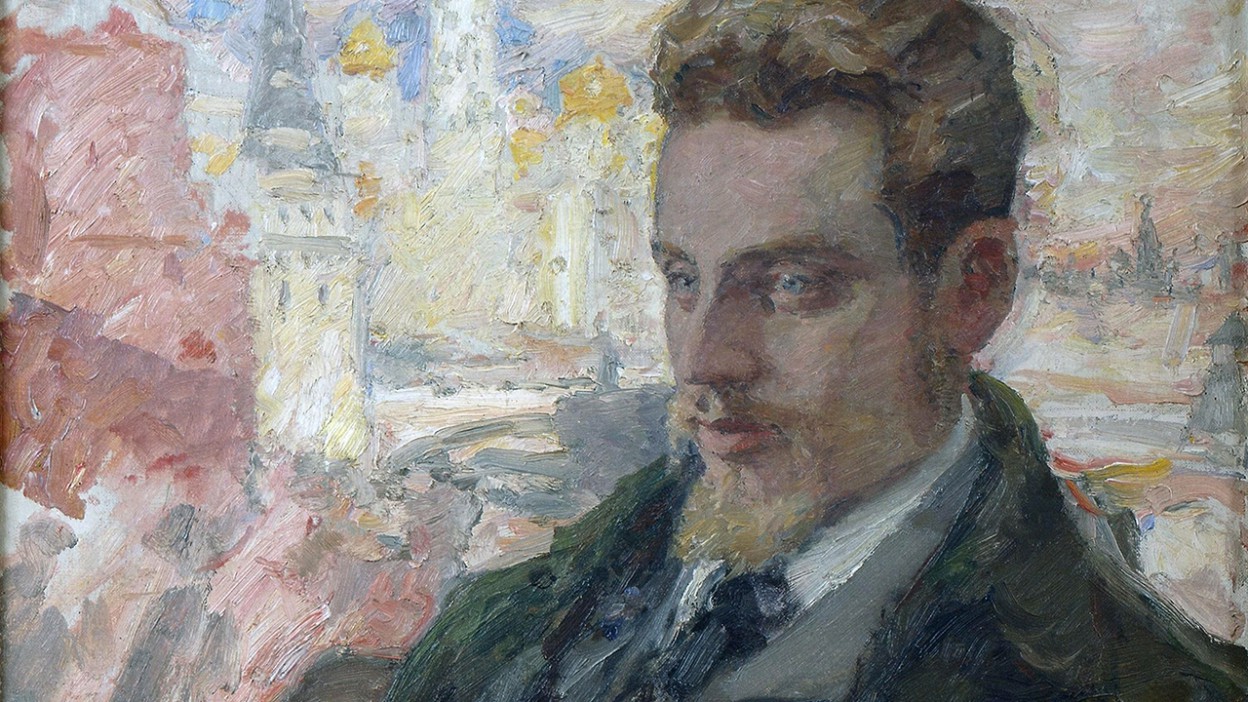
Portrait of Rainer Maria Rilke, 1928, by Leonid Pasternak

For Rilke’s own life and work, the key meeting was with Lou Andreas-Salomé in May 1897. Lou changed his handwriting and his name (from René to Rainer), but it was the confidence and groundedness in the world that she brought to his life that pushed his art “closer to the details of lived experience”. Rilke himself wrote: “The world lost its cloudiness [. . .] I learnt a simplicity, learnt slowly and laboriously how simple everything is, and I gained the maturity to talk of simple things”. Lou’s influence can be seen in the lecture he gave in Prague in 1898, where he distances himself from Symbolism and aestheticism (the dominant strands of ‘modern poetry’ at the turn of the century) to argue that the artist must not be “shut out of the great channel of life”, but must evoke the constant dialogue between the individual and things, “the strange coincidences between inner and outer out of which experience is made”. As Louth says, this is an early statement of the theme which will occupy his whole life.

Here is a brief poem – actually naming Lou and indicating her influence in persuading Rilke of the sacredness of the ordinary. It went unpublished for years, but was part of Rilke’s sequence called To Celebrate You (Dir zur Feier):

The rain runs its chilly fingers

down our windows, unseeing;                             

we lean back in deep armchairs

and listen, as if the quiet hours

dripped from a weary mill all evening.

x

And then Lou speaks. Our souls incline

one to another. Even cut flowers

at the window nod their topmost bloom

and we are completely at home,

here in this tranquil, white house.

For Rilke, the successful poem is a space in which the mysteries of things and personal confession are both explored, or revealed, simultaneously. Louth argues that, from the outset, Rilke’s view of this was always positive: “there is no unnerving consciousness of the self ’s arbitrary dependence on chance encounters with the outside world”, but equally, there is “no doubt about the existence of an underlying unity to which the poet has access”. What he feared was ‘the interpreted world’ (‘der gedeuteten Welt’), a world view shorn of all mystery, a perspective that perhaps most of us inhabit, a view in which language has become dominantly instrumental, “narrowing our vision so that life appears cut and dried without any possibility of the unknown and the unknowable”. Louth explains what readers of Rilke value in his work: “poetic language, as he understands it, is precisely a way of talking that avoids directness and allows the mutability of experience and the mystery of the world to be expressed. It releases rather than limits possibility”. Beyond this stands what Rilke might have meant by the term ‘God’. ‘He’ is “an experience of totality, life felt as a whole, in which self and other are not distinct or momentarily lose their distinctness”.

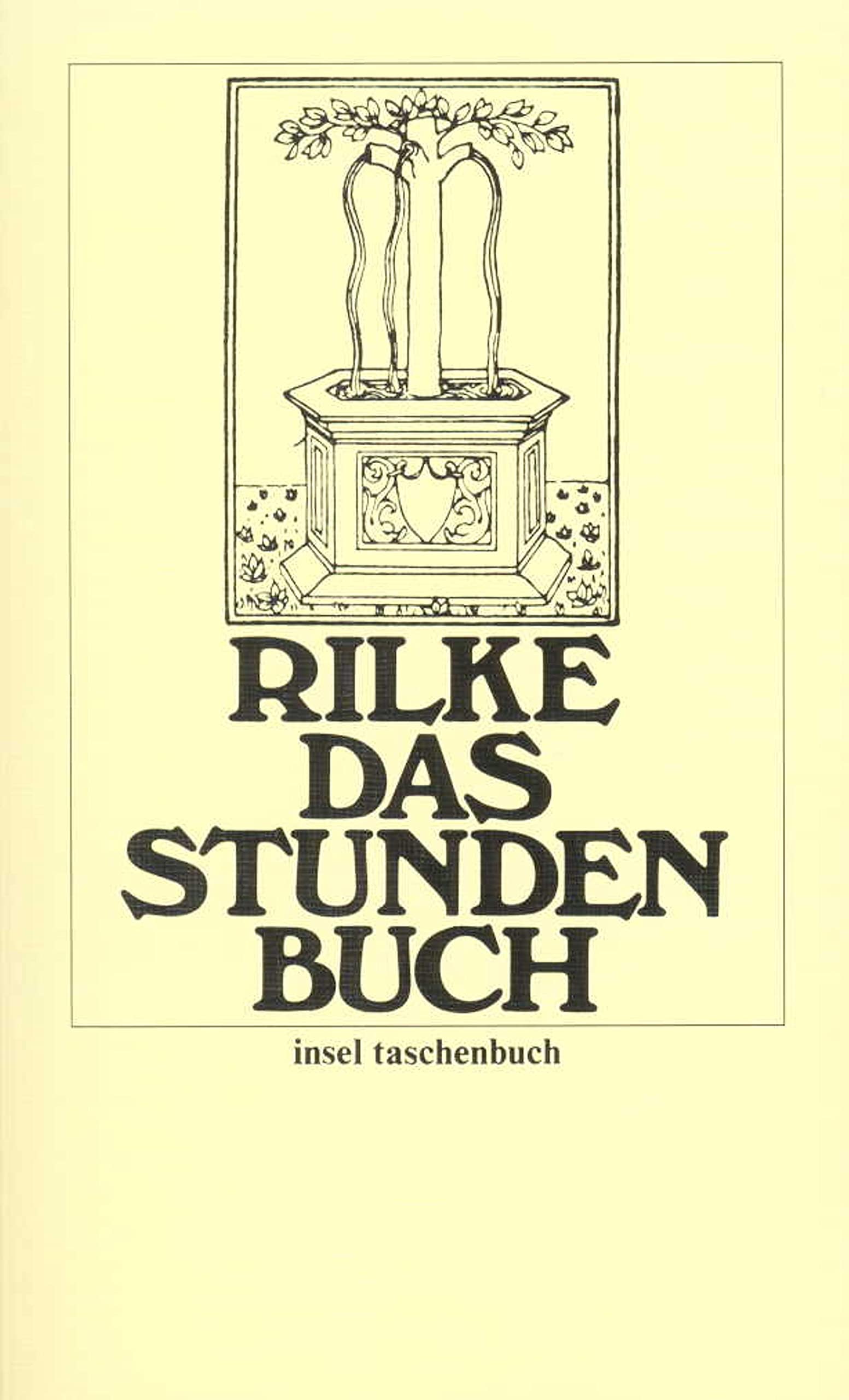
Here is my new translation of an early poem from The Book of Hours (Das Stundenbuch) in which Rilke is developing these ideas:

You, the darkness from which I came,

I love you more than the flame

scoring the world’s edge

with a glimmer

upon some sphere,

beyond which no-one has more knowledge.

x

Yet the darkness binds everything into itself:

all forms, flames, creatures, myself,

it seizes on them,

all powers, everything human . . .

x

And it may be: there is an immense might

stirring nearby –

x

I believe in the night.

It is in part because the enemy of mystery is language (too casually used) that poetry (constructed from language more carefully used) has an advantage over other art forms like painting. There’s an irony here, of course, because Rilke learned so much from other workers in the fine arts. Most know about the debt he owed to Rodin and Cezanne, but Louth argues Rilke’s journey towards the poetics of the New Poems began in the period he resided in the artists’ community in Germany at Worpswede. A lot of his thinking there concerned images of man and landscape. For the majority of the time, humans and nature live “side-by-side with hardly any knowledge of one another” and it is in the ‘as if’ of the work of art that they can be brought closer, into a more conscious relation. But because a poem works through time, such a correspondence is acknowledged as “something one traverses and gains knowledge of but cannot hold onto”.

Part 2 of this review coming next week…..