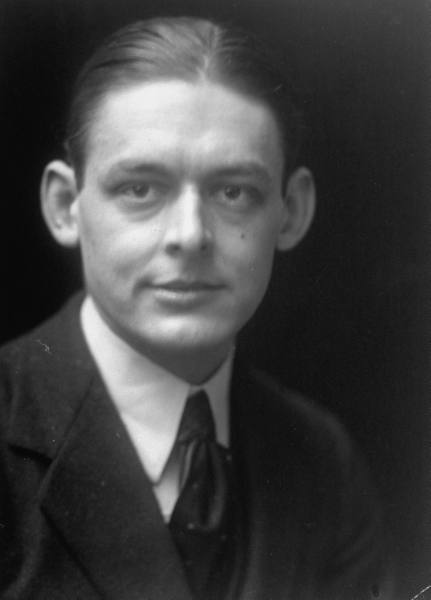
George Szirtes’ King’s Gold Medal for Poetry

This week’s announcement of the award of the King’s Gold Medal for Poetry to George Szirtes gives me the opportunity to re-post a long and detailed review I wrote (for Poetry London) of the two books that Bloodaxe Books published to celebrate Szirtes’ 60th birthday. These were the New and Collected Poems and a critical book about his work, Reading George Szirtes, written by John Sears. Though Szirtes has continued to publish a good deal since the late 2000s, this review still seems to me to have something useful to say about the development and poetical achievement of this outstanding writer and might be of interest to those not yet familiar with his work. (For WordPress readers, I am experimenting with posting also on Substack. Do subscribe here if you’d like to read in that format: https://open.substack.com/pub/mcrucefix/)
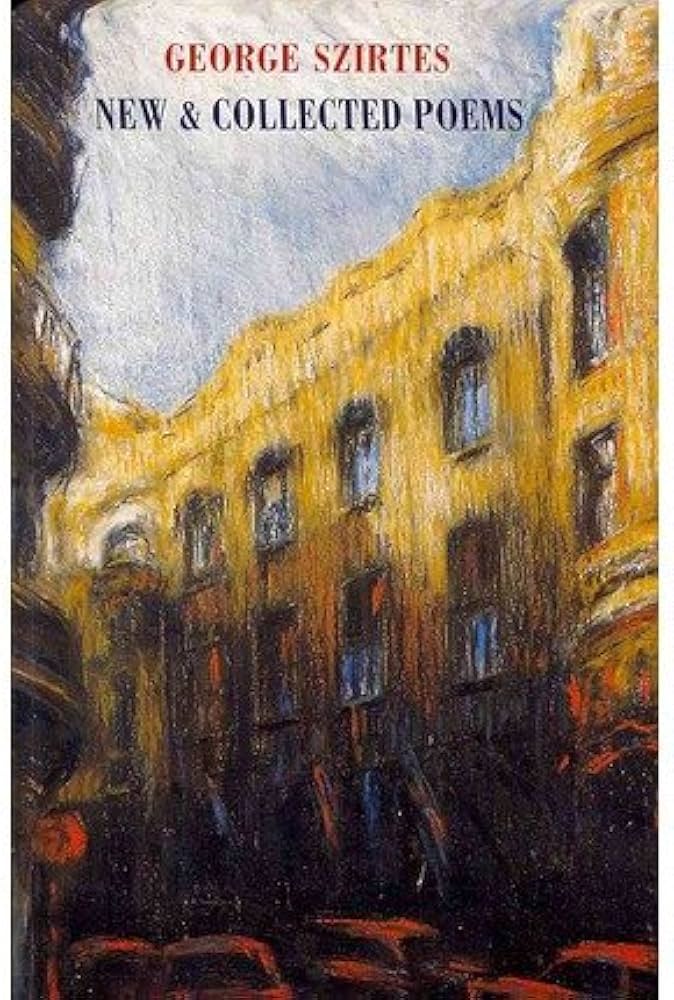
This 500-page New and Collected Poems demonstrates the breadth and depth of George Szirtes’ achievements and will bring his work to even wider notice, casting the poet as a recording angel. His lines of literary influence run from Eliot’s phrase-making and metaphysics, through Auden’s formalism and politics, to earlier contemporaries like Peter Porter and Martin Bell (at the Leeds College of Art and Design). There are distinct phases to Szirtes’ oeuvre, but his work tends to a density of fragmented detail, bound by a allegiance to visible form, shot through with explicit theorising about perception, language, time, memory, self, the art itself. This is a heady and immensely ambitious mix – not one likely to appeal to popular tastes, but there is no-one more dedicated to poetry, to playing the long game, to bringing a uniquely European perspective to the theme of our age, the search for personal identity.

Szirtes’ career illustrates what Pasternak discusses in An Essay in Autobiography (Harvill, 1990). Though our experience of the world is necessarily subjective, there is a sufficient underlying matrix that remains “the common property of man” – the hard-wiring implicit in being human. Superimposed on this is the softer wiring derived from upbringing, environment and education, and the self is ultimately a function of these base matrices in progressive interaction with individual decision-making in the flow of experience. So the objective world is processed through the individual’s particular matrices – his/her sets of harmonies and disharmonies – and must emerge coloured, spun, texturised as it were, accordingly. From this, Pasternak argues that when an individual dies he leaves behind his own unique “share of this . . . the share contained in him in his lifetime . . . in this ultimate, subjective and yet universal area of the soul”. This, of course, is where “art finds its . . . field of action and its main content . . . the joy of living experienced by [the artist] is immortal and can be felt by others through his work . . . in a form approximating to that of his original, intimately personal experience”. Art can be defined as the expression of experience playing across the matrices of the self, saying not this is me, but this is, this was, mine.

It is the raw imagery of stasis and movement that emerges in Szirtes’ early work as being truly his and it blooms into the maturity of the late 1980s. In short lyrical pieces the point of stasis is associated with the preservative of art in the spit ball gobbed by a foreign worker in ‘Anthropomorphosis’ which is caught and “suspended” by the poem. The afternoon rearranges itself around it and even the narrator “hung there / Encapsulated in that quick pearled light”. Versions of this encapsulation abound: girls creating a silver foil tree find themselves absorbed into a Keatsian “cold pastoral”. Such freeze-frame moments anticipate Szirtes’ sustained meditations on photography but early on, images of snow and frost suggest the ambivalent status of such suspension. In ‘The Car’ a snowfall is both beautiful and sepulchral: “Fantastic Gaudi-like structures hung / Under the mudguard . . . . / Wonderful, cried the girls under the snow”. A girl who is observed sewing causes consternation (“I do not like you to be quite so still”) caught in a stasis that can “eat away a life” that can “freeze the creases of a finished garment” (‘A Girl Sewing‘).

In contrast, it is movement in the shape of the passage of time that spurs many other early poems and the artist’s power is limited to “measure breath in a small space” (‘Group Portrait with Pets’). The enigmatic title poem of the first collection seems to teeter elegantly along the knife-edge of the sense of threat to domesticity and the desire to secure in a “cage” and convert to “metaphors” (‘The Slant Door’). It seems for time there is “no use, no cure” (‘Silver Age’) and Szirtes senses this especially in the domestic sphere. ‘House in Sunlight’ casts the busy sun as the agent of transience threatening the house itself and the life within it:

Whoever lives here knows what they are about –

Forms appear suddenly in mirrors and photographs,

We do not think however that they are entirely at home.

At night the doors are locked. We lock them now.
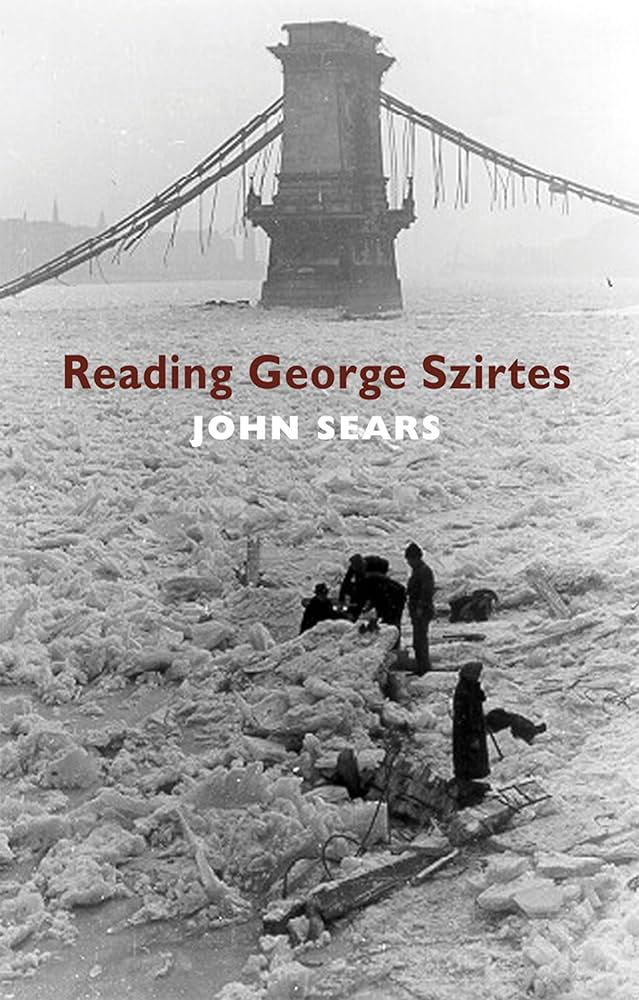
John Sears’ book is a comprehensive academic review of Szirtes’ career, tracing the development of both key themes and formal experimentation. He suggests Martin Booth’s 1985 critique of Szirtes’ early work as “withdrawn and laidback” was influential on the poet. Booth suggested that Szirtes might try writing about “his childhood” (Sears, p. 61). If true, we have reason to be thankful to Booth, but there are signs that Szirtes was moving in this direction already. He travelled to Hungary in 1984 and was casting his gaze beyond these shores towards people who “lie in complete unity / In graves as large as Europe and as lonely” (‘Assassins’). The title poem of Short Wave (1984) deploys its central image to suggest the deciphering of voices that are obscure yet seem suggestive of “all Europe in her song”. The self-deprecating picture of Szirtes “listening / and turning dials, eavesdropping” is something to be treasured given the explosive impact these deciphered voices will eventually have on his work.

Several members of Szirtes’ family were caught up in the Holocaust and later in the Soviet invasion of Hungary in 1956, escaping to the UK. Much of this was known to Szirtes only sketchily and he set himself the task of recovering what seemed lost. It is because Szirtes’ underlying matrices as an individual – stasis and movement, preservation and loss – mapped so powerfully onto his family’s own history and this history encompassed important European historical events that his work becomes in the late Eighties so much more complex, ambitious and important. History had determined his nature as a poet; his nature as a poet primed him to be able to encompass the burden of his own history.

So the title poem of The Photographer in Winter (1986) attempts the imaginative recovery of Szirtes’ mother from the Budapest of the 1940s and 50s. She was herself a photographer and her son traces her movements with “thoroughness and objectivity” as far as he can. Both as an artist and poet, Szirtes declares he has been “trained / To notice things” (the deliberate echo of Hardy’s ‘Afterwards’ is but one example of Szirtes’ very frequent intertextual allusions). But the recovery process seems often subject to disintegration, “trying to focus through this swirl / And cascade of snow”. At times the tone is more optimistic, like the final section of ‘The Swimmers’ in which a drowning girl survives the “icy Danube”. Elsewhere, intervening time destroys so much, and the later sequence ‘Metro’ (1988) uses the image of the Budapest underground system for “everything that is past, the hidden half”. His choice here of the deliberately curtailed thirteen-line sonnet is a characteristic recognition in formal terms that the search must remain incomplete.

The balance between one man’s search for his background and the conversion of this to poetry is a difficult one and if the marvelous sequence ‘The Courtyards’ is counted as one of the great successes, for me ‘Metro’ itself tips too far away from the memorial towards the monumental. There are occasions when Szirtes’ desire to recover and pay respects to his own history impels him to erect such elaborately formal accumulations of images that the reader may feel excluded, even if always impressed. The later ‘Transylvana’ is another occasion when the act of imaginative recovery can seem propelled for its own sake and despite the glittering formal achievement – terza rima in this case – the piling of detail on detail can become wearisome.

But Szirtes’ openness to theoretical thinking has always propelled his work forward and often derives more from his training in the visual rather than the literary arts. Blind Field (1994) draws on Barthes’ idea that in photography all that is not portrayed in an image may be implied by the presence of a “punctum” or detail within it. As Sears suggests (this is the sort of idea he is very good at elucidating) this bears some relation to Eliot’s objective correlative but is seen by Szirtes as a solution to the paradox that art stills the life it presents: “Out of this single moment a window opens” (‘Window’). This sense of the ballooning fluidity of experience, past and present, is one thing that marks his work as Modern and Post-Modern and it’s no surprise to see Szirtes countering Larkin’s belief that the passage of years makes us “smaller and clearer” arguing we grow “blurrier, vaster, ever more unfocused” (‘On a Young Lady’s Photograph Album’). It’s this slipperiness of personal identity that is Szirtes’ true theme and the one that elevates his work above the merely personal into a body of work addressing urgent contemporary concerns. As the poem ‘Soil’ puts it “there is nowhere to go / but home, which is nowhere to be found . . . / the very ground / on which you stand but cannot visit / or know”.

Everywhere these days, the recovery/re-construction of our own identities seems to be a pressing issue and the three sonnet sequences in Portrait of My Father in an English Landscape (1998) triumphantly present and simultaneously enact this process. Sears describes Szirtes’ form here as a “deliberately baroque form of the Hungarian sonnet sequence” or sonnets redouble (Sears, p. 145) in which the final line of each sonnet is repeated (approximately) as the opening line of the next and the final (fifteenth) sonnet is composed of approximations of each preceding sonnet’s closing line. Yet this is not an arid exercise in form as the recurrences and accumulations enact precisely what Szirtes believes is the process of the construction of the self – largely via language into a “lexical demesne” – in this case said to be “part Hungary, part England” (‘The Looking-Glass Dictionary’).
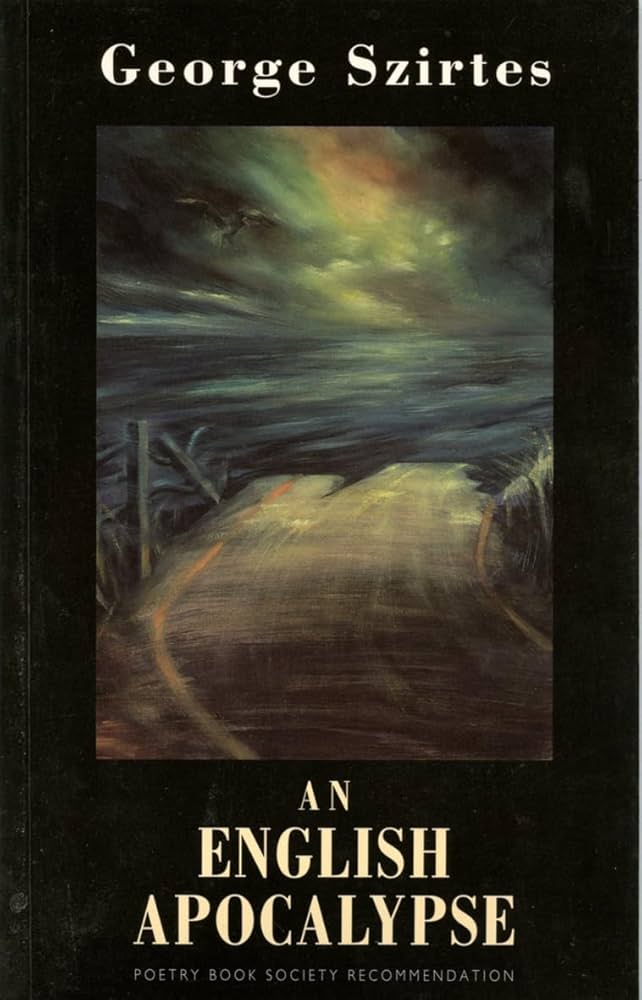
Retaining his love of the titled sequences, sections and subsections which had helped him draw a bead on his family’s obscured past – a tendency which produces the most typographically diverse and complex contents pages I’ve ever seen – from the late 1990s Szirtes’ work turns a firmly European gaze on the UK. An English Apocalypse ranges through Great Yarmouth, Keighley, Orgreave, Preston North End. all-in-wrestling and antisemitic violence towards images of “a tense / empire that could fall” (‘All In’), towards something “crumbling – a people possibly” (‘Dog-Latin’) and specific individuals “speaking the innate vernacular // of the trapped. He’s shit. Scum” (‘Offence’). Despite the success of Reel (2004), the new poems in this 2001 compilation, portraying an outmoded and disconnected England, are one of the high points of Szirtes’ career so far and they culminate in the extraordinary sequence of imagined apocalypses by meteor, power cut, deluge and suicide that caught the flip side of millennial euphoria and seem now years ahead of their time.

Apart from the sceptical cinematic pun Reel/real, the title of Szirtes’ 2004 T.S. Eliot prize-winning collection is an allusion to the predominance of the rolling, unravelling impact of his majestic terza rima. By this stage, there is a greater ease to the looping to and fro, the past and present, which Szirtes encompasses in this form.

Here I find bits of my heart. In these

Dark corridors and courtyards something true

Survives in such obsessive images

As understand the curtains of the soul

Drawing together in the frozen breeze.

(‘Reel’)

‘Sheringham’ also reinforces Szirtes’ familiar cumulative techniques remarking on the “boiled down particulars that regularly come / knocking at the skull”. Sonnets too continue to be a favoured form, though in the beautiful meditation on the aging processes, ‘Turquoise’, the neatly closing couplet of the “Shakespearian ending” is both employed and simultaneously questioned.

Indeed, echoes of the Bard’s obsessive negotiations with “swift-footed Time” (XIX) re-emerge as one of the most striking features of Szirtes’ more recent poems. A pizza can be enjoyed – but not to the exclusion of the river nearby, an unavoidable “emblem of time” (‘In the Pizza Parlour’). Szirtes is re-visiting the concerns of younger days from more slant-lit uplands. Now images of dust recur, here in the woman’s “dust-laden hair” while elsewhere birds are “swimming through dust” (‘Winter Wings’) and – in one of Szirtes’ most beautiful sonnets – a woman regards herself in the mirror, contemplating the impact of the passing years and gazing at her face “drowned in a cloud of dust: / How beautiful, she thought, and how unjust” (‘The Breasts’).
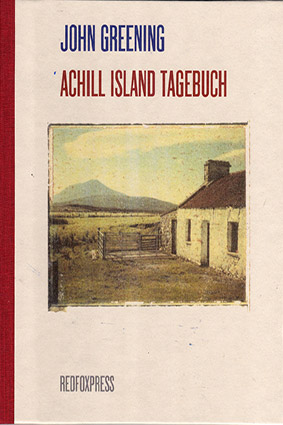
John Greening’s Achill Island Sonnets

ACH-greeningIn the summer of 2018, John Greening spent 2 weeks as artist-in-residence at the Heinrich Boll cottage in Dugort, Achill Island. The resulting Achill Island Tagebuch is a sequence of 24 Shakespearean sonnets, in the mode of Boll’s own Irisches Tagebuch – a journal, day book, or diary – and is an elegant, yet often roundly colloquial record of Greening’s communings with self, landscape and literary influences. As he says, there is as much of “what I dreamt as what I did” and there is a finely judged cocktail here of the island’s life of countryside, tourism and local bars, plus the artistic presence of Boll himself, but also Yeats, Heaney, John. F. Deane, Dennis O’Driscoll, Lady Gregory and Dermot O’Byrne (the latter being composer Arnold Bax in his poetic mode).
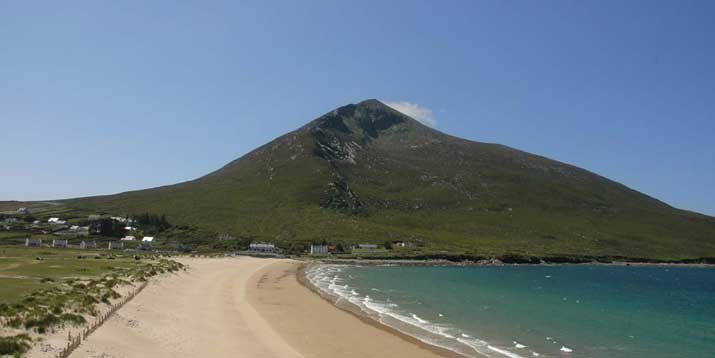
Greening’s long-established deftness with poetic form is on full display here but it is the (seeming) ease of encompassing that is so impressive. The hedgerows of “trickling fuschia” and the “decayed tooth” of Slievemore are conjoined with be-helmeted cycling jaunts, ill-informed tourists and European research students, while the writer frets about whether the Muses are going to turn up or the disturbing nature of his own dreams – all this alongside more newsworthy items like forest fires on the Greek mainland, Brexit (of course), the discovery of water on Mars and the release of the new Mission Impossible film.

The opening sonnet warns us to keep our wits about us with a possibly ghostly visitation by Boll himself which transmutes – on the edge of sleep perhaps, on the radio maybe – into the voice of Seamus Heaney recalling his school days. The beauty of the landscape seems charged with much symbolism and significance and we seem to be shown the narrator poetically dashing off in search of a “signal”, some objective correlative perhaps, or a more direct communication from a higher sphere. In fact, the “signal” he’s after is just a WIFI one – the Boll cottage has no internet connection – and he bathetically tracks one down finally at the local bar where the password is buyadrink. Perhaps this tension between the expectations of arcane Romantic symbolism and a more down-to-earth enjoyment of minute particulars can be traced back to the two key presences in this pleasurable sequence of poems: Yeats and the German, Nobel-prize-winning Boll himself, who in one poem is felt to cast his “dry, benign inspection” over the poet’s own words.

Slievemore
Slievemore

‘Blue Flag’ opens with Yeats fully in evidence: “On Golden Strand sounds Yeatsian enough”. But the landscape is so “penny-perfect” one’s first thought is to take a photo and post it on Facebook’s “show- / and-tell, the hell that’s other people’s holidays”. Yet the narrator sticks with his Yeatsian model and, in alluding to that poet’s 1914 collection Responsibilities, he tries to get himself back on track: “I’m here to write, / and waves break into words”. And words linked to landscape – in ways characteristic of Greening, a poet so attuned to the power of music – are found to turn to the musical notes of a poem draft: “On Golden Strand / I touch a silent fingerboard of sand”.

7
Heinrich Boll on Achill Island

Yeats also provides the title for the tenth sonnet, ‘A Vision’ and, though the view of Slievemore seems appropriate, the poem’s opening lines set about debunking anything too aspirational. The fit and healthy young may be keen to “climb / and conquer” such heights but the narrator/poet suffers with his “medieval knees” and is mercifully free of the desire to try the ascent. I can hear Boll being channelled in these lines:


Let it be there

because it’s there. Pain will be no less real

among bandaging clouds.


download

Greening’s sonnet forms are presented in 14 line blocks and he often runs through quatrain divisions to achieve a fluidity of thought, reflecting the mind’s energy, moving and connecting one thing to another. He also tends to play fast and loose with the traditional volta. So there are few moments of mannered pausing and this again gives the sense of the pressure of things needing to be recorded in a diaristic fashion. The shift in ‘A Vision’ comes halfway through line 8 as the narrator grudgingly admits to feeling something of the allure of misty mountain uplands, particularly when they are “theatrically lit”:


I can be driven

to dress up, drawn towards their footlit dream

like a painted hero, as if I’d been given

a walk-on through the dense mythologies

in one of Lady Gregory’s short plays.


In contrast, Boll’s dry, attentive, inspector’s gaze seems more evident in a poem like ‘Eine Familie’. Here Greening’s 14 lines combine outer observations, inner thoughts, awkward dialogue and self-deprecating humour as the preoccupied artist-in-residence (he’s just been to the grocery store) meets a family of bike-riding tourists. The opening line treats them to the single poetic figure in the whole poem, while the rest of the quatrain establishes the wry, stilted quality of the encounter:


Like bright, caged birds they’re perching on their bikes

beside the plaque. I manage to sound jolly.

‘A fan of Heinrich Boll?’ The father speaks

with a certain awkwardness. ‘Not really.’


Dialogue is also vividly presented in ‘Dooagh’, though on this occasion the talk is fragmented, full of lacunae, because of the racket of a wake taking place in the bar where the narrator attempts conversation with two people, both called Kevin.


Another line comes through,

from a second Kevin, a Vietnamese

translator. I grasp at it, and try to say

how once . . . Boat people . . . refugees . . . but the seas

of song and sentiment must have their way.


2935317-William-Butler-Yeats-Quote-Cuchulain-stirred-Stared-on-the-horses

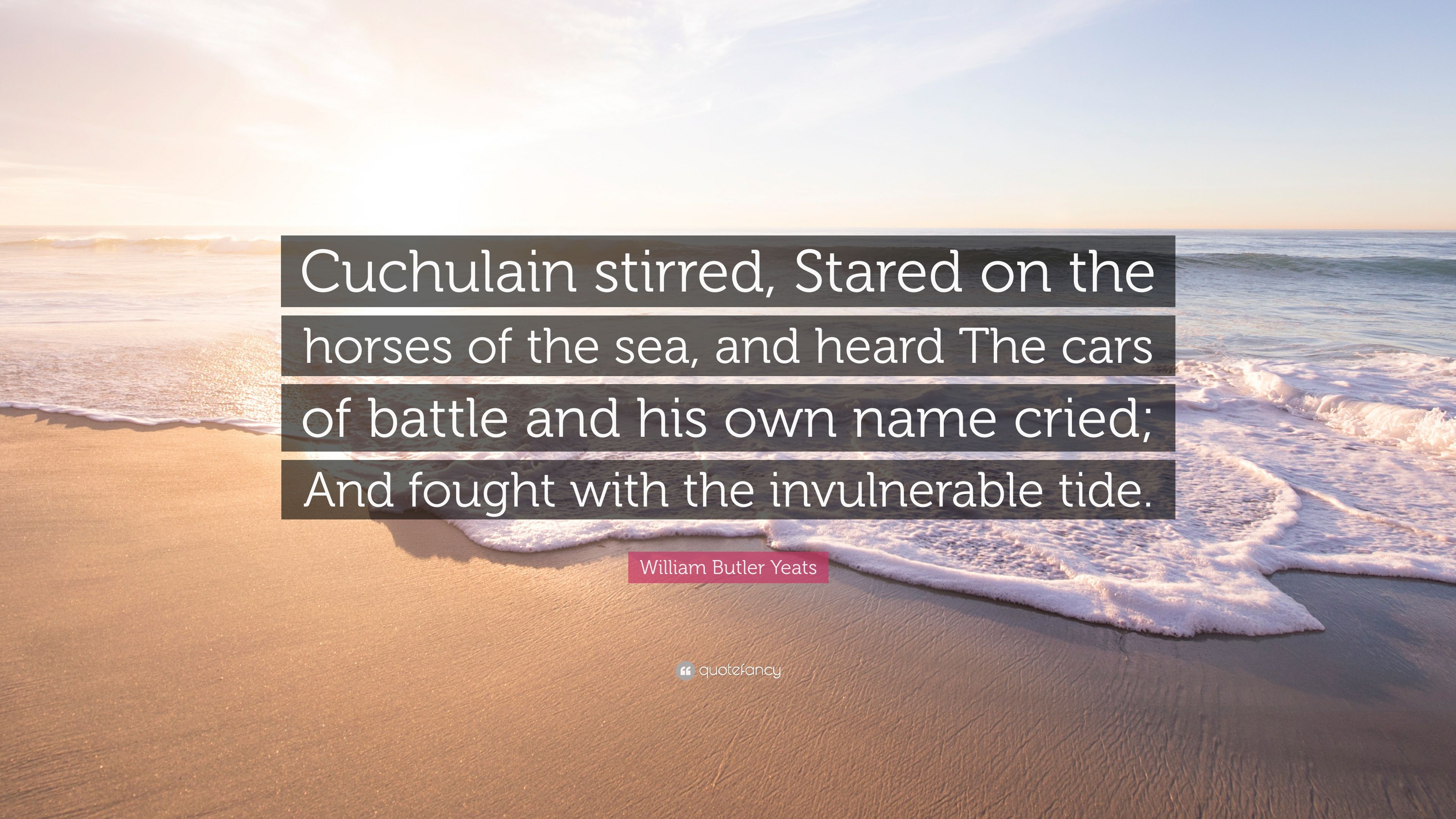
A contrastingly more quiet and creative kind of music is in evidence in ‘Accompaniment’. As in ‘Blue Flag’, this is again the music of the ocean that plays constantly “at [his] left hand” as the narrator sits and writes with his right. The kind of artistic success this facilitates is clear in the best poem in the book, ‘Cuchulain’. The title alludes to one of Yeats’ favourite mythological figures, as in the early poem ‘Cuchulain’s Fight with the Sea’ in which he wrestles against “the invulnerable tide”. After earthing the sonnet in particularity – a brief dip in the ocean at Keel Beach – Greening’s thoughts turn to his father’s love of swimming, this particular family’s memory/mythology preserved on old cine film. The fluidity and ease of the handling of these sonnets pays dividends here. Crossing a belated volta, the poem begins deeper reflections on the father-son relationship: “I never fought with him. Should we have done?” Within a couple of lines, we seem to have a portrait of unspoken tensions, perhaps a taciturn son and a stoical father who was not inclined to “rave as infirmities kept coming on / in wave upon wave.” As old age took its toll, it seems the option of a heroic struggle a la Cuchulain (or as urged in Dylan Thomas’s ‘Do Not Go Gentle Into that Goodnight’) was not taken up. The son is pained by his father’s choice of resignation (if choice it was) and it is the irredeemable nature of time and personal extinction that strikes the deepest note in this superbly intelligent, delightfully readable and lovingly produced limited edition from Red Fox Press.

21113-004-7184CED3

Forward First Collections Reviewed – #2 Karen McCarthy Woolf

This is the second in a series of reviews I will post over the next two months of the 5 collections chosen for the 2015 Forward Prizes Felix Dennis award for best First Collection. The £5000 prize will be decided on 28th September. The shortlist is:

Mona Arshi – Small Hands (Liverpool University Press, Pavilion Poetry) reviewed here;
Sarah Howe – Loop of Jade (Chatto & Windus); reviewed here;
Andrew McMillan – physical (Cape Poetry); reviewed here;
Matthew Siegel – Blood Work (CB Editions) reviewed here;
Karen McCarthy Woolf – An Aviary of Small Birds (Carcanet) reviewed here.

*

Karen McCarthy Woolf – An Aviary of Small Birds (Carcanet/Oxford Poets): Woolf’s website.

imgres

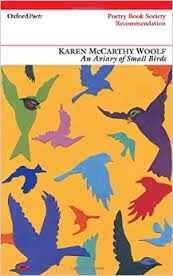
Carcanet’s colourful cover image of fluttering songbirds belies the terrific freight of grief that this book carries. The poems are presented as highly autobiographical and there are actually three deaths involved: that of a friend from cancer, a mother-in-law, and the central focus is the stillbirth of the author’s son in August 2009. The very personal nature of the materials makes critical discussion difficult but, in reading the poems, I found myself thinking of T S Eliot’s observations about what he regarded as the failure of Hamlet. This is the 1919 essay in which Eliot proposes his idea of the objective correlative, “a set of objects, a situation, a chain of events which shall be the formula of [a] particular emotion”. The emotion is re-evoked in the reader when the objective correlative is supplied by the writer. But Eliot argues Shakespeare could never quite unearth or disentangle the true emotions which he hoped would empower the play’s chain of events of a father’s untimely death and a mother’s remarriage.

tseliot_03

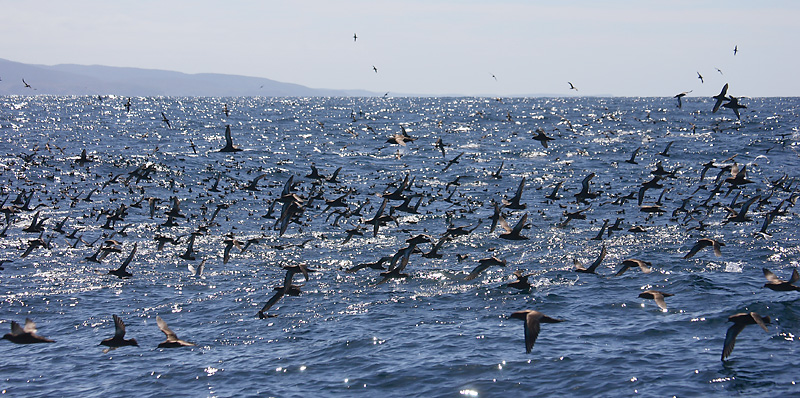
McCarthy Woolf’s book suggests something quite the opposite in that the specific emotions and key events of the child’s death always form the underlying premise on which every single one of these poems runs. This is both a strength and a weakness. The problem can be seen in ‘The Sooty Shearwaters’ which plainly describes the birds heading out to sea to feed. Their return at night time is aided by the switching off of TVs and streetlamps so the birds can “navigate by starlight / to find their young”. The birds’ cry is unique we are told; DJs come to sample it. But what the poem gives us is a chain of events, an objective correlative, which fails to evoke a strong response unless and until the reader brings to the poem the prior knowledge of the stillborn child’s loss. Only when plugged into that does the shearwaters’ determined, instinctive return to their young (and the island population’s touching assistance to that end), really gain force.

76557098.meqOaT2U.000sootyOZ9W1835

Also, as an exploration of the experience of grief, the book faces inevitable limitations because of the nature of the loss. There are several poems set in the acute moments surrounding the stillbirth and immediately afterwards but the majority are set sometime later (the book was six years in the making). Poems are arranged in a broadly chronological fashion and in an interesting reflection of the way a reader must keep in mind the premise of the original loss, many of the poems record the mother’s inability to move on from that same loss so that she, and the world around her, is repeatedly haunted by it. There are powerful moments here to be sure but no broadening religious dimension (Tennyson’s In Memoriam), no political thread (Tony Harrison’s The School of Eloquence), nor can there be any development (other than speculatively) about the nature of the lost one as in Hardy’s 1912 poems, Douglas Dunn’s Elegies, Anne Carson’s Nox, or Rilke’s Requiem for a Friend. The utterly tragic nature of the child’s loss in still birth imposes its own limits on the artistic response.

Nevertheless, An Aviary of Small Birds is admirably experimental in formal terms, some successful, others reading (surprisingly) like exercises carried out. For example, ‘The Museum of Best Laid Plans’ is a prose listing of the items on a bedside shelving unit, ending with a lock of infant hair. In contrast, ‘Morbleu’ takes us into the panic-stricken, semi-chaos of the delivery room, which is frighteningly conveyed through typographical layout and spacing: “ – we haven’t got – / a heart beat”. These are examples of the poems that stand up well independently, communicating fully to any reader whether in the context of this intensely-focused collection or not. Some of the best and most moving of other pieces take a markedly tangential approach to the tragic circumstances (perhaps the only way to approach such a grief). So ‘The Paperwork’ focuses on filling in a post-mortem form and makes powerful use of the tone and language of formality and administration so that one of the last options to be considered acquires, by contrast, even greater emotional weight: “Eyes not to be touched. / The doctor bites her lip, writes it in the box”. ‘The Registrar’s Office’ also manages to contain and convey its grief through indirectness as the bereaved mother, in a lightly punctuated flow and flurry of words, unburdens herself to the Registrar, but ends being more concerned about the windowless room in which the woman works. This illogical transference of the mother’s grief to a separate object is clear and credible and powerfully communicated to the reader.

imgres

What the book does not offer in a sustained fashion is a more forensic analysis of grief, its impact and evolution; it says mainly that grief does not go away. ‘Where Steel Clatters’ is a strong poem describing a threatening-seeming landscape of whining saws, bullet holes, “a burnt-out Renault” – but the bereaved mother is unmoved by it, having learned that “the worst things happen in brash, / fluorescent rooms where steel clatters / and silence is the total absence of movement”. ‘Starlight’ is a curbed, curtailed, halting poem – as if it were weighed down by grief – expressing more directly the desire to be “away / from the gurney // and the empty metal cot”. It is perhaps through experiences with the natural world that some sort of consolation begins to be felt. ‘The Calf’ is set off the Canary Islands and makes untypical but important use of the islanders mythic belief that “the animal you need // always comes to you”. What the bereaved mother wants is to swim with a pilot whale calf, though this is “against the law”. There is a sighting from a boat: “then he’s gone // down into the dark. / Something is better than nothing.” In fact, the poem, which has surely ended here, goes on for another four lines (over a page break) and there are a few other moments where a final edit might have been considered.

pilot-1

McCarthy Woolf has great empathy with the many animals in her poems and not only concerning the bird motif that runs through the collection. A dead hawk lying in a stream provides some “comfort” in a godless and faithless age; the “return to water, to the stream, to the earth” suggests some sort of cycle of life thing. And this is one of the most moving aspects of these poems of contemporary grief – the signal lack of outlets or rituals that might serve as ways of dealing with the loss. Latterly, rivers are imagined as speaking of the need to “endure” and the title poem itself redeploys the image of the lost child as a small bird in an aviary. The instinct of the natural creature, its need to be let go, is what teaches right action to the atomised, isolated, faithless individual of the mother in this book: though there is precious little evidence of moving on to be found in the collection, there is a realisation that it will be achieved only when the mother learns “to leave the door ajar”.

So: critical comment feels inappropriate at times with this book but it is presented to the reader as a poetry collection not a memoir. There is, throughout, a reaching for poetic variety not wholly matched by a variety of perspectives on the fundamental grief portrayed. There are several very powerful poems which I admire as technical achievements (given the powerful emotions from which they are derived, I don’t mean that as faint praise). But there are also a few make-weight pieces. McCarthy Woolf, whose book runs to only 63 pages, might, even so, have learned from the ultra-brevity and resultingly intense focus and consistency of a book like Colette Bryce’s The Whole and Rain-domed Universe (Picador), which weighed in last year at just 49 pages.