Remembering Blue Nose Poetry events in London

I recently attended the launch of Philip Gross’ new collection, The Shores of Vaikus (Bloodaxe Books, 2024) at the Estonian Embassy (the poems and prose pieces in the book refer to Gross’ father’s Estonian heritage and the poet’s visits to that country). I’ve followed his poetry since Faber published The Ice Factory in 1984. Neither of us could recall when we’d last met up but, after the event, I remembered that Philip was one of the first poets to read at the series of poetry readings (and associated workshops) I helped curate in the late 1980s/early 1990s, the Blue Nose Poetry series in London. I introduced him on the occasion (I still have the notes I made for the event in a Notebook for Spring 1989). I checked out the precise date in The Blue Nose Poetry Anthology (1993) which has sat on my shelves for many years now. The Blue Nose Poets (for personnel see below) invited all those who had read in the series to submit work and it strikes me now that it would be a shame if a record of our endeavours over a number of years was lost to sight completely. So, I’m posting here the Introduction to the Anthology and the full list of readers who appeared (often being paid nothing or a mere pittance) between 1989 and 1993. Interesting? I think so – given we hosted the likes of Dannie Abse, Patience Agbabi, Moniza Alvi, Simon Armitage, James Berry, Robert Creeley, Fred D’Aguiar, Michael Donaghy, Carol Ann Duffy, Michael Horowitz, Jackie Kay, Adrian Mitchell, Peter Porter, Peter Reading, Michèle Roberts, Ken Smith, and many more.

Introduction to The Blue Nose Poetry Anthology

This anthology celebrates four years of Blue Nose Poetry in London. Its beginnings can be traced back to 1988, when Sue Hubbard advertised for members to join a small poetry workshop at her house in Highbury. Amongst others who began meeting regularly were the four founder members of the Blue Nose: Sue, Martyn Crucefix, Mick Kinshott and Denis Timm. At that time, poetry readings in London seemed to be in the doldrums. Uninviting rooms and draughty halls with chairs in impersonal ranks were often depressingly matched by poor organisation. The Blue Nose Poetry activities were set up with the express intention of providing workshops and readings in a friendly, accessible and organised atmosphere for new voices, up and coming writers and the already established. We were convinced that a cabaret setting of tables, candles and a drink with other enthusiasts could make poetry enjoyable. It was only with the discovery of The Blue Nose Cafe in Mountgrove Road, close to Highbury Stadium, that we found a name for the project and the real success of the Blue Nose began.

Our first poets came to the Cafe and read out of the goodness of their hearts. We thank them all once again. The first event with Michèle Roberts was packed and exceeded our wildest expectations. Within the course of one evening we had proved that exciting contemporary poetry could be presented really successfully. Soon, in response to Blue Nose’s track record of commitment and quality, GLA (later LAB) and Islington Borough agreed to support the project. Since then, there have been various changes. Mick Kinshott felt unable to continue as an organiser in 1990 and his commitment and humour was a great loss. His place was taken for two years by Bruce Barnes, whose knowledge of the poetry and arts funding world in London proved invaluable to the development of the project. More recently, Mimi Khalvati and Mario Petrucci have joined the three original members. In the middle of the Spring 1991 season, the Cafe where we held the events went into liquidation and a reading by Tom Pickard and Rosemary Norman sadly had to be called off. Regular events did not begin again until May 1991, when we moved into the more accessible, roomy and centrally located Market Tavern in Islington. Despite the many advantages of this new venue, there are a few who still regret the passing of the old Café which, though tiny, disorganised and terminally broke, did have a superb atmosphere for poetry.

In an appendix to this anthology, we list all the readers who have appeared at the venue/s – a genuinely comprehensive survey of poetry in recent years. This, of course, does not include the many poets who have had the opportunity to read from the floor at Blue Nose events. More importantly, this book contains no record of the hundreds and hundreds of people who have enjoyed and supported Blue Nose Poetry. This book is dedicated to them.

Martyn Crucefix / Sue Hubbard / Mimi Khalvati / Mario Petrucci / Denis Timm

Full List of Main/Support Readers for Blue Nose Poetry Seasons 1989 – 1993

March – July 1989

Michèle Roberts read with Martyn Crucefix; Philip Gross read with Sue Hubbard; Jeremy Silver read with Mick Kinshott; Jo Shapcott read with Denis Timm; Leo Aylen read with Gerda Mayer; Alison Fell read with Hume Cronyn; The Blue Nose Poets; Carole Satyamurti read with Barbara Zanditon; Michael Donaghy read with Rupert Slade; Adam Thorpe read with Al Celestine.

Philip Gross

September – December 1989

Ken Smith read with Mimi Khalvati; Anna Adams and Julian May; Gerda Mayer read with Chris Powici; The Blue Nose Poets; The Performing Oscars; Maura Dooley read with Sara Boyes; Fred D’Aguiar read with Matt Caley; Matthew Sweeney read with Hilary Davies.

January – April 1990

Fleur Adcock read with John Harvey; Dannie Abse read with Myra Schneider; Elaine Randell read with Frances Presley; Hugo Williams read with Keith Spencer; Pitika Ntuli read with Bruce Barnes; John Cotton read with Bridget Bard; Michele Roberts read with Peter Daniels.

Robert Creeley

May – July 1990

The Blue Nose Poets; Sarah Maguire read with Vicki Feaver; Jeni Couzyn read with W N Herbert; James Berry read with Susan McGarry; Simon Armitage read with Chris Gutkind; E A Markham read with Mimi Khalvati; Brian Patten.

September – December 1990

In the Gold of Flesh anthology with Valerie Sinason, Dinah Livingstone, Pascal Petit, Jenny Vuglar; George Szirtes read with Gabriel Chanan; Kit Wright read with Candice Lange; The Blue Nose Poets; Michael Horovitz read with Raggy Farmer; Patience Agbabi and Judi Benson; Jenako Arts Writers; Carol Ann Duffy read with Steve Griffiths.

January – March 1991

Judith Kazantzis read with Mario Petrucci; Robert Creeley read with Mick Kinshott; Jackie Kay read with the Speech Painters; Peter Forbes and Eva Salzman; [Blue Nose Cafe in Highbury suddenly closes]; Lemn Sissay read with Adam Acidophilus.

May – July 1991

Peter Porter read with Elizabeth Garrett; The Blue Nose Poets; Carole Satyamurti read with Leon Cych; Peter Scupham read with Lucien Jenkins; Leo Aylen read with Rosemary Norman.

October – December 1991

Sylvia Kantaris read with Andrew Jordan; Gillian Allnutt read with Helen Kidd; Alan Jenkins read with Eric Heretic; Sean Street and Hubert Moore; Lee Harwood and Richard Cadell; Xmas Party – Tony Maude, Speech Painters and music from Dean Carter.

January – April 1992

Adrian Mitchell; David Constantine read with Tim Gallagher; David Morley with Martyn Crucefix; Sue Stewart read with Bruce Barnes; Glyn Maxwell read with Sue Hubbard; Peter Abbs read with Nicky Rice.

Adrian Mitchell

May – July 1992

Jo Shapcott read with Mick Kinshott; Bobbie Louise Hawkins read with Robert Sheppard; Birdyak – Bob Cobbing and Hugh Metcalfe; Colin Rowbotham read with Richard Tyrrell; Ken Smith read with Eric Heretic.

October – December 1992

Connie Bensley and Felicity Napier; The Poetry Show at Rebecca Hossack Gallery; Donald Atkinson read with Jane Duran; Ruth Fainlight read with Moniza Alvi.

January – April 1993

Peter Reading read with Briar Wood; Ruth Valentine; Myra Schneider read with Mario Petrucci; Carol Rumens read with Daphne Rock.

Tagay! on Romalyn Ante’s ‘Antiemetic for Homesickness’

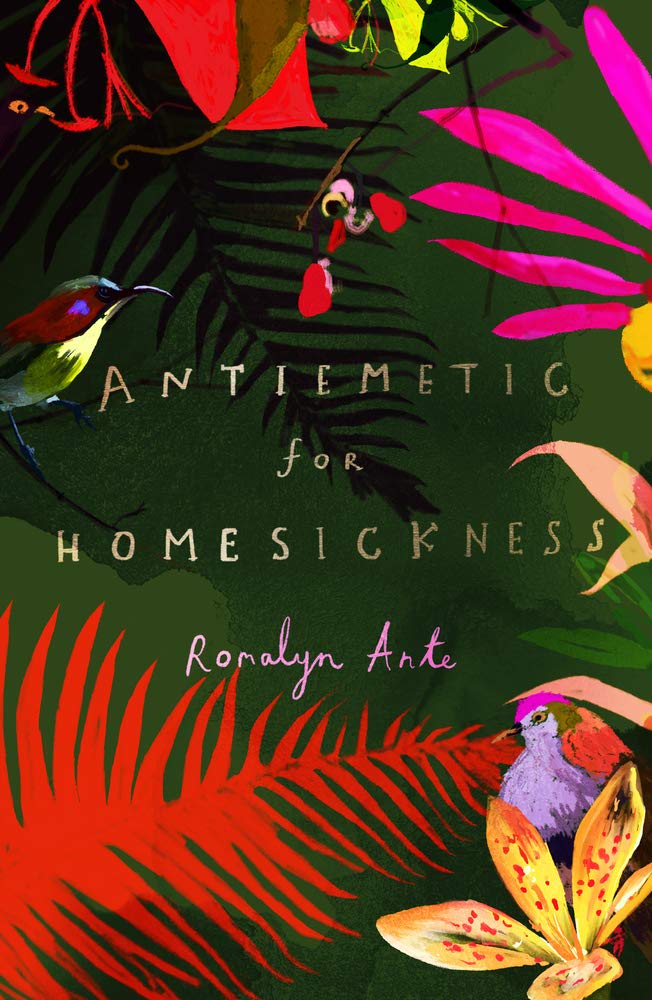
Romalyn Ante was born in Lipa Batangas, in the Philippines, in 1989. For much of her childhood her parents were absent as migrant workers and the family moved to the UK in the mid-2000s where her mother was a nurse in the NHS. Ante herself now also works as a registered nurse and psychotherapist. As a result, this debut collection has multiple perspectives running through it: the child grappling with the parents’ absence, the mother’s exile, the daughter’s later emigration and a broader, political sense of the plight of migrant workers. The economic driving force behind such movements of people is recorded in ‘Mateo’, responding to the Gospel of Matthew’s observation about birds neither sowing nor reaping with this downright response: “But birds have no bills”. So, in poem after poem, the need for money, for a roof, livestock, fruit trees, medical treatment, even for grave plots back home is made evident.

Antiemetic for Homesickness also consequently has two prime locations: the UK appears as snow-bound streets, red buses, the day to day labour of nursing grateful (and often less than grateful) patients, casual racism. But it is the home country that predominates in vivid images of its landscape, people, culture, folk tales, food and frequent fragments of its Tagalog language (there is a glossary of sorts, but I found many phrases not included). So the promise implied by the title poem – a cure for homesickness – is willed, even a delusion, but a necessary one adopted for self-preservation. It’s a great poem. Opening with “A day will come when you won’t miss / the country na nagluwal sa ‘yo” (lit. who gave birth to you), it also closes in the same mood: “You will learn to heal the wounds / of [patients’] lives and the wounds of yours”. But the central stanzas are densely populated by memories of home, the airport goodbyes, the tapes recorded by left-behind children, the recalled intimacies of the left-behind husband, the gatherings and food of the distant place. The antiemetic is proving less than effective.

This is the material for all Ante’s poems here. ‘The Making of a Smuggler’ opens with “Wherever we travel, we carry / the whole country with us” – lines that recall Moniza Alvi’s, ‘The country at my shoulder’ from 1993. Despite Ante’s personal experiences, these poems often speak in this plural pronoun (a sense of solidarity in experiences shared plus a pained awareness of the plight of unnumbered, unknown migrant workers). The ‘smuggling’ image also suggests an illicit action, a coming under suspicion in the destination country. What is being smuggled across borders under the insensitive noses of its guardians are memories, places: “He can’t cup his ear // with my palm and hear the surfs / of Siargao beach”. If these are thoughts on arrival then ‘Notes inside a Balikbayan Box’ evoke the on-going sense of loss, distance, almost bereavement accumulating through years of working abroad. Such boxes – Ante’s notes explain – are used by Overseas Filipino Workers (OFW) and filled with small gifts to be eventually sent back home, a kind of ‘repatriate box’.

Accordingly, the poem takes the form of a note – “Dear son” – partly accompanying objects such as shoes, video tapes, E45 cream, incontinence pads, perfume but, just as important, offering life-advice and apologies:

I owe you for every Simbang Gabi and PTA meeting

I could not attend. I promise I’ll be there for Christmas.

I know I’ve been saying this for a decade now.

Romalyn Ante

Scattered throughout the collection are short extracts intended to reflect cassette tape recordings – sent in the reverse direction to the Balikbayan Box – by a child to her distant mother. The risks of attempting such a child’s perspective are many and Ante keeps these little more than fragmentary utterances, not authentically child-like. These were some of the less successful moments in the collection, many others of which also arose from such formal experiments. Ante tries out the forms of a drug protocol, a questionnaire, a concrete poem, centred, right or left justified verse, prose passages, assemblages of fragments, typographical variants. Such moments presumably constitute the “dazzling formal dexterity” alluded to in the jacket blurb, but you’d not read Ante for this but for the poems’ “emotional resonance”, also referred to in the blurb.

Siargao Beach

The plurality of her subjects also gives rise to poems in several voices. ‘Tagay!’ portrays the migrant workers’ embattled situation and their making the best of it through the communal drinking of Lambanog (distilled palm liquor) – the title is something akin to ‘Cheers!’ Each speaker toasts the others present, going on to imagine their personal homecoming: welcoming smiles at Arrivals, the bringing home of Cadbury’s chocolate, the heat of Manila, home-cooked food at last, story-telling, marital sex. Many of the speakers cannot keep their work out of the moment: “Tomorrow we’ll be changing bed covers, / soaking dentures, creaming cracked heels”… but for the moment, “Tagay!” Something similar is attempted in ‘Group Portrait at the Stopover’, in which migrant workers are briefly thrown together at an airport, in 5 short sections swapping gifts and stories of their labours and abuse, preferring not to think “of the next generation that will meet at this gate, / the same old stories that will hum out of younger mouths”.

‘Group Portrait..’ is one of Ante’s poems that explicitly addresses the long-standing global reality of migrant labour and ‘Invisible Women’ does the same. These are the women, world over, who are seldom given credit or even attention, yet are “goddesses of caring and tending”. Ante’s mother is one of them, a woman who “walks to work when the sky is black / and comes out from work when the sky is black” (the studied repetitions here more effective than many other formal innovations). The deification of such women is part of Ante’s point. The costs of such migration are repeatedly made clear in this book, but the admiration for those who leave home to earn money for the benefit of those left at home is also clear. These invisible women (and as often men) are heroic in their determination, their sacrifices and their hard work.

A poem that returns the reader to the individual is ‘Ode to a Pot Noodle’. Owing something to Neruda’s Odas elementales (1954), the narrator is taking a short break from “fast-paced” hospital duties – a Pot Noodle is all there is time for. In the daze of night and fatigue, images arise (of course) of her distant home, her grandfather, of Philippine food and conversations that, in the time it takes to boil a kettle, vanish as quickly. She addresses those distant people: “this should have been an ode to you. / Forgive me, forgive me”. But the Ode has already been written in the course of Antiemetic for Homesickness. The collection is a testament to the presence of the absent, the persistence of memory, the heroism and suffering of those who we hold at arms’ length, invisible but without whom our modern society – our NHS – would fail to function. In the time of Covid – and after it too – Romalyn Ante’s book is reminding us of debts and inequalities too long unacknowledged.

Forward First Collections Reviewed – #1 Mona Arshi

This is the first in a series of reviews I will post over the next two months of the 5 collections chosen for the 2015 Forward Prizes Felix Dennis award for best First Collection. The £5000 prize will be decided on 28th September. The shortlist is:

Mona Arshi – Small Hands (Liverpool University Press, Pavilion Poetry) reviewed here;
Sarah Howe – Loop of Jade (Chatto & Windus); reviewed here;
Andrew McMillan – physical (Cape Poetry); reviewed here;
Matthew Siegel – Blood Work (CB Editions) reviewed here;
Karen McCarthy Woolf – An Aviary of Small Birds (Carcanet) reviewed here.

************

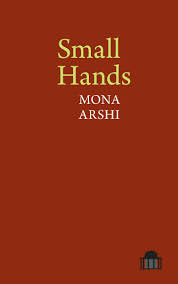
Mona Arshi – Small Hands (Liverpool University Press, Pavilion Poetry) Mona Arshi’s webpage

imgres

Despite the ironic lack of capaciousness implied by its title, Small Hands is a brimming miscellany of poems. Many of them suggest interesting growing points for the future, but Sathnam Sanghera’s claim that Arshi is “Britain’s most promising writer” and Moniza Alvi’s talk of “genius” is premature and liable to drag the reputation of blurb-writing even deeper into the mire. A trying-on of various recognisable styles or voices is expected of any first book, compiled as they usually are over years awaiting a publisher’s call, but Arshi’s arrival at a full collection has been swift. Publicity suggests she only turned from a profession in law to poetry around 2008. It’s for this reason that her influences (Alvi, Petit and Khalvati most obviously, perhaps Emily Berry) are so clear.

Two early poems in the book allude to the idea of catastrophe. ‘Practising Your Skills’ faces an accusation about a “tendency to catastrophise everything” and this also emerges in ‘Bad Day in the Office’ where the narrator is trying not to regard rainfall as “catastrophic”. These instances may be ‘character’ points but such a ramping or ratchetting up of the ordinary is often evident elsewhere in the book and tends to caricature, a dramatic arc-lighting, unexpected (literally cata-strophic) links between disparate ideas or images and hence a love of listing: in other words, forms of surrealism. This is something Arshi has spoken about, regarding and admiring poetry as a discourse utterly counter to the kind of language-use she once employed in the law. So ‘The Lion’ is out of Angela Carter’s The Bloody Chamber via Pascale Petit and evokes a strange relationship between a woman and an older man. It’s a powerfully disturbing poem because the male figure is accorded such power, language, sensuality, wisdom and a sort of droit de seigneur over the female narrator who seems disinclined to question the set up. As with several of the quasi-pornographic pieces by Sam Riviere, the critical question here is where lies the irony? Hard to tell, especially as this is the book’s opener.

imgres

Arshi’s somewhat whimsical surrealism is better seen in her portraits of female figures alone. ‘Cousin Migrant’ is a visitant “from the skies” as well as a paradox (“her arms are thin as margins yet she can lift my children / with ease”). The Cousin’s transgressive – or more accurately, indefinable qualities – are conveyed clearly, humourously, the narrator, in contrast, is nothing more than “a storm in a tea-cup”. The confines or otherwise of female lives are treated in more conventional poetic form in the object and memory piece, ‘The Gold Bangles’, evoked as a cultural inheritance of value though the narrator prefers to think of their owner’s wrists before the gift, “still unadorned and naked”. As here, there are several other poems that draw on Arshi’s background, born to Punjabi Sikh parents in West London. ‘Jesus Saves’ is also a more conventional poem of childhood memory, on this occasion hearing a racist speaker in 1979, on Hounslow High Street, “long after Enoch”. But elsewhere, Arshi prefers to construct enigmatic poems, hovering just beyond the edge of anything one might regard as a clear and present body of evidence. This is especially so in what seem to be ‘relationship’ poems like ‘Entomological Specimens’, ‘Practising Your Skills’ or ‘Insomniac’ which cryptically advises: “Never marry an insomniac. You will have / to mind yourself”.

At the centre of the book are several poems about the tragic loss of Arshi’s brother, Deepak, at the age of 41. These poems are moving and suggest contrasting aspects of her work: deep levels of tact and restraint. Moving through the experiences of learning of his death and the family’s adjustment to his loss in slant poems about a phone call, practical details of the mourning process, officialdom, the family garden, the urn, the loss still feels raw and unresolved and there will be more poems to come on this topic I’m sure.

Mona Arshi

The other prominent and enjoyable aspect of Arshi’s work is its sensuality and awareness of the body; this is a collection full of hands, feet, mouths, lips, eyes, wrists, hair and, ubiquitously, skin. In ‘Lost Poem’ she talks of “taking in language / through my skin” and there is a clear project developing here in that, at their best, these poems unfold through a language of the senses rather than the intellect. Elsewhere, Arshi writes of wanting to “sequester” and “foreignate” words, de-familiarising them, wresting them away from conventional denotation. I first heard her read aloud when she won the Magma Poetry Competition in 2011 with the ghazal-like poem, ‘Hummingbird’, here tucked away at the back of the book. I now read that poem against ‘The Lion’ and this is the one I prefer for its originality. The narrative voice (undefined) addresses the ‘you’ which is mostly the hummingbird itself, though as with ‘The Lion’ the creature is also interchangeably / metaphorically human. The tender, persuasive imperatives almost immediately carry an erotic charge, though where the “fingers” probe and slip is mostly into “spaces”, lacunae. But the hummingbird figure has none of the over-bearing masculinity of the lion; we are told it is capable of “curing”, dissolving, even pronouncing the speaker. But the speaker here is not as passive and compliant as in the earlier poem. Though she will allow him/her to open the “bone-zip of my spine”, the insistence of her voice gives her an active role in the relationship. The hummingbird is invited to “anoint” the speaker, a significant contrast to the shallowness of the lion’s crude “undressing”. (Arshi discusses this poem on the Magma website here)

black-n-white-hummingbird-tattoo-design

George Szirtes’ rather more restrained blurb observations suggest that he reads in Arshi’s work an “erotics of the spirit”. Without doubt, ‘The Hummingbird’ is a sexy, enigmatic, yet precisely expressed poem that is going to repay our re-reading of it. And if that is not the case with many other poems in Small Hands we should not be surprised. Arshi combines a liking for obliqueness, sometimes even coolness, with a desire to push what language can do and a willingness to experiment with form. Her cultural background is relatively unexplored here, yet promises much if that is the way she wishes to go. Not a winner of the 2015 Forward First Book award for me, but an intriguing writer, potentially a unique voice if she can achieve the right distance between herself and her powerful formative influences.