‘Walking Away’ – reviewed by Ian Brinton

This review of my recent Dare-Gale Press chapbook, Walking Away, has just appeared on Litter Magazine website. Many thanks to Ian Brinton for his insightful observations on what he calls ‘this important little volume’. Any kind of proximity to Ben Jonson, Vladimir Nabokov and WS Graham is good with me!

Language most shewes a man: speake that I may see thee. It springs out of the most retired, and inmost parts of us, and is the Image of the Parent of it, the mind’

Ben Jonson’s prose Discoveries was first printed in 1640 and the shining clarity of what these words offer is central to what we understand about the importance of language. No one person can read the mind of another and it is language that permits us to recognise what is going on in another person’s vision of the world. As Martyn Crucefix bids a farewell to his parents he recognises in the title poem to this deeply-moving sequence that ‘Walking Away’ leaves a world behind:

      Chaos of a dissolving township
      A vacant heathland

      I’ve no map to your mind

The twenty pages of poetry in this beautifully produced chapbook are dedicated ‘in memory of my parents’ and open with an epigraph from Masaya Saito’s Snow Bones which had been published by Isobar Press in 2016. Saito’s four narrative haiku sequences had also been dedicated to his parents and far from being lamentations of stasis they were delicate records of movement as the poet prepared to leave a landscape in which much of his past had resided:

      In the snow country
      my parents gone

      a pendulum swinging

The print on the white pages of Saito’s volume appears like footsteps in snow and there is a quiet seriousness in the sound of one of the seven different voices as it outlines

      A misty night

      I exist
      as footsteps

In Martyn Crucefix’s volume there is a humble awareness of the passing of time which does not resolve itself into an easily achieved sense of regret. If the connection between the Then and the Now wavers with time’s passing and ‘faces split to stained glass / or cubist fragments or fairground mirrors’ those human figures so close to the poet are ‘still talking blithely asking me still / if I can see these crocuses.’ The repeated use of the word ‘still’ conveys both a settled sense of the past being beyond us, unmoving, and the enduring quality of its presence.

The central poem in this sequence is made up of fifty-eight three-line haikus and the ironies of absence and presence are held with a quiet sense of the bowed head:

      Something where nothing was
      Nothing where something stood

      Ten thousand nothings

In the riddle of all riddles nothing is an actual something and if you look at zero you will see nothing but if you use it as an eye you will see the world. The circular hollows of nothing may range from an open mouth to the faintly outline dark of the moon and from craters to wounds. As it was suggested by Nabokov ‘Skulls and seeds and all good things are round.’

      A large print calendar
      Days crossed in black have passed

      No footprints mark the snow ahead

As W.S. Graham’s ‘Malcolm Mooney’s Land’ puts it ‘footprint on foot / Print, word on word’ is ‘always a record of me in you’ and in ‘Walking Away’ Martyn Crucefix questions his dead parents

      Why show me these photographs?
      You point to strangers

      Once upon a time I was there

In the final poem in this important little volume, ‘In This Quiet One-way West Country Town’,  the vivid sense of loss is caught as ‘your hand slips mine before I’ve the chance / to say I’m sorry I was not there to help’ and the poet is left

      under cloudless skies a gull driven too far
      inland to return now it’s closing time
      all across this quiet provincial one-way
      west country town turning for home before dark

Home is where we live and the footprints left in snow, marks upon the page, remain as a reminder of who we are in relation to how we got there.
Ian Brinton reviews ‘Between a Drowning Man’

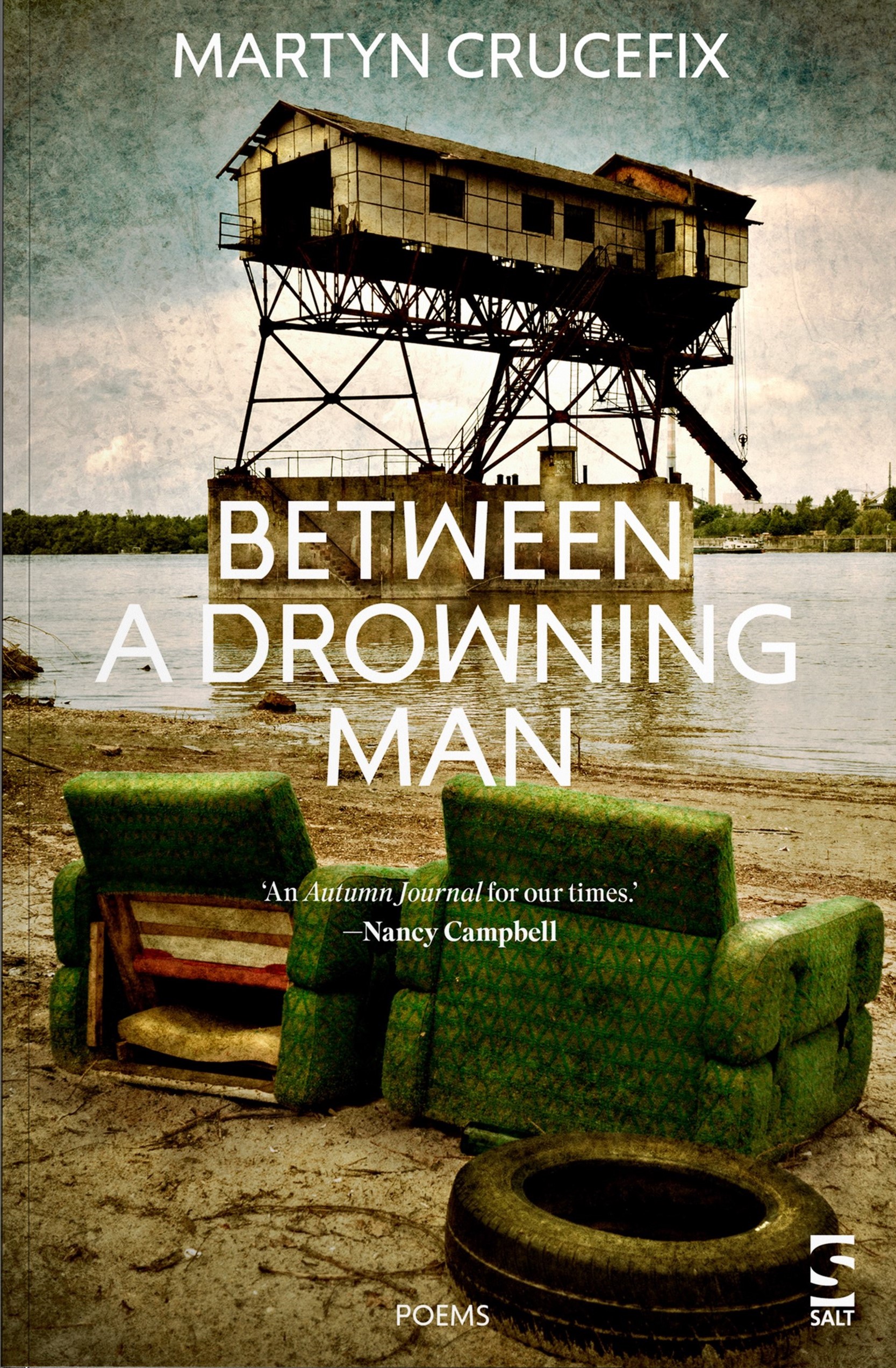
Here is Ian Brinton‘s recent review of my new Salt collection, Between a Drowning Man. It was first published by Litter Magazine in January 2024.

The invitation at the opening of these two remarkable sequences of poems by Martyn Crucefix emphasises both ‘difference’ and ‘ambiguity’, an ‘othering’ which hones attention rather than dulling it.

Divided into two sections, Works and Days (forty-nine poems) and O, at the Edge of the Gorge (fourteen poems) the two landscapes bring into focus a post-2016 Britain and the countryside of the Marche in central, eastern Italy. The leitmotif which threads its pathway, its recurring echo, through the first section is of ‘all the bridges’ being ‘down’ and the epigraph to section two is a quotation from Canto 16 of Dante’s Paradiso in which cities pass out of existence through warfare or disease and that which may have seemed permanent is continuously in movement. That second section of poems is a sequence of sonnets and in the final one the hawk’s resting place in the ‘shivering of poplars’ sways so that he is neither falling nor at ease

with these thinnest of airs beneath him

these shapes of loose knotted mesh

these whisperings that cradle him on a whim

That ‘othering’ prompts the poet to see the differences that are ‘like crimes woven into the weft’ and, in a way that William Blake would have recognised in his ‘A Poison Tree’, envy can be ‘buried long years in the black heart / of expressed admiration’ and ‘sunshine’ can be ‘really the withering of night’ which is ‘poured into soil where wheat grows’. And so it is—‘in and around and over and above’ because ‘all the bridges are down’. 

In April 2007 Jeremy Prynne wrote some notes for students about poems and translation:

Translation is for sure a noble art, making bridges for readers who want to cross the divide between their own culture and those cultures which are situated in other parts of the world; and yet a material bridge is passive and inert, without any life of its own, whereas a poetic translator must try to make a living construction with its own energy and powers of expression, to convey the active experience of a foreign original text.

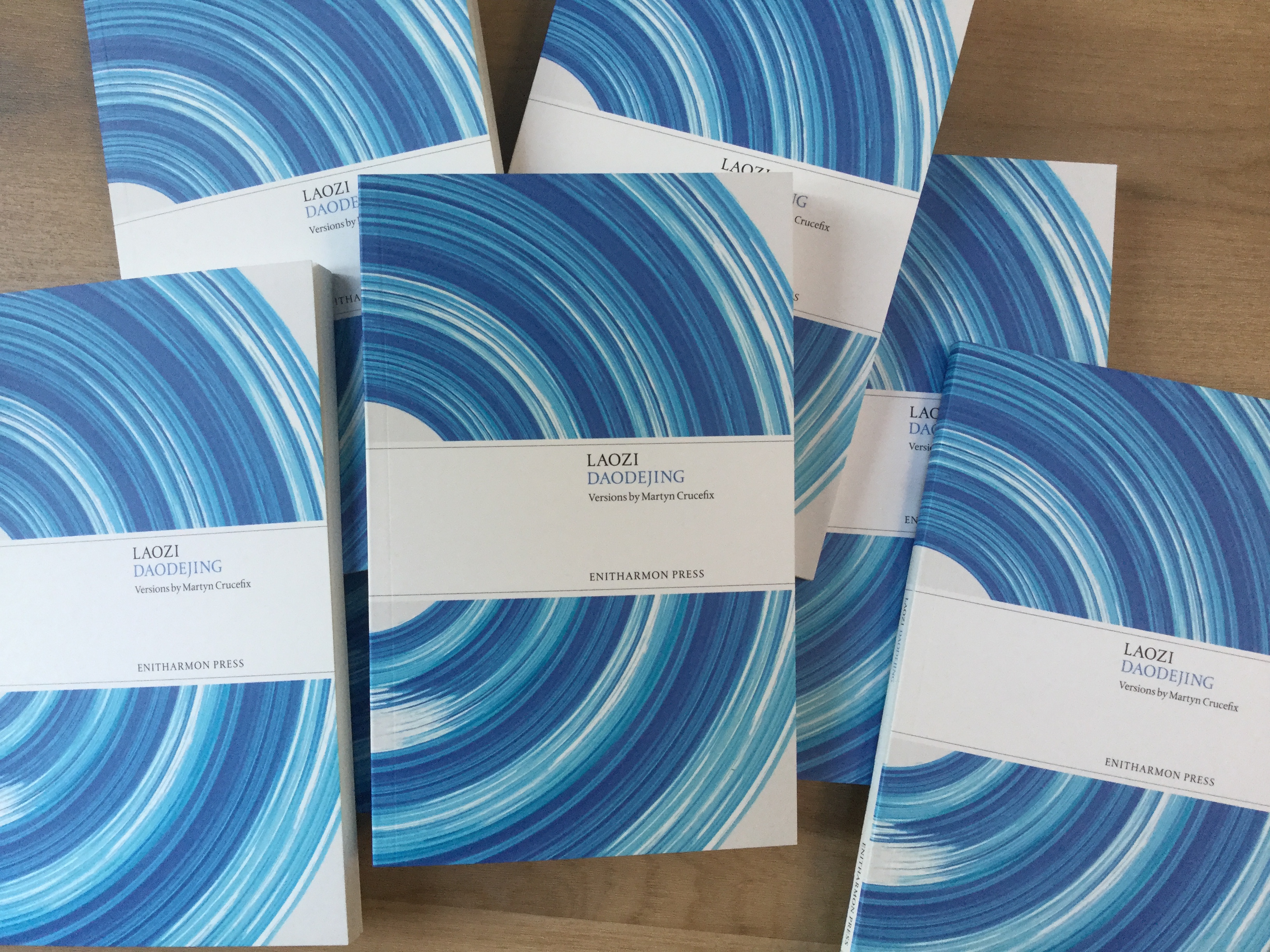
As a translator of real distinction (Rilke’s Duino Elegies and The Sonnets to Orpheus) Crucefix has for many years made these living constructions offering readers a gateway into new experiences whether it be through the world of Laozi’s Daodejing (Enitharmon Press, 2016) or through these new poems which offer echoes both of Hesiod’s Work and Days and the poems known as a vacanna which originated in the bhakti religious protest movements in 10-12th century India. His understanding of the central role language plays in our lives, that creation of bridges between humans, was one of the deeply moving and memorable moments in his collection from Seren in 2017, The Lovely Disciplines. There the poem ‘Words and things’ presented an elderly individual who discovered ‘too late this absence of words’ which now ‘builds a prison’ and Crucefix recognised that ‘a man without language is no man’: as the world of objects becomes too difficult to dominate he can only have knowledge of a world which ‘turns in your loosening grip’. The echo of Yeats’s ‘The Second Coming’ is surely no accidental one!

Translations are bridges, language is a bridge, and the distressing recognition of isolation within numbers is the dominant image in ‘fifteen kilometres of traffic’ from the first section of this new book:

fifteen kilometres of traffic wait before us

behind us the infinite tail

we are offered Google Map options

yet those trumpeted ten minute economies

are nothing till they can be proved

you make a choice you go your own way –

this has been better said before of course –

you cannot take the other way

and remain a unitary being on two paths

or perhaps sane – all roads crawl north

because multiple millions of cars crawl north

because all the bridges are down

Those ten minute trumpetings bring the world of Orwell’s 1984 to my mind as loud announcements of positive news seem to possess a tinny emptiness to the understanding of the isolated human who exists in a world of no bridges.

However, in contrast to this wave of uniformity one reads moments of ‘othering’ in the second section of this book as in ‘sharpening gusts along the valley floor’ a scrap of air was birthed

whirling inches above a littered drain

in a back street of some hilltop town

like Urbisaglia or some place that has seen

and has survived change of use

from sacred temple to church to slaughterhouse

and no gully nor hill can stop it

In this moving world ‘great swathes of air’ gather strength to flex ‘all things to a scurrying to keep up / and the truth is some will and some will fail’.

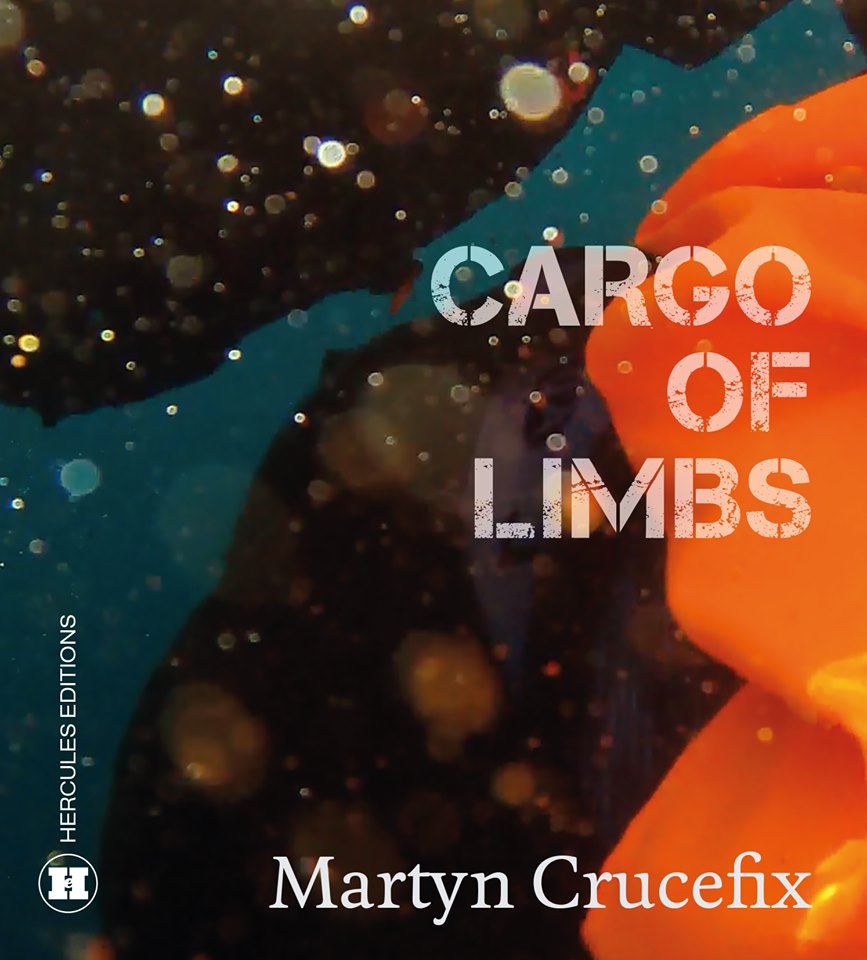
In a poem titled ‘can you imagine’ (for my children) from the first section of Between a Drowning Man the power of language to translate the invisible onto the page is presented with an unerring eye focussed upon reality. In a world in which he no longer shares the companionship of others the poet is carried safely because although ‘you find the bridges between us fallen down’ and although ‘you mourn’ you can still ‘imagine’. That sense of continuity held in the imagination is far from the image of Alan Kurdi, the three-year-old Syrian boy drowned on the beach near Bodrum, Turkey, in 2015 whose death was recorded by Crucefix’s earlier book, Cargo of Limbs, from Hercules Editions in 2019. The boy’s family had fled from the war engulfing Syria in the hope of joining relatives in the safety of Canada and became ‘part of the historic movement of refugees from the Middle East to Europe at that time’:

In the early hours of September 2nd, the family crowded onto a small inflatable boat on a Turkish beach. After only a few minutes, the dinghy capsized. Alan, his older brother, Ghalib, and his mother, Rihanna, were all drowned. They joined more than 3,600 other refugees who died in the eastern Mediterranean that year.

In this new book that ‘whim’ of a resting place for the hawk, those ‘whisperings’ prompt the bird, the poet, ‘to call it yet more steady perhaps’:

this whim—this wish—this risky flight

in the fleeting black wake of the carpenter bees