Last week I attended the launch of Tamar Yoseloff’s new collection, published by Seren Books. Tammy and I have known each other for a long while, are both published by Seren and, in her role at Hercules Editions, she has just published my own recent chapbook, Cargo of Limbs. So – in the small world of British poetry – I’m hardly an unconnected critic, but I have the benefit of having followed her work over the years, reviewing her most recent New and Selected, A Formula for Night (2015) here.
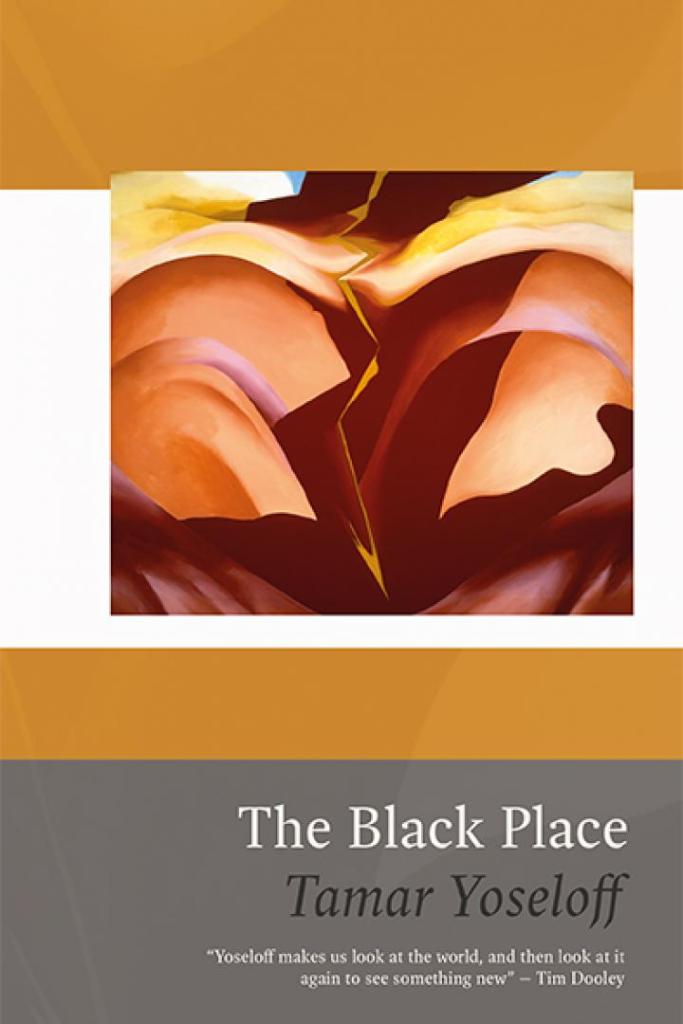
In an earlier blog post, I spoke – in rather tabloid-y terms – of the tension in Yoseloff’s poems between the “sassy and the sepulchral”. In 2007’s Fetch (Salt), there were “racy, blunt narratives” which in their exploration of female freedom, restraint and taboo made for vivid, exciting reading. The other side of her gift inclines to an “apocalyptic darkness”, a preoccupation with time, loss, the inability to hold the moment. In A Formula for Night, the poem ‘Ruin’ invented a form in which a text was gradually shot to pieces as phrases, even letters, were gradually edited out, displaying the very process of ruination. Interestingly, The Black Place develops this technique in 3 ‘redaction’ poems in which most of a text has been blacked out (cut out – see Yoko Ono later), leaving only a few telling words. A note indicates the source text in all three cases was the booklet Understanding Kidney Cancer and the author’s recent experience of illness is an important element in this new collection.
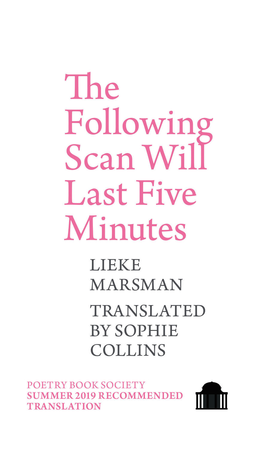
But unlike, for example, Lieke Marsman’s recent The Following Scan Will Last Five Minutes (Pavilion Poetry, 2019 – discussed here), Yoseloff’s book is not dominated by the experience of illness (and one feels this is a deliberated choice). The book opens with ‘The C Word’ which considers the phonetic parts of the word ‘cancer’, as well as its appearance: “looks like carer but isn’t”. But – within its 12 lines – Yoseloff also considers the other C word, “detonated in hate / murmured in love”. The poem is really about how an individual can contain such divergent elements, “sites of birth / and death”. So unanticipated personal experience is here being filtered through the matrix of this writer’s naturally ambivalent gift.
Illness re-emerges explicitly later in the collection, but for much of it there is a business as usual quality and I, for one, am inclined to admire this:
I refuse the confessional splurge,
the Facebook post, the hospital selfie.
I’m just another body, a statistic,
nothing special. Everyone dies –
get over yourself.
So Yoseloff gives us a marvellous send-up of Edward Thomas’ ‘Adlestrop’ in ‘Sheeple’, a central place on the darker side of Yoseloff-country: “The heartland. Lower Slaughter”. There is urbanite humour in ‘Holiday Cottage’ with its “stygian kitchen”, bad weather, boredom and kitsch:
We stare at the knock-off Hay Wain
hung crooked over the hearth
and dream of England: the shire bells,
the box set, the M&S biscuit tin
‘The Wayfarer’ is one of many ekphrastic poems here – this one based on a Bosch painting – but the “sunless land” is patently an England on which “God looked down / and spat”. These are poems written in the last 3 years or so and, inevitably, Brexit impinges, most obviously in ‘Islanders’ (“We put seas between ourselves, / we won’t be rescued”) but the cityscape equally offers little in the way of hope. There is a caricaturing quality to the life lived there: everything “pixilates, disneyfies” (‘Emoji’) and gender relationships seem warped by inequitable power, by self-destructive urges and illness: “I’d super-shrink my dimensions, / wasting is a form of perfection” (‘Walk All Over Me’).
Perhaps ‘Girl’ shows us the figure of a survivor in such a hostile environment, her energy reflecting those female figures in Fetch – “a slip, a trick, a single polka dot” – but the darkness seems thicker now, the lack of lyricism, the impossibility of a happy ending more resolved:
She’s good for nothing because nothing’s
good: sirens drown out violins
and crows swoop to carnage in the street.

As the blurb says, the book boldly eschews the sentimental sop, the capitalist hype, for truths that are hard, not to say brutal. ‘Little Black Dress’ takes both the archetypal ‘girl’ and the author herself from teen years to widowhood in a dizzyingly rapid sonnet-length poem:
drunk and disorderly, dropping off bar stools one
by one, until the time arrives for widow’s weeds
and weeping veils, Ray-Bans darkening the sun.
And it is – unsurprisingly – mortality (the sepulchral) that eventually comes to the fore. A notable absence is the author’s mother, who has often been a powerful presence in previous books. Here she re-appears briefly in ‘Jade’. The stone is reputed to be efficacious in curing ailments of the kidneys and a jade necklace inherited from Yoseloff’s mother leads her to wonder about the inheritance of disease too: “a slow / release in her body, passed down, // down”. Both parents put in a fleeting appearance in the powerful sequence ‘Darklight’, the third part of which opens with the narrator standing in a pool of streetlight, “holding the dark / at bay”. She supposes, rather hopelessly, that “this must be what it’s like to have a god”. Not an option available to her; the dark holds monsters both within and without and not just for the child:
Back then
my parents would sing me to sleep;
now they’re ash and bone. Our lives are brief
like the banks of candles in cathedrals,
each a flame for someone loved;
It’s these thoughts that further the careful structuring of this collection and return it to the experience of a life-threatening illness. ‘Nephritic Sonnet’ is an interrupted or cut off – 13 line – sonnet that takes us to the hospital ward, the I.V. tubes and – as she once said of the city – the poet finds “no poetry in the hospital gown”. Except, of course, that’s exactly what we get. The determination or need to write about even the bleakest of experiences is the defiant light being held up. Yoseloff does not rage; her style is quieter and involves a steady, undeceived gaze and also – in the sequence ‘Cuts’ – the powerful sense that (as quoted above) “I’m just another body, a statistic, / nothing special. Everyone dies”.
It’s this sense of being “nothing special” that enables ‘Cuts’ dispassionately to record very personal experiences of hospital procedures alongside the contemporaneous facts of the Grenfell Tower fire and (another ekphrastic element) a 1960s performance piece by Yoko Ono called ‘Cut Piece’. These elements are ‘leaned’ against each other in a series of 13 dismembered sonnets, each broken up into sections of 6/3/4/1 lines. The fragmentary, diaristic style works well though there are risks in equating personal illness with the catastrophic accident and vital political questions surrounding Grenfell. Ono’s performance piece offers a further example of victimhood, one more chosen and controllable perhaps. What’s impressive is how Yoseloff avoids the magnetic pull of the ego, displaying – if anything – a salutary empathy for others in the midst of her own fears.
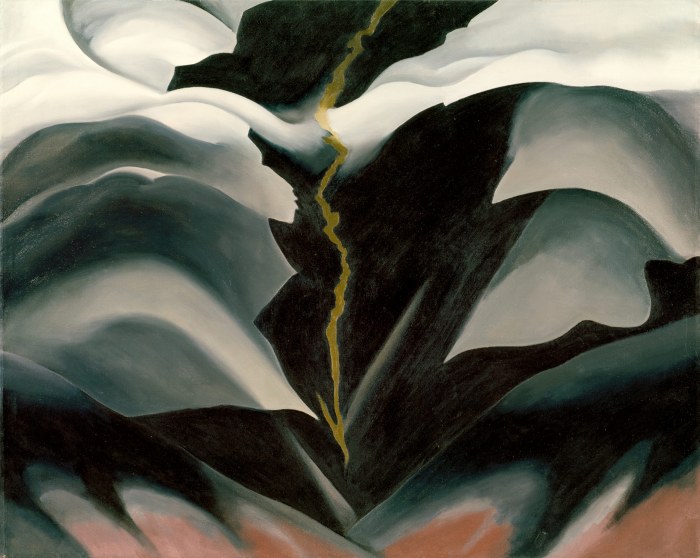
The book is titled after a Georgia O’Keefe picture, reproduced on the cover. O’Keefe’s steady gaze into the darkness created by the jagged relief of the Navajo country is something to which Yoseloff aspires, though it “chills me / just to think it into being”. It is the ultimate reality – a nothing, le néant – though like the ultimate presence of other writers (Yves Bonnefoy’s le presence, for example), can at best only be gestured towards:
We’ll never find it; as soon as we arrive,
the distance shifts to somewhere else,
we remain in foreground, everything moving
around us, even when we’re still.
Along such a difficult path, Yoseloff insists, O’Keefe’s art found “the bellow in a skull, / the swagger in a flower”. And, even in the most frightening brush with her own mortality, the poet will follow and does so in a way that is consistent with her own nature and work over many years.
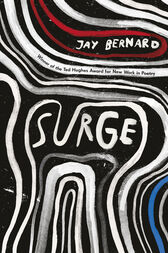
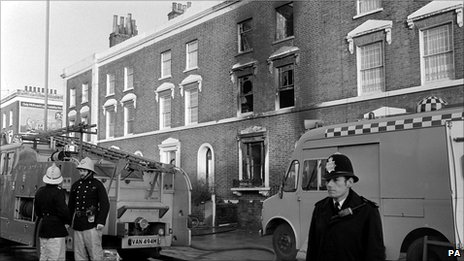 But Surge itself has since gone through various forms. There were 10 original poems written quickly in 2016. There was a performance piece (at London’s Roundhouse) in the summer of 2017 (it was this version that won the Ted Hughes Award for New Work in poetry in 2017). But it has taken 3 years for this Chatto book to be finalised. In an interview just last year, Bernard observed that they were still unclear what the “final structure” of the material would be. I’m possessed of no insider knowledge on this, but it looks as if this “final” version took some considerable effort – reading it makes me conscious of the strait-jacket that a conventional slim volume of poetry imposes – and I’m not sure the finalised 50-odd pages of the collection really act as the best foil for what are, without doubt, a series of stunningly powerful poems. The blurb and publicity present the book (as publishers so often do) as wholly focused on the New Cross and Grenfell fires but this isn’t really true and something is lost in including the more miscellaneous pieces, particularly towards the end of the book.
 Bernard’s poetic voice is at its best when making full use of the licence of free forms, broken grammar, infrequent punctuation, the colloquial voice and often incantatory patois. So a voice in ‘Harbour’ wanders across the page, hesitantly, uncertainly, till images of heat, choking and breaking glass make it clear this is someone caught in the New Cross Fire. Another voice in ‘Clearing’ watches, in the aftermath of the blaze, as an officer collect body parts (including the voice’s own body): “from the bag I watch his face turn away”. The cryptically titled ‘+’ and ‘–’ shift to broken, dialogic prose as a father is asked to identify his dead son through the clothes he was wearing. Then the son’s voice cries out for and watches his father come to the morgue to identify his body. This skilful voice throwing is a vivid way of portraying a variety of individuals and their grief. ‘Kitchen’ offers a calmer voice re-visiting her mother’s house, the details and familiarity evoking simple things that have been lost in the death of the child:
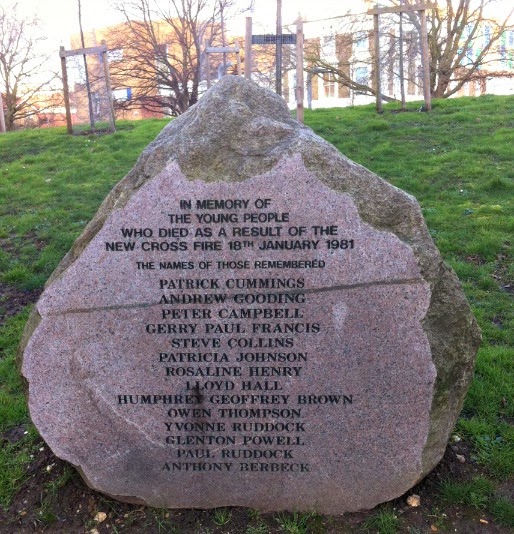
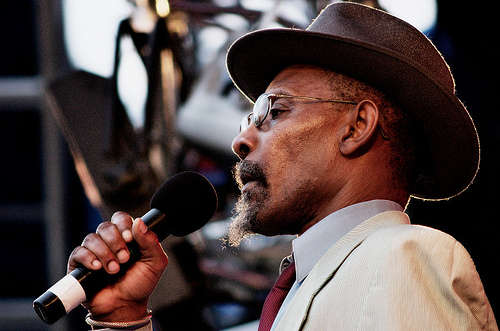 I’m guessing most of the poems I have referred to so far come from the early work of 2016. Other really strong pieces focus on events after the Fire itself. ‘Duppy’ is a sustained description – information slowly drip-fed – of a funeral or memorial meeting and it again becomes clear that the narrative voice is one of the dead: “No-one will tell me what happened to my body”. The title of the poem is a Jamaican word of African origin meaning spirit or ghost. ‘Stone’ is perhaps a rare recurrence of the author’s more autobiographical voice and in its scattered form and absence of punctuation reveals a tactful and beautiful lyrical gift as the narrator visits Fordham Park to sit beside the New Cross Fire’s memorial stone. ‘Songbook II’ is another chanted, hypnotic tribute to one of the mothers of the dead and is probably one of the poems Ali Smith is thinking of when she associates Bernard’s work with that of W.H. Auden.
 But when the device of haunting and haunted voices is abandoned, Bernard’s work drifts quickly towards the literal and succumbs to the pressure to record events and places (the downside of the archival instinct). A tribute to Naomi Hersi, a black trans-woman found murdered in 2018, sadly doesn’t get much beyond plain location, a kind of reportage and admission that it is difficult to articulate feelings (‘Pem-People’). There are interesting pieces which read as autobiography – a childhood holiday in Jamaica, joining a Pride march, a sexual encounter in Camberwell, but on their own behalf Bernard seems curiously to have lost their eagle eye for the selection of telling details and tone and tension flatten out:
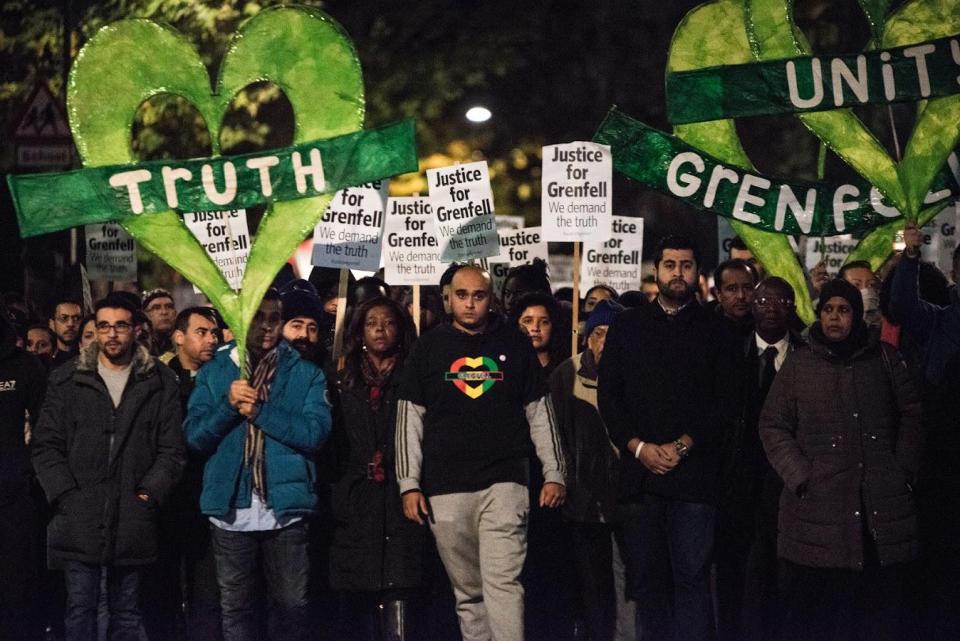 The mirroring architectonic of the collection emerges with the poems written about the Grenfell Tower fire. So we have ‘Ark II’, two pools of prose broken by slashes which seem to be fed by too many tributary streams: the silent marches in Ladbroke grove, the Michael Smithyman murder and abandoned investigation, Smithyman’s transition to Michelle, and the burning of the Grenfell Tower effigy, the video of which emerged in 2018.
 Martyn Crucefix